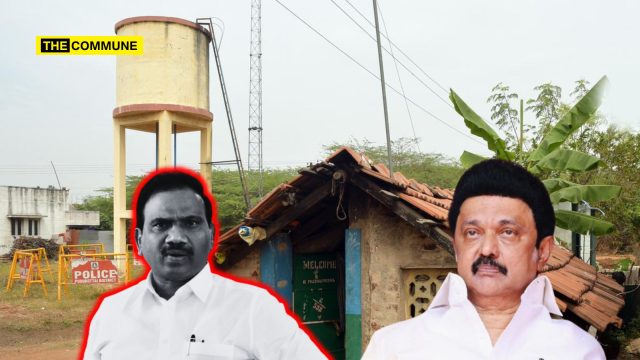
At a public interaction, DMK Member of Parliament A Raja faced pointed questions from the audience over Chief Minister MK Stalin’s failure to visit Vengaivayal, the Tamil Nadu village where a Dalit settlement’s drinking water tank was contaminated with human waste.
A member of the audience asked Raja, “We ask the social justice question of why PM Modi did not visit Manipur. But our CM Stalin did not visit Vengaivayal, this is social injustice.”
Raja responded by questioning the comparison, asking, “Do you think the severity of Vengaivayal and Manipur issues are same?”
The audience member replied, “Everything is injustice.” When people began clapping in support of this remark, Raja interrupted, saying, “Wait, wait.”
Raja then elaborated on his position, saying, “Do we take the same tablet for blood cancer and headache? This is a good question. We exhausted all things scientifically. Two theories are there – whether they are same caste or different castes. We do not disagree that it was wrong. But do you know what happened in Manipur? In Manipur, they paraded a woman naked with military in broad daylight and gangraped by 15 people and you are justifying it in Parliament. Governor did not come out, you think all this was happening ordinarily. Sir don’t compare.”
Despite repeated questions on why the Tamil Nadu Chief Minister had not visited Vengaivayal, Raja defended the government’s handling of the case, saying, “What would have happened if he went? We are investigating under CBI, forensic, everything. That is a lone wolf attack. It was a human right violation by putting faeces in a tank.”
மணிப்பூருக்கு ஏன் பிரதமர் செல்லவில்லை என்று சமூக நீதி கேள்வி கேட்கும் நாம் #வேங்கை_வயலுக்கு ஏன் முதல்வர் செல்லவில்லை என கேள்வி கேட்டதற்கு
முதல்வர் சென்று என்ன ஆகிவிடப் போகிறது என்கிறார் ஆண்டிமுத்து ராசா.. 🤣🤣🤣
A few days ago, we saw the IIT Madras head, Prof Kamakoti Veezhinathan, praising the Stalin government for the quality of laptops they had given the students of the state.
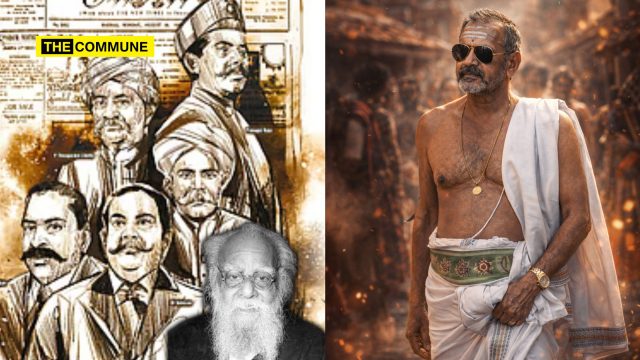
One would wonder how a Dravidianist party that denounced Brahmins, whose ideologue called for the genocide of Brahmins, can share a stage with one? That too with Prof Kamakoti, whose IIT is giving sleepless nights to the Dravidianists – haven’t you heard the man who vulgarized Lord Nataraja claim SC students are unaliving themselves at IIT more in number than Brahmin kids?
Why did they have to bring Dr Kamakoti on stage and have him praise the government? The answer lies in the fact that they crave Brahmin validation just as much as they crave the white man’s validation. Dravidianists entire existence will become zilch, worthless if you remove Brahmin from the equation. Some days ago, a Prof Jayaraman spoke about an arithmetic formula where he said Tamil – Parpaan (Brahmin) = Dravidian.
Professor Jayaraman: explains who is a #Dravidian clearly using arithmetic.
10 minus 4 = 6
5 minus 2 = 3
..like that
Tamils minus (Paarpanar) TamilBrahmins = Dravidians !!
😍
Let us change this a bit; Dravidianism – Brahmin = 0.
For all the talk about 100 years of social justice and taking pride in driving out Brahmins from Tamil Nadu, the Dravidianists still keep talking about the minuscule percentage that continues to live in the state. Remove Brahmins from the discourse, and the Dravidianist ecosystem will collapse.
Their so-called enemy’s existence is what keeps them alive. Dare them to speak about the other castes in the state, they won’t.Truth be told, the Justice Party came to existence because of a few disgruntled landed dominante caste members upset with the upward economic mobility of Brahmins. On the other hand, the Dravidianist DMK had to take the help of Rajaji, a Brahmin, to come to power.
For a movement that keeps claiming it has “annihilated Brahminism,” it simply cannot stop talking about Brahmins. Everything, right from when they wake up, take a dump, till they go to bed, everything still revolves around them. Their speeches, textbooks, pop culture, and conferences – all have the same common feature – bash the Brahmin.
— Indhavaainko (இந்தாவாய்ங்கோ) 👊 (@indhavaainko) August 31, 2023
And now even government events have to feature a Brahmin to have legitimacy. Just remove that Brahmin from the equation, as Prof Jayaraman did, and the whole thing has nothing to lean against; it just collapses. No enemy. No villain. No one to blame.
That’s why a Brahmin on stage matters so much. Not because of his expertise. Not because of governance. Because optics. “Look, even a Brahmin is praising us. Even they approve.”, that is the validation they want, badly. Ideology goes straight into the dustbin when insecurity rises.
This is also why caste is used so selectively. Brahmins are easy targets – politically and numerically insignificant. The safest punching bags. You can abuse them freely. Call them anything. Attribute anything to them. Ancient history, even when humans didn’t exist, modern problems, suicides, failures – stretch it back to even a zillion years – the blame is always on the paarpaan, the Brahmin. Who cares about evidence as long as the one who is blamed is the Brahmin?
There is no such sustained attack on dominant non-Brahmin castes. No serious questioning of who actually holds power today. No real discussion of internal hierarchies within the Dravidian ecosystem. No account of how the Scheduled Castes have lived under governments that endlessly boast about establishing “social justice.” That conversation never happens and will never happen. Because that mirror is dangerous – it is looking at them.
So the Brahmin is kept alive in the story, mocked when convenient, abused when useful, summoned when legitimacy is required, dismissed, and then quietly brought back on stage when a photo-op is needed – rinse and repeat.
Remove the Brahmin from the narrative, and what remains isn’t social justice. It’s a power structure that doesn’t want to reflect upon itself. That is why the obsession doesn’t end. And that is why, after a hundred years of claiming victory, the supposedly defeated enemy still sits right at the Centre of their politics.
Hydra is a political writer.
Subscribe to our channels on Telegram, WhatsApp, and Instagram and get the best stories of the day delivered to you personally.
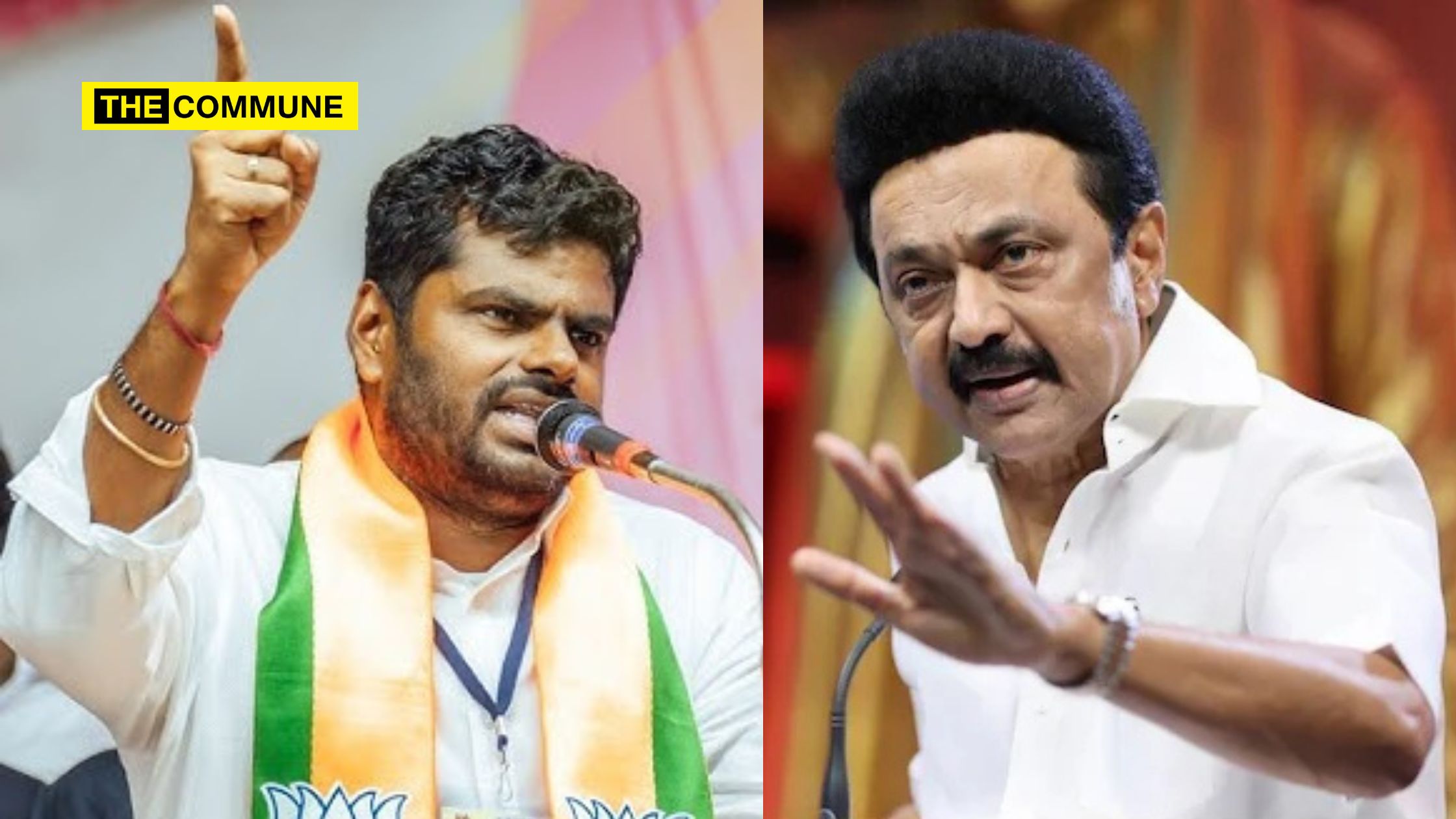
Bharatiya Janata Party leader K Annamalai launched a blistering verbal attack on Chief Minister MK Stalin at an event, sharply criticising the state government’s conduct and accusing the leadership of using improper language for central ministers ahead of the 2026 Tamil Nadu Legislative Assembly election scheduled for later this year.
Addressing supporters, Annamalai said, “Today, our Chief Minister has not stopped with that; he is moving to the next stage. He says it is not Amit Shah, but Avadhuru Shah, he is speaking defamatorily it seems, so he (the Chief Minister) has given Amit Shah the name ‘Avadhuru Shah’.” He went on to challenge the state’s ruling leadership, asserting: “Sir, Chief Minister, with great responsibility, humility, and dignity, I ask you: can we call you ‘Muttāl MK Stalin’ [‘Fool MK Stalin’] for running the government in a foolish manner? Would it even take one minute to say that?”
Annamalai further criticised what he described as the need for “restraint of the tongue,” and alleged that such restraint was lacking not only among DMK ministers but also with the Chief Minister himself. He added: “But restraint of the tongue is needed — not only for the ministers of the Dravida Munnetra Kazhagam, but also for the Chief Minister himself. To speak back, would it take even one minute for us, sir? We have never been afraid of you. And we are never going to be afraid of you.”
Subscribe to our channels on Telegram, WhatsApp, and Instagram and get the best stories of the day delivered to you personally.
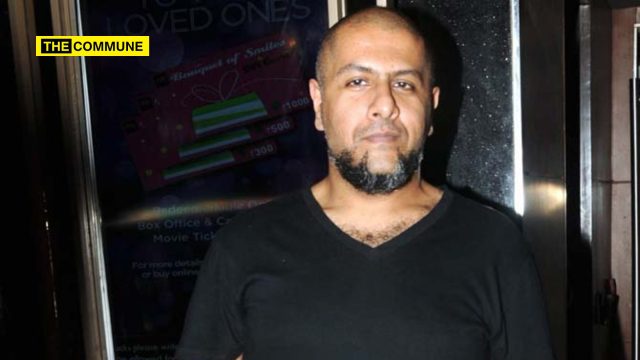
On 5 January 2026, the Supreme Court rejected the bail petitions of Umar Khalid, who has been described by investigative agencies as a “key conspirator” in the Delhi riots case. Following the court’s decision, a video posted by music composer Vishal Dadlani began circulating widely on social media.
In the video, Dadlani claimed that a clip allegedly showing Umar Khalid raising anti-national slogans was doctored. However, Umar Khalid has previously made controversial statements at multiple public forums, including remarks in support of Kashmir’s independence and comments critical of the Supreme Court in connection with the Afzal Guru case.
This report is based on ten significant events related to Vishal Dadlani’s life and career, drawn from music records and publicly available information spanning the period from 1973 to 2025.
Background and Early Life
Vishal Dadlani was born on 28 June 1973 in Mumbai, Maharashtra, into a Sindhi family that had long been settled in the city. He completed his schooling at Hill Grange High School and later enrolled at Jai Hind College, University of Mumbai, where he studied for about two years between 1989 and 1990. He subsequently completed a Bachelor of Commerce (B.Com) degree from H.R. College of Commerce and Economics, Churchgate. During his college years, his interests shifted decisively from academics toward rock music and live performance, laying the foundation for his future career in music.
Formation of Pentagram and Entry into Music
During his college years, Dadlani gravitated toward rock music, which led to the formation of “Pentagram,” one of India’s earliest and most prominent Indian rock bands. The band became known for its alternative sound and live performances, helping establish a non-film music culture in urban India. This phase marked Dadlani’s transition from an aspiring musician to a recognized performer and composer, eventually opening the door for his entry into mainstream Bollywood music as both a singer and music producer.
Playback Singing and Film Music Career
As a playback singer and composer, Vishal Dadlani delivered several commercially successful and popular songs across genres. His notable tracks include “Dhoom Again,” “Kurbaan Hua,” “Jee Le Zaraa,” “Marjaani,” “I Feel Good,” “Jab Mila Tu,” “Tu Meri,” “Swag Se Swagat,” “Bala,” and “Har Fun Maula.” Known for his energetic voice and contemporary style, Dadlani has contributed to over 280 songs. In 2004, as part of the Vishal–Shekhar duo, he won the Filmfare R.D. Burman Award for New Music Talent for Jhankaar Beats, and in 2012 received the IIFA Award for Best Background Score for Ra.One.
Television Career and Exit from Indian Idol
Vishal Dadlani became a household name on television as a judge on the popular singing reality show Indian Idol, first appearing in the role in 2013. His direct style of judging and on-screen persona attracted both popularity and criticism. On 8 April 2025, Dadlani officially exited the show, ending a long association that had significantly amplified his public visibility beyond the music industry.
Association with the Aam Aadmi Party
Dadlani’s political engagement began during the early phase of the India Against Corruption movement in 2011, which later gave rise to the Aam Aadmi Party. In 2015, he actively supported the party by contributing to its campaign messaging and composing the election song “Paanch Saal Kejriwal.” In 2020, he again backed the party by singing the campaign song “Lage Raho Kejriwal” for the Delhi Assembly elections and publicly campaigned for party candidates in areas such as Ramesh Nagar.
2016 Jain Monk Controversy and Apology
On 26 August 2016, Dadlani courted controversy after commenting on Jain monk Tarun Sagar Maharaj’s address in the Haryana Assembly. His remarks, perceived as offensive, triggered widespread backlash. The Punjab and Haryana High Court directed him to appear before Ambala Police for investigation. Facing intense criticism, Dadlani visited Tarun Sagar Maharaj in Chandigarh on 21 September 2016, where he publicly apologised by folding his hands, bowing his head, and holding his ears. He subsequently announced his withdrawal from active political campaigning while stating emotional attachment to AAP.
Support for Kanhaiya Kumar in Sedition Case
On 27 February 2020, Dadlani publicly opposed AAP’s decision to grant sanction for prosecution in a sedition case against Kanhaiya Kumar and others. The case stemmed from a 9 February 2016 incident at Jawaharlal Nehru University where allegedly seditious slogans were raised. Delhi Police had filed a chargesheet on 14 January 2019. Dadlani criticized the party’s stance, leading to a visible rift between him and the political organization he had previously supported.
Remarks on Former CJI Ranjan Gogoi
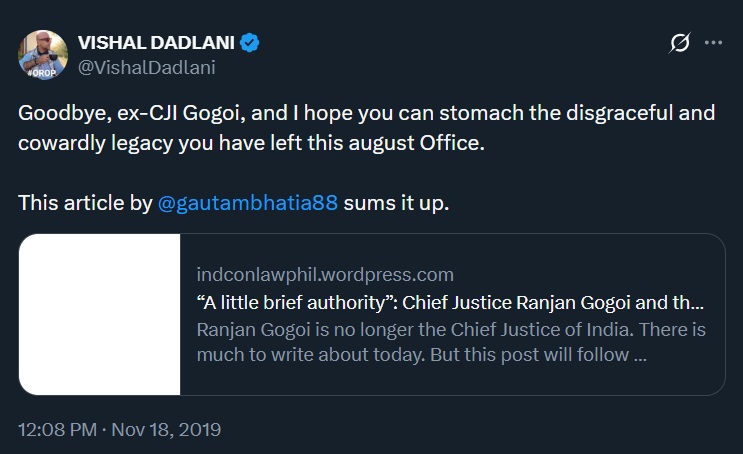
On 18 November 2019, following the retirement of former Chief Justice of India Ranjan Gogoi, Dadlani posted a tweet making sharp and critical remarks about Gogoi’s judicial legacy. The tweet, posted a day after Gogoi’s retirement on 17 November 2019, drew strong public reactions and criticism, with many accusing Dadlani of crossing the line in his commentary on the judiciary.
Comments on India–Pakistan Conflict
On 6 June 2024, Dadlani described the India–Pakistan conflict in political terms, urging peace and diplomacy over war in a public post following a ceasefire.
Kangana Ranaut Incident
In June 2024, he supported the CISF constable Kulwinder Kaur, who had slapped actor and MP Kangana Ranaut at Chandigarh airport. Dadlani stated that if the constable lost her job, he would help her secure employment, attributing her actions to prolonged emotional distress.
Takes a Jibe At ‘Vande Mataram’ debate
On 10 December 2025, on the occasion of the 150th anniversary of India’s national song Vande Mataram, a 10-hour debate was held in the Lok Sabha. Reacting to this, music composer Vishal Dadlani posted a video on Instagram. In the video, he sarcastically said: “Hello brothers and sisters, there’s big good news for you. Yesterday our Parliament — India’s Parliament — spent 10 hours debating Vande Mataram. Because of this debate, India’s unemployment problem has been solved, the IndiGo problem has been solved, the air pollution problem has been solved. Imagine, a poem was debated for 10 hours. This debate is funded by your tax money. One minute in Parliament costs ₹2.5 lakh. Ten hours means 600 minutes. Do the math.”
बॉलीवुड गायक विशाल ददलानी ने संसद में 8 दिसंबर को ‘वंदे मातरम’ पर हुई 10 घंटे लंबी बहस पर नाराज़गी जताई है।
उन्होंने सोशल मीडिया पर प्रतिक्रिया देते हुए कहा कि,
“इस बहस के कारण लगता है जैसे बेरोज़गारी, इंडिगो की समस्या और प्रदूषण (हवा का मुद्दा) सब हल हो गए हैं।”
इस तरह उन्होंने… pic.twitter.com/PfGsL16BhB
On 5 January 2026, after the Supreme Court of India rejected bail pleas of Umar Khalid and Sharjeel Imam in the Delhi riots case, a video of Dadlani went viral in which he claimed that videos showing Umar Khalid raising anti-national slogans were doctored.
विशाल ददलानी है आम आदमी पार्टी के कई मंच पर देखा गया है
जब जैन मुनि तरुण सागर जी महाराज हरियाणा विधानसभा में गए थे तब इस नीच ने जैन मुनि का बेहद घटिया और अभद्र और अश्लील मजाक उड़ाया था
आज यह विशाल ददलानी कह रहा है कि राइट विंग जो क्लिप उमर खालिद की दिखा रहे हैं वह डॉक्टर्ड… pic.twitter.com/oqofQdDoaa
In 2016, Dadlani’s name surfaced in the Panama Papers leak, linking him and family members to investments via British Virgin Islands entities such as Sunny Blessing Holding Inc. These transactions are currently under investigation by the Enforcement Directorate.
Subscribe to our channels on Telegram, WhatsApp, and Instagram and get the best stories of the day delivered to you personally.
On 27 December 2025, Italian authorities in Genoa and Milan arrested nine individuals, including Mohammad Hannoun, president of the Palestinian Association in Italy, on suspicion of diverting about €7 million raised through charities to fund Hamas. Anti-terror and anti-mafia units seized over €8 million in assets and coordinated with EU partners after detecting suspicious financial transactions.
In this report, we take a look at 30 incidents across Europe in 2025 involving Islamist extremism, security threats, legal actions, and state responses, based on open-source reporting. It documents how authorities and societies addressed radicalisation, terrorism, integration tensions, and public order.
#1 Italy Arrests Nine for Alleged Hamas Funding – 27 December 2025 – Genoa & Milan, Italy
Italian anti-terror and anti-mafia police arrested nine individuals, including Mohammad Hannoun, president of the Palestinian Association in Italy, on suspicion of diverting approximately €7 million raised through charities to fund Hamas. Investigators said the funds were collected under the pretext of humanitarian aid. Authorities seized assets worth over €8 million and coordinated with European Union partners after detecting suspicious financial transactions.
#2 Christmas Market Car-Ramming Plot Foiled in Germany – 13 December 2025 – Bavaria, Germany
German authorities arrested five men suspected of planning a vehicle-ramming attack at a Christmas market. Prosecutors stated that a 56-year-old Egyptian national called for the attack, while three Moroccan suspects agreed to carry it out and a Syrian national encouraged them. The plot aimed to kill or injure as many people as possible. Officials cited an Islamist motive and confirmed that all suspects were produced before a magistrate and remanded in custody.
#3 UK Jails Man for Qur’an Desecration – 12 December 2025 – Leeds, United Kingdom
A 36-year-old man was arrested and jailed after allegedly desecrating a Qur’an and a framed chapter of the text in an interfaith room at St James’s University Hospital. Authorities treated the act as criminal damage. Hospital officials and police condemned the incident as unacceptable.
#4 UK Teacher Banned Over Religious Remarks – 9 December 2025 – London, United Kingdom
A primary school teacher was banned from working with children after telling a Muslim pupil that “Britain is still a Christian state” and reprimanding students for washing their feet in school sinks, citing school rules. Safeguarding authorities ruled that the comments caused emotional harm.
#5 Belgium Compensates Former Al-Qaeda Terrorist – 16 November 2025 – Limburg, Belgium
Belgium paid €350,000 to Nizar Trabelsi, a former Tunisian footballer convicted in Belgium for plotting a suicide attack on a NATO air base, after a court ruled his extradition to the United States was illegal. Trabelsi had been sentenced to 10 years in Belgium.
#6 Belgium Arrests Three in Alleged Plot Against PM – 14 November 2025 – Antwerp, Belgium
Belgian police arrested three suspects over an alleged jihadist plot targeting the prime minister. Authorities recovered an improvised explosive device, steel ball bearings, and a 3D printer, raising concerns about a drone-based attack. The suspects were taken into custody as investigators assessed the scale and intent of the planned operation.
#7 Belgian Court Convicts Jihadist for Yazidi Genocide – 13 November 2025 – Brussels, Belgium
A Brussels court convicted Sammy Djedou of genocide and crimes against humanity for his role in ISIS’s campaign against the Yazidis. Prosecuted in absentia, Djedou was also convicted of rape and sexual enslavement. The ruling marked Belgium’s first genocide conviction linked to ISIS crimes against Yazidis.
#8 Afghan Man Arrested for Plot Against Jews – 5 November 2025 – Denmark
Danish authorities arrested Tawab M. for allegedly conspiring to supply weapons for attacks on Jewish targets in Germany. Investigators said he coordinated with a Danish citizen involved in intelligence gathering on Jewish individuals and institutions in Berlin. The arrest followed cross-border intelligence cooperation.
#9 Car Attack While Shouting ‘Allahu Akbar’ – 5 November 2025 – Île d’Oléron, France
A 35-year-old man, identified as Yasin B, rammed his car into pedestrians and cyclists, injuring 10 people while shouting “Allahu Akbar.” After the impact, he attempted to detonate a gas cylinder inside the vehicle. Authorities confirmed the act was deliberate and launched terrorism-related investigations.
#10 Asylum Seeker Sexually Assaults Woman in Cardiff – 31 October 2025 – Wales, United Kingdom
Fawaz Alsamaou followed a woman from a nightclub and strangled and sexually assaulted her under a railway bridge in Cardiff. The victim resisted and alerted police. Alsamaou admitted to intentional strangulation and sexual assault and was sentenced to prison.
#11 Arrest Over ISIS-K Propaganda – 31 October 2025 – Paris, France
French intelligence arrested Ataullah A., a 20-year-old Afghan national, for raising funds and spreading ISIS-K propaganda online. Authorities said he used TikTok and other platforms to recruit and communicate with ISIS commanders in Afghanistan. He had been under surveillance by DGSI for months.
#12 London Hillingdon Stabbing – 27 October 2025 – London, United Kingdom
Afghan national Safi Dawood stabbed three people in Uxbridge, killing 49-year-old Wayne Broadhurst and injuring two others, including a 14-year-old. Dawood had entered the UK illegally in 2020 and was granted temporary stay until 2022. He was arrested at the scene.
#13 Paris Bus Attack Attempt – 21 October 2025 – Paris, France
Fatima S., a 40-year-old woman, shouted “Allahu Akbar” and attempted to seize a bus steering wheel, trying to crash the vehicle with passengers onboard. Police said she was already on radicalisation watchlists. Passenger intervention prevented a major accident.
#14 UK Arrests Pro-Palestinian Protesters – 15 October 2025 – United Kingdom
Police arrested numerous protesters, including elderly demonstrators and clergy, opposing the ban on Palestine Action. Authorities classified support for the group as a terrorism-related offence.
#15 UK Appoints First Muslim Woman Home Secretary – 5 September 2025 – United Kingdom
Shabana Mahmood was appointed Home Secretary, becoming the first Muslim woman to oversee immigration, policing, and national security. The appointment drew political debate over representation and policy direction.
#16 Austria Allows Sharia Arbitration – 23 August 2025 – Vienna, Austria
A Vienna court upheld a Sharia-based arbitration agreement between two Muslim men, ruling it did not violate public order. Critics warned of parallel legal systems, while supporters cited contractual freedom.
#17 Belgium Moves to Ban Extremist Groups – 27 July 2025 – Belgium
Belgium introduced legislation enabling the government to ban groups deemed threats to democracy, including organisations linked to the Muslim Brotherhood and Samidoun.
#18 Denmark Reaffirms Burqa Ban – 2 July 2025 – Denmark
Denmark reaffirmed its public burqa and niqab ban and proposed extending it to educational institutions. The prime minister urged cultural adaptation, stating democracy must take precedence.
#19 Denmark to Remove University Prayer Rooms – 5 June 2025 – Denmark
The Danish government announced plans to extend the veil ban to schools and remove prayer rooms from universities, citing concerns over social control and oppression.
#20 Islamist Stabbing at German Football Bar – 19 May 2025 – Bielefeld, Germany
Syrian refugee Mahmoud Mhamed stabbed five people at a football bar using knives and a handmade spear. Authorities confirmed an Islamist motive and links to ISIS ideology.
#21 Vienna School Demographic Shift – 18 April 2025 – Vienna, Austria
Data showed Muslim students comprised 41.2% of Vienna’s elementary schools, surpassing Christians. Critics cited integration and language challenges.
#22 Austrian Teen Killed in Islamist Attack – 16 February 2025- Villach, Austria
A Syrian asylum seeker stabbed a 14-year-old boy to death and injured five others. Police found an ISIS flag at his residence. The victims included two 15-year-olds and three adults aged 28 to 36.
#23 Munich Car Attack – 13 February 2025 – Munich, Germany
Afghan refugee Farhad Noori rammed a car into a trade-union protest, killing a woman and her child. He confessed and shouted “Allahu Akbar.”
#24 UK Grooming Gang Fallout – 3 February 2025 – Rotherham, UK
Revisiting the Jay Report, victims described long-term abuse by grooming gangs and failures by authorities.
#25 Sweden Convicts Qur’an Desecrator – 3 February 2025- Stockholm, Sweden
A court convicted Salwan Najem for Qur’an desecration during protests, ruling his actions went beyond lawful criticism.
#26 Austria: ISIS Allegiance Murder Case – 24 January 2025 – Villach, Austria
Mohammed Ahmed stabbed a teenager to death and injured 5 others. Villach police found an Islamic State (IS) flag in his apartment, and he had also sworn allegiance to the terrorist organization. Police arrested the suspect, Mohammed A., at the scene and charged him with murder and attempted murder.
#27 Germany Park Stabbing – 22 January 2025 – Bavaria, Germany
A 28-year-old Afghan national, Enamullah Omarzai, attacked a group of kindergarten children walking in the park with a kitchen knife. A 2-year-old Moroccan boy was killed in the attack. A 41-year-old German man who intervened to save the children was also stabbed by the attacker, resulting in his death. A 2-year-old Syrian girl and two other people were seriously injured in the attack. Aschaffenburg police arrested the fleeing suspect within 12 minutes. He was a rejected refugee.
#28 Sweden Accuses Iran of Proxy Attacks – 16 January 2025 – Sweden
The Swedish Prime Minister accused Iran of using violent criminal gangs to carry out serious attacks within Sweden, including shootings and grenade detonations, calling it a form of hybrid threat and urging readiness for conflict. He warned these gangs act with Iranian backing and stressed that peace requires freedom and absence of such attacks, reflecting rising tensions and security concerns in the country.
#29 Greece Arrests Pakistani Murder Suspect – 10 January 2025 – Larissa, Greece
Police arrested Ahsan, 30-year-old Pakistani national in the Netherlands and extradited him to Greece after he had been on the run for over two years for the murder of his 35-year-old Greek live in partner Ioanna in September 2022.
#30 Switzerland Implements Burqa Ban – 1 January 2025 – Switzerland
Switzerland’s law banning face coverings in public, widely known as the “burqa ban,” officially came into effect in January 2025, prohibiting the covering of the nose, mouth, and eyes in public spaces and publicly accessible buildings, with fines up to 1,000 Swiss francs for violators. The law was approved by Swiss voters in a 2021 referendum and aims to restrict all facial concealment, including burqas and niqabs, though it allows exceptions for health, safety, weather, places of worship, and other specific cases.
Subscribe to our channels on Telegram, WhatsApp, and Instagram and get the best stories of the day delivered to you personally.
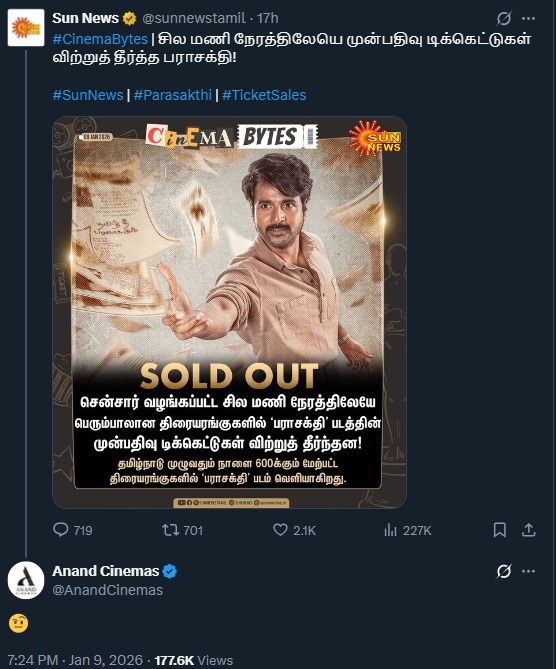
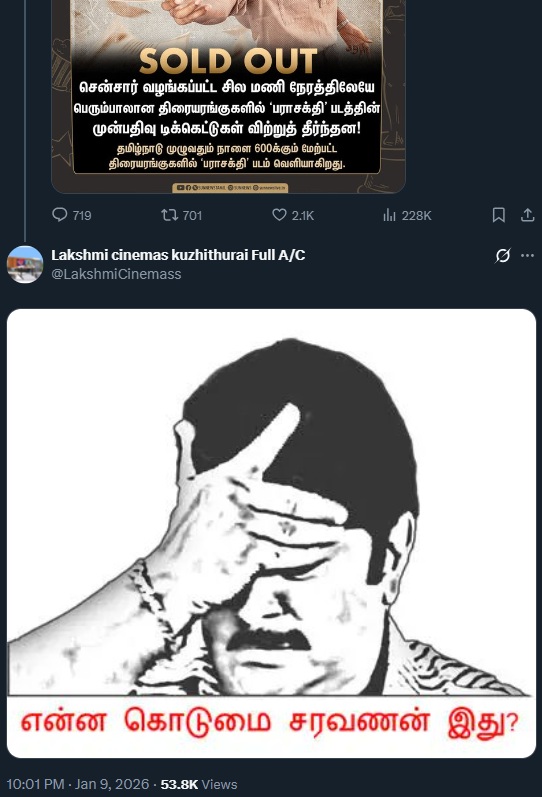
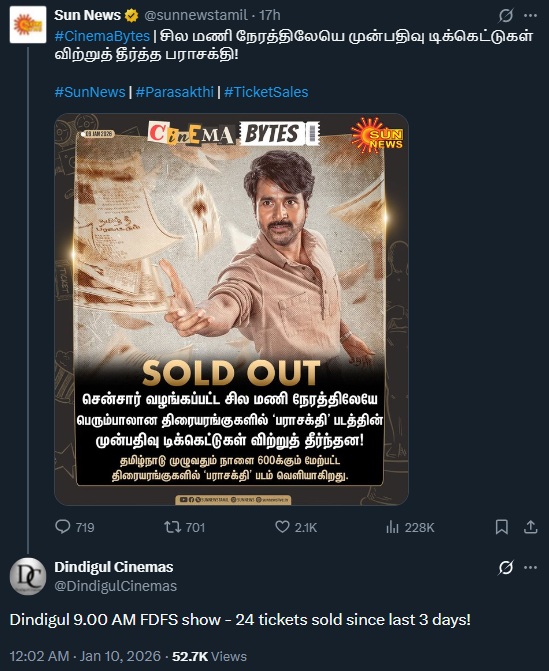
Claims of strong box-office momentum for the 2026 pro-DMK propaganda film Parasakthi came under scrutiny on Friday after multiple theatre owners and social media users challenged “sold out” narratives circulated by DMK mouthpiece Sun News’ X handle.
A post by Sun News under its Cinema Bytes segment claimed that early morning shows in Chennai were sold out and projected high demand for the film across Tamil Nadu. The post was widely shared on social media and amplified by several cinema-related accounts.
However, the claim triggered a backlash after X users added community context, noting that while some first-day first-show screenings in Chennai had limited occupancy, theatres in several other cities across Tamil Nadu were far from full.
Links to live booking platforms were shared to dispute the narrative, showing significant seat availability in cities such as Madurai, Coimbatore, Tirunelveli, and Dindigul.
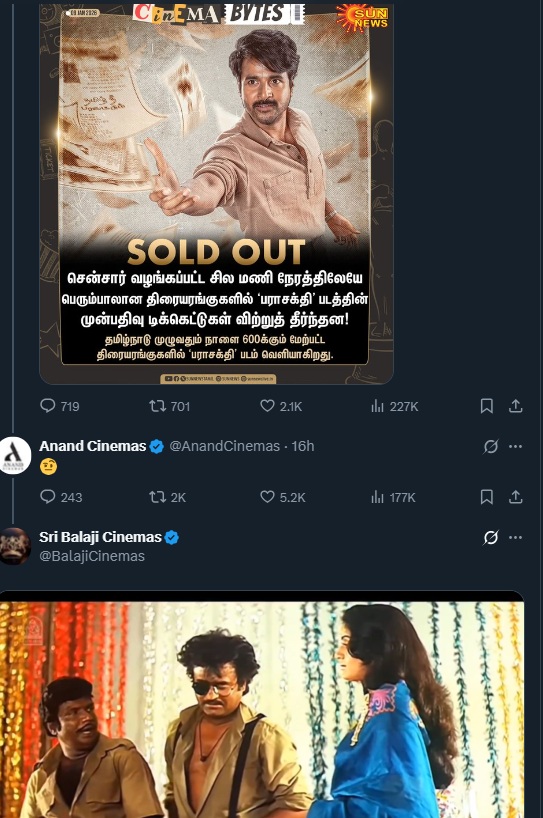
The controversy escalated when official theatre handles themselves publicly contradicted the hype.
Official handles of cinema owners and exhibitors joined the discussion, with some openly mocking what they described as manufactured publicity. Screenshots and posts from theatres suggested that occupancy levels outside Chennai did not match the impression created by promotional posts.
The X account of Dindigul Cinemas, a tracker and analyst, posted that only 24 tickets had been sold over three days for a 9:00 AM first-day-first-show screening, directly questioning the credibility of the “sold out” claim.
The episode also saw trolling aimed at the film’s producer Dawn Pictures, with users accusing the production house of attempting to inflate numbers through friendly media amplification. Several posts described the public rebuttal by theatre owners as unprecedented, noting that exhibitors rarely contradict promotional narratives so openly.
Subscribe to our channels on Telegram, WhatsApp, and Instagram and get the best stories of the day delivered to you personally.
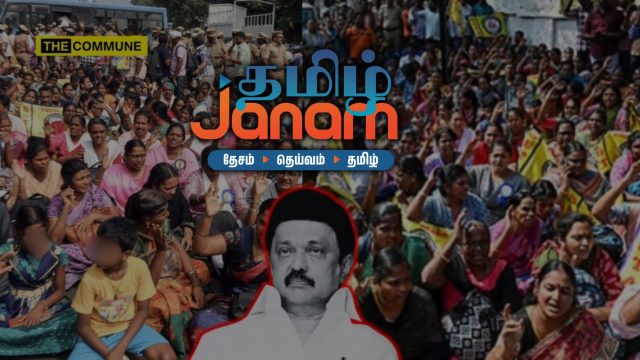
A comprehensive, large-scale opinion poll conducted across Tamil Nadu by news channel Tamil Janam and a few other organizations has revealed a landscape of significant dissatisfaction with the ruling Dravida Munnetra Kazhagam (DMK) government and considerable uncertainty among voters regarding alliance choices for the upcoming elections. The survey results point to a highly competitive and unpredictable electoral battle.
Key Findings: Sector-Wise Discontent With DMK Govt
The survey segmented voters by profession and community to gauge specific grievances:
Government Employees: A staggering 80% expressed a lack of trust in the DMK government, with only 20% supportive. This is attributed primarily to the handling of the old pension scheme (OPS) issue. Analysts noted that employees feel “insulted” and “deceived,” having been promised a restoration of OPS only to be offered a different scheme (TAPS) at the last minute. This segment, traditionally a vote bank for the DMK, is now seen as severely alienated.
Students: The government’s electoral promise of loan waivers for college students remains unfulfilled. Instead, the distribution of laptops – a scheme initiated by the previous AIADMK government but halted by the DMK has been restarted close to elections. This is perceived by many as a cynical electoral tactic, with students feeling used for votes. The survey indicates this has backfired, creating resentment. About 30% of them are supportive while 70% of the surveyed students said they did not trust the DMK government.
Unemployed Graduates: Among this group, there is reportedly 95% opposition to the DMK. The prevailing sentiment is that the ruling party is directly responsible for the lack of job opportunities, creating a “betrayed” mindset.
Auto Drivers & Housewives: These groups show a more split opinion, roughly around 50-55% opposition to the DMK. For housewives, issues like price rise and household expenses are major pain points. Auto drivers, being in daily contact with the public, absorb widespread political discontent.
A major theme of the survey is the fluidity and dissatisfaction within existing alliances, particularly the DMK-led front.
Congress Workers: When asked about their preferred alliance, 61% of Congress supporters said they wanted their party to align with the TVK. Only 35% preferred continuing with the DMK. The primary reasons cited are a lack of respect from the DMK leadership, insufficient seat allocation, and a sense that the Congress is being stifled and not allowed to grow independently within the alliance. The “big brother” attitude of the DMK is a persistent grievance.
VCK (Viduthalai Chiruthaigal Katchi) Cadres: Surprisingly, 55% of VCK supporters expressed a desire for their party to join the DMK alliance. 41% wanted to join hands with the TVK, and only 2% preferred going alone. This indicates a sizeable internal shift, driven by perceived slights to leader Thol. Thirumavalavan and a search for greater political space and respect.
AMMK Cadres: In a clear verdict, 86% of AIADMK supporters want their party to ally with the BJP-led National Democratic Alliance (NDA). 14% preferred the TVK, and no one (0%) wanted an alliance with the DMK or to go solo. The analysts linked this to cadre acceptance of Edappadi K. Palaniswami’s (EPS) leadership and a strategic understanding that the NDA is the only viable vehicle to defeat the DMK.
PMK Cadre: The survey found 91% of PMK supporters back the leadership of Anbumani Ramadoss, with only 9% supporting the faction led by his uncle, Dr. Ramadoss. This solidifies Anbumani’s position. The discussion indicated that the PMK is almost certain to join the NDA, a move seen as consolidating the Vanniyar vote bank behind the opposition front.
DMDK Cadre:Among DMDK supporters, 69% reportedly favoured the NDA, 21% preferred the DMK, 9% supported TVK, and 1% wanted the party to contest alone. There seem to be concerns about DMDK’s credibility due to inconsistent alliance signalling.
Assessment Of Opposition Performance
The survey also gauged public opinion on the effectiveness of opposition parties over the last five years.
On issues like the Thirupparankundram Karthigai Deepam dispute, 60% of respondents reportedly felt opposition parties had performed well, although it is noted that sustained protest activity was largely driven by the BJP and Hindu organisations rather than the AIADMK or DMK allies.
On Anna University-related protests, 83% of respondents felt the opposition had acted effectively. However, on sanitation worker and government employee protests, the opposition was widely perceived as absent.
It is observed that media coverage in Tamil Nadu has shifted in favour of the ruling party when contrasting the current environment with previous years when media outlets were more adversarial toward the government. The DMK’s long-standing engagement with media institutions has resulted in favourable framing and limited amplification of opposition narratives.
The Vijay Factor & Election Narratives
The rise of actor Vijay’s TVK is a dominant subtext:
According to survey-based observations, many women expressed openness to voting for Vijay’s party, even if they lacked detailed ideological alignment.
Analysts believe that while Vijay has significant personal popularity, especially among women and youth, he lacks a robust political infrastructure and grassroots organization. A mere “wave” based on star power is deemed insufficient to win elections, as historical examples like Vaiko’s MDMK in the 1990s show.
For a wave to materialize, his upcoming film “Jana Nayagan” would need to be a massive, content-driven hit like MGR’s films, which is uncertain.
His alliance choices (Congress at the national level? AIADMK/NDA at the state?) remain the biggest question mark and will significantly determine his impact.
However, it was also noted that DMK cadre continue to maintain household-level contact through welfare outreach and festival visits, which could influence last-minute voting decisions. It is possible that women voters may play a decisive role in the final days before polling.
A State In Confusion?
The survey paints a picture of a dissatisfied electorate, particularly with the incumbent DMK government on issues of governance, employment, and promises. However, this anti-incumbency has not decisively crystallized behind a single alternative due to:
Alliance Confusion: Major alliance partners like Congress and VCK have cadres openly preferring a switch to other alliance blocs, creating internal pressure and uncertainty.
Absence of a Clear Wave: While the AIADMK-NDA front appears consolidating, and the TVK is a disruptive new force, there is no overwhelming wave in favor of any one bloc.
Last-Minute Decisions: With key players like PMK, TVK, and the alleged presence of factions within Congress, yet to formally declare alliances, the voter remains in a “wait-and-watch” mode.
In toto, Tamil Nadu is witnessing personality-driven, rather than ideology-driven, voting behaviour. Manifestos and policy distinctions seem to matter less than leadership appeal, alliance arithmetic, caste considerations, and last-mile mobilisation.
While the DMK alliance is structurally strong, the survey suggested visible erosion among traditional support bases. At the same time, emerging players such as TVK were said to be benefiting from protest politics, celebrity appeal, and public fatigue with established parties.
The final outcome would depend heavily on alliance finalisation, last-minute voter shifts, and the ability of parties to convert public discontent into organised electoral mobilisation.
Overall, the stage is set for one of Tamil Nadu’s most unpredictable elections in recent times.
Subscribe to our channels on Telegram, WhatsApp, and Instagram and get the best stories of the day delivered to you personally.
Imagine the most horrible, cunning person you’ve ever met. Someone for whom loyalty, ethics, and truth don’t matter. Someone who would do anything for their own benefit, even if it meant selling out their own mother for money. Someone who wouldn’t even think twice before bootlicking for personal gain. Set them beside The News Minute, and that person would still come across as principled.
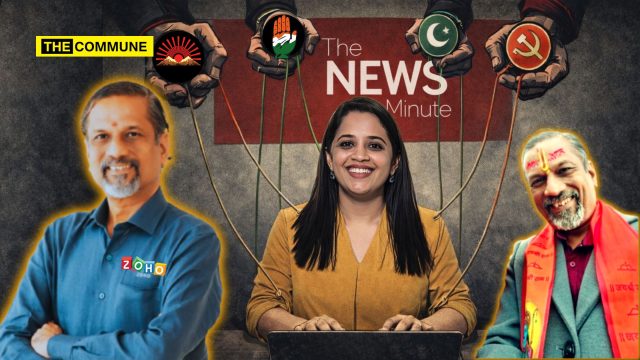
After a voyeuristic, Nakkheeran-style hit job peeping into the personal life of Zoho founder Sridhar Vembu, the leftist rag – or more accurately, the DMK’s unofficial mouthpiece – The News Minute signaled that it would publish a full profile of Vembu.
On 9 January 2026, they published a 10,000-plus-word hit job on Sridhar Vembu, cunningly hiding it behind a paywall like cowards to force subscriptions to their trash.
In this no-punches-pulled article, we dissect the full hitjob and expose the venom with which The Naxal Minute functions.
The profile is a long-winded character assassination. It sets its intention right at the beginning – we hate Vembu because he is a Hindu, a Brahmin, a ‘Sanghi’ and so you must hate him too.
Paragraph after paragraph, it does the same thing: cherry‑pick facts, launder innuendo through anonymous quotes, and then hang everything on the one sin TNM can never forgive – that Vembu refuses to fit their ideological script. Let us take a deeper look.
Rigging The Frame From Paragraph 1
The piece doesn’t begin with his achievements, his words, or his background. But with a quote from RSS’s mouthpiece Organiser. So, with this they have stained him saffron.
Indulekha Aravind uses it as the first filter through which the reader must see Vembu. He is guilty by association before his own words even appear.
Then comes the lush travel‑writing: poor farm labourers, “verdant paddy fields”, Western Ghats, and at the end of the road, the billionaire Brahmin in a house villagers call an “agraharam”. The implication is clear – now identify him by his caste. Then they mention the village is also home to other castes.
The word “agraharam” is waved like a caste dog‑whistle, and readers are expected to fill in the rest. This is TNM’s method throughout. Facts are thin; atmosphere does the heavy lifting.
Just like that, without a single example of him discriminating against anyone, they’ve painted him as a casteist living apart from the villagers. They highlight he’s a Brahmin and now frame his guilt by identity, a cheap trick to make readers view his every action through a lens of prejudice they’ve provided.
Image-Building Turned Into Moral Crime
Next comes the “poster boy” construction: Padma Shri, veshti, cycling CEO, swadeshi talk, BJP proximity. You get descriptions like he is a “poster boy” for BJP and RSS, he takes photos in veshti in paddy fields, he says “I don’t care about net worth.” All of it is real. None of it is illegal or hidden. But instead of asking whether any of this is false, the article pivots to anonymous voices calling him a “great marketer” and someone who “makes a virtue out of necessity.”
That’s the accusation. No specific lie is identified. No statement is shown to be untrue. Image-building itself is treated as deception because the image is politically inconvenient.
They never point to a specific thing he said that was a lie. Did he fake Zoho’s revenue? Did he invent the Zoho Schools program? Did he Photoshop himself in the village? No. They just offer anonymous opinions that he’s good at telling his story, as if every successful person isn’t. It’s a hollow accusation designed to make you doubt his sincerity without having to prove a thing.
The usual tactic these hit jobs employ is the use of anonymous “ex-employees” they claim to have spoken to—no names, no accountability, just vague references. By that standard, The Commune could just as easily spin an imaginary story citing similar “sources” who have supposedly engaged with Dhanya Rajendran or anyone else in that Leftist-Dravidianist den.
The Divorce Case – Presenting Half-Truths
When the article reaches the California divorce proceedings, it drops all pretense of balance.
Interim court language is presented as though guilt has already been established. The fact that these are interim orders that appeals are ongoing, that family courts routinely use aggressive language to secure assets – all of that is either buried or mentioned much later, after the damage is done.
The ex-wife’s allegations are reproduced in detail. Vembu’s response is reduced to a line or two. No documents. No explanation. No real attempt to present both sides. It reads less like reporting and more like a prosecution brief.
Startup Stories Don’t Work The Way TNM Pretends They Do
On Zoho’s origins, the article does the same trick. Over the years, media profiles and talks have simplified the founding story – as almost every startup founder does. In courtroom filings, Vembu’s timeline is more precise: Tony Thomas set up Advent in 1995; he joined in 1997; his brothers ran Vembu Systems in Chennai.
TNM presents this as if they’ve unearthed a conspiracy. “There have been variations,” they say ominously, and then… stop. No smoking gun, no forged cap table, nothing.
Just the insinuation that because informal interviews and a legal declaration don’t use identical wording twenty years apart, something must be dirty. It’s investigative theatre without the investigation.
Zoho’s Product Model And Hiring: Ethics By Selective Outrage
On the business itself, TNM cannot deny the scale:
Around a million paying organisations in 80 countries.
So it tries to degrade the achievement with sneers. Zoho is a “fast follower”, “no innovation”, just copying Salesforce for smaller clients. Who says so? A conveniently unnamed SaaS competitor. Given TNM’s nexus with DMK, one can guess that it could be the wannabe Steve Jobs who wears black turtle-neck shirt in sweltering sun and ‘kisses’. No product analysis, no technical breakdown, nothing beyond the jealous grumbling of a rival.
Conveniently, the same piece elsewhere quotes two former executives calling Vembu a “genius” and a “great mix of technologist and builder”. That contradiction is never resolved.
On Zoho Schools, the framing borders on perverse. TNM admits that:
The programme takes kids straight out of school, mostly from disadvantaged backgrounds.
Trains them for two years on stipend.
Absorbs them into jobs they simply wouldn’t get otherwise.
Then it hacks with the sickle like a typical Communist rag: since they don’t get a degree, they are “locked in” and “it’s exploitative”. Locked into what? A stable, long‑term job in a profitable global company whose employee turnover is 7% against an industry 12–15%.
The piece produces no data on how many Zoho School grads actually wanted to leave and were blocked, or whether other firms do or do not hire them. It’s a theoretical worry converted into a moral indictment.
Meanwhile, pay and ESOPs are attacked using anecdote: one ex‑employee says “I was making peanuts” while my product earned millions. Perhaps he was underpaid. Perhaps not. TNM never shows an actual compensation benchmark across product companies at Zoho’s stage. The line is emotionally satisfying, and that is enough.
If Dhanya Rajendran wants to have a real debate about labour, equity and ESOPs, she might want to start with how much “equity” her own reporters hold in TNM before lecturing a bootstrapped firm that doesn’t owe the VC‑style lottery to anyone.
Political Change Framed As Original Sin
A huge part of the article is obsessed with Vembu’s shift from a rationalist, liberal blogger to a supporter of Indian cultural conservatism and the current government. TNM frames this not as a personal evolution, but as a suspicious “makeover.”
In the 2000s, Vembu liked Buddhist philosophy, free markets, and wrote about “Maoism in Silicon Valley” when a Google engineer was fired over right-wing views. Later, Vembu is seen defending the RSS, attending a Swadeshi Jagran Manch event, and praising Modi. They also have a problem with S Gurumurthy being his mentor.
For TNM, anybody associated with the RSS or BJP is a crime. If you’re a Hindu-hating, Modi-bashing, Yogi-dissing communist or an Islamist, you’re a warrior.
Anti-Vaccine Stand – One Solid Hit Used To Smear Everything Else
Vembu is entitled to have his views about vaccines. He cites some research – which general medicine doctors do not accept. It is his view, just because one is an anti-vaxxer or does not believe that vaccines can help people, one cannot label them with any grand smear, just because you do not agree to them. His comments on vaccines are used to suggest he’s drifting into pseudoscience. And this, they use to bleed into every other domain – business, governance, philanthropy as though one bad belief proves a general collapse of reason.
Tenkasi: Philanthropy Recast As RSS Pipeline
The reporting from Govindaperi is revealing – not about Vembu, but about TNM. Villagers say:
He cleared a farmhand’s debt.
He funded multiple temple renovations.
His school feeds children, gives uniforms, bikes, runs a clinic and an ambulance.
A DMK sympathiser compares him to god: “He has done only good things for us since he moved here.” Any normal outlet would treat this as a complex figure: ideological right‑wing, maybe problematic on some issues, but tangibly improving one rural cluster’s life. TNM’s reflex is different: How do we spin this as sinister?
When a BJP leader says Vembu’s Swadeshi talk “will eventually help us when people start thinking of their roots, India, and religion,” TNM runs it as proof of a long game. When a DMK minister complains that Vembu is telling the global tech world DMK is “anti‑India and anti‑Hindu,” TNM prints it as “actual damage,” without producing the offending quotes. Also why is DMK being branded so? Can we talk about the venom spewed from the Dravidianist and DMK camps under the garb of rationalism? Can we talk about your own abusive writers like Bharathy Singaravel who has a Nazi mindset and spews casteist venom against Brahmins?
The villagers’ lived experience – debt relief, free education, health access – becomes less important than the party line out of Chennai. That’s TNM’s idea of speaking “truth to power”: repeat what one party says about a businessman, and ignore what hundreds of poor families say about him.
The Ultimate Sin: Doing Good For The “Wrong” Reasons
Here is the heart of TNM’s grievance. Vembu is doing things that are, on their face, good: building a free school, teaching traditional arts, funding temple renovations, creating jobs in a rural area.
But because he does these while also supporting the BJP and the RSS, TNM can’t accept that the goodness might be genuine. So, they politicize everything.
Kalaivani Kalvi Maiyam’s curriculum which includes bharatanatyam, yoga, silambam, parai, Tirumurai, savings, skills becomes “RSS ideology in the guise of cultural and social activities,” according to a DMK functionary.
TNM prints this partisan opinion as if it’s evidence. When villagers rave about the school and the clinic, their gratitude is immediately reframed. They’re not thankful beneficiaries; they’re unknowing participants in a “soft power” campaign.
His business success is treated the same way. Winning a government contract or his app getting downloads after a minister’s praise isn’t a commercial win; it’s painted as a suspicious reward for political loyalty. Questions about his app’s privacy features are presented not as tech issues, but as his moral failings.
A Conclusion Written Before The Reporting Began
This “in-depth profile” by Indulekha Aravind started with a conclusion: Sridhar Vembu is a problematic poster boy for an ideology they dislike. Then, they worked backwards, twisting facts, omitting context, and amplifying whispers to make everything in his remarkable life fit that story.
RSS, BJP are evil, so anyone associated with them in the remotest way are also evil. If you replaced RSS with say Communist, Congress or even the DMK in the same article, the very same ‘qualities’ of Vembu would have been applauded as ideological consistency, courage, or integrity.
It is obvious TNM is not neutral, we know where their loyalties lie, so they are taking so much effort to appease that audience alone. With their credibility hitting new lows after Dharmasthala, after a brief stint as TN Murasoli, The News Minute has transformed into the English version of a voyeuristic tabloid as The Nakkheeran Minute. Muzhusa Chandramukhi (Nakkheeran) ah maarina Gangava (The News Minute)ah paar.
Subscribe to our channels on Telegram, WhatsApp, and Instagram and get the best stories of the day delivered to you personally.
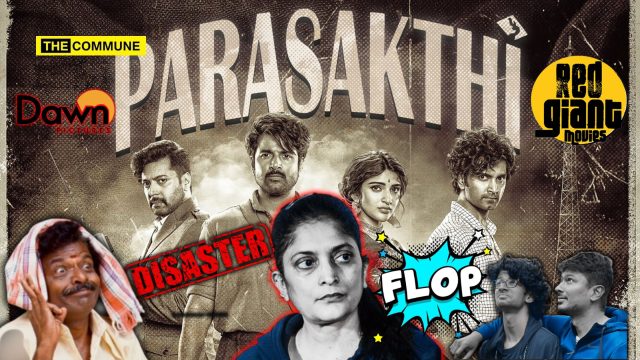
Sudha Kongara finds herself in soup after her anti-Hindi, pro-DMK propaganda film ‘Parasakthi’ is getting bashed left, right and centre.
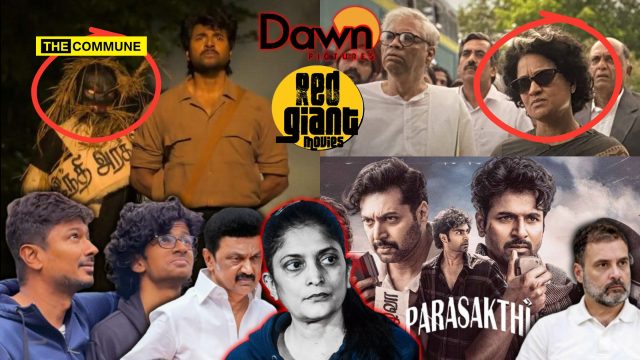
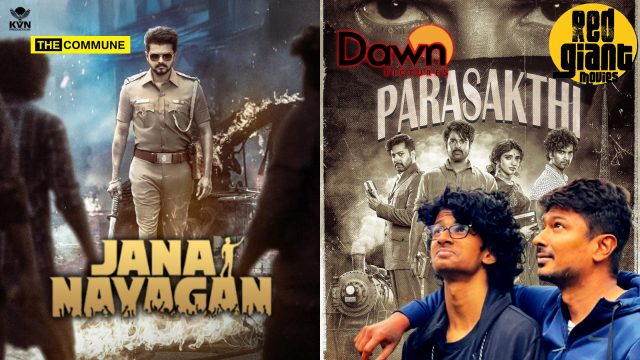
The film, a supposed historical drama on the 1965 anti-Hindi agitations, has been slammed as blatant DMK propaganda that shamelessly targets the Congress party and former Prime Minister Indira Gandhi, all while being bankrolled by Dawn Pictures (with deep DMK ecosystem ties) and distributed by Red Giant Movies, run by CM MK Stalin’s grandson Inban Udhayanidhi.
Apart from the pathetic filmmaking, Parasakthi is now a new subject of controversy with netizens pointing to a particularly venomous scene where Sivakarthikeyan stands beside an ugly-looking black saree-clad effigy labeled “Hindi Arakki” (Hindi Demon), widely interpreted as a direct, derogatory jab at Indira Gandhi. Despite the Central Board of Film Certification (CBFC) mandating 25 modifications—including changing “Hindi Arakki” to just “Arakki” (Demon) wherever it appeared screenshots and clips from the film clearly show the unaltered effigy scene with Sivakarthikeyan posing next to it.
There’s a scene in which Congress leader Bhaktavatsalam is shown saying, “These fellows don’t know Hindi, their brains are filled with mud.”
The scene is framed as a critique of North Indian linguistic and cultural arrogance, which many viewers have linked to historical Congress-era attitudes toward southern states.
Most notably, the film features strong political lines that directly invoke Congress by name.
In the same sequence, it is reported that one dialogue states that for the “betrayal committed against Tamils,” the Congress would never be able to rule Tamil Nadu.
With alliance negotiations and electoral calculations underway, the portrayal of Congress as a historical betrayer of Tamil interests has become politically consequential. This has led to Congress leaders bashing the film and taking hits at the DMK.
சாணக்கியா செய்தி உண்மையா ?
பார்த்தவர்கள் video போட்டு விடுங்க பா .
இந்த #Parasakthi படம் தோல்வி என நண்பர்கள் சொன்னார்கள். ஏன் நம்ம உழைத்த காசை விண்ணாக்க வேண்டும் என நான் படம் பார்க்கவில்லை . pic.twitter.com/iLdhm7daUD
— Manickam Tagore .B🇮🇳மாணிக்கம் தாகூர்.ப (@manickamtagore) January 10, 2026
With Congress giving feelers to TVK through its support for Vijay’s alleged final film ‘Jana Nayagan’, the rift between Congress and DMK has widened.
Subscribe to our channels on Telegram, WhatsApp, and Instagram and get the best stories of the day delivered to you personally.
A single-screen theatre in Pudukottai has alleged that it was denied screening rights for the Tamil film Parasakthi despite repeated requests, triggering accusations of selective distribution and retaliatory practices within the Tamil film exhibition sector.
RKP Cinemas, Pudukottai, said in a statement on social media that it had received numerous calls and messages from patrons enquiring about the opening of bookings and whether the theatre would screen Parasakthi. The theatre clarified that it had initially entered into an agreement to screen Jana Nayagan. However, after the release of Jana Nayagan was postponed, the theatre approached the distributor to screen Parasakthi instead.
According to RKP Cinemas, the distributor of Parasakthi was unwilling to provide the film print and continued to delay a decision, resulting in the theatre being unable to screen the film. The management stated that this was the sole reason for the non-availability of Parasakthi at the venue and apologised to patrons for the inconvenience caused.
Many people are calling and messaging me, asking when we will open Parasakthi bookings at RKP and whether we are screening the film or not.
As you all already know, we had earlier confirmed Jananayagan. Since Jananayagan is not releasing now, we approached the distributor to…
The allegation quickly escalated on social media, with several users and cinema-related accounts accusing Red Giant Movies of retaliating against single-screen theatres that had previously signed agreements for Jana Nayagan. Posts claimed that theatres which had committed to screening Jana Nayagan were now being denied access to Parasakthi.
Redgiant revenging single screens who signed #JanaNayagan
They can easily add more single screen big theatres to #Parasakthi and get mutually benefitted!
Some exhibitors argued that adding more single-screen and large theatres to Parasakthi’s release would have been mutually beneficial, particularly at a time when many single-screen theatres are reportedly operating at a loss.
Additionally, theatre representatives and exhibitors gathered at Shanthi Theatre on 10 January 2026, alleging unfair distribution practices. According to statements circulated from the venue, even theatres that had already signed agreements for Jana Nayagan were allegedly being denied Parasakthi prints. Speakers at the gathering claimed that such actions were pushing theatres deeper into financial distress.
இடம் : சாந்தி தியேட்டர், கோவை
நாள் : 10.01.2026
“ஜனநாயகன் கூட agreement ஒப்பந்தம் ஆன தியேட்டர் கூட பராசக்தி படம் தர மாட்டோம் அப்படினு RedGiant அராஜகம் பண்ணுது. தியேட்டர் எல்லாம் நஷ்டத்துல ஓடுது. காரணம் – திமுக அராஜகம்.”
The allegations were framed by protesters as politically motivated, with accusations that the ruling DMK party in Tamil Nadu was indirectly influencing film distribution through affiliated entities. These claims were circulated widely on social media platforms, with calls for greater public awareness of what protesters described as systemic misuse of power in the film distribution ecosystem.
At the time of publishing, Red Giant Movies and the distributors of Parasakthi had not issued any official response addressing the allegations. No confirmation has been provided regarding the criteria used for theatre allocation or the reasons for withholding prints from specific exhibitors.
Subscribe to our channels on Telegram, WhatsApp, and Instagram and get the best stories of the day delivered to you personally.