Home Blog Page 1893

J. Radhakrishnan appointed as Special Nodal Officer to tackle COVID-19 in Chennai

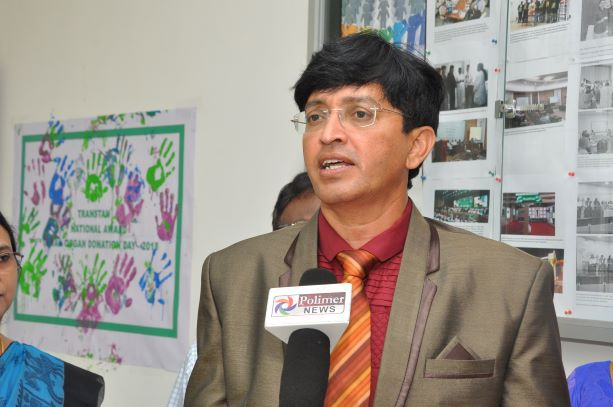
With Chennai becoming the epicentre of COVID-19 cases in Tamil Nadu, senior bureaucrat Dr. J. Radhakrishnan has been appointed as the Special Nodal Officer by the state government to coordinate the efforts against the pandemic. He will be assisted by 5 senior IPS officers.

Chief Secretary K Shanmugam released a government order regarding the same that read “The Government appoints Dr J Radhakrishnan, IAS, Principal Secretary / Commissioner, Revenue Administration, Disaster Management and Mitigation, Chennai as Special Nodal Officer for the Greater Chennai Corporation to co-ordinate the COVID-19 related issues with the Commissioner of GCC and other Teams constituted for the specific purpose of containing the spread of the disease further in Chennai District and to ensure effective implementation of various guidelines issued by the Government.”

Chennai on Friday reported a staggering 176 new cases of the Wuhan virus taking the total cases in the city to 1082 with 843 of them being active.

A 1992 batch IAS officer, Dr. Radhakrishnan is currently serving as Principal Secretary and Commissioner for Revenue Administration, Disaster Management and Mitigation. Known for his work during the 2004 Tsunami and the Kumbakonam school fire accident that happened in June the same year, Dr. Radhakrishnan has become the face of disaster management in the state. In November last year during Diwali, he was coordinating the rescue of the child Sujith Wilson who had fallen into a borewell and met with an unfortunate end.

Illegal activities along India’s border with Pak and B’desh drop

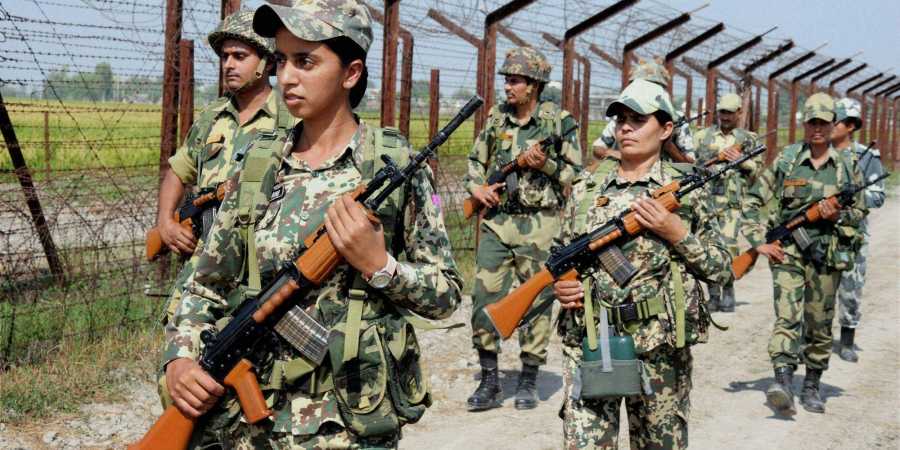
Infiltration attempts, cattle smuggling, drug smuggling, human trafficking, counterfeit currency market, along the India-Pakistan and India-Bangladesh border has seen a sharp drop in the wake of COVID-19, heads of Border Security Force (BSF) and Indo-Tibet Border Force said on Thursday.

Director General of BSF Surjeet Singh Deswal said that the priority during the lockdown period has been to stop the carriers of the virus from crossing the border while maintaining a tight vigil on other activities. He added that a high level of alertness is being maintained at the borders which have been completely sealed with no movement of any kind.

Mr. Deswal also said that mischievous acts along the border and Line-of-Control have been responded by the Indian side with double impact.

BSF data for the period from January 1 to March 24 shows that over 20000 cattle were smuggled to Bangladesh. Post lockdown, the number has reduced to 300. During the same period, 97 kg of heroin was seized along the border in Punjab while only 17 kg was seized from March 25 to April 12.

BSF guards the 2289 kms border with Pakistan and 4092 kms border with Bangladesh.

However, ceasefire violations and shelling along the LoC continue to keep happening. 1400 ceasefire violations have been reported just this year. A Pakistan soldier was killed in a retaliatory response on April 29. On Friday, an Indian national was killed due to an unprovoked firing from the Pakistan side. India has registered a protest with Pakistan on the same.

TN launches portal for NRIs stuck abroad

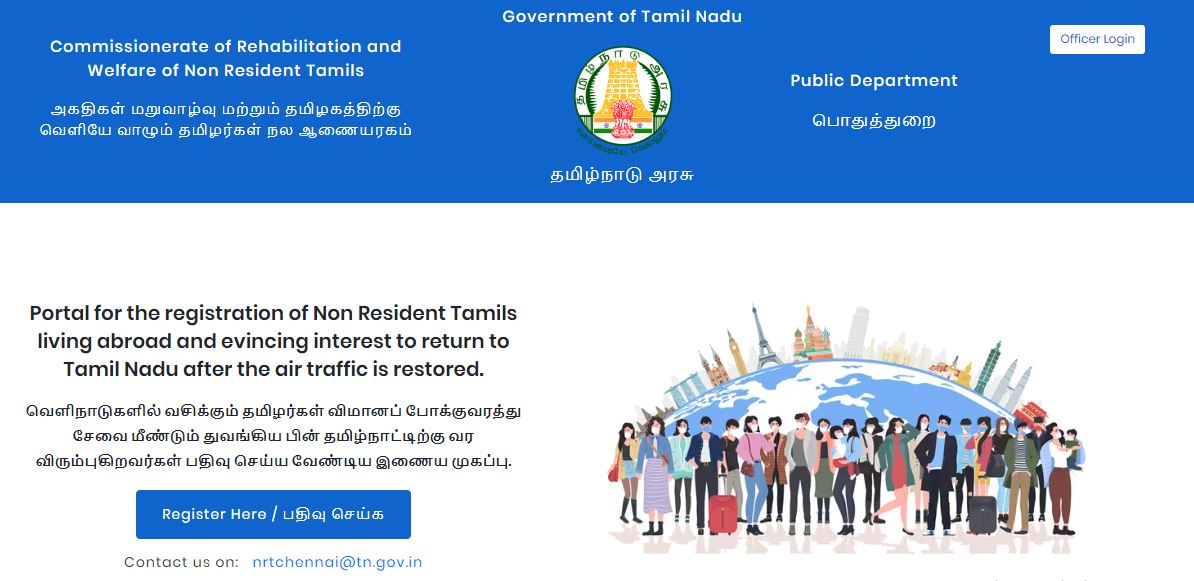
The Tamil Nadu government has launched an exclusive portal www.nonresidenttamil.org for NRIs of the state who wish to come back once air travel is restored.

The government has requested the non-resident Indians hailing from the state of Tamil Nadu to register themselves on the above portal. The portal has been launched by the Commissionerate of Rehabilitation and Welfare of Non Resident Tamils that falls under the Public Department of Government of Tamil Nadu.

Centre extends lockdown by 2 weeks starting May 4

The Ministry of Home Affairs (MHA) has extended the nationwide lockdown for a period of 2 weeks starting from May 4. The current lockdown which is in progress ends on May 3. The Ministry has issued orders under the Disaster Management Act of 2005 regarding the same.

The MHA has also issued fresh guidelines to regulate different activities during the lockdown period based on the risk profiling of each district as red, orange and green zones. Those districts categorized as red and orange zones have been given considerable relaxations. However, inter-state transport services, metro, railways, air travel, all educational institutions, all places of worship and congregations will continue to remain prohibited across the country.

In the red zones (hotspots) lying outside the containment zones, movement of individuals and vehicles will be permitted with restrictions. Special Economic Zones, manufacturers of essential goods and drugs, etc will be permitted to function. All industrial activities in rural areas of red zones will be permitted. E-Commerce will continue to be functional only for essential goods. All stand-alone shops (provision stores, kiranas), will be permitted to remain open without any distinction of essential and non-essential services.

Read the full guidelines here: https://www.mha.gov.in/sites/default/files/MHA%20Order%20Dt.%201.5.2020%20to%20extend%20Lockdown%20period%20for%202%20weeks%20w.e.f.%204.5.2020%20with%20new%20guidelines.pdf

PM holds meeting to discuss strategies to boost investments

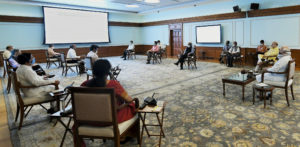
The Prime Minister, Shri Narendra Modi interacting with the Chief Ministers of states via video conferencing to discuss the emerging situation and plan ahead for tackling the COVID-19 pandemic, in New Delhi on April 27, 2020.

Prime Minister Narendra Modi on Thursday held a meeting with the Union Finance, Commerce and Home Ministers to discuss about the strategies to woo foreign investors to India and boost local investments to give a fillip to the economy. The discussion focussed on clearing investments in fast-track mode and promoting Indian domestic sectors.

During the meeting, it was discussed that a scheme should be developed to promote more plug and play infrastructure in the existing industrial lands/plots/estates in the country while providing the necessary financial support for the same. The Prime Minister called for a proactive approach to handhold investors, address their problems time to time and help them in getting all the necessary Central and State clearances.

The Prime Minister, Shri Narendra Modi chairing a high-level meeting to discuss reforms in the Mines and Coal sectors, in New Delhi on April 30, 2020.

He also pressed that the reform initiatives of various Ministries should continue and action be taken time to time to clear obstacles that would hinder investment and industrial growth.

Finance Minister Nirmala Sitharaman, Home Minister Amit Shah, the Minister for Commerce & Industries Piyush Goyal, MoS (Finance) Anurag Thakur attended the meeting along with senior officials.

COVID cases: 1258 discharged, cases in Chennai soar, TN records highest single day surge

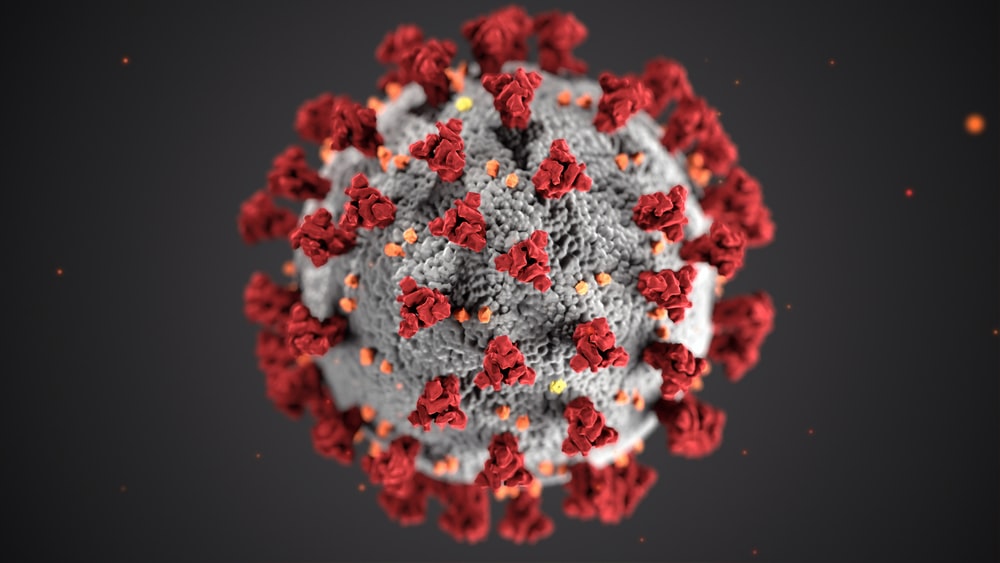
Good news first – A total of 1258 patients who were tested positive for corona virus were discharged as of Thursday. However, the number of COVID-19 cases in the state saw a sharp increase taking the overall count to 2323. Chennai has been leading with a total of 906 patients so far with 138 fresh cases getting reported in the city yesterday.

Among the cases reported on Thursday, 97 were men and 64 were women with a majority of them falling in the 13-60 age group. The number of districts that reported fresh cases is 11. Along with Chennai, Chengalpattu also has been reporting fresh cases for the past few days.

The numbers of active cases stands at 1035 and 27 people have succumbed to the disease. Most of the deceased had a history of health conditions.

Special Task Force set up by Tamil Nadu CM to attract investors

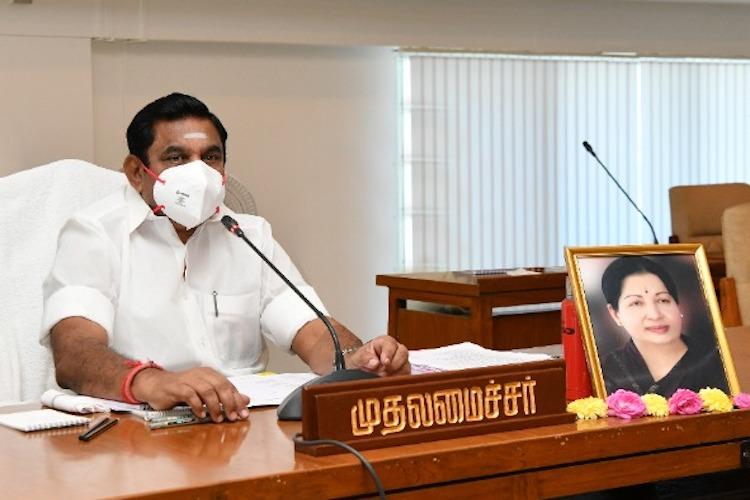
Tamil Nadu Chief Minister Edappadi K Palaniswami has set up a Special Investment Promotion Task Force to attract the countries that are looking to shift their supply chains to India. The committee headed by the Chief Secretary will comprise of 14 members that includes secretaries of Finance, Industries, and Micro Small and Medium Enterprises; managing director and CEO of Guidance Tamil Nadu and Commissioner of Commercial Taxes from the government side.

Two nominees from organizations like Japan External Trade Organization (JETRO) Korea Trade Investment Promotion (KOTRA), Korean Chamber of Commerce, Taiwan External Trade Development Council, Indo-American Chamber of Commerce, US-India Strategic Partnership Forum and US-India Business council and one nominee from Enterprise Singapore, Japanese Industrial Parks, Japanese Companies in Tamil Nadu, US Companies in Tamil Nadu and Taiwanese Companies in Tamil Nadu will also be part of the task force. It is expected to submit the first report to the CM in a month.

The Department of Industries released a government order regarding the same. The terms of reference (ToRs) of the committee were to identify sectors which could do with some investments and also to come up with a special incentive package to facilitate the investments. Other ToRs include fast-tracking clearances, identifying key infrastructure projects like dedicated industrial townships, outreach activities and brand building of exercises to position Tamil Nadu as an attractive investment destination.

An Ode To A Self-Made Man

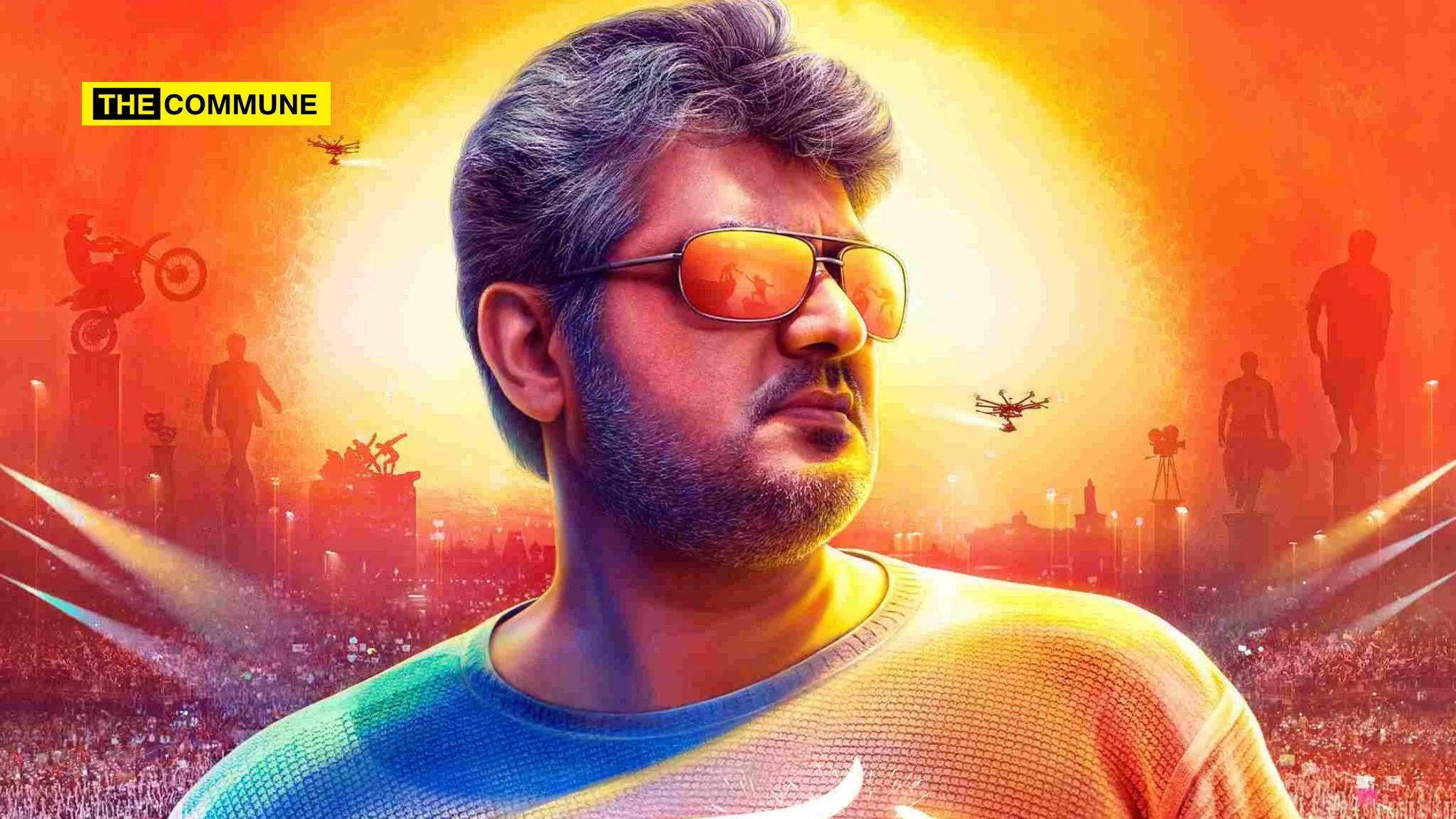
In an old interview when asked about Rajinikanth, Ajith mentions that one of the qualities he admires of the former is his handling of success. “He (Rajinikanth) doesn’t take success to his head” he says in that interview. True. The way one reacts to success speaks a lot about the mind and character of the person. Yet, it is equally important to look at how one handles failures as it tells about the heart of the person for failures affect not just the mind but also the heart.

Looking at Thala, as he is endearingly called by his fans, it is the words of Martin Luther King, Jr. that comes to mind – “The ultimate measure of a man is not where he stands in moments of comfort and convenience, but where he stands at times of challenge and controversy”. This quote rightly captures Thala Ajith’s life in cinema. His career trajectory would put any roller coaster track to shame. But the man has carried himself with grace embracing it all.

As he turns another year older, it is time to look at some of the defining moments of his life and also learn from what his life has to offer.

The Initial Days

Before his foray into films, Ajith did multiple jobs. He says in an interview to Sun TV that he wasn’t disinterested in studies but just that he was bad at it. His passion for bikes and cars landed him as an apprentice at Chennai Motors. But his parents were not ok with him pursuing a mechanic job. He later joined a government export company as a merchandiser and worked there for more than 4 years. Back then, even before entrepreneurship became the buzzword, Ajith was at it and wanted to start his own company. But circumstances pushed him to a career in cinema. Thus was born actor Ajith Kumar.

The Rebirths of Ajith

Often, actors in Kollywood choose to be reborn by renaming themselves. Sivaji Rao Gaekwad became Rajinikanth. Parthasarathy Srinivasan became Kamal Hasan. Joseph Vijay became just Vijay. Venkatesh Prabhu became Dhanush. Silambarasan became Simbu and then STR. But Ajith Kumar remained Ajith Kumar. His rebirths have been marked not by a change of his name but by the sobriquets attached. From Kadhal Mannan to Ultimate Star to Thala, the titles speak for themselves about the character arc that has gone on to define Ajith Kumar.

A lot would attribute Amaravathi as the birth of Ajith Kumar the hero. But to me, he was born in the backseat of a Fiat Premier driving along Rajpath in Delhi. In this tense scene from Aasai (1995), Yamuna (Suvalakshmi) seated in the front is unhappy about Jeeva (Ajith) meeting Hariharan (Nizhalgal Ravi) to complain about his colleague Major Madhavan (Prakash Raj). Madhavan while driving the car adds fuel to the fire of Yamuna. There are 3 lines of tension at play here – between Jeeva and Yamuna, between Jeeva and Madhavan and between Madhavan and Yamuna. But Jeeva is all calm at the back going about writing something. You’re not sure whether he is paying attention to the conversation. But his calmness turns into a stern warning to Madhavan to not interfere between him and Yamuna. A very well written scene pulled off by Ajith with ease. This movie went on to seal his image as the chocolate boy of the time. From then on, he would go on to give us hits like Kadhal Kottai (1996), Kadhal Mannan (1998), and Unnidathil Ennai Koduthen (1998) amidst box office failures like Raasi (1997) and Ullasam (1997).

But what brought out Ajith the performer would undoubtedly be Vaali (1999). If in his previous movies he stole the hearts of women, Ajith as Deva sent shivers down their spines with his lusty eyes and vicious intentions. This point in his career can be considered as a rebirth of Ajith Kumar, the ultimate star who as a performer delivered Amarkalam (1999), Nee Varuvai Ena (1999), Mugavaree (2000), Kandukondein Kandukondein (2000) before becoming ‘Thala’ in Dheena (2001).

Before the idea of playing anti-hero became cool, Ajith pioneered the trend in recent times with Mangatha (2011). Ajith had been wanting to do such sort of roles even when he was just a few films old. He says in the same interview to Sun TV that he enjoyed doing negative roles like Guru in Ullasam. He says that he is ‘frustrated’ with his lover boy image wants to experiment with anti-hero shades but is disappointed that directors are not willing to take the risk with him. Thanks to Venkat Prabhu, he was reborn as Vinayak Mahadev sending even Vijay fans into a tizzy!

The Falls He Endured

Out of the 59 movies that he has done so far, a majority of his films landed badly at the box office. He is probably the only star who has delivered more flops than hits in his film career. There was a period when he gave back to back failures except for a few savers like Varalaru (2006) and Kireedom (2007). Starting with Anjaneya in 2003, he was on a flop streak with films like Jana (2004), Attagasam (2004), Ji (2005), Paramasivan (2006), Thirupathi (2006) and Aalwar (2007). Any normal person would have called it quits or changed tracks (to politics if one were to go by the trend). But what is life without a bad phase huh?

Even before films, Ajith had to go through difficult times when he tried his hands at business. Things did not go as planned with his racing aspirations too. Ajith also endured traumas physically. He has had multiple injuries owing to his racing adventures and stunt sequences in films. Srinivasan Ramanujan, a well-known film critic wrote in The Hindu that Rajiv Menon narrated the script of Kandukondein Kandukondein when Ajith was in the hospital recuperating from an injury.

But nothing could stop this man. ‘Donning’ a new avatar, he emerged like a phoenix with Billa that had a simple line but carried with it a lot of meaning –  “I am back!”. What could be considered as one of the best ‘intro scenes’ in Tamil cinema, it elevated the mass element to a whole new class. Billa arrives in a Mercedes to an aerodrome where Malaysia’s top goons are waiting. Clad in a dark suit sporting dark shades, he walks to hand over a briefcase to one of them. His hand then quickly reaches his back not to take a gun but a can of beer while the boys take positions pointing the gun at him. One of them says that he is about to kill him and asks if he has anything to say. Billa just shakes off the last few sips indicating that there is nothing to say and then tosses the can up. As the others look up, he suavely takes out the gun and finishes them all. Not a word spoken or emoted. Just the body language conveys that he is back with a bang.

What Can We Learn From Ajith?

If anyone were to ask how to maintain balance in life, it would save time to just have a look at the life of Ajith Kumar. Having tasted success and failures in equal measures, his life offers us some valuable lessons.  The first and foremost is that he has managed to make a mark for himself in a field where nepotism thrives openly. He did not have a father who was a director or an actor to lift him. Every day, every minute, every moment of his life was carved by himself. He is a testimony to what sheer perseverance and hard work can yield. Even though he decided to eke out a living from acting, he did not let go of his original passion. He continued to pursue his racing hobby and even went on to participate in the FIA F2 championship in 2010.

One thing that his fellow actors can learn is how Thala just goes about doing his job – acting, and doesn’t resort to unwanted and uncalled for virtue-signaling either in his movies or on stages. He doesn’t bring his politics on or off the screen. That doesn’t mean that he is politically ignorant or a coward who hesitates to express his opinions. Rangaraj Pandey, the prominent journalist who shared screen space with the star in Nerkonda Paarvai (2019) in various interviews mentions that Ajith definitely has his own take on politics and society but he chooses to express it only as a citizen at the booth. Last but no the least, success or failure, the man has never lost balance in life and has never taken both to his mind or his heart. Looks like he has learnt his lesson from Rajinikanth.

To the self-made man, I wish a very happy birthday!

Ramayana creates world record, grabs 77 million pairs eyeballs in a single day

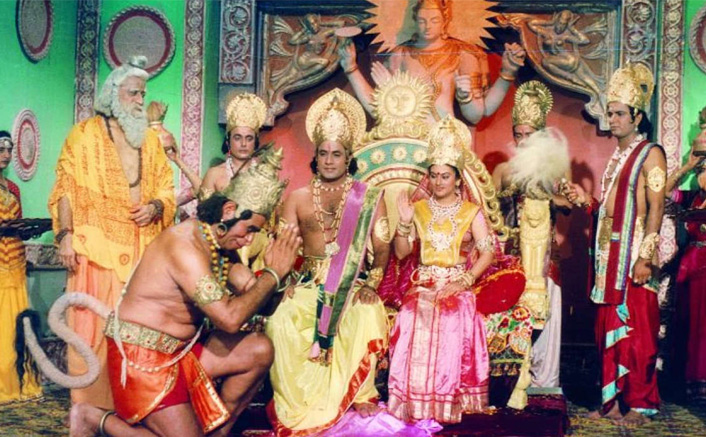
Ramanand Sagar’s popular television show Ramayan that had a wide viewership back then has managed to create a record even in this age of digital OTT platforms. The show became the highest viewed entertainment programme globally. The record was created on April 16, 2020 at 9 PM when 77 million people watched the show.

The show was first aired in Doordarshan between 1987 and 1988 which features Arun Govil, Sunil Lahri, Deepika Chikhalia, Sanjay Jog, Arvind Trivedi, Sameer Rajda, Bal Dhuri and Dara Singh in lead roles. Even back then, the show had a viewership like no other and earned a hefty amount for each episode.

Prasar Bharati under which Doordarshan and All India Radio functions, announced last month about telecasting the show in view of the lockdown due to COVID-19.  The airing of the first episode crashed Doordarshan’s website and became one of the top searched on Google.

The legislative history of NRC and murder of democracy

The pan-India NRC that is being mooted today traces its origins to the Citizenship (Amendment) Act of 2003.

The National Register of Citizens is a record of all Indian citizens. It was first created in 1951 for the state of Assam. In 2013, two writ petitions were filed by Assam Public Works and Assam Sanmilita Mahasangha & Ors before the Supreme Court to delete the names of illegal immigrants form the voters list. The Supreme Court in 2014, under Justice Ranjan Gogoi and Justice Rohinton Fali Nariman, ordered that the NRC of Assam be updated in accordance with the Citizenship Act 1955 and Citizenship Rules 2003. The process started in 2015 and was monitored directly by the Supreme Court. The updated final NRC was published on August 31, 2019. As of now, the NRC exists only for the state of Assam. However, in November 2019, Home Minister Amit Shah mentioned in the Rajya Sabha that NRC would be carried out across the country. The pan-India NRC that is being mooted today traces its origins to the Citizenship (Amendment) Act of 2003.

Legal Provisions for NRC

Section 14A of the Citizenship Act, 1955 provides for a National Register of India Citizens (NRC) by stating that the Central Government may compulsorily register every citizen of India and issue a national identity card. It states that the “Central Government may maintain a National Register of Indian Citizens and establish a National Registration Authority who shall function as the Registrar General of Citizen Registration”. This provision was inserted through the Citizenship (Amendment) Act 2003.

Prior to the passing of the Act, the Central Government on 10th December 2003, published in the Gazette, The Citizenship (Registration of Citizens and Issue of National Identity Cards) Rules 2003 by exercising its powers conferred by Section 18 of the Citizenship Act 1955. These rules lay down the guidelines for the preparation of a nation wide NRC and a separate provision for NRC in Assam.

Report of the Standing Committee on CAB 2003

The Department-Related Parliamentary Standing Committee on Home Affairs under the chairmanship of Pranab Mukherjee presented its report on the Citizenship Amendment Bill 2003 to the Rajya Sabha on December 12, 2003 and was also laid on the table of the Lok Sabha on the same day. The committee had members comprising of all major political parties – Kapil Sibal (INC), MOH Farook (INC), Hansraj Bhardwaj (INC), Motilal Vora (INC), PH Pandian (AIADMK), Subodh Roy (CPI M), Iqbal Ahmed Saradgi (INC), Abdul Rashid Shaheen (J&K NC), Lalu Prasad (RJD), LM Singhvi (BJP), V Maitreyan (AIADMK), Ambika Soni (INC), Pramod Mahajan (BJP) and legal experts like Ram Jethmalani to name a few.

Interestingly, the committee deliberated on the issue of granting citizenship to religiously persecuted minorities from Bangladesh and Pakistan. The members did not prefer granting them citizenship and mentioned that the problem be tackled as per international law and convention. The committee advocated a two pronged strategy – extend humanitarian assistance and apply pressure on countries from where the refugees were coming. They believed that it would be extremely difficult for India to accommodate such refugees considering that its own citizens were confronting the challenges of growing population, poverty and unemployment. They were of the view that the “commitment made by the national leaders at the time of partition to facilitate the entry of Hindus fleeing due to religious persecution from Pakistan which declared itself as a theocratic nation, was not an unending or open-ended one.” However, the committee expressed that illegal immigrants entering India for economic reasons need to be sternly dealt with as per the law of the land.

Replying to the Committee’s views, the then Deputy Prime Minister and Home Minister Lal Krishna Advani mentioned that citizenship to refugees who entered India on or after 25 March 1971 would not be granted keeping in view the economic and population reasons. He mentioned that those who came to India on or after the said date due to religious and political reasons would be dealt under the relevant provisions of the Foreigners Act 1946. However, he allayed fears of people who fled to India due to civil and political disturbances in the neighbouring countries. He assured that they would not be forcibly sent to their homeland and that in this context each case or a group of cases would be considered on merit.

That apart, the clause that sought to introduce NRC and national identity cards was adopted by the committee after the government proposed changes to enable automatic grant of national identity card as the draft bill made it mandatory for a person to make an application for the same. Thus, the Parliamentary Standing Committee comprising members of both houses belonging to different parties gave a go ahead for the NRC to be implemented across the country.

Discussion and Passing of CAB 2003

In contrast to the views expressed by the committee over the issue of granting citizenship to religiously persecuted minorities from neighbouring countries, Dr. Manmohan Singh made a notable intervention in the Rajya Sabha. On 18 December 2003, when the Citizenship Amendment Bill 2003 was discussed, Dr. Singh said

“…Madam, I would like to say something, about the treatment of refugees. After the partition of our country, the minorities in countries like Bangladesh, have faced persecution, and it is our moral obligation that if circumstances force people, these unfortunate people, to seek refuge in our country, our approach to granting citizenship to these unfortunate persons should be more liberal. I sincerely hope that the hon. Deputy Prime Minister will bear this in mind in charting out the future course of action with regard to the Citizenship Act.”

Najma Heptullah, who was the Deputy Chairman, told Advani that the minorities in Pakistan were also suffering and that they need to be taken care too. To this, Advani replied that he fully endorsed that view. Shankar Roy Chowdhury, the former Chief of Army Staff and a member of the house also urged the government to consider giving citizenship to minorities fleeing Bangladesh to which the Deputy Prime Minister and Home Minister agreed.

Despite the committee members not being in favour of granting citizenship to religiously persecuted minorities, a few members of the house like Dr. Singh and Shankar Roy Chowdhury expressed that they should be given citizenship. It is interesting to see that though the bill did not contain any provision regarding granting of citizenship to religiously persecuted minorities from Pakistan and Bangladesh, it saw a detailed discussion on the same. The provision that sought to introduce a major citizenship project, the NRC, did not face any objection.The bill was passed unanimously by the Rajya Sabha and passed without any acrimony or disruption in the Lok Sabha. It received the President’s assent on January 7, 2004 and came into effect from December 3, 2004.

Who is murdering democracy?

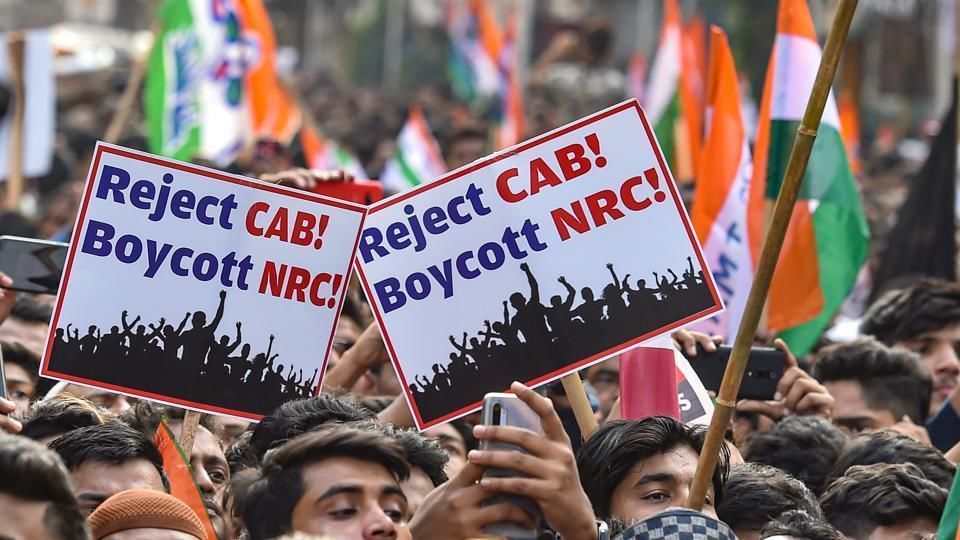
Today, it is both amusing and confusing to see the parties mindlessly opposing both the CAA 2019 and NRC. People who flung papers at the Speaker and apparently ‘resigned’ from their seat in the Parliament over the issue of illegal immigrants from Bangladesh are now positioning themselves as staunch critics of CAA and NRC. Those who requested that religiously persecuted minorities be granted citizenship are now writing editorials about India slipping from being a liberal democracy and becoming a majoritarian state. The amendment to bring in a pan-India NRC which got the nod from all parties in the Parliament under a coalition government is now being portrayed as a threat to Indian democracy.

If this how they make a joke out of the sacrosanct process of law making, if this is how national interests are sabotaged for want of political mileage, if this is how they change their positions based on their whims and fancies and resort to minority appeasement by instigating them, then it is these parties who pose a larger threat to this democracy.