The IITs are increasingly coming under criticism for the ‘woke’ culture and thinking process they are trying to promote via education.
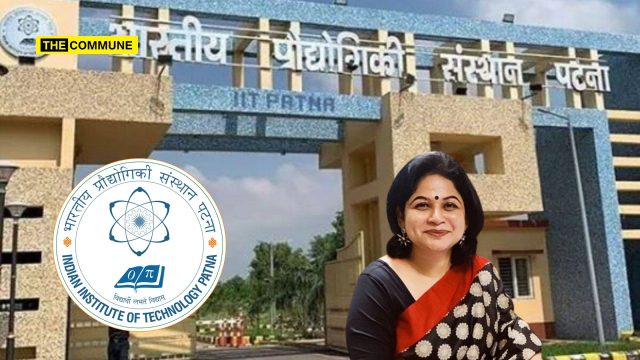
After IIT Bombay and IIT Gandhinagar, IIT Patna is under scrutiny. More specifically, Dr. Priyanka Tripathi, an English professor at Indian Institutes of Technology Patna, has come under criticism over a recent research paper co-authored by her, titled “Gendered and Casteist Body: Cast(e)ing and Castigating the Female Body in Select Bollywood Films.” The paper was written along with Bidisha Pal and Partha Bhattacharjee.
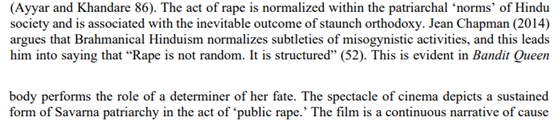
Hindu society normalises the act of r@pe claims a research paper.
The study examines representations of caste and gender in Hindi cinema, with specific reference to films such as Bandit Queen (1994), directed by Shekhar Kapur, and Article 15, directed by Anubhav Sinha.
According to the paper, cinematic portrayals reflect layered structures of caste and gender oppression, particularly in relation to Dalit women. The authors argued that mainstream narratives often reproduce what they described as “Savarna patriarchy” and gendered hierarchies.
The paper also drew on academic and activist writings, including those of Suraj Yengde and Meena Kandasamy. Citing Kandasamy, the authors quoted the line: “For a man, the woman is the Dalit of the house,” to frame their argument that patriarchal structures cut across caste lines while intersecting with caste-based marginalization.
Image Source: OpIndia
In the study, the authors compared caste-based discrimination in India with racial segregation frameworks, stating that forms of social exclusion faced by Dalits could be viewed through lenses similar to apartheid-style segregation. They further contended that Dalit women face compounded marginalization due to both caste and gender identities.
Image Source: OpIndia
The paper also addressed sexual violence in cinematic narratives, arguing that depictions of rape in certain films reflect entrenched patriarchal and caste hierarchies. It cited academic scholarship suggesting that misogynistic violence is socially structured rather than random.
Image Source: OpIndia
The paper seemingly has an interpretative framework; it seems to present Hindu society in a negative light and makes sweeping generalizations about religious and social structures. The absence of empirical data and objected to parallels drawn between caste discrimination and apartheid is also blatant.
The controversy has also revived scrutiny of Tripathi’s earlier academic work and public commentary, which had previously drawn criticism from some commentators over her interpretations of religion, gender, and caste.
The institute has not issued an official statement on the matter at the time of publication.
The AIADMK on Friday launched a sharp attack on actor-turned-politician Vijay following his recent political speech, accusing him of lacking originality in both cinema and politics and of attempting to appropriate the legacy of established leaders.
In a social media post, the party ridiculed Vijay as “Panaiyur Pannaiyar,” alleging that he entered the film industry through his father’s influence and later built his screen persona by imitating established stars such as Rajinikanth and Vijayakanth.
The post further alleged that Vijay was attempting to replicate the political legacies of historical leaders from other parties rather than presenting original ideological positions.
Referring to recent political messaging, the AIADMK claimed that its General Secretary Edappadi K. Palaniswami had already spoken on the theme of the DMK being “out of control,” and accused Vijay of subsequently echoing the same line in his speech.
According to the party, Vijay had merely repeated talking points prepared by others and lacked the ability to independently articulate political views or critique historical legacies.
The AIADMK also took aim at Vijay’s fledgling political outfit, alleging that it was functioning like a “WhatsApp group” formed by inducting individuals rejected by other parties, while questioning his call for rival parties to dissolve and join him.
In its post, the party asserted its continued ideological allegiance to leaders such as Periyar, C.N. Annadurai, M.G. Ramachandran, and former Chief Minister J. Jayalalithaa, stating that their legacy could not be appropriated for political positioning.
The statement additionally referenced Vijay’s earlier remark that he had played a supportive role like a squirrel in the establishment of Jayalalithaa’s rule and contrasted it with what it described as AIADMK’s restraint during periods of tragedy, citing political decorum followed by Palaniswami.
The attack concluded with a swipe at alleged first-day-first-show (FDFS) ticket pricing during Vijay’s film releases, sarcastically questioning whether selling tickets at inflated rates amounted to profiteering.
நீங்க தனியாகவா வந்தீங்க பனையூர் பண்ணையார் Uncle?
அப்பா-வால சினிமா உள்ள வந்தீங்க…
வந்த சினிமா வழியே சூப்பர்ஸ்டார் @rajinikanth, புரட்சிக் கலைஞர் @iVijayakant ஆகியோரைப் பார்த்து COPY PASTE uu….
அரசியலில், அடுத்த கட்சி வரலாற்றுத் தலைவர்களின் Legacy-யை திருடி, COPY PASTE uu…… pic.twitter.com/YWYhQIaMve
— AIADMK IT WING – SayYesToWomenSafety&AIADMK (@AIADMKITWINGOFL) February 13, 2026
Subscribe to our channels on Telegram, WhatsApp, and Instagram and get the best stories of the day delivered to you personally.
On Friday, 13 February 2026, Tamil Nadu Chief Minister MK Stalin announced the disbursal of ₹5,000 to women beneficiaries under the Kalaignar Magalir Urimai Thogai Thittam, presenting the move as part of his government’s continued commitment to women’s welfare ahead of the forthcoming Assembly elections.
According to the Chief Minister’s post on X, the ₹5,000 transfer covers three months, February, March, and April. Of this amount, ₹3,000 represents the regular monthly entitlement, while an additional ₹2,000 has been provided as a “summer special” assistance. Stalin stated that the amount had already been credited to 1.31 crore women enrolled under the scheme.
Framing the assistance as an entitlement rather than a welfare dole, the Chief Minister said the financial support was a pledge and a right of Tamil Nadu’s women. He also alleged that attempts were being made to delay the disbursal for three months citing the election schedule and claimed that his government had acted in advance to ensure uninterrupted payments. Stalin further announced that under a proposed “Dravidian Model 2.0,” the monthly assistance would be increased from ₹1,000 to ₹2,000.
தமிழ்நாட்டு மகளிருக்கு இந்த ஸ்டாலின் தந்த உறுதிமொழிதான் உரிமைத்தொகை. யார் தடை ஏற்படுத்தினாலும் அதிலிருந்து பின்வாங்க மாட்டேன்.
தேர்தலைக் காரணம் காட்டி, மூன்று மாதங்களுக்கு உரிமைத்தொகையை முடக்கப் பார்க்கிறார்கள். முந்திக்கொண்டது நமது #DravidianModel அரசு!
— M.K.Stalin – தமிழ்நாட்டை தலைகுனிய விடமாட்டேன் (@mkstalin) February 13, 2026
Opposition Alleges Fund Diversion
However, the announcement drew criticism from the AIADMK, with party spokesperson Kovai Sathyan releasing a government document to allege that the disbursal was financed through diversion of funds earmarked for Scheduled Caste welfare components.
The document cited proceedings of the Social Welfare and Women Empowerment Department (Secretariat, Chennai-5), issued under an official file reference dated 22.12.2025.
According to the order, administrative sanction was accorded under the Kalaignar Magalir Urimai Thogai Scheme (2025-26) by drawing funds linked to Special Component Plan allocations.
The file refers to approvals connected to:
Government sanction proceedings dated 03.11.2025 and 24.11.2025
Additional departmental approval dated 28.07.2025
Implementation under provisions of the Tamil Nadu Financial Code relating to re-appropriation.
Budget Heads Cited
A tabulated annexure in the document lists expenditure under Social Welfare budget classifications, including:
Demand No. 2235 – Social Security and Welfare
Head 02 – Social Welfare
Special Component Plan for Scheduled Castes – State Expenditure
Two specific sub-heads are cited:
789 – Special Component Plan for Scheduled Caste Linked to Kalaignar Magalir Urimai Subsidies (AB-311)
Allocations shown:
2023–2024: ₹2,41,95,16,2000
2024–2025: ₹4,14,39,90,7000
2025–2026: ₹4,14,16,72,2000
796 – Tribal Area Sub-Plan / Scheduled Tribe Component Linked to Magalir Urimai Subsidies (JH-311)
Allocations shown:
2023–2024: ₹1,61,30,11,000
2024–2025: ₹2,73,05,57,000
2025–2026: ₹2,76,11,15,000
The annexure records that these heads fall under Special Component / Tribal Sub-Plan structures meant for targeted welfare expenditure.
AIADMK’s Charge
Kovai Sathyan alleged that the government had utilized funds earmarked for Scheduled Caste and Scheduled Tribe development components to finance the Magalir Urimai Thogai disbursal, calling it a diversion of social justice allocations for electoral purposes.
He argued that Special Component Plan funds are intended for community-specific development outcomes and should not be repurposed for general cash transfer schemes and demanded transparency from the state government on the funding structure of the ₹5,000 payout.
மகளிர் உரிமை தொகை பிற்படுத்தப்பட்ட பழங்குடியினருக்கு வழங்க வேண்டிய நிதியில் இருந்து அளிக்கப்பட்டுள்ளது ஆதாரம் இதோ.
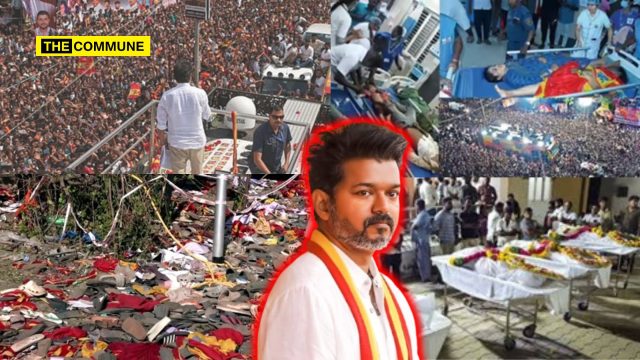
Actor-turned-politician and Tamilaga Vettri Kazhagam (TVK) chief Vijay’s political rally in Salem on Friday drew massive crowds but was marred by a death, alleged attacks on journalists, and renewed scrutiny over a series of fatalities linked to his public events over the past two years.
Death at Salem Rally
A 37-year-old man died after suffering a heart attack during the rally, police said.
Salem police officials identified the deceased as Suraj, a native of Maharashtra who had been residing in the Sevvaipettai area of Salem for work. He was engaged in silver-related labour and is survived by his wife and a child.
According to police, Suraj had attended the public meeting organised for TVK party administrators as a spectator. During the event, he suddenly collapsed and was rushed for medical assistance but was declared dead.
Officials said preliminary information pointed to a heart attack as the cause of death, adding that further inquiries were underway.
Fatalities at Previous TVK Events
The Salem death is not an isolated incident. Several fatalities have been reported in connection with Vijay’s rallies and conferences since 2024.
Vikravandi Conference – 27 October 2024
Six persons died in separate road accidents while travelling to attend TVK’s maiden public conference in Vikravandi. Those who died included advocate ‘Ghilli’ VL Srinivasan, youth wing leader JK Vijaykalai, and supporters Vasanthakumar, Riyaz, Udayakumar, and Charles, the latter reportedly due to breathing difficulties. Vijay expressed condolences to the families and prayed for the recovery of the injured.
Madurai State Conference – 21 August 2025
A 33-year-old supporter, Prabhakaran from Chennai, died after collapsing while travelling to attend TVK’s mega conference in Madurai. He was found unconscious near Chakkimangalam and later declared dead at the Government Rajaji Hospital.
In a separate incident linked to the same conference, an 18-year-old youth, Roshan from Kotagiri in the Nilgiris, died after experiencing suffocation amid heavy crowding at the venue. He was administered first aid but later suffered another bout of breathlessness while returning home and was declared dead at a hospital.
Karur Rally – 27 September 2025
A major stampede during Vijay’s rally in Karur claimed 41 lives, including children, casting a long shadow over large-scale mobilisations organised by the party.
Trichy Rally Drew Crowds, No Deaths
At TVK’s statewide campaign launch rally in Tiruchirappalli on 13 September 2025, massive crowds were reported, though no deaths were officially recorded.
The event, held under strict police conditions, saw supporters pushing barricades, climbing structures, and crowding along Vijay’s route. Medical teams reportedly attended to several attendees affected by heat and prolonged waiting, while fan surges caused significant traffic disruption across the city.
Subscribe to our channels on Telegram, WhatsApp, and Instagram and get the best stories of the day delivered to you personally.
Debates around Centre–State finances frequently surface in the public domain, often framed as political flashpoints rather than fiscal questions grounded in data. Neutral and comprehensive explanations remain rare, with narratives typically shaped by partisan positions. This article attempts to bridge that gap by laying out the complete context and relevant data, enabling readers to assess the issue beyond the rhetoric.
Background
India is a large and diverse developing country and is the largest democratic federal republic. The country has a three-tier federal structure with governments at Union, States and Local levels. The Union list of Constitution gives power to the Central Government to levy taxes on income other than agriculture, Customs, Excise, Corporate Tax, GST on inter-state trade, etc.
The State Government has the power on land revenue, agricultural income tax, land and building tax, GST on intra-state trade, excise on alcohol, stamp duty, tax on minerals, electricity duty, etc.
To address any resultant fiscal imbalance, the sharing of central taxes with States and giving grants to States by Centre is envisaged. This is decided by an independent Finance Commission appointed by the President every five years. The task of the Commission includes recommending devolution of Central taxes to the States, laying down principles of distribution and shares of individual States. The Commission is also required to give grants and address any other matters entrusted to it in the interest of sound finance in the Presidential Terms of Reference.
In addition to the tax devolution and grants given to States based on recommendations of the Finance Commissions, the Central government gives specific purpose grants for various purposes through the respective ministries.
Central Spends
The nature of Centre’s spends can be classified as:
A. Centre’s Expenditure:
Establishment Expenditure of the Centre
Central Sector Schemes
Other Central Expenditure, including those on CPSEs and Autonomous Bodies
B. Centrally Sponsored Schemes and other Transfers:
Centrally Sponsored Schemes
Finance Commission Transfers
Other transfers to States
Establishment Expenditure covers Salaries of Ministries (eg., Finance, Home, Health, Education, etc.) and their spends.
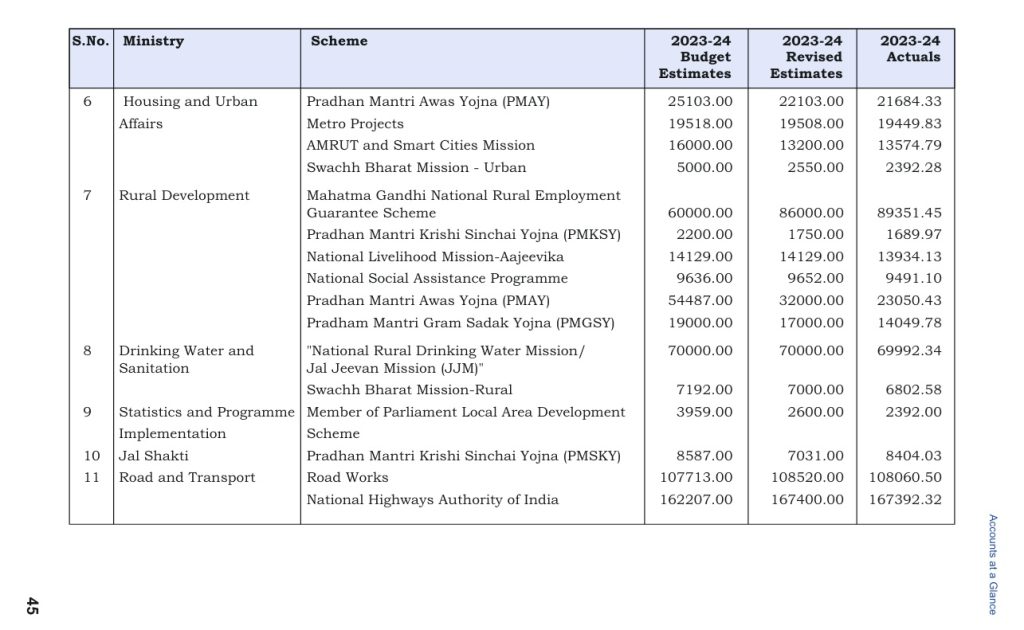
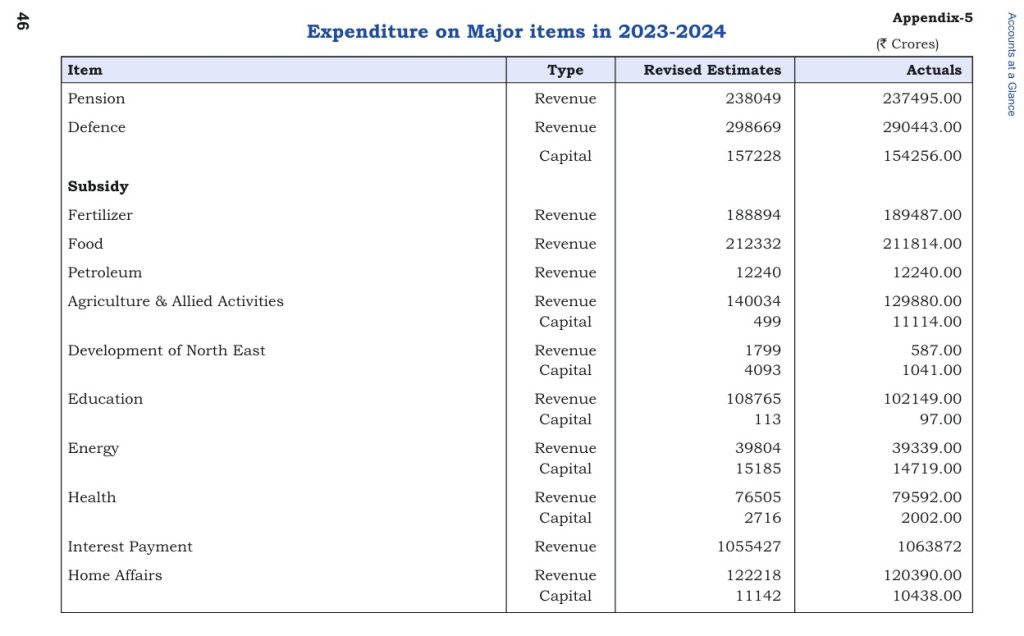
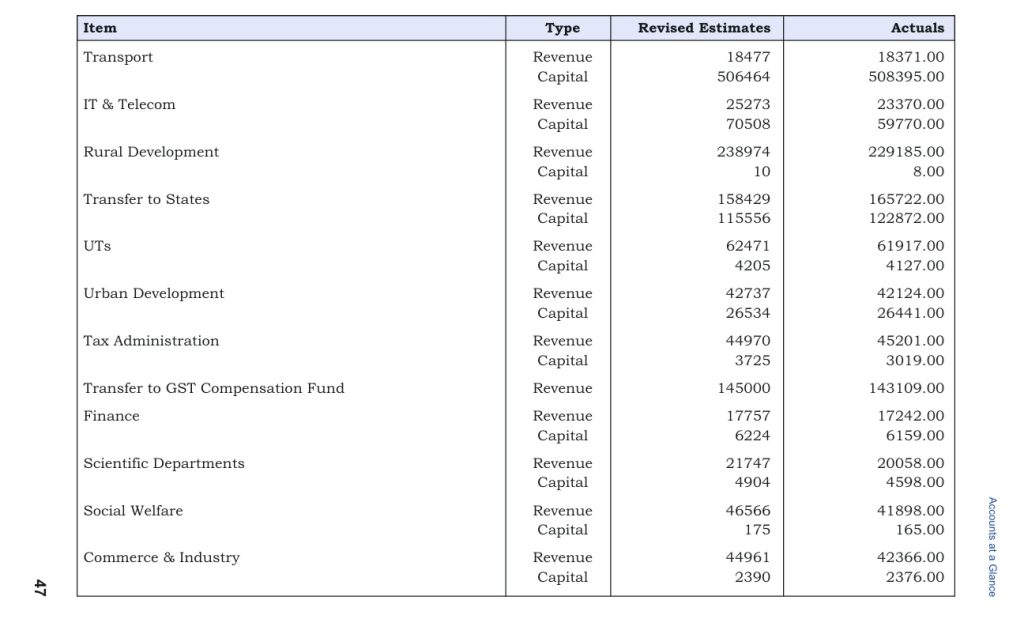
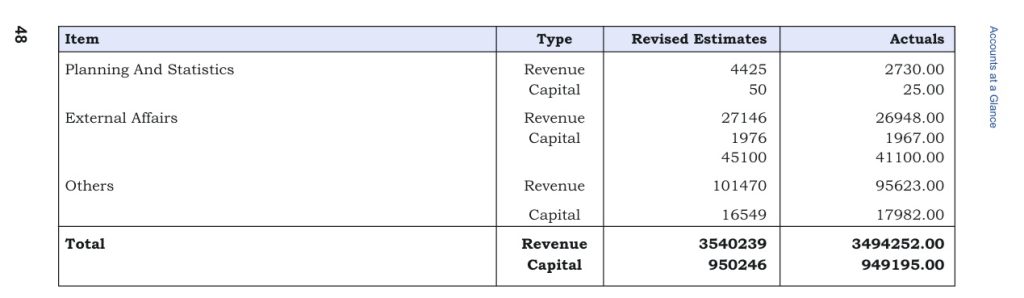
Central Sector Schemes (CS) are entirely funded by Government of India and implemented by the Central Agencies. In few cases it would be done through designated State implementing agencies. Major spends are fertiliser subsidy, Food subsidy, Defence outlays, Railway spends, NHAI, Road works, Metro projects, PM-Kisan, etc.
Other Central Expenditure includes provisions made for the Central Expenditure on CPSEs (Atomic Energy, Telecommunication, etc), Autonomous Bodies, Interest Payments, Repayment of Debt, Contributions to International Organizations etc
Centrally Sponsored Schemes (CSS) includes those schemes which are funded and implemented by both the Centre and the States as per the approved sharing pattern (MGNREGA, Jal Jeevan, PMAY, etc).
Finance Commission Transfers are the transfers to States/UTs incl. grants for local bodies, SDRF, revenue deficit grants, etc.
Other Transfers to States include transfers to States made under National Disaster Relief Fund, Assistance for schemes under 1st proviso to Article 275(1) of the Constitution etc (Compensation Cess, Special Assistance, etc)
Apart from these, resources of public enterprises constitute the total expenditure profile of Centre.
XV Finance Commission
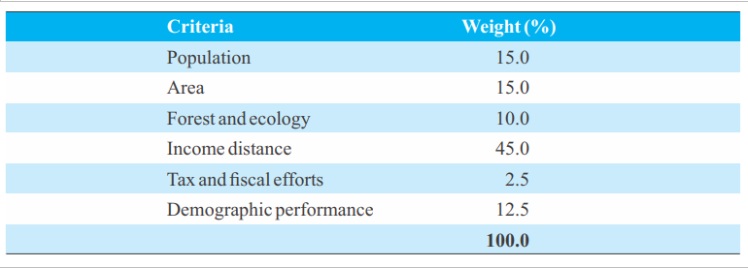
The Fifteenth Finance Commission (XV FC) for the period 2021-26, was chaired by N. K. Singh. It recommended states’ share in the divisible pool at 41% and devolution by States using criteria like income distance, population (2011), area, forest & ecology, demographic performance and tax effort.
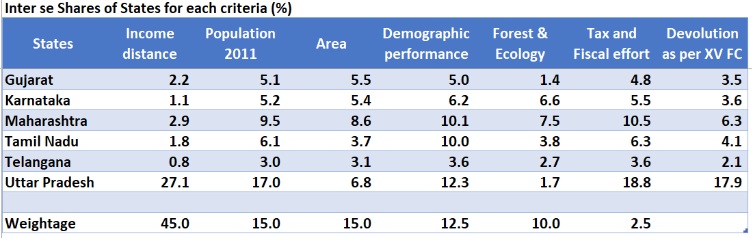
The criteria and weightage assigned for the devolution formulae are:
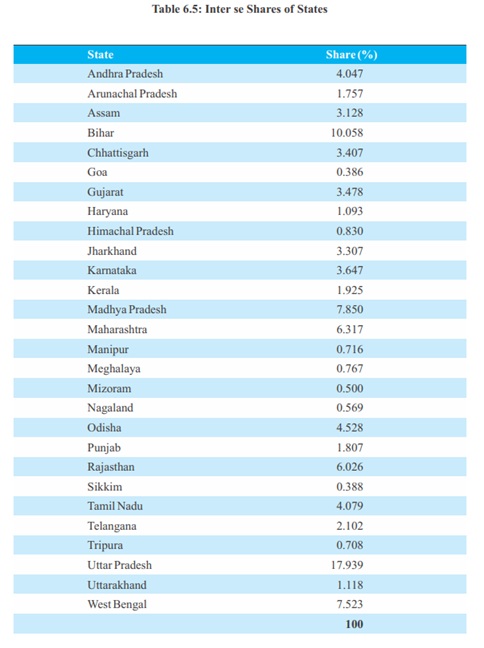
The state wise share of devolution which was formulated by the Finance Commission is:
Tax Devolution by Criteria for Major States
Looking at the tax devolution by criteria for major states, you could see that the Income distance has the maximum weightage at 45% and represents the principle of equity as main criteria. Population and area share by State follows this at 15% weightage each. To reward demography performance (TFR), forest cover and tax / fiscal effort appropriate measures have been added.
Here, UP has got the maximum share most of the criteria in its favour amongst this group of states. Its low per capita income and its distance with the highest per capita state (Haryana) has the maximum inflence followed by its high population and area share.
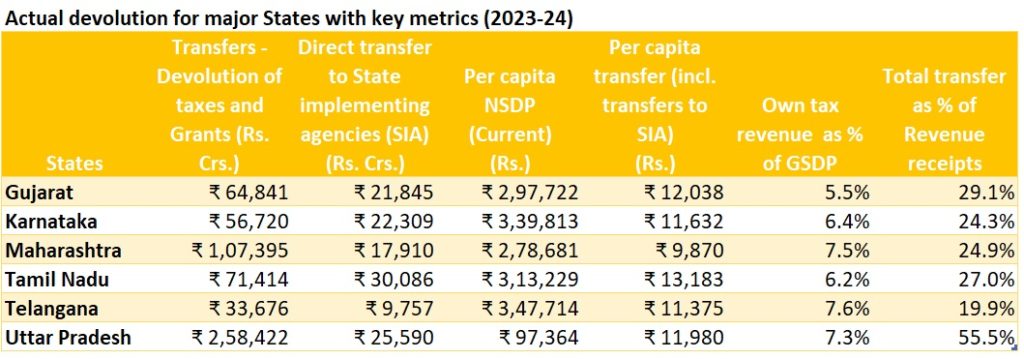
2023-24 Actual devolution by State
In terms of the actual devolution for these major states for the year 2023-24, the table below captures the tax devolutions and other Finance commission transfers under the total transfers. Apart from this, the respective State Finance accounts tracks the direct transfers to State implementating agencies (thro’ PFMS). These transfers pertains to Subsidies, some of the CSS and CS schemes as explained above.
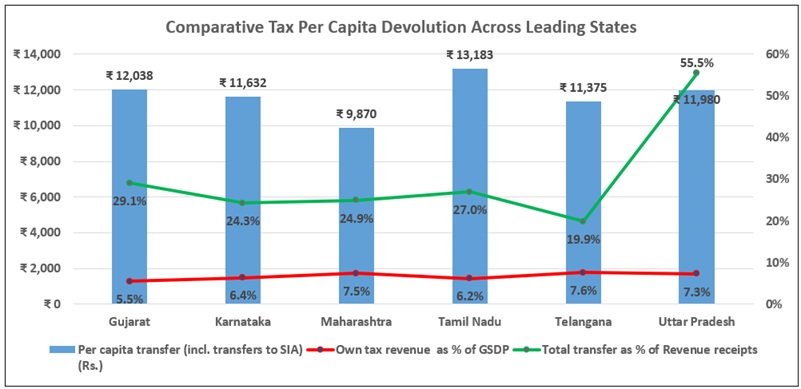
At per capita basis, these transfers (incl. that of direct transfers to SIAs) reflect that TN gets the maximum per capita transfers at Rs. 13,183 followed by Gujarat at Rs. 12,038. The own tax revenue as % of GSDP reflects the financial health of these States and is high for Telangana, Maharashtra followed by Uttar Pradesh. The quantum of transfers (excl. SIA) is highest at 55.5% for UP (reflecting the weightage shown above) followed by Gujarat (29%) and Tamil Nadu (27%).
Conclusion
These data above fairly reflect the balancing act and the principle of equity followed by Finance Commission for arriving at the tax devolution. These are typically called as general purpose funds and the transfers to SIAs are specific purpose funds. The myth that Tamil Nadu is unfairly treated by the Central Government is unfounded as the transfers are as per the independent finance commission and follows the detailed critera driven by equity and a fair distribution amongst States.
What could be looked at by XVI Finance commission is reducing the Cess collection used by Centre for specific purpose funds and other purposes and give more general-purpose funds to States driving autonomy
Actor-turned-politician Vijay seems to be making headlines for all the wrong reasons. Be it his behaviour post-Karur stampede or how he does politics without leaving his Panaiyur home, how he avoids meeting with the press, how he indulges in offline chat that never gets recorded, here is one more addition to that list – not from the recent past but a detailed account of his alleged behaviour and subsequent alleged betrayal, as accused by a staff who worked with him and his dad SA Chandrasekhar for a long time.
From Loyal Assistant to Poverty
In an almost hour-long interview with a YouTube channel, Selvam (birth name Selvaraj) stated that he worked in the film industry for about 40 years, including around 10 years as Vijay’s personal assistant and many more as a production assistant for SA Chandrasekhar’s V.V. Creations. As stated, he handled core personal duties for Vijay on sets: arranging food, juice, coffee and meals, watching over his health routine, and staying constantly at his side like “an electric current” from early morning till late night. Trusting Vijay’s word that he would “never remove” him from work for others’ complaints, Selvam gave up general production jobs and tied his entire livelihood to serving Vijay alone.
Today, he says he cannot get regular work in cinema, survives only on occasional small assignments, and is weighed down by a 10‑lakh‑rupee loan for open‑heart surgery done after multiple heart attacks during film shoots. He lives in a rented house in Saligramam, is months behind on rent, moves around in a bicycle, and says his wife wears only a thread instead of a proper thali chain because of their financial distress.
Humiliation, Violence and Isolation
Although Selvam repeatedly calls Vijay “a very soft‑natured” and punctual person in general, he narrates several episodes that, in his view, reveal a harsh and uncaring side to the star once he became “Thalapathy.”
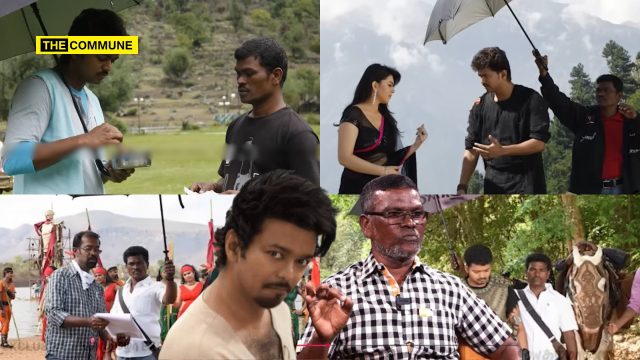
Slapping and kicking in private: During the shooting of Puli at Talakona, Selvam says Vijay, angry after a phone call, finished dinner and then suddenly slapped him, threw a mirror, kicked him and vented his anger in a closed room at midnight when no one else could hear. “You think, he is Vijay, I am Selvam. Midnight 12. No one around,” he recalls, saying he fell onto the sofa in shock, unable to understand what mistake he had made. The next morning Vijay apologised, telling him, “He said openly: If I don’t hit you, I can’t go hit those people. You’re close to me. I hit you out of that closeness because you’ve been with me for many years.”
Food incident and abrupt removal: During the shooting of Bairavaa, Selvam says Vijay found hair in his food, which Selvam believes was wig hair that someone else had placed it to frame him. Vijay inspected the dishes, got angry and finally told him: “Take this, wash the box, and go home. I’ll call you after 10 days.” Selvam was sent home in a car, without any compensation, and he says that “10 days” became a permanent exit from Vijay’s personal team.
Hostility from the entourage: From the beginning of his PA tenure, Selvam says Vijay’s driver Rajendran and others in the coterie resented him and systematically tried to “cut him off.” They allegedly broke his umbrella on Thuppakki’s ship set, threw away juice straws to make him look careless, banged his door at night after drinking so he couldn’t sleep, and even physically assaulted him via others, while positioning themselves as the main gatekeepers to Vijay. When Selvam once tried to prevent junior‑artist agent Sengaiya from entering Vijay’s room against instructions, Sengaiya slapped him; only after a group of assistants protested did Vijay later intervene and scold the agent.
Emotional blackmail and fear: Selvam describes how the constant harassment and eventual removal pushed him into depression and even a suicide attempt by consuming poison near Surya Hospital, from which a friend saved him. He says the stigma of “leaving such a big artist” led people to ask whether he had stolen something or committed some major mistake, further isolating him from work opportunities.
Broken Promises and Lack of Support
A recurring thread in Selvam’s account is the feeling that Vijay broke a clear personal assurance and then failed to show even basic solidarity when the former aide’s life collapsed.
A promise not kept: At one stage, Selvam says Vijay told him explicitly: “Whoever says anything about you, I will never stop your work or send you away. You came trusting me.” Selvam reorganised his career around that promise, quitting broader production work to focus solely on Vijay’s needs. Yet after the hair‑in‑food incident, he was quietly removed from the PA role and never called back to that position.
No help for surgery or debts: After years of service, Selvam suffered three major heart attacks while working on a Vijay film and underwent open‑heart surgery costing around 10 lakh rupees, funded entirely by high‑interest loans because hospitals refused to accept his government letters in time. He says he tried repeatedly to reach Vijay via TVK treasurer Venkat, and his children called too from the ICU, but “he never even picked up the phone,” and office/security staff blocked him at house, office and shooting spots.
Token gestures vs long closeness: For his son’s wedding, Selvam personally invited Vijay on set during Sarkar and also invited SA Chandrasekhar, hoping for some help because the family was conducting the marriage through loans. Vijay did not attend or send any message, Chandrasekhar sent 2,000 rupees via office boy, and Vijay’s manager Ram gave 5,000. Selvam contrasts this with how, in Kuruvi days, he once injured himself badly while carrying juice over rocks, was bandaged and sent to hospital, and even then, the help he remembers is 10,000 given by Udhayanidhi Stalin and Shenbaga Moorthy, not by Vijay himself.
Shut out from work and reputation damage: Selvam says many producers assume “Vijay sir must have deposited money in your bank” and therefore avoid hiring him, believing he has secretly been settled by the star. In reality, he says, “If I take retirement benefits, it will all be gone in one moment; my family will be on the streets,” and he credits only the union and occasional small projects for keeping him barely afloat.
Selvam Says His Conscience Knows The Truth
Selvam and Vijay are both Christians, and Selvam’s narrative often blends his Christian faith with his sense of betrayal. He recounts that even when he was accused over food incidents, he would say, “Only my Jesus knows whether it’s true or false,” stressing that he tried to keep his conscience clean in his work. His wife, also a Christian, repeatedly urged him not to speak against Vijay: “Let him act according to his nature. He has become busy; we shouldn’t trouble him,” and insisted they leave the matter to God rather than retaliate.
Selvam contrasts this Christian ideal of compassion with the reality that a “fellow Christian” he served like family has not enquired whether he has one proper meal a day, even when his daughter became a widow and returned to his home. He recalls: “We are Christians; if someone wrongs us, we leave it to God; we don’t retaliate,” but adds that he is forced to speak now only because he is “struggling even for food” and hopes some help may reach his family. For him, the real test of faith is whether a man who speaks of ideals and justice will look down from his political and film heights and remember the worker who served him.
Cinema Power, Workers and a Question to Vijay
Selvam situates his personal story within a larger critique of how star power and crores of rupees contrast with the insecurity of workers who wake at 4 AM to serve them. He asks whether Vijay has helped “even one cinema worker” from the crores he earned, pointing to lightmen who fall and die, drivers who work 24 hours, and production assistants who endure humiliation just to feed their families.
He recalls how MGR once took back a former personal staffer, gave him a home and told him, “A man who worked under MGR should not suffer under someone else,” and wonders whether today’s actors who invoke MGR’s legacy are willing to act with similar humanity.
He also contrasts Vijay with Ajith, saying Ajith builds houses for his workers and supports their children’s medical and education needs, and remembers how Ajith once cooked biryani himself for all technicians on the Mankatha set and personally gave Selvam food. Though he says he likes Vijay, his son is a Vijay fan, and his wife still refuses to speak ill of him, he feels that “when he was Ilaya Thalapathy he was good; after becoming Thalapathy, he totally forgot,” and that living isolated from ordinary people has made Vijay insensitive to ground‑level suffering.
In the end, Selvam’s story stands as a sharp moral question directed at Vijay: what does it mean for a Christian, cinema icon and now political leader to speak about justice, workers and MGR ideals, while a man who served his food for ten years cannot afford food, rent, or medicine?
Subscribe to our channels on Telegram, WhatsApp, and Instagram and get the best stories of the day delivered to you personally.
India has been extremely fortuitous to come under resolute, innovative and visionary leadership since 2014, gradually marking a distinct break from the damage perpetuated during Congress regime in every domain.
The Congress regimes presided over outright administrative failure, leaving vital ministries such as the Ministry of Labour & Employment (MLE), Ministry of Micro, Small and Medium Enterprises (MSME) and Ministry of Corporate Affairs (MCA) in a state of collapse due to dreadful mismanagement. Congress incompetence in governance peaked in the heedless institution of almost 29 garbled labour laws which reduced employment opportunities across the nation, ruined many MSMEs and pushed millions of employees into informal jobs.
The present government led by PM Narendra Modi has superseded and consolidated these 29 labour laws into four new, unified Labour Codes, and these codes came into effect on 21 November 2025. These reforms were made by scrapping the old system to create a simplified framework for wages, industrial relations, social security, and occupational safety for India’s working community.
Although labour and trade unions have raised concerns about potentially diluting worker rights, the central government claims that these reforms will enhance welfare and modernize labour regulations, employment practices, and broader worker protection; integrate workers across organised, unorganised, gig, and platform sectors under a common labour framework; and reflect India’s current economic conditions and growth trajectory.
Impact of Labour Law Reforms On Working Community
These historic labour law reforms announced by the central government consolidate different wage rules (Code on Wages, 2019), social security systems (Code on Social Security, 2020), industrial relations procedures (Industrial Relations Code, 2020), and workplace safety provisions (Occupational Safety, Health and Working Conditions Code, 2020).
This amalgamation extensively reduces legal complexity for both workers and employers. All unorganised or informal gig, contract, fixed-term, migrant, and platform workers will be able to avail themselves of or claim the following rights moving forward: wages, welfare schemes, benefits, social security, and work protection from their employers, similar to permanent employees in the organised sector. These provisions became mandatory for employers from 21 November 2025, and employers must comply thereafter.
Workers Legal Rights & Proof of Employment
Workers will now receive official appointment letters as documented proof of their employment terms, which will eventually reduce disputes over the position applied for, wages, and job conditions. This will prevent employers from arbitrarily terminating or exploiting workers or withholding pay or benefits simply because a worker was informally recruited. This inclusion strengthens the negotiating power and legal standing of the working community.
Wage Protection
For the first time in India, all workers across the country, regardless of sector or state of employment, are legally guaranteed a minimum wage, eliminating major wage disparities and inconsistencies across sectors.
Another inclusion is that wages must be paid within a stipulated time frame (the prior month’s salary to be paid by the 2nd, 5th, or 7th of the following month) along with a defined payslip. This ensures workers can see how their salary is structured, including the breakup of basic pay, allowances, overtime, loss of pay (LOP), etc. This provision enhances transparency and fairness and reduces financial stress among workers.
Social Security & Health/Risk Coverage
The incorporation of consistent safety, health, and welfare provisions in the recent reforms enhances workers’ dignity and well-being. This act encompasses crores of workers previously engaged in informal employment, granting them safety and legal recognition and enabling access to mandatory workmen’s compensation, retirement schemes, PF, ESI, pensions, gratuity, maternity benefits, and systematic leave entitlements that were earlier restricted to formal employees.
The OSH Code mandates that employers comply with health and safety norms nationwide. It requires employers to provide welfare amenities such as clean drinking water, adequate sanitation facilities, trained first-aid resources, restrooms, canteens, hazard communication displays, proper ventilation, lighting, and hygienic working conditions.
Work–Life Balance & Higher Pay
Employers cannot compel the workers to work lavishly long hours without their consent, as the workers should be having predictable time schedules that their families and personal lives can rely on. Daily and weekly work time ceilings are standardized. Typical working hours are limited to 8 hours per day and 48 hours per week. Overtime (work beyond these limits) can only be done with the worker’s consent, and the employers are mandated to compensate the overtime at statutory rates (twice the normal wage rate).
This specific measure discourages employers from pushing workers to work long hours, as the government wants to ensure that the workers are having adequate rest and weekly holidays. This reform gives workers leverage and reduces burnout, stress, and health issues tied to their work. This move is particularly beneficial for women, and it strengthens the balance between work and family time.
Uplifting Female Workforce Participation
This is one of the epoch-making reforms in India, as women are now legally empowered and entitled to work in all sectors, right from small shops on the streets to heavy industries with rotational shifts, including night shifts that were previously confined, restricted, and off the map for women, provided safety protocols are observed. These working provisions improve gender equality in employment and encourage more women to engage in diverse sectors.
Women will get to get access to lucrative roles, which will strengthen their financial independence. Employers are mandated to provide ample safety measures for women, such as transportation with security, well-lit workplaces, workstation security, and welfare facilities that are exclusive for women. These measures will lead to rise in female participation in the workforce and augment economic empowerment.
Impact on Indian Economy
These recent labour law reforms are significant for economic growth since the present central government overhauled and retouched a super stern and obdurate labour framework into a more streamlined and simplified system that nurtures productivity, fosters international and domestic investment, and promotes inclusive development. Engaging millions of informal workers in the formal system and providing them a healthy, secure workplace leads to increased productivity, reduced absenteeism and improved accuracy and integrity of India’s workforce as well as economic efficiency.
Increasing female workforce participation leads to broader economic development and helps meet the demographic objectives of Bharat. On the other hand, these reforms also improve ease of doing business, thereby attracting domestic and foreign investment. These reforms strengthen MSMEs and startups as these are engines of job creation in the country besides supporting faster industrial and manufacturing diversification and expansion. A more simplified, transparent, and uniform regulatory framework and common labour codes and practices across the nation will aid employers in having smooth business operations, thereby strengthening their competitiveness, and that will ultimately fuel economic growth.
Congress-Era Labour Law failure
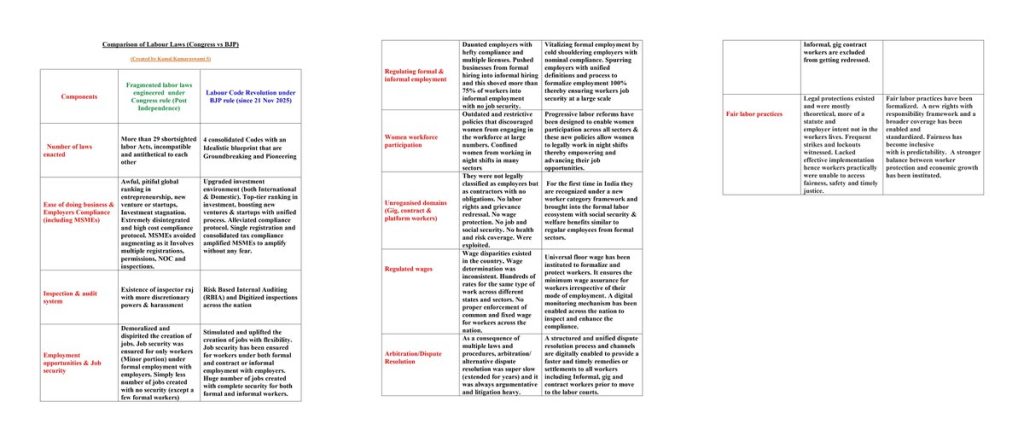
Congress as a party with the collective absence of prescience and innovation created the most topsy-turvy, anti-economic and anti-labour laws that not only jolted the working community into informality but throttled employers in bureaucracy. Most policies designed under Congress were warpaint at best and deteriorating at worst and those made India’s labour market inflexible, pushing international investors to move to flexible labour markets like China, Indonesia and Vietnam. On the other hand, The BJP government introduced an innovative, simplified but comprehensive labour codes aligning with global best practices and that shows India’s preparedness for a competitive and inclusive labour market to the rest of the world.
Comparison of Labour Laws (Congress vs BJP)
Comparison of Labour Laws (Congress vs BJP)
Conclusion
These new labour reforms across the board mark one of India’s most sweeping transformations in the work culture since these new reforms are systematizing employment, regulating wages, methodizing work hours, reinforcing the safety norms, and dilating opportunities for women in all the sectors. These reforms impulse India’s transition toward a more comprehensive, impartial, and global-ready labour framework. These reforms will remarkably uplift the status, patronage, contemplation, and security of crores of workers across Bharat. These new reforms not only empowered the workers but have also simplified and optimized employer responsibilities as groundwork for resilient growth model competent in succoring long-term national progress with a fertile and robust economy.
Kamal Kumaraswami is an advocate and writer.
Subscribe to our channels on WhatsApp, Telegram,Instagram and YouTube to get the best stories of the day delivered to you personally.
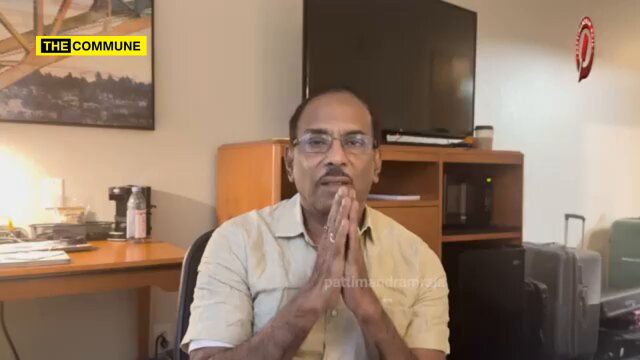
A controversy erupted around Pattimandram speaker and actor Raja after allegations surfaced on social media that he asked about a woman’s caste during a Tamil Sangam event in the United States, with DMK-supporting Dravidianist voices also entering the row and condemning him.
The issue began after a US-based Tamil posted an account on social media alleging that Raja, who rose to prominence speaking in debate forums led by Solomon Pappaiah, made caste-related enquiries while interacting with volunteers who had prepared food for him.
Allegations in Viral Post
In the post, it was stated that Pattimandram speaker Raja had travelled to Atlanta in the United States at the invitation of the American Tamil Sangam. He said the responsibility of preparing Tamil food on behalf of the Atlanta Tamil Sangam for Raja and fellow speaker Bharathi Baskar had been given to his sister, and that she, along with her friends, had prepared the food elaborately and taken it to the venue.
He alleged that after the food was served, Raja interacted with the women and enquired about their native places. According to the post, as soon as they mentioned their hometowns, Raja asked whether they belonged to a particular caste.
Karthikeyan further claimed that when it came to his sister’s turn, Raja asked where she was from. She replied that she was from Karaikudi, following which he asked if she was a Chettiar. He added that although his sister could have remained silent, Raja allegedly continued asking what community she belonged to.
He stated that since his sister did not respond, Raja moved on to question the next person. Karthikeyan said that when his sister later narrated the incident, she did so in tears. He wrote that she told him she would not have felt hurt even if Raja had criticised the food, but being asked about her caste in a place where no one knew or had asked about it made her feel uncomfortable. He added that she said she felt nauseated and found it very difficult to control her anger and tears.
The post strongly criticised Raja stating that in Tamil Nadu even an uneducated person would know that directly asking someone’s caste name was disgraceful, and that even if one wished to know, it would not be asked openly. Karthikeyan wrote that Raja was an educated person and a Pattimandram speaker who had spoken on countless stages, adding that he himself had long admired and listened to Raja’s speeches in Solomon Pappaiah’s Pattimandram, especially during Deepavali programmes. He said his sister too had admired Raja, which was why she had cooked wholeheartedly and brought food for him.
He further wrote that people like his sister pursued education, developed their talents, and settled in countries like the United States to live away from caste, religion, and communal divisions, and questioned whether such a regressive mindset should be carried there as well.
Continuing his criticism, he stated that the “low mentality” of identifying caste based on hometown had not left Raja. He questioned whether only Chettiars lived in Karaikudi and whether there were no other communities there. He asked why, even after his sister remained silent, Raja allegedly continued pressing her to reveal what community she belonged to. He added that if Raja had such caste obsession, he should conduct Pattimandrams only among people of his own caste and questioned whether it was appropriate to display caste hatred even in diaspora spaces where Tamils sought unity beyond caste.
The post also questioned what interest Raja had in knowing the caste of the person who cooked the food. Karthikeyan wrote that it was Raja’s good fortune that he had not encountered people like him in that situation, adding that had he done so, he would have questioned him strongly and exposed what he described as a casteist mindset.
Dravidianist Response
DMK-supporting Dravidianist voices entered the controversy, especially Dravidar Kazhagam member and advocate Arulmozhi Annamalai, who condemned the alleged conduct.
In a social media post, she wrote that Raja, who became famous through Solomon Pappaiah’s debate forums, was now facing allegations of conducting caste enquiries even when served food with warmth abroad, and that such conduct deserved strong condemnation.
She further argued that caste discrimination practices were being carried overseas by sections of the Indian diaspora. Referring to a separate instance, she cited a video in which a Karnataka-origin woman abroad had spoken about being asked her caste in public, calling such enquiries degrading.
Her post also referred to activism in countries such as the United States and Australia against caste discrimination, including efforts by organisations aligned with Periyar–Ambedkar thought to raise the issue legally and politically.
She cited discussions at an international conference in Melbourne attended by senior lawyer Ravi Varma Kumar, who had suggested adding a question on caste discrimination and untouchability to immigration forms, alongside health and criminal background disclosures, so that those practising caste discrimination could be denied entry or deported.
She also referred to representations made to Australian authorities, including engagements with Senator David Shoebridge, and said caste had been included as a discrimination factor in Queensland following advocacy efforts.
In the interaction video, we see Arulmozhi Annamalai giving Australian Senator David Shoebridge suggestions for non-existent problems. She says, “I just want to put one suggestion. One of the speakers in the conference had suggested that the immigration form that you are asking whether have you traveled to this country, where youre affected with some disease like that, there can be one more question, are you practicing untouchability? Or are you practicing apathy?”
In response, the senator acknowledged the suggestion, with the discussion continuing as she said, “That can be included in question. Therefore, such persons will be prohibited from entering into Australia. That is an easy way to avoid the menace,” and further added, “Well, I would love to put that on.” The senator responded that immigration forms already contained extensive disclosures, noting, “Yeah, well, we, you’ve all filled in the form… Theres quite a lot of it. Theres quite a lot in there, isn’t it?”
Another person sitting in the room said, “Even if everyone answered in the negative, at least it will be creating a conscious…” Arulmozhi continued, “… but it will create a conscious that is binding on them as a condition to enter.”
The exchange also touched on enforcement, with the senator remarking, “And then if we find out they are a fascist… We can kick them out for lying on the immigration board.” Concluding the interaction, she urged, “So, so please try to implement it,” before both sides agreed to move forward.
Raja, who became famous through his speeches in Solomon Pappaiya’s debate team, is now in the spotlight for conducting a caste inquiry with the person who warmly served him food when he travelled abroad to give a speech. This act by Pattimandram speaker Raja deserves strong… pic.twitter.com/9GqzVLh7iM
After the controversy gained traction, Raja issued a video clarification denying the allegations.
He said, “We had gone to Atlanta in the United States for an event. At such events, many Tamil families bring food from their homes and serve it. Sometimes that food tastes even better than what we get in our own hometowns. I remember asking someone whether the food was Chettinad cuisine. But news is being spread that I asked about caste. I do not have such a small mindset to think about someone’s caste or community. ‘Tamil’ is the only caste I take pride in. There is no other caste. I have always spoken about unity.”
He said that there was only one caste he believed in, the Tamil caste, and added that by religion he was a Christian, and that beyond that he recognised no caste divisions.
Referring to the event, he said the organisers had arranged a meet-and-greet interaction where he had spoken about unity — saying Tamils should not divide themselves on caste or religious lines, that they were one people, and that unity alone would benefit Tamil society.
He continued, “The event there took place on Tuesday, February 3. Only after many days, on February 9, these messages are being spread on social media. If I had behaved in such a manner, those sisters could have questioned me then and there, or at least during the Pattimandram. Everyone there was happy. Despite work and cold weather, many people had attended. When we see the faces of those who come searching for us to serve food, they appear closer than even our relatives.”
Raja added that when people came searching for them to serve food with affection, their faces appeared closer than even relatives. He referred to the Tamil sentiment that those who feed you are “life-givers,” and spoke about how people had brought idli, dosa, pongal and other foods with great care, travelling distances and spending time to serve them.
He said it would be wrong to suggest that he would go and enquire about the caste of such people. He described the allegations as very painful and said he was stating with sincerity that he had never behaved in such a manner and never would. He appealed to people not to spread the misunderstanding and asked them to realise the truth, concluding his clarification with thanks.
I’ve met Pattimandram Raja in person when he visited my city in 2008. I was one of the speakers in the pattimandram where he was a naduvar. Also met him online in 2021 for one of my speeches. He was always friendly, rational, and focused on ideas. I never saw him ask anyone about… pic.twitter.com/Fm5BG2FTBd
Following the heavy criticism of Raja, the one who seemingly ignited the issue – Arulmozhi Annamalai, wrote on her Facebook asking people not to attack him personally.
She wrote, “Comrades, Pattimandram Raja has issued his clarification through a video. He has clearly stated that it was not his intention to ask about caste, that he does not have such a practice, and that wherever he goes he emphasises the idea that Tamils must unite as one.
At the same time, the experience and distress expressed by the sister who raised this allegation cannot be dismissed as false – the manner in which her brother has described it itself conveys her pain.
While explaining the issue, Raja has said that when the sister mentioned Karaikudi, he remembered asking whether the food was Chettinad cuisine based on its taste, and that she may have understood it as him asking whether she was Chettiar. He has stated that he did not ask with the intention of knowing her caste.
For more than 30 years he has travelled across Tamil pattimandram stages, and no one has ever accused him of having such an approach or behaving in this manner elsewhere. Even now, no one has come forward saying he behaved like this with them. Therefore, accepting his explanation and refraining from attacking him personally, the need of the hour is to continue the ideological struggle against caste.
It may be easy to advise the sister to move on from this issue. But to understand the exclusion and humiliation a person faces after revealing their caste, one must read the book “Caste in America.” Making people realise that this aggressively propagated caste mindset is an assault on human dignity and ensuring that younger generations in those communities refuse to follow such injustice is the only solution.
That is why, in my earlier post, I did not reduce this to a personal issue against Pattimandram Raja alone but also shared videos about the broader actions we must undertake and the work we have been doing. In the responses to that post, many pointed out how caste thinking manifests even among those who speak progressive ideas – in speech, conduct, and lifestyle. Let us subject those views to honest self-reflection.
Even asking someone which locality they lived in, out of affection that they are from our native place or city, often creates complications. After learning a person’s place of residence, even if both the questioner and the respondent treat it casually, the exchanged glances of those nearby can become uncomfortable. Many people have still not moved beyond this mindset.
In such a situation, the perspective of caste nationalists, who, in the name of identifying linguistic or regional background, ask what is wrong in enquiring about caste is dangerous. It is to counter this poison that the antidote of Periyar and Ambedkar’s thought becomes necessary.”
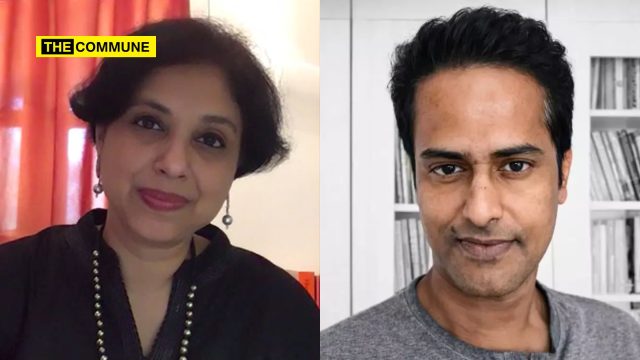
A Gujarat court’s conviction of self-styled “independent investigative journalist” Ravi Nair in a criminal defamation case has ignited a fresh political and media storm, not because of the judgment itself, but because of the narrative that quickly followed it.
A magistrate court in Mansa, Gandhinagar, convicted Nair and sentenced him to one year of imprisonment along with a monetary fine in a case filed by Adani Enterprises Ltd (AEL), the flagship firm of the Adani Group.
The case stemmed from a complaint alleging that Nair had published and circulated a series of tweets containing false and defamatory statements targeting the company and the broader conglomerate. AEL argued that the posts were not fair comment or legitimate criticism but were aimed at damaging the company’s reputation and eroding investor and public confidence.
After trial, the court held that the complainant had substantiated its allegations. It found Nair guilty of criminal defamation and awarded a one-year sentence along with a fine – a conviction rooted in evidentiary findings, not editorial disagreement.
Soon after the verdict, sections of the media ecosystem rallied to frame the conviction as an assault on press freedom.
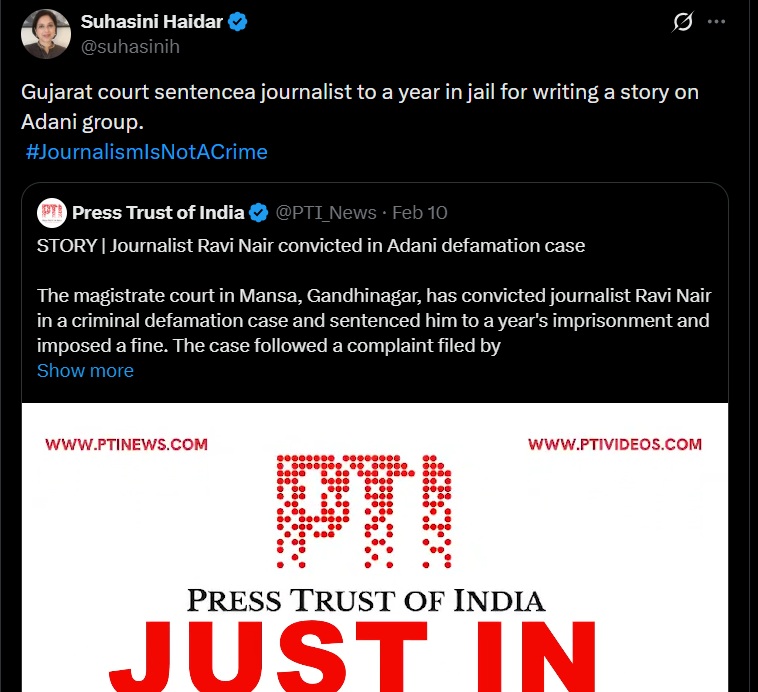
Among those leading the charge was senior journalist and Diplomatic Affairs Editor at The Hindu, Suhasini Haidar, who posted on X: “Gujarat court sentences a journalist to a year in jail for writing a story on Adani group.”
As with Dhanya Rajendran who emphatically flashed the victim card, the shield does not hold for Suhasini Haidar too.
Haidar wrote sixteen words in her post but not one of them is true.
Let’s translate that sentence from Haidar-ese to English: “A man who shares my ideological priors was convicted in a criminal defamation case after a court found his statements false and malicious. But if I say that, you won’t be outraged on my timeline. So instead, I’ll imply he was jailed for doing journalism.”
Apparently for people like Haidar and Rajendran, “journalism” means publishing proven falsehoods about a corporate entity, getting convicted in a court of law, and still expecting to be treated like a martyr. Here’s what Haidar won’t tell you:
The court didn’t sentence Nair because his article made Adani uncomfortable. It sentenced him because Adani Enterprises successfully proved in court that Nair’s statements were false and intended to cause reputational damage. Not “unsubstantiated.” Not “harsh.” False. Fabricated. Defamatory.
But in Haidar’s world, that detail is inconvenient. So it gets amputated.
She’s not defending press freedom. She’s defending a project. Ravi Nair wasn’t some crusading truth-teller taking on a corporate Goliath. He was a serial peddler of half-baked hit pieces whose byline has been the common denominator in every anti-Adani “exposé” that collapsed upon contact with reality. The Wire. NewsClick. The usual addresses for propaganda dressed up as investigation.
And now Haidar wants us to believe this man is a victim? Please.
Ravi Nair spent years throwing mud at the Adani Group, Prime Minister Modi, and anyone else who didn’t fit his ecosystem’s preferred narrative. His “investigations” were the written equivalent of a man shouting conspiracy theories at a traffic signal, except he had donors, a platform, and a willing media apparatus that never bothered to verify his “facts” because they were too useful.
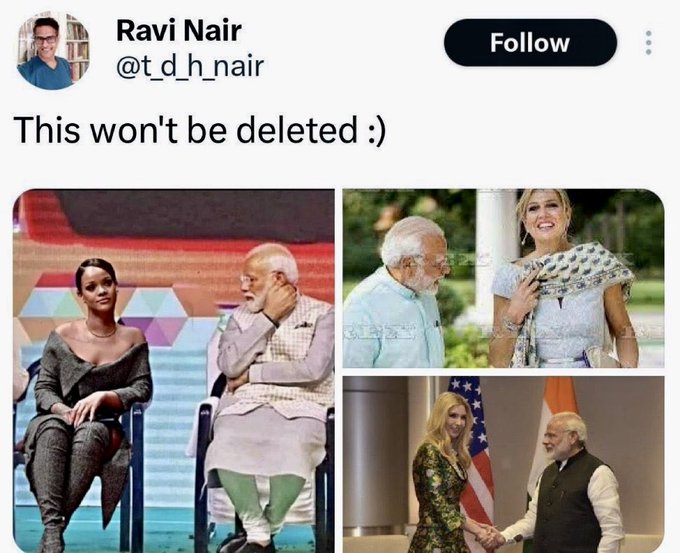
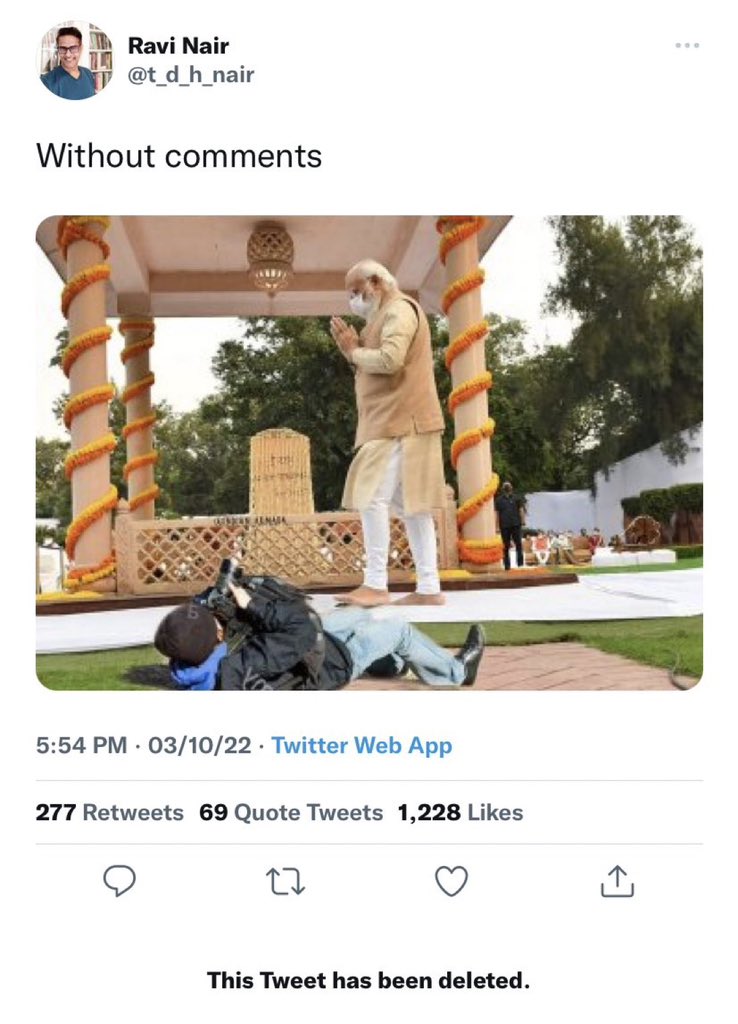
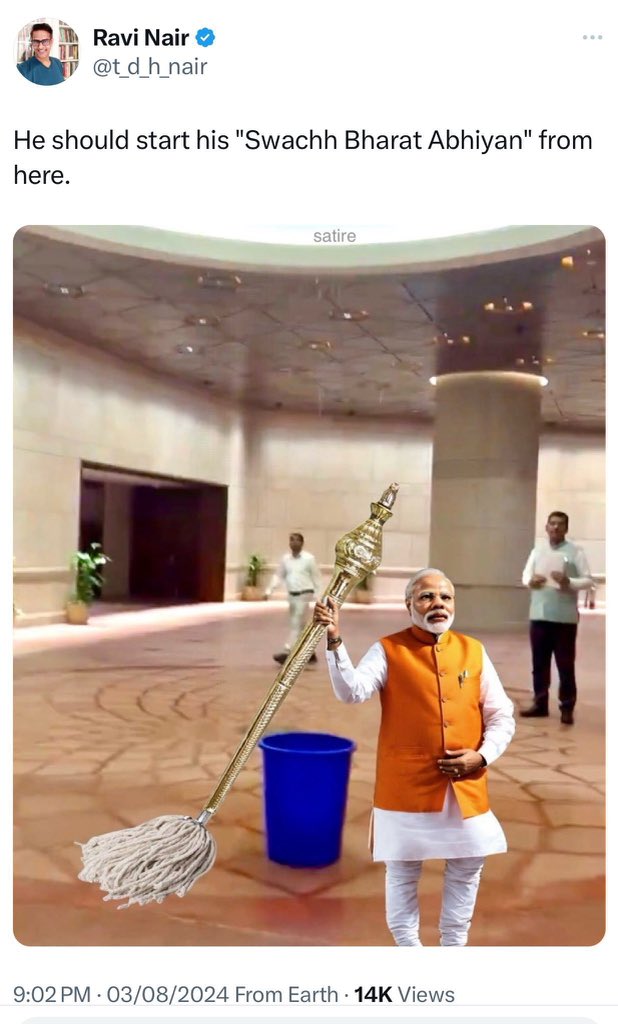
He wasn’t a journalist. He was a hitman with a keyboard. And the court didn’t convict him for journalism. It convicted him for the hits. He was also a two-bit troll. Here are some of his posts trolling PM Modi.
Yet here’s Haidar, editing reality in real time, hoping no one scrolls down to the court order. She’s betting that “journalist jailed” will do more work than “serial liar finally held accountable.” She’s probably right. Outrage travels faster than context.
If Suhasini Haidar actually believed what she’s selling, that any legal consequence for a journalist is automatically an assault on the fourth estate, she’d be defending every journalist. Not just the ones who do opposition research on behalf of certain powers’ favourite corporate targets.
She’s not defending journalism. She’s defending her tribe.
Haidar isn’t some green reporter who doesn’t understand defamation law. She’s the Diplomatic Affairs Editor of The Hindu. She’s been to more press freedom seminars than Ravi Nair has tweeted lies. She knows Article 19(1)(a) doesn’t exist in a vacuum. She knows 19(2) exists precisely to prevent speech from becoming a weapon.
But knowledge doesn’t matter when the assignment is narrative protection.
So she serves her followers the half-truth, lets them run with it, and retreats into silence when the context catches up. No correction. No clarification. Just the original lie, marinating in her timeline, doing its work.
Journalism is not a crime. But writing fiction just to defame someone is called supari.
Subscribe to our channels on Telegram, WhatsApp, and Instagram and get the best stories of the day delivered to you personally.
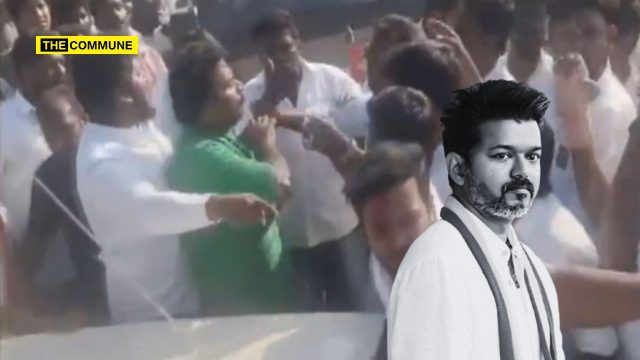
Tensions escalated outside a government hospital in Tamil Nadu’s Salem on Friday, 13 February 2026, after journalists were allegedly attacked by cadres of Tamilaga Vettri Kazhagam (TVK) while covering the death of a man who collapsed during party chief Vijay’s political rally.
According to reporters present at the scene, TVK functionaries confronted members of the media when visuals of the incident and its aftermath were being recorded. Journalists alleged that cadres attempted to assault them and also tried to damage a television news vehicle parked outside the hospital premises.
The confrontation occurred after the body of a 37-year-old man, identified as Suraj, was brought to the hospital. Suraj, a native of Maharashtra, had been residing in Salem’s Sevvaipettai area where he worked in silver-related labour. He is survived by his wife and a child.
Police officials said Suraj had attended the public meeting organised for TVK administrators as a spectator. During the rally, he suddenly collapsed.
“During the event, he suddenly collapsed. He was rushed for medical assistance, but was declared dead, reportedly due to a heart attack. Police are conducting further inquiries into the incident,” police said.
The incident has drawn added attention as it comes months after a stampede at a political rally addressed by Vijay in Karur reportedly claimed over 40 lives.
Even as the death triggered concern, the situation outside the hospital turned volatile with the reported scuffle between media personnel and party cadres, prompting police presence to prevent further escalation.
No official statement had been released by TVK regarding the alleged attack on journalists at the time of reporting.
#WATCH | Tamil Nadu: Visuals from outside the hospital, in Salem, where a scuffle broke out between some journalists and TVK cadres. The journalists alleged that the cadres tried to attack them. More details awaited.



 The state wise share of devolution which was formulated by the Finance Commission is: