A heated exchange broke out in the Lok Sabha after DMK MP TRBaalu made personal remarks about Madras High Court judge Justice GR Swaminathan while raising the Thiruparankundram Karthigai Deepam issue. The comments prompted immediate intervention from Union Minister Kiren Rijiju and the Chair, who directed that the remarks be expunged.
Speaking during Zero Hour, Baalu referred to the recent controversy over the lighting of the Karthigai Deepam atop the Thiruparankundram hill near Madurai. He questioned who had lit the lamp and alleged that “miscreants” attempted to create tension. While criticising those who approached the court, he referred to the judge involved as an “RSS judge,” triggering strong objections from the Treasury benches.
After Baalu made the controversial remark, it triggered an immediate objection from Union Parliamentary Affairs Minister Kiren Rijiju.
Rijiju said the comment amounted to casting aspersions on the judiciary and violated parliamentary norms. “In our parliamentary democracy, we have maintained the discipline of avoiding disparaging remarks,” he said, adding that Baalu’s statement could create “unnecessary trouble.” Members on the Treasury benches also intervened, citing the sub judice status of the matter.
Presiding officer Krishna Prasad Tenneti ordered Baalu’s remarks to be expunged, stating that Parliament cannot refer to judges in such terms. While directing the deletion, he observed, “You referred to an honourable judge with an inappropriate label. This is withdrawn and deleted.” Baalu, however, maintained that his comments had context and did not retract them.
The dispute centres on Justice GR Swaminathan’s 1 December 2025 order enabling the lighting of the sacred Deepam at Thiruparankundram. The state government challenged the move on law-and-order grounds. When the ritual was not carried out on 3 December 2025, clashes broke out between Hindus and police personnel, escalating allegations of contempt and further polarising political discourse in Tamil Nadu.
In the Lok Sabha, Baalu accused “certain groups” of stoking communal tensions and called for central intervention. Responding on behalf of the government, Minister of State for Parliamentary Affairs L. Murugan countered that it was the DMK administration that was discriminating on religious lines. He alleged that the state government was obstructing worship and mishandling law and order in the region, adding that it was operating on “vote-bank politics.”
The Indian Union Muslim League (IUML), a key constituent of the Congress-led UDF and a party that has long projected itself as secular, has come under scrutiny ahead of the local body elections after a video of IUML leader Ashraf Edneer went viral on social media. The clip has triggered allegations that the party is seeking votes on religious grounds.
The LDF election committee for Kasaragod municipality has submitted a formal complaint to the State Election Commission, alleging that the statements made in the video constitute a violation of election norms. The video shows Ashraf introducing UDF candidate Shahina Saleem, contesting from Ward 16 (Thuruthi), and describing her as a devout Muslim who prays five times a day and fasts during Ramadan.
What’s happening in Kasargod, Kerala is honestly shocking.🚨🚨
Congress is going around saying, “Our candidate prays 5 TIMES a day… she FASTS… she follows ISLAMIC beliefs… so vote for her.”
Is this election or a religious quota?
This is the level of vote-bank politics in… pic.twitter.com/LLFG8a7qx3
LDF leaders claim this amounts to appealing for votes using religious identity. In his complaint, T. M. A. Kareem, secretary of the LDF committee in Kasaragod municipality, stated that presenting a candidate primarily through her religious practices creates an indirect comparison with rival candidates and could mislead voters by implying they are less religious.
Ashraf, however, has denied the allegation, saying the viral clip is a selectively edited portion of a 30-minute speech delivered at a women’s meeting on 30 November 2025. He told TNIE that the full speech focused on women’s empowerment, development issues, and the municipality’s socio-political needs, and that the IUML does not engage in communal politics. According to him, the remarks highlighted in the clip were meant to emphasise values, not to use religious practices as a tool for canvassing.
The episode has revived debates around the IUML’s ideological positioning. Social critic and political analyst Hameed Chennamangaloor said the issue underscores a longstanding inconsistency between the League’s public claim of secularism and its political conduct. He argued that a political party can be considered secular only when it avoids invoking religion in its operations, something he believes the IUML has not adhered to. He added that projecting candidates through their religious observance reduces political merit to a question of piety rather than governance.
Advocate C. Shukoor, known for his affinity to the CPM, described the incident as constitutionally and morally serious. He noted that the Constitution prohibits appeals to religion during election campaigns and said the focus should be on ideology, development, inclusivity, and constitutional values. He also criticised the trend of relying on communal and counter-communal narratives, arguing that both the BJP and the IUML are following parallel strategies that weaken the democratic process. Shukoor added that internal dissatisfaction within the League is growing over such approaches.
A controversy has emerged over documents submitted by the Tamil Nadu Hindu Religious and Charitable Endowments (HR&CE) Department during court proceedings related to the Thiruparankundram Deepathoon issue, after a senior priest publicly denied issuing a statement attributed to him.
According to submissions made in court, the HR&CE Department had reportedly included letters from several priests to support its argument that the lamp cannot be lit on days other than Karthigai Deepam.
One of the letters cited was attributed to Sivasri Pitchai Gurukkal, who was quoted as saying that, as per “Sivagamams,” it is customary to light the Deepam only on Karthigai Deepam day and not on any other date.
However, after the contents of the purported letter began circulating in the media, Pitchai Gurukkal issued a public clarification, stating that he had not provided the information claimed in the document. Responding to the claims, he alleged that his name and authority were used without his consent: “The Department has submitted as a letter information that I never gave,” he said.
This contradiction has triggered sharp reactions from Hindu organisations and opposition groups, who have questioned whether the HR&CE submitted inaccurate or fabricated material before the court. They have also accused the department of attempting to influence judicial proceedings to prevent the lighting of the lamp at Thiruparankundram’s Deepathoon.
Subscribe to our channels on WhatsApp, Telegram,Instagram and YouTube to get the best stories of the day delivered to you personally.
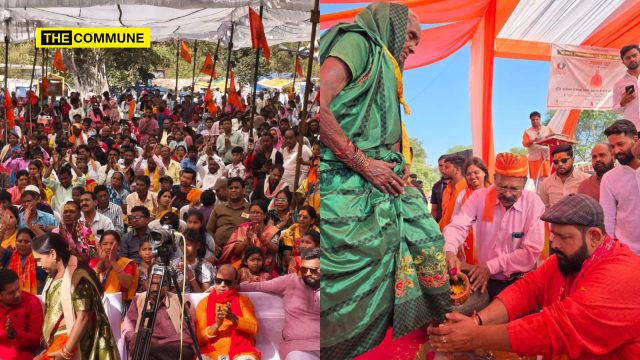
The Hindu Munnani on Friday, 5 December 2025, announced that it will hold protests across all districts of Tamil Nadu on December 7, condemning the denial of permission to light the lamp at the Thiruparankundram Deepathoon.
Speaking to reporters in Tiruppur, Hindu Munnani state president Kadeshwara C. Subramaniam said the organisation was protesting what it described as the Tamil Nadu government’s “insult to the devotion of the people” over the past two days. He alleged that despite clear High Court directions, the police had acted “against the Constitution” and accused the government of attempting to divert attention from what he termed the DMK’s “anti-Hindu activities.”
Subramaniam said the police’s failure to implement the High Court order amounted to dereliction of duty. He cited earlier court rulings, including a 1996 order permitting the temple administration to light the lamp on Thiruparankundram hill and a 2014 ruling stating that the lamp could be lit anywhere on the hill. He further said that in 2015 the dargah administration had informed the court that it had no objection to the lighting of the lamp.
According to him, the present case, filed against the temple administration and the Hindu Religious and Charitable Endowments (HR&CE) Department, stemmed from non-implementation of court directions “for nearly 30 years.”
He also criticised Law Minister S. Raghupathy, alleging that the minister had given “incorrect information” regarding the court proceedings.
Subramaniam accused the DMK government of selective secularism, claiming that while it greets festivals of other religions, it does not extend greetings for Vinayagar Chaturthi or Deepavali.
Rejecting accusations of provocation at the Thiruparankundram site, Subramaniam said the Hindu Munnani had not instigated religious tension and alleged that police mishandling contributed to the unrest. He described law and order in Tamil Nadu as “poor” and claimed that the government had “taken over” Thiruparankundram to divert attention from its failures.
Announcing the December 7 statewide protest, he said it would be held to condemn what the organisation calls the “anti-people and illegal activities” of the DMK and to demand immediate permission for lighting the Deepam. He also alleged corruption in temple administration and criticised the state government for not initiating action.
State secretary Kishore Kumar and other functionaries were present at the press interaction.
The Enforcement Directorate (ED) has uncovered a sprawling network of alleged financial fraud and immigration violations involving a Maharashtra-based trust already under the scanner of the Union Home Ministry. The federal agency, in a statement on Wednesday, accused the Nandurbar-based Jamia Islamia Ishaatul Uloom (JIIU) Trust of facilitating a Yemeni couple’s illegal overstay in India and fraudulently procuring Indian identity documents for them, while simultaneously channeling over ₹406 crore in foreign donations for unauthorized purposes.
The revelations followed multiple searches conducted by the ED on 1 December 2025 across Nandurbar, Mumbai, and Barmer (Rajasthan), after it registered a money laundering case against the Trust and several individuals. The case originates from a February First Information Report (FIR) filed by the Nandurbar police at Akkalkuwa Police Station.
A Web of Immigration Fraud and Identity Forgery
At the heart of the probe is the alleged role of the Trust’s trustees in aiding Yemeni nationals Al-Khadami Khaled Ibrahim Saleh and his wife Khadega Ibrahim Kasim Al-Nasheri. The ED stated that after the expiry of their visas, the couple was not only provided shelter but was also actively assisted in the “fraudulent procurement of Aadhaar, PAN, birth certificates and opening of bank accounts.”
Furthermore, the Trust allegedly appointed Al-Khadami as a madrasa teacher, a move the ED claims was a ruse to “falsely portray foreign staffing to donors, in order to attract higher overseas funding.”
The FCRA Web: ₹406 Crore Under Scrutiny
The investigation has shed light on the Trust’s massive financial operations, which are now under the lens for suspected Foreign Contribution Regulation Act (FCRA) violations. The ED’s preliminary findings indicate that between 2014-15 and 2023-24, the JIIU Trust received a staggering ₹406 crore in foreign donations from countries including Kuwait, Botswana, the UK, Mauritius, Switzerland, Seychelles, and Panama.
A significant portion of these funds was allegedly received and used in cash. The agency asserted that early evidence points to the “diversion of donation funds for non-approved uses, in violation of statutory norms.” The Trust is also accused of misusing the classification of ‘national research incentives for organisational self-funding’ to receive donations from other bodies and NGOs, thereby obscuring the trail of foreign contributions.
This is not the first regulatory action against the Trust. In July 2023, the Ministry of Home Affairs (MHA) had cancelled the JIIU Trust’s FCRA registration, finding it “involved” in channeling foreign funds to other non-FCRA registered NGOs, a clear violation of the law.
The Accused and the Seizures
The police chargesheet filed in April named several accused, including the late founder of JIIU, Ghulam Mohammad Randhera Vastanvi, the Yemeni couple, and others. During the recent raids, the ED seized ₹9 lakh in cash and a trove of digital devices expected to contain further evidence of the alleged money laundering and document fraud.
The case highlights serious concerns about the misuse of charitable trusts for illegal immigration and large-scale financial malfeasance. The ED’s probe is now focusing on tracing the ultimate beneficiaries and the full extent of the fund diversion, marking a significant escalation in the crackdown on FCRA violations and associated crimes.
The political and legal war over the Thirupparankundram Karthigai Deepam intensified dramatically today as BJP leader K Annamalai launched a forensic, point-by-point rebuttal to Tamil Nadu Law Minister S Regupathy’s defence of the state government’s actions, accusing him of misleading the public and misrepresenting judicial history.
The confrontation stems from the Madras High Court’s December 1 order by Justice GR Swaminathan permitting a devotee to light the ritual lamp at the ‘Deepa Thoon’ (lamp pillar) on the hill. The state government, citing law and order, prevented the lighting and appealed the order.
What DMK Minister Regupathy Said
At a press briefing on 4 December 2025, Minister Regupathy presented the government’s position:
Adherence to 2014 Judgment:“We are acting according to the 2014 judgment,” Regupathy stated, referencing a Division Bench verdict from the tenure of former Chief Minister J Jayalalithaa. He claimed this judgment settled that the Deepam must be lit only at its traditional location near the Uchi Pillaiyar temple.
Critique of New Petition: He criticised the recent court approach, saying, “Those who did not know this approached the court… as if they had discovered something new.”
Accusation of Political Motive: The Minister framed the issue as a political manoeuvre, alleging, “The actions of the Hindu organisations are viewed as the same as the actions of the BJP… These Hindutva organisations are currently confused about what issue to take up.”
Defence of Government Action: He justified the prohibitory orders and the appeal, implying that implementing Justice Swaminathan’s order would violate the settled 2014 ruling and lead to legal charges against the government.
Annamalai’s Rebuttal: Breaking Down the “Lies”
In a detailed counter-press conference, Annamalai dismantled the Minister’s arguments using colonial-era legal decrees and recent court records.
THE PROPERTY SETTLEMENT: The 1923 “Root Decree”
Regupathy’s Implication: That the hill’ ownership and ritual rights are ambiguous or governed only by recent judgments.
Annamalai’s Counter: Annamalai presented the foundational legal settlement—a 1920 Original Suit decree from a Madurai lower court, affirmed by the Privy Council in the 1930s. This decree, he stated, clearly demarcated:
The Muslims can control the Sikandar Dargah at the summit, the flat burial ground (Nelli Thoppu), and the connecting steps.
While the Hindus/Temple, it was noted that “The entire remaining hill belongs to the Hindu community, especially this temple.”
Annamalai argued that all subsequent judgments, including 2014’s, must be read in light of this century-old property title. The Deepa Thoon, he stressed, sits on this temple land, not on the dargah’s peak.
THE 2014 JUDGMENT: A Deliberate Misreading?
Regupathy’s Claim: The 2014 Division Bench verdict forbade lighting the Deepam anywhere but the Uchi Pillaiyar temple.
Annamalai’s Counter: This, he alleged, was the Minister’s key falsehood. He explained that the 2014 case concerned a plea to light a Moksha Deepam at the absolute highest summit of the hill-a point already decreed to be part of the dargah. The court rightly refused that specific request.
“The current petition is fundamentally different,” Annamalai stated. “It seeks to light the lamp at the Deepa Thoon, which is on a separate, lower peak over 15 metres away from the dargah. Justice Swaminathan’s order explicitly acknowledges this distinction and does not violate the 2014 ruling.”
THE “JUDICIAL OVERREACH” CHARGE: CISF Deployment
Regupathy’s Implication: That Justice Swaminathan erred by invoking Central Industrial Security Force (CISF) protection, encroaching on the state’s law-and-order domain.
Annamalai’s Counter: He provided a timeline: The judge’s December 1 order directed the state police and Collector to facilitate the lighting. They did nothing on December 1 or 2. Only after the devotee filed a contempt petition on December 3 did the judge, as a last resort, order CISF escort.
Annamalai cited the December 4 Division Bench of Justices Jayachandran and KK Ramakrishnan, which upheld Justice Swaminathan’s action, noting there was “nothing wrong” since the state authorities had failed in their duty. “This is not overreach; this is ensuring a court order is respected when the executive wilfully disobeys,” he said.
ALLEGED “MANIPULATION” OF RECORDS
Annamalai leveled a grave accusation: that the timing of the government’s prohibitory order (Section 144 CrPC/163 BNS) was doctored. He stated that the Division Bench, upon examining the original file, found the order was made to appear as if it was issued before the judge’s CISF direction, when it may have been created or antedated afterwards. “This is a serious finding of document manipulation by high-ranking officers,” he alleged.
THE “COMMUNAL NARRATIVE” VS. HISTORIC AGREEMENTS
Regupathy’s Framing: Portrayed the issue as Hindutva forces disturbing a Tamil festival.
Annamalai’s Counter: He cited a 2005 peace committee agreement, signed by Muslim representatives, allowing the Deepam to be lit 15 metres from the dargah. “The problem is not with the Muslim community or the dargah. The DMK government is manufacturing a communal clash for political benefit,” he asserted, contrasting this with the state’s inaction over recent provocative animal sacrifices at Nelli Thoppu.
Annamalai claimed that after the appeal was dismissed on 4 December 2025, BJP leaders attempting to proceed with the lighting were illegally arrested, as no valid prohibitory order or judicial stay was in effect at that time.
Subscribe to our channels on WhatsApp, Telegram,Instagram and YouTube to get the best stories of the day delivered to you personally.
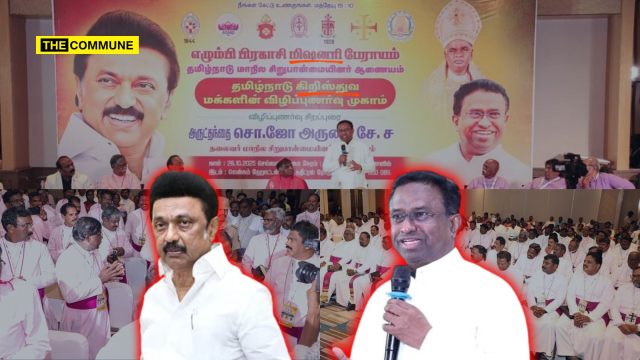
Chennai’s Chrompet area witnessed heightened tension on Friday as Tambaram Corporation officials, accompanied by heavy police deployment, moved in to demolish a church building after the Madras High Court ordered its removal for being constructed without proper approval.
The structure in question belongs to the India Evangelical Church, located on Hasthinapuram Rajendra Prasad Road in Annanagar, Chrompet. The congregation, nearly 60 years old, has been at the centre of a legal battle after a private individual filed a petition alleging that the church building was constructed without mandatory permissions.
In 2023, the Madras High Court directed that the church be demolished. The administration challenged this before the Supreme Court, but the appeal was dismissed, leaving the High Court’s demolition order intact.
Since the building remained standing, a contempt petition was later filed. Hearing the matter urgently, the High Court’s writ division bench ordered that the church must be completely demolished by 5 December 2025, warning that if the directive was not carried out, the CMDA Secretary and the Tambaram Corporation Commissioner would be required to appear in person on 8 December 2025.
Following the order, corporation officials arrived on site Friday morning with machinery and a police contingent of more than 100 personnel.
However, demolition efforts have been stalled due to protests. Church staff and local residents have been sitting inside the building since Thursday, conducting continuous prayers and objecting to the removal. Traders in the locality shut their shops and joined the demonstrations, while various political party workers also gathered at the church entrance to voice opposition.
With large groups assembled both inside and outside the premises, the area remains under high security, and officials are preparing to carry out the demolition once the situation is brought under control.
Subscribe to our channels on WhatsApp, Telegram,Instagram and YouTube to get the best stories of the day delivered to you personally.
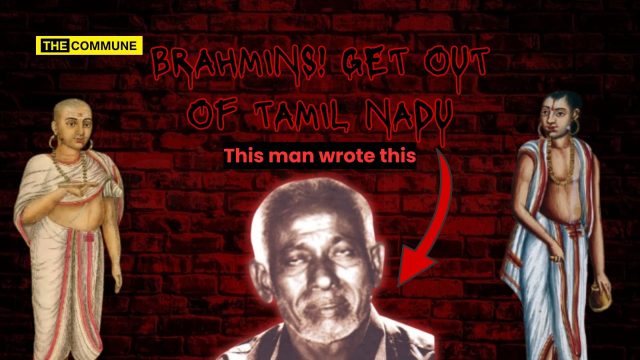
The already volatile Thirupparankundram Karthigai Deepam dispute has taken an ugly communal and casteist turn, with the social media wing of prominent Dravidianist filmmaker Pa Ranjith’s banner, Neelam, launching a direct and inflammatory attack on Madras High Court judge Justice GR Swaminathan and the broader Hindu community.
On its official handle, ‘Neelam Social,’ the organization shared an image with text that read: “In a secular country, singling out and praising one particular community alone is the remnant of Brahminism! For a judge to express that in his ruling is the height of indecency!”
The post appeared in response to Justice GR Swaminathan’s order directing the State to permit the lighting of the Karthigai Deepam at the Deepathoon in Thirupparankundram and criticising officials for failing to obey the court’s instructions.
Context of the Legal Battle
The controversy stems from the Madurai Bench’s order allowing Hindu devotees to light the Karthigai Deepam at the Deepathoon, which the district administration blocked using Section 144, leading to a contempt hearing. Justice Swaminathan had summoned the District Collector and SP, questioning the failure to implement the court’s order which the police refused to implement once again.
The Neelam Social post appears to be a direct response to this judicial scrutiny, reframing it as majoritarian bias.
Subscribe to our channels on WhatsApp, Telegram,Instagram and YouTube to get the best stories of the day delivered to you personally.
The Madurai Bench of Madras High Court on Friday issued a strong warning against individuals making derogatory or caste-based remarks about members of the judiciary, stating that such conduct will not be tolerated. The Division Bench of Justice G Jayachandran and Justice KK Ramakrishnan made the observations while hearing appeals related to the Thirupparankundram Karthigai Deepam lamp-lighting dispute.
The bench said that although judges are restrained from responding publicly, this cannot be taken as an opportunity to provoke or undermine the judiciary. “We can tolerate to some extent. If it exceeds, we’ll take action. You know that they have exceeded. They can’t keep on provoking, making (remarks). Just because the courts and judges are not supposed to react, they can’t take advantage of it,” the court stated.
The remarks came after Advocate MR Venkatesh, representing the writ petitioners, informed the bench that personal and caste-based attacks were being made online against the single judge, Justice GR Swaminathan, who had ordered the lighting of the Karthigai Deepam at 6 PM on 3 December 2025.
Reiterating that attempts to demoralise the judiciary would have consequences, the bench cautioned litigants and political actors against overstepping legal boundaries. “Persons violating law think there won’t be any reaction. Please instruct your clients not to test the patience of court and degrade the judiciary,” the judges said.
They further warned that institutional authority must be respected irrespective of who is in power: “Whether you’re in power or not, you have tongue or no tongue. Whatever it is, if you’re going to demoralise the institution, the constitution will remain only in paper.”
The bench adjourned the appeals to 12 December 2025, when all petitions challenging the single judge’s order directing the temple administration to light the Karthigai Deepam will be heard together.
A controversial cartoon shared on X by a user identifying himself as “Shahjahan” and a Dravidian heir has sparked debate over online attacks against members of the judiciary – especially Justice GR Swaminathan, amid the ongoing Thirupparankundram Karthigai Deepam dispute. The cartoon depicts a judge-like figure (Justice GR Swaminathan) wearing a black coat and saffron veshti, pouring fuel onto a fire labelled “திருப்பரங்குன்றம் கார்த்திகை தீபம்” (Thirupparankundram Karthigai Deepam), using a pump marked “மதவாதம்” (religious extremism).
The visual metaphor is a direct critique of Justice Swaminathan’s recent intervention in the sensitive temple festival dispute. By combining judicial attire with saffron, the cartoonist implies ideological alignment. The act of pouring “religious extremism” as fuel onto the specific dispute suggests the court’s order is being portrayed not as a neutral legal resolution, but as an action that escalated communal tensions.
However, despite the cartoon’s derogatory portrayal, no police action has been taken so far, leading to questions about inconsistent enforcement of cybercrime rules, especially given the swift arrests made in past cases where High Court judges were criticised in Tamil Nadu.
Contrast With October 2025 Arrest Over Criticism of Another Judge
In October 2025, Chennai South Cyber Crime Police arrested retired police officer R Varadharajan for alleged defamatory remarks against Justice N Senthilkumar, who was presiding over petitions related to the Karur stampede that killed 41 people during a TVK political rally on 27 September 2025.
Varadharajan, who runs the YouTube channel Nethaji TV, had questioned the judge’s neutrality after the court made personal observations about actor-politician Vijay’s leadership. Cybercrime officials said the arrest was part of a broader effort to curb “hate campaigns” during the sensitive investigation.
In the current instance, however, no similar police action has been reported regarding the cartoon of Justice Swaminathan. This has led to allegations of selective enforcement, with critics questioning whether the state is quicker to act when judicial criticism originates from one side of the political spectrum versus another.
The post continues to circulate widely on X.
The Madras High Court’s Madurai Bench on 4 December 2025 sharply criticised Thirupparankundram temple authorities and the Madurai District Collector for failing to appear in a contempt case over the non-lighting of the court-mandated Karthigai Deepam. Justice GR Swaminathan, who had permitted the petitioner and CISF to light the Deepam, reprimanded officials after police blocked the ceremony citing Section 144. The judge questioned the Madurai Police Commissioner, rejected the State’s justification, noted that the Division Bench had already dismissed the appeal, quashed the Section 144 order, and directed police to ensure the Deepam was lit that day with full protection.
Despite the second order, the DMK government and the police refused to allow devotees up the Hill to light the Deepam once again on 4 December 2025.
Subscribe to our channels on WhatsApp, Telegram,Instagram and YouTube to get the best stories of the day delivered to you personally.