In one of the most significant moments for India, the Philippines has accepted India’s offer to buy BrahMos supersonic cruise missile in a deal worth $375 million for its shore-based anti-ship missile system.
The announcement acquisition project, the country’s Department of National Defence has said in a letter dated 31 December 2021.The purchase of BrahMos supersonic cruise missile by the Philippines was making rounds for several years and now with this approval, the Philippines will become the first international customer of this variant cruise missile.
The acquisition of the missile will significantly boost the Philippines ‘ capabilities and this will pose a direct threat to China’s People’s Liberation Army Navy (PLAN) as China claims almost all of the South China Sea, including the parts that are claimed by the Philippines, based on the “nine-dash line”.
China has maritime disputes in the South China Sea with Vietnam, Malaysia, Brunei, and Taiwan are also party, is driven by overlapping claims to land features in the South China Sea and the maritime entitlements around them.
Over the last decade, China has built artificial islands in the region and militarised them to solidify its claims and has bullied other claimants, including the Philippines.
In 2016, the International Tribunal in The Hague dismissed China’s claims in the South China Sea as part of a ruling in a case brought by the Philippines in 2013.
However, China not only refused to participate in the proceedings, but it also rejected its ruling in the case.
In the event of a conflict started by China, BrahMos supersonic cruise missile could be used in its shore-based anti-ship missile system to target Chinese vessels in parts of the South China Sea.
However, what is important is that once the export of the BrahMos missile takes place, it will lead to other nations, including Thailand, Indonesia, and Vietnam who have border conflict with China have expressed interest in the BrahMos missile.
In 2018, a BrahMos aerospace team had visited Indonesia’s state-run shipyard in Surabaya to assess and set up fitting of the naval version of the BrahMos cruise missile on Indonesian warships.
Click here to subscribe to The Commune on Telegram and get the best stories of the day delivered to you personally.
As the New York Times keeps writing articles on the so-called out-of-control Covid-19 situation in India, there is no actual reporting of how out of control this pandemic is in the United States.
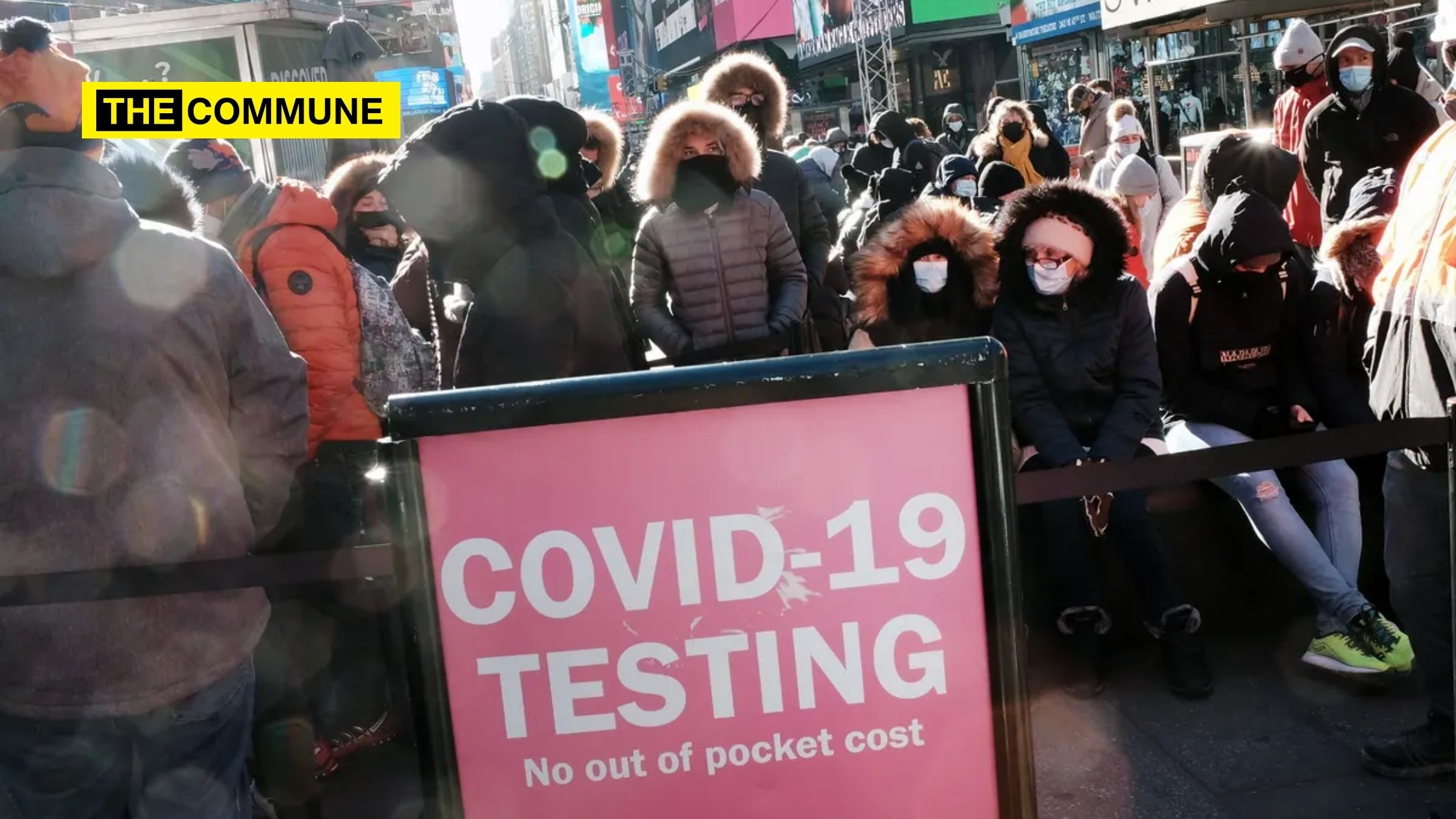
As per a news report by Stands Of Kentucky, people across the US, the richest country on earth are waiting hours in line to get a COVID-19 test amid a surge in omicron cases.
There are several cases across the US, where people have been turned away from testing centers after waiting for several hours and in many cases, even several days.
There are people in USA who are waiting 3 days in line for a Covid test.
Long lines as test kits have run out
Imagine if this was the situation in India, what media would have said…
As the New York Times keeps publishing copious amounts of news on how India is dealing with this global crisis, it remains quiet on the home front and has been acting as a shill for President Joe Biden and the Democrats who are the beneficiary of the liberal privilege.
Click here to subscribe to The Commune on Telegram and get the best stories of the day delivered to you personally.
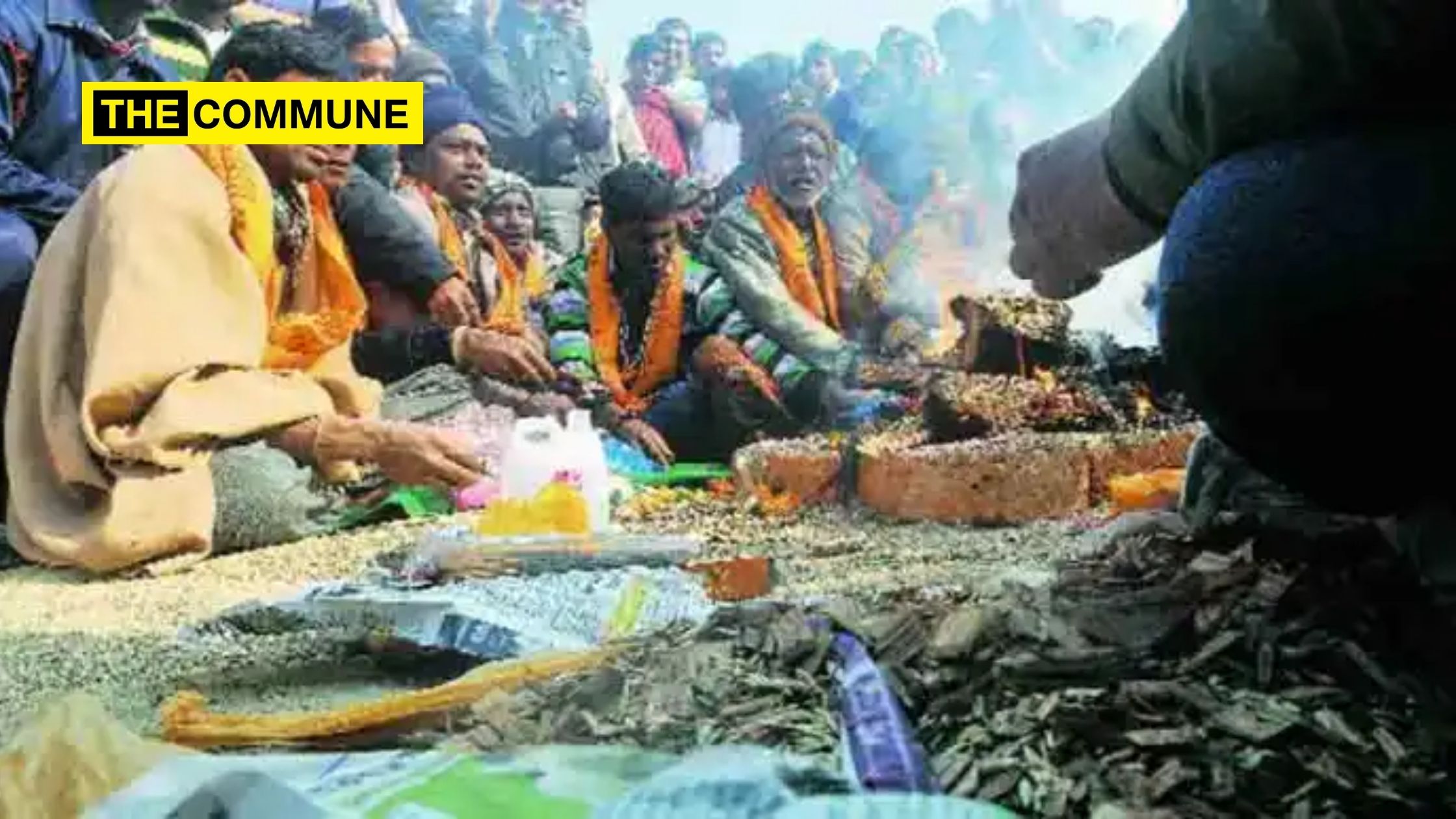
In a latest case of Gharwapsi, a man, whose family converted to Christianity 50 years back, has decided to convert back to Hinduism, in the Yadgir district of Karnataka. The individual, identified as Timothy Hosmani, is a 55-yr-old labourer who lives in the Kanikal village of the district. He has decided to return back to Hinduism, along with his wife and three children.
In an interview with Times of India, Timothy said that he is not aware of the reason behind his parents leaving Hinduism and embracing Christianity, half a century ago. But now he is all set to return back to his religion. Timothy also said that his family belonged to the Scheduled Caste, and that his wife, Sharadamma, and children, Abhishek, Jnanamithra and Neil Armstrong, have been following traditional Hindu practices for a long time now. Timothy’s older son is currently working as a labourer, while his other children are still pursuing their studies.
According to him, his father who passed away 10 years ago, and mother, 6 years ago, were against their reconversion to Hinduism. They are all set to return back to the religion, by organising a simple ceremony.
While this is the first reconversion to happen in Yadgir, across Karnataka, many have recently converted back to Hinduism recently. Even earlier last month, 9 members of a Christian household converted back to Hinduism.
The DMK government has recently become subject to serious criticism for their ‘Sticker’ culture, where they try and take credit for things that are not accomplished by them. Many have started calling the DMK government a ‘Sticker Government’ for this practice.
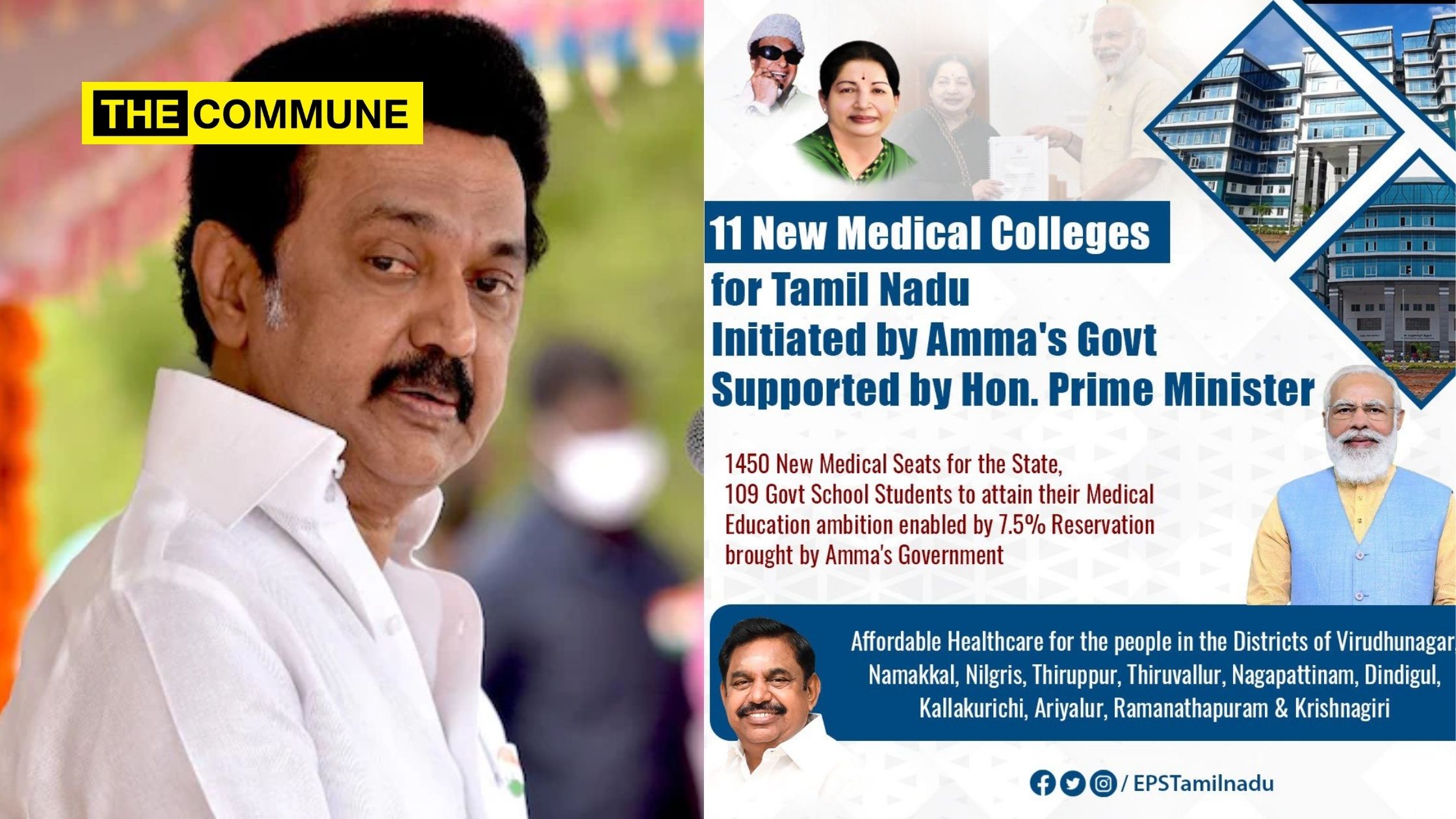
The irony is that they take credit for all the accomplishments of erstwhile governments without fail. But when it comes to taking ownership for the issues in their governance, they blame the previous government for that. For example, CM Stalin recently took credit for the 11 medical colleges that was built because of the joint efforts of Edappadi K Palaniswami government and the Modi government. However, when the public blamed the DMK government for waterlogging and flooding, they pushed the blame on the erstwhile AIADMK government.
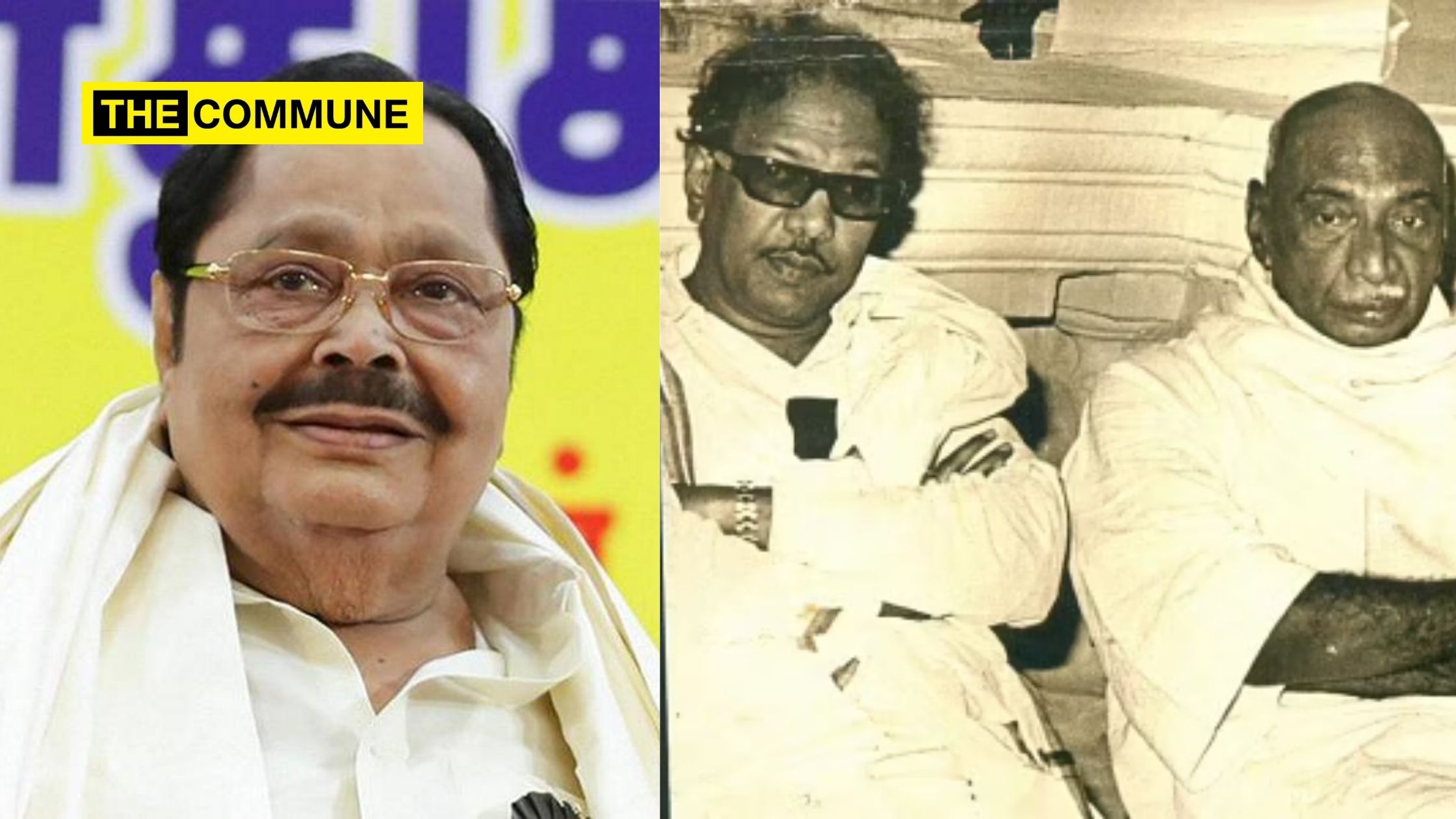
While this is now becoming a force of habit for DMK functionaries, DMK MLA Durai Murugan was recently caught and condemned for such a ‘Sticker’ statement that he let out in the Legislative Assembly. Speaking at the Assembly, Durai Murugan said that Former Chief Ministers, Kamaraj and Bhaktavatsalam sounded sirens in their car. It was M Karunanidhi who stopped this practice when he became the Chief Minister.
Congress MLA Selvaperunthugai, who gave a fitting reply to this statement, said, “Durai Murugan is older in age and also experienced. It hurts me when he speaks of Kamaraj in this manner. The world has not seen another, as simple as Kamaraj. One has to be careful while speaking about a leader like him. When Kamaraj was the Chief Minister, he asked, “Am I in a foreign country? Why do I require the Siren. No need for the siren.” and ensured that it was done away with. But, Durai Murugan has wrongly said that the usage of sirens prevalent in Baktavatsalam and Kamaraj’s times was stopped by M Karunanidhi. Durai Murugan has to take back what he said.”
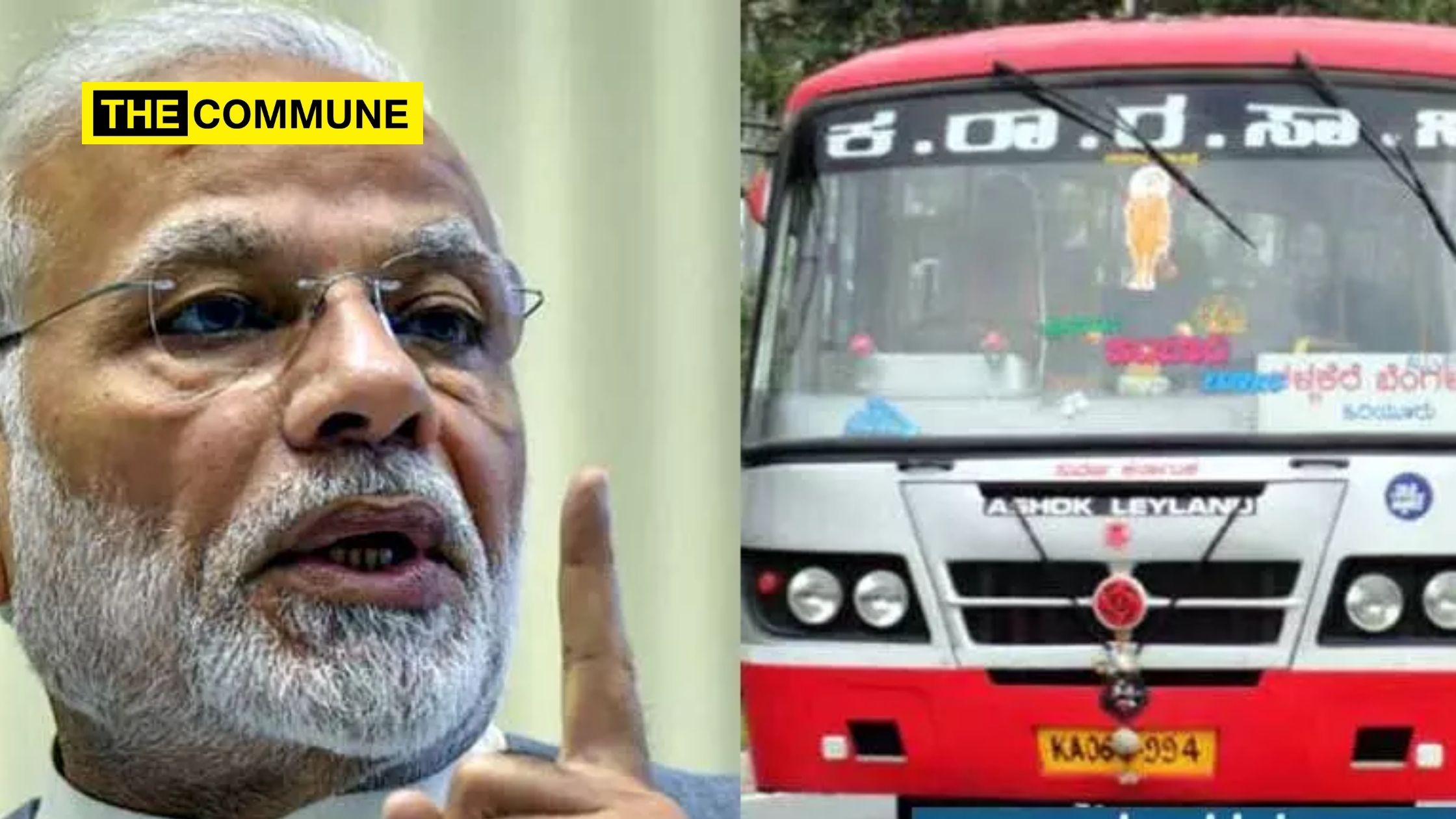
A group of women bus passengers have thrashed and pushed a man out of the bus, who not only taunted the women of the bus, but also spoke ill of Prime Minister Narendra Modi. The bus was travelling from Mysuru Bus stop via Medahalli in Karnataka.
A male passenger of the bus had been allegedly taunting and teasing the female passengers of the bus. In addition, he had also allegedly spoken ill of Prime Minister Narendra Modi. The women who heard this have condemned the man for his behavior. As a response, the man has threatened to kill the women who condemned his comments.
The women who were angered by this threatening, thrashed the man brutally and pushed him out of the bus. The video of this incident is now going viral, not only in Karnataka, but all over the country. People are appreciating the women for standing up against the man and thrashing him for taunting them.
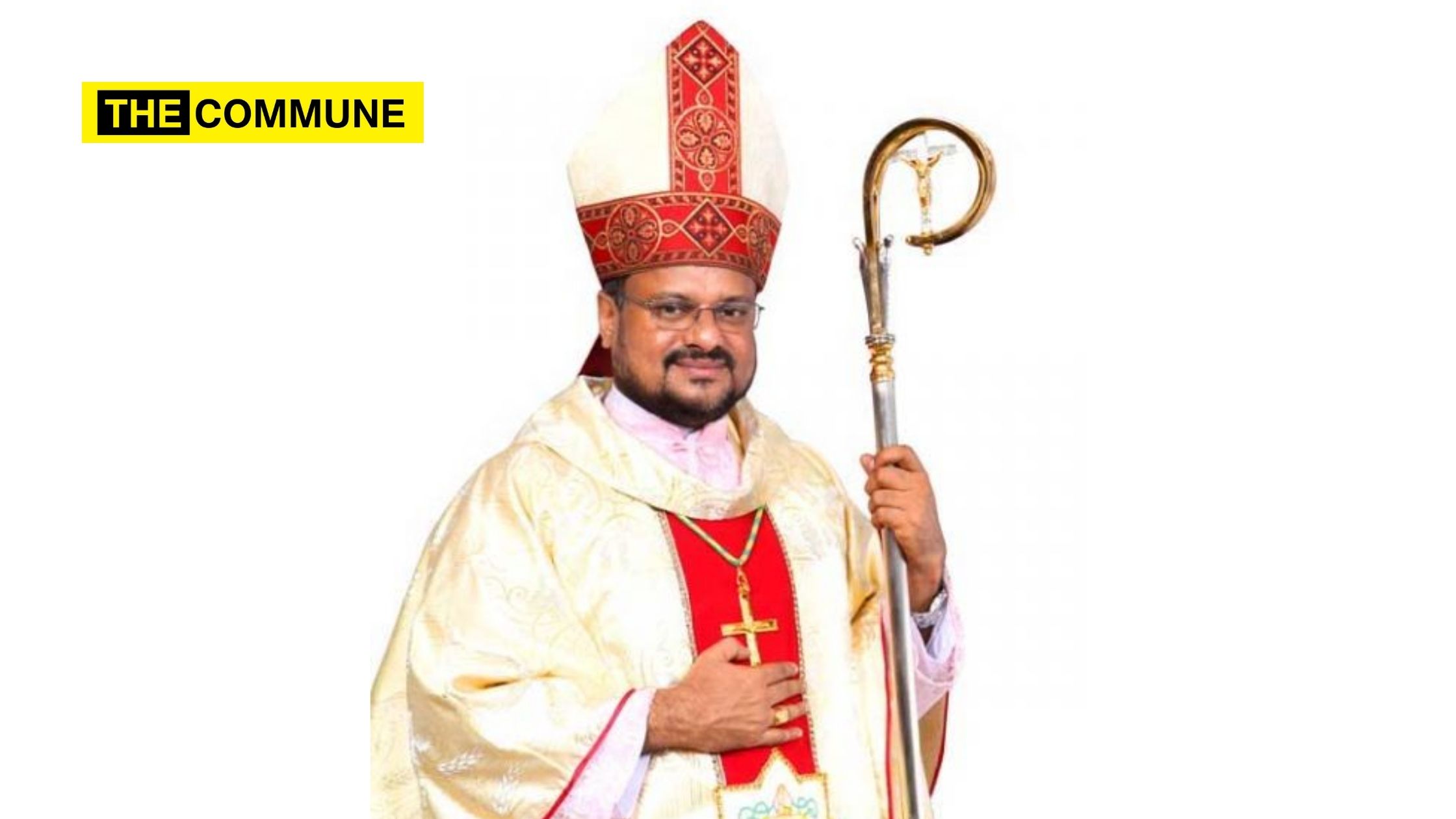
A Kerala court on Friday (January 14), has acquitted Bishop Franco Mulakkal of the Jalandhar Diocese Catholic Church in the nun rape case.
Judge G Gopakumar, Additional Sessions Court, Kottayam, presided who had presided over the case delivered the verdict in the presence of Bishop who was accused of raping a 44-year-old nun at her convent several times.
Rekha Sharma, the Chairperson of the National Commission for Women has said that she is shocked to learn of the judgment pronounced by the Kerala Court and that the victim nun must appeal to the High Court. “The Victim Nun must go to the high court. National Commission for Women is with her in this fight for justice”, she tweeted.
Shocked at the judgment of Kerala Addl. dist and session court. The Victim Nun must go to high court . @ncwIndia is with her in this fight for justice. Bishop Franco Mulakkal, Accused Of Nun's Rape In Kerala, Acquitted https://t.co/Rkhhv9zKaw
According to the liveLaw, the Kuravilangad Police in 2018 had registered a case on the basis of a complaint filed by a nun against Bishop Franco Mulakkal of Jalandhar Diocese, and in that complaint, the nun had accused the Catholic Bishop of raping her several times at Missionaries of Jesus convent between 2014 and 2016.
Following the complaint, several nuns from the convent also joined the victim and had protested against the Bishop and requested the Vatican’s ambassador in Delhi, Giambattista Diquattro, and the Pope to dismiss the Bishop from his position and started a campaign called ‘Save Our Sisters’ and called for Franco’s arrest.
In September 2018, Mulakkal was arrested for interrogation and was remanded to judicial custody. However, the nuns had alledged that several such complaints against the Bishop were overlooked by the authorities.
Sister Lucy Kalapura, one of the nuns who had protested against the powerful Bishop was permanently thrown out from the Church.
Click here to subscribe to The Commune on Telegram and get the best stories of the day delivered to you personally.
The Akhil Bhartiya Poorva Sainik Seva Parishad (ABPSSP) which is an organisation started by ex-service members of the military have written a letter to President Shri Ram Nath Kovind on Tuesday (January 11) and expressed concern over life-threatening security lapses during the visit of Prime Minister Narendra Modi to Punjab on January 5.
ABPSSP requested the President to take action as “deemed suitable to see such unacceptable security lapse doesn’t recur and a strong message goes to all those responsible including our neighbours.”
The incident happened close to the border with Pakistan. The ABPSSP said, “The security of the Prime Minister was thus compromised, which could have resulted in very serious consequences for the country, especially as the incident took place in close proximity to India’s border with Pakistan. Multiple lapses were found in the security arrangements of the prime minister. Punjab Chief Minister Charanjit Singh Channi made light of the threat, saying were any stones thrown at the PM? Were any bullets fired at him?”
Prime Minister Narendra Modi was on an official visit to Punjab on January 5, when his cavalcade had to stop over a bridge for over 20 minutes in Ferozepur close to the Pakistan border.
This happened after some ‘protestors’ had blocked the road and the PM was safely rescued to Bhatinda airport, from where he flew back to Delhi.
Taking cognisance of the security lapse, the Ministry of Home Affairs (MHA) had issued a press statement. It said, “The Ministry of Home Affairs (MHA) taking cognisance of this serious security lapse has sought a detailed report from the state government. The State Government has also been asked to fix responsibility for this lapse and take strict action.”
It had added, “The Prime Minister’s schedule and travel plan was communicated well in advance to the Punjab Government. As per procedure, they have to make necessary arrangements for logistics, security as well as keep a contingency plan ready. Also, in view of the contingency plan, the Punjab Government has to deploy additional security to secure any movement by road, which were clearly not deployed.”
Click here to subscribe to The Commune on Telegram and get the best stories of the day delivered to you personally.
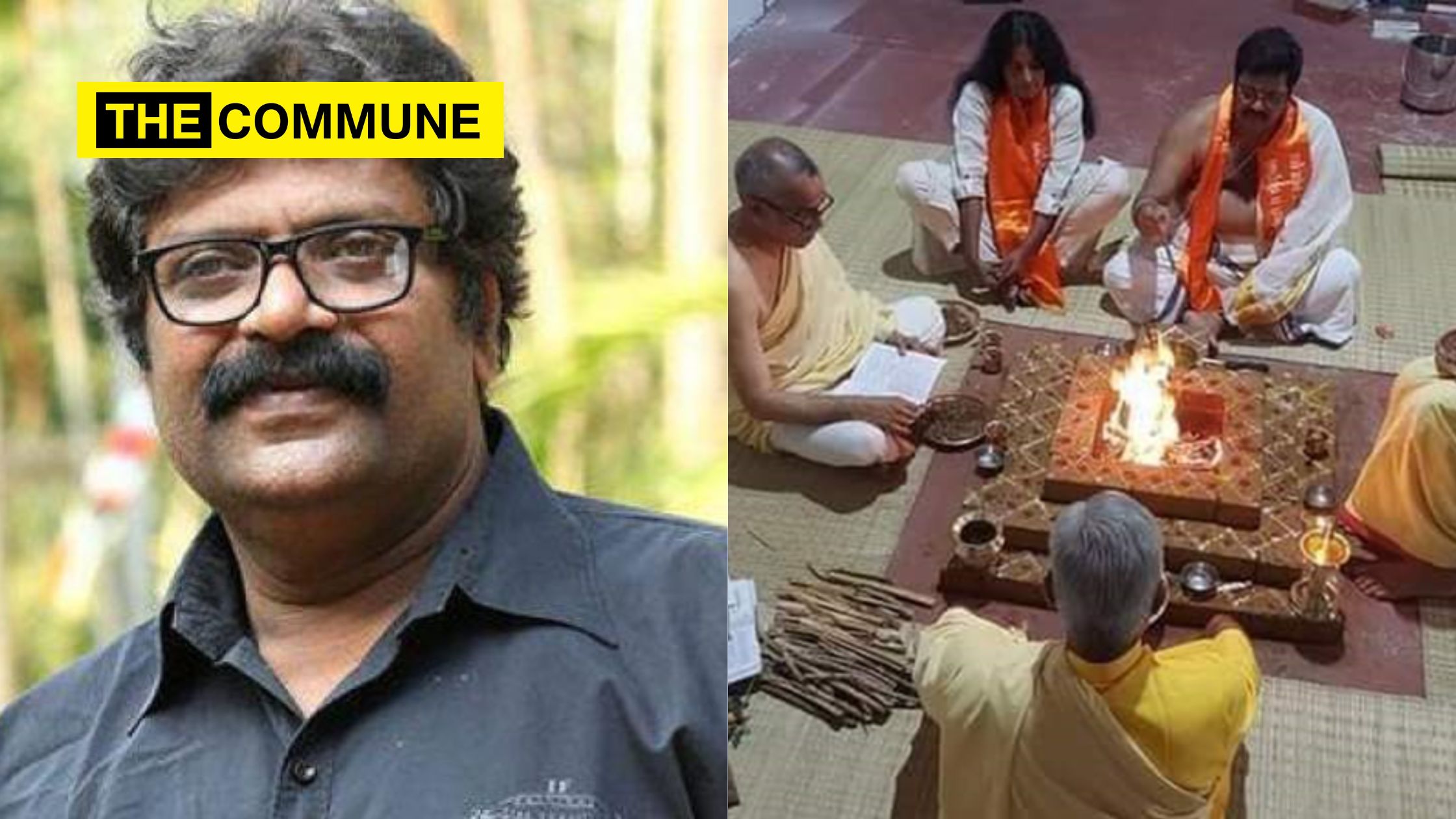
Acclaimed Malayalam film director Ali Akbar has now officially left Islam and has reconverted to his ancestor’s faith of Sanatana Dharma only a month after quitting Islam.
On the 10th of December, Ali Akbar had announced that he was leaving Islam and would be known as Ramasimhan and on Thursday, it was announced that he had formally embraced Hinduism.
In a Facebook post, Pratheesh Viswanath, founder of Hindu Seva Kendra and Hindu activist in Kerala had informed that the Malayalam actor had reconverted to Hinduism.
The pictures posted by Viswanath were captioned, “History repeats itself, Ali Akbar is now Ramasimhan”.
For the reconversion ceremony, the Director was accompanied by his wife Lucyamma.
Ali Akbar had said, “Ramasimhan is a person who was killed while sticking to the culture of Kerala. Tomorrow Ali Akbar will be called Ram Singh. That’s the best name”.
Ramasimhan and his family were butchered by Islamists for converting to Hinduism from Islam in 1947. Ramasimhan, his brother Dayasimhan, Dayasimhan’s wife Kamala, their cook Raju Iyer and other members of the family were brutally butchered by Islamist Jihadists in Malaparamba, Malappuram district on 2nd August 1947, just two weeks before the independence.
The reason behind leaving Islam by the Malayalam director Akbar had was prompted after he saw Islamists celebrate the tragic death of CDS General Bipin Rawat.
Akbar had earlier posted a video on Facebook criticising the Islamists who took joy on the death of CDS Bipin Rawat and that led to his account being suspended for a month after the video received hateful comments on the platform.
The director then opened another Facebook account and declared that he was leaving Islam and said, “Within five minutes of speaking out against those who put up emojis, the account was blocked. I can not accept it, I can not agree with it, so I’m leaving my religion. I or my family no longer have a religion. That is the decision.”
Ali Akbar informed that he took the decision to quit Islam after a long discussion with his wife. ‘I am throwing away the dress I was born with’, he said.
Click here to subscribe to The Commune on Telegram and get the best stories of the day delivered to you personally.
Aside from the glitz, glamour and privileges associated with being a judge, there is one handicap that all judges of all courts in the nation are faced with – the inability to defend themselves in the wake of vitriolic personal attacks while in office. Though they may seem to wield all the power and authority in the world, they are expected to show restraint by not responding to malicious targeted attacks foisted on them by vested interest groups. Conventionally, they exercise their right to hit back at bad-faith detractors only post their retirement. This predicament of judges at large is brought out in clear terms in a recently published autobiography, “Justice for the Judge”, authored by none other than the former Chief Justice of India, Ranjan Gogoi. Though one often gets to witness examples of judges who initiate contempt proceedings on private citizens for merely opining on judicial affairs, those judges that refrain from using this tool far outnumber those that do.
A recent victim of such calculated personal attacks filled with venom and bile is an Hon’ble Judge of the Madras High Court, Justice G.R. Swaminathan. Prior to December of 2021, Justice Swaminathan grabbed limelight only for all the right reasons. Be it his compassionate nature while dealing with sensitive issues (when he granted members of the Tabligi Jamaat the right to return to their home-nations when they merely sought for bail[1] or when he granted transgenders the right to get their marriage registered[2]), or his penchant for protecting free speech (when he defended Perumal Murugan as an advocate during the “Madhoru Pagan” fiasco[3] or when he quashed an FIR foisted upon a cartoonist for caricaturing Shri. Karunanidhi and other DMK members[4]), or his hardworking nature as a judge (when he conducted hearings for 12 hours straight[5] ), Justice Swaminathan received media attention only for positive reasons. But after passing a slew of judgments in the months of December and January of 2021 and 2022 respectively, he has been subjected to a number of personal attacks from a variety of corners. From his birth-based identity to his supposed ideological inclinations prior to becoming a judge, everything about the judge was made an object of malicious scrutiny.
A number of tirades was launched against Justice Swaminathan. One of the pioneering figures that kickstarted the online hate campaign against the judge is a self-styled whistleblower and journalist, ‘Savukku’ Shankar. As part of this campaign, he had recently uploaded an interview of his on his YouTube Channel, wherein he critiques some of the judgments pronounced by Justice Swaminathan in the past two months. The goal of this article is to debunk the untruths that formed part of his critique of not just the judgments, but also the judge that pronounced them. The critique, which smacks of amateurishness and lack of grasp over elementary legal principles, is one that necessarily warrants a tearing down.
But before I proceed towards the crux of the article, a question that the reader may have is, “What business do you have defending a sitting judge of a High Court?”. The answer to that isn’t a long-winding one. Anyone slightly acquainted with the judicial scene in Tamil Nadu knows Justice Swaminathan for the judge that he is. It would not be an exaggeration if one were to say that he is one of the most hardworking judges of constitutional courts across the nation. And it would certainly not be a hyperbole if one were to say that he is a walking, breathing personification of judicial integrity. The goal of this article is not to eulogise him for the judge that he is. This article is not a hagiography of his. As already noted above, judges often refrain from responding to dishonest and mala fide attacks launched on them. Justice Swaminathan is no exception. But when the judge who is subjected to such attacks is one that carries the personality, stature and reputation of Justice Swaminathan, such attacks bring disrepute to the sanctity of the judiciary as a whole. In such a case, the duty of hitting back at such attacks falls squarely on the shoulders of the average vigilant citizen. The duty of preserving the sanctity of the courts (especially the Constitutional courts) is vested not just on the arms of the state, but also its citizens. I am merely carrying out my duty.
The Ponnaiyah Verdict And Savukku’s Views On It
On 18th July, 2021, George Ponnaiyah, a Catholic Priest in Kanyakumari district, delivered a rousing speech which attracted an FIR on him for the offences under Sections 143, 153A, 295A, 505(2), 506(1) and 269 of IPC and Section 3 of the Epidemic Diseases Act, 1897. Seeking to quash the said FIR, he moved the Madurai Bench of the Madras High Court. On 7th January, 2022, Justice Swaminathan thought it fit to quash three offences listed in the FIR but refused to quash the offences under Section 153A (Promoting enmity between different groups), Section 295A (Deliberately or malicious outraging a religion or religious beliefs) and Section 505 (2) (Statements creating or promoting ill-will, enmity or hatred between classes) of IPC.
Some relevant excerpts from the transcript of the speech are as follows:
“It does not matter how many temples you renovate and consecrate. No Hindu, no devotee of Mandaikattu Amman is going to vote for you (the DMK). If you won (the assembly election), then it is the alms we Christians and Muslims have thrown to you. You won not because of your talents”.
“But we (the Christians) wear shoes. Why? Because the filth of Bharat Mata should not contaminate us. The Tamil Nadu government has given us free footwear. This bhumadevi is dangerous, you could catch scabies from it.”
“We (the Christians) are now majority (in the district) from 42 per cent we have crossed 62 per cent. Soon we would be 70 per cent. You cannot stop us. I am saying this as a warning to my Hindu brothers”.
“I was born into a Hindu family. My grandfather was Hindu. Since he thought it fit that his daughter should leave this gutter, he gave her hands in marriage to my Christian father. If not for this marriage, I would have been a possessed man ringing bells at some “Sudalaimaadan Swamy” temple. The Christian faith gave us liberation. Hence, we shall continue to evangelise this faith.”
“Mandaikkaadu Amman (Devi) caught fire owing to deficiencies in “Mantra Puja”. It is understandable. He (the Brahmin Priest) chants in Sanskrit. He chants the same Mantra at a wedding which he chants at a funeral. The fire breakout was bound to happen.”
“Manothangaraj goes to the Suseendiram temple. Can he not enter the temple wearing a shirt? Would we allow someone who looks like he’s returned in a towel after bathing in a pond to enter our church? We would say “Get out, you tweak”. Christianity has taught you to wear a shirt. But you go in without a shirt. Glad you atleast wore a Veshti (Dhoti).”
An elementary reading of the above excerpts shall make one come to the conclusion that the verdict of the High Court to retain three of the aforementioned offences in the FIR, is quite justified.
The Court in this verdict, apart from giving the legal rationale for refusing quash of the said three offences, went one step ahead and gave a set of theological and social reasons based on which it arrived at the said legal conclusion (of refusing to quash the three offences).
Firstly, Justice Swaminathan provides a spectacularly detailed account consisting of various theological sources, to establish that Goddess Bharat Mata is indeed a Goddess in Her own right who is venerated and worshipped by several Hindus across the nation. This portion of the judgment has truly irked Savukku Shankar. Savukku amateurishly calls this portion of the judgment as irrelevant and questions the necessity of incorporating such a detailed reasoning for considering Bharat Mata a Hindu Goddess. The reason I describe this question as “amateurish” is because anyone barely trained in law would understand that in order to invoke Section 295A of the IPC, one would have to necessarily prove that the accused has deliberately and maliciously outraged the religion or religious beliefs of a class of citizens. Therefore, the twin test of “mala fides” and “outraging of religious feelings” shall have to be satisfied in order to attract the offence of Section 295A. This is why, Justice Swaminathan provides a variety of scriptural sources to prove that Goddess Bharat Mata is indeed a deity carved out of Hindu religious texts and belief systems. This way, he also establishes that Bharat Mata is a Goddess exclusively worshipped by the Hindus in order to show their veneration for the Indian nation in a truly Hindu fashion. This is why he posits that Bharat Mata cannot be seen as a mere secular personification of a nation (like Britannica). Perhaps, this is also why George Ponnaiyah abused and tarnished the sanctity of both Bharat Mata and Bhuma Devi (who is a theologically and scripturally ingrained Goddess of the Hindu pantheon) in the same sentence and in the same context. Perhaps, he knows the sanctity attached to both the Goddesses by the Hindus of the district, better than Savukku does.
It is an undeniable fact that Bharat Mata is venerated solely by the Hindus of the nation. There are over 10 temples exclusively dedicated to Her across the nation. In each one of them, She is revered via Hindu rituals and ‘Poojas’. In Kanyakumari itself, Her idol is placed inside the precincts of the Esakki Amman Temple and She is worshipped solely by the Hindus of the district. There cannot be a better vindication of Justice Swaminathan’s proposition. Even today, whenever there arises a dispute or clash between the adherents of the two major religions in the Kanyakumari District, the collateral damage is borne by the idol of Bharat Mata for She is seen as the Guardian Angel of the Hindus in the district[6].
The second major proposition laid down in the verdict relates to the religious demographics of the Kanyakumari District. This portion of the verdict posits that Kanyakumari has seen a demographic inversion since 1980 and that the Hindus have become a minority there ever since. Additionally, the verdict also acknowledges the existence of “Crypto Christians”, who essentially are those that have converted to the Christian faith but refuse to acknowledge their conversion in the official records in order to retain their reservation privileges. Savukku once again naively calls this portion of the judgment as utterly irrelevant to the case at hand. In the same vein, he also accuses the judge of being a typical Hindutva ideologue who spews venom at the minorities of the nation. He then goes on a rant about why the depressed classes among the Hindus (especially the Scheduled Castes) move towards greener pastures, namely Christianity. He also condemns Justice Swaminathan for taking a dig at the members of such depressed classes who convert to Christianity in search of dignity and self-respect.
At the outset, it has to be made absolutely clear that nowhere in the verdict has the judge passed value judgments over the conversion of Scheduled Caste Hindus to Christianity. Nowhere in the verdict has he denounced such conversions. He had merely provided a reasoning for why official census records do not reflect the demographic reality of Kanyakumari District. It is undeniable that one of the primary factors as to why the real numbers of the adherents of non-Hindu faiths are not reflected in the official records in many Southern and North-Eastern states, is that the converts conceal the fact of their conversion in order to avail reservation benefits. The judgement has merely highlighted this point.
Afterall, the judge has only reiterated the recommendations of the Venugopal Commission constituted in 1982. The Commission Report draws a direct nexus between conversions and changing religious demographics in Kanyakumari District on the one hand, and the ensuing breach of public tranquility and law and order, on the other. Relevant portions of the Commission’s Recommendations are as follows:
Source: Venugopal Commission Report, Pic 1
Source: Venugopal Commission Report, Pic 2
Source: Venugopal Commission Report, Pic 3
In the third picture, the commission’s report recommends bringing in a law to ban forced conversions.
Contrary to what Savukku might have to say, this portion of the judgment dealing with religious demographics and conversions in Kanyakumari district is indeed relevant and connected to the case at hand. Once again, anyone with an elementary training in law can discern the relationship between the two. The judge in the verdict clearly employs the “Who? What? Where?” test laid down in the landmark Amish Devgan[7] verdict of the Supreme Court to determine if the offences under Section 153A and 505(2) of IPC are made out in the instant case. The essential meaning of this test is that to determine whether the said two sections are applicable for any case, one shall not only have to analyse the content of a given speech or statement, but also its context and the identity of the speaker/author. In addition, one shall also have to bear in mind the socio-geographic setting in which the said speech or statement was made. If one were to look at the speech given by George Ponnaiyah in the backdrop of this test, the said speech prima facie attracts Sections 153A and 505(2) of IPC. This is because the speech in itself carries several incendiary and offensive messages directed at the Hindu community at large. This can be verified from the aforementioned excerpts of the speech. Additionally, it is to be borne in mind that the speech was delivered by a Christian pastor in a predominantly Christian environment in a Christian-majority district. Therefore, the content, context, identity of the speaker and the socio-geographic setting of the speech provide a large scope for passions to be aroused and hatred and enmity to be caused between two social groups, one of which is NOW a minority in the district. Therefore, the speech in itself, when looked at in the context of the “Who? What? Where?” test laid down by the Supreme Court, clearly attracts the two sections in question. It was in this context that Justice Swaminathan was forced to lay down in clear terms the social and religious realities of the Kanyakumari district so as to analyse the speech in the anvils of the “Who? What? Where?” test.
On a side note, Savukku expresses his discontentment over the fact that Justice Swaminathan chose to refer to Shri. Aravindan Neelakandan as a “noted intellectual and scholar”. Perhaps to Savukku, a scholar is one who belongs to a particular ideological disposition, or one who eats up public funds for lifetime as Professor Emeritus in a public university, or one who fabricates lies in front of the Apex Court of the land. Based on these standards, Shri. Aravindan Neelakandan is definitely not a scholar. But otherwise, he is indeed a scholar and an intellectual in his own right.
Finally, Savukku questions the need for such a detailed order from the court in a mere case of FIR Quash. He believes that the promulgation of such a detailed order against George Ponnaiyah from a judge of the High Court shall prejudice the mind of the lower court magistrate who shall pronounce the final verdict in the case. Well, Savukku has to understand that the nature of judicial process often throws up unexpected circumstances. Especially in cases pertaining to curtailment of the right of free speech, the constitutional courts have to be extra careful in ensuring that while hate speech is penalized, a bad precedent is not set in such a way that the same judgment is utilized in the future by other courts to curtail legitimate and acceptable speech. Therefore, the court is well within its right to lay down detailed propositions that balance the equations of freedom of expression. The judgment in the Ponnaiyah case is one that carries out this balancing act in a meticulous fashion. The necessity of a detailed order of this sort arises from the apprehension that the judiciary should not act as the source of draconian legislations that curtail freedom and personal liberty of the citizens beyond a reasonable extent. Additionally, the precedent for passing such a detailed order in a case pertaining to freedom of speech can be found in the Supreme Court verdict in the Amish Devgan case itself. The factual matrix of this case is significantly similar to that of the Ponnaiyah case. Here too, a journalist accused of hate speech against the Muslim community sought for quash of FIR in front of the Apex Court. The SC refused to quash the said FIR via a detailed 128-page long order. Therefore, the Hon’ble High Court in the Ponnaiyah case too is quite justified in passing an order of this sort, albeit it runs only to a paltry 30 pages.
The Mischievous Parallel Drawn Between Ponnaiyah and Maridhas
One of the contentions raised by Savukku in his critique of the Ponnaiyah judgment is that Justice Swaminathan has displayed clear hypocrisy by quashing the FIR foisted on Maridhas for his video on the Tabligi Jamaat[8] while refusing to do the same with Ponnaiyah. I, in all humility and with great respect to Savukku, wish to rubbish this contention.
The factual matrix of Ponnaiyah and Maridhas cases are entirely different. While Ponnaiyah explicitly abuses the religious deities and feelings of the Hindus as a class (the same can be verified from the aforementioned excerpts), Maridhas does nothing of the sort. If anything, Maridhas in his video consciously avoids stereotyping and generalizing not just all Muslims, but also the members of the Tabligi Jamaat in specific. He provides several disclaimers in the video in furtherance of the same. But one cannot say the same about the speech delivered by Ponnaiyah. Ponnaiyah, deliberately and consciously, not just outrages Hindu religious beliefs in a totally unrelated event and context, but also puts out quasi-violent threats to the Hindus of the district by using the words “I warn the you (the Hindus of Kanyakumari)”. Bearing this in mind, while Maridhas steers clear of the definition of hate speech as per Ramji Lal Modi[9], Manzar Sayeed Khan[10]and Amish Devgan standards, Ponnaiyah clearly is prima facie guilty based on the same standards.
In yet another display of amateurish understanding of legal principles, Savukku deems Maridhas and Ponnaiyah to be on an equal footing because, while the video of Maridhas may contain several disclaimers, any fanatic Hindu shall develop feelings of hatred and ill-will against Muslims at large and Tabligis in specific, after watching the said video. Well, Savukku ought to have known that the law is not concerned with the effect that a given statement or speech might have on a person who is mentally weak enough to develop feelings of hatred or ill-will against a class of citizens despite several disclaimers being given in the very same speech advising against it. In legal parlance, this is known as the “reasonable man” test. It is also referred to as the “man on top of the clapham omnibus” test (as laid down by the Supreme Court). This means that any given speech can be penalized only if it is sufficiently vitriolic to trigger a prudent or more-than-prudent man to develop feelings of hatred, enmity or ill-will against a class of citizens. No one in his right mind could possibly believe that Maridhas’ video, despite its many disclaimers and warnings, could possibly be interpreted as one that carries the potential to arouse feelings of enmity or hatred against Muslims in a prudent or more-than-prudent man. Additionally, unlike Ponnaiyah’s speech, Maridhas’ video nowhere identifies two distinct groups and promotes enmity, hatred, ill-will or violence between them.
Therefore, for all the aforementioned reasons, Maridhas’ video definitely cannot be considered as one that satisfies the ingredients of Sections 153A, 295A and 505(2) of IPC. Savukku is definitely not justified in drawing any equivalence between the two cases.
The Prime Minister Narendra Modi inaugurated 11 medical colleges in Tamil Nadu, yesterday via live video conferencing. The districts in which the new Medical Colleges are being established are Virudhunagar, Namakkal, The Nilgiris, Tiruppur, Thiruvallur, Nagapattinam, Dindigul, Kallakurichi, Ariyalur, Ramanathapuram and Krishnagiri. Apart from this, he also inaugurated a new campus of the Central Institute of Classic Tamil (CICT).
Speaking at the event, the Chief Minister of Tamil Nadu, MK Stalin said, “The idea that there should be medical colleges for each district in Tamil Nadu was a dream of Muthamilarignyar Kalaignar [M Karunanidhi]. We had included this hope in our 2016 Assembly election manifesto. It is Kalaignar’s dream that has been realised today.” This statement has caused quite the criticism from the internet world.
It is to be noted that all the 11 colleges that were inaugurated by the Prime Minister yesterday, was due to the joint effort of the AIADMK government under the rule of Ex-Chief Minister Edappadi K Palaniswami, and the Narendra Modi-led BJP government at the Centre. The now Opposition leader, who played a major role in this scenario, was not even invited for the inauguration of these colleges. Instead, the DMK government has taken full credit for these colleges, by saying that ‘Kalaignar’s dream has been realised.’
The Chief Minister has also specifically said that it was late M Karunanidhi’s dream to bring medical colleges in every district of Tamil Nadu. However, the UPA government was in power in the Centre from 2004-2014. The DMK was in power in Tamil Nadu from 2006-2011. However, only 4 Medical colleges were set up by the DMK government in those years in power. In fact, the DMK has only brought a total number of 6 colleges under their governance.
This statement has attracted criticism because the DMK government is taking credit for something that the previous AIADMK government did, and did not even have the courtesy to credit the previous government for their efforts. It is to be noted that in these many years, the AIADMK have been reason for the opening of 26 colleges in Tamil Nadu, including the 11 that were inaugurated yesterday.
Click here to subscribe to The Commune on Telegram and get the best stories of the day delivered to you personally.



In defense of the judge: A whip to the self-styled ‘journalist’
Aside from the glitz, glamour and privileges associated with being a judge, there is one handicap that all judges of all courts in the nation are faced with – the inability to defend themselves in the wake of vitriolic personal attacks while in office. Though they may seem to wield all the power and authority in the world, they are expected to show restraint by not responding to malicious targeted attacks foisted on them by vested interest groups. Conventionally, they exercise their right to hit back at bad-faith detractors only post their retirement. This predicament of judges at large is brought out in clear terms in a recently published autobiography, “Justice for the Judge”, authored by none other than the former Chief Justice of India, Ranjan Gogoi. Though one often gets to witness examples of judges who initiate contempt proceedings on private citizens for merely opining on judicial affairs, those judges that refrain from using this tool far outnumber those that do.
A recent victim of such calculated personal attacks filled with venom and bile is an Hon’ble Judge of the Madras High Court, Justice G.R. Swaminathan. Prior to December of 2021, Justice Swaminathan grabbed limelight only for all the right reasons. Be it his compassionate nature while dealing with sensitive issues (when he granted members of the Tabligi Jamaat the right to return to their home-nations when they merely sought for bail[1] or when he granted transgenders the right to get their marriage registered[2]), or his penchant for protecting free speech (when he defended Perumal Murugan as an advocate during the “Madhoru Pagan” fiasco[3] or when he quashed an FIR foisted upon a cartoonist for caricaturing Shri. Karunanidhi and other DMK members[4]), or his hardworking nature as a judge (when he conducted hearings for 12 hours straight[5] ), Justice Swaminathan received media attention only for positive reasons. But after passing a slew of judgments in the months of December and January of 2021 and 2022 respectively, he has been subjected to a number of personal attacks from a variety of corners. From his birth-based identity to his supposed ideological inclinations prior to becoming a judge, everything about the judge was made an object of malicious scrutiny.
A number of tirades was launched against Justice Swaminathan. One of the pioneering figures that kickstarted the online hate campaign against the judge is a self-styled whistleblower and journalist, ‘Savukku’ Shankar. As part of this campaign, he had recently uploaded an interview of his on his YouTube Channel, wherein he critiques some of the judgments pronounced by Justice Swaminathan in the past two months. The goal of this article is to debunk the untruths that formed part of his critique of not just the judgments, but also the judge that pronounced them. The critique, which smacks of amateurishness and lack of grasp over elementary legal principles, is one that necessarily warrants a tearing down.
But before I proceed towards the crux of the article, a question that the reader may have is, “What business do you have defending a sitting judge of a High Court?”. The answer to that isn’t a long-winding one. Anyone slightly acquainted with the judicial scene in Tamil Nadu knows Justice Swaminathan for the judge that he is. It would not be an exaggeration if one were to say that he is one of the most hardworking judges of constitutional courts across the nation. And it would certainly not be a hyperbole if one were to say that he is a walking, breathing personification of judicial integrity. The goal of this article is not to eulogise him for the judge that he is. This article is not a hagiography of his. As already noted above, judges often refrain from responding to dishonest and mala fide attacks launched on them. Justice Swaminathan is no exception. But when the judge who is subjected to such attacks is one that carries the personality, stature and reputation of Justice Swaminathan, such attacks bring disrepute to the sanctity of the judiciary as a whole. In such a case, the duty of hitting back at such attacks falls squarely on the shoulders of the average vigilant citizen. The duty of preserving the sanctity of the courts (especially the Constitutional courts) is vested not just on the arms of the state, but also its citizens. I am merely carrying out my duty.
The Ponnaiyah Verdict And Savukku’s Views On It
On 18th July, 2021, George Ponnaiyah, a Catholic Priest in Kanyakumari district, delivered a rousing speech which attracted an FIR on him for the offences under Sections 143, 153A, 295A, 505(2), 506(1) and 269 of IPC and Section 3 of the Epidemic Diseases Act, 1897. Seeking to quash the said FIR, he moved the Madurai Bench of the Madras High Court. On 7th January, 2022, Justice Swaminathan thought it fit to quash three offences listed in the FIR but refused to quash the offences under Section 153A (Promoting enmity between different groups), Section 295A (Deliberately or malicious outraging a religion or religious beliefs) and Section 505 (2) (Statements creating or promoting ill-will, enmity or hatred between classes) of IPC.
Some relevant excerpts from the transcript of the speech are as follows:
An elementary reading of the above excerpts shall make one come to the conclusion that the verdict of the High Court to retain three of the aforementioned offences in the FIR, is quite justified.
The Court in this verdict, apart from giving the legal rationale for refusing quash of the said three offences, went one step ahead and gave a set of theological and social reasons based on which it arrived at the said legal conclusion (of refusing to quash the three offences).
Firstly, Justice Swaminathan provides a spectacularly detailed account consisting of various theological sources, to establish that Goddess Bharat Mata is indeed a Goddess in Her own right who is venerated and worshipped by several Hindus across the nation. This portion of the judgment has truly irked Savukku Shankar. Savukku amateurishly calls this portion of the judgment as irrelevant and questions the necessity of incorporating such a detailed reasoning for considering Bharat Mata a Hindu Goddess. The reason I describe this question as “amateurish” is because anyone barely trained in law would understand that in order to invoke Section 295A of the IPC, one would have to necessarily prove that the accused has deliberately and maliciously outraged the religion or religious beliefs of a class of citizens. Therefore, the twin test of “mala fides” and “outraging of religious feelings” shall have to be satisfied in order to attract the offence of Section 295A. This is why, Justice Swaminathan provides a variety of scriptural sources to prove that Goddess Bharat Mata is indeed a deity carved out of Hindu religious texts and belief systems. This way, he also establishes that Bharat Mata is a Goddess exclusively worshipped by the Hindus in order to show their veneration for the Indian nation in a truly Hindu fashion. This is why he posits that Bharat Mata cannot be seen as a mere secular personification of a nation (like Britannica). Perhaps, this is also why George Ponnaiyah abused and tarnished the sanctity of both Bharat Mata and Bhuma Devi (who is a theologically and scripturally ingrained Goddess of the Hindu pantheon) in the same sentence and in the same context. Perhaps, he knows the sanctity attached to both the Goddesses by the Hindus of the district, better than Savukku does.
It is an undeniable fact that Bharat Mata is venerated solely by the Hindus of the nation. There are over 10 temples exclusively dedicated to Her across the nation. In each one of them, She is revered via Hindu rituals and ‘Poojas’. In Kanyakumari itself, Her idol is placed inside the precincts of the Esakki Amman Temple and She is worshipped solely by the Hindus of the district. There cannot be a better vindication of Justice Swaminathan’s proposition. Even today, whenever there arises a dispute or clash between the adherents of the two major religions in the Kanyakumari District, the collateral damage is borne by the idol of Bharat Mata for She is seen as the Guardian Angel of the Hindus in the district[6].
The second major proposition laid down in the verdict relates to the religious demographics of the Kanyakumari District. This portion of the verdict posits that Kanyakumari has seen a demographic inversion since 1980 and that the Hindus have become a minority there ever since. Additionally, the verdict also acknowledges the existence of “Crypto Christians”, who essentially are those that have converted to the Christian faith but refuse to acknowledge their conversion in the official records in order to retain their reservation privileges. Savukku once again naively calls this portion of the judgment as utterly irrelevant to the case at hand. In the same vein, he also accuses the judge of being a typical Hindutva ideologue who spews venom at the minorities of the nation. He then goes on a rant about why the depressed classes among the Hindus (especially the Scheduled Castes) move towards greener pastures, namely Christianity. He also condemns Justice Swaminathan for taking a dig at the members of such depressed classes who convert to Christianity in search of dignity and self-respect.
At the outset, it has to be made absolutely clear that nowhere in the verdict has the judge passed value judgments over the conversion of Scheduled Caste Hindus to Christianity. Nowhere in the verdict has he denounced such conversions. He had merely provided a reasoning for why official census records do not reflect the demographic reality of Kanyakumari District. It is undeniable that one of the primary factors as to why the real numbers of the adherents of non-Hindu faiths are not reflected in the official records in many Southern and North-Eastern states, is that the converts conceal the fact of their conversion in order to avail reservation benefits. The judgement has merely highlighted this point.
Afterall, the judge has only reiterated the recommendations of the Venugopal Commission constituted in 1982. The Commission Report draws a direct nexus between conversions and changing religious demographics in Kanyakumari District on the one hand, and the ensuing breach of public tranquility and law and order, on the other. Relevant portions of the Commission’s Recommendations are as follows:
In the third picture, the commission’s report recommends bringing in a law to ban forced conversions.
Contrary to what Savukku might have to say, this portion of the judgment dealing with religious demographics and conversions in Kanyakumari district is indeed relevant and connected to the case at hand. Once again, anyone with an elementary training in law can discern the relationship between the two. The judge in the verdict clearly employs the “Who? What? Where?” test laid down in the landmark Amish Devgan[7] verdict of the Supreme Court to determine if the offences under Section 153A and 505(2) of IPC are made out in the instant case. The essential meaning of this test is that to determine whether the said two sections are applicable for any case, one shall not only have to analyse the content of a given speech or statement, but also its context and the identity of the speaker/author. In addition, one shall also have to bear in mind the socio-geographic setting in which the said speech or statement was made. If one were to look at the speech given by George Ponnaiyah in the backdrop of this test, the said speech prima facie attracts Sections 153A and 505(2) of IPC. This is because the speech in itself carries several incendiary and offensive messages directed at the Hindu community at large. This can be verified from the aforementioned excerpts of the speech. Additionally, it is to be borne in mind that the speech was delivered by a Christian pastor in a predominantly Christian environment in a Christian-majority district. Therefore, the content, context, identity of the speaker and the socio-geographic setting of the speech provide a large scope for passions to be aroused and hatred and enmity to be caused between two social groups, one of which is NOW a minority in the district. Therefore, the speech in itself, when looked at in the context of the “Who? What? Where?” test laid down by the Supreme Court, clearly attracts the two sections in question. It was in this context that Justice Swaminathan was forced to lay down in clear terms the social and religious realities of the Kanyakumari district so as to analyse the speech in the anvils of the “Who? What? Where?” test.
On a side note, Savukku expresses his discontentment over the fact that Justice Swaminathan chose to refer to Shri. Aravindan Neelakandan as a “noted intellectual and scholar”. Perhaps to Savukku, a scholar is one who belongs to a particular ideological disposition, or one who eats up public funds for lifetime as Professor Emeritus in a public university, or one who fabricates lies in front of the Apex Court of the land. Based on these standards, Shri. Aravindan Neelakandan is definitely not a scholar. But otherwise, he is indeed a scholar and an intellectual in his own right.
Finally, Savukku questions the need for such a detailed order from the court in a mere case of FIR Quash. He believes that the promulgation of such a detailed order against George Ponnaiyah from a judge of the High Court shall prejudice the mind of the lower court magistrate who shall pronounce the final verdict in the case. Well, Savukku has to understand that the nature of judicial process often throws up unexpected circumstances. Especially in cases pertaining to curtailment of the right of free speech, the constitutional courts have to be extra careful in ensuring that while hate speech is penalized, a bad precedent is not set in such a way that the same judgment is utilized in the future by other courts to curtail legitimate and acceptable speech. Therefore, the court is well within its right to lay down detailed propositions that balance the equations of freedom of expression. The judgment in the Ponnaiyah case is one that carries out this balancing act in a meticulous fashion. The necessity of a detailed order of this sort arises from the apprehension that the judiciary should not act as the source of draconian legislations that curtail freedom and personal liberty of the citizens beyond a reasonable extent. Additionally, the precedent for passing such a detailed order in a case pertaining to freedom of speech can be found in the Supreme Court verdict in the Amish Devgan case itself. The factual matrix of this case is significantly similar to that of the Ponnaiyah case. Here too, a journalist accused of hate speech against the Muslim community sought for quash of FIR in front of the Apex Court. The SC refused to quash the said FIR via a detailed 128-page long order. Therefore, the Hon’ble High Court in the Ponnaiyah case too is quite justified in passing an order of this sort, albeit it runs only to a paltry 30 pages.
The Mischievous Parallel Drawn Between Ponnaiyah and Maridhas
One of the contentions raised by Savukku in his critique of the Ponnaiyah judgment is that Justice Swaminathan has displayed clear hypocrisy by quashing the FIR foisted on Maridhas for his video on the Tabligi Jamaat[8] while refusing to do the same with Ponnaiyah. I, in all humility and with great respect to Savukku, wish to rubbish this contention.
The factual matrix of Ponnaiyah and Maridhas cases are entirely different. While Ponnaiyah explicitly abuses the religious deities and feelings of the Hindus as a class (the same can be verified from the aforementioned excerpts), Maridhas does nothing of the sort. If anything, Maridhas in his video consciously avoids stereotyping and generalizing not just all Muslims, but also the members of the Tabligi Jamaat in specific. He provides several disclaimers in the video in furtherance of the same. But one cannot say the same about the speech delivered by Ponnaiyah. Ponnaiyah, deliberately and consciously, not just outrages Hindu religious beliefs in a totally unrelated event and context, but also puts out quasi-violent threats to the Hindus of the district by using the words “I warn the you (the Hindus of Kanyakumari)”. Bearing this in mind, while Maridhas steers clear of the definition of hate speech as per Ramji Lal Modi[9], Manzar Sayeed Khan[10] and Amish Devgan standards, Ponnaiyah clearly is prima facie guilty based on the same standards.
In yet another display of amateurish understanding of legal principles, Savukku deems Maridhas and Ponnaiyah to be on an equal footing because, while the video of Maridhas may contain several disclaimers, any fanatic Hindu shall develop feelings of hatred and ill-will against Muslims at large and Tabligis in specific, after watching the said video. Well, Savukku ought to have known that the law is not concerned with the effect that a given statement or speech might have on a person who is mentally weak enough to develop feelings of hatred or ill-will against a class of citizens despite several disclaimers being given in the very same speech advising against it. In legal parlance, this is known as the “reasonable man” test. It is also referred to as the “man on top of the clapham omnibus” test (as laid down by the Supreme Court). This means that any given speech can be penalized only if it is sufficiently vitriolic to trigger a prudent or more-than-prudent man to develop feelings of hatred, enmity or ill-will against a class of citizens. No one in his right mind could possibly believe that Maridhas’ video, despite its many disclaimers and warnings, could possibly be interpreted as one that carries the potential to arouse feelings of enmity or hatred against Muslims in a prudent or more-than-prudent man. Additionally, unlike Ponnaiyah’s speech, Maridhas’ video nowhere identifies two distinct groups and promotes enmity, hatred, ill-will or violence between them.
Therefore, for all the aforementioned reasons, Maridhas’ video definitely cannot be considered as one that satisfies the ingredients of Sections 153A, 295A and 505(2) of IPC. Savukku is definitely not justified in drawing any equivalence between the two cases.
[1] https://theprint.in/judiciary/they-arent-criminals-madras-hc-gives-bail-to-31-foreigners-who-took-part-in-tablighi-event/442557/
[2] https://www.deccanherald.com/national/marriage-between-man-and-transwoman-is-valid-madras-hc-730260.html
[3] https://www.thenewsminute.com/article/man-who-accompanied-perumal-murugan-peace-talks-narrates-how-heart-breaking-it-was-22750
[4] https://www.thebetterindia.com/143704/madras-hc-cartoonist-karna-freedom-right-free-expression/
[5] https://www.newindianexpress.com/states/tamil-nadu/2020/oct/04/doing-justice-to-his-job-by-settling-355-cases-in-12-hours-2205510.html
[6] https://swarajyamag.com/politics/bharat-mata-shrouded-dont-be-surprised-by-what-happened-in-kanyakumari-hindus-of-district-have-to-bear-evangelist-aggression-day-in-day-out
[7] https://indiankanoon.org/doc/179868451/
[8] https://www.thehindu.com/news/national/tamil-nadu/hc-quashes-fir-against-youtuber-maridhas/article38020709.ece
[9] https://indiankanoon.org/doc/553290/
[10] https://indiankanoon.org/doc/1028094/