Home Blog Page 1280

Court Directs VICE Media Group To Block Defamatory News Article Against Isha Foundation

The 2nd Additional District Court, Vijayawada, on Tuesday, directed US-based VICE Media LLC to block the URL of alleged defamatory online news article against Isha Foundation written by its Senior Reporter Pallavi Pundir until further orders.

The court will hear the matter next on September 23, 2022.

The direction comes after Isha Foundation and Isha Outreach filed a defamation suit on September 1 against the senior reporter and the media group for misleading, fabricated, untrue and unverified piece that levelled several “allegations” against the Foundation and Sadhguru.

Isha Foundation has argued that the so-called news report dated June 23 is rife with misinformation and slander making no genuine attempt to access the truth. Isha Foundation has provided all necessary documents including official replies to RTIs, court orders and documents by authorities available in public domain which prove the accusations to be false.

The defamation suit was filed subsequent to Isha serving a Legal Notice to Pallavi Pundir and the US-based VICE Media LLC to retract the published article in its totality, to cease and desist from leveling such false statements, and to tender an unconditional apology for printing blatantly false information.

“Disappointed with a lack of mature response to the legal notice from the publication, Isha Foundation was compelled to approach the court to expose the writer’s as well as the VICE media group’s utter lack of journalistic ethics and misinformation presented to its readers in the name of journalism.”, the official press release from Isha Foundation said.

(This is an official press release from Isha Foundation. The Commune was not involved in creating this content.)

Click here to subscribe to The Commune on Telegram and get the best stories of the day delivered to you personally.


Kashi Royal Family & Mylai Kabali’s Tuluva Vellalar Community Member File Intervention In Plea Challenging Places Of Worship Act

Maharaja Kumari Krishna Priya, the daughter of the current titular head of the erstwhile Royal Family of Kashi has filed an Intervention Application in the plea challenging the Places of Worship (Special Provisions) Act, 1991.

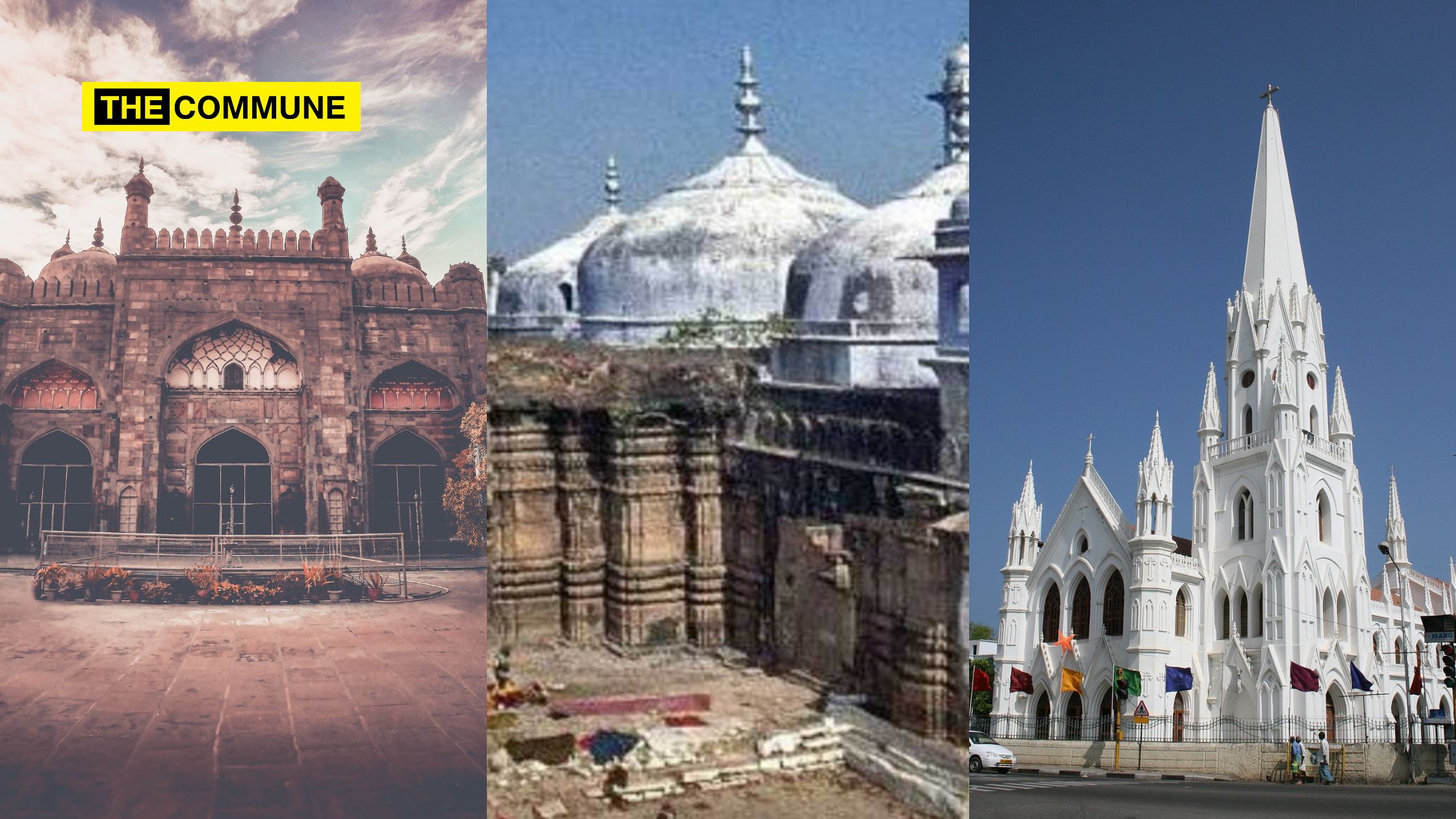
Another person from Tamil Nadu named Santosh Tamilarasan, a member of Tuluva Vellalar community, which rebuilt the present Kapaleeshwara Temple in Mylapore, Chennai after its destruction by the Portugese, has also joined Kumari Krishna Priya in challenging the Act. The St. Thomas Basilica stands at the original site of the temple.

In the application, Kumari Krishna Priya has submitted that as traditional guardians of the Kashi Vishwanath Temple, she has the right and duty to reclaim the original site of the temple atop which the disputed structure of Razia Mosque stands.

She along with a G. Aravindalochanan also sought the reclamation of the Bindhu Madhav Mandir at Panchganga Ghat in Varanasi which was razed down by Mughal tyrant Aurangzeb who later built the now disputed illegal structure of Dhaurahra Mosque.

The intervention application noted that all the three applicants have the locus standi to challenge the vires of the Act on grounds of violation of Articles 25, 26, 29 and 32 of the Constitution.

The application stated that the “Impugned Act is a textbook instance of a legislation that was passed in the most undemocratic of manners possible, without any regard for the fundamental rights of affected parties, in particular the right of formerly colonised indigenous communities to seek reclamation of occupied religious cum civilisational sites.”

“Quite apart from the problems associated with the process itself, it is humbly submitted that the direct consequence of the process as well as the end result is the unconstitutional truncation of the rights of affected indigenous communities to knock the doors of Courts of this country to seek enforcement of their fundamental rights and restoration of occupied sites to the original owners/stakeholders/guardians.” the application noted.

The applicants contend that the “impact and import of the impugned Act must be viewed and understood against the backdrop of Bharat’s history which has witnessed two successive waves of settler colonisation, Middle Eastern followed by European, that directly resulted in incalculable destruction of its religion, culture, heritage, knowledge production and dissemination structures, and economy, among other things.”

“While, on the face of it, it could be argued that the Act is applicable “equally” to all communities, the fact is that its intended impact are the rights of Bharatiya faith systems which are prevented from reclaiming the objects of their faith, their Kshetra and Deities. In other words, the Act is a textbook example of oikophobia/oikomisia and misautogeny i.e., hatred or contempt for one’s own people and culture”, the application submitted.

The intervention application on behalf of the petitioners has been filed by Supreme Court Advocate J. Sai Deepak.

Several pleas have been filed against the Places of Worship Act challenging its constitutional validity by Advocate Ashwini Kumar Upadhyay (Main petitioner), Advocate Chandra Shekhar, former Member of Parliament Chintamani Malviya, Swami Jeetendra Saraswatee, Devkinandan Thakurji, Anil Kabootra.

The All India Muslim Personal Law Board has moved an application in the same opposing the challenge.

Click here to subscribe to The Commune on Telegram and get the best stories of the day delivered to you personally.
Dravidianization Of Ponniyin Selvan: Azhwarkadiyan’s “Narayana” Becomes “Ayyayo” In Tamil Version Of Maniratnam’s PS-1

The trailer of film-maker Mani Ratnam’s magnum Opus “Ponniyin Selvan – Part 1” was released on September 6, 2022.

The film is based on Kalki Krishnamurthy’s epic historical-fiction Tamil novel Ponniyin Selvan which traces the rise of the Chola empire.

Having a ensemble cast of Vikram, Aishwarya Rai, Trisha, ‘Jayam’ Ravi, Karthi, Jeyaram, Parthiban, Prakash Raj, the film is slated for release on 30 September 2022 in five languages – Tamil, Telugu, Malayalam, Kannada and Hindi.

One of the main characters of Ponniyin Selvan is Azhwarkadiyan Nambi, a spy who works for Chembiyan Mahadevi and a close friend of Vallavaraayan Vandiyathevan (played by Karthi in the film).

Azhwarkadiyan is also a devout Vaishnavite who often indulges in debates with Saivites and Advaitins.

In the trailer of the film, there is a sequence which shows the caravan in which Azhwarkadiyan is travelling is ambushed and Azhwarkadiyan (played by Jayaram) exclaims.

While Azhwarkadiyan can be heard shouting “Narayana” in the trailer of Malayalam, Hindi, Kannada and Telugu version, it becomes “Ayyayo” in the Tamil version.

The dialogues in Tamil has been written by B. Jeyamohan a prominent Tamil writer. He was formerly a sympathizer of the left ideology and later grew out of it to become Gandhian and nationalistic in approach. Today, he often finds himself at the receiving end of Dravidian Stockists for not antagonizing Hindu faith.

The replacement of “Narayana” with “Ayyayo” in the Tamil version of the film adds to the Dravidian trope of de-Hinduization of Tamil Hindus.

For long, the Dravidian Stockists have resorted to delinking Hinduism with Tamil culture. This has happened with Thiruvalluvar and his work Thirukkural, and festivals like Pongal, Tamil New Year, etc.

The Dravidianization process involves removal of anything and everything Hindu embedded in Tamil milieu by attributing it as a victim of “Brahminical hegemony”. Such secularization of the inherent Hindu aspects help Dravidian Stockists to peddle a separatist agenda. It also becomes useful for Christian zealots to satiate their evangelist itch. This has been elaborately dealt with in Aravindan Neelakandan and Rajiv Malhotra’s seminal work ‘Breaking India’.

The Cholas were staunch Hindus and patrons of the Saivite sect. It is impossible to glorify the Cholas without glorifying Hinduism. Any attempt at portraying Cholas would inevitably instill the Hindu pride among Tamils. However, given that the ruling DMK is know for its anti-Hindu zeal one wonders if the replacement of “Narayana” with “Ayyayo” is a token gesture of Dravidianization of Ponniyin Selvan in order to coax the ruling DMK.

Click here to subscribe to The Commune on Telegram and get the best stories of the day delivered to you personally.

DMK IT Wing Head Posts Anti-Hindu Tweet, Deletes It Later

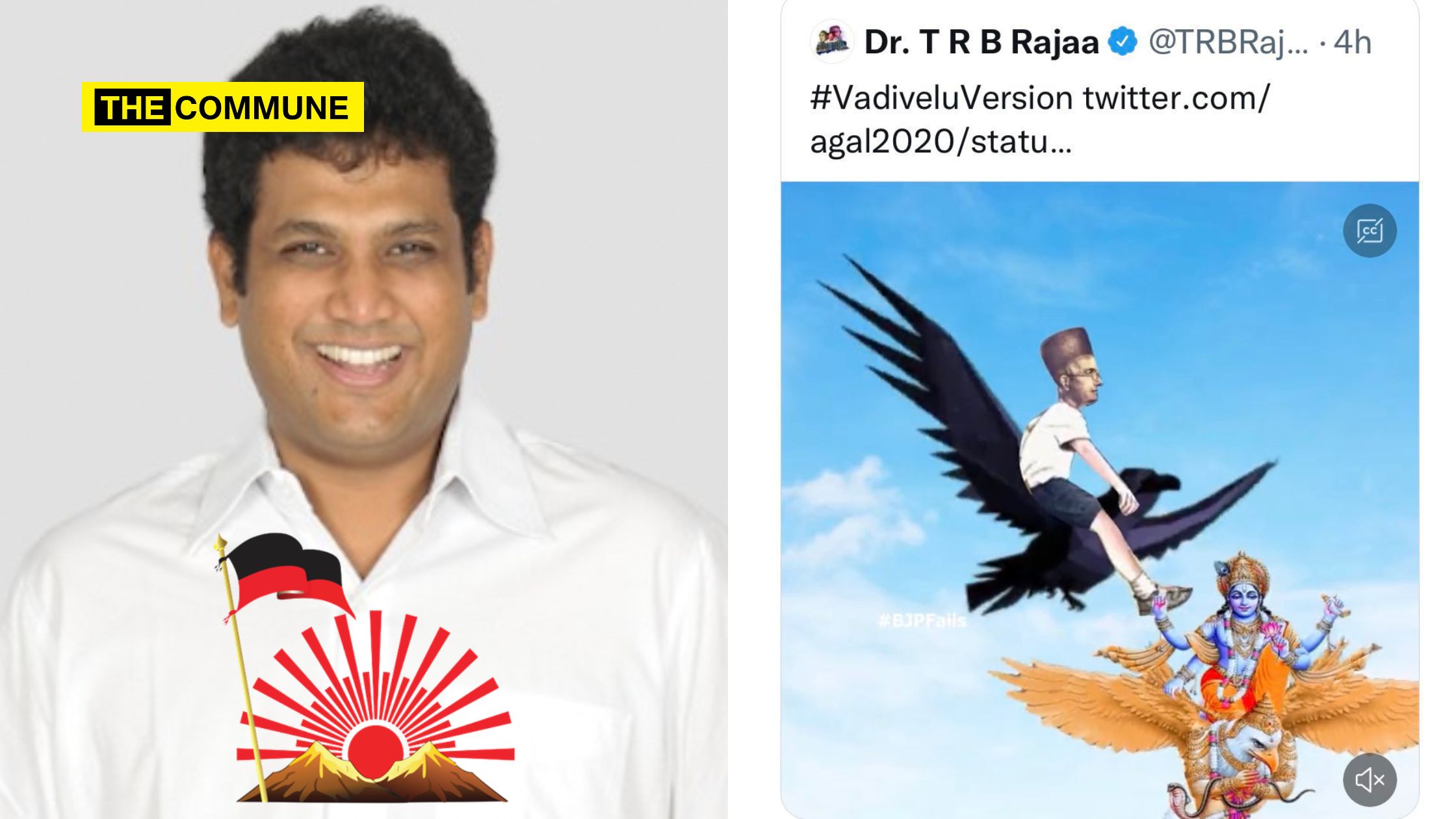
In yet another instance of the ruling DMK espousing its Hindu hatred, the party’s IT wing head and DMK MLA TRB Rajaa posted a tweet that depicted Lord Vishnu and and freedom fighter Veer Savarkar in bad light.

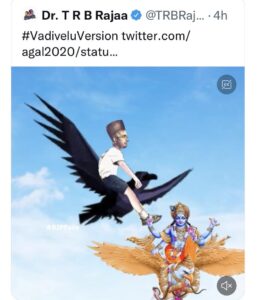
TRB Rajaa who is the son of DMK Lok Sabha MP T.R. Baalu had posted a tweet which had the image of Veer Savarkar on a black bird hitting Hindu God Vishnu mounted on a Garuda.

It is worth mentioning that the Tamil Nadu Police on Monday (5 September 2022) had announced the formation of a “Social Media Monitor Cell” allegedly to monitor fake news on social media “intending to create tension, riots, online frauds, drug smuggling, etc”.

In light of this Tamil Nadu opposition parties like the BJP have demanded action against the DMK MLA for hurting religious sentiments.

This is not the first time that TRB Rajaa has resorted to abusing Hindu faith.

On the occassion of India’s Republic Day, TRB Rajaa shared a picture of Hindu God Kamadhenu saying “which freedom fighter is this?”. Kamadhenu was part of Karnataka’s tableau for the 2013 Republic Day.

The DMK MLA had also retweeted tweets that mocked Uttarakhand’s tableau which had model of Badrinath Temple along with a sadhu.

Click here to subscribe to The Commune on Telegram and get the best stories of the day delivered to you personally.
 

Isha Conducts Agricultural Field Training On Insect Management

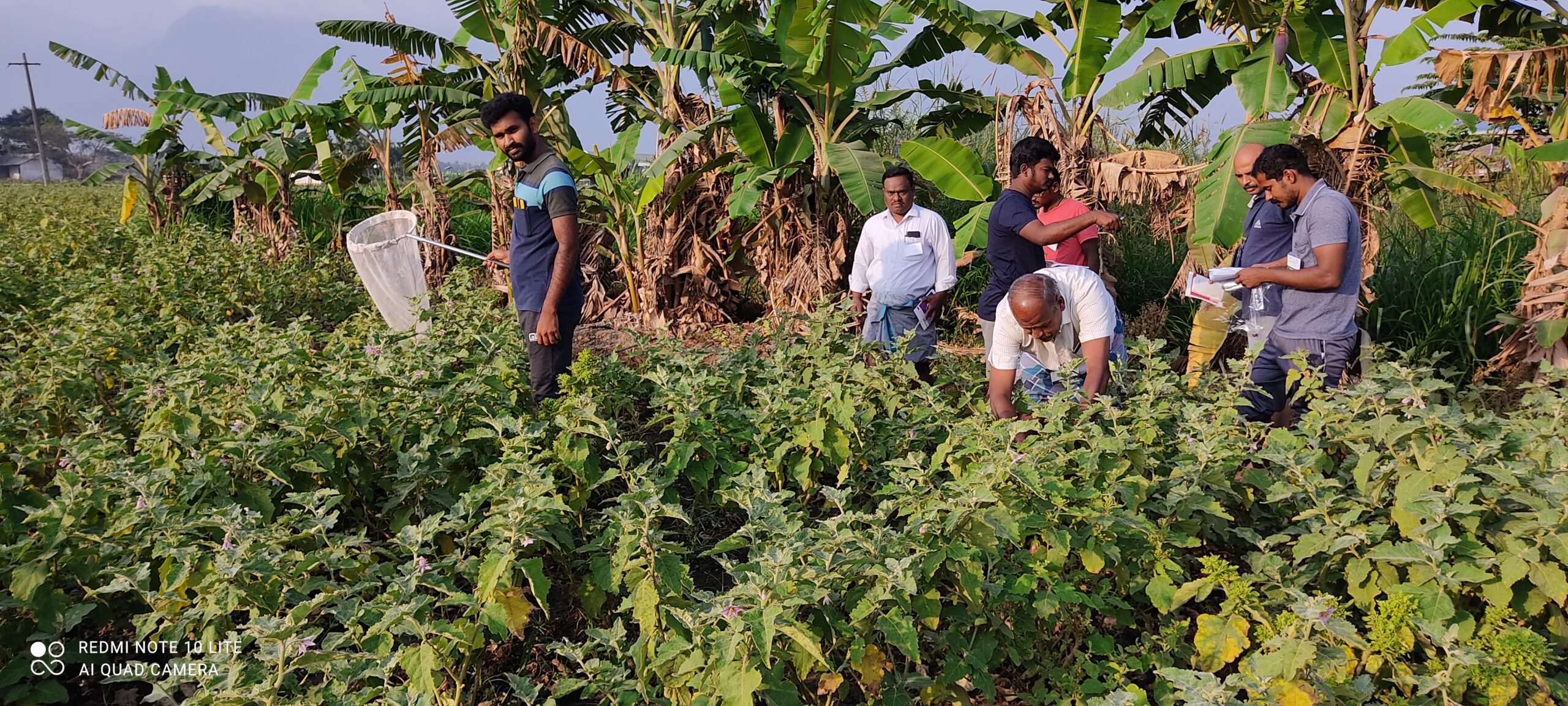
Isha conducted an on-field agricultural training on “Monitoring Insects” for the farmers on the 3rd and 4th of September at Isha Agro Farm, Mevani Village, Gopi Taluk in Erode District. Isha Agro Movement, which is pioneering a turn towards natural organic farming, conducts these various field training every month.

Renowned entomologist Mr. Selvam conducted the 2-day on-field, in-person training which witnessed farmers from various districts of Tamil Nadu participating in it. The training was designed to give the farmers hands-on knowledge of the characteristics and uses of various types of insects.

The role of insects in organic farming, differentiating between beneficial insects and harmful insects, methods to attract beneficial insects, and integrated pest management were discussed in detail.

Excessive use of pesticides increases the toxicity of crops. As a result, the training on the methods of natural pest management gathered added significance in preventing toxicity. Additionally, the farmers were split into separate groups to view and understand the insects on the farm. They were themselves made to draw pictures of insects to understand the anatomy of insects in detail.

(This is an official press release from Isha Foundation. The Commune was not involved in creating this content.)

Click here to subscribe to The Commune on Telegram and get the best stories of the day delivered to you personally.
Freedom Of Speech & Expression At Stake In TN As Stalin Govt Launches ‘Social Media Monitor Team’

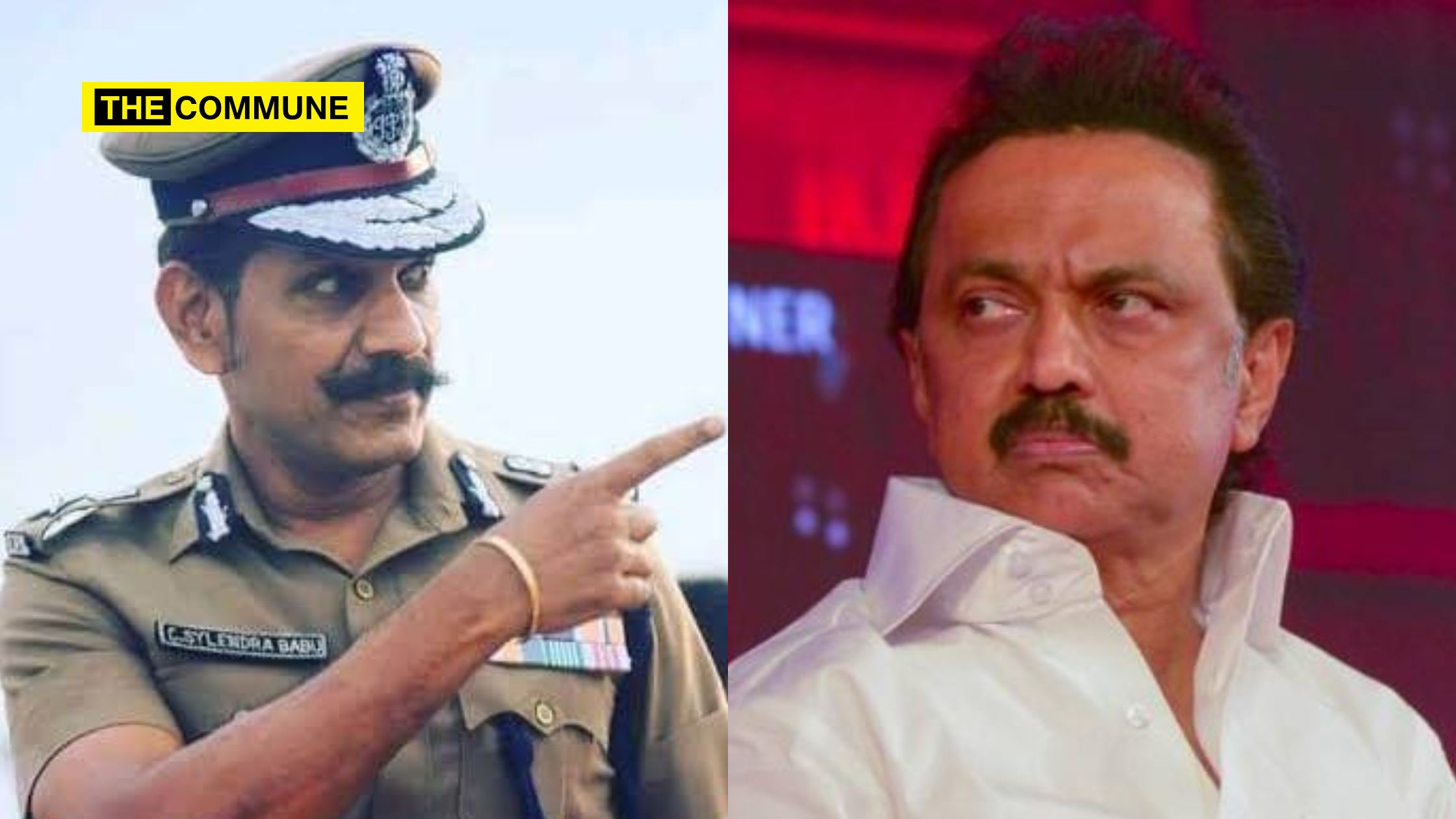
Based on the directions of the MK Stalin-led DMK government, the Tamil Nadu Police has formed a special ‘Social Media Monitor Team’ to monitor social media sites.

According to reports, a whopping 203 officials and police personnel have been deputed for the task of “monitoring fake news on social media intending to create tension, riots, online frauds, drug smuggling, etc”.

The ‘Social Media Monitor Centre’ was announced when Tamil Nadu Finance Minister PTR Palanivel Thiagarajan presented the state’s budget for the year 2022-23 in March this year.

PTR in his budget speech mentioned that the state government has decided to form a special Social Media Monitoring Centre under the police department.

He claimed that it is being set up ‘to battle fake news and misinformation on social media platforms’.

However, many have expressed concerns that the so-called ‘Social Media Monitoring Cell’ is nothing but the DMK government’s draconian move to use the state police machinery under its control might muzzle dissenting voices.

Ever since the DMK came to power, there has been a series of crackdowns on social and political activists.

In July a case was registered against News J, a TV channel of the AIADMK party, and members of the party’s IT wing based on some posts they had posted years ago.

YouTuber Maridhas was arrested on December 9, 2021, for a tweet that came in the light of the late Chief of Defence Staff Bipin Rawat’s death. A DMK functionary had lodged a complaint against the YouTuber, for his tweet that compared Tamil Nadu to Kashmir.

Kishore K Swamy, another political commentator known for his brutal criticism of the DMK, was incarcerated for 6 months after slapping Goondas Act on him.

BJP IT wing office-bearer Saravana Kumar from Dindigul was arrested for criticizing the DMK government and later released following a protest by BJP cadres in front of the police station. Another BJP functionary Kalyana Raman was arrested for allegedly derogating CM Stalin and his late father Karunanidhi.

There have been multiple instances where the state police had cracked down on opposition parties and those who posted tweets criticizing the Stalin government based on complaints filed by DMK cadres or office bearers.

It is to be noted that Finance Minister Palanivel Thiagarajan was previously the head of the DMK’s IT Wing, a post that has now been given to DMK MP T.R. Baalu’s son and Mannargudi MLA T.R.B Rajaa.

With the launch of an exclusive ‘Social Media Monitory Cell’, it is being feared that freedom of speech and expression would be at stake as the DMK government will weaponize the unit to hunt down anyone who doesn’t agree with the party.

Click here to subscribe to The Commune on Telegram and get the best stories of the day delivered to you personally.
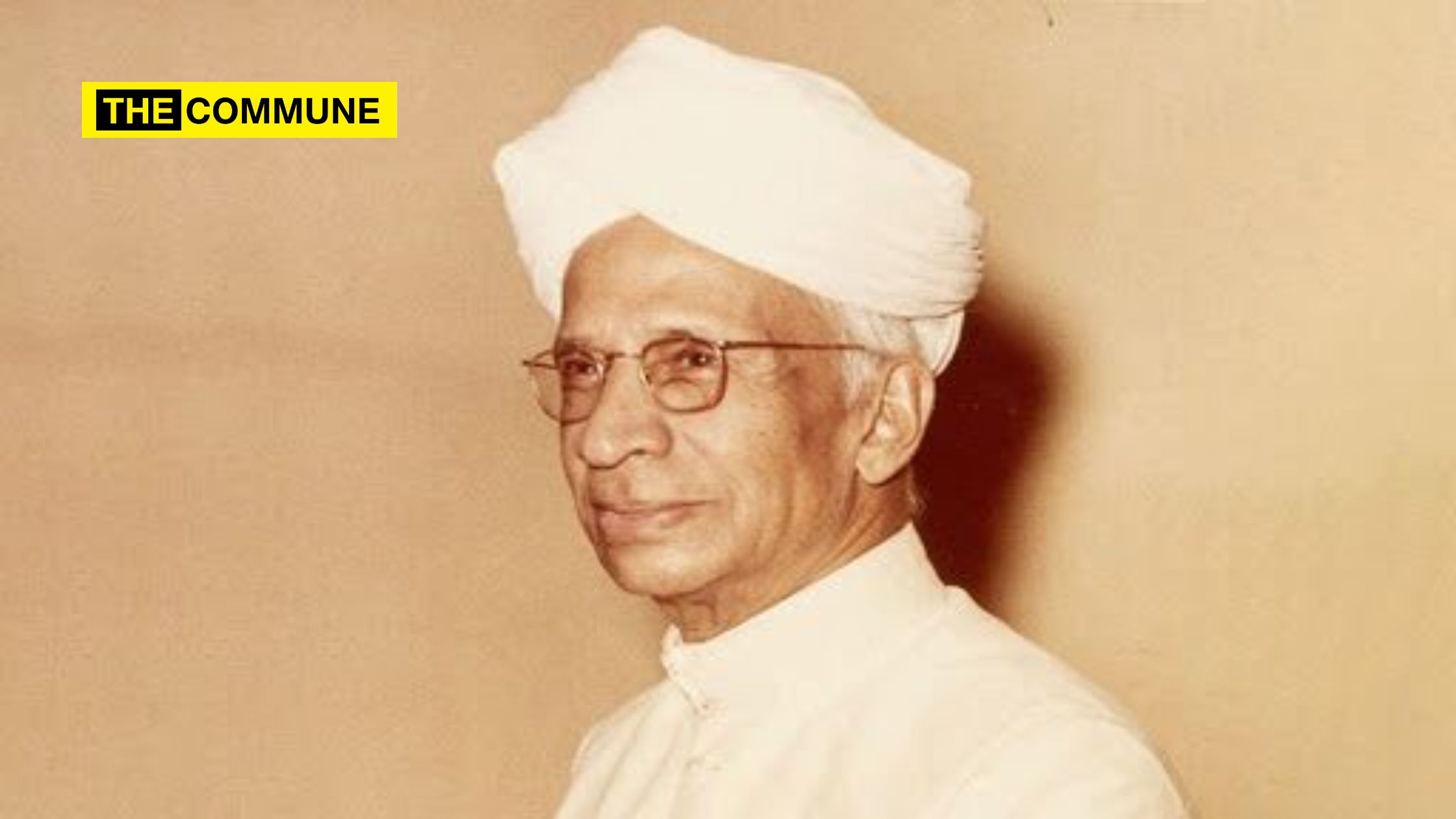
Dr. Sarvepalli Radhakrishnan: A Multi-Faceted Intellectual And Philosopher

Dr. Sarvepalli Radhakrishnan was born on the 5th of September of 1888 at Tiruttani, which was part of erstwhile Madras Presidency and current Tamilnadu State in a Telugu speaking Family. His father was Sarvepalli Veeraswami and mother was Sitamma. He belonged to the Hindu religion and was a Brahmin by birth but espoused a tolerant approach to all religions while being all along a staunch torch bearer of Hinduism. He placed higher faith in Humanity and in Humanitarianism, which earned him the immense respect and admiring love from everyone from all corners of the world.

He came from a humble and simple background. His father was a subordinate revenue official in the service of a local zamindar or landlord at Tiruttani. This was before the times when the Zamindari system was scrapped after India attained Independence. His early years were spent in Tiruttani and Tirupati. He rose in life by dint of his hard work and by the merit of his own capabilities.

He studied at different schools, wherein he learnt various subjects and perceived the Indian philosophies in practice during his times. He acquired education at various educational institutions. He studied at various places and in various ambiences and thus, his life was filled with multicultural and multireligious experiences. He grew up in Tiruttani, where he did his initial education at K.V. High School. Tiruttani is a temple town where there is a famous temple devoted to Lord Muruga. In 1896, he went to Hermansburg Evangelical Lutheran Mission School at Tirupati. He obtained a part of his education between 1896 and 1900 at Tirupati. He later studied at Vellore’s Voorhees college but switched to the Madras Christian College at the age of 17. He got his B.A. and M.A. degree in Philosophy from the University of Madras’s affiliated college, Madras Christian College. He graduated in 1906 at M.C.C.

His family was poor but he did not allow his economic background from disturbing his education and future success. He used every right opportunity to rise in life. He was both resourceful and frugal and would not hesitate to take decisions on time. One can attribute his extraordinary rise in life to his supreme intellect.

A Philosopher 

Dr. Sarvepalli joined government educational service at Tamilnadu. In April 1909, Sarvepalli Radhakrishnan was appointed to the Department of Philosophy at the Madras Presidency College. In 1918, he left Madras Presidency College to teach as Professor of Philosophy at the Mysore Maharaja’s College, which was part of Mysore University. He became Professor of Philosophy there. When Professor Radhakrishnan left Mysore to go to Calcutta to work at Calcutta University, he was taken in a carriage from Mysore Maharaja’s college to the Mysore Railway station in a carriage pulled by his students, who wanted to show their bhakti or devotion, love and gratitude to their Guru, Dr. Sarvepalli Radhakrishnan. He later associated himself with various prestigious educational institutions in India and abroad. He taught philosophy in 5 different universities.

Dr. Sarvepalli was a self–made man. His family was poor but he never allowed his economic poverty to make him lag behind in life. In fact, his decision to pursue his graduation degree in philosophy was because a relative handed over to him, her old philosophy books. Radhakrishnan ji studied philosophy by chance rather than by his choice.

Dr. Sarvepalli knew the value of things and not just its price and that is why his growth was unstoppable. He taught philosophy at 5 different universities. He became a famous Teacher, Philosopher and later President of India.

He was also the author of many books including ‘The Philosophy of Rabindranath Tagore’, which was his first published book. He believed Tagore’s philosophy to be ‘the genuine manifestation of the Indian Spirit’. His second book was the ‘The Reign of Religion in Contemporary Philosophy’ was published in 1920. He joined Calcutta University in 1921 as ‘The King George, the Fifth Chair for Mental and Moral Science’. He represented India at several Philosophy and Scholarly association meets. His other books include two volumes of ‘Indian Philosophy’, ‘Laski on the Future of Civilisation and Indian Philosophy’, ‘Idealistic View of Life’, ‘Eastern Religion in Contemporary Thoughts’. He was devoted to Advaita philosophy and made the western world realise that the Advaita philosophy, a branch of Vedanta based on the Upanishads was both ethical and relevant. He brought all this wisely through his book, ‘The Ethics of Vedanta and Its Metaphysical Presuppositions.’

According to Dr. Sarvepalli, a philosopher and a Scientist are quite similar. According to Dr. Sarvepalli, a scientist creates things whereas a philosopher creates ideas.

In 1926, he was invited to Great Britain to deliver the talk, ‘The Hindu View of Life’, which he delivered exceptionally well and which was well received by the whole world. Prof. Radhakrishnan was invited to take the post vacated by Principal J. Estlin Carpenter at Harris Manchester College. He also delivered the Master Mind Lecture on the Buddha at the British academy and was awarded Fellowship of the Academy.
He became the Vice-Chancellor of Andhra University in 1931 and that of Benaras Hindu University in 1939. He was also a Spalding Professor at Oxford. He received over 105 honourary distinctions from all over the world. He was the Chairman of University Education Commission in 1948. This Commission submitted its report in 1949. The Commission gave its views on – 1. The Medium of Instruction 2. Course of Study 3. Examination System 4. Standards of Teaching 5. Indiscipline and 6. Discipline and other aspects of Education.

The Commission gave the following holistic suggestions –
1. To teach that life has meaning
2. To awaken the innate ability to live the life of the soul by developing wisdom.
3. To acquaint with the social philosophy which should govern all institutions – educational, economic and political
4. To train for democracy
5. To train for self-development including character development, cultural development etc.
6. Education is a life-long process.
7. The Commission also gave importance to the cultural heritage of India and vocational training.

His Birth Anniversary is celebrated as Teacher’s Day through India, every year. Legend has it that his students once paid him a visit on his birthday to show their respect for him as their Teacher when he was President of India. He told his students to mark his birthday as Teacher’s Day – a day to celebrate the contribution of Teachers in a Nation’s Development. He believed that the minds of teachers should be the best in the country because Teachers build the people of a nation.

A Writer Par Excellence

We are already aware of the prowess of Dr. Sarvepalli’s pen. He wrote many books as mentioned earlier on many aspects of life including how a human being should conduct himself, how the ideal student-teacher relationship should be. He wrote the path breaking paper known as ‘The Ethics of the Bhagavad Gita’ in 1911. ‘An Idealist View of Life’ is a path breaking book by Dr. S. Radhakrishnan, which relates spirituality and modern life. He was the author of multiple books on Religion and Philosophy.

His Role In Indian Polity

He was the leader of the Indian delegation to UNESCO from 1946-50. He became the Chairman in 1948 of UNESCO’s University Education Commission and its President in 1952. In 1949, India became a sovereign nation. After being a great academician, philosopher-king, celebrated author, he went to hold several important political posts with the support of Shri. Jawaharlal Nehru, India’s first Prime Minister. According to Dr. Sarvepalli, ‘The Cry for Swaraj is the outer expression of the anxiety to preserve the provinces of the soul.’ In his book, ‘Indian Philosophy’, he said, ‘Political subjection, which interferes with this inner freedom is felt as a gross humiliation.’

Jawaharlal Nehru and Dr. Sarvepalli Radhakrishnan got along superbly well.

He was President of the General Conference of UNESCO. He was also the Chairman of the Indian University Commission.

He was elected to the Constituent Assembly of India. The leader of the USSR, Joseph Stalin found a kind and friendly soul in Dr. S. Radhakrishnan. According to him, Dr.S. Radhakrishnan was the first person to treat him like a human. He was the Ambassador Extraordinary and Minister Plenipotentiary to the erstwhile USSR between 1949 to 1952. He was the first chairman of the Rajya Sabha. He was elected Vice-President of India (between 1952 and 1956 and between 1957-1962). He was the First Vice-President of India. He was the President of India between 1962 and 1967. He was the second President of India.

His years of Presidentship saw India witness the green revolution. He also handled crucial war situations during his years of presidency. He was friendly with one and all. He commanded respect wherever he went – be it to Africa, to USSR, to America or to Europe. The World recognized him as a giant intellectual. He was a member of the Intellectual Cooperation of The League of Nations. He was given a rousing reception at England when he visited Britain. He received a Hero’s welcome wherever he went.

Dr. Radhakrishnan & Hinduism

Dr. Radhakrishnan was a beacon light to one and all. He was a great advocate of the religion of Hinduism. He was a proponent of Advaita philosophy, a branch of Vedanta Philosophy, which is based on the Upanishads. He was the Bridge between the Eastern and western Philosophy. He helped the outside world to understand Indian Philosophy well through his scholarly writings and scholarly talks. He knew Sanskrit, Pali, Prakrit among others. His early years in Tiruttani, a temple town of ancient origin ensured his strong grounding in Hinduism. He wrote the book, ‘The Philosophy of the Upanishads’ with a foreword by Rabindranath Tagore. He also wrote the book, ‘The Philosophy of Hinduism’. He was greatly influenced by Swami Vivekananda. He was an authority on the Bhagavad Gita. His exceptional speech on the topic, ‘The Hindu View of Life’ was received well by one and all.

His paper on ‘The Ethics of Bhagavad Gita’ in 1911 and his book, ‘The ethics of Vedanta and its Metaphysical Presuppositions’ were intended to be replies to the charge that the Vedanta System had no room for ethics. He won over western critics. He was thus, greatly inspired by Swami Vivekananda. In his own words, ‘The Challenge of Christian critics compelled me to study Hinduism and find out what is living and what is dead in it. My pride as a Hindu roused by the enterprise and eloquence of Swami Vivekananda, who was deeply hurt by the treatment accorded to Hinduism in missionary institutions.’

He was a staunch defender of Hinduism against the ‘uninformed western criticism’.

Dr. Sarvepalli Radhakrishnan and Shri. Srinivasa Ramanujan

In 1948, the great mathematician Srinivasa Ramanujan visited Dr. S. Radhakrishnan to seek his blessings before leaving for Cambridge. Dr. Sarvepalli Radhakrishnan encouraged the genius of Srinivasa Ramanujan.

Awards & Recognitions

Dr.Sarvepalli Radhakrishnan received many awards including India’s Highest Civilian Award, The Bharat Ratna in 1968, The Sahitya Akademi Fellowship in 1968 and The prestigious Templeton Award from America in 1975. Earlier in 1931, he was knighted by King George V for his services to Education.

He donated the proceeds of The Templeton award to the Oxford University. He was nominated for the Nobel Prize in Literature 16 times! He was also nominated for the Nobel Peace Prize 11 times.

Dr. Radhakrishnan & J.R.D. Tata

JRD rendered service to the building of Modern India’ Airline Industry and Air Force. JRD’s report included requirements of radar, signalling and other equipment including spare parts’ manufacture. JRD Tata was appointed as Honourary Air Commodore in the Indian Air Force by Dr.Radhakrishnan.

Personal Life

On the personal front, he was married to Sivakamu, a distant cousin who was his distant relative. He married at the age of sixteen. He has five daughters and one son. His son, Sarvepalli Gopalan became a noted Historian.

Multifaceted

Thus, Dr. Sarvepalli Radhakrishnan was many people rolled into one – a distinguishing mark of genius. He was a philosopher, Writer, Teacher, Vice-President, spiritual leader, Humanitarian, Vice-President/President all rolled into one.

He believed that we should first find peace within ourselves and that the peace would reflect in the world. At his core, he was a peace-lover and Humanitarian. He was non-aggressive in nature, very devout, peaceful, religious and spiritual by nature. He was a Role Model World Citizen, an exemplary Human Being, a magnificent Scholar, a Philosopher King, Genius Writer, a Wise and Learned Teacher and a Towering Statesman. He possessed an extraordinary personality – inimitable and remarkable. However, it is to be understood quite clearly and simply that he was no revolutionary or freedom fighter and was not a member of any political party for a long time. He remains a great inspiration for teachers and students, alike.

He passed away on the 17th of April 1975 leaving behind the wealth of his life’s philosophy, kindness, humanitarianism and teaching.

Dr. S. Padmapriya is an author and thinker based out of Chennai.

Click here to subscribe to The Commune on Telegram and get the best stories of the day delivered to you personally.
V.O. Chidambaram Pillai: The Tamil Helmsman Who Challenged The British With His Ship

We all celeberate the freedom fighters who have toiled under harsh conditions, under the repressive British rule, almost lost their prime youth and suffered mentally and physically. But have we ever cared to know what the freedom fighter’s family are doing after the demise of the freedom figthters. We hardly take any interest. The Government also don’t care about them. Most of their legal heirs live in abject poverty or come up in life after their 3rd or 4th generation fight hard to have a decent life. Not only the freedom fighters have to be remembered but also their legal heirs who never expected neither special allowances nor any reservations.

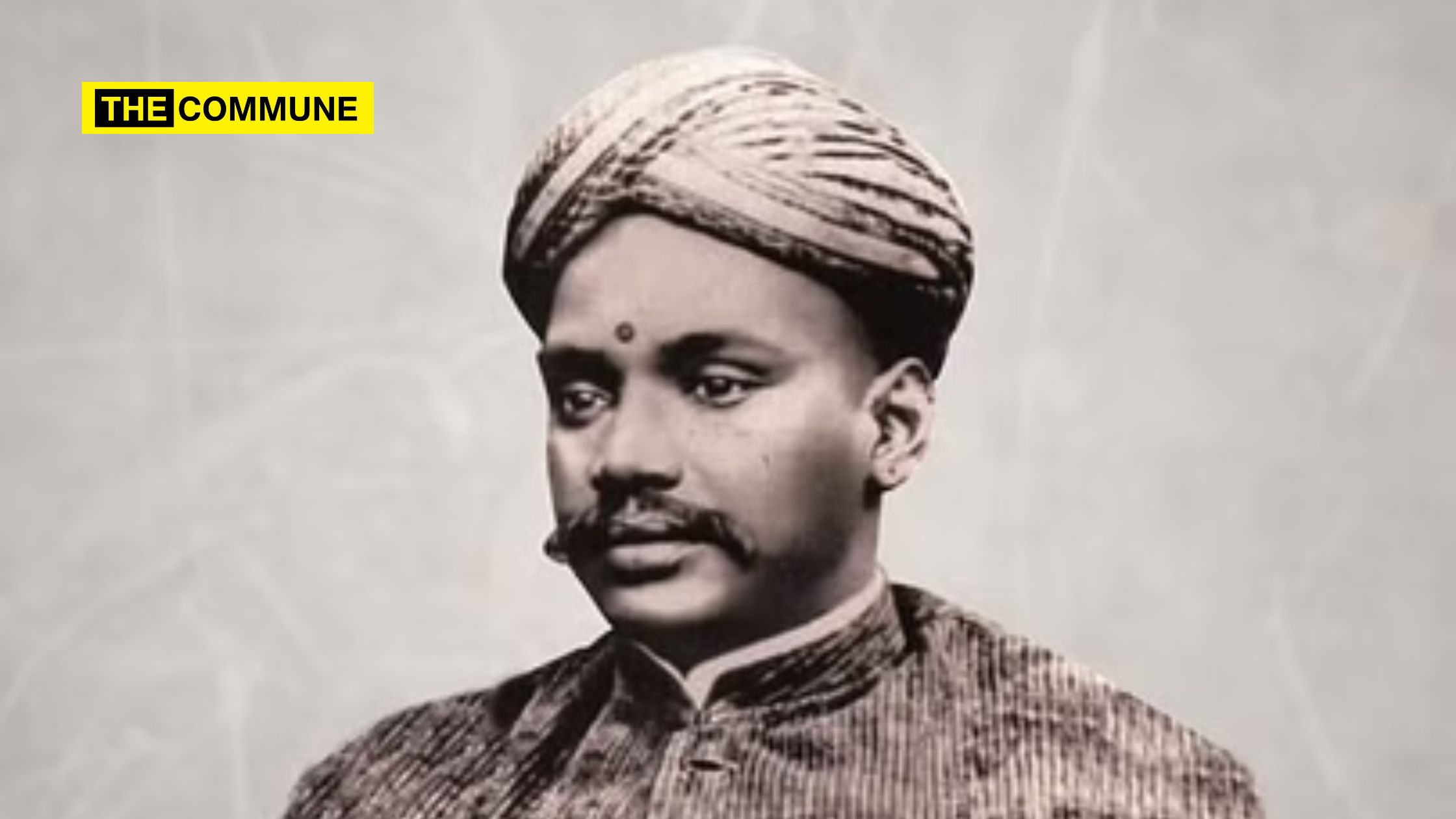
We are going to see one such Freedom Fighter. The ‘Chekkizhutha Chemmal’, ‘Kappalotia Tamilan’ the great freedom fighter Vallinayagam Ollaganathan Chidambram Pillai, popularly known as V.O.C in English.

Early Life

V.O.C. was born in a small town Ottapidaram in Thirunelveli District on 5th September 1872 to Olaganatham Pillai and Paramayi Ammal. He was named after his grandfather as ‘Chidambaram’ which was the customs those days. He was born into a family of lawyers, then it was called “Pleader”.

During his school and college days he was very aggressive and a turbulent young man. He trained in horse riding, boxing, silambam, tree climbing, archery,shooting and swimming. Fearing his aggressive and daring nature, his father Ollaganathan Pillai constantly kept him under check. After a brief exploration of world in Madurai, Chidambaram Pillai returned to Ottapidaram, briefly worked in the Taluk office as a clerk. He did not like the routine mundane government job and expressed his desire to study law and to become a Pleader like his father and grandfather. Olaganatham Pillai was elated and sent him to study law in Trichy. V.O.C appeared in the Pleadership Examination of the High Court of Judicature of Madras and passed out in Second Grade.

He set up his practice as Ottapidaram and specialised both civil and criminal pleadings. He became very popular among the people of Ottapidaram and its surroundings towns of Koilpatti, Tuticorin and Maniachi. He appeared free for poor people and peasants and earned a title of ‘Poor Man’s Lawyer’ . The administration feared Advocate Chidambaram PilliaI. Police was always having an eye on Chidambram Pillai who was able break most of the falsely implicated Police cases. He also earned much more than his father and grand father and became one of the well-known families in Thirunelveli District.

Two cases can be quoted for his brilliant approach of law and his attitude to stand by the truth.
In the first case a police head constable was attacked and a case was filed against the accused. To prevent Chidambaram from appearing for the accused, the Police named Chidambaram Pillai also in the case. They also secretly negotiated with Chidambaram Pillai that his name would be removed from the accused list if he promised not to appear for the accused in the case. Sensing the trick Chidambaram Pillai agreed not to appear for the case. The Police removed Chidambaram’s name from the list of accused and presented the case for hearing. But on the day of case hearing, Chidambaram promptly appeared in the case and won it. Since the understanding with the Police was unofficial and private Police count not do anything.

The second was a civil case very interesting one which made the son and father stand against each other in the case. A poor farmer had taken borrowed money from a local English man. The farmer’s relative who eyed a ancestral property owned by the farmer. He connived with the English man and filed a case in the court. The Englishman engaged Ollaganatham Pillai, Chidambram Pillai’s father as his lawyer. The poor farmer not knowing what to do went to Chidambram Pilliai for help.

On the day of hearing the Magistrate asked the farmer if he had no ‘Vakil’ to plead his case. When the farmer could not reply, the court hall heard a booming voice of Chidambaram Pilliai ‘Here I am’ I would be appearing for the farmer’. Thus, this case pitted Chidambaram Pillai against his father for the sake of helping poor people and also stand by truth. He won the case for the farmer Madasamy who remained loyal to him for ever and participated in the freedom struggle. Infact some of the English Magistrates and Judges were all praise for V.O.C.’s knowledge in law.

V.O.C met Subramania Bharathi and Subramania Siva during the Surat Congress meet and developed liking to them. He supported the militant way of Bala Gangadar Tilak.

A Pioneer Of Swadeshi 

To encourage swadeshi business and boycott British made things he established “Swadeshi Stores” to sell locally made produces. He also understood that British make money by doing business.

In those days exports and imports generated huge profits. Chidambaram Pillai realised that to sustain Freedom fight and to organise meetings and dharnas needs money. Donations are not the solutions he reasoned. Hence, he devised an idea, to hit British where it hurts.

Accordingly, he had decided to float a Shipping Company against Monopoly business of British Steam Navigation Company. Inspired by the Swadeshi movement, V.O.C. mobilised the support of local merchants, and launched the first indigenous Indian shipping enterprise, the “Swadeshi Steam Navigation Company”, thus earning for himself the name – “Kappalottiya Tamilan கப்பலோ ட்டிட் ய தமிழன்”. The Swadeshi Steam Navigation Company was registered on the 12th of November 1906. The company had a capital of Rs.10 lakh with 40,000 shares. He purchased two steamships, S.S. Gallia and S.S. Lawoe for the company and commenced regular services between Tuticorin and Colombo against the opposition of the British traders and the Imperial Government. His efforts to widen the base of the Swadeshi movement, by mobilising the workers of the Coral Mills (also managed by A. & F. Harvey) brought him into increasing conflict with the British Raj.

On March, 9th 1908 he along with Subramania Siva, and Subramaniya Bharathi, staged a dharna against the attorcities committed by Collector Wynch.

On 12 March1908, he was arrested on charges of sedition and for two days, Tirunelveli and Tuticorin witnessed unprecedented strike which triggered violence, quelled only by the stationing of a punitive police force. But newspapers had taken note of VOC. This was the first General strike witnessed by the British regime.

Yoked Till He Died

The Court imposed a sentence of two life imprisonments (in effect 40 years). The sentence was perhaps a reflection of the fear that the British had for VOC and the need to contain the rebellion and secure that others would not follow in Chidambarampillai’s footsteps. Appeal after appeal filed and finaly the sentenced were reduced. V.O.C. was confined in the Central Prison, Coimabtore from 9 July 1908 to 1 December 1910.

While he was in prison the British Steam Navigation Company conspired with the directors of the “Swadeshi Steam Navigation Company” and bought over the 2 ships and the company. Thus, in the year 1910 the “Historic First Swadeshi Steam Navigation Company” came to an end.

Apart from the Madras press, even the Amrita Bazaar Patrika from Kolkata (Calcutta) carried reports of V.O.C prosecution every day. Funds were raised for his defence not only in India but also by the Tamils in South Africa. Bharathy gave evidence in the case which had been instituted against him.
The British response was brutal and harsh. And the Swadeshi movement was quelled by treating the activists languishing in jail with hard labour and un hygienic conditions. VOC in prison, was left to fend for himself. Surprisingly no body was there to help him.His wife, Meenakshi Ammal, followed him from the Tirunelveli sub jail to the Coimbatore and Kannur central jails, where he spent his term and almost single-handedly organised.

He was not treated as a ‘political prisoner’ he was treated like a criminal and had to undergo brutal physical work. One such work was to run the oil mill. Instead of the bull locked to the yoke, Chidambaram Pilliai was locked to the yoke and made to extract oil. He was asked to wear rough jute cloth.The British was trying to brake V.O.C’s mind and body. He endured all this though his health conditions deteriorated badly. He was released with a condition that he should not participate in any freedom struggle nor write anything against Britshers. His Pleader’s license was cancelled to make it worse to Chidambaram Pillai. Finally, he was released from prison on 12th December 1912.

He moved the court to get his Pleader’s license restored. A British Magistrate George Wallace after hearing V.O.C s knowledge ordered the restoration of his Pleader’s license. Pillai moved to Chennai with his family and started his practice and also started publishing books. Since it was not bringing enough revenue to meet the family needs, he also started a grocery shop and kerosene depot to earn some additional money. When things were going from bad to worse, he moved to his native and started practising in Kovilpatti court.

Finally, he fell ill and died in the year 1936, 18th November by hearing the poem of his great friend Subramania Bharathi. Ironically, he died in the Indian National Congress office, indicating that he died for the cause of nation and Indian National Congress.

He wrote several books. Some of them Meiyaram, Meiyarivu, Autobioagraphy and commentary on Thirukural. He also wrote commentary on Tamil Grammer book ‘Tholkapiyam’

Legacy

Several statues have been erected to commemorate his life, some of them are
• At the entrance of the Congress committee office, Royapettah, Chennai (1939).
• At the arch of Palayamkottai, Tirunelveli.
• At Marina beach, Chennai. (unveiled at the World Tamil Conference).
• At the port, Thoothukudi.
• At the Entrance of Kattu Paramakudi (V.O.C. Mahal) unveiled at 18 November 2012.

He was also honoured by Govt. of India by releasing a Postal Stamp. Tuticorin Port was named after him. Theni and Bodi busstands were named after him. It is also noteworthy to mention here the Actor Sivaji Ganesan had brought the great patriot alive in his potryal as Chidambaram Pillia in the movie ‘KAPPALOTIA TAMILAN’ produced and directed by B.R.Panthulu.

A stauch believer of Dharma he never forgot the people who helped him. He named one of his daughter as Vedavalli not to forget the help he received from one of the rich family.

He also named one of his sons as Walleswaran in praise of Judge Wallace of Madras High Court who ordered to restore his Pleader’s license.

Click here to subscribe to The Commune on Telegram and get the best stories of the day delivered to you personally.
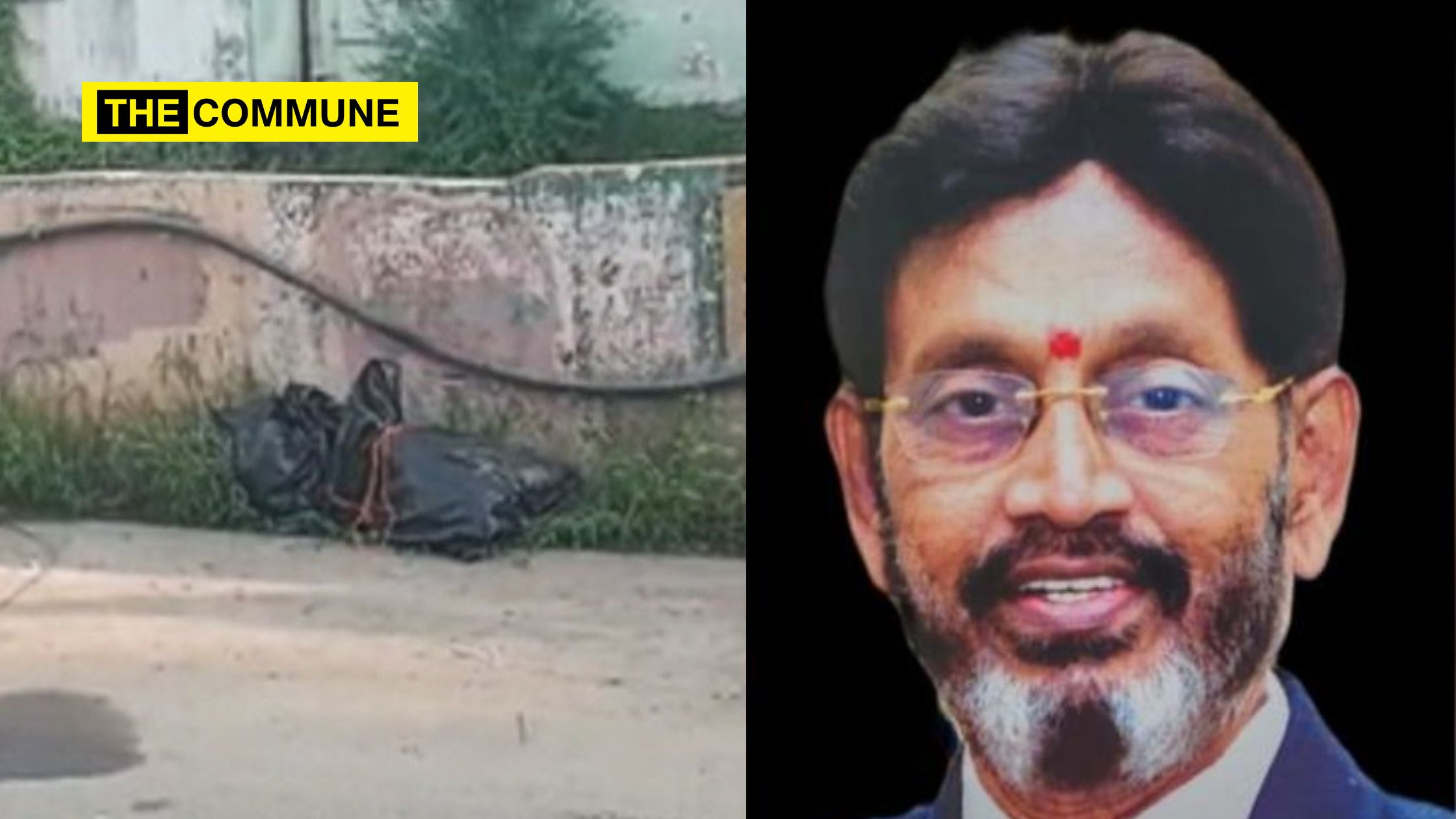
Chennai-Based Businessman Found Dead In A Plastic Bag Thrown On The Road

The body of a 62-year-old man stuffed inside a black plastic bag was found lying along the road near Nerkundram in Chennai on Saturday morning.

The deceased has been identified as Chennai-based businessman, Baskaran (62).

The body was first discovered by the city corporation’s hygiene workers who then informed the police control room. The Virugambakkam police rushed to the spot and launched an investigation. His family has filed a complaint with the police. The body was sent for post-mortem.

The hands and feet of the body was found tied with cloth stuffed in the mouth. The dead body had blood stains on the head and torso. Baskaran’s car was found near the spot where his body was dumped.

Reportedly, Baskaran’s phone was switched off last night and he was unreachable. According to reports money was withdrawn from his ATM card multiple times.

The city police has formed special teams and have launched an investigation. CCTV footages are being scanned to identify the suspects.

Motive of the murder is not clear yet.

This death comes at a time when Opposition parties have raised concerns about the dismal state of law and order in the state.

Click here to subscribe to The Commune on Telegram and get the best stories of the day delivered to you personally.
Why Shivaji’s Seal Was Favoured Over Chola’s Tiger In Indian Navy’s New Ensign?

On 2 September 2022, Prime Minister Narendra Modi unveiled the Indian Navy’s new ensign with the mighty INS Vikrant getting commissioned.

The colonial relic of St. George’s Cross which was removed by the Vajpayee government in 2001 and reintroduced by Sonia Gandhi-controlled Congress government was finally dropped from the Indian Navy’s flag.

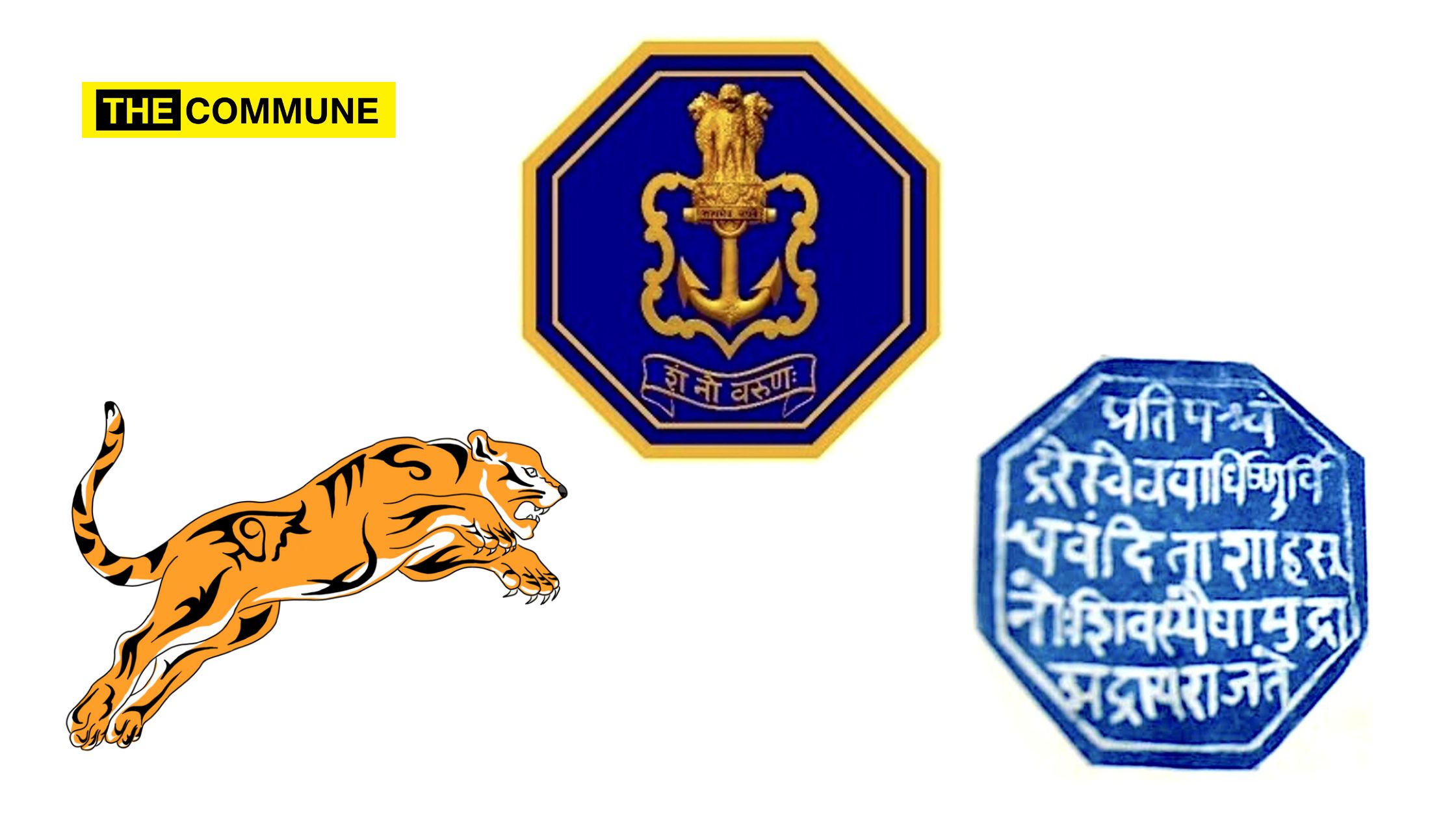
The new ensign now features a blue octagon encompassing the national emblem that sits atop an anchor with ‘Sham No Varunah:’ (invocation to the Hindu God of Sea Varuna) written below.

The octogonal shape draws inspiration from the seal of Chhatrapati Shivaji Maharaj who had established a formidable navy to fight external aggressors from sea.

But many have pointed (rather disappointed) saying that the motif of Cholas who were a pioneer in naval expedition must have found its place in the flag.

This is a very valid question but at the same time the hidden answer for this question is more realistic and in sync with current geopolitical situation. Let’s dive into details.

Cholas Navy is the most successful in Indian history as their conquests and military victories went deep inside South-East Asia. With such conquests, they were able to control the Malacca Strait and secure their trade routes. Such mighty conquests makes Chola symbol the perfect choice for Indian Navy symbol but when this is viewed in the point of view of South-East Asian Countries, this also represents India’s historical military dominance over South-East Asia. At present, India is developing very strong defence relations with South East Asian countries to counter Chinese aggression. South-East Asian Countries are facing Chinese aggressions in their sea zones in South-China Sea and also in larger Indo-Pacific Zones.

Countries like Indonesia and Philippines are importing Brahmos missiles from India. Vietnam is planning to purchase Indo-Israeli Barak 8 Missile Defense System. Malaysia has expressed interest to purchase LCA Tejas Aircraft from India. More South-East Asian nations are going to purchase Defence equipments from India and the prime intention of this defense partnership is to counter China.

New Chinese Strategy

China’s new geopolitical strategy to set narratives against India was well evident in Sri Lanka’s Chinese Ambassador speech where he said Sri Lanka’s northern neighbor (India) had invaded Sri Lanka multiple times. Here China indirectly refers to the conquest of Sri Lanka by Cholas and Pandyas.

Chinese is playing with the emotions of Sri Lankans by using the historical enmity to create narratives against India. Same thing is also possible with South-East Asia. Just because Chinese have territorial disputes with South-East Asia, that does not mean China doesn’t have any influence over the South-East Asian nations. China has planted pro-China groups and political parties in South-East Asia to set their narratives.

Historical wars and alliances should be juxtaposed with contemporary realities.  Japan fought against Germany in World War I but Japan was with Germany in World War 2. US and Japan were enemies till second world war but became allies after that. Israel fought against gulf states few decades back but today Israel is planning to form a military alliance with Arab nations to counter Iran.

So logically, India’s historical military interests in South East Asia doesn’t mean India has similar interests today. It’s interest is not conquest.

The Message Sent By India

It is not a competition between Shivaji and Cholas on who is the greatest. Both are not contemporaries and had different goals and intentions. Both are great in their own way! Chola’s Navy symbolizes territorial conquests and Shivaji’s navy symbolizes defence. In present geopolitical chessboard, Indian Navy’s role is to defend its territories and make sure that there is no foreign intervention in Indian Ocean region. Shivaji’s navy is known for defending India against external aggressors.

Hence Shivaji’s seal has been preferred thus signaling that India will defend its territory and stop foreign influence in Indian Ocean Region.

By preferring Shivaji’s seal over the Chola motif of Tiger, India is sending a message to South East Asians. India should make sure that it doesn’t send out any wrong signals even if unintentional. The Chola symbol in Indian Navy can create a scope for China to peddle unfavourable narratives towards India. It’s good that India is acing the mindgames by not creating such an opportunity.

Who know, may be when India gets more geopolitical dominance and clout, the Chola symbol might make its way to the flag.

Watch the explanation in Tamil here:

Click here to subscribe to The Commune on Telegram and get the best stories of the day delivered to you personally.