Tamil Nadu Governor RN Ravi on Friday (October 7, 2022) while addressing the Thirukkural Conference organised by the Kural Malai Sangam on the theme “Thirukkural to humanity, for world peace and harmony” said,” Despite being a special synthesis of spirituality and Needhi Sastra, the Thirukkural of Saint Thiruvalluvar has been reduced over the years to little more than a code of conduct.”
He stated that this despiritualization was a denial of India’s history and culture and that Thirukkural should be brought back to its former splendour. He gave a detailed explanation of the Thirukkural’s contents beginning with the first couplet and how it progressed to other spiritual topics in stages until it attained moksha (freedom from the cycle of births and deaths).
He remarked, “Unfortunately, Thirukkural has been presented as a code of conduct for the past many years … The whole spirituality of Thirukkural, which is so rich and carries the spirituality of India, is played down. We say it is a great work of literature and the root of Indian culture. But somehow we feel shy about talking about the spirituality spoken in Thirukkural.”
Adding that the truth cannot be stifled, he said that GU Pope, one of the first translators of Thirukkural, produced a despiritualized version of the original text.
He went on to say, “You must understand what damage GU Pope has done and what was his mission in India. In 1813, the British Parliament passed a law called India Charter 1813, which mandated the British government, (the) East India Company and others to evangelise India. Against this backdrop, people like Bishop Caldwell and GU Pope came to India. GU Pope was a member of the Society for Promotion of the Gospel.”
Added the Governor: “the despiritualised Thirukkural was being used for political purposes and by “those who don’t believe in God”.
“Thiruvalluvar was hijacked in a despiritualised manner and Thirukkural was reduced to a mere code of conduct. This is not fair. It is an outstanding combination of spirituality and Needhi Sastra. It has to be appreciated in its fullness.”
“What Thiruvalluvar said was the sum and substance of Bharathiya Atyatmiya and this is our identity. This is what makes us who we are. It is a far greater work than a mere code of conduct,” he concluded.
Click here to subscribe to The Commune on Telegram and get the best stories of the day delivered to you personally.
Or were they Tamils who had no religion as is being claimed by certain sections after the success of Ponniyin Selvan I?
This renewed interest in Cholas is a good time to dwell on the dynasty that has answered all the questions that were triggered recently, as if they preempted them.
The Chola were one paranoid dynasty. They recorded every minute detail about themselves they could: on temple inscriptions, on copper plates, on palm leaves.
Some of these records that seem to be redundant are ones that ensure corroboration of facts even if someone were to tweak a source.
And as they say, only the paranoid survive. Their data has survived generations and are clearly communicating the truth about their identity and culture. Here are some of them:
The Copper Plate Genealogy
Chola Copper Plates provide a detailed lineage that tracks their geneaology. The Anbil copper plates trace their lineage from Surya back to Brahma and Thirumaal (Vishnu) and the Cholas thus consider themselves Suryavanshis.
Interestingly, the devout Shiva bhakts Cholas, name Vishnu as the first king of their dynasty and the list goes on to name Puranic kings like Harishchandra, Dushyanth, Bharatha and Bhagiratha.
Moving on to Raghuvamsha, Raghu is listed as their 36th king, promptly followed by Dasharath and Lord Rama.
Kochchenganan, a legendary king, is referenced in Puranas as a spider which constructed web over the linga to prevent Sunlight directly falling on Shiva. The spider was reborn as a Chola king.
He is credited for building 70 Shiva temples, by Vaishnavite Thirumangai Alwar.
Chola connection to all six primary Hindu Gods
Chola’s family deity (kula deivam) was Nisumbasoodhani, a form of Durga/ Kaali for whom Vijayalaya Chola constructed a temple immediately after reinstating Chola rule in 846 CE.
The Murugan Temple of Saluvankuppam has inscriptions of grants from the Parantaka-1 (907 CE) and Rajaraja-1 (985 CE) periods.
There are records of grants given by Sembiyan Madhevi, the wife of Chola king Kandaraditya, for building Nallur Kamdasamy temple in Sri Lanka.
Chola imagery is filled with images of Ganesha.
Kulotunga gave the highest grants for Srirangam Ranganathar temple. As Padmabhushan R Nagaswamy writes, “the pictures emerging from the epigraphical study is that the period of Kulottunga-1 was the most prosperous period for the Srirangam temple under the Cholas”.
Chola copper plates and inscriptions had both languages – Sanskrit and Tamil.
Rajaraja gave equal wages of Rs.1200 (in 1978 value) to singers of Vedic and Tamil hymns.
There is mention of Rajadiraja Chola (1018 CE) performing Ashwamedha yagnas in line with most Chola kings who did yagnas and followed scriptures.
In short, the Shanmathas of Hinduism were all patronaged and followed by the Chola kings.
From Vaishnavam with Vishnu as their first king, to Shouram on account of being descendents of Surya, Shaktam with Nisumbasoodhani for their family deity, Kaumaram building Skanda temples, to Ganapatyam as is evident through the sculpted Ganesha and Shaivam being devout Shiva worshippers.
Yet, how can someone can claim that the Cholas were not Hindus?
But all this is nothing new. Such historically ignorant statements like “Tamils are not Hindus” have been peddled since 1973, when Kannadasan wrote Arthamulla Hindu Madham Part -2.
He systematically dismantled these hypocrisies. He said that Tamils have religion since Indus Valley civilisation and went on to write essays mentioning that Thiruvalluvar was a Hindu saint.
And when such ignorant statements come from one’s favourite director, actor or political leader, it is more so our duty to not be influenced by them but to know the truth doing due diligence. That is the greatest tribute one can pay to Thiruvalluvar – who wanted all to see the Truth, meiporul!
The Cholas were aware of how easily men are tempted to lie, for the sake of money, ideology & power. That is why they took every measure – to document their truths.
After all, it is only right to tell the truth about Cholas – who considered themselves descendants of Raja Harishchandra.
(This article was originally published in Swarajya based on the thread of Thamizh Labs and has been republished here with permission.)
Click here to subscribe to The Commune on Telegram and get the best stories of the day delivered to you personally.
DMK Chief and Tamil Nadu Chief Minister MK Stalin, who was at the launch of the celebrations to commemorate the 200th birth anniversary of Ramalinga Adigal or Vallalar, a prominent Tamil saint, said, “There is an organised campaign running online to portray the Dravidian model of governance as one against spirituality and belief and that Dravidian model is not against spirituality or belief.”
But there is no need for any organized campaign. The words uttered and the behaviour of DMK leaders show the inherent anti-Hindu mindset.
By vulgarly describing Hindu rituals in marriage at an Islamic event, failing to take action against his MPs who insult Hindu sentiments and rituals, remaining silent about those who offend the Hindu faith, rewarding them in recent appointments, and forging relationships with Christian pastors who offend the Hindu faith, the DMK demonstrates that the party is anti-Hindu.
It is well known fact that the Dravidian Stockists control the mainstream media and Tamil cinema. As a result, these anti-Hindu activities are either glorified or overlooked by the torchbearers in these mediums. Which is why MK Stalin mentions “ONLINE” when referring to people spreading “misinformation” about the DMK while they’re just exposing the anti-Hinduness that is inherent.
DMK’s visceral hatred for Hindus stems from its parent organisation, the Dravidar Kazhagam (DK), established by rabid anti-Hindu EV Ramasamy Naicker.
Words won’t suffice to fully expose the anti-Hindu venom spewed by DK, DMK and fellow Dravidian Stockists on a daily basis. In this article, an effort has been made to educate readers about the recent anti-Hindu words and deeds so that it stands as evidence for CM Stalin to introspect his statement.
The following is a list of anti-Hindu activities carried out by the DMK and its supporters.
DMK MP A. Raja’s Continuous Anti-Hindu Tirade
On September 7, 2022, while addressing an event organized by Dravida Kazhagam, DMK MP A. Raja abused Hindus and the Hindu faith saying all Shudras are children of prostitutes and they will remain so until they remain in Hinduism.
Defending the foul-mouthed DMK MP, former Rajya Sabha MP and a senior leader of the DMK TKS Elangovan said that the “entry of Hinduism” has spoilt Tamil Nadu.
This is not the first time DMK MP A Raja who is also the Deputy General Secretary of the party has made comments disrespecting Hindu identities and the Hindu faith. There have been multiple instances where he has abused Hindus and Hindu Gods.
Earlier, the former Union Minister of the Congress-led UPA government had stirred a controversy saying, “I threw away all holy ashes (Vibuthi) and I also placed a elephant cracker below Ganesha’s statue, and it exploded,”.
Pandering to the rabid anti-Hindu outfits like Dravida Kazhagam, the MK Stalin-led DMK Government in Tamil Nadu banned the age-old Pattina Pravesam ceremony of the Dharmapuram Adheenam.
Pattina Pravesam ceremony is a tradition where Hindu devotees carry the seer of the Dharmapuram Adheenam in a palanquin.
After opposition from Hindu organizations and the BJP, the DMK had to reverse the ban.
Demolition Of Temples In The Name Of Clearing Encroachments
Several temples have been razed down under the garb of ‘clearing encroachments’ pinnning it on the High Court.
In January 2022, an Anjaneya temple in Varadharajapuram, Mudichur, in the Kancheepuram district, was ordered to be demolished despite heavy opposition from local residents and devotees.
Seven temples have been demolished in Kumarasamy Nagar, Coimbatore. One of the temples is said to be over one hundred years old.
A Sivan Temple in Sriperumbudur was demolished because it was built on government land.
திருஞான சம்பந்தர் தபோவனம் – ஸ்ரீபெரும்புதூர் அருகில் உள்ள அழகிய கோவில் @Sevakofmata & @RamananPr of @FreeTemples அங்கு சென்றடைந்தபோது மதியம் 1 மணியளவில் முழுமையாக இடிக்கப்பட்டது. சுற்றிலும் இடித்த குப்பைகள், ஒரு நாள் முன்பு அழகான சிலைகள். 63 நாயன்மார்கள், துர்க்கை அம்மன், pic.twitter.com/8Pw3OOo2dI
— Sevak Sathya – மோடியின் குடும்பம் (@Sevakofmata) November 26, 2021
On the other hand, the DMK government has turned a blind eye to encroachments made by other religious places. A church built by encroaching a water canal in Kilkattalai, Chennai has not been brought down despite the structure being marked in 2017.
Back in October 2021, the Madras High Court had directed the HR&CE Department to evict the Queensland amusement park from 21 acres of land in Poonamallee belonging to Kasi Viswanathaswami temple and Venugopalaswami temple.
The amusement park owner late ‘Oorvasi’ Selvaraj who also founded the King’s Engineering College, was a former Congress MLA and his wife Nalini Selvaraj is today a prominent Christian evangelist.
Despite the Court’s order, no action has been taken to evict the encroachers from the temple land.
The HR&CE department itself has been functioning inimical to the interests of temples and Hindu society. It has given permission for the construction of a fish market near the Kandasamy and Aadimottaiyamman temples in Chennai.
It has also proceeded with melting temple jewellery and convert them into gold biscuits for mortgaging them and raise funds for secular purposes. The HR&CE department has also formed a committee to build 10 colleges using Hindu temple funds. The committee members include DMK MP Kanimozhi, an avowed atheist and Geetha Jeevan, Minister for Social Welfare and Women Empowerment, who is a Christian.
Attacking the Madurai Adheenam, the DMK in its mouthpiece ‘Murasoli‘ had issued threats to the Saivite Mutt pontiff Sri La Sri Harihara Sri Gnanasambanda Desika Swamigal and also called him a ‘lunatic’ in light of his comments against the ruling DMK regime.
“What happened to Chinnavaal (taking a sly dig at Brahmins), Jayendrar during Jayalalithaa regime? We hope that today’s Madurai Adheenam remembers the incident when the ‘Mahaguru’ was made to count the jail bars. He was not just arrested and sent to jail. The many incidents that followed where his reputation was damaged, we hope the Madurai Adheenam realizes that. The Madurai Adheenam should not think that these incidents are being cited to threaten him”. the DMK mouthpiece had written.
திமுகவின் அதிகாரப்பூர்வ நாளேட்டில்,காஞ்சி சங்கராச்சாரியாருக்கு நடந்தது உங்களுக்கும் நடந்துவிடும் என்றால் பூசாண்டியா?
இன்று மத்தியில் சோனியாவோ,மாநிலத்தில் ஜெயலலிதாவோ இல்லை என்பதை முதலில் மனதில் வைத்துக்கொள்ளுங்கள்.(1) pic.twitter.com/6rvRHm2nk5
— SundarRajaCholan☀𑌸𑍁𑌨𑍍𑌦𑌰𑍍 𑌰𑌾𑌜 𑌚𑍋𑌳𑌼𑌨☀ (@sundarrajachola) June 12, 2022
DMK MLA TRB Raja’s Anti-Hindu Remarks
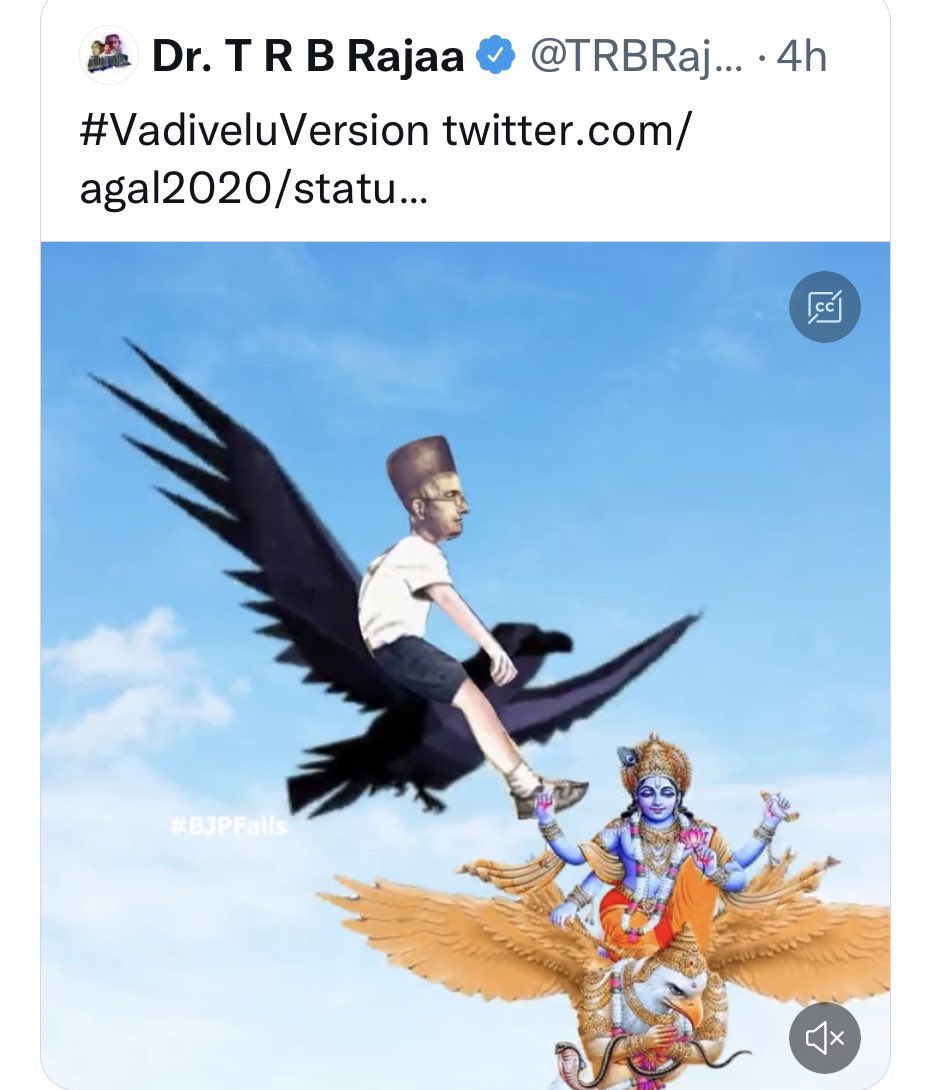
The son of DMK Lok Sabha MP T.R. Baalu, head of the DMK IT wing, and an MLA TRB Rajaa, posted a tweet with an image of freedom fighter Veer Savarkar on a black bird hitting the Hindu god Vishnu while riding a Garuda, painting Lord Vishnu and Veer Savarkar in a bad light.
He later deleted the tweet.
Platforming And Promoting Anti-Hindu Dravidian Stockists
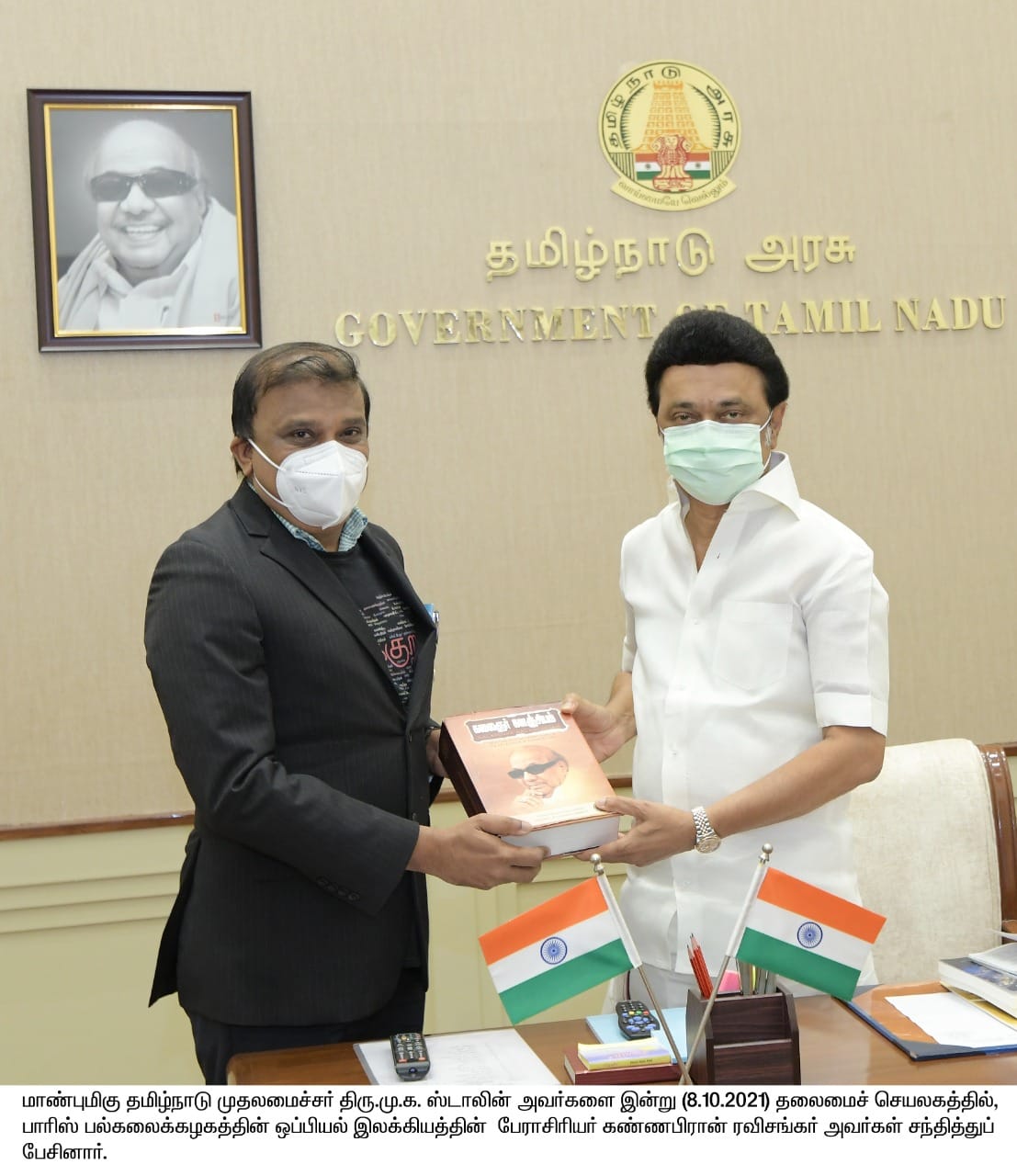
Kannabiran Ravishankar who goes by the handle @kryes on Twitter, is the Editor-in-Chief of Dravida Pozhil, which according to its website is “a quarterly, bi-lingual, academic research journal with focus on Dravidian studies”. He is a high decibel foul-mouthed Dravidian Stockist promoted and platformed by the DK-DMK ecosystem. He recently made social media news for falsifying his degree from UC Berkeley. Kannabiran is known for distorting Hindu scriptures and fomenting hatred against Tamil Brahmin community with vile casteist abuses. He has made several derogatroy and vulgar remarks against Hindu Gods. Many of his tweets have foul language objectifying Tamil Brahmin women. He had even used private photos of Tamil brahmin families including that of children to spew the Dravidian ‘anti-Brahmin’ vitriol.
He was seen giving CM MK Stalin a book, appearing frequently in the Dravidian Professionals Forum, an organisation founded and headed by DMK finance minister PTR Palanivel Thiagarajan, being close friends with DMK MP Senthil Kumar, and receiving a doctorate of letters from the Periyar Maniammai Institute of Science and Technology in front of Dravida Kazhagam (DK) President K. Veeramani.
Kannabiran Ravishankar with CM Stalin
Appointment Of Anti-Hindu Elements To Government Posts
Suba Vee, who is best known for his anti-Hindu speeches that specifically target the Brahmin community and who has been a resolute supporter of “Metoo Vairamuthu,” has been appointed to a government post despite being accused of being a sexist by lyricist Thamarai, who has worked with filmmaker Gautham Vasudev Menon and music director Harris Jayaraj.
Suba Veerapandian was appointed to the Advisory committee to Tamil Nadu Textbook and Educational Services Corporation and Chairperson of ‘Social Justice Monitoring Committee’.
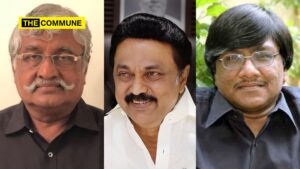
Left: Suba Veerapandian, Centre: MK Stalin, Right: Abdul Hameed
Another rabid Hindu-hater who has been appointed to the committee is S. Abdul Hameed who identifies himself as Manushyaputhiran. He is allegedly a poet and participates in television debates in supportive of the DMK. He too is known for making anti-Hindu statements.
Giving Tickets To Abusers Of Hindu Gods
Ezhil Naganathan, who said that Naradha (the Hindu god) simply wanted to have sex with several women and that Lord Vishnu had acted like a “pimp,” was given the MLA ticket by the DMK for the Thousand Lights constituency in 2021, and he is currently the MLA.
Coaxing Christian Pastor Who Had Called To Punch Hindus In The Face And Make Them Bleed
Rabid Christian evangelist pastor Bishop Ezra Sargunam, during the protest against Farm law in Decemeber 2020, spoke derogatory about the personal life of PM Modi while having MK Stalin on stage. Earlier in 2018, he had asked SDPI (a fanatic Islamic organization) to go all out against Hindus who are questioning them in the light of the murder of PMK functionary Ramalingam who had opposed Islamic conversions. He had promised support to Vaiko, Thirumavalavan and M.K.Stalin if they undertook this endeavour. He had also said that there was nothing called the Hindu religion and instigated Christians to punch Hindus in the face and make them bleed if they did not recognize the truth.
Insulting Hindu Rituals
MK Stalin himself while speaking at a Muslim wedding function had said that if one were to look at the meaning of the mantras chanted during Hindu wedding ceremonies, it would turn out to be ‘disgusting’.
#இஸ்லாமியர் வீட்டு திருமணத்தில் போய், ஹிந்துக்களின் திருமண சடங்கை கேவலமாக பேசிய ஸ்டாலின்…
ஸ்டாலின் அவர்களே!! உங்களுக்கு ஹிந்து மதம் புடிக்கல இஸ்லாம்தான் புடிச்சிருக்கு அப்படின்னா தாராளமா இஸ்லாம் மதத்துக்கு மாறி போயிடுங்க… இங்க யாரும் தடுக்க மாட்டாங்க…..#இந்துவிரோதிதிமுகpic.twitter.com/l2I129rYai
— CHOWKIDAR(மக்களின் பாதுகாவளர்) LAKSHMI NARAYANAN K (@LAKSHMI51617286) February 2, 2019
In another instance in September 2022, Dharmapuri DMK MP Senthil Kumar at a Bhoomi Pooja ceremony organized in his constituency, had reportedly kicked the sacred bricks and abused his own party cadres for conducting Bhoomi Pooja as per Hindu traditions.
Earlier in July 2022, the DMK MP who had gone to attend a Bhumi Pooja function of a lake restoration project in his constituency blurted out at government officials and forcefully stopped the traditional Hindu prayers from happening in an attempt to ‘secularize’ the event.
Giving A Free Pass To Abusers Of Hindus And Hindu Gods
In yet another instance of spewing venom against Hindus and Hindu Gods, rabid anti-Hindu fringe outfits like Dravidar Viduthalai Kazhagam (DVK), Thol Thirumavalavan’s Viduthalai Chiruthaigal Katchi (VCK), Popular Front of India, Communists, and other “Periyar”-ist organizations had organized a ‘mega-rally’ under the name of “Periyariya Unarvalargal Kottamaippu” in Madurai on May 29, 2022.
The rally’s slogans include, “That Maari (Goddess Amman) who begs for goat and pig sacrifice is a God? Is Lord Krishna, who sexually assaulted a woman, a god? When a guy and man have intercourse, will a child be born? Is it logical to refer to Ayyappan as God?” As usual, the Stalin government remains to be a silent spectator when Hindu religion was insulted.
Surendar Natarajan alias ‘Naathigan’ of Karuppar Koottam YouTube channel who was arrested for putting abusive and vulgar videos of Hindu Gods has been released from jail following the DMK’s rise to power. Another YouTube channel called U2 Brutus, which is well-known for being a vociferous supporter of the DMK, released a video titled “Pornography in Vedas” in which the host, who goes by “Minor,” and an alleged Saivite scholar by the name of Prakash defame the Vedas, the revered Hindu scripture.
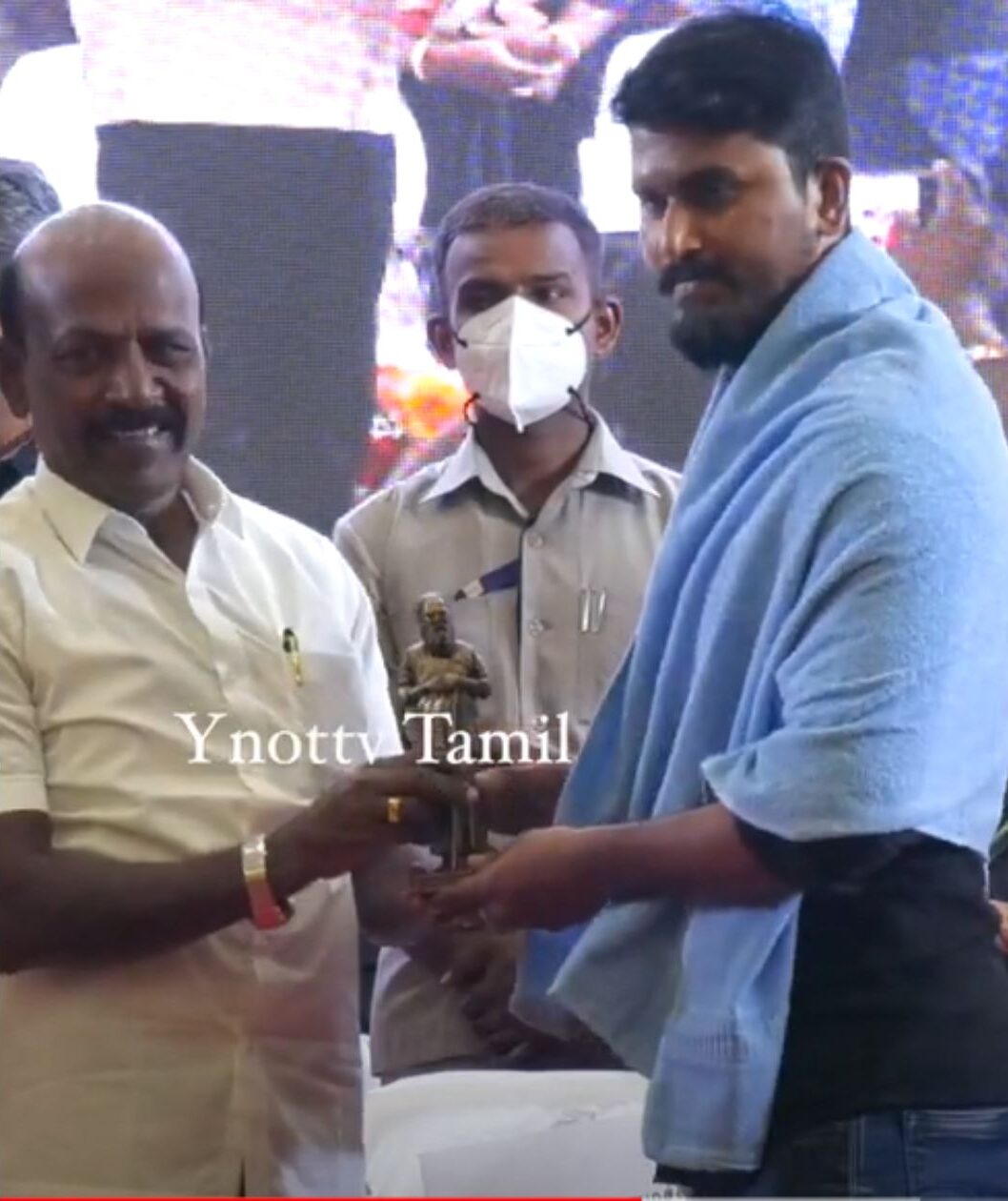
YouTuber Minor Vijay also made disparaging remarks against Lord Nataraja and Thillai Kaliamman. However no action was taken against him despite political parties, general public, thousands of devotees and Sivanadiyars staged a protest in Chidambaram. In fact, he was felicitated and given an idol of E.V. Ramaswamy Naicker (knonwn as Periyar by his followers) by Tamil Nadu Health Minister Ma. Subramanian at an event held in April 2022.
DMK Health Minister Ma. Subramanian with U2 Brutus ‘Minor’
These kind of rabid, anti-Hindu hate speeches has not invited any action.
On the other hand the DMK government had registered First Information Reports (FIR) on around 75 people who assembled in Kapaleeswarar Temple to discuss ways and means to engage in Temple activities in September 2022.
This slapping of FIR even for a normal congregation at Mylapore temple is not an isolated occurrence. This DMK government is known for slapping FIR on those who speak for Hindu cause. Arresting stunt master Kanal Kannan for a speech demanding removal of EVR statue in front of Srirangam temple, arresting YouTubers of their dislike – Karthik Gopinath and Maridhas – on fabricated accusations, slapping goondas act on BJP leader Kalyanaraman, other arrests of BJP supporters, and Hindutva groups for tweets and posts are just a few examples.
The people of Tamil Nadu have had enough. There is a rising Hindu consciousness among the people which is what has pushed Stalin on the defensive which has made him say that his party DMK is not anti-religion.
But the facts lay bare – the DMK and its leaders continue to be anti-Hindu.
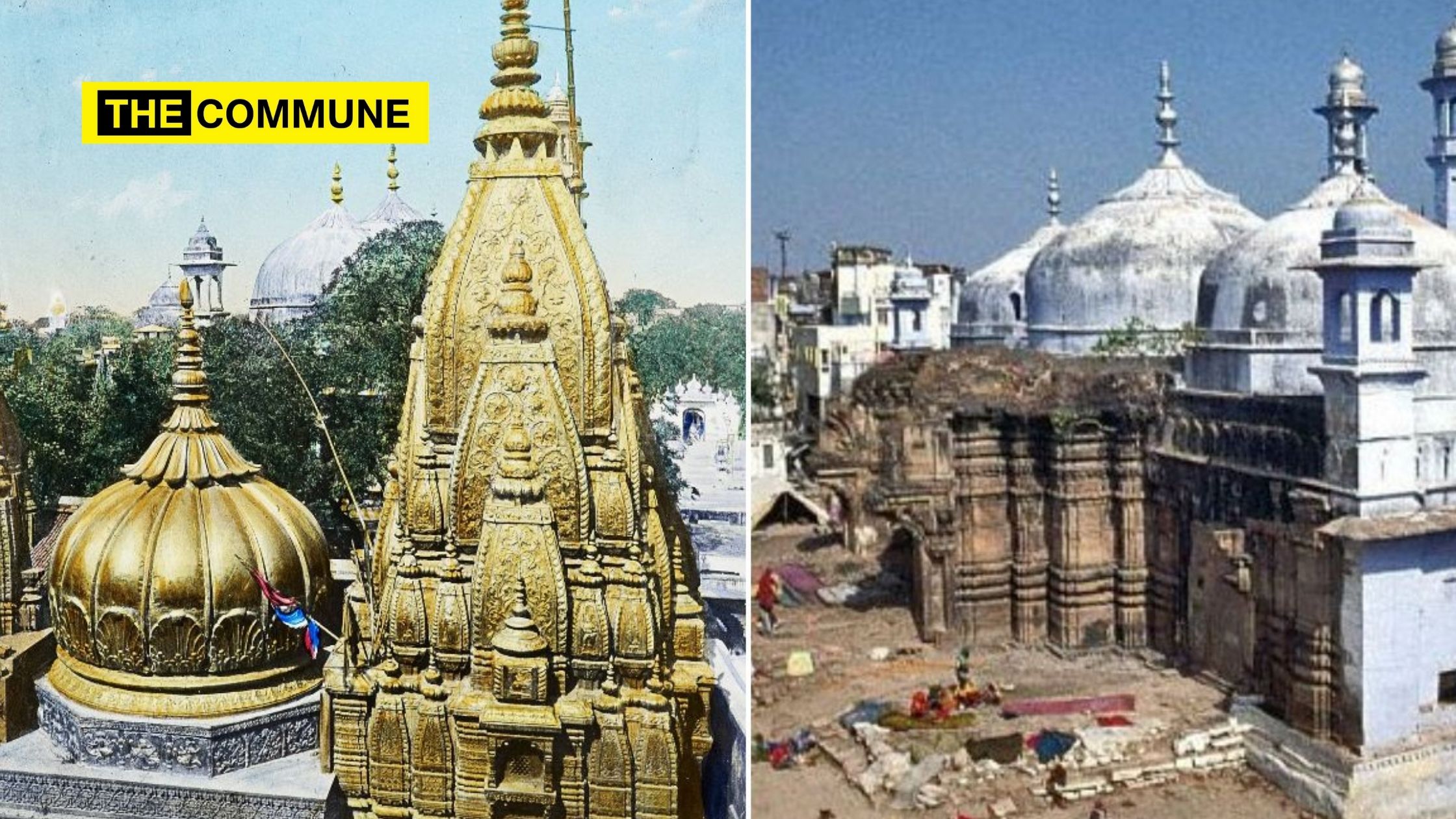
Earlier today, the Varanasi District Court announced a postponement to the eagerly awaited verdict on permission to allow a scientific carbon dating of a disputed structure with the Gyanvapi mosque complex.
The bench stated that the verdict would be pronounced on Tuesday, October 11 at 2 pm.
The structure in question, found inside the Gyan Vyapi mosque complex, is claimed to be a ‘Shivling’ by the Hindu side and a mere fountain , by the Muslims. The Muslim side had been opposing the Hindu side’s request for a scientific carbon dating of the structure, in question.
During the September 29th hearing of the case, advocate Vishnu Jain, representing the Hindu side, had requested a scientific investigation into the claimed Shivling inside the mosque complex, by the Archaeological Survey of India.
Click here to subscribe to The Commune on Telegram and get the best stories of the day delivered to you personally.
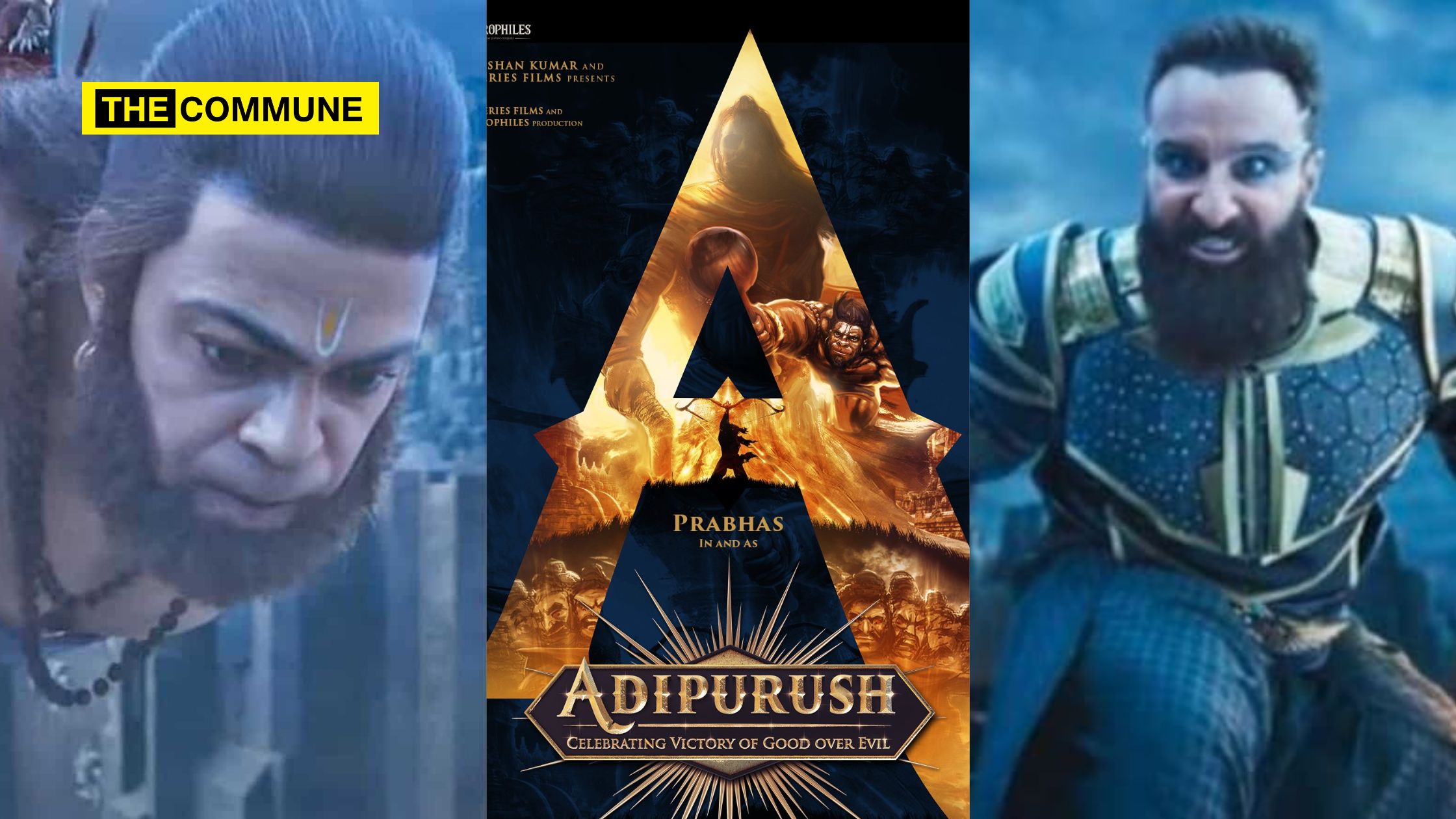
Director Om Raut’s Adipurush’s trailer was released in time for Dussehra 2022 with an announcement of its first screening in January 2023.
But soon after its release, it was called for its shoddy graphics and mindless distortions of the ancient Hindu epic Ramayana.
The film dares to flesh out the main characters of the Hindu epic in a different manner than any previous audio-visual depiction.
The director chose to make the film with CGI, VFX effects that allegedly bring out a less Indian, more western depiction of The Ramayan’s principal characters, events, landscapes.
Any subject, religious or spiritual in nature, is predictably on trial for historical rights and wrongs, for character depictions and for any revisions to an already widely accepted plot.
Artistic freedom and freedom of expression notwithstanding, Adipurush’s trailer helps us take a step back, to ponder over the fine art of blending creativity and artistic sensibilities with historical accuracies and long standing perceptions of character portrayals and events (specifically, religious ones). In other words, a creative re-look in cinematic form, of an important spiritual text like The Ramayan, can be considered as long as its essence and spiritual meaning is not tampered with.
The crux of the criticism hovers around Hindu sentiments with the portrayals of the lead characters , particularly that of Ravana and Hanuman with a smaller percentage, focused on the portrayal of Sita Devi, the wife of King Rama, the protagonist of the epic. It’s important to note that the criticism has not been with the subject of the film; the harsh commentary centers around a spin, a play, on the traditional portrayal of the epic’s pivotal characters and the essence of the story which holds a deeper spiritual meaning for the Indian people.
Those that complained about the effects of the CGI (computer generated imagery) or the VFX (visual effects) were not complaining about the use of such technology; their disappointment lay in perhaps, the unintended or unexpected effects of such technology, resulting in an outlandish, alien portrayal of the characters, events, landscapes and backdrops of The Ramayan’s beloved story.
In the recently released teaser, both Ravana and Hanuman (Hindus and ardent devotees of Shiva and Rama respectively) look more Muslim than Hindu, a noticeable faux pas!
The look/facial make-up, for the characters of Ravana and Hanuman appears misrepresentative of the people they were and the times they lived in – Ravana’s character sports eyes with blue and black kajal, short and spiked hair and a long Islamic-looking beard, disturbingly reminiscent of destructive Islamic invaders of India, the likes of Alauddin Khilji; Hamuman sports a beard without a mustache and is dressed in leather, again more of an Islamic portrayal than a Hindu one. In the short teaser clip , a certain event’s landscape as well as Ravana’s conveyance looks like a vampire.
The CGI/VFX utilized for the scene, resulted in something that looked like Planet of the Apes, and King Kong. An Indian authenticity, true to the culture of the people and the times of the epic, was missing .
The Ramayana is among the world’s most popular epics, having spread from India to many other South and South East Asian nations with each nation choosing to customize their version of the timeless story, to their culture and celebrating it in their unique style.
The Japanese animated version does a good job of staying true to both story line and character depictions. The extensive oral story-telling traditions of The Ramayana and/or elaborate dance and drama performances as well as puppet shows held in honor of The Ramayana, in Thailand, Nepal , Indonesia, Cambodia, Vietnam, Laos , Burma , Malaysia , Philippines are charming, memorable presentations that stay true to the characters, events and theme of the epic.
The Indian audience is not wrong in expecting a cinematic portrayal of the popular Indian epic to stay true to its original, Indian version, Indian characters, Indian customs, events and landscapes, in the backdrop of the times it took place in.
Let’s be clear – the use of technology in itself, is not an issue. Case in point: Audiences raved about the CGI and VFX effects achieved in, Bahubali and RRR. Adipurush’s trailer is a wake up call, for the makers of the movie. It tested the waters of acceptance among a modern Indian audience with a reverence for their core traditions. Here’s hoping, the director and his technical advisors get the character portrayals right with their continued use of CGI, VFX technology, utilizing such effects to give a modern twist to an ancient story, yet without taking away its essence, its simplistic appeal for the Indian masses and its spiritual message.
Will the makers of “Adipurush” utilize some of the unpleasant feedback to correct the course of direction? Only time will tell.
Click here to subscribe to The Commune on Telegram and get the best stories of the day delivered to you personally.
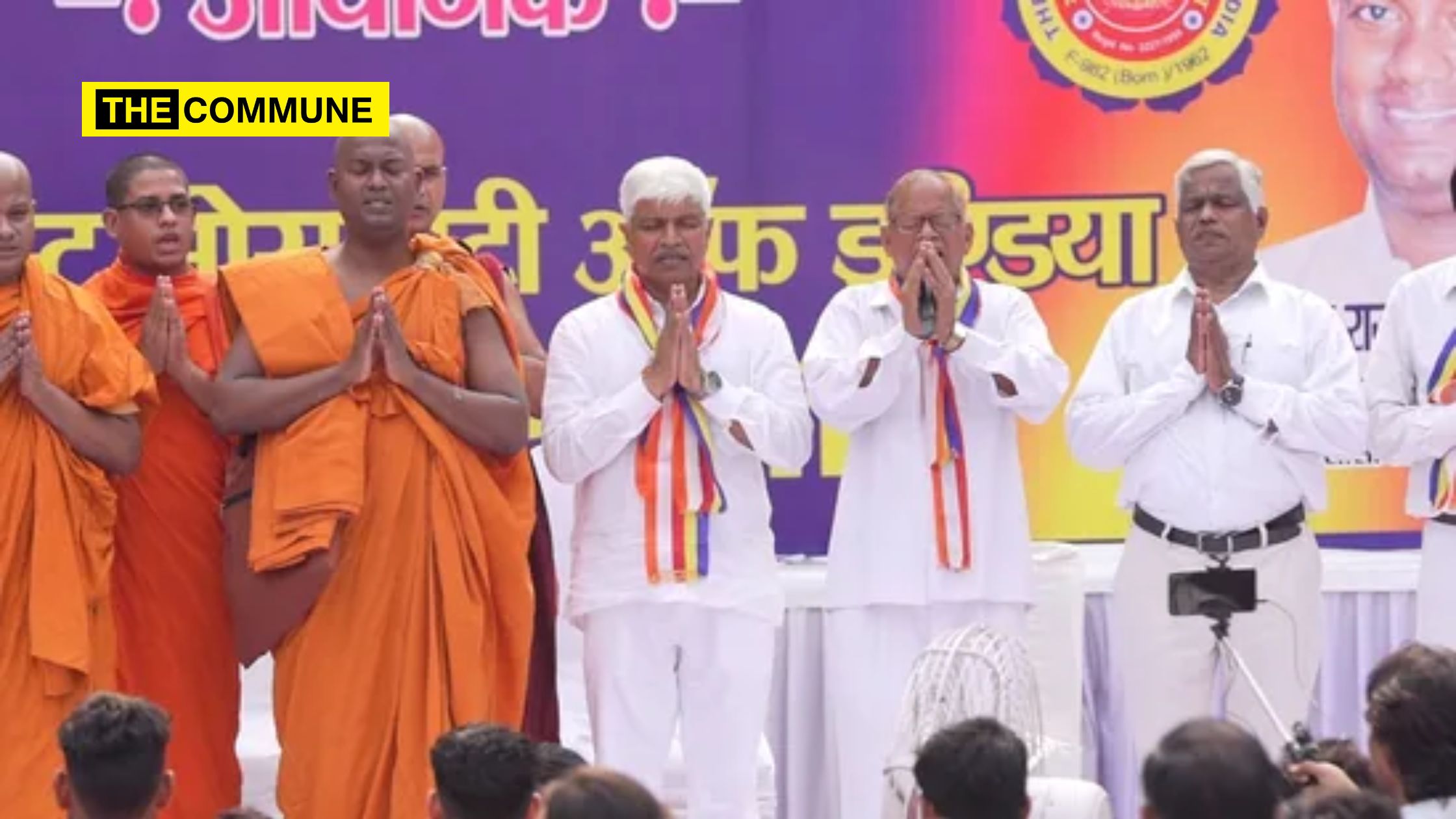
On October 5, Wednesday, the Hindu festival of Dussera, an AAP MLA (Seemapuri, Delhi) Mr. Rajendra Pal Gautam attended an event where 10,000 Hindus were converted en masse to Buddhism. The Buddhist Society of India, organized the controversial event, at the Dr. BR Ambedkar Bhavan in Jhandewalan in New Delhi.
Mr R.P Gautam is currently serving as the Social Welfare Minister in the Delhi Cabinet . His seemingly boastful tweet about the mass conversion of Hindus on the Dussera festival day celebrating the triumph of “Good over Evil” , was not received well by many netizens .
The AAP leader’s tweeted , “With the support of Mission Jai Bhim, more than 10,000 intellectuals took a pledge to make a caste-free and untouchable India by converting to the Faith of Gautam Buddha.”
During the event, a saffron-clad man administered an oath to the crowd, closely resembling Mr. B.R. Ambedkar’s controversial “22 vows” . During the oath, the man was observed insisting that the Hindus disbelieve and disown Hindu deities including the Hindu trinity of Brahma, Vishnu and Shiva. The man urged the Hindus to disassociate themselves from their original Faith, in every manner possible.
The man was heard stating the controversial Oath “I shall have no faith in Brahma, Vishnu and Maheshwara, nor shall I worship them. I shall have no faith in Rama and Krishna who are believed to be the incarnation of God nor shall I worship them”. He further added “I do not and shall not believe that Lord Buddha was the incarnation of Vishnu. I believe this to be sheer madness and false propaganda. I shall not perform ‘Shraddha’ nor shall I give ‘pind-dan’”.
The saffron-clad man was heard continuing on similar lines “I shall not allow any ceremonies to be performed by Brahmins. I renounce Hinduism which is harmful to humanity and impedes the advancement and development of humanity because it is based on inequality, and adopt Buddhism as my religion.”
During the event, AAP Minister Mr. Rajendra Pal Gautam was seen repeating the controversial vows and sharing the stage with the man. Later, the AAP leader was heard making similar statements, strongly urging Hindus to renounce the faith of their ancestors and tread the path of Dr Ambedkar.
The AAP leader’s rhetorical statements were noted, “If you don’t want to be called a traitor, then, we need to spread this message of BR Ambedkar to every household.” He further added “If caste has been made by nature, why there is no caste in France, China, Korea, Australia, New Zealand?”
“Who benefitted from this caste system and who suffered the most? BR Ambedkar had found the medicine to this disease and we are now spreading it,” he was heard insinuating .
Rajendra Pal Gautam also regretted how BR Ambedkar died within a month of converting to Buddhism and failed to convert the whole nation.
Click here to subscribe to The Commune on Telegram and get the best stories of the day delivered to you personally.
The Election Commission of India (ECI)’s right to question political parties on the country’s poll promises and a rampant “freebies” culture, is being debated among some political parties. The EC has notified all national and state political parties, of the need to provide authentic information to voters on the financial viability of their poll promises. The EC has argued that non-disclosure of financial feasibility of poll promises, has far-reaching economic consequences for the voters and the nation.
The EC has asked parties to submit their views by October 19. In its letter, the EC alluded to voters being able to make informed choices, based on adequate financial disclosures on the implementation of free or subsidized benefits . In August, the Supreme Court had directed for the pleas to be listed and discussed before a three-judge bench, noting that the issues needed “extensive” hearing. A former chief election commissioner, speaking on conditions of anonymity, said the proposal should have been made after the Supreme Court decided on the pleas, pertaining to “freebies vs welfare measures”. The former CEC also questioned the ability of a poll panel to decide the needs and wants of the voters .
Mr. Jairam Ramesh of the Congress party, opined that the Election Commission’s recent proposal to change the model code concerning electoral promises , goes against the spirit of competitive politics and stated that it would be “yet another nail in the coffin of democracy”. Other parties too have raised their objection to the EC’s notification, with the Left parties stating it was not the poll body’s job to “regulate” policy pronouncements.
Click here to subscribe to The Commune on Telegram and get the best stories of the day delivered to you personally.
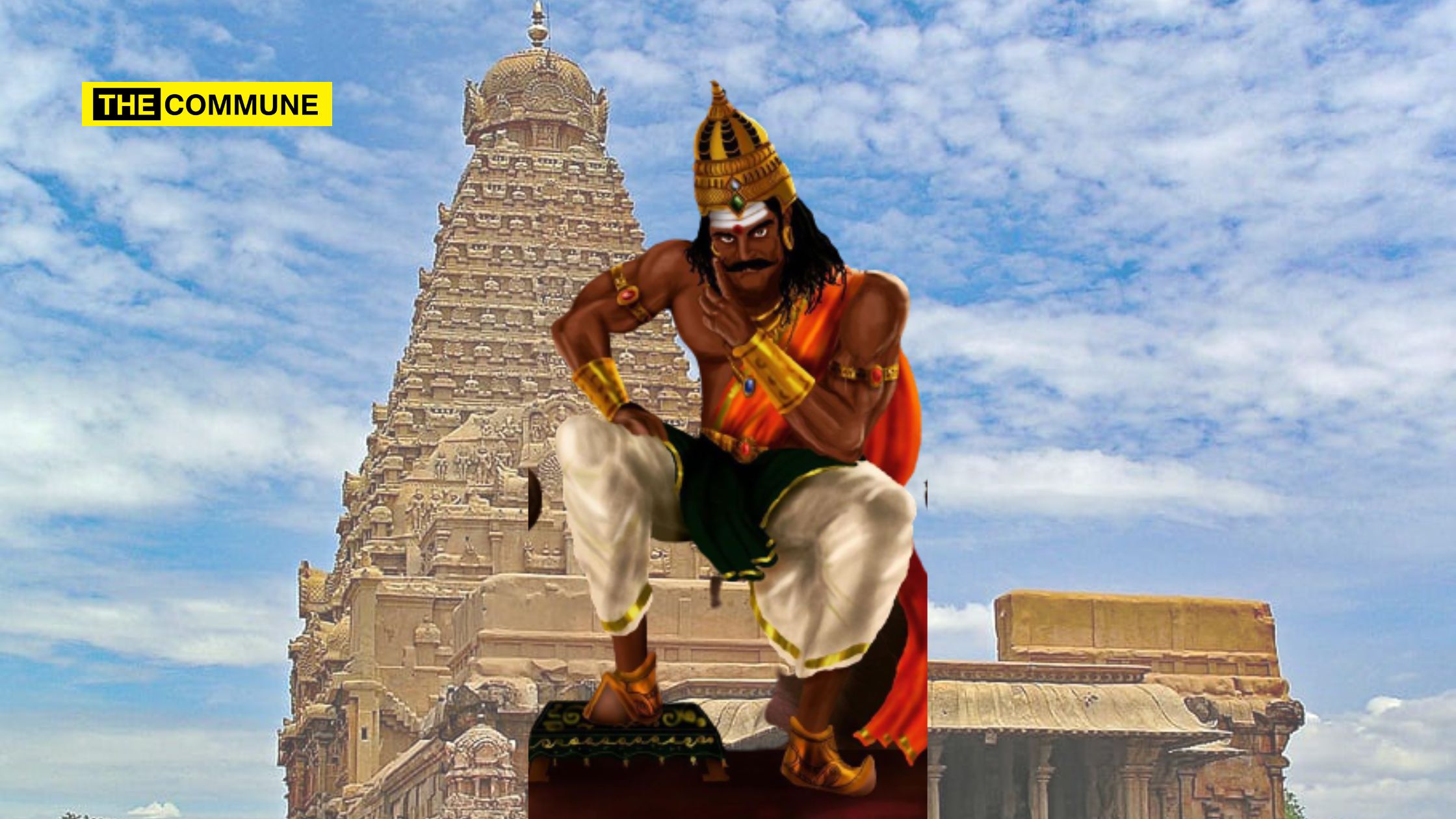
There has been a furore in Tamil Nadu over the identity of Chozha kings saying that they were not Hindus.
It all began with film director Vetrimaaran’s comments on Rajaraja Chozhan “being appropriated as a Hindu”.
After he faced brickbats, Naam Tamilar Katchi Seeman, VCK head Thol. Thirumavalavan and other Dravidian Stockists came to his support.
Adding fuel to this fire, full-time actor and part-time politician Kamal Haasan said that there was no religion called Hinduism during the Chozha era.
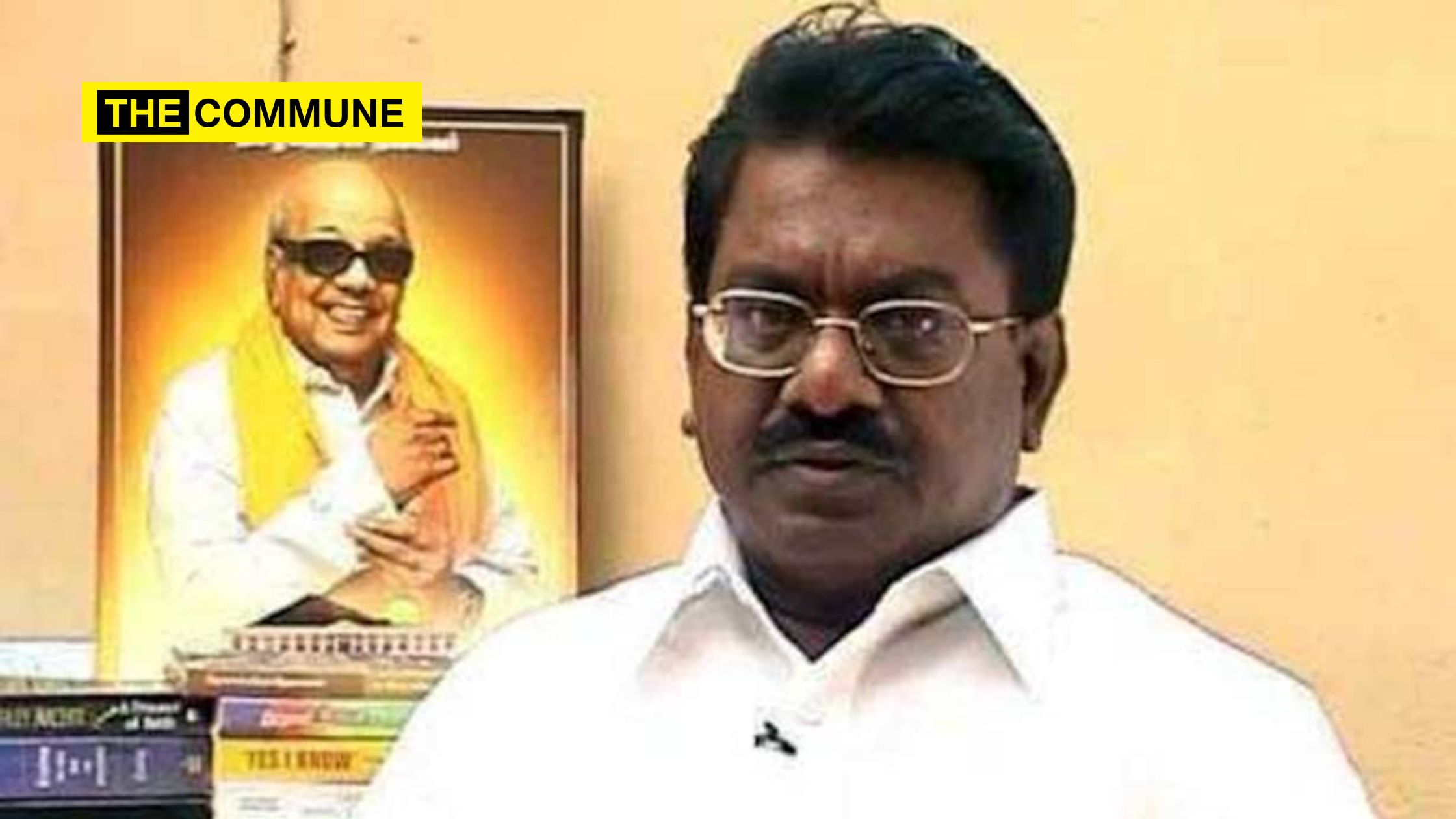
Now, senior DMK leader TKS Elangovan has joined the bogey to delink Chozhas from Hindu faith.
The DMK leader said that the Chozhas are not Hindu kings and added that both Shaivism and Vaishnavism have been clubbed together and called Hindus.
“They were two different religions at that time. Vaishnavism and Saivism were two different religions. Each hated the other religion. We can see what had happened with Hiranyan and his son (Prahlada).”, he said adding that Lord Vishnu took Narasimha Avatar to kill Hiranyan a Saivite.
“Because his son followed Vaishnavism, there were fighting. So, Vishnu chose to kill Hiranyan. So, that was the stage at that time. There are two different philosphies.”, he said.
He also went on to say that Shaivas preached ‘Advaita’ and Vaishnavites preached ‘Vishishtadvaita’.
He stressed that he Rajaraja Chozha was a Saivite king and built only Saivite temples.
On 6 October 2022, VCK chief and Lok Sabha MP Thol. Thirumavalavan shared an old video of a racist, anti-Hindu and anti-Indian activist Pieter Friedrich claiming it to be a speech made by a person in the US Congress about RSS and Prime Minister Narendra Modi.
Thirumavalavan had shared the video with the caption in Tamil “Someone in the USA Congress talks about RSS terrorism and Modi’s brutality. He submits a 50-page report in the House. I hope you understand how RSS is responsible for the spread of terrorism in the world and why we oppose RSS.”
In the video, the anti-Hindu activist known for making racist comments against Indian-origin people goes on a tirade against the RSS and PM Modi. He links the shooting incident in 2019 Texas shooting incident carried out by a white supremacist, the Christchurch attack in New Zealand and the 2011 Norway attacks to the RSS.
He also goes on to spread canards about PM Modi saying that he presided over the 2002 Gujarat Riots.
#USA நாடாளுமன்றத்தில் ஆர்எஸ்எஸின் பயங்கரவாதம் மோடியின் குரூரம் ஆகியவைக் குறித்து ஒருவர் பேசுகிறார். 50 பக்க அறிக்கையை அவையில் சமர்ப்பிக்கிறர். ஆர்எஸ்எஸ் உலக அளவில் பயங்கரவாதம் பரவுவதற்கு எவ்வாறு காரணமாக உள்ளது என்பதும் ஆர்எஸ்எஸை நாம் எதிர்ப்பது ஏன் என்பதும் புரியுமென நம்புகிறேன். pic.twitter.com/2bvetls2fJ
Pieter Friedrich is a controversial self-proclaimed activist who has been called out by many for his racist comments. He was a Christian missionary till 2007 and a majority of his early work was based on Pro-Life Christian activism. He shares close ties with Khalistani sepratist Bhajan Singh Bhinder who has connections with Pakistan’s ISI. In fact, Pieter has published several books under the publishing company owned by Bhajan Singh and has even co-authored three books with him. He is known for his anti-India position fanning Khalistani and Kashmir sepratism. He had also justified the brutal attack on the Gurudwara in Kabul, Afghanistan saying it was a ‘retaliation’ to the ‘Hindutva’ government of India and Modi.
Pieter is also known for spewing hatred against Mahatma Gandhi and had campaigned heavily against Gandhi, publishing several against him on his website Gandhism.net. He had also called for the removal of Gandhi’s statues from USA.
Click here to subscribe to The Commune on Telegram and get the best stories of the day delivered to you personally.
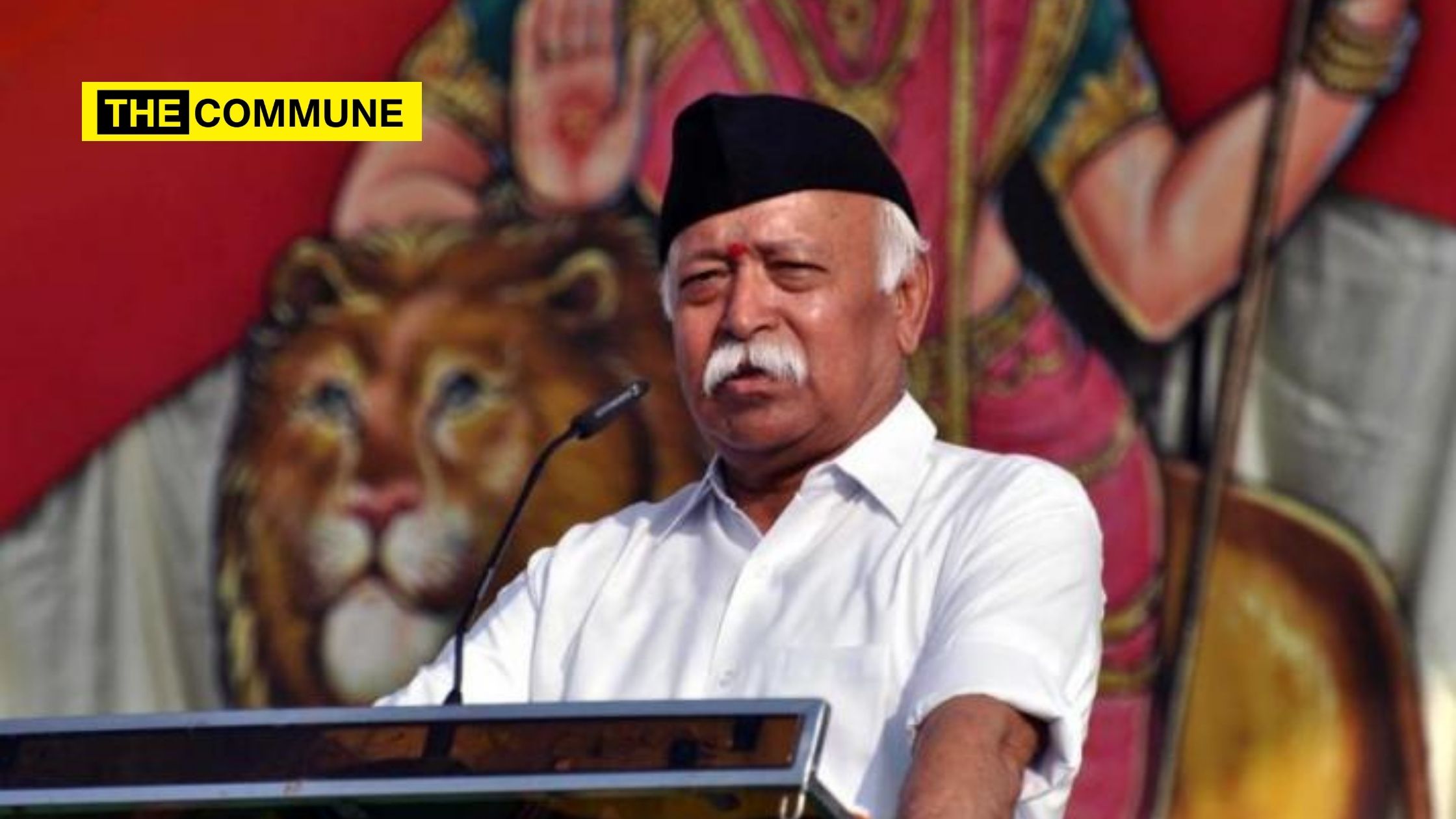
This time around something made me go through his whole speech on the auspicious day of Vijayadashami. Probably the picture of the burning khaki shorts put out by the Congress and the hue and cry by the DMK on the proposed RSS rally in Tamil Nadu. It increased my resolve to really understand what RSS is all about and hence, made me listen to every word of Mohan Bhagwat’s speech. I will try summarizing the important aspects in my own words.
Mr. Bhagwat talked about equality of man and woman and empowerment of women in society. Both have to complement each other and work for the progress of the society. He noted that the world today is listening to India and India is becoming self-sufficient. Our economy is slowly looking up post the Covid impact and will only improve as per the views coming in from the economists around the world. In the area of sports, the government has brought in good rigor through their policies and the performance of our sportsmen and sportswomen in Olympics and Paralympics has made us very proud. He further asserted that self-sufficiency is important but clarity of self which he calls Atma is also important. That clarity has to be shared by everyone in the society in the same way. The path for any good end is not easy and straight. It will have its challenges but one has to have the flexibility to first go to the south, then to west and then go to the final destination north, he gives an example. However, there has to be a good balance in the flexibility shown in order to avoid any mistrust.
Thus one common mindset will develop amongst people which he calls “Sahchittatha” which is a part of RSS ideology. Everyone has to be taken together in the journey which will obviously bring its own challenges one of them being fundamentalism. Things change with time and one has to change along with it. However, there is a permanent constant layer in Sanatana Dharma also, that has to be maintained while embracing the changes. Without this permanent layer, Sanatan, continuous change (Nityanutan) will lead to failure.
He also noted that there are external forces that pose a challenge to the Sanatan values in India which don’t want India to progress. In order to achieve their objectives, these external forces create a false narrative to detract us and corrupt our minds and separate the people of India. They want to spread anarchy and want the rules and laws of the land to be disrespected. They don’t want discipline to exist nor any fear for unlawful activities to linger in the minds of people. We should not fall into their trap. We should help the government in their efforts to neutralize such forces.
Mr. Bhagwat asks some really pertinent questions to us, the society, as follows:
Although we can keep on saying that we need to protect our regional languages, do we send our kids to study in their mother tongue languages instead of just in English thinking it’s important for their careers? Do we sign documents or have our nameplates in our mother tongue language today? If people don’t do all this, how can they expect the government’s education policy to succeed?
Do people send their kids to school telling them that education is important for becoming good citizens or is it important for them to earn good money later? Irrespective of whether the kids like a degree or not, aren’t the parents forcing them to take it up just because it will help them earn money later?
Will just the education in schools instill the Sanatan values in the students? Shouldn’t this be done at a family level?
We all want a health system that is affordable. If one becomes sick, one has to go for some medical interventions. Coming up with good systems for our illness is the duty of our government but what about taking care of our wellness? Isn’t that our own responsibility? Have we changed our bad habits?
Are we being minimalistic in our families? Are we just buying what is a necessity for us or are we buying things for showing off to others?
Are we leading our lives selflessly without harming others in some way? Have we not become self-centered?
Are we not just running after jobs without thinking about other means of generating income? Even if there are government schemes around entrepreneurship, don’t we have to take steps in really reaching out and taking advantage?
We have to make the government accountable and keep an eye on their performance but can just the government do this on their own without participation of the society?
Increase in population is a big burden but don’t we have to look at ways to use that to our advantage, as a demographic dividend too? On the other hand, would it be wise to reduce our family size drastically? Isn’t a balanced holistic outlook needed as otherwise an imbalance will prove fatal? Shouldn’t a policy on population control be in place that is applicable to everyone equally?
India remained one even after so many onslaughts but still looked at the world as one family. That sanatan value is our Bharatiya culture standing on four pillars truth, empathy, devotion and honesty although things on the surface keep changing. In any act if one these four things seem to be missing, it’s an act against dharma. Every religion has to stand up against adharmic acts done by its own believers.
Mohan Bhagwat ends his speech saying “Gaon Gaon mein sajjan Shakti, rome rome mein bharat Bhakti”. Food for thought for all us indeed!
Click here to subscribe to The Commune on Telegram and get the best stories of the day delivered to you personally.