Sanitation workers attached to the Greater Chennai Corporation (GCC) intensified their protests across key parts of Chennai, demanding job security, reinstatement of duties, and payment of pending wages, even as police detained several protesters at multiple locations, including near Omandurar Government Hospital on Anna Salai.
According to a newsreport, sanitation workers gathered near Omandurar Government Hospital after a day of protests that began in the morning of Tuesday, 30 December 2025, with an attempted siege of Anna Arivalayam, the headquarters of the ruling Dravida Munnetra Kazhagam. Police intervened early, preventing the march and detaining protesters. Later in the day, fresh demonstrations were held near the Kalaignar Memorial at Marina and subsequently on Anna Salai, leading to repeated arrests.
The agitation, which has been ongoing for over 130 days, began in July 2025 against the outsourcing of sanitation work in GCC Zones 5 and 6 to private contractors. Workers allege that they were informally barred from work without written orders, resulting in months without wages, mounting debt, and repeated police detentions. Despite a court-ordered eviction of a prolonged sit-in outside the Ripon Building, the protests have continued, including rotating hunger strikes since November, during which several women workers were hospitalised.
Protesters said they are now seeking reinstatement under the GCC self-help group system rather than permanent government employment, citing what they describe as exploitation by private contractors. While the GCC employs around 7,000 sanitation workers directly or through self-help groups, more than 14,000 workers are engaged through private agencies.
On Tuesday evening, police repeatedly detained workers who sat or lay down on Anna Salai in batches of around 25, loading them into vehicles. Within minutes of one group being removed, another group would resume the protest, leading to severe traffic congestion and heightened tension in the area.
Several sanitation workers spoke emotionally about their situation during the protest. One of them who was arrested outside Anna Arivalayam said, “We are dying here. Our demands have not been met, it is more than 5-7 months, we have had no work, sir. They are looking at our caste. They are looking at our caste. They are looking at us as low caste, as Dalits. Is everything nice only when you want our votes? Is it bitter when you have to give us work? Will you be quiet if your family women are on the road like this? Is what is happening good? What kind of a rule is going on? It is a cruel regime.
Another said, “They themselves told us first signature will be for the sanitary workers. Five years are about to be completed. He took our votes and has kept us without work for five months. How are we supposed to eat? How are we supposed to eat? Did we ask for a government job? Did we ask for some higher post? We only asked for the job of collecting garbage. He is saying he will not give us our job back – is that fair? Next time how will he come back? How will he come back with 3,000 votes? When he knows us so well and still does this to us, is this fair?
A woman worker, breaking down during the protest, said, “We are not able to pay school fees, not able to pay college fees. We are not even able to open our mouths about the house rent. Our life itself is gone. Our peace is gone. Either put us in jail. I am ready to struggle every day, so put us in jail. At least we will be able to lie down peacefully in jail. Put our families also in jail. We cannot go on like this. We absolutely cannot. We want our jobs. Tell us clearly in words: we want our jobs, we cannot continue without work. The lives of 2,000 families like ours are finished. Every time you only come and keep arresting us; then why don’t you just send us to jail instead of dumping us in some wedding hall? Why do you keep us in a wedding hall? From 6 in the evening till 12 at night you beat and drive us away, chase us like dogs, why do you chase us like that? Are we not human beings? Back then during Corona, you showered us with flowers, and now do we look like garbage to you? Do we look like garbage now? We want our life back. We want our job back. We are not going to just disappear because we are jobless. Please, put us in jail, you will gain punya by doing so; lock all of us up in jail. Otherwise, you tell us one decision clearly: are we supposed to live or die? We cannot continue like this.”
Another protester directly named DMK ministers, stating, “Nehru and Sekar Babu have snatched away our jobs. They are arresting us – why should they arrest us? Who are they to arrest us? For these 21 days, whatever I have been going through, if anything happens to my life, they will be responsible.”
Protesters accused the government of treating the issue as a law-and-order problem rather than a labour dispute, arguing that long years of service should guarantee job security. They warned that unless their demands are addressed, demonstrations would continue across major roads and public spaces in Chennai in the coming days.
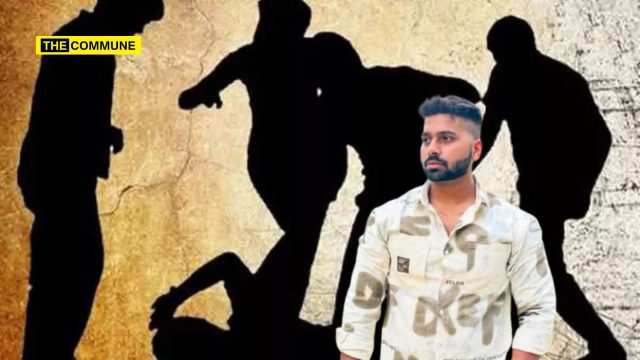
The brutal assault of a migrant worker in Tiruttani by ganja-addicted teenage school dropouts has triggered widespread outrage across Tamil Nadu, raising serious concerns about substance abuse, street violence, and attacks on guest workers. While much of the Kollywood film fraternity, often seen as heavily supportive to the extent of buttressing the ruling DMK government, has remained silent on the incident, music director Santhosh Narayanan has publicly spoken out, calling for a more honest reckoning with the ground realities.
On 30 December 2025, Santhosh Narayanan shared a detailed statement highlighting his personal experiences with crime and substance abuse in Chennai. In his post, he wrote, “I have lived in an area in chennai for the past decade where it is absolutely top tier dangerous especially at night with hooligans and criminals who are mostly high on substance. Many innocent construction worker friends in my studio site were attacked several times recently. One such criminal who was apprehended was just laughing without any pain when the police lathi charged as he was stoned beyond limits.”
He further added that the violence often carries a racial dimension and is enabled by organised support networks. “Moreover most of these attackers are proud racists and blanket hate/attack people from other states. It is high time we acknowledge that many local political factions and several ‘caste’ based groups come running to support these mostly young boys who end up ruining many lives along with theirs,” he said. Urging a shift away from denial, Narayanan added, “Can we please accept the realities of these incidents and act more realistically and save so many victims? The lines between glorified violence on screen and real incidents such as the recent one have really started blurring and it is high time we act responsibly. Me included.”
This is not the first time the composer has broken ranks with the broader celebrity silence. In the aftermath of Cyclone Michaung, which left large parts of Chennai flooded, Santhosh Narayanan was among the few public figures who spoke from direct, on-the-ground experience. Actively involved in local rescue efforts, he described the severity of the situation, stating, “Everyone here is suffering; we have no electricity, and water surrounds us. This time, there is more water in our locality than in 2015.”
He also voiced frustration over what he described as systemic neglect across successive governments. “We have to look up to the sky and voice our complaints,” he said at the time, criticising the lack of timely attention to the suffering of residents in affected neighbourhoods.
As attacks on migrant and guest workers continue to draw attention, Santhosh Narayanan’s remarks have stood out within the film industry, both for their bluntness and for directly challenging, caste-based mobilisation, and the normalisation of violence. His statements contrast sharply with the continued silence of many prominent figures from Kollywood, even as public concern over safety, law enforcement, and accountability under the ‘Dravidian Model’ of governance grows across the state.
Subscribe to our channels on Telegram, WhatsApp, and Instagram and get the best stories of the day delivered to you personally.

In a significant escalation of a long-running controversy surrounding the Salesians of Don Bosco in Tamil Nadu, the Indian representative of ECA Global, an international association of clergy-abuse activists and survivors spanning over 20 countries, has formally written to the Apostolic Nunciature in New Delhi seeking urgent Vatican intervention in what it describes as a grave moral and institutional scandal involving the Salesian Province of Chennai.
The letter, sent by R. Joseph D’ Kennedy, Indian Representative of ECA Global, urges the Holy See to take cognisance of an Open Letter issued by a donor family, including two priests, which levels serious allegations of forgery, fraud, cheating, blackmail, and prolonged breach of trust against Fr. Bosco, the Provincial of the Salesian Province of Chennai.
A “Sacred Gift” That Turned Into an 11-Year Ordeal
According to the complaint highlighted in the letter, the family had made a conditional land donation in 2013 for the express purpose of advancing education for poor rural youth in the spirit of Don Bosco. However, the family alleges that what was meant to be a lasting charitable legacy instead became the source of over eleven years of suffering, humiliation, and unresolved injustice.
Central to the dispute is a registered document, which the family claims was never shown to them, and which is now allegedly being used to negate the original charitable intent of the donation. This, they argue, is in direct contradiction to assurances and a pledge reportedly conveyed through the Archbishop in October 2022, which promised restitution or resolution.
Silence, Leadership Failure, and Growing Public Disquiet
Mr. Joseph Kennedy’s letter draws attention not only to the substance of the allegations, but also to what it describes as the deafening silence of the Provincial leadership. Among the faithful, Don Bosco past pupils, and observers of the Church in Tamil Nadu, this silence is increasingly being viewed as a failure of moral leadership, especially at a time when the Church is under intense scrutiny for abuse of power and lack of accountability.
The letter warns that continued inaction risks further erosion of trust in Church governance and deepening scandal among ordinary Catholics.
Bishopric Aspirations Add Fuel to the Fire
The controversy takes on added gravity due to public reports and widespread perception that Fr. Bosco harbours ambitions to be appointed the next Bishop of Dharmapuri, reportedly drawing inspiration from the fact that the first Bishop of Dharmapuri was himself a Salesian.
While the letter concedes that aspirations for higher office are not improper per se, it strongly cautions that any consideration of episcopal elevation amid unresolved allegations of forgery, fraud, and injustice would send a deeply disturbing message—that advancement within the Church can supersede accountability.
ECA Global has explicitly urged the Nunciature to ensure that no consideration of ecclesiastical advancement is given until these grave allegations are examined and resolved in truth and justice.
Political Proximity and the DMK Question
The letter also flags growing public concern about the appearance of political proximity and protection surrounding certain Church authorities in Tamil Nadu. It cites media reports and public discourse suggesting that perceived political shielding—particularly in the context of the DMK’s minority-protection narrative—has fostered the belief that powerful clerics may be insulated from scrutiny.
Such perceptions, the letter warns, are corrosive to ecclesial credibility and reinforce the impression of a Church hierarchy unwilling or unable to police itself.
Parents Died Waiting for Justice
Perhaps the most poignant aspect of the case is the family’s testimony that their parents passed away without ever seeing the fruits of their charitable act. The surviving members, now elderly, continue to appeal not for confrontation, but for justice, restitution, and fidelity to the founding spirit of Don Bosco—before it is too late.
What ECA Has Asked the Vatican to Do
In its appeal, ECA has requested the Apostolic Nuncio to:
– Convey the matter to the Rector Major of the Salesians of Don Bosco and his Council, as well as to the Dicastery for Institutes of Consecrated Life and Societies of Apostolic Life;
– Urge the Salesian Province of Chennai to honour the 2022 assurances and restore the original charitable purpose of the donation;
– Ensure that no ecclesiastical advancement is considered until the allegations are fully examined and resolved.
The letter concludes with a stark warning: silence in the face of alleged wrongdoing only deepens scandal. For many Catholics in Tamil Nadu, the unfolding Don Bosco controversy is no longer just about a land dispute—it has become a test of whether the Church is willing to uphold truth, justice, and moral courage within its own ranks.
As of now, there has been no public response from the Salesian Province of Chennai to the allegations raised in the Open Letter.
Subscribe to our channels on Telegram, WhatsApp, and Instagram and get the best stories of the day delivered to you personally.
Close on the heels of an incident in Tiruttani, where ganja-addicted teenage school dropouts assaulted a migrant worker, another violent crime involving a guest worker has been reported from Coimbatore.
Police in Coimbatore on Monday, 29 December 2025, arrested two men in connection with the murder of a 22-year-old guest worker from West Bengal near the Ukkadam area of the city. The deceased was identified as R Suraj, a native of Midnapore district in West Bengal, who had been residing at the Pullukadu housing unit and working at an eatery in the Karumbukadai locality.
According to police, the accused have been identified as A Bajith Khan (30), an autorickshaw driver attached to the city police home guard team, and his associate R Prakash (38). Both men are residents of Karumbukadai.
The incident occurred at around 10.30 PM on Sunday, 28 December 2025. Suraj was standing near the 16th block of the Pullukadu housing unit and speaking with his friend Raketh (21), who is also from West Bengal. At that time, Bajith Khan allegedly arrived at the spot driving a passenger autorickshaw in a rash and negligent manner and hit Suraj.
When Suraj questioned the manner of driving, a heated argument broke out. Prakash soon joined Bajith Khan, and the two allegedly abused Suraj and Raketh, threatening them with dire consequences if they did not apologise. Police said that when Suraj refused to apologise, Bajith Khan punched him on the nose with force.
Suraj reportedly suffered a serious injury and collapsed on the road. Raketh ran to Suraj’s residence to alert his family members. Meanwhile, members of the public rushed Suraj to the Coimbatore Medical College Hospital for treatment. Despite medical efforts, he succumbed to his injuries on Monday afternoon.
Following the incident, the Bazaar police registered a murder case against both accused. They were arrested and subsequently remanded to judicial custody. Further investigation into the case is ongoing.
A section of Left-leaning academics, trade unions and activist groups has launched a campaign opposing the Centre’s newly announced Viksit Bharat – Guarantee for Rozgar and Ajeevika Mission (Gramin), or VB-GRAM-G Act, 2025, branding it as an attempt to dismantle the Mahatma Gandhi National Rural Employment Guarantee Act (MGNREGA).
As part of the campaign, a round-table meeting titled “Save MGNREGA, Reject VB-GRAM-G” has been convened at HKS Surjeet Bhawan in New Delhi on 8 January 2026. The poster circulated by organisers claims that the VB-GRAM-G Act has “completely uprooted” MGNREGA and undermined the principle of demand-based rural employment, describing the new legislation as a “final nail in the coffin” for rural welfare.
The mobilisation has drawn attention because of the individuals and networks associated with it. Economists and activists linked to Left political and academic circles are said to be backing the initiative, including Jayati Ghosh, a former professor at Jawaharlal Nehru University and current chairperson of its Centre for Economic Studies and Planning. Ghosh has been a prominent critic of the Narendra Modi-led government’s economic reforms over the past decade.
Supporters of the VB G RAM G Act have described the campaign as a familiar pattern of opposition activism, arguing that the material circulated so far relies on broad assertions rather than a detailed engagement with the text of the law or comparative data on outcomes. They point out that the poster does not cite specific provisions of the VB G RAM G Act, budgetary allocations, or implementation frameworks, instead framing the reform as an existential threat to rural employment.
Critics of the campaign have also highlighted Ghosh’s past political positions, noting that she was among academics who publicly criticised the government during the 2016 JNU campus protests and that her name, along with those of other Left leaders, had earlier surfaced in political controversies linked to protest movements. They further note that Ghosh is a contributor to international policy platforms such as the Institute for New Economic Thinking, which is funded by the Open Society Foundations, arguing that the same ideological ecosystem tends to mobilise whenever major governance reforms are introduced.
Organisers of the round-table, operating under the banner of the Joint Platform of Agricultural and Workers’ Unions’ and the NREGA Sangharsh Morcha, maintain that the meeting is intended to build opposition to what they see as a dilution of statutory employment guarantees and to chart a course of action to defend rural workers’ interests.
Subscribe to our channels on Telegram, WhatsApp, and Instagram and get the best stories of the day delivered to you personally.
The brutal assault on a migrant worker in Tamil Nadu’s Thiruvallur district has once again highlighted the ground-level fallout of sustained hostility toward north Indian migrants. In a viral video, four minors are seen attacking the victim with sickles near a railway station, filming the violence and celebrating it. Police say the assault followed threats made on a moving train. The victim remains in critical condition.
BJP leader Annamalai alleged the attackers were ganja addicts. Beyond the crime itself, the incident has revived concerns that decades of political rhetoric portraying Hindi speakers as outsiders have normalised abuse, exclusion, and violence against migrant workers in the state.
How Hindi Hate Was Mainstreamed By DMK Politicians & Dravidianists
The ruling DMK has consistently displayed hostility toward the Hindi language and, whenever possible, has made derogatory remarks and slurs, not just against the language but also against Hindi-speaking people from North India. By continually stoking linguistic tensions, the party leverages this sentiment to maintain its political influence in the state.
Below are some instances where DMK leaders have propagated anti-Hindi and anti-North Indian rhetoric in Tamil Nadu.
DMK MSME Minister T.M. Anbarasan
I.N.D.I ally and the DMK MSME Minister, T.M. Anbarasan, has once again found himself at the center of controversy after making disparaging remarks about North Indians in the ongoing debate over parliamentary seat delimitation. He compared the region’s population growth to pigs giving birth, a statement that has drawn widespread criticism. This comes shortly after another contentious remark at a DMK event, where he suggested that Hindi speakers in his household were involved in cattle herding—comments seen as derogatory toward migrant laborers who work hard to earn their livelihood.
At an event organized by Pallavaram North DMK to celebrate the 72nd birthday of Chief Minister M.K. Stalin, which also included the distribution of welfare assistance, DMK MSME Minister T.M. Anbarasan spoke about India’s population policies and their impact on parliamentary seat allocation.
He recalled that the family planning program was first introduced in India in 1966 to curb population growth, as India remains the most populous country after China. He mentioned that the program initially promoted the slogan “We Two, Ours Two,” which later changed to “We Two, Ours One,” emphasizing the need for population control. He noted that southern states like Tamil Nadu, Kerala, Karnataka, and Andhra Pradesh adhered to the central government’s guidelines on family planning, leading to a decline in population growth in these regions.
However, he criticized the northern states for not following the same measures, resulting in a significant population increase. He argued that this has now led to parliamentary seat redistribution based on population, disproportionately affecting the southern states. He pointed out that Tamil Nadu’s 39 parliamentary constituencies and other southern states’ seats are being reduced, while northern states gain more representation.
He said, “Initially, they said, ‘We Two, Ours Two,’. Then they said, ‘We Two, Ours One.’ After five years, they said, ‘We are children, why we need child’. Like Tamil Nadu, the southern states of Kerala, Karnataka, and Andhra Pradesh all accepted and strictly followed the central government’s policies, ensuring that our guys did not have more than one or two children. As a result, the population in these states decreased. However, if you look at North Indians, the population has increased significantly, breeding like pigs. Now, they are using this population as a basis for seat reorganization, which is negatively impacting our constituencies.”
🚨 அருவருப்பான பேச்சு – திமுக அமைச்சர் தா.மோ.அன்பரசன்‼️
🔴 “வட மாநில மக்கள் பன்னிக் குட்டி போல் பெருகினார்கள்” – அமைச்சரின் மிக கீழ்த்தரமான, ஒடுங்குபோக்கான பேச்சு‼️
🔴 தமிழ்நாட்டில் பதவியேற்று செயல்படாமல், ஒட்டுமொத்த மக்களை இழிவாக பேசி வரும் திமுக அமைச்சர்கள் – இது தான்… pic.twitter.com/ygq2F045Rb
— ᴛɪʀɪꜱʜᴀɴᴋᴀʀᴀᴘᴀɴᴅɪᴀɴ Moᴅɪꜰᴀᴍɪʟʏ (@MODIFORCE_TIRI) March 21, 2025
Anbarasan further alleged that the central government was prioritizing the northern states for political advantage, ensuring dominance in governance. He accused the government of withholding funds, including ₹2,150 crore meant for education, and neglecting the interests of the southern states. Additionally, he criticized the central government’s approach toward gubernatorial appointments, alleging interference in state governance.
This is not the first time Anbarasan has made such derogatory statements. Take a look at his history of such remarks.
Ridiculing Hindi Speakers
Previous to the above disparaging remark, I.N.D.I ally and DMK’s MSME Minister, T.M. Anbarasan, made contentious remarks at a DMK event, stating that Hindi speakers in his household are engaged in cattle herding. His comments were seen as disparaging towards migrant laborers who earn their livelihood through hard work and perseverance.
He said, “Where are the ones who studied Hindi? Where are they? those who studied Hindi are rearing cows at my home. I’m not joking, It’s true. They are selling Panipuri, mason, carpenters. If we study Hindi we also have to go to North India and sell Panipuri.”
அண்ணாவின் இருமொழி கொள்கையால், தமிழர்கள் உலகம் முழுவதும் பரவிக் கிடப்பதாகவும் பெருமிதம்
In March 20224, during an event organized by Alandur Government Higher Secondary School, DMK MSME Minister T.M. Anbarasan commented that men in Tamil Nadu were not engaged in work but rather loitering in TASMAC for liquor. He noted that wherever he looked, Hindi-speaking individuals and women were the ones working, despite the content of his speech being intended as humorous, seemed to overlook the harsh reality of citizens’ lives.
Anbarasan commented, “Now women are working more than men, no men are working. Our men are heading towards TASMAC after sending their wives to work. Look, I’m not saying this for laughs… This is our family, our people, so I’m talking happily. Men don’t work, I’ve said this in many gatherings, you can check who is at the tea shop. Who is there? There is only a northerner who came through migration, even if go to Adyar Ananda Bhavan there are only Hindi speaking people. He doesn’t understand what Masala Dosa is, and we don’t understand what he is saying.”
DMK General Secretary & Minister For Water Resources Duraimurugan
On 11 March 2025, DMK General Secretary and Minister for Water Resources, Duraimurugan, expressed his hostility towards Hindi-speaking people during a DMK public meeting in Chennai East District, Thiru. V.K. Nagar North Area, while celebrating DMK chief and Chief Minister of Tamil Nadu M.K. Stalin’s birthday.
He called the Hindi language as “peeda”, a Tamil slur word which means bad omen. Duraimurugan, stated that learning Hindi would bring dosham(inauspiciousness), theetu (impurity), and misfortune. “From that time on, we have been opposing it. If we say we are opposing, it is not the language itself that we oppose. In our community, there are people who learn multiple languages—multilingual poets. However, if you study this particular language, you will face Dosham (inauspiciousness), Theetu(impurity), and misfortune. If you study English, you will go up (progress), but if you study Hindi, you will go down (decline).”
He further said, “No matter how much you learn Hindi, you cannot speak like them. Even though I know to speak Telugu, I cannot speak like them (Telugu people). We can speak, but we cannot speak like them. Likewise, what I said in the beginning, the abolition of Hindi means… Keep one thing in mind… Consider a man who is at home with his wife and having children and has brought a saraku (a courtesan or a second wife), do you understand the implication? Say, he has brought a second wife then they (the first wife) will lose her privilege and the second wife will be given preference. Likewise, what did he do? He tried to impose on us and we said no.“
Then he claimed that North Indians call us barbarians. He said, “He says we are barbarians. North Indians dare to call us barbarians! We are at the pinnacle of civilization. We were the ones who wove clothes from rat hair and sent them to Greece, Persia, and the Far East. Our kings crossed the seas and raised our flag as far as Vietnam. We are the ones who studied Agam and Puram, who delved into Kalingathuparani and Tolkappiyam, the scholars of literature, the creators of civilization, the practitioners of hygiene. And yet, a minister looks at us and calls us barbarians? Hey, you are nothing but a person who doesn’t even bathe—nothing more! You don’t bathe.“
To substantiate his point and mock North Indians, Duraimurugan, the General Secretary of the DMK, shared a story. He recounted that a man once tied a bull and announced that anyone who touched it would receive 1,000 rupees. A few people attempted but stopped halfway, saying they couldn’t do the task and turned back. “Then, a North Indian was asked to do the same—go, touch the bull, and return. As he approached the bull, however, the bull suddenly pulled away and ran off. The reason? The bull itself had wounds and was reeking, and our men (Tamils), unable to tolerate the smell, backed away. But in a twist, the bull fled—not because of its own stench, but because it couldn’t bear the stench of the North Indian!”, he said.
Even he goes on to ridicule North Indians, equating them to pigs and piglets for having many children, exercising his individual right. However, the DMK minister and general secretary, whose party advocates for individual rights, mocks them by saying, “Our guy says ‘we two, ours one,’ but he (North Indians) has produced (kids) like pigs there.“
DMK Deputy General Secretary & MP A Raja
Similar to the above DMK deputy general secretary and Nilgiris MP A. Raja speaking at an event in Coimbatore, made derogatory remarks about Hindi speakers. He said, “They say if we learn Hindi, we will get jobs. But the Hindi speakers who have come here are only doing construction labour jobs or in fields. Earlier they were only selling panipuri. Now they are working in farms.”
He further proudly stated, “Children from TN who studied English and Tamil are studying in America, England, Australia. So why should we study Hindi? The right to ask that question has been given to us by our Chief Minister.”
In October 2022, DMK Minister Mano Thangaraj was once again accused of promoting xenophobia against North Indians. He made controversial remarks, including negative stereotypes, particularly targeting Gujaratis. Thangaraj claimed that North Indians roam around in loincloths and suggested that learning Hindi would lead to jobs in labor sectors, such as working at Parotta stalls and street vendors.
Speaking at an unknown event, Mano Thangaraj said, “Today, the Tamil community and the Indian community is mired in illusion. In north India, people even today roam around in loincloth. If you get an opportunity, go to Gujarat and see. No need to go anywhere else. Once you land there, they will deceive you showing Ahmedabad, Gandhi Nagar, etc. Don’t even look that side. Ask them to show the rural area. Go see the rural area. If you see the rural areas, you will see those people only wear loincloth.”, DMK Minister Mano Thangaraj said.
He further said “In a public meeting yesterday, I asked people who are working in the parotta shops and chicken stalls here. North Indians. How can I get a job studying Hindi? They are coming to work here in parotta shops. I don’t have labourers here to work. From where am I getting labourers? I catch and bring Hindiwallas as labourers here. I pity them. They don’t know the language. They don’t know anything. If they learn Tamil, it will help them. They will get a job learning Tamil. Will I get a job learning Hindi? Such idiots they are. If we tell this, they are asking us to learn Hindi. Now a few our children know Hindi. I don’t have any problem with that. It’s not wrong. Why is the Central Government not making all 22 languages as official language?”
Another #DMK minister insults Indians from North 😡
DMK Minister for Municipal Administration, Urban and Water Supply KN Nehru About Bihari And Lalu Yadav
In 2021, DMK Minister for Municipal Administration, Urban & Water Supply KN Nehru, while addressing an employment camp at the DMK office in Trichy, said, “Biharis lack brain as Tamilians have. People from Bihar are not as intelligent as Tamilians.”
“As Railway Minister, Lalu Prasad Yadav packed the Railways with Biharis, especially at lower-level jobs, despite the fact that Biharis were less brainy than Tamils,” DMK Minister KN Nehru has claimed.
“Over 4,000 Biharis work at the Southern Railway’s Golden Rock Workshop in Tiruchy. Similarly, the majority of railway crossing gatekeepers are Biharis. This is all due to the handiwork of Lalu Prasad Yadav. When he was railway minister, he had all of his fellow Biharis copy the railway exams and then get them jobs on the railways. These people speak neither Tamil nor Hindi and lack the intelligence that we Tamils possess. Yet they are working in Tamil Nadu,” DMK Minister KN Nehru stated.
TKS Elangovan Says Hindi Will Make Tamils Shudras
Another DMK MP and senior leader TKS Elangovan spread hatred against Hindi speakers, saying, “Hindi is the language of backward states, Hindi will make us Shudra.” Elangovan also made hateful remarks citing that speaking Hindi will make us Shudras.
TKS Elangovan said, “Hindi is the native tongue in only underdeveloped states like Bihar, Madhya Pradesh, Uttar Pradesh, and Rajasthan. Look at West Bengal, Odisha, Telangana, Tamil Nadu, Kerala, Karnataka, Maharashtra, Gujarat, and Punjab. Aren’t all these developed states? Hindi is not the mother tongue of the people of these states. Hindi will convert us to Shudras. Hindi will be no good for us.”
Elangovan claimed that speaking Hindi would enslave them. Accusing Hindi lovers of destroying the culture, he added, “They are trying to destroy the culture and trying to impose Manu Dharma through Hindi. This should not be allowed. If we did, we will be slaves, Shudras.”
Hindi Speakers Do Menial Jobs Said DMK MP Dayanidhi Maran
Dhayanidhi Maran, DMK MP, stated in a public meeting that people who learned Hindi work as construction workers and wash toilets in Tamil Nadu, whereas Tamilians hold high-level positions in the IT sector.
He said, “We asked you to study Tamil and English. you studied. Look at Sundar Pichai, he is now the CEO of Google. He would have been a construction worker if he had studied Hindi. Our children hold high-level positions in IT firms and earn a good living. Look at those who studied Hindi. They work as construction workers and clean toilets.”
This other time, while speaking at a public meeting he had called north Indians and Hindi speaking people as ‘idiots’ who will vote for BJP.
— Vishwatma 🇮🇳 ( மோடியின் குடும்பம் ) (@HLKodo) March 5, 2023
Maran’s comments sparked widespread condemnation, including from Bihar Deputy Chief Minister Tejashwi Yadav, who criticized the disparaging remarks and stressed the importance of respecting people from different parts of the country. Former Union Law Minister Ravi Shankar Prasad also challenged Bihar Chief Minister Nitish Kumar over Maran’s statement, calling for an end to disrespect towards Bihar’s people.
#WATCH | Patna, Bihar: On DMK MP Dayanidhi Maran’s Statement, Bihar Deputy CM Tejashwi Yadav says, “Karunanidhi’s party is the DMK. The DMK believes in social justice. If any leader of that party has said something about the people of UP and Bihar, then it is condemnable. We do… pic.twitter.com/qtEuDUOYcr
‘Vadakkan’ Slurs Hurled By DMK MLA TRB Rajaa And His IT Wing
DMK MLA TRB Rajaa had spewed venom against north Indians umpteen number of times. He had once said ‘Vadakkans’ (slur for North Indian) don’t have a sense of democracy adding that Biharis will remain at the bottom because of their voting choices.
Isai, the DMK state deputy secretary of the IT wing, has used slurs like “Paani puri vaayan” and “Paanparak Vaayan” to insult north Indian migrant workers.
Now let’s see some tweets of DMK IT Wing Deputy Sec’y, in his tweets he uses the words like Panipuri sellers, Panparak Vayans to denigrate the peoples speaking Hindi. 5/n pic.twitter.com/n0XZ92TiCu
DMK Minister of Commercial Taxes, Registration and Stamp Law, Moorthy Calling For Boycott Of North Indian Businessmen
Recently, DMK Minister Murthy incited hatred towards North Indian businessmen by stating that they should not be allowed to do business in Tamil Nadu and that only Tamil businessmen should do business throughout Tamil Nadu. He also suggested that Tamil businessmen come forward to help send North Indian businessmen out of Tamil Nadu.
RS Bharathi Demeaning North Indians
DMK Organizational Secretary RS Bharathi sparked a controversy by saying that North Indians sell panipuri in Tamil Nadu and the Governor is also like them. He also compared the Governor to a migrant worker from Bihar and said that he would not have left without being beaten had Jayalalitha been alive.
He said, “I had earlier stated that those who sell Soan papdi and Panipuri don`t know the pride of Tamil Nadu. I said this in a meeting. I came to know that many have come from Bihar and I think the Governor (RN Ravi) has similarly come by train,”.
“North Indians are fools” DMK organising secretary and Rajya Sabha MP R.S.Bharathi.
Hatred for North Indians has been consistently maintained and developed by DMK. That’s the fact. pic.twitter.com/2VRTlzbFjf
— Vishwatma 🇮🇳 ( மோடியின் குடும்பம் ) (@HLKodo) March 4, 2023
North Indians Are Fools
At a meeting (in an undated video), Bharathi was seen saying, “The reason why Tamil Nadu is the best state in India is because of the DMK. The people in the other states are fools, they have no brains, these north Indians, I am saying this openly.”
“North Indians are fools” DMK organizing secretary and Rajya Sabha MP R.S.Bharathi. pic.twitter.com/Kc1s7VNDI8
Says Bihar & UP People Eat Chapati Kurma At Amma Canteen
During a party meeting in Chennai in September 2024, RS Bharathi questioned the relevance of Amma Unavagam, the late Jayalalithaa’s pet project. He asked about the need for a low-cost meal scheme after her death and accused AIADMK leaders of exploiting it.
He also claimed that only the north Indian workers benefited from Amma Unavagam on Tamil Nadu taxpayers’ money.
During his speech, Bharathi criticized AIADMK General Secretary Edappadi K. Palaniswami (EPS), dismissing claims that the DMK government had closed Amma Unavagam. He said, “Amma (Jayalalithaa) herself has left (died), then what is the need for Amma Unavagam? Edappadi and his gang ate idli and dosa for one and a half crore rupees while Amma (Jayalalithaa) was in the hospital. Now they are acting like the DMK has shut down Amma Unavagam, where just about 150 people eat daily,” Bharathi remarked.
Bharathi also attacked the Jayalalithaa government’s management of Amma Unavagam, alleging that “wasted food” was served there. He said, “The Jayalalithaa government served leftover food in Amma Unavagam. The chapati and kuruma served at night in Amma Unavagam are consumed by people from Bihar and Uttar Pradesh. We spend our tax money and feed him,” said RS Bharathi.
MK Stalin, the Chief Minister of Tamil Nadu, himself has incited hatred against North Indians working in Tamil Nadu. He stated, while campaigning for the 2021 state assembly elections in Tiruvannamalai on 25 March 2021, “They’re conspiring to place Hindi-speaking youngsters in jobs in Tamil Nadu and grow BJP through that here. The Edappadi Palaniswami government may be a mute spectator to this. But DMK or Tamil Nadu people won’t let that happen.”
In the run up to the 2021 Assembly elections, the DMK had also released political ads in which youngsters can be seen alleging that Edappadi Palaniswami government is giving Tamil Nadu jobs to north Indians.
— Vishwatma 🇮🇳 ( மோடியின் குடும்பம் ) (@HLKodo) March 5, 2023
DMK Health Minister Blames ‘North Indian’ Students For Rising COVID Cases
In 2020, Tamil Nadu Health Minister Ma. Subramanian blamed ‘north Indians’ for rising number of COVID-19 cases in the state.
“The disease has started increasing in educational institutions like VIT, Anna University and Sathya Sai. The reason for that is, in many states of India, the corona virus cases has not come under control, especially Delhi, Haryana, Uttar Pradesh, Maharashtra, Madhya Pradesh, Kerala where cases have been rising. When students from north India come into these educational institutions, the disease is spreading through them,” the Health Minister said in a press meet on June 1, 2022 when new COVID-19 clusters were being reported in different colleges in Chennai.
“VIT Kelambakkam is an educational institution with 15,000 students. The number of 1st year students who stay in hostel is around 5600. Out of this 5600, 80% of them come from north India and stay here. They came to their hostel on May 12 and 13 and have been staying here since then. The disease has spread to other students through them and now stands at 118.”, Ma. Subramanian said.
— Indhavaainko (இந்தாவாய்ங்கோ) 👊 (@indhavaainko) June 1, 2022
DMK Higher Education Minister Takes Jibe At Hindi Speakers As ‘Pani Poori Sellers’
Speaking at the convocation ceremony of Bharthiar Univeristy in Coimbatore on 13 May 2022, Tamil Nadu Higher Education Minister K. Ponmudy said that it is not necessary to learn Hindi as speakers of that language can be found selling only Pani Pooris.
“In Tamil Nadu, there are two languages – English and Tamil. While English is an international language, Tamil is a local language. We were told that learning Hindi would fetch us jobs, did we get (jobs)? You go and see in our state, in Coimbatore, who sells pani puris? They are Hindi speakers,”, the DMK Minister said.
This is not the first time that Ponmudy took to ridicule Hindi speakers as ‘Pani Poori Sellers’.
“Many say that if you study Hindi, you will get a job. But, many are coming to work in Chennai from northern states. A few are selling pani puri here.”, Minister Ponmudy said while addressing members of the DMK Students Wing on 30 April 2022.
Former DMK MP Calls North Indian States As ‘Cow Piss States’
Former DMK MP from Dharmapuri DNV Senthilkumar while speaking about the National Education Policy in Lok Sabha said, “The goal of the government in the National Education Policy is to have a Gross Enrollment ratio (GER) of 50%. This has already been achieved by Tamil Nadu. Whereas, India’s national GER is around 24.6%. We are much ahead of the American GER. Why is it that the Central Government is seeing to thrust the National Education Policy upon us? We have set principles and we have set models, the Dravidian principle models, which are successful models. If they want to implement it to make India a developed state, let them implement Tamil Nadu’s model throughout the state. Instead, why is it being thrust upon us? We totally reject it. If they want, they can go implement them in Gomutra states, which they are very keen upon.”
DMK Minister Insinuates ‘Lack Of Education’ As Reason For BJP’s Victories In The ‘Hindi Belt’
In an interview to Hindustan Times, the then-Tamil Nadu Finance Minister PTR Palanivel Thiagarajan said that he can’t fathom how the BJP keeps getting re-elected in the ‘Hindi Belt’ and wondered if lack of education is the reason for it.
To a question by the anchor on BJP’s model of politics that couples welfare politics with Hindutva, the DMK Minister said “It is hard for me to see how BJP governments keep getting re-elected both at the Union and in other parts in the Hindi belt. And some part of me wonders whether it is lack of education, the lack of kind of opportunity and therefore the lack of hope.”
Later when the anchor tried to his position, Palanivel Thiagarajan tread cautiously saying that he cannot understand how in the Hindi belt “these guys” keep getting re-elected.
“I’m looking for explanations. I’m trying to find maybe one of the explanation is that the lowest income levels and the worst per capita education levels are highly correlated with this outcome. I don’t have any proof. I don’t have anything. I also said there is a second alternative. That as bad as their performance looks compared to me, it may be that they are the best of bad choices. I don’t know. I just don’t have data.”, the DMK Minister said.
In the latest episode of ‘On The Record’ with @sunetrac, Tamil Nadu finance minister Palanivel Thiagarajan, has criticised the union government over the issue of coal shortage, power crisis and fuel price hike. pic.twitter.com/JioM6LY2Zs
The deep-seated hostility of the DMK towards North Indians and the Hindi language is increasingly influencing society, affecting everyday interactions and disproportionately impacting common people. This rhetoric often fuels tensions, sometimes escalating to the point where poor migrant laborers from the north face unwarranted suspicion and are even assaulted by locals.
Just as South Indians have historically been stereotyped and discriminated against as ‘Madrasis’ in the north, North Indians are now being labeled as ‘Vadakkans’ (northerners) or ‘Pani Puri walas,’ largely due to the narratives pushed by the DMK and its affiliates.
Subscribe to our channels on Telegram, WhatsApp, and Instagram and get the best stories of the day delivered to you personally.
The state is reeling from the shock of a migrant worker attacked brutally by teenage school dropouts, reportedly under the influence of ganja, and filmed the attack for social media engagement. This attack is said to be the result of years of anti-Hindi, hate peddled against Hindi speakers in the state.
On the other hand, a video clipping of Hindi speaking workers/coordinators seen working at a DMK-related event has gone viral on social media and raised questions of hypocrisy.
DMK hires Hindi speaking person for their event arrangements. According to the DMK clowns, Anti-Hindi agenda is only to create hatred of Tamils against Hindi-speaking people, but when it comes to their own benefit, chair-wala or Prashant Kishore are all the same for them.🤡 pic.twitter.com/BYy5mObPpr
Critics have accused the DMK of prioritising political convenience over principle, especially in the context of recent violence against a migrant worker in the state.
The controversy comes amid widespread outrage over a viral video showing four teenagers attacking a migrant worker inside and outside a suburban train near Chennai, leaving him injured and later posing beside him with a machete and a ‘victory’ sign.
Opposition leaders have linked the migrant attack to a broader breakdown in law and order under the DMK government and questioned its commitment to protecting linguistic and cultural identity while accommodating outsiders.
Critics argue the party has historically championed anti-Hindi imposition policies, a legacy dating back to mid-20th century protests against compulsory Hindi teaching and language domination and employing Hindi-speaking workers contradicts that history, suggesting it reflects “political expediency” rather than ideological conviction.
Subscribe to our channels on Telegram, WhatsApp, and Instagram and get the best stories of the day delivered to you personally.
A recent episode of Let Me Explain by The News Minute, presented by Pooja Prasanna, should qualify as one of the best comical propaganda for its central claim that the Bharatiya Janata Party’s limited electoral success in Kerala stems from the “ideological clarity” of the Left and the Congress.
The episode argues that the CPI(M) and the Congress, despite being rivals in the state, possess deeper ideological roots and organisational discipline, which together act as a firewall against the BJP. But there is a fundamental contradiction: the same Left and Congress that contest each other bitterly in Kerala are allies at the national level under the I.N.D.I bloc.
But for The News Minute, this is “ideological clarity” ignoring the evident political convenience of opposing each other locally while coordinating nationally wherever the BJP emerges as a challenger.
BJP, regardless of whether one supports or opposes it, has maintained a largely uniform ideological position across states, while the Left–Congress arrangement shifts its stances. Both of them don’t even stand on the same page on many issues. How does this qualify as ideological consistency or clarity?
The TNM video also downplays demographic and community factors. Kerala’s electoral outcomes cannot be explained primarily through claims of ideological superiority. They are shaped significantly by voting patterns rooted in religious demography. Sections of Muslim and Christian communities vote tactically to prevent BJP victories, irrespective of whether their immediate contest is with the Left or the Congress. It is just consolidated communal politics of Left and Congress.
Another issue is the timing of the episode. The video was released shortly before local body elections in Kerala, a moment when narratives can influence voter perception. After the results were declared and how BJP actually did well on the ground, there was no visible follow-up analysis or reassessment. This only highlights how the framing functioned more like pre-poll messaging than post-facto scrutiny.
TNM presents itself as a platform representing southern India’s perspectives, distinct from what it often characterises as northern or national media narratives.
But it is nothing more than an unofficial mouthpiece for Congress, Leftists and Dravidianists.
Subscribe to our channels on Telegram, WhatsApp, and Instagram and get the best stories of the day delivered to you personally.
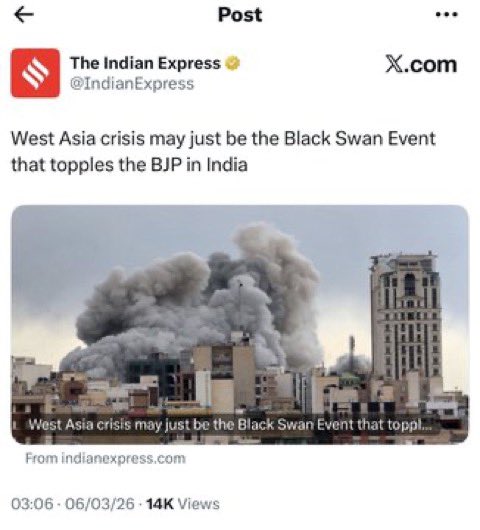
BJP leader K Annamalai on 28 December 2025 accused the DMK government of pushing Tamil Nadu into a serious governance crisis, alleging that the state has become unsafe for women, overwhelmed by alcoholism, and marked by a breakdown in law and order.
Speaking at a public meeting, Annamalai alleged that crimes against women and children had risen sharply under the present administration. He said the government had failed to provide basic safety and protection, despite repeated assurances.
“Women are not safe in Tamil Nadu today. Crimes against women have increased by over 50%, and crimes against children have also gone up. Murders are happening everywhere,” he said, questioning what he described as the government’s inaction on law and order.
Annamalai also accused the DMK of turning Tamil Nadu into what he called a “drunkard state,” blaming the government for failing to control liquor sales, illicit alcohol, and drug abuse.
“Tamil Nadu has become a kudikaarar maanilam (drunkard state). Illicit liquor has killed dozens, ganja is being sold openly, and drugs are available even near school gates,” he said, adding that earlier promises of using an “iron hand” against the liquor and drug mafia had not been implemented.
Referring to deaths caused by illicit liquor consumption, Annamalai alleged selective governance and questioned the government’s response. “For some incidents, the Chief Minister rushes to the spot. For others, including illicit liquor deaths, he does not even visit,” he said.
He further alleged that poor civic administration had turned parts of the state into garbage dumps, accusing the government of neglecting basic public services while focusing on political messaging.
Describing the current administration as ineffective, Annamalai said, “This is not governance, this is only a spectacle. The government is running only for the benefit of one family, not for the people of Tamil Nadu.”
Calling for a political change, Annamalai said former Chief Minister Edappadi K Palaniswami should return to office.
“Tamil Nadu needs disciplined governance again. Edappadi Palaniswami should be reinstated as Chief Minister to restore safety, law and order, and proper administration,” he said.
Subscribe to our channels on Telegram, WhatsApp, and Instagram and get the best stories of the day delivered to you personally.
A delay in the disbursement of education assistance funds has left thousands of government school students and their parents across Tamil Nadu seeking answers, even a year after bank accounts were opened on official instructions.
Under an existing scheme, students from SC, ST and MBC communities studying from Classes 1 to Plus Two are eligible for education assistance. In 2024, however, the School Education Department directed that all categories of students, irrespective of community, open savings bank accounts at post offices by September, triggering expectations that welfare payments would be extended more broadly.
Following the directive, post offices across all 15 education blocks in Madurai collected Aadhaar details and photographs to open accounts for primary school students. In schools with large enrolments, post office officials conducted on-site account-opening camps. More than 60,000 accounts were opened in the district at the primary education level alone, and student details were uploaded on the EMIS portal.
However, teachers say that apart from SC, ST and MBC students who regularly receive assistance, no other students have received any education aid, even after a year. The situation remains the same up to Plus Two level, leading to repeated queries from parents and students.
Teachers said the account-opening exercise was implemented statewide but that no clarification was provided on why accounts were opened for students outside the usual beneficiary categories. While Aadhaar-related issues delayed account creation for a small number of students, most accounts are now active. Despite this, teachers say they are repeatedly instructed to ensure that students’ savings accounts remain active, even though no transactions have taken place.
Post office officials have reportedly informed schools that accounts without transactions can remain active only for up to three years. Teachers said they are unable to answer parents who continue to ask when the promised assistance will be credited.
The issue has drawn political attention, with critics linking the delay to a broader pattern of welfare implementation under the ruling Dravida Munnetra Kazhagam (DMK). They argue that while welfare announcements are made, beneficiaries are often left waiting without clear timelines or accountability.