Home Blog Page 126

Darkest Year Of DMK’s Dravidian Model

It has been 4.5 years since the ‘Dravidian Model’ DMK government came to power and what have the citizens of the state enjoyed? Did the so-called Dravidian Model do wonders to the state in any way? Let us take a look at 12 major failures that have defined the DMK government’s record for the year 2025.

#1 Sanitation Workers/Teachers/Nurses Protest

In its 2021 manifesto, the DMK promised to regularise sanitation workers and curb privatisation, restore the Old Pension Scheme for government staff and teachers, and give permanent appointments to contract nurses and other health workers. Protesters from all three groups now accuse the government of reneging on or only partially fulfilling these written commitments.

DMK 2021 Manifesto

However, till date nothing has been delivered. This has led to intense protests by the teachers, nurses and the sanitation workers.

In 2025, Chennai saw a series of intense labour agitations as nearly 2,000 mostly Dalit conservancy (sanitation) workers camped outside Ripon Building from August 1 protesting the decision to privatise solid‑waste management in Zones 5 and 6, fearing loss of wages, benefits and chances of regularisation after years on temporary NULM contracts; for 13 days they held a peaceful sit‑in while garbage accumulated in Royapuram and Thiru Vi Ka Nagar until, following a Madras High Court order, police cleared the site in a midnight operation by rounding up around 800–1,000 workers and detaining them in marriage halls, even as teachers across Tamil Nadu staged hunger strikes and strikes through March, November and December demanding scrapping of the contributory pension scheme and restoration of the old pension system for government staff, and more than 7,000 contract nurses launched a December hunger strike in Chennai seeking regularisation, reversal of terminations and pay parity, facing detentions during overnight sit‑ins before authorities announced that 1,000 of them would be made permanent and others absorbed in phases, prompting a temporary withdrawal of the week‑long agitation while thousands remained on contract and vowed to continue campaigning for secure jobs and full benefits.

#2 Thirupparankundram Karthigai Deepam Issue

In December 2025, the Madurai Bench of the Madras High Court directed that the traditional Karthigai Deepam lamp be lit at the Deepathoon pillar on Thiruparankundram hill and ordered the police to provide protection, but the state administration instead imposed curbs on access to the hill and did not facilitate the ritual as ordered, leading to contempt proceedings and sharp judicial criticism that the order had been wilfully ignored. During the same month, authorities allowed the Santhanakoodu flag‑hoisting connected to the Sikandar Badusha dargah festival on the same hill to go ahead under heavy police bandobast, deploying hundreds of personnel and escorting participants even as local residents who sought permission to climb the hill to light a lamp were detained and removed.

#3 KN Nehru Cash-For-Jobs Scam

The Enforcement Directorate (ED) in October 2025 alleged a large-scale cash-for-jobs scam in Tamil Nadu’s Municipal Administration and Water Supply (MAWS) Department, claiming bribes of ₹25–35 lakh were collected per post to manipulate recruitment. In a letter sent to the Tamil Nadu police chief under the PMLA, the ED urged a formal probe into appointments to 2,538 posts, including engineers and inspectors, for which over 1.12 lakh candidates had applied. The agency said the racket surfaced during searches linked to True Value Homes, connected to Minister KN Nehru’s brother. A 232-page dossier submitted by the ED details the alleged modus operandi, names of intermediaries, digital evidence, and around 150 beneficiaries.

#4 TN Becoming Ganja Hub

In 2025, ganja remained a major part of Tamil Nadu’s drug problem, even as police data and reportage showed a shift toward synthetic narcotic tablets among young users. Official figures noted that while ganja seizures had fallen from over 28,000 kg in 2022 to about 21,424 kg in 2024 and a few thousand kilos in early 2025, seizures of diverted pharmaceutical tablets exploded from around 62,750 in 2022 to about 1.4 lakh in 2024, with over 24,000 tablets seized in just January–February 2025, suggesting that tighter policing of ganja has pushed peddlers and consumers toward more potent pills. At the same time, major busts such as a 564‑kg haul in Ramanathapuram, a 320‑kg seizure near Chennai, and repeated arrests of students and youths across districts highlighted how Tamil Nadu still functions both as a consumption market and a transit route for cannabis.

#5 Law & Order 

Right from the start of the year, one common instance that had been a sore point for the ruling DMK, was regarding the deterioration of law and order in the state. Attacks on migrant workers, gang-rapes of women, children, assault, youth-gang violence and knife attacks in urban and semi-urban areas, and multiple incidents of sexual violence and harassment, and voyeurism in hostels were frequently encountered in news media. Crimes against women have risen 50–65% in recent years, and politically connected offenders in drug and sexual‑crime cases assume they can act with impunity are said to have turned law and order, especially drugs and women’s safety, into one of the sharpest political fault lines of 2025.

#6 Collapse Of Education System & Infrastructure

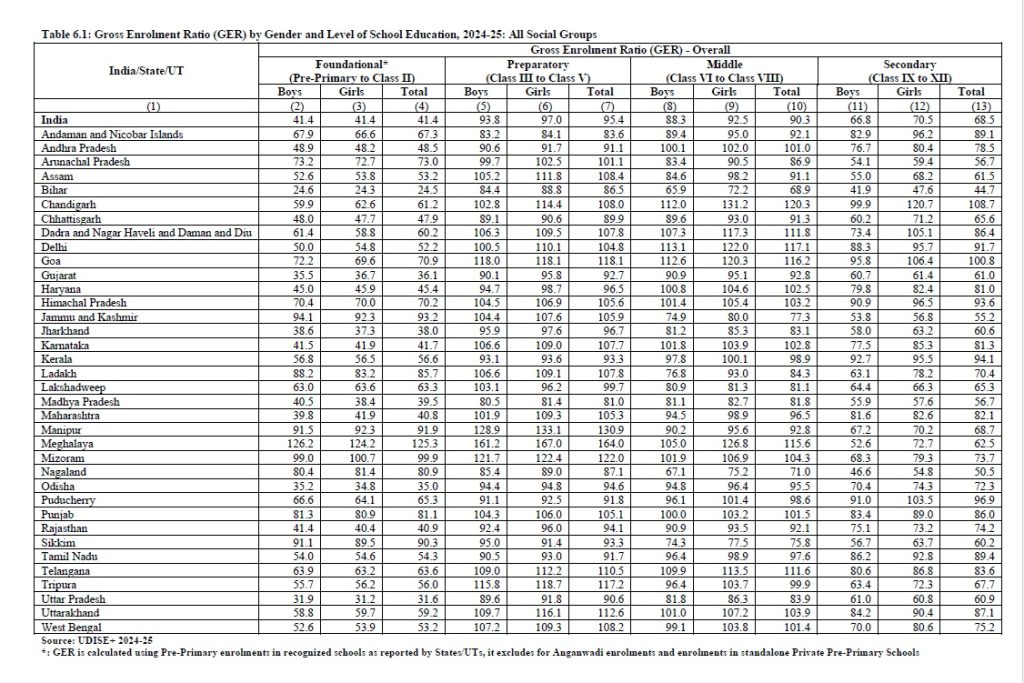
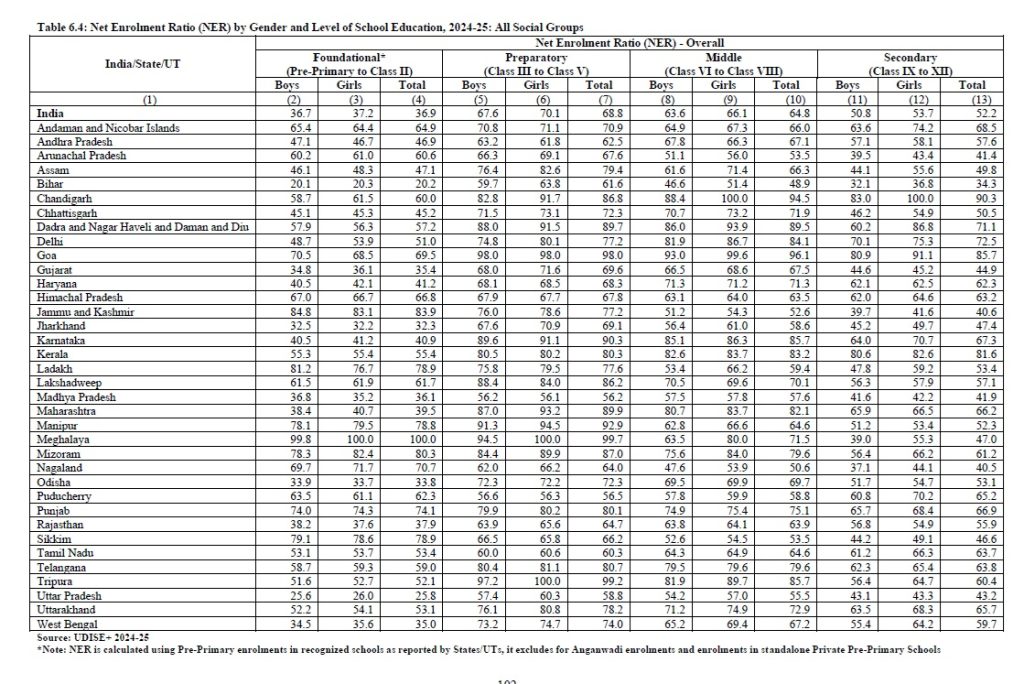
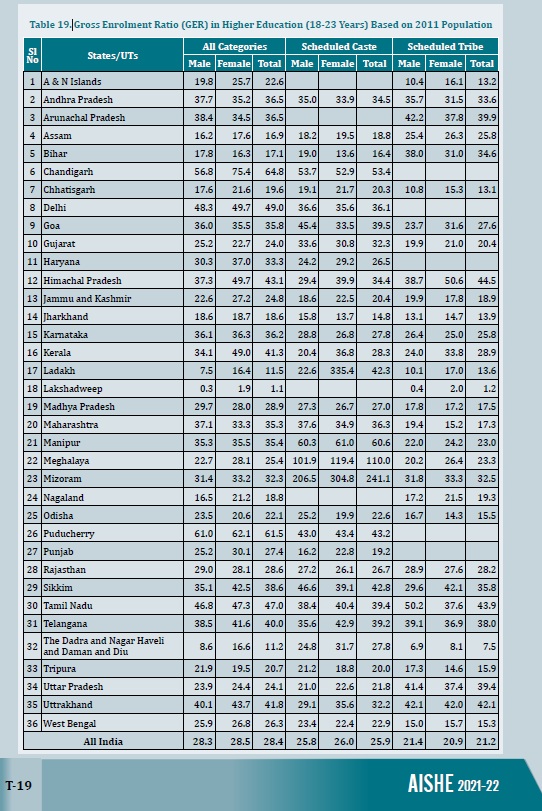
Despite the DMK government projecting Kalviyil Sirantha Tamil Nadu as a flagship achievement, multiple national assessments paint a sharply different picture of learning outcomes in the State. Findings from ASER 2024, NAS 2021, and PARAKH 2024 consistently show Tamil Nadu performing below the national average in foundational literacy, numeracy, mathematics, science, and language across Grades 3, 6, 8, and 9. Large proportions of students struggle with basic reading, arithmetic, and conceptual understanding, with learning levels declining sharply by higher classes. Tamil language proficiency itself remains weak, undermining claims of linguistic and cultural strength. Several northern and central states, including Uttar Pradesh, Madhya Pradesh, Bihar, and Rajasthan, have outperformed Tamil Nadu in recent cycles. Critics note that repeated state schemes aimed at bridging learning gaps have not delivered measurable improvement, while resistance to NEP-aligned reforms has coincided with widening foundational deficits.

Beyond academics, government schools face persistent infrastructure and administrative failures. Repeated roof, wall, and ceiling collapses in newly built or renovated schools across districts, overcrowded classrooms, school closures due to zero enrolment, and severe shortages of teachers and headmasters have raised concerns over student safety and governance. Numerous incidents point to breakdowns in oversight: contaminated mid-day meals, students made to perform manual labour, neglect of sanitation, and prolonged delays in completing school buildings. Schools have also witnessed cases of caste-related clashes, substance abuse, and a disturbing rise in sexual harassment and assault complaints involving staff and outsiders, many registered under the POCSO Act. Instances of religious activities and alleged proselytisation in government or aided schools have further triggered controversy. Taken together, these developments indicate systemic stress across infrastructure, staffing, welfare schemes, and student protection mechanisms.

7. Junior Kupanna Vs Google MoUs

Recent MoU announcements have sharpened criticism of the DMK government’s economic priorities, particularly when contrasted with neighbouring Andhra Pradesh. While Andhra Pradesh signed a multi-billion-dollar MoU with Google to build a hyperscale AI-driven data centre and anchor a long-term technology ecosystem, Tamil Nadu has publicly showcased far smaller deals, including a ₹100-crore MoU with a regional restaurant chain promising around 300 jobs. Such announcements, dominated by food and beverage brands and modest service-sector investments, signal limited ambition at a time when frontier technologies, high-skill employment and digital infrastructure are driving future growth. For a state with a large pool of engineering and IT talent, the emphasis on low-scale, low-technology MoUs is seen as a missed opportunity to attract transformative, ecosystem-shaping investments.

#8 YouTubers/Netizens Targeted/Arrested

The Chennai City Police in Spetember 2025 registered cases against 25 social media accounts for allegedly spreading false information related to the Karur stampede that claimed 41 lives, warning that strict legal action would follow against content causing panic or public disorder. In a press release, police said baseless rumours were being circulated online despite the government taking steps to manage the aftermath of the tragedy. The move comes amid criticism that voices critical of the ruling government are being selectively targeted. In recent months, YouTubers Felix Gerald, Savukku Shankar, Maridhas and retired police officer Varadharajan have faced arrests or action. BJP leaders and activists were also detained in separate incidents in 2025 over speeches, social media posts, protests, and corruption allegations, raising concerns over curbs on dissent.

#9 Kidney Trafficking Scandal

2025 also was witness to the shocking kidney trafficking scandal. The scandal put DMK MLA-linked Dhanalakshmi Srinivasan Hospital, a major private healthcare chain in Tamil Nadu, under intense scrutiny over allegations of illegal organ transplants involving trafficked kidneys from poor women. It was reported that more than 90 women, largely daily wage earners from Namakkal district, were allegedly lured with payments of ₹5–10 lakh and subjected to transplants using forged Aadhaar cards and fabricated medical records. The racket is alleged to have been brokered by M. Anandan, a DMK party worker, who was absconding. The case drew political attention due to the hospital’s links to DMK MLA Kathiravan, son of the group’s founder, raising accusations of institutional protection and regulatory evasion. Authorities from the health, revenue and police departments are probing the network, while officials acknowledge that fear and stigma are preventing several victims from coming forward.

#10 Karur Tragedy

The Supreme Court’s intervention in the Karur stampede case amounted to a serious indictment of the DMK government’s handling of the tragedy. The court found that the Tamil Nadu administration had irreparably damaged public confidence by allowing senior police officials to publicly defend their subordinates even before investigations were complete, creating a reasonable apprehension of bias. It also noted political overtones in the grant of permissions for rallies and highlighted administrative failures in crowd management. Citing a breakdown of institutional credibility, the court suspended the state-appointed enquiry commission and police probe, transferred the investigation to the CBI, and placed it under independent supervision. The order reflected the court’s conclusion that the state machinery was incapable of delivering an impartial and credible investigation into the deaths of 41 people.

#11 Startups Leaving TN

2025 saw a growing number of companies shifting operations out of Tamil Nadu. This has drawn attention to structural weaknesses in the state’s startup ecosystem. The decision by Wells Fargo to close its Chennai Global Capability Centre and relocate operations to Bengaluru and Hyderabad follows earlier exits by startups such as Wheelocity and Arcana. Industry data shows venture capital funding in Tamil Nadu declined sharply in 2024, even as investment recovered nationally. Analysts attribute the trend to limited local seed capital, a relatively risk-averse entrepreneurial culture, and a shortage of high-growth consumer-sector role models. As a result, founders increasingly look to Bengaluru for access to capital, talent, and faster-scaling ecosystems, raising concerns about Tamil Nadu’s ability to retain startups and innovation.

#12 Attacks On Migrant Workers

A series of incidents reported through 2025 has highlighted growing safety concerns for migrant workers in Tamil Nadu across multiple districts. Migrant labourers from Odisha, Assam, Uttar Pradesh and West Bengal have been victims of armed assaults, sexual violence, fatal workplace accidents and mob unrest. In Sivaganga, two Odisha workers were brutally attacked with weapons by an intoxicated gang. In Tiruttani, minors assaulted a migrant with sickles and filmed the attack, while in Coimbatore a worker from Kolkata died after being beaten during a roadside dispute. In Tirunelveli, an Assam woman was gang-raped by a labour agent and minors after attempting to quit her job. Protests over unsafe work conditions in Chennai’s industrial belt have also turned violent, underscoring persistent vulnerabilities faced by migrant workers in the state.

Overall, the year 2025 was a year of failure of the Dravidian Model, a dark year for the people of Tamil Nadu and the citizens of the state were not witness to any form of ‘vidiyal’.

Subscribe to our channels on TelegramWhatsApp, and Instagram and get the best stories of the day delivered to you personally.

Dravidian Model Tamil Nadu: Drunken Gang Brutally Assaults Odisha Migrant Workers In Sivaganga, Third Attack In Three Days

From Hate Speech To Street Violence: How DMK's Anti-Hindi Politics Is Hitting Migrants On The Ground

In yet another incident triggering concern over the safety of migrant workers in Tamil Nadu, two labourers from Odisha were brutally attacked with weapons by an unidentified gang near Thirupuvanam in Sivaganga district on Tuesday (30 December 2025) night.

The victims have been identified as Moni Sharan and Sushanth, natives of Cuttack area in Odisha, who were employed at a private company in the region. According to preliminary information as reported in Thanthi TV, the two workers had gone to the Vaigai riverbank near Mannalur late in the evening to attend to nature’s call when they were allegedly attacked.

Police sources said an unidentified gang, reportedly under the influence of alcohol, arrived at the spot and suddenly assaulted the workers using weapons. Both men sustained severe injuries on multiple parts of their bodies.

Local residents rushed to their aid and immediately took them to the Government Hospital, where first aid was administered. Due to the seriousness of their injuries, the victims were later referred to the Madurai Government Rajaji Hospital, where they are currently undergoing intensive treatment.

Following information about the attack, personnel from the Thiruppuvanam police station rushed to the spot and began an investigation. Police are probing multiple angles, including whether the migrant workers were specifically targeted and the motive behind the assault.

A case has been registered in connection with the incident, and efforts are under way to identify and arrest those responsible. The attack has caused fear and unease among residents of Thiruppuvanam and surrounding areas, particularly amid growing concerns over repeated assaults on migrant workers in different parts of the State.

Police officials stated that the investigation is ongoing and assured that strict action would be taken once the perpetrators are identified.

Most Recent Instances

Tiruttani Town police on Sunday, 28 December 2025, detained four 17-year-old boys for attacking a 20-year-old youth from Odisha, identified as K Suraj, with sickles near the Old Railway Quarters. Police said the assault stemmed from a drunken argument on a Chennai–Tiruttani EMU local and was filmed by one juvenile to post as an Instagram reel. The minors allegedly carried sickles in their bags to record such videos. After following Suraj off the train at Tiruttani, they took him to an abandoned area, where three attacked him while the fourth recorded the act. Suraj, who suffered serious injuries, is stable. The juveniles were sent to an Observation Home.

On Monday, 29 December 2025, a youth from Kolkata was beaten to death in Coimbatore after questioning an auto driver over a minor collision, triggering fresh outrage over attacks on migrants. The victim, Suraj, was assaulted on Sunday night near Pullu Kaadu in the Ukkadam area by an auto driver, Mohammad Bajith Khan, and his associate Prakash. Police said the argument began after the auto hit Suraj, who worked at a fast-food outlet. During the altercation, the assailants allegedly questioned his identity, place of origin, and religion before attacking him. Suraj suffered severe head injuries and died on Monday at Coimbatore Government Medical College Hospital. Both accused have been arrested, and the case has been registered as murder.

Subscribe to our channels on TelegramWhatsApp, and Instagram and get the best stories of the day delivered to you personally.
Dravidian Model: Government Buses Reassigned For DMK Women’s Wing Conference, Passengers Stranded For Hours

Dravidian Model: Government Buses Reassigned For DMK Women’s Wing Conference, Passengers Stranded For Hours

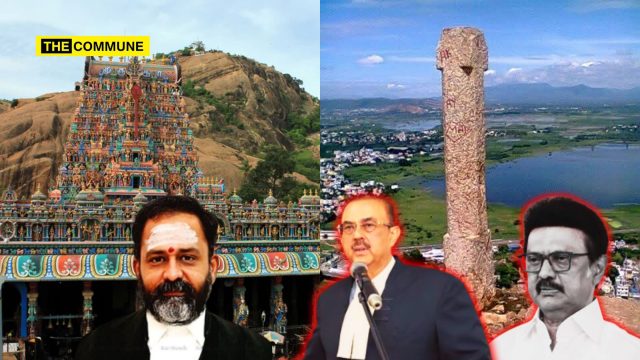
Passengers across several districts of western Tamil Nadu were left stranded for hours on 29 December 2025, Monday, after a large number of government buses were diverted for the ruling Dravida Munnetra Kazhagam’s (DMK) women’s wing conference held at Palladam, triggering widespread public inconvenience and criticism.

The DMK women’s conference, attended by Chief Minister MK Stalin, was held at Palladam in Tiruppur district. For the event, party cadres and women participants were transported from Pollachi, Udumalpet, Nilgiris, and surrounding rural and suburban areas. Most of the transport was arranged using Tamil Nadu State Transport Corporation (TNSTC) buses, with several buses that normally operate on village, suburban, and inter-district routes being temporarily diverted.

According to eyewitnesses and local reports, women participants were transported in buses decorated with DMK party flags and asked to wear party-coloured attire, including sarees and churidars. As a result, regular government bus services to villages, towns, and nearby cities were either curtailed or completely halted.

Passengers Wait for Hours at Bus Stands

The diversion of buses led to severe disruptions at major bus stands, including Pollachi and Udumalpet. Passengers reported waiting for several hours without any clarity on bus availability. Many bus stands appeared nearly deserted of buses, despite large crowds of commuters.

The situation was compounded by the New Year holiday rush, with thousands of people attempting to travel out of town. From Monday morning onwards, passengers at Udumalpet bus stand waited for extended periods to travel to Coimbatore, Tiruppur, Palani, and other destinations. Even the few buses that arrived were overcrowded, forcing passengers to travel in unsafe and uncomfortable conditions.

Rural commuters were particularly affected after buses operating to villages were abruptly withdrawn or suspended. Residents reported missing work, medical appointments, and essential travel due to the lack of transport.

Nilgiris Hit Hard by Bus Diversions

A similar situation was reported in the Nilgiris district, where government buses were sent to Palladam to ferry DMK women cadres despite the district already operating with a limited fleet.

According to Manoharan, president of the Coonoor People’s Safety Association, only 165 government buses operate in the Nilgiris district on a normal day. Of these, more than 30 buses were diverted to transport party workers for the DMK conference.

As a result, local passengers were forced to wait for over two hours at multiple locations. In Kotagiri, villagers waited from 8:30 am until 10:40 AM for buses to Edappalli and surrounding areas. Many commuters travelling for work, medical needs, and essential services resorted to hitching rides in passing vehicles.

Coonoor bus stand also witnessed long queues, while town buses were rerouted away from regular village routes such as Woodlands, leaving entire areas without public transport for hours.

Traffic Congestion and Policing Shortage

In addition to transport disruptions, traffic congestion worsened in several towns. With senior police personnel deployed to Palladam and other locations where the Chief Minister and ministers were present, local areas such as Pollachi were left with minimal traffic police presence.

Residents reported severe congestion, with even ambulances and emergency vehicles struggling to move through crowded roads due to the absence of traffic regulation.

Public Criticism and Calls for Accountability

Social activists and commuters criticised the routine use of government buses for ruling party events, stating that such practices had become common whenever DMK conferences or Chief Minister-led programmes were held.

They argued that government buses meant for public service should not be repurposed for political events, especially during peak travel periods and public holidays. Activists urged the government to ensure that party programmes are conducted using private arrangements without disrupting essential public transport.

Reacting to the situation, BJP leader Annamalai criticised the DMK government, stating that people who voted for the ruling party were now paying the price through daily hardships. He said that the public was repeatedly being made to suffer due to misuse of state resources for party activities.

Widespread Inconvenience Across Regions

Reports confirmed that similar disruptions were experienced across multiple towns and villages in Coimbatore, Tiruppur, Udumalpet, and Nilgiris districts. With both government and private buses diverted or suspended for the conference, thousands of passengers were affected throughout the day.


Source: Dinamalar

Subscribe to our channels on TelegramWhatsApp, and Instagram and get the best stories of the day delivered to you personally.
A Murder Without A Killer: 13 Yrs Later, Kerala Court Acquits All 20 Accused In ABVP Activist Vishal Kumar Case

A Murder Without a Killer: 13 Yrs Later, Kerala Court Acquits All 20 Accused In ABVP Activist Vishal Kumar Case

Nearly 13 years after 19-year-old Akhil Bharatiya Vidyarthi Parishad (ABVP) activist Vishal Kumar was stabbed to death in broad daylight on a college campus in Kerala, the criminal justice system has delivered a verdict that has reopened old wounds rather than healed them. It has delivered a verdict that offers neither accountability nor closure. On 30 December 2025, the Additional Sessions Court at Mavelikkara acquitted all 20 adults accused in the 2012 murder, holding that the prosecution had failed to prove its case beyond reasonable doubt.

The judgment, delivered by Judge PP Pooja, does not dispute that Vishal Kumar was murdered. It does not deny the brutality of the attack or the fact that it occurred in a public educational institution. What it ultimately concludes is more unsettling: that after thirteen years of investigation, prosecution, and trial, the State could not legally establish who committed the crime, how it unfolded in evidentiary terms, or how collective criminal liability could be fastened on the accused.

The prosecution has said it will challenge the acquittal in the Kerala High Court. But the judgement itself reads as a post-mortem not merely of a failed case, but of a system that allowed basic investigative lapses to metastasise into irreversible reasonable doubt.

Who Vishal Kumar Was, and Why He Mattered

Vishal Kumar was 19 years old at the time of his death. Born in Saudi Arabia, he completed part of his schooling in the United Kingdom, where his parents had built a stable and comfortable life. Despite this, Vishal insisted on returning to India to continue his education and engage in organisational work linked to the Sangh. His parents initially opposed the decision, but Vishal remained firm, stating that he wished to serve the nation through ideological and organisational work.

He was a first-year BSc student at NSS College, Konni, and had already emerged as a key ABVP organiser in the Chengannur region, serving as the organisation’s Nagar Samiti president. Within a short span, he played a role in strengthening ABVP’s presence, starting new shakhas, and mobilising students. Apart from political activity, Vishal also supported the education of four students from economically weaker backgrounds.

His ideological commitment was strong enough that, by his father’s later admission, Vishal himself reshaped his family’s understanding of the Sangh and its work.

The Murder That Shook a Campus

Vishal Kumar was just 19 when he was attacked on 16 July 2012. On the morning of the incident, student organisations had gathered at Chengannur Christian College in Alappuzha district to welcome first-year undergraduate students. ABVP members, including Vishal, were present as part of that programme. According to the prosecution, the programme was proceeding without incident when a group of men arrived from outside the campus and positioned themselves near the college gate. They allegedly abused ABVP members and made derogatory remarks about Goddess Saraswati. Vishal and other ABVP activists attempted to intervene and defuse the situation.

At that point, the prosecution said, the confrontation escalated suddenly but in a pre-planned manner. The attackers allegedly formed an unlawful assembly and assaulted Vishal and other ABVP members using knives, daggers, and other deadly weapons. Vishal was repeatedly stabbed. Two others, Vishnuprasad and Sreejith, were also injured while trying to resist the attack. Several other ABVP workers were abused and threatened to prevent them from intervening.

The assault took place at around 10.45 AM, outside the college gate, in a politically charged campus atmosphere where numerous students were present.

Vishal’s Medical Struggle and Dying Declaration

Vishal sustained grievous injuries and was first rushed to Chengannur Government Hospital. As his condition deteriorated, he was shifted to Kottayam Medical College Hospital for advanced treatment.

The prosecution placed on record that while Vishal was being taken to the medical college, he told his friend that he had been stabbed by members of the Popular Front of India. This statement was relied upon as a dying declaration—an important piece of evidence reflecting Vishal’s awareness of his attackers even as he fought for life.

Despite medical efforts, Vishal succumbed to his injuries on the night of 17 July 2012.

In criminal law, a dying declaration can carry decisive weight if it is found to be voluntary, clear, and reliable. In this case, while the declaration was part of the prosecution’s narrative, it was not sufficient by itself to overcome the cumulative doubts created by procedural lapses and evidentiary weaknesses identified by the court.

Investigation: From Local Police to Crime Branch

The case was initially registered and investigated by the local police. However, delays in tracing and arresting the accused led to the transfer of the investigation to the Crime Branch. A fresh case was registered, and further investigation was carried out.

Eventually, a chargesheet was filed against 20 adult accused and one juvenile. The prosecution alleged that several accused had gone into hiding after the crime and had taken shelter at various locations, including a Popular Front office in Kayamkulam.

The Crime Branch claimed to have recovered weapons allegedly used in the attack from near Karakkad in Chengannur, based on confessional statements made by the accused. Eyewitness testimonies, weapon recoveries, documentary evidence, and the identity card of one accused were cited as links connecting the accused to the crime.

The Organisations and the Political Context

The prosecution maintained that the attackers were members of Campus Front of India (CFI), the student wing of the Popular Front of India (PFI). Campus Front later functioned under the banner of the Confederation of Indian Muslims, which formed part of the broader Popular Front ecosystem.

PFI was banned by the Union government in September 2022 for its alleged involvement in extremist and terrorist activities.

The accused faced charges under Sections 120B, 143, 144, 147, 148, 212, 302, 307, 324, 323, and 342 read with Section 149 of the Indian Penal Code, covering conspiracy, unlawful assembly, murder, attempted murder, and allied offences.

Bail Proceedings and a Long Judicial Journey

In the months following the murder, several accused approached the Kerala High Court seeking bail. Early bail applications were rejected, with the court citing the seriousness of the offences and the stage of investigation.

As the investigation progressed, a shift occurred. Multiple accused were granted bail on grounds of parity, completion of substantial portions of investigation, and absence of apprehension that they would abscond. Stringent conditions were imposed, including restrictions on movement and warnings against influencing witnesses.

One accused, Afsal, was arrested later and was described by the prosecution as the brain behind the incident. While granting him bail, the High Court made strong observations about the misuse of religion for violence, even as it weighed factors like age and pre-trial detention.

Another accused, Sanuj, was later implicated in a separate criminal case in 2022, leading to the cancellation and subsequent regrant of bail with warnings.

Trial, Evidence, and the Acquittal

During the trial, the prosecution examined 55 witnesses and produced 205 documents. The case passed through multiple investigating officers over the years.

On 30 December 2025, the Sessions Court acquitted all 20 adult accused. The judgment identified several critical failures:

First Information in Doubt: The court held that the first information and connected documents appeared antitimed and possibly antedated, weakening the foundation of the case.

Suppressed Genesis: The prosecution was found to have presented a one-sided story while suppressing the broader context of the confrontation.

Eyewitness Improvements: Injured witnesses made later improvements not reflected in early statements, undermining credibility.

No Reliable Test Identification Parade: Several accused were not identified through proper identification procedures, making dock identification unsafe.

Late Motive Claims: Alleged motives such as opposition to “love jihad” were introduced late and not supported by early statements.

Search and Seizure Lapses: Key officers were not examined, and documentation reached court belatedly.

Weak Forensic Corroboration: Blood and material evidence could not conclusively link accused to the crime.

Conspiracy and Harbouring Not Proved: Without a proven core offence, add-on charges could not survive.

What Remains After Thirteen Years

The prosecution has said it will appeal. The High Court will examine whether the trial court’s conclusions were a plausible view of the evidence and whether legal principles were correctly applied.

For Vishal Kumar’s family, however, the verdict marks the end of a thirteen-year wait that offers no closure. The judgment leaves behind an unbearable truth: a 19-year-old student activist was stabbed to death in public, and more than a decade later, the law says nobody can be punished for it.

Not because the crime did not happen but because the State could not prove who did it.

If this verdict is to mean anything beyond one case, it must be read as a warning about what happens when the fundamentals of criminal investigation, prompt recording, reliable identification, disciplined procedure, and consistent prosecution are not secured from the very first day.

Source: OpIndia

Subscribe to our channels on TelegramWhatsApp, and Instagram and get the best stories of the day delivered to you personally.
TRB Rajaa’s Old Tweet On State Debt Comes Back To Haunt Him

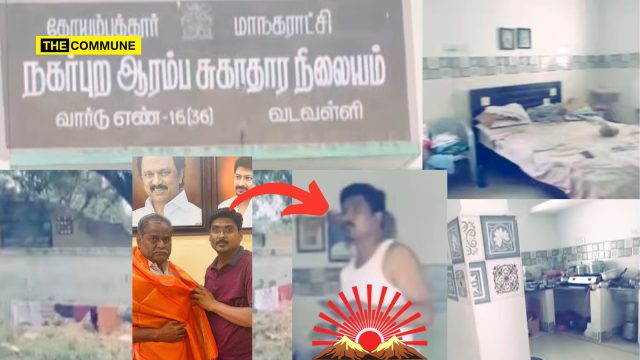
A five-year-old social media post made by DMK minister TRB Rajaa, when the DMK was in opposition, has resurfaced amid growing scrutiny of Tamil Nadu’s sharply rising debt under the party’s own tenure.

In 2020, Rajaa had publicly ridiculed the then AIADMK government over the State’s debt levels. In a post on X (then Twitter), he wrote that Tamil Nadu’s total debt would touch ₹4.56 lakh crore by March 2021, translating to roughly ₹57,000 per citizen. He had also flagged revenue deficit figures, contrasting actual numbers with budget estimates to accuse the AIADMK of fiscal mismanagement.

Five years later, the figures have grown significantly larger under the DMK government. According to the latest budget documents, Tamil Nadu’s total outstanding debt is projected to reach ₹9.29 lakh crore by March 2026. This amounts to an estimated ₹1.16 lakh per citizen, assuming a population of around eight crore – more than double the per-capita burden Rajaa had highlighted while in opposition.

The resurfacing of the tweet has coincided with renewed debate over the DMK’s handling of state finances, particularly in the context of the party’s 2021 electoral promises of “Vidiyal” (dawn) and a distinct “Dravidian model” of governance.

White Paper Promises vs Budget Outcomes

Shortly after assuming office in 2021, then Finance Minister Palanivel Thiaga Rajan released a high-profile White Paper on Tamil Nadu’s finances. The document blamed the previous AIADMK regime for what it described as fiscal mismanagement, claiming that debt had risen to about ₹2.63 lakh per household. Rajan had pledged that the DMK government would “set right” the fiscal situation within five years through major reforms and a dramatic transformation of public finances.

However, subsequent budget documents indicate that the debt burden per household has increased substantially during the DMK’s tenure. Based on an estimated two crore households, the per-family debt has risen to approximately ₹4.65 lakh by 2025–26—an increase of about ₹2.02 lakh per household since 2021.

Rising Debt Trajectory

Official figures show a steady year-on-year rise in borrowing:

2021: Total debt of ₹5.7 lakh crore (₹5,70,000 crore) that translates to ₹2.63 lakh per household (White Paper baseline)

2022: Total debt of ₹6.67 lakh crore (₹6,67,975 crore) that translates to ₹3.34 lakh per household (27% increase)

2023: Total debt of ₹7.41 lakh crore (₹7,41,497 crore) that translates to ₹3.70 lakh per household (41% cumulative increase)

2024: Total debt of ₹8.34 lakh crore (₹8,34,544 crore) that translates to ₹4.17 lakh per household (59% cumulative increase)

2025: Projected debt of ₹9.29 lakh crore (₹9,29,959 crore) that translates to ₹4.65 lakh per household (79% cumulative increase)

The cumulative increase represents one of the sharpest expansions of sub-national debt among Indian states in recent years.

Borrowing-Fuelled Governance

Financial analysts note that the DMK government has relied heavily on borrowing to fund welfare schemes and subsidies, rather than significantly expanding revenue or reducing structural deficits. For 2025–26 alone, Tamil Nadu plans to borrow ₹1.62 lakh crore – an amount larger than the entire annual budgets of several smaller states.

While the 2025 budget projects that debt as a percentage of Gross State Domestic Product (GSDP) will gradually decline over the next few years, critics point out that these projections follow four consecutive years of aggressive borrowing that have already raised the absolute debt burden to record levels.

Subscribe to our channels on TelegramWhatsApp, and Instagram and get the best stories of the day delivered to you personally.

“What Connection Do You (Citizens) Have With State Debt?” Asks TN Planning Commission Vice Chairman Jeyaranjan, Gets Schooled By Netizens

"What Connection Do You (Citizens) Have With The Debt?" Says TN Planning Commission Vice Chairman Jeyaranjan About TN State Debt

Senior economist and Executive Vice Chairman of the Tamil Nadu State Planning Commission Jeyaranjan has dismissed concerns over the State’s rising debt burden, arguing that government borrowing has no direct connection to ordinary citizens and is part of a routine fiscal process.

In a recent video interview with a YouTube channel, Jeyaranjan responded to repeated questions about Tamil Nadu’s growing loans, including borrowings from institutions such as the World Bank. He questioned the premise itself, saying, “What exactly has to come down? The debt burden? Why should it come down for you? What connection do you have with that? … What connection do I have with it?”

He compared government borrowing to long-term investment, stating that even if a parent had taken a loan, it would not automatically become a problem for the individual. “If your father had taken that loan, or your mother had taken it, even then there is no problem now. … The government borrows. The government is going to repay the loan, right?” he said, adding that political parties in power were irrelevant to repayment. “Today DMK is in power, tomorrow AIADMK may come. Whoever is in power, it does not matter. The government is a separate administration.”

Jeyaranjan explained that the State has continuous income and expenditure, with loan repayments forming one part of regular spending. He said borrowed funds were used for capital projects, noting, “What do they do with that borrowed money? … They construct the Metro and run trains. They buy buses for the PTC. Somewhere they build a dam.” According to him, such loans are repaid over long periods. “You repay it over 30 years… you are taking loans now and making those investments, and you keep paying the repayments for that.”

He also criticised what he described as political messaging around debt, saying, “They say, ‘Tamil Nadu has been brought to a debt trap. Look how much debt they have taken!’ When they say it like that, it registers in people’s minds.” Questioning public anxiety, he asked, “How does it affect you? What is it to you? Is anyone going to catch you by the collar and ask you to pay?”

Addressing limits on borrowing, Jeyaranjan said States could not borrow arbitrarily. “You cannot just borrow as you wish,” he said, explaining that borrowing is linked to the size of the economy and tax revenue. He added that legal provisions cap State borrowing at 3.5% of Gross State Domestic Product (GSDP). “Only up to 3.5% of that GSDP can be borrowed. Beyond that, the RBI will not permit,” he said, stressing that all government income and expenditure must be backed by law.

Jeyaranjan’s repeated refrain – “What connection do you have with the debt?” – has triggered sharp backlash precisely because it runs counter to lived economic reality. The assertion that State debt has no bearing on ordinary citizens is being described as not just misleading, but intellectually dishonest.

The truth is that Tamil Nadu’s revenue streams are already stretched thin, with a substantial portion of annual receipts consumed by administrative expenditure, salaries, pensions, interest payments, and welfare schemes. What remains for genuine capital formation – roads, irrigation, dams, public transport, and long-term infrastructure, is limited. When borrowing fills this gap, it is not an abstract accounting exercise; it is a deferred charge imposed on the public.

Debt is not repaid in a vacuum. It is serviced through taxes, user charges, and fee hikes. When borrowings rise, governments inevitably increase electricity tariffs, water charges, milk prices, property taxes, stamp duty, registration costs, and transport fares. In effect, debt functions as a hidden tax on citizens – paid not upfront, but in instalments through rising costs of living.

To suggest that citizens have “no stake” in such loans is to deny this basic fiscal mechanism. A government that takes expensive loans and then executes corrupt or inefficient tenders for road works, dam construction, or urban infrastructure must be questioned. Public borrowing without accountability is not development – it is liability creation.

The argument that “the government will repay the loan, not you” has also been criticised as sophistry. Governments do not generate independent income; they draw revenue from the people. Every rupee repaid, whether today or 30 years later, is repaid from public money. When debt rises, fiscal flexibility shrinks, subsidies are trimmed, and essentials become unaffordable. That is why gas subsidies are cut, power tariffs are raised, and welfare itself comes under strain.

Critics have also pointed out that Tamil Nadu currently runs a revenue deficit of around 1.3% of GSDP, even though the Fiscal Responsibility and Budget Management (FRBM) Act mandates zero revenue deficit or a surplus. This means the State is borrowing not just for capital investment, but to meet day-to-day expenses – a practice widely regarded as fiscally unsound. By contrast, states often caricatured in political discourse, such as Uttar Pradesh, have posted revenue surpluses in recent years.

The manner in which Jeyaranjan dismissed these concerns, by browbeating a young anchor with rhetorical questions rather than offering clear explanations – has further fuelled anger. Observers have questioned how someone, who is not even a regular economics professor at a reputed university, was appointed as Executive Vice Chairman of the State Planning Commission, a body expected to offer rigorous, transparent, and accountable fiscal reasoning.

The controversy has also revived memories of earlier ideological theatrics, such as outrage over the Indian rupee symbol, despite the symbol having been designed by a DMK member, reinforcing the perception that ideology often trumps logic.

At its core, the pushback is simple: when debt rises, taxes rise; when taxes rise, the common man pays. Electricity bills, property tax, fuel costs, and registration charges do not increase by accident. Every citizen, therefore, has not only the right but the obligation to question why loans are taken, how they are spent, and whether they generate real returns.

What citizens expect from the State’s top economic official is not condescension, but clarity. Not rhetorical dismissal, but accountability.

In a democracy, debt is never just a number on paper. It is a claim on the future of its people.

Subscribe to our channels on TelegramWhatsApp, and Instagram and get the best stories of the day delivered to you personally.
From Screen To Street: How Dravidiawood’s Glorification Of Drugs And Violence Is Poisoning Tamil Society

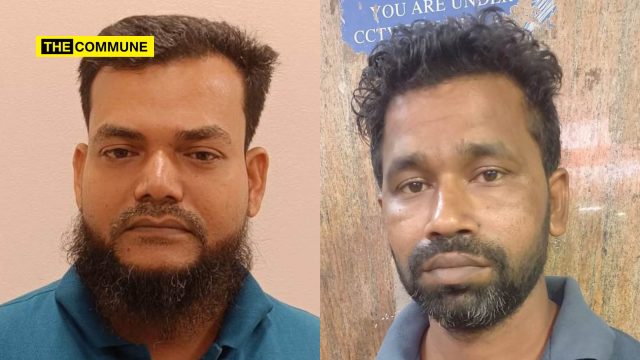
A 34‑year‑old man named Suraj had come from Odisha to make a living in Tamil Nadu. On that day, he was just minding his own business travelling in a local train. Enter a bunch of 17-year-old uncouth, deracinated, drug addict ‘Pullingos’ brandishing machete. One of them was harassing the Odisha man who doesn’t even know the language and what these guys are high on. Another fellow is shooting a video to upload it on Instagram. Suraj avoids them and goes about his work but he’s dragged away, and hacked in a deserted spot while the attack was filmed like entertainment content.

These four school‑age boys did not wake up one morning and suddenly invent this grammar of violence. They brandished a weapon on an EMU train, using a sickle as a prop to shoot “reels”. Stalked the victim after he got down, dragged him to an isolated area, brutally assaulted him, and filmed it like a set piece.

It is an indictment of a cultural ecosystem that has normalised blood, blades, and intoxication as “style.”

This is exactly the visual language that much of present‑day Tamil cinema (Dravidiawood) has been peddling: slow‑motion swagger with machetes, “mass” entries bathed in blood, and violence cut and packaged like a music video. When teenagers consume hundreds of hours of such content, the line between performance and reality begins to blur.

Dravidiawood’s Blood‑Soaked Aesthetic

Look at Tamil posters and trailers of the last few years – Guns, sickles, splashes of blood – “first look” itself is a riot of gore.

This is the poster of a film featuring the much-hyped director Lokesh Kanagaraj who is known for glorifying drugs and violence in his films.

Far from showing any restraint, Kanagaraj has been unapologetic when confronted about this portrayal, bluntly stating that there will be “no compromise on violence” in his films.

Lokesh Kanagaraj’s filmography follows a strikingly consistent pattern: the centrality of the drug trade, the normalisation of extreme violence, and the aestheticisation of gun and machete culture. This is not incidental storytelling—it is the spine of his so-called cinematic universe.

In Leo, the infamous café massacre and the relentless use of guns and bladed weapons turn extreme violence into a visual flex, framing brutality as an extension of the hero’s charisma.

In Vikram, the character of Rolex (played by Suriya) is elevated into a near-mythic figure—a blood-thirsty criminal whose savagery is stylised, glorified, and cheered, reducing mass murder to a moment of cinematic celebration.

In this ‘cinematic universe’, gore is currency, criminality is cool, and violence is stripped of consequence and repackaged as mass entertainment.

Dravidiawood films are packed with drug trafficking, bootlegging, hacking sequences, and obscenity, with every other line an abuse and every other scene an excuse to show someone being butchered.

After two and a half hours of glorified mayhem, a line about “drug free society” or “say no to violence” is tossed in at the end as a fig leaf.

Take another much-hyped and celebrated director, Vetrimaaran. In the Arasan trailer, Simbu is repeatedly projected as a blood-soaked figure, brandishing a sickle—rage, gore, and intimidation packaged as heroism. The imagery leaves little to the imagination: violence is not incidental, it is the selling point.’

Or consider Vada Chennai, where organised crime and contract killers are not merely depicted but glorified. Rowdies who murder for a living are framed as layered, heroic protagonists, their brutality aestheticised and justified through backstories rather than questioned. The moral line is not blurred—it is erased altogether.

The so-called “Super Star” Rajinikanth is no exception. In Jailer, directed by Nelson, the film elevates him as a mass hero at the very moment he shoves a knife down a man’s throat in front of his own family, converting an act of cold-blooded brutality.

This is not accidental. Many directors and stars are deliberately making these films as a profitable formula. When questioned, they shift the blame onto “the audience”: “People like it, so we are only giving what they want.” That is cowardice dressed up as market logic.

Heroes As Upgraded Villains

Once, villains alone smoked, drank, and hacked people to pieces. Today the hero himself does what yesterday’s villain did – deals with gangsters, drinks openly, mouths obscenities, and slashes enemies in lovingly choreographed scenes.

Films that tried to move away from this – the so‑called “thug life” or “coolie” experiments that did not romanticise criminals – were dismissed as flops, and the industry ran straight back to the gangster template.

Tamil and other “gangster” films are steadily turning a section of Gen Z into violence‑worshipping clowns and budding monsters. The message is simple: to be “mass”, you must be merciless; to be “cool”, you must be high.

There is also a cruel class divide at work. Cinematic violence is consumed as “mass entertainment” by audiences who will never face its consequences. But its fallout is borne by the poorest – migrant workers, daily wagers, outsiders – people like Suraj, who lack protection, influence, or outrage capital. Violence is aestheticised in air-conditioned theatres and executed in slums, railway stations, and dark alleys.

Certain filmmakers have played a defining role in this descent. They have pushed the envelope not for art, but for shock. They have dragged even ageing superstars into blood-drenched narratives so extreme that films once suitable for families now require “A” certificates. Responsibility lies not just with directors, but with stars who lend legitimacy and reach to this violence.

Ask yourselves this: if someone from your own family were chased, hacked, and left bleeding by minors intoxicated on this cinematic fantasy, would you still defend it as “art”? Would you still hide behind box office numbers?

Suraj travelled thousands of kilometres for a livelihood. He now lies scarred, physically and forever emotionally, while his family stares into an uncertain future. For a few thousand rupees a month, he paid with his blood. And yes, those who profit from glorifying violence carry a share of that moral burden.

If the obsession with bloodlust, drugs, and weapons continues, both on screen and among cheering audiences, there is no guarantee that today’s 17-year-olds will not be replaced by 10-year-olds tomorrow. Cinema shapes imagination before law ever intervenes.

We all must introspect. What exactly is the censor board censoring anymore? If minors can replicate on screen what passes certification, then the certification process has collapsed into a rubber stamp. When blood-soaked films sail through with cosmetic cuts, the board is licensing consequences. Filmmakers must stop hiding behind excuses. And an industry that once shaped social reform must ask itself a brutal question: when did it become a factory for rage?

When cinema trains children to enjoy violence, the streets will eventually stage the sequel.

Subscribe to our channels on TelegramWhatsApp, and Instagram and get the best stories of the day delivered to you personally.
Dravidian Model Tamil Nadu: Yet Another Assault At Tiruttani Railway Station By 4-Member Gang Just Days After Ganja Addicts Hacked An Odisha Migrant Worker

Dravidian Model: Yet Another Assault At Tiruttani Railway Station By 4-Member Gang

A man was seriously injured after being assaulted by a four-member gang at Tiruttani railway station, triggering fresh concerns over passenger safety at the busy transit point.

The victim, identified as Jamaal, a resident of Nehru Nagar in Tiruttani in Tiruvallur district, is engaged in the business of buying and selling old silk sarees. According to local sources, Jamaal was standing on the railway station premises when he was suddenly attacked by a group of four men, who allegedly struck him on the head, causing severe injuries.

Bystanders at the station intervened and alerted the police. Following a complaint from members of the public, police rushed to the spot and admitted Jamaal to the Tiruttani Government Hospital for treatment. His condition was described as serious. Police have registered a case and are continuing their investigation into the incident.

The assault has intensified public anxiety, coming just days after a migrant worker was brutally attacked in the same locality by ganja-addicted teenage school dropouts. That incident had already drawn attention to rising street violence in the area.

In the wake of the latest attack, railway passengers have raised questions over safety at Tiruttani railway station, asking whether the premises have become an unsafe place for commuters. Calls for increased police presence and preventive measures at the station have grown louder following the back-to-back incidents.

Source: Sathiyam News

Subscribe to our channels on TelegramWhatsApp, and Instagram and get the best stories of the day delivered to you personally.
AIADMK Slams DMK Govt As TN Police Says Odisha Migrant Worker Who Was Brutally Hacked By Ganja-Addicts Has Been Discharged From Hospital

The All India Anna Dravida Munnetra Kazhagam (AIADMK) on Tuesday launched a sharp attack on the ruling Dravida Munnetra Kazhagam (DMK) over the brutal assault on a migrant worker in Tiruttani, accusing the State government of misleading the public about the victim’s medical condition and exposing what it described as a larger collapse of law and order.

In a statement posted on its official X handle, the AIADMK referred to the attack on 19-year-old Suraj, a youth from a northern state, who was allegedly assaulted by ganja-addicted minors in Tiruttani.

They wrote, “The DMK government’s police department has stated that Suraj, a youth from a northern state who was brutally attacked in Tiruttani by 17-year-old ganja-addicted minors, has completed treatment and returned to his hometown. However, reports indicate that he was discharged from the Rajiv Gandhi Government Hospital itself. Is it not a blatant lie to claim that treatment was completed in just one day for a person whose body was mutilated with cuts all over and who was fighting for his life? How did the DMK government discharge a person who was subjected to a murderous attack? Is this the hallmark of the Stalin government’s concern for public welfare? To the extent that the victim is crying and deciding to return to his own hometown, his trust in Tamil Nadu has been shattered. For this, the puppet Chief Minister and the “marathon minister” who props him up should truly hang their heads in shame. The “marathon minister” Ma. Su., who asks the Leader of the Opposition, “Where is the ganja?”, should go and inspect the Stanley Hospital under his own department. Wasn’t a ganja plant found there? By allowing the spread of narcotics, the Stalin government has destroyed Tamil Nadu and made the State bow its head at the national level – that is the achievement of the Stalin regime.”

Subscribe to our channels on TelegramWhatsApp, and Instagram and get the best stories of the day delivered to you personally.
Over 1,500 Secondary Grade Teachers Arrested In Chennai During Fifth Day Of Protest Seeking Equal Pay

Protests by secondary-grade teachers demanding “equal pay for equal work” intensified in Chennai on Tuesday, 30 December 2025, with police detaining more than 1,500 teachers as the agitation entered its fifth consecutive day.

The protest, organised by the Secondary Grade Seniority Teachers Association (SSTDA), has been underway since 26 December 2025. On Tuesday, hundreds of teachers assembled near Dr Ambedkar Government Higher Secondary School in Egmore, while others gathered outside the District Education Office in the same locality. Many protesters were accompanied by their family members, including children.

According to the teachers, the pay disparity dates back to June 1, 2009. Teachers appointed before that date were placed on a basic pay of ₹8,370, while those appointed on or after the cut-off were fixed at ₹5,200, despite having identical qualifications and performing the same duties. Over the years, the gap has widened to ₹25,000–₹30,000 in monthly salaries, they said, placing Tamil Nadu among the states with the lowest pay for secondary-grade teachers.

Several teachers alleged that police stopped groups of educators arriving by train at railway stations. One protesting teacher told The New Indian Express, “Police apprehend us at railway stations when groups of teachers arrive by train. To avoid this, many of us brought our families to the protest. Because we decided to become teachers, our children are also suffering with us.”

During the protest, several teachers reportedly fainted and were taken to hospitals. Police later detained the protesters and housed them in around 15 wedding halls across the city. A woman teacher alleged that basic facilities were denied during detention. “We were not provided food or water to prevent us from returning to the protests in the coming days. Women teachers have been the worst affected by this pay disparity, and since many of them participated in large numbers, several suffered without food or water,” she said.

SSTDA General Secretary J. Robert said the association would continue its agitation until the demand was met. He described the repeated detentions as humiliating and said the government’s approach was forcing teachers towards more intense forms of protest. He also appealed to the Chief Minister to intervene and resolve what he described as a long-pending and legitimate grievance.

Meanwhile, Makkal Kalvi Kootiyakkam, a teachers’ collective in Madurai, urged Chief Minister MK Stalin to immediately address the demands. In a statement, the organisation condemned the use of police force against protesting teachers and accused the ruling Dravida Munnetra Kazhagam government of going back on assurances made in its 2021 election manifesto.

Police sources said arrangements for repeated detentions had cost the department up to ₹3 lakh so far. Despite the arrests, teacher associations warned that protests would continue in the coming days unless a clear assurance on pay parity was given by the government.

Source: Hindu Tamil

Subscribe to our channels on TelegramWhatsApp, and Instagram and get the best stories of the day delivered to you personally.