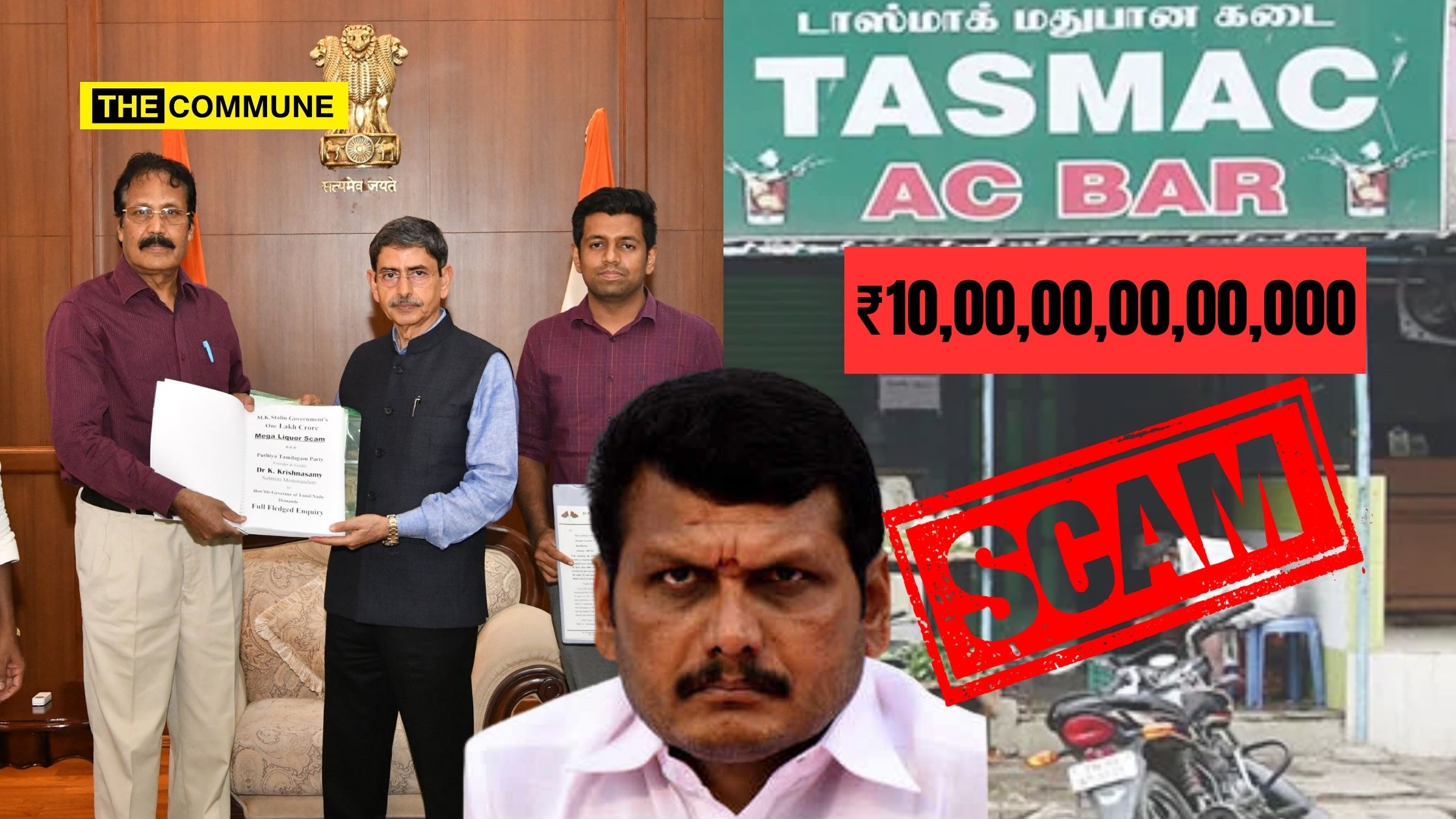
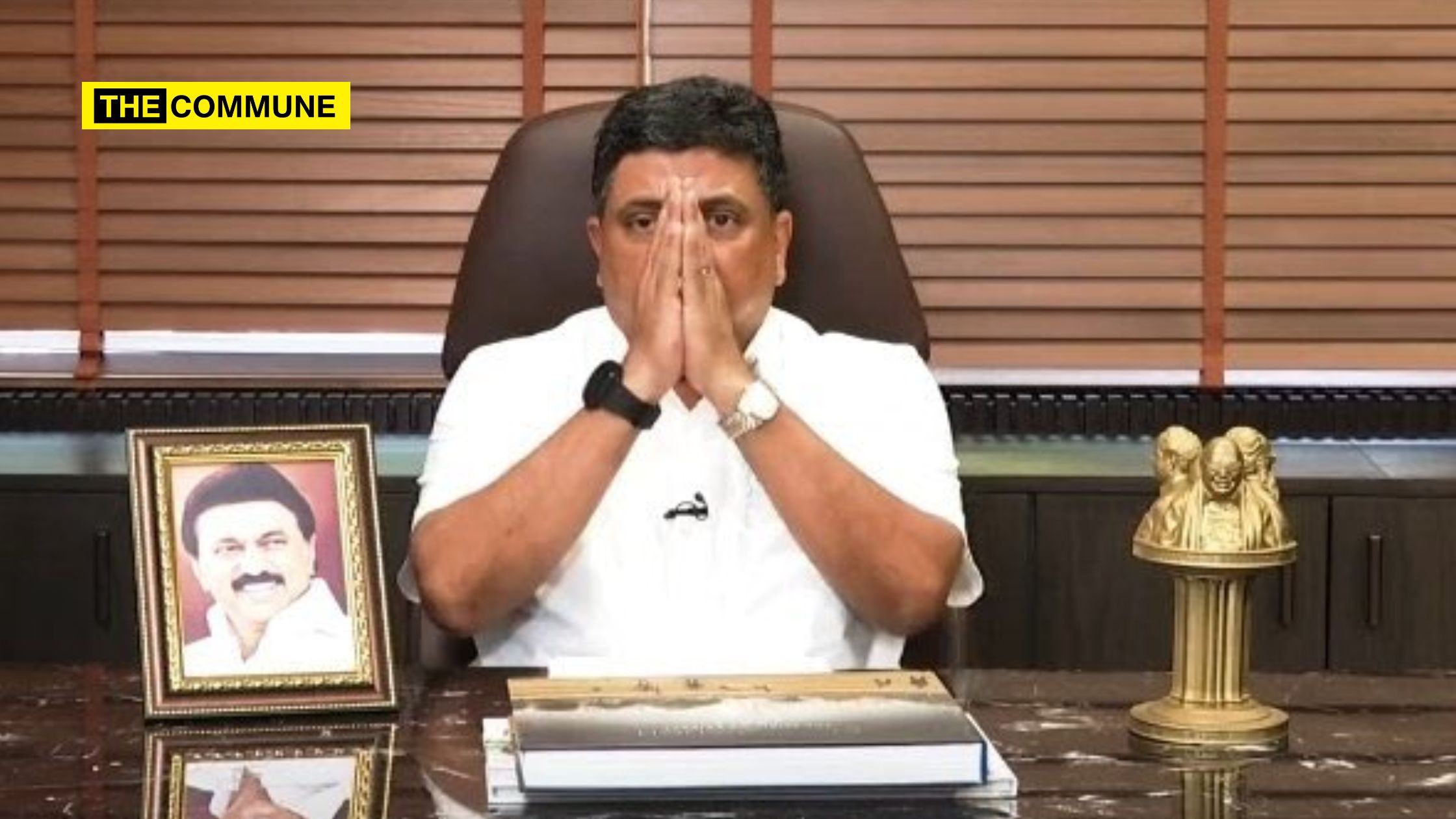
Head of Puthiya Thamilagam (PT) Dr K Krishnasamy on Wednesday (10 May 2023) called on Tamil Nadu Governor RN Ravi and submitted a memorandum, urging him to grant permission to file case against Chief Minister MK Stalin and Minister for Electricity, Prohibition and Excise V Senthilbalaji in connection with an alleged scam to the tune of ₹1 lakh crore.
Earlier in the day, a protest held by Puthiya Tamilagam Party towards the Governor’s House demanding the implementation of total alcohol prohibition in Tamil Nadu. The Party’s Chief Krishnasamy, who was accompanied by his son Shyam Krishnasamy took out a march along with his party functionaries from Rajarathinam Stadium in Egmore towards Raj Bhavan demanding to enforce total prohibition in the State. The AMMK also extended its support to the rally.
While addressing the reporters, the leader of the Puthiya Thamilagam Party said, ”Governor should investigate the ₹1 lakh crore scam in liquor purchase, retail sale, even empty cartons, and should order to stop liquor purchase until Minister Senthil Balaji and other top officials are punished”.
The youth wing leader of Puthiya Tamilagam Party, Shyam Krishnasamy said, ”Many may think that alleged one lakh crore scam in liquor sales are just exaggerated numbers. When examining the TASMAC malpractices, it is clear that the department is being run to earn money for these corrupt magnates rather than making money for the government!”.
மதுபான விற்பனையில் ‘ஒரு லட்சம் கோடி’ ஊழல் சாத்தியமா? அது மிகைபடுத்தப்பட்ட தொகையா என்ற எண்ணம் பலருக்கு வரக்கூடும்…
டாஸ்மாக் முறைகேடுகளை ஆய்வு செய்யும்போது தான் தெரிகிறது அரசுக்கு நிதி ஈட்டுவதை விட இந்த ஊழல் பெருச்சாளிகளுக்கு நிதி ஈட்டவே அந்த துறையே நடத்தப்படுகிறது என்று!
The party chief handed over a 250 pages evidence of the ‘mega liquor scam’ to the Tamil Nadu Governor, demanding probe against the Chief Minister and Ministers.
மதுபான விற்பனையில் ‘ஒரு லட்சம் கோடி’ ஊழல் சாத்தியமா? அது மிகைபடுத்தப்பட்ட தொகையா என்ற எண்ணம் பலருக்கு வரக்கூடும்!
டாஸ்மாக் முறைகேடுகளை ஆய்வு செய்யும்போது தான் தெரிகிறது அரசுக்கு நிதி ஈட்டுவதை விட இந்த ஊழல் பெருச்சாளிகளுக்கு நிதி ஈட்டவே அந்த துறையே நடத்தப்படுகிறது என்று!
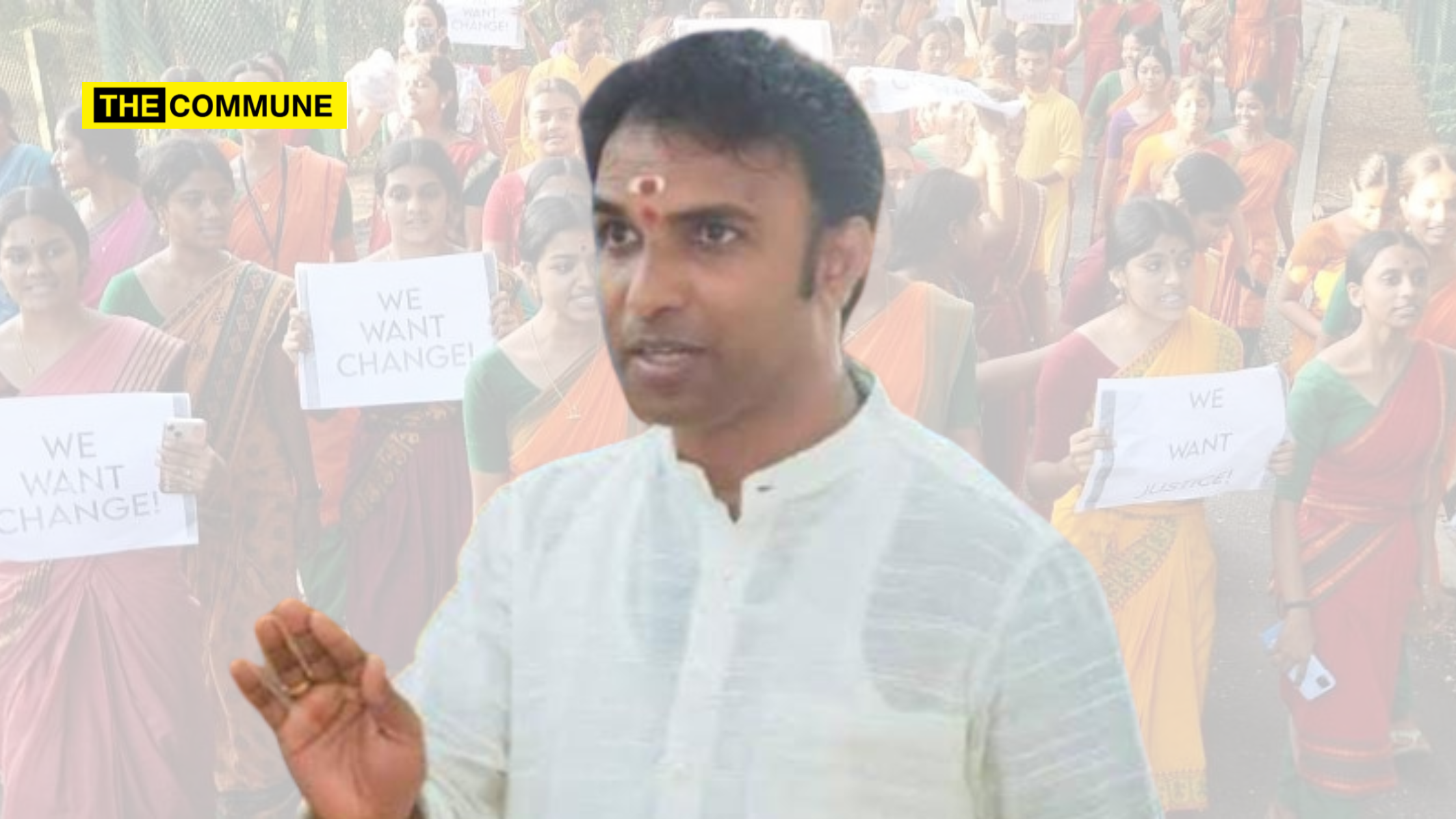
A group of alumnae of Kalakshetra Foundation, have come out in support of dancer and teacher Hari Padman, claiming that his conduct was good while they studied under him and that the case against him was fabricated.
Following a complaint from one of his former students, Hari Padman, a Kalakshetra alumnus and teacher at the institute since 2002, was arrested on 3 April 2023, on charges of alleged sexual harassment and criminal intimidation. Hari Padman was apprehended from Madhavaram, north Chennai, and remains in judicial custody.
Former Students Come Out In Support Of Hari Padman
Kalakshetra alumna Reshma Nair stated, “I very well know Guru Shri Hari Padman from 2005. He and his family are like my extended family. He is the only teacher who supported his student even after leaving Kalakshetra. I strongly believe that he is falsely accused. My humble request to the higher authorities, kindly give him a chance to prove his innocence.”
Another alumna and prominent Bharathanatyam dancer Gayathri Krishnaveni said, “I know Hari Padman since the day he joined Kalakshetra as a very young student and an aspiring boy. Through years of hard work and struggle, for almost 20 years, he has come to what he is today. Hari Padman is a very hard-working person and he is very sincere in his work. I can even call him Danceaholic. He has dedicated his entire life to Kalakshetra. All he knows is Kalakshetra, Bharathanatyam, Kathakali, and dance dramas. So, let us wait until he speaks. And I hope he is given proper inquiry trial and justice. I think the entire episode is just some conspiracy and he is been falsely blamed. He is been accused for doing nothing. Please be sensitive when you say any accusations against him or anyone in this matter. I know Hari Padman and I believe in Hari Padman. We are talking about a person, his carrier, his family, his wife, and his children.”
Dhanya, a Kalakshetra alumna from Dubai, said, “I have learned under him for more than 4 years. He is the guru who is most genuine and hardworking. He is 100% true to his art. This is a false allegation. I request the authorities to kindly give him a fair chance to prove his innocence. Please authorities, give him a fair chance.”
Alumna Aishwarya Pillai said, “I am studying under him for several years. Maybe from 2006. I have never had a bad experience with him. I had learned so many things from sir. He was a very dedicated person. He never had a vacation. I have never seen him having a vacation because he always wanted to work for Kalakshetra. My humble request to the authorities, is to give him a chance to prove his innocence.”
Iris, a foreign student who studied under him, said, “Hari Padman is a very dedicated, very hard working and disciplined person. These are the reasons why I cannot believe the latest allegations against him. This is unbelievable. I also hope that justice will be delivered soon because he is still behind bars. His family, his carrier, and his whole life are shattered by this. Justice should be given and I am waiting for it. I stand with sir with a full heart.”
The Case
It all began when Leela Samson, the former director of Kalakshetra Foundation made an accusatory post against a teacher (who she did not name) on her Facebook account. The post was later deleted.
Leela Samson’s Facebook posts along with articles published by the likes of The News Minute had snowballed into a controversy with full fledged protests by students forcing the institution to close down temporarily.
The National Commission for Women (NCW) which had taken cognizance of the case has so far found no evidence to support the allegations.
NCW had asked Leela Samson to present herself before the commission on 11 April 2023 but there are no reports of her having made her submissions before the commission.
The Kalakshetra Foundation’s board of directors had formed an independent inquiry committee to look into allegations of sexual harassment leveled against several teachers. In addition to suspending Padman pending the outcome of the investigation, the board had also terminated the services of three other teaching faculty members: Sanjith Lal, Sai Krishnan, and Sreenath. Haripadman is now in Puzhal jail with his bail application being rejected by the Saidapet court.
Despite the fact that none of the accused in the case are Brahmins, the left ecosystem and the Dravidian Stockists have used this issue to unleash hatred on Brahmins by spreading a lie via their social media handles that all accused in the case are Brahmins.
Later, a report by Dinamalar citing police sources noted Haripadman saying that teaching Bharatanatyam cannot be taught like physics or chemistry and that it becomes inevitable to make physical contact while teaching the art. He further added “Among professors in Kalakshetra, there is not only competition with respect to work but also for power. Some are ready to do anything to become the Director. I am of the opinion that this power play has resulted in these complaints. Many students have been manipulated into giving this complaint. There are many forces who are conspiring to shut down this college. In general, I consider that there is a large-scale attempt to smear Kalakshetra. I have been used as a tool in this attempt.”
He added that the truth will be revealed if there is a fair investigation. In this situation, a group of Kalakshetra Foundation alumni who studied under dancer Hari Padman have come out in support of him.
Click here to subscribe to The Commune on Telegram and get the best stories of the day delivered to you personally.
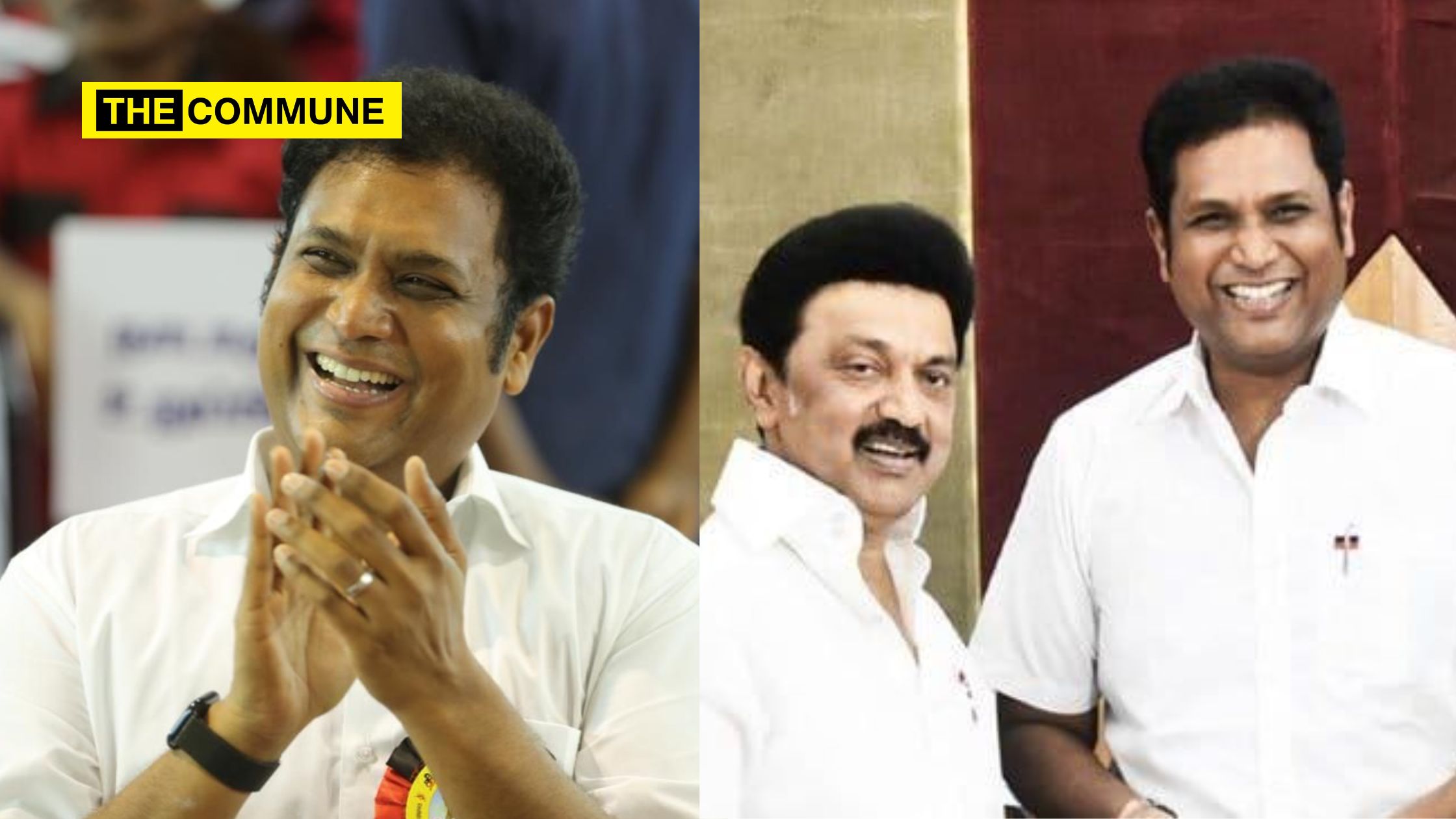
DMK Lok Sabha MP TR Baalu’s son and Mannargudi MLA TRB Rajaa has been made the Tamil Nadu Industries Minister by MK Stalin.
TRB Rajaa who is also the secretary of DMK’s IT Wing is known for peddling hate against Hindus particularly Brahmins and also north-Indians. He has also peddled fake news several times.
Instances When TRB Rajaa Peddled Hate Against Hindus
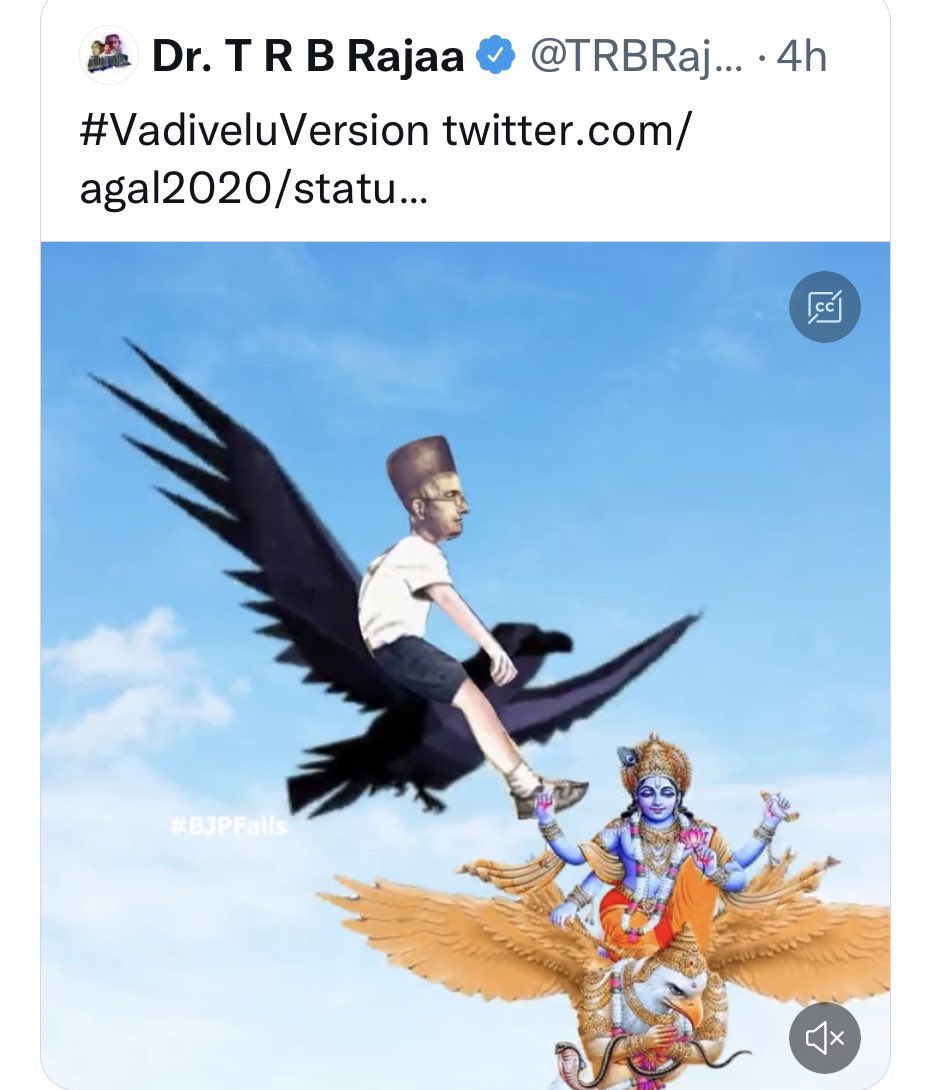
TRB Rajaa, posted a tweet with an image of freedom fighter Veer Savarkar on a black bird hitting the Hindu god Vishnu riding a Garuda, painting both Lord Vishnu and Veer Savarkar in a bad light.
He later deleted the tweet.
On the occassion of India’s Republic Day, TRB Rajaa shared a picture of Hindu God Kamadhenu saying “which freedom fighter is this?”. Kamadhenu was part of Karnataka’s tableau for the 2013 Republic Day.
TRB Rajaa refers to those who support BJP and oppose the DMK as “Gomiyum Gang” meaning “Cow Urine Gang”, an apparent dig at their Hindu identity. There are many tweets in which he keeps throwing the cow piss jibe at his political opponents.
#GomiyumGang should stop ODing on Cow Urine !!! No wonder their pea sized brains fail to get even basics 🤦🏽 ஆகையால்தான் சொல்கிறோம் #GoBackModi & get some sensible leaders for your party in TN 🤦🏽 pic.twitter.com/mOtCpnzqY8
This one time he had spread misinformation in order to justify the DMK government’s rice of curd packets produced by state-run Aavin. While the GST for curd was set as 5%, the price rise was increased from ₹10 to ₹12 and not ₹10.5.
"பால் மீது 5% தானே உயர்வு அப்பறம் எப்படி பாஸு 10 லேந்து 12 ஆச்சு" அப்டின்னு சாமர்த்தியமாக கேட்கும் #GomiyumGang செல்லகுட்டீஸ்களே … சோறு, மோரு, துணி, கறி, செருப்பு, டாய்லெட் etc etc க்கு எல்லாம் #GSThike போட்டுட்டு பேச்சா பேசறேள்…அந்த பூனைய எதுக்குவோய் அடிச்சேள்🤫 https://t.co/xgdj41HryFpic.twitter.com/UrUMs2TYAT
The DMK IT Wing headed by TRB Rajaa through its social media handles has been posting comic posts titled ‘Dravidathaal Vaazhgirom’ narrating the party’s origins and the so-called ‘Dravidian Movement’.
These comics attack Brahmins with casteist stereotyping and jibes. In one such post that was posted on 14 February 2023, the comic story board attacks the Tamil Brahmin community by stereotyping them and peddling propaganda against them.
When TRB Rajaa Peddled Hate Against North Indians
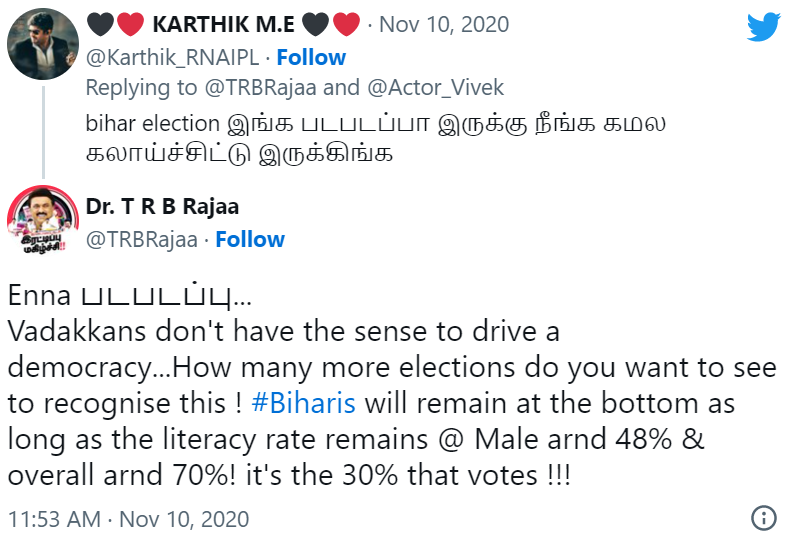
DMK MLA TRB Rajaa had spewed venom against north Indians umpteen number of times. He had once said ‘Vadakkans’ (slur for North Indian) don’t have a sense of democracy adding that Biharis will remain at the bottom because of their voting choices.
Instances When TRB Rajaa Peddled Fake News
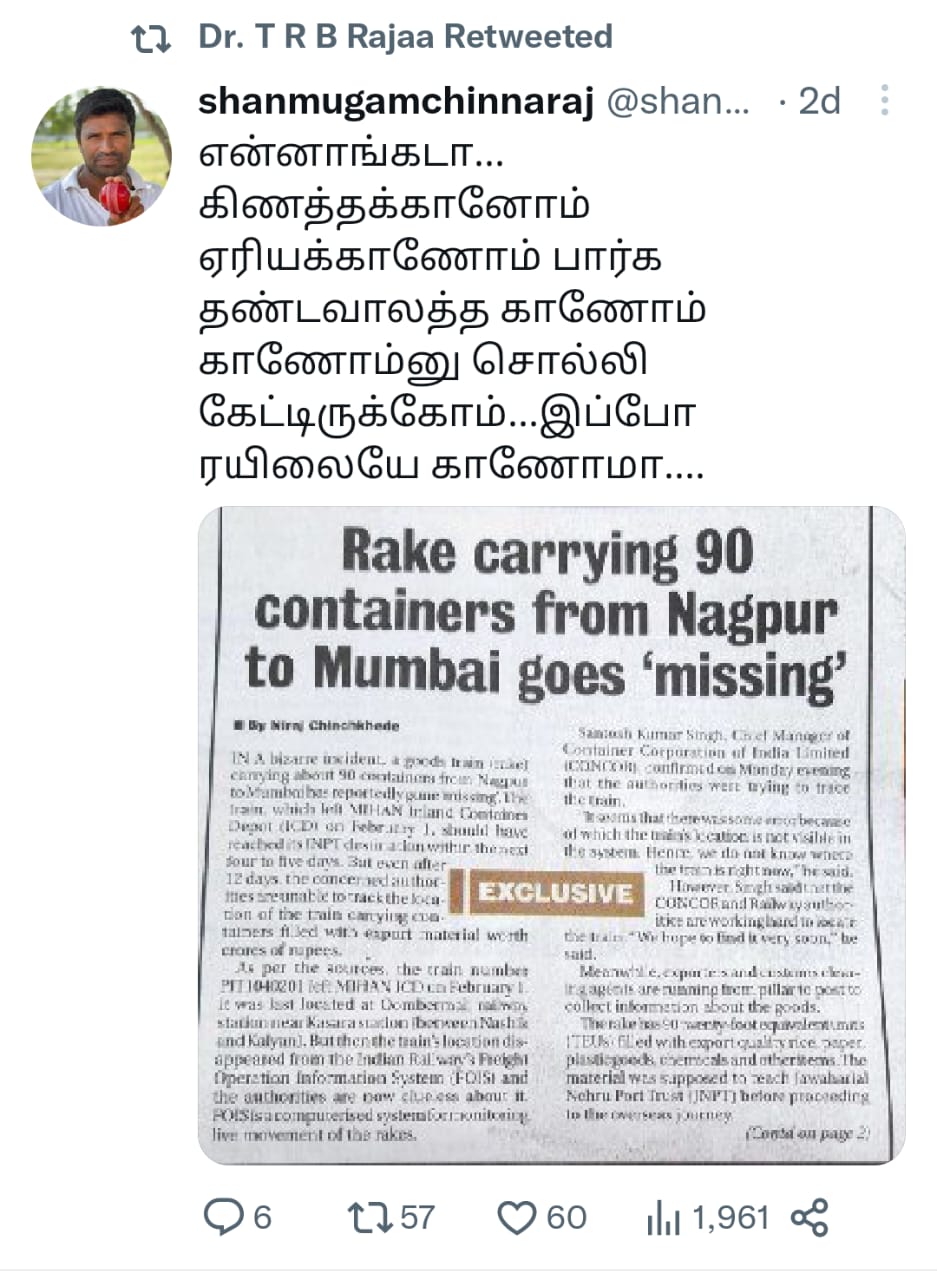
On 14 February 2023, some news outlets including Nagpur Today, The Hitavada and a few other news websites reported that a rake carrying 90 containers had gone missing in Nagpur.
This report, which appeared on February 14 in the online edition of ‘Hitavada,’ was debunked by the Central Railways and the Container Corporation of India. The rake was not missing, but was being physically moved to its destination, the JNPT Port.
However, this factually incorrect fake news was spread by the DMK leaders including the now-demoted Minister PTR Palanivel Thiagarajan and TRB Rajaa.
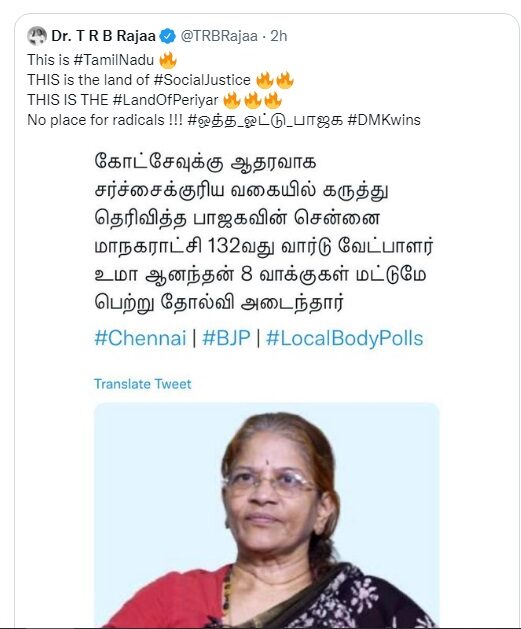
TRB spread fake news that Uma Anandan had managed to secure only 8 votes, and was in for a huge loss in the election. Proving them all wrong, she won with 5635 votes, against the combined force of DMK, Congress and 10 other parties that only got 3503 votes.
On the Coimbatore Car Bomb Blast which the National Investigation Agency (NIA) had categorically termed it as a terror incident, TRB Rajaa implied that the incident was the doing of Tamil Nadu Governor RN Ravi.
State Deputy Secretary of DMK IT Wing, had shared a clip from Tamil movie Kadhalan in which the antagonist discusses with another man about creating a law and order situation through bomb blasts in order to topple the government. This clip was shared by the TRB Rajaa suggesting that the Coimbatore blast was a handiwork of the Tamil Nadu Governor.
Tamil Nadu Chief Minister MK Stalin’s son and the state Sports Minister Udhayanidhi Stalin congratulated Nandhini, a student from Dindigul who scored 600 out of 600 in the 12th standard examination.
The public examinations for the students of class 12 were conducted in March and April, and the results were released to the public on the 8th of May, 2023. Nandini, a student from Dindigul, created history by scoring a 600 out of 600 and has been receiving appreciation from different forums.
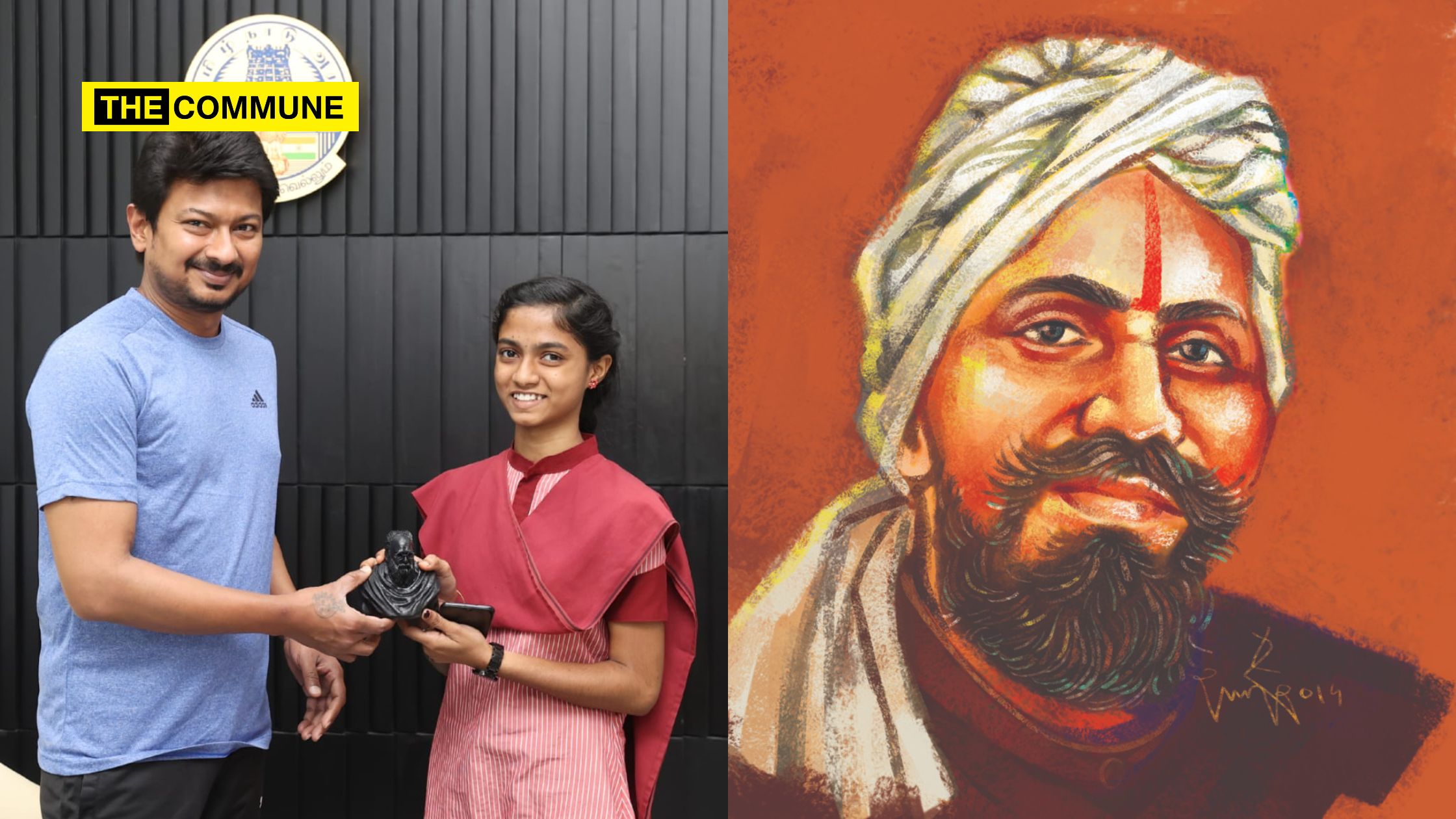
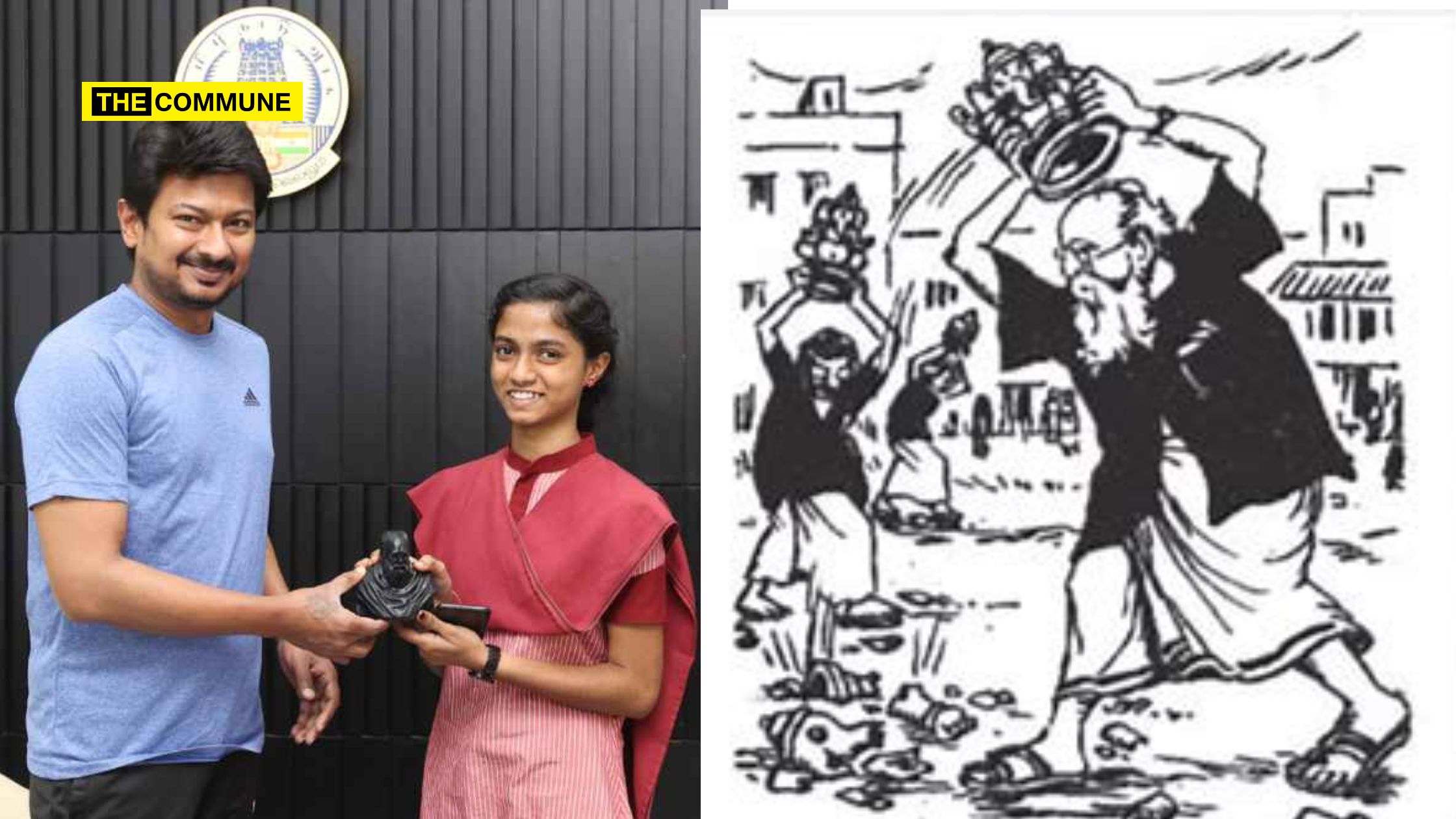
Right after the results were released, Tamil Nadu BJP President K. Annamalai congratulated Nandini and praised her efforts over a phone call. Chief Minister M.K. Stalin honored the student and assured all the support. Following him, Udayanidhi Stalin presented a statute of EV Ramasamy and a book, “Ungalil Oruvan,” penned by his father. EV Ramasamy was a demagogue who used social evils as a medium and capital for his Anti-Hindu propaganda.
On the other hand, in a video that is circulating online, Nandini says that she drew inspiration from Mahakavi Bharathiyar, and his poems helped her overcome hard times.
Nandini used to participate in debating and speech competitions in her school. In an interaction with Karthigaiselvan of News 18 Tamil Nadu, she says that she like Subramania Bharathi (Bharathiyar), the nationalist poet and freedom fighter. She also received a Bharathiyar statue from him.
Bharathiyar and his timeless poems and songs propagated nationalistic ideas and sentiments. He spent most of his life uniting the country in the freedom struggle against the Britishers, unlike EVR, who was a separatist. EVR allied with the British when the Indian Freedom Struggle was at its intense peak and sought Mohammed Jinnah’s help to set apart Dravidastan from India.
Bharathiyar was a staunch nationalist with proficiency in 32 languages. He encouraged people to learn more languages as they helped gain broad exposure to worldly affairs. Bharathiyar held Thirukkural and Silppadhikaram in high regard, and he heaped praises on Thiruvalluvar, which can be seen in this –
“வள்ளுவன் தன்னை உலகினுக்கே தந்து
வான்புகழ் கொண்ட தமிழ்நாடு”
On the other hand, under the umbrella of social justice, EVR abused other languages and condemned renowned literary pieces like Silappadhikaram, Thirukkural, etc.
While Bharathiya’s poems, deeds, and life offer a sense of motivation and inspiration for people of all ages and bring about unity among all, EVR’s ideologies are negative and propagate a mob culture. Bharathiyar’s thoughts and opinions were progressive and pragmatic, while EVRs were regressive and illusionary.
The fact that Bharathiyar has inspired Nandini is testimony to the fact that no matter how much ever Dravidian Stockists try to eclipse him, he will continue to inspire generations.
Click here to subscribe to The Commune on Telegram and get the best stories of the day delivered to you personally.
PTR Palanivel Thiagarajan who was until now Tamil Nadu’s Finance Minister (the 2nd most powerful post in the cabinet after the Chief Minister) has now been made the Minister for Information Technology & Digital Services.
This portfolio change comes following the leak of his purported audio accusing Chief Minister MK Stalin’s family of making more money in one year than they’ve made during their life time.
Thangam Thennarasu, who was the Industries Minister has been given the Finance, Planning and Human Resources portfolio that PTR held.
DMK MP TR Baalu’s son and Mannargudi MLA TRB Rajaa has been made the Indsutries Minister while Mano Thangaraj has been made the Dairy Development Minister which was held by SM Nassar.
PTR Palanivel Thiagarajan in a lengthy post on social media boasted of the work he had done as Finance Minister while thanking the Chief Minister for the new responsibility.
The past two years have been the most fulfilling in my life. Under the leadership of CM @mkstalin, I presented one revised budget (’21 – ’22) during the pandemic, and two annual budgets (’22 – ’23, ’23 – ’24) post-pandemic. Despite inheriting record deficits and debt ratios, we…
— Dr P Thiaga Rajan (PTR) (@ptrmadurai) May 11, 2023
The controversy over alleged audio clips of PTR had jittered the DMK. PTR gave a lengthy statement denying the audio calling it “malicious”, “fabricated” and “deepfake”. CM Stalin in a pre-recorded statement said that the Minister himself has clarified and he has nothing to add to it.
The audio clip had surfaced amidst Tamil Nadu BJP K. Annamalai accusing DMK leaders of gaining disproportionate assets over the years.
The first part of the alleged audio of PTR said “Both Udhay and Sabari have realised, they have made more money in one year than they [unclear] entire lives and now it’s getting to be a problem, how to handle it, how to not get caught, how to get payments here.. [unclear] Its all being made gradually? 10 to 20 crores.. assuming we will say 5000/30000 crores.. [unclear]. How can you [unclear] 5000/30000 crores without paying any [unclear]”, the audio clip supposedly of PTR says. (Some say the amount mentioned in the audio is 5000 crores while others note it is 30000).”
In the second clip of the alleged audio of PTR he can be heard abusing his own partymen saying “Here every (beep) district secretary wants be an MLA and Minister. Who looks after the party? Inaudible.. Ohh. it’s easier to do money management… it is not a system.. They are taking the bulk of the spoils..”
“The party which is the CM’s son and son-in-law, ask them to make the financing.. right? So I decide after watching this for 8 months.. This is not a sustainable model. The great luxury for me if I put my papers in.. In the short term I get out before the shit starts blowing up in their face. I have the like.. kind of.. what do you say.. cleanliness of my conscience that I did not have to like it wasn’t I gave up the fight too early.. I don’t have to say it.. I’m no longer in the post.. it’s not my job.. somebody did it.”, he says.
Listen to the DMK ecosystem crumbling from within. The 2nd tape of TN State FM Thiru @ptrmadurai.
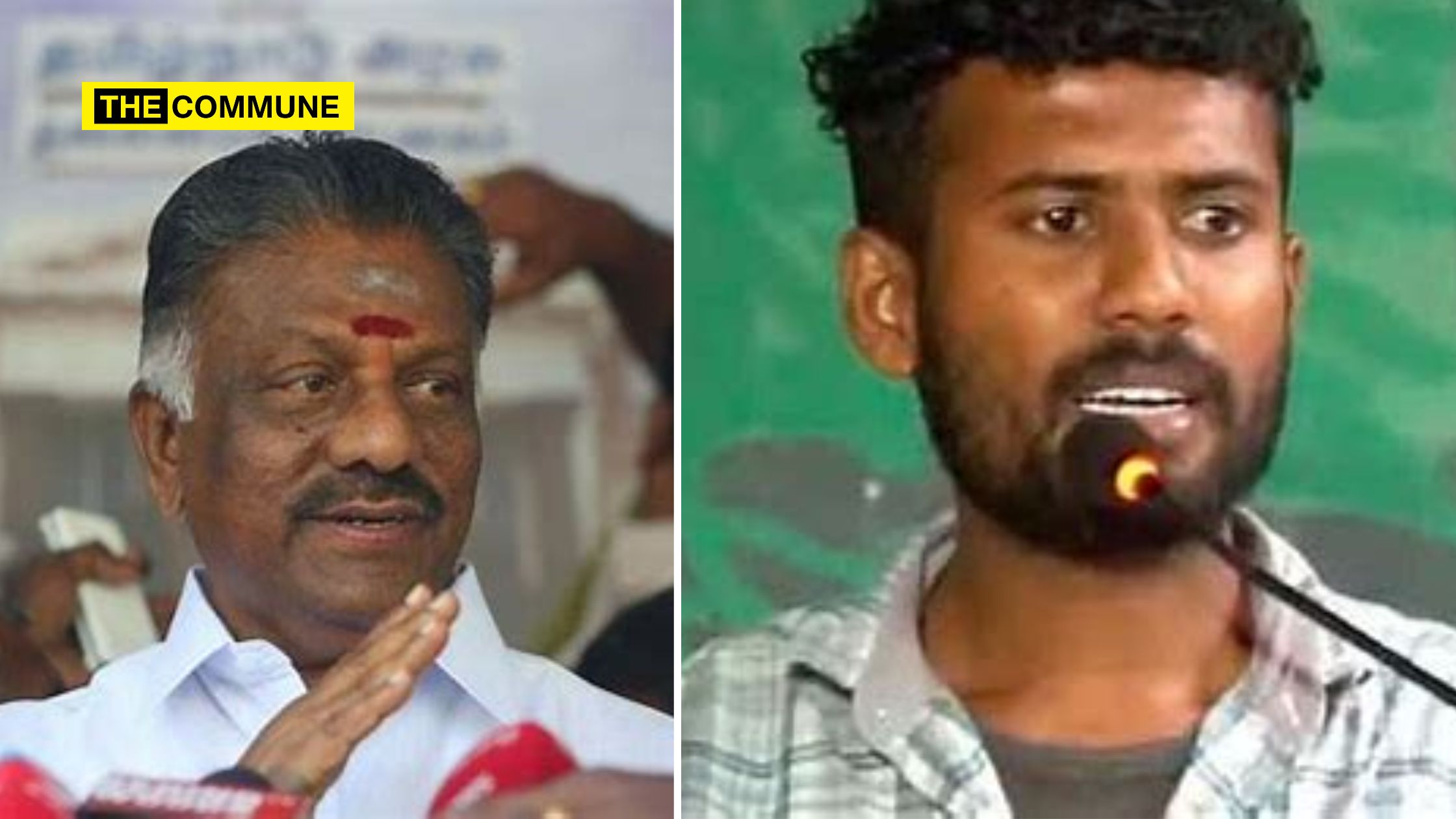
Hinting at the recent Pa Ranjith’s assistant director Viduthalai Sigappi aka Vigneshwaran’s speech, former chief Minister and expelled AIADMK leader O Panneerselvam on Wednesday (10 May 2023) insisted that strict action should be taken against those who insult Hindu Gods.
The former Chief Minister in a three-page statement on Twitter posted, “Ever since the DMK government came to power, the denigration of religion and religious gods has been going on in complete violation of the Indian constitution. All people living in India are given the right to freedom of religion. There is no restriction for people to worship. But defamation of any religion is not acceptable under the Constitution. No one has the right to insult a particular religion. If one speaks disparagingly or insulting a particular religion stating it is an opinion, the government has the duty and responsibility to take legal action against him.”
“During Amma’s regime, the situation was such that, no people from one particular religion were allowed to insult another person from different religion. It would not be an exaggeration to say that this became important for the State to remain in peace during Amma’s reign.”
சட்டம் ஒழுங்கை சீரழிக்கும் வகையில் இந்துக் கடவுள்களை இழிபடுத்துபவர்கள் மீது கடும் நடவடிக்கை எடுத்திடுக! pic.twitter.com/pl9eXBqYqk
“Last year in Chidambaram and Cuddalore, a video was circulated on YouTube with derogatory remarks against the world-famous Lord Thillai Nataraja. More than 2000 Sivanadiyar, a group of Shaivite monks protested against it. Condemning this, on behalf of the AIADMK, I issued a statement and urged the Hon’ble Chief Minister M K Stalin to take action against those who published such videos to create religious conflicts.”, he said.
Adding further, Panneersevalm said “Vigneshwaran alias Viduthalai Sigappi spoke in a programme insulting the epic Ramayana and the Hindu Gods like Rama, Lakshmana, Sita, and Hanuman, whom people worship. This is going viral on social media and is highly condemnable. This is completely against the principle of Arignar Anna. Various organisations have condemned his speech. A complaint has also been lodged with the city police. AIADMK will strongly oppose any such insulting speech to the people of any religion. Such activities tend to undermine Law and Order, religious harmony and create religious conflicts.”
The ousted AIADMK leader requested the CM to immediately intervene in this matter and take strict legal action against those who insulted Hindu Gods and ensure that such incidents do not happen in the near future.
On Tuesday, Chennai Police booked popular Tamil filmmaker Pa Ranjith’s assistant director Vigneshwaran alias Viduthalai Sigappi based on a complaint alleging that the assistant director insulted Hindu Gods, while reciting a poem at the Vaanam Arts Festival, organised by Pa Ranjith’s Neelam Cultural centre.
Click here to subscribe to The Commune on Telegram and get the best stories of the day delivered to you personally.
DMK Dharmapuri MP Senthil Kumar spoke at a Dravidar Viduthalai Kazhaagam event titled “Ithu Tamil Nadu, Ilaya Thalaimuraiyin Maanila Yecharikai Maanadu” (“This is Tamil Nadu, A Warning Meeting Of Young Generation”.
Dharmapuri MP Senthil Kumar said, “Our leader Kolathur Mani invited me to deliver the welcome address. How will I deny this opportunity? We can talk without any compromises and limitations that we encounter in the stages of political parties. I never turn down an opportunity to speak on a stage where my ideology is suitable. During my election campaign, Kolathur Mani organized my first meeting in the Mettur area of Kolathur. Despite the fact that caste dominates in the Mettur area, I received a large number of votes there thanks to the efforts of Kolathur Mani and his organizations.”
He added, “I do not see any difference between Dravidar Viduthalai Kazhagam (DVK) and Dravida Munnetra Kazhagam (DMK). I am jealous when I look at the cadres of DVK. Though we are in politics to serve people, there is an element of selfishness in it. But I am surprised to see you working without participating in electoral politics and solely in spreading Periyar (EV Ramasamy)’s teaching. In this political environment, Sanatana forces are our biggest enemies. Sanatana forces are those that cannot be changed, such as caste, women’s oppression, Varnashrama Dharmam, and others. Certain practices in Sanatana Dharma, such as Sati, have been eradicated. However, we still have a lot of work to do with regard to the caste Varnashrama system.”
He further said, “RSS’s second rung leader Golwalkar said that Muslims, Christians, communists, atheists, and intellectuals are the enemies of RSS. RSS opposed the Indian constitution drafted by Ambedkar as they wanted to make India into a Hindu Rashtra. However, Ambedkar drafted a constitution based on liberty, equality, and fraternity, which is diametrically opposed to the RSS’s ideology. The BJP, led by Narendra (Modi), has been actively working to oppress Christians, Muslims, and intellectuals while pursuing a Hindu Rashtra. We know what happened at JNU University. The ABVP attacked Tamil students and vandalized photographs of Periyar and Ambedkar. But we stood by them and made sure that a larger picture of Periyar was placed in the same location as before.”
DMK MP went on to say, “ABVP rowdies don’t know how to win an argument, so they resort to violence. They also opposed wearing Pardah to establish Sanatana Dharma. The Justice Party, founded by Nair, Sir PT Thiyagarayar, and Natesanar, fought against the 3% community (Brahmins) who held 97% of government jobs. They brought the Non-Brahmin Manifesto, which served as the foundation for today’s reservation system. The Justice Party implemented reservation in government jobs for the first time in 1926. Prior to that, one community (Brahmins) held 95% of government jobs and education. However, after independence, the Madras High Court overturned the reservation law proposed by the Justice Party, which was later upheld by the Supreme Court. Periyar, however, did not stop there. He staged numerous protests and, with the help of Kamarajar and Nehru, introduced the first constitutional amendment, which granted constitutional validity to the reservation system. Nehru initially agreed to reservations in government jobs. However, Periyar disagreed because the majority of those receiving education was from a single community (Brahmins), and thus reservation in jobs would not benefit other communities. Hence, he demanded reservation in both jobs and education, which was granted, and the first constitutional amendment was passed.”
However, in a letter to Kamarajar, Nehru described Periyar as a “Criminal, Lunatic, Perverted Mind” who needed to be admitted to a lunatic asylum. DMK MP lied by saying that EVR was responsible for the first constitutional amendment.
Senthil Kumar stated, “It was our Chief Minister MK Stalin who was responsible for ensuring 27% reservation in all India quota for OBC in the medical counseling. We need reservation in all four pillars of democracy: the legislature, the executive, the judiciary, and the press. We have achieved legislative reservation. In terms of Tamil Nadu, we have achieved some level of executive reservation. However, in North Indian states, a specific community (Brahmins) still holds 90% of the posts such as IPS, IAS, and other government positions. 80% of the owners of the press also belong to one particular community. We need to change this. The most important place where we need to have reservations is the Judiciary. It was Karunanidhi who made the first SC community Rathinavel Pandian as the supreme court judge. However, this is no longer the case.The majority of Supreme Court judges are from the upper castes. We should protest to ensure that a reservation system is in place in the judiciary.“
He added, “Our Dravida Model government policies, such as free bus travel, 1000 rupees for women pursuing higher education, and 1000 rupees for women heads of families, among others, are centered on woman empowerment. These policies are possible only in Tamil Nadu. In those states where these policies cannot be implemented, we call them Go Mootra states. It is these Gomiyam states which the BJP depends on. People in those states where BJP rule do not have brains. It was a victory for Periyar in abolishing caste names in people’s names in Tamil Nadu. We should not address anyone by their caste name. Mamata Banerjee should be addressed as Mamata, Chandrasekara Rao as Chandrasekar, Amit Shah as Amit, and Narendra Modi as Narendra. We should take Periyar beyond Tamil Nadu.”
He further said, “I would like to quote a few examples of rationalism here. Will any parent allow their child to steal the clothes of women bathing in the river, secretly enjoy watching them bathe, and then refuse to return their clothes? What do we call them when it’s happening right now? This is exactly what Lord Krishna did. If he does this now, he will be arrested for eve teasing. Similarly in Ramayana, lord Rama constructed a bridge to the ocean and reach Sri Lanka to bring back Sita. But how did Raavana reach India? Did he build any bridges? No. So who is more powerful? It is Raavana who is more powerful than Rama. In Mahabharata, 5 men marry a woman. We don’t know what kind of mindset they have. They gambled by keeping that woman as a bet. When the online gambling bill was introduced, the Governor referred to it as a skill game. So, what kind of skill did those five people possess while betting on keeping their wife?”
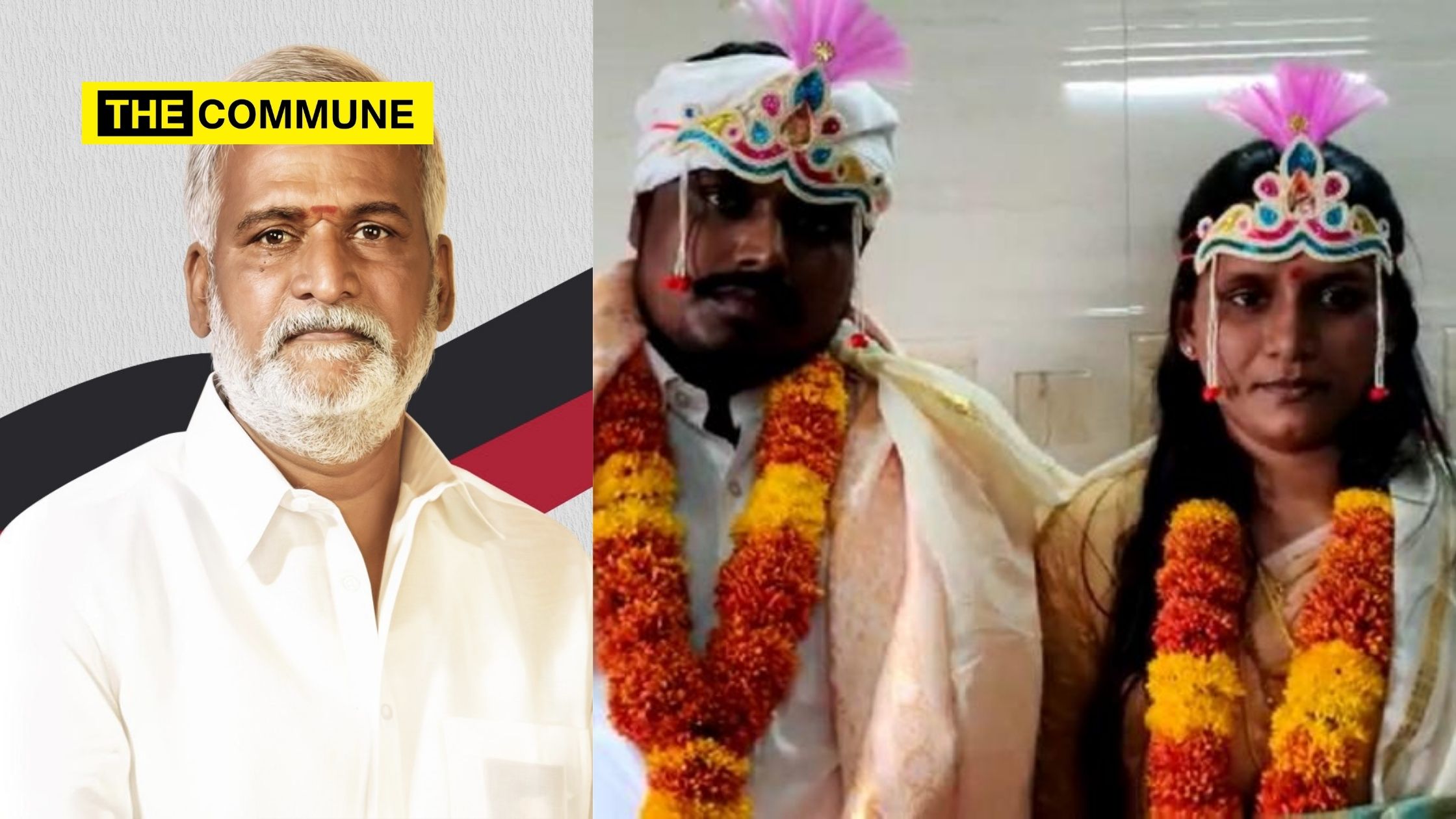
Satish Kumar, who is the son-in-law of the Tamil Nadu Hindu Religious and Charitable Endowments (HRCE) Minister, PK Sekar Babu, has been arrested on charges of rape in a case registered in 2018. He was in a 6-year relationship with Sekar Babu’s daughter, Jayakalyani (25), and the duo got married in March 2022 against her father’s disapproval.
Right after marriage, Jayakalyani and her husband Satish Kumar moved to Karnataka as the couple received life threats and feared persecution. She made several appeals to her father through the media to not disturb her husband’s family just because he disapproved of their marriage. The couple had also submitted a memorandum to the then-Bengaluru Police Commissioner in March 2022.
Speaking to the press, Jayakalyani describes the trauma the couple and her husband’s family endure in the form of fabricated cases from the Minister and his allies. She recalls the torture and life threats she received when she was 8 months pregnant. In an attempt to save their lives and that of the yet-to-be-born child, the couple kept taking refuge and hopped across states and cities, right from Bengaluru, Salem, and Kerala, to Shirdi and Mantralaya. She recalls how the police followed them wherever they went.
Jayakalyani says that once, police guards had told a house owner that they would force abortion of the baby if the couple was caught. Now, when the couple took their 3-month-old daughter to consult a doctor in Poonamallee, her husband was arrested on charges of rape. She accused her father of misusing his power and directing the officials at his behest to continuously fabricate false cases about her husband to distort their married life and abort their child.
Sekar Babu’s daughter says that the woman who has supposedly filed the complaint against her husband is his long-term friend, and she has been threatened to file a fabricated case by her father’s allies. She claims that the woman has been promised a government job, and all these negotiations happened inside a police station.
Jayakalayani recalls the recent custodial deaths and seems to be concerned about her husband’s custody with the police. She looks forward to meeting the chief minister in person and submitting the proof and records to him.
It is important to note that the DMK government has always propagated social justice and motivated inter-caste marriages. The DMK government also offered monetary aid to those from the Adi Dravidar or Scheduled Tribe communities for marrying beyond their castes.
Many have questioned the DMK Minister’s hypocrisy of claiming to propagate “Dravidian Model” of social justice on one hand and allegedly abusing his power to oppose his own daughter’s inter-caste marriage.
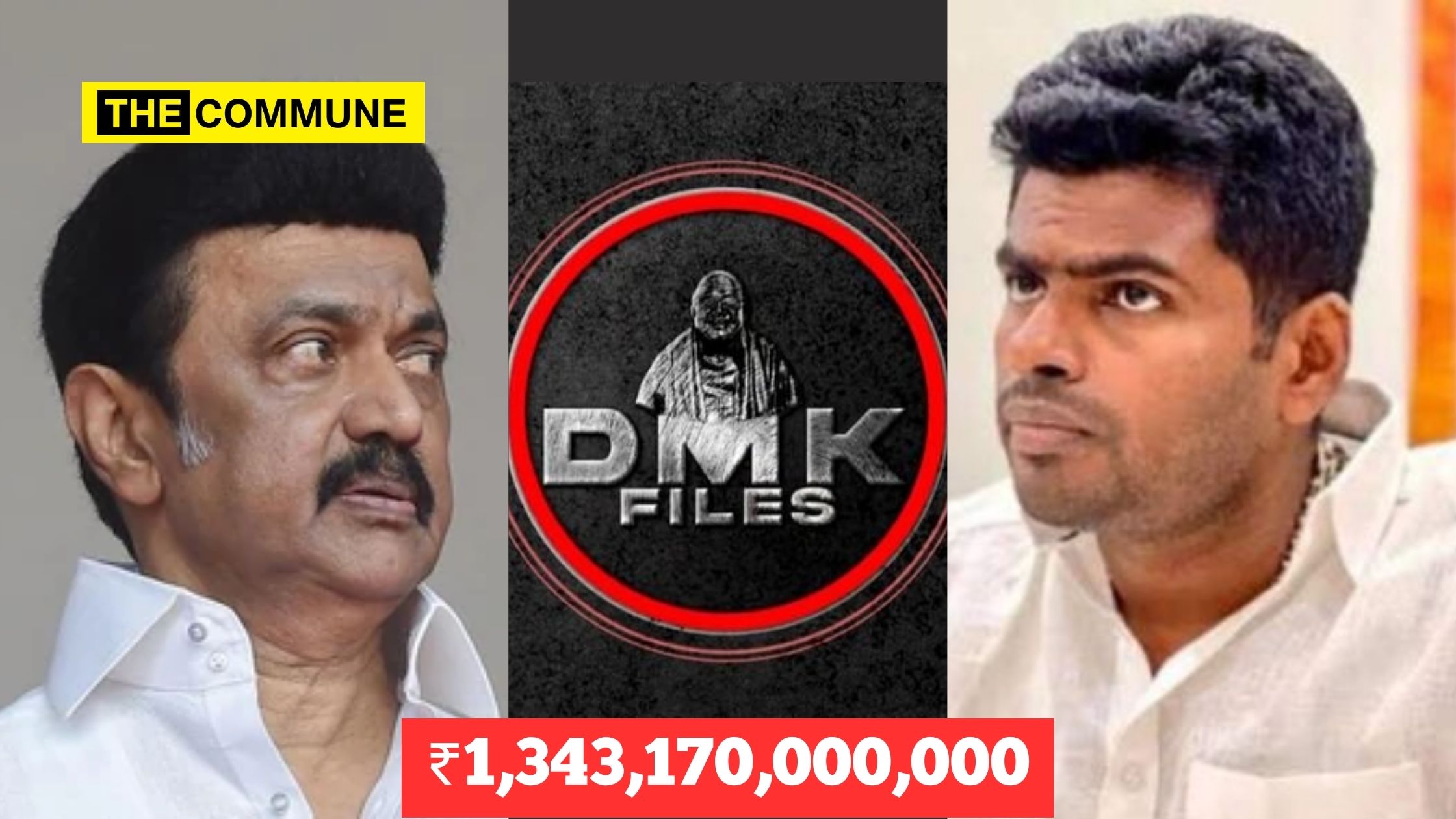
On Wednesday (10 May 2023), Tamil Nadu Chief Minister MK Stalin filed a defamation suit against BJP Tamil Nadu President K. Annamalai in response to the latter’s “DMK Files” episode.
MK Stalin in his petition filed before the Principal Session Judge at the Chennai Egmore Court, stated that the DMK files released by Annamalai are baseless and without any valid proof. He also alleged that the statements Annamalai made against him were also defaming.
Earlier, Stalin’s son and DMK Minister Udhayanidhi Stalin, DMK MPs Kanimozhi and TR Baalu and senior DMK leader RS Bharathi had sent legal notices to Annamalai.
CM Stalin has gone one step further by filing a case under section 199 (2) of Criminal procedure (Cr PC) before the Prinicipal Session Judge in Chennai Egmore court.
City Public Prosecutor G Devarajan filed the petition on behalf of Stalin. The plea was mentioned before the Summer Vacation bench headed by Judge Uma Maheshwari.
The judge adjourned the hearing for eight weeks.
Annamalai on the occasion of Tamil New Year (14 April 2023) revealed the details of ₹1.34 lakh crores in property amassed illegally by the DMK leaders while in power. As part of the first list, Annamalai released the property details of first 12 DMK leaders.
Click here to subscribe to The Commune on Telegram and get the best stories of the day delivered to you personally.
Tamil Nadu Chief Minister MK Stalin’s son and DMK Sports Minister Udhayanidhi Stalin on Tuesday (9 May 2023) felicitated Dindigul student Nandhini, who scored 600 out of 600 marks in class 12 board exams, by gifting her a statue of anti-Hindu genocide-monger EV Ramasamy Naicker.
In Tamil Nadu, the board exams for class 10, 11 and 12 were held in April. The results of the Class 12 board exams were announced on Monday morning.
The student Nandhini from Dindigul scored 600, by scoring full marks in all six subjects.
Leaders from across parties felicitated the girl for her achievement.
Today, Chief Minister M K Stalin personally called her, family and teachers and congratulated them. Following him, Sports Minister Udhayanidhi Stalin also called Nandhini and congratulated her.
While congratulating her, Udhayanidhi gifted a EVR Statue to the Nandhini. In a social media post, Udhayanidhi Stalin wrote ” Today we personally congratulated my younger sister Nandini who achieved a record of 600/600 marks in the 12th standard general examination. Family situation or economic status is no barrier to winning. We expressed our appreciation to the family and teachers who inspired Nandini and supported her.”
குடும்பச்சூழலோ – பொருளாதார நிலையோ வெல்வதற்கு தடையில்லை என, 12ஆம் வகுப்பு பொதுத்தேர்வில் 600/600 மதிப்பெண் பெற்றுச் சாதனை படைத்துள்ள தங்கை நந்தினியை இன்று நேரில் வாழ்த்தினோம். கல்வியே அழியாத சொத்தென்று முழங்கிய அவரது உயர்கல்விக்கு துணை நிற்போமென அன்பை வெளிப்படுத்தி, நந்தினிக்கு… pic.twitter.com/aNUoYvbKRg
E.V. Ramasamy Naicker is a rabid anti-Hindu bigot known for his pro-British stance when the Indian Freedom Struggle was its peak. He pleaded with the British to not leave India and pledged allegiance to them asking the Madras Presidency to be ruled from London. He even went to the extent of demanding a separate Dravida Naadu and had met Mohammad Ali Jinnah regarding the same.
He had abused the world’s oldest language Tamil and also world renowned Tamil literature like Thirukkural, Silappadhikaram, etc.
In 1953, Periyar organized agitation for the desecration of Ganesha idols. He had also claimed that Rama had married other women apart from Sita for his sexual pleasure.
EVR had also called for genocide against Tamil Brahmins saying “If one Tamilan (non-Brahmin) dies for one Tamil Brahmin, only 3 of us will die out of every hundred. Balance 84%, sorry.. 100-3 equals 97, 97-3 equals 94. 94% of us will still remain but he (Tamil Brahmin) will be completely eliminated. We will definitely go this level. We can only go step by step.”.
Click here to subscribe to The Commune on Telegram and get the best stories of the day delivered to you personally.