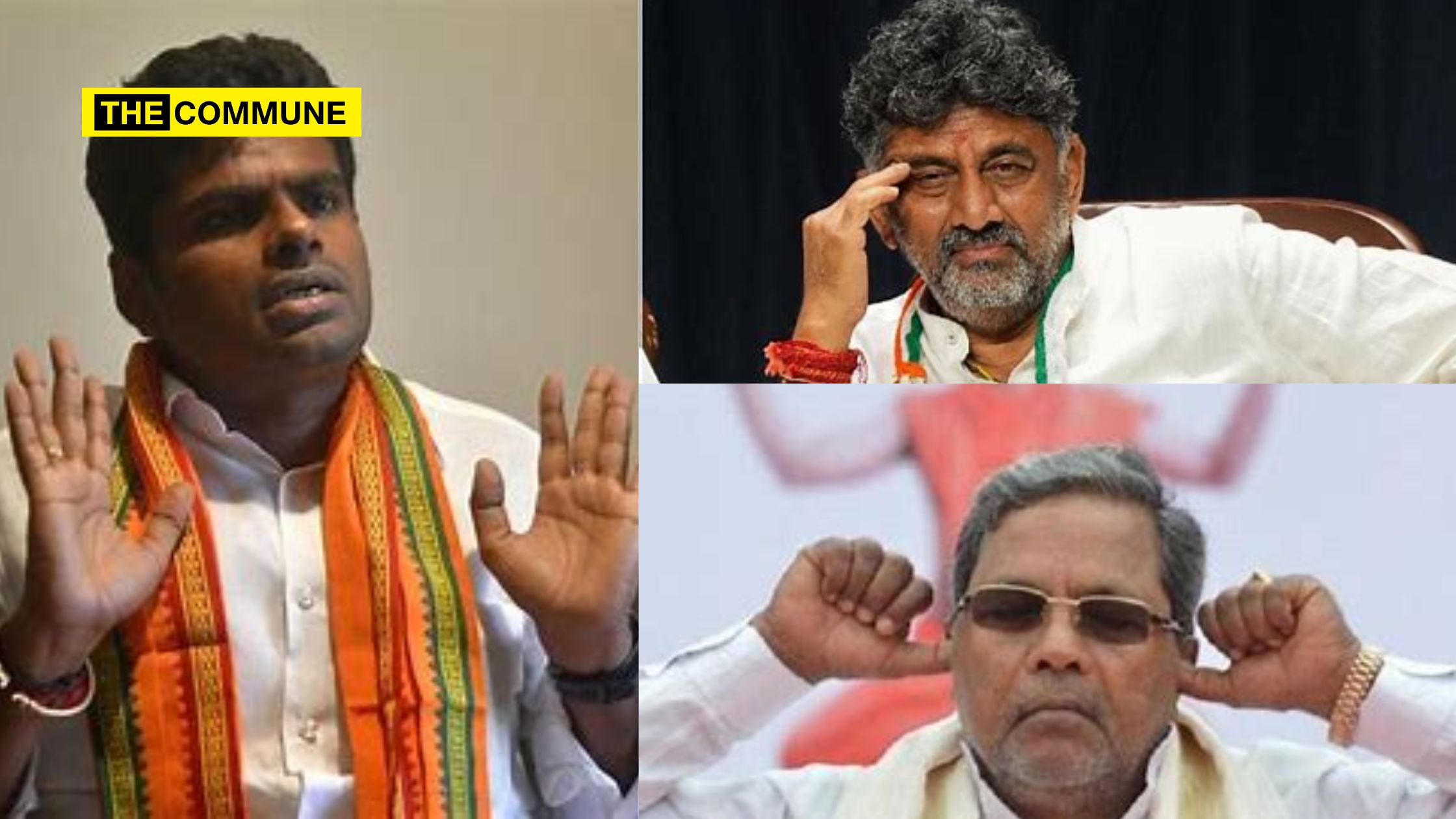
Tamil Nadu Bharatiya Janata Party (BJP) chief K Annamalai on Saturday (20 May 2023) took a jibe at the newly formed Congress government in Karnataka saying that the Nobel Peace Prize should be given to Chief Minister Siddaramaiah and Deputy CM DK Shivakumar if the duo doesn’t fight by 2024. He also predicted the “collapse” of the state government within a year.
Annamalai said, “The way that constitution of India is designed, the council of ministers with the boss as Chief Minister, the Chief Minister and the council of ministers are accountable to the honorable Governor that’s how the current constitutional governance in India is. In Karnataka what we read in Newspaper is, one Chief Minister will rule for two and half years, another chief minister will rule for two and half years. Till then one guy will get Deputy Chief Minister Post, one Chief Minister will get ten ministers, another chief ministers will get ten ministers, the AICC will get 10 ministers, totally 30. Have you seen this kind of structure anywhere in the world? There has to be one accountability of the Chief Minister, but here there is three accountabilities.”
K Annamalai said, “I see Karnataka government collapsing like a pack of cards a year from now. If DK Shivakumar and Siddharamaih don’t fight by 2024, then the Nobel Peace Prize should be given to both of them, because the structure of the government is itself faulty.” He said, “Both leaders will be CM for 2.5 years. Siddharamaih, Shivakumar, and AICC have 10 ministers each. What kind of structure is this?”
He also questioned that when there is no unity between the congress, then where is the opposition unity?
He further said that this is only putting mirror to the country that how opportunistic these leaders have become.
“And I see no opposition unity continuing beyond the swearing-in ceremony.”, Annamalai said
#WATCH | "I see Karnataka govt collapsing like a pack of cards a year from now. If DK Shivakumar and Siddharamiah don't fight by 2024, then the Nobel peace prize should be given to both of them…": BJP Tamil Nadu President K Annamalai takes a jibe at Congress govt in Karnataka pic.twitter.com/2Dv87UbVQz
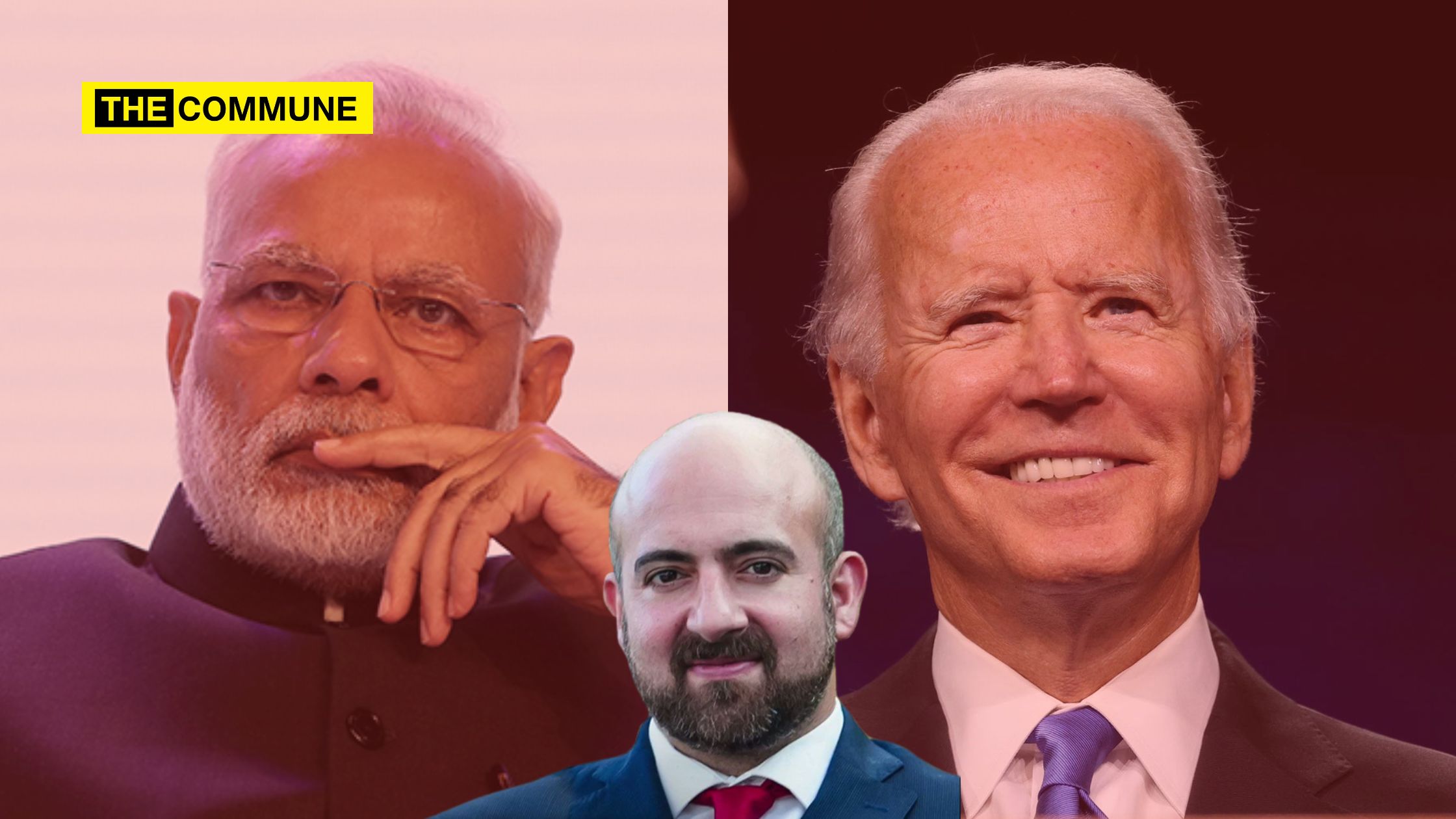
An audio clipping of a Twitter Spaces discussion has gone viral where Mike Benz, a former senior diplomat of the US State Department reveals how the US funds organizations to interfere in Indian elections.
Mike Benz was Deputy Assistant Secretary for International Communications and Information Technology at the US State Department. He had also served as a White House speechwriter for President Trump and advised on tech matters.
Mike Benz explained how US State Department was funding various entities in Indian media to create a narrative against Prime Minister Narendra Modi during the 2019 general elections.
Mike Benz said, “When democracy is used by any proxy of the foreign policy establishment, it’s used to create a predicate for regime change, for a change in that country’s elected government. Principally in order to control various political, media, social, and cultural levers to give basically more freedom and leeway to state departments and intelligence whose influence is limited by state action in that targeted country. I thought of the India thing for a long time. Because I remember very vividly in 2019 when the Atlantic Council was holding conferences about what to do about India and the problem of internet and communications freedom in India because it was leading people to be Modi supporters and Modi was perceived as a populist sort of a part of a new non-aligned movement.”
He said, “The thorny role that India played on the side of the state Department in the national security state during portions of the cold war. When you see this right now with the fact Modi is basically non-aligned on the Russia-Ukraine conflict. You have got declarations by the Indian financial minister who has talked about how they are going to continue to basically buy Russian oil and gas. There is the purchasing of arms and other equipment. And India plays a very very important role with respect to America’s foreign policy vis-a-vis China.”
He further said “So, India lose very large. And Modi’s nationalist proclivities make it a unstable and sometimes adversarial piece on the state department chessboard. They want somebody in there who is like a Trudeau who is like Annalena Baerbock in Germany essentially.”
Mike Benz explained how Annalena Baerbock who is the Foreign Minister of Germany was groomed by NATO and that the Green Party, which was backed by NATO, was being used as a proxy to shut down the Nord Stream pipeline on regulatory grounds over basically climate-type pretext.
“She is the perfect photocopy replica of the picture-perfect vassal state of the Western interest.”, he said.
Mike Benz also said, “I support Western interests but there are dirty tricks. There’s fair play and there’s dirty tricks. And what they are doing with Modi is dirty tricks. We have lived through three years of high-intensity Russia Gate over a hundred thousand dollars in Facebook ads. And we have got probably thirty million dollars at least that have flowed from the state departments to do the same thing in India somewhat explicitly. Because this is all done through the Atlantic Council, global engagement standards and USAID and funding of different pop-up censorship mercenary groups that we send over there under the guise of saying ‘oh well, they’re fact-checking groups, or these are digital resilience groups, or media literacy groups’. But what they are is they are censorship mercenaries who put pressure on Indian civil society and communications platforms in order to stop the ability of Modi supporters from accessing other party mines. It’s very similar to what they did in Brazil with Bolsanaro when they basically got Sergis Moro (currently Minister of Justice and Public Security and former federal judge) and the court system there to ban Telegram when Telegram said that it would not censor so-called misinformation. The High Court in Brazil not only banned Telegram but they put a criminal penalty for accessing Telegram and a $10000 fine by VPN.”
He implied that what the US did with Brazil to bring a regime change by overthrowing Jair Bolsanaro, they’re trying to do the same with India.
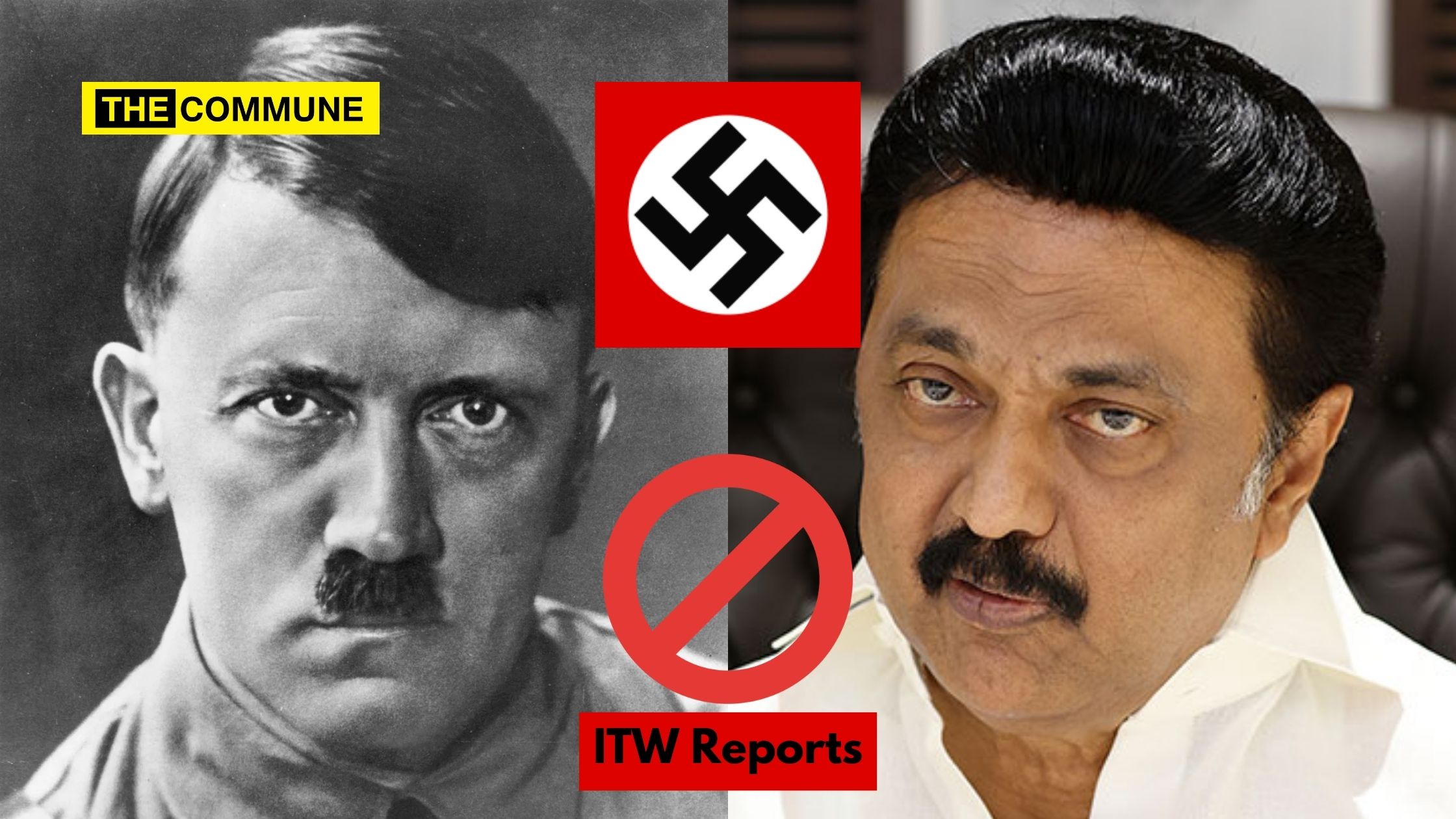
Adolf Hitler’s rise as a ruthless dictator can be attributed to the Nazi Stormtroopers also known as ‘Brownshirts’ (because of their khaki uniform) who were infamous for their operation outside of the law and their violent intimidation of Germany’s leftists and Jewish population.
This private army of ruffians and bullies indulged in thuggish vigilantism to intimidate opponents going after anyone and everyone who dared to question the Führer.
Two years before the Brownshirts were formed, the ‘Black Shirts’, a colloquial term used to refer to members of the Fascist organization Fasci Italiani di Combattimento, was created by Benito Mussolini in Italy in March 1919. The majority of the Black Shirts were disgruntled ex-soldiers. They posed as champions of law and order and violently attacked anyone who criticized Mussolini, their leader.
About a century later, history seems to be repeating itself on the other side of the world, in a democratic India, in the southern state of Tamil Nadu under the DMK regime of MK Stalin.
The ‘black shirts’ of Tamil Nadu (as the DK, DMK and other Dravidian Stockists are colloquially called) have formed their own version of Black Shirts.
Dravidian Model Of Fascism And Nazism
As popularized by Tamil Nadu BJP President K. Annamalai, the DMK ecosystem is like layers of an onion. One layer comprises cinema actors and social media influencers and underneath that layer is the layer of Dravidian Stockist journalists and media outlets who control and peddle narratives favourable to the DMK. The next layer is the ideologues and other fringe yet core outfits like Dravida Kazhagam, Dravida Viduthalai Kazhagam and so on. The next layer is the DMK leaders and the core of the onion is the first family of the DMK.
This ecosystem has long held a grip over the popular narrative. They were able to successfully control what was broadcast on these mainstream news channels. Even if DMK cadres sexually abuse a woman police officer in broad daylight and that woman police officer is forced to withdraw her complaints due to DMK pressure, these news outlets will not hold prime-time debates against the DMK. But with the democratisation of social media, the DMK ecosystem is losing its ground with netizens and Tamil Nadu opposition parties calling out the bluffs and fallacies of the DMK.
Therefore, DMK has modeled ITWreports, a Twitter handle on the lines of the BlackShirts of Mussolini and BrownShirts of Hitler.
ITW Reports: A DMK Cyberbully
Prior to 20 April 2022, the DMK government arrested dissidents, primarily those without financial support, but there was no organized effort.
On April 20, 2022, they launched the Twitter handle ITW Reports, which was promoted by the official DMK IT Wing and DMK IT Wing secretary TRB Rajaa (now a Minister in Stalin’s cabinet), in an organized effort to collect information about dissidents and go after them.
The ‘ITW Reports’ handle identifies itself as an ID to report abusive content against individuals, organisations and Tamil Nadu Government (read it as DMK leaders, DMK and DMK government). It claims to clamp down on fake news and other malicious content on social media.
However, in the name of pursuing legal action against those who spread misinformation about the DMK and the government, they are literally going after all of their opponents and dissidents for trivial social media posts and memes.
This officially unofficial and extended arm of the DMK IT wing works with the machinery of the Tamil Nadu Police arresting DMK critics and low-level cadres of parties like AIADMK, BJP, AMMK, and NTK.
Here are a few instances that show how Tamil Nadu police is being used as a mercenary of the DMK.
Instance 1
DMK IT wing members went after a Naam Tamilar functionary named Ganesh Kumar alias Nila Kannan for posting an image of late Chief Minister Karunanidhi having food with three of his wives.
Though it is a fact that Karunanidhi had three wives, DMK IT wing members could not digest that an opponent was pointing to it. Naam Tamilar Ganesh Kumar was arrested eventually.
It is worth noting that one DMK supporter thought the DMK government’s arrest of the NTK cadre was excessively severe. He said, “Pity don’t file a case!!! Just warn him!!! That should be enough.”
பாவம் டா வழக்கு பதிவு செய்யாதிங்க!!! எச்சரிக்கை செய்யுங்க போதும் !!! எப்படியும் சின்ன பசங்கள தான் இருப்பாங்க !!எல்லாம் சீமான் தான் சொல்லனும்!!!
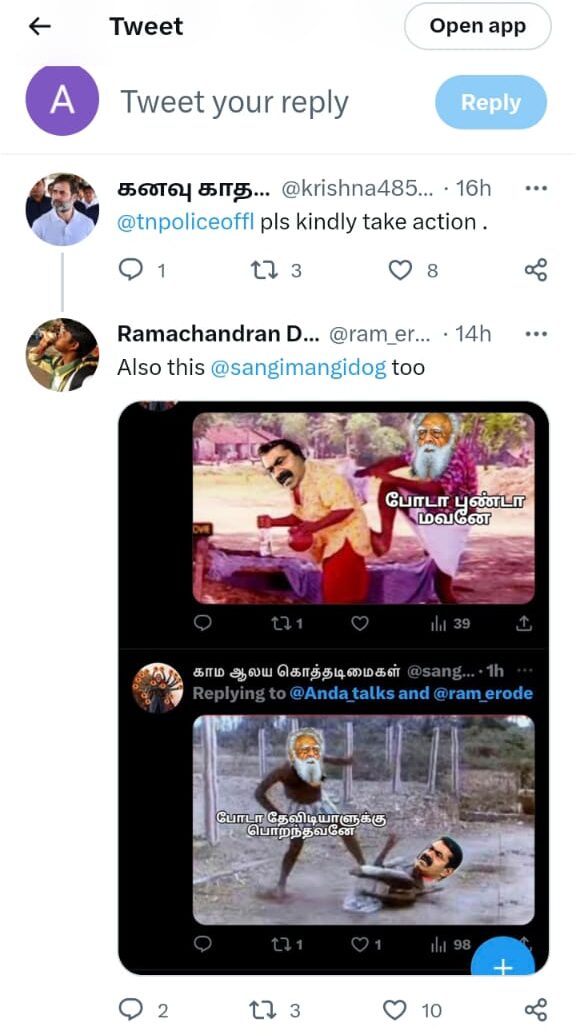
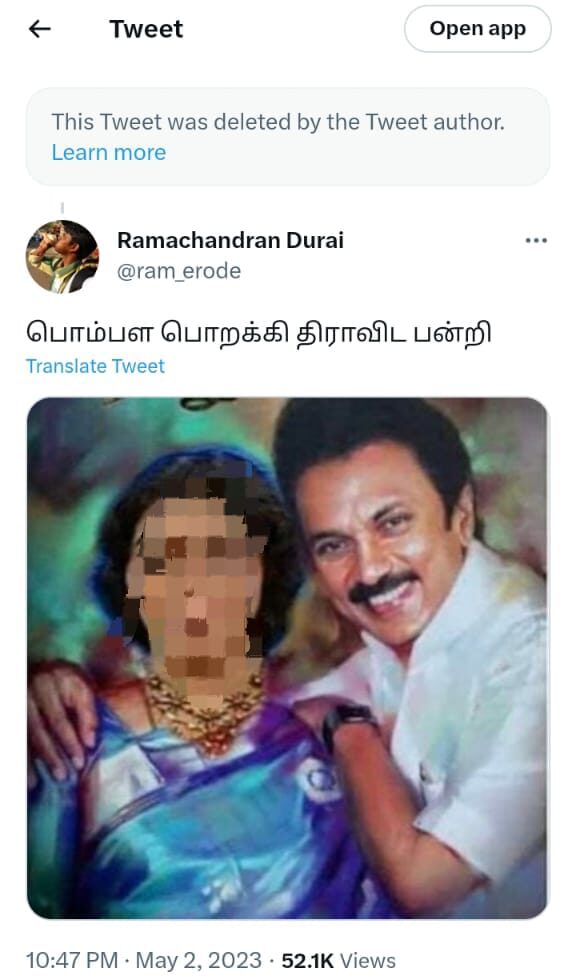
In another case, in response to a DMK supporter’s derogatory tweet about Naam Tamilar Katchi chief Seeman, NTK supporter Ramachandran Durai posted an abusive tweet about Tamil Nadu CM MK Stalin and a TV anchor. Though the image posted by an NTK supporter was abusive and derogatory, the image posted by a DMK supporter was equally abusive. NTK Ramachandran has been arrested, but the DMK supporter who abused NTK chief Seeman is still free to roam and continue his abuse.
சமூகவலைதளத்தில் மிக கொச்சையாக கீழ்த்தரமாக அருவருக்கத்தக்க வகையில் பதிவுகள் பகிர்ந்த பெரம்பலூர் மாவட்ட நாம் தமிழர் கட்சியை சேர்ந்த ராமசந்திரன் துரை என்ற நபர் மீது 4 பிரிவுகளின் கீழ் வழக்கு பதிவு செய்யப்பட்டு சிறையில் அடைக்கப்பட்டான். pic.twitter.com/fDJ2rQ96jk
In the first two instances, the tweets by NTK supporters were abusive and derogatory. However, ITW Reports has gone after even harmless criticism.
Instance 3
Biriyani Man 2, a popular YouTuber, posted a video taking a dig at Udhayanidhi Stalin who said continued protest against NEET is the ‘secret’ to get NEET abolished.
Biriyani Man’s video contained no derogatory remarks directed towards the DMK or Udhayanidhi Stalin. However, DMK supporters wanted him arrested because they did not want their crown prince to be trolled by anyone.
A Twitter handle named @Mark2Kali_ (a rabid Dravidian Stockist handle that spews hatred against Hindus, particularly Brahmins) had alleged that the Biriyani Man channel is spreading malicious campaign about the DMK government and tagged DMK leader TRB Rajaa and ITW Reports handle.
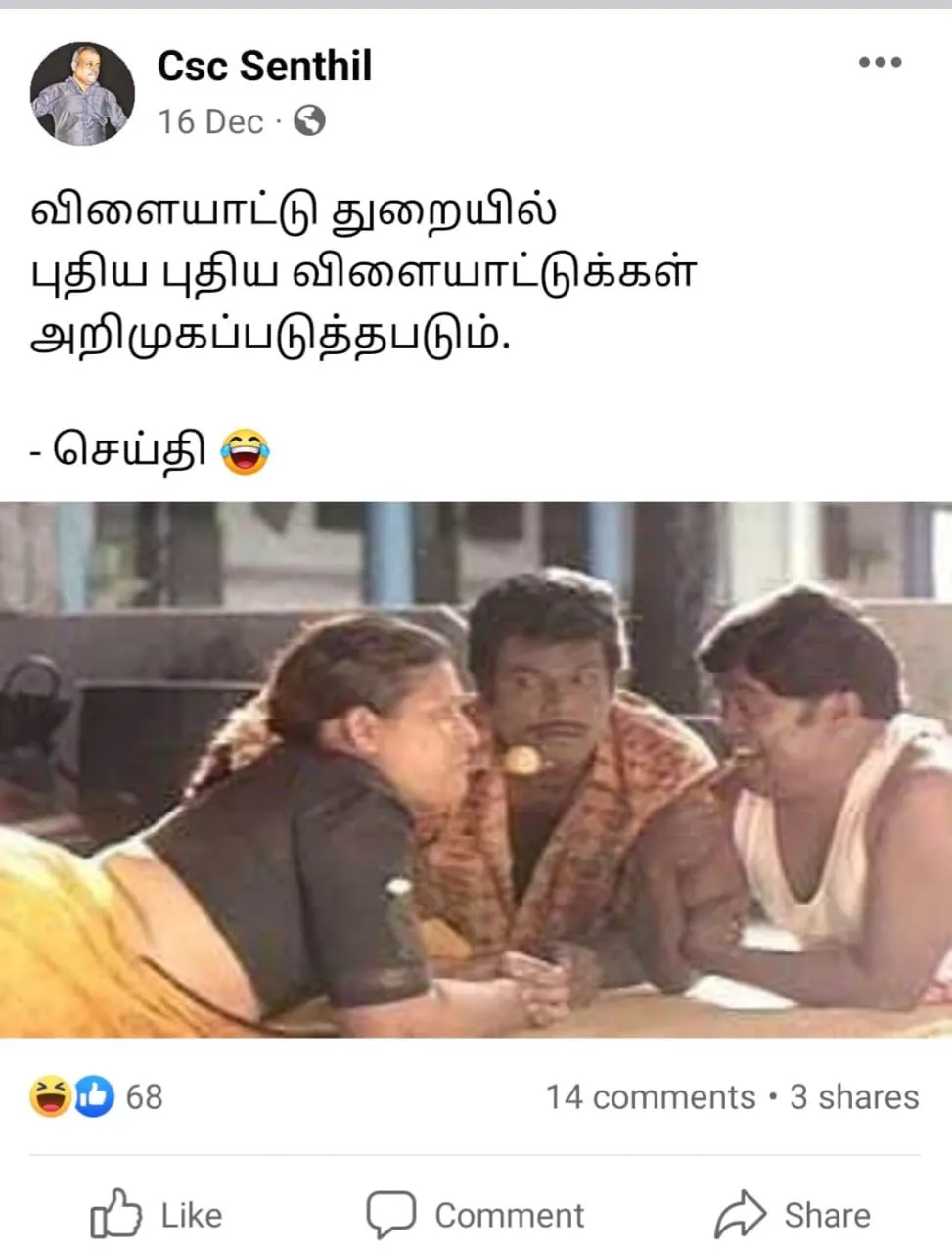
On December 27, 2022, Tamil Nadu Police arrested an AMMK functionary for a meme targeting Chief Minister’s son Udhayanidhi Stalin’s Sports Ministry. The AMMK functionary shared a screenshot from the film ‘Gentleman,’ in which actor Senthil introduces games like “coupling”, “spooling”, etc, stating that the new Tamil Nadu sports ministry will be introducing such new games.
Instance 5
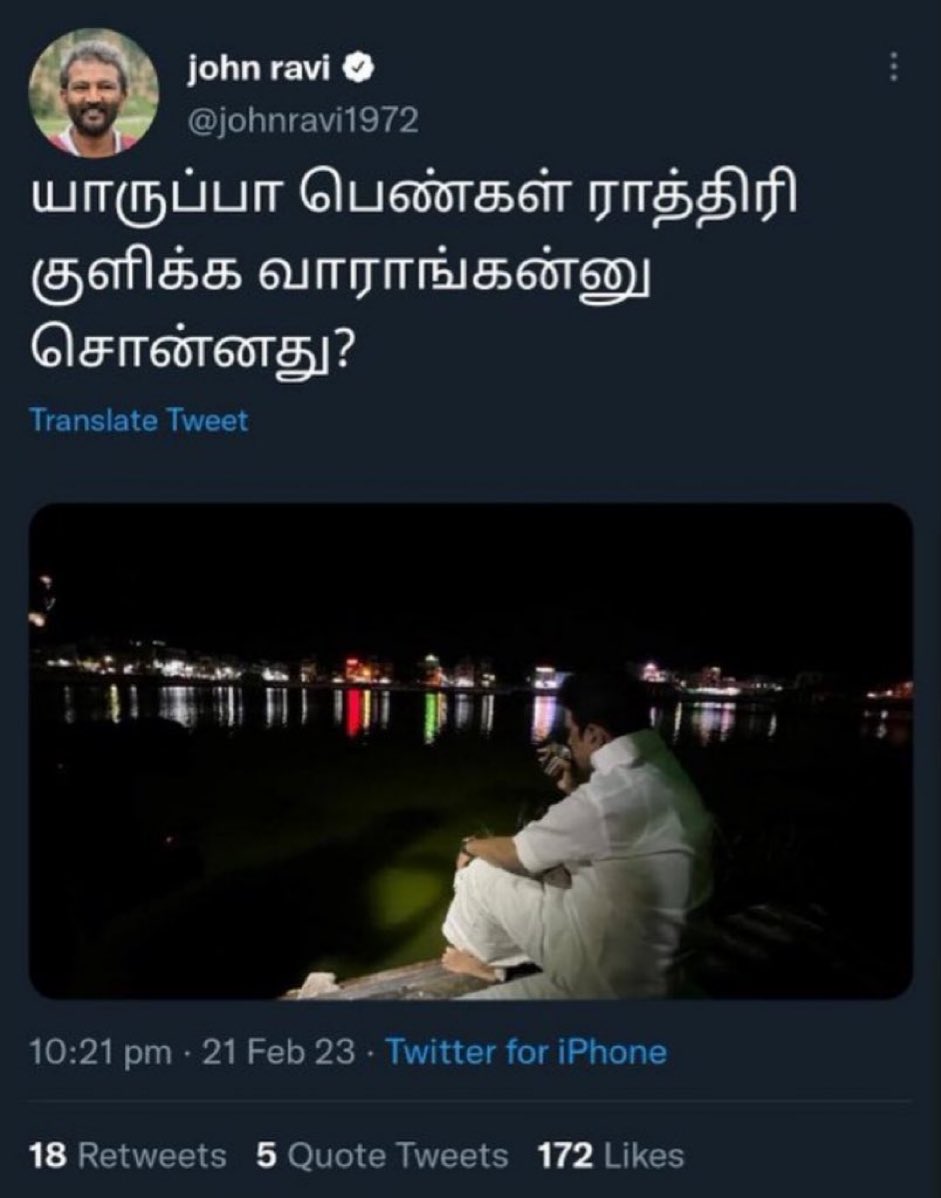
On 21 February 2023, BJP supporter John Ravi had posted a picture of MK Stalin sitting on the steps of the Tiruvarur Temple tank with the caption “Who had said that the ladies are coming here to bathe at night?”
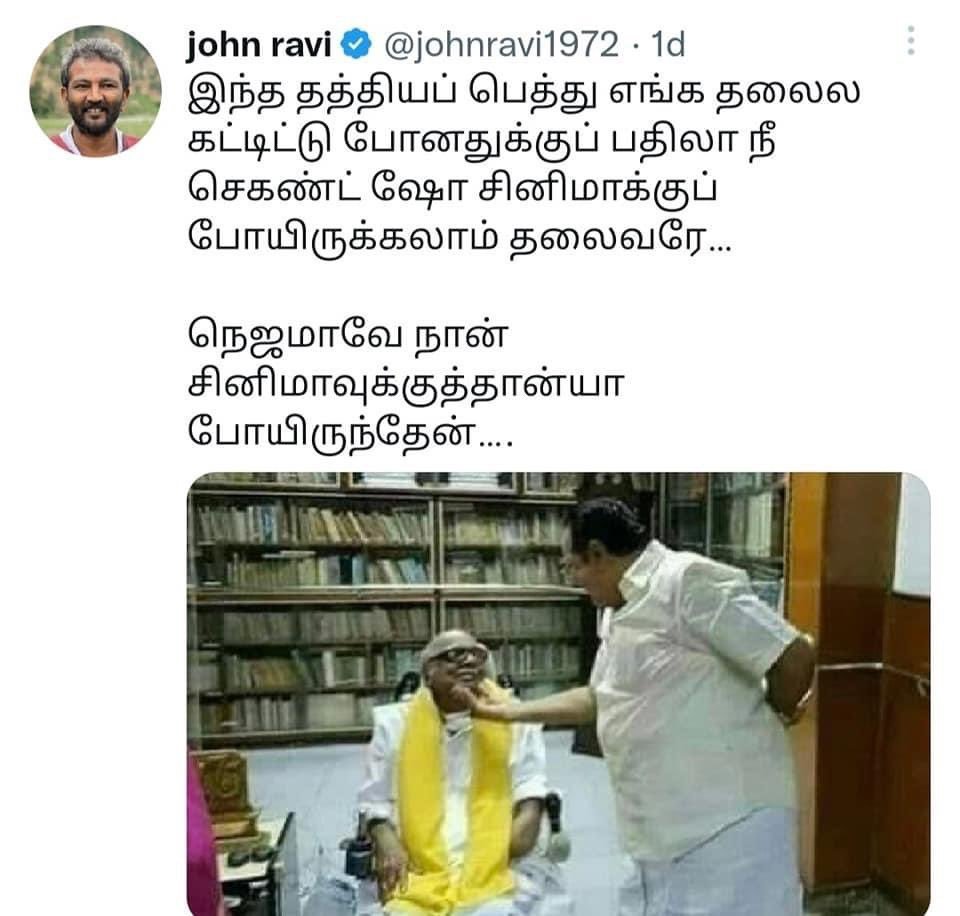
In another post, he had shared a picture where DMK Minister Duraimurugan can be seen holding Karunanidhi by the jaw with the satirical caption conveying a fictional conversation between the leaders.
Duraimurugan says “Thalaivare, you could’ve gone to second show cinema instead of giving birth to a nincompoop and burdening on our heads”, to which Karunanidhi replies “I had indeed gone to the cinemas”.
The ‘ITW Reports’ filed a complaint against John Ravi following which the Tamil Nadu police went all the way to Gujarat to arrest him.
Instance 6
On March 22, Tamil Nadu Police arrested one of the admins of Voice of Savukku for a meme targeting Chief Minister MK Stalin, ex-Finance Minister (now IT Minister) PTR Palanivel Thiyagarajan, and the recently announced monthly assistance scheme for women.
The Voice of Savukku handle posted a video of Kavundamani and Senthil’s comedy in which Kavundamani picks ladies for factory work. The meme depicted CM MK Stalin as actor Kavundamani and PTR Palanivel Thiyagarajan as actor Senthil, attempting to poke fun at the DMK government’s selection criteria for the monthly assistance scheme.
Other Critics Who Have Been Arrested By DMK Government
Krishna Kumar Murugan, a political researcher who is known for tweeting data points countering DMK, was arrested on Wednesday (21 September 2022) in the case of alleged ‘defamatory’ posters caricaturing Tamil Nadu Chief Minister MK Stalin. It should be noted that the image for which Krishna Kumar was arrested was originally designed by Vikatan for its cover pic depicting TN BJP chief Annamalai. Krishna Kumar used the same image with MK Stalin’s face instead of Annamlai’s.
Vice President of Tamil Nadu BJP’s Industrial Cell Mr. Selva Kumar was arrested by the Tamil Nadu police on Wednesday (12 April 2023) morning. He has been arrested allegedly for criticizing Tamil Nadu Electricity and Liquor Minister Senthilbalaji. Initial reports say he was arrested for calling Senthilbalaji “Ganja Balaji” owing to the rising drug menace in the state.
Maridhas, Karthik Gopinath, Kishore K Swamy, NTK’s Seethaiyin Mainthan are among those arrested by the DMK government for their Facebook posts and tweets.
It should also be noted that ITWreports only takes legal action against those who abuse the DMK and its first family. DMK members and supporters can go to any length to abuse their opponents, and the ITW Reports turns a blind eye.
Abusive Tweets Of DMK Members
On 11 March 2022, DMK Rajya Sabha MP MM Abdulla unleashed an abusive tirade against two individuals, one of whom is a woman journalist, for speaking against the DMK IT wing whose members allegedly harass anyone who criticizes the party on social media. DMK MP launched an abusive rant against ‘Savukku’ Shankar and the woman journalist, claiming that those two journalists will do hand*** for ₹5 and blow*** for ₹10.
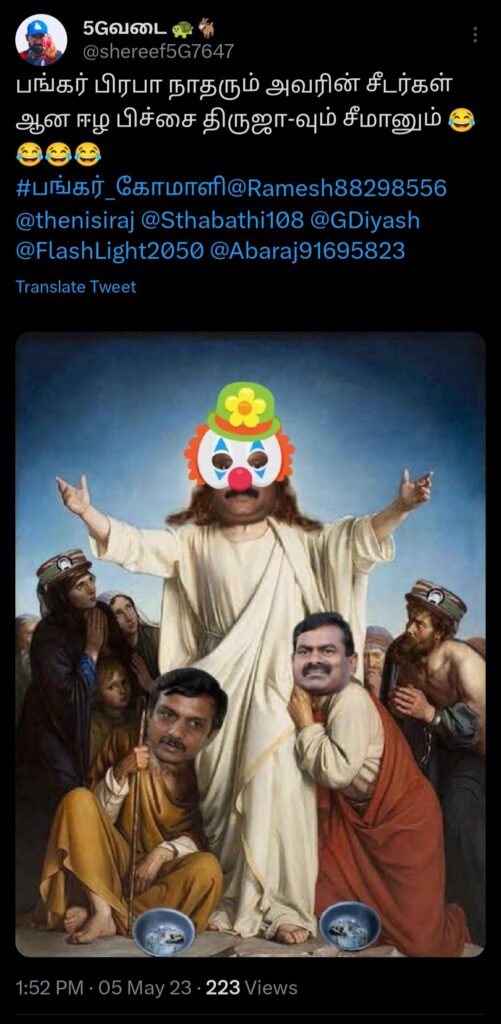
A Dravidian Stock handle named 5Gவடை (@shereef5G7647) had once posted a derogatory image of Jesus Christ mocking slain LTTE terrorist Prabhakaran and Naam Tamil Katchi head Seeman.
This handle has posted so many tweets abusing Prabhakaran.
பிரபாகரனிடம் எனக்கு பிடித்ததே அவரின் கட்டு மஸ்தான "Six pack" உடல் தான்
சட்டுனு குனிஞ்சு கால தொட முடியாது ஆனால் போராளி என்று ஊரை ஏமாற்றி, மிரட்டி, ஓசி சோத்த தின்னு உடம்பை வளர்த்த பரதேசிதான்🤣🤣
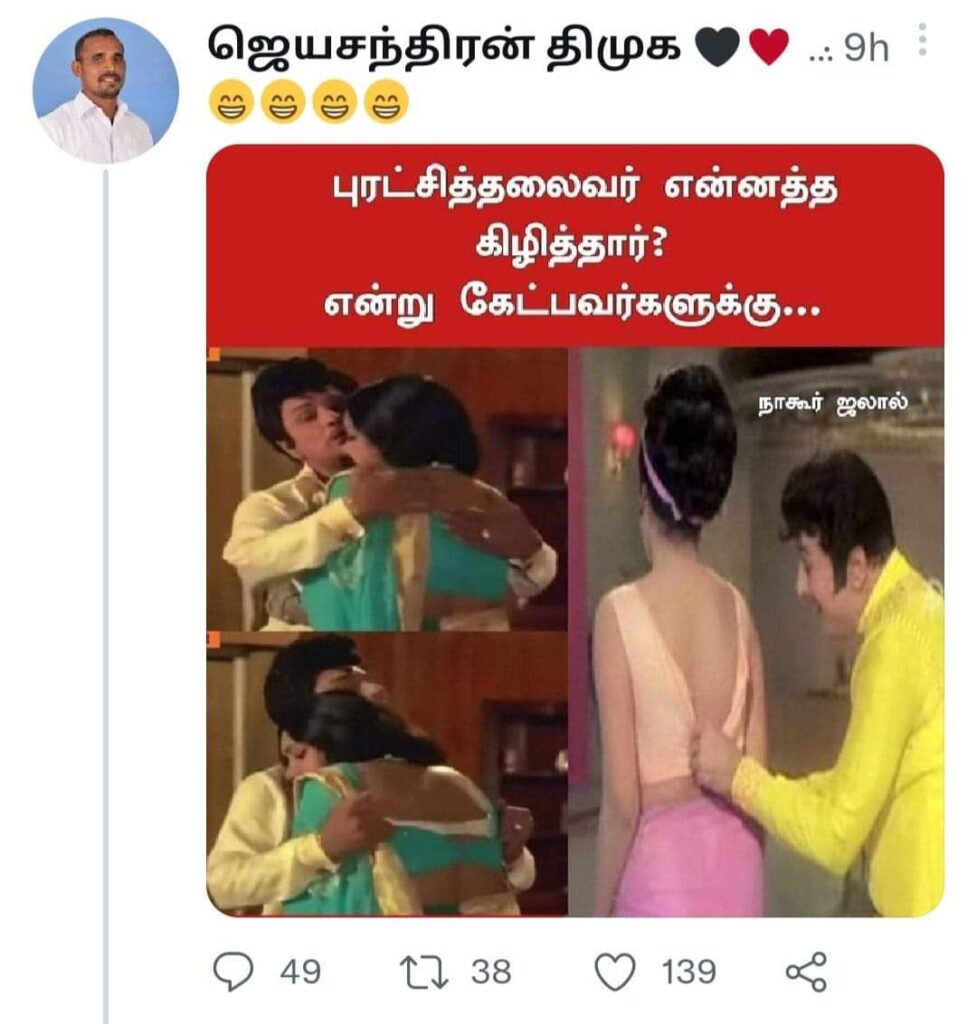
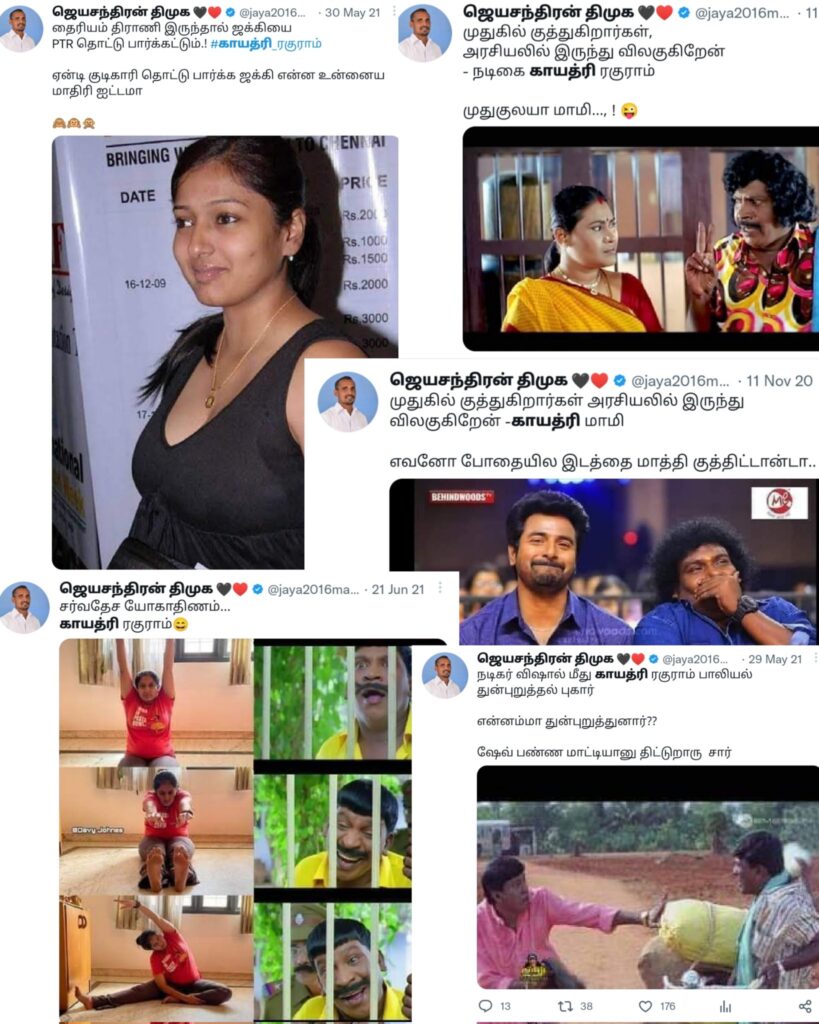
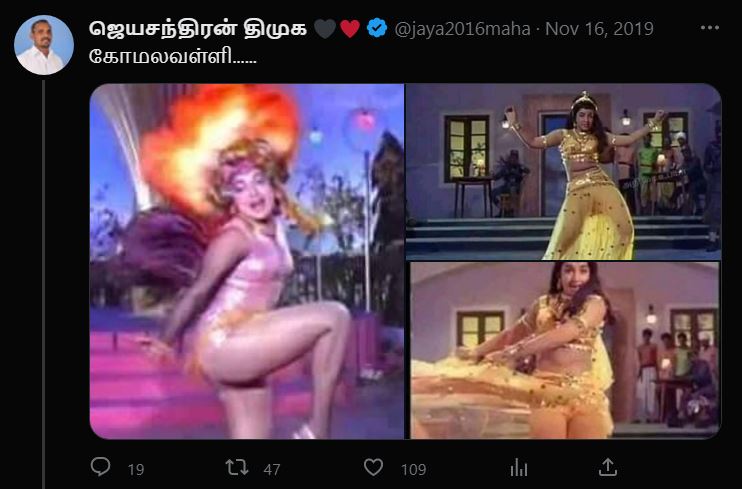
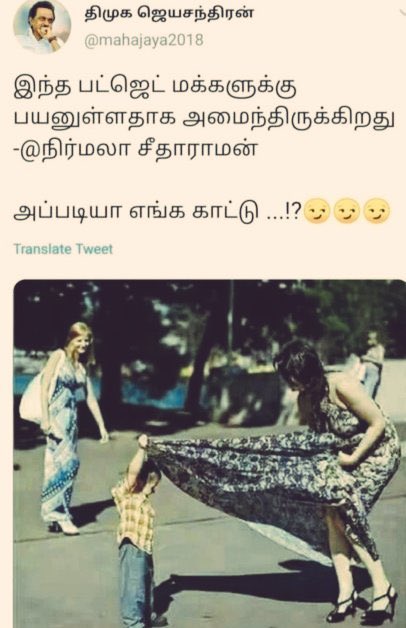
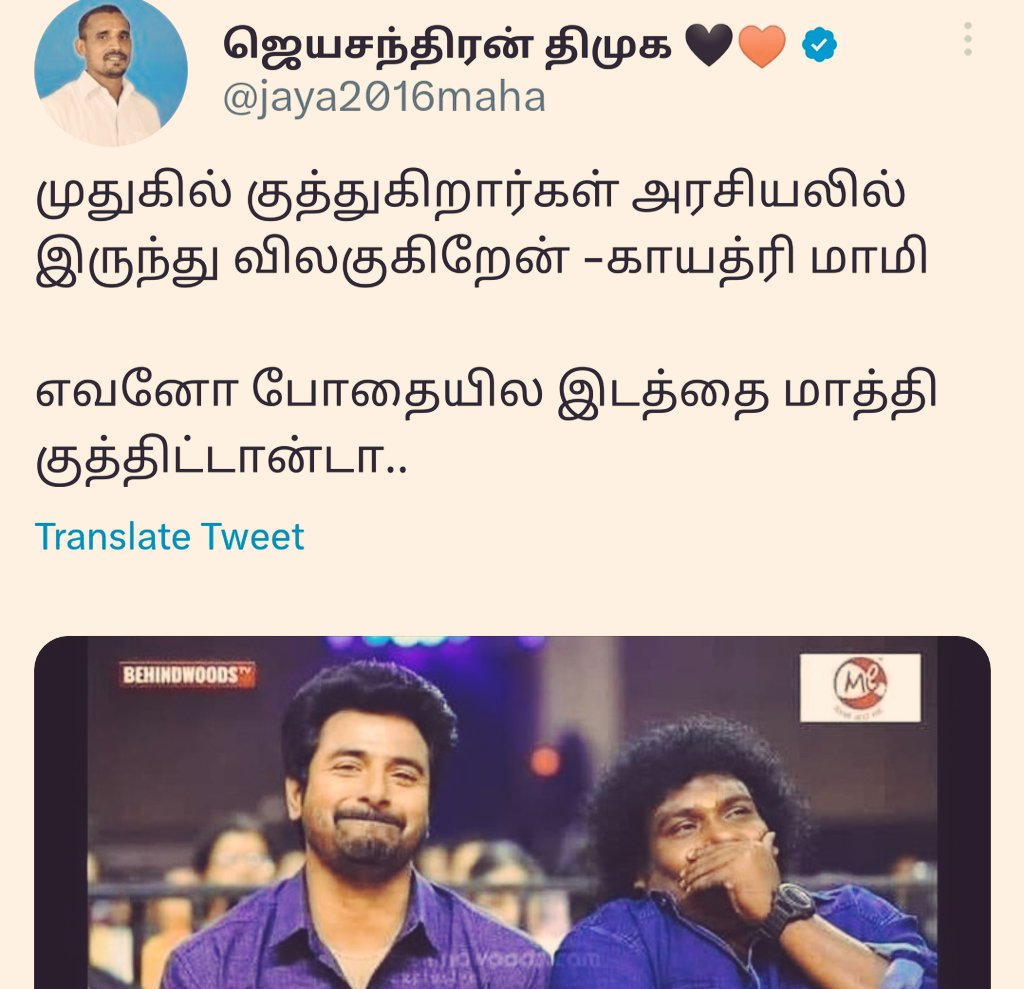
Jayachandran DMK (@jaya2016maha), another rabid Dravidian Stockist and a member of DMK has abused late AIADMK leaders Dr. MG Ramachandran and Jayalalithaa, ex-BJP leader Gayathri Raguramm, Union Finance Minister Nirmala Sitharaman and many others.
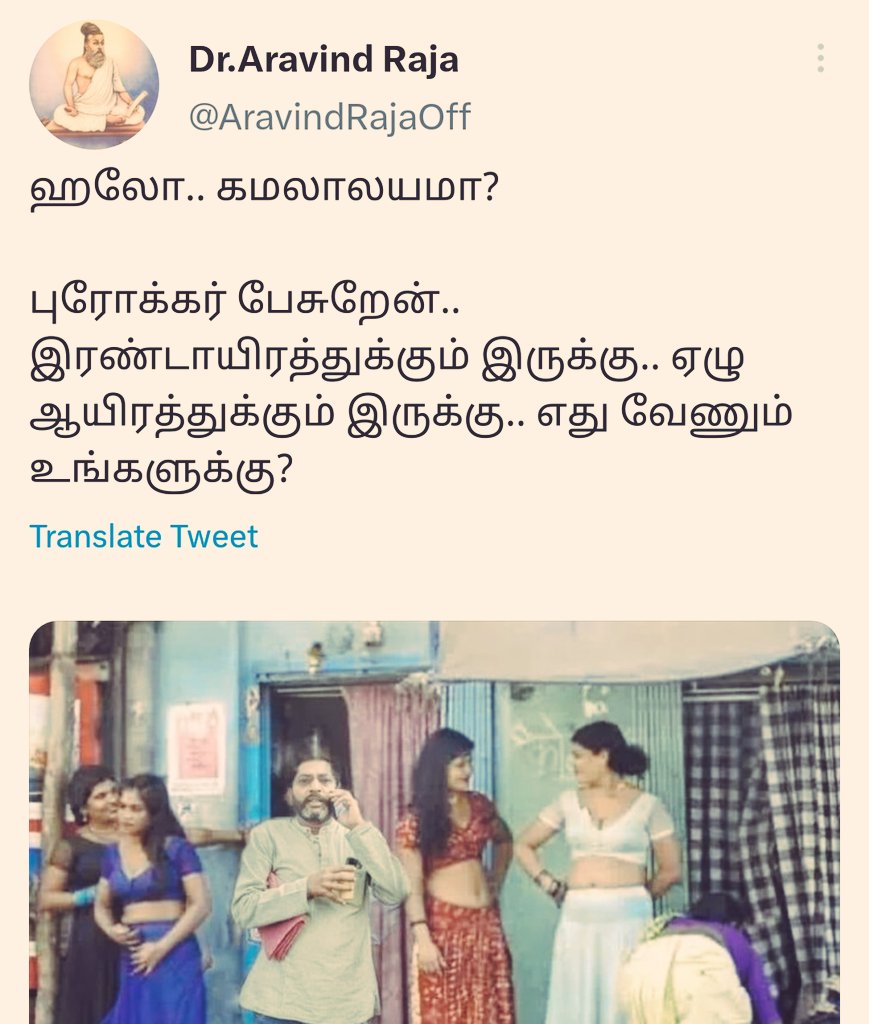
Another Dravidian Stockist named Dr. Aravind Raja (@AravindRajaOff) had portrayed DMK critic Savukku Shankar as a pimp supplying women to ‘Kamalalayam’ (BJP Tamil Nadu headquarters).
However, the Tamil Nadu police have not taken action against these handles.
DMK Government’s “Social Media Monitoring Cell”
When PTR Palanivel Thiagarajan as Tamil Nadu Finance Minister presented the state’s budget for the year 2022-23 in March 2022, he announced that a ‘Social Media Monitor Centre’ would be formed ‘to battle fake news and misinformation on social media platforms’.
It was mentioned that the state government has decided to form a special Social Media Monitoring Centre under the police department.
Incidentally, the ITW Reports was created in April 2022 by DMK IT Wing.
Based on the directions of the MK Stalin-led DMK government, the Tamil Nadu Police formed a special ‘Social Media Monitor Team’ to monitor social media sites in September 2022.
According to reports, a whopping 203 officials and police personnel have been deputed for the task of “monitoring fake news on social media intending to create tension, riots, online frauds, drug smuggling, etc”.
Back in March 2022, The Commune bad expressed concerns about this stating that the DMK government with the state police machinery under its control might use it to muzzle dissenting voices which is what seems to be happening.
Questions That Demand Answers
1) If the objective was to counter fake news and online abuse, why hasn’t the Tamil Nadu police taken action against DMK members and other Dravidian Stockists despite complaints being registered?
2) Why hasn’t the Tamil Nadu police arrested U2 Brutus ‘Minor’ who derogated Hindu God Shiva and Goddess Kaali?
3) Why hasn’t the Tamil Nadu police taken action against Dravidar Viduthalai Kazhagam who abused Hindu Gods like Marriamman and Ayyappan?
4) Why hasn’t action been taken against DMK members who have abused BJP, AIADMK and NTK leaders?
5) Is Tamil Nadu Police here to work for the people or as a mercenary of DMK?
6) Is ITW Reports part of this “Social Media Monitoring Cell” of Tamil Nadu police?
7) Is taxpayer money being used to fund ITW Reports to go after DMK critics?
(Vallavaraayan is a political writer fighting Dravidian Stockists.)
Click here to subscribe to The Commune on Telegram and get the best stories of the day delivered to you personally.
DMK stage speaker Shivaji Krishnamoorthy who had verbally abused and threatened to gun down Tamil Nadu Governor RN Ravi using terrorists has been inducted back into the party.
The DMK has revoked his suspension just four months after he was suspended for his abusive rant and threats against the Tamil Nadu Governor.
“Shivaji Krishnamoorthy has apologized for his acts. Following this, his suspension is cancelled.”, DMK Minister and party’s General Secretary Duraimurugan said.
In January 2023, Shivaji Krishnamoorthy had stoked controversy by talking derogatorily about Tamil Nadu Governor RN Ravi, Tamil Nadu BJP President Annamalai, BJP MLA Vanathi Srinivasan and Leader of Opposition Edappadi K. Palaniswami.
Referring to Governor Ravi’s refusal to read the address verbatim in the Assembly, the DMK man said “CM Stalin has ordered us not to scold the Governor. I would have placed flowers on his feet and thanked him with folded hands if that ‘mayirandi‘ (cuss word in Tamil) had read the speech correctly. But, since that ‘La*ade Ka Bal‘ (cuss word in Hindi meaning pubic hair) refused to read what was given to him and refused to say Ambedkar’s name, don’t I have the right to slap him with a slipper?”
He added, “You (Governor) have taken an oath on the constitution written by Ambedkar. If you are not mentioning his name in your speech, then you go to Kashmir. We’ll send a terrorist to shoot and kill you, La**de K* B*l.”
“Otha (cuss word to refer one’s mother), if we can make a great leader like Indira Gandhi apologise, you are nothing to us.”, Shivaji Krishnamoorthy said.
Abusing Tamil Nadu BJP President K. Annamalai, he had said ““In the Tamil Nadu BJP, there is one person named Annamalai. He claims he gave up his prestigious IPS position to serve people. However, the government had made significant investments in your training. But you wasted all of that money. After wasting all of the government’s money, you, ‘Echa Soru‘ (cuss word referring to leftover food eaten by others), ‘Pottai‘ (a derogatory term for women), are criticizing Thalapathy Stalin?”
The DMK man had also abused Leader of Opposition Edappadi K. Palaniswami saying “Thalapathy Stalin took over the government when COVID was at its peak. Before that Palaniswami was the Chief Minister. Take a look at his teeth. ‘Echa Soru’. If we cut him into pieces, people in eight towns can eat his flesh. He is looking like a fat frog. When Edappadi and the entire world were saying to maintain social distance during COVID, our leader Stalin was the only one who asked us to gather together through ‘Ondrinaivom Vaa’. Our leader, MK Stalin, is not like Edappadi Palaniswami, a fat pig, or O Panneerselvam, who can’t walk, or former Speaker Dhanabal, who looks like he has piles.”
Shivaji Krishnamoorthy had also abused BJP MLA Vanathi Srinivasan and Annamalai’s mother as well.
Click here to subscribe to The Commune on Telegram and get the best stories of the day delivered to you personally.
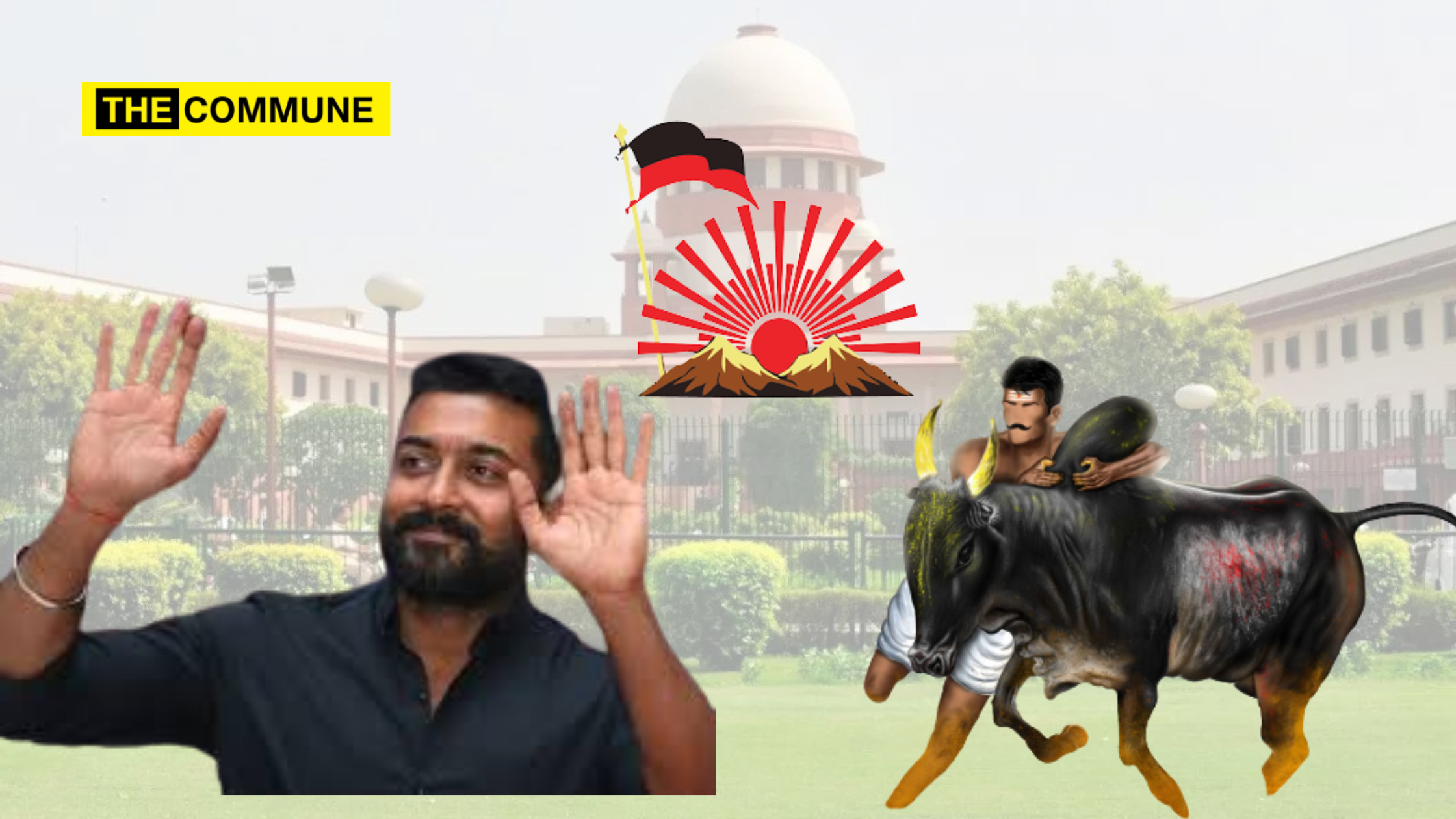
It has not been long since AIADMK General Secretary and Opposition Leader Edappadi K Palaniswami referred to the actors who were vocal during the previous ADMK regime but conspicuously silent on various socio-political issues during the DMK regime. Suriya Sivakumar, one of the actors mentioned indirectly by Edappadi K Palaniswami in his speech, has now credited (albeit indirectly) the DMK government for Supreme Court’s verdict on Jallikattu.
The Supreme Court of India on 18 May 2023 dismissed the petitions challenging the law permitting Jallikattu, the bull-taming sport that is seen as an integral part of Tamil culture.
The Constitution bench upheld the validity of amendments made by Tamil Nadu to the Prevention of Cruelty to Animals Act (PCA Act).
This judgement has put the final nail in the coffin for the attempts by PETA India and Animal Welfare Board of India (AWBI) in getting the Tamil sport banned.
The Congress-led United Progressive Alliance (UPA) of which DMK was part of showed great interest in banning Jallikattu. In fact, on December 15, 2015, former Prime Minister Manmohan Singh wrote a letter to the Human Society International, an organization similar to PETA, voicing his strong opposition to Jallikattu. Not only did he say that this most ‘horrible’ form of entertainment be not promoted, but he also wished the organization success in their goal of banning it.
Then Environment Minister Jairam Ramesh had banned Jallikattu by adding bull to the list of animals prohibited for ‘performance’. He had welcomed the Supreme Court’s ban on Jallikattu in 2014 and called it a barbaric sport.
In fact, the Congress party (of which Suriya’s sister-in-law Nagma is a member) had called for a ban on Jallikattu in its 2016 Tamil Nadu Assembly election manifesto. The National Herald, the mouthpiece of the Congress, published an article criticizing the protests in a slanderous manner saying that Tamil men used the protests to ‘assert their manhood’ after feeling emasculated under the iron-fist rule of later former Chief Minister J. Jayalalithaa.
However “actor” Surya, who has remained silent on the recent hooch tragedy and also on all socio-political issues that have occurred during the DMK government, has come forward to indirectly praise the DMK government, despite the fact that history reveals that the DMK-Congress government is the reason for the ban on Jallikattu.
Surya said in a tweet praising the state governments of Tamil Nadu and Karnataka, that is the DMK and the Congress, “Happy and proud to note the Hon’ble Supreme Court’s ruling, upholding Jallikattu that’s integral to our Tamil culture & Kambala to Kannada culture! Hearty congratulations to both State Governments and respect to all those who fought consistently against the ban.”
Happy and proud to note the Hon’ble Supreme Court’s ruling, upholding #Jallikattu that’s integral to our Tamil culture & #Kambala to Kannada culture! Hearty congratulations to both State Governments and respect to all those who fought consistently against the ban.…
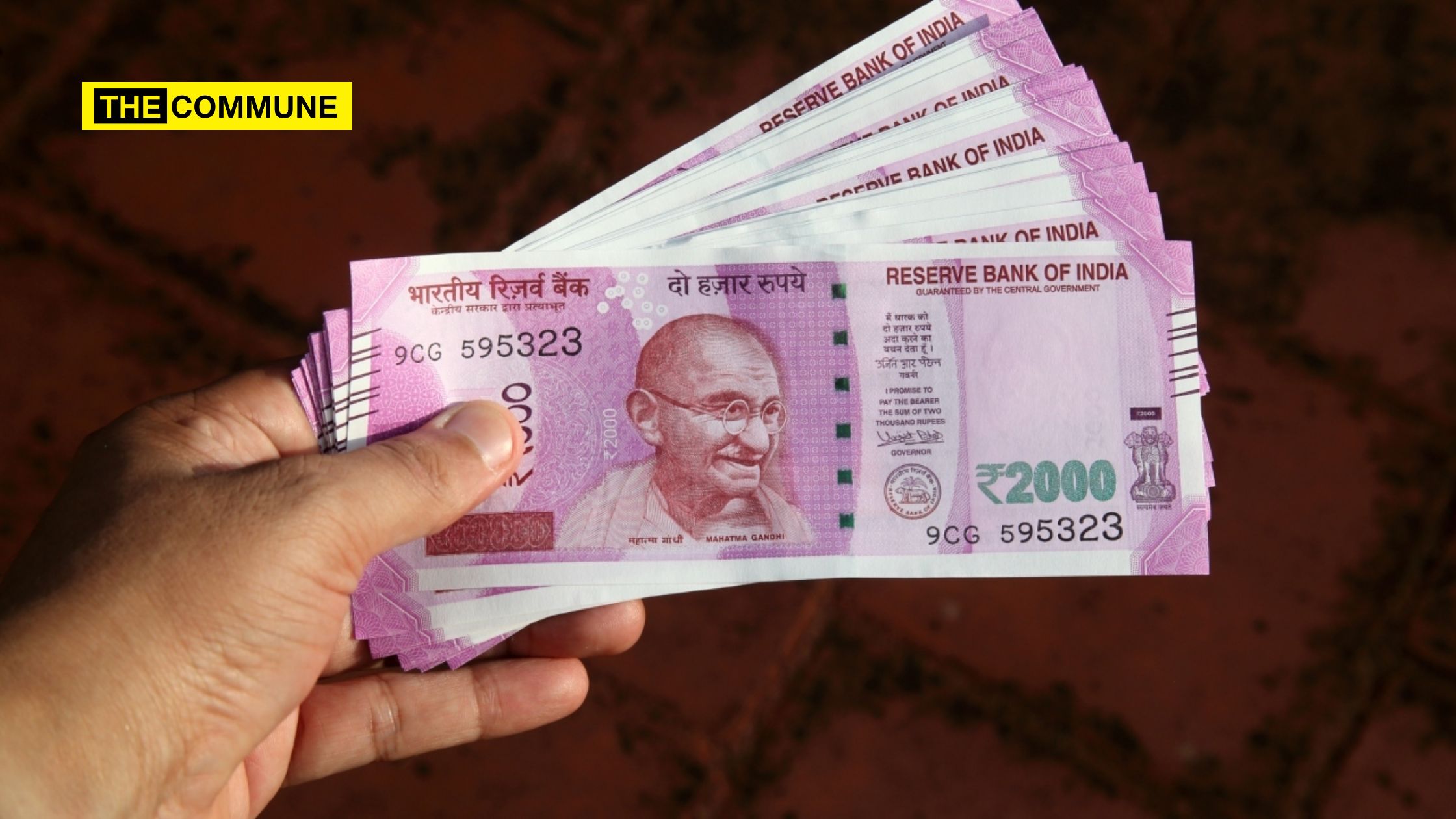
₹2000 denomination notes will be withdrawn from circulation but will continue to remain as a legal tender.
As per RBI Data, total value of ₹2000 Note in circulation has declined from ₹6.73 Lakh Crore on March 31, 2018 to ₹3.62 Lakh Crore as of March 31, 2023.
The declined is steep from 37.3% to 10.8% of total notes in circulation, which has warranted the move.
In line with RBI’s “Clean Note Policy” it has been decided to withdraw the ₹2000 denomination notes from circulation.
₹2000 notes can exchanged into banknotes of other denominations up to a limit of ₹20,000 at a time at any bank with effect from May 23, 2023 until September 30, 2023.
RBI has asked banks to stop issuing ₹2000 notes with immediate effect.
Click here to subscribe to The Commune on Telegram and get the best stories of the day delivered to you personally.
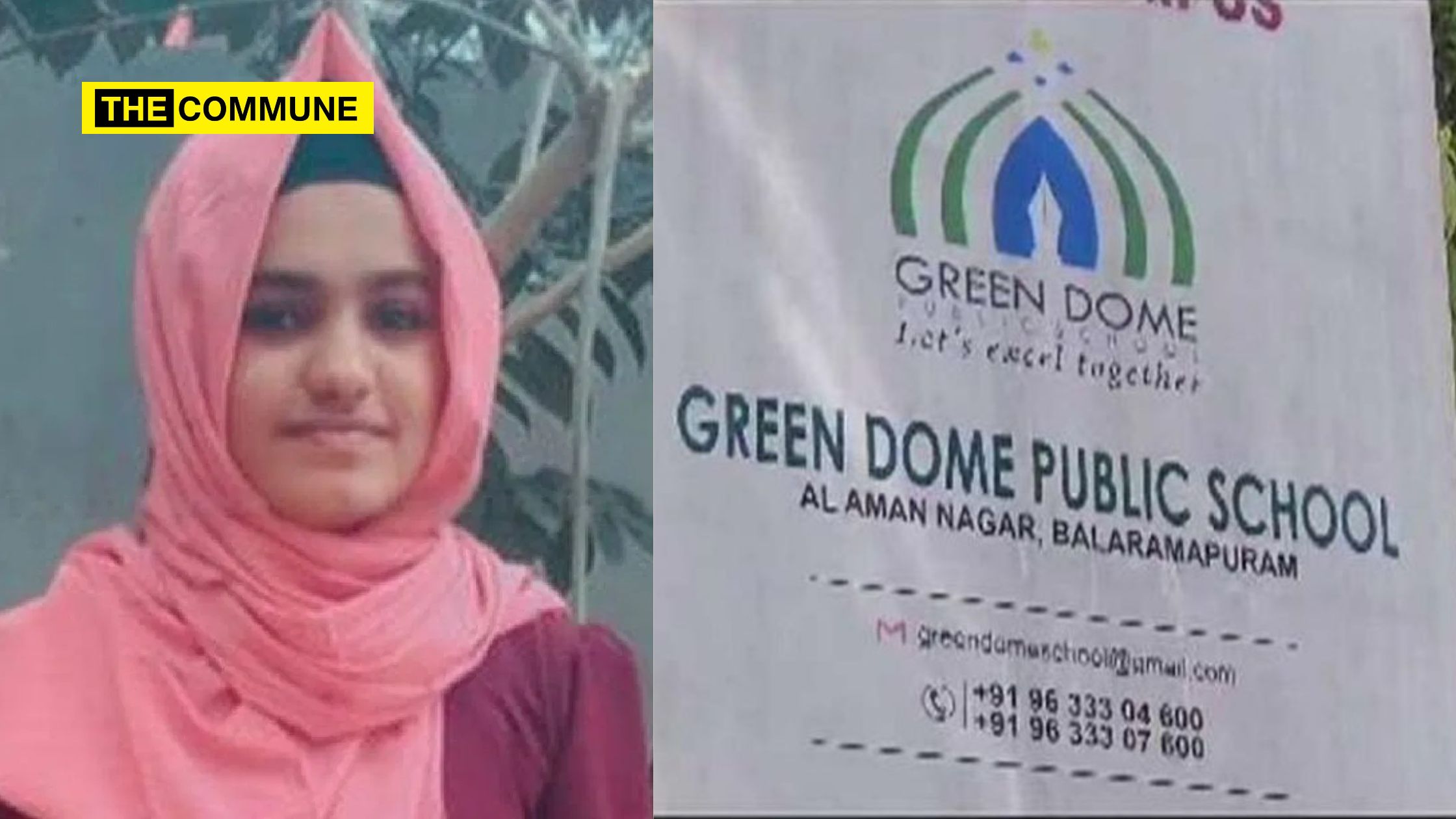
A little girl was discovered dead inside the library of a Madrassa in Balaramapuram, Kerala. The deceased’s relatives accused a teacher of torturing her, raising major worries about the safety and well-being of pupils in Madrasas.
Asmiya, a 12th-grade student was discovered hanging inside the library of Al Aman Educational Complex in Balaramapuram, Thiruvananthapuram.
The girl’s mother filed a complaint at the Balaramapuram police station after learning of the alleged mental torment inflicted on her daughter.
The tragic death of a 17-year-old girl at a religious education institute in Thiruvananthapuram has sparked outrage in Kerala, with people demanding ‘Justice for Asmiya’ on social media.
In response, officials filed a case under Section 174 of the Code of Criminal Procedure (CrPc) and launched an investigation.
About Asmiya
Asmiya is the daughter of Rahmathu Beevi and Nasirudeen. Asmiya’s mother earns a living by assisting in the preparation of rice flour. Nasirudeen, her father, went missing during the 2017 Ockhi Cyclone and was never found. In 11th grade, Asmiya enrolled in Al Aman Educational Institution, a residential madrassa and ordinary school.
Contrary to a narrative peddled by few media houses, Asmiya’s family is not poor. She hails from a well to do family. Her father’s brother and his family are all settled in the Gulf, and he has been helping her with her monthly expenditures at the hostel.
Al Aman was not an orphanage where children are educated for free. Asmiya’s education was not free.
They were paying around ₹6,000 per month for her stay and studies according to reports.
Students were permitted to call their parents once a week. They allowed children to go home onky on special occasions or in case of an emergency.
What Transpired
According to the Balaramapuram police, Asmiya called her mother on Saturday afternoon, expressing her want to return home. She was inside the complex’s hostel when she called her mother to complain about being bullied by a teacher. Asmiya informed her mother that she was being harassed, though not sexually.
Her mother arrived at the Madrassa premises at 4:30 PM. She was, however, asked to get permission to meet with her daughter. Tragically, she learned at 6:30 PM that her daughter had been found hanging inside the library. Asmiya was transported to a private hospital in Neyyattinkara but was certified dead upon arrival at 7 PM.
Tajudeen, the girl’s uncle, was quoted saying in a report that Asmiya had gone home during Ramzan and told her mother about the mental harassment she had received from a new instructor at the Madrassa. “On May 2, she returned to the Madrassa and complained to her mother about the teacher once more. After the incident was reported to the Madrassa administration, the Ustad (teacher) questioned her mother about why Asmiya had not approached him directly with her complaints,” he stated.
The Balramapuram Police Department filed a FIR for unnatural death. “It was a distress call,” Firoz, Asmiya’s cousin brother was quoted saying in a report.
She was apparently not permitted to communicate with her friends. “The teacher was very strict and did not allow her to go home and meet her family members,” Firoz was quoted saying in Outlook.
But she really wanted to. Her mother and grandmother rushed to the hostel and arrived within a few hours after receiving the call, but the principal was not present. The teachers present refused to allow Amiya’s mother inside.
Asmiya’s mother was initially told that her daughter was in the restroom. A phone call to the principal was ineffective since he apparently spoke extremely brutally to them.
Instead, he grumbled about Asmiya, saying she “was very disobedient, and a lesson must be taught.”
“Asmiya’s mother and grandmother stormed in and searched her thoroughly.” They were unable to locate her in the lavatory. They eventually discovered her hanging inside the library room. They rushed her to the hospital, but she was gone,” Firoz notes in the report.
According to Firoz, it was the first time she had complained about harassment at the college. She had never complained about anything like this before.
A few have called this is an institutional murder and have demanded that the government create regulations to regulate such institutions.
“We lost our child, but we will fight to put an end to this type of harassment in religious institutions,” cousin Firoz was quoted saying in a report.
Not The First Case
Victims of archaic Islamic practices manifests in 2 ways – radicalisation and oppression of women. Both are true in the case of Kerala’s Madrassas.
In Kozhikkode, for example, a Madrassa preacher was arrested for sexually abusing a student. The incident took place in Edakkad. Shamseer from Kannur, the accused, has been remanded in custody. Shamseer is said to have vowed to kill the victim if the truth was revealed. Nonetheless, the youngster, who is from Muzhapilangad, told his parents. As a result, a paedophile, a Moulana, was apprehended. The investigation is being conducted based on the assumption that he has mistreated several additional youngsters.
Adbul Kareem, a teacher at a school in Vengara, Malappuram district, was detained for the second time for a POSCO violation. The complainant, a 13-year-old seventh-grade student, contacted the instructors, who notified the police. Several other students, over fifteen from the same school, came out to protest. They are in the sixth and seventh grades. The accused paedophile admitted during the interrogation that he had sexually abused several minor female classmates during class. He is the banned Popular Front of India’s (PFI) North District President.
In another example, a POCSO charge was filed against another teacher for attempting to molest a student during the Kollam district school arts festival. Since then, the accused, Yousuf, a native of Kadakkal, Kollam, has gone missing. The complainant said that the accused misbehaved with her on the bus as they travelled to the diner. The student told other teachers, and the matter was charged; police attempted to apprehend the suspected paedophile. Ibrahim (50), a madrassa ustad, was detained the next day on POCSO accusations.
A ‘child marriage case was reported from Kuttikatoor in Kozhikode. The groom was named the first accused, the girl’s parents, along with “clerics” who officiated at the wedding were charged.
Kerala’s madrassas are also a breeding ground for Islamic radicalization. An India Today investigation from 2018 had discovered disturbing evidence of what appears to be a covert penetration of ISIS ideology in the country.
These seminaries were discovered to be indoctrinating young impressionable minds with ISIS’s terrible objective of establishing a global caliphate through a global war, thanks to hawala money from petrodollar-rich Gulf countries.
Several madrasas in Kerala teach a theo-fascist version of Islam. “There is a problem if we discuss a caliphate in public. There are many Hindus in the area. When we talk about Khilafat (caliphate), Hindus call us ISIS men. As a result, we are not direct. We gradually instilled it in the hearts of the children,” admitted Mohammed Bashir, joint secretary of a madrasa managed by the Karuna Charitable Trust in Pullorammal, Kozhikode district.
In Kerala, India Today noticed an ominous manifestation of the same mindset in nondescript madrasas like Bashir’s. “The Caliphate is the foundation. It is the fundamental for children. Only then will a caliphate emerge,” he asserted.
“The foundation is essential. It exists in our hearts. We gradually share this with the youngsters. There is no need to haste. A caliphate does not emerge overnight.”, the moulana was quoted saying.
The preaching of extreme Islam is not limited to one centre in Kerala, according to India Today’s investigation.
Several other madrasas were working tirelessly to generate more guys like the infamous Islamic televangelist Zakir Naiks, who is now a convicted felon. Abdul Malik, who heads a madrasa in Karanthur, confessed that Naik videos were presented to young children at his centre on a regular basis.
“Everyone is aware of Zakir Naik’s identity. Zakir Naik is shown here welcoming females and other religious groups to Islam. Then they are seen in video clips accepting Islam,” said Malik, the head of Karanthur’s Islamic Centre.
Kerala may be known as God’s own country due its natural beauty but this natural beauty of Kerala will be made to witness the ugly face of Islamic radicalisation and oppression if the current trend is left unchecked.
(Anand Krishna is a Kerala-based lawyer and columnist.)
Click here to subscribe to The Commune on Telegram and get the best stories of the day delivered to you personally.
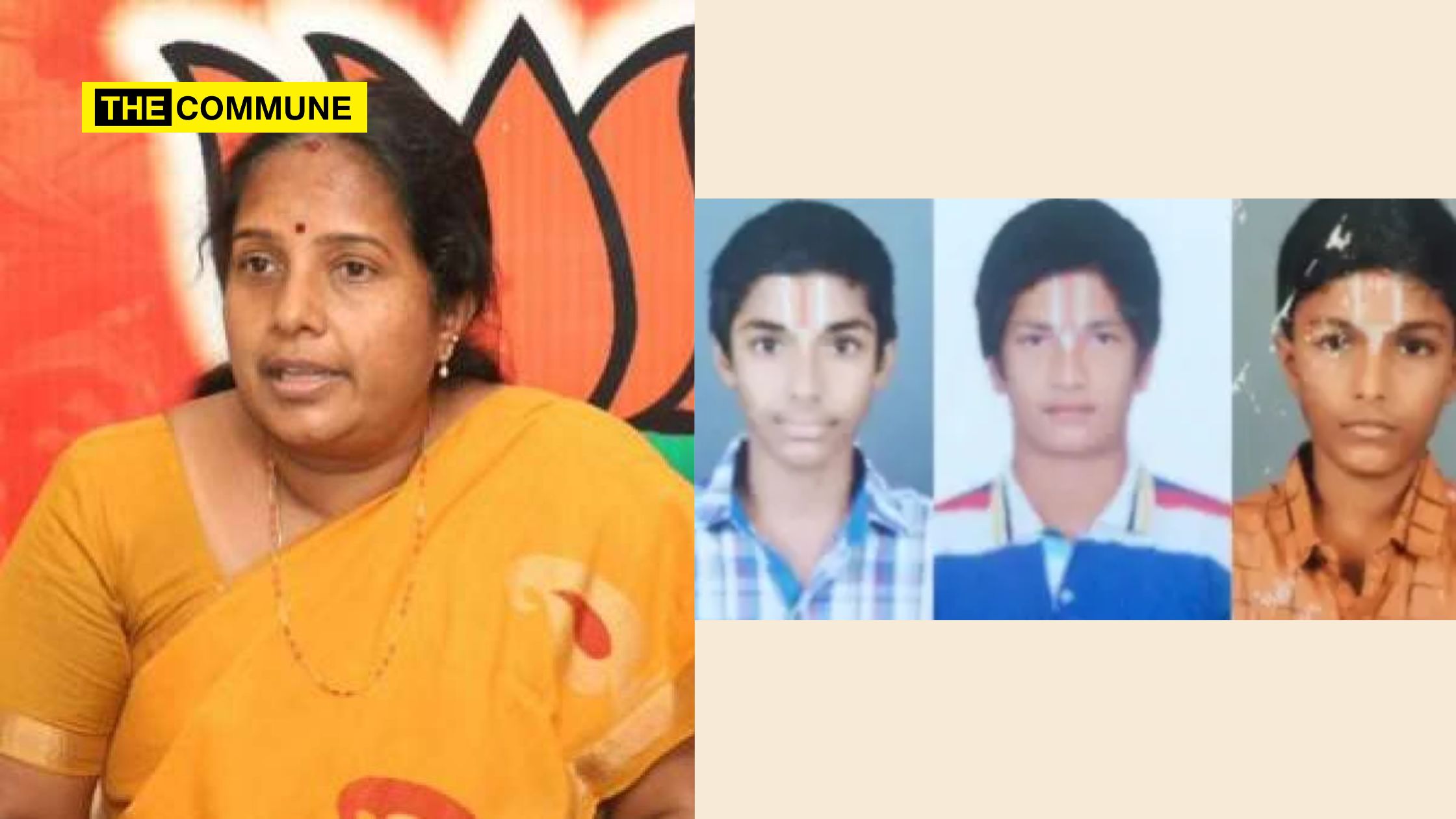
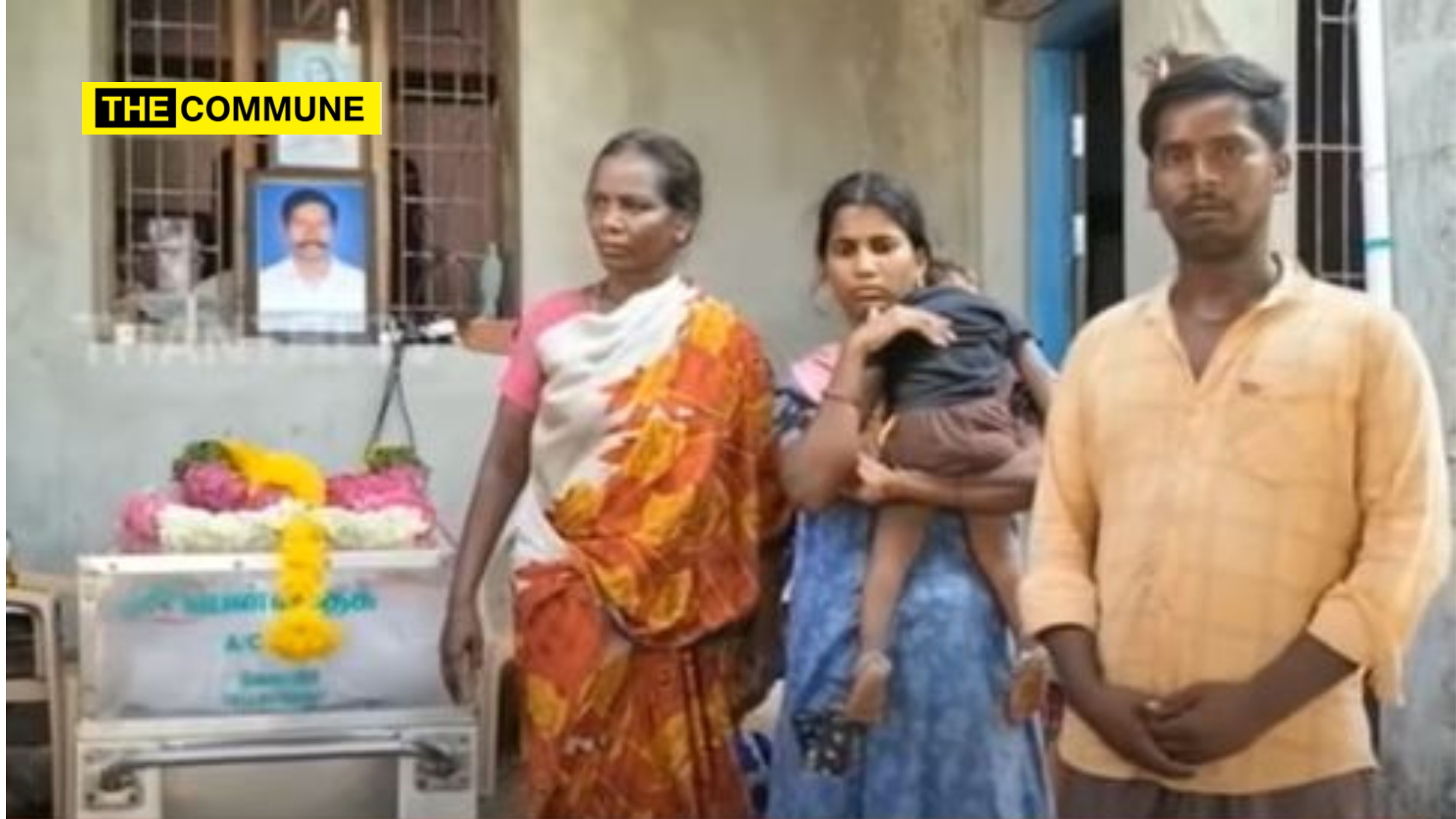
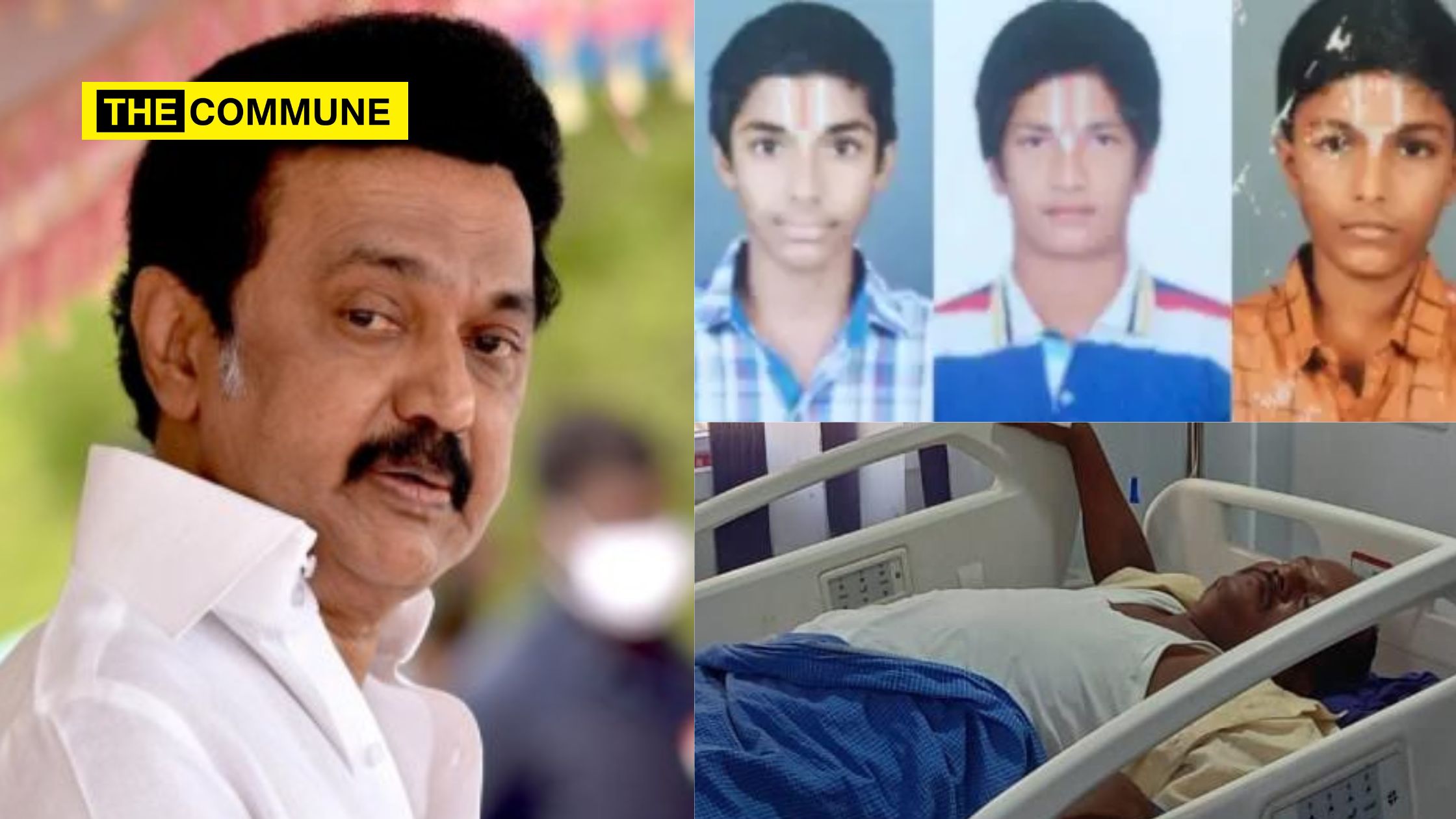
Three Vedic school students drowned in the Kollidam River in Srirangam when they went to take a bath in the early hours of Monday (15 May 2023).
The Acharya Sriman Bhattar Gurukulam Vedic School is functioning in the Melavasal Pattarthoppu area of Srirangam district. More than 50 children are staying here during the summer vacations and studying Vedic lessons.
Gopalakrishnan (17), a Class 11 student from Valarasampatti in Nasiyanur in Erode district, Vishnuprasad (14), a Class 7 student of Mannargudi, Hariprasad (14), another Class 10 student from Mannargudi and Kidambi Venkatagiridhar Sai Surya Abhiram (14), a class 10 student from Guntur Sampath Nagar in Andhra Pradesh, went to the Kollidam River at 5.45 AM on Monday.
The Kaveri splits into two branches – Kaveri and Kollidam – at Mukkombu. Due to ongoing work for the drinking water project at Mukkombu, the amount of water required to be released in the Kaveri River has been reduced, and instead 1,900 cubic feet of water was released in the Kollidam River. As a result, the inflow of water into the Kollidam River increased suddenly.
There was apparently no warning issued about the sudden inflow or measures put in place to prevent people from venturing into the Kollidam River.
Unfortunately, the four students who went to the Kollidam River to take a bath without knowing that the river’s inflow were caught in the speeding river.
BJP MLA Vanathi Srinivasan has demanded that the Tamil Nadu government give a solatium of ₹25 lakh to each of the families of the deceased students.
She said, “Generally, there is not much inflow of water into the Kollidam river. Also, since it’s summer, the water will be less. It is in that belief that the boys have bathed there. But suddenly, without any prior intimation, water was released in Kollidam. As a result, the four boys who were bathing in Kollidam were washed away in the water. The news of the death of three other boys except Gopalakrishnan is shocking and painful. When you think about how the minds of parents who have lost their children will suffer, there is unbearable grief. The death of the three boys was due to the sudden release of water into the Kollidam river without any prior notice.
She said that the Tamil Nadu government has to be held responsible for the tragic death of the three students.
“The Government of Tamil Nadu should take appropriate action against those responsible for this irresponsibility. Government should pay a compensation of ₹25 lakh to the families of the children who died due to the negligence of the government. People should be informed in advance about the release of water in rivers like Kollidam.”
Click here to subscribe to The Commune on Telegram and get the best stories of the day delivered to you personally.
The incident in which the local Christians in Theni district refused to allow the body of the deceased to be buried in a Christian cemetery as one of the members in the family married a Hindu woman, has shocked many in Tamil Nadu. However, the body was allowed to be buried in the Christian cemetery after the entire family fell on the feet of villagers and begged for forgiveness.
John Peter and Ligoria are from Kotur RC Street in the Theni district. Aaron, one of their sons, is said to have married a Hindu woman. The Christians in the area, on the other hand, were outraged and demanded that the family apologize before the villagers. But John Peter and his family refused to apologize in front of the village. As a result, the Christian villagers in the neighborhood socially isolated John Peter family. John Peter’s family was not permitted to enter the Church in the area for regular prayers.
In this situation, John Peter passed away recently. As a result, arrangements were made to bury his body in the village’s Christian cemetery. However, the village Christians were opposed to burial in the cemetery.
The villagers demanded that Aaron should fall at the feet of the villagers and apologize for his mistake of marrying a Hindu woman. They also stated that his father’s body will be allowed to be buried in the cemetery only after Aaron apologizes. According to reports, Aaron agreed to their demands and apologized to the villagers.
However, after Aaron apologized to the village, they changed their minds and refused to allow him to bury his father’s body. The matter was then reported to the local police station. A police team led by the Deputy Superintendent of Police met with Kottur villagers for a reconciliation. Following the police’s reconciliation talks with Christian villagers and preachers, John Peter’s body was allowed to be buried in a Christian cemetery.
This incident, in which Christian villagers prevented the body of another Christian family from being buried in a cemetery, has caused a commotion in the area.
Click here to subscribe to The Commune on Telegram and get the best stories of the day delivered to you personally.
Three Vedic school students drowned in the Kollidam River in Srirangam when they went to take a bath in the early hours of Monday (15 May 2023).
The Acharya Sriman Bhattar Gurukulam Vedic School is functioning in the Melavasal Pattarthoppu area of Srirangam district. More than 50 children are staying here during the summer vacations and studying Vedic lessons.
Gopalakrishnan (17), a Class 11 student from Valarasampatti in Nasiyanur in Erode district, Vishnuprasad (14), a Class 7 student of Mannargudi, Hariprasad (14), another Class 10 student from Mannargudi and Kidambi Venkatagiridhar Sai Surya Abhiram (14), a class 10 student from Guntur Sampath Nagar in Andhra Pradesh, went to the Kollidam River at 5.45 AM on Monday.
The Kaveri splits into two branches – Kaveri and Kollidam – at Mukkombu. Due to ongoing work for the drinking water project at Mukkombu, the amount of water required to be released in the Kaveri River has been reduced, and instead 1,900 cubic feet of water was released in the Kollidam River. As a result, the inflow of water into the Kollidam River increased suddenly.
There was apparently no warning issued about the sudden inflow or measures put in place to prevent people from venturing into the Kollidam River.
Unfortunately, the four students who went to the Kollidam River to take a bath without knowing that the river’s inflow were caught in the speeding river.
Vishnuprasad, Abhiram, and Hariprasad were washed away in the fast-moving water. When Gopalakrishnan tried to save them, he was also carried away by the rapidly moving water.
Fire fighters and Srirangam police reached the spot to carry out the rescue operation. The flow of water from Mukkombu Upper Anicut to Kollidam was temporarily halted for the search operation. Vishnuprasad’s body was recovered while search for Hariprasad and Abhiram’s bodies were recovered later. Except Gopalakrishnan, all the others died.
The Stalin-led DMK government, which announced a compensation of ₹10 lakhs to each of the families of the deceased who consumed spurious liquor and awarded ₹50,000 solatium to one of the culprits responsible for the tragedy, has not even expressed condolences over the unfortunate deaths of the Vedic School students, let alone announcing a solatium for them.
BJP MLA Vanathi Srinivasan has demanded that the Tamil Nadu government give a solatium of ₹25 lakh to each of the families of the deceased students.