Home Blog Page 1199

The Shady Dealings Of Stalin’s Son-In-Law Sabarisan: The Return Of DMK’s SCV Saga?

The details of UK-based companies in which DMK Chief Minister MK Stalin’s son-in-law Sabarisan Vedamurthy has invested have surfaced on the internet and have gone viral on social media, with many questioning Sabarisan’s sources of income given his humble background.

According to the websites of two companies in which Sabarisan was appointed as Director recently – SpaceTel UK Ltd and VoiceTec Sys Ltd, the companies provide telecommunications and financial intermediation services and typically work as intermediaries in financial management for internet service-based companies.

According to the documents, Sabarisan was appointed as the Director of these companies on 18 October 18 2022, which was also confirmed by UK government documents dated 25 October 2022.

The fact that Stalin’s son-in-law Sabarisan is investing in companies that lack infrastructure, earns profits less than ₹5 crores, that is not manufacturing and are only telecommunication intermediaries has raised eyebrows of DMK watchers.

The website also reveals that Srinivasa Venkatesh, a Chartered Accountant by profession, is the person with significant control over both companies – SpaceTel and VoiceTec. The important thing to note is that, in addition to these two businesses, he is a Consultant and Director at St Georges Bank, an investment advisory firm.

Westpac Banking, the parent company of St Georges Bank, has been convicted for money laundering on an international scale and converting unaccounted money into investments through its subsidiaries.

These developments in the United Kingdom must be viewed in light of the developments in Tamil Nadu.

Wired Entertainment: DMK’s SCV 2.0?

The website of the company registered under the name Wired Entertainment, allegedly related to Sabarisan, is getting ready to provide services such as TV, mobile and internet connection through fibernet, for which the DMK first family is said to have called cable operators across the state. This is believed to be another SCV episode from the Karunanidhi family.

Sumangali Cable Vision (SCV) was a multi-service operator founded by Sun Group, a company owned by Kalanithi Maran, a member of the DMK family. SCV is involved in providing cable TV connections and had once virtually monopolized the business before the advent of satellite dish. After the DMK came to power in 2006, homes were forcefully get an SCV connection for their television that burnt holes in the pocket. Between 2006 and 2011, there was a fierce clash between the SCV and another company called Hathway. The clash escalated to such a level, that the police had to call SCV distributors to the police station to warn them not to cut cables of Hathway. Hathway shut shop in 2009 saying that it was unprofitable to do business in Tamil Nadu. Later, the AIADMK government brought in the Arasu Cable TV, a company owned by the state, to help poor watch television at low cost.

Recently in November 2022, television screens across Tamil Nadu homes went blank for two days. This was alleged to be a sabotage on Arasu Cable TV to favour SCV. The issue was raised by BJP Tamil Nadu President K. Annamalai as well.

Wired Entertainment in its website claims to provide TV, internet and telephone services for just ₹499 a month.


There is nothing wrong in just being another market player. However, sources have said that there are attempts to promote Wired Entertainment at the cost of Arasu Cable TV and other market players.

According to reports, Wired Entertainment, a company reportedly connected to Sabarisan, has allegedly asked cable operators in Tamil Nadu to make deposits ranging from ₹3 to ₹5 lakhs each. Just like how cable operators were asked to buy SCV, they are now being asked to do the same for Wired Entertainment.

However, the work has stalled because this company’s trademark registration was rejected by the Controller General of Patents, Designs & Trade Marks.

According to reports, Sabarisan’s appointment as director of UK companies was delayed by 8 months due to a snag in negotiations with cable operators in Tamil Nadu. The import of equipment required for fibernet business and the money required are reportedly linked through Westpac Banking, which has been convicted of money laundering.


The details of Wired Entertainment, which is considered to be a company related to Sabarisan, surfaced on the internet on 29 November 2022, but the details of the company like its Singapore address were deleted as soon as DMK critic Maridhas uploaded a video on the subject and the webpage was updated the next day.

The XML site map source code also reveals that the information was removed on 30 November 2022, at 08.48 AM.

According to the letter to the Registrar of Trade Marks, an attempt was made to register the fibernet company under the name “Wired Entertainment,” but it was rejected, so the company tried again under a different name, “We Connect.”

However, the registration of the company “We Connect” is also being challenged, delaying work with Tamil Nadu’s cable operators. Despite not receiving approval from Controller General of Patents Design & Trade Marks, Wired Entertainment has begun preliminary work and has started laying fibernet wires throughout Chennai.

People who are aware of these details wonder how the Chennai Corporation granted permission to lay the fibernet wire throughout Chennai when its application to register with Registrar of Trade Marks was denied. This has led to concern whether the Chennai Corporation and the Mayor are involved in these irregularities.

Wired Entertainment’s foray and Sabarisan’s recent dealings with the UK-based have added to the suspicion that just like how the DMK family captured the television cable business back in the day, they may be trying to do the same albeit this time it is fibrenet as every form of entertainment has now switched to internet-based services.

(This article is based on Maridhas’ tweet and videos on the same subject. Watch them here and here.)

Click here to subscribe to The Commune on Telegram and get the best stories of the day delivered to you personally.

Save Soil Movement To Conduct Awareness Programs Across Tamil Nadu On World Soil Day

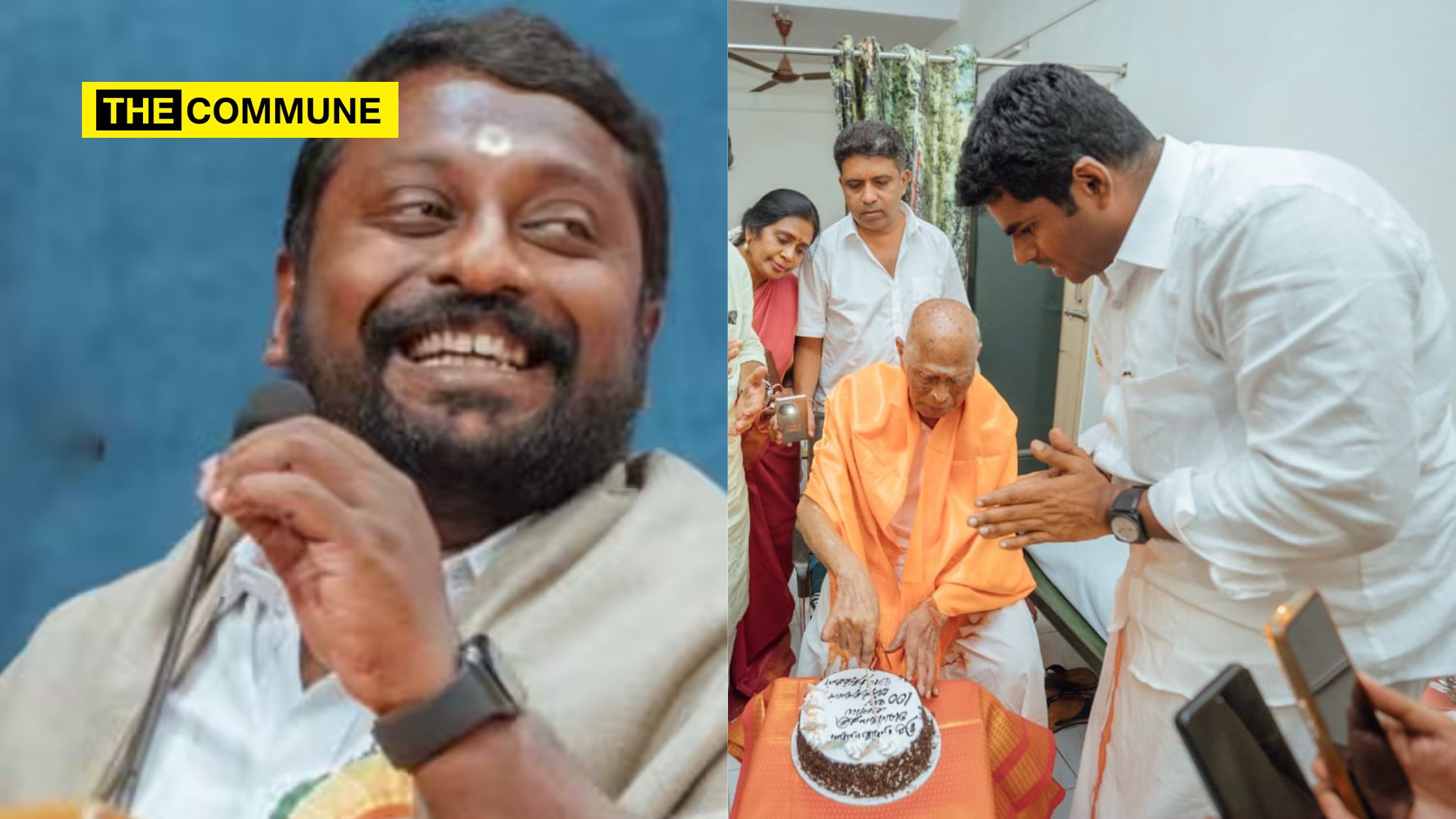
On World Soil Day on the 5th of December, volunteers of the Save Soil Movement will conduct awareness programs in more than 60 places in Tamil Nadu to bring attention to save the dying soil. The Save Soil Movement is urging nations to mandate 3-6% organic content in agricultural soils across the world through policy-driven initiatives. This is the minimum organic content required to keep the soil fertile and capable of yielding food. 

Awareness programs will be organized at prominent public spaces like bus stands, railway stations, and beaches in all the districts, including Chennai, Coimbatore, Madurai, Trichy, Tirunelveli, and Erode. Volunteers of the Tamil Nadu Save Soil Movement are planning to conduct Walkathons, Cycle rallies, and display Save Soil placards to draw their support on an issue that poses an existential threat to humanity. 

In Chennai, awareness programs will be at Madipakkam Lakeshore, Elliott’s Beach, Meenakshi College, Kapaleeswarar Temple, Madurai Devar Statue, Vellore Fort, Hosur Railway Station, Rameswaram Ramanatha Swamy Temple, etc. Not only limited to the state, but the volunteers are also organizing awareness programs in all the states of India.

95% of our food comes from the soil, but Food and Agriculture Organization (FAO) predicts crop yields could fall by up to 50% in certain regions by 2050 due to climate change and soil extinction. Understanding the urgency, Sadhguru launched the Save Soil Movement and- in March 2022, undertook a 100-day, 30,000 km solo bike journey across 27 nations. He rode across Europe, Central Asia, the Middle East, and 11 Indian states meeting experts, celebrities, elected representatives, and the general public, bringing to the fore the urgent threat of soil degradation. The movement in a short span, reached over 3.91 billion people, and 81 nations have committed to framing soil-friendly policies. 11 States have signed a Memorandum of Understanding with Isha Outreach to Save Soil.

(This is an official press release from Isha Foundation. The Commune was not involved in creating this content.)

Click here to subscribe to The Commune on Telegram and get the best stories of the day delivered to you personally.
Who Killed Lakshmi?

On 30 November 2022, the people of Puducherry woke up to a tragic news. Their dear Lakshmi had collapsed and passed away while going for a walk.

Apart from the Promenade Beach, fancy streets of White Town, Aurobindo Ashram and cheap booze, Lakshmi, the elephant that belonged to the Manakula Vinayagar Temple in Puducherry was a major crowd puller in Puducherry.

From tiny tots to the toothless thathas and paatis, she was loved and befriended by everyone. So, when news of Lakshmi’s demise came, residents of Puducherry flocked to see their darling and paid a tearful tribute.

But what happened to Lakshmi? How come an elephant that was supposed to live for 60-70 years died at a young age of 32? Was it her fate or was it wilful sabotage by vested interests?

Let’s take a look.

How Lakshmi Came To Puducherry

In 1996, one Vaidyanatha Mudaliar, the trustee chairman of Manakula Vinayagar Temple, placed a request to the then Puducherry Chief Minister RV Janakiraman to have an elephant for the temple.

The request was considered by the Chief Minister who forwarded it to industrialist Dr CH Krishnamurthi Rao, the Founder Chairman of Chemfab Alkalis Limited.

Krishnamurthi Rao got an elephant from Thiruvananthapuram, Kerala and donated it to the Manakula Vinayagar Temple on 30 October 1997.

Contrary to the narrative peddled by the likes of PETA and other dubious animal activists, elephants have been tamed and domesticated by humans since time immemorial. Man and elephants have coexisted with each other and have complemented each other’s life. Elephants have been domesticated and used by humans just like wild cats and dogs. They’ve been part of warfares, processions and temples. Having elephants as an integral part of temples has been an age old tradition in southern part of India especially in the Tamil and Malabar regions.

Though born in the wild, she is said to have been abandoned by her herd. Lakshmi has been living and serving at the Manakula Vinayagar Temple since the age of 5. She shared a deep emotional bond with her mahout as evident from his inconsolable tears that just wouldn’t stop pouring from his eyes on seeing his gentle giant pass away. She had a great fan following from across the world and became an icon of Puducherry.

Things were going well until the self-proclaimed champions of animal rights knocked on the doors of Lakshmi.

PETA’s Propaganda

In June 2020, Puducherry BJP functionary PS Ganehsan alleged that PETA (People for Ethical Treatment of Animals) was trying to oust Lakshmi from Manakkula Vinayakar Temple. The forest department had reportedly decided to keep the temple elephant at Kamarajar Agricultural Science Center in Kurumbapet for 15 days. Knowing this, the Puducherry BJP and the Hindu Munnani functionaries along with temple and elephant activiss went to protest against the decision.

PETA had gone after Lakshmi earlier as well. In 2017, Lakshmi was prevented from being brought to the temple after her time at the rejuvenation camp. PETA citing a 2015 report of the Animal Welfare Board of India (AWBI) claimed to the Puducherry Government that the elephants was in poor physical and mental health because of being in the temple and that she needed to be taken to a sanctuary. However, their attempts to capture Lakshmi went futile as the Puducherry government didn’t yield to their pressure.

But the pandemic period became an opportunity for them to go after Lakshmi. The allegation that PETA India was once again upto its neafarious move gained credence when it started its propaganda on Lakshmi. In its propaganda video, PETA India claimed that Lakshmi was forced to work for hours at a stretch without food and water and was made to ‘beg’ in return for blessing devotees. It alleged that Lakshmi was being ill treated at the temple and that the elephant exhibits signs of abnormal stereotypic behaviour like swaying of head. It even went on to allege that the mahout uses bill hooks to tame Lakshmi.

Although the swaying of head (or weaving) does not constitute normal behaviour, it is not directly harmful either. The swaying of head or weaving is a result of boredom, desolation and frustration. However, elephant care takers ensure that elephants are engaged in interesting and a varied life so that they do not feel bored. The Vedapureeswarar Temple has all required facilities for Lakshmi with a specially built pond and shed. Contrary to PETA’s claims, Lakshmi grew up pampered and was given all the love and attention by her care takers, devotees and temple authorities.

So, with pressure mounting from PETA, the Forest department passed the orders to remove Lakshmi from the temple premises on 4th June 2020.

While PETA made a huge hue and cry about Lakshmi’s ill treatment complaining of injuries in foot, she was made to walk 10 kms to the Krishi Vigyan Kendra campus on tar road.

At the campus, she faced much more agony with scanty food and water and no proper shelter according to locals, temple authorities and elephant activist Muralidharan. A fishnet was used to protect her. On her first night at the temporary shelter, she was almost bitten by a snak and the dogs in the campus proved to be a menace.

Lakshmi who had lived all her years at the temple under the care of her mahout found it difficult to adjust to the new surroundings.

On 25 June 2020 it was reported in a Tamil newspaper that Lakshmi was struggling for life at the Krishi Vigyan Kendra. She hadn’t slept for days due to the physical and mental trauma she was put through at the Krishi Vigyan Kendra.

PETA India had said that they plan to rescue Lakshmi and release it into the wild. However, it would’ve been impossible for Lakshmi to survive in the wild as she was used to her home – the Manakula Vinayagar Temple.

Lakshmi Was Taken Away From Temple Illegally And Unethically

Lakshmi was snatched away from the temple based on complaint from Maneka Gandhi (former Union Minister and now a Lok Sabha MP).

Ajit Datta, co-founder of Republic Lit Fest, Editor of TFI Post and a resident of Puducherry said that the manner in which Lakshmi was taken away seemed completely unethical and illegal. The Hindu in its coverage had mentioned that the Forest Department picked her up on the grounds that the temple failed to furnish the health records of Lakshmi. However, it is the Animal Husbandry Department’s job to maintain the records. Nobody from Animal Husbandry Department was consulted and that the Forest Department failed to take the opinions of veterinarians. It seems that the mahouts were also threatened with consequences if they didn’t let Lakshmi go.

PETA India apparently appealed to Maneka Gandhi claiming that Lakshmi was unwell and being mistreated at the temple who then shot off a letter to the local authorities to take Lakshmi into custody.

Thirukoilgal Paadhukappu, a temple rights protection organization, along with other Hindu organizations made representations to then Chief Minister V Narayanasamy to intervene and retrieve Lakshmi from the clutches of PETA and Forest Department. Political parties like Congress, BJP and Indu Makkal Katchi too extended their support to bring back Lakshmi.

Following this, Puducherry Chief Minister Narayanasamy issued an order to send Lakshmi back to the temple. Lakshmi was brought back to the Puducherry Manakkula Vinayagar Temple from the Kamaraj Agricultural Science Center in Kurumbapet.

She was accorded a jubilant welcome with people rejoicing her return. Large crowd of Hindus gathered and welcomed their darling. Lakshmi upon entering the temple was trumpeting with joy.

But her joy was short lived as just days later, the animal rights lobby were once again conspiring to displace Lakshmi from her home.

Who Killed Lakshmi?

Having failed multiple times, this time PETA put all their might in displacing Lakshmi from the temple.

PETA India moved the Madras High Court in the first week of August 2020 to quash the order issued by Puducherry Chief Minister V. Narayanasamy that allowed Lakshmi to return to her home in Manakula Vinayagar Temple.

According to elephant activist Muralidharan, the Deputy Conservator of Forests (DCF) Vanjulavalli Sridhar allegedly succumbed to pressure from Maneka Gandhi who apparently tasked her with displacing Lakshmi from the temple.

Vanjulavalli was told to take custody of Lakshmi by citing treatment for poor health, Muralidharan says. Lakshmi was kept at a special private place with natural setting beside a pond with mud floors and stone floors for bathing. However, Vanjulavalli told that the place was too small for the elephant following which the temple management got 2 acres of land nearby and kept her there.

Lakshmi had an injury in her leg because she dragged the chain leash tied to her. Citing this, she was again brought back to her old shed saying that Lakshmi needed to be confined in a hard-floored enclosure.

An elephant needs to walk atleast 10 kms in a day. Just as humans release the bad water in their body through sweat whenever they exercise, an elephant has to walk so that the bad water in its body is released. But unlike humans, elephants do not have pores on the body through which sweat can come out. The sweating happens in its foot when it walks. So, no matter what, an elephant has to walk if it has to be healthy.

However, Lakshmi was not allowed to walk by the doctors who were brought in by Vanjulavalli. As a result, Lakshmi had water retention. Usually, the underbelly of an elephant is rigid. However, an elephant affected by water retention has an underbelly that is as soft as a cow’s fore udder (the place where the milk is stored).

It is possible that sometimes elephants are unable to walk because of an injury in the foot which was the case with Lakshmi. In that case, the mahout takes care of releasing the excess water in its body through Ayurvedic methods. But Lakshmi’s mahout was not allowed to treat her. Muralidharan claims that instead of allowing the mahout or bringing a government veterinarian to give medical aid, Vanjulavalli brought in a veterinarian named Arun Sha from Bengaluru associated with Wildlife SOS which has close ties with PETA. Some fifteen injections were apparently used on Lakshmi in the name of treatment just a few days before her death.

Muralidharan also blamed the HR&CE department and the temple management for giving a free pass to an external veterinarian from an organization associated with PETA.

While PETA India’s Khusbhu Gupta has claimed that they were denied access to Lakshmi, it has been revealed that Arun Sha who  from Wildlife SOS who treated Lakshmi is influenced by PETA.

From denying access to her mahout to not allowing her to walk and bringing in an external veterinarian, Muralidharan and locals of Puducherry have raised several red flags in the way Lakshmi was treated.

An Elaborate Conspiracy?

Elephant activist Muralidharan called the death of Lakshmi as a planned cold-blooded murder. He said that Lakshmi was killed so that she can be used as an example to end the temple elephant tradition that has been an integral part of the culture of this land for ages. That the Dravidian Stockists parroting the the narrative of PETA on Lakshmi’s death should come as no surprise.

Muralidharan says that foreign-funded ‘animal extremist organizations’ capture temple elephants and put them in their centres in order to raise more money for their organizations.

These privately-owned foreign-funded animal rescue centres like Wildlife SOS have been called out for their illegal sale and purchase of animals, committing cruelty on elephants and cutting off their tusks for sale in illegal market.

“During the so-called rescue process they injure, beat, punches, poke elephants with sharp objects and by showcasing elephants’ wounds they generate foreign donations to expand their business of illegal sale and purchase of elephants, ivory trade,” environmentalist Sangeeta Dogra alleged in a petition filed at the Delhi High Court against the irregularities of privately-owned rescue centres.

According to Muralidharan and other animal rights activists like Sangeeta Dogra, temple elephants and elephants used for tourism purpose like safari elephants of Jaipur and Kerala are forcefully taken away from their rightful owners to languish in the centres run by Wildlife SOS. Muralidharan notes that AWBI which is just an advisory body has been weaponized by BJP leader Maneka Gandhi to go after these elephants. Maneka Gandhi also runs her own NGO ‘People for Animals’ (PFA), which is said to be one of India’s largest animal welfare organisations. A government advisory body like AWBI, and non-government entities like PETA, Wildlife SOS, PFA are all hand-in-hand and they scratch each other’s back to capture temple elephants in the name of rescuing them and releasing into the wild. PETA uses AWBI’s report to launch a campaign against the temple elephants. The officers in the state Forest Department are threatened or pressurized by AWBI and Maneka Gandhi, Muralidharan alleges. Once the elephant comes under the custody of forest department, they are housed in centres run by Wildlife SOS.

It is apparent that these ‘animal rights extremists’ are hell bent on imposing their western construct of animal rights and care into the Indian cultural mileau. The campaign against Jallikattu saw the involvment of the very same organizations. PETA along with AWBI had sought to strike down the 2009 Tamil Nadu law permitting Jallikattu which the Supreme Court did in 2014. When the Modi government revoked the ban in 2016, PETA challenged it. Maneka Gandhi had back then called Jallikattu as a ‘terrible festival to be consigned to history’. She was made to shut up by the BJP Central leadership. The Jallikattu protests saw PETA earning the wrath of the Tamil people. The Modi Government passed an ordinance in 2017 to allow the bull-taming sport and PETA was sent running helter skelter.

After their miserable failure, these foreign-funded NGOs allegedly aided by Maneka Gandhi are now going after temple elephants.

Lakshmi’s death has raised several questions about the motive of these organizations. But the broader question that we need to ask is this – Was Lakshmi the elephant used as a pawn in the of these elephant may have been used as a pawn in a larger ploy at play?

Click here to subscribe to The Commune on Telegram and get the best stories of the day delivered to you personally.
DMK Functionaries Accused Of Abduction And Land Grab Arrested In Egmore Court While Submitting Fake Bail Order

A woman DMK councillor named Vimala and her husband Krishnamurthy, who is also the DMK’s Circle Secretary, were arrested in Egmore court for submitting forged bail documents that they claimed to have obtained from the Madras High Court.

Earlier in October 2022, the police charged ten persons, including DMK councillor Vimala and her husband Krishnamurthy, in an incident relating to the kidnapping of a businessman at knifepoint and usurping land worth ₹25 crores.

Amar Ram, 53, of Sholinganallur, Chennai, owns a gold loan shop in the same neighborhood. In 2017, Amar Ram paid ₹60 lakh to DMK circle secretary Krishnamurthy and registered a deed to purchase 58 cents of land in Naavalur. After that, he paid a total of ₹10 crores and registered the land in his name in 2018. However, there was a dispute between Krishnamurthy and his brother Manoharan over the sold land.

Manoharan filed a case against Krishnamurthy and Amar Ram in the Chengalpattu court. On September 17, Amar Ram filed a complaint at the Chennai Marina Police Station.

In his complaint, Amar Ram said,”A lawyer named Sentamizh invited me to come near the Marina Lighthouse on the 16th of last month to talk about the land. Four unidentified individuals tied my eyes and kidnapped me in a car to Tiruporur Sub-Registrar office at knifepoint.”

He went on to say that ten people, including Krishnamurthy and his wife, 124th ward DMK councilor Vimala, attacked him and forced him to sign the cancellation certificate of the purchase agreement, and that he was only paid ₹60 lakh for land worth only ₹25 crores.

“Then, they pushed me out of the car and left. Action should be taken against 10 people including Krishnamurthy, Vimala, Senthamizh, and Manoharan,” the complaint ended.

Preliminary police investigation revealed that as the 58-cent land near AGS theatre in Navalur sold to Amar Ram now sells for more than ₹25 crores, Krishnamurthy and brother Manoharan have together decided to sell the land to the owner of a construction company. In order to modify the ‘power of attorney of the land in the name of the owner of the construction firm, Krishnamurthy abducted Amar Ram and blackmailed him into the registrar’s office.

It was also found that Amar Ram was threatened by showing a video call in which rowdies were seen around their family and threatened to kill them if he did not sign the agreement. In connection with this abduction incident, Marina police have filed a case against DMK secretary Krishnamurthy, his wife-DMK councilor Vimala, Senthamizh, Manokaran, and ten others under five sections, including kidnapping and extortion of property.

However, after the Chennai city police filed the FIR, Councilor Vimala and her husband Krishnamurthy both went into hiding.

On Friday, both Vimala and her husband Krishnamurthy appeared before Egmore court to submit the Anticipatory Bail order documents, which they claimed to have got from Madras High Court.

However, Egmore Magistrate verified the anticipatory bail order submitted by the DMK Vimala and Krishnamurthy and found that the Anticipatory Bail order from Madras High Court was fake. Following this, the Egmore police detained DMK councilor Vimala and her husband Krishnamurthy for presenting the magistrate with forged documents.

(With inputs from OneIndiaTamil)

Click here to subscribe to The Commune on Telegram and get the best stories of the day delivered to you personally.
TN BJP Thinker’s Cell Convenes Tamil Nadu Dialogues 2022

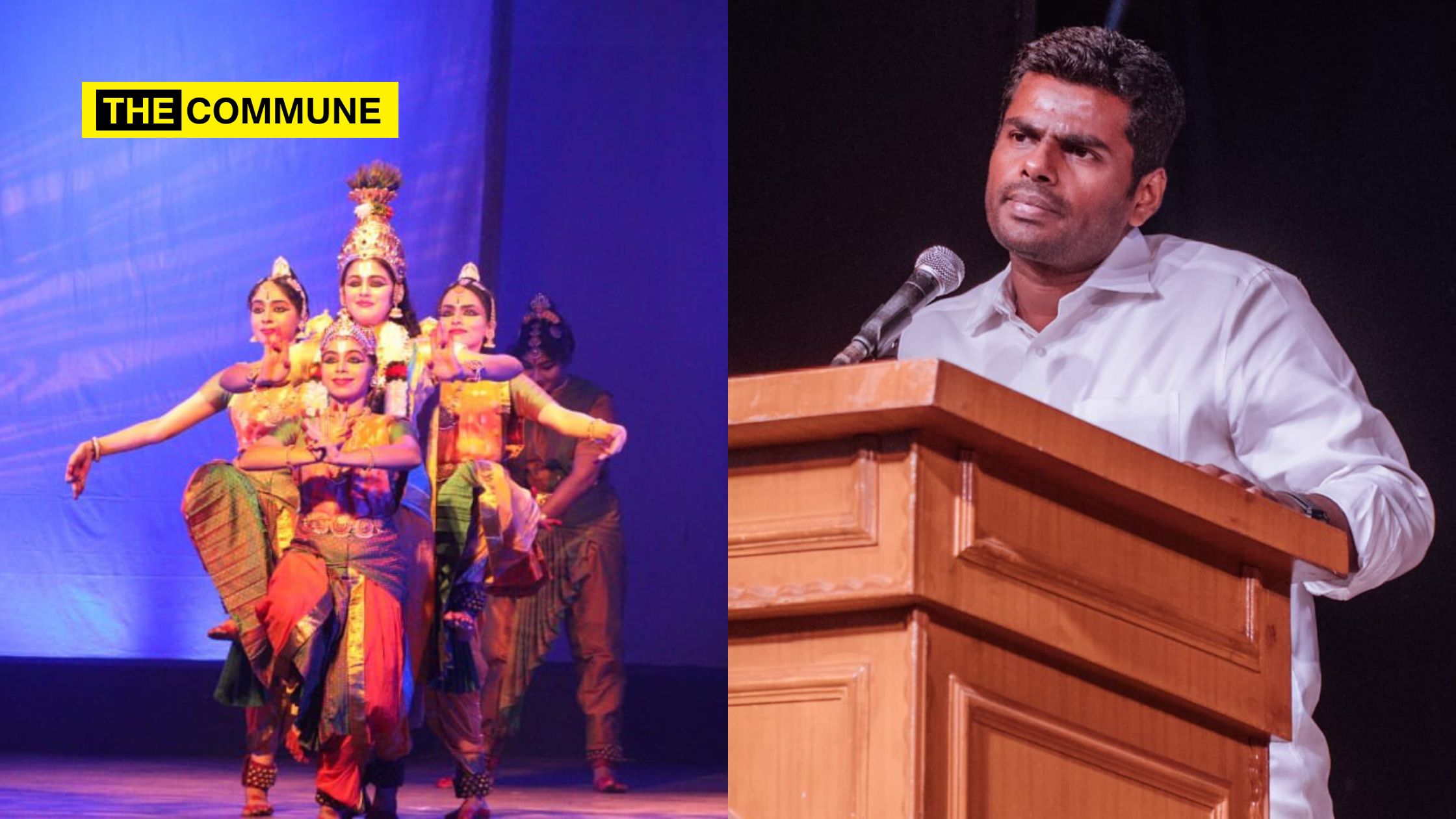
The intellectual and thinker’s cell of the Tamil Nadu BJP is hosting the “Tamil Nadu Dialogues 2022” on December 9, 2022. The event will take place on Friday at the Taj Coromandel in Nungambakkam, Chennai.

Tamil Nadu BJP President K Annamalai, will preside over the event and Bengaluru South MP  Tejasvi Surya will be chief guest.

The day-long event features discussions on the past and future of Tamil Nadu politics. The speakers at the event include several prominent writers, thought leaders and political commentators.

Noted author Aravindan Neelakandan, who had co-authored the best-selling book Breaking India will speak on “Dravidian Model Pseudo Rationalism.”

Senior Journalist Kolahala Srinivas and Chief Guest Tejasvi Surya will speak on “Kaasiyum Tamizhum” and “The Common Ganga-Ponni Culture-Through the Years,” respectively in light of the month-long Kasi Tamil Sangamam that is happening in Varanasi.

Advocate J Sai Deepak will speak on Dravidian Exceptionalism and Secessionalist Regionalism. Sai Deepak is an engineer turned lawyer who is well known for arguing before the Constitution Benches of the Supreme Court in the Sabarimala Temple Entry case.

Rajavel Nagarajan, founder of Pesu Tamizha Pesu, actress and director Lakshmi Ramakrishnan, and author, newsreader, and independent director of EDUCIL Srikanth Karunesh will be the panelist for the topic “Selective Distortion in Tamil Cinema”, which will be moderated by political commentator JVC Sreeram.

Rangaraj Pandey, Senior Journalist and Founder & CEO of Chanakyaa TV, will speak on the subject “What has changed? What will change? – Elections 2019 to 2024.”

The panelists for the subject “Immediate Challenges to Tamil Nadu’s Growth- Alcohol & Drug Abuse, Quality of Education, Financial Mismanagement” will have political commentator Sriram Sheshadri and Youtuber Karthik Gopinath, moderated by Political Commentator BR Sreenivasan.

Tamil Nadu BJP President will be speaking on the subject,”My Idea of Tamil Nadu & What can BJP offer to Tamil Nadu – The Future”

The event is being organized by Shelvi Damodhar, President of the TN BJP’s Thinker’s Cell, and other officer bearers such as Prabhari, Vice Presidents, and State Secretaries of the Thinker’s Cell. Entry to the event is through prior invitation and registration only.

The media partners for the event are Aadhan Tamil, Orey Naadu, Pesu Tamizha Pesu, and The Commune. The print, social media, and event sponsors are Dinamalar, EASTON, and Shri Narayana Nidhi Ltd respectively.

The event is curated by The People Tree Network.

Click here to subscribe to The Commune on Telegram and get the best stories of the day delivered to you personally.
Delhi’s Liquorgate Reaches Andhra

This is part 2 of the series on the links between Delhi Government’s Liquorgate and the Telugu states of Andhra Pradesh and Telangana. Read par 1 here

AAP’s Delhi Liqour Scam has far reaching roots all the way down to Andhra and Telangana’s ruling parties, based on Enforcement Directorate’s (ED) investigations and initial reports.

As of this week, the latest addition to an earlier list of persons to be named from the Telugu states, in the ED report, is K Kavitha, the daughter of Telangana Chief Minister and leader of the ruling BRS party (formerly TRS) , K Chandrasekhar Rao. In its report, the ED refers to individuals involved from the South, as the “South group”.

Last month, the ED arrested Sarath Chandra Reddy, a Director in the Hyderabad-based Aurobindo Pharma company and Benoy Babu, general manager, International (Liquor) Brands- Pernod Ricard India, in connection with its money-laundering probe into irregularities in the now-scrapped, liquor policy of the Delhi government. They are accused of alleged corruption in the formulation and implementation of the excise policy for the National Captial. Senior AAP leader and Delhi Deputy Chief Minister, Manish Sisodia has also been named as a party to the Delhi “Liquorgate” scandal.

Sarath Chandra Reddy’s purportedly deep and far-reaching involvement in the Delhi liquor policy scam, is politically significant as the family of Sarath Chandra Reddy is related to Vijayasai Reddy, a close aide and confidante of the Andhra Pradesh Chief Minister, YS Jagan Mohan Reddy. Sarath Reddy is the brother of Rohith Reddy, son-in-law of YSRCP general secretary and Rajya Sabha Member of Parliament (MP) Vijayasai Reddy.

Sarath Reddy has been on the Central Bureau of Investigation’s (CBI) scanner, for several years now. He was one of the accused in the alleged quid pro quo case probed by the CBI against YSRCP president and present Andhra Pradesh chief minister Y S Jagan Mohan Reddy in 2012.

In March 2012, the CBI had filed a case against Sarath Chandra Reddy, then heading Trident Life Sciences (a subsidiary of Aurobindo Pharma company), for allegedly receiving favours from Jagan Reddy’s father and former chief minister of Andhra, Y S Rajasekhar Reddy’s (YSR) government, in the form of land allotment at low prices, in return for “investing” at an exaggerated premium, in his son Jagan Mohan Reddy’s Jagati Publications Private Ltd. In the 2012 chargesheet against Jagan Reddy, the CBI alleged that Sarath Chandra Reddy had invested Rs 7 crore in Jagan Reddy’s Jagati Publications Private Ltd, at an exaggerated premium of Rs 350 per share, and charged him under IPC sections 120-B and 420.

The stench of the Delhi liqour scam with the Enforcement Directorate’s (ED) investigations, unraveling names of high profile people connected to Andhra and Telangana’s ruling parties (YSRCP and BRS/TRS respectively) is being sniffed around, by opposition parties in both states and may have political ramifications, directly or indirectly. Telangana goes to polls in 2023 and Andhra in 2024.

The ED told the Court that Reddy was “one of the kingpins” and a “major beneficiary of the cartelisation” whose cartel group “controlled 30% of Delhi liquor market”. It also accused him of giving a bribe of 100 crore to Delhi Excise officials through AAP Communication in-charge Vijay Nair. ED sources further added that Reddy was instrumental in the cartelisation of licences and played a role in “moving” or facilitating alleged kickbacks in the entire liquor licensing process, adding that Benoy Babu was also a part of the cartelisation process.

At the time of the arrests last month, Andhra CM Jagan Reddy’s YSRCP party was quick to allege, that there was “no basis” for the arrest of Sarath Chandra Reddy, brother of YSRCP leader and MP, Vijayasai Reddy’s son-in-law. YSRCP party leaders claimed that, during a raid on a subsidiary of the Aurobindo Pharma company in September, ED officials had used “undue” force on an employee holding a key position and “forced” him to sign “pre-written” documents. They further stated, “The CBI had no evidence in the case and ED could not find anything (substantial) in the search that was conducted”.

Another accused from the “South group” in the ED report, is Magunta Srinivasulu Reddy, a YSRCP party leader and MP from Andhra’s Ongole. He denied having any links with the case. He has claimed that the liquor lobby in North India was conspiring against businessmen from the South!

Andhra CM Jagan Reddy and his YSRCP party find themselves in a hot spot, with their close, undeniable connections to two of the main “south group” accused individuals in the Delhi liquor scam- Sarath Chandra Reddy (brother of the son-in-law of YSRCP MP, Vijayasai Reddy) and Magunta Srinivasulu Reddy, a YSRCP leader and MP.

Rise Of The Phoenix: Vijayasai Reddy’s Rise And Importance In Jagan Reddy’s YSRCP

Vijayasai Reddy, a close confidante of Andhra CM, is often described as a strategist, irreplaceable aide and financial advisor to YSRCP leader and incumbent Andhra Chief Minister, Y.S.Jagan Mohan Reddy. The 64-year-old Rajya Sabha MP and YSRCP national general secretary, Vijayasai is a chartered accountant (CA) with offices in several cities. He has been close to the YSR family since 1980, when he first met the late Y S Rajashekara Reddy (YSR), Jagan’s father and former Andhra CM, at a marriage ceremony. Vijayasai became the financial advisor to the YSR family, specifically to Jagan Reddy, who had several businesses at the time. In 2006, YSR had even nominated him to a coveted position on the Board of the Tirumala Tirupati Devasthanam (TTD) for two terms.

In 2012, both Vijayasai and Jagan Reddy were arrested by the Central Bureau of Investigation (CBI) in a Disproportionate Assets case, against Jagan Reddy. The CBI alleged that Jagan had, in a criminal conspiracy with others, received bribes from various companies and individuals who had invested in his group companies from 2004-2009, as a ‘quid pro quo’ deal for securing undue favours from Jagan’s father, the then Andhra Pradesh CM, YS Rajasekhar Reddy (YSR). Simultaneously, the Enforcement Directorate (ED) also filed cases of money laundering against Jagan.

The 2012 charges against Vijayasai Reddy include, criminal conspiracy to cheat, criminal breach of trust, falsification of accounts and criminal misconduct. In addition, he was also charged of playing a dubious role in the sale of shares worth 533 crores, of Sandur Power Company. He is referred to as “A2” in the ED’s Disproportionate Assets charges, whilst Y.S.Jagan Mohan Reddy is referred as “A1”.

Both Jagan Reddy and Vijayasai Reddy were released on bail in 2013 after which Vijayasai reportedly gained more trust with Jagan. He became a close, trusted friend and advisor to Jagan in his business, financial matters as well as political matters. Jagan Reddy lost the Andhra Pradesh elections in 2014 but won in the 2019 state elections. Jagan became Andhra’s Chief Minister and Vijayasai became his trusted problem solver, chief strategist and advisor. Rumor has it that it was Vijayasai who advised Jagan to hire Political Strategist, Prashant Kishor ahead of the 2019 elections, which resulted in a win for Jagan.

Both Jagan, whose party’s MP is implicated in the Delhi liquor scam and Vijayasai, whose son-in-law’s brother is embroiled in the same scandal, are Andhra “VIPs” and leaders enjoying the pleasures of power, while still out on bail!

Click here to subscribe to The Commune on Telegram and get the best stories of the day delivered to you personally.
Amidst Calls For Banning Online Rummy, TN Govt’s Textbook Has A Lesson On Playing Rummy

There has been a political furore over the Tamil Nadu Governor not giving his asent to the Tamil Nadu Prohibition of Online Gaming and Regulation of Online Games Bill, 2022. The DMK and its allies have been upping the ante against the Governor saying that by delaying the assent to the bill, he is tacitly allowing the menace of online gambling to continue.

Tamil Nadu BJP K Annamalai has questioned the ruling DMK government about why it did not notify the law after the ordinance was passed.

He took to Twitter on Wednesday to condemn and question the DMK government. According to Annamalai, on October 3, the Tamil Nadu government passed an ordinance prohibiting online rummy and poker and introduced new regulations on online gaming. The ordinance was issued on October 7, and the bill to prohibit online gambling was passed on October 19, he recalled.

He questioned the DMK government, which informed the Madras High Court on November 17 that the ordinance had not yet taken effect and yet to be notified.

He stated that, according to the ordinance, the Tamil Nadu Gaming Authority was to be formed to develop procedures for implementing the law, and he questioned whether it had been formed.

Annamalai also stated that six people died as a result of online gambling between October 8 and November 27. He claimed that despite the ordinance, online gambling has continued in the state because the state government failed to notify it.

While the public and opposition parties question the DMK government’s credibility in combating online gambling, a lesson from a Tamil Nadu textbook has surfaced on the internet, detailing how to play rummy.

The alleged rummy lesson is from a Tamil Nadu textbook given to class six students in the Mathematics term 3 book. The Tamil Nadu books explain the Rummy game saying,” The teacher sees that Yuvan and Subha are ready to play a game with a deck of playing cards. Consider the cards A, J, Q, K, and cards from 2 to 10. Here, let A, J, Q, and K denote the numbers 1,11,12, and 13 respectively. We have two designs ♠ ♣ in black color and two designs ♥ ♦ in red color inside a deck of cards. Let the joker card represent 0.”

The Tamil Nadu textbook explained the rules of the Rummy game as follows:

  • If a black card is picked, the player should move the token forward and if a red card is picked, the player should move the token backward as per the number shown on the card.
  • Whoever reaches number 20 first will be declared as the winner. (more students can play this game by choosing different colored tokens)

This Tamil Nadu textbook lesson on Rummy game to class six students drew criticism from all sections of the public, who questioned the DMK government’s credibility in fighting the menace of online gambling.

Click here to subscribe to The Commune on Telegram and get the best stories of the day delivered to you personally.


Video Of DMK Councillor Taking Bribe Goes Viral, Says It Was For DMK Municipal Council Chairman

Satyaseelan is a DMK councillor from the 18th Ward of Gudalur Municipality in Nilgiri District and the Deputy Organizer of the DMK Agriculture Wing. A video of him receiving a bribe of  around ₹50,000  from a person to allow him to build a house went viral on social media.

Local residents and netizens urged the DMK government and state vigilance to take action against the DMK councillor who was receiving bribes.

According to DMK councillor Sathyaseelan, who explained the incident, the video was taken six months ago and Parimala from the DMK, who was then the municipal council Chairman, called him and asked him to get ₹50,000 from a contractor.

Sathyaseelan claimed he was only collecting bribes from contractors and transferring them to the DMK municipal council chairman Parimala. He went on to say that the dispute between her and chairman Parimala in front of all the councillors in the city council meeting, where he questioned her about the bribes of ₹7.2 lakh from the contractors, enraged her, and that she has now released the video taken six months ago to divert attention away from the issue.

Chairman Parimala, who has denied Councillor Sathyaseelan’s allegations, stated that he was making false allegations against her in order to defame her. She went on to say that she will file a complaint with the appropriate authorities and take action against the councilor who is defaming her.

This incident, in which a councilor and the Chairman of the ruling DMK party accused each other of corruption, has created quite an outrage among the general public.

(with inputs from Puthiyathalaimurai)

Click here to subscribe to The Commune on Telegram and get the best stories of the day delivered to you personally.
Digi Yatra Launched In 3 Airports Providing Seamless And Contact-less Travel Experience

Union Minister for Civil Aviation Jyotiraditya Scindia today launched Digi Yatra from the Indira Gandhi International Airport, New Delhi for three airports in the country, namely New Delhi, Varanasi and Bengaluru. Digi Yatra is conceived to achieve contactless, seamless processing of passengers at airports based on Facial Recognition Technology (FRT).

Speaking about the Digi Yatra project conceived by Digi Yatra Foundation under the Ministry of Civil Aviation, the Minister said that the project envisages a traveller today pass through various check points at the airports through a paperless and contactless processing using facial features to establish her identity which could be linked to the boarding pass. To use this facility, one-time registration on Digi Yatra app is required using Aadhar based validation and a self-image capture. The project has tremendous advantages of improving passenger convenience and ease of travel.

About the privacy features of the project, the Minister said that keeping in mind the privacy, there is no central storage of Personally Identifiable Information (PII).  Passenger’s ID and travel credentials are stored in a secure wallet in the passenger’s smartphone itself. The uploaded data will utilise blockchain technology and all the data will be purged from the servers within 24 hours of use.

With Digi Yatra, India will now stand in the ranks of world class airports like Heathrow in London and Atlanta in United States of America. Elucidating on the benefits of Digi Yatra, the Minister stated the example of Dubai Airport where passenger time upto 40 percent was saved due to this technology. A similar technology saved nine minutes per aircraft time at the Atlanta Airport. The Minister also said that compared to other ports of call, the Indian system has been made far more seamless from entry to exit and therefore will be one of the most efficient systems from across the world.

Digi Yatra in the first phase, will be launched at 7 airports. However, it has been initially launched at 3 airports i.e., Delhi, Bengaluru and Varanasi today, to be followed by 4 airports namely Hyderabad, Kolkata, Pune, and Vijayawada by March 2023. Later it would be implemented across various airports in the country. The service is presently being launched for domestic flights passengers only. Digi Yatra App is available on both IoS and android. It is voluntary is nature.

With Digi Yatra, India is setting a new global benchmark for a seamless, hassle free and health risk free process at airports.

(Published from PIB)

Click here to subscribe to The Commune on Telegram and get the best stories of the day delivered to you personally.
 

Mangaluru Cooker Bomber Shariq Visited Kanyakumari and Suchindram Temples Before Blast

Security agencies have launched an intensive investigation after receiving information that Mohammed Shariq, the main suspect in the Mangaluru cooker bomb blast case, visited Suchindram and Kanyakumari temples on a bike while staying in Nagercoil.

It has been confirmed that Mohammed Shariq was staying in a private lodge in Meenakshipuram, Nagercoil, under a false name, and with forged documents.

During the investigation, the lodge staff stated,”If he went out in the morning, he would only return to the room at night. But no one came here to meet him.”

However, details about whome he met and other details are yet to be unravelled by investigating officers.

According to the investigation, the suspect Shariq inquired about Kanyakumari Bhagavathy Amman Temple and Suseendram Thaanumalayaan Temple from a lodge employee and then rode his bike to those temples. Intelligence agencies are actively pursuing the investigation in this regard.

The Mangaluru police have returned to Karnataka after a four-day investigation in the Kanyakumari district. Further investigations are on. An investigation is also underway to determine who Shariq met in Idalaakudy and Manavaalakurichi.

(with inputs from Dinamalar)

Click here to subscribe to The Commune on Telegram and get the best stories of the day delivered to you personally.