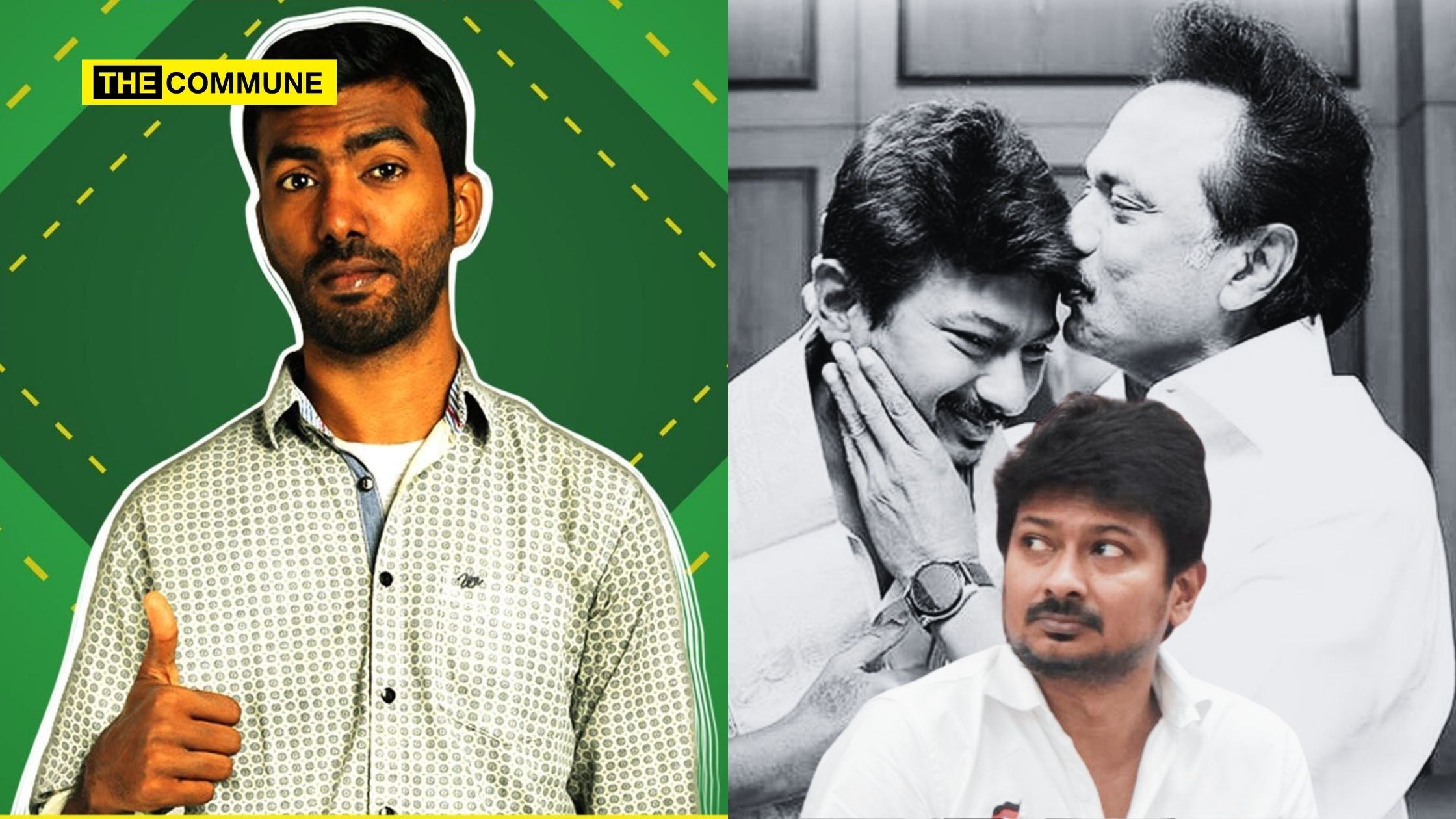
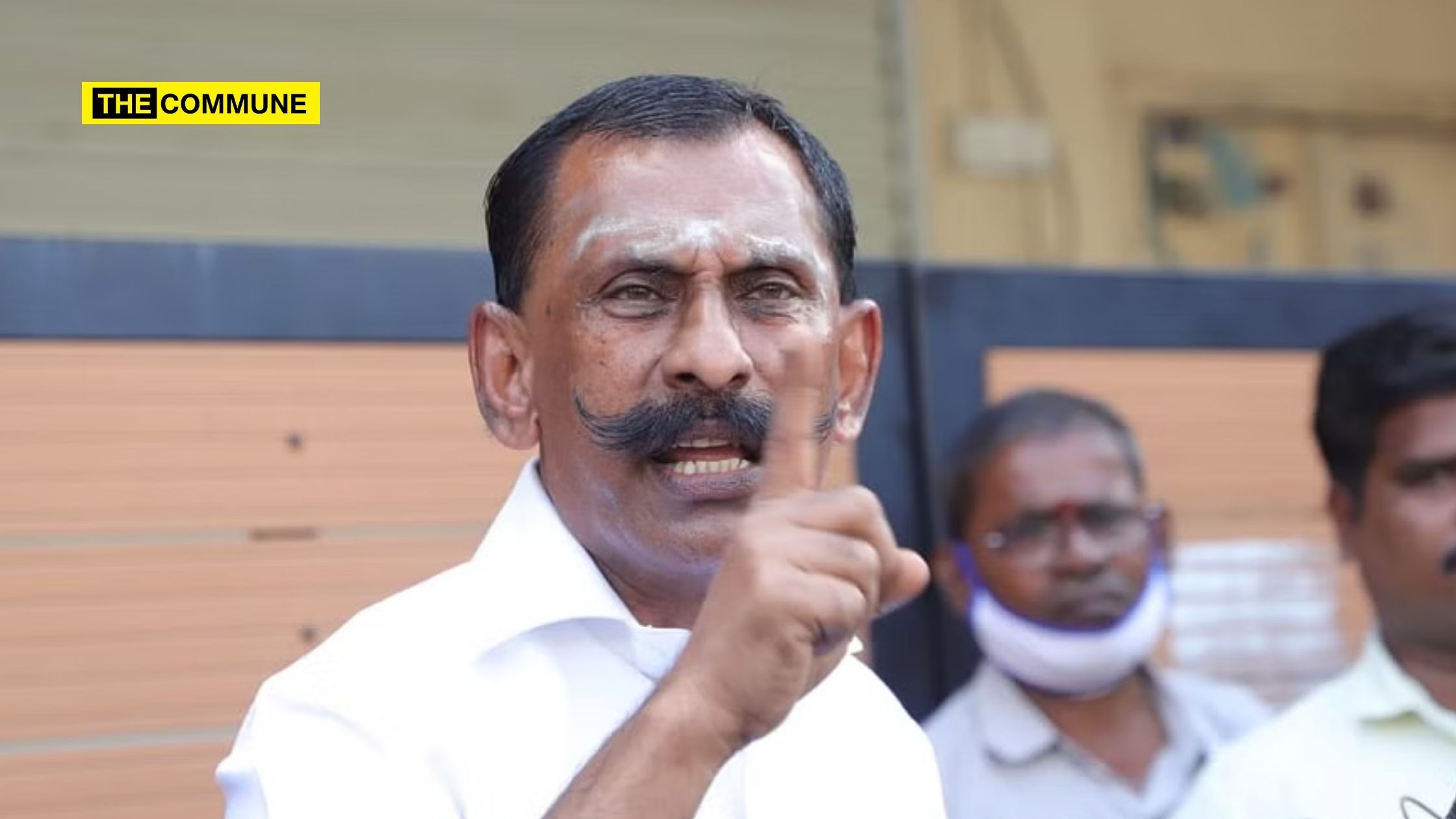
A standup comic’s video clip went viral on social media platforms. The comic Manoj Prabhakaran’s sly dig at Udhayanidhi Stalin caught the attention of the public. This was the opening joke of the hour-long show. In the video trending on the internet, Manoj is seen describing his decision to become a standup comic and that his father who was a conductor, never questioned his intentions. He says, “… But now my father is happy with whatever I do. He said, do whatever you want, don’t ask me money. Valid request and I respect that. And I don’t want my father’s help to build my career, I can do it on my own”
The act takes a funny turn at this point. Manoj says, “Actually most people in the world, they don’t need their father’s help to build their career. They all do it on their own. Unless you are Udhayanidhi Stalin.”
Manoj adds, “Then you need the help of your father, grandfather, Harris Jayaraj, Santhanam, Nayanthara, and 350 others to help you build your career. I know some of you are laughing, some of you are offended. Some of you are like, did he just say that? Is this allowed? Some of you are like who is this Udhayanidhi? I understand the confusion and that’s exactly how I want my audience to be divided in all my shows.”
— Saravanaprasad Balasubramanian (Modi ka Pariwar) (@BS_Prasad) January 3, 2024
The standup comic was already in the news in 2018 for allegedly mocking Telugu superstar Mahesh Babu. In that video, he calls Mahesh Babu, the male version of Katrina Kaif as he had good looks but could not emote well in films.
He was abused brutally by fans of the actor and he later apologised for making those comments.
It remains to be seen in this case if followers and fans of DMK’s Udhayanidhi Stalin also behave similarly to the Telugu star’s fans.
Subscribe to our channels on Telegram, WhatsApp, and Instagram and get the best stories of the day delivered to you personally.
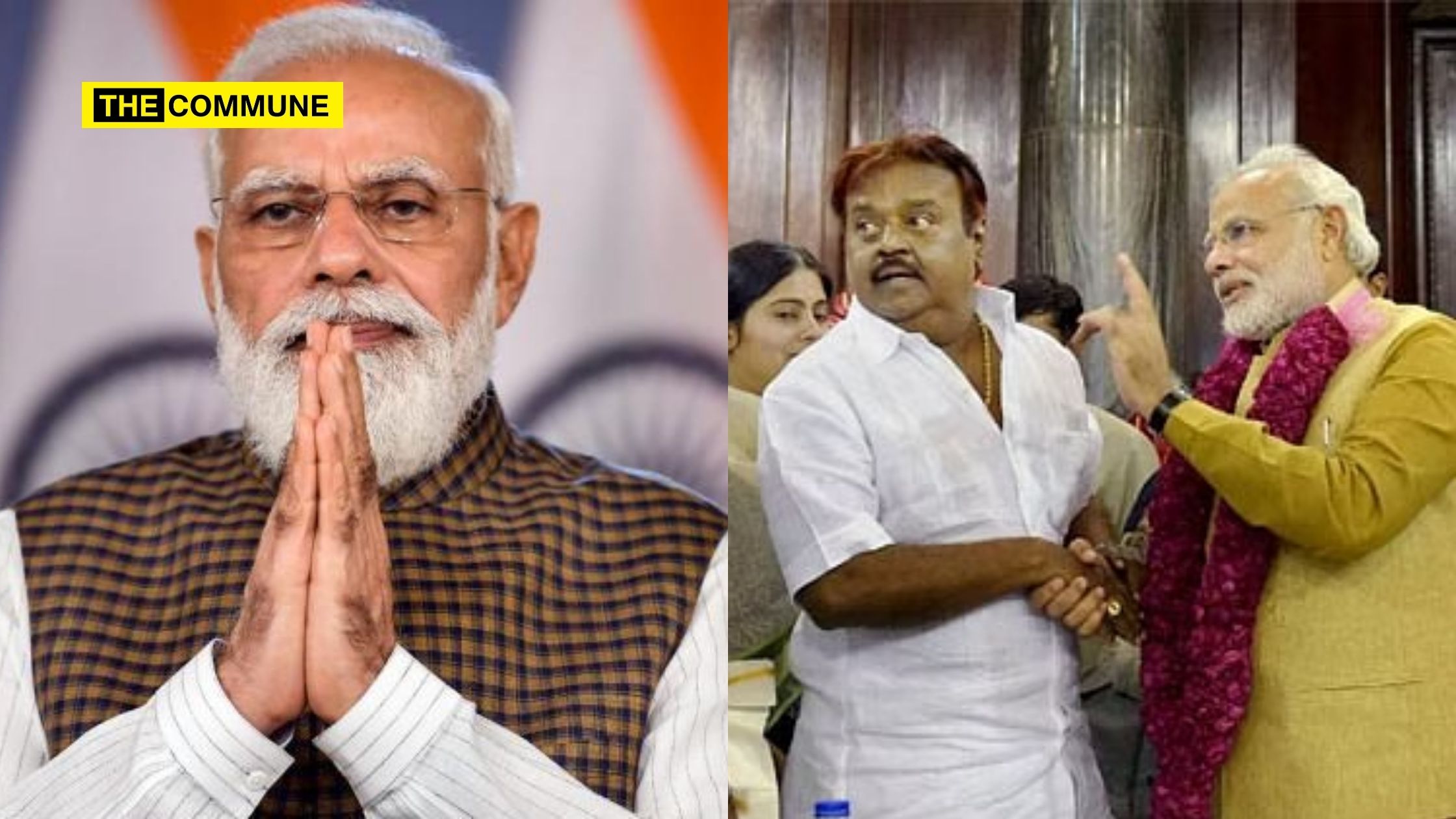
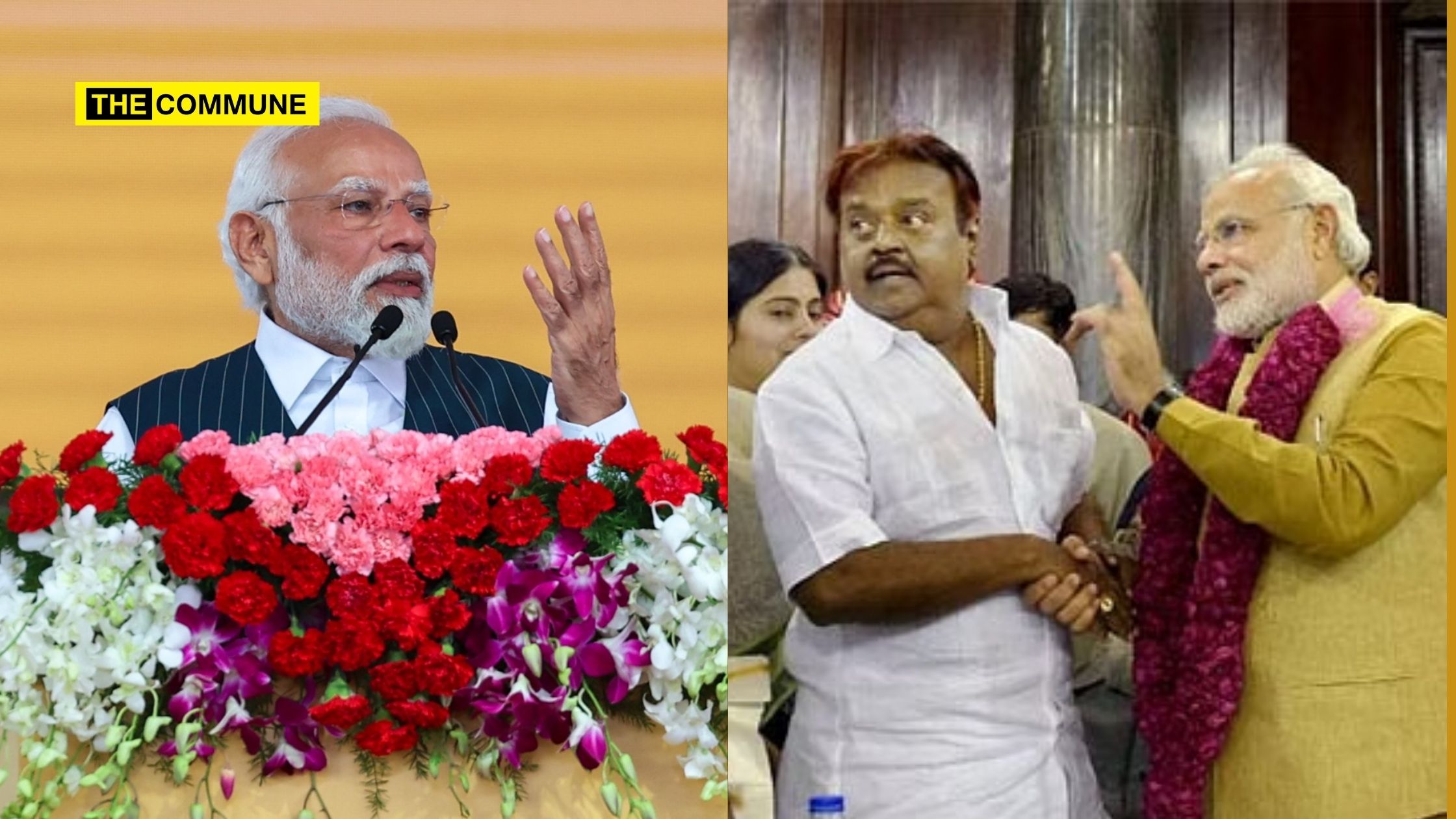
In a heartfelt tribute, Prime Minister Narendra Modi paid homage to DMDK founder Vijayakanth, whom he fondly referred to as “Captain.” The Prime Minister emphasized Captain’s selfless commitment to serving others and highlighted his multifaceted personality.
He said that Captain’s remarkable journey from humble beginnings to becoming a renowned figure in the Indian cinema industry left an indelible mark.
“His journey from humble beginnings to the highs of Tamil cinema is not just a story of stardom but a chronicle of relentless effort and unwavering dedication. He did not enter the world of cinema for fame. His was a journey driven by passion and perseverance. Each film of his not only entertained but also echoed the societal ethos of its time, resonating deeply with a wide cross section of the audience.“, PM Modi wrote.
Prime Minister Modi acknowledged Captain’s roles, which often depicted characters fighting against injustice, corruption, violence, extremism, and terrorism while championing the cause of the underprivileged. These qualities mirrored Captain’s real-life persona, making his films a reflection of society’s virtues and vices.
The Prime Minister also celebrated Captain’s profound love for rural life and traditional culture. Despite achieving fame and global recognition, Captain maintained his deep-rooted connection to village life, which was reflected in his films. He made commendable efforts to bridge the gap in understanding between urban and rural communities.
Captain’s impact extended beyond cinema as he ventured into politics, aiming to serve society on a broader scale. His entry into politics was marked by courage and sacrifice, particularly in Tamil Nadu’s competitive political landscape dominated by stalwarts like Jayalalithaa Ji and Karunanidhi Ji. Captain’s party, the Desiya Murpokku Dravida Kazhagam (DMDK), was founded on the principles of nationalism and social justice, aligning with his on-screen advocacy for the downtrodden. In a relatively short time, he became the principal Opposition leader in Tamil Nadu politics.
Prime Minister Modi recalled his collaboration with Captain during the 2014 Lok Sabha elections, where their alliance garnered over 18.5% of the vote share, marking a significant achievement in the state’s political history. Captain’s fiery oratory and strong rapport with the people left a lasting impression.
“In the passing of Vijayakanth Ji, several people lost their most admired star and lots of people have lost their beloved leader. But I have lost a dear friend – a friend whose warmth and wisdom were remarkable. He leaves behind a void that cannot be filled. The Kural talks about how courage, generosity, wisdom, and zeal are four essential elements of a successful leader. Captain truly embodied these traits and that is why he was so widely respected. His legacy will continue to live on in the hearts of his fans, the annals of Tamil cinema, and the corridors of public service. And, we will keep working to realise his vision for progress and social justice for all.“, PM Modi concluded.
Subscribe to our channels on Telegram, WhatsApp, and Instagram and get the best stories of the day delivered to you personally.
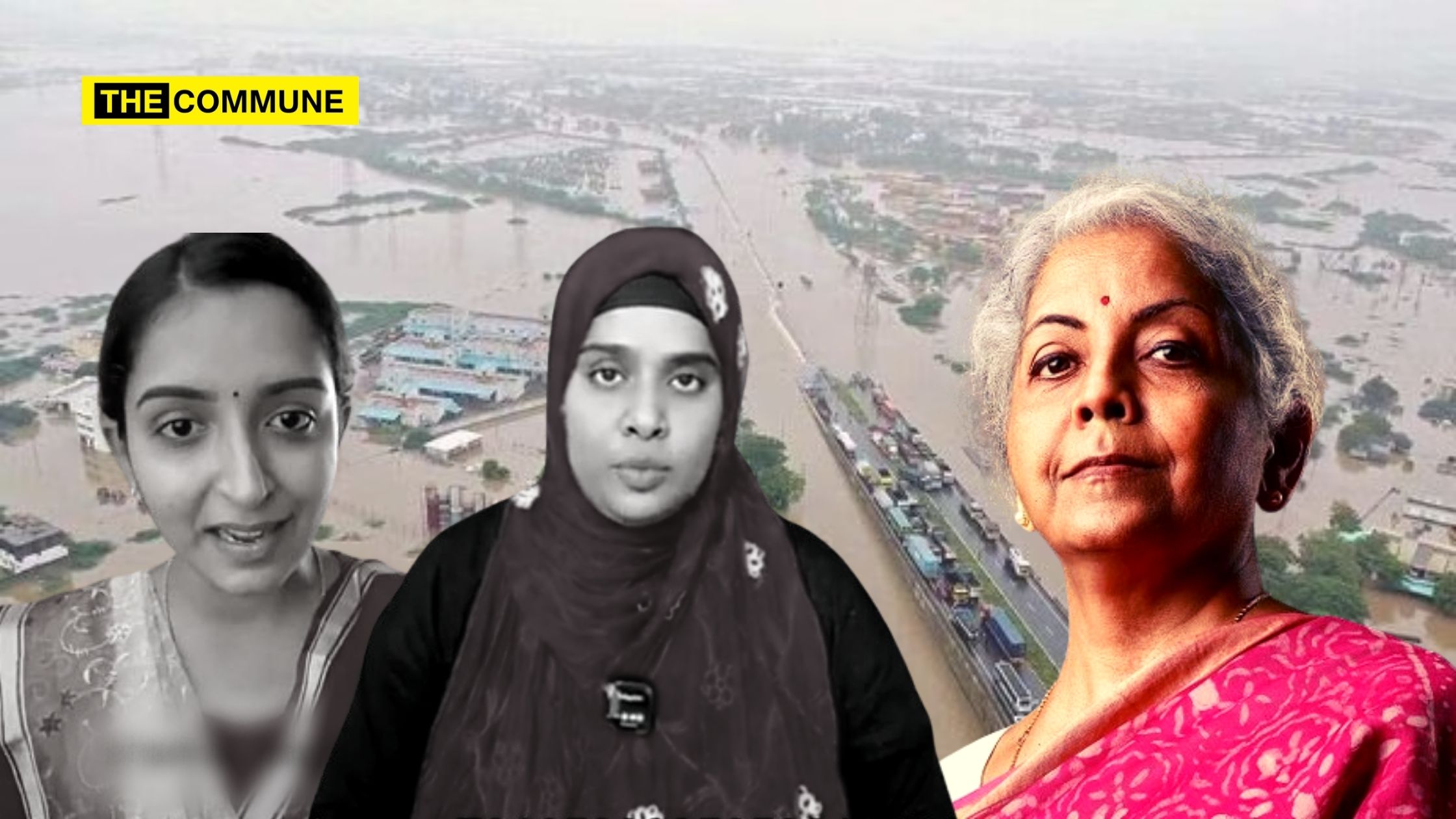
Cyclone Michaung mercilessly wreaked havoc upon the city of Chennai and its suburbs in early December 2023 and subsequently, the state also faced severe flooding in southern regions owing to extremely heavy rains. The Dravida Munnetra Kazhagam-led Tamil Nadu government seemingly failed to address the challenges in responding to the recent floods and inundation caused by Cyclone Michuang in December 2023 in various districts in the state.
On 22 December 2023, Union Finance Minister Nirmala Sitharaman conducted a press conference to provide insights into the Central Government’s actions in response to the recent floods affecting Chennai and the southern districts of Tamil Nadu. She said that the Centre has disbursed ₹900 crore in two installments for Tamil Nadu in the current fiscal year.
Commenting on the DMK government’s decision to give ₹6000 as a relief amount, Sitharaman expressed her concern over the mode of payment, questioning why the funds were being disbursed in cash rather than through direct benefit transfer. She asserted, “This is government money, not my father’s money or your father’s money.”
The Finance Minister’s comments came in response to a remark made by DMK Minister Udhayanidhi Stalin who had said “Are we asking their father’s money? We’re asking to give back our money”.
Sitharaman retaliated, accusing Udhayanidhi of consistently using derogatory language. Drawing parallels to a previous controversy about eradication of Sanatana Dharma, she said, “This is the pattern of their language; even during the Sanatana dharma controversy, he employed similar expressions.
“Those asking ‘Is it your dad’s money?’, can we similarly say he is enjoying power because of his dad’s assets? Can we ask like that? He has been elected by the people and we give him the due respect for that. These talks like ‘unga appan, unga aatha’ (derogatory way of saying your father, your mother), these kind of talks are not good in politics. He wishes to progress further in politics right? That family is also aspiring Secright? The language they use. His grandfather was such a big Tamil scholar. The words that come through the tongue should be measured in accordance with the position they hold.“, she said.
The Dravidianists seem to have been affected by the comments made by FM. In an attempt to deflect attention from their failure, Dravidianists resorted to mocking Union Finance Minister Nirmala Sitharaman for her Brahmin identity.
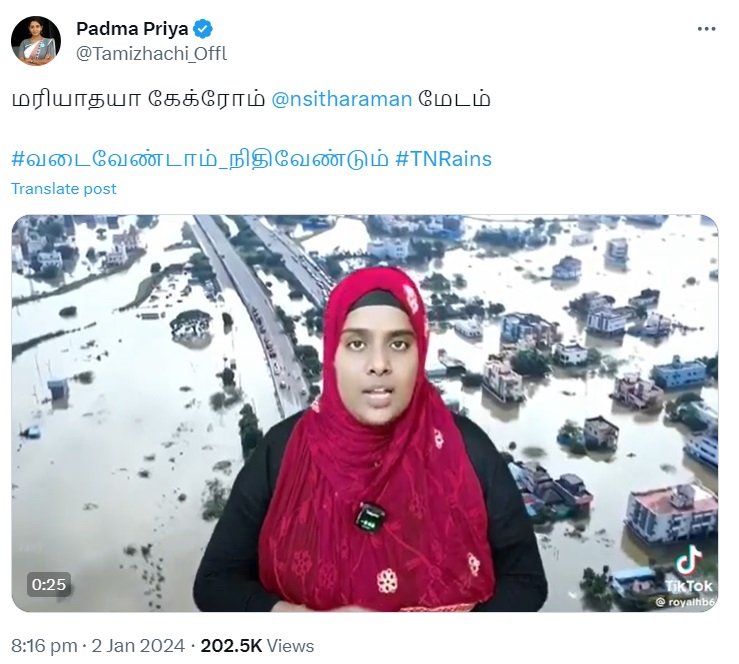
YouTube beautician turned DMK IT Wing’s State Deputy Secretary, Padma Priya shared a video on her X handle. This video is actually a portion of a TikTok video by a handle @royalhb6. In the video clipping, a woman wearing a hijab sarcastically questioned whether Ms. Sitharaman should be respectfully requested. She said, “Should we ask Ms. Sitharaman respectfully that’s it! On behalf of affected people I’m asking you. Greetings to you due to heavy rain in Tamil Nadu there was complete there were floods and people are innocent and suffering so I don’t ask you to give money from your father’s home I ask you to give tax money contributed by the people of Tamil Nadu. You will live a long life. I have requested you for the funds with the respect you expected and in the language you understand. Please give something that you can to the people of Tamil Nadu, you will gain some punya. You will also live well.”
Following the backlash from netizens, the post has been deleted.
The video in question that used TB slang to mock the Finance Minister has now been deleted by the party official after receiving pushback on SM.
This is not the first time D-stocks have mocked Nirmala Sitharaman for her caste.
On 20 August 2023, in an event conducted by DMK to express their opposition to the union government’s decision to persist with the examination, DMK MP Dayanidhi Maran made several comments that were casting aspersions based on caste, specifically targeting Brahmins and Union Finance Minister Nirmala Sitharaman where he went ahead to called her ‘Nirmala Mami’
Also former Justice Chandru had hurled casteist slurs at Union Finance Minister Nirmala Sitharaman calling her “Ooruga Maami“, a casteist and a sexist reference to Finance Minister Nirmala Sitharaman’s Brahmin and woman identity.
More recently. when Finance Minister was in Tamil Nadu, Dravidian stocks criticised Nirmala Sitharaman for questioning Hindu Religious & Charitable Endowments (HR&CE) department officials regarding the upkeep of the temple procession route. Supporters of the DMK endorsing the Dravidian Stocks engaged in derogatory and casteist language against Nirmala Sitharaman, making reference to her Brahmin identity. They even trended a derogatory hashtag #தட்டேந்தி_நிம்மி” on social media platform X. The hashtag “Thattendhi Nimmi” in Tamil carries a casteist and abusive connotation, specifically targeting her Brahmin identity by alluding to Brahmin priests relying on donations placed in the archana plate.
This video by the hijabi shared by former beautician Padma Priya was highly condemned by netizens for the senseless mockery made against a woman and a particular community.
The relentless hate of the D-ecosystem never ceases to amaze me. Would these scum dare mock the language of any other community? https://t.co/N3YmkmWMv7
#DMK using a #Muslim woman to speak/mimic the #tamil accent of the #Brahmin community (specifically aimed at the Finance Minister @nsitharaman), demanding funds for #Tamilnadu flood relief..
On 2 January 2024, in a notable address preceding Prime Minister Narendra Modi in Tirchy, Tamil Nadu Chief Minister MK Stalin voiced a series of key demands, urging for the elevation of Madurai Airport to international status. He pressed for the immediate initiation of direct flight services connecting Chennai to Penang and Chennai to Tokyo, emphasizing the sizable Tamil diaspora in both Malaysia and Tokyo. Stalin also underscored the necessity for increased central support to propel the Chennai Metro Rail project and expedite the projects of the National Highways Authority of India (NHAI) in Tamil Nadu.
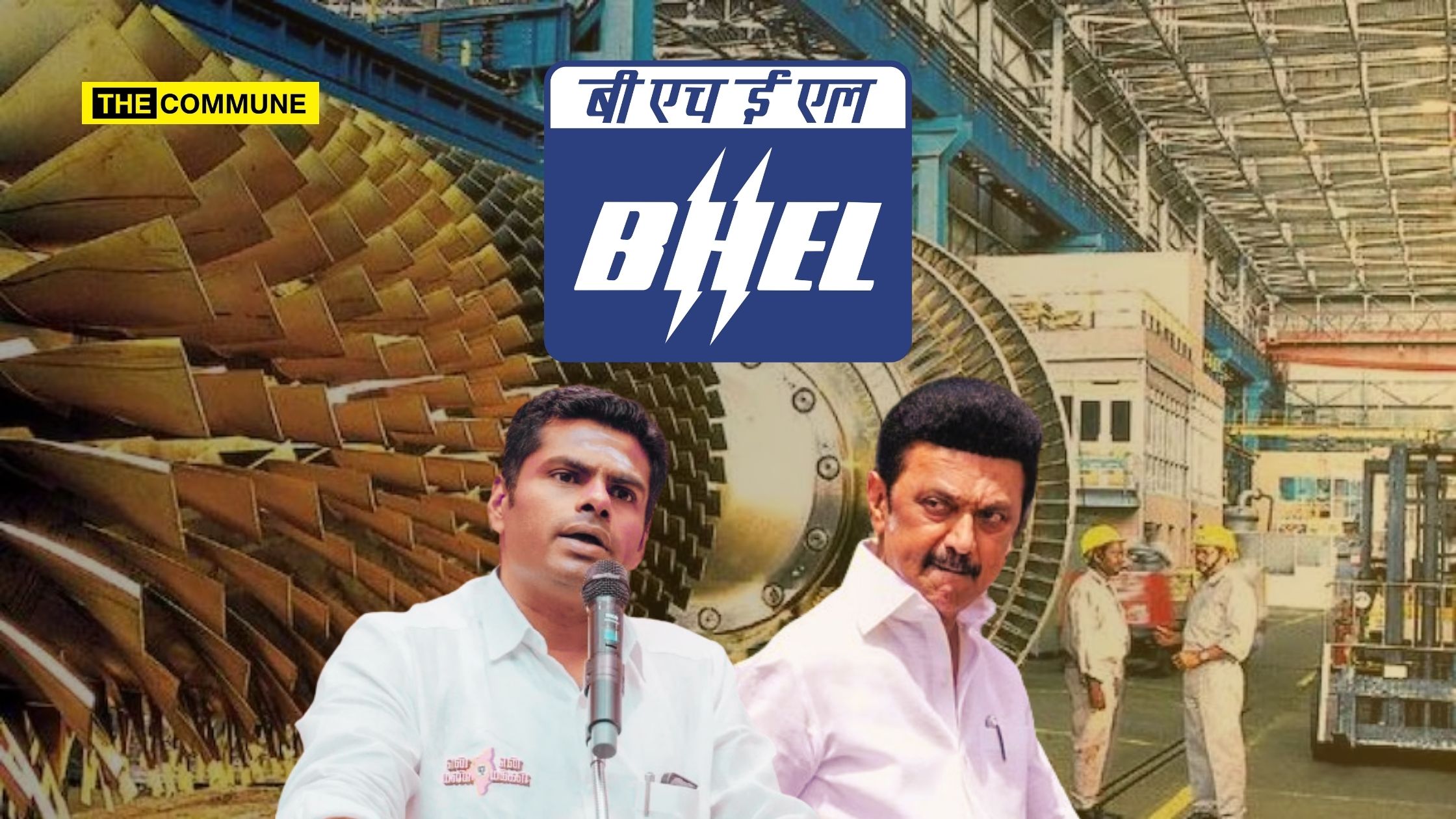
However, amidst these calls for development, Stalin expressed concern over the decline in orders from the public sector heavyweight, Bharat Heavy Electricals Limited (BHEL), managed by the Central government, to Micro, Small, and Medium Enterprises (MSMEs) in the state. Particularly, he pointed out the adverse impact on micro industries in the Trichy area.
Responding to Stalin’s grievances, Tamil Nadu BJP chief Annamalai took to Twitter to counter the accusations. He referenced a past decision by CM Stalin, alleging that in 2021, the Tamil Nadu Chief Minister chaired an Energy department meeting and reinstated a contract to BGR Energy, a company that had previously shown little progress in its work. Annamalai highlighted that the other bidder for the contract, BHEL, was not considered by the Tamil Nadu government, raising questions about the selection criteria.
Moreover, Annamalai brought attention to the fact that BHEL Trade Unions have filed a case in the Madras High Court, urging a CBI probe into the reinstatement of the contract with BGR Energy. The BJP chief accused the DMK government of supporting a financially troubled company like BGR Energy with a substantial contract worth ₹4442 Crores, only for the Chief Minister to later express sympathy for MSMEs affected by the reduced orders from BHEL.
Annamalai underscored the apparent contradiction, accusing CM MK Stalin of shedding “crocodile tears” and playing manipulative tricks in refusing contracts for BHEL while allegedly favoring BGR Energy for personal monetary gains. The TNBJP chief reminded the public of a tweet from August 2023, where he previously accused the DMK government of awarding the TANGEDCO contract to BGR Energy despite its reported lack of development.
Today, TN CM Thiru @mkstalin on the stage after our Hon PM Thiru @narendramodi avl Inaugurated/laid foundation for projects worth ₹20,000 Crores in Trichy, said that the MSMEs dependent on BHEL are short of orders, unlike earlier times.
Now, PM Modi’s government has taken one more step towards women empowerment by changing the Pension rules for female government servants to nominate their children for family pension in precedence to her husband.
The existing provisions of the family pension rules state that the spouse of a deceased government servant or pensioner is the first beneficiary of the family pension, and the children and other family members become eligible only after the spouse dies or becomes ineligible. However, this provision may not be suitable for some female government servants/pensioners who are facing marital problems such as divorce, domestic violence, dowry harassment, or criminal charges against their husbands.
Therefore, the Department of Pension & Pensioners’ Welfare has decided to amend the family pension rules to empower female government servants/pensioners to nominate their eligible child/children for family pension in place of their spouse in the event of marital discord. This amendment is progressive in nature and would significantly enhance the welfare of women employees/pensioners.
The new procedure for granting family pension to the eligible child/children of a female government servant/pensioner in case of marital discord is as follows:
The female government servant/pensioner may make a written request to the concerned Head of Office to grant family pension to her eligible child/children in precedence to her spouse, if she is involved in any divorce proceedings or has filed a case against her husband under any relevant law.
In the event of her death during the pendency of any such proceedings, the family pension shall be disbursed according to the following order of preference:
If the deceased is survived by a widower and no eligible child/children, the family pension shall be payable to the widower.
If the deceased is survived by a widower with a minor or disabled child/children, the family pension shall be payable to the widower, provided he is the guardian of such child/children. If the widower ceases to be the guardian, the family pension shall be payable to the child through the actual guardian. If the minor child attains majority and remains eligible, the family pension shall be payable to such child.
If the deceased is survived by a widower with a child/children who have/have attained majority but is or are eligible, the family pension shall be payable to such child/children.
After the child/children cease to be eligible, the family pension shall be payable to the widower until his death or remarriage, whichever is earlier.
After all the children and the widower cease to be eligible, the family pension shall be payable to other eligible family members, if any.
A recipe for disaster – Writer Director Nilesh Krishnaa seems to have perfected this in his latest venture – Annapoorani, “Lady Superstar” Nayanthara’s 75th film. This is how the story goes: In the temple town of Srirangam, a girl child with “extraordinary taste buds” is born to a family whose father works at the Ranganathaswamy temple Madapalli (where holy prasadam is made). The initial scenes also describe the legend of Thuluka Nachiyar, which would appear seemingly disconnected until we learn about the heroine’s close friend “Farhaan” – no prizes for guessing which community he is from, residing in the same town.
Farhaan, the hero, seemingly eggs the girl to defy her parents’ wishes regarding her choice between studying for an MBA or catering, citing that she should not listen to her parents anymore and should start following her own desires. As a child, the heroine is shown to regularly eat at the hero’s home and enjoy the smell of meat at shops. Despite this, the girl says her dad’s upbringing influenced her, and she could not tolerate the sight or touch of meat during a chicken cutting class at her catering college. This is when the hero justifies meat consumption by “quoting” slokas from Valmiki Ramayana, highlighting instances of Rama, Lakshmana hunting animals in the forest and eating meat with Devi Sita; that Lord Murugan disguised as a hunter (vedan) in one of his avatars, and Kannappa Nayanar offering pork to Lord Shiva. This “convinces” our heroine to touch and taste meat and achieve her goal of becoming a world-class chef. This is all the more unbelievable given her orthodox upbringing. An average Iyengar knows what kind of paapam it is to consume meat. If she had been the orthodox girl they portray her to be, she would have countered the same Farhaan with scriptures and stood her ground – heck, this situation wouldn’t have been there in the first place.
Scenes at the catering college portray her shift from abhorring to relishing meat, including binge-eating scenes that seem to be placed conveniently to offend Hindu, and specifically Brahmin sentiments. Her rapid ascent in the culinary world appears inexplicably implausible, transitioning from a college dropout to a Chef de Partie at a 7-star restaurant just because she served food to the head chef and her mentor, played by Dravidianist actor Sathyaraj.
On her wedding day, Farhaan persuades her to run away to Chennai. While doing so, her grandmother catches her red-handed. However, her grandmother supports her decision and tells her to pursue her dream, despite her father’s objection, as the culinary profession requires her to handle and taste meat. Caught deceiving her father about pursuing catering instead of an MBA that her father asked her to, the same grandmother sprinkles holy water around the house as a symbol of purification!
Sathyaraj’s son, another chef and the villain in the film, Ashwin (played by Karthik Kumar), is shown to be an expert in bombs. He plants a bomb in the kitchen oven with such precision that it destroys only her taste buds and leaves the rest of her body fine! Even the gravity-defying stunts of Vijayakanth or Rajinikanth seem convincing compared to this!
So, the director’s subtle propaganda is this – a Hindu guy makes bombs while a Muslim Farhan is the innocent lad.
Factual Errors In The Film
Here are some factual errors the writer has made in the film. These are just a simple search away; spending a few days in Srirangam would have given the writer/director a better perspective. But who cares!
The filmmakers try to make it evident that the girl belongs to an orthodox Iyengar (read Brahmin) family, apparent from the Vaishnavite markings on both her father and mother’s foreheads.
The father’s forehead displays varying Vaishnavite marks at different times.
Each family member also wears it differently.
They make it apparent that this orthodox family resides in Srirangam, highlighting the characters’ orthodox nature. However, the heroine is named Annapoorani – something unusual for Vaishnavites when naming their female children.
The way the orthodox father performs Sandhyavandana is also questionable.
The film shows the mother bringing the aarathi to the girl’s bedroom, where she accepts it while sitting on her bed – a scene atypical of an orthodox household – everyone accepts it at the puja room; one does not sit on the bed, even a lazy Hindu would not do that.
Despite the Vaishnavite marks on the parents’ foreheads, the heroine seems to be wearing vibhuti – confusion of the constitution!!!
A typical Iyengar bride wears an Andaal Kondai as a part of her wedding attire on her wedding day – here, some random mix is shown.
Her father is shown to be praying at a Ganesha temple in one of the scenes.
All these “mistakes” only point out one thing – lazy research. The writer-director had only one agenda in mind – to portray the girl as a Brahmin from an orthodox family; the rest of it could be any crazy made-up stuff straight out of their imagination and extreme lack of understanding of a community.
Would the same director have had the courage to show the hero as someone who wanted to become an expert chef and show scenes of cooking pork? We know the answer to this.
The main agenda is to hurt Hindu and Brahmin sentiments, show Brahmins as lowly as possible and have their “wet dream” on the big screen – typical Dravidoid behaviour.
Glorifying Islam
Right from the start, there are references to Islam and subtly pushing the message of it being a greater religion than Hindu Dharma. Starting with the story of Thuluka Nachiyar, the best friend Farhaan, eating at Farhaan’s home, learning namaz from Farhaan’s mother to add “taste” to the biryani, and saying biryani is Persian. How can the director talk of Princess Sutharani, aka Thuluka Nachiyar, and not speak of Maalik Kafur, a slave-general from Allauddin Khilji’s army who plundered the same Srirangam and killed over 12000 Vaishnavites in the same place during the same period? It doesn’t matter, it seems.
Farhaan’s mother is shown to be a vegetarian who performs namaz before cooking biryani; in fact, they show her to be a “purer” vegetarian who doesn’t even taste the non-veg food she cooks – she leaves it to Allah, who blesses it and gives it a divine taste. She teaches the same to Annapoorani. However, this woman binges and relishes non-veg, just like how Dravidoids orgasm about.
In one scene, the grandmother questions the father as to why it is wrong to like/love a Muslim boy and gives the example of Thuluka Nachiyar and how Perumal himself accepted her devotion despite her being a Muslim. So as per her logic, it was okay for Hindus to marry Muslims, since Bhagwan himself did it.
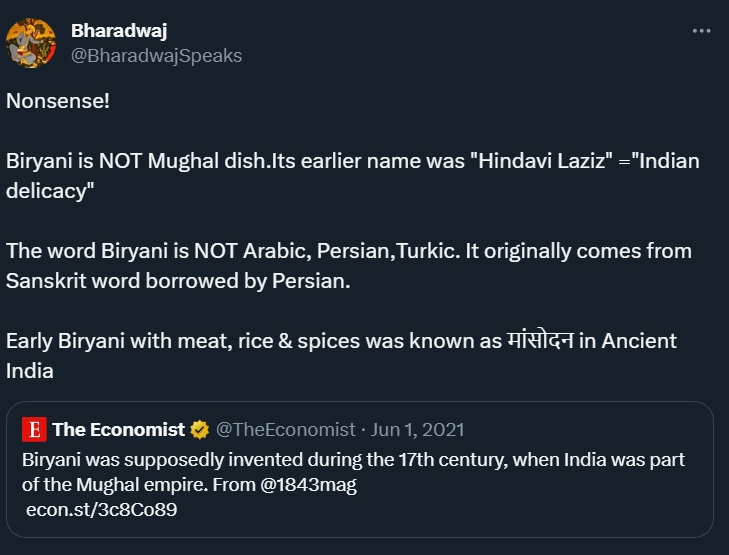
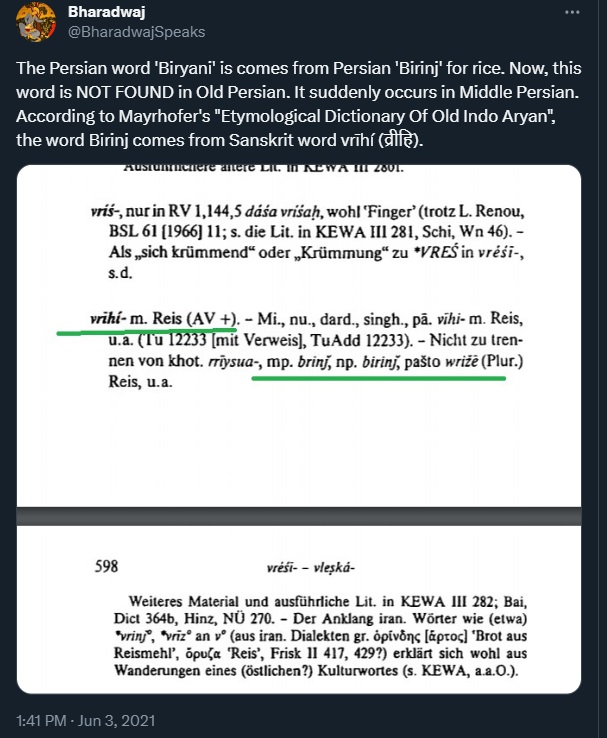
In a later scene, during a competition, Karthik Kumar’s character argues that biryani originated from Persia! No, it was not. You can read the whole thread here.
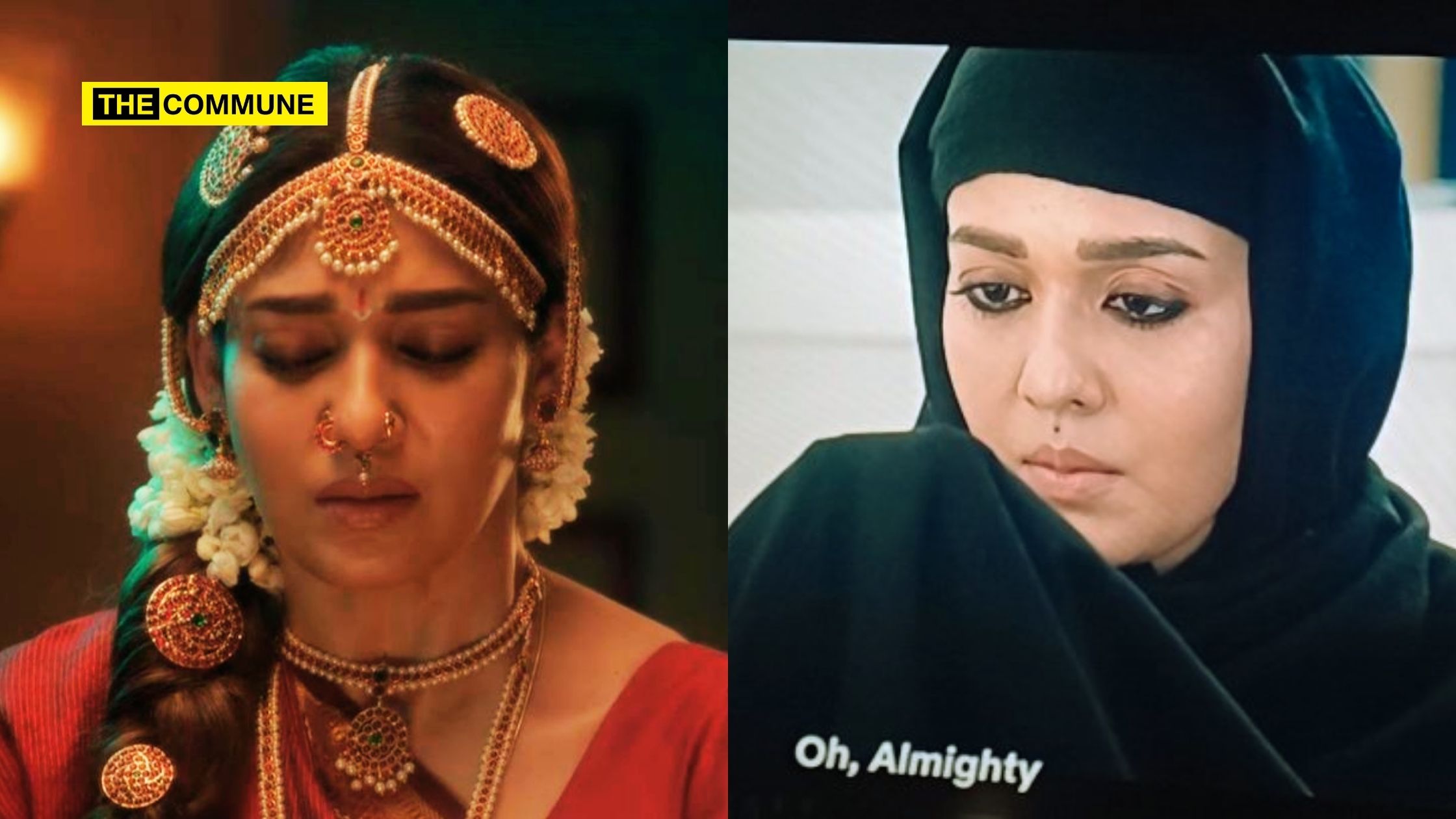
In the same scene, Nayanthara has to cook biryani, her Achilles’ heel. To solve this, she recalls Farhaan’s mother’s practice of performing namaz before cooking biryani. She pulls a burkha out of nowhere right in the middle of a live show, performs namaz, and cooks the biryani to perfection! Wow… didn’t her parents teach her that a Hindu would pray before and while cooking food? Her father, who cooks at the madapalli, would have been saying a prayer before he cooked the prasadam. In fact, he would have never tasted the prasadam he made before offering it to the deity, yet it would turn out divine every single time! Talk about orthodox!
A food-based film can be shot much more beautifully, making the food do the talking. Food is a tool to irritate a specific community – that’s what its role was in this film. It was all about the thug-voiced Nayanthara. (Deepa Venkat needs to relearn how to modulate her voice for different films). All that we get to see is meat, meat, and meat. The humble vegetarian food is there only to get demonised.
Vegetarian Chefs Do Exist
This movie was released on 1 December 2023. It is unclear when the story was written and the shooting took place. But in January 2023, a vegetarian Marwari Aruna Vijay from Chennai made the news multiple times for her passion for cooking south Indian (more specifically) vegetarian Tamilian food, safeguarding the recipes and spreading awareness of the cuisine of the state, thanks to Masterchef India competition that began around that time. As a Jain, Aruna Vijay stood firm and was willing to be booted out of the show if she was forced to cook non-veg (even eggs). The show allowed her to use paneer as a substitute for meat. Aruna finished among the Top 4 in the competition. She was massively trolled for her stand, and guess what? Religious leaders from her community came out in her support.
Aruna Vijay is an example of women’s empowerment in the perfect sense.
In the film, Nayanthara speaks lengthy dialogues on “sense”. Had she used some of that sense, aka common sense, she would not have accepted this script or would have refused to enact the scenes in the script. For a milestone movie, Nayanthara has received a drubbing.
What this movie tries to do is to make meat cool, to brainwash vegetarians that if they do not eat meat, they will lose out on opportunities; if they do not know the taste of meat, they cannot become chefs. Aruna Vijay is a shining example of what one can become if one follows one’s principles and respects one’s Dharma and upbringing.
Cooking does not require one to compromise on our principles. Had she aspired to cook vegetarian dishes like her father, it would have made more sense and would have been appreciated by the public. But to unnecessarily show a meat-eating Brahmin girl who does namaz right in the middle of a live show to get the “taste” of her biryani right is just over the top – The very same reason why it bombed at the box office.
In toto, the writer-director Nilesh Krishnaa, together with Nayanthara, have tried to recreate the Dravidoid wet dream where they salivate at biryani, watch a Brahmin girl eat non-veg food, and defy her parents. Surprisingly, they did not show Annapoorani falling in love with Farhaan, thereby failing to complete the circle of secularism. The Dravidoids would have been disappointed since there was no inter-religious love story or intercaste love story angle. Then, their ideologue’s dream would have come true on screen. Better luck next time, Nilesh Krishnaa, in finding the right recipe for another disaster.
Who knows! He might already be cooking one for the NKCU (Nilesh Krishnaa Cinematic Universe), in which Farhan runs out of gas at his home while trying to cook Biryani and an innocent poor Jamesa Mubin carrying a gas cylinder in a car for his friend gets blasted on the way due to a Brahminical saffron terror conspiracy. And hopefully that film also bombs like this one. That way atleast, the director has a chance of his career graph going up at the propaganda wing of ISIS or as head of Zakir Naik’s creative communications team.
Hydra is a freelance writer and columnist.
Subscribe to our channels on Telegram, WhatsApp, and Instagram and get the best stories of the day delivered to you personally.
As a part of his Tamil Nadu trip, Prime Minister Modi inaugurated the new terminal building of the Tiruchirapalli airport and participated and addressed the convocation ceremony at Bharathidasan University. He also inaugurated, dedicated various development projects, and laid the foundation stone for initiatives exceeding ₹20,000 crores in Tiruchirappalli, Tamil Nadu.
Speaking to the people, Prime Minister Modi said a few words on Desiya Murpokku Dravida Kazhagam (DMDK) founder and actor Vijayakanth. He said, “Just a few days ago, we lost Thiru Vijayakanthji. He was a Captain not only in the world of cinema but also in politics. He won the hearts of the people through his work in films. As a politician, he always put national interest above everything. I pay my tributes to him. I also express my condolences to his family and admirers.”
It is noteworthy that Prime Minister Modi and Vijayakanth shared a special friendship that was evident from their chemistry. Vijayakanth was the only alliance member to campaign extensively for the NDA alliance in 2014 in all constituencies in the state during the 2014 Parliamentary polls.
Their camaraderie was pretty much evident and Vijayakanth endorsed Modi as the force capable of eradicating corruption.
அண்ணா வழி நம் பாதை அண்ணன் மொழி நம் கீதை அண்ணன் உயிர் நம்மோடு என்றும் வரும் பின்னோடு.. #விஜயகாந்த்#missyou_captain கேப்டன் உறவுகளுக்கு ஆறுதல் சொல்ல வார்த்தை இல்லை . வாழ்க கேப்டன் புகழ்.. ஊழலை ஒழிப்போம்.. pic.twitter.com/QLzknTKahd
— Prasanth26BJP (proud citizen of Bharat) (@Prasanth26_BJP) December 28, 2023
Despite not winning any of the 14 seats they contested, the DMDK was the only party in the seven-party alliance to campaign in all 39 constituencies in Tamil Nadu. Premalatha was instrumental in the party’s decision to align with the BJP-led NDA, a move that contributed to the BJP’s victory in Kanyakumari. PM Modi’s praise for Premalatha and his rapport with Vijayakant at the NDA rallies are testimony to the friendly relations they shared.
Prime Minister Modi also shared a condolence note on the day of Vijayakanth’s passing on his X handle describing the friendship the two shared.
Extremely saddened by the passing away of Thiru Vijayakanth Ji. A legend of the Tamil film world, his charismatic performances captured the hearts of millions. As a political leader, he was deeply committed to public service, leaving a lasting impact on Tamil Nadu’s political… pic.twitter.com/di0ZUfUVWo
In a recent incident unfolding within the sacred premises of Thiruvannamalai temple, an assault on a female inspector has instilled fear among the common public.
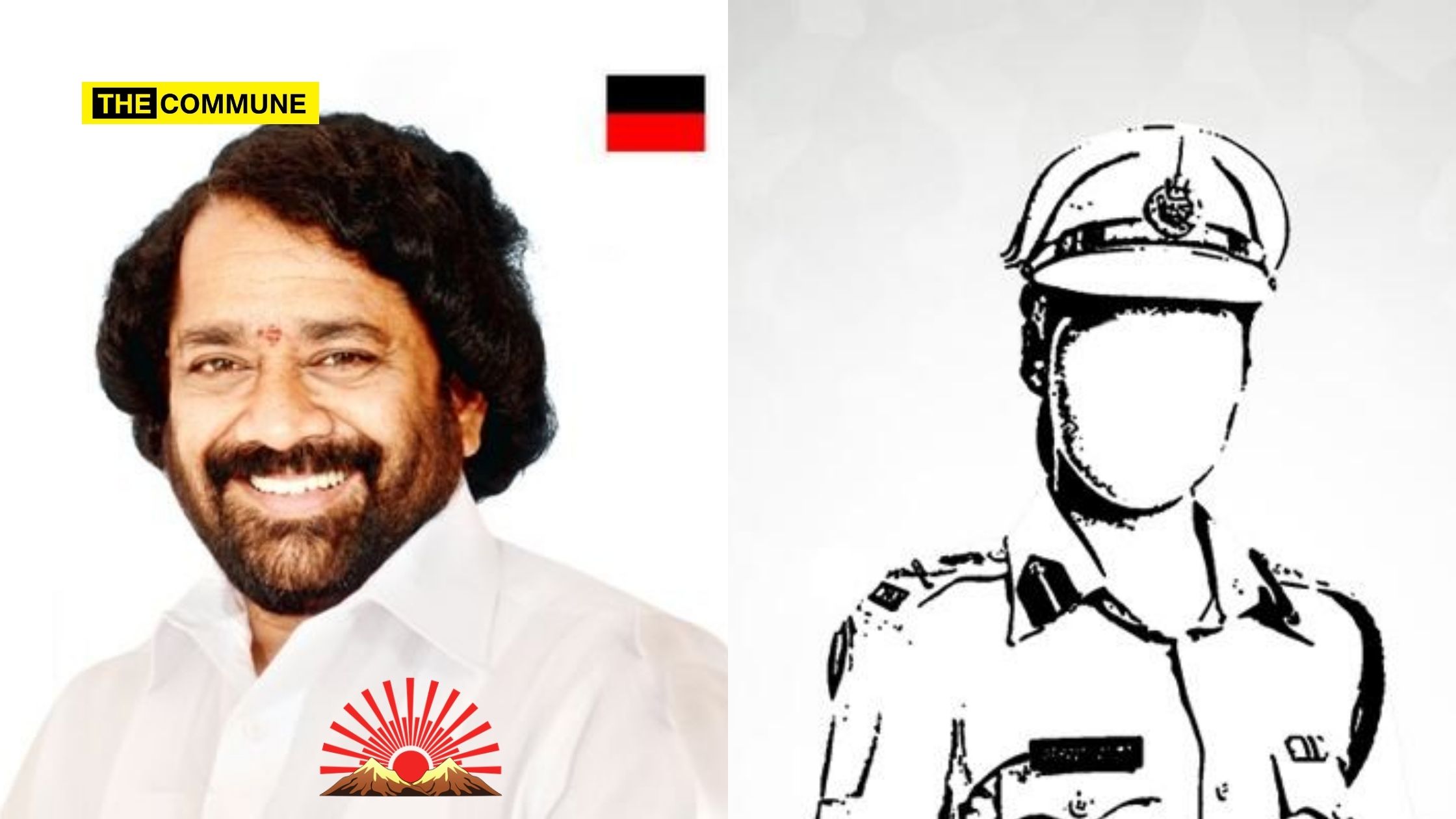
The unsettling incident took place during the ‘Arudra darshan’ ceremony at the Thiruvannamalai Arunachaleshwarar Temple on December 27, attracting a multitude of devotees seeking the divine darshan of Lord Shiva. Among the worshippers was I. Sreedharan, a prominent DMK functionary from the area, accompanied by his wife, Sivasankari, and their family.
Following the worship of principal deity, Sreedharan and his family proceeded to worship at the shrine of Unnammulaiyamman and stood stood for an extended period.
Highly disturbed by this few devotees standing in the long queue have raised complaint to the female inspector Gandhimathi who was engaged in guard duty.
Subsequently, Inspector Gandhimathi had requested Sreedharan and his wife Sivashankari to step aside without causing disturbance to other devotees.
Agitated by this, Sreedharan said, “Do you know who I am? … I’m a prominent figure of DMK. The Chairman of the Board of Trustees of Annamalaiyar Temple Jeevanandam is my brother. We own the temple management. Are you telling us to step aside?”.
He threatened her in a disrespecting manner asserted his political prominence within the DMK and his familial connection. Sreedharan’s wife also glared angrily and jumped at the inspector.
Undeterred, Inspector Gandhimathi firmly responded, stating “Whoever you are, speak respectfully and give way to waiting devotees”.
In a shocking turn of events, enraged Sreedharan slapped Inspector Gandhimathi’s cheek in full view of the devotees. The devotees who stood there were shocked by this incident.
Inspector Gandhimathi registered a formal complaint regarding the incident with the Thiruvannamalai city police and an investigation is been initiated against Sreedharan, a member of DMK’s executive committee, his wife Sivasankari and the temple employee Ramesh who was an accomplice in their act. It has been reported that a case has been registered under four sections including preventing work, assault and violence.
Adding to the controversy, there are allegations that certain high-ranking police officers intentionally destroyed CCTV footage capturing the incident, purportedly to favor DMK leader Sreedharan.
Furthermore, at the time of the incident, some devotees recorded videos on their mobile phones, but they faced threats from temple dignitaries who seized their phones and deleted the recorded videos allegedly. This unfolding incident has left the community in dismay.
Regarding the issue, Tamil Nadu BJP President Annamalai has also strongly condemned, tweeted on X “Ever since the DMK came to power, law and order has broken down across Tamil Nadu and criminal activities have been going on continuously. Government officials are being killed by sand robbers, police officers are being threatened by DMK and policewomen are being sexually harassed, the machinery of the government has completely broken down.“
He further said “In this situation, the news that DMK state executive committee member Sreedharan has slapped a woman police inspector on the cheek who was on security duty in Thiruvannamalai temple, shows how low the dignity of the police has been under the DMK regime. If a woman police officer can be assaulted in front of the public with the arrogance of being a DMK party member, what is the position of the common people?“
Slamming the DMK, Annamalai said “Has the DMK forgotten that it was unable to come to power for ten consecutive years due to the atrocities committed during its 2006-2011 regime? Public patience has a limit. Don’t forget that DMK will have no place even on the streets if the common people take the law into their hands like the DMK thugs. I urge Chief Minister Stalin to immediately arrest and take strict action against a DMK person named Sreedharan who assaulted a female police officer and to immediately sack his brother Jeevanandham who is the chairman of the Tiruvannamalai Temple Trustee Committee“
திமுக ஆட்சிக்கு வந்ததில் இருந்தே, தமிழகம் முழுவதும் சட்டம் ஒழுங்கு சீர்குலைந்து, குற்றச் செயல்கள் தொடர்ச்சியாக நடந்து கொண்டிருக்கின்றன. அரசு அதிகாரிகளே மணல் கொள்ளையர்களால் கொலை செய்யப்படுவதும், திமுகவினரால், காவல்துறை அதிகாரிகள் மிரட்டப்படுவதும், பெண் காவலர்கள் பாலியல்… pic.twitter.com/t5e7fYawyw
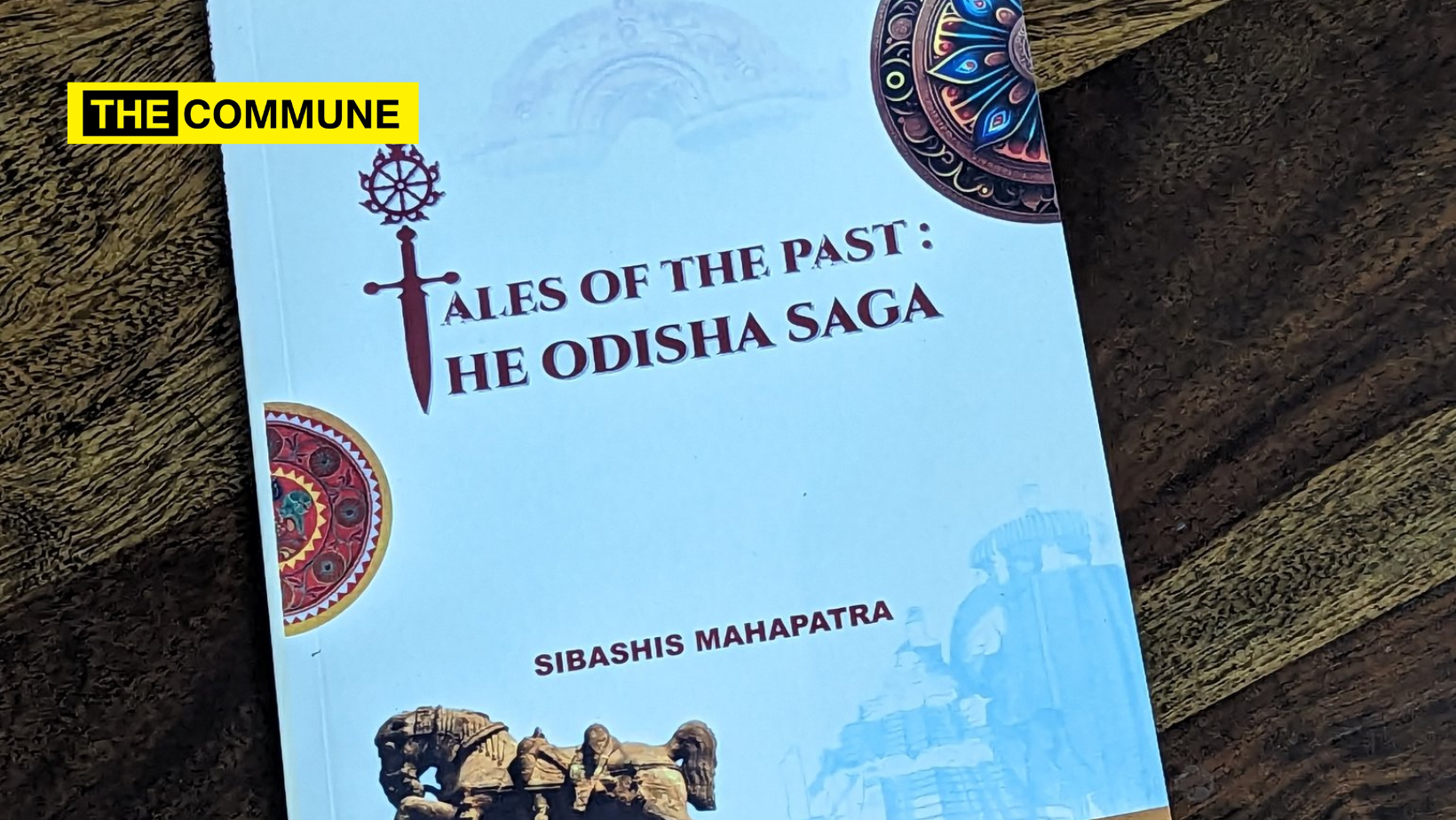
Tales Of The Past: The Odisha Saga – Sibashis Mahapatra – Notion Press – 136 pages (Paperback) / 62 pages (Kindle version)
There are several gaps in Indian history-writing and the history of medieval Odisha is one such obvious lacuna that is present in how we modern Indians view our history. Not many of us are aware of how the erstwhile kingdoms of the medieval era that ruled over the region of modern-day Odisha fought against the forces of the Delhi Sultans and the Mughals. Many today do not know of the valour and sacrifices made by successive kings and generals in Odisha to keep the invaders at bay.
When the northern parts of India were besieged by innumerable foes from the outside, Odisha was that rare land which managed to preserve its culture and civilizational heritage. In the days when one Hindu kingdom after another were hammered by the Muslim hordes, it was no mean feat that the Hindu kings of Odisha were able to repel them. While it is but natural that the Muslim historians and chroniclers would make little reference to the Odia kings who defeated them (so as to not shed light on the failures of their patrons), why are history books in modern India making the same folly by relegating this glorious period in the history of Odisha to the footnotes?
This book is thus a meaningful step in the right direction to shine the spotlight on this unknown chapter of Odisha’s history.
In this collection of essays, Sibashis Mahapatra takes us through the lives of lesser-known historical figures of medieval Odisha and the significant events that moulded the land and its culture.
The author explores – in a simple, easy-to-read and brief fashion – the historical events that shaped medieval Odisha (and in turn, modern Odisha) and presents the reader with a hitherto understated and largely unknown aspect of Indian history.
The book takes the reader on a fascinating journey across Odisha’s vast historical landscape.
The reader is told, among other Odia rulers, about the forgotten king Devendravarman of the Ganga dynasty.
The book informs the reader about the short but eventful reign of Anantavarman Chodaganga, including the construction of the massive temple at Puri during his rule and how he dedicated his kingdom to God Jagannath, thereafter ruling the kingdom only as the deity’s representative or steward, a practice which was followed by his successors up until India’s independence.
The book also gives the readers a window into the wars between the Chola emperors of the Tamil lands in the south and their neighbours to the north, the kings of Kalinga.
Another chapter in the book tells the reader about the bravery of Langula Narasimha Deva, how he defeated the Muslim hordes attacking his kingdom and how Narasimha Deva constructed the world-famous Konark temple to commemorate his victories.
The book also speaks of Raja Jainarayan’s attempts at exacting revenge for the loss of a kingdom and Raja Trilochanadeva’s resistance against the famed Maratha armies.
The penultimate chapter of the book weaves together a personal travelogue to two decrepit temples on the outskirts of Bhubhaneshwar along with the history of the Brahmin generals who built them. The sorry state in which these two temples find themselves in today, is in sharp and jarring contrast with the might of the fearless generals and the victories won by them in the days of yore.
In the final chapter, the author even tries his hand at historical fiction with a short story set in the era of the illustrious emperor Gajapati Kapilendra Deva.
Reading the book makes it clear that the topic of Odisha’s history is close to the author’s heart – making this collection of essays a labour of love.
At the end of the book, Sibashis Mahapatra also meticulously lists a bibliography, just in case the reader wanted to acquaint himself a bit more with these forgotten chapters of Indian history.
The book is only 136 pages long (the Kindle version is just 62 pages) – and can be finished within a couple of hours. So, in this regard, if I were asked to highlight a drawback in this book, it would be that it is a tad too short. Including more details about the colourful lives led by the conquerors Nissanka Malla and Kalinga Magha, in the larger backdrop of the politics & war between the kingdoms of Kalinga and Lanka, would have been a nice addition to this amazing book.
All that an average Indian knows about Odisha’s history is the Mauryan emperor Ashoka’s invasion of Kalinga. The rest of the 2,000 years (and more) of Odisha’s history is virtually unknown. So, this book is indeed a commendable effort in highlighting those portions of Odisha’s history (and consequently the history of India) which have so far not found their way into the popular narratives or discourses surrounding Indian history-writing.
All in all, the book is a short survey into the history of medieval Odisha, making it a worthwhile read for both the young and the old who are interested in knowing the forgotten history of our ancient nation.
In a significant development, a Vel Yatra organised by the Hindu Munnani commenced its journey from the Chennimalai Subramania Swamy Temple to the Panimalai Temple in Tamil Nadu. The procession witnessed participation from Aadheenams across different regions of the state, notable film actors, and retired former Inspector General (IG) Pon Manikavel. The procession commenced with special pujas dedicated to Lord Murugan’s vel (spear) in front of the flag tree at the Subramanya Swami Temple, accompanied by the chanting of Thiruvasakam. The Yatra then proceeded from the Chennimalai temple to the Panimalai temple, marking a sacred pilgrimage.
Addressing the media during the event, former IG & Idol Wing Officer Pon Manikavel raised pertinent concerns regarding the management of temple finances by the Hindu Religious & Charitable Endowments (HR&CE) Department. When asked about the allegations by HR&CE department minister PK Sekar Babu, Pon Manickavel replied, “I will reply to it but will Tamil Nadu get better? He is a stranger. We both will bite the dust one day. We are like tops, we will rotate as long as there is momentum. To talk about such unnecessary and ineffectual people in a temple is Adharma.”
He also added about the Chief Minister, “They have 38,688 temples in their hands but if they will not enter any temple, it is the height of immorality, the height of Adharma. They should not come, we don’t want you to come. We despise him. Don’t come. But you are controlling the temples. Now, all these temples have been built by Cheras, Cholas, and Pandya kings. They were the ones who donated wealth to these temples. Do you know how much money they have extracted from the temple in December 2023? It is ₹28,49,00,000 (28 crores and 49 lakh rupees) This is the truth, I swear on God. I am saying this in front of a temple. ₹28 crores! This is injustice! I am controlling my tongue now. Who are you taking this money from? Bring this out to the public, the public is totally not aware of all this, they are just watching TV.”
He continued, “This amount of ₹28,49,00,000 in a month is taken from the temple fund and showcased as administration expenses – to run the department. But the reality is this money is being used for education expenses of the JCO’s child, to buy their clothes, to pay their rent, for their personal expenditure – everything is God’s money. But the revenue and police departments are not like that. They get paid using the taxes paid by the people, these people are using people’s money! Please understand this. The money they are using is not taxpayer’s money but temple money.”
Manikavel criticised the HR&CE Department for its alleged mishandling of rent arrears, stating that ₹151 crores in rent arrears from temple properties had accumulated in the past eight months alone. He said, “There is 22600 (units unsure) ground vacant land in the state belonging to temples. CM Stalin claimed he has done quite a bit to retrieve the rental arrears for these lands. Did you know that only 8 months of the rental arrears amount to about ₹151 crores? They have said this, their signature is there in the document. Can the minister say he did not understand English and just signed unknowingly? He cannot. Last month, they received ₹150 crore rupees as revenue – arrears from vacant land. Apart from this, there are buildings, 4,28,000 area of landed property out of this 1,30,000 odd area is missing.”
He also added, “If I was working now, I would send the entire HR&CE department to jail. God willing, if I get the chance but I will not take it. I am just venting out my emotions. So much atrocity is going on. Whatever we say, they claim they only did it. First, say that you are a hireling, and then say anything else. Who is a hireling, who are you taking your wages from? From Eashwaran (from God), from His funds. Except Chief Minister who receives his pay from public money (tax) (₹2,05,000), whereas the minister and his PA, they have hired 2 commissioners, how unjust is this? Each gets ₹2 lakhs as a salary. Just because there is no one to ask questions, they are enjoying and behaving like dictators.”
He also questioned the disparity in salaries, noting that officers who may not be actively involved in temple affairs receive higher pay compared to the priests who perform essential duties for a meagre amount of ₹4500. Furthermore, Manikavel pointed out the potential threat to the antiquity of temples due to the department’s involvement in temple Thiruppani (renovation). He suggested that the State Department of Archaeology should oversee temple restoration to preserve the historical significance of these sites. Expressing concern about the recovery of idols, Manikavel disclosed that in 2012 alone, 2662 statues were recovered from New York City, estimated to be worth ₹1,020 crore. He urged the Tamil Nadu government to collaborate with the central government to recover the remaining idols and stressed the importance of a vigilant Anti-Idol Trafficking Unit.
Manikavel asserted that the Hindu Charities Department needs a revamp, he emphasised that his intentions were not driven by a desire for publicity and expressed commitment to the cause of preserving the sanctity of temples in Tamil Nadu.