Home Blog Page 11

TVK Vijay Calls His Party Thooyasakthi & And Anti-Dynasty; Aligns With Congress – Known For Corruption & Dynasty Politics

TVK Vijay Calls His Party Thooyasakthi & And Anti-Dynasty; Aligns With Congress - Known For Corruption & Dynasty Politics

In a stunning turn of events following the 2026 Tamil Nadu Assembly elections, actor-turned-politician Vijay’s Tamilaga Vettri Kazhagam (TVK) is poised to form the next state government, thanks to the newfound backing of the Indian National Congress. For years, Vijay marketed himself and his party as champions against the entrenched, corrupt establishment and the evils of dynastic politics. However, TVK’s alliance with the Congress, goes without saying is deeply synonymous with dynastic politics and corruption, raises serious questions about Vijay’s ideological consistency and the promises he made to the electorate.

To understand the irony of this alliance, one must look back at Vijay’s political beginnings. Long before the formation of TVK, Vijay fashioned himself as a crusader against political graft. During the 2011 India Against Corruption movement, a young Vijay traveled to Delhi to share a platform with social activist Anna Hazare, pledging his support and praising the movement as a necessary battle to “get rid of this social evil”.

Anna Hazare’s campaign was famously directed against the Congress-led UPA government, which was battling an unprecedented wave of corruption allegations at the time. Ironically, the Congress called Hazare an ‘RSS agent’.

Fast forward to 2026, and the political landscape has drastically shifted. TVK emerged as the single-largest party with 108 seats, it will come down to 107 as Vijay has to let go of one of the seats he won, breaking the DMK-AIADMK duopoly but falling 10 seats short of a simple majority. Desperate to secure the chief ministership, Vijay reached out to the very same Congress party he once rallied against. The Congress, having abandoned its long-standing alliance with the DMK, agreed to support TVK conditionally – no other allies who are “communal forces”.

Vijay’s alliance with the Congress fundamentally contradicts his party’s stance against dynastic politics. TVK’s leadership has relentlessly criticized the DMK for operating as a “selfish family,” with Vijay publicly denouncing them for prioritizing familial succession over public welfare and using ideology to mask widespread looting. Following the 2026 election results, TVK’s national spokesperson Felix Gerald proudly proclaimed that the voters’ mandate was a clear rejection of “nepotism and family politics,” declaring it “the end of dynasty”.

Yet, by aligning with the Congress, Vijay is partnering with the ultimate symbol of dynastic rule in India. The Congress party’s deep-rooted culture of succession has even been criticized by its own senior leaders; just months prior to the election, Congress MP Shashi Tharoor published a scathing essay calling dynastic politics a “grave threat to Indian democracy” and pointing to the Nehru-Gandhi family’s influence as cementing the idea that “political leadership can be a birthright”. By climbing into bed with a party whose leadership structure is entirely reliant on the surname of its leaders and riddled with corruption, Vijay undermines the very foundation of his anti-dynasty, anti-corruption narrative.

It is said that politics often makes strange bedfellows, but TVK’s willingness to abandon its proclaimed values so early in its political journey is striking. Ultimately, Vijay’s grand promises of a “clean,” corruption-free, and merit-based government now ring hollow, casting a shadow over what was otherwise a historic electoral debut.

Subscribe to our channels on WhatsAppTelegram, Instagram and YouTube to get the best stories of the day delivered to you personally.
TVK’s Near-Sweep: 12 Razor-Thin Defeats That Denied Joseph Vijay A Full Mandate

vijay tvk

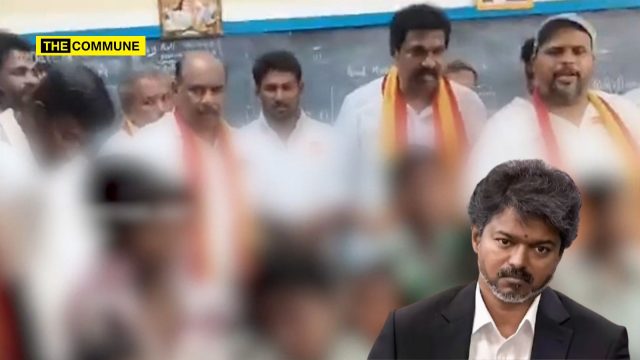
Actor Vijay’s Tamilaga Vettri Kazhagam (TVK) narrowly missed the majority mark in the Tamil Nadu Assembly elections, falling short of the required 118 seats by just 10 constituencies despite emerging as the single largest party in the state. A detailed examination of the results has revealed how close the party came to securing a full majority, with several constituencies decided by razor-thin margins, as reported in Times of India.

According to the election results, TVK candidates lost in at least 12 constituencies by margins of less than 2,000 votes, indicating that even a minor shift in voter preference could have significantly altered the final political outcome. Here is a look:

  1. Dindigul lost by 1131 votes
  2. Kulithalai lost by 579 votes
  3. Pudukottai lost by 1867 votes
  4. Kovilpatti lost by 843 votes
  5. Paramathi – Velur lost by 308 votes
  6. Karur lost by 1821 votes
  7. Thirukoyilur lost by 285 votes
  8. Palani lost by 693 votes
  9. Killiyoor lost by 1311 votes
  10. Vikravandi lost by 910 votes
  11. Papanasam lost by 1065 votes
  12. Udhagamandalam lost by 976 votes

Among the closest defeats for the party was the Thirukkoyilur constituency in Villupuram district, where TVK candidate Vijay R Baranibalaji lost to AIADMK’s S Palanisamy by just 285 votes, making it one of the narrowest defeats recorded by the party in the election.

At the same time, the election also witnessed dramatic victories for TVK candidates across several constituencies. In seven constituencies, the party registered dominant wins with victory margins ranging from 60,000 to 90,000 votes. Another 27 TVK candidates secured victories by margins between 25,000 and 60,000 votes, underlining the party’s rapid rise across large parts of Tamil Nadu.

One of the most dramatic contests of the election took place in the Tirupathur constituency in Sivaganga district. In what became the closest contest of the election, TVK candidate R Seenivasa Sethupathy defeated sitting minister K R Periyakaruppan by a margin of just one vote, the narrowest possible victory margin in an Assembly election.

While the narrowest margin was one vote, the party’s largest victory margin came from the Sholinganallur constituency, where the TVK candidate won by an impressive margin of 96,780 votes.

However, the single highest victory margin in the entire state was recorded by AIADMK general secretary Edappadi K. Palaniswami in the Edappadi constituency in Salem district. He secured 1.48 lakh votes and won by a margin of 98,110 votes. In that constituency, TVK-backed independent candidate Premkumar finished a distant second with 50,823 votes.

Commenting on the result, a senior AIADMK leader claimed that the contest could have been far tighter had the official TVK candidate remained in the fray. The leader stated that if the TVK candidate’s nomination had not been rejected, Palaniswami would have faced a much tougher electoral battle.

Overall, TVK dealt a major blow to both Dravidian parties during the election. The party defeated AIADMK candidates in 25 constituencies and wrested 51 seats from the DMK. Nearly 40 of TVK’s victories against the DMK came from northern Tamil Nadu districts, including 14 constituencies in Chennai, a region long regarded as a stronghold of the DMK.

Victory margins for TVK ranged from a few hundred votes in closely fought seats to more than 50,000 votes in several constituencies, reflecting both intense contests and sweeping victories across the state.

The election also witnessed direct battles between the DMK and AIADMK across 122 constituencies. In these head-to-head contests, the DMK won 18 seats against the AIADMK with victory margins ranging between 6,000 and 23,000 votes. Meanwhile, the AIADMK outperformed the DMK in 21 constituencies, winning by margins ranging from 9,000 to 41,000 votes.

With no single party crossing the majority mark, the election has pushed Tamil Nadu into a hung Assembly scenario, triggering intense negotiations and speculation over possible alliances and support arrangements in the race to form the next government.

Subscribe to our channels on WhatsAppTelegram, Instagram and YouTube to get the best stories of the day delivered to you personally.
Joseph Vijay Projects TVK As Thooyasakthi; Thanjavur MLA’s Drunken Dance Video Goes Viral

Joseph Vijay Projects TVK As Thooyasakthi; Thanjavur MLA's Drunken Dance Video Goes Viral

The Tamil Nadu Assembly election results have delivered a major political upset, with Vijay’s Tamilaga Vettri Kazhagam (TVK) emerging as the single largest party after winning 108 seats, significantly disrupting the decades-long dominance of the DMK and AIADMK. However, the party fell short of the 118-seat majority mark required to form the government, leading to intense political negotiations over possible alliances and external support.

Amid efforts to secure support from other parties, including the Congress, VCK, Communist parties, and reportedly even the AIADMK, a controversy involving a newly elected TVK MLA has triggered widespread debate on social media.

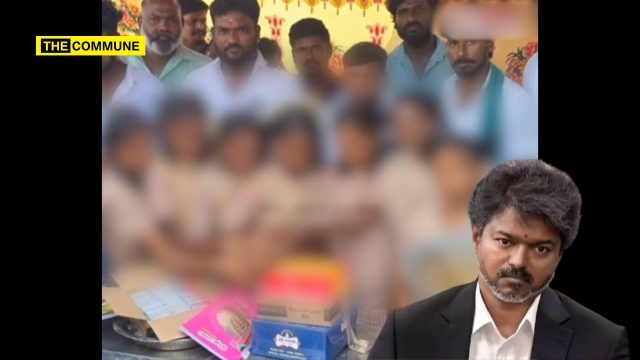
Vijay Saravanan, who won from the Thanjavur constituency on a TVK ticket, has come under criticism after a video allegedly showing him dancing in an intoxicated state while holding a liquor bottle went viral online. The footage, reportedly recorded during a private celebration, shows the MLA appearing visibly intoxicated, stumbling while dancing and interacting enthusiastically with those around him.

The video has sparked sharp reactions online, with many netizens questioning whether such conduct was appropriate for a newly elected public representative at a time when the state is witnessing major political developments. Critics argued that the behavior did not reflect the responsibility expected from an MLA who had been elected on promises of political change and better governance.

Some commenters questioned the candidate selection process within the party, arguing that individuals entrusted with public office should maintain a sense of discipline and accountability after being elected by the people.

The controversy intensified further after references emerged online to another alleged incident involving a TVK candidate reportedly cutting a cake with a sickle during celebrations, adding to criticism directed at certain newly elected representatives of the party.

Despite the growing online debate, no official clarification or response has been issued so far by TVK regarding the viral video involving Vijay Saravanan.

Subscribe to our channels on WhatsAppTelegram, Instagram and YouTube to get the best stories of the day delivered to you personally.
‘People Of Kolathur Will Be Slippered’, DMK Cadre Threatens People Of Kolathur Constituency After Stalin’s Humiliating Defeat

'People Of Kolathur Will Be Slippered', DMK Cadre Threatens People Of Kolathur Constituency After DMK Suffers Defeat

DMK cadres are still dealing with the sadness and shock of the defeat they met with in the recent Assembly elections in Tamil Nadu.

To add insult to injury, a sitting Chief Minister was defeated by very ordinary TVK candidate. This has caused even more shock and anger among the DMK cadres and supporters.

A day ago, Stalin visited his constituency to thank his supporters, many cried and expressed their grief.

But what is even more shocking, some may say this is expected behaviour, is how the DMK cadres are threatening and abusing the voters of Kolathur constituency.

In a video that has gone viral on social media, a cadre is seen saying, “Slipper shots are waiting for everyone. Slipper shots are waiting for the people of this Kolathur constituency. Duty, dignity, and discipline are what Anna taught us. But Kalaignar has taught us something else to an extent: if you hold the flag upright, it’s a flag; if you turn it around, it’s a stick. Our leader has kept us disciplined so that we don’t have to raise that stick.”

He went on to claim that the constituency itself is the true loser of the election, warning of grim consequences. “Even today, if you look at it, he lost his chance at victory in yesterday’s election. Okay, he isn’t the one who lost the victory. It is this Kolathur constituency; yes, it is the Kolathur constituency that lost the victory, and today they are going to suffer. This constituency, without my leader, is going to suffer,” the cadre declared.

The remarks culminated in a severe insult directed at the entire state, with the cadre exclaiming, “This is not Tamil Nadu; it’s a land of illiterates, a land of illiterates, a land of illiterates, a land of illiterates, a land of illiterates. Just rename this Kolathur as a graveyard.”

One can recall the remarks made by former Chief Minister M. Karunanidhi after the DMK’s defeat in the 2001 Assembly elections, when he had referred to the people of Tamil Nadu as “corpses beaten with rice.” The present comments by the cadres reflects an inability within sections of the party to accept electoral defeat.

The recent threats from DMK members in Kolathur, promising to beat voters “with slippers” and threatening to turn the constituency into a “graveyard”, represent a dangerous escalation. DMK cadre have insulted the entire state by branding it a “nation of fools”, just because they do not agree with the mandate of the people.


View this post on Instagram


A post shared by Dr.SG Suryah (@suryahsg)

Subscribe to our channels on WhatsAppTelegram, Instagram and YouTube to get the best stories of the day delivered to you personally.
Good Riddance: DMK Govt’s Tax-Payer Funded “TN Fact Check Unit” ‘Mission Director’ Resigns Days After Poll Defeat; Here’s How Social Media Critics Were Hounded

Within 72 hours of the DMK’s defeat in the 2026 Tamil Nadu Assembly elections, Iyan Karthikeyan, Mission Director of the Tamil Nadu Government Fact Check Unit (FCU), posted a single word on Facebook: “Resigned!” The timing seems suspicious though.

This was confirmed by many other media persons too.

The FCU was created through a Government Order issued on 6 October 2023 by the Tamil Development and Information Department under the portfolio of Udhayanidhi Stalin, Minister for Special Programme Implementation and son of Chief Minister MK Stalin.

Crucially, the setting up of this significant department was never brought before the Tamil Nadu Legislative Assembly. The annual expenditure was projected to exceed ₹3 crore, and until the 2023-24 supplementary budget approved it formally, expenses were to be drawn from the contingency fund – at a time when the state government had failed to implement pay parity for teachers and had not fulfilled its ₹1,000 monthly promise to women.

Even more striking: no public advertisement was issued for the 80 positions in the 25 days between the GO being issued and appointments being made. The Madras High Court had ruled that contract and temporary posts require either selection from employment exchanges or public notifications giving every eligible candidate a chance to compete. Neither was followed. Concerns also arose about whether the 69% reservation policy mandated under Tamil Nadu’s General Rules for State and Subordinate Services was applied in the appointments process.

On 30 October 2023, Iyan Karthikeyan quietly resigned from YouTurn on social media. Two days later, on 1 November 2023, he announced on X that he had been appointed Mission Director of the FCU – not through any official government press conference or gazette notification, but through his own tweet.

Who Is Iyan Karthikeyan

Karthikeyan was formerly the Editor-in-Chief of YouTurn, a self-described fact-checking YouTube channel and website known for its proximity to DMK positions. The channel routinely targeted DMK critics including YouTuber Maridhas, and journalists Rangaraj Pandey and Sandhya Ravishankar, while running content critical of the BJP and its leaders.

Karthikeyan is an engineering graduate. The GO’s qualification requirements for Mission Director listed either a B.E./B.Tech or an M.A. in Journalism or Mass Communication. The qualifications appeared tailored to fit a specific profile rather than drawn from any standard government service requirement.

His appointment immediately drew comparisons to the pay structure of senior public servants. ISRO Chairman S. Somanath, who led the Chandrayaan-3 mission, earns ₹2.5 lakh per month. Iyan Karthikeyan, a YouTuber with no government experience, was handed ₹3 lakh per month from public funds as Mission Director of a one-year (extendable) contract position.

The full salary structure for the FCU was:

  • Mission Director: ₹3 lakh/month
  • HR Manager: ₹75,000/month
  • Content Writer: ₹40,000/month

This, at a time when nurses were on the streets demanding regularisation of services and government school teachers were protesting for pay parity.

DMK IT Wing Inside The Unit

South First reported, quoting a state-level DMK functionary directly, that DMK IT wing cadres and social media-active party workers were being recruited into the FCU. AIADMK Deputy Leader of Opposition RB Udhayakumar stated that credible sources confirmed recruitment exclusively involved individuals affiliated to the DMK and its IT wing.

Social activist Jayaram Venkatesan of corruption watchdog Arappor Iyakkam stated publicly that the FCU appeared to be a government propaganda tool and an extension of the DMK IT wing, primarily designed to counter content critical of the government. He also questioned why the unit was placed under Udhayanidhi Stalin’s portfolio rather than under the Information Minister or the DIPR.

The Mandate: Not Fact-Checking But Silencing Critics

On paper, the FCU was set up to tackle misinformation and hate speech. In practice, its mandate told a different story. The unit was authorised to fact-check all news related to the Tamil Nadu government across every media platform – not just viral misinformation, but any coverage of government policies, schemes, and officials.

Any content the FCU deemed false could be referred directly to the legal and police departments for action. In short, it had the power to trigger criminal cases against journalists, social media users, and ordinary citizens who posted content the government disagreed with.

The unit reported directly to Minister Udhayanidhi Stalin’s department – Special Programme Implementation. The chain of command went straight to the CM’s son.

What It Did: Intimidation by Design

The FCU’s structure was built for intimidation. Any post, tweet, or news article that questioned the government could be flagged, “fact-checked” by a politically aligned team and then referred to the cybercrime wing or legal department. Mere referral, even without a case being filed, was enough to chill speech. Journalists and social media users knew that a complaint from the FCU could result in a police visit, a WhatsApp summons, or worse.

Multiple voices who have now spoken post-election confirm this climate existed. Serious allegations have been raised that the Tamil Nadu cybercrime wing was used alongside the FCU to file questionable cases, suppress voices, and damage reputations of those who criticised the government.

And if you thought the unit did some good work fact-checking wrong information, you are wrong. It turned out that netizens would often end up fact-checking the unit. Once MK Stalin himself had to delete a post because it turned out to be false. Netizens questioned where the ‘Mission Director’ had disappeared.

And most often, the real fake news especially those shared by DMK IT Wing and its supporting handles would go unchecked.

It is noteworthy that anyone who had shared a piece of information deemed misleading would end up with a police case. Several YouTubers, netizens have been targeted and cases lumped upon them in the process.

Now that Iyan Karthijeyan has resigned, it only seems fit for the incoming government to investigate the department created out of the blue. The truth about the TN Fact Check Unit will not emerge from a resignation. It will require a full, independent audit of its finances, its cases, and the people who directed its operations from within Udhayanidhi Stalin’s department.

Subscribe to our channels on WhatsAppTelegram, Instagram and YouTube to get the best stories of the day delivered to you personally.
Cuddalore: TVK Member Arrested For Kidnapping 2-Year-Old Girl For Gold Talisman

Cuddalore: TVK Member Arrested For Kidnapping 2-Year-Old Girl For Gold Talisman

A member of Tamilaga Vettri Kazhagam has been arrested by police for allegedly kidnapping a two-year-old girl in order to steal her gold talisman near Naduveerapattu in Cuddalore district.

According to police, the accused kidnapped the child on a motorcycle and later abandoned her by the roadside after allegedly taking the gold talisman she was wearing. A young man passing through the area noticed the abandoned child, rescued her, and handed her over to the police.

The child was subsequently reunited safely with her parents.

Following an investigation, police examined CCTV footage from the area and identified the suspect as Vetrivel. He was later arrested in connection with the incident.

Subscribe to our channels on WhatsAppTelegram, Instagram and YouTube to get the best stories of the day delivered to you personally.
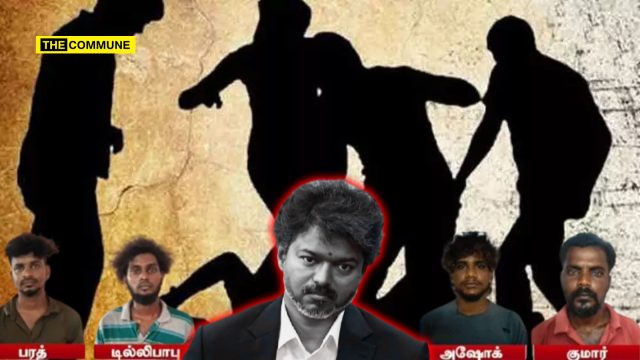
TVK Vijay Calls His Party Thooyasakthi; Aligns With TNCC, Chief Linked To Armstrong Murder Case & Savukku Shankar Attack

TVK Vijay Calls His Party Thooyasakthi; Aligns With TNCC, Chief Linked To Armstrong Murder Case & Savukku Shankar Attack

Tamilaga Vettri Kazhagam (TVK) leader C. Joseph Vijay built his 2026 electoral campaign on the promise of clean governance, law and order, and a definitive break from Tamil Nadu’s compromised political culture. Yet, by actively choosing to partner with the Tamil Nadu Congress Committee (TNCC) to secure a government majority, TVK leadership especially Vijay and Aadhav Arjuna have effectively whitewashed TNCC President K. Selvaperunthagai, a man deeply implicated in organized violence and political murder.

The most glaring casualty of this new political arithmetic is the K. Armstrong murder investigation. On 5 July 2024, the BSP state president was hacked to death in Perambur. The investigation quickly exposed ties between Selvaperunthagai and the family of the accused, specifically convicted gangster Nagendran and his son Ashwathaman. Despite direct appeals from Armstrong’s widow, Porkodi, and public demands from the BSP, the TNCC chief was shielded from police scrutiny.

In September 2025, the Madras High Court formally recognized this investigative blindspot. While transferring the case to the CBI, Justice P. Velmurugan explicitly pulled up the state police for deliberately failing to interrogate Selvaperunthagai or record his statement. TVK had previously claimed to stand in solidarity with Porkodi’s fight for justice; today, they are sharing power with the primary political figure accused of orchestrating her husband’s assassination.

Furthermore, TVK is now aligned with a party whose leader is accused of deploying mob violence against the press. In March 2025, political commentator Savukku Shankar filed a formal police complaint alleging that Selvaperunthagai sent goons disguised as sanitary workers to his Chennai residence. The mob broke in, physically assaulted Shankar’s 68-year-old mother, dumped sewage inside the home, and issued death threats.

By integrating the Congress into its ruling coalition, TVK has granted Selvaperunthagai sudden political immunity. The “puritanical” image TVK marketed to voters has evaporated, replaced by the reality that they are willing to provide sanctuary to a politician accused of assassinating a Dalit leader and terrorizing journalists. With the accused now a critical stakeholder in the TVK-led government, the Armstrong murder probe is highly likely to be buried entirely.

Subscribe to our channels on WhatsAppTelegram, Instagram and YouTube to get the best stories of the day delivered to you personally.
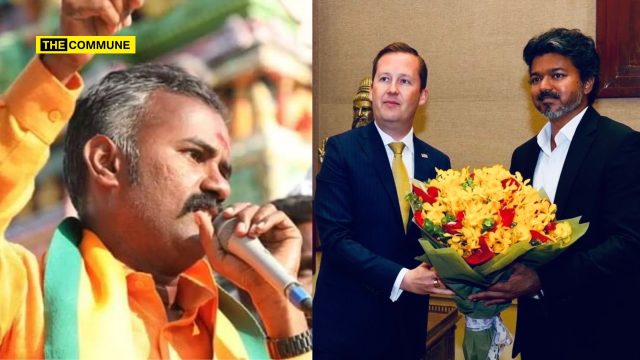
Congress Ditches DMK To Ally With Joseph Vijay’s TVK

tvk rahul gandhi congress dmk vijay

The Congress on Wednesday, 6 May 2026, formally ditched its longtime ally, the DMK and extended support to actor-politician Vijay’s Tamilaga Vettri Kazhagam (TVK) to form the government in Tamil Nadu after the party emerged as the single largest force in the Assembly elections but fell short of a majority.

In a press release issued by AICC in-charge for Tamil Nadu and Puducherry Girish Chodankar, the party said Vijay had formally sought the Indian National Congress’ support for government formation.

“The people of Tamil Nadu, especially the youth, have delivered a very clear, strong and overwhelming verdict for a secular, progressive and welfarist government that believes in constitutional principles. They have chosen the Tamizhaga Vetri Kazhagam (TVK) led by Mr. Vijay to form the next government,” the statement said.

Congress, which secured five seats in the Assembly, said its backing would come with a condition that the alliance should not include “communal forces”.

“Our support shall be conditional upon the TVK keeping out from this alliance any communal forces that do not believe in the Constitution of India,” the release stated.

The party further said the Tamil Nadu Congress Legislative Party had decided to extend “its full support to the TVK to form the next government”.

Referring to the alliance as one rooted in constitutional and social justice principles, Congress said the partnership would seek to revive “Perunthalaivar Kamarajar’s glory days of Tamil Nadu”, while remaining committed to “Thanthai Periyar’s social justice ideals and Dr. B.R. Ambedkar’s constitutional ideals”.

The statement also indicated that the understanding between the two parties could extend beyond government formation and continue into future local body, Lok Sabha and Rajya Sabha elections.

“Mr. Vijay and Shri Rahul Gandhi jointly pledge to respect this historic verdict of the people of Tamil Nadu for a secular and progressive government, and to fulfil the dreams and promises of the people — especially the youth of Tamil Nadu,” the release added.

The Congress leaders met Vijay at the TVK headquarters in Chennai and handed over the letter of support.

We had reported in October 2025 that the Congress could ditch the DMK to join hands with the TVK. The party has now formed a post-poll alliance with the TVK in TN.

Subscribe to our channels on WhatsAppTelegram, Instagram and YouTube to get the best stories of the day delivered to you personally.
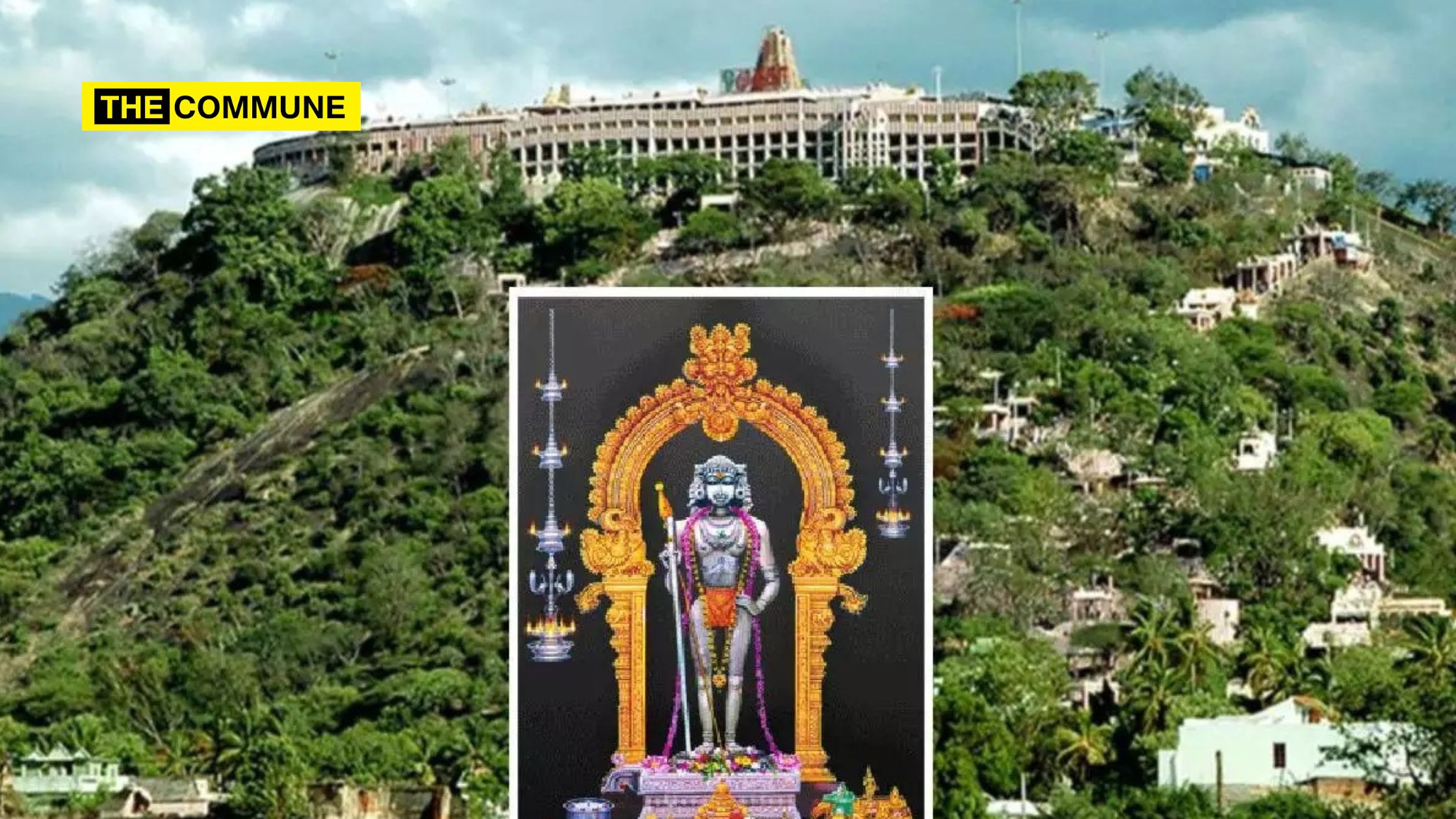
DMK’s Digital Empire Cracks: PEN, Operated By MK Stalin’s Son-In-Law Sabareesan, Reportedly Scaling Down After Crushing Election Defeat

DMK’s Digital Empire Cracks: PEN, Operated By MK Stalin's Son-In-Law Sabareesan, Reportedly Scaling Down After Crushing Election Defeat

Populus Empowerment Network, better known as PEN, is reportedly scaling down massively and probably shut down, as per leftist rag The News Minute (also DMK’s mouthpiece).

In its paid newsletter ‘Powertrip’, TNM states that around 100 contract employees have been terminated and more than 100 social media influencers, most of them active on social media platform X, have been told their contracts are over. The influencers were hired as recently as last year in the run up to the 2026 Assembly elections.

The news of scaling down comes directly in the wake of the DMK’s crushing defeat in the 2026 Tamil Nadu Assembly elections. Within the party, blame has quickly settled on PEN. Multiple senior DMK leaders, including Udhayanidhi Stalin, have reportedly pointed to the outfit’s operations as a key factor in alienating voters and contributing to the party’s fall, as per the newsletter.

The anger within the party reached its peak after MK Stalin himself lost his own constituency of Kolathur – this is something that made PEN’s failure impossible to ignore or defend.

It is reported that several PEN employees were already looking for work a month ago.

Since most of them were on a contractual role until April 2026, they knew that if a DMK government did not return to power, they had no jobs waiting for them.

Who PEN Was and What It Did

PEN was not just a political strategy firm. It was a family operation. Founded in November 2022, it was owned and run by V. Sabareesan, Chief Minister MK Stalin’s son-in-law. On paper, its mandate included data analysis, ground surveys, managing the ‘Makkaludan Stalin’ app, selecting TV debate spokespersons, and providing digital strategy support. In practice, it became the DMK’s most powerful and least accountable arm.

Its official directors are Manikandan Vasudevan and Prabhakaran Sekar, but V Sabareesan, son-in-law of Chief Minister MK Stalin, is said to exercise indirect control over the company.​

PEN functions as DMK’s in-house digital and social media agency. It runs the Facebook page “Ellorum Nammudan” (596,000 followers), the Instagram handle “dmk_ellorumnammudan” (113,000 followers), and multiple other DMK-linked digital properties. It was also responsible for developing the “Makkalin Mudhalvar” app and game promoting the DMK’s “Dravidian Model” branding.​

In 2024, then Tamil Nadu BJP president K Annamalai publicly accused DMK of spending ₹7.39 crore in social media ads through PEN, calling it “crony capitalism” and alleging that the Chief Minister’s family was directly profiting from state-funded political propaganda. The allegations, backed by public Meta Ad Library and Google Transparency Center data, triggered an Election Commission complaint but no regulatory action followed.

Sabareesan could be labelled as the “shadow CM of Tamil Nadu” – a man who held no elected office, answered to no electorate, and yet wielded influence across government policy and party strategy. When Tamil Nadu announced a Space Industrial Policy in 2024, Sabareesan had floated a space-tech startup just weeks earlier and stood to benefit directly.

Populus Empowerment Network Private Limited (PEN), incorporated in November 2022, emerged as India’s most aggressive state-level political digital advertiser, according to data drawn from Google’s Ads Transparency Center and Meta’s Ad Library. Its spending is verifiable; its ads are public and its links to the ruling DMK and Chief Minister M.K. Stalin’s son-in-law V. Sabareesan are documented.

PEN’s digital election spending operated at an extraordinary scale. Public ad transparency data shows the outfit spent ₹9.25 crore on Google Ads in 2024 alone, making it India’s second-largest non-government political advertiser on the platform. Between January and October 2025, PEN reportedly spent ₹4.1 crore on Meta platforms across over 1,000 ads, alongside ₹1.24 crore on Google Ads. Digital monitoring estimates place PEN’s combined 2025 ad expenditure at ₹14-17 crore. The spending intensified sharply ahead of the 2026 Assembly elections, with February 2026 alone seeing roughly ₹3.6 crore spent on high-volume ad campaigns reaching crores of viewers.

The Intimidation Machine

Beyond election strategy, PEN became known inside Tamil Nadu’s media circles for something more troubling: the systematic monitoring and intimidation of journalists.

If a reporter posted a critical tweet that didn’t sit well with the government’s narrative, PEN operatives would reportedly screenshot the content and forward it directly to the journalist’s editors and management. The message was never explicit. It didn’t need to be. The implied threat was enough: keep writing this, and your job becomes difficult.

Stalin SP, Chief of Bureau at Puthiya Thalaimurai TV, broke his silence on election night itself. “Hereafter I can tweet whatever I think,” he posted. “PEN can’t intimidate me by taking screenshots and sending them to my office”.

The IT Wing: From Strategy to Organised Abuse

Alongside PEN, the DMK’s official IT Wing operated as the digital enforcement arm. Multiple journalists and commentators have come forward since the results to describe what they experienced.

Omjasvin MD, a Times of India journalist, wrote that the constant targeting of journalists critical of the government was “one of the worst downgrades of the DMK IT wing.” He noted that beyond abusive comments, dedicated online spaces were set up specifically to tarnish journalists’ reputations, and that those running these operations were closely linked to the top brass of the party.

Political commentator Vinodh Arulappan went further, explicitly naming the turning point: when the IT Wing’s mantle shifted from PTR Palanivel Thiagarajan to TRB Rajaa. “Under PTR, abuse became organised,” Arulappan wrote. “A team existed solely to go after critics with slurs and threats. Earlier they were loafers, now, under TRB Raja they become thugs”.

Five Years, One Verdict

The scale of the current reckoning reflects how deeply the PEN-IT Wing machinery had penetrated Tamil Nadu’s public discourse. For five years, the Fact Checking Unit, also run by DMK lackeys such as Iyan Karthikeyan, controlled what needed to be fact-checked, PEN handled corporate pressure on newsrooms, and the IT wing patrolled social media with slurs and coordinated attacks. Together, they built a managed information environment designed to sustain the illusion of a popular government.

The 2026 election verdict dismantled both the government and the machine that propped it up. PEN is scaling down and probably disbanding. The influencers are off contract. The IT wing enforcers have lost their state backing.

Subscribe to our channels on WhatsAppTelegram, Instagram and YouTube to get the best stories of the day delivered to you personally.
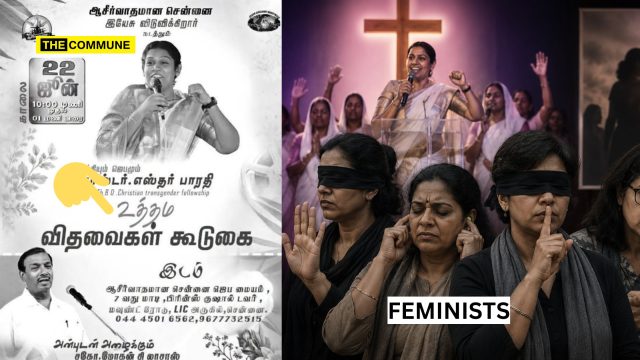
Gopalkrishna Gandhi Makes Federer-Nadal Analogy For Joseph Vijay And Udhayanidhi

As Joseph Vijay prepares to stake claim to form the next government in Tamil Nadu, grandson of Rajaji and someone who appears to be a staunch Dravidianist, Gopalkrishna Gandhi penned an ‘open letter’ to Vijay that was published in The Hindu.

The “open letter” by Gopalkrishna Gandhi to Vijay reads less like a congratulatory note and more like an ideological onboarding document written by a senior DMK figure attempting to politically tutor a newcomer who has unexpectedly seized power.

What makes the letter striking is not merely what it says, but the tone in which it says it. Throughout the piece, Gandhi writes with the air of a headmaster addressing an intelligent but unruly schoolboy rather than an elected Chief Minister with a historic democratic mandate. The repeated insistence that Vijay must be “told some truths,” that he is “inexperienced and whimsical,” and that he must be guided into proper constitutional behavior reveals a deeply paternalistic attitude.

The condescension begins almost immediately. Gandhi admits he did not vote for Vijay and says he initially viewed him as “inexperienced and whimsical.” Even the compliment that follows – “fresh, clean” sounds less like admiration and more like the cautious approval one reserves for an untested amateur. The underlying message is unmistakable: Vijay may have won power, but in Gandhi’s eyes, he has not yet earned intellectual legitimacy.

That patronizing tone continues throughout the letter. Gandhi repeatedly frames himself as a custodian of moral wisdom passing down instructions to a politically immature figure. The structure itself resembles a lecture. Gandhi keeps repeating these words – protect secularism, avoid triumphalism, respect officers, reject sycophancy, embrace constitutional morality, uphold federalism, embody communal harmony.

If only he had instructed this to the DMK cadre and to MK Stalin himself, he could have won Kolathur and retained power? Nevertheless, instead of engaging Vijay as an independent political actor with his own ideological legitimacy, Gandhi attempts to induct him into a pre-approved liberal-secular framework.

One of the most politically revealing sections is Gandhi’s treatment of MK Stalin. Despite the letter ostensibly being about Vijay, Gandhi devotes significant space to praising Stalin and the Periyarist tradition. He describes Stalin as representing a “venerable thinking tradition” rooted in Periyar’s movement for equality and social justice. He even calls Stalin’s departure “statesmanlike” and says his absence from the Assembly would be regrettable. This seems to be the opposite of what he wrote to Vijay in the earlier paragraph.

The contrast is revealing. Vijay, despite winning a fairly massive mandate, is treated as an impulsive newcomer who must learn discipline. Stalin, despite being electorally defeated in this hypothetical scenario, is treated as a dignified statesman carrying forward an intellectual legacy. Gandhi appears far more emotionally invested in preserving the moral prestige of the outgoing Dravidian establishment than in celebrating the arrival of a new political force.

Even more curious is Gandhi’s invocation of EV Ramasamy while completely ignoring his own grandfather, C. Rajagopalachari. Rajaji was not merely Gandhi’s ancestor but one of Tamil Nadu’s greatest intellectual and political figures – a statesman deeply associated with constitutionalism, federalism, governance, linguistic balance, and ethical public life. Yet the letter contains no mention of Rajaji whatsoever.

Instead, Gandhi selectively roots Tamil Nadu’s moral legitimacy entirely within the Periyarist tradition. This omission is politically significant. It suggests an ideological alignment with the dominant Dravidian-secular narrative while sidelining alternative Tamil political inheritances, including conservative constitutionalism, classical liberalism, and Rajaji’s own critique of centralized ideological politics.

How Gandhi speaks about Udhayanidhi Stalin is even more peculiar. He effectively asks Vijay to treat Udhayanidhi as a collaborative partner within the Assembly rather than as the son of a defeated political dynasty. He adds, “And let Udhayanidhi Stalin’s presence in the House be for you a great duet, not a grim duel. As in what Nadal facing Federer has been – a balance of skills.” Even in defeat, the Stalin family is framed not as an outgoing establishment to be challenged, but as an indispensable part of Tamil Nadu’s political continuity. Gandhi appears less interested in a clean political rupture than in ensuring that the old Dravidian order remains accommodated within the new one. This creates an unusual tension in the letter: while warning Vijay against personality cults and inherited power, Gandhi simultaneously normalizes the continued centrality of the Stalin dynasty in Tamil politics.

Another revealing aspect is Gandhi’s discomfort with ideological clarity. When he asks Vijay, “What is your ideology?”, he immediately supplies the answer himself: “My ideology is following my conscience.” This sounds lofty, but it also conveniently discourages sharp ideological positioning. Vijay is subtly advised not to become too culturally assertive, too majoritarian, too anti-establishment, or too disruptive. “Conscience” here functions as a softer substitute for ideological conviction – one that fits neatly within elite liberal vocabulary.
The letter also contains unmistakable anxiety about the national political climate. Gandhi repeatedly invokes secularism, hate-free politics, fear-free India, constitutional morality, protection of minorities, and federalism – typical language of Dravidianist DMK.

The letter therefore reads not only as advice to Vijay, but as an attempt to ensure that a potentially powerful new Tamil leader remains within the ideological boundaries acceptable to the Dravidianists.

Perhaps the most extraordinary line comes at the end, when Gandhi highlights Vijay becoming “the first Christian” to head the Tamil Nadu government and describes it almost as a providential affirmation of Tamil Nadu’s secular credentials. This is politically loaded. Rather than simply treating religion as irrelevant in governance, Gandhi elevates Vijay’s Christian identity into a symbolic civilizational statement. Critics may see this as paradoxical: a letter repeatedly preaching secularism ultimately closes by celebrating the religious identity of the leader himself.

In the end, the “open letter” reveals as much about Gopalkrishna Gandhi as it does about Vijay. It exposes the anxieties of an aging intellectual-political establishment confronted with a charismatic outsider whose ideological direction remains uncertain. Gandhi praises Vijay, but cautiously. He congratulates him but lectures him. He welcomes change but simultaneously attempts to contain it within familiar ideological boundaries.

The result is a document that oscillates between blessing, warning, ideological instruction manual, and elite political gatekeeping – all wrapped in the language of constitutional morality and elder-statesman civility.

Subscribe to our channels on WhatsAppTelegram, Instagram and YouTube to get the best stories of the day delivered to you personally.