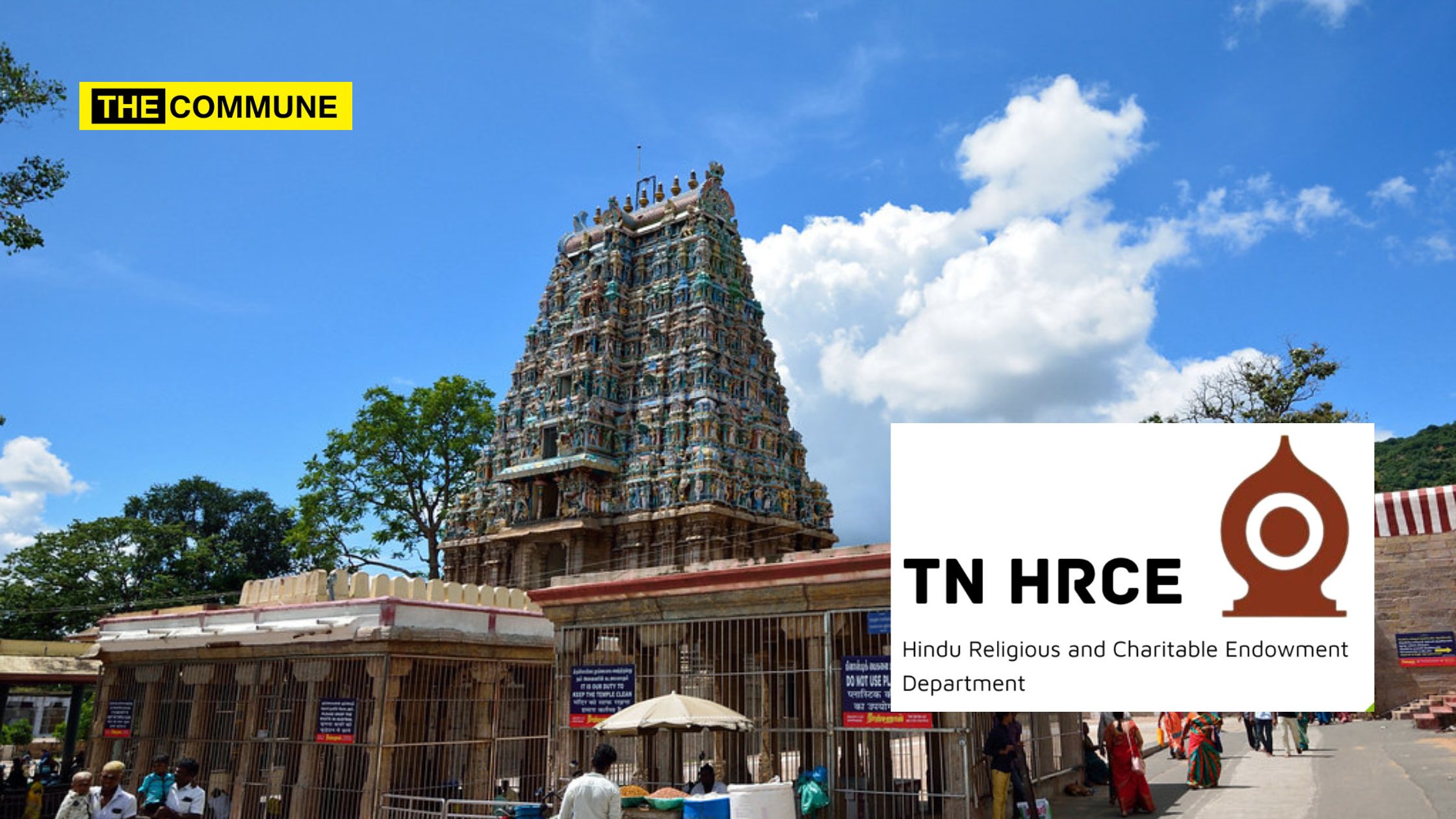
I am writing this piece after reading the recent judgment of the Madurai Bench of the Madras High Court concerning the administration of the Sri Kallazhagar Temple and its observations on the functioning of the Hindu Religious and Charitable Endowments (HR&CE) Department. The judgment has once again brought into focus a long-standing debate on the extent of government involvement in the administration of Hindu temples.
The Court made several significant observations.
It categorically ruled that the State has “no business” deploying temple funds unilaterally and described the unauthorized use of temple funds as “a crime against the deity.”
“It is not for the State to make grandiose announcements relating to the deployment of temple funds. They have, to put it bluntly, no business to deploy temple funds unilaterally.”
The Bench further clarified that while the State may regulate religious institutions under the law, such regulatory authority does not extend to assuming control over their management or finances.
The judgment also highlighted what it considered a serious statutory lapse by the HR&CE Department in failing to constitute a Board of Trustees for the Sri Kallazhagar Temple for more than thirteen years. The Court observed, “To have such a temple managed by a Fit Person and an Executive Officer is a travesty of the scheme of the Act.”
The Bench further noted that the Executive Officer currently administering the temple was originally appointed in 1966, despite repeated Supreme Court rulings that such appointments are intended to be temporary, exceptional, and limited to specific crises.
Perhaps most significantly, the Court reaffirmed that, “The entirety of the funds, current or accumulated, vests in the deity.”
It clarified that neither the State, the HR&CE Department, trustees, nor ministers have proprietary rights over temple wealth.
These observations echo concerns that many legal scholars, temple administrators, and Hindu organizations have raised over the years regarding the implementation of the HR&CE Act. Yet, despite the importance of the judgment, it received relatively little attention in mainstream media.
The Question of a Secular State
The judgment raises an important constitutional question.
If Bharat is a secular republic, should the State directly administer Hindu temples while churches and mosques largely remain under their own management? Whether one agrees or disagrees with the present arrangement, this question deserves thoughtful public discussion.
Looking Back at History
The debate surrounding temple administration is not new. Many historians trace government involvement in temple management back to the colonial period. Dharampal, in The Beautiful Tree, drawing on records from the British Archives, describes the important role temples played in supporting education and community life through voluntary contributions and endowments. His work has contributed to discussions about how colonial policies affected traditional institutions, although historians continue to debate the motivations and extent of those changes.
Over the past two centuries, legislation governing Hindu religious institutions has evolved through a succession of enactments, beginning with the Madras Regulation VII of 1817, followed by the Religious Endowments Act of 1863, the Religious and Charitable Endowments Act of 1927, subsequent post-independence provincial legislation, the Hindu Religious and Charitable Endowments Act of 1951, and finally the Tamil Nadu HR&CE Act of 1959.
When portions of the 1951 legislation were challenged before the courts, several provisions were struck down or modified. Immediately, the Congress government then in power passed the Hindu Religious & Charitable Endowments Act 1959, snubbing the court decree. The legal framework has continued to evolve through subsequent legislation and judicial interpretation. A constitutional challenge to aspects of the present framework by Swami Parmatmananda and Swami Dayananda Saraswati has remained pending before the Supreme Court since 2012.
Why Does Temple Governance Matter?
For many devotees, this debate is not simply about administration. Hindu temples collectively possess significant lands, endowments, jewelry, and financial resources that have been donated over centuries for religious, charitable, and community purposes.
Concerns have frequently been raised regarding the management of these assets, including allegations of encroachments, undervalued leases, inefficient administration, and inadequate returns from temple properties. Public commentators, temple activists including T. R. Ramesh, have argued that the income generated from temple lands falls far below their potential value and have called for greater transparency and accountability in their management. According to him, the Tamil Nadu government, which should be earning a minimum of 6000 crores per year from the 2.44 crore square feet of temple land it controls, earns a mere 58 crores, not even 1 percent.
Reports have also highlighted cases of encroached temple lands, including those belonging to prominent temples such as the Kapaleeswarar Temple in Chennai. This temple owns more than 600 acres of prime property in Chennai. State records indicate that it has 473 defaulters, with most of its land now encroached. These concerns deserve careful examination through transparent audits, public records, and effective governance.
If temple resources are managed efficiently and in accordance with donors’ intentions, they could play a significant role not only in maintaining major temples but also in supporting thousands of smaller rural temples that struggle financially. Historically, temples were not merely places of worship; they also functioned as centers of education, music, dance, scholarship, social welfare, and community service. Whether they can once again contribute to these broader societal purposes is a question worth exploring.
Regulation or Permanent Management?
The recent judgment also raises an important legal distinction between regulation and management.
The HR&CE Act provides for government intervention under specific circumstances, particularly in cases of maladministration or crisis. However, the Act also envisages that such intervention should not become permanent. Once normalcy is restored, governance should return to duly constituted trustees.
The Madurai High Court observed that this principle has not always been followed in practice. The Court’s remarks invite a broader examination of whether the implementation of the Act today remains consistent with both its original intent and subsequent judicial interpretations.
A Conversation Worth Having
The issues raised by the Madurai High Court extend far beyond a single temple or a single department. They touch on constitutional principles, the rule of law, the stewardship of religious institutions, and the relationship between the State and religious communities.
Regardless of one’s viewpoint, these are questions that deserve informed public discussion based on constitutional values, statutory provisions, judicial precedents, historical evidence, and transparent governance.
For many Hindus, temples are not only places of worship but also repositories of cultural heritage and community life. It is therefore natural that questions concerning their governance evoke strong feelings. At the same time, meaningful reform should be guided by careful legal reasoning, accountability, and a commitment to preserving both religious freedom and public trust.
The recent judgment has reopened an important national conversation. It is one that deserves thoughtful engagement from citizens, policymakers, jurists, and Hindus alike. The question now is whether the Hindu community will remain a silent majority or become an informed and engaged stakeholder in shaping the future governance of its own religious institutions.
Dr. Santha Kumar is an education leader, author, and public commentator on civilizational history, geopolitics, and contemporary issues affecting Sanatana Dharma.
Subscribe to our channels on WhatsApp, Telegram, Instagram and YouTube to get the best stories of the day delivered to you personally.