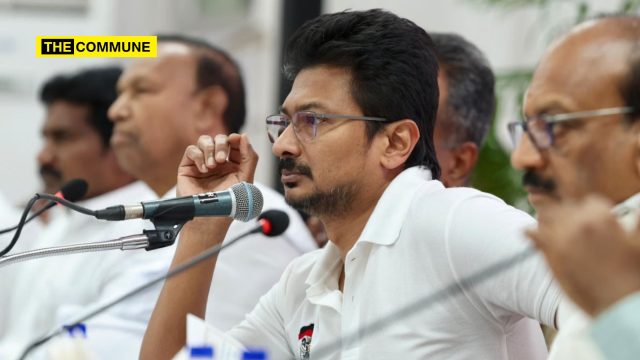
Senior leaders within the DMK have reportedly expressed concern over what they describe as Opposition Leader Udhayanidhi Stalin’s growing disconnect from party functionaries and cadre, arguing that he must become more accessible and collaborative if he is to effectively lead the party in opposition, as reported by Vikatan.
According to leaders close to the DMK leadership, the party is entering a critical phase following the defeat of DMK president MK Stalin in the Kolathur constituency. With the responsibility of leading the Opposition now falling on Udhayanidhi Stalin, party insiders believe he faces the significant challenge of winning back young voters at a time when Tamilaga Vettri Kazhagam (TVK) has come to power riding on youth support.
Sources close to the party leadership reportedly feel that Udhayanidhi’s tendency to remain distant from cadre, his alleged ego clashes with senior leaders, and his limited engagement with party workers need to change if he is to succeed in his new role.
Party insiders claim that tensions between Udhayanidhi Stalin and Stalin’s son-in-law Sabareesan have existed for a long time. According to them, both emerged as separate power centres during the previous DMK government, a development that some within the party reportedly believe contributed to the party’s electoral defeat.
Sources also alleged that several recommendations made by political consultants, including suggestions that M.K. Stalin alone should remain the central face of the party after Vijay’s political entry, were not well received by Udhayanidhi’s camp. They claim that differences between the Sabareesan and Udhayanidhi camps continued to widen during the DMK’s tenure in government.
Party sources further alleged that Udhayanidhi was uncomfortable with the growing importance accorded to his aunt, Kanimozhi, within the party. According to insiders, there is a perception among some cadres that individuals viewed as being close to Kanimozhi face obstacles in advancing within the party structure.
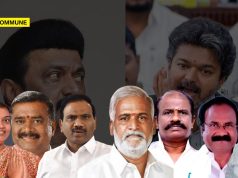
Senior leaders reportedly argue that Udhayanidhi must move beyond such internal rivalries and work closely with leaders including Sabareesan, Kanimozhi, E.V. Velu, K.N. Nehru and Sekar Babu. They believe greater coordination among senior leaders would strengthen both the party and Udhayanidhi’s own political standing.
DMK insiders say that with M.K. Stalin losing Kolathur, the responsibility of leading the opposition has fallen on Udhayanidhi Stalin. At a time when youth support has propelled TVK to power, the challenge before him is to bring young voters back to the DMK fold.
Senior leaders… pic.twitter.com/mDjtiAXpKR
— Raam (@RaamShankar1752) June 8, 2026
Several senior functionaries at Anna Arivalayam are also said to be unhappy with what they describe as Udhayanidhi’s lack of interaction with party workers and office-bearers.
According to these sources, Udhayanidhi rarely meets party cadre or administrators. They point out that despite becoming the Leader of the Opposition, he does not have a dedicated office at Anna Arivalayam and seldom visits Anbagam, the headquarters of the DMK Youth Wing.
Party insiders further claimed that, barring one or two legislators, most of the DMK’s MLAs find it difficult to directly communicate with him. They argue that such inaccessibility is not appropriate for someone occupying the position of Opposition Leader.
Sources also levelled criticism at Udhayanidhi’s close aides, alleging that they frequently prevent party matters from reaching him. According to them, requests for meetings are often blocked at an early stage with explanations that Udhayanidhi is unavailable or under stress.
Some party members further alleged that certain decisions relating to the Youth Wing are being taken independently by aides rather than through wider consultation within the organisation.
Former ministers within the DMK also reportedly voiced dissatisfaction with Udhayanidhi’s style of functioning.
According to party sources, one former minister from southern Tamil Nadu was recently given an appointment to meet Udhayanidhi at 9 a.m. but was allegedly made to wait until nearly 9:50 a.m. before being allowed into his room. The sources claimed that Udhayanidhi had been spending time with members of the film industry during that period.
The same sources alleged that after the meeting finally took place, Udhayanidhi briefly listened to the issue raised by the former minister, assured him that it would be looked into, and concluded the meeting without further discussion.
Those familiar with the incident reportedly contrasted this with M.K. Stalin’s approach, stating that even while serving as Chief Minister he generally met party members at the scheduled time.
Leaders from the DMK Youth Wing also expressed concern about Udhayanidhi’s approach. According to them, even during his tenure as Minister and Deputy Chief Minister, there were occasions when he became difficult to reach.
They further alleged that individuals with little connection to politics often formed part of his immediate circle, while party workers found it difficult to gain access to him.
With TVK now in power and law-and-order issues emerging as a major political issue, senior DMK figures reportedly believe that Udhayanidhi cannot afford to remain passive. They argue that the Leader of the Opposition must be visible on the ground, lead agitations, and actively coordinate political campaigns against the government.
Party leaders also point out that despite M.K. Stalin’s defeat in Kolathur, voters in the Chepauk–Triplicane constituency elected Udhayanidhi Stalin. According to them, that mandate carries added responsibility and requires him to work harder to establish himself as a mass leader in his own right.
Subscribe to our channels on WhatsApp, Telegram, Instagram and YouTube to get the best stories of the day delivered to you personally.