Home Blog Page 972

AP High Court’s Verdict On Suryanarayana Swamy Temple Case Gives Hope For Hindus Fighting Against State Control Of Temples

Earlier this month, a significant verdict passed by the Andhra Pradesh High Court in favour of individual temple petitioners against the state government, didn’t garner much attention.

The case was filed in the Andhra Pradesh High Court on behalf of Budagavi village, in particular, the village’s temple trust for the Suryanarayana Swamy temple. The villagers suspected the political motives of a YSRCP leader in wanting to interfere in a historic temple’s management and affairs. The residents of Budagavi village held a special Gram panchayat meeting on February 18, 2022 and passed a resolution with the intent to continue the maintainance of the Suryanarayana Swamy Temple under the ‘Sree Suryanarayana Swamy Seva Samiti’ temple trust, with no interference from the A.P Endowments Department.

The village residents reiterated their right to maintain their small village temple under Article 26 of the Constitution of India. A copy of the Gram Panchayat resolution was also sent to the President of India, requesting the President’s office to allay the village’s fears of covert political interference and the forced takeover of the ancient temple by the Andhra Pradesh government. Prior to the arbitrary takeover, the temple was being maintained on a modest budget by volunteers with the help of private donations. The villagers had respectfully requested the President’s office to advise the Andhra Pradesh government to maintain the status quo regarding their request for temple maintenance.

The High Court granted relief to temple-petitioners of Budagavi village, by suspending the notice for a forced takeover of a historic temple by the Andhra Pradesh State Endowments Department, thereby allowing the villagers to continue the governance and maintenance of the temple’s religious and charitable activities on their own without interference from the government.

The Background And History Of Sri Suryanarayana Swamy Temple

The Sri Suryanarayana Swamy Temple of Budagavi village, Uravakonda Mandal in Andhra’s Anantapur district, is a historic temple from the 13th Century, said to have been constructed during the reign of the Chalukyas. It has been in continuous use for religious purposes by local devotees. It is the second temple dedicated to Lord Suryanarayana (the Sun) in Andhra Pradesh built a few centuries after the famous 7th century Arasavalli Sun temple near Srikakulam town in North coastal Andhra. The Budagavi Suryanarayana temple is reportedly the only sun temple in the world where the principal sun deity, Lord Suryanarayana, faces the South direction.

The temple’s modest budget and its management had never been questioned till recently, when a YSRCP leader made an arrogant, unilateral decision in asking the Andhra Pradesh Endowments Department to take over the temple. Despite the villager’s strong objections, the endowments department forcefully took control of the small temple’s affairs. This forcible takeover of a small temple run on an annual budget of less than ₹2 lakhs prompted the village to hold a plebiscite meeting and file a case against the government.

Although the temple had been declared an ancient monument and is under the maintenance of the Archaeology and Museums Department, the villagers had taken the initiave to actively contribute towards the maintainance of their historic temple. Back in 2010, the villagers who are proud of the temple’s illustrious history and antiquity, consulted with the Andhra Pradesh Department of Archaeology & Museums and received an NOC (No Objection Certificate) to undertake some much needed development and maintenance work with their own resources, taking special care of the temple’s needs, considering its age and history.

A temple trust ‘Sree Surya Narayana Seva Samiti’ was formed in 2011, to address the maintenance needs of the temple. An NRI, Mr. Kasibhatla Anantha Rama Sharma’s financial assistance along with contributions received from devotees and well wishers, was put to good use in maintaining the temple and conducting various forms of worship through out the year as well as charitable events such as “anna dhannam” (free food) on certain occasions for the benefit of all devotees and visitors.

Hope For Hindus

The court verdict brings hope to Hindus, who are asking for their ‘Article 26’ constitutional right to maintain small, local temples, conduct rituals of worship and engage in charitable activities within the provisions of Indian law. This recent High Court judgement also brings a much needed focus on ‘Article 26’ of the Indian Constitution.

Article 26 of the Constitution of India, states:

Subject to public order, morality and health, every religious denomination or any section thereof shall have the right—
(a) to establish and maintain institutions for religious and charitable purposes;
(b) to manage its own affairs in matters of religion;
(c) to own and acquire movable and immovable property; and
(d) to administer such property in accordance with law.

Article 26 (the freedom to manage religious affairs) speaks about the rights of Indian citizens to form and maintain institutions for religious and charitable purposes including the right to adminster and manage the religious/charitable entity’s own affairs, the right to acquire both immovable and movable property as well as the right to administer all acquired property for the said religious/charitable purpose, subject to the provisions of Law.

While churches and mosques have had a free reign over their affairs and are not subjected to government scrutiny and administrative or financial interference in the republic of India, the argument by many concerned Hindu citizens is that, several temples including smaller, local ones are often under arbitrary, indiscriminate government control, against the “secular” credentials of the nation.

Hindu religious institutions are often taken over without the required scrutiny and alleged to be mis-managed by state governments, while being at the mercy of political leaders with vested interests. What’s worse is that the financial contributions of Hindu devotees are often unscrupulously utilized for financing the state’s “secular” schemes. This amounts to blatant discrimination (some argue, state sponsored) against the Hindus and results in an unfair advantage for non-Hindus.

The recent A.P High Court’s stay against an arbitrary, ill informed government takeover of the temple, until further arguments based on factual information, can be made, is a welcome verdict for Budagavi village and all other temple petitioners in Andhra Pradesh! The villagers are now hopeful of maintaining the temple on their own, by a group of dedicated volunteers on a modest budget, providing a variety of religious and charitable services and worshipping at their temple on their own terms without unnecessary political interference in a matter of religious rights guaranteed by the Constitution of India.

Click here to subscribe to The Commune on Telegram and get the best stories of the day delivered to you personally.
Why Conviction Of Rahul Gandhi Is A Welcome Step For Indian Democracy

Rahul Gandhi US terrorist attack

On March 23, the Chief Judicial Magistrate HH Varma of a Surat court sentenced Rahul Gandhi, De facto leader of the Indian National Congress, to two years in jail in a defamation case dating back to 2019. The case was related to Gandhi’s comments about the “Modi surname” during a rally in Kolar, Karnataka, where he allegedly said, “how come all the thieves have Modi as the common surname?” Despite the conviction, Gandhi was granted bail and his sentence was suspended for 30 days, allowing him to appeal in a higher court. This incident has caused a frenzy within the opposition party, indicating significant churning within Indian politics. This article will delve into the legal aspects of this incident and explore past instances to analyse why this incident serves as a stark warning to the politics of “shoot and scoot,” a term used to describe the practice of making sensational but unsubstantiated allegations against political opponents.

What Is The Case?

During a political rally in Kolar, Karnataka in 2019, Congress leader Rahul Gandhi allegedly made a statement about people with the surname Modi being thieves. BJP MLA and former Gujarat minister Purnesh Modi filed a complaint against Gandhi under sections 499 and 500 of the Indian Penal Code, which deal with criminal defamation. Chief Judicial Magistrate HH Varma held Gandhi guilty, but granted him bail and suspended the sentence for 30 days to allow him to appeal in a higher court. In India, defamation can both be a civil wrong and a criminal offence, depending on the objective they seek to achieve. A civil wrong sees a wrong being redressed with monetary compensation, while a criminal law seeks to punish a wrongdoer and send a message to others not to commit such acts, with a jail term. In a criminal case, defamation must be established beyond reasonable doubt but in a civil defamation suit, damages can be awarded based on probabilities. Section 499 of the IPC defines what amounts to criminal defamation and subsequent provisions define its punishment. Section 499 elaborates on how defamation could be through words – spoken or intended to be read, through signs, and through visible representations. These can either be published or spoken about a person with the intention of damaging the reputation of that person, or with the knowledge or reason to believe that the imputation will harm his reputation.

The final arguments were heard by the court last week, and Gandhi’s lawyer argued that the proceedings were flawed from the beginning because the procedure laid down under section 202 of the CrPC was not followed. The Gujarat High Court had stayed the proceedings in March 2022, but the case resumed after Modi withdrew his petition following the emergence of sufficient evidence. Gandhi’s lawyer also argued that Prime Minister Narendra Modi, rather than Purnesh Modi, should have been the complainant in the case because he was the main target of Gandhi’s speech. But as a representative of the entire ‘Modi’ community the complainant pressed with his legal action. It is worth noting that the Modi surname is relatively common in Gujarat, particularly in the Ghanchi community, which is primarily involved in the manufacture and sale of vegetable oil. It is also found among other communities in Gujarat, such as the Lohana, Kshatriya, and Jain communities. Thus, not all individuals with the Modi surname are related to Prime Minister Narendra Modi and it seems that the lower court likely found merit in these arguments to prove the case beyond reasonable doubt. But it is also a stated fact that the de-facto opposition leader is granted the due liberty to appeal the said decision and to challenge the same to obtain suitable relief in the higher court. Even though Rahul suffered an immediate disqualification, the merits of the case are still left open.

Lilly Thomas Verdict

The Lily Thomas case was a significant decision by the Supreme Court of India in 2013, which dealt with the issue of disqualification of convicted politicians from holding public office or contesting elections. The Court held that a person convicted of a criminal offence and sentenced to imprisonment for a term of two years or more would be disqualified from holding public office or contesting elections, even if the conviction was under appeal. The Supreme Court based its decision on the provisions of the Representation of the People Act, 1951, which lays down the qualifications and disqualifications for membership of Parliament and State Legislatures. Section 8 of the Act provides that a person convicted of an offence and sentenced to imprisonment for two years or more shall be disqualified for a period of six years from the date of his release from prison. However, the Act also provides that the disqualification shall not apply if the conviction is stayed by a superior court. In the Lily Thomas case, the Supreme Court interpreted the provision in a manner that ensured that a convicted person would be disqualified even if the conviction was under appeal. The Court held that the provision of the Act was intended to ensure that persons with criminal backgrounds do not enter the political arena and influence the decision-making process. The Court also observed that the disqualification was not a punishment, but a restriction on the right to contest elections.

The Lily Thomas verdict has been hailed as a landmark decision in the fight against corruption in Indian politics. According to a report by the Association for Democratic Reforms (ADR), a non-governmental organization that tracks the criminal records of politicians, as of 2019, 43% of the members of the Lok Sabha (Lower House of Parliament) had criminal cases pending against them, while 29% had serious criminal cases such as murder, kidnapping and rape. The Lily Thomas verdict has resulted in a significant number of politicians being disqualified from holding public office or contesting elections. For instance, in 2014, the Supreme Court disqualified Rashtriya Janata Dal leader Lalu Prasad Yadav from contesting elections for six years after he was convicted in a corruption case. Similarly, in 2017, the Supreme Court disqualified All India Anna Dravida Munnetra Kazhagam (AIADMK) leader VK Sasikala from contesting elections for four years after she was convicted in a disproportionate assets case. The Lily Thomas verdict has played a crucial role in cleaning up Indian politics by disqualifying convicted politicians from holding public office or contesting elections. The decision has helped to maintain the integrity and purity of elections and has ensured that persons with criminal backgrounds do not enter the political arena and influence the decision-making process. And it is under these circumstances Rahul Gandhi was disqualified.

Instances from the past

The Representation of the People Act has been instrumental in ensuring accountable politics in India by disqualifying Members of Parliament (MPs) for various reasons. The disqualification of MPs with criminal backgrounds or those who violate the law has helped to maintain the integrity and purity of elections, ensuring that only people with a clean track record are allowed to enter the political arena. Here are some past examples of disqualification of MPs under the Representation of the People Act; In 2006, actor-turned-politician Jaya Bachchan was disqualified from the Rajya Sabha (Upper House of Parliament) after it was found that she held an office of profit as the chairperson of the Uttar Pradesh Film Development Corporation. Similarly, in 2011, YSR Congress Party leader Jagan Mohan Reddy was disqualified from the Lok Sabha (Lower House of Parliament) after he was charged with corruption and disproportionate assets. In 2007, Jharkhand Mukti Morcha leader Shibu Soren was disqualified from the Lok Sabha under the Representation of the People Act, after he was convicted in a murder case. Similarly, in 2013, Rashtriya Janata Dal leader Lalu Prasad Yadav was disqualified from the Lok Sabha and barred from contesting elections for six years under the Representation of the People Act, after he was convicted in a corruption case. And more recently, in January, Mohammad Faizal, the MP from Lakshadweep, was disqualified by the Lok Sabha Secretariat after being convicted by a sessions court for attempted murder. However, the Kerala High Court later suspended the conviction, and the Election Commission decided to withhold the by-election to the Lok Sabha seat scheduled for February 27. Similarly, in October 2022, Azam Khan, an MLA from Rampur, was convicted in a 2019 hate speech case and sentenced to three years in prison by a Rampur MP-MLA court. The next day, the UP-Assembly Secretariat announced Khan’s disqualification from the House. These instances of disqualification of MPs have served as examples of accountable politics in India.

Warning To Shoot And Scoot Politics

The recent observation by the court in the defamation case is a stark warning to the practice of ‘shoot and scoot’ politics which has zero accountability. The present decision by the court and its consequences will send shivers down the spine of any politicians who want to indulge themselves in unaccountable politics. Even though the merits of Rahul’s case are still left open for the higher judiciary to decide, the lesson from the proceedings has been carved into stone. Thus, ultimately it gives one lesson to our politicians, which is, ‘Do not speak what you cannot substantiate.’

(This article was originally published in The Pulse and has been republished here with permission.)

Click here to subscribe to The Commune on Telegram and get the best stories of the day delivered to you personally.
“Fool, Sick Mind, Worst Person”: Christian ‘Music Director’ Abuses Musical Genius Ilaiyaraaja

Alleged music director James Vasanthan went on a verbal rant against musical genius Ilaiyaraaja, calling him a characterless and awful person with a sick mind.

During a musical concert in the United States organized by Google a few weeks ago, Ilaiyaraaja stated that he used to watch documentaries on YouTube in his spare time, and in one of these documentaries, they published proof that Jesus Christ did not resurrect after his death. He did, however, add that while he is unsure whether Jesus Christ was resurrected or not, he believes Ramana Maharishi was resurrected from death.

In response to Ilaiyaraaja’s remarks, alleged music director James Vasanthan went on a tirade against him in a YouTube interview. James Vasanthan said, “I have harsh criticisms of Ilayaraja as an individual. You can never see a man as awful as him. He lacks maturity. People including Rajinikanth call him ‘Saami’ (God) for his involvement in spirituality. When you delve deeply into spirituality, you should get generosity, maturity, and tolerance. But Ilaiyaraaja lacks these qualities and has also begun to speak awfully as he becomes more spiritual.”

He added, “For example, in a music event organized in the US for Google, Ilaiyaraaja abused Christianity. Christianity is founded on the fundamental idea that Jesus Christ was born, lived, was crucified, and then resurrected on the third day. There is no Christianity if you refute any one of it. Ilaiyaraaja, like a fool, claimed that he had no idea whether Jesus Christ had been resurrected or not.”

James Vasanthan stated, “He was attempting to assert that Ramana Maharishi is the only person who has been resurrected after death. Anyone with spiritual understanding and maturity would never say something like this. He can assert that Ramana Maharishi was resurrected after his death. But why should he compare him with Jesus?”

He further said, “I disagree with the claim that Ramana Maharishi was resurrected after his death. Several people proved that it is a lie. The director of a documentary about Ramana Maharishi’s life stated that similar to how many elderly people come back to life after epilepsy in 10 to 15 minutes, Ramana Maharishi came back to life after 6 hours. Let us assume Ramana Maharishi was resurrected. Will anyone speak like him? Crores of people believe in the resurrection of Jesus Christ. He is wounding all those people. He is not a historian to claim this. Ilaiyaraaja has a sick mind to demean everyone who believes in Jesus Christ. I call him the worst person because he believes that everyone else is wrong and that only he is correct.”

When the anchor explained how he unknowingly abused Ilaiyaaraja in the flow, James Vasanthan stated, “I know I abused him and I did it with intention.” He went on to say that Ilayaraja is a characterless man despite his achievements in the music industry. During the interview, he also stated that AR Rahman is a musical genius with a good personality, unlike Ilaiyaraaja.

It must be mentioned that James Vasanthan’s comments were riddled with inconsistencies. During the interview, he asks Ilaiyaraaja how he can hurt the feelings of crores of people who believe in Jesus’ resurrection by saying that the resurrection did not happen. However, in the same interview, he claims that, according to the director of the documentary on Ramana Maharishi’s life, Ramana Maharishi did not resurrect after death and that it is just a normal symptom of epilepsy.

If one argues that James Vasanthan was only quoting the director of Ramana Maharishi’s biography, then Ilaiyaraaja was also only quoting documentaries on YouTube that proved Jesus’ resurrection was a lie.

James Vasanthan also asked if a sane person would compare Jesus to Ramana Mahraishi. During the interview, however, he compared Ilaiyaraaja to AR Rahman, saying that AR Rahman, unlike Ilaiyaraaja, is a man of good character.

Musical maestro ‘Isagnani‘ Ilaiyaraaja has been at the receiving end of attacks by ‘Dravidian Stockists’ and self-proclaimed ‘Ambedkarites’ for his comments praising Prime Minister Narendra Modi and after he was made a Rajya Sabha MP by the Modi government. Those who identify themselves as ‘Dravidian Stockists’, ‘Periyarists’ and ‘Ambedkarites’ have been cancelling the musical maestro and even abusing him. James Vasanthan’s social media posts give away that he is a supporter of DMK and Congress and a vicious propagandist against Hindu/Hindutva.

Recently, VCK head Thol. Thirumavalavan too derogated the maestro saying “He’s forgotten the crown placed by the people and has been intoxicated by the ‘rudraksham’ tied by Kaavis (Hindus)”.

Click here to subscribe to The Commune on Telegram and get the best stories of the day delivered to you personally.
“Knee Jerk Responder To A Troll Video”: Annamalai Hits Back At MK Stalin For Statement About RaGa’s Disqualification

Tamil Nadu Chief Minister and DMK President MK Stalin issued a statement on Congress leader’s Rahul Gandhi’s disqualification as Lok Sabha MP saying the act “amounts to threatening and curtailing the fundamental democratic right of a national party’s leader and an MP to express his opinion.”

“It is now clear how much the BJP is scared of Rahul Gandhi. The impact created by brother Rahul Gandhi’s Bharat Jodo Yatra is also a reason for BJP’s fear. Nobody from the Union Government has responded so far for any of Rahul Gandhi’s accusations at the Parliament. They have disqualified him with the fear of Rahul Gandhi entering into Parliament again will jeopardise their politics. By doing so, the BJP has lost all rights to even utter the term ‘democracy’”, MK Stalin had said.

Rahul Gandhi was disqualified as Lok Sabha MP after he was convicted by a Surat court in the Modi Surname defamation case. During a political rally at Kolar, Karnataka in 2019, Rahul Gandhi had said “why do all thieves have Modi as the common surname”, referring to Prime Minister Narendra Modi, fugitive Nirav Modi and Lalit Modi. Ex-Minister and Gujarat BJP MLA Purnesh Modi had filed a case under Indian Penal Code Sections 499 and 500 which mandates a punishment with simple imprisonment for a term which may extend to two years, or with fine, or with both, are mentioned in the Indian Penal Code.

Responding to the statement of MK Stalin, Tamil Nadu BJP President K. Annamalai hit back calling the DMK chief a ‘knee jerk responder to a troll video’.

Annamalai was referring to the arrest of an admin of Twitter page which had posted a meme targeting Chief Minister MK Stalin, TN Finance Minister PTR Palanivel Thiagarajan, and the recently announced monthly assistance scheme for women as PTR in his budget speech said that the DMK government will roll out the scheme of providing ‘rightful money’ of ₹1,000 per month to women heads of “eligible households”.

Annamalai also cited the circumstances that resulted in the conviction of Rahul Gandhi and the subsequent disqualification.

“History should have reminded you that you are in alliance today with a party which dismissed your govt. We surely know what’s in store for autocrats like you in disguise as people advocating democracy.”, Annamalai said.

Click here to subscribe to The Commune on Telegram and get the best stories of the day delivered to you personally.
Paul Dhinakaran And Jesus Calls Team Stopped At Jaffna Airport By Immigration Officials, Passport Confiscated To Prevent Religious Preaching

Christian preacher Paul Dhinakaran, who was in Sri Lanka on a business visa, was banned from holding a religious gathering by the Sri Lankan government.

An appeal was made on behalf of the Jaffna Shiv Sena organization, when pamphlets were publicly distributed by ‘Jesus Calls’ Paul Dhinakaran group stating that a religious gathering would be held for three days from Thursday (23rd March to 25th March) in Jaffna.

Sri Lankan Shiva Sena appealed to the people and the police that a person visiting on a business visa should not be allowed to engage in religious preachings. In this situation, Paul Dhinakaran’s team, which had been involved in religious events in Colombo and Kandy, arrived at Jaffna airport by private flight from Ratmalana airport at 4 p.m. on Thursday.

The Immigration Control Officers prohibited the Paul Dhinakaran team from leaving the airport after they arrived at Jaffna Airport. After extensive negotiations, on Thursday night at 8 pm, the immigration officials, after confiscating the passports, allowed the Jesus Calls group to stay in a hotel in Jaffna and warned them that they should not hold any religious meetings.

More than 50 Hindus from the Manipai area had written to the DIG of Police in Jaffna, requesting that no permission for the religious propaganda meeting be granted to the Jesus Calls group. The Shiva Sena, which had planned a protest for March 24th, called it off after immigration officials barred Paul Dinakaran and his team from holding a religious meeting.

In a complaint addressed to the DIG of Police, Jaffna, they said, “We wish to bring to your kind notice of a situation developing in Manipay and Rasavin Thoddam in Jaffna district which will create law and order problem towards disturbing the peace, tranquility and interfaith relationships.”

They added that the meeting violates Section 3 of the ICCPR Act of 2007 and Section 2(1)(h) of the Prevention of Terrorism Act (PTA), which states that no one shall propagate war or advocate national, racial, or religious hatred that constitutes incitement to discrimination, hostility, or violence.

(With inputs from Uthayannews.ca)

Click here to subscribe to The Commune on Telegram and get the best stories of the day delivered to you personally.
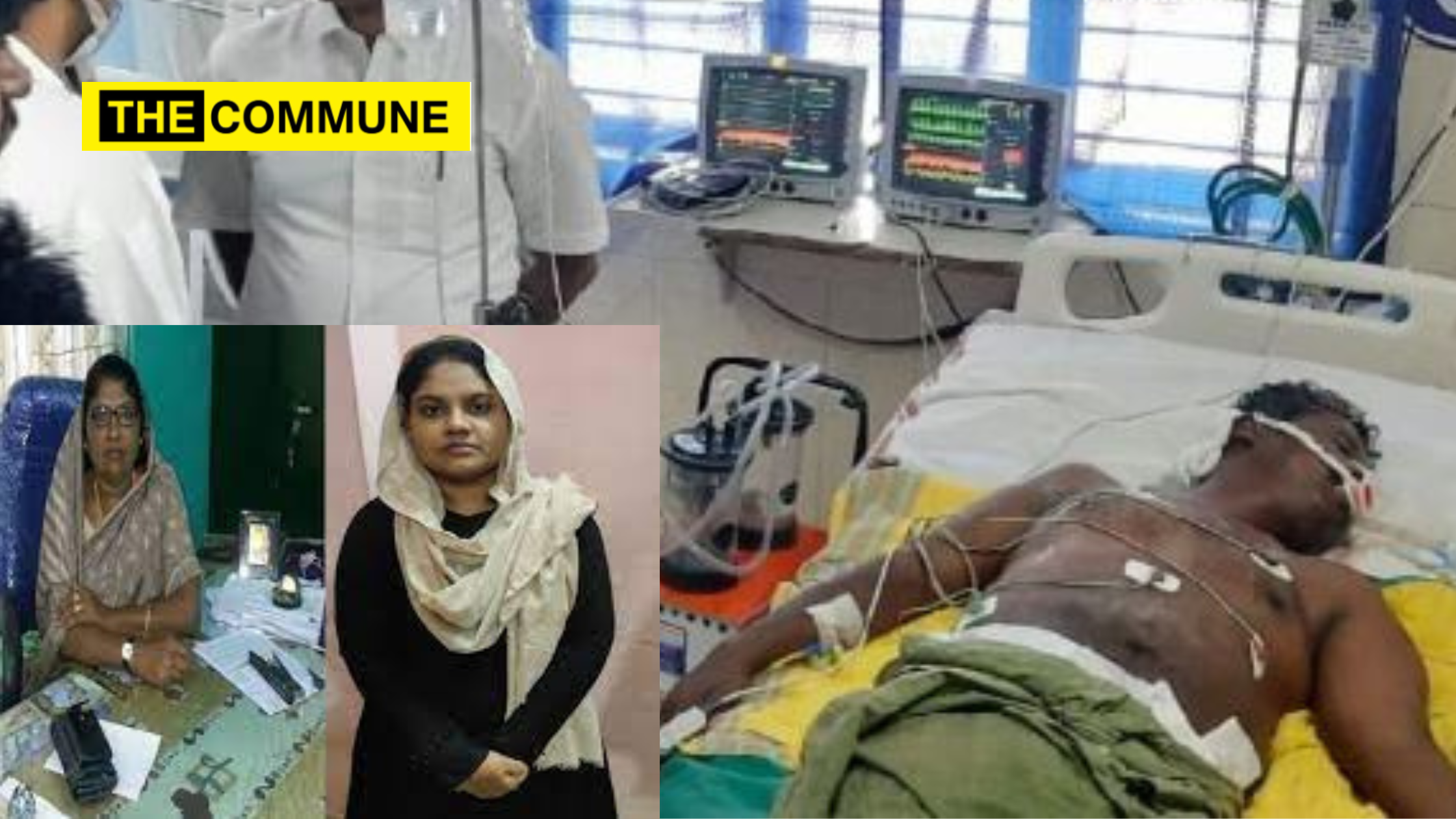
Dalit Hygiene Worker Commits Suicide After Casteist Slur By Muslim Panchayat President And Her Mother-In-Law

A Dalit hygiene worker, traumatized by caste abuse, allegdly commited suicide by drinking poison. The police are looking for one Ayesha, the former panchayat president, in connection with his death.

Health and hygiene workers in Udangudi town panchayat escalated their protests on Thursday (23 March 2023) in response to the death of a coworker, Sudalaimadan (56), who attempted suicide. The family refused to accept the body, demanding that former panchayat president Ayesha Kallasi, incumbent Hemera, and panchayat executive officer Babu be arrested immediately.

Sudalimadan hails from Udankudi Puthukaalani near Tiruchendur in Thoothukudi District. He has been a hygiene worker in Udankudi Municipality for 30 years and a hygiene supervisor for the last few years. According to reports, the victim Sudalaimadan urged panchayat president Hemera Ramez Fathima to promote him to the position of a permanent supervisor based on seniority.

Ayesha Kallasi, the panchayat president’s mother-in-law and former panchayat president, is said to have demanded a bribe of ₹3 lakhs from Sudalimadan in order to make the job permanent. However, he refused to pay the bribe.

Enraged, Ayesha used caste slurs to insult Sudalimadan and refused to make the job permanent. It is also said that Sudalimadan was forced to clean the drainage. Saddened by this treatment of Ayesha and Hemera, Sudalimadan attempted suicide by drinking pesticide on the 17th of this month. Sudalaimadan was rescued by his relatives and taken to Tiruchendur Government Hospital. He was given first aid and then shifted to Thoothukudi Government Medical College Hospital for further treatment. However, his condition has deteriorated in the last week.

Despite the fact that an FIR was filed against the two, they have not yet been arrested. The conservancy worker died in the early hours of Thursday at Thoothukudi Medical College Hospital after failing to respond to treatment. The family members criticized the police for failing to arrest the two suspects despite them being booked under sections of the SC/ST (Prevention of Atrocities) Act. They also urged the district police to invoke sections related to murder in the FIR and include president Hemera in the case. They also requested that Sudalaimadan’s daughter, Uma Maheswari, be given a job as a nurse.

(With inputs from Mediyaan)

Click here to subscribe to The Commune on Telegram and get the best stories of the day delivered to you personally.
Unique Response By Hindu Women When Saffron flags At Vellayani Bhadrakali Temple Were Asked To Be Removed

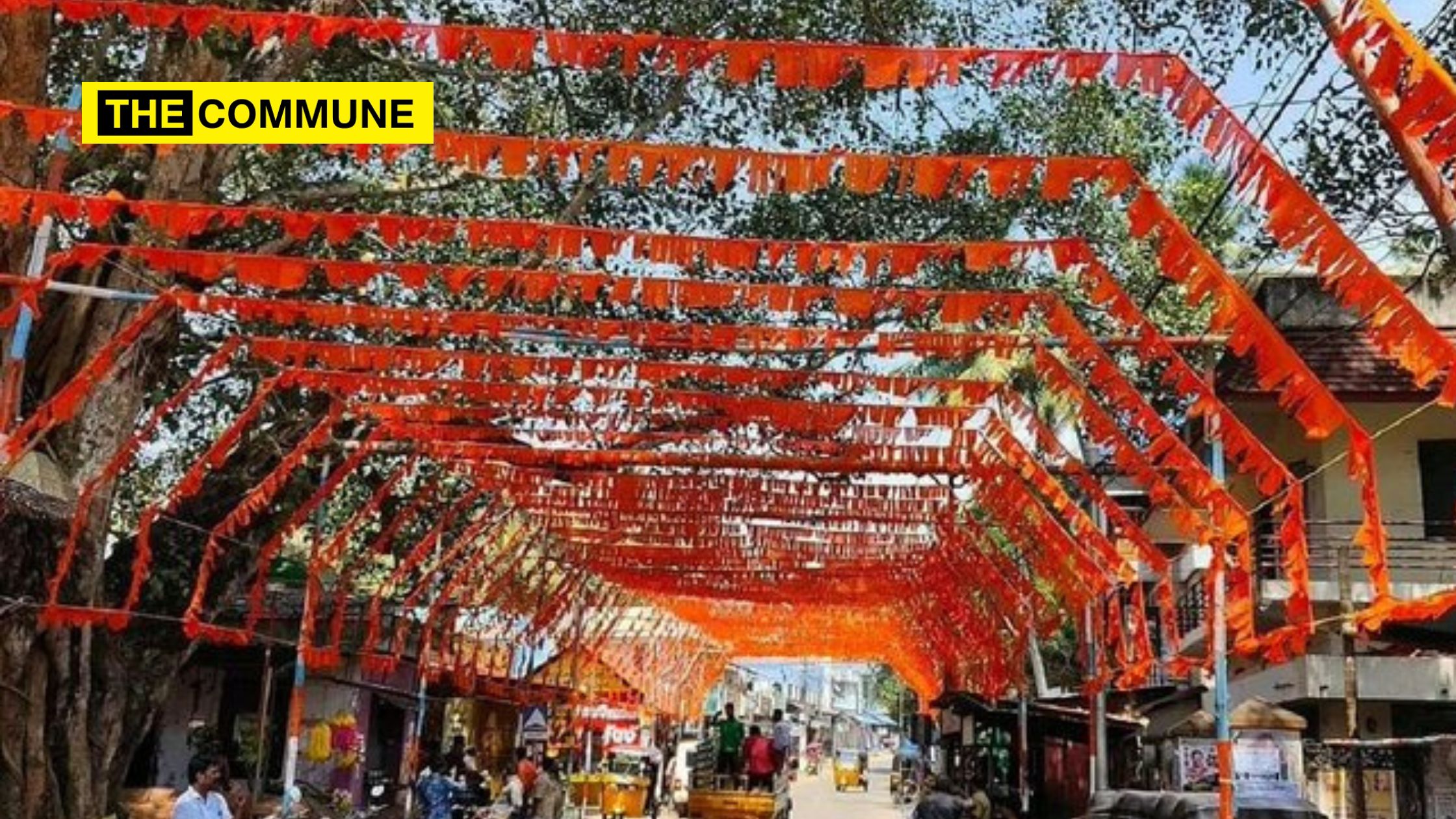
A day after a Hindu temple in Communist-ruled Kerala was directed by the police to not use saffron decoration during a festival, the Hindu devotees have adopted unique ways to oppose the ‘saffron ban’. This comes after the local police visited the Vellayani Bhadrakali temple located on the southern outskirts of Thiruvananthapuram in Kerala and instructed the temple authorities to avoid saffron-coloured buntings, flags and other fabric on the premises for the upcoming Kaliyoottu Mahotsavam claiming that it will create a ‘law and order situation’.

As a mark of protest, several Hindu women wore traditional saree coupled with saffron blouses and suits with saffron dupattas.


Earlier, in protest against the police instruction, devotees had set up a tent for a police post for the festival using saffron fabric. The temple authorities also have refused to remove the saffron flags and buntings. The devotees have alleged that the police are helping the anti-Hindu elements in the state.


In the meanwhile, the Kerala Police have written to the Vellayani Devi Temple authorities stating that they will be taking strict legal action against anyone who used saffron colour to decorate the temple premises during the festival. The police are claiming that decorating the temple premises using saffron buntings and flags will create law and order situation, and therefore instructed the temple authorities to use multicoloured buntings and flags.


The Vellayani Bhadrakali temple is situated next to Vellayani Lake, a wetland that draws a significant number of pilgrims during the Kaliyoottu Mahotsavam, which is held once every three years. It is managed by the Travancore Devaswom Board of the Kerala government, and it has a number of committees that are chosen annually by residents of the Kalliyoor panchayat nearby.

The triennial festival is scheduled to start on February 14, 2023, and will be the first one to be held in the last six years. The 2020 festival had to be interrupted due to the Wuhan virus pandemic. However, this year’s enthusiasm and preparations for the festival have also been dampened due to the unnecessary issue that has cropped up from the side of the local government.

The Kerala Police have demanded that the temple’s administrators switch out their customary saffron-coloured buntings (torons), flags and other fabric for multicoloured ones since they worry that lining the temple’s approach road with solely saffron-coloured decorations might cause a law-and-order issue.

The Vellayani Bhadrakali temple authorities are enraged as it is blatantly disrespectful to religious sensibilities to have government officials interfere in a custom that the temple has maintained for centuries. At first, the temple administration thought that the instruction was regarding the ban on plastic flags, and therefore they used cloth buntings and flags. But later they found out that the objection was on the saffron colour.

Rageesh Kumar, the Nemom Station House Officer (SHO) and Inspector of Police made the demand while being escorted by a sizable police force. When the temple officials inquired as to why the saffron flags had to be changed, they were told that the police had received a telephone complaint over the colour of the torons and as a result, wanted them changed to multi-coloured ones to prevent a law-and-order issue.

Even though the Kerala Police has cited law and order concerns as the reason behind giving the ‘instructions’ to avoid saffron flags, there is politics involved in the matter.

According to a Swarajya report, the Vellayani temple has been targeted for a few years now as it is the stronghold of the Bharatiya Janata Party. Vellayani temple lies within the boundary of Nemom assembly and Veteran BJP leader O Rajagopal had polled heavily in this segment in the 2014 general elections. Further, the temple lies in the Kalliyoor panchayat, the area which the BJP attained in the local body polls of 2015 and 2020.

About Kaliyoottu Festival

A ceremonial art form known as Kaliyoottu festival is celebrated in Southern Kerala, particularly in the Thiruvananthapuram district, in honour of the goddess Bhadrakali. The sacred battle between the goddess Kali and the demon Darika is commemorated at the festival. The Thottam Pattu is one of Kaliyoottu’s principal rituals. It requires 48 days for singing the Bhadrakali Thottam Pattu entirely.

The Kaliyoottu festival’s most significant rites include Kalamkaval, Nagaroottu, Uchabali, Dikkubali, Paranettu, and Nilathil Poru, which marks the festival’s conclusion. On the ninth day of Medam, the Paranettu will take place at the Vellayani devi temple.

In the ceremony called Kalamkaval, the chief priest wears a big murti-like on his headgear and dances in a trance-like state until he falls unconscious. The ritual known as Nagaroottu is carried out prior to Uchabali in order to appease the Nagas or serpents.

The uchabali ritual consists of 64 gestures, such as the mathsyam, sampannam, chathurasramam, sarpa mudra, and jyoti mudra. A majestic crown made of coconut palms is fixed at the location of the ritual, which is performed at midnight.

This article was originally published in OpIndia and has been republished here with permission.

Click here to subscribe to The Commune on Telegram and get the best stories of the day delivered to you personally.
Renaming Cities & Towns – What Is The History Behind It?

Once, Shakespeare wondered loudly: What’s in the name? That which we call a rose / By any other name would smell as sweet. However, he couldn’t have been more wrong, at least in this part of the world, where a certain name in a certain situation can be a matter of life and death.

Yesterday, Aurangabad and Osmanabad were renamed after much dithering. It was the last move by the Uddhav Thackrey government before their government was sent home in the hope that it would eventually be turned down, keeping both communities happy. However, they now had to put on a brave face after they were renamed.

As usual, secularists, more than Muslims, are making a hue and cry over the course correction of history. Their main grouse is that the Mughals were the best thing to happen to India, which had been living a dark and depraved life till then.

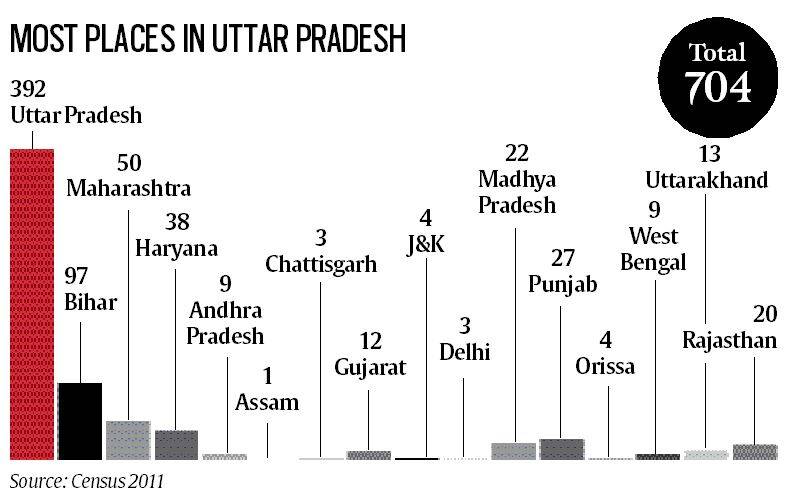
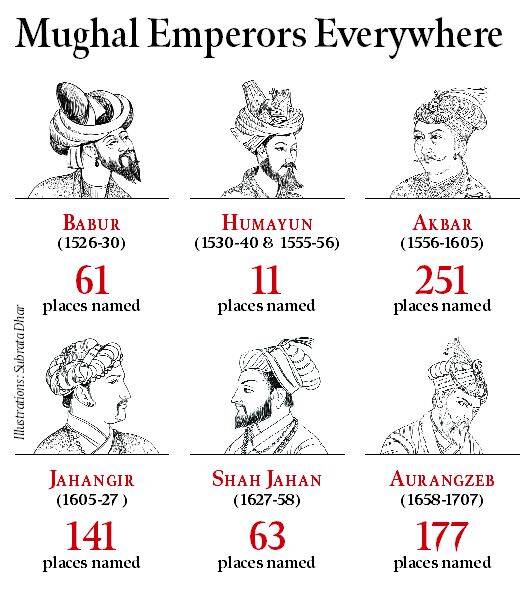
The renaming of two cities is just a drop in the mighty Ganges as at least 704 towns and villages are still named after the Mughals all over India, with Akbar cornering the largest share with 205 names. The count can stretch up to thousands easily if one starts counting the localities in the cities. Till a decade back, every mohalla in Lucknow was deliberately named after some obscure local Muslim. No wonder Uttar Pradesh, the Empire’s heartland, bears the most terrible imprint of the legacy, with 396 villages and towns with populations of one lakh or more named after the Mughals.

The most dreaded Mughal, Aurangzeb, though quite a few believe that he even built temples, has a whopping 177 cities and towns named after him, with 63 Aurangabads in India. Only Hindus can have such megalomania. Till a few years back, the poshest area of India Gate in Lutyens Delhi had two Aurangzebs, one Road and one Lane. However, it was a slight misfortune of the last mighty Mughal that the lane was renamed after APJ Abdul Kalam in 2016. India Gate has ten exits, of which seven are named after the Mughals. Only one non-Muslim, Ashoka, graces the 8th one. One can wonder how he ended up getting the privilege. Was it because of his espousal of Buddhism? The rest 2 are neutral with names like Pandara Road etc.

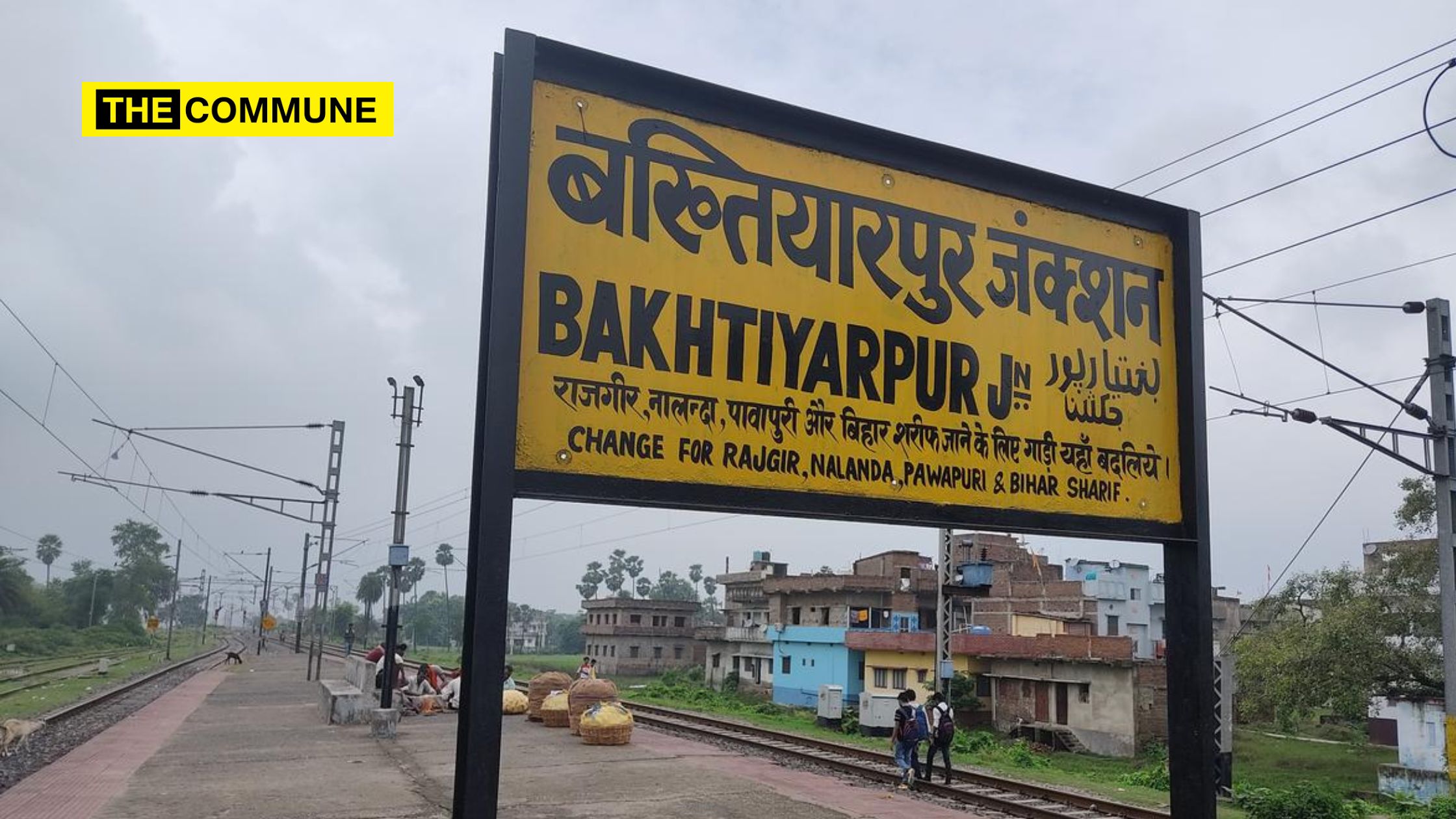
One cannot even count Akbarpurs, Aurangabads, Humayunpurs and Baburpurs in mofussil India, which continue to hammer the infantile minds of Hindus about their subjugation. The keyword here is Mughals. The names after Delhi Sultans have a separate long list. The most prominent is a railway station near Nalanda, named after Bakhtiyar Khilji, a dreaded invader who had destroyed Nalanda Buddhist university, among others. The laughable thing is now Buddhists consider him as a friend and routinely blame Hindus for its destruction. However, that is a discussion for another day.

There are even a few metropolises like Ahmedabad and Hyderabad bearing the names of invaders as well. Besides them, thousands of towns have Islamic names to keep mool-niwasis under the boots. There are too many Muzaffarnagars, Muzaffarganjs, Fatehpurs, Fatehganjs, and Firozabads to list here.

After independence, another not-so-glorious dynasty ruled India for no less than 60 years and still aspires to rule more. As far as names are concerned, they can beat the Mughals hands-down, who ruled India for more than 180 years with an iron hand and another 100 with effeminate touch, not so long ago. Thousands of localities, roads, rail stations, bus stops, metro stations and airports are named after them. However, no one has the guts to rename them. At least so far. They were as cruel as the Mughals, if not more, to Hindus.

To lessen the heartburn among leftists, secularists and Islamists, it can be said that the name-change drama continues unabated the world over, not only in India. Though, the process never makes the splashes in their domestic politics as the majority lives like the majority. The names of entire countries have been changed in the last few decades. Ceylon became Sri Lanka, and Burma became Myanmar. The countries’ names in East Europe change every few decades, probably to rid of old subjugation. Cities also have undergone such changes as Peking became Beijing, Saigon became Ho Chi Minh City, Constantinople became Istanbul and Leningrad became St. Petersburg. India, too had a fair share of a name change; however, it didn’t churn domestic politics when the new name was religion-neutral. Bombay became Mumbai, Madras became Chennai and Calcutta became Kolkata. No one batted an eyelid. No one took notice when British names were changed, as was done for several Andaman Islands recently. The problem only arises when some Islamic name is being changed, and then suddenly secularism comes in danger. Ironically, the same people support the toppling of statues of invaders and dictators abroad. The concept of preserving history evaporates in thin air in those cases. This set of people controls the ecosystem, and because of their protests, vocal as well as violent, only a few names could be changed in the last nine years of the avowedly Hindu government.

What can be worse is that even our country’s name is not ours. What a silly name to have: India, that is Bharat. For the uninitiated, it was proposed by a man who presided over the country’s division even when India had so many catchy ancient names. Bharat, to name one, has a necessary aura, while the word ‘India’ connotes the continued colonial mindset.

However, Hindus should not lose heart as the names of entire countries, lakes, rivers and cities have roots in Sanskrit. All those stans in Central Asia, like Afghanistan, Uzbekistan, etc, are corrupted form of sthan in the suffix, meaning ‘a place’ in Sanskrit, just like India has so many bads, like in Ahmedabad, with the Persian root abad (population). The Caspian Sea is named after Rishi Kashyap and Mekong river in Southeast Asia is named after Ma Ganga. Ayutthaya in Thailand is named after Ayodhya, while Singapore is Singh+pur, a place for lions. Indonesia is named after India, Bhutan after Bhu Devi, Maldives is Mahal Dweep, Burma is Brahma desh, Qandhar is Gandhara, and so on. The more heartening matter is that these names cannot be changed under any circumstances.

Closer home, the name change is a sure shot way to convey to all who matter that Indians no longer have a slavish and cowardly mentality and are ready to assert themselves. There is no better cost-effective method than to change the names after our home-grown role models. However, the business of name-change will continue to churn the public discourse in the near future.

This article was originally published in Bharat Voice and has been republished here with permission.

Click here to subscribe to The Commune on Telegram and get the best stories of the day delivered to you personally.
Telugu-Speaking Hindus Evicted By B’desh Govt In Dhaka

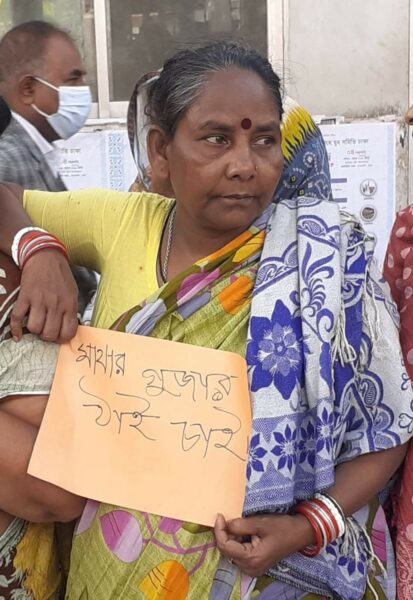
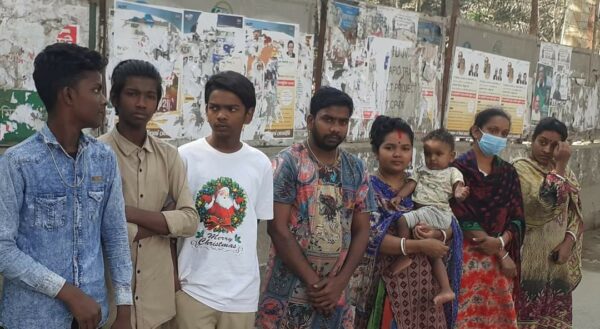
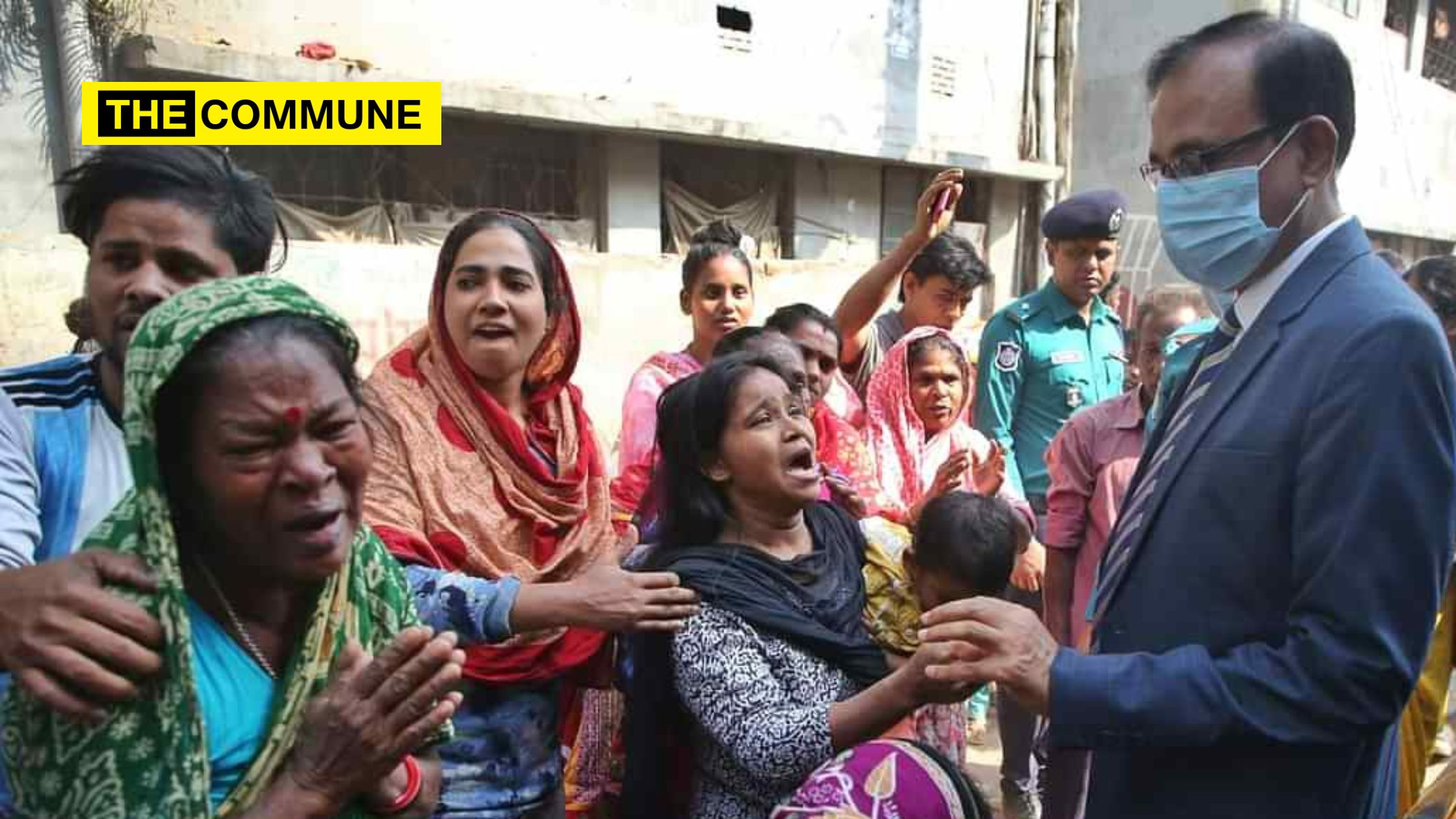
A colony of Telugu-speaking Hindus in Dhaka has been ordered to vacate, leaving hundreds of families in panic. Several organizations, including the Human Rights Foundation, Human Rights Culture Foundation, and Hindu Buddhist Christian Unity Parishad, have expressed deep concern and protest against the eviction order of the Dhaka South City Corporation (DSCC). Aggrieved Telugu families, including some Christians too, recently held a protest against this government eviction.

Eviction image

Telugu-speaking Hindu families have been living in that colony for several generations. But now DSCC plans to build accommodations and workshops there for City Corporation employees. However, rejecting the allegation of forced eviction, the DSCC said that the people of the Telugu-speaking Hindu community will be relocated elsewhere.

Eviction image

A few days ago, the police came to clear sweeper colony number 14 of Jatrabari Dhalpur in Dhaka and ordered that they have to vacate this colony before February 12. Areas surrounding this area, known as Dhalpur Basti, were also ordered to be evacuated earlier.

Protest of the aggrieved Telugu Hindus.

Yaramsetty Venkatesh, a resident of Telugu Colony, said, “When other areas have been told to vacate, we have not heard the name of this colony.” But on the 8th, we were told that we too had to leave. Now, where do we go? “We have nowhere to go; we can’t even afford to build a new house.”

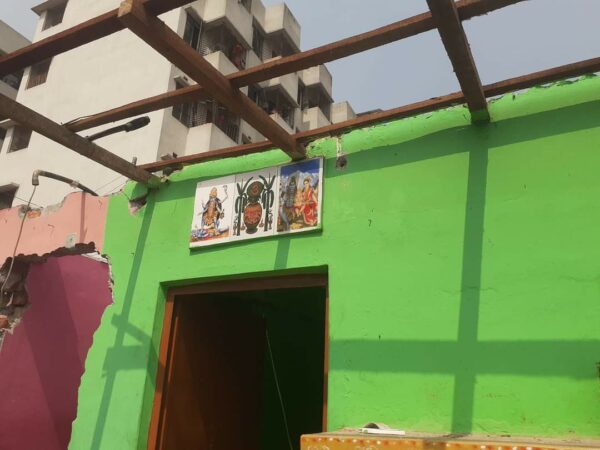
Evicted house

All the buildings in the surrounding area of this sweeper colony except one mosque have been demolished. The workers employed by the City Corporation are working to remove the bricks of the broken building from there. According to senior resident Karti Deramma, their ancestors were brought here from Andhra Pradesh and Telangana in Bharat hundreds of years ago with the assurance of settlement. Since then, they have been working as cleaning workers for generations.

In the middle of the 19th century, the British government brought these Telugu-speaking Hindus to this territory from the Andhra Pradesh and Telangana regions of Bharat for various jobs. Since then, they have been living in this land.

Protest of the aggrieved Telugu Hindus.

During Bangladesh’s liberation war, members of this community were also subjected to torture by Pakistani forces for being Hindus. Muktyala Ramana was injured by the bullets of Pakistani forces. Showing bullet marks on his body, he says that even after so many years of independence, he still has no permanent residence.

Members of this community say they don’t mind moving if the government or the city corporation settles them elsewhere. But no one is giving them that assurance. Thousands of residents from 130 families in this colony are terrified by the threats of the corporation and the police.

The situation there can be seen on the ground, where many of the victimised Hindus have packed their belongings due to the demolition of their houses. They are moving around with panicked faces. They have seen their residences being razed to the ground in front of their eyes by government bulldozers. Although the local city corporation talked about rehabilitation, in reality, activists claim that no proper rehabilitation was given to these Telugu-speaking Hindus.

This article was originally published in Hindu Post and has been republished here with permission.

Click here to subscribe to The Commune on Telegram and get the best stories of the day delivered to you personally.
Calling Out TNM’s Casteist, Anti-Hindu And Dirty Piece Of Propaganda

The News Minute (TNM) has done it again. In a renewed attempt TNM has unleashed casteist venom to further the agenda of demonising Hinduism. In an article written by Neo Buddhist Ajay S Sekher and edited by a staunch follower of Jesus Christ Maria Teresa Raju, TNM in its latest article has gone out of the way, jumping leaps and bounds to propagate casteist venom and to tarnish the belief system of Hindus. This is not the first time that TNM has violated journalistic ethics with click baits and for views. In fact, this time around TNM oversteps to blur the line between facts and agenda-driven journalism. It is high time that we react to such hypocritic journalism which distorts reality to further a particular agenda.

Opinion Piece Or…

The article prima facie presents itself as unharmful, a regular opinion piece pointing out nuances of present-day politics. But a closer look into the work reveals that the article itself begins with a twisted headline; ‘Pinarayi and Stalin: The two lowered caste CMs striving to preserve an anti-caste memory’. Ignore the absurd idea of calling a Communist CM, leader of an atheist party a ‘lowered caste’ CM, the headline of the article itself twists the narrative by stating that both ‘Pinarayi’ and ‘Stalin’ are ‘Lowered’ caste CM. Is it mockery or trickery? It is hard to understand. But one thing is for sure, the headline in itself is a wanton attempt to symbolise that Hinduism itself has played an active role in keeping these leaders lowered. The author also conveniently forgets that the famed CM of Tamil Nadu along with his son are propagators of Christianity. Anyways the author and editor continue to smoke something illegal to carry on with their ‘Left-Liberal’ diatribe which is clearly visible as we read ahead.

The event which brought together these oppressive leaders of their respective states was the commemoration of the Channar revolt by Nadar women seeking the right to cover their breasts. The author began the article by stating that, ‘the Chief Minister of Kerala, Pinarayi Vijayan, spoke the truth when he said that the inhuman and casteist taxes on people’s breasts and heads were imposed by the Sanatana Dharma or the so-called Vedic Varnashrama Dharma, to divide them.’ These kinds of blanket statements placing the blame on a single religion can be done only by The News Minute. The neo-Buddhist author and Christian editor squarely conclude the initiative of abolishing breast tax was taken up in 1812 by the missionary and colonial British administrator Colonel John Munro. If there was a competition to please our old colonial masters, TNM might finish first even beating British publications. The distorted presentation of facts by TNM conveniently forgets about the existence of Indians as a community before the arrival of the British in India.

Breast Tax?

If we look into the struggle to cover breasts, we can have a cleaner insight into the subject without being polluted by the distorted narrative of TNM. During British colonial rule, the imposition of Victorian morality on India had a damaging effect on the country’s cultural practices. One example is the case of the Nadar women in Kerala, whose traditional attire involved covering only one breast. This was seen as scandalous by the British, who imposed their Victorian sense of modesty on the Nadar community, forcing them to cover both breasts. This restriction had a significant impact on the Nadar women’s way of life, as it was an integral part of their cultural identity. It also represented a loss of freedom and autonomy for them, as they were forced to conform to an alien cultural norm. This illustrates how the imposition of Victorian morality had negative consequences on Indian culture, as it suppressed and eroded unique cultural practices and norms. The staunch Christian editor of TNM conveniently ignores these truths and even goes to the extent of ignoring the atrocities committed by Christians in Kerala and upholds the Sanatana Dharma as the sole creator of immoral values.

During colonial times, some Christian missionaries in Kerala committed atrocities against Hindus who they saw as heathens or pagans, using violent and coercive means to convert them. The St. Thomas Church massacre of 1653 is a notorious incident where hundreds of Hindu devotees were killed, leading to mass conversions to the Syro-Malabar Catholic Church. Cultural and religious imperialism was also prevalent, with the destruction of Hindu temples and the imposition of Western customs on the local population. But these incidents do not qualify to gain attention from ‘Left-Liberal’ cohorts of TNM, only Sanatana Dharma does.

The author keeps on writing his immoral thesis even post this visible mishap. They continue to weave a fictional story of the political significance of the meeting between two CMs. The author states that the shared history of the two Chief Ministers of Kerala and Tamil Nadu, Pinarayi and Stalin, has brought them together amid the increasing prominence of Sanatana Dharma and caste Hindutva discourse in India. Together, their efforts may serve as a resistance to the communal and divisive agenda of cultural nationalism and the obscurantism of Vedic and Vedantic teachings. Forget the factual anomaly in these statements as according to the National Crime Records Bureau, there has been a decrease in the number of reported cases of crimes against Scheduled Castes and Scheduled Tribes in India from 2017 to 2019. It is also a fact that post-Modi’s rise in Indian politics casteist politics and pride have been subsumed and replaced by national identity and pride. Instead of seeing this as a trend for the betterment of India, the author sees this as a disturbing trend.

The author dares to state that the CMs of Kerala and Tamil Nadu are defending against Sanatana Dharma. Sanatana Dharma, also known as Hinduism, is one of the oldest and most complex religions in the world. It is characterized by a diverse range of beliefs, practices, and traditions that have evolved over thousands of years, and it has played a significant role in shaping the culture and identity of India. Sanatana Dharma encompasses a wide variety of philosophical and spiritual traditions, including yoga, meditation, karma, and reincarnation. Many Hindus believe that Sanatana Dharma is the original culture of the people of India and has been passed down through generations. So, by stating that both CMs are resisting Sanatana Dharma, is the author trying to say that Hinduism is bad for the country? Or defending Hinduism is a noble deed? The author also makes critical mistakes of defining both these CMs as ‘old brothers of Sangam age,’ at this point I find it difficult to counter these arguments by the author as the article in TNM sounds like a delusional blabbering by a schizophrenic fool who is ignorant of basic facts and reality. The attack on Hindus in Kerala by the Pinarayi dispensation and anti-India rhetoric by Stalin has been conveniently forgotten by TNM while portraying these villains as champions of the people. 

Sabarimala

The absurdity of the author does not stop there. The author continues to appropriate every Hindu tradition as Buddhist according to his ideology. The author disturbingly uses the term ‘Saverimala’ instead of ‘Sabarimala’ in the article. The author makes the bold claim that ‘Sabarimala’ is indeed a non-Vedic shrine appropriated by the Hindus. Sabarimala is the traditional name of the Hindu temple located in Kerala, India. Calling it “Saverimala” is considered a distortion of the original name and is not historically accurate. The name Sabarimala is derived from the words “Shabari” and “Malai” and has a religious and cultural significance. Trying to rename it as Saverimala is viewed as an attempt to rewrite history and promote a particular political or ideological agenda. Therefore, it is important to use the traditional name while referring to the temple. For the author and the editor, Hindus and Hinduism are just fodder for other proselytizing religions such as Christianity and Islam. The author also discredits Mahabharata and Ramayana by stating that these holy texts are recited by Hindutva forces to brainwash the Avarna masses! How did TNM even let this get published? The media and its editors stood silent when its author unleashed derogatory notions about epics that hold a special place in the collective conscience of all Indians. One can also dare TNM to make statements about other religions such as reading Quran or Bible to brainwash people.

Vaikom Temple

The author also tarnishes the famous Shiva temple of Vaikom stating that the huge stone Linga installed there in the Middle Ages by Pulikalan Chami or Vyaghrapada Maharshi is a mere stone suitable only for washing clothes. By calling Holy Lingam a stone for washing clothes, the author and TNM try to bleed Hinduism by tarnishing its idols and deities. It is for these kinds of works that Section 153 A of the Indian Penal Code exists, and certainly, this article qualifies by legal standards to attract this provision of law. The author not only tarnishes the Vaikom temple but also states about the imaginary role played by Periyar in Vaikom Satyagraha. Periyar, also known as E. V. Ramasamy did not play a prominent role in the Vaikom Satyagraha, which was a nonviolent protest against untouchability and discrimination in accessing public roads and temples in Kerala. The Vaikom Satyagraha was led by Mahatma Gandhi and supported by prominent leaders of the Indian National Congress, the Indian Nationalist Movement, and social reformers such as C. V. Kunhiraman, K. Kelappan, and T. K. Madhavan. Although EVR was also involved in social reform movements during that time, he had not yet emerged as a prominent leader in the region and was not involved in the Vaikom Satyagraha. By reading these conclusions by the author one thing stands clear – logic and truth took a vacation while he was writing this piece. 

In recent years, there have been discussions and debates about the representation of Hinduism in Indian media, with some observers noting a trend of criticism and negativity towards Hinduism in certain sections of the media. Some critics argue that this trend is a reflection of a broader political and ideological climate in the country, where a particular narrative of secularism is promoted by some media outlets and political parties. Hinduism and followers of Sanatana Dharma constantly fall on the firing line of ‘Left-Liberal’ cabals who are trying to divide and rule the nation. The unification of Hindus in the nation and rising consciousness about Indian culture has smitten these groups who are proud of Lutyens and Macaulay’s sons. TNM, its author, and its editor have clearly violated journalistic ethics while writing and publishing this piece. By donning the colours of secularism and anti-casteism, TNM targets Brahmins and Hindus and ironically tries to sow seeds of division within the Hindu religion. The anti-national, ‘Left-Liberal’ gang shall not be allowed to thrive spewing venom among Indian citizens. The authorities, as well as TNM, shall take appropriate actions against the culprit in the interest of communal harmony in this nation.

Click here to subscribe to The Commune on Telegram and get the best stories of the day delivered to you personally.