Home Blog Page 1706

Highlights of the National Education Policy 2020 – Higher Education
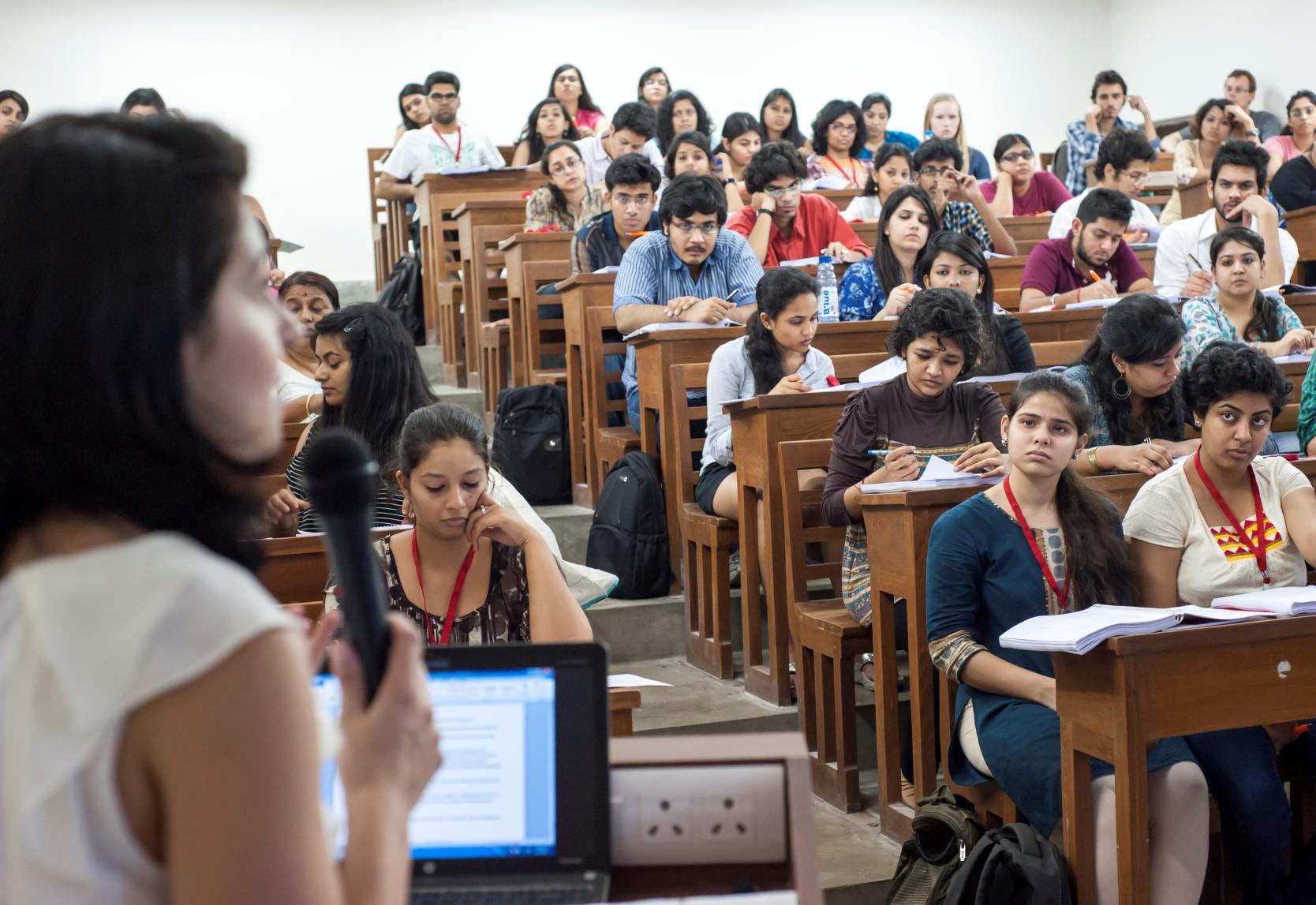
The Union Cabinet chaired by Prime Minister Narendra Modi gave its assent to the National Education Policy 2020 on July 29, 2020 paving way for the long awaited reforms in education sector.

This is the 1st policy for the 21st century replacing the more than three decades old National Education Policy 1986 and is the most elaborate and comprehensive policy initiative in education taken by the Modi government.

The policy aims at large scale and transformational reforms in school and higher education aligning with the 2030 Agenda for Sustainable Development Goals.

The NEP is being built on the foundational pillars of Access, Equity, Quality, Affordability and Accountability.

This policy envisions to turn India into a vibrant knowledge society and global knowledge superpower by making both school and college education more holistic, flexible, multidisciplinary, suited to 21st century needs and aimed at bringing out the unique capabilities of each student.

Here are some of the key elements in the policy with respect to higher education:

Increase GER to 50 % by 2035

NEP 2020 aims to increase the Gross Enrolment Ratio in higher education including vocational education from 26.3% (2018) to 50% by 2035. 3.5 Crore new seats will be added to Higher education institutions.

Holistic Multidisciplinary Education

The policy envisages broad-based, multi-disciplinary, holistic Under Graduate education with flexible curriculacreative combinations of subjects and integration of vocational education in the mainstream. One of the unique elements present in the policy is the multiple entry and exit points with appropriate certification. UG education can be of 3 or 4 years with multiple exit options and appropriate certification within this period.

For example, students will be given a Certificate after 1 year, Advanced Diploma after 2 years, Bachelor’s Degree after 3 years and Bachelor’s with Research after 4 years. M.Phil courses to be discontinued.

An Academic Bank of Credit is to be established for digitally storing academic credits earned from different HEIs so that these can be transferred and counted towards final degree earned. This will prove to be useful for those who take a sabbatical during their course period.

Multidisciplinary Education and Research Universities (MERUs), at par with IITs, IIMs, to be set up as models of best multidisciplinary education of global standards in the country.

The National Research Foundation will be created as an apex body for fostering a strong research culture and building research capacity across higher education.

Regulation

Higher Education Commission of India(HECI) will be set up as a single overarching umbrella body for entire higher education, excluding medical and legal education. HECI to have four independent verticals  – National Higher Education Regulatory Council (NHERC) for regulation, General Education Council (GEC ) for standard-setting, Higher Education Grants Council (HEGC) for funding,  and National Accreditation Council( NAC) for accreditation. HECI will function through faceless intervention through technology, & will have powers to penalise HEIs not conforming to norms and standards. Public and private higher education institutions will be governed by the same set of norms for regulation, accreditation and academic standards.

Rationalised Institutional Architecture

Higher education institutions will be transformed into large, well resourced, vibrant multidisciplinary institutions providing high-quality teaching, research, and community engagement. The definition of the university will allow a spectrum of institutions that range from research-intensive universities to teaching-intensive universities and autonomous degree-granting Colleges. 

Affiliation of colleges is to be phased out in 15 years and a stage-wise mechanism is to be established for granting graded autonomy to colleges. Over a period of time, it is envisaged that every college would develop into either an Autonomous degree-granting College or a constituent college of a university.

Motivated, Energized, and Capable Faculty

NEP makes recommendations for motivating, energizing, and building capacity of faculty through clearly defined, independent, transparent recruitment, freedom to design curricula/pedagogy, incentivising excellence, movement into institutional leadership. Faculty not delivering on basic norms will be held accountable

Teacher Education

A new and comprehensive National Curriculum Framework for Teacher Education, NCFTE 2021, will be formulated by the NCTE in consultation with NCERT. By 2030, the minimum degree qualification for teaching will be a 4-year integrated B.Ed. degree. Stringent action will be taken against substandard stand-alone Teacher Education Institutions (TEIs).

Mentoring Mission

A National Mission for Mentoring will be established, with a large pool of outstanding senior/retired faculty – including those with the ability to teach in Indian languages – who would be willing to provide short and long-term mentoring/professional support to university/college teachers.

Financial support for students

Efforts will be made to incentivize the merit of students belonging to SC, ST, OBC, and other SEDGs. The National Scholarship Portal will be expanded to support, foster, and track the progress of students receiving scholarships. Private HEIs will be encouraged to offer larger numbers of free ships and scholarships to their students.

Open and Distance Learning

This will be expanded to play a significant role in increasing GER. Measures such as online courses and digital repositories, funding for research, improved student services, credit-based recognition of MOOCs, etc., will be taken to ensure it is at par with the highest quality in-class programmes.

Online Education and Digital Education:

A comprehensive set of recommendations for promoting online education consequent to the recent rise in epidemics and pandemics in order to ensure preparedness with alternative modes of quality education whenever and wherever traditional and in-person modes of education are not possible has been covered. A dedicated unit for the purpose of orchestrating the building of digital infrastructure, digital content and capacity building will be created in the MHRD to look after the e-education needs of both school and higher education.

Technology in education

An autonomous body, the National Educational Technology Forum (NETF), will be created to provide a platform for the free exchange of ideas on the use of technology to enhance learning, assessment, planning, administration. Appropriate integration of technology into all levels of education will be done to improve classroom processes, support teacher professional development, enhance educational access for disadvantaged groups and streamline educational planning, administration and management

Promotion of Indian languages

To ensure the preservation, growth, and vibrancy of all Indian languages, NEP recommends setting an Indian Institute of Translation and Interpretation (IITI), National Institute (or Institutes) for Pali, Persian and Prakrit, strengthening of Sanskrit and all language departments in HEIs, and use mother tongue/local language as a medium of instruction in more HEI programmes.

Internationalization of education will be facilitated through both institutional collaborations and student and faculty mobility and allowing entry of top world ranked universities to open campuses in our country.

Professional Education

All professional education will be an integral part of the higher education system. Stand-alone technical universities, health science universities, legal and agricultural universities etc will aim to become multi-disciplinary institutions.

Adult Education

The policy aims to achieve 100 per cent youth and adult literacy.

Financing Education

The Centre and the States will work together to increase the public investment in the Education sector to reach 6% of GDP at the earliest.

Source: PIB
Highlights of the National Education Policy 2020 – School Education

The Union Cabinet chaired by Prime Minister Narendra Modi gave its assent to the National Education Policy 2020 on July 29, 2020 paving way for the long awaited reforms in education sector.

This is the 1st policy for the 21st century replacing the more than three decades old National Education Policy 1986 and is the most elaborate and comprehensive policy initiative in education taken by the Modi government.

The policy aims at large scale and transformational reforms in school and higher education aligning with the 2030 Agenda for Sustainable Development Goals.

The NEP is being built on the foundational pillars of Access, Equity, Quality, Affordability and Accountability.

This policy envisions to turn India into a vibrant knowledge society and global knowledge superpower by making both school and college education more holistic, flexible, multidisciplinary, suited to 21st century needs and aimed at bringing out the unique capabilities of each student.

Here are some of the key elements in the policy with respect to school education:

Ensuring Universal Access at all levels of school education

NEP 2020 emphasizes on ensuring universal access to school education at all levels – preschool to secondaryInfrastructure support, innovative education centres to bring back dropouts into the mainstream, tracking of students and their learning levels, facilitating multiple pathways to learning involving both formal and non-formal education modes, an association of counsellors or well-trained social workers with schools, open learning for classes 3,5 and 8 through NIOS and State Open Schools, secondary education programs equivalent to Grades 10 and 12, vocational courses, adult literacy and life-enrichment programs are some of the new changes brought about in the policy. It is expected to bring about 2 crores children who are out of school to the mainstream.

Early Childhood Care & Education with New Curricular and Pedagogical Structure

The 10+2 structure has been broken down a 5+3+3+4 curricular structure corresponding to ages 3-8, 8-11, 11-14, and 14-18 years respectively with an emphasis on Early Childhood Care and Education. This will bring the hitherto uncovered age group of 3-6 years under the school curriculum, which has been recognized globally as the crucial stage for the development of mental faculties of a child. Thus, the new schooling system will have 12 years of schooling with three years of Anganwadi/ pre-schooling.

The NCERT will also develop a National Curricular and Pedagogical Framework for Early Childhood Care and Education (NCPFECCE) for children up to the age of 8. ECCE will be delivered through a significantly expanded and strengthened system of institutions including Anganwadis and pre-schools that will have teachers and Anganwadi workers trained in the ECCE pedagogy and curriculum.

The policy also seeks to synergize the efforts of Ministries of HRD, Women and Child Development (WCD), Health and Family Welfare (HFW), and Tribal Affairs for catering to the holistic development of the child.

Achieving Foundational Literacy and Numeracy

Achieving Foundational Literacy and Numeracy has been recognized as an urgent and necessary prerequisite to learning. NEP 2020 calls for setting up of a National Mission on Foundational Literacy and Numeracy by MHRD. States will prepare an implementation plan for attaining universal foundational literacy and numeracy in all primary schools for all learners by grade 3 by 2025. A National Book Promotion Policy is also to be formulated.

Reforms in School Curricula and Pedagogy

The school curricula and pedagogy will aim for the holistic development of learners by equipping them with the key 21st-century skills, reduction in curricular content to enhance essential learning and critical thinking and a greater focus on experiential learning. Students will have increased flexibility and choice of subjects. There will be no rigid separations between arts and sciences, between curricular and extra-curricular activities, between vocational and academic streams.

Vocational education will start in schools from the 6th grade and will also include internships.

A new and comprehensive National Curricular Framework for School Education, NCFSE 2020-21, will also be developed by the NCERT to give effect.

Multilingualism and The Power of language

Learning in mother tongue/local language/regional language at least till Grade 5 and preferably till Grade 8 has been emphasized.

Sanskrit to be offered at all levels of school and higher education as an option for students, including in the three-language formula.

Other classical languages and literature of India will also be available as options.

No language will be imposed on any student.

Students to participate in a fun project/activity on ‘The Languages of India’ in Grades 6-8, like the current ‘Ek Bharat Shrestha Bharat’ initiative under which students are exposed to diverse Indian languages.

Several foreign languages will also be offered at the secondary level. Indian Sign Language (ISL) will be standardized across the country and National and State curriculum materials developed, for use by students with hearing impairment.

Reforms in Assessment

NEP 2020 envisages a shift from summative assessment to a more regular and competency-based formative assessment, which promotes learning and development, and tests higher-order skills, such as analysis, critical thinking, and conceptual clarity. All students will take school examinations in Grades 3, 5, and 8 which will be conducted by the appropriate authority. Board exams for Grades 10 and 12 will be continued, but redesigned with holistic development as the aim.  A new National Assessment Centre, PARAKH (Performance Assessment, Review, and Analysis of Knowledge for Holistic Development), will be set up as a standard-setting body.

Equitable and Inclusive Education

NEP 2020 aims to ensure that no child loses any opportunity to learn and excel because of the circumstances of birth or background. Special emphasis will be given to Socially and Economically Disadvantaged Groups (SEDGs) which include gender, socio-cultural, and geographical identities and disabilities. This will include setting up of  a Gender Inclusion Fund and also Special Education Zones for disadvantaged regions and groups. Children with disabilities will be enabled to fully participate in the regular schooling process from the foundational stage to higher education, with support of educators with cross-disability training, resource centres, accommodations, assistive devices, appropriate technology-based tools and other support mechanisms tailored to suit their needs. Every state/district will be encouraged to establish “Bal Bhavans” as a special daytime boarding school, to participate in art-related, career-related, and play-related activities. Free school infrastructure can be used as Samajik Chetna Kendras

Teacher Recruitment and Development

Teachers will be recruited through robust, transparent processes. Promotions will be merit-based, with a mechanism for multi-source periodic performance appraisals and available progression paths to becoming educational administrators or teacher educators. A common National Professional Standards for Teachers (NPST) will be developed by the National Council for Teacher Education by 2022, in consultation with NCERT, SCERTs, teachers and expert organizations from across levels and regions.

School Governance

The policy suggest that schools can be organized into school complexes or clusters as basic unit of governance ensuring availability of all resources including infrastructure, academic libraries and a strong professional teacher community.

Standard-setting and Accreditation for School Education

NEP 2020 envisages clear, separate systems for policymaking, regulation, operations and academic matters. States/UTs will set up an independent State School Standards Authority (SSSA). Transparent public self-disclosure of all the basic regulatory information, as laid down by the SSSA, will be used extensively for public oversight and accountability. The SCERT will develop a School Quality Assessment and Accreditation Framework (SQAAF) through consultations with all stakeholders.

Source: PIB

DMK-Media mafia gags independent voices: Udhayanidhi Stalin files defamation suit against Madan, News18 and Gunasekaran sue Maridhas, Kishore K Swamy arrested

The DMK and its henchmen under the guise of journalists have gone about stifling voices that had been critical of them and exposed their nexus. With the recent developments, it has only gone on to prove the already prevailing allegations.

Madan Ravichandran gagged

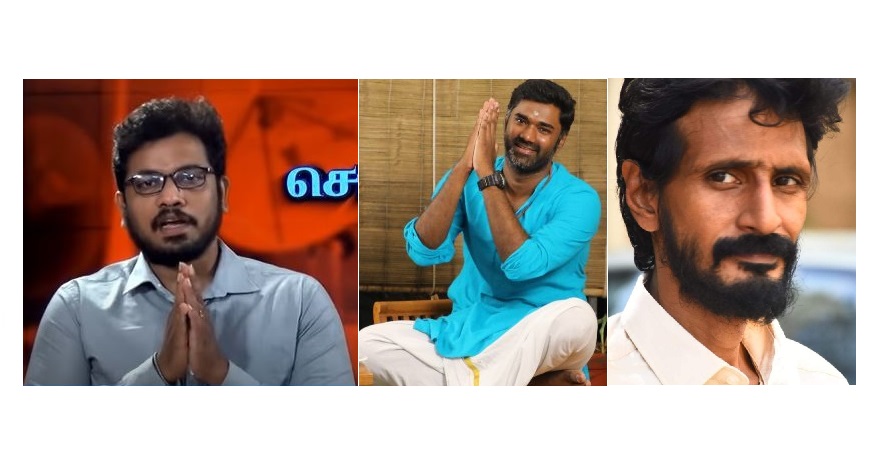
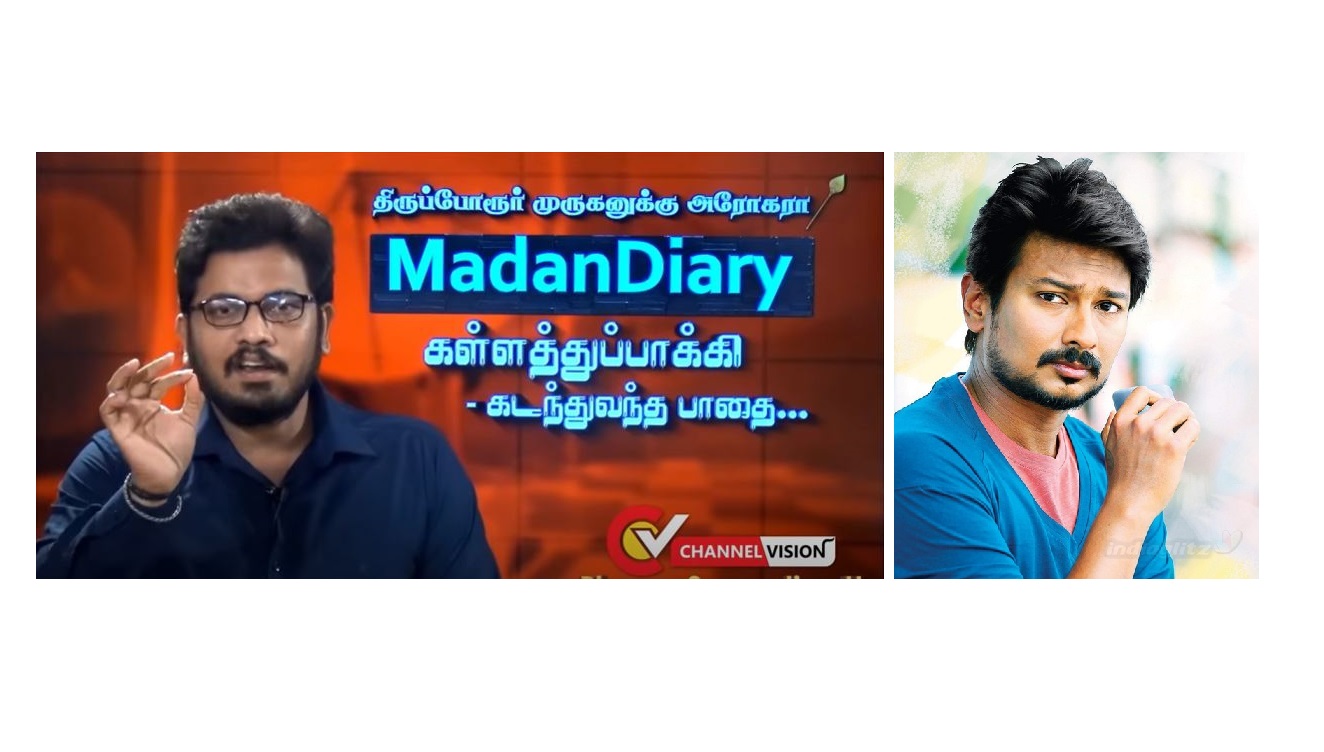
Reports have emerged that Udhayanidhi Stalin has filed a defamation suit against the Madan Ravichandran, the News Head of Channel Vision. Madan Ravichandran through his Youtube channel has been exposing the nexus between the DK, DMK, Communist group and the mainstream media through his Madan Diary series.

On July 12, Thiruporur DMK MLA Idhayavarman was caught for brandishing a gun in broad day light and firing multiple rounds in the middle of a road in which one of the bullet hit a passer-by. He had fired at the car of a real estate agent Kumar while travelling along the East Coast Road owing to a property dispute.

Madan had released a video in which he traced the back story of DMK MLA Idhayavarman’s gun to an illegal deer hunting mafia. In the video, a man whose identity was withheld for security reasons provided an account of how the DMK MLA hunted deers to be served to DMK Youth Wing secretary Udhayanidhi Stalin.

However, Udhayanidhi  has filed a defamation suit against the News Head of Channel Vision Madan Ravichandran at the Saidapet Court saying that the video posted had no basis and was an attempt to tarnish his reputation and his family.

Maridhas intimidated

In another case, popular vlogger Maridhas who exposed the close links between News 18 Tamil Nadu, DMK and the rabid Youtube channel Karuppar Koottam has been sued by News 18 Tamil Nadu Senior Editor Gunasekaran for defamation. Gunasekaran is the son-in-law of Kali Poongundran (Kaliamurthy Naidu), the Deputy President of Dravida Kazhagam (DK).

Maridhas had traced the links of News 18 Tamil Nadu journalists to an organization called Centre of Media Persons for Change (CMPC) (www.cmpc.in) which seems to be an extension of communists, DK groups. Maridhas in his video had mentioned that some of the persons associated with CMPC and content writers in news channels like News 18, Puthiyathalaimurai trace their history to One Mind Generation Research whose directors are Mohan Karthik, and Anbil Poyyamozhi Mahesh. Anbil Mahesh Poyyamozhi (son of former MLA and close confidante of MK Stalin Anbil Poyyamozhi), Mohan Karthik (son of current Anna Nagar MLA M.K. Mohan of DMK).

Apart from Gunasekaran, Maridhas also exposed connections between Haseef Mohamed, Senior Anchor at News 18 Tamil Nadu and Karuppar Koottam, the Youtube channel that had put vile and abusive videos against Hindus and Hindu Gods.

Through his video, he has also urged everyone to send a mail to the Network 18 group to take action against Gunasekaran and Hasef Mohamed for their actions.

A few days later, Maridhas had claimed that he had received a mail from the News 18 group acknowledging his mail. However, this email was refuted by Vinaya Sarawagi, Editor at News 18, as fake. But Maridhas has stood by his allegations. It is being suspected that a protonmail could have been used by a user to create the fake mail.

Meanwhile, reports started emerging that the News 18 group had curtailed the powers of Gunasekaran and had shown the doors to Haseef.

In light of this, Gunasekaran and his channel filed a civil defamation suit of 1.5 crores along with a criminal suit against Maridhas at the Madras High Court. Justice C.V. Karthikeyan has instructed Maridhas to stop putting videos that ‘defames’ News 18 and take down the videos that he had earlier posted against the channel and its journalists.

Kishore K Swamy arrested

Another fiery voice who roasts the DK, DMK and Communist groups left, right and centre is Kishore K Swamy who is known for his candid and outspoken nature. He also delivers punches below the belt to drive home his point. He was arrested by the police on July 29 based on a complaint from a union called Madras Union of Journalists for allegedly making derogatory comments on women journalists. Kishore K Swamy had written in his social media accounts that his parents, both of them septuagenarians, were harassed by the police. He was later released the same night.

Such attempts to intimidate and stifle voices is not new for the DMK. However, these incidents add credibility and makes conspicuous the allegations leveled against the Tamil Nadu mainstream media – that there exists an ideological and political hegemony in the media space and that they work towards creating a narrative that is favourable to one party.

Mysterious seeds sent from China to the US issued with biohazard warning

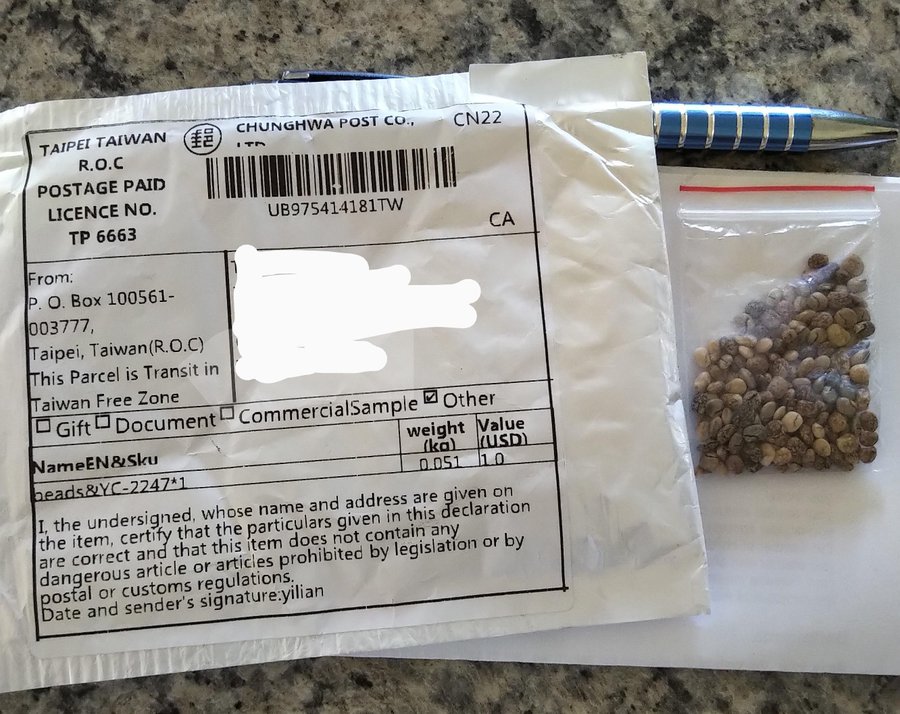
Following a mysterious package sent to the United States, Canada has also received a shipment of seeds that have been sent from China. The Canadian food inspection agency has warned against planting these ‘unsolicited’ seeds.

In a statement, the agency was reported to have said that this is may contain invasive species may be extremely harmful to agricultural and natural resources.

The Ontario provincial police tweeted about this saying that the foreign seeds could have been typically sent from Taiwan or China. Some of these shipments have been labelled as jewellery and have been reported to be having Chinese handwriting. The seeds have been taken for further testing by the USDA, while the other kind of packages have been advised to be kept in sealed plastic bags until authorities collect it.

Meanwhile, Chinese foreign ministry has said in response to this that China’s postal service strictly adheres to restrictions on sending seeds. Beijing’s relations with Canada and Washington have deteriorated this year to what experts say is their lowest level in decades over issues ranging from trade and technology to the coronavirus pandemic.

So far, the main worry is that the seeds could belong to an invasive plant species that could spell havoc for farming and ecosystems alike if allowed to take root.

Mom – Daughter duo from UK bring a new flavour to the Black Lives Matter movement

A mother-daughter duo in the United Kingdom has been grabbing eyeballs because as they have given a new dimension to the Black Lives Matter movement. Faith, 6, and her mother, Serlina Boyd, have launched two magazines called ‘Cocoa Boy’ and ‘Cocoa Girl’ to promote black culture among people of all races and genders.

What started as a home experiment has now turned into a sensation. Faith had wanted to read magazines as part of her homeschooling lessons during the lockdown. She had been disappointed not to find even one single person whom she could relate to in any of them. That is when it hit them that the world needed magazines that were representative of people of colour.

When she had told this to her mother, who is a graphic designer, she had immediately created the magazine with Faith as the editor, deciding whatever went into it and the overall outlook.  Serlina, the mother said, “These magazines aren’t just for black children, they are for children from all races as it teaches them about the black culture and black history.”

These two have already sold hundreds of copies since the magazine’s conception, and publishers from around the world have asked for it to be translated into different languages.

Higher Education set for a revamp from the next academic year

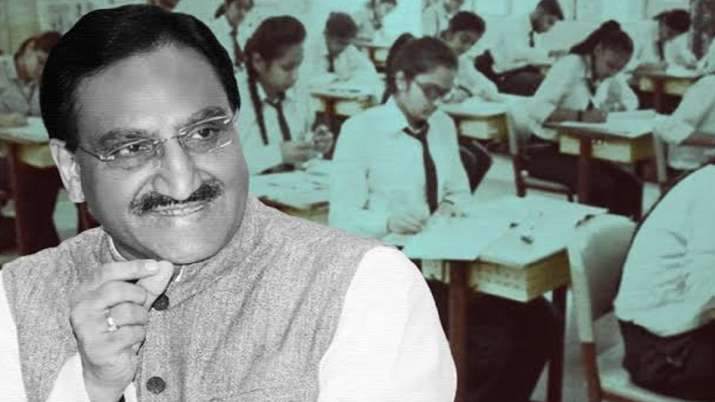
Amit Khare the Secretary of MHRD announced the higher education reforms that are to be implemented from the coming year under the new National Education Policy. Under the scheme, there will be a multiple entry and exit scheme to ensure that students efforts are not wasted in case they are forced to drop out for some reason.

This means that the student will be receiving a certificate in diploma for completing 1 or 2 years of the degree course. This also means that students will be allowed to take a sabbatical from their course in the form of an academic credit bank system, and can go for a Ph.D after completing one additional year after their four-year degree.

In addition to this, a multidisciplinary education system is to be introduced wherein they will be able to study minor subjects like music along with their major.

  • Some key points in the new Education Policy are as follows:
  • MPhil courses will be discontinued under the new policy and all the courses at undergraduate, postgraduate and PhD level will now be interdisciplinary
  • All higher education institutions, except legal and medical colleges, will be governed by a single regulator
  • Board exams in schools will be low stakes and test actual knowledge of students instead of “rote learning”
  • Home language, mother tongue or regional language will be the medium of instruction up to Class 5
  • School curriculum will also be reduced to core concepts and there will be an integration of vocational education from Class 6

(Source: TOI)

Defamation suit filed against Channel Vision Madan Ravichandran by Udhayanidhi Stalin: Media Reports

If media reports are to be believed, DMK Chief MK Stalin’s son, youth wing secretary of the party and ‘actor’ Udhayanidhi Stalin has filed a defamation suit against the News Head of Channel Vision Madan Ravichandran.

Udhayanidhi Stalin had mentioned in his suit that Madan’s video on the deer mafia expose titled “Udhanidhi vs Maankari” (Udhayanidhi vs deer meat) was baseless and amounted to defamation.

The defamation suit filed at the Saidapet Court alleged that the video posted had no basis and was an attempt to tarnish his reputation and his family. Udhayanidhi has demanded that Madan Ravichandran be prosecuted under Indian Penal Code, Defamation Act and be given severe punishment.

However Madan has said in his tweet that he hasn’t received any legal summon till now and that he will face the case legally. He has also promised more interesting shows to his viewers.

Madan Ravichandran who has been releasing videos exposing the DMK-Media nexus through his Madan Diary series had released a video in which he exposed the DMK indulging in illegal deer hunting and the mafia behind it.

On July 12, Thiruporur DMK MLA Idhayavarman was caught for brandishing a gun in broad day light and firing multiple rounds in the middle of a road in which one of the bullet hit a passer-by. He had fired at the car of a real estate agent Kumar while travelling along the East Coast Road owing to a property dispute. Incidentally, the police had seized a several rifles and ammunition from Idhayavarman’s premises.

It is said that that the DMK MLA hunts deers to be served to DMK Youth Wing secretary Udhayanidhi Stalin. This was disclosed by an unidentified man in Madan’s video.

Prime Minister Modi to roll out development projects worth 500 crores in Ayodhya

Prime Minister Narendra Modi will launch development projects worth ₹ 500 crores for Ayodhya on the day of the Ram Mandir Bhoomi Poojan on August 5. The foundation stones for projects worth ₹326 crores are said to be laid on that occasion while the projects for the remaining ₹161 crores will be spent for services dedicated to people.

The projects include expansion of the 36.7 km National Highway 30 between Azamgarh and Bahraich via Ayodhya to a four-lane highway at a cost of over ₹ 252 crores. Ayodhya is also set to get a new bus station at ₹7 crores to facilitate better transport for pilgrims. A new police barrack of 200 people capacity is also set to be established in Ayodhya.

Spiritual leader Morari Bapu has also vowed to donate ₹5 crores to the temple, on behalf of the Chitrakoot Dham. “I pledge to donate Rs 5 lakh for the Ayodhya Ram Mandir construction. But that won’t be all, in total it will be a collection of Rs 5 crore contribution from my Katha listeners”, the preacher said while addressing the online viewers of a Ram Katha from Pithoria Hanuman temple. “If I had told somebody, he alone would have donated the entire amount, but I want this to be everyone’s participation”, he added.

The Bhumi Pujan ceremony of the Ram Mandir is to be telecast live on Doordarshan and said to be attended by over 150 people adhering to social distancing norms.

Kashmiri Separatist Syed Ali Shah honoured with Pakistan’s highest civilian honour

Kashmiri separatist Syed Ali Shah Geelani was endowed with Pakistan’s highest civilian honour, the ‘Nishaan-e-Pakistan’ on Tuesday. This has reportedly been done as an act of insult to India, exactly one week before the anniversary marking the repealing of Article 370.

Notably, Geelani had recently resigned from the Tehreek-e-Hurriyat, the faction he had floated in 2003, citing ‘rebellion against leadership by cadres’. “He (Geelani) has written a detailed letter to Hurriyat members in which he said, given the present situation within the Hurriyat Conference, he is completely dissociating himself from the platform,” Geelani’s spokesperson said in a press statement.

Geelani had reportedly said that he was unhappy with Hurriyat members for staying quiet over the decisions of Centre that are being implemented in the Valley, such as the abrogation of Article 370.

This comes at a time where intelligence reports have found out that Pakistan has been working closely with its agencies Inter-services Intelligence (ISI) to humiliate India close to the first anniversary of the abrogation of Section 370. This has been seen as an attempt by the country to show India in a poor light. Furthermore, Pakistan had planned to give ‘royal treatment’ to Kashmiri politicians, activists and international organisations, which are critical of India, on August 5, along with observing the event as a “black day”.

Communists have a meltdown over DD telecast of Ram Mandir Bhoomi Poojan

The Communist Party Of India (CPI) has expressed outrage over the telecasting of the Ram Mandir Bhumi Pujan by Doordarshan. With the Pujan scheduled to be held in a few days, the CPI has lodged a complaint against its telecast to the Central Government.

In the complaint, it has demanded the Centre to ban the airing of the program, calling it to be against the secular interests of the country. It added that the use of Doordarshan to televise a religious function like the Pujan is against the “accepted norms of national integrity”.

It mentioned the Section 12 2 (a) of the Prasar Bharati Act, which is is the rulebook governing the National Broadcasting Agency, and said that it should abide by the provision of ‘upholding unity and integrity of the country and the values enshrined in the Constitution’ as given in the Act.

“Considering the historical dispute over the land where the religious function is about to take place, it would be mature for the government to desist the attempts to politicise the issue and ensure that the secular image of the country is not undermined, wrote CPI”s Binoy Viswam in the letter. In conclusion, it said that a broadcasting channel governed by an arm of the state should refrain from telecasting the religious function in Ayodhya.

Meanwhile, the preparations for the historic Bhumi Pujan in Ayodhya is underway. It is to be held on August 5th, 2020, with all the social distancing norms intact.