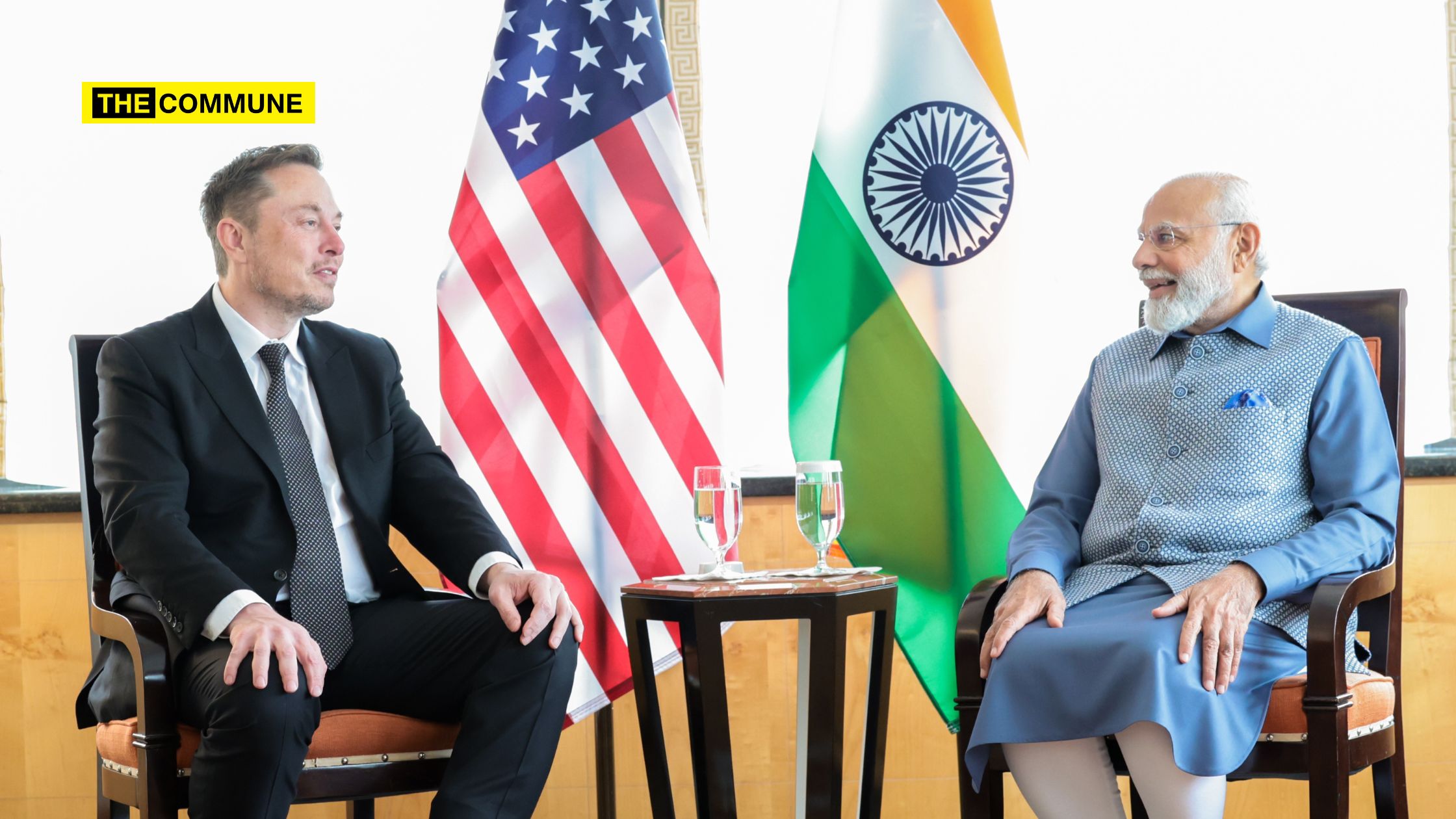
Renowned tech magnate Elon Musk, CEO of Tesla and SpaceX, recently voiced his discontent with the existing structure of the United Nations Security Council (UNSC), criticizing its longstanding inflexibility and advocating for a much-needed reform.
Musk’s comments have reignited discussions on the persistent desire for a permanent seat in the UNSC, a recognition he believes should be granted based on substantial contributions to its principles. Notably, India has served as a non-permanent member eight times.
This happened on 21 January 2024 during a debate initiated by United Nations Secretary-General António Guterres, “How can we accept that Africa still lacks a single Permanent Member in the Security Council? Institutions must reflect today’s world, not that of 80 years ago. September’s Summit of the Future will be an opportunity to consider global governance reforms & rebuild trust”.
In the thread Venture capitalist Michael Eisenberg suggested “And what about India? Better yet is to dismantle the UN and build something new with real leadership“.
Elon Musk added, “At some point, there needs to be a revision of the UN bodies. The problem is that those with excess power don’t want to give it up. It is absurd that India, despite being the most populous country on Earth, lacks a permanent seat on the Security Council. In my opinion, Africa collectively should also have a permanent seat.”
At some point, there needs to be a revision of the UN bodies.
Problem is that those with excess power don’t want to give it up.
India not having a permanent seat on the Security Council, despite being the most populous country on Earth, is absurd.
This echoes the sentiments previously expressed by UN General Assembly President Csaba Korosi, who deemed the UNSC in its current form “paralyzed and dysfunctional,” underscoring the urgency for reform in the world body’s highest decision-making panel.
It is noteworthy that, aside from China, the other Permanent Five (P5) countries have lent their support to India’s bid for a permanent seat in the UNSC on multiple occasions. President Joe Biden, in particular, has consistently advocated for India’s permanent representation, emphasizing this stance during a G20 meeting in India in September 2023. The UK has also reiterated its backing for India’s permanent role within the UN body.
Musk’s statement aligns with the broader critique asserting that the current composition of the UNSC does not accurately mirror the geopolitical realities of the 21st century. While Musk’s remarks may not directly shape UN policies, they contribute a prominent voice to the ongoing discourse on the imperative need for reform within UN structures. His statements have garnered attention and have added weight-age to stimulate further dialogue among the international community.
Challenges In Restructuring The United Nations:
The General Assembly faces significant internal divisions, with five negotiating groups among the 193 member countries often neutralizing one another. historically permanent members lacked enthusiasm for UN system reform, they now acknowledge its necessity, particularly concerning changes in the Security Council. Established in 1945 by the UN Charter, the UNSC consists of 15 members, including P5 and 10 non-permanent members serving two-year terms.
The effectiveness of the UNSC is hindered by its lack of representation, notably the absence of Africa with its 54 countries. Current global issues, complex and interconnected, suffer from a lack of geopolitical and geo-economic representation, excluding significant voices in the highest security council like India.
A critical issue revolves around the misuse of veto power, often criticized as a “self-chosen club of the privileged.” The special veto power, allows any of the five permanent members to block resolutions or decisions, hindering the Council’s ability to act in the current global security environment.
Geopolitical rivalries among the P5, including the United States, Russia, and China, further impede effective UNSC mechanisms to address global issues. Current examples, such as the Taiwan issue and the Russia-Ukraine war, underscore how internal rivalries hinder the Council’s ability to respond effectively.
A threat to state sovereignty arises from the UNSC’s role as the principal organ of international peacekeeping and conflict resolution. Unlike the General Assembly, UNSC decisions are binding on all member countries, potentially encroaching on a state’s sovereignty through actions like imposing sanctions.
In September 2022, India took steps toward UNSC reform by convening a meeting of the G4 and L69 groups in New York during the UN General Assembly, highlighting the ongoing efforts to address these reform challenges.
Subscribe to our channels on Telegram, WhatsApp, and Instagram and get the best stories of the day delivered to you personally.
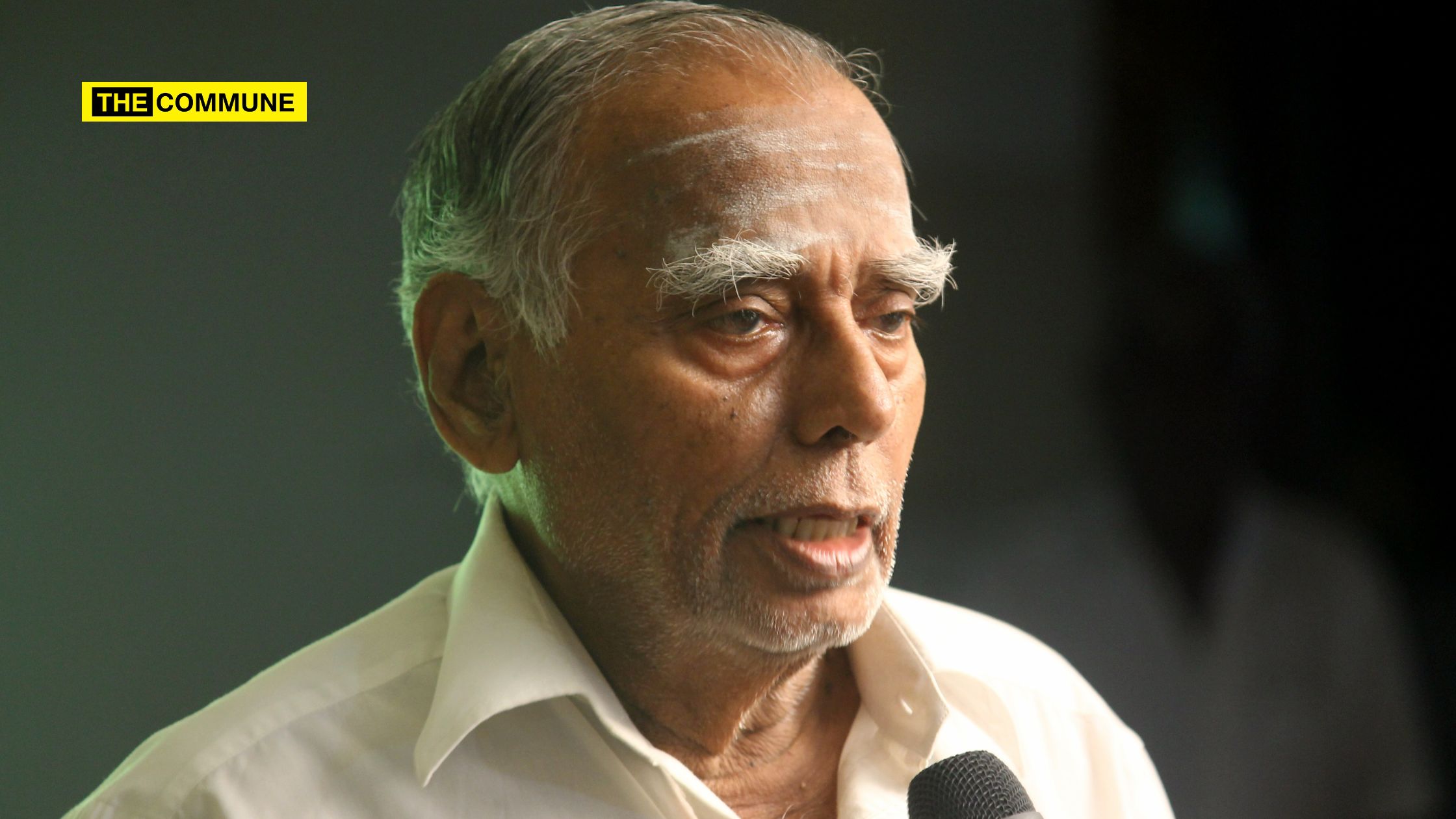
Today marks the second remembrance day of R. Nagaswamy who passed away in 2022. He was a doyen of South Indian archaeology, epigraphy, and history who passed away on this day in 2022. He was the first person to undertake the archaeological research under the sea at ‘Poompuhar’ in Tamil Nadu, an ancient city lost to the sea. Not only that, but he has also had taken part in activities to preserve ancient inscriptions from the Chola and Chera periods.
However, he will be fondly remembered for the key role he played in bringing back the Chola era bronze Nataraja idol that was stolen from India and sold to a Canadian collector. The lawsuit began in 1986 in a special court in London and ended in 1990 during which the testimony given by R. Nagaswamy in the court was the key to swaying the judgement in favour of India to retain the idol. The judge Ian Kennedy described R. Nagaswamy as an unequalled expert in his subject and an acknowledged expert on Chola bronze sculptures.
The Padma Bhushan award-winning archaeologist rubbed the wrong side of the Dravidian stockists in 2019 when he said that Thirukkural had Vedic roots. This went against the dravidian stock ideology of ‘independent Tamil culture’ which supports their idea of separatism. Hence, the statement was not well received and R. Nagaswamy was on the receiving end of a coordinated attack. DMK Chief MK Stalin demanded the removal of the scholar from a committee of the Central Institute of Classical Tamil (CICT) for being ‘anti-Tamil’ and ‘distorting Tamil culture and history according to his whim’. He also went on to say that R. Nagaswamy has belittled Thiruvalluvar by claiming that the Thirukkural had its roots in the Vedas. However, R. Nagaswamy was unperturbed by these comments and replied to the DMK Chief in a statement as follows: “It is amusing that Stalin says I have belittled Thirukkural by asserting it was rooted in vedic tradition. This is not just my view, but the views of great scholars before me for the past 1,000 years. Parimelazhagar and other traditional commentators and western scholars … have said in no equivocal terms that Thirukkural has roots in the Vedas.” He further said, “I don’t think Stalin is even aware of 300 years of Tamil historical studies, thereby exposing himself and his ignorance of Tamil language among world Tamil scholars. I suggest he revise his appeal to the Government of India to save himself the embarrassment.”
His passing away was a great loss to Tamil Nadu and PM Modi expressed his condolences in English and Tamil posts on X. DMK MP Kanimozhi posted a condolence message as well, riddled with errors, and re-posted it with corrections.
We are indebted to doyens like R. Nagaswamy who have saved history from malicious distortions and presented it to the current generation as it is.
Symbianian is a freelance writer and a political buff.
Subscribe to our channels on Telegram, WhatsApp, and Instagram and get the best stories of the day delivered to you personally.
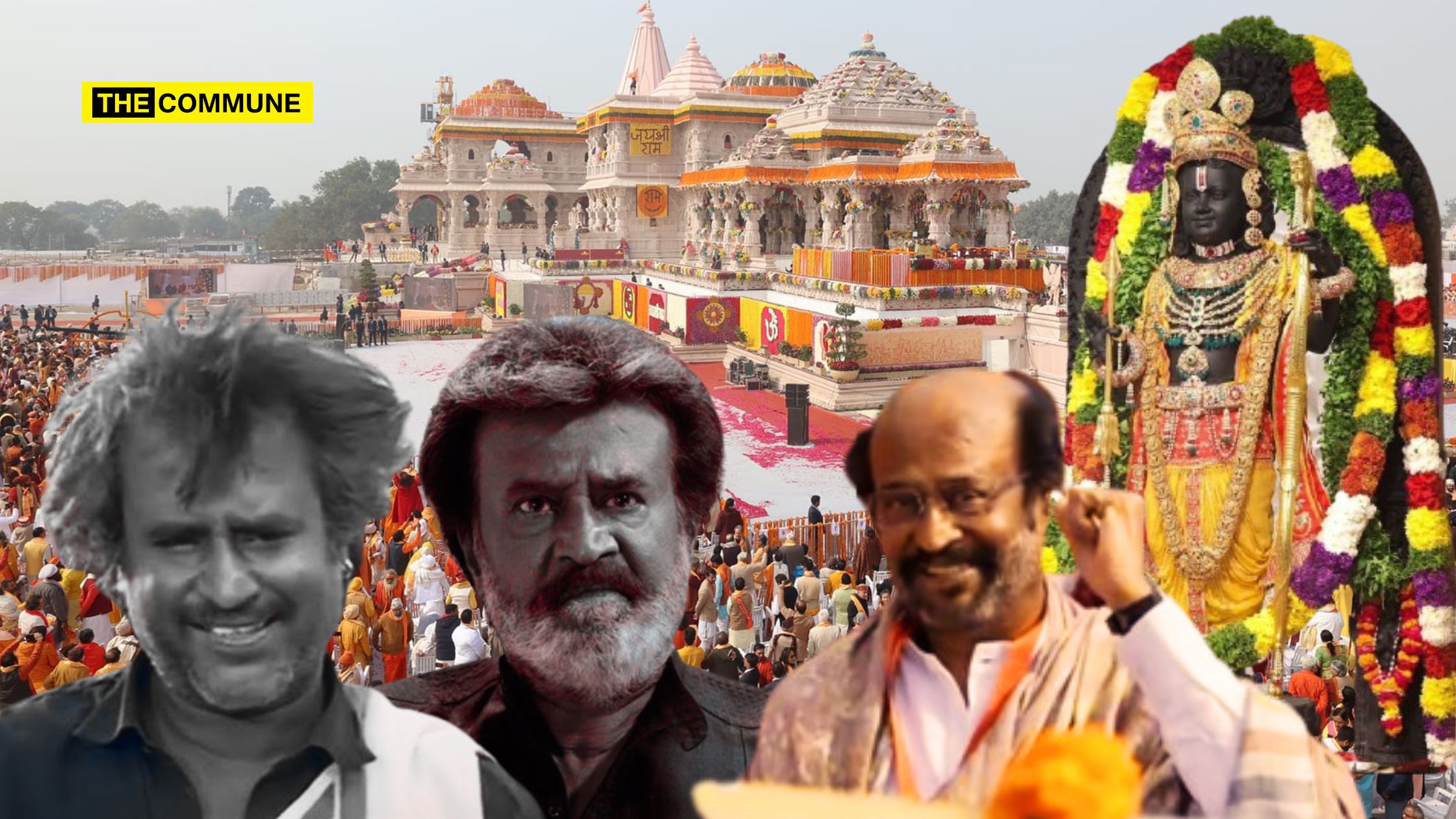
What does Rajinikanth's presence in Ayodhya mean after decades of Anti-Ram propaganda?
Actor Rajinikanth is one of the lucky few who could attend the Pran Prathishta ceremony in Ayodhya today. However, it wasn’t long ago when he advised his Hindu audiences about giving up their claim for Ram Janmabhoomi.
Just after the demolition of the Babri structure in 1992, Rajnikanth had a cameo in a film he produced called Valli (1993). Although the film was about a woman cheated on by her lover, the actor made it a point to insert agitprop messages discouraging the Hindus from pursuing the cause for Sri Rama’s birthplace.
Check out one of the scenes from the film in which he advises village folks to forgo their claim on Rama’s birthplace.
Translation – “What is the point of constructing Ram temple or mosque in Ayodhya? First, build the Ram temple and mosque in your heart. It doesn’t matter if you’re a Hindu, Christian, or Muslim; the day you think of yourselves as Indian first (and Hindu later) is the day this country will start to improve.”
So, the message is – Hindus practising their faith will impede the progress of this nation.
Did the Suryavanshi Thakurs of Ayodhya, who vowed that they would not wear a turban, neither use leather footwear, nor shield their heads with an umbrella till they liberated Bhagwan Ram’s home (even after fighting 76 battles – from Babur to the British) didn’t have Ram in their heart?
Rajinikanth’s suggestion to relegate their struggle to “inner religion and patriotism” is dismissive and insensitive.
For lame monkey-balancing, he also inserts the words “mosque” and “Muslims” in the dialogue. This trick conveniently covers the fact that the movement was for constructing a temple, not a mosque.
His messaging reeks of the same propaganda that the Left Liberals, Dravidianists and radical Abrahamics have been peddling against Hindus for decades – Give up your cause for the greater good. Your religion is only in your head, anyway.
This film, also produced by him, had a theatrical release when the watershed Ram Janmabhoomi movement led by Hindu outfits and the BJP was at its zenith and had culminated in the demolition of the Babri Masjid.
Here is a clip from one such film where Rajinikanth says that Ravana is a better gentleman than Rama.
“You’ve misunderstood Ravana. Not just you. Everybody (pointing at the camera towards the audience) has misunderstood Ravana. Ravana is a big man. I worship him. I am his disciple. Rekha, if Ravana wanted to dishonour Sita, neither he would’ve kept Sita in Ashoka Vanam nor he would’ve waited for her to have a change of heart. In my view, more than Rama, who separated from Sita, Ravana, who waited for his desired woman, is the true lover, fan and gentleman.”
And this messaging wasn’t limited to his earlier films alone. The actor’s recent films, too, promote unhealthy attitudes.
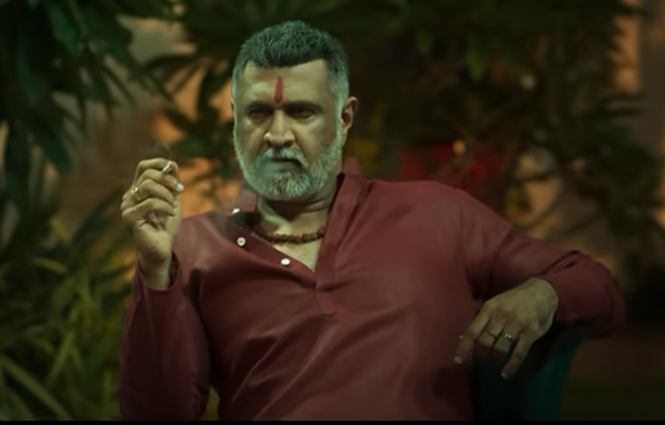
Rajinikanth calling Rama an “upper-caste” God in Kaala (2018)
Not too long ago, Rajinikanth starred in ‘Kaala’, a 2018 film about a community leader in Mumbai’s Dharavi and how he takes on a corrupt politician from the ‘Navbharat Nationalist Party’ or NNP.
The film has the same overused plot that Marxist-driven Bollywood films have been peddling for several decades. It is the story of a “leader of the masses” who will protect his poor community from greedy capitalist businessmen-politician nexus that wants to usurp their lands. The poor are Ambedkarites and Muslims, whereas the rich are practising Hindus who read the Ramayana.
About 15 minutes into the movie, Kaala’s wife, Selvi, screams at her son for being a “vegetarian” who won’t eat everything she can cook. She tells him to be more like his father, who eats beef lovingly.
One of Kaala and Selvi’s sons is called Lenin, and his neighbours call this boy a revolutionary leader. That’s correct – Kaala is happy to name his son after a traitor who used starvation, execution, and torture to kill more than eight million Russians.
Hindu festivals have been demonized shamelessly in this film. A young boy named Bhim is killed by the political leader Haridev Abhyankar’s henchmen on the eve of Ganesh Chaturthi. In return, Kaala kills Hari’s sidekick ‘Vishnu’ on the day of Ganapathi Visarjan.
In another problematic scene, Hari (played by Nana Patekar) listens to a recitation of Ramayana while his workers kill Dalits and Muslims in Kaala’s slum. So, Hindu festivals make Hindus more demonic?
What makes this scene worse is that it includes an unusual narration of Ramayana’s Yuddha Kaandam, which makes Raavanan look like an inspirational figure (while drawing parallels with Kaala). This narration serves as a backdrop to Kaala’s men fighting the mean, fair-skinned Hindutva politician’s goons.
Doesn’t this portrayal sound eerily similar to a party’s repeated messaging that Rama is an “upper-caste” God worshipped only by North Indians and Raavanan is the real hero for the Dravidian stock?
Notably, every villain in the film, including the main antagonist Hari, is a practising Hindu who proudly sports a ’tilakam’ on the forehead or wears the Rudraksham. It is hard not to notice a picture or idol of Sri Rama around villains.
Hari frequently talks about Krishna and Rama while justifying his evil deeds. But Kaala threatens him, “If stealing my land is your God’s Dharma, then I won’t spare your God either.”
Now, imagine if the villain were from any other religion. Would Kaala have used a similar language and tone? Furthermore, if this Kaala’s attitude towards Dharma, is he even capable of understanding what the Pran-Prathistha meant to millions of Hindus?
Audiences are already calling out similar scenes in Bollywood films for portraying Hinduism as the religion of criminals and barbarians. It is not okay to show that listening to Ramayana and celebrating Dharmic festivals makes Hindus demonic, criminal, and anti-Dalits. The truth is it is the conversion mafia that commonly uses such narratives to mislead susceptible minds.
We didn’t miss noticing that Kaala is intelligent enough not to promote offensive messages against Muslims. He does namaaz with them, has the best friendships, and even has a Muslim ex-fiance. It goes without saying that in this film, the good guys belong to just one faith, and all the bad guys are from another religion that worships Rama.
Kaala even swears by ‘Khuda’ while threatening the NPP leader. So, it is okay for true Tamil lovers to learn Urdu and Islam, but it is not acceptable for them to watch Hindi shows, practice vegetarianism, and worship Rama.
And guess what? This film was produced by Wunderbar Studios, the production house of his son-in-law Dhanush, who also attended the Ram Mandir consecration.
Petta (2019)
In 2018, Rajinikanth and Sun Pictures again collaborated for Petta, directed by Karthik Subbaraj, a known symsympathizer LTTE and naxals like Daniel Gandhi. Petta, too, took potshots at Hindutva, showing anyone with a tilak on a forehead as a religious bigot. On the other hand, Rajini helped Anwar get married to Anu.
Both Kaala and Petta came at a time when Tamil Nadu anti-Modi and anti-Hindutva sentiments were being brewed, thanks to the toiling efforts of the DMK and allies that used every opportunity to portray Modi as anti-Tamil. Tamil people have been the biggest beneficiaries of the Centre’s efforts.
And it looks like Rajinikanth isn’t going to stop there.
Upcoming Woke Projects
Just a month after the furore over the crowd in Ahmedabad chanting Jai Sri Ram as Muhammad Rizwan during the India-Pakistan World Cup match, a trailer of Rajinikanth’s upcoming movie was released on 12 November 2023.
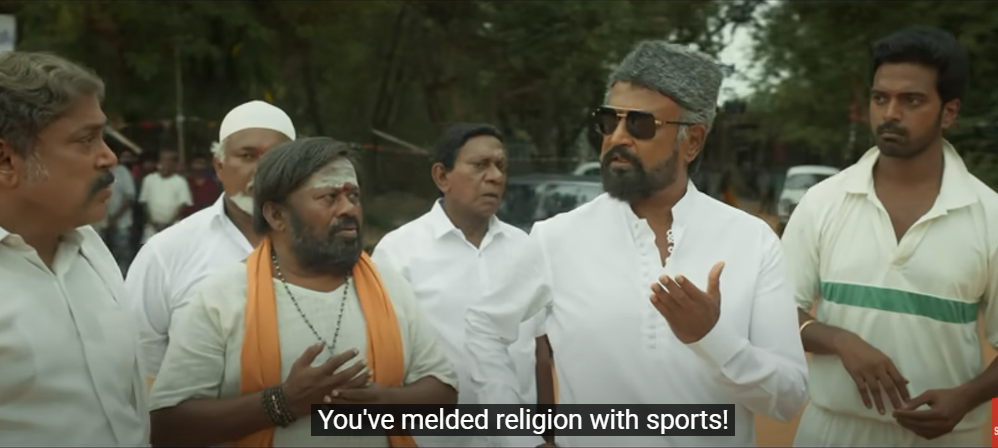
Rajinikanth plays Moideen Bhai, the good Muslim, while another villain (Adithya Menon) is portrayed with a nice red tilak.
A dialogue uttered by Moideen Bhai, looking to the side where saffron-shawl-clad Senthil stands, says, “What have you guys done? You’ve mixed politics with religion! You’ve injected venom in the kids playing!”
Will there be a scene showing Muslim players performing namaz on the ground like the Pakistani players? We’ll know the answer soon, but we can safely presume it given that Udhayanidhi Stalin’s Red Giants are releasing the film.
On 2 March 2023, Lyca Productions announced Rajinikanth’s next film, Vettaiyan, directed by TJ Gnanavel of ‘Jai Bhim’ fame.
The makers of the Jai Bhim movie found themselves facing heat after they were caught red-handed peddling false propaganda and trying to create a rift between different communities. In the film, which revolves around the custodial death of a tribal man, the sub-inspector who is responsible for the death of members from the Irular community is shown as a person belonging to the Vanniyar community with their sacred motif ‘Agni’ being situated in the frame. While the film-makers chose to retain the name of former Justice K. Chandru for Suriya’s character, they deliberately distorted facts, showing the inspector as a Hindu Vanniyar when the sub-inspector was a Dalit Christian.
Admittedly, we can’t expect every actor to control the script of his film. Sometimes, actors in their early stages have no choice but to accept whatever scripts come their way. However, Rajinikanth is not an ordinary or struggling actor. He is widely popular, and his fans take his messages seriously. He is in a position to choose scripts and even make directors modify the script to convey the message he wants. But he didn’t. He CHOSE TO DO Kaala. He CHOSE to demonize Ram Bhakts. The well-paid actor CHOSE TO DO Petta, which attempted to show Bajrang Dal in a poor light. Even with a successful filmography, he has CHOSEN TO DO Lal Salaam. He has CHOSEN TO DO a film with another Letist-Dravidianist propagandist. Giving him the benefit of the doubt would be akin to making a fool of ourselves.
Rajinikanth may be a spiritual, god-fearing person who today speaks of justice being done after 500 years when discussing the consecration of Ram Mandir.
But his real life and reel life cannot be seen in isolation.
Jayasri Viswanathan is a journalist and columnist who observes how media and popular culture engage with Hindu society. She has written criticism of propaganda movies for Gems of Bollywood.
Subscribe to our channels on Telegram, WhatsApp, and Instagram and get the best stories of the day delivered to you personally.
During a recent press meeting, the chief of the Tamil Nadu Bharatiya Janata Party (TNBJP) Annamalai said, “We witnessed the Pran Prathishta ceremony of Ram Lalla, marking a historic event that has been waited for 500 years with unwavering perseverance. The desire to establish a place for Ram Lala in Ayodhya has finally been fulfilled by Prime Minister Narendra Modi today. It is truly overwhelming to be part of this moment, and we feel blessed to have witnessed it. Simultaneously, it’s essential to acknowledge the sacrifices made by many for this cause.”
He also highlighted,“One remarkable example is an elderly woman who chose not to speak until the temple was constructed. Additionally, the Suryavanshi community took a solemn vow not to wear footwear and turbans until this significant moment. The intricately crafted Ram Lalla in Ayodhya was created by Arun Yogiraj from Mysore, Karnataka.”
Annamalai shared insights into Prime Minister Narendra Modi’s recent visits to Srirangam, emphasizing the connection between Ayodhya, Rama, and the Ramanathaswamy Temple. Annamalai also highlighted Modi’s deep respect for the cultural ties between Tamil Nadu and Lord Rama of Ayodhya, mentioning that Modi listened to Kamba Ramayanam in Srirangam with utmost reverence, reflecting on its significance. “In this way, Narendra Modi has strengthened the bond between Tamil culture and the legacy of Lord Rama in Ayodhya,” he added.
Annamalai stated, “The construction of the Ram Temple in Ayodhya has been a longstanding goal of the BJP, and we have successfully achieved it through legal and peaceful means. Today, the installation of Ram Lalla took place, and I had the privilege of attending the Pran Prathishta ceremony at Gopalapuram Venugopalaswamy Temple, feeling truly blessed.”
Annamalai said, “It is crucial to highlight today’s events, especially considering the obstacles faced by the people of Tamil Nadu, who had to engage in a legal battle in both the Chennai High Court and the Supreme Court to obtain permission to witness the Pran Prathishta ceremony, owing to opposition from the DMK. The legal fight was spearheaded by the BJP, and we emerged victorious. Consequently, people across Tamil Nadu were able to watch the live screening of the ceremony, accompanied by Ram Bhajans.”
Annamalai elaborated on the petition filed by the TN BJP in response to a press question, stating, “The petition, filed by Vinoj Selvam of the BJP, mentioned oral instructions given to HR&CE of Tamil Nadu to halt live screening. Another point in the petition highlighted that the Tamil Nadu Police did not permit live screening, and written orders were attached to the petition. The judges scrutinized the documents and questioned the Tamil Nadu government, to which they responded, “We did not halt live screening; no such instructions were given.” Our lawyers argued that certain written instructions to the police cited the presence of Muslims and Christians in society as reasons for denial. The judges condemned this stance, insisting on full permission. Furthermore, they expressed the court’s intention to examine the written instructions provided by the government. The Madras High Court also questioned the government, asking, “Why should they seek permission to screen in private places?” Annamalai said, “It appears that the Tamil Nadu government acted in a dictatorial manner to prevent the live screening of the ceremony.”
When asked about Rahul Gandhi, Annamalai remarked that Rahul Gandhi is like Amar, Akbar, and Antony, shifting between these personas during election times. He highlighted a recent video where Rahul Gandhi expresses frustration towards those shouting “Jai Shri Ram” and “Modi, Modi.” Annamalai advised Rahul Gandhi not to get upset about such expressions.
Furthermore, Annamalai clarified that there is no political motive behind attending the Pran Prathishta screening at Gopalapuram Temple; rather, he was invited with love by the temple trustees. He emphasized that the developments of the day was another example of the ineffectiveness of the HR&CE department in Tamil Nadu. “TNBJP is also against collecting money for darshan and VIP darshan” and Annamalai stated that when the BJP comes to power in Tamil Nadu in 2026 with people support, they plan to abolish the HR&CE department.
In response to Stalin’s jibes against Modi at the Salem Youth Wing conference, Annamalai predicted that the 2024 elections would mark the beginning of the downfall of the DMK. He noted that during 2014, the DMK only secured a 20% vote bank when Karunanidhi was still active, and now, with Karunanidhi gone, he believes Stalin lacks his father’s talent. Annamalai also confidently stated that the 2024 elections will be the beginning of the downfall of the DMK. Annamalai also refuted the false claims of DMK MP Kanimozhi regarding the Ram Temple Pran Prathishta invitation, stating that the invitation was indeed extended to the President, and she had written to Modi expressing her intention to visit the temple.
Addressing the claims of MP Dayanidhi Maran that the use of cellphones is due to Karunanidhi, Annamalai humorously remarked that a conference was organized just to propagate lies, and if one were to count them, it would sum up to 500 lies. Finally, Annamalai confidently stated,” In the 2024 election, the PM would secure power for the third time with over 400 seats, including a significant victory in Tamil Nadu.”
Subscribe to our channels on Telegram, WhatsApp, and Instagram and get the best stories of the day delivered to you personally.
Peddling narratives is a familiar practice for The News Minute (TNM) and their ilk. This time, it not only opened Pandora’s box of the famous preamble but also highlighted Malayalam film stars in the industry who shared images of the preamble of the constitution. This happened on 22 January 2024 the day when the nation was preoccupied with celebrating Pran Prathishta and sharing images of the child Ram across the internet.
TNM declared that this action serves as a recall on the day when the Bharatiya Janata Party appears to have delivered on one of its prominent Hindutva pledges, juxtaposed against the foundational principles of secularism, socialism, and democracy embedded in the Constitution.
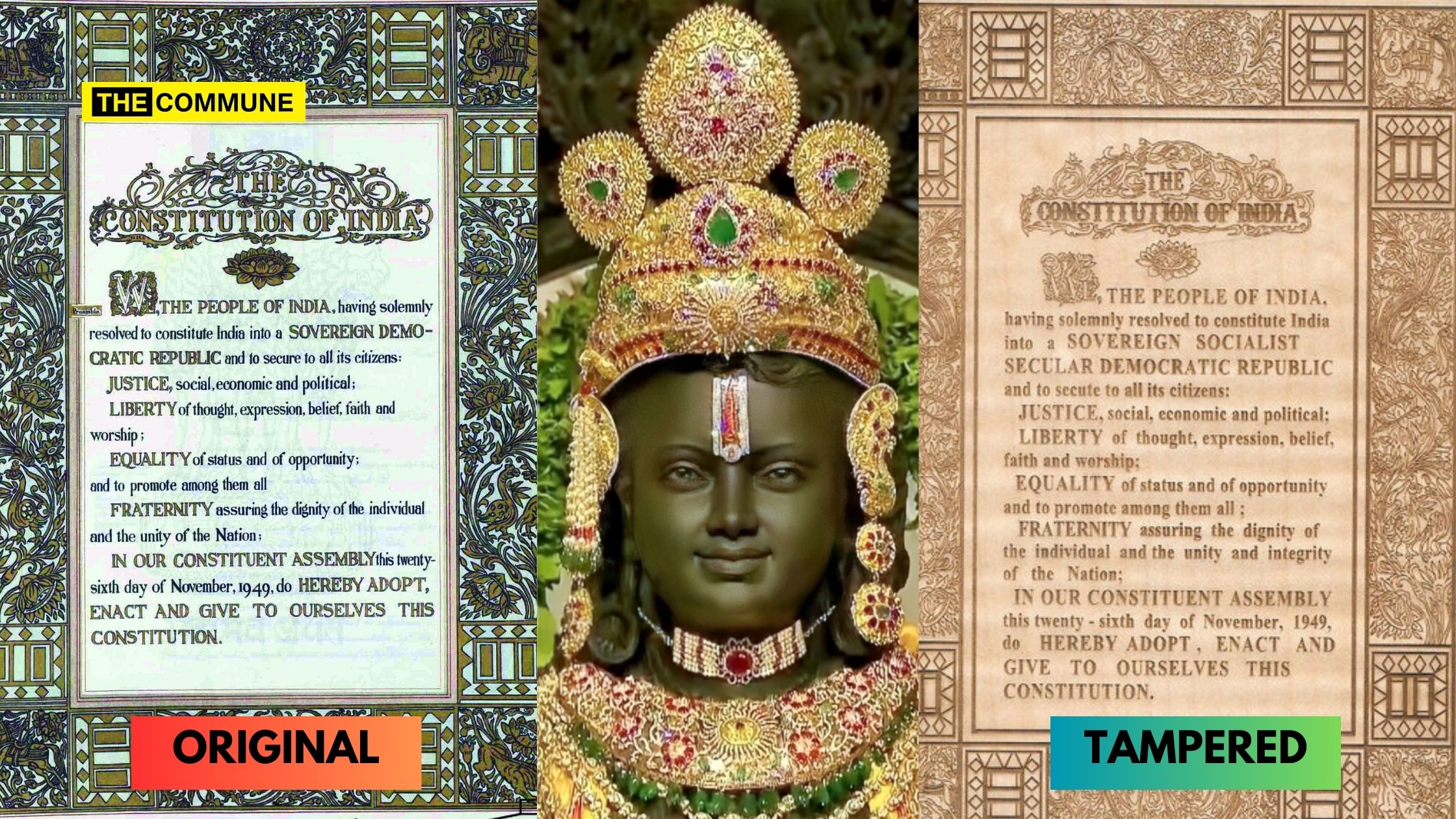
The edited version of the Preamble of the Constitution proclaims:
“WE, THE PEOPLE OF INDIA, having solemnly resolved to constitute India into a SOVEREIGN SOCIALIST SECULAR DEMOCRATIC REPUBLIC and to secure to all its citizens:
JUSTICE, social, economic and political;
LIBERTY of thought, expression, belief, faith and worship;
EQUALITY of status and of opportunity and to promote among them all;
FRATERNITY assuring the dignity of the individual and the unity and integrity of the Nation;
IN OUR CONSTITUENT ASSEMBLY this twenty-sixth day of November, 1949 do HEREBY ADOPT, ENACT AND GIVE TO OURSELVES THIS CONSTITUTION.”
The Constituent Assembly extensively deliberated on the Preamble of the Constitution on 17 October 1949. The discussions revolved around crucial topics such as the name of India and the potential inclusion of elements like God, Gandhi, and the Union of Indian Socialistic Republics. Despite numerous proposed amendments by members, these suggestions were either withdrawn or rejected. Ultimately, the Constituent Assembly decided to adopt the Preamble in the form presented to the Drafting Committee. It’s important to note that the concepts of Socialist, Secular, Unity and Integrity of the Nation were introduced during the dark days of the emergency era of Indira Gandhi through the 42nd Constitutional Amendment Act of 1976.
In a discussion during the Constituent Assembly, Prof. K. T. Shah proposed an amendment to include the term “socialist” in the Preamble of the Constitution. He expressed that socialism, as implied by the amendment, aimed at ensuring equal justice, equal opportunity, and contributions from every individual to their maximum capacity, with an assurance of meeting everyone’s needs for a decent civilized existence. He emphasized that this could be achieved without resorting to violent revolutions. Prof. Shah argued that socialism, as the only just order, would eliminate class privileges and restore natural rights. He saw no objection to describing the Union as a “Socialist Union of States.”
Dr. B. R. Ambedkar opposed the amendment, asserting that the Constitution is a mechanism for regulating state organs, not for prescribing a particular social organization. He argued against fixing a specific social form in the Constitution, as it would impede the people’s liberty to decide their societal structure based on changing circumstances. Ambedkar also pointed out that socialist principles were already incorporated in the directive principles of state policy outlined in the Constitution. He considered Prof. Shah’s amendment superfluous.
When discussing the concept of secularism, the understanding varies across different regions. In the United States, secularism entails the coexistence of the state and the church within the same human society without direct involvement with each other. In Europe, secularism has evolved as the rejection of all things religious, particularly in the realm of political functioning. Conversely, in India, secularism takes on a different meaning, emphasizing equal respect for all religions. In the Indian context, a ‘secular state’ safeguards all religions impartially and does not endorse any specific religion as the state’s official religion.
The question arises: Is India genuinely secular? If we examine the fundamental tenets of secularism as understood in the West, it implies that the state should not be intertwined with religion, and there should be no discrimination among citizens based on their religion or mode of worship, ensuring equality before the law for everyone. However, in India, this strict interpretation of secularism is challenged by the existence of distinct sets of laws for different communities. For example, the Muslim community has the Waqf Board overseeing their religious properties, while Hindu temples are administered by the respective state governments. Additionally, concessions granted to specific communities based on religion seem to contradict the theory of secularism, potentially fostering increased majority communalism despite Article 44 urging the state to establish a uniform civil code.
In the ceremony for the inauguration of the Ram Temple in India today, the government was not involved in any financial matters such as investment or collection, aligning with secular principles. The event encouraged participation from all members, irrespective of their religious beliefs, caste, gender, or political affiliations.
Is it inappropriate for the Prime Minister or President of India to participate in a temple ceremony? Does such participation convey an endorsement of only Hindu Dharma?
Representing the diverse spirit of the new India, people from various walks of life, including Christian community and Sikhs like Harbhajan Singh, actively participated in the ‘Pran Pratishtha’ ceremony, highlighting the nation’s collective commitment to humanity. Dr. Imam Umer Ahmed Ilyasi, Chief Imam of the All India Imam Organization, emphasized the overarching importance of humanity and the nation, stating, “For us, the nation is first.”
The primary contributors to the Ram Temple were individuals from across the country who generously donated to the temple organization. Therefore, it is unfounded to use the preamble as a basis for criticizing the temple’s inauguration.
In reaction to the festivities, the actions taken by the political coalition I.N.D.I, such as the revocation of the Sanadhana and the refusal of invitations, emphasizing minority appeasement, are currently perceived as a political strategy against the Hindu community. The utilization of celebrities in these tactics is considered inexpensive and has ultimately resulted in negative consequences for the coalition.
Contrary to the accusations circulated, valuable lessons are being imparted to pseudo-secular leftists through their thought-provoking posts.
A netizen shared Dr. Subramanian Swamy’s narration of how the terms “Socialist” and “Secular” were included in the constitution.
The two words 'Secularism' and 'Socialism' were added by the Indira Gandhi govt.
People quoting the Preamble today should watch this.
Another video was posted showcasing Non-Resident Indians (NRI) expressing pride in their Hindu identity.
One of the best videos I watched today💗 Our Preamble 🚩 🇮🇳. We are Hindu.. Of course we have been cheated in the name of secularism. We are proud, Unapologetic Hindus. Say जय श्री राम, If you believe in true secularism and not selectively one 🙏🚩 https://t.co/eSQwQWxMArpic.twitter.com/Iskv2GUaHy
— 😇आत्मदर्शी ✨मोदी का परिवार (@dha_kar_mika181) January 22, 2024
Satheesh is a freelance writer.
Subscribe to our channels on Telegram, WhatsApp, and Instagram and get the best stories of the day delivered to you personally.
As the entire country was celebrating the Pran Prathishta ceremony of the Ram Mandir in Ayodhya, a few members of the Kollywood film industry seemed to not be enjoying the jubilation. Primarily among them was Kollywood film director Pa Ranjith. He had this to say at an audio launch event, “Today is a very important day, if we do not light the lamp today at home, we are branded as terrorists. That is how it is today. India is moving towards a very serious period. We don’t know in about 5 or 10 years how the situation in India is going to worsen and the fear is there. And before we enter such a time period, we must rectify ourselves, we must cleanse the regressive practices that we have been brainwashed with. We have been taught religionism daily and we must erase all that and we must use art as a tool to do it. This art is a tool that will help to reach the people easily. The regressiveness that is being forced upon us will be rectified by this art is what we believe. We are working with that belief. Surely, we can prevent India from reaching such a stage and we will do what we can to achieve it. This should be done across India.”
When news reporters asked Tamil Nadu Bharatiya Janata Party chief K Annamalai for his reaction to the comments made by Ranjith, Annamalai responded with a stinging rebuttal. He said, “Some people think if Annamalai or the BJP speak about them, they think they will become famous. I do not want to talk about them. Marketless actors and directors – why should we speak about them and increase their market value?” When asked about his statement about being marked as a terrorist, he added, “That is his opinion, did I say it or did BJP say it? Did the RSS say it? Who said it? If you do not light camphor, did I say that you are a terrorist? If someone says like that, then open his brain and ask, which cell in the brain said that, who is that cell, what caste is that cell, what religion that cell belongs to, what party the cell belongs to – go and ask that to that brain. If BJP or RSS has said it and if he has responded to it, I will give you my comment. He just woke up, should I respond to the opinions that appear in his dream? Tomorrow he might say if we have to live in India, they will say we have to live in such and such a manner, should I respond to that also? There are so many that want to become famous as they do not have any market value and want to sell their films, should I keep responding to each of them?”
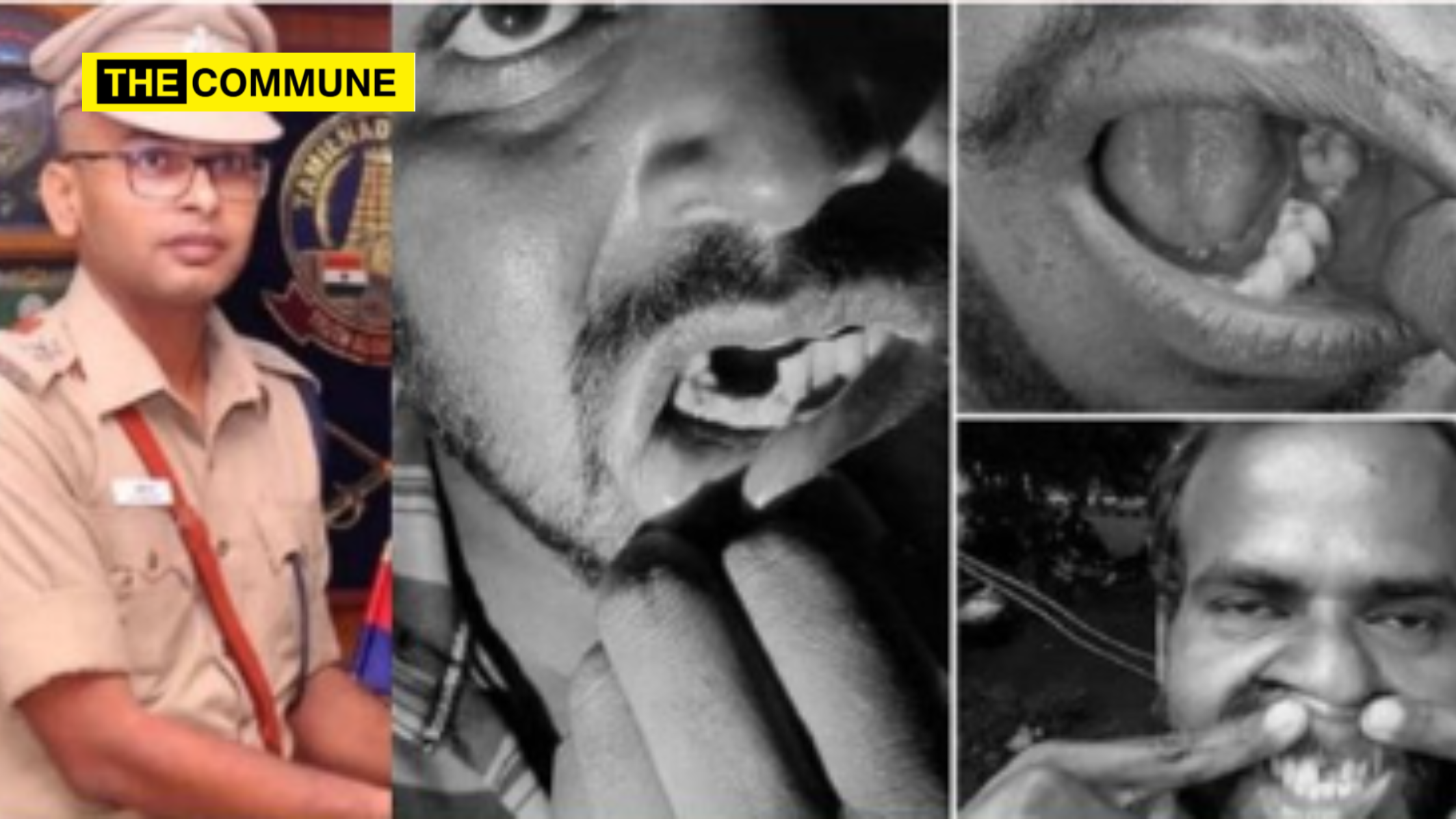
The suspension of ASP Balveer Singh IPS, who was accused of custodial torture, has been revoked by the Tamil Nadu government. Balveer Singh, an IPS officer of the 2020 batch with a BE degree from IIT-Bombay, assumed the role of ASP in Ambasamudram on 15 October 2022.
In March 2023, several individuals from the Ambasamudram police division alleged that ASP Balveer Singh IPS had subjected them to torture, including forcibly extracting teeth with cutting pliers and allegedly crushing the testicles of two detainees. These allegations triggered widespread public outrage.
Following the circulation of videos related to the case, Chief Minister Stalin announced in the Tamil Nadu Assembly in March 2023 that he had ordered suspension and a inquiry. A preliminary inquiry was conducted by the Cheranmahadevi sub-divisional magistrate.
The National Human Rights Commission (NHRC) expressed grave concern over the lack of response from the Tamil Nadu Director-General of Police (DGP) to its directives and has summoned him to appear in Delhi on 1 March 2024, with the necessary records and reports.
The NHRC took notice of a complaint filed by Ashish Goel, a human rights activist, highlighting the alleged severe torture of Chellappa and his brother in custody at the Ambasamudram police station by Singh. The commission had issued a notice on 27 April 2023, to the DGP, instructing him to submit an action taken report within four weeks.
Despite repeated directions from the Commission on 27 April 2023, 3 August 2023, and a final reminder on 9 October 2023, the required report is yet to be received from the DGP, Tamil Nadu, according to the NHRC. As a result, the NHRC has instructed the Registry to issue summons to the DGP under Section 13 of the Protection of Human Rights Act, 1993, to appear in person before the Commission on 1 March 2024, in Delhi. However, if the report is received on or before 23 February 2024, his personal appearance will not be required.
A senior police officer explained that the suspension of Singh underwent a review by a committee comprising the Home Secretary, DGP, and others. This is in accordance with the All India Service rules, which mandate periodic reviews of suspensions. Balveer Singh, who was suspended nine months ago, had allegations investigated, charges framed, and trial initiated in the designated court. The process of conducting a departmental inquiry against him has also commenced, leading to the revocation of his suspension. Following due process, the officer will be assigned a non-sensitive posting.
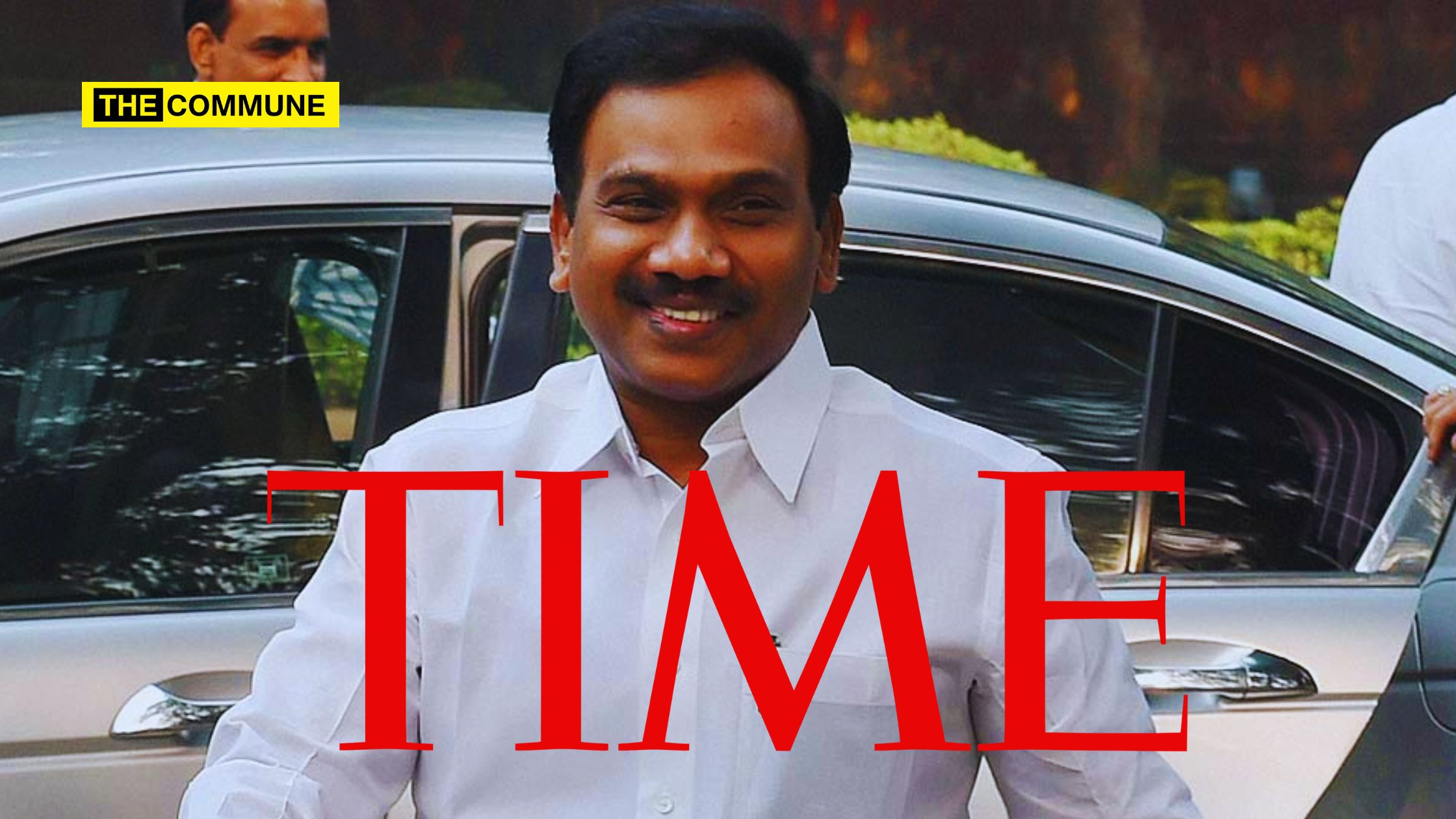
The Tamil Nadu BJP Chief, Annamalai, recently drew attention to the 2011 issue of TIME Magazine, where former Telecom Minister from the DMK, A. Raja found himself featured in the “an ignominious club of privileged leaders who stepped too far.” The revelation comes amid the release of DMK Files 3 which feature a string of audio files one involving A Raja and ex-Intelligence Chief Jaffar Sait IPS where both seem to be manipulating the 2G probe.
Time Magazine ல ஆய்வு அறிக்கை : பதவியை வெச்சு தவறா சொத்து சேர்த்தில 2வது இடம் யாரு தெரியுமா?? வேற யாரு 2G புகழ் ஆ.ராசா தான்..#DMKFiles3pic.twitter.com/iNX45bkt3u
A. Raja was at the epicentre of the 2G spectrum allocation scam, a scandal that ranks as the second-largest abuse of power in Time Magazine’s all-time Top 10 list, surpassed only by the infamous ‘Plumbers’ unit during ex-American President Richard Nixon’s era. The article published in the May edition of TIME magazine states, “In recent months, India’s ruling coalition government has been rocked by an epic corruption scandal that has challenged its once unbreakable grip on power. Following 2008 elections, the country’s telecommunications ministry was awarded to Andimithu Raja, a relatively green lawmaker from a regional party who won his post as a result of India’s usual parliamentary political horse-trading. But, according to allegations that led to Raja resigning late last year, he presided over the underpricing of bandwidth to mobile companies — apparently in return for bribes — which some estimate may have cost the Indian government around $7 billion. That figure makes it hands down the largest episode of graft in Indian history, and played a part in the withering defeats Raja’s party sustained in local elections in early May. Raja himself now languishes in jail as the snail-paced Indian judicial system inches the case forward.”
Speaking to the public in his En Mann En Makkal yatra, Annamalai said, “In 2011, TIME Magazine in their May edition released a list of Top 10 individuals who abused power and made money in the world. The first place was taken by Libya’s President Gaddafi, in the second place, A Raja. Abusing the power of his position, he was involved in a scam amounting to 1,76,000 crores. He changed everything, opposed the then PM Manmohan Singh and earned such a bad name for us. So, we should never let these corrupt people to rest. If there are corrupt politicians, the growth of the poor will reduce. If there are corrupt politicians, the dreams of the youth can never be realised. Each youth has a dream. They have studied and wish for a job that is related to their studies and a salary that commensurates their job. They also want to live a lifestyle that is worthy of their salaries. For that, we need good politicians and political leaders. On the one hand, our PM Narendra Modi whose regime has uplifted the country through his reformative rule. When the PM took charge in 2014, India was the 11th largest economy. After 9 years, we have risen to the 5th place. But the same corrupt politicians are also part of the political field is a curse. So, in the 2024 Parliamentary elections, this corrupt politician whose properties were attached by the ED recently, so in Ooty you have to ensure that Raja has to lose his deposit and make sure BJP’s candidate wins the election and I am sure of that.”
Subscribe to our channels on Telegram, WhatsApp, and Instagram and get the best stories of the day delivered to you personally.
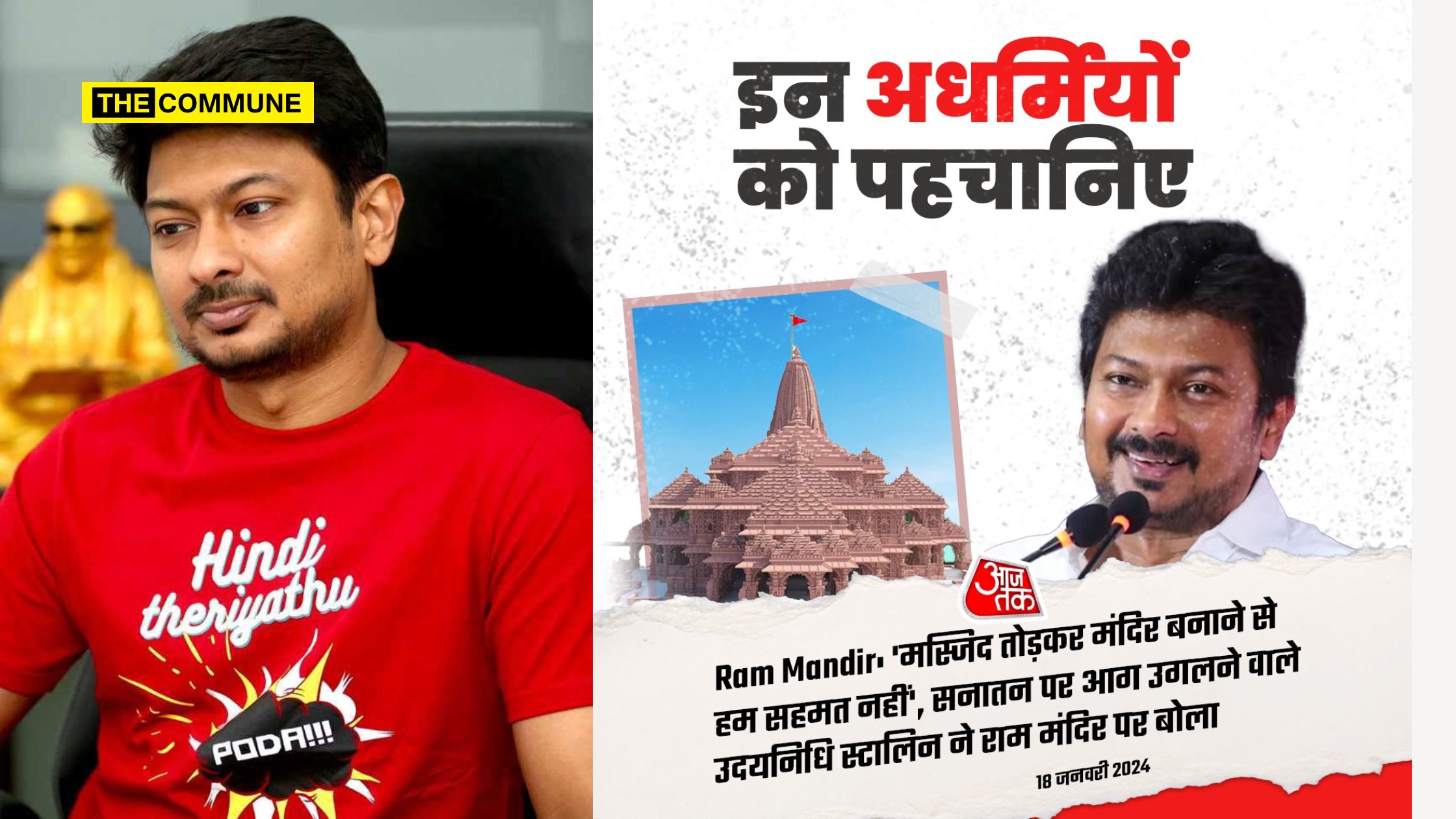
Udhayanidhi Stalin, the crown prince of DMK and a Minister in his father MK Stalin-led DMK government, has once again stoked controversy with the party’s ‘Hindi Theriyathu Poda’ slogan which means “I don’t know Hindi, Get lost!”
The BJP in its official social media handle had posted an image criticizing Udhayanidhi Stalin’s remarks on Ayodhya Ram Janmabhoomi Temple.
It had posted “Identify these unrighteous people! They hate Ram temple. They defame Sanatana Dharma.” with an image card having the headline about Udhayanidhi Stalin’s views on Ram Mandir where he said that the DMK is against building the temple after razing the mosque down.
In response to this, Udhayanidhi Stalin had shared a photograph of him wearing the T-shirt “Hindi Theriyathu Poda” with a smiley.
The irony is even more apparent considering Udhayanidhi Stalin’s involvement in promoting the Hindi film “Lal Singh Chadha” in 2022. Notably, the film was released under his production banner, Red Giant Movies.
Time and again the DMK, a constituent of the I.N.D.I. Alliance has found itself peddling hate against Hindi speakers.
DMK MP from Dharmapuri Senthilkumar found himself in soup when he called northern part of India calling them as ‘Gaumutra’ states. He had to apologize in Parliament for his xenophobic hate speech.
Subscribe to our channels on Telegram, WhatsApp, and Instagram and get the best stories of the day delivered to you personally.
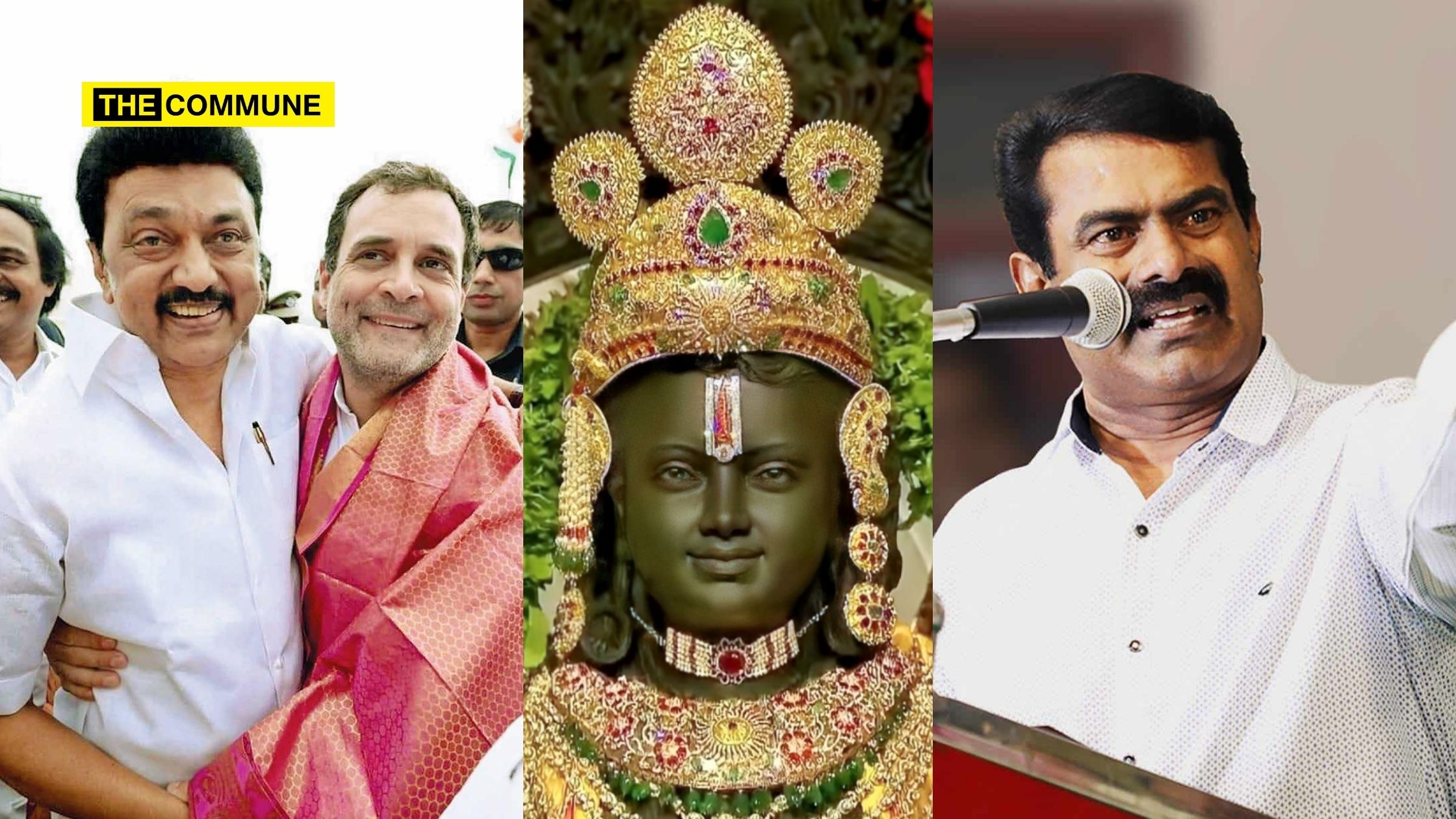
As the entire nation rejoices auspicious occasion Pran Prathishta ceremony of the Ram Temple in Ayodhya, Tamil Nadu witnessed unexpected developments. While the ruling DMK government claimed there were no restrictions on celebrations on the occasion, a different reality unfolded with police denying permissions to many special poojas and events even at private temples. Official machinery of the Dravidian Model government did all it can to dampen the festive spirit of the Ram Mandir consecration in Tamil Nadu.
On the other hand, the unofficial propaganda brigade comprising of DMK-supporting Dravidianists unleashed venom on Hindu God Ram with an abusive hashtag that said ‘Consecration for the son of a horse’, implying that Rama was born due to insemination by a horse.
Many other Dravidianists caricatured pictures of Lord Ram and made derogatory posts.
Joining this bandwagon was Seeman’s Naam Tamilar Katchi sympathizers who also trended hashtags such as #TamilsPrideRavanaa and #JaiRavanaFromTamilnadu on the X platform.
The hashtag is flooded with numerous derogatory remarks and videos constructing a storyline that aligns with the time-and-again busted Aryan and Dravidian theories. This narrative asserts that Ravana was a Tamil king, a misconception that has been repeatedly debunked by referencing ancient Sangam scriptures and other sources.
Idumbavanam Karthik, of the NTK wrote on his X page , has authored ‘Who is BJP’s B team?’ and has been acknowledged by NTK leader Seeman as brother has shared a post ” This is Tamilnadu – the land of the Tamils! This is the land of the mighty Ravanan! Keep your Ram Puraana out of our land! Ram is not accepted here! This is Ravanan land! So, Get out Sanghis!”
This is Tamilnadu – the land of the Tamils! This is the land of the mighty Ravanan! Keep your Ram Puraana out of our land! Ram is not accepted here! This is Ravanan land!
He additionally shared another post that indirectly suggests the narrative that Lord Ram is primarily worshiped in North India, not in the South, thereby signaling Aryan-Dravidian theory. He said “Let ram be spoken in the North! Let’s speak about great grandfather Ravanan in Tamilnadu”
Duraimurugan, a YouTuber and the Secretary for Policy Communication of NTK shared a post stating, “We neither need Lord Ram nor Ramasamy. We are the progeny of Ravana!”
Another online user posted a video under the hashtag featuring NTK leader and coordinator Seeman delivering a speech about Ravana. He also maintained a narrative consistent with the Aryan-Dravidian theory. He quoted in the post “Demonization of tamil kings and historical figures have always been an Aryan strategy. If sanghis can prove us one can have 10 heads , monkeys can fly&build bridges , women can walk through fire. We shall become Ram Bhakths. Until then”
Seeman was in the video assertive manner, questions, “Do they accept him that he had ten heads? reasoning tilkas… Reverend dravidian… Don’t you know? In arts of ten, he is the topper and in all eight directions he had fame.. this is my great-grandfather’s pride “
Demonization of tamil kings and historical figures have always been an Aryan strategy. If sanghis can prove us one can have 10 heads , monkeys can fly&build bridges , women can walk through fire. We shall become Ram Bhakths😊. Until then ,#tamilsarenothindus#TamilsPrideRavanaapic.twitter.com/u7vDQCAFmP
Videos circulated with hashtags such as #TamilsPrideRavanaa, undermining and demoralizing the sanctity of marital relationships and promoting the idea of desiring someone else’s spouse. These videos quoted a Rajinikanth dialogue in praise of Ravana.
This particular dialogue is from the 1978 film “Mangudi Minor,” in which Rajinikanth played a negative protagonist and a villain portrayed as a materialist in the storyline. He says ” You have mistaken Ravana, not only you but all… but all they have misunderstood Ravana. Ravanan is a great man. I’m worshiping him, i’m his disciple. Rekha if Ravana thought of deteriorating (rape) sita he need not arrest her in Ashokavan and he need not wait for a change of heart. According to me Ravana, who was waiting for the woman he desired, was a true lover, a fan and gentleman rather than Rama, who was distraught after being separated from his wife”
Amidst the culmination of these concerted endeavors, the recent statement from Keerthi Pandiyan in the distinctive Arakonam style, accompanied by Arivu’s lyrics, resonates with the proclamation, “Fold your legs, Ravana’s clan; it is time to rise.”
Following Robert Caldwell’s introduction of a divisive racial discourse among Indians, a new narrative emerged, suggesting Ravana as a Dravidian king and Rama as an Aryan ruler. Notably in 1946, a work titled “Ravana Kaaviyam” was penned to portray Ravana as the hero and Rama as the villain. Authored by Pulavar Kuzhandhai, who aligned with the Dravidar Kazhagam—an atheist movement challenging Brahminical dominance—this book aimed to reshape historical perspectives.
While this line of thinking lost momentum over time, recent resurgence has been observed, led by linguistic chauvinists such as Seeman and Thirumurugan Gandhi. Certain groups are advocating for Raavan Leela in response to the Ram Leela. Despite these efforts, traditionalists and the general populace of Tamil Nadu have consistently rejected these claims, dismissing them as fabricated narratives driven by ulterior motives to sow societal division.
Internet users, displeased by these derogatory comments, engaged in trolling and systematically dismantled their narratives using their own hashtags on the X platform.
One internet user commented “We neither need Prbhakaran nor Seeman. Bharathiyar is enough”
பிரபாகரனும் வேண்டாம் சீமானும் வேண்டாம் பாரதியார் போதும்
— மாயோன்Tweetz | GTSR 🚩🕉️ (Modi Ka Parivar) (@vettrikondan786) January 22, 2024
Another user sarcastically commented, “Like lord Appar said, Are you the heirs of demons? Demons fear the sight of Lord Ram demons” in response to the consecration of the Ayodhya Ram Temple.
NTK appears to assert Ravana as a Tamil king, yet they contradict themselves by denying the Brahmin identity, dismissing Tamil Brahmins as Aryans. In response, a mocking remark suggests, “For your information, Ravanar was a Brahmin.”
An upset online user, observing a distorted narrative quoting the Cholas’ Kanyakumari inscriptions, expressed frustration, stating, “You are spreading false information to harm the Tamil race. The Cholas clearly state that Rama is our ancestor, yet this deceptive group persists in distorting and spreading negativity like demons.”
நீங்க எல்லாம் தமிழ் இனத்தின் அழிக்க வந்த அரகன் கூட்டம் டா. ராமன் தான் என் முன்னோர் என்று சோழன் சொல்லிடன் ஆனால் இந்த ஆமை கூட்டம் இன்னும் அரக்கனை பிடித்து கொண்டு கடிக்கிறது.https://t.co/xT5NfcvKit