Home Blog Page 824

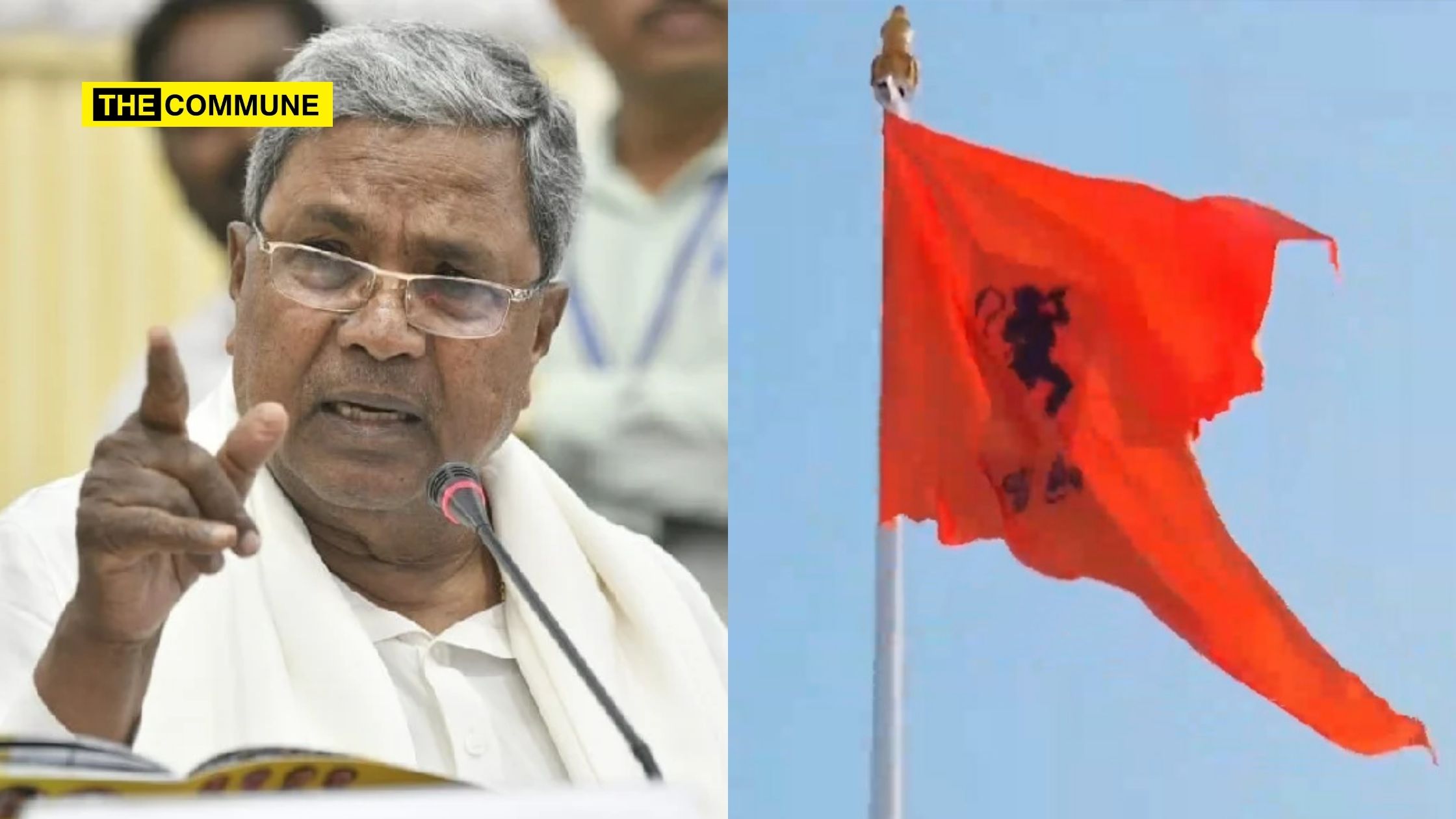
“Not Right To Fly Saffron Flag, Should Have Hoisted National Flag”, Karnataka Congress CM Siddaramaiah Justifies Bringing Down Hanuman Flag

Amid escalating tensions in Karnataka’s Mandya district following the removal of a Hanuman flag, security measures have been heightened, and a significant number of police personnel have been deployed in response to a protest rally organized by the BJP and Janata Dal-Secular (JDS).

The controversy unfolded in Keragodu village after the district administration took down a Hanuman flag from a 108-foot flagpole and replaced it with the national flag. Villagers had initially erected the ‘Hanuman Dwaj’ with permission from the village Panchayat, sponsored by residents of Keragodu and 12 neighboring villages, along with various NGOs. Subsequently, the removal of the Hanuman flag led to villagers calling for a ‘bandh’ (shutdown) and encountering strong opposition, particularly from a significant number of women in the village. In response, the police resorted to a lathi charge, and restrictions under Section 144 were imposed.

Protesting the removal, villagers chanted slogans and expressed anger against CM Siddaramaiah and Congress intensifying the situation on 28 January 2024. The Mandya Superintendent of Police claimed that the Gram Panchayat CEO decided to remove the flag due to objections from the villagers. Originally, permission had been granted for the national flag, but a saffron flag was raised instead, leading to its legal removal.

On the same day, Karnataka Chief Minister Siddaramaiah defended the authorities’ actions, arguing that the national flag should have been hoisted instead of the saffron flag. Siddaramaiah accused the BJP and Sangh Parivar of intentionally violating rules and orchestrating protests against the government, claiming it was a pre-planned act to systematically mobilize people against the state government and create communal tension in Mandya in preparation for the upcoming Lok Sabha elections.

Karnataka BJP president BY Vijayendra criticized the use of police force to bring down the Hanuman flag, blaming the Congress for the deteriorating law and order situation.

Leader of Opposition R Ashoka accused the Congress of taking an “anti-Hindu stance” and provoking Hindus for political reasons. The incident involved a group authorized by the village Panchayat to raise the national flag, installing a 108-foot pole but hoisting a Hanuman flag instead, leading to protests upon the village panchayat’s request for removal.

Tensions escalated, as the BJP-JDS and Hindu organizations accused the Congress of holding an anti-Hindu stance, prompting them to organize demonstrations against the Congress.

The Karnataka Police arrested BJP workers protesting the removal of the Hanuman flag.

Earlier, the Karnataka Congress government crackdown against Ram Mandir activists by reopening cases that are three decades old immediately after the election win, justifying similar stance.

(with inputs from OpIndia)

Subscribe to our channels on TelegramWhatsApp, and Instagram and get the best stories of the day delivered to you personally.

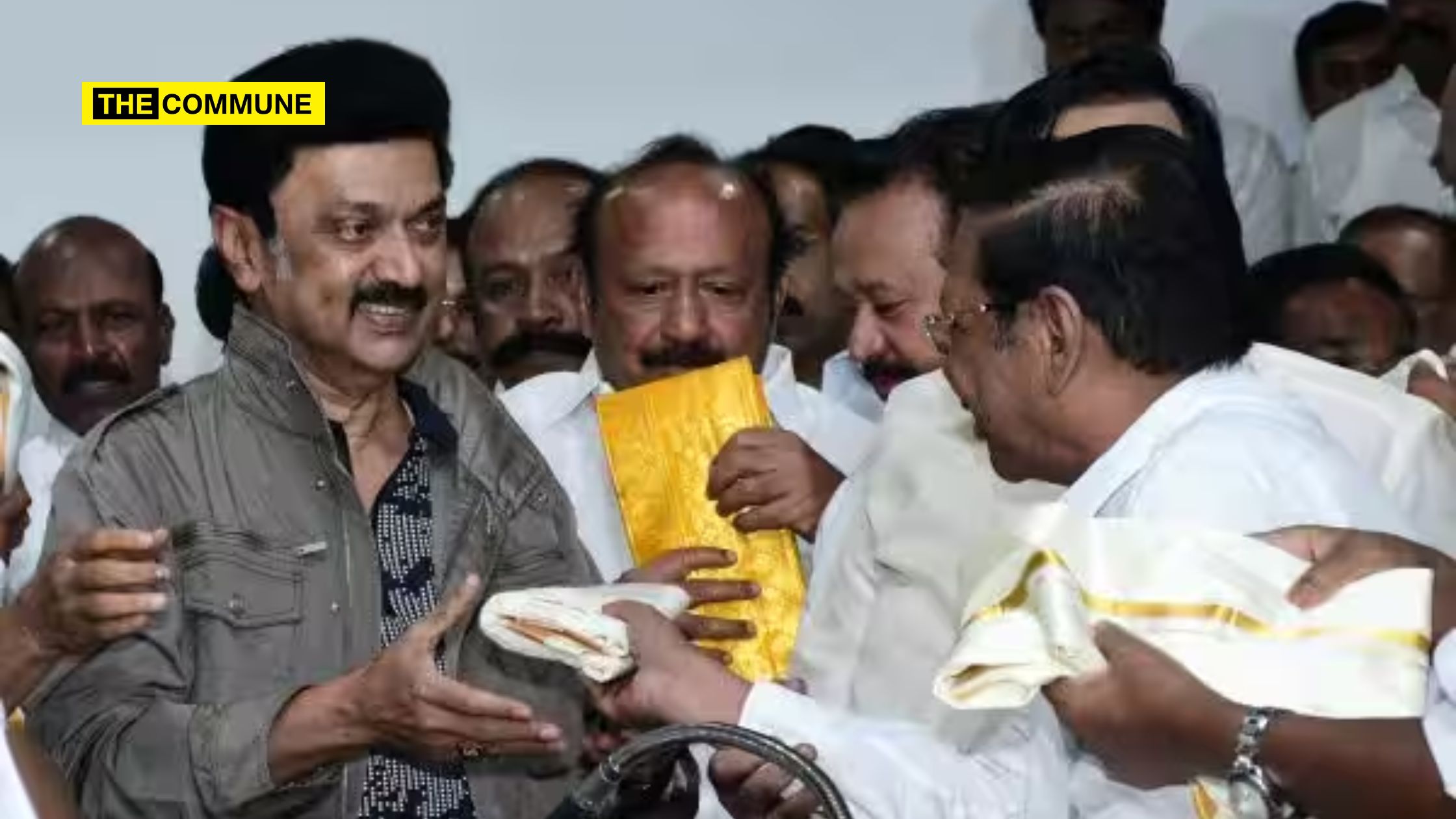
BJP IT Wing State Secy Pugal Machendran Arrested Over Alleged Inflammatory Facebook Post On Radical Islamist Palani Baba

Once again, there is a disconcerting incident involving the arrest of a Bharatiya Janata Party (BJP) member in Tamil Nadu, this time at 5 a.m., over an alleged provocative Facebook post. This time it was the BJP IT Wing & Social media State Secretary Trichy Pugal Machendran.

Pugal Machendran shared a Facebook post on 28 January 2024 regarding the president of the All India Jihad Committee, Palani Baba, also known as Ahmed Ali on his death anniversary. Pugal’s statement allegedly celebrates the death of the president of the All India Jihad Committee Palani Baba, referred to as a “poisonous influence”. 

“Today is the day when the poisonous plant called Palani Baba was rooted out. If he was here today, I can’t even imagine the terrorist incidents happening in Tamil Nadu… Today is the day he was killed… Our many thanks and salutations to “our golds” who weeded him out, wherever they are”, he wrote.

Ahmed Ali, also known as Palani Baba, emerged as a significant figure, founding the All India Jihad Committee in 1986. He gained prominence with the DMK’s backing during MGR’s rule, contributing to anti-Hindu sentiments and violence in the Coimbatore region. However, Ali’s association with Islamic fundamentalism eventually led to repercussions, causing the DMK to distance itself. His involvement in various killings, connections to international terror cells, and the formation of Al Ummah highlighted the spread of Islamic fundamentalism in Tamil Nadu. 

Ali’s life came to a violent end in 1997, attributed to his inflammatory speeches against Hinduism and the murder of two Hindu activists. Despite the controversy surrounding the motive, Ali is now praised by separatist and minority-centric parties like NTK, VCK, and the DMK. 

TN BJP State Vice President- Social Media cell, Karthik Gopinath, stated on his X handle that Pugal’s arrest was reportedly made under sections 153, 505A, and 505B.

The state has been cracking down on detractors of the government in the name of “inciting law and order issues” and has seemingly targeted the opposition parties particularly the BJP apart from parties such as AMMK. The crackdown was also seen against independent netizens who spoke in support of the BJP.

In 2023 alone the below instances of curbing freedom of speech occurred:

  • TN BJP Functionary Pravin Raj was arrested in the wee hours of 1 October 2023 for his posts targeting the ruling party and the Congress.
  • The Tamil Nadu police even went up to Noida to try to arrest journalist Abhijit Majumder for his article on Udhayanidhi Stalin’s eradicate Sanathana Dharma remarks. 
  • Critic of the DMK, Badri Seshadri, was arrested for his comments in an interview on a YouTube channel regarding the Manipur issue, during which he made remarks about the Chief Justice of India.
  • The Commune and its directors faced legal action for reporting on the confrontation between Podu Deekshitars of the Chidambaram Nataraja Temple and HR&CE officials.
  • Tamil Nadu BJP State Secretary SG Suryah was taken into custody under non-bailable sections for his comments regarding Madurai CPI-M MP Su Venkatesan concerning a sanitation worker’s tragic death during drain cleaning in Pennadam town, Cuddalore district.
  • An AIADMK IT wing member was apprehended under non-bailable sections for sharing a video meme that humorously referenced MK Stalin’s video statement on Senthilbalaji’s arrest. The meme did not contain derogatory content.
  • A Pro-BJP Twitter user was arrested for sharing an old article and allegedly misattributing DMK to an illegal liquor-producing gang in Tiruppur, following the recent hooch tragedy in Marakkanam.
  • A Pro-BJP Twitter user was arrested for sharing an old article and allegedly misattributing DMK to an illegal liquor-producing gang in Tiruppur, following the recent hooch tragedy in Marakkanam.
  • Vice President of Tamil Nadu BJP’s Industrial Cell, Selva Kumar, was arrested for criticizing DMK Minister Senthilbalaji.
  • The admin of Voice of Savukku Shankar X handle was arrested for a video meme targeting CM MK Stalin and DMK Minister PTR Palanivel Thiagarajan regarding the “eligible household” clause in the monthly assistance scheme for women.
  • The DMK government traveled to Gujarat to arrest BJP cadre John Ravi, who had made satirical social media posts about CM MK Stalin and his late father, Karunanidhi.
  • N Muthuramalingam, the State Propaganda Secretary of South India Forward Bloc, was arrested for expressing his views on Facebook regarding the release of terrorists convicted in the 1998 Coimbatore serial blasts case. Muthuramalingam had criticized Dravidian parties for considering the release of 36 prisoners, including those convicted for life in the Coimbatore terror attack, leading to his arrest.

However, the DMK-led government has not taken any action against individuals who have engaged in the abuse of Hindu gods. There has been no response or measures implemented by the DMK-run administration regarding those responsible for such actions – it is ironic that the ones who indulge in these actions are either affiliated with the ruling party or are supporters of the same.

Subscribe to our channels on TelegramWhatsApp, and Instagram and get the best stories of the day delivered to you personally

Was NTK’s Xavier Kumar Killed Because He Questioned The Church’s Financial Irregularities?

The recent heinous killing of Xavier Kumar, a mechanic employed at a government bus depot in Kanyakumari, highlights a significant deterioration in the law and order situation within the state. The savage killing, which occurred in Eraniel, Kanyakumari, within the office of a church father, is purportedly linked to Xavier’s inquiry into the financial records of the church, making it the main motive behind this horrific incident.

Police are searching for 12 individuals, including two Roman Catholic priests, in connection with the murder of Xavier Kumar, a Naam Tamilar Katchi (NTK) functionary and Tamil Nadu State Transport Corporation mechanic.

Naam Tamilar Katchi (NTK) condemned the horrific incident as Xavier was affiliated with the party. Supporters of NTK took to various social media platforms to denounce the murder, asserting that the individual responsible for the act was allegedly, Ramesh Babu a DMK functionary. They also shared a disturbing and abusive recording of a conversation between Xavier Kumar and Ramesh Babu.

YouTuber Maridhas put out a video about the incident. Having acquired the First Information Report (FIR), Maridhas alleged that Seeman was deviating from the root cause and politicizing the issue. He said, Seeman is openly diverting the issue into a different angle, that is NTK versus DMK“, and that the NTK protest was heading in the wrong direction.

Maridhas accused Ramesh Babu, a DMK functionary from Thakkalai town, and Fr. Robinson, the priest of the Mylode Roman Catholic church, are the key figures responsible for the murder. A total of 13 individuals have been formally charged in connection with the homicide. He contended that Ramesh Babu subjected Xavier to a severe assault on the face using an iron box, leading to Xavier’s death with severe facial disfigurement. Xavier was allegedly restrained by four other individuals who, in addition to holding him, kicked him from behind, collectively beating him to death. Another pastor stood guard at the door to prevent anyone from entering.

Backed by the FIR copy, Maridhas alleged that the NTK was politicising the matter by concealing the crucial detail that Xavier questioned the church about its finances. Additionally, he established a link with Vincent, a murder accused and the leader of Anbiyam, an organization that had actively supported protests against the Kudankulam Nuclear Power Plant. Vincent is said to have invited Xavier Kumar to discuss and reach a resolution on the matter.

Additionally, Maridhas also provided data indicating that the main driver for the development of Catholic churches is the mandatory donation known as “Dasamabagam” (offerings). He asserted that where there is a significant collection of funds, irregularities tend to occur, particularly in the collection of donations in educational institutions and various other areas under church administration.

Moreover, he claimed that there was a portion of these funds allocated to political parties, specifically benefiting the DMK.

He argued that the church imposed stringent constraints on the community through canon laws, making it challenging to avoid them, especially since essential life events like marriage and death require the church’s involvement. However, these requirements also bring individuals under the control of the church. Some of these restrictions include mandatory attendance at church on Sundays, regular confession without the option to hide or refuse, and the process of ordination, etc. He goes on to assert that the influence of canon law is so extensive that individuals could potentially commit a crime, such as murder, and escape consequences, citing a case involving a Kerala priest who, despite allegations, only faced a transfer. The canon law, in his view, acts as a protective shield for the church.

The wife of the deceased, Jemini, alleged in her complaint that due to concerns raised about the church’s financial matters, the church planned to excommunicate them from the village.

Subscribe to our channels on TelegramWhatsApp, and Instagram and get the best stories of the day delivered to you personally.
The “HIBAIN” Prayer: A Hindu Defence To Faith And War

2024 and beyond – Can India initiate a leadership role for Asian and Indigenous faiths, in the backdrop of the latest instance of the Israel-Palestine conflict? As we welcome 2024 and say goodbye to a war torn 2023, I like many Hindus and people of Indic, Asian, Indigenous, non-Exclusivist, non-Proselytizing faiths, continue to think of a time when humans will truly, sincerely strive to “Live and Let Live”.

We look forward to a time when fanaticism-driven human beings, stop waging wars based on religious beliefs. Wars driven by economic and political compulsions are always a looming possibility but can the human race strive to eliminate wars waged in the name of religion? Such wars seek to perpetuate religious intolerance and fanaticism and in doing so, defeat the very purpose of a higher, noble, spiritual aim for mankind!

Can a newly resurgent India-Bharath, respected by the world for its ancient spiritual knowledge and its emerging Economic, Technological, Scientific, Social potential lead the way in forming and heading a movement to represent what I refer to as, the HIBAIN faiths? HIBAIN – Hindu, Indic, Buddhist, Asian, Indigenous and (all) Non-Exclusivist, Non-Proselytizing faiths. These faiths understand that there are multiple ways to achieve spiritual goals, they do not preach an exclusivist God nor do they engage in aggressive conversion missions to increase their numbers in the world. They respect the multiple paths available to all humans to explore spiritual enquiry and growth.

Yet another year draws to a close with a religious conflict.

The Israel-Palestine war is primarily a religion-based ideological one, arguably more about religion and less about economy/ territory although the Muslim side presents it as a territorial issue. If a dominant Arab nation or a country like Turkey had subjugated the Palestinians and taken over their territory, the Palestinians would have more readily accepted it, as an annexation by a fellow-Islamic nation.

At the risk of over-simplifying the principal issue at hand, I as well as millions of others that believe in a certain way of life (the ‘Live and Let Live’ philosophy), see the most stubborn, persistent, complex issues between people and nations, to be the ones that involve an illogical, irrational belief in a God, who according to the principal, proselytizing religions of the world (Islam and Christianity) is a God who is exclusive only to themselves (the “believers”), punishes “non-believers”, commands his exclusive “believers” to engage in conversions of the non-believers and supposedly promises ‘heavenly’ benefits to those who proselytize and convert the “others” by whatever means necessary.

Further more, their exclusivist God appears to ignore simple common sense and basic human values in encouraging alienation and discrimination against people who prefer to follow their own Gods, elements of Nature or prefer not to believe in a God. Their God does not appear to condone unequivocally, violence in the name of his exclusive religion. Instead, he appears to find convenient “conditions” for religious aggression and commands his believers to engage in aggressive conversions and wars.

Both religions, Islam and Christianity, that discourage bold questioning and cajole millions of their “followers” to believe in only one “exclusive” God, have been responsible for the most number of wars and destruction since medieval times into the modern era. Their wars are consistently fought on the basis of the belief that only their exclusive God is the real one; that only their religion is the true one; that only their respective followers/believers are special people with access to an imagined future home called Heaven. Their battles are fought on the illogical, irrational belief that the “other” is always false, that they are always right and that they are somehow special! Their wars continue to kill millions and starve even more because they have not learnt to “Live and Let Live”.

Contrast their “exclusivist” God and religion to the philosophies and spirituality of the Indic, Eastern, Indigenous faiths or way-of-life. Hinduism, Buddhism, Sikhism, Zen, Taoism, Jainism and scores of Indigenous, Tribal faiths all of which believe in and practice a way of life that allows them to worship their Gods, Nature, the Universe, symbols and signs… while also generously allowing the others to worship their own Gods, in their own unique ways. Their liberal attitude allows them to appreciate all forms of the Divine and all forms of worship, without claiming that their own God or worship, are the only Truth and that all other beliefs/Gods/methods are false. Further more, the exclusivist-proselytizing religions prey on human weaknesses and fears – they preach a lie to the vulnerable, sick and the poor of the dire consequences of eternal fear and suffering in an imagined “hell”. According to them, their God is good, loving, kind and compassionate only to his believers ; he curses and punishes the non-believers!

The broad-minded nature of the Eastern faiths and the non-exclusivist faiths, in allowing, accepting and even embracing a plurality in which every faith /path/ method is understood to have something good and beneficial, is in sharp contrast to the narrow-minded, proselytizing Abrahamic faiths of Christianity and Islam, which have often gone to the extent of punishing and forcefully converting their fellow human beings by violent means.

For the sake of easy reference, philosophical similarities and like-minded spiritual aspirations, let’s refer to the Eastern, pluralistic, non-Exclusivist, non-Proselytizing faiths as the “HIBAIN” way of life. HIBAIN – Hindu, Indic (of Indian origin-Sikh, Jain etc), Buddhist, Asian, Indigenous and (all) Non-Exclusivist, Non-Proselytizing faiths. People and nations, practicing the HIBAIN way of life should come together to form an alliance and defend themselves from the often aggressive, violent methods employed by the exclusivist-proselytizing religions (both Islam and Christianity). The religious fervour and aggression of Islam and Christianity aims to dominate, often results in fanaticism and seeks to disrupt the native belief systems/ way of life, still practiced in the HIBAIN nations where the concept of religious secularism and plurality is fortunately alive.

While the broad-minded/ liberal faiths (HIBAIN) are able to “Live and Let Live”, the narrow-minded religions of Islam and Christianity would rather go to war, destroy life and nature, in a delusional bid to “win” a religious and ideological battle of insignificant philosophical and spiritual importance. In this regard alone (arguably, on other fronts too), the HIBAIN appear more mature and sensible than the latter. By their very nature, the HIBAIN faiths, are more inclusive and celebrate freedom of thought and diversity of belief or non-belief.

The HIBAIN faiths also address deeper, more intelligent philosophical enquiries by mature human minds, that are capable of thinking and expanding beyond the over-simplified, childish ideas of reward-punishment and hell-heaven concepts. In the 21st century, surely the human mind is capable of exploring the more complex phenomena of Consciousness, Energy and Space-Time co-relation ?

Can India-Bharat take the lead in proposing the formation of a group of people, cultures and nations under the “HIBAIN” umbrella? Such an organization can defend the rights of all like-minded people, societies and countries that truly value pluralism, diversity, secularism and actually practice these lofty principles, rather than paying mere lip service to them, as is most often the case, in Islamic and Christian societies. The HIBAIN coalition or alliance, can represent and come to the defense of all people practicing the HIBAIN religions, in any part of the world, much like the manner in which, worldwide Christian and Islamic organizations rush to the aid and defense of their respective communities, anywhere in the world.

The HIBAIN way of life and nations are the only hope for the future of mankind, where humans do not fight bloodthirsty wars over a seemingly silly issue like which people’s exclusivist God is more powerful or more true. Clearly, while the HIBAIN faiths allow for peaceful co-existence, the non-HIBAIN insist on wars, domination and destruction, displaying a childish, immature tendency to display might, power and superiority. The formation, grouping together and alliance of a HIBAIN Bloc is necessary for the survival of pluralism and diversity in higher philosophical thoughts as well as for the hope of a different future for humans, where peaceful coexistence is possible.

Indeed, in hind sight, the Pagans (those professing or practicing various indigenous philosophical, spiritual belief systems before the advent of Christianity and Islam) all over Europe, the Americas (both North and South), Africa, Australia and all of Asia….appear to be wiser with a richer, more intellectual tradition of philosophical query and study. All the Indian, Chinese, Japanese, Greek, Roman, Egyptian, Persian, African, Native-American indigenous philosophers (before the political dominance of Christianity and Islam), appear to have asked questions of a higher order, aiming for an ascension of the human spirit, not its descent into a mere tug-of-war between angels and devils and the idea of a heaven or hell.

The early history around the violent, conversion-based proliferation of both Islam and Christianity, is rooted in the greed for power and political ambitions of the most influential early “disciples” and followers of these faiths. The foundation for the spread of both faiths was based on principles of political dominance and acquisition of material wealth/worldly comforts. Both religions continue to confront each other in various ways, vying for larger numbers of believers, political and materialistic dominance. Do such acts appear to lead the human soul to a supposed “higher level” of existence?

Note: The Jewish people and state of Israel can be welcomed to the HIBAIN movement and union of states, because their religion, Judaism, does not proselytize or aggressively seek converts. It believes in the concept of Karma, encourages educated, rationalist thinking in areas of religion and spirituality and has a history of allowing peaceful co-existence of communities (Live and Let Live). They do not wage wars in the name of religion. They resort to defending themselves and their nation only when their existence is under the threat of religious fanaticism. Judaism, the faith of the Jewish people and the nation of Israel, is an ancient, religion reflecting originality of their spiritual ideas (Vedic Hinduism, for example, is an original, distinct form of native India’s spiritual thought). The founders, “prophets” and early leaders of both Christianity and Islam, borrowed heavily from the original Jewish books, to which they added some additional content of their own.

Shivani is a freelance writer.

Subscribe to our channels on TelegramWhatsApp, and Instagram and get the best stories of the day delivered to you personally.
Neutral ‘All-In-All’ Commentator Sumanth Raman Has A Problem With ICJ Using India Today Report To Call Out Hamas Terrorists Attack

On 12 January 2024, India Today anchor and journalist Shiv Aroor shared a news report on how Israel had used an India Today report at the International Court of Justice (ICJ), Hague during the Gaza deaths hearing. 

Self-proclaimed “neutral” political commentator Sumanth Raman seemed to have come across the report only recently. He shared it on his X handle with the caption, “Isn’t this something that @IndiaToday should be ashamed of??? Unbelievable that it is being put out as a badge of honour!!!”

Journalist Shiv Aroor whose post was quoted by Sumanth Raman reposted it saying, “I thought I had seen everything in life. Then I saw Sumanth Raman talking about ‘shame’.”

An independent journalist Saikiran Kannan also questioned whether Sumanth Raman denied the mass murder carried out by Hamas terrorists on 7 October 2023. He wrote. “Now I know that Dr. Sumanth was no quiz master but just reading things out of a paper. What @ShivAroor and IT covered were the atrocities committed on Oct 7th. This report was used by Israel at the ICJ. Is Sumanth denying the atrocities committed by Hamas? Sheer pandering!!!”

Defending himself, Raman replied, “It is not a matter of pride to be quoted by Israel to defend a genocide. Hamas is a terrorist Group and is a legitimate target for Israel. Palestinian children are not. You don’t seem to understand the difference.”

The conversation continued with Saikiran Kannan pointing out that Israel’s intent with the report was to confirm the occurrence of a massacre on 7 October 2023, which had been denied by some. He emphasised that his focus was solely on the specific report and not on Israel’s subsequent justifications. Sumanth Raman while acknowledging that Hamas carried out a massacre expressed “concern” that, in the name of eliminating Hamas, Israel was engaging in a genocide of innocent Palestinian children. He also added that Israel was defending itself by showcasing the India Today clip. Raman questioned whether Israel’s self-defence involved violating the rules of war. It became quite apparent that Raman was shifting goalposts as usual and Saikiran was quick to point out that the report was used to highlight the barbarism of Hamas and that several such news reports were used by Israel to present their case at the ICJ. 

This is not the first time Sumanth Raman has exposed his alleged neutral stand. Some of his antics from the past are listed below:

He trivialised the petrol bomb attack at TN Governor RN Ravi’s residence in October 2023. He had written on his X handle that a petrol bomb attack did not indicate a breakdown of law and order. When a user raised concerns about the ease of obtaining such bombs, Raman responded by simplifying a petrol bomb as “petrol set alight with some cloth in a bottle and thrown.”

In March 2023, he spread fake news about NPCI charging a fee for UPI transactions without verifying its accuracy. After the National Payments Corporation of India clarified that the charges applied only to Prepaid Payment Instruments (PPI) and not to UPI transactions, Sumanth deleted his tweet, acknowledging the misinformation and stating that the fee was only for transactions through wallets and credit cards, not bank debits.

In May 2021, at the peak of the COVID-19 pandemic (Delta variant second wave), he questioned the efficacy of the DRDO-developed 2-deoxy-D-glucose (2-DG) drug for COVID-19, labelling it as ‘unproven stuff.’ 

In April 2021, after actor Vivekh suffered a heart attack, Raman attempted to raise concerns about COVID-19 vaccination by suggesting a potential link between the vaccination and the actor’s illness, prompting backlash. He had also tried to raise “concerns” about the COVAXIN vaccine and question its efficacy, despite the vaccine receiving approval from regulatory authorities in India.

As recently as the 22 January 2024 Pran Prathishta event, Sumanth Raman made a post implying that if it had not been for the demolition of Babri Masjid, there wouldn’t be so much fanfare associated with the consecration today. He also said that the celebrations were nothing but, ‘stoking a community into feeling they have got retribution’. 

Subscribe to our channels on TelegramWhatsApp, and Instagram and get the best stories of the day delivered to you personally.
Hating Modi Or Hating Hindus? How The Foreign Media Portrayed The Grand Consecration Of Ram Mandir

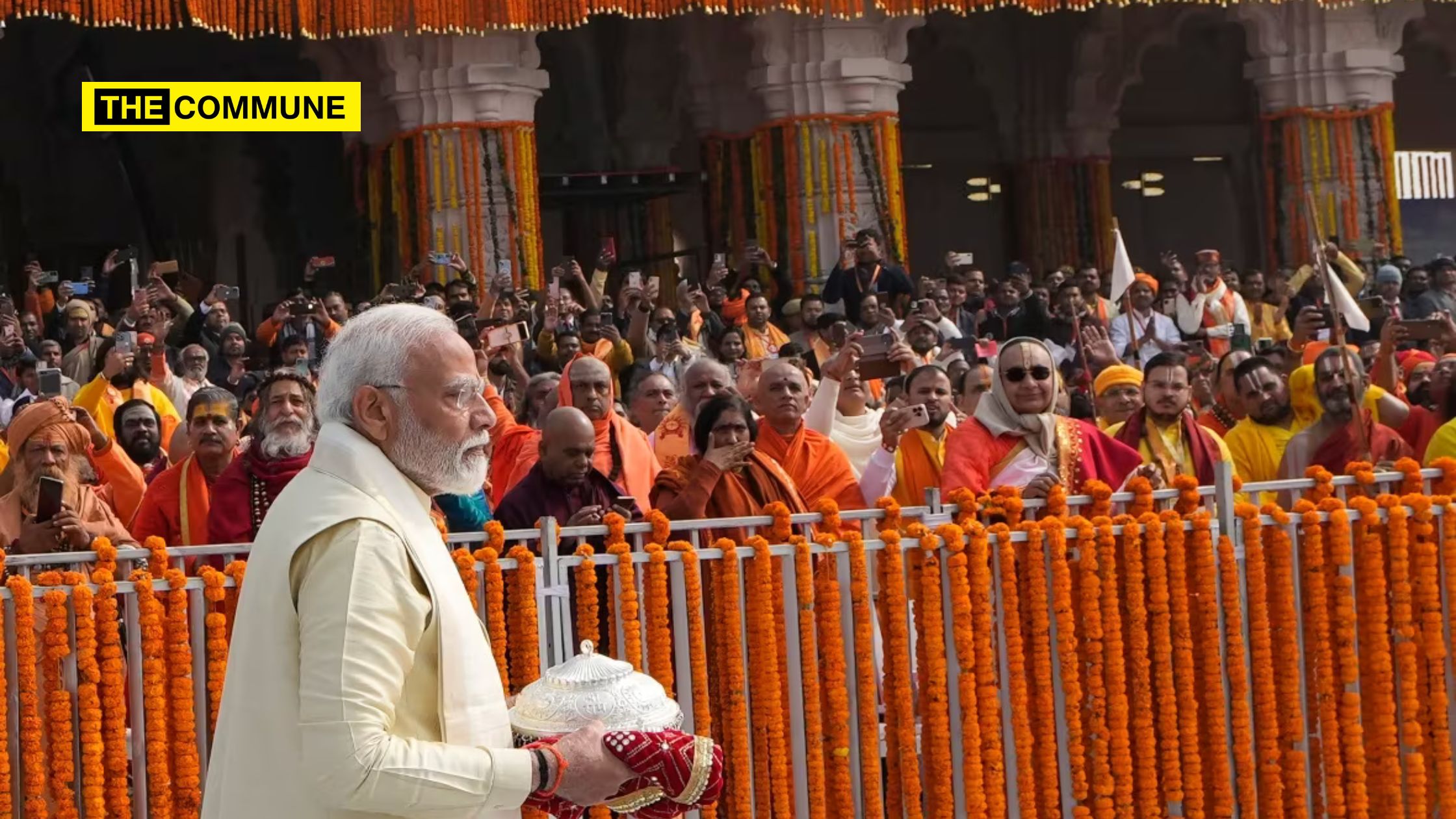
PM Modi at Ayodhya Ram Mandir
PM Narendra Modi led the Pran Prathishtha for the Ram temple in Ayodhya

The foreign media coverage of the Pran-Prathishtha ceremony in Ayodhya was a spectacle of meltdown, to say the least. Prominent foreign media outlets published poorly researched and biased reports that may lead one to question whether they are unhappy with India’s ruling party or Hindus in general.

It is worth noting that none of these foreign media reports considered the Hindu community’s perspective in their article. Also, they attribute their unverified claims to “critics.”

Here are some examples of how the most popular foreign media brands covered the story of Ram Mandir

British Broadcasting Corporation (BBC)

It didn’t matter to the BBC that the temple came to Hindus after a long-fought legal battle or that beneath the Babri. There was an ancient temple as sacred to us as the Vatican is to Catholics. All they had to say in their report was this:

“Critics have also accused the government of exploiting a religious celebration in a country which – according to its constitution – is secular. For Muslims, India’s biggest minority, the event evoked fear and painful memories, members of the community in Ayodhya told the BBC in the run-up to Monday’s ceremony.”

New York Times (NYT)

In a news article titled “Modi Opens a Giant Temple in a Triumph for India’s Hindu Nationalists,” Mujib Mashal and Hari Kumar write: 

The temple inaugurated by the prime minister is on the disputed site of a centuries-old mosque destroyed in a Hindu mob attack that set a precedent of impunity in cases of violence against Muslims.

In another article titled ‘Why India’s Ram Temple is so Important?,’ Kumar writes that “Islam does not appear in the Ramayana, having arrived in India only 1,000 years ago. But it is cast as the primary villain in the Hindu-nationalist telling of India’s history. Now, with a kind of spiritual and political homecoming for Mr. Modi, the Ram campaigners have the temple they had sought for decades.

Washington Post

Modi’s consecration of controversial Hindu temple caps years-long campaign

Critics feared the state-encouraged religious festivities – and simmering talk of Hindu supremacy and historical vengeance – showed how India under Modi has diverged from the vision of those who struggled for freedom, including Mohandas K. Gandhi, a defender of minority rights who often pleaded for the safety of his Muslim. Compatriots when Hindu-Muslim riots erupted.”

Al Jazeera

India’s Modi opens controversial Hindu temple in Ayodhya

“Analysts and critics see the ceremony as the start of the election campaign for Modi, an avowed Hindu nationalist and one of India’s most consequential leaders who has sought to transform the country from a secular democracy into a distinctly Hindu state in his nearly 10 years in power.

They say the pomp-filled display led by the government shows the extent to which the line between religion and state has eroded under Modi.

Built at an estimated cost of $217m and spread over nearly 3 hectares (7.4 acres), the temple lies atop the debris of the 16th-century Babri mosque, which was razed to the ground in 1992 by Hindu mobs, who believed it was built on temple ruins marking the birthplace of Lord Ram.”

France 24

India’s Modi inaugurates flashpoint temple seen as triumph for Hindu nationalism

Pavni Mittal writes the following:

January 22, 2024 is not merely a date in the calendar but heralds the advent of a new era,” Modi said, speaking outside the temple to the Hindu deity Ram, built on grounds where a mosque stood for centuries before it was torn down in 1992 by Hindu zealots incited by members of his party.

That demolition triggered the worst religious riots since independence – killing 2,000 people, most of them Muslims – and shook the foundations of India’s officially secular political order.”

VOA News

In an article titled Modi Unveils Grand New Temple on Site of Destroyed Mosque, Anjana Pasricha explains how “In December 1992, a huge mob of Hindu right-wing activists used hammers, axes and bare hands to demolish the mosque, sparking nationwide religious riots that killed nearly 2,000 people. It was the worst communal violence witnessed in India since its independence. … In the 1990’s, the campaign to build the temple stirred up Hindu nationalism and catapulted the BJP, which until then was a marginal political party, into a dominant political force.

Time

In India Is Unveiling Its Controversial Temple of Ram. Here’s What to Know, Yasmeen Serhan claims 

For Modi, whose Hindu-nationalist government has overseen a steady rise in violence against Muslims and other religious minorities, the consecration represents the fulfilment of a decade-long pledge to rebuild the temple (the construction of which isn’t due to be completed until December).”

The portal also gave space to Audrey Truschke to write this Hinduphobic piece that calls Lord Rama “a major god and mythological hero, (who) had been born at the very spot on which the mosque stood. ”

CNN

Modi hails a new ‘divine India’ as he inaugurates controversial Hindu temple ahead of nationwide elections

“While millions of Hindus celebrated the opening of the much-awaited complex, which is seen by them as the birthplace of Ram, for the country’s minority Muslim population, it’s a painful reminder of religious divisions they fear are becoming more pronounced under Modi’s BJP government,” wrote Helen Regan and Rhea Mogul.

Guardian

As petals rained down and celebrities beamed, Modi unveiled his vision of a Hindu India

Mukul Kesavan bemoans how “In just over 30 years, India’s political class has travelled from condemning the demolition of the mosque, on the site of which the half-built temple now stands, as an act of sectarian vandalism, to celebrating it as the first act in the re-founding of a hitherto rootless republic. The idol of the infant Ram installed in a temple raised on the site of a razed mosque is to be the icon of this new Hindu nation.

(Subscribe to our channels on TelegramWhatsApp, and Instagram and get the best stories of the day delivered to you personally.)

Annamalai Reminds DMK Of The Time When Karunanidhi Advocated for ‘One Nation, One Election’

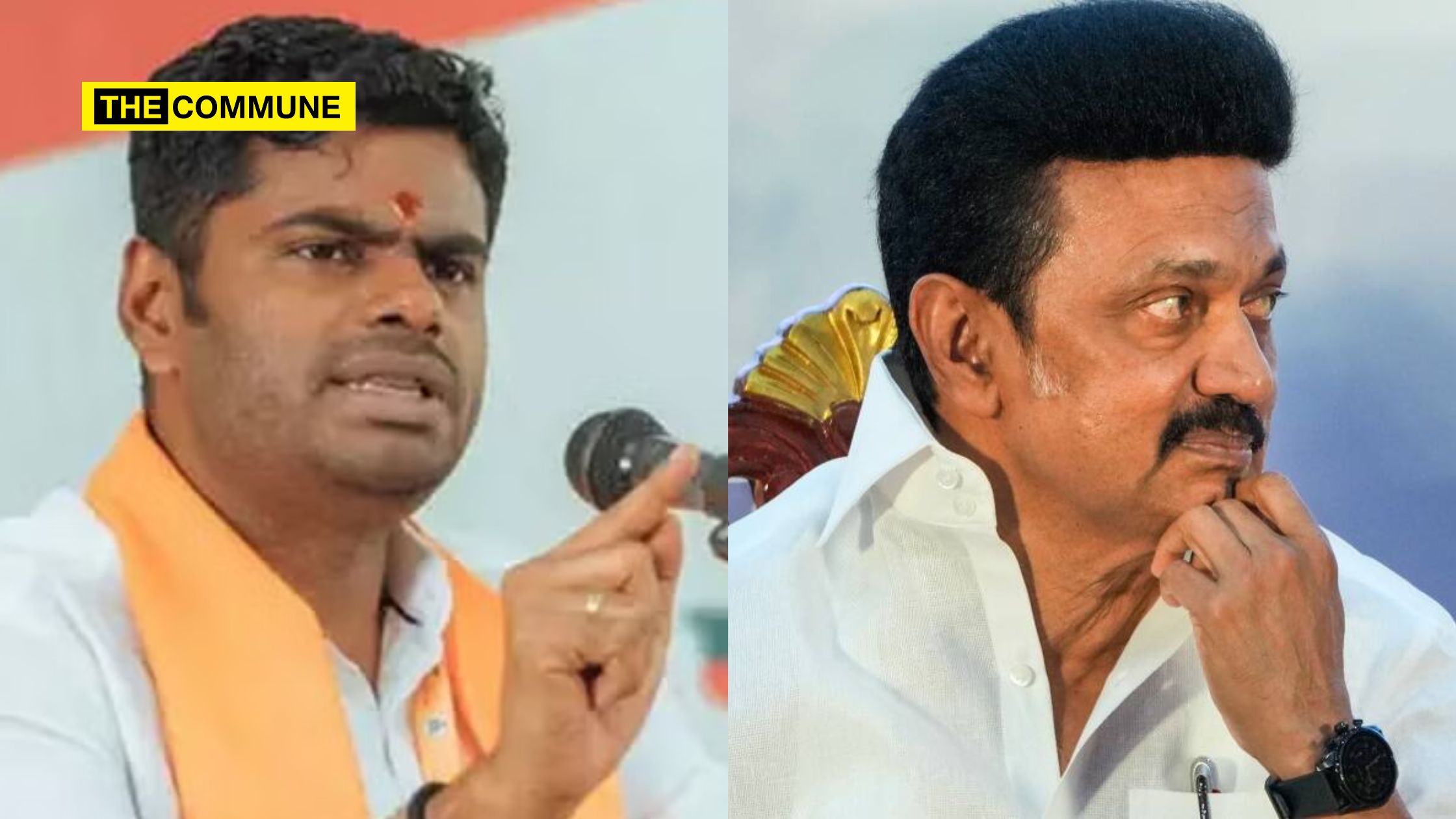
During the ‘En Mann, En Makkal’ yatra in Villupuram on 27 januaray 2024, Tamil Nadu Bharatiya Janata Party President K. Annamalai, spoke about various factors that affects Tamil Nadu and its people.

In Tamil Nadu, there exists a dichotomy in politics – one for the people and another for the rulers. The children of rulers enjoy the privilege of studying three languages, whereas students in government schools are limited to two languages. Widespread corruption plagues the government, with 11 out of 35 ministers facing ongoing court cases.“, he said.

Annamalai pointed out the disproportionate production distribution, with Chennai, Chengalpattu, Coimbatore, and Kanchipuram districts accounting for 32 percent of domestic production capacity, while Villupuram lags at 2.6 percent. Discussing human development, he noted that Ariyalur ranks lowest, followed by Perambalur, Theni at third, and Villupuram at fourth with a mere 0.561 percent.

Calling for a complete overhaul of politics in Tamil Nadu, Annamalai criticized the DMK and Viduthalai Chiruthaigal Katchi (VCK) for consistently criticizing the central government for any matter. He referenced resolutions passed against the central government in a conference held by these parties, highlighting the similarity with the BJP’s stance on “one country, one election,” as initially advocated by Karunanidhi in Nenjuku Neeti on page 273.

In the book Nenjuku Neethi written by Karunanidhi on page 273, he is the first person in India to voice support for ‘One Nation, One Election’. Today BJP is saying the same”, he said.

He also confronted the criticism about Centre’s allocation of funds, citing the BJP’s efforts to increase state fund allocations, contrasting the figures during the Congress rule in 2004 (30.5 percent) and the subsequent increase under the Modi regime (42 percent). He discussed the allocation for Scheduled Tribes upliftment, pointing out that the state government returned a significant portion to the central government.

Addressing issues like the Vengaivyal incident, cruelty to Scheduled Caste individuals, and the double vase system, Annamalai accused the DMK of prioritizing opposition to the central government over these pressing matters. He criticized the DMK’s focus on succession politics, calling it a threat to democracy, and emphasized the need to save Tamil Nadu.

Finally, Annamalai commented on election promises made by the DMK, noting a significant shortfall in government job creation compared to their commitment.

One Nation One Election (ONOE)

The fundamental concept behind “One Nation, One Election” is to coordinate the scheduling of Lok Sabha and State Assembly elections across all states, aiming to decrease the frequency of polls nationwide. This approach was a common practice until 1967 but experienced disruptions due to factors like defections, dismissals, and government dissolutions. The continuity of synchronized elections was initially broken in 1959 when the Centre utilized Article 356 to dismiss the government in Kerala.

Currently, certain states, including Arunachal Pradesh, Sikkim, Andhra Pradesh, and Odisha, conduct assembly polls concurrently with the Lok Sabha elections. The proposal for simultaneous elections was introduced in 1999 by the Law Commission, led by BP Jeevan Reddy.

Advantages of Implementing ONOE is Streamlined Governance, Consistency in Policy Decisions, Cost-Efficiency in Elections, Minimized Deployment of Security Forces, Prevention of Horse Trading, Reduction of Freebies and Improved State Finances.

Frequent elections contribute to political corruption, due to the substantial funds required for each election. Holding simultaneous elections can significantly reduce election expenses for political parties, eliminating the need for repetitive fundraising. During the 2019 Lok Sabha Elections alone, an estimated Rs 60,000 Crores were spent. Simultaneous elections would also lead to reduced expenses for the Election Commission (EC), provided initial infrastructure investments are made.

(Inputs with Hindu Tamil)

 Subscribe to our channels on TelegramWhatsApp, and Instagram and get the best stories of the day delivered to you personally.
Tamil Nadu Chief Minister MK Stalin’s Spain Trip Raises Questions

Chief Minister of Tamil Nadu M K Stalin ventured on a journey to Spain on 27 January 2024, to participate in an investors’ meeting aimed at attracting increased foreign investments to the State. The duration of the trip is eight days, expected to return on 7 February. 

However, what has raised eyebrows is the list of people accompanying him.

According to information that is doing the rounds on social media, MK Stalin is accompanied by his wife Durgavathy Stalin, his personal secretary Dinesh Kumar, personal securities – Selvaraju and Nitin John. Industries Minister TRB Rajaa and his PA Ayyappan and one Shreyas, and a senior delegate at Industries Department are also joining him. The officers going on the trip include: Umanath IAS (personal secretary to the Chief Minister, Senthilvelan IPS, Inspector Vivekanandhan, and Balaganesan of the ‘Core cell of TN, and Vishnu IAS’ and Vishnu IAS, MD & CEO of Guidance Tamil Nadu.

While addressing the media at Chennai airport, he emphasized the anticipation of numerous investors, companies, and entrepreneurs participating in the event. He highlighted the government’s persistent efforts to achieve a targeted $1 trillion economy set at 20230, considering the recent GIM2024 as a promising start. He expressed his commitment to apprise investors of the state’s infrastructure, human resources, and investment landscape, asserting Tamil Nadu’s status as the most conducive state in the country for investment.

The Chief Minister disclosed plans for direct discussions with prominent companies like ROCA and Gestamp, as well as engaging with investment agencies such as Invest Spain, intending to generate revenue and employment opportunities. He conveyed optimism that the trip would successfully attract foreign investment from European countries, citing earlier Memoranda of Understanding (MoUs) amounting to ₹7,442 crore and 17,000 jobs resulting from his visits to Singapore, Japan, and the UAE. Notable companies, including Omron and Mitsubishi Motors, have already commenced establishing their operations in the state, with Lulu Group initiating a project in Coimbatore.

While the Chief Minister expressed confidence in his journey to Spain to attract investments, political commentator and YouTuber Savukku Shankar raised questions about the true intentions behind the trip.

Initially he inquired about the companies Chief Minister planning to meet during his visit to Spain and was skeptical about the purpose of spending eight days to engage with entrepreneurs. He urged to release the trip details visit London, Australia, and America.

When the news outlet affiliated with DMK, Sun News, propagated a false narrative suggesting that Stalin was planning a global investors’ meet in Spain, he derided the media and tasked the Tamil Nadu “Fact Checking Unit”, led by Iyan Karthikeyan, to probe into the matter.


He also raised doubts about Spain’s ongoing economic challenges since the pandemic and questioned the feasibility of attracting investments for Tamil Nadu under such circumstances. He quoted in the statement “we anticipate a deceleration in GDP growth, decreasing from 5.8% in 2022 to 2.3% this year and further to 1.4% in the subsequent year. While this represents a subdued growth rate for 2024 in comparison to the pre-pandemic era, it remains significantly above the average growth rate observed in the eurozone”.

On 24 August 2019, Stalin questioned, “Is Chief Minister Edappadi Palaniswami going abroad to attract investments for Tamil Nadu, or is he seeking investments for himself?” Referring to his previous statement, Shankar emphasized, “Listen carefully. He’s gone once; you are next to Modi.” Pointing out that the Chief Minister had undertaken multiple foreign trips, positioning himself as the second only to Modi in terms of international visits.

Upon reflecting on his earlier visit to Dubai, which he elucidated during the airport briefing with reporters, Stalin highlighted the significant impact of his trips to Singapore, Japan, and the UAE. He pointed out the existence of Memoranda of Understanding (MoUs) that totaled ₹7,442 crore and contributed to the creation of 17,000 jobs. In response to this information, Shankar requested the issuance of a white paper on the subject.


 Subscribe to our channels on TelegramWhatsApp, and Instagram and get the best stories of the day delivered to you personally.
 

Understanding Powers And Responsibilities Of A Governor

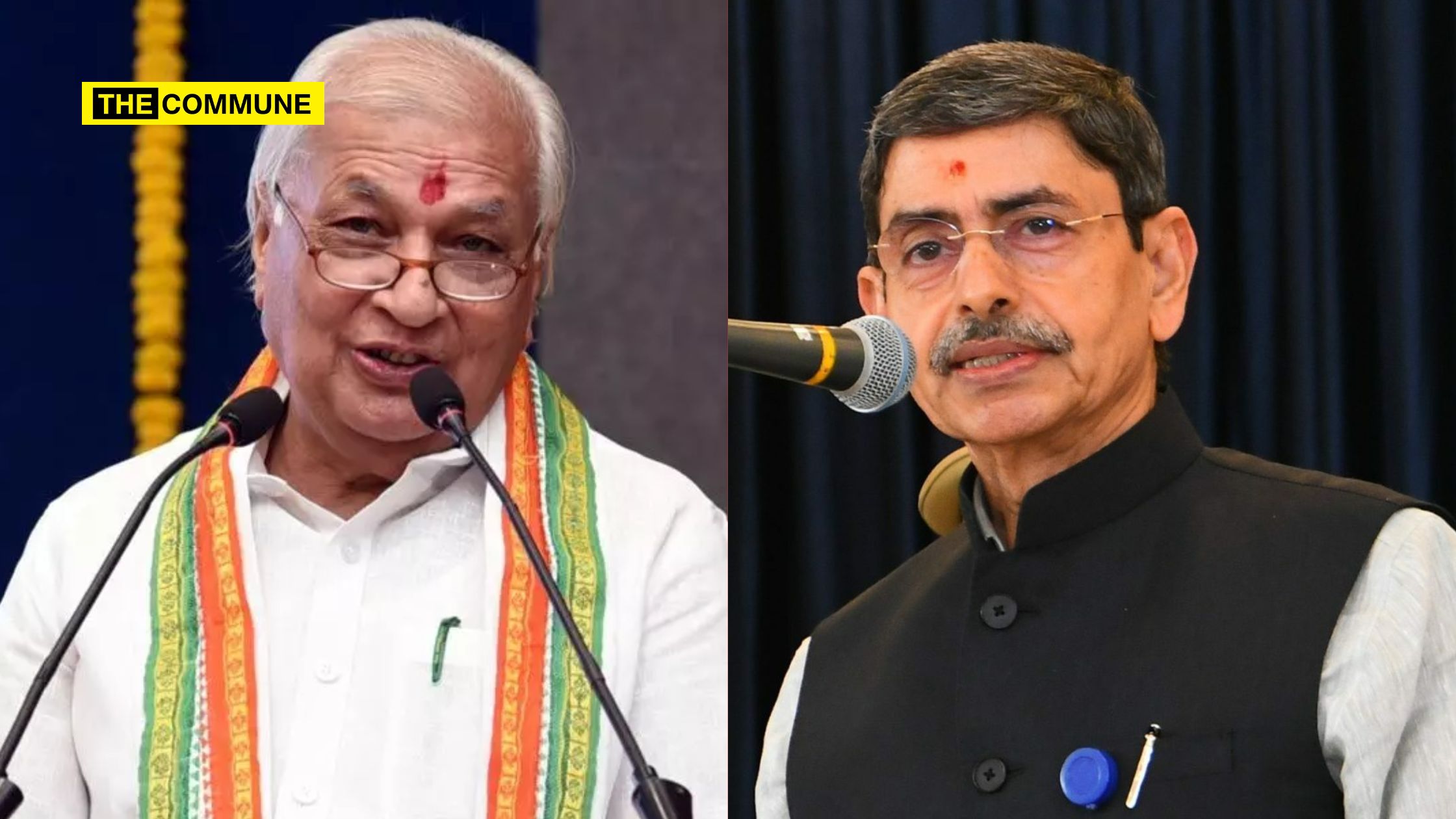
Amid a recent deterioration in the law and order situation in Kerala, a clash ensued between the Governor of Kerala Arif Mohammed Khan, and the Student Federation of India, a student wing of the ruling Communist Party of India (Marxist), who was staging a protest in Kollam. The protesters blocked the governor’s car and allegedly attempted to attack him. In response to this unsettling situation, Governor Arif Mohammed Khan staged a roadside protest to express his dissatisfaction

The situation unfolded as the governor was en route to Kottarakkara to inaugurate the centenary celebration of an ashram, with activists from the Students’ Federation of India (SFI) at Nilamel College gathering along the roadside, chanting slogans. The governor withdrew the protest following the registration of a case against the protestors. In response to this development, the Union Home Ministry has opted to grant Z+ security to the Governor and the Kerala Raj Bhavan.

In Tamil Nadu too, the DMK government has been at logger heads with the Governor. In the recent DMK Youth Wing conference held at Salem, Udhayanidhi Stalin passed a resolution calling for the removal of Governor like removing the extra growth in our bodies.

At the backdrop of this let’s see why there is a governor for a state.

The Constitution of India (COI) has established a parliamentary system of government in which the President and Governors serve as nominal executives. This arrangement aims to ensure that a nonpartisan individual takes charge of the government’s reins in times when the essence of democracy fails.

The current structure of the governor’s office is derived from the Government of India Act 1935. While the COI may not extensively delineate every power of the governor, a comprehension of their role and functions reveals their significance.

Though the role of the Governor is quite similar to that of the President of India in certain instances he has more powers at his situational discretion.

Article 153, stipulates that there must be a Governor appointed for each state, allowing for the possibility of a single individual serving as the Governor for multiple states.

Article 155, states that the President is responsible for appointing the Governor of a State through a warrant issued under the President’s hand and seal.

Article 156, declares that the Governor holds office at the pleasure of the President, indicating the discretionary nature of the gubernatorial appointment.

Article 161, grants the Governor the power to provide pardons, reprieves, respites, or remissions of punishment, and to suspend, remit, or commute sentences in matters of crime where the state legislature holds the authority to enact laws.

Article 163, outlines the discretionary powers of the Governor, encompassing scenarios such as appointing a chief minister when no party secures a clear majority in the state legislative assembly, responding to no-confidence motions, dealing with the failure of constitutional machinery in the State, and the authority to withhold assent to a Bill, reserving it for the consideration of the President.

Article 356, pertains to situations where a state government is unable to operate under constitutional provisions, enabling the Central government to assume direct control over the state machinery. The state’s governor issues a proclamation, obtaining the consent of the President of India.

Article 357, addresses the exercise of legislative powers under a proclamation issued by the Central government under Article 356.

Article 361, ensures that the Governor of a State is not held accountable to any court for the exercise and performance of their powers and duties.

Let’s dig deeper into the matter to realize the functions of the Governor.

Initially, in terms of executive functions, Article 154 of the Constitution of India (COI) vests the Governor with the state’s executive power. All official transactions are conducted in the Governor’s name with the aid and advice of the Council of Ministers (COM). This involves crucial appointments such as those of the Council of Ministers, Chief Ministers, Advocate General, State Election Commissioner, State Public Service Commission Chairman and members, and Vice Chancellors, among others. The Governor, within defined limits, also recommends the imposition of an emergency and wields extensive powers as the agent of the President (a practice that ceased after the Congress era).

Moving on to legislative powers, as an integral part of the state legislature, the Governor is responsible for summoning and dissolving sessions, sending messages to houses regarding bills, and delivering an annual address. In the case of a State Legislative Council, the Governor nominates special representatives, decides disqualifications in consultation with the Election Commission, and can promulgate ordinances when the Legislative Assembly is not in session.

The Governor’s veto powers constitute a crucial aspect, allowing the approval, withholding, or return of a bill. In special circumstances, the Governor may forward a bill to the President for consideration if it is deemed ultra vires to the COI, poses a threat to the directive principles of state policy, goes against the country’s larger interests, or involves compulsory acquisition of property. This serves the purpose of preventing hastily crafted and unconstitutional legislation, ensuring additional checks and balances.

Financial powers grant the Governor authority over money bills and demands for grants, requiring prior permission for their introduction. The annual budget must be laid before the Governor in the State Legislative Assembly (SLA), and contingency funds can only be accessed with the Governor’s approval.

Lastly, the Governor’s judiciary powers involve consultation with the President on the appointment of High Court judges, the appointment and promotion of district judges, and the granting of pardons within the state’s jurisdiction. Notably, the pardoning power is independent of the judiciary, serving as an executive power to correct any judicial errors and provide relief from unduly harsh sentences.

The COI outlines two distinctive discretions for the Governor: constitutional discretion and situational discretion. Constitutional discretion allows the Governor to act independently on specific matters where the validity of the discretion cannot be questioned in any court. This includes the reservation of bills to the President, recommending the President’s rule, seeking information from the Chief Minister on administration and legislative matters, exercising powers as the administrator of adjoining Union Territories, and determining royalty amounts for tribal districts.

Situational discretion, without the aid and advice of the COM, comes into play during the appointment of a Chief Minister when no party has a clear majority in the SLA or when a Chief Minister dies without a successor. It also applies to the dismissal of the COM when they fail to prove confidence in the floor and the dissolution of the SLA when the COM loses its majority. In such situations, the Governor can exercise discretion independently. This stands in contrast to the President, whose discretion is bound by the advice of the COM as per the 42nd Constitutional Amendment Act of 1976.

In conclusion, the position of the Governor is a highly esteemed role that carries a significant sense of responsibility. Rather than engaging in conflicts, state governments and Raj Bhavan should collaborate for the betterment of the people, ensuring the prosperity of citizens and, ultimately, the nation of Bharath.

Satheesh is a freelance writer.

Subscribe to our channels on TelegramWhatsApp, and Instagram and get the best stories of the day delivered to you personally.
Deliberately-Stuffed Debris, Blocked Entrances: What The ASI Encountered In Gyanvapi Survey

Debris blocking access to temple in Gyanvapi
ASI Gyanvapi report mentions how debris were deliberatly filled to block access.

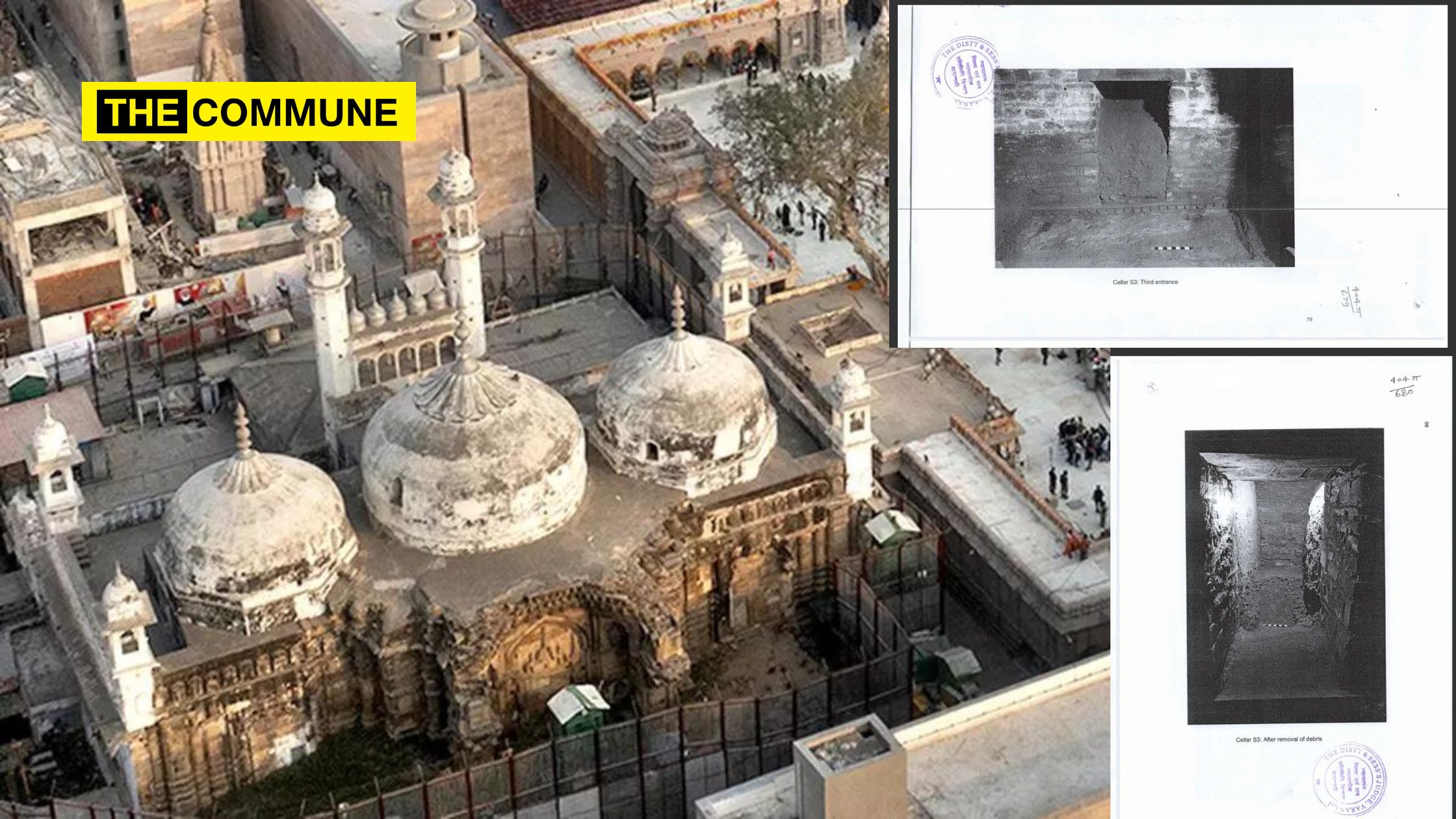
Chambers in the destroyed temple beneath Aurangzeb’s construction in Gyanvapi were intentionally filled with debris to block Hindus’ access and eliminate any hope they may have to worship there. The Archeological Survey of India (ASI) said in its report to the court after surveying the disputed site in Varanasi that holes were made in the ceilings of these cellars to fill them up with debris. It also said that the entrances to these cellars and other chambers of the temple were blocked by placing stone slabs.

The full ASI report, which The Commune Magazine accessed, confirms that there was a temple that was destroyed and its materials reused to build a mosque in its place. On January 25, the lawyer representing the Hindu side, Vishnu Shankar Jain, revealed it partially in a press conference.

“All the four entrances of Cellar S3, in its eastern wall, were blocked by filling soil or keeping stones and architectural members. Two of these entrances were opened to enter cells of S3 for examining the cellar. On entering into these cells it was noticed that they were deliberately filled with soil and debris by making a hole in their ceilings. The debris was filled in from these holes, and entrances were blocked temporarily by putting stone slabs, architectural members, etc,” the report said.

The report also said this debris was a significant hindrance “in any scientific investigation/ survey.”

The amassed debris posed a significant obstacle, obscuring the study area and impeding scientific exploration. Notably, the report mentions that entrances to several chambers, including the central chamber of the temple, were sealed by stone masonry.

“The western entrance of the southern chamber of the pre-existing structure has also been blocked and converted into an arrow staircase to climb to the roof. Its entrance from the southwest side has been blocked by stone masonry, but one can still enter them from the roof.”

Clearing debris from the surface during the excavation process presented a series of challenges. The team discovered that two cellars were intentionally blocked with debris, and the entrances were obstructed.

The study area was obscured by accumulation of large quantities of debris on all sides. The accumulated debris was a big hindrance in any scientific investigation/ survey and getting meaningful results from them.

However, when the debris was successfully removed, several artefacts were unearthed, including a Shivling, a miniature temple, and other significant finds.

The team also had to utilise household and garden equipment for debris removal after seeking the agreement of the involved parties. Yet, the challenge of debris disposal intensified due to limited open spaces within the fenced area.

“The disposal of debris removed from the surface was another inherent issue. Since the open spaces within the fenced area are very few and every part needs to be cleaned, the issue of debris disposal was created. The district administration was approached to earmark spaces adjoining the fence to the west and east so that debris could be removed from the fenced area.”

However, challenges in the east necessitated the creation of a funnel-shaped receptacle with a channel for efficient debris removal, especially due to the absence of a gate.

The ASI reported that the High Court directive to limit the Gyanvapi survey investigation to surface study without excavation added another layer of complexity. The sensitive nature of the case also led to widespread media coverage of the survey team and its day-to-day activities. Though the media did not have access to the area under investigation or its neighbouring area, the team worked under constant media glare.

However, the judiciary intervened in the matter and forbade any press reporting on the team’s daily activities,” the report said.

Security check posts and narrow passages further complicated swift movement around the site, requiring labour-intensive measures for load transfer.

The cellars below the open platform had localised ambient weather conditions. The south cellars, similar to the north cellars, had only one entrance to the south. There were no light and no electricity connections in either of them.

The Gyanvapi survey team battled adverse weather conditions, ranging from scorching sun and high temperatures to monsoon-induced humidity. Dark and humid cellars lacking electricity initially posed challenges, but the team adapted by using torch lights and reflectors. Protective measures against rainwater and muddy slush were devised, though they impacted work speed.

South cellar, in particular, was full of discarded materials of various kinds, which made even stepping onto the surface a difficult task. For the first few days, the team worked in the cellars with torch lights and reflectors to illuminate the interior. The humidity within the cellars was much higher than on the outside. The lack of air circulation within was another issue. Since the north cellars were under lock and key, the humidity level within them was comparatively higher than in the south.

Modifying vacant security check posts within the fenced area addressed storage challenges for equipment, tools, and materials. As the local administration suggested, a camp office within the temple complex served as a storage hub and a resting area during breaks.

With the onset of monsoons, preventing the accumulation of rainwater and run of muddy slush was a significant issue. The use of tirpal was made to protect the exposed structures after debris cleaning and prevent the accumulation of water in open areas. The water-sogged debris would present another challenge, along with the slippery surface. Work speed was affected considerably,” the report said.

The persistent threat of monkeys added another layer of complexity, disrupting movement and the work area, particularly during monsoons when they tore up trails after the day’s work.

Despite these challenges, the team adhered to the court’s directives. They conducted a systematic scientific investigation and survey, meticulously documenting Settlement Plot No. 9130.

The incredible tale of how the Archaeological Survey of India triumphed over many challenges to carry out and present the court-mandated survey on Gyanvapi is genuinely awe-inspiring. It merits the gratitude of the Hindu community. Despite facing arduous working conditions and harsh weather at the disputed site, the team’s unwavering dedication ensured no obstacle hindered their efficiency.

Subscribe to our channels on TelegramWhatsApp, and Instagram and get the best stories of the day delivered to you personally.