Home Blog Page 807

I.N.D.I Ally VCK MP Says RSS Killed Gandhi, BJP’s SG Suryah Condemns

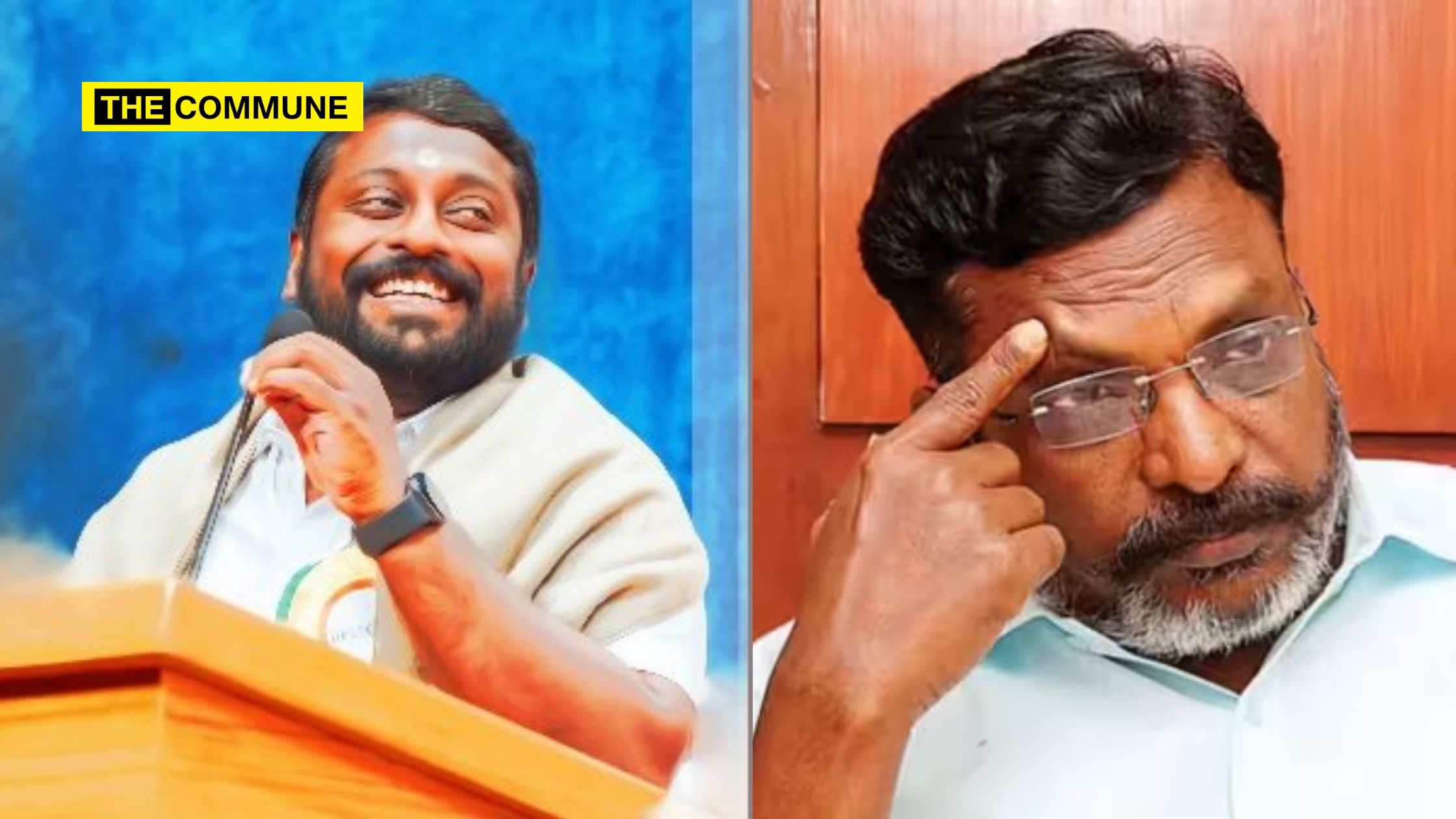
During a recent interview on the Hindu Tamil Thisai news channel with host Nivetha Thanimozhi, Viduthalai Chiruthaigal Katchi leader and Lok Sabha MP Thirumavalavan repeated the baseless claim that RSS was responsible for the assassination of Gandhi.

The Hindu Tamil Thisai YouTube channel posted the interview on February 10, 2024, where Nivetha questioned various aspects of Thirumavalavan’s strategy and his party’s stance. Thirumavalavan elaborated on his and his party’s views. However, when the host inquired about the potential scenario if the BJP were to win and return to power, Thirumavalavan expressed skepticism about the BJP’s chances of returning to power. He voiced concerns about the party’s possible impact on India’s secular identity, emphasizing that Hinduism’s emphasis on birth-based hierarchy does not promote brotherhood. Thirumavalavan asserted that leaders like Nehru, Ambedkar, and Gandhi collectively decided on India being a secular country. He alleged that the RSS, initially formed for Brahmin welfare, assassinated Gandhi due to his secular stance. Thirumavalavan warned against the BJP’s agenda and predicted potential erosion of states, elections, and religious diversity if the party regains power.

When asked about his thoughts on how the situation will be if the BJP wins and comes back to power. Thirumavalavan replied, “We are in such a situation where we have to face unimaginable harm. Modi and the RSS that runs Modi, are planning to the extent that it is impossible to imagine what they will do and what decisions they will take. Because their ultimate aim is to name it Hindu Rashtra and throw away the Constitution. Their main question is why there should not be a religious government here. Their logic is that when Pakistan is an Islamic nation, Sri Lanka is a Buddhist nation, Bangladesh is an Islamic nation, China is a Buddhist nation, why should India not be a Hindu nation?”

“But within India it can be declared that as a country depending on Hinduism and it can declare as Hindurashtra, and that too Hinduism does not approach the people with brotherhood, birth-based system is its lifeblood. That is why during Pandit Jawaharlal Nehru’s period all the leaders like Ambedkar decided to be secular after a long and detailed discussion and Gandhi also agreed with it. Gandhi was also a great devotee of Rama. He is the one said that he wanted Rama Rajyam and was the one who accepted Sanatana Dharma, accepted varna system, accepted caste, but refused untouchability,” he said

“Gandhi was akin to an RSS member – had intense feelings and faith like them but one important thing he believed was secularism. That’s why he was killed. The RSS is a Brahmin movement that killed him because he held it high. Today it is potrayed and projected as a movement for Hindus. It is a Brahmin association named as RSS like Mudhaliar association, Mukkulathor association, Vanniyar association and there was no Brahmin association on a pan-India level, this is RSS. Why should they kill Gandhi, he was a devotee of Rama. He is the one who said “Ram Ram” at every breath, even when Nathuram Godse was shot with a gun, he fall down saying ‘Hare Ram’, why should they kill him? He was a non-violent person, he did not want to dissect the country even he was not armed, only thing he does not want a religious government,” he further said.

SG Suryah, the State Secretary of Bharatiya Janata Party Tamil Nadu, strongly refuted the misinformation. Suryah provided a detailed account of the court verdict from the trial of Godse, specifically citing the Atma Charan judgment.

Suryah posted a video message on his official X handle replied, “I read your interview with The Hindu. You have once again started the legendary lie that RSS members killed Gandhi. In 2016, Rahul Gandhi, who is your leader now, said that only RSS killed Gandhi. A case was filed on behalf of RSS in the Supreme Court and your leader Rahul Gandhi apologized in the Supreme Court and said, “I didn’t say RSS organization killed Gandhi” he flipped his stance as always. Now that you are repeating the same lie over and over again, it is our duty once again to tell people the truth.”

“We are in a bad situation where we have to come and reason in the Tamil community which says you are an intellectual but you do not even have the basic knowledge about reservation or GST. Hence we are trying to bring you the truth,” he said.

“A single judge trial bench was constituted under Nehru to try the Gandhi assassination case headed by a retired IAS officer named Atma Charan. He was also from Congress background and that is why Nehru appointed him as a judge,” he added.

“The history of this case is that on 4 May 1948, this single judge bench was constituted by Nehru, and on 27 May 1948, Gandhi’s assassination trial began, and witnesses were heard from 24 June to 6 November 1948. Arguments weere heard from 1 December to 30 December 1948. On 10 January 1949, the Congress-backed Atma Charan ruled that Veer Savarkar and the RSS had nothing to do with Gandhi’s assassination. Verdict was not just heard and then written, 149 testimonies were examined, 326 pages of statements are taken from the witnesses. Testimony and statements are taken from all the 8 accused persons. The judgement is a 110-page verdict in total,” he added.

“Now in the recent parliament John Brittas, a Communist MP who is also in your coalition says ‘Sardar Patel banned RSS on 4 February 1948, such a bad organisation’. The same John Brittas or Thirumavalavan would never quote the same Sardar Patel saying that RSS organization has nothing to do with Gandhi’s assassination,” he further said.

“That is, they say that you are the greatest intellectual being in this Tamil society, such intellectual beings what should do? We must debate with truth, we must reason with truth. In the session of the single judge, they said that the RSS was innocent and Savarkar was innocent. At that time, Nehru was the Prime Minister Congress ruled in all states, the Congress party was omnipotent, Nehru was in power and he also appealed the then Punjab Court which was the jurisdictional court. In the Punjab High Court, Nehru appealed Gandhi assassination case and tried to show the RSS organization and Savarkar as convicts. But there too, they said that the verdict given by Atma Charan was final,” he further added.

“If you really had the power at that time, shouldn’t you have taken this case to the Supreme Court? It was not taken because there was no evidence in the case to incriminate Veer Savarkar and the RSS organization. Now we can file a case against you, like Rahul Gandhi who went to the Supreme Court and asked apology, but we didn’t see you worthy of it. So I think this answer is enough for you. Please learn to tell the truth by keeping those who are knowledgable and knows their stuff,” he added.

Subscribe to our channels on TelegramWhatsApp, and Instagram and get the best stories of the day delivered to you personally. 

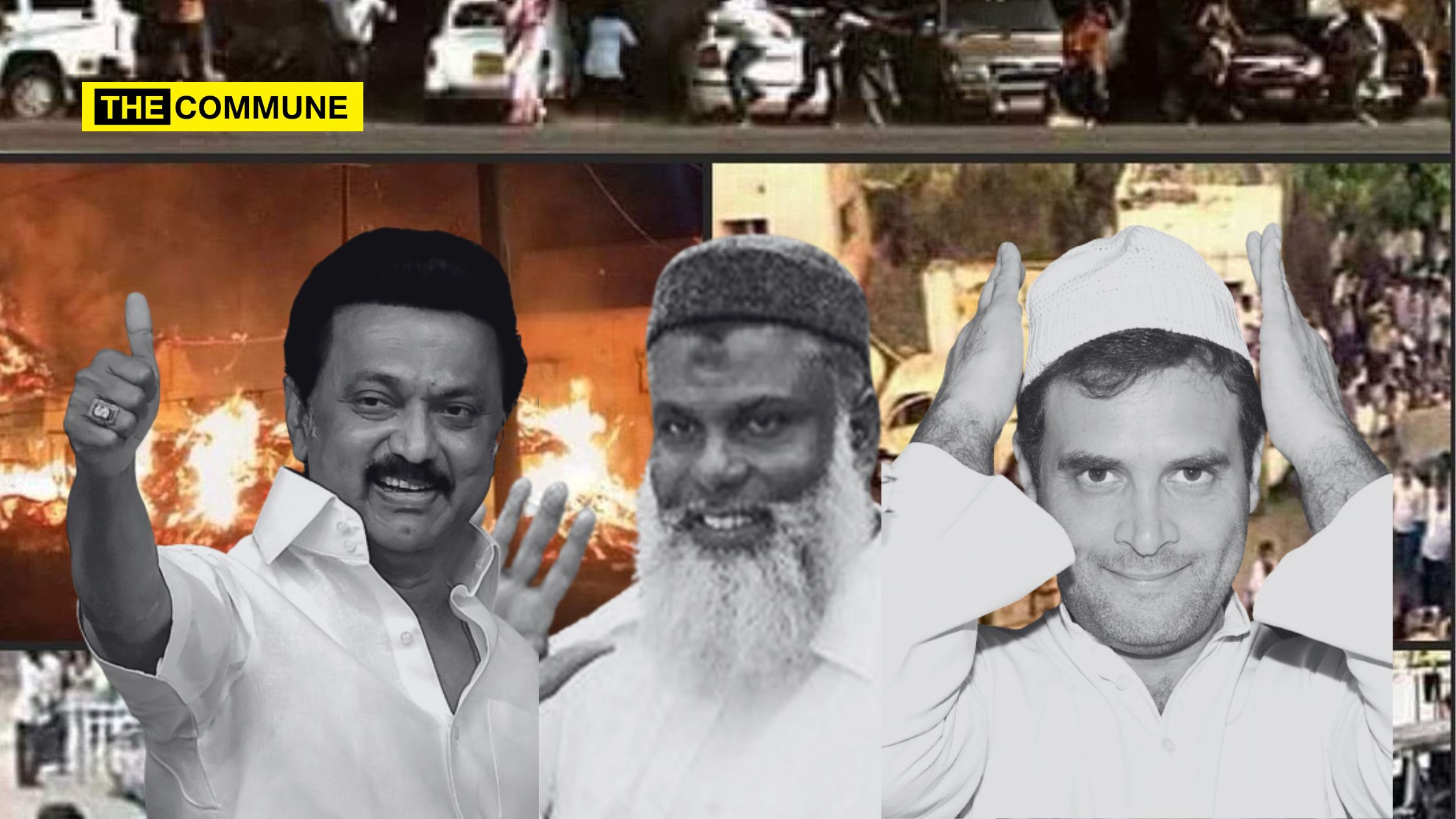
1998 Coimbatore Blasts: Unravelling The Congress-DMK Nexus In Supporting Terrorism

The hashtag #RahulLovesTerrorists surfaced on Twitter when Rahul Gandhi addressed Masood Azhar as “Masood Azhar ji.” Despite this, the Congress party’s substantive pro-terrorist policies overshadow a mere honorific. Sam Pitroda’s minimization of the Pulwama attack and disapproval of airstrikes seem comparatively insignificant in the face of other perilous actions and statements by the Congress Party, its leaders, and allies like the DMK.

Following the destructive Coimbatore bomb blasts on 14 February 1998, claiming 58 lives and endangering L K Advani, Congress President Sitaram Kesri shockingly accused the RSS. Despite legal action from the RSS, Kesri persisted in the allegation, revealing a lack of sensitivity.

Moreover, the Congress party openly endorsed Kesri’s claim, with the Tamil Nadu unit president suggesting a deliberate delay in Advani’s meetings. Despite the perpetrators’ links to Al-Umma and TNMMK, the Congress formed alliances with TNMMK in 2004 and 2006, overlooking its role in the tragic incident. Subsequently, TNMMK established the Manithaneya Makkal Katchi (MMK) in February 2009.

The 1998 Coimbatore blasts were a result of the pro-terrorist policies of the DMK Government. Preceding the blasts, clashes occurred in November 1997. Initially, a police constable named Selvaraj was killed by Muslim fanatics, and subsequent riots led to the death of 18 Muslims. Even the Communist magazine Frontline reported on these incidents.

 “The killing of Selvaraj was one singular incident that led to the polarisation of Coimbatore on communal lines. Al Umma cadres stabbed Selvaraj on the night of November 29 when he was regulating traffic at Kottaimedu, a Muslim-majority area…Earlier that day, Sub-Inspector M. Chandrasekaran of Bazaar police station near Kottaimedu detained Jehangir, an Al Umma office-bearer, and two other Muslim youth for riding on a motorcycle without a driving licence. Mohammed Ansari, who was then Al Umma State secretary, went to the police station and demanded their release. A row broke out between the S.I. and Ansari, with the latter threatening to “break Coimbatore in two”.

About an hour later, four Muslim youth stabbed 31-year-old Selvaraj, who was totally unconnected with the earlier incident. Al Umma men wanted to target a policeman because its members had been detained at the police station and Ansari was “humiliated” at the police station. Ironically, Selvaraj had stepped in to relieve another traffic constable.

The death of Selvaraj infuriated the police force. They struck work the following day and demanded the arrest of the assailants. They alleged that the Dravida Munnetra Kazhagam (DMK) government did not allow them to take action against Al Umma. They were also infuriated by the fact that four policemen and prison officers had been stabbed or murdered in Coimbatore and Madurai by Muslim extremists in the 18 months preceding the murder of Selvaraj. The policemen’s families also staged dharnas, demanding security for the law-enforcers. The situation was so grave that the government called out the Army and the Rapid Action Force to bring back normalcy to the city (Frontline, December 26, 1997).”

Hence, the DMK meddled in the police operations, restraining them from taking stringent action against Al-Umma, which was not banned by the DMK Government until the Coimbatore blasts on February 14, 1998. The DMK Government imposed a ban on Al-Umma only after the blasts. Following the Coimbatore clashes of November 1997 and the subsequent blasts, the Gokulakrishnan Commission was appointed to investigate. In its June 2000 report, even Frontline magazine acknowledged the findings.

  “The Gokulakrishnan Commission of Inquiry blames security lapses for the explosions.

The report comes down heavily on the police for their failure to search the Babulal Complex building on Tirumal Street before the blasts even though they had information about the clandestine movement and storing of bombs by “terrorist groups” at an abandoned building near Saravana Metal Mart. If they had searched and combed the nearby area, they would have unearthed the plot by Al-Umma men, arrested the terrorists and seized the bombs prior to February 14. This would have aborted the conspiracy, the report says.

Swift action by the police in the early hours of February 15 led to the unearthing of the plot to create terror in Coimbatore, the arrests of Al-Umma cadres and the seizure of detonators and lethal weapons. “The major part played in this storming operation” by Sub-Inspector M. Chandrasekaran “at the risk of his life” not only saved the lives of police personnel and the public but became “an eye-opener to the Special Investigation Team to nab the terrorists and unearth the concealed bombs”, the report says. “

The Police were eager to take action but were restrained by the DMK Government before the blasts. Even Frontline held the DMK Government responsible for not averting the Coimbatore blasts, stating, “The crackdown initiated by the Tamil Nadu Government following the blasts was doubtless effective, but it could not absolve it of the criticism that it had failed to prevent the terrorist attack by acting on intelligence reports and following up on earlier seizures of explosives. It seems fair to state that the DMK Government failed to differentiate between the large mass of innocent Muslims and the small number of fundamentalist Muslim leaders who have exploited and preyed on the feelings of insecurity among innocent Muslims. It should have shown a greater sense of urgency in isolating the hardcore of Muslim fundamentalists and taking action against them.”

India Today, in an article by L. R. Jagadheesan and K. M. Thomas, reported shortly after the Coimbatore blasts:

 “The Opposition has accused the Government of failure to anticipate the violence and the blasts and take preventive steps…Stung by criticism, the Government took some decisive, though belated, action against those suspected to be behind the blasts. It ordered a ban on two Muslim fundamentalist organisations, Al Umma and the Jehad Committee. Some of their leaders, including Al Umma President S.A. Basha were detained. The chief minister’s (Karunanidhi’s) stern warnings to them were followed by raids on several extremist hideouts on February 15. Eight people arrested in the raid were later identified as Al Umma activists. Post-blast violence too was swiftly contained with the deployment of the Army and paramilitary forces.

Intensified patrolling proved fruitful on February 16, when the police found 60 kg of explosives in a car in a residential area. It took two days to defuse the bombs…The extremists’ menace had been looming large for quite some time in the state, but political compulsions prevented the state Government from taking decisive action. Police sources in Coimbatore say the Government was well aware of the movement of Muslim fundamentalists, but fearing a minority community backlash during the polls, it delayed action against them.

The charges seem to have rattled the ruling combine in the state, and fearing electoral repercussions, it has roped in actor Rajnikanth for damage control. In repeated telecasts on the DMK-owned Sun TV, the celluloid superstar has blamed the BJP and Jayalalitha for fomenting trouble. He said the blasts were the handiwork of those interested in an AIADMK-BJP government at the Centre. Congress President Sitaram Kesri has squarely blamed the RSS for the blasts. Denying the charge, however, the RSS has filed a defamation suit against Kesri.”

The sequence of events leading to the Coimbatore blasts, including the delayed police action, recovery of a substantial amount of arms and explosives, and arrests of Islamic radicals, is detailed here. The timeline reveals that the DMK government could have taken preventive measures well before the blasts but allowed terrorist organizations like Al-Umma to operate due to its pro-Muslim policies.

While the DMK Government eventually banned Al-Umma and took action post-blasts, the Congress Party persisted in defending the terrorists and, remarkably, accused the RSS of orchestrating the blasts.

While most political leaders and parties expressed shock and revulsion over the blasts, the then President K.R. Narayanan and Prime Minister I.K. Gujral conveyed their dismay. DMK president and TN Chief Minister M. Karunanidhi attributed the blasts to a conspiracy by foreign forces to disrupt the electoral process. Union Home Minister Indrajit Gupta and CPI(M) general secretary Harkishan Singh Surjeet also suspected a foreign hand behind the blasts, with Gupta blaming the ISI for attempting to disrupt the election process in India. However, even in this case, the Congress descended to an unimaginably low level.

The DMK assumed power in Tamil Nadu in May 1996. Towards the end of 1996, G. Bhoopalan, a warder in the Coimbatore Central Prison, was killed by Muslim militants in a petrol bomb attack within the prison. During the AIADMK rule, the RSS office bomb blast in Chennai in August 1993, which claimed 14 lives, led to a crackdown on fundamentalist organizations, particularly Al-Umma. However, under DMK rule, 16 Al-Umma individuals detained under TADA for their alleged involvement in the August 1993 RSS office blast and possession of weapons were released on bail in January 1997, as the DMK Government prosecutor did not oppose their bail.

The lax policy persisted even after Tamil Nadu police commandos, acting on a tipoff, confiscated a substantial arsenal including gelatin sticks, detonators, iron pipes, PVC pipes, alarm clocks, cables, wires, soldering equipment, saws, and testers – all materials used in bomb-making. This seizure occurred on March 11, 1997, from a house in Kodungaiyur, a suburb of Chennai. Two fundamentalists affiliated with the Al-Umma group, Mohammed Khan alias Sirajuddin (26) and Shahul Hameed alias Aftar (22), were arrested. Mohammed Khan is the brother of S.A. Basha, one of the founders of Al-Umma.

A series of bomb explosions shook Tamil Nadu in November-December 1997, just two months before the Coimbatore blasts. On 6 December 1997, the anniversary of the Babri Masjid demolition, explosions targeted the Cheran Express, Pandyan Express, and Alleppey Express trains, claiming nine lives. The police attributed these explosions to the Islamic Defence Force of Kerala, a clandestine outfit.

On 10 January 1998, a blast occurred under the Anna flyover in Chennai, with the Islamic Defence Force claiming responsibility. Subsequently, a powerful blast occurred in a rice mill at Saliyamangalam, near Thanjavur, on 8 February. The police seized a significant cache of explosives and detonators from the mill. Investigation revealed the connection of Abdul Khader, the son of the mill owner Abdul Hameed, to Muslim fundamentalist organizations. Both were arrested, with Abdul Khader seriously injured in the blast. The police later seized hundreds of detonators from Vepery and Tambaram in Chennai, connected to two Muslims associated with militant organizations. This seizure included approximately 84 gelatin sticks, 50 kg of sulphur, 11.5 kg of ammonium nitrate, 100 detonators, two country pistols, and bottles containing nitric and sulphuric acid.

Despite the series of blasts and incidents, there was no crackdown, let alone a ban, on Al-Umma, not even after the significant blast on 8  February. The State Government’s failure to take decisive action despite indications and warnings of potential trouble represents a significant lapse in preventive measures.

The president of the banned fundamentalist outfit Al-Umma, SA Basha, openly threatened to kill the then Gujarat Chief Minister Narendra Modi if he visited Coimbatore in July 2003. This threat was made by Basha and eight others while speaking to journalists in the Coimbatore court premises after their conviction and life imprisonment in a case related to the murder of a Hindu Munnani leader. It is noteworthy that Al-Umma and its leader were allowed to operate openly by the DMK Government until the Coimbatore blasts on 14 February 1998.

Diehard anti-RSS magazines like Outlook and Frontline also acknowledged the role of the Tamil Nadu Muslim Munnetra Kazhagam (TNMMK) in these blasts. In March 1998, Frontline reported, “Within hours of the blasts, the Tamil Nadu Government banned Al-Umma and the Jihad Committee. Al-Umma founder-president S.A. Basha and 12 other members of the organization were arrested in Chennai; explosive materials and weapons were seized from his house in Triplicane, Chennai. Leaders of the Jihad Committee and the Tamil Nadu Muslim Munnetra Kazhagam (TMMK) were arrested in a State-wide crackdown. Among those arrested were Jihad Committee president R.M. Haniffa, general secretary Mohammed Haniffa, student wing secretary Akram Khan, TMMK president and college lecturer M.H. Jawahirulla, and treasurer G.M. Pakkar. Over the next few days, over 100 activists of the three organizations were arrested at Keezhakkarai, Devakottai, Dindigul, Nagapattinam, Thanjavur, Nagercoil, Melapalayam, and Udumalpet. About 1,000 others were detained as a precautionary measure…”

Even Outlook acknowledged TNMMK’s involvement in the Coimbatore blasts. It said:

 “As the crackdown following the February Coimbatore blasts continues, it is disturbingly clear that the ordinary Muslim is becoming increasingly alienated. Every day the police recover quintals after quintals of explosives hidden by the ‘fringe’ Islamic fundamentalist group, Al Umma—which, as it now turns out, is in fact a rather well connected terrorist outfit…

Initially the Muslim groups were splintered into as many as 10 major outfits. However, after the November riots in Coimbatore most of them started working in tandem. The most significant groups are: the Tamil Nadu Muslim Munnetra Kazhagam, All India Jihad Committee, Al Umma, Tamil Islamic Peravai, Sunnath Al Jammath Youth Front, SIMI (Students Islamic Movement of India), Students Organisation of Islam, Muslim Protection Force and the JAQH (Jamiathul Ahle Quaran Wal Hadis).

…According to arrested members of the Al Umma, the ISI had suggested the elimination of the Hindu Munnani leader, Rajagopal, in Madurai in 1994. And the RDX used to blast the RSS office (August 1993) and the Hindu Munnani office (1995) was supplied by the ISI.

…By December 15, they (Al Umma men) also managed to get the support of the People’s Democratic Party chairman Abdul Nasser Mahdani—a radical Islamic figure of Kerala—in mobilising additional explosives. According to police sources, explosives weighing nearly 1,000 kg were accumulated in four weeks.”

The DMK, Congress, and Left parties supported Abdul Mahdani and the TNMMK, despite evidence of their involvement in the Coimbatore blasts. The Congress and DMK continued their association with Mahdani and TNMMK, raising concerns about their stance on terrorism.

Upon returning to power in Tamil Nadu in May 2006 after a five-year rule by AIADMK from 2001-06, the DMK faced criticism for reportedly providing favorable treatment to the Coimbatore terror accused. The Indian Express, on 24 July 2006, reported in an article titled: “DMK turns the jail into a spa for Coimbatore terror accused.”

“Introduction: Ayurvedic massages for Abdul Nasser Mahdani paid for by taxpayer, wife facing arrest warrant has free access, no checks

One man has reason to laugh at all the tough talk on the need to crack down on terror: Abdul Nasser Mahdani, key accused in the 1998 Coimbatore serial blasts that targeted BJP leader L K Advani and killed 58 people and left several more injured.

For, ever since he (Karunanidhi) was sworn in as Chief Minister, the atmosphere has been upbeat in the high-security prison here, housing Mahdani and 166 Al Umma prisoners, mostly arrested for the Coimbatore blasts. Thanks to Karunanidhi, a team of 10 masseurs and four senior Ayurvedic doctors began their “high quality treatment” on Mahdani, who has been housed in the prison’s hospital wing since 2001…

While the prison manual says that a prisoner pays for the cost of any private medical treatment he avails, the Tamil Nadu government is using taxpayers’ money to pick up the bill for Mahdani’s “dhara” and “pizhichil” (the ayurvedic massages)…

But what has infuriated investigating officers in the blast case is the move by the Chief Minister’s Office to quietly lift the ban under Section 268 CrPC, restricting Mahdani’s movements within the prison.

“Soon after the DMK came to power, there were attempts to move him out of the prison and get him treatment outside, preferably in Kerala. We strongly resisted such a move. With a friendly government in Kerala, we can never hope of seeing him again, particularly when the trial (in a special court) is likely to end in three months’ time and a verdict is expected soon,” pointed out a senior police officer on the condition that he be not named…In fact, in the pre-blast days, the DMK, then ruling Tamil Nadu (1996-2001), was accused of flirting with Muslim militancy and turning a blind eye to the activities of Jehadi groups like the Al Umma.”

While the DMK initially took action against Islamic radicals following the Coimbatore blasts and temporarily deviated from an openly pro-terrorist policy during its alliance with the BJP at the Centre from 1999 to 2003, it reverted to its original stance from 2004 onwards. In the 2004 Lok Sabha polls and the 2006 Assembly polls in Tamil Nadu, the DMK once again secured the support of TNMMK, ultimately winning the latter.

Barely two weeks after being sworn in for its term starting May 2006, Tamil Nadu’s DMK government ordered the dropping of cases against 12 Muslim fundamentalists, all followers of Kichaan Buhari, an Al-Umma sympathizer and a key accused in the Coimbatore serial blasts. The Indian Express reported on 8 August 2006.

“…Senior Policemen in Thirunelveli were shocked by what they termed the DMK Government’s ‘blatant sympathy’ for the Muslim fundamentalists. Obviously, the accused committed the offence with the grave intention to create law and order problems and disrupt peace in Tirunelveli district, known to be communally sensitive. Also, all of them have links with Muslim fundamentalist outfits. The government should have allowed the law to take its natural course. For a new government to resort to such a move is rather demoralising for the police force,” said a senior police officer in Tirunelveli.

Police officials say that in one of the cases, Crime No. 15 of 2001 registered at the Melapalayam police station, while two of the five accused were juveniles and let off given their age, the other three, including M S Syed Mohammed Buhari, Sheik Hyed and Jafer Ali had “admitted to the offence”. “Despite this, the government ordered the withdrawal of cases against them,” an officer said… There are also allegations that the ruling DMK was bending backwards to appease its electoral ally, the Tamil Nadu Muslim Munnetra Kazhagam (TMMK). A section of the police believe that the dropping of the six cases by the DMK government could be part of a pre-poll deal with the TMMK.”

The TNMMK wasn’t just an alliance partner of the DMK; it was also affiliated with the Congress. The Congress, as part of the Democratic Progressive Alliance (DPA) alliance in Tamil Nadu with the DMK, had the TNMMK as a partner as well. While forming alliances with mainstream parties with a few members linked to past terrorism involvement might be one thing, aligning with a radical pro-terrorist party and yielding to pressure by releasing terrorists and withdrawing cases against them is another.

At that time, the DMK had 97 MLAs out of 234 in the Tamil Nadu Assembly, with the Congress holding 33. The DMK-Congress alliance had a comfortable majority without needing the support of any other allies, and the TNMMK did not have a single MLA, although it supported the DMK-led Congress-affiliated DPA.

This misplaced sympathy for the sake of vote banks was evident in the DMK government’s refusal to appeal against the acquittal of Abdul Nazar Mahdani in the 1998 Coimbatore blasts case.

In 2006, the Congress Legislature Party in the Kerala Assembly passed a resolution advocating the release of Abdul Mahdani, who had been in a Coimbatore jail since 1999. This resolution gained unanimous support from the Left, as the Kerala Legislative Assembly passed it without a single MLA opposing it on 16 March 2006. It’s worth noting that Mahdani later faced accusations in the 2008 Bangalore bomb blasts, which occurred during an IPL game. Despite a resolution demanding his release in March 2006 (before his acquittal), Abdul Mahdani was eventually released on 1 August 2007 after being acquitted in the Coimbatore blasts case. Subsequently, he became involved in another attack in 2008.

The Indian Express reported on 25 July 2006: “While the DMK government in Tamil Nadu is facilitating Ayurvedic massages for Abdul Nasser Mahdani, an accused in the 1998 Coimbatore blast, the Left and the Congress in Kerala have been figuratively prostrating at his feet.”

Subsequently, the DMK-Congress Government released Coimbatore blast convicts prematurely in 2009, drawing criticism from the BJP.

In September 2005, the TNMMK openly demanded the lifting of the ban on SIMI, even though SIMI was proven to be involved in bomb blasts across the country at that time. Remarkably, the TNMMK was an ally of the Congress in Tamil Nadu. According to a Times of India report from May 2006:

“Terming the AIADMK as a “proxy” to the BJP, Tamil Nadu Muslim Munnetra Kazhagam (TMMK) on Monday said it has decided to extend its support to the DMK-led Democratic Progressive Alliance (DPA) in the May 8, 2006 assembly polls. TMMK activists would work in all the 234 constituencies in the state to ensure the victory of the DPA, TMMK President M H Jawahirullah and its General Secretary S Haider Ali, told reporters in Chennai.”

This party announced a boycott of the 1998 Lok Sabha polls in Tamil Nadu on 4 Feb 1998, just a few days before the Coimbatore blasts, citing the ‘communal riots of 1997 in Coimbatore.’ In the 1999 Lok Sabha, 2001 Assembly, and 2004 Lok Sabha polls, TNMMK was aligned with the Congress alliance. In 2001, AIADMK was also with the Congress. After the deadly bomb blasts in Mumbai on 11 July 2006, which claimed 187 lives, then BJP President Rajnath Singh criticized the Congress and DMK for their associations with the TNMMK.

Even today, after numerous years, the Congress has not offered an apology for its unfounded and audacious accusation that the RSS was responsible for the 1998 Coimbatore blasts. Neither has it condemned the TNMMK nor explained its alliance with the party or the specific connection between them.

It is essential to explicitly ask Rahul Gandhi and the Congress to apologize for their false charges against the RSS or, at the very least, provide a clear stance on the perpetrators of the 1998 Coimbatore blasts. More than using respectful terms like ‘Ji’ for terrorists, the Congress and its allies, such as the DMK, should be exposed comprehensively for such actions.

(with inputs from OpIndia)

Subscribe to our channels on TelegramWhatsApp, and Instagram and get the best stories of the day delivered to you personally. 
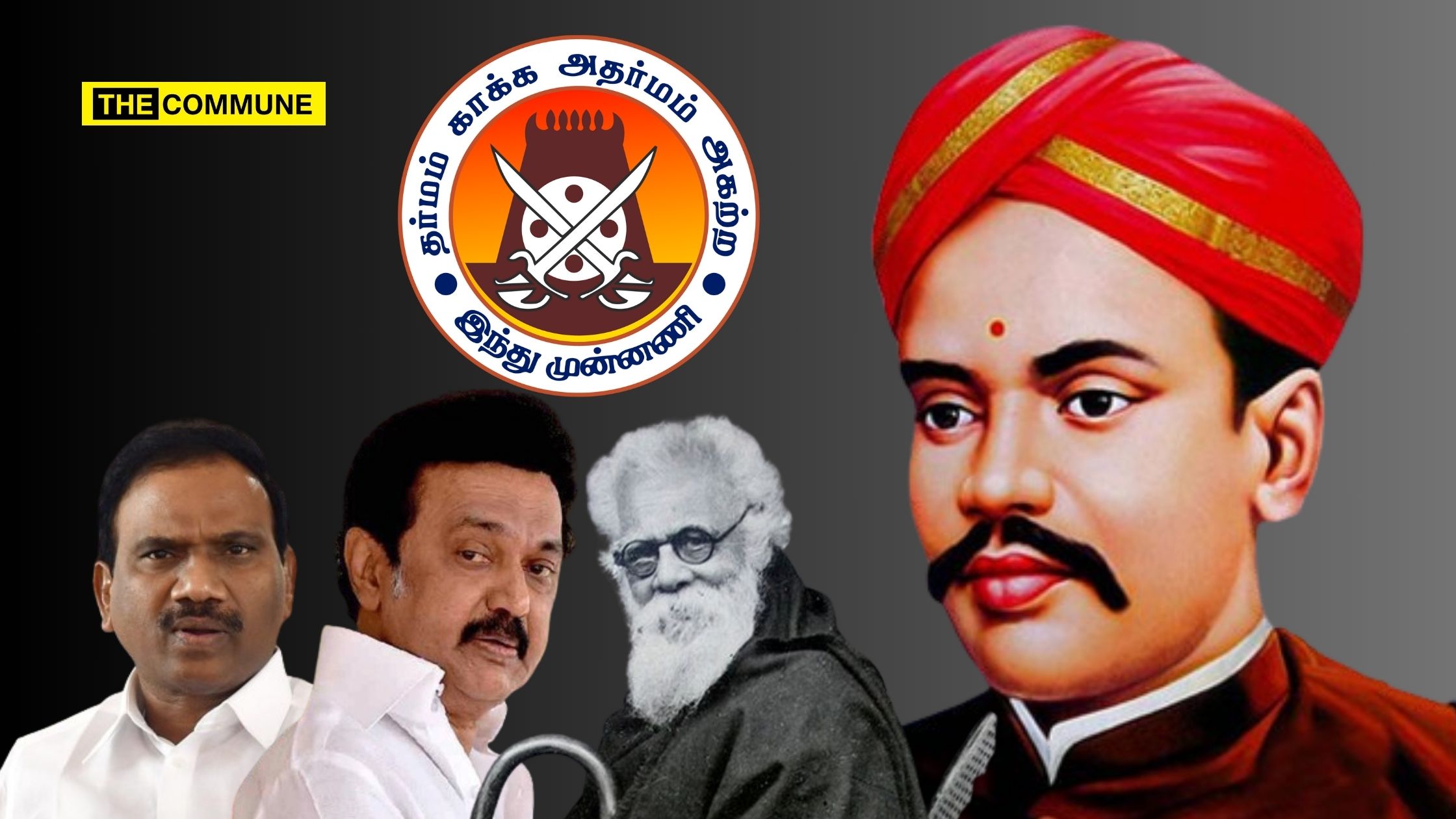
Hindu Munnani Slams A. Raja’s Slanderous Speech On Indian Freedom Fighter VO Chidambaram Pillai, Questions Stalin’s Silence

In a press statement, Hindu Munnani State President Kadeshwara C. Subramaniam censured DMK President and Tamil Nadu Chief Minister MK Stalin’s lack of response to A. Raja’s disrespectful remarks about Indian freedom fighter VO Chidambaram Pillai.

A video of A. Raja saying VO Chidambaram Pillai had “begged” EV Ramasamy Naicker (hailed as ‘Periyar’ by his followers) has been going viral on social media.

Condemning these remarks by the DMK MP, the Hindu Munnani in a press release stated, “The Nilgiris MP and a notable figure within the DMK, A. Raja, recently spoke about VO Chidambaram Pillai aka Kappalotiya Thamizhan in a slanderous manner. Whether Tamil Nadu Chief Minister and DMK leader MK Stalin is aware of this remains uncertain. Last year, during a conversation with his party members, Stalin expressed his unease, stating that he wakes up each morning feeling anxious about the statements his party leaders might make. He indicated to the nation that he lamented his difficulty in sleeping at night.

He added, “As a result, there is speculation that indecent remarks of the DMK leaders regarding national leaders are being shielded from him. Lately, DMK leaders have been overly vocal, particularly with a focus on various segments of Hindu society.

He highlighted,”Kappalottiya Thamizhan V.O.C., a trailblazer in the Swadeshi Movement, demonstrated remarkable philanthropy. He sacrificed his own property to provide sustenance to impoverished laborers who were advocating for their rights and enduring hardship during the oppressive British Christian regimes. Despite actively participating in the freedom struggle, managing a Swadeshi shipping enterprise, and devoting his entire being to the nation, he endured poverty without harboring any regrets until the end of his life.

He added, “In a move aimed at tarnishing his integrity, simplicity, and sacrifices, A. Raja spoke as if VOC “begged” EVR for his son’s employment. Raja’s statement has deeply wounded the sentiments of patriots”

He ended the statement with, “The DMK, known for its derogatory remarks towards the Brahmin and Scheduled Caste communities, has extended its insults to encompass all segments of the Hindu community and their religious beliefs. Hindu Munnani respectfully urges Tamil Nadu Chief Minister and DMK President Stalin to take decisive action against A. Raja and to implement measures preventing DMK members from making further derogatory remarks in the future.


Subscribe to our channels on TelegramWhatsApp, and Instagram and get the best stories of the day delivered to you personally.
“Jose Is The Problem, If We Break His Hands And Legs, Everything Will Be Alright”: Did Nagercoil’s Alwin Arul Jose Also Die Because Of Church Politics?

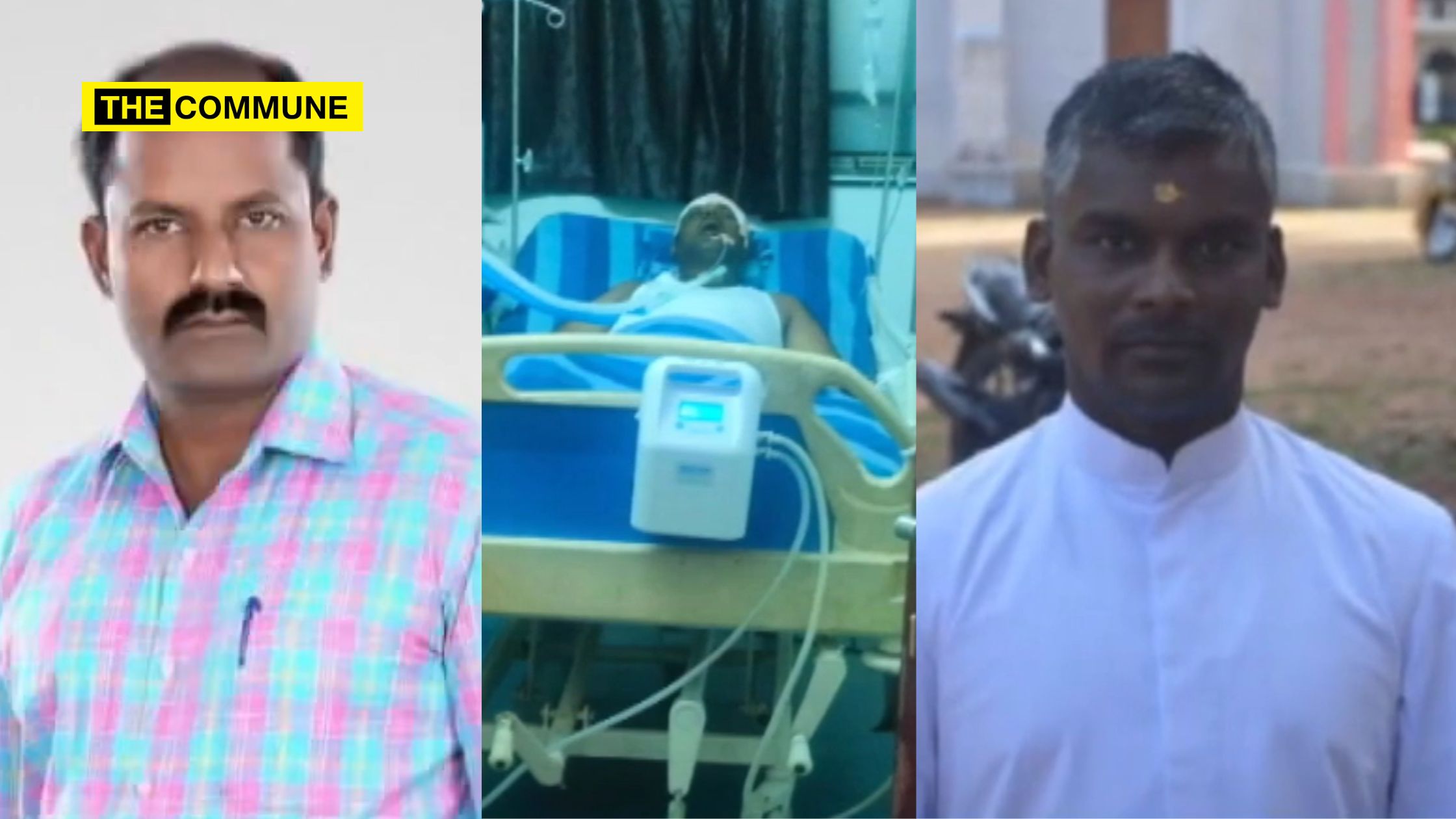
The Commune had recently reported on the brutal murder of Xavier Kumar in Kanyakumari. Just as the issue was cooling down, the news of another alleged murder comes up in the same region. 

As per the News Tamil 24×7 report, in the Melaperuvilai region of Nagercoil in Kanyakumari district, Alwin Arul Jose, a resident, was involved in the business of buying and selling second-hand vehicles. 

Alwin was also a member of the Parish Council in the Japamalai Aalaya Matha church in Melaperuvilai. The Parish Father Carmel and Alwin worked as two teams for the church’s administration. 

In relation to this, a few days ago, the two got involved in an argument. The father is heard saying, “Did you ask? You have no qualification to ask.” In the same video, one of the members of Father Carmel’s team, Rajesh, is heard saying, “We have fixed a date for you.” Alwin is heard refuting this saying, “Don’t say that, our dates are fixed by God.”

While this happened on one side, on the other, on 2 February 2024, Alwin is said to have received a call concerning his business. He is said to have gone to Kavalkinaru to attend to it on his two-wheeler. He is said to have called up his friend Remejius and said that two people were following him. Within a short while, someone else called Remejius from Alwin’s mobile to tell him that Alwin was severely injured and had died. Alwin was taken to Asaripallam Government Hospital where they said he was not dead but was unconscious. 

Following this, Alwin was taken to Muthu Neuro Centre (a private hospital) in Sungankadai. He was admitted to the ICU for the past 10 days for treatment but passed away on 13 February 2023. 

Allegations By Alwin’s Relatives

Alwin’s relatives have raised allegations that Alwin did not die because of the accident. They also said that Alwin was constantly in touch with a person named Chinnathurai.  

The relatives alleged that they had filed a police complaint in this regard but no action was taken. Alwin’s sister, speaking to the press alleges that, “When we opened his mobile phone, we looked at the recent calls. We found that he (Alwin) had called Chinnathurai frequently and also received calls from Chinnathurai. He spoke till 1.56 that day with him. So we filed a complaint with the police. But they did not take any action. They filed this incident as an accident, they did not do any inquiry or investigation.”

Amidst all this, an audio file of an alleged conversation between a person named Iruthaya Rajan and Father Carmel Cruz has been leaked. The alleged audio says, “Jose is the problem, if we break his hands and legs, everything will be alright,”

When summing up the events, it seems clear that there is a conspiracy behind Alwin’s accident allege the relatives. They hope that action will be taken against the perpetrators. 

Thanthi TV Report

As per the Thanthi TV report on the same topic, they have merely reported it as an accident without going into the details of the incident. The report states that since the relatives alleged foul play in the death and refused to accept the mortal remains of Alwin, a controversy arose. The report also states that the relatives alleged that Alwin and Father Carmel Cruz were at loggerheads and that he was responsible for the accident. 

Subscribe to our channels on TelegramWhatsApp, and Instagram and get the best stories of the day delivered to you personally. 
Netizens Slam Chennai Police Twitter Account For Posting Quote Of EVR, The ‘Father’ Of Dravidianist Parties

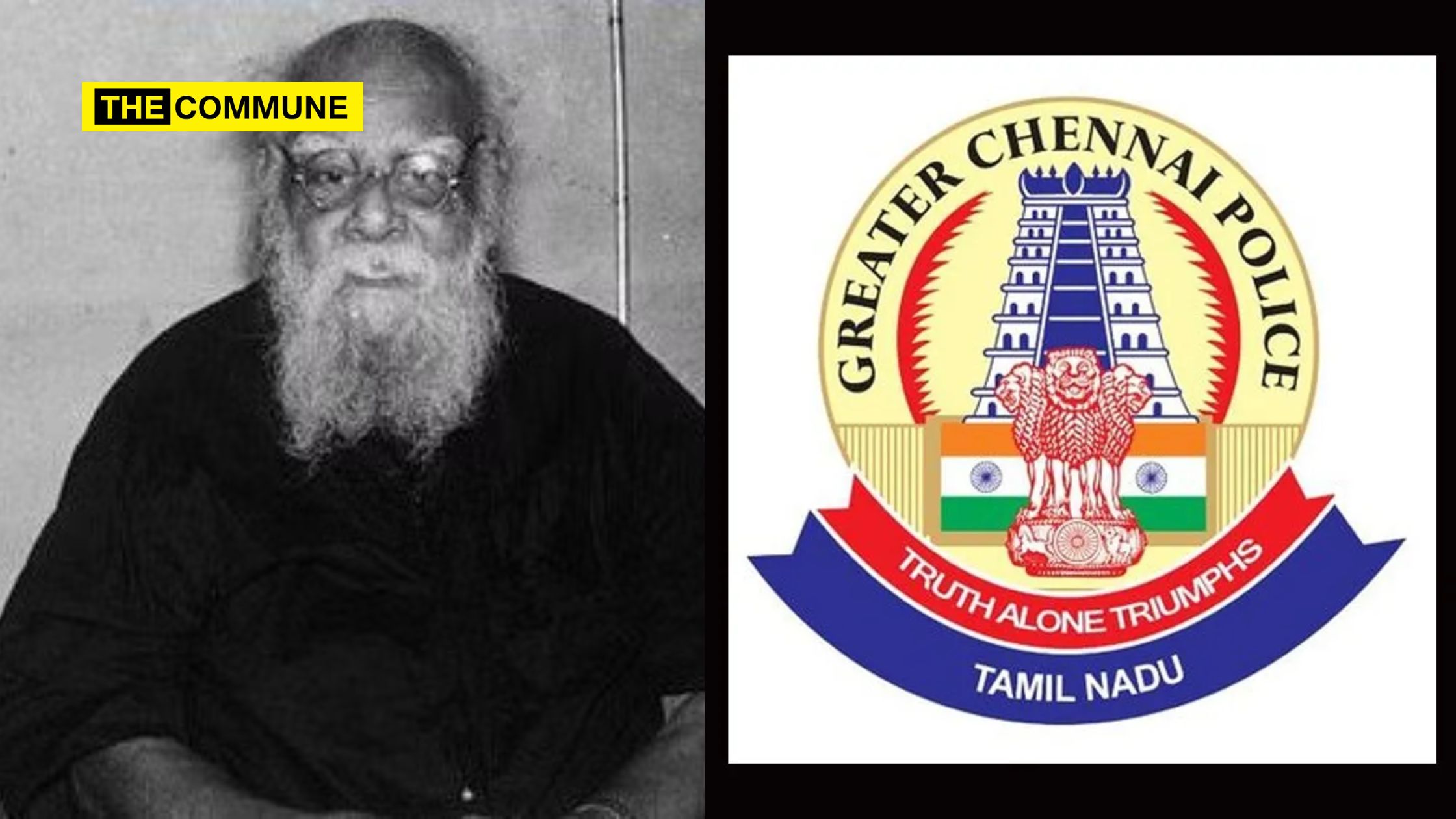
The recent ‘inspirational’ message to women posted by the Greater Chennai Police (GCP) on its official microblogging site X handle, featuring quotes from E V Ramasamy (EVR) also hailed as Periyar by Dravidianists, sparked a discussion on social media. Netizens took the opportunity to engage in playful banter, expressing their varied perspectives on how the political figure was portrayed, juxtaposed with their own perceptions of reality. “Aval” or She is an initiative undertaken by the Greater Chennai City Police with the goal of ensuring the safety and enhancing the self-defence capabilities of young girls.

The GCP on its X handle said “It is enough to take away the ladle from women and give them a book – Periyar #அவள் #காவல் #aval #avalbygcp #avalsafety #avalawareness #GCPAVAL” and in the picture message read, “Every woman should learn a trade to be able to earn for herself. If so learned, no husband would dare treat his wife as a slave – Periyar

Questioning the connection between the police department, Periyar, and women, netizens began sharing their opinions, with some expressing criticism while others offered a mixed response to the post.

A netizen humorously mocked the Greater Chennai Police in a sarcastic tone, “I also thought it was the DMK IT Wing, but then I realized that both are the same.”

https://twitter.com/SaffronSurge3/status/1757298807015154078

Another netizen appended a video to his comment featuring EVR and Maniammai stating, “Then why not give that qualification to his adopted daughter and wife Maniammai? He had not even bought sandals to put on her feet.”

https://twitter.com/selvinnellai87/status/1757319789679120581

Another netizen respectfully urged the Tamil Nadu Police to share quotes on Twitter attributed to Bharathiyar not EVR. He wrote, “I humbly request the Tamil Nadu Police to quote and tweet what he said about Thirukkural as ‘poop on a gold plate’, what he said about why the price of cloth has gone up and Tamil is a barbaric language. Didn’t Bharatiyar write all the poems and essays about women’s progress?”

Another netizen urged police to share more sensible posts “Who is this person? Pls share sensible posts and don’t behave like propaganda machinery of a particular political party, dear Chennai police.

Another netizen mocked the Greater Chennai Police “Even the police has become a Dravidian model under the DMK regime.” 

Another netizen posted in the comment with pictures of pages of a book by EVR titled ‘Why is a woman a slave’. He highlighted that in Chapter 4 on Freedom of Marriage, EVR says “A brief look at our philosophy of marriage is nothing more than the enslavement of women by men. And they teach that a man should have only one wife and a wife only one man, and force them to live accordingly. The self respect movement’s main plan is ‘Annulment ‘. If the Marriage Annulment Act does not happen, the marriage rejection campaign and the multi-party campaign for both men and women who want to marry will have to be done. This is not conducive to religious unity, satisfaction, and pleasure, and we urge men who have women to come forward willingly and dare to marry the women they like again”.

Another netizen raised questions to the GCP by sharing two pictures along with corresponding excerpts. “Sir take a look at this book” In Viduthalai on 11 May 1953, EVR wrote “If you can’t control your lust, then solve it with your mother or daughter, they are women and your satisfaction is important to you.

Another netizen another shared excerpts of 11th edition 1997 of Tamilar Thalaivar book page 44, “On that day, EVR would often enter and leave through the courtesans home. Ramaswamy and his associates used to go to the Cauvery river sands along with the courtesans crowd during the moon days. They spend the whole night on the banks of the river and return home only at dawn. For this gathering, the food will come from EVR’s house. EVR ‘s wife Nagammai is the cook and dispatcher.”

Another netizen appended a video clip to the comment, featuring a scene from the movie “Periyar,” depicting EVR slapping his his wife, Maniammai in the cheek while dining.

Another netizen sharing EVR quotes from the Kudiarasu dated 8 February 1931, EVR advocating for gender equality “Women should be prepared to do the same as men. If a man keeps two courtesans, a woman should try to keep three desired heroes. Soon the situation will improve; a true compromise will emerge.”

Another netizen trolled the post by sharing a post of EVR’s wife Maniammai was serving food to EVR, with caption “It is enough to take away the ladle from women and give them a book – Ramasamy”

Another agitated netizen expressed frustration, stating, “A family with the help of the police grabbed the money of my wife who was living on her own and supporting her parents What the police say about women’s progress is shameful. Your department which is doing Katta Panchayat (kangaroo courts) is not qualified to talk about women progress.

Subscribe to our channels on TelegramWhatsApp, and Instagram and get the best stories of the day delivered to you personally. 
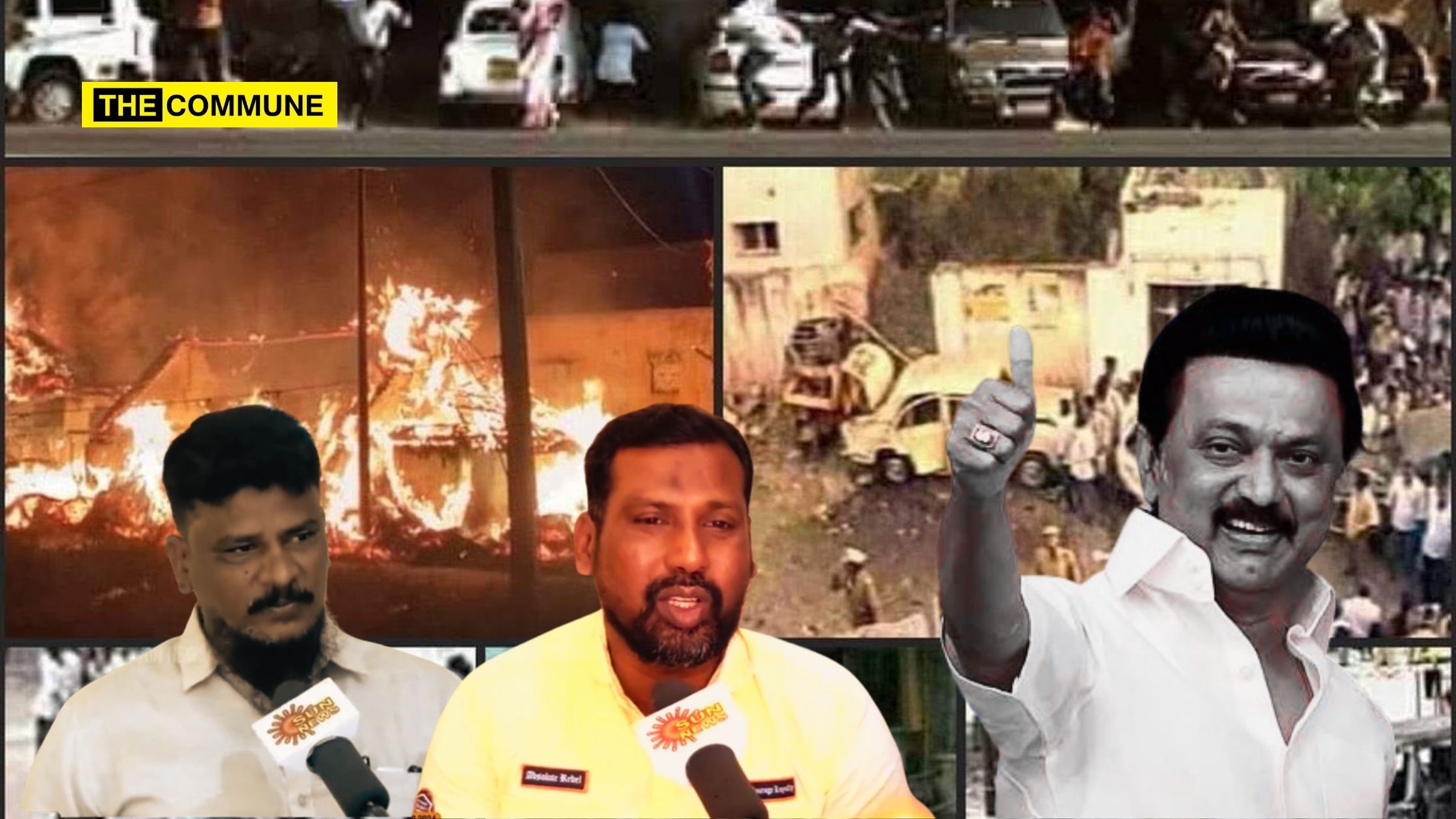
“Only After DMK Came To Power We Got Hope”: DMK Govt Sets Free Coimbatore Bomb Blast Terror Convicts, Sun News Glorifies Them As They Praise MK Stalin & His Govt

As the courts denounced the release of 1998 Coimbatore blast convicts, the state government, backed by various minority-centric political parties, reportedly sets free the three terrorists. With the approaching tragic anniversary on 14 February, seemingly for opportunistic political gains, the DMK government is contemplating the release of the terrorists to appeal to the extremist Islamist votes as Lok Sabha elections imminent.

On 7 February 2024 , Sun TV, affiliated with the DMK family, conducted an interview featuring three terrorists implicated in the 1998 Coimbatore blast case. In the interview, these terrorists openly expressed admiration for Tamil Nadu Chief Minister MK Stalin and the DMK government. The terrorists, who seemed to have any remorse for their past actions, has since gained widespread attention on social media. The video, with all the background music, makes on think the terrorists were actually wronged by the justice system.

In the above video, one Mohammed Ibrahim expresses happiness that he feels happy to come out of prison after 25 years of distress and will now be able to live with his family.

I convey my heartfelt gratitude to those who fought for our freedom – including social organizations, political parties and other outfits” and goes on to name Islamist outfits like Tamil Nadu Muslim Munnetra Kazhagam (TMMK), SDPI, (Social Democratic Party of India – a subsidiary of the banned terror outfit Popular Front of India), Muslim League, Thamimum Ansari’s Manidhaneya Jananayaga Katchi, Tamil Nadu Thowheed Jamat etc. He also names I.N.D.I. Alliance parties namely Congress, VCK and also Naam Tamilar Katchi.

I prayed to God. We were so happy that what couldn’t be done by many governments, the DMK government did it“, Ibrahim said.

Another terrorist Shahul Hameed said “After the DMK government came, our release was brought to the attention of the Tamil Nadu Chief Minister. He only took cognizance of our requests and helped in our release. He repeatedly assured to release us and was of support throughout. Only after the regime change and the DMK government came to power, we got hope of our release.

Annamalai Condemns The Move

On 13 February 2024, Tamil Nadu Bharatiya Janata Party president K Annamalai conveyed his apprehensions in a video message on the microblogging platform X. He voiced concern about the DMK government’s attempts to release 16 convicts linked to the Coimbatore bomb blast right before the Lok Sabha elections. Annamalai strongly criticized these efforts and concluded his message with a warning to the DMK government to refrain from repeating a misadventure similar to the one in 2009.

Annamalai expressed concern about the DMK government’s efforts to release 16 convicts involved in the Coimbatore bomb blast just before the Lok Sabha elections. The Coimbatore bombing on 14 February 1998, resulted in 58 deaths and over 200 injuries. The incident occurred during the DMK government’s tenure, and there is criticism of their attempts to release the convicts despite strong opposition.

In 2009, nine convicts were released, drawing criticism from various quarters, including Cho Ramasamy, who equated it to the government patronizing a terrorist organization. The Supreme Court rejected bail for the remaining 16 convicts in October 2023, deeming it a grave crime of high order. However, the DMK government, after receiving a report from the Justice Aadhinadhan Committee in 2021, is making efforts to release the prisoners.

The BJP in Tamil Nadu strongly condemns these actions, emphasizing that the people of Tamil Nadu are also against the government’s attempts to release the convicts. The message highlights the seriousness of the crime and the potential risk to human lives if the release is pursued. The concern is reinforced by recent incidents, such as a suicide bombing in 2022 in Coimbatore, and ongoing efforts by the NIA to address terrorism-related activities.

The message concludes with a plea for the DMK government not to embark on this misadventure again, emphasizing the importance of prioritizing human lives over electoral gains.

 In the video message, Annamalai said, “It is very unfortunate that the DMK government is trying its best to release 16 convicts in the infamous Coimbatore bomb blast and they are doing everything within their power to get this done just before the Lok Sabha elections just to get a brownie point. We all know February 14 1998 that day is etched in the memories of Coimbatore people and Tamil Nadu, because Tamil Badu has never seen a bomb blast of that order. 58 people killed, and more than 200 people injured, bombs found in 24 other locations. It was squarely aimed at L K Advaniji, our Bharat Ratna… and luckily with God’s grace Advaniji escaped. Unfortunately, innocent people who got nothing to do, they all got killed on that day. The incident happened during the government of DMK, now DMK tried everything within its power to release the convicts at different points of time against people’s opinion.”

“In 2009 November 7 they released 9 convicts of this case. Cho Ramasamyji a great writer and ideologue, he mentioned this act is equal to a government of the day acting as a patron of a terror organization. Now there is huge demand, they create an artificial demand which every single political party in Tamil Nadu except BJP, they all want to join the bandwagon to release the remaining 16 people also. Now it is very unfortunate to see the political parties of Tamil Nadu behaving just for vote bank politics. Only in October 2023, the Supreme Court has squarely rejected the bail for all the 16 convicts saying it is a grave crime of very high order” he said.

“Now the DMK government in 2021, after they come to power, they got Justice Aadhinadhan Commission, more like an eyewash commission, they got a report from the commission which said they should be released. They find all means at their disposal to release all the 16 prisoners immediately. Now BJP Tamil Nadu, we strictly condemn, not only do we condemn, we believe that people of Tamil Nadu are against this act of government trying to release these people early. Only in 2022, just before Deepavali, a suicide bomber targeted the city of Coimbatore. Fortunately only the suicide bomber got killed and none of the people got killed or injured, the common people. And the NIA is still raiding multiple charge-sheets filed, even day before yesterday the NIA has raided, arresting multiple people of the same module, ISIS-inspired module. Now they want to release these people,” he further said

“I clearly don’t know what the DMK’s mindset is. If there is somebody who will do religious appeasement politics of the highest order in India, DMK comes first. We are not against other prisoners getting released, who don’t fall under the category of terror crime or the crimes of highest grievous nature. But this is the crime of highest grievous nature even the Supreme Court on October 2023 has said. Now they are trying everything under their disposal to get them before Lok Sabha election just because of the winning elections and getting votes matters more than human lives. I hope and pray the DMK doesn’t get into this misadventure. In 2009 they have done one mistake, I hope, they won’t do the second one,”  he concluded.

Devastating Coimbatore Serial Blasts – A Grim Chapter

The 1998 Coimbatore serial blasts, orchestrated by S. A. Basha, the founder of the Islamic fundamentalist group Al Ummah, unfolded in a series of 12 bomb attacks across 11 locations. The intended target, L.K. Advani, narrowly escaped the tragedy due to a delayed flight, marking a dark day in Coimbatore’s history on 14 February. The aftermath of the blasts left 58 dead, 252 seriously injured, and economic losses in crores. Survivors and families of victims continue to grapple with the trauma, as highlighted by poignant testimonials.

Recalling the tragic incident mother of the victim mourned death of her son “Today is the death anniversary of my son who I toiled so hard to bring up. He would have been 35 today, I am extremely upset. All my sons have passed. He promised me as a child that he would study well and take good care of me.”

Rangaraj, a survivor facing physical and financial scars, recounts his experience of being caught in two bomb blasts and the ongoing pain he endures. Despite multiple surgeries over 25 years, financial constraints hinder his access to necessary medical treatment, serving as a reminder of the long-lasting impact on survivors’ lives. while speaking he mentioned that, “The blasts occurred in a Muslim-dominated area, but eerily, no one was present when the explosions transpired. It was as if they had prior knowledge. We behaved and worked with them as if we were family.”

Journalist Mani during a interview recounting the traumatic experience of covering the terrorist attack in Coimbatore describing it as the most catastrophic event he has ever witnessed and , a day etched into his memory, he narrates the tense atmosphere marked by anti-Muslim and anti-DMK sentiments. Focusing on M. Karunanidhi, the then Chief Minister, he highlights the gravity of the situation, with L.K. Advani personally inspecting the aftermath.

Mani details the sequence of events, noting that the blasts unfolded during CP Radhakrishnan’s election campaign at RS Puram. The coordinated bombings occurred at various locations from 3:50 PM to 10:30 PM, claiming 58 lives and injuring over 200. Hospitals were not spared, resulting in the tragic deaths of medical staff and patients.

The journalist visited the blast site the next day, witnessing a grim scene with bloodstains serving as a haunting reminder. The diverse hiding places for bombs, from vehicles to bags, schools, and public places, added to the shocking nature of the attack. Drawing parallels with the 1993 Mumbai bombings, Mani emphasizes the national significance of the Coimbatore serial bomb blasts.

Survivors and families of victims strongly oppose the release of the convicted terrorists responsible for the Coimbatore blasts. Their steadfast conviction is fueled by the profound suffering they’ve endured, and they vehemently wish to prevent others from experiencing a similar fate. The enduring physical and emotional scars serve as a poignant testament to the lasting impact of the Coimbatore blasts on their lives.

Subscribe to our channels on TelegramWhatsApp, and Instagram and get the best stories of the day delivered to you personally.
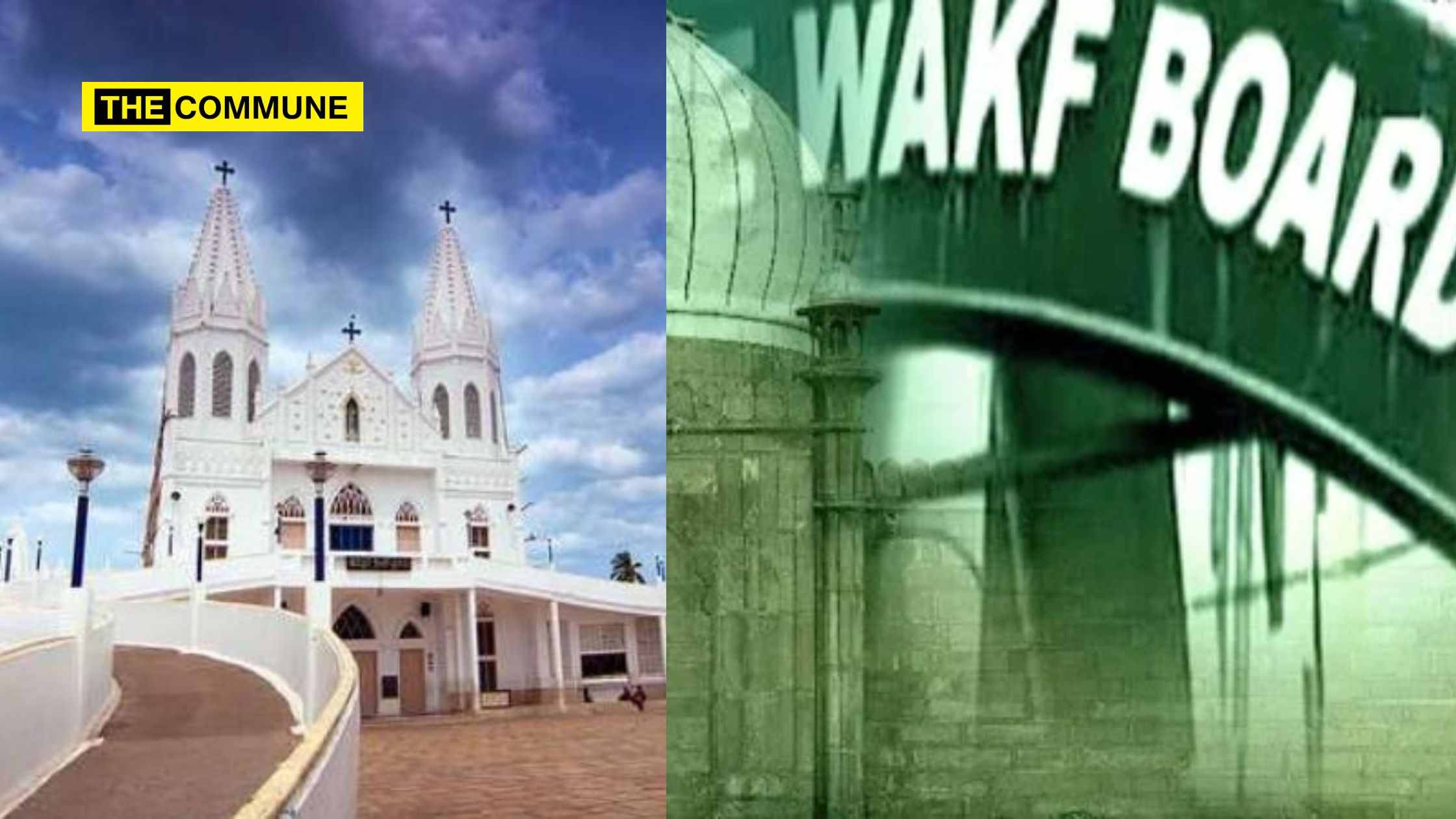
Major Land Owners In India: Govt Of India, The Catholic Church & The Waqf Board

India, despite being the world’s 7th largest country by land area, possesses only 2.4% of the total land area, emphasizing the need for strategic land management. The Indian Government stands as the largest landowner, with the Government Land Information System (GLIS) indicating ownership of at least 15,531 square km of land.

In India, the intricacies of land ownership hold substantial sway over the economic landscape. Surprisingly, entities like the Catholic Church and Waqf have emerged as significant landowners, reshaping the dynamics of property possession. As of 2017, this religious institution, with its extensive network as trusts and charitable societies, stands as the second and third largest non-agricultural landowner in the country, trailing only behind the Government of India.

Recent land conflicts in Nagaland spotlight the imperative need for transparent communication and collaboration between the Catholic Church and local communities to establish fair land management practices. Despite being a religious institution, the Catholic Church’s impact on landownership is substantial.

Church Properties: Unveiling The Catholic Church’s Extensive Land Portfolio

Christians constitute roughly 2.3% of India’s population (census 2011) Contrary to expectations of real estate magnates dominating land ownership, it is the Catholic Church of India that boasts an extensive property portfolio. Functioning as a conglomerate of various trusts and charitable societies to spread Christianity in India, the Catholic Church employs over 50,000 religious sisters, making it the largest non-governmental employer in the country. With an estimated value between 50,000 to 100,000 crore rupees, the Church’s vast land holdings, acquired through the Indian Churches Act of 1927, have been a subject of legal debates.

The Church’s influence extends beyond urban areas, impacting small villages where its religious institutions become central to local life. Historical roots, legal debates, challenges, and controversies surround the Catholic Church’s land ownership, prompting discussions on transparency and legal frameworks.

Waqf Properties: Exploring The Islamic Religious Trust’s Land Holdings

Meanwhile Muslims constitute roughly 14.2% of India’s population (census 2011), contribute significantly to the nation’s diverse religious landscape. Waqf boards, established under the Waqf Act, 1954, manage Islamic religious places and are free from state interference. These boards, with more than 610,000 immovable properties, own substantial land across various states, making them the third-largest landowner in India. The absence of a monetary estimate adds complexity to understanding the actual value of Waqf properties.

A joint parliamentary committee report in 2009 highlighted that Waqf properties, encompassing around 6 lakh acres, rank as the third-largest landowner in India after the Defence Department and Indian Railways. Recent concerns about misuse and a lack of estimates on the monetary value of these properties have prompted legal interventions.

The situation where state governments own the lands of Hindu temples in the name of secularism, while minorities can independently enjoy the benefits and become a land-owning class promoting their religion, resembles a system reminiscent of feudalism in medieval European countries. This scenario raises concerns and is viewed as alarming.

Why we say the situation is considered alarming? Lets recall a specific incident in Tamil Nadu, a farmer attempting to sell his land was surprised to find that the registration department refused the transaction, stating that the land did not belong to him. Upon inquiry, it was revealed that the Waqf board claimed ownership. Another instance that made the news was when Waqf board claimed ownership of the entire Tiruchendurai village in Tiruchirapalli.

The extensive land holdings by religious institutions and boards raise questions about transparency, legal legitimacy, and the potential impact on India’s future land requirements. As the country strives to accommodate its growing population, estimated to require 4 to 8 million hectares of land for residential use by 2030, navigating these complexities becomes paramount. Striking a balance between development, social equity, and environmental sustainability remains a challenge, necessitating strategic land governance and comprehensive regulatory measures.

(With Inputs From OpIndia)

Subscribe to our channels on TelegramWhatsApp, and Instagram and get the best stories of the day delivered to you personally. 
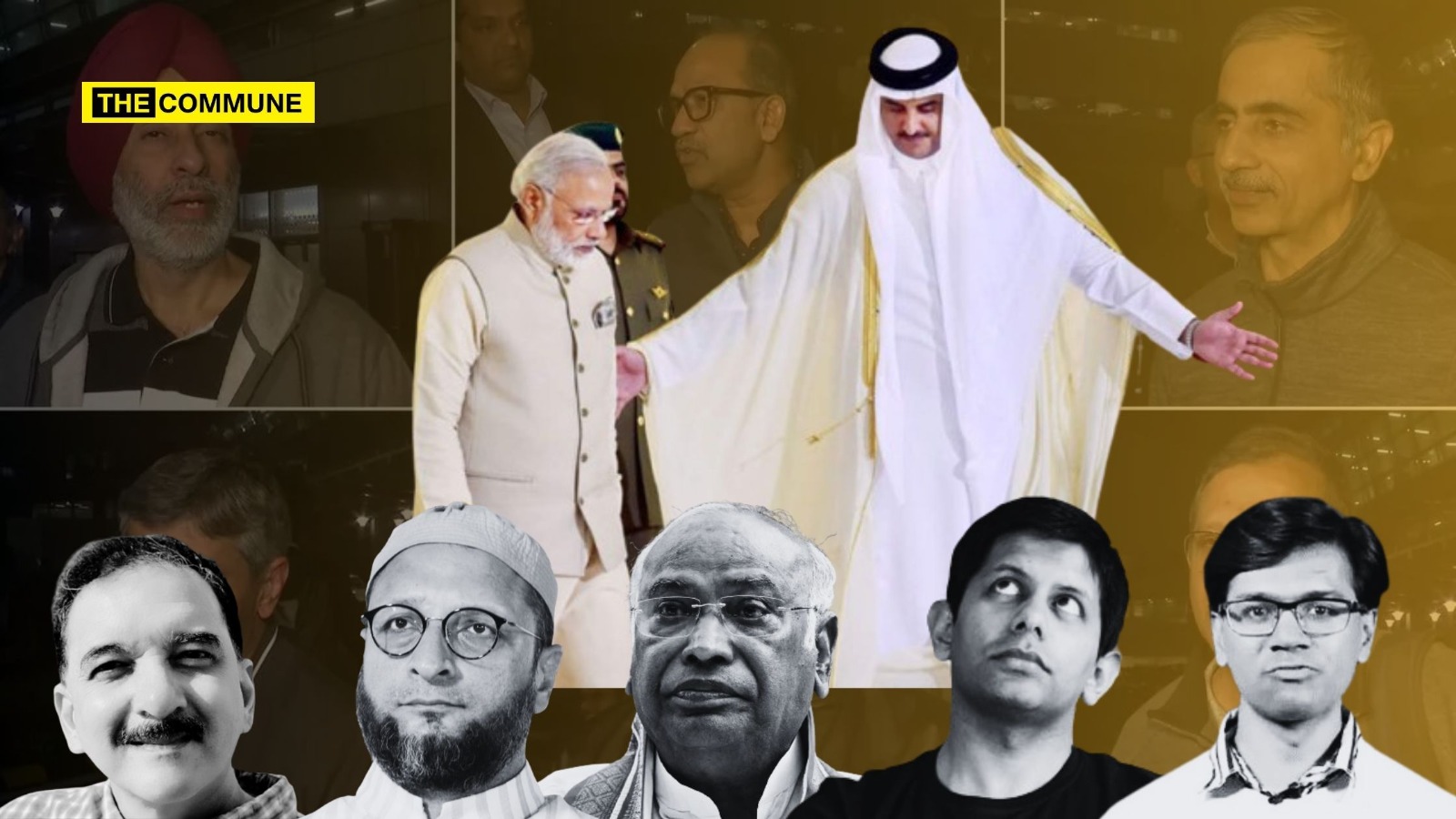
Calling Out Those Mocked PM Modi With Vishwaguru Jibes But Went Mute After Qatar’s Release Of Indian Navy Veterans

In what is seen as a diplomatic success for the Narendra Modi government, Qatar released the eight former Indian Navy personnel who were facing spying charges. The Qatari Emir’s equation with Modi and backdoor diplomacy, led by National Security Advisor Ajit Doval, played key roles. Legal assistance from the Ministry of External Affairs further contributed, with a possible change of mind in Qatar after Modi’s meeting with the Qatari Emir in December last year.

After a year-long trial, a Qatari court sentenced them to death on 26 October 2023. The Indian government mounted a legal challenge and engaged in proactive diplomacy, with the release announcement supervised by PM Modi. The veterans thanked Modi, stating their return was possible due to his personal intervention. They were employees of Qatar-based Al Dahra Global Technologies and Consultancy Services, owned by Khamis Al Ajami, a retired squadron leader of the Royal Air Force of Oman.

How Congress Mocked

The Modi government’s “alleged” failure to secure the release of eight Indian Navy veterans facing death sentences in Qatar was blown up by the Congress and its supporters as if it had cast a “shadow” on India’s diplomatic prowess. They claimed that despite Prime Minister Modi’s emphasis on fostering robust international relations, particularly with Islamic nations, the death sentence was a glaring vulnerability in India’s diplomatic influence.

They argued that it exposed a gap between the government’s claims of being a global leader and the actual “effectiveness” of its diplomatic efforts. The news of the death sentence back in October 2023 became a focal point for criticism on social media, particularly from India’s liberal ecosystem, raising questions about the government’s handling of such sensitive international issues. 

Here are some of their comments from October 2023. But, after the announcement of the release of all 8 veterans was received with absolute silence from the same detractors. 

Mallikarjun Kharge

Congress party president Mallikarjun Kharge back in April 2023 was quick to call the Modi government meek and also said their “meek surrender exposed their tall claims of making India a Vishwaguru”.

He also added, India & Qatar celebrate 50th year of Diplomatic Ties in 2023. Indians are Qatar’s largest expatriate community. @narendramodi ji, calls Qatari counterpart to extend wishes on FIFA World Cup, but can’t intervene to save the precious lives of our bravehearts! Nationalism?”

However, there is no message on the release of the Navy veterans.

Kapil Sibal

Congress Rajya Sabha MP Kapil Sibal was also quick to poke Modi with the Vishwaguru jibe when the news of the death sentence broke out. However, as expected, there is no sign of any positive words for the same Vishwaguru who personally intervened to bring back the Indian Navy veterans to safety. 

Manish Tewari

Congress MP Manish Tewari had complained that his question regarding the death sentence to the Indian Navy veterans was disallowed. Well, he must have got his answer now.

How Congress Supporters And Islamist Zubair Mocked

The Congress ecosystem is such that they pounce on the Modi government at every single opportunity to pinpoint mistakes. Here are a few of them:

Sumanth Raman

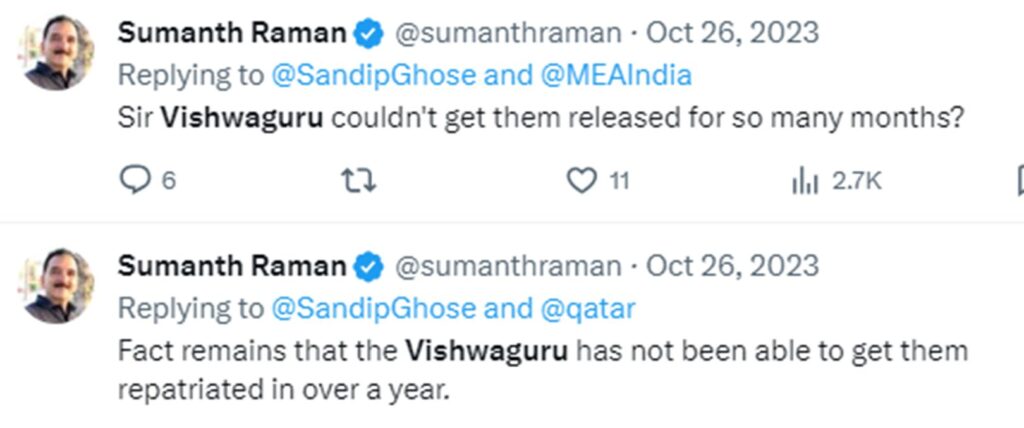
Political commentator Sumanth Raman ensured he would frequently taunt the government with the Vishwaguru jibe. When the death sentence was announced, he again taunted the government over it. 

After so much mocking, once the news of the release came out, Sumanth Raman did put out a congratulatory post but for EAM S Jaishankar and not Modi – despite the fact that the Navy veterans themselves were quoted saying it was PM Modi who personally intervened in securing their release.

‘Deshbhakt’ Akash Banerjee

Youtuber Akash Banerjee posted a video in October 2023 where he said, “8 Indian Navy Veterans just got the death sentence in #Qatar. Govt KNEW about this case for the last one year & yet couldn’t get relief. How did our relations with a once friendly nation go SO BAD & our diplomatic might so ineffective beyond soundbytes?”

He deleted this post and made the said video private!

He came up with a follow-up video where if one reads between the lines, it is not necessarily that he praised the Modi government for the diplomatic victory. He blames the Nupur Sharma episode and India’s relations with Israel for the strained relationship with Qatar! 

He also quietly points to an LNG deal signed between India and Qatar was probably the reason for the negotiation power we had. Well, Akash, you are wrong. The deal signed was an extension/renewal of an existing agreement. 

Mohammed Zubair

The self-styled fact-checker also taunted Prime Minister Modi when the news about the death sentence broke out. He wrote, 

However, he has not opened his zippered mouth after the release of the veterans. 

Other Opposition Members Who Mocked

Will the parties in the opposition leave any chance to mock the government? No, they won’t. Here are a few examples.

Owaisi

AIMIM leader, Asaduddin Owaisi had claimed that he had raised the issue about the Navy veterans back in April 2023 and after the death sentence announcement, he questioned PM Modi to prove that Islamic countries loved him and to bring our people back. Well, he did! However, Owaisi forgot to thank PM Modi and has not posted anything related to the release.

Saket Gokhale

“Journalist” turned Trinamool Congress RS MP had also mocked the Modi government using the Vishwaguru jibe and accused the government of not taking cognisance of his letter to the EAM S Jaishankar. Well, things do take time but the Modi government brought back India’s people home. 

Here are some more great “patriots” questioning the Vishwaguru status of India and PM Modi.

From the above instances, it is clear that the concern of Congress and its lackeys was not about the plight of the Indian Navy officers but to target PM Modi to satiate their political itch.

Subscribe to our channels on TelegramWhatsApp, and Instagram and get the best stories of the day delivered to you personally. 
8th Century Kotravai Sculpture Discovered In Pilrampattu Village Near Ulundurpettai

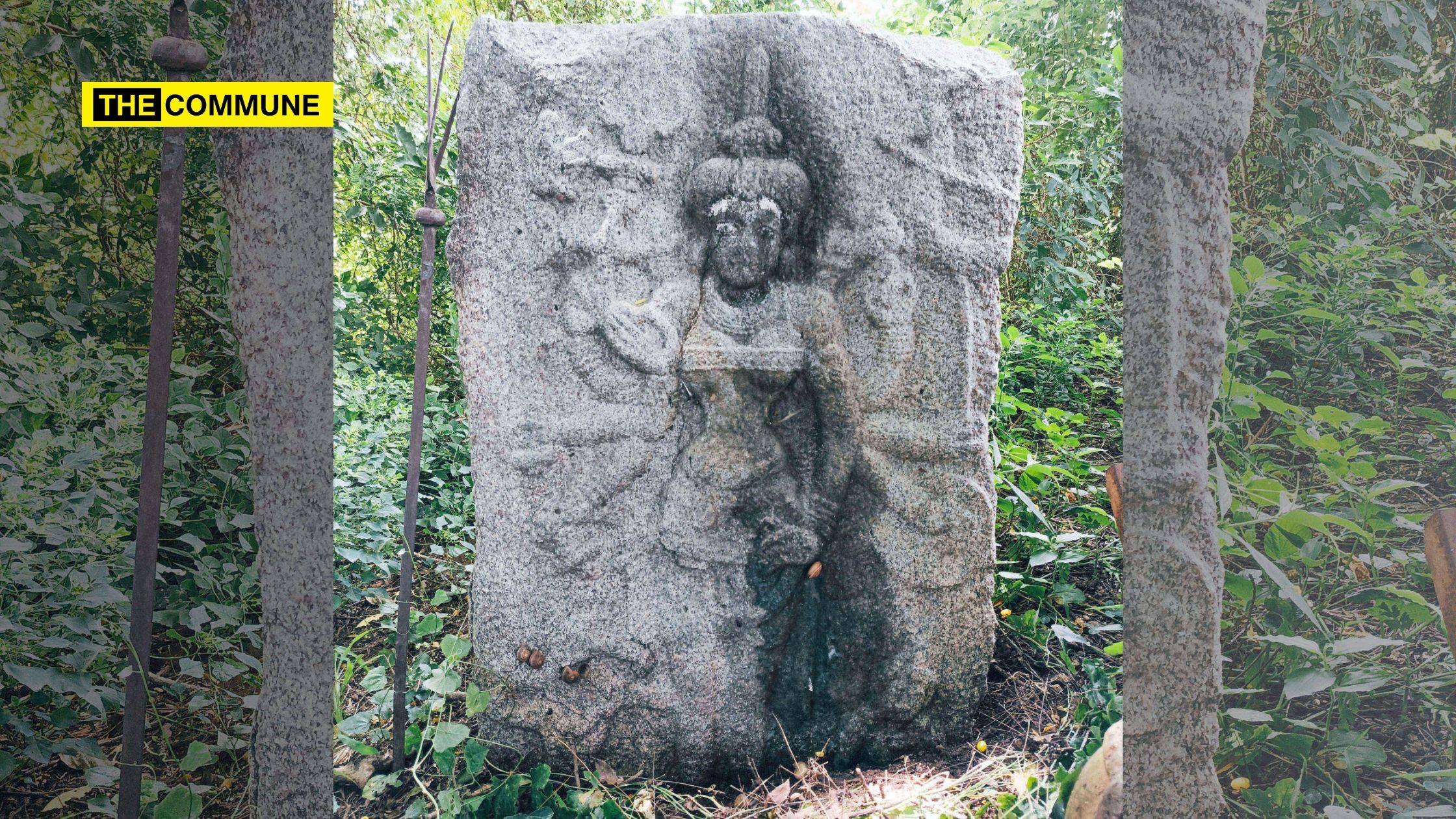
Historian Raj Panneerselvam, accompanied by Aruppukkottai Sridhar and Thamarai Kannan, embarked on a riveting research expedition to Ulundurpettai in Kallakurichi district, driven by reports of an extraordinary find: a sculpture uncovered in the fields of Pilrampattu village near Neivanai.

Nestled amidst the verdant fields of Pilrampattu, just north of the Sesha river and sheltered by surrounding trees, lay a remarkable slab stone sculpture. Standing at about 5 feet in height and 4 feet in width, this stunning artwork depicted a female figure adorned with eight arms, unmistakably hailing from the Pallava period.

Upon meticulous examination and cleaning, experts discerned distinctive features, including a locally styled crown atop an oval-faced visage, adorned with thick lips and bhadra kundalams in both ears. The sculpture was bedecked with intricate ornaments—a string-like necklace, a chest girdle, shoulder bracelets, and arm bands adorning all eight arms.

The sculpture wielded various symbolic objects, including a discus, a sword, a bell, a conch, a bow, and a shield, each held with precision and purpose. Layers of bangles adorned its arms, while a trident and a lion graced its right side, a reindeer stood on its left, and soldiers flanked its feet, underscoring its regal presence.

Dating back approximately 1200 years, this Kotravai sculpture exuded timeless grace and power, serving as a poignant testament to ancient craftsmanship and spirituality. Despite the passage of centuries, it remained steadfast in its role as the guardian deity of prosperity, a timeless sentinel amidst the fields of Pilrampattu.

Subscribe to our channels on TelegramWhatsApp, and Instagram and get the best stories of the day delivered to you personally. 
BJP TN President Annamalai Files Complaint With DVAC Against DMK Min Gandhi Alleging Corruption In Pongal Free Veshti And Sarees

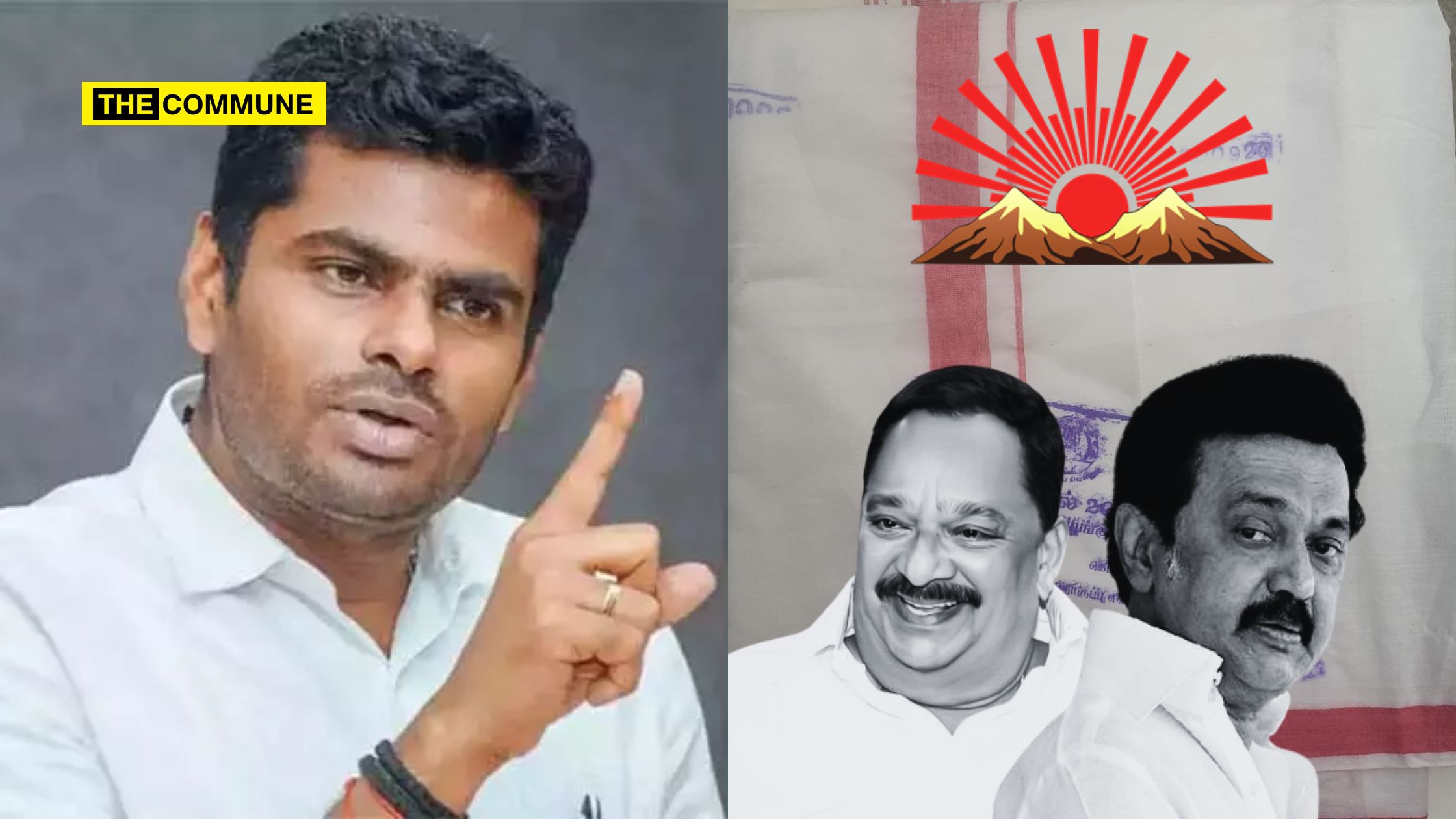
Recently,Tamil Nadu Bharatiya Janata Party president K Annamalai posted on his official X handle that the Department of Vigilance & Anti-Corruption (DVAC) in Tamil Nadu has officially recognized his complaint regarding corruption allegations against DMK Minister R. Gandhi who is the Textiles and Handlooms Minister. Annamalai provided supporting evidence related to corruption in the distribution of Pongal sarees and dhotis. He expressed hope for an impartial investigation to be conducted promptly, leading to the timely apprehension of those involved in corruption.

Annamalai stated in his statement that, “Under the DMK Govt, corruption has become the order of the day. On the 6th of February 2024, we exposed the monumental corruption that has taken place in the Free Dhoti Scheme & the involvement of DMK Minister Thiru Gandhi in the same. Today, with all the supporting evidence, @BJP4TamilNadu has filed a complaint with the Department of Vigilance & Anti-Corruption. We hope an unbiased investigation will be carried out and the corrupt will be booked at the earliest“.

In the formal complaint dated 10 February 2024, submitted by K. Annamalai and directed to Tr. Abhay Kumar Singh, Director General of the Police Department of Vigilance & Anti-Corruption in Chennai stated that there was significant corruption within the Handloom & Textiles Department, specifically implicating DMK Minister Gandhi and accused him of peddling wrong information in the public.

“The Handloom & Textiles Department, has been instrumental in supplying Free Dhoti and Sarees to ration card holders during the Pongal festival every year. Ever since the DMK came to power, there has always been a lag either in the procurement of yarn on time or in the settlement of payment to handloom owners. This year, Thiru Gandhi has wilfully manipulated the production method of free dhoti and sarees for his personal gains.”, Annamalai said.

He said that the DMK government ordered the manufacture of 1.68 Crore Dhoti and 1.68 Crore Sarees, with a government order dated 22 October 2021, adding that while it has been a practice to use Polycot material for Free Dhoti & Sarees since 2003, the order stipulates that only the Warp in Dhotis must be Cotton, with the Weft potentially being Polyester.

Annamalai pointed out that the South Indian Textile Research Association report on a sampled Dhoti (Stamp number: SA2-920) revealed that only 22% of the Warp was cotton and 68% was polyester, contradicting Minister Gandhi’s claims.

He also gave a detailed break up estimating the amount of corruption involved.

Cotton yarn is priced at ₹320 per kg, while the tendered procurement rate is ₹160. Polyester, which ranges from ₹90 to ₹110 per kg, was allegedly used. The Textile Minister is accused of a corruption amounting to 60 Crore Rupees in the Free Dhoti procurement alone, with the corruption amount in Free Sarees yet to be determined.

The letter urges the Department of Vigilance and Anti-Corruption to conduct a thorough investigation based on the enclosed documents, including the government order and the textile research association’s test report. It calls for filing a case and appropriate action against Minister Gandhi for his alleged corruption with enclosing Government order from the Department of Handlooms & Textile vide reference number 20758/2021/P1 dated 22.10.2021 and the Test Report number N2306248 Dated 31.01.2024″

On 6 February 2024, as part of his “En Mann En Makkal” padayatra, Annamalai visited the Ranipet Assembly Constituency and leveled accusations of corruption against Tamil Nadu Handloom Minister, Gandhi. Annamalai claimed that Minister Gandhi, despite his name’s significance, was allegedly engaged in a sophisticated form of corruption related to the distribution of Pongal sarees and veshti (dhotis). According to Annamalai, Minister Gandhi was reputed for soliciting commissions from weavers and workers involved in the production of veshti and sarees, earning him the nickname “Commission Gandhi.”


Announcing on his official social media handle, Annamalai shared that a sample of the dhoti distributed during the Pongal collection was sent to the Coimbatore-based textile research center South India Textile Research Association (SITRA) in Coimbatore for testing. Shockingly, the results indicated that 78% of the dhoti was made from polyester, while only 22% comprised cotton. Annamalai expressed concern about a significant reduction in production costs and widespread corruption.


Online users rejoiced as yet another DMK minister in Tamil Nadu faces corruption charges. Currently, the former excise minister, who now serves as a minister without portfolio, has been detained and denied bail 17 times by the court. Additionally, K Ponmudi, the former Higher Education minister, is grappling with corruption allegations. This development is part of the BJP’s efforts to expose corruption within the DMK party and the family, with three segments of corruption audio recordings released thus far in 2G scam case.


Subscribe to our channels on TelegramWhatsApp, and Instagram and get the best stories of the day delivered to you personally.