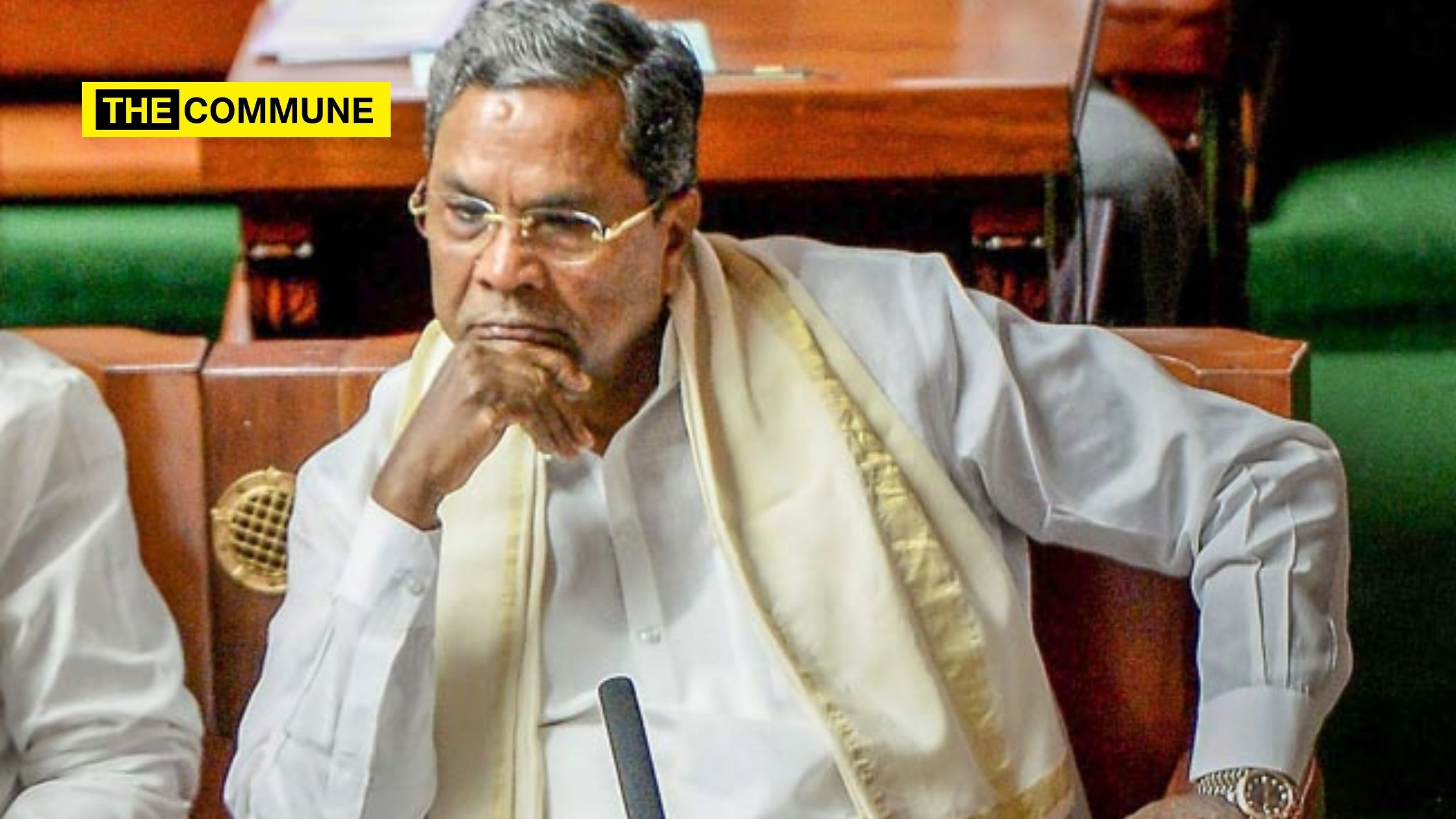
Karnataka Chief Minister Siddaramaiah appeared before the Mysuru Lokayukta Superintendent TJ Udesh on Wednesday morning concerning the Mysuru Urban Development Authority (MUDA) case.
CM Siddaramaiah is the main accused in the case related to the alleged irregularities in the MUDA. He is the first Chief Minister to face a Lokayukta probe while in power in Karnataka’s history. It is also the first time CM Siddaramaiah, who has a clean record, is facing a probe in his four-decade-old political career.
CM Siddaramaiah arrived in Mysuru from Bengaluru and was welcomed by Minister for Social Welfare H.C. Mahadevappa and Minister for Animal Husbandry K. Venkatesh at the Government Guest House.
CM Siddaramaiah had breakfast at the guest house and then went straight to the Lokayukta’s office. He would be probed about his role in allocating sites on a 50:50 ratio to his family, land conversion, and alleged document fabrication.
Sources stated that if CM Siddaramaiah gets a clean chit in the Lokayukta probe, it would help him to strongly argue that the investigation by the Central Bureau of Investigation (CBI) is not required and allegations against him are political in nature. CM Siddaramaiah can face the investigation without the threat of being arrested.
The High Court will take up the petition demanding a CBI probe on November 26. The court has also asked the Lokayukta to submit its investigation report.
Petitioner Snehamayi Krishna has stated that he has submitted a list of questions to be asked from CM Siddaramaiah. If the Lokayukta fails to ask these questions, CM Siddaramaiah will have to face these questions by the CBI in future.
A high alert has been sounded in the surrounding areas of Lokayukta’s office in Mysuru. The Lokayukta had questioned CM Siddaramaiah’s wife, Parvathy, the second accused, third accused brother-in-law Mallikarjunaswamy and fourth accused land owner J. Devaraju earlier.
–IANS
Subscribe to our channels onTelegram, WhatsApp, and Instagram and get the best stories of the day delivered to you personally.
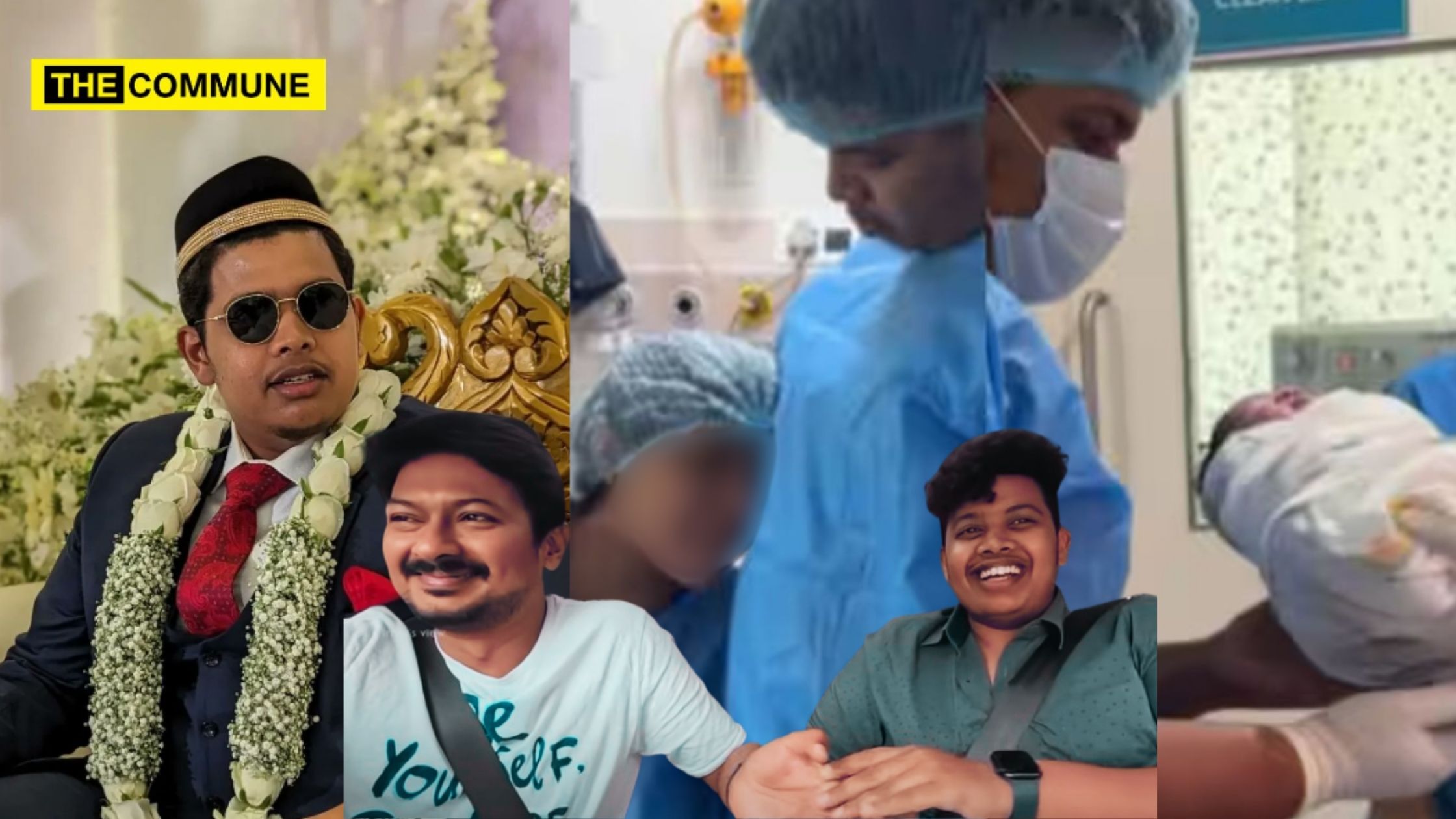
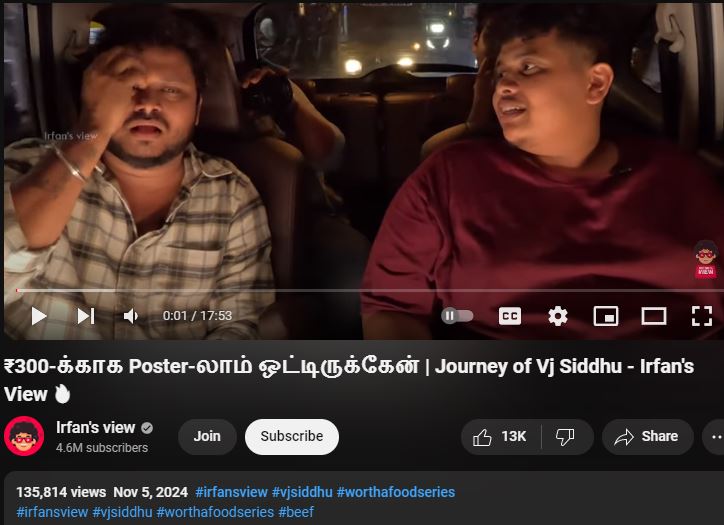
Famous Tamil YouTuber Mohamed Irfan, known for frequently flouting state laws, seems to have once again escaped accountability, raising concerns about the DMK government’s leniency towards him. This time, Irfan sparked outrage by taking matters into his own hands during a medical procedure — cutting his newborn baby’s umbilical cord and uploading the act as part of a vlog, like a birthday celebration. This troubling display sets a dangerous precedent.
The incident in question occurred when Irfan posted a video on his YouTube channel, “Irfan’s View”, filmed at a private hospital in Chennai. The video depicted Irfan cutting his newborn’s umbilical cord on camera as he and his wife, Aaliya, celebrated the birth of their first child.
Despite DMK Health Minister Ma. Subramanian’s statement over two weeks ago, vowing severe action against Irfan once he returned from abroad, no significant steps have been taken against him. Instead, the hospital involved has been penalized, but Irfan himself has faced no consequences for his actions, leading to criticism of the government’s inaction and perceived special treatment.
So far, YouTuber Irfan, sent a letter to the Health Department, expressing his respect for Tamil Nadu’s health authorities and clarifying that he never intended to cause harm. Irfan, claiming he was currently abroad, apologized for any misunderstandings and stressed that he had no intention of violating medical ethics.
However, the Health Department took immediate action against the hospital. The hospital where the procedure took place was fined ₹50,000 and its operations were suspended for ten days. Additionally, the Directorate of Medical and Rural Health Services (DMS) revoked the Clinical Establishment Act registration of Rainbow Children’s Hospital in Sholinganallur, suspending all patient care activities for ten days, starting October 24.
An exception was made for pregnant women receiving continuous treatment at the hospital. Rajamoorthy, the Director of Medical and Rural Health Services, explained that the registration was withdrawn under Section 5 (2) of the Tamil Nadu Private Clinical Establishments (Regulation) Act. The State Rural Health Department has also filed a police complaint against Niveditha, the gynaecologist at the Chennai private hospital and Irfan. Reports emerged on 5 November 2024 that she’s also been served notice by the Tamil Nadu Medical Council .
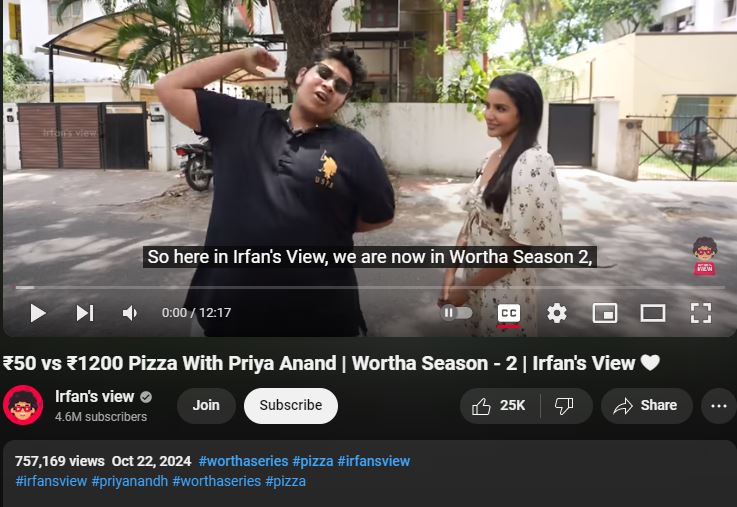
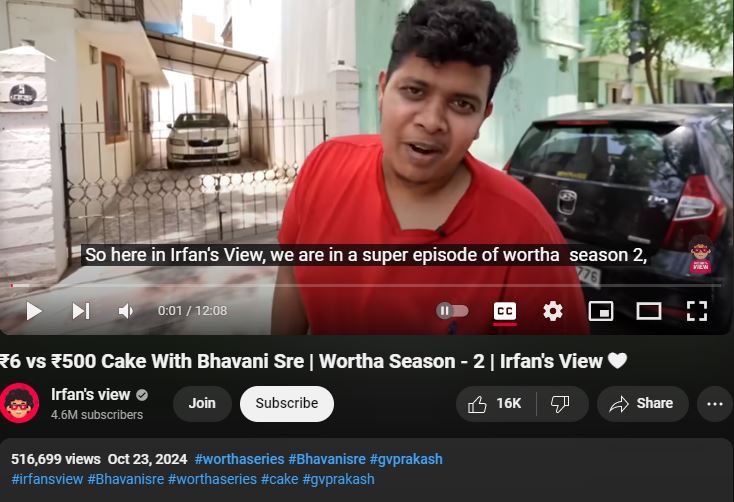
Health Minister Ma. Subramanian made a statement on 22 October 2024, that Irfan was abroad but since then the YouTuber has been making vlogs and videos with Dravidian Stocks and uploading daily on his channel. Will he be punished as per law? Or will he be let loose this time too is a bigger question?
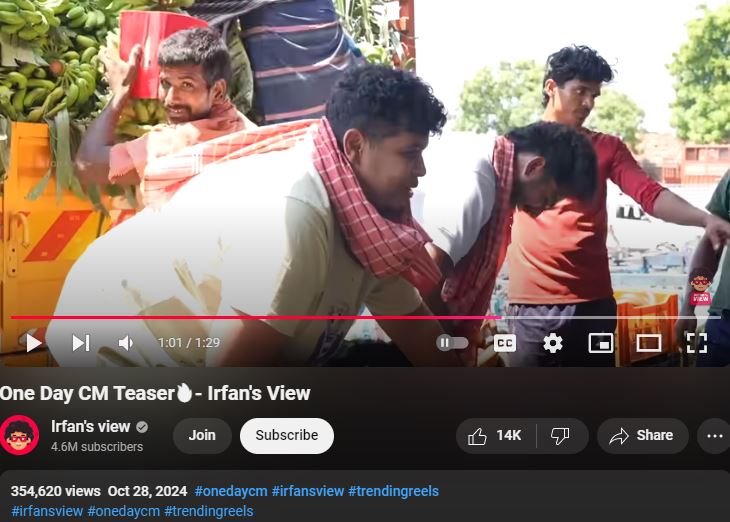
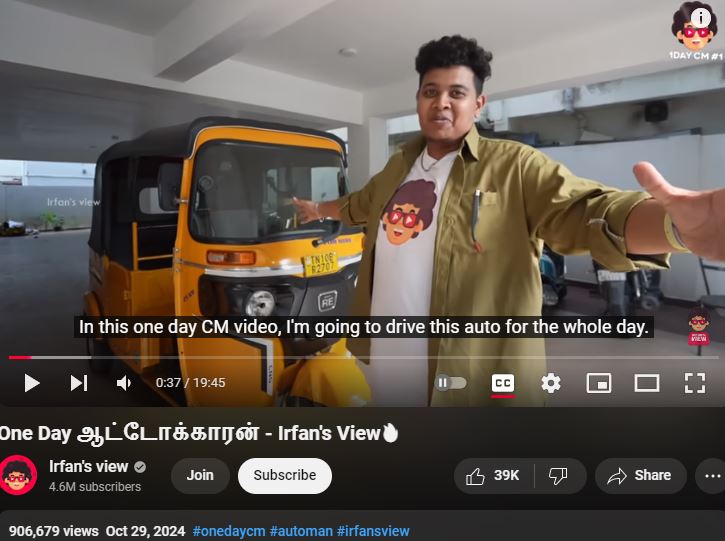
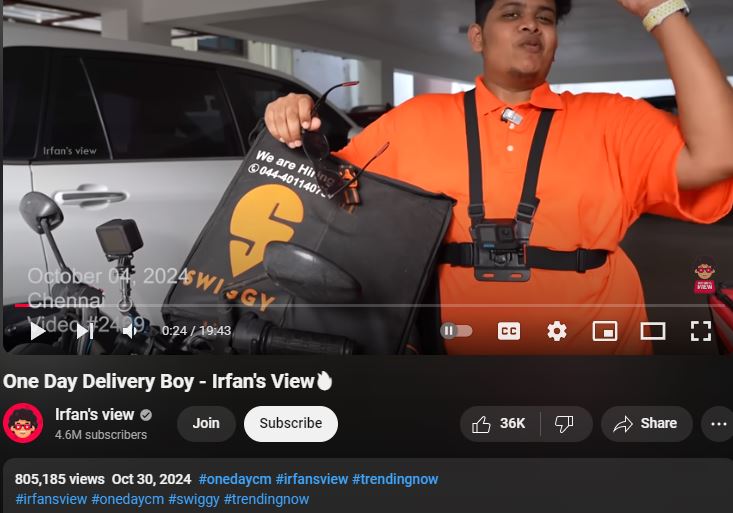
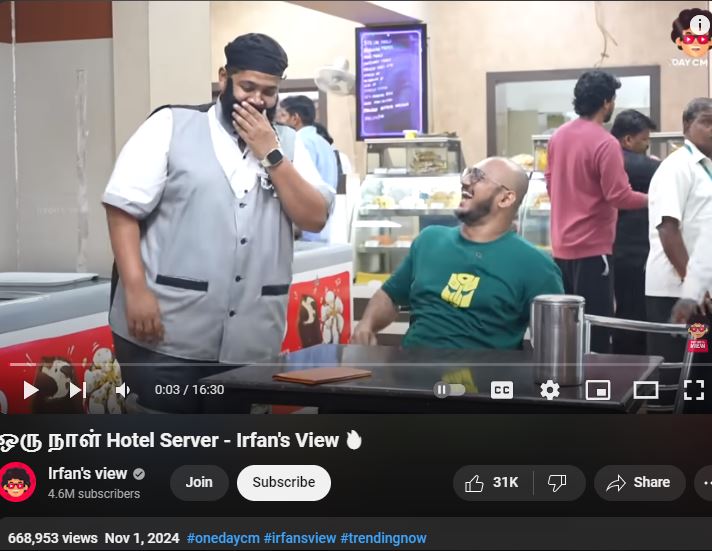
It appears that YouTuber Irfan is mocking the government by launching a new series titled “One Day CM,” where he roams around the city making vlogs.
It is noteworthy that Irfan had previously faced controversy after disclosing the sex of his unborn child, following a prenatal test conducted abroad. Revealing the sex of a fetus is a violation of the Pre-Conception and Pre-Natal Diagnostic Techniques Act.
The ruling DMK, known for strictly enforcing laws against its critics, has recently faced backlash over its approach to handling YouTuber and food vlogger Mohamed Irfan. Although the party has previously arrested citizens for legal infractions, it seems to be treating Irfan differently by issuing him a show cause notice, requesting an explanation for a controversial video he posted.
Observers and political analysts suggest that influencers like Mohamed Irfan have previously helped promote DMK’s ideology within the state, particularly during election run-up.
It is noteworthy that Irfan shares a close relationship with the DMK scion. He did a public relations video with DMK scion and Minister Udhayanidhi Stalin in November 2022. In the video Irfan asks Udhayanidhi Stalin “You’ve become my friend now right? You’re my friend right? Give your hand bro. (shakes hand). From now on, we’re friends. Like in the film OKOK (Oru Kal Oru Kannadi starring Udhayanidhi Stalin), if I get caught by police and call you, will you help me?”
This is seen as the reason why the DMK may be hesitant to take stricter action against him.
Subscribe to our channels onTelegram, WhatsApp, and Instagram and get the best stories of the day delivered to you personally.
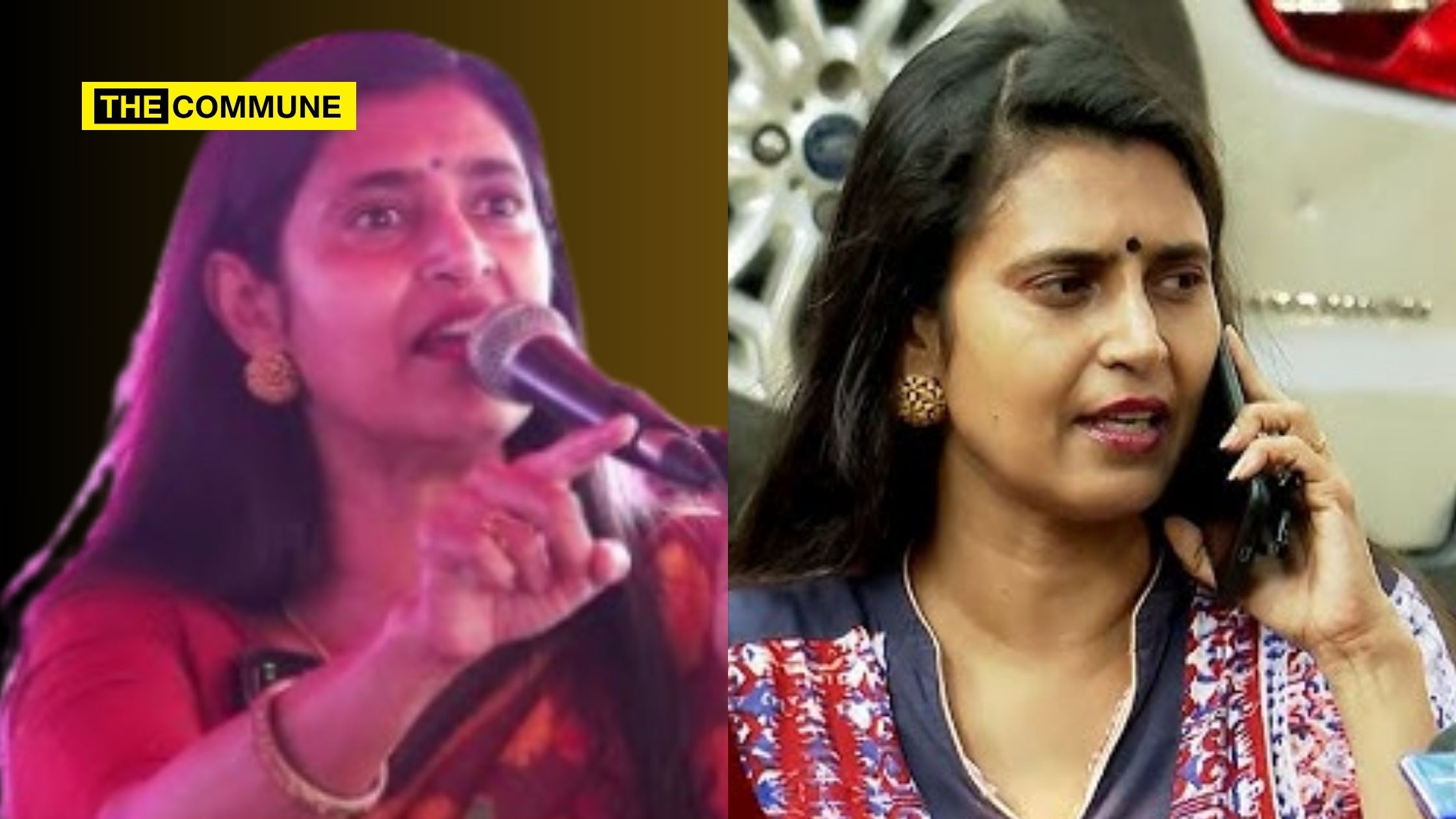
Actress Kasthuri faces charges under four sections of the Bharatiya Nyay Sanhita following a complaint by the All India Telugu Federation after she made controversial remarks about Telugu-speaking Dravidianists.
The complaint, filed at the Chennai Police Commissioner’s Office, led the Egmore police to register a case, with charges including inciting discord between groups.
On 3 November 3 2024, a demonstration in Egmore, organized by the Indu Makal Katchi led by its leader Arjun Sampath, called for protective legislation for Brahmins. Kasthuri also joined this demonstration, where her comments about the Telugu-speaking Dravidianists sparked backlash, leading to calls for her arrest and complaints filed in Chennai, Madurai, and other cities.
Targeting those in the DMK and other Dravidianists, she had said “300 years back those who came to service in Andhapuram (royal harem) for a king, those who spoke Telugu are claiming ‘Tamil is their race’. Who are you to say Brahmins are not Tamils who came much before? Who among you are Tamils?”
In response to the controversy, Kasthuri addressed the media on 4 November 2024, claiming her statements had been misinterpreted. On 5 November 2024, she issued a formal apology, clarifying that her remarks were context-specific and not directed at the broader Telugu community, and reaffirmed her intention was never to offend.
Despite her apology, the All India Telugu Federation has rejected it, stating that Kasthuri should apologize before the court and urging police to take appropriate action against her. The All India Boyar Women’s Development Association too had filed a complaint at Uppilipuram police station in Tiruchi district. The Egmore police have proceeded with the case, which includes charges for inciting unrest and attempting to foster division between groups.
Subscribe to ourTelegram, WhatsApp, and Instagram channels and get the best stories of the day delivered to you personally.
From early detection of algal blooms to feed broadcasting in mariculture to rescue operations during emergency situations, drone technology is expected to revolutionise India’s marine fisheries sector. A joint effort of the Union Ministry of Fisheries, National Fisheries Development Board (NFDB) and ICAR-Central Marine Fisheries Research Institute (CMFRI) is on to promote and popularise drone applications in the country’s marine fisheries.
This initiative aims to significantly enhance the efficiency of fisheries management, sea cage farming, disaster management and ecosystem conservation. An awareness workshop and drone demonstration for fishermen and fish farmers will be held at CMFRI on November 8 to showcase the prospects of drone applications for various purposes, including aquaculture input dispensing, live fish transportation, rescue operation, water sampling, underwater imaging, water body monitoring and mapping, and marine mammal stock assessment among others. Union Minister of State for Fisheries George Kurian will inaugurate the workshop followed by a demonstration of potential drone application.
Regarding drone application prospects, CMFRI Director Grinson George said the technology will significantly enhance efficiency, reduce labour costs and minimise environmental impact. “It could be used in cage fish farming operations in coastal and offshore waters to monitor fish health, assess water quality parameters, and optimise feed distribution. Drones can also aid in early detection of algal blooms and other environmental threats to farming,” he added that the technology could be used for monitoring paddy seedlings in Pokkali farms. Another significant benefit of this technology is enabling farmers to get reasonable market prices for their high-value, cage-farmed fish.
Drones can efficiently transport live fish from remote aquaculture sites to markets according to requirements, ensuring freshness and reducing transportation time. The application of drones would also be helpful to improve marine mammal stock assessment, and easy surveillance of their interaction, including their strandings. This technology could be used for deploying life jackets for rescue operations during emergency situations.
–IANS
Subscribe to ourTelegram, WhatsApp, and Instagram channels and get the best stories of the day delivered to you personally.
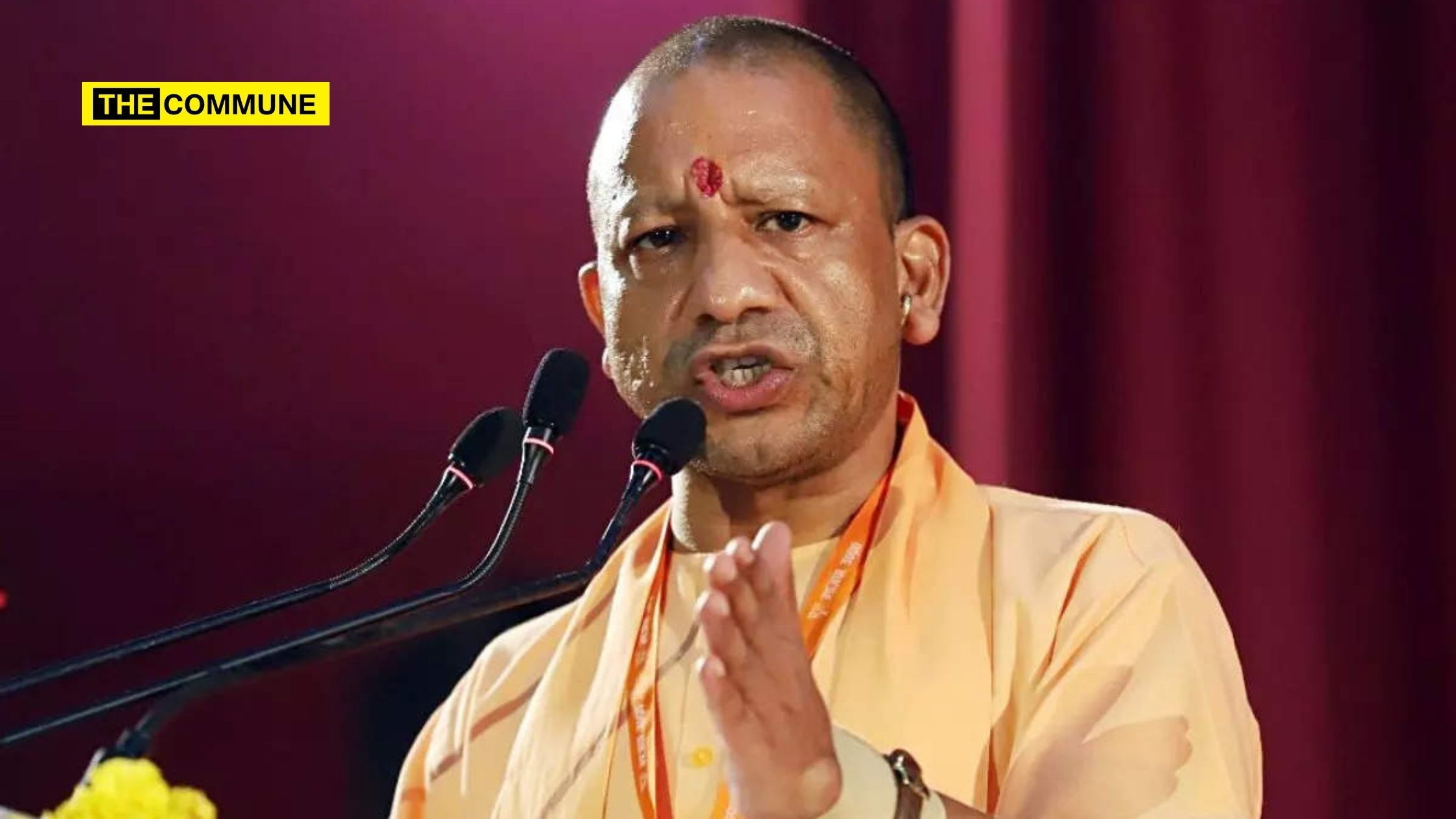
In a scathing attack on the JMM-Congress and RJD coalition government of Jharkhand, Uttar Pradesh Chief Minister Yogi Adityanath on Tuesday said that the ruling government conspired to change the demography of the state through land jihad and love jihad. While addressing an election rally in Jamshedpur, the UP CM said that this government (coalition) has promoted land jihad and love jihad which has been made a part of the conspiracy to change the demography of Jharkhand.
“Recently the honourable court of Jharkhand had to express concern on why the population of tribes in Santhal decreased from 42 per cent to 28 per cent. Where did these people go? How did a large population become a part of another community?” he questioned. Yogi Adityanath called upon the people of Jharkhand to once again elect a BJP government in the state to honour the spirit with which Atal Bihari Vajpayee had created a separate state in 2000 and to make a developed and safe Jharkhand. “In this state, Bangladeshis and Rohingyas are infiltrating. The height of audacity is when they pelt stones on Maa Durga and Ramnavami processions during festivals. Before 2017, it used to happen in UP as well, but now there is no stone pelting on the procession because those who do so, face consequences,” he said.
Referring to the strict steps taken to end the mafia and goonda raj in Uttar Pradesh, CM Yogi said that when the Ayodhya case was in the court, the stone pelters used to say that rivers of blood would flow. “But today, there is neither curfew nor riot in UP. Just like stone pelters were eliminated from Kashmir after the BJP government is formed, Naxalism will also be eliminated from Jharkhand,” he added. Yogi Adityanath appealed to the people of Jharkhand to give a befitting reply to the conspiracy to divide them on the basis of castes. He said that those who divide people in the name of caste, region and language are the same people who will not stand with them in times of crisis. “Congress has been hurting the country since 1947. RJD did the same thing in Bihar and JMM in Jharkhand. The way Rohingyas started infiltrating into Jharkhand. If the demography changes in this way, then these people, who are stopping the processions today, will not allow the ringing of bells and conches inside homes in the coming time,” he said.
“Bring BJP and take out a safe Ramnavami procession. The history of the country is witnesses that whenever people have been divided in the name of caste, region and language; they have been brutally cut down,” CM Yogi added. The UP CM called Jharkhand Mukti Morcha, Congress and RJD as messengers of destruction. “These people are angels of corruption. Congress, JMM and RJD snatched the livelihood of the poor, forced farmers to commit suicide and youth to migrate. This area, which is rich in natural resources, is known for its mica mines. A poor person cannot get even a trolley of sand to build a house, but sand mafia, forest mafia, liquor mafia and land mafia are flourishing with the protection of the government. The only solution is BJP,” he added.
CM Yogi said that those who used to say that Ram Mandir will not be built in Ayodhya, are seeing that the temple has been built and Ram Lalla has also been installed. “The new Uttar Pradesh of the new India does not spare those who trouble innocent citizens and Hindus,” he added. He said that the Congress, JMM and RJD’s INDI alliance which is promoting corruption, anarchy and hooliganism in Jharkhand is playing with the nation’s self-respect and security.
Yogi appealed to the people to vote in the elections to improve the present and make the future bright. “Vote them out and the NDA government will do the rest,” he said. During the public meeting, Union Minister and Koderma MP Annapurna Devi, Jharkhand in-charge and Rajya Sabha MP Dr Laxmikant Vajpayee, among others were present.
–IANS
Subscribe to ourTelegram, WhatsApp, and Instagram channels and get the best stories of the day delivered to you personally.
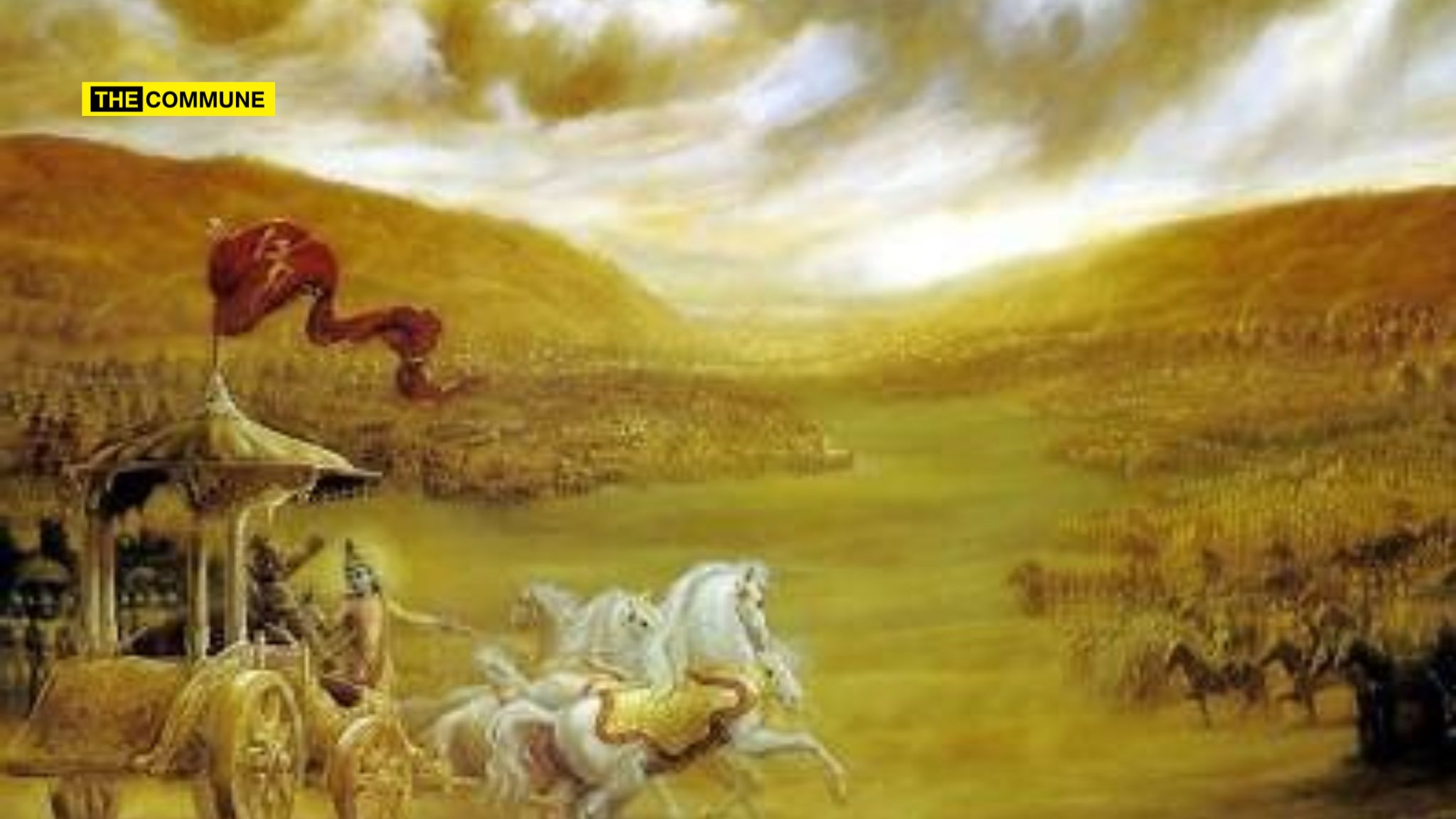
Haryana Heritage and Tourism Minister Arvind Kumar Sharma said on Tuesday that Mahabharata-linked historical pilgrimage sites in Kurukshetra and surrounding districts would be developed as key tourism destinations. In this regard, officials from the Union Ministry of Tourism and the state Tourism Department were working together in a coordinated manner.
Minister Sharma informed this after attending the Second Mahabharata Circuit Conference, held in Karnal. To promote tourism, the Union Ministry of Tourism (Northern Region) organised the conference to discuss the development of historical and ancient pilgrimage sites related to the Mahabharata in the mythological and religious region of Kurukshetra and its neighbouring districts. The conference was held at the Karna Lake Banquet Hall in Karnal, where a familiarisation tour was also conducted. Minister Sharma attended the event as the chief guest. During the programme, he engaged in detailed discussions with officials from the Union Ministry of Tourism, the state Tourism Department and various tourism stakeholders and service providers.
He also released a book detailing the proceedings of the Second Mahabharata Circuit Conference, which highlights the significance of Kurukshetra. He said just as Vrindavan attracts thousands of devotees and tourists, similar facilities would be developed in Kurukshetra to accommodate a larger number of visitors. The minister also proposed that alongside Kurukshetra, the towns of Karnal and Kala Amb in Panipat should be included in the Mahabharata circuit, as these areas also receive a significant influx of tourists.
He said under the leadership of Chief Minister Nayab Singh Saini, the state government is working on the development of major tourist destinations across the state. These efforts are aimed at enhancing infrastructure and providing better amenities to visitors in the coming years. Regional Director (North) of the Union Ministry of Tourism, R. K. Suman, said the ministry is committed to bringing Kurukshetra to the global stage and has already made significant strides in this mission.
–IANS
Subscribe to ourTelegram, WhatsApp, and Instagram channels and get the best stories of the day delivered to you personally.
Karnataka Leader of Opposition (LoP) R Ashoka on Tuesday said that Chief Minister Siddaramaiah should form a Special Investigation Team (SIT) to investigate why government officers are committing suicide in the state. Addressing a gathering in Channapatna, referring to the suicide case of the government staffer in Teshildar’s office in Belagavi, Ashoka further demanded the SIT should also probe how much bribe is being demanded from them compelling them to end lives.
“This is important as the public should know the reality. An SIT is needed to expose the corrupt foundation of this government,” he said. The BJP leader added that unable to withstand harassment in the Valmiki Tribal Welfare Development Corporation, officer Chandrasekaran committed suicide while SDA Rudranna also took his life in a government office in Belagavi in Karnataka.
He said that government offices lack a peaceful working environment for staffers, adding that survival in the state seems possible only by paying bribes. “Whenever an issue arises, the state government announces the formation of an SIT. Regardless of who dies, SIT is formed. An officer has died due to the actions of Minister Lakshmi Hebbalkar’s PA, Somu,” he alleged.
The LoP said that when officers are intimidated, extortion increases. “But no officer should lose courage,” he said. He said that a letter regarding corruption in the Excise Department has been sent to the Governor, claiming that corruption has crossed all limits in every department. “People should teach this government a lesson in the upcoming by-election,” he said. Further taking to social media, Ashoka slammed: “Honorable Siddaramaiah, whenever you become Chief Minister and whenever the Congress party comes to power, it seems that honest officers in the state are destined for harassment and suicide.” He added that the recent suicide of SDA Rudranna in Belagavi marks the fourth such case in the past 17 months, yet another example of the extreme levels of corruption that have been reached under this Congress government.
“There have been several similar cases: the suicide of Valmiki Corporation officer Chandrasekaran in Shivamogga, contractor P.C. Gowda in Davanagere who took his life due to bribery in the Rural Development Department, PSI Parashuram in Yadgir who suffered a heart attack due to pressure and harassment over transfer dealings, and now, SDA Rudranna’s suicide in Belagavi,” he said. He claimed that there are suspicions that Minister Laxmi Hebbalkar’s transfer dealings are behind this suicide. “I urge you to immediately remove Minister Lakshmi Hebbalkar from the Cabinet and hand this case over to a CBI investigation,” he said.
–IANS
Subscribe to ourTelegram, WhatsApp, and Instagram channels and get the best stories of the day delivered to you personally.
Shiromani Akali Dal (SAD) Working President Balwinder Singh Bhunder on Tuesday condemned incidents of violence outside religious places in Canada and appealed to people of Indian origin to defeat the conspiracies to divide them on communal lines.
He called upon the Canadian government to ensure all places of religious worship were secure from such acts of violence. “Attempts are afoot to divide Sikhs and Hindus in Canada on communal lines. This is against the teachings of our Guru Sahiban who have preached the concept of ‘sarbat da bhala’,” said Balwinder Singh Bhunder. The Akali Dal has always stood for communal harmony and has also made numerous sacrifices to uphold this principle.
The Shiromani Akali Dal head appealed to people from both communities in Canada to recognise their common roots, exercise utmost restraint and maintain communal harmony at this critical juncture. Bhunder also appealed to the Canadian government to ensure the safety of all persons of Indian origin as well as the safety of their places of worship. “Everyone should have the right to free access to their religious places. It appears these acts of violence have been engineered as part of a larger conspiracy. The Canadian government should unmask the conspiracy behind these incidents,” he said.
The SAD Working President also urged the Canadian government to ensure the safety of Indian diplomats on Canadian soil. He also urged the Indian government to take necessary steps to ensure the safety of Indo-Canadians and make attempts at genuine reconciliation amongst both communities. Responding to the incidents, External Affairs Minister (EAM) S. Jaishankar has expressed concern over the attack on a Hindu temple in Brampton, Canada, calling it “deeply concerning” during a press conference with his Australian counterpart Penny Wong at Parliament House, Canberra, on Tuesday.
“What happened yesterday at the Hindu temple in Canada was obviously deeply concerning. And, you would have seen the statement first by the official spokesperson and also the expression of concern by the Prime Minister yesterday. So, that should, I think, convey to you how deeply we feel about it,” Jaishankar said.
–IANS
Subscribe to ourTelegram, WhatsApp, and Instagram channels and get the best stories of the day delivered to you personally.
A government staffer committed suicide, allegedly over the injustice meted out to him by his seniors and Personal Assistant to State Women and Child Welfare Minister Laxmi Hebbalkar in Karnataka’s Belagavi district. The deceased, identified as Rudaranna Yadavanna who worked as the Second Division Assistant (SDA) at the Tehsildar’s office, named the Personal Assistant of Hebbalkar in his death note.
Following the incident, the Karnataka BJP demanded the minister’s resignation. Yadavanna sent a message in the staffer’s WhatsApp group mentioning the names of Tehsildar Basavaraja Nagarala and the Minister’s PA Somu holding them responsible for his death. He also stated that too much injustice was taking place in the office and he could not bear it. The deceased officer had asked other employees of the Tehsildar’s office to fight the “injustice” unitedly. Even as the victim posted the message around 7.30 p.m. on Monday, no action was taken. Yadavanna, who was working for many years, was recently transferred. Yadavanna’s wife also works as the village accountant in the Tehsildar’s office.
The jurisdictional Khadebazar police have taken up the investigation. Preliminary reports suggested that Yadavanna had committed suicide early in the morning and the incident came to light after other staff arrived at the office. Sources said the deceased officer had also recorded a video in which he mentioned that he was committing suicide due to harassment by the senior officers. Addressing a press conference in Bengaluru, BJP Legislative Council Member N. Ravi Kumar has called for Minister Hebbalkar’s resignation following the suicide of Yadavanna.
He mentioned that Yadavanna left a note attributing his death to Hebbalkar’s private secretary, stating he had “suffered” for many days. Speaking to media representatives at the BJP State Office in Bengaluru, Kumar demanded Hebbalkar’s resignation, saying that the BJP government had taken the resignation of former minister K. S. Eshwarappa under similar circumstances.
–IANS
Subscribe to ourTelegram, WhatsApp, and Instagram channels and get the best stories of the day delivered to you personally.
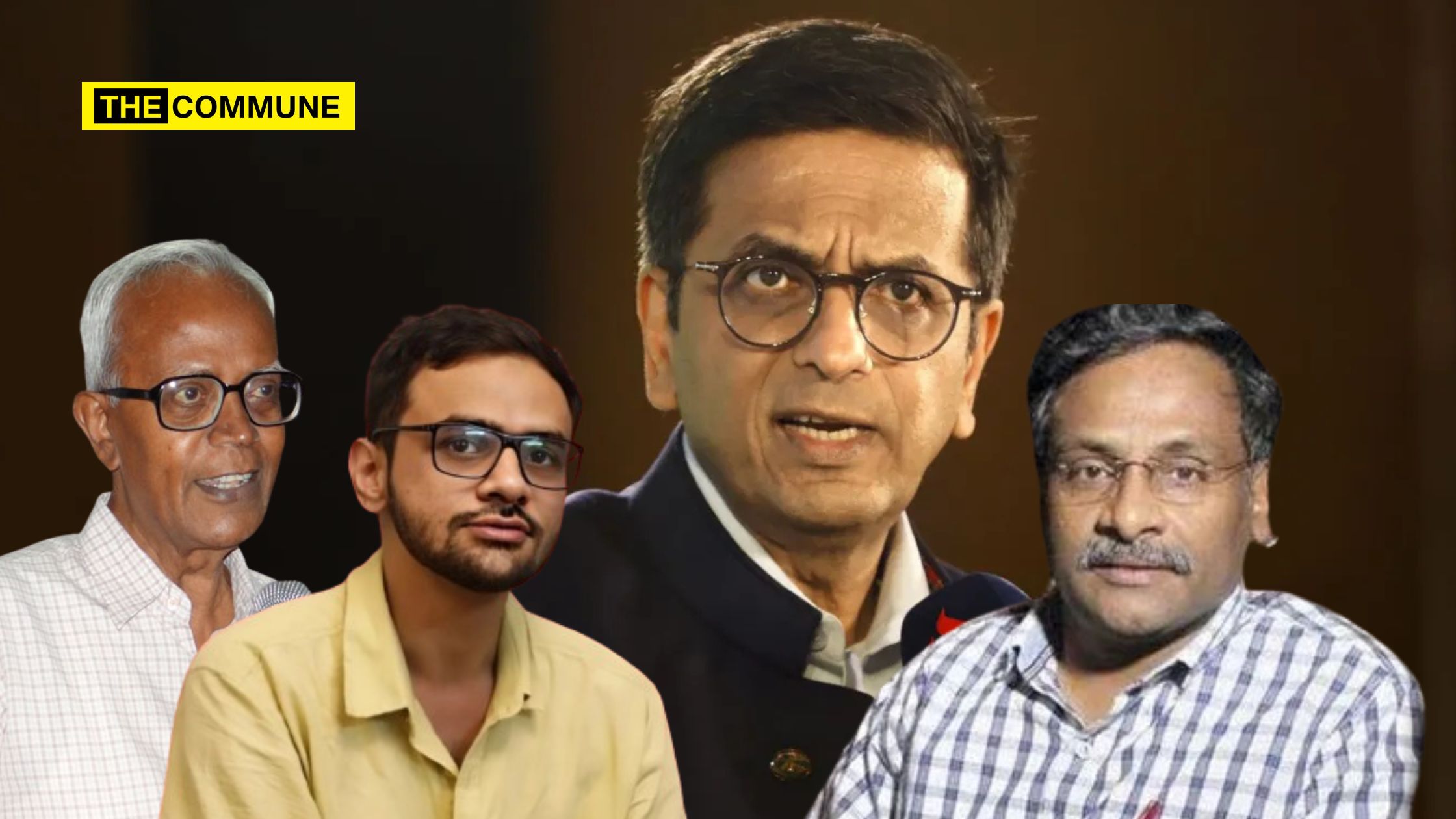
When the left-leaning media sought to press Chief Justice of India (CJI) DY Chandrachud on the issue of delay in granting bail to individuals like Umar Khalid, Stan Swamy, and GN Saibaba—attempting to present them as important figures fighting for a cause—CJI Chandrachud responded calmly, in his usual manner, with a sharp rebuke.
He made it clear that the judiciary remains impartial, stating that it does not show favoritism and judges cases solely based on their merits, not on public sentiment or media influence. With a pointed remark, he noted, “The media creates a narrative around a case, but when a judge examines the merits, it is very different from the portrayal in the media.”
The 50th Chief Justice of India, D.Y. Chandrachud, was the guest of honor at the “Express Adda” event in New Delhi, where he engaged in a discussion with National Opinion Editor Vandita Mishra and National Legal Editor Apurva Vishwanath. During the conversation, he emphasized the importance of ongoing dialogue between the judiciary and the executive, even in informal settings. CJI Chandrachud underscored that such interactions are a routine and necessary part of the court’s functioning and urged the public to place their trust in judges, stating, “Deals are never made in such exchanges, so please trust us; we are not here to cut deals.”
The Chief Justice addressed concerns raised about photographs showing him praying with Prime Minister Narendra Modi on 11 September 2024, clarifying that the meeting was purely private. He stated that such interactions, even at a social level, are part of the continuing relationship between the Judiciary and the Executive.
Chandrachud explained, “At a doctrinal level, the separation of powers concept does not postulate that the judiciary and the executive are antagonistic in the sense that they will not meet or engage in recent dialogue. In the states, there is a very well-established protocol in several states, including states where I have served as a judge and then as a chief justice. The administrative committee of the high court meets the chief minister, and on the next occasion, the chief minister meets the chief justice in their residence. In most of these meetings, for instance when I took over the Allahabad High Court, we were discussing basic issues concerning the judiciary such as budgeting, infrastructure, homes for new judges, new courtrooms, and technology. Because the budget has to come from the executive, unless you talk to. This robust dialogue takes place between the executive and judiciary on the administrative side, which has nothing to do with the judicial work that you do as judges.”
He emphasized that the separation of powers between the executive and judiciary means that judges cannot make laws, just as the executive cannot issue judgments—each branch must respect its defined role.
When asked if he would have preferred a different composition for the photo, such as including other judges or the Leader of the Opposition, he quipped, “That would have made it a selection committee,” referring to the process of appointing key officials.
Discussing the pressure faced by the judiciary, CJI Chandrachud noted that interest and pressure groups, particularly through social media, attempt to influence judicial outcomes. “Some groups say, ‘If you decide in my favor, you’re independent; if not, you’re not independent,’ and that’s what I object to,” he said.
Then when question was raised about the delays in granting bail to individuals like Umar Khalid, Stan Swamy, and GN Saibaba, Chandrachud slammed the media straight in its face, he said, “Very often, what happens is that in the media, particularly in the journalistic media, a particular case assumes prominence, and the court is either criticized or critiqued based on one particular case.” He went on to explain that since taking office, he has made prioritizing bail a key focus, given its significant impact on personal liberty. He pointed out that in his two years as CJI, the court had disposed of 21,358 bail cases, surpassing the 21,000 cases filed during the same period.
Chandrachud continued, “For the one or two cases which you did mention, I can tell you at least a dozen cases. These are sensitive cases, somebody will call them politically sensitive cases or politically important personality cases whose names I shouldn’t be mentioning as the CJI. We have dealt with those cases and bail has been granted. It has happened for the past several months and even before. Now, what happens is that very often in the media, a certain facade or a certain atmosphere of a case is made out. When a judge applies their mind to the record, what emerges from the record may be very different from what is being portrayed in the media on the merits of that particular case. The bench of the court which deals with that case decides, for example, whether to grant bail or not. I’m not commenting on any particular case because none of these cases have been dealt with by me, and I would like to respect the fact that my colleagues have dealt with them. I respect those colleagues for the work which they do. Ultimately, the judge has to apply their mind to the record of the particular case. Whether they are right or wrong is something for everybody else to critique, but the judge looks at the record and then decides what to do.”
When the panel further pressed him CJI Chandrachud casually emphasized that bail should be the rule, not the exception. “I have granted bail from A to Z from Arnab to Zubair,” he said, highlighting his philosophy of granting bail when appropriate.
On the issue of judicial appointments, CJI Chandrachud stated that the Collegium has done its part and hopes the government clears the pending recommendations. “We’ve done everything within our power to ensure the constitutional process is followed, including evaluating and discussing the names,” he said, adding that some recommendations are still awaiting government approval.
Regarding the government’s delay in appointing judges, CJI Chandrachud asserted that both the Collegium and the government hold a veto power. “No appointment can go through unless we clear it,” he explained, also noting that the Collegium exercises its veto if it deems a candidate unworthy of appointment.
On the Collegium’s track record under his leadership, CJI Chandrachud reported that 18 of the 18 Supreme Court judge recommendations had been appointed, 40 out of 42 Chief Justices had been appointed, and 137 out of 164 High Court judge recommendations had been cleared, with 27 still pending with the government.