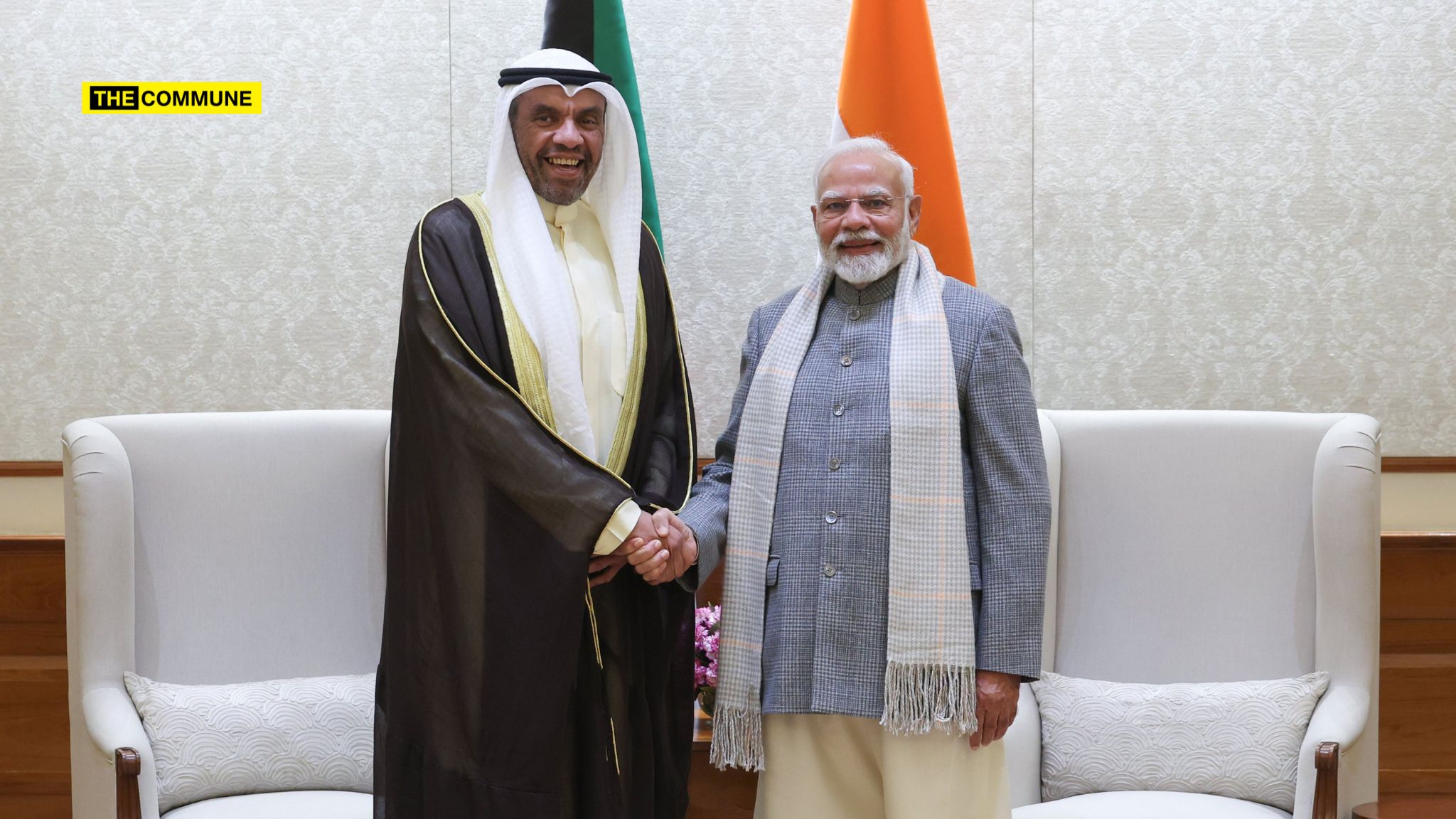
Calling India a “very important partner”, Kuwait’s Foreign Minister Abdullah Ali Al-Yahya on Wednesday heaped praise on Prime Minister Narendra Modi, saying that Kuwait believes that the Indian leader is one of the wisest persons in the world.
“I would like to thank you for the invitation and also for the opportunity of meeting Prime Minister Modi, who we believe is one of the wisest persons worldwide. I am sure that the Prime Minister puts India on a better level, and I am sure that he will continue that… India is a very important partner and we count on our relationship,” the visiting Foreign Minister said in his opening remarks at the delegation-level meeting with External Affairs Minister (EAM) S Jaishankar in New Delhi on Wednesday evening.
Abdullah Ali Al-Yahya arrived in India late Tuesday night for an official visit to further strengthen the multifaceted relationship between India and Kuwait. In the afternoon, he made a courtesy call on PM Modi at his Lok Kalyan Marg residence before holding a meeting with EAM Jaishankar at the Hyderabad House.
“Glad to receive Foreign Minister of Kuwait Abdullah Ali Al-Yahya. I thank the Kuwaiti leadership for the welfare of the Indian nationals. India is committed to advance our deep-rooted and historical ties for the benefit of our people and the region,” PM Modi posted on X after the meeting.
India and Kuwait share a historically strong bilateral relationship that has stood the test of time. Rooted in centuries of trade and cultural exchange, the partnership predates Kuwait’s independence in 1961, during which the Indian Rupee served as its legal tender. “I think the Joint Committee will solve many issues between Kuwait and India. I think we can draw a roadmap between Kuwait and India and proceed as fast as we can,” said Abdullah Ali Al-Yahya. Kuwait’s economy, before the discovery of oil, thrived on maritime activities, including shipbuilding, pearl diving, and trading goods like Arabian horses, dates, and pearls with India in exchange for wood, spices, and textiles.
This legacy of cooperation was commemorated during the 60th anniversary of diplomatic relations between the two countries in 2021-22. The Indian community, estimated to be one million strong, forms the largest expatriate group in Kuwait. Known for their diverse contributions, Indians hold roles across various fields, from engineering, medicine, and IT to business and trade. The robust Indian business community in Kuwait, comprising retailers, distributors, and professionals, has played a pivotal role in strengthening economic ties.
Prominent Indian brands like Lulu Hypermarket and Centre Point have become integral to the Kuwaiti market. Cultural and social engagement also thrives through more than 200 Indian associations registered with the Indian Embassy in Kuwait. These groups actively organise programs to promote cultural exchange and community welfare, further solidifying the people-to-people connection between the nations.
–IANS
Subscribe to our Telegram, WhatsApp, and Instagram channels and get the best stories of the day delivered instantly.
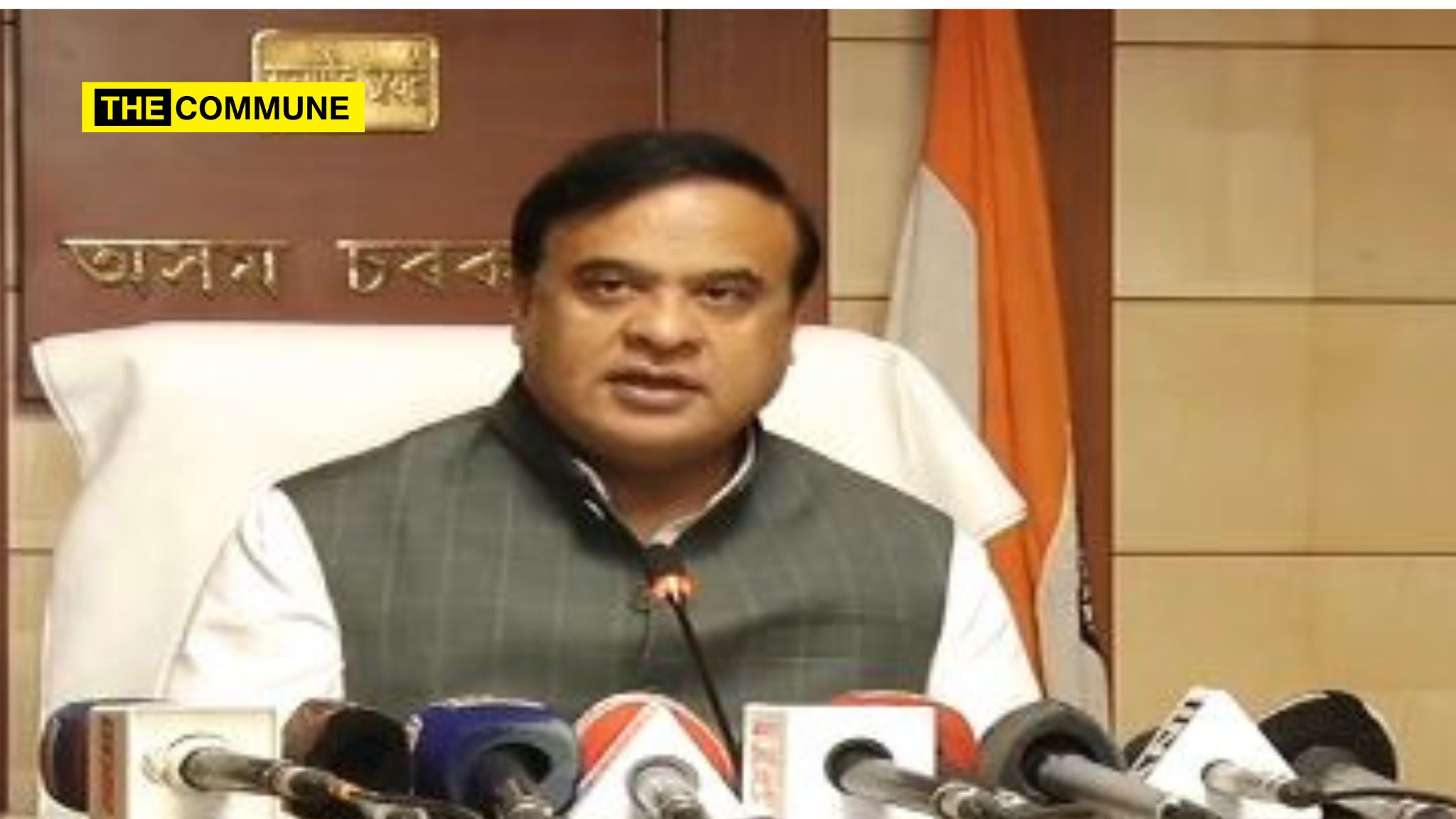
Chief Minister Himanta Biswa Sarma said on Wednesday that the Assam government has decided to ban the consumption of beef in public places, including hotels and restaurants. The decision was taken in a cabinet meeting held in the national capital, which the Chief Minister chaired.
Sarma told reporters here, “We previously imposed a ban on beef consumption in an area within a five-kilometre radius of temples and other prayer places. However, now we have decided to extend this restriction and a total ban of consuming beef in public places in Assam is prohibited from today.” “The restriction also includes serving of beef in hotels, restaurants and at any other community festivals in the state. The defaulters will be punished as per the provision laid down under the law,” he added.
The Chief Minister also took a swipe at the Congress party and said, “Some of the Congress leaders, including the state president, have spoken about banning beef consumption in the state. We already had a strict law regarding this; however, the matter was thoroughly discussed in today’s cabinet meeting and we have come up with a blanket ban on consuming beef in public places across the state.”
Earlier, Sarma said that if state Congress President Bhupen Kumar Borah wrote to him requesting it, he would be willing to outlaw beef in Assam. Sarma said he was pleased that the opposition party brought up the claim that the BJP gave out beef in order to win the Muslim-majority Samaguri, which the Congress had ruled for five terms in a row. He stated, “Samaguri spent 25 years under Congress rule and the greatest embarrassment in Congress’ history is that it lost a constituency like Samaguri by 27,000 votes. It is the Congress’ loss more than the BJP’s victory.”
Following the debacle of a Congress candidate in Samaguri, Dhubri MP Rakibul Hussain alleged that the ruling party could win this constituency by distributing beef to the public. Hussain has been representing Samaguri in the Assembly since 2001 and he vacated this seat after winning Lok Sabha polls this year. The Congress gave the ticket to his son Tanzil Hussain in Samaguri in the recently concluded by-election.
Sarma asked, “I would like to know if Congress was able to win Samaguri by providing voters with beef. He (Rakibul Hussain) is well acquainted with Samaguri. Does this imply that beef can be offered to win Samaguri?” He further said, “Since Rakibul Hussain stated that beef should be prohibited, I would like to inform him of this. He just needs to write to me that beef should be prohibited in Assam.”
–IANS
Subscribe to our Telegram, WhatsApp, and Instagram channels and get the best stories of the day delivered instantly.
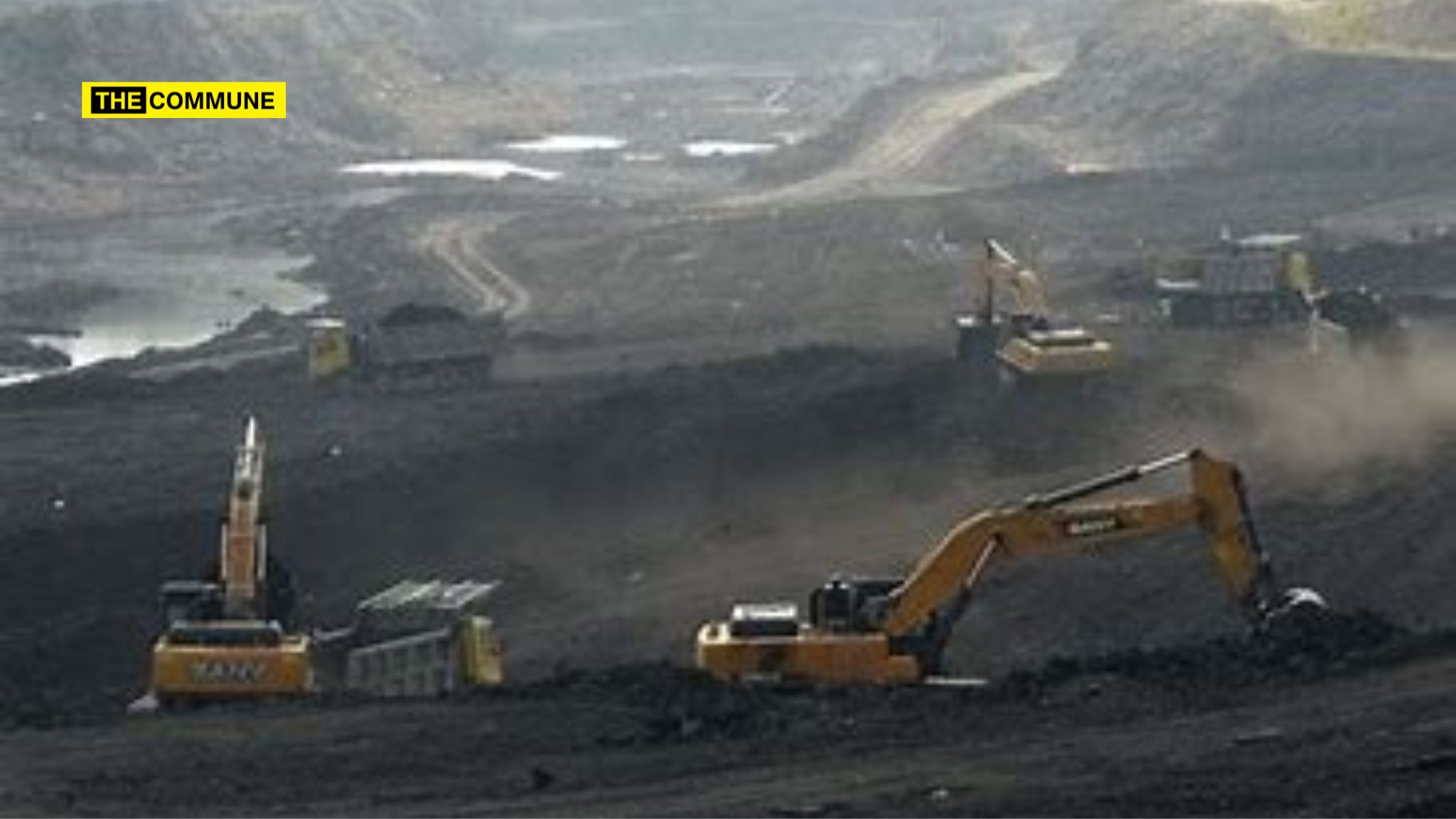
Coal and Lignite Public Sector Undertakings, namely Coal India Limited (CIL), NLC India Limited and Singareni Collieries Company Limited (SCCL), have biologically reclaimed and afforested about 55,312 hectares (Ha) of land in and around their mining areas up to FY 2023-24, Union Minister of Coal and Mines G. Kishan Reddy told the Lok Sabha on Wednesday.
The estimated carbon sink potential of the greening initiatives is 2.77 million tonnes CO2 equivalent. The greening initiatives of Coal & Lignite PSUs contribute to India’s Nationally Determined Contribution (NDC) target titled “to create an additional carbon sink of 2.5 to 3 billion tonnes of CO2 equivalent through additional forest and tree cover by 2030”, the Minister said in a written reply to a question. The Ministry of Coal has set target for land reclamation and afforestation for Coal/Lignite PSUs under Vision Viksit Bharat has been set at 15,350 hectares for next 5 years. The target for the current financial year has been fixed at 2,600 hectares. In addition to traditional methods of plantation, some of the innovative techniques being adopted by Coal & Lignite PSUs are seed ball plantation, Miyawaki plantation, high-tech cultivation, bamboo plantation, and drip irrigation for plantations on overburden dumps, the Minister said.
Measures to ensure the long-term sustainability of reclaimed and afforested areas in Coal & Lignite PSUs focus on scientific reclamation, biodiversity conservation, and socio-economic integration. Initiatives include topsoil management, planting native species, creating wildlife habitats, and monitoring by remote sensing. Afforestation activities are mostly carried out by the State Forest Departments and State Forest Development Corporations in the Coal/Lignite PSUs.
Reclaimed areas are repurposed for eco-parks, agroforestry, water sports, pisciculture and renewable energy projects. Afforested areas on non-forest land are also offered as compensatory afforestation (CA) land for forest diversion for coal mining projects, he said. In answer to another question in the Lok Sabha, the Minister said sustainable development of the coal sector requires protection of environment, conservation of resources, care for society and safeguarding forests and biodiversity.
The government is taking measures such as prior Environmental Clearance (EC) from the Ministry of Environment, Forests & Climate Change (MoEF&CC) before opening a new mine or for enhancement in Production capacity or land area of an existing mine. In compliance of the Van (Sanrakshan evam Samvardhan) Adhiniyam, 1980, prior Forestry Clearance is also obtained from MoEF&CC, in case of projects involving forest land.
–IANS
Subscribe to our Telegram, WhatsApp, and Instagram channels and get the best stories of the day delivered instantly.
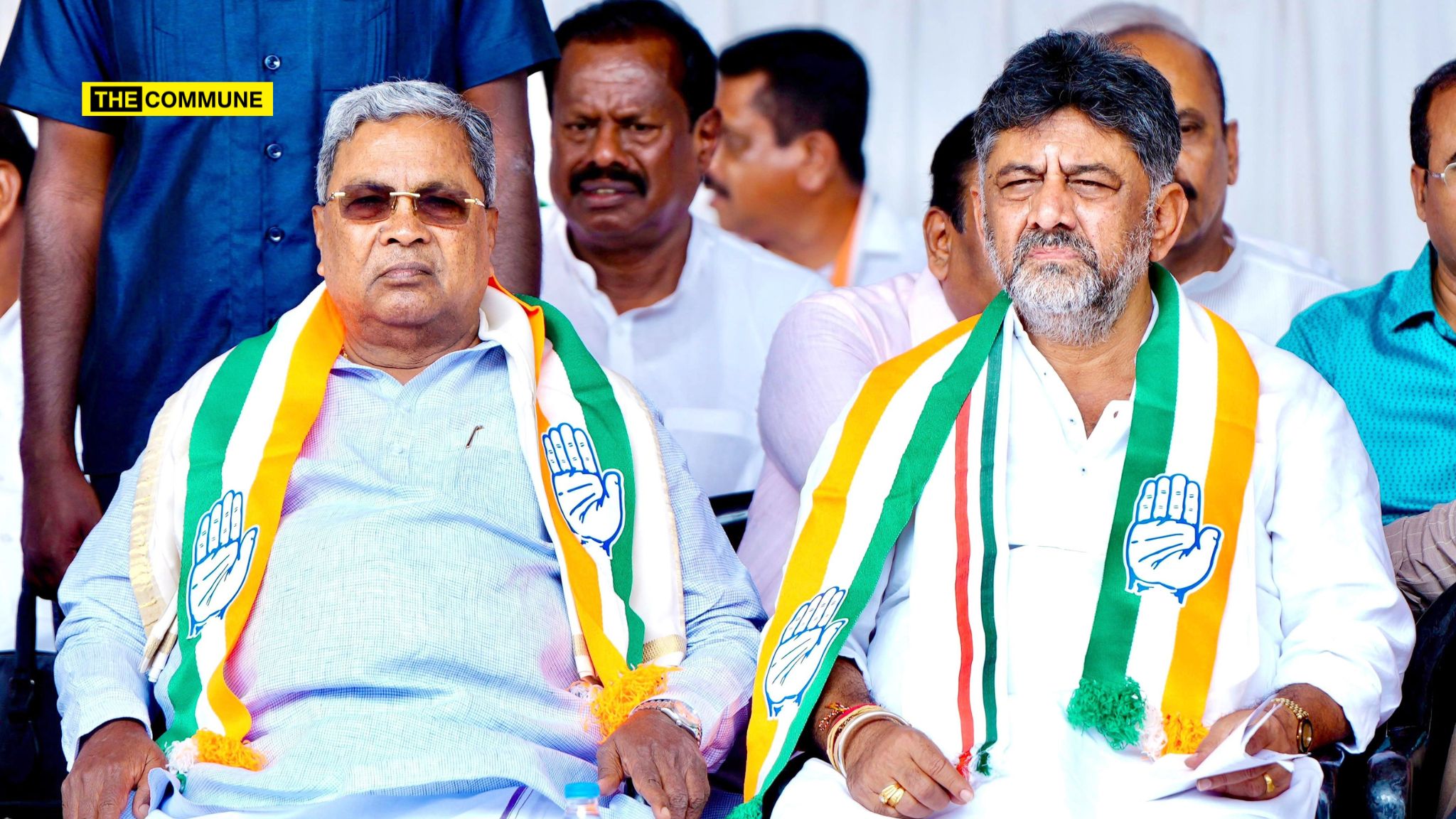
Karnataka Chief Minister Siddaramaiah while answering media questions regarding a ‘pact’ between him and state Congress President DK Shivakumar on power sharing, clarified there was no pact in this regard and they would “follow the instruction of the high command.” Speaking on the issue in Mandya on Wednesday, CM Siddaramaiah stated, “We will follow the instructions of the high command.” When asked to react to the statements of CM Siddaramaiah, Dy CM Shivakumar asserted, “When the Chief Minister has made the statement, I have no objection and it is final. No further questions or debate. I have answered questions in this regard earlier.”
Sources stated that CM Siddaramaiah and Dy CM Shivakumar had agreed to share power equally in the five year term of the government. The statements have assumed importance in the backdrop of CM Siddaramaiah’s supporters organising series of conventions across Karnataka with the aim to mobilise support for oppressed, backward classes, minorities, which are known as Ahinda groups. Loyalists of CM Siddaramaiah have organised a massive convention on December 5 in Hassan city and made arrangements for a gathering of 2 lakh people. Earlier, the convention was named ‘Swabhimani Samavesha’, however, following objections by senior leaders mainly Dy CM Shivakumar, it has been changed to ‘Jan Kalyan Samavehsa’. Shivakumar and Siddaramaiah were both contenders for the CM’s post and after the election, the Congress high command had chosen Siddaramaiah for the top job. CM Siddaramaiah’s supporters had used his clean image as a trump card against Shivakumar and had started a discussion on creating more Dy CM posts.
However, at present, CM Siddaramaiah is facing an FIR and charges in the MUDA case as the prime accused and has faced questioning by the Lokayukta. The ED is also probing the case. Meanwhile, CM Siddaramaiah is all set to make a Cabinet reshuffle. Karnataka Minister for Higher Education, M.C. Sudhakar has stated that the high command has asked for reports from all Cabinet ministers and he has also sent his report. “The party has given us Cabinet posts not to show off but to perform. Hence, responsibilities will have to be fulfilled. The image of the party and the government needs to be taken care of,” he maintained.
–IANS
Subscribe to our Telegram, WhatsApp, and Instagram channels and get the best stories of the day delivered instantly.
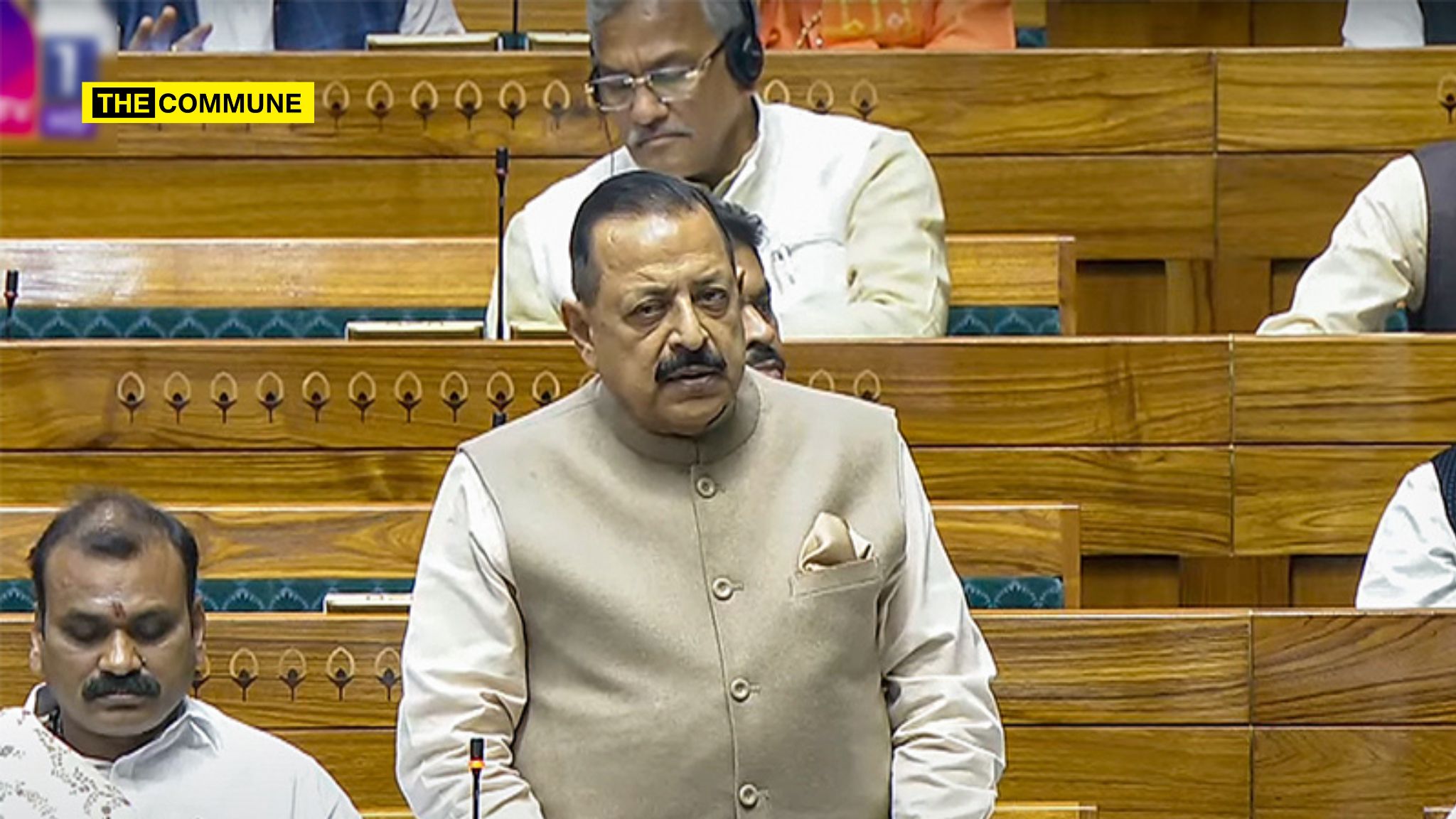
Union Minister of State (Independent Charge) for Science and Technology Jitendra Singh said in a written reply in the Lok Sabha on Wednesday that the much-awaited NASA-ISRO Synthetic Aperture RADAR (NISAR) mission will likely be launched in March 2025. NISAR is an Earth science mission being jointly developed by NASA and ISRO under a collaborative agreement.
It was earlier slated for launch in the first half of 2024 but was delayed as the 12-meter Radar Antenna Reflector “needed some corrective actions”, which was detected during the assembly, integration, and testing phase by NASA experts. After rectification in the US, it was delivered to ISRO by NASA in October. Currently, the radar is being “re-integrated with the satellite and undergoing necessary tests,” the Union Minister informed. He further explained that the conditions to launch the satellite “are not conducive” now “due to the eclipse season”. “In view of the aforementioned factors, NISAR is now likely to be launched during March 2025,” Singh said. He said space exploration missions take an exhaustive time cycle that includes conceptualisation, design, development of prototype, qualification and flight model and numerous tests, design iterations, supply chain, and extensive reviews of several complex and Indigenous technologies.
Further, with international collaborations, the challenges “include geo-political considerations, establishing common mission objectives, alignment with respective national priorities and ensuring timely availability of resources/infrastructure,” Singh said. He also informed that the government recently approved the Chandrayaan-4 and Venus Orbiter Mission that would further the capabilities in various elements of satellite realisation. “The Chandrayaan-4 mission envisages extraction and return of lunar samples back to Earth. The Venus Orbiter Mission aims to successfully orbit Venus and better understand the Venusian surface and subsurface, atmospheric processes, and influence of the Sun on Venusian atmosphere,” Singh said.
The new Indian Space Policy also significantly emphasises space debris mitigation requirements and Space Situational Awareness (SSA) capacity building. ISRO also spearheads the recently unveiled Debris Free Space Mission (DFSM) initiative to achieve debris-free space missions by all Indian space actors, both governmental and non-governmental, by 2030. The initiative aligns with global efforts for space sustainability, positioning India as a nation prioritising safety, security, and sustainability in outer space activities. Meanwhile, the Union Cabinet has also approved the establishment of a Rs 1,000 crore Venture Capital fund dedicated to supporting India’s space sector. The fund is expected to support approximately 40 startups in the sector and will accelerate the private space industry’s growth.
–IANS
Subscribe to our Telegram, WhatsApp, and Instagram channels and get the best stories of the day delivered instantly.
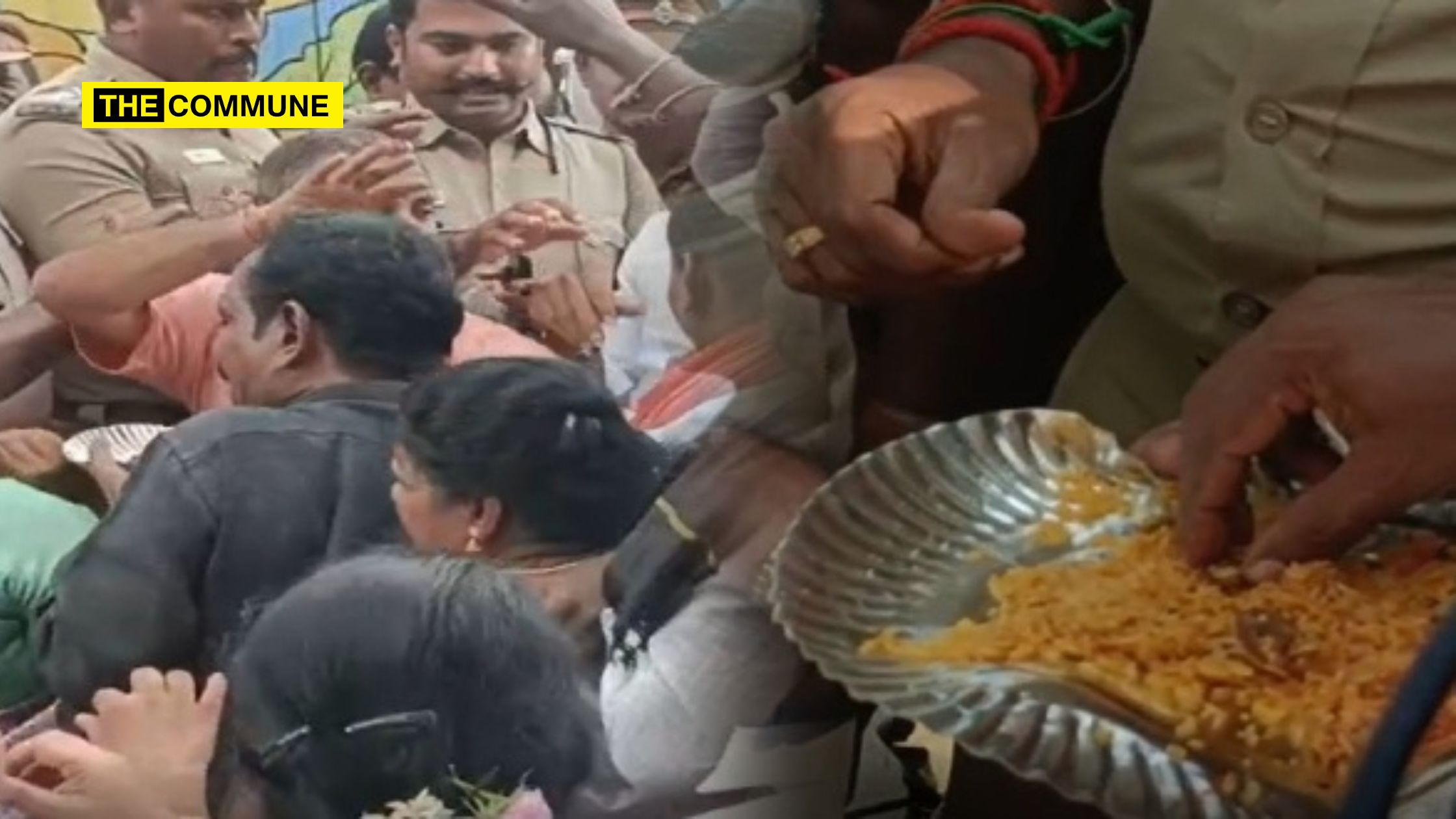
n Vellore, a protest organized by the Rashtriya Swayamsevak Sangh (RSS) condemning attacks on Hindus in Bangladesh took an unexpected turn when Ayyappa devotees, among the detainees, were allegedly served vegetarian meal by police, but it contained meat. The incident sparked a heated altercation, prompting the Vellore Superintendent of Police to investigate the complaint.
In Vellore, RSS members organized a protest condemning the attacks on Hindus in Bangladesh. Among the participants were Ayyappa devotees returning from their pilgrimage to Sabarimala. During the protest, police detained all participants and moved them to a private hall. While in custody, the police provided lunch to the detainees, which sparked controversy.
A complaint emerged alleging that the vegetarian meal served to everyone, including the Ayyappa devotees, contained a piece of meat. This led to a heated altercation between the devotees and the police.
#JUSTIN | சைவ உணவில் மாமிசம் – பக்தர்கள் அதிர்ச்சி
வேலூரில் திருமண மண்டபத்தில் அடைத்து வைக்கப்பட்ட ஐயப்ப பக்தர்களுக்கு போலீசார் வழங்கிய மதிய உணவில் மாமிசம் கலந்திருந்ததால் அதிர்ச்சி
இத்தனை நாட்கள் இருந்த விரதம் வீணாகிவிட்டதாகக் கூறி, போலீசாரிடம் பக்தர்கள் கடும் வாக்குவாதம்… pic.twitter.com/nFOVJpJPnK
Vellore Superintendent of Police Mathivanan responded to the incident, stating, “The police always serve vegetarian food to detainees. However, we have ordered an investigation into the complaint to determine the facts.”
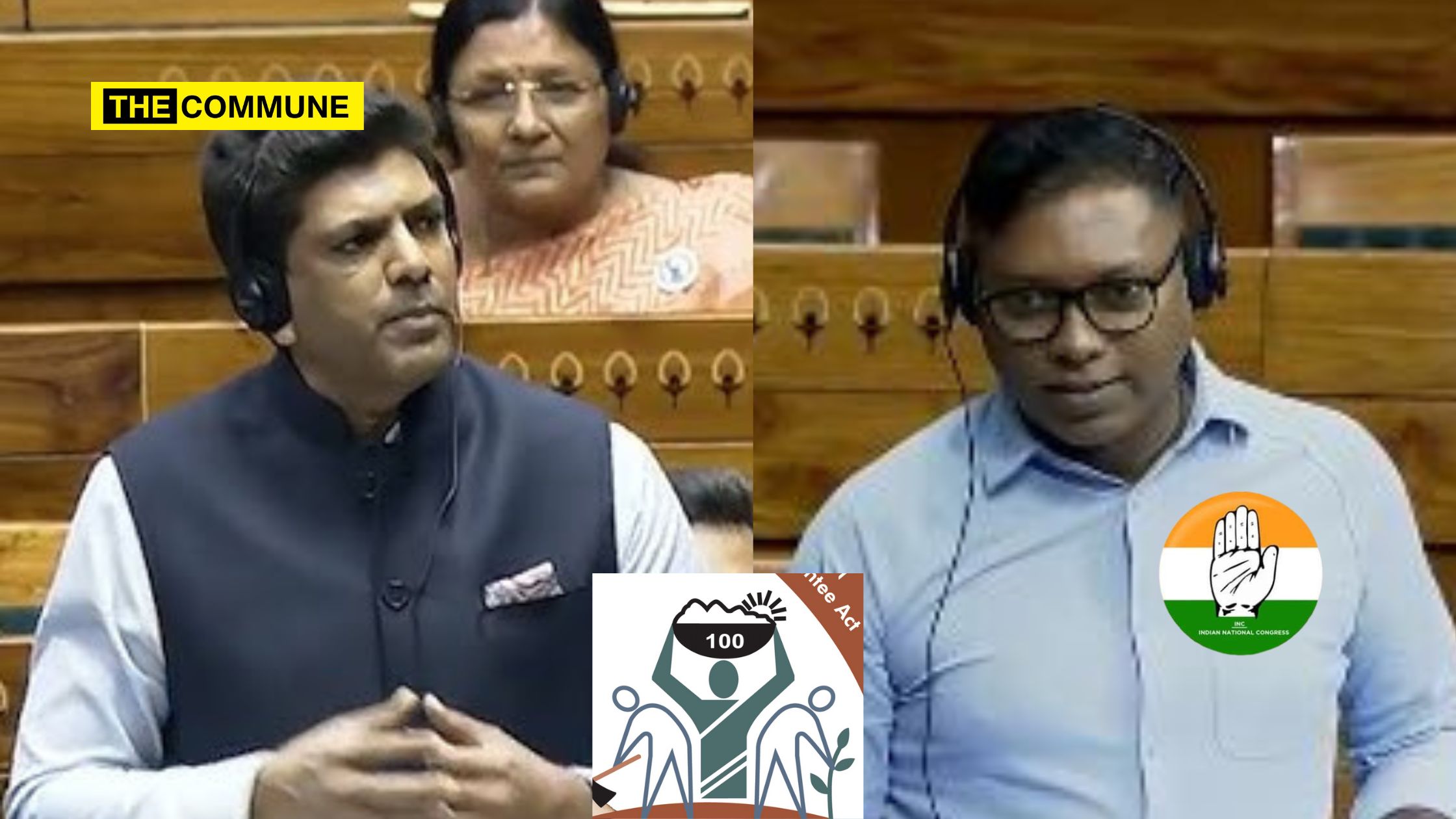
Chandra S Pemmasani, Minister of State for Rural Development and Communications, delivered a strong rebuttal to the opposition’s attempts to portray the BJP-led central government as trying to undermine the MGNREGA program by slashing its budget and deleting labour cards.
In a question raised by Congress MP Sasikanth Senthil, DMK MP T.R. Baalu, and others about budget cuts for the scheme, Pemmasani clarified that MGNREGA is a “demand-based” program. He also pointed out that, under the UPA regime from 2009-10 to 2012-13, budget allocations were lower than the increases implemented by the Modi government.
In a written reply to Venugopal’s question on MGNREGA budget allocations, Union Minister of Rural Development Shivraj Singh Chouhan confirmed that the funding had increased significantly—from ₹60,000 crore in 2019-20 to ₹86,000 crore in 2024-25. The revised estimates for funds released also rose, going from ₹71,687.71 crore in 2019-20 to ₹74,976.84 crore in 2024-25.
During the discussion, Senthil highlighted that the budgetary allocation had consistently been lower than the revised estimates of the previous financial year and raised concerns, asking, “This program is an excellent example of how blind the government is. The minister accepted that despite revised estimates yearly, they keep reducing the budget. I want to know the reason for this being a demand-driven program. Despite your budget of 60000 crores, the country’s people keep saying this is not the demand. What is stopping the government from going with the revised estimate every year? Every year, you revise the budget back to 60000. Why would you do this if your intention is not to scrap the program? You have introduced all methods to stop this program. You have introduced an app where every farm labourer must register attendance. Do you have any idea how many people are not able to register for attendance on the app? You have deleted cards left, right, and centre. Do you have any account of how many cards have been reduced? Why do you keep reducing the budget despite the people of this country telling you this program is important? You must revise the budget by more than 30 to 40 crores every year. Is the government so blind and insensitive to the people of the country?”
Today, on the 3rd of December, in response to Shri T.R. Balu’s question about MGNREGS, the Minister of State for Rural Development, Shri Chandra Sekhar Pemmasani performed a fascinating act of joomla. Truly, the circus never ends!
In response to Congress MP Sasikanth Senthil’s allegation about a reduction in the budget, Minister of State Chandra Sekhar Pemmasani strongly rejected the claim, saying, “You said that the budget has been reduced, as I said earlier, the budget has not been reduced. Every year, 10,000 to 20,000 crores more are allocated to the budget.”
Addressing the issue of a lower budget, Chandra Sekhar further explained, “Every year, the budget is done in a consultative process. The secretary of rural development and all state secretaries sit together, and they estimate this budget based on the previous year’s work. If you look at it, some states will do differently. For example, in 2022, the state of Uttar Pradesh, with twenty crore population, has asked for 10000 crores and the state of Tamil Nadu, with a population of seven crores, has asked for ten thousand crores and in the next year, 2024, the state of Uttar Pradesh has asked similarly with 500 crores more. In contrast, Tamil Nadu asked for 2500 crores more, which is 25% more. So when these things happen, there will be anomalies, and they will be corrected, but at the same time, despite them asking 2500 crores, the GOI and Modiji have given those 2500 crores extra money. So it is not true that we are not giving.”
Minister Chandra Sekhar then addressed the job deletion issue, stating, “Job deletion of cards is the function of the State government; the central government has no role in Job deletion. So the way the job deletion happens is if there are fake applicants or duplicate applicants if the village becomes urbanised, or if the person moves from one gram panchayat to another gram panchayat, that is when job cards will be updated and deleted, and again, it is the responsibility of the state and not the centre’s responsibility.”
Subscribe to our channels on Telegram, WhatsApp, and Instagram and get the best stories of the day delivered to you personally.
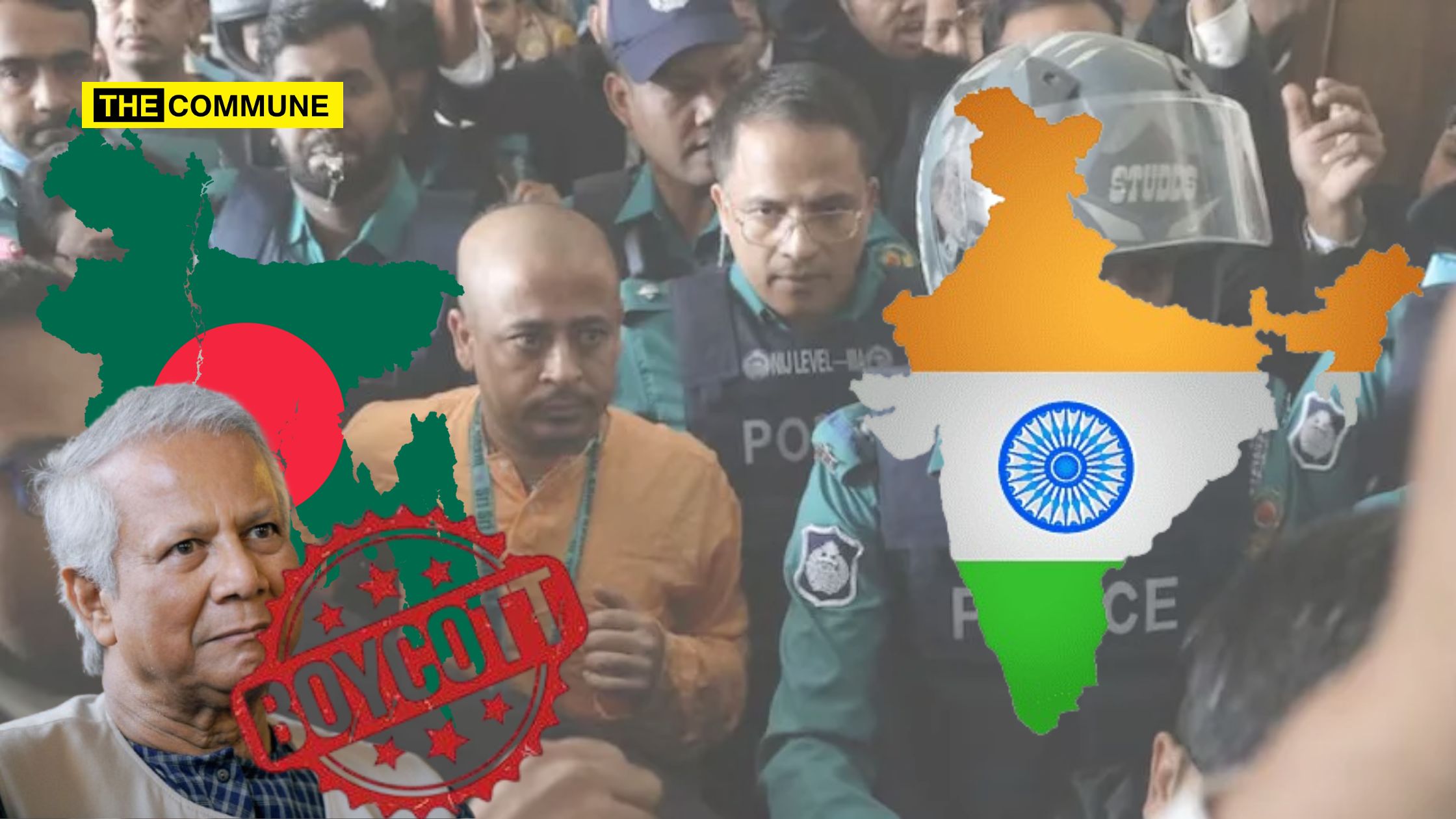
On 2 December 2024, Tripura’s ILS Hospital in Agartala suspended its services for Bangladeshi patients in protest against the ongoing violence and persecution of Hindus in Bangladesh. This move comes as part of a growing national sentiment to boycott Bangladesh in solidarity with the suffering Hindu community there. On the same day, four major export associations in Assam took a strong stand by indefinitely suspending trade between India and Bangladesh through the Sutarkandi Landport. This action was a direct protest response to the increasing atrocities and persecution faced by Hindus in Bangladesh, marking a significant shift in public and institutional sentiment supporting the plight of Bangladeshi Hindus. Let us take a look at 7 incidents in support of Bangladeshi Hindus – Boycotting Bangladesh has become a national sentiment in India.
1. Export Associations Announce Boycott
On 4 December 2024, the Import and Export Association of Assam’s Sribhumi district has indefinitely suspended trade with Bangladesh following protests led by MLA Kamalaksha. The suspension affects four key regional agencies, halting exports to and imports from Bangladesh. This move is in response to allegations of inhuman treatment of minority communities and arrests of Hindu monks in Bangladesh, along with rising anti-India sentiment. MLA Kamalaksha has called for India to reassess its trade relations with Bangladesh amidst the unrest. The suspension is expected to impact the regional economy, with local businesses expressing concern and support for the decision.
In protest against the alleged atrocities against Hindus in Bangladesh, hotels and restaurants in Tripura have barred entry to Bangladeshi nationals. The All Tripura Hotels and Restaurants Owners’ Association made this decision temporarily after a meeting on 2 December 2024. The association emphasized that India is a secular nation that respects all religions, but recent events in Bangladesh, including the dishonoring of the Indian national flag and the mistreatment of minorities, have raised concerns. While the association has traditionally welcomed Bangladeshi visitors, it condemned the actions of some Bangladeshi nationals towards minorities, calling them “despicable.”
3. Hospitals Boycott Bangladeshi Patients
ILS Hospital, a multi-speciality private facility in Agartala, announced it would no longer treat Bangladeshi patients in response to protests against the alleged atrocities against Hindus in Bangladesh. The hospital’s Chief Operating Officer expressed support for the protesters’ sentiments, stating that the decision was made in light of recent incidents in Bangladesh.
This move follows a similar announcement by a hospital in Kolkata, JN Roy Hospital, which also decided to suspend medical treatment for Bangladeshi patients. The decisions come amid growing tensions over the situation in Bangladesh and its impact on relations with neighboring India.
4. Doctor Asks Bangladeshi Patients To Respect Indian Flag Before Treatment
In Siliguri, a doctor’s private practice has displayed the Indian flag with a message requiring patients, especially those from Bangladesh, to offer “pranam” to the flag before entering. This follows protests in West Bengal over the alleged desecration of the Indian flag in Bangladesh and the arrest of Hindu monk Chinmoy Krishna Das in Dhaka. Dr. Sekhar Bandopadhyay, who works at North Bengal Medical College Hospital, stated that while he can’t refuse treatment at the government hospital, he will not treat those who don’t respect the flag in his private chambers. Other doctors, including Chandranath Adhikary, have similarly refused to treat Bangladeshi patients.
5. Trade With Bangladesh Suspended At Kailashahar Border, Tripura Amid Protests
Trade through the Kailashahar border in Tripura has been suspended indefinitely due to protests by Sanatani Hindus against atrocities on minorities in Bangladesh. Demonstrators, led by local leaders, gathered at the Manu Land Customs Station to protest the arrest of ISKCON preacher Chinmoy Das and the persecution of Hindus. They called for the release of Das and the cessation of attacks on minorities. Protesters also urged Prime Minister Modi to halt trade with Bangladesh until minority rights are protected.
6. No Bangladesh Players Bought In IPL 2025 Auction
No Bangladeshi players were bought in the IPL 2025 mega auction, marking a significant shift after Mustafizur Rahman’s participation with Chennai Super Kings in 2024. The main reasons include the declining performance of Bangladeshi players in T20 cricket and their limited experience in franchise leagues. Despite 12 Bangladeshi players entering the auction, none were picked. Another factor is the Bangladesh Cricket Board’s reluctance to grant NOCs, leading players to leave IPL midway to join national duties.
Potato imports through the Hili land port in Bangladesh have halted due to the West Bengal government’s suspension of online slot bookings for potato exports. While other imports, like onions, continue, the ban on potato exports has disrupted local supply. Indian potatoes are in high demand in Bangladesh, but the lack of slot bookings has caused delays, with only six trucks crossing the border on 1 December 2024. Importers and traders are concerned about financial losses and potential price hikes, with local potato prices already rising.
Bangladesh Issue: Potato export to bangladesh through the Hili land port remained suspended since Monday as the West Bengal government of India stopped slot booking for the exports of onion and potato on Sunday afternoon.
The Madras High Court has granted conditional bail to Omkar Balaji, son of Indu Makkal Katchi leader Arjun Sampath and leader of the youth wing, in a case related to alleged threatening remarks against the editor of Nakkheeran newspaper.
The Race Course Police in Coimbatore registered a case based on a complaint by Abdul Jalil, alleging that Balaji made threatening remarks during a protest on the 27 October 2024. The protest was held to condemn Nakkheeran newspaper for allegedly spreading defamation about the Isha Yoga Center.
IMK president Arjun Sampath and Omkar Balaji were both present at the event. According to reports, a DMK member and auto-rickshaw dealer, A. Abdul Jaleel, who apparently “overheard” Omkar’s speech while on his way for personal errands, filed a police complaint the following day.
The complaint alleged that Omkar Balaji had threatened to drag Nakkheeran Gopal through the streets, handcuff him, and imprison him once the DMK loses power in Tamil Nadu. He was also accused of threatening to cut off the journalist’s tongue. IMK cadres note that Omkar had just used a commonly used colloquial remark in the heat of the moment.
Balaji was initially arrested after his anticipatory bail application was rejected. Subsequently, he filed a petition in the Madras High Court seeking bail.
Hearing the petition, High Court Judge A.D. Jagadish Chandra ordered Balaji’s release on bail with a specific condition: he must report to the Coimbatore Race Course Police Station and sign in at 10:30 AM daily.
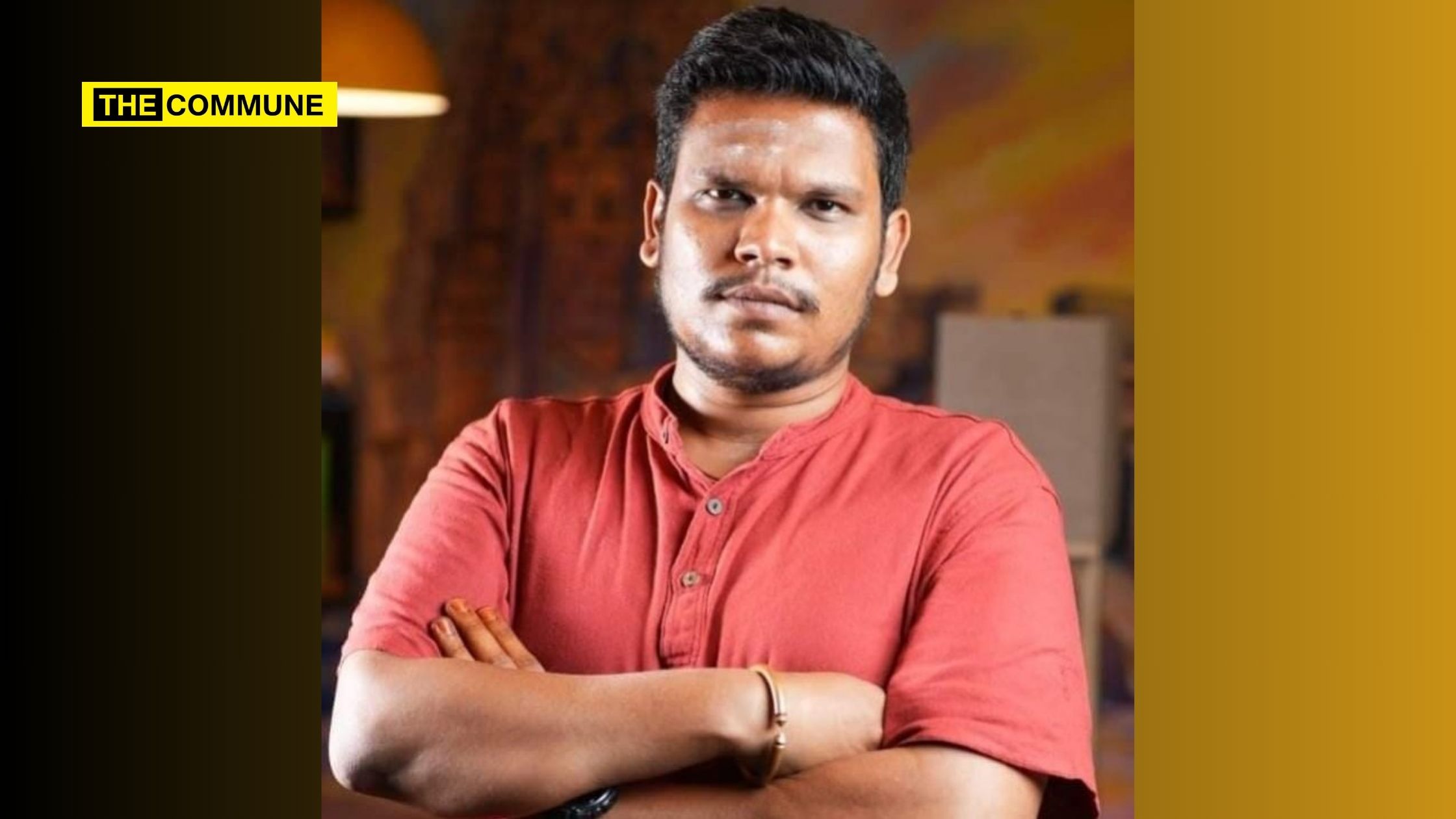
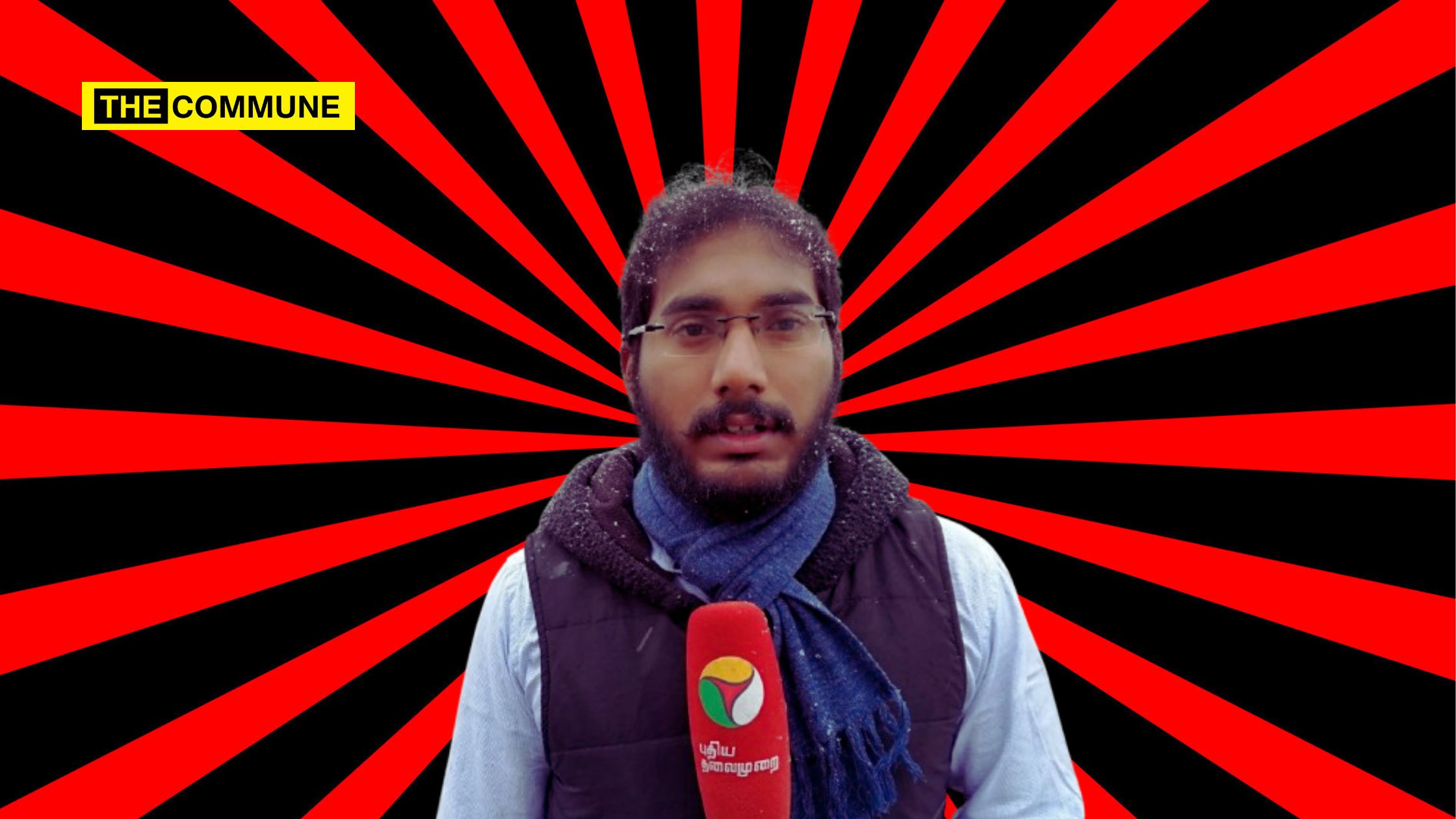
Niranjan Kumar, of Puthiya Thalaimurai who masquerades as a ‘journalist’ is known for peddling half-truths and fake news like a two-bit propagandist for the DMK. His reports often lack accuracy, with facts distorted to align with the interests of his political masters. His posts on social media are often targeted mocking the BJP and those living in the north Indian states while unabashedly buttressing the DMK by peddling narratives favourable for them. There have been multiple instances where he has been caught producing biased reports that consistently favor Dravidianist or Leftist ideologies. Even when exposed for pushing one-sided narratives, Niranjan remains unapologetic, steadfast in advancing his partisan political agenda.
In this context, here are some instances where Dravidianist propagandist Niranjan Kumar, peddled narratives favourable to the DMK, reinforcing their narratives and ideology.
1. Mocking Hindu Sentiments Via Propaganda
On 18 September 2024, Andhra Pradesh Chief Minister N Chandrababu Naidu accused the former YSR Congress Party (YSRCP) government of using substandard ingredients, including animal fat, in the famous Tirupati laddu. However, YSRCP denied these allegations.
A laboratory report revealed that beef tallow, fish oil, and palm oil were used to prepare laddus, which were distributed as prasad at the renowned Sri Venkateswara temple in Tirupati. The report’s findings indicate that the ghee used to prepare the iconic Tirupati laddu prasadam during the YSRCP regime contained traces of animal fat, including beef tallow and fish oil, leading to widespread outrage and claims of disrespect toward religious sentiments.
As the entire Hindu community is outraged by reports of adulteration of Tirupati Laddu prasadam with beef tallow, pig fat and fish oil, the DMK-supporting Dravidianists in Tamil Nadu have pounced on the opportunity to mock Hindus and their worship of cows.
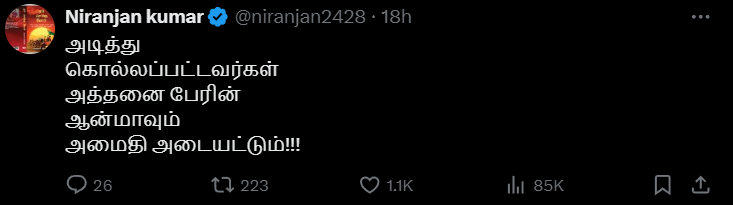
Dravidian journo Niranjan Kumar in an X post that seemingly justified the presence of beef fat in the holy prasadam, the Dravidianist journalist said “Let all those souls who were lynched to death attain peace“, in an apparent dig at gau rakshaks protecting cows from smugglers.
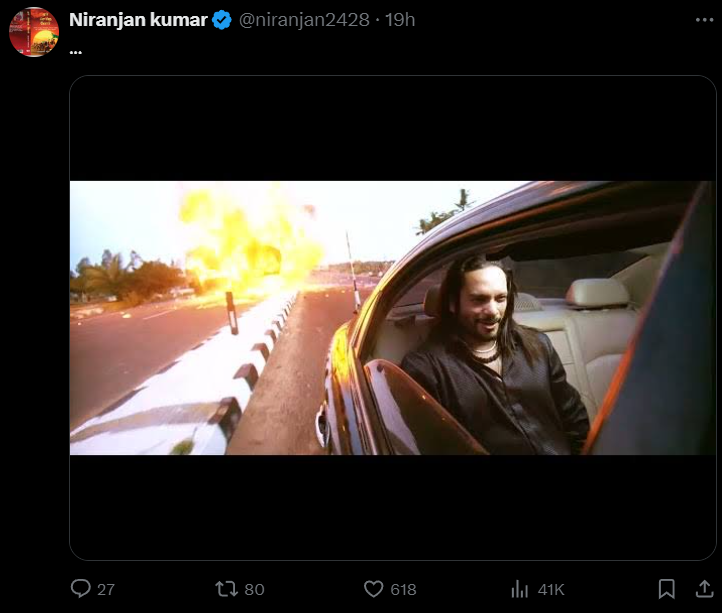
In another post he mocked at Hindus by making reference to a scene from the film ‘Ayan’ in which the antagonist offers laddu to a character played by actor Prabhu, to signify the striking of a deal. Prabhu offers the laddu back to the antagonist to confirm it is not poisoned. However, later Prabhu’s car meets with an accident because the antagonist had removed the nuts and bolts from the wheels.
“You thought I kept it in the laddu? I kept it in the nut-u“, says the antagonist.
In this case, the malice was actually in the laddu and so, the screenshot and snippet of this scene was shared by many Dravidianists and DMK-Congress supporters. Niranjan too shared the same screenshot to mock Hindus.
The bigoted Dravidian propagandist shared another screenshot from the movie ‘Yaaradi Nee Mohini’ in which the character blushes as she says “Achaho Perumale”. The propagandist at Puthiya Thalaimurai in a sadistic way expressed his elation at Hindu devotees being duped and made to eat laddu laden with beef fat.
2. Peddling Distorted Facts From Delhi
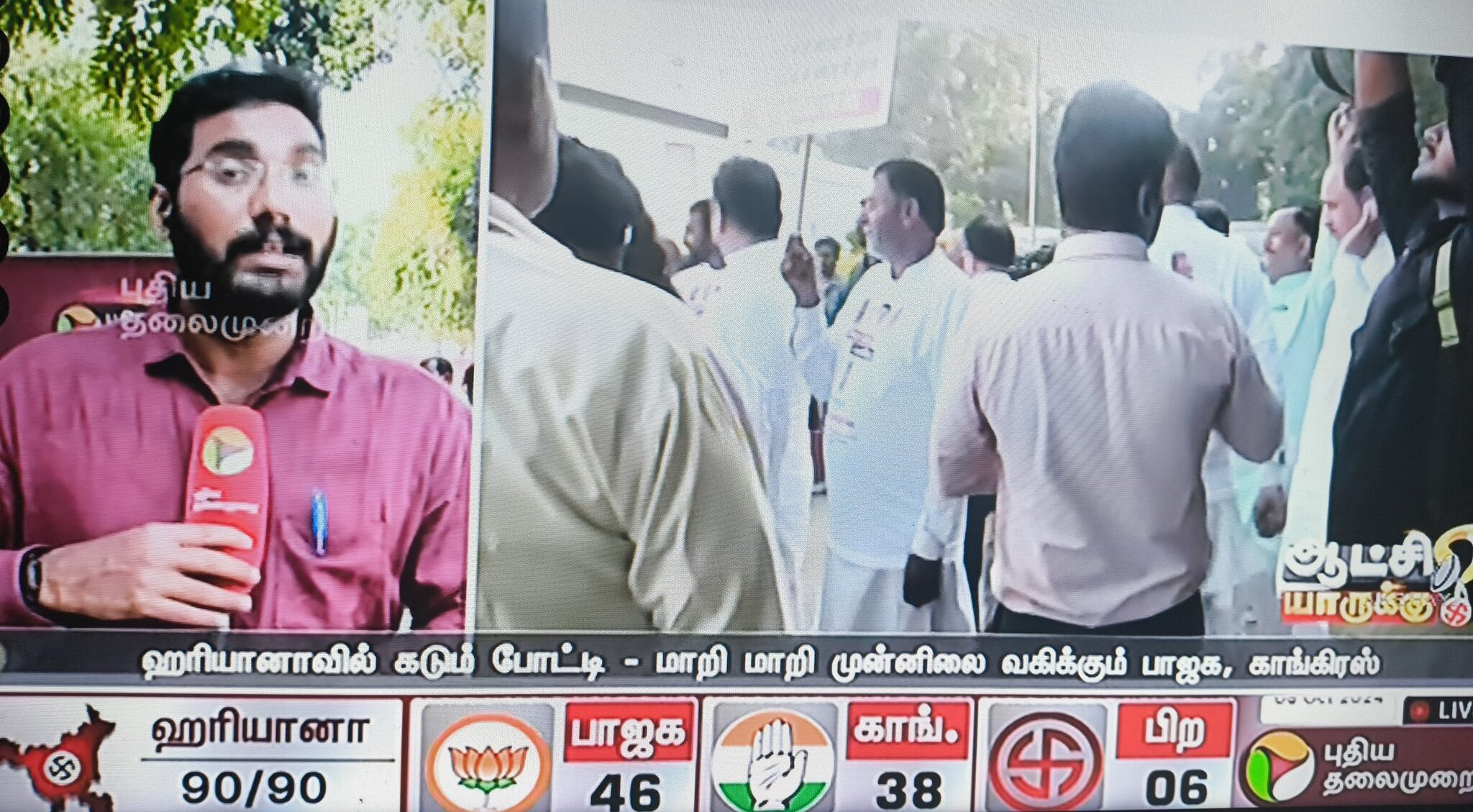
This is not the first instance of bias from Dravidianist journalist Niranjan Kumar. Previously, when the Bharatiya Janata Party (BJP) secured a historic third consecutive term in Haryana by winning 48 seats in the 2024 assembly elections, Kumar’s coverage was similarly skewed. In the elections, the Congress party secured 37 seats, with the 90-seat assembly holding voting in a single phase on 5 October 2024, and a turnout of around 68%. The BJP had also emerged victorious in the Haryana Assembly elections of 2014 and 2019, yet Kumar’s reporting failed to provide a fair or balanced account of these outcomes.
Despite facing significant opposition and unfavorable political predictions where Congress was projected to secure around 60 seats compared to the BJP’s 20, the BJP casually turned the tables. Silent voters in Haryana demonstrated their support for the BJP, and concerns over instability under Congress, particularly regarding the influence of the Jat community and employment issues, influenced the election results.
However, the Dravidianist journalists, promoted narratives to buttress the Congress. At midday, when the BJP was projected to secure 46 seats and Congress was trailing with only 38, Niranjan Kumar claimed on live TV that BJP spokespersons were avoiding the media due to expected turn in tides. He stated, “Spokespersons were holding continuous press briefings, but for the past half hour, they have been avoiding questions. This change comes as the polling landscape shifts, with the BJP fluctuating around 50 seats. We could see that BJP leaders here are anxious about their ability to sustain the government.”
நிருபர் நிரஞ்சன் – பிஜேபி 50 இடங்களில் முன்னிலையில் உள்ளது.
திராவிட நிரஞ்சன் – பிஜேபி ஆட்சி அமைக்க முடியுமா னு கவலையில் பிஜேபி spokespersons யாரும் பேச மாட்டேங்கிறாங்க🤡@niranjan2428 என்ன நான் சொல்றது கரெக்ட் தானே?
This caught the attention of netizens and political observers, who took to social media to call him out and mock him with amusement. This isn’t the first instance of Niranjan Kumar’s dubious journalism in support of his political masters; he consistently demonstrates his loyalty at every opportunity.
3. Peddling Narrative For Congress During Lok Sabha
During this recent Lok Sabha election season, Kumar seemingly expressed a strong desire for the victory of the Congress, but when that did not materialize, he immediately started celebrating the success of the DMK like several other Dravidianist journalists.
In a post following Narendra Modi’s swearing-in for a third term as Prime Minister of India, Kumar intentionally misled his audience with false information on his X account, claiming that Modi’s third cabinet lacked any members directly elected from Tamil Nadu. This statement raised eyebrows, especially since the DMK, as the opposition, had won all the Lok Sabha seats in the state. It appeared as though he was implying that PM Modi should consider including DMK members in the cabinet.
Niranjan Kumar wrote, “Important: Prime Minister Narendra Modi’s third cabinet did not include a single member of parliament directly elected from Tamil Nadu. L Murugan, Nirmala Sitharaman, and others have also been elected to Rajya Sabha from other states.”
Important:
பிரதமர் நரேந்திர மோடியின் மூன்றாவது அமைச்சரவையில் நேரடியாக தமிழகத்திலிருந்து தேர்ந்தெடுக்கப்பட்ட ஒரு நாடாளுமன்ற உறுப்பினர்கள் கூட இடம்பெறவில்லை
எல் முருகன் நிர்மலா சீதாராமன் உள்ளிட்டவர்கள் கூட பிற மாநிலங்களில் இருந்து தான் மாநிலங்களவைக்கு தேர்ந்தெடுக்கப்பட்டு…
4. Spreading Distorted Facts About Removal of Statues In Parliament
In two other posts, Niranjan Kumar raised concerns about the removal of statues of Mahatma Gandhi and Ambedkar in the Parliament complex. However, this claim was promptly refuted and labeled as a fake narrative with the Parliament secretariat clarifying that the statues were being relocated systematically and respectfully within the Parliament House complex. Despite this clarification from the secretariat, the so-called Delhi-based journalist chose not to acknowledge or convey their statement, instead opting to propagate the narrative of the Congress party.
This post raises the question of whether Niranjan Kumar is indeed a journalist based in Delhi or if he is from 24, Akbar Road, New Delhi.
Niranjan Kumar wrote, “The Congress party has alleged that the statues of the Father of the Nation Mahatma Gandhi and the architect of the Constitution of India, Ambedkar, are being removed and placed in a corner. Congress alleges that BJP has started insulting political leaders“
நாடாளுமன்ற வளாகத்தில் உள்ள தேசத் தந்தை மகாத்மா காந்தி மற்றும் இந்திய அரசியல் சாசன சிற்பி அம்பேத்கர் ஆகியோரது சிலைகள் அகற்றப்பட்டு ஏதோ ஒரு மூலையில் வைக்கப்படுவதாக காங்கிரஸ் கட்சி குற்றச்சாட்டு
பாஜகவினர் அரசியல் தலைவர்களை அவமதிக்க தொடங்கிவிட்டது என காங்கிரஸ் குற்றச்சாட்டு pic.twitter.com/onM3tYPNl9
Niranjan Kumar faced criticism from netizens for blindly sharing information without fact-checking, as promoted by a DMK minister. In a post on his X account, amid the ongoing uproar from I.N.D.I.Alliance partners regarding allegations of the central government “looting tax revenue” from states, he quoted DMK Minister PTR Palanivel Thiagarajan during a protest at Delhi’s Jantar Mantar. He wrote, “There was a Chief Minister in India who claimed the central government is deceiving them and spoke about federal principles. He said they are taking our state’s tax money and diverting it to other states: he is none other than the former Chief Minister of Gujarat, Narendra Modi, who is now the Prime Minister.”
However, his claims were quickly debunked. After assuming office, PM Modi increased the allocation of funds to states from 32% to 42%. He also reduced the population weightage in tax distribution from 27.5% to 15%.
Moreover, during the UPA regime from 2004 to 2014, the total funds available to states amounted to ₹30 lakh crore, while from 2014 to 2023, this figure soared to over ₹100 lakh crore.
In terms of tax sharing and assistance, Tamil Nadu received ₹1,52,921 crores under the UPA from 2004 to 2014. In contrast, this amount increased to ₹5,08,337 crores during the Modi regime from 2014 to 2023.
Additionally, Tamil Nadu has benefited from ₹10.76 lakh crores in funds, projects, and grants over the past nine years under the Modi government.
உனக்கு அறிவு இல்ல, இருந்தா நீ ஏன் திமுகவுக்கு சொம்பு தூக்க போற?
அந்த முதல்வர் பிரதமரான பின்
மாநிலங்களுக்கு வழங்கும் நிதி பகிர்வை 32 சதவீதத்தில் இருந்து 42 சதவீதம் ஆக்கினார்
வரி பகிர்வு criteriaவில் மக்கள் தொகைக்கு இருந்த weightageஐ 27.5 சதவீதத்தில் இருந்து 15 சதவீமாக… https://t.co/wQRW0aiAAn
On 9 February 2023, the Reserve Bank of India raised the repo rate by 25 basis points to 6.50% to curb retail inflation. This move is expected to increase the cost of loans linked to external benchmarks, like the repo rate. Following the hike, DMK supporters, including journalist Niranjan Kumar of Puthiya Thalaimurai, spread misinformation, with Kumar suggesting that the dream of buying a house would remain unfulfilled. However, the rate hike is a standard response to inflationary pressures in a growing economy, a basic economic principle that Kumar either ignored or lacked knowledge of.
வீடு வாங்குற கனவு கடைசி வரைக்கும் கனவாவே இருக்கட்டும்…
7. Parroted DMK Minister’s Line In Ponmudi Mud Throwing Incident, Blames BJP
Even now, Niranjan Kumar pushed a biased narrative in his recent coverage of an incident involving DMK Minister Ponmudi. On 3 December 2024, during Ponmudi’s visit to Villupuram to distribute relief materials and assess the damage caused by Cyclone Fengal, a group of individuals relief materials, staining his white shirt. The incident quickly went viral on social media, with initial reports suggesting that locals were angry at the governments inefficiency in relief work.
However, Niranjan Kumar shamelessly framed the incident with the headline, “Throwing mud at Minister Ponmudi… BJP woman functionary in the background.” This narrative was based on an explanation given by HRCE Minister PK Sekar Babu in an interview, and the police were still investigating the case, with no arrests reported at that time. Meanwhile, other videos began circulating on social media showing a group of agitated youths and locals—agitated by the government’s relief efforts—tearing down DMK banners associated with Ponmudi. Netizens quickly questioned whether these youths were affiliated with the BJP, mocking the narrative. Despite the growing online discussion, Kumar continued to push his one-sided portrayal of the incident.
அமைச்சர் பொன்முடி மீது சேற்றைவாரி இறைப்பு.. பின்னணியில் பாஜக பெண் நிர்வாகிhttps://t.co/komDivfe60
8.Made Unverified Claims During Evacuation Mission During Russia-Ukraine War
In March 2022, during the Russia-Ukraine war, Niranjan alleged that South Indian students were discriminated in the evacuation operation from Ukraine. The journalist based his claim on an unverified source, a parent of a student who had returned from Ukraine, and did not provide any credible evidence or corroboration for his allegation.
9.Peddled Lies That Modi Govt Rejected TN Tableau For R-Day
He also misreported that the Modi government rejected Tamil Nadu’s Republic Day tableau for not featuring prominent freedom fighters, though the selection process is based on an expert committee’s recommendations.
Exclusive:
வஉசி,வேலுநாச்சியார் உள்ளிட்டோரது உருவங்கள் தமிழக அலங்கார ஊர்தியில் இடம்பெற்றிருந்த நிலையில் "பிரபலமான சுதந்திர போராட்ட வீரர்கள்" இடம் பெற்றால்தான் அனுமதிப்போம் என கூறி மத்திய அரசு நிராகரித்துள்ளது pic.twitter.com/QmY7nMEd1i
He had peddled fake news that the Modi Government at the Centre had ‘rejected’ Tamil Nadu’s tableau for the Republic Day Parade for not having ‘prominent freedom fighters’ while the fact is that each year only limited number of tableaus from states are selected based on the recommendations of an expert committee appointed by the Ministry of Defence. Tamil Nadu’s tableaus were selected in 2016, 2017, 2019, 2020 and 2021, far more than many other states.
10.Peddled Fake News That BJP Candidate Uma Anandan Lost By 8 Votes
In February 2022, the alleged ‘journalist had peddled fake news against BJP candidate of Ward No. 134. Uma Anandan, saying that she had lost by securing just 8 votes while she emerged as a winner with 5635 votes.
11.Falsely Linked Hemant Soren Arrest To Cancelled Flights
He falsely linked the arrest of Hemant Soren and alleged horse-trading of Jharkhand MLAs to cancelled flights, claiming it was a BJP conspiracy. He suggested that JMM was attempting to move MLAs to another state due to inclement weather. However, fact-checking organization Only Truth debunked his claim, explaining that the flight cancellations were due to heavy fog disrupting services for over 20 days. Reports from reputable outlets corroborated this, but Kumar continued to justify his false narrative. Netizens mocked his misrepresentation of the facts and his political motives.
12.Made Fake Claims About HP’s Education System
In January 2024, Niranjan’s claim about spending two days in Manali and making statements about the state’s education system was debunked by data, revealing that even Manali had a higher literacy rate compared to Tamil Nadu. His assertions about better facilities in the state were contradicted by the state’s move to seek donations for school development and concerns over the use of Hindu temple funds for schools. The deplorable condition of government model schools in the state’s capital highlighted the deterioration of the education system.
13.Tried To Stoke Controversy In Parliament Security Breach
In December 2023, Niranjan, posing as a journalist, sought to stoke caste-based animosity by spotlighting the name “Sagar Sharma” in connection with the Lok Sabha security breach. By emphasizing Sharma’s surname and linking it predominantly to Brahmins, he aimed to escalate caste tensions surrounding the incident.
14.Peddled DMK Narrative On ‘Thamizhagam’ Controversy
In January 2023 witnessed Niranjan contributing to the misrepresentation of Tamil Nadu Governor RN Ravi’s statements. The governor’s call for using “Thamizhagam” instead of “Tamil Nadu” was distorted by certain media outlets, including alleged journalist Niranjan, leading to the trending of separatist tweets with the hashtag #தமிழ்நாடு.
15.Tried To Blame BJP For Rameshwaram Cafe Blast
Niranjan Kumar falsely reported that BJP member Sai Prasad had been arrested by the National Investigation Agency (NIA) in connection with the Rameshwaram cafe explosion in Bengaluru. Kumar claimed Prasad was involved with suspects linked to the blast, citing unverified sources and insinuating the BJP’s connection to terrorism. This narrative was widely spread by Congress and other Dravidian media outlets, including Sun News and Kalaignar News, fueling regional tensions.
ராமேஸ்வரம் உணவக குண்டுவெடிப்பு வழக்கில் சந்தேக நபர்களுடன் தொடர்பில் இருந்ததாக பாஜகவை சேர்ந்த சாய் பிரசாத் என்பவரை பிடித்து தேசிய புலனாய்வு அமைப்பு விசாரணை pic.twitter.com/zInxge7wrs
However, the NIA clarified that Prasad was only summoned as a witness due to his prior connection to a mobile phone purchased by an arrested suspect. The phone was used by one of the main suspects, but there was no evidence linking Prasad to the blast itself. Kumar’s misleading claims were debunked, but the narrative continued to be propagated by partisan media, fueling misinformation.
16.Peddled Fake News That FM Nirmala Sitharaman Refused To Meet TN CM
In 2021, he was also called out for spreading misinformation about Finance Minister Nirmala Sitharaman’s refusal to meet Tamil Nadu’s CM EPS. He had stated that the Minister had refused to meet Tamil Nadu Chief Minister Edappadi K. Palaniswami citing budget consultation work.
மாண்புமிகு தமிழக முதல்வர் சார்பில் நிதி அமைச்சரை சந்திக்க கால அவகாசம் கேட்டு எந்த கோரிக்கையும் இந்த அலுவலகத்தில் வைக்கப்படவில்லை. தவரான செய்தி.@pibchennaihttps://t.co/LQ9dN9SZdj