Home Blog Page 753

Dravidian Model: CM MK Stalin’s Constituency Drowns While His Home Remains Unscathed In The Rains

CM MK Stalin's Constituency Drowns While His Home Remains Unscathed In The Rains

The Dravidian model government repeatedly claimed to have allocated over 4,000 crore in 2023, with approximately 1,321 crore earmarked specifically for storm-water drainage in the Chennai corporation’s 2024 budget. However, despite only receiving an average rainfall of 6-9 cm across various localities in the city, the recent rains as of 15 October 2024 has exposed the government’s administrative shortcomings and its inability to prevent such disasters.

Since the rain began on 14 October 2024, the city has experienced significant flooding, with water pooling in many areas due to incomplete drainage projects. Particularly shocking was the dire situation in Chief Minister MK Stalin’s constituency, Kolathur, where residents were seen towing their two-wheelers by hand wading through knee-deep water. Many vehicles stalled as water flooded into their engines.

GKM Colony in the Kolathur area has become a scene of distress. Residents are swimming through floodwaters just to access their daily essentials. They attribute their plight to government negligence, as repeated requests for improvements to the rainwater drainage system in Stalin’s constituency have been ignored. Due to the area’s low elevation, there are no proper pumps, and minor drains have been severely lacking maintenance. Officials have not initiated new infrastructure projects. Despite claims from the MLA and local ward members that the work has been completed successfully, the reality is quite the opposite. This situation is not unique to GKM Colony; nearby areas such as Thillai Nagar, Kumaran Nagar, and Kambar Nagar, all within Chief Minister Stalin’s constituency, are experiencing similar challenges.

When speaking to reporters, one resident expressed disappointment about the constituency, lamenting the ongoing issues. “It is very bad; we are suffering silently not only this year but every year we are suffering the same. It has only rained for one day, it didn’t rain yesterday, only today. Look at our situation, we are towing our vehicles. You are saying this is the Chief Minister’s constituency, what kind of constituency is this? Very bad. Check out other constituencies, they are also bad, but this one is the worst. We are living a bad life here.”

The reporter then asked if there was a rainwater drainage facility in the area, to which the resident replied, “Yes, everything is there, there is a rainwater drainage and every other thing, but they are not maintaining it properly. During this monsoon season, just two days ago they came and looked at it, my home is on 31st street, many manholes have not been closed and it’s still the same. What shall we do? we have complained to them many times, they come and check, give us false hope and leave, a common man’s life is like that. I don’t know what else to say, everyone knows this is the CM’s constituency, still, he should take strong action. We go and say to the DMK office, they too come and see, but they are not taking proper steps.”

The reporter asked another woman resident about the situation in the Chief Minister’s constituency, and she responded with a mocking laugh, “You could see the situation very gladly. They have mentioned things like rainwater drainage and others, I was very happy that there won’t be any floods hereafter. This is an elevated area, if the situation here is like this my mother’s house in Perambur Barracks, Choolai, where the water level is up to the throat. I asked them to come over, but they could not even come. We were with hope that there won’t be any floods hereafter as they took up rainwater drainage works since it is a new regime we looked forward to something new, to say the least, this (DMK) is more than to them (AIADMK).”

She also expressed frustration that essential items, like milk, were unavailable in the area, stating, “We hope for a change, but nothing seems to improve.”

While residents lamented their situation, the contrast was stark with the Chief Minister’s home and street, which remained spotless and free of any water. The drainage there was efficient, leaving no signs of the heavy rainfall that had affected the rest of Chennai. Residents struggled in flooded conditions, while the CM’s street appeared untouched by the deluge. This highlighted the administration’s ability to manage floodwaters, suggesting that the DMK, which champions social justice, only extends that concern to its leaders and elites, leaving ordinary citizens to fend for themselves.

(Pic Credit: Tamil Janam)

Subscribe to our TelegramWhatsApp, and Instagram channels and get the best stories of the day delivered to you personally.

Drunk TANGEDCO Staff In Mayiladuthurai Found Asleep Amid Power Outage

Drunk TANGEDCO Staff In Mayiladuthurai Found Asleep Amid Power Outage

Residents of several areas around Kadalangudi, located in Kuthalam Taluk of Mayiladuthurai district, Tamil Nadu, already frustrated over a prolonged electricity outage, were shocked to see TANGEDCO (Tamil Nadu Power Generation and Distribution Corporation) employees asleep and intoxicated at the substation.

The disruption, which originated from the Kadalangudi sub-station, caused considerable inconvenience to locals, prompting them to seek assistance from the electricity officials.

Calls For Help Ignored

The power outage, which began on 14 October 2024, persisted for several hours, leaving residents in the dark and disrupting daily life. Desperate for a solution, people repeatedly attempted to contact the TANGEDCO officials by phone to report the issue and request a resolution. However, their calls went unanswered despite multiple attempts.

As the power outage continued, residents decided to take matters into their own hands and visited the Kadalangudi sub-station to raise the issue directly with the staff.

Drunk Employees Found Sleeping

Upon arriving at the substation, the locals were shocked to find two employees asleep inside the office, visibly intoxicated. The workers appeared to be completely unaware of the ongoing power issue or their surroundings, as they lay in a dishevelled state with their clothing displaced.

Angered by the negligence, the residents woke the sleeping employees and informed them about the power outage, demanding immediate action to restore electricity. Some individuals captured the incident on video and subsequently shared it on social media, where it quickly went viral, sparking widespread outrage.

Following the incident, residents called for the authorities to act appropriately against the employees involved. They voiced concerns about the safety risks associated with handling electrical equipment, particularly when workers are under the influence of alcohol.

The public urged TANGEDCO to ensure stricter oversight of its staff and to implement measures to prevent such incidents from recurring. They emphasized the need for the Electricity Board to properly monitor its employees, given the potential dangers involved in handling power supply equipment.

(With inputs from PTTV)

Subscribe to our TelegramWhatsApp, and Instagram channels and get the best stories of the day delivered to you personally.
How To Make India More Hindu?

How To Make India More Hindu?

After centuries of surviving persecution under mleccha rule by restricting their faith to the boundaries of their individuals homes and shrines, Hindus are reclaiming their sense of being a sociopolitical community. This collective sense of being, which had existed since the Vedic era, had been rendered dormant first as an adaptation to oppression under foreign rule and then, after 1947, as a matter of the State’s social engineering endeavour of enforced secularisation of the Hindu social, economic, political, and even religious life. Yet, the rediscovery of the importance of community affairs, i.e. Hindutva, is recrystallising with Hindus being increasingly eager to articulate, advocate, and agitate for Hindu concerns and interests.

What began as a tempestuous collective upheaval of latent sentiment with the Ram Janmabhoomi movement and the removal of the invasive occupying structure erected over Bhagawan Rama’s birthplace has proven to stand the test of time, and the political effervescence of Hindutva did not die a death of senescence as the matter went on endlessly in the courts, but culminated with the BJP’s outright clinching of the majority mark in 2014 and 2019. The BJP’s miss in 2024 is more a result of a perceived betrayal of the Hindutva cause and inaction over Hindutva priorities—another first in contemporary Indian politics.

To understand how to make India more Hindu, a brief contextualisation of how India underwent de-indigenisation and pseudo-indigenisation where Hindutva as an idea was all but erased, is necessary. The clear concept of an outgroup, or a deplorable other to which Hindus have religious and social sanction to be antagonistic towards, has a long and consistent history. Whether the Dasyus of the Rigveda or the Mlecchas and Turushkas of the Puranas and Dharmashastras, the idea of a malevolent other, which is fit to face suspicion, boycott, and even dharmic violence, has been very clear. However, for the sake of protecting dharma itself, these concepts had to be necessarily kept in abeyance when Muslims came to occupy swathes of Bharat generation after generation. Thus, in the Bhakti era, even outright syncretism was employed as a protective mechanism to profess and propagate the core tenets of dharma while the land and people were under occupation; large temples, the fulcrum of all aspects of Hindu life, were all but wiped out in the northern half of the subcontinent, and hardly a temple exists in Kashi, which has not been razed at least once.

The absence of any noticeable collective feeling of Hindutva in our country for many decades following independence owes, in our opinion, to the almost complete deracination of the Hindu mind for over two centuries of colonisation by the British, preceded by aggressive destruction of our holy places by the Muslims. The post-1858 period was particularly unfortunate in this regard—Macaulay had done his work efficiently—and Hindus were degraded physically, mentally and morally with a small number allowed to ascend to lowly clerical positions in the Raj to ultimately form the future ruling elite of the brown sahebs. This enfeebled condition of the Hindus continued unfortunately after independence with a ‘secular’ constitution that placed the 80% majority community at a status lower than the 20% minority communities, and by this we mean largely the 15% Muslim community. This enforced secularisation where the majority is relegated to a position lower than the minority is unprecedented in the modern world, nay even in world history. Politically, this strange situation was the handiwork of the Congress Party, which is now clearly identified as a party for the Muslims—the modern day equivalent of the AIML of the pre-independence days when the INC (the previous incarnation of today’s Congress) and the AIML were at daggers drawn during the freedom struggle. Such are the vagaries of history.

Lenin’s dictum of controlling the “commanding heights of the economy”, which was readily adopted by the socialistic mai-baap State post-independence and is the bedrock of the political vapidity of today’s freebie culture, is no longer fully applicable today due to the structure of our modern economy. Thus, while overall economic growth and security should undoubtedly be an important matter for Hindus, the proper advancement of their interests needs a proper delineation of the goals they should work towards. To this extent, what is needed is for Hindus to ultimately control the “commanding heights of the society”, in other words, control over education, media, the legal system, and the Overton window.

The capture of these commanding heights requires a certain momentum, mental frame, and morale to achieve them in a reasonable timeline, which can be propped up with doable solutions that soothe Hindu sentiments as Hindu society reinvigorates itself and shapes itself into a proper political community. A few such initiatives are suggested as follows:

1. Temple Freedom: State control over temples, while constitutionally framed to permit temple entry, have ended up giving the godless complete control over institutions which were once the source of education, direction, and organisation for Hindu society. Such control is critical to keep temples from reclaiming this space, and permitting Hindus to have powerful social institutions which are autonomous from the State. With the scandal of beef fat being used to poison Hindus’ faith in Tirupati, and the ongoing theft of temple jewellery in many of southern India’s shrines, it is incumbent upon Hindus to demand a complete exclusion of the government, including the courts, from all matters concerning their temples. To this end, different temples may organise different modes of governance as test cases, with the general dictum being that overall supervision rests largely with an elected body of devotees, and daily management being the responsibility of the various classes of priests and servicemen which have traditionally undertaken upkeep of the temple.

2. Sanatana Dharma Samrakshana Board: Andhra Pradesh’s Deputy Chief Minister, Pawan Kalyan, has an important suggestion towards converting the various disparate initiatives into an organised, channelised movement. A Sanatana Dharma Samrakshana Board, which can aggregately take up Hindu causes such as social media account suspensions, lawfare, Hindu economic rights, temple protection etc., is necessary. It ought to be noted that the All India Muslim Personal Law Board was neither set up by the government nor was endorsed by it, and yet it successfully manages to act as a custodian of Muslim rights across all fields. Thus, an equivalent body that can coordinate Hindu efforts and be an umbrella pressure group needs to be set up, and it can and should be set up privately.

3. UCC: The greatest remnant of the special treatment advanced to Muslims in the country is their uncodified personal law, while Hindu personal law has been successively deracinated and distorted since the first attacks were made by the four Hindu family law acts passed soon after the independence. The time is right to end any such remnants of the premium accorded to minorities, and such law be necessarily framed as per the wishes and needs of the majority. It must be made abundantly clear that for anyone to live in Bhārat, they ought to submit to Bhāratiya law, and any wishes of Sharia ought to be met with calls of deportation.

4. Waqf: The third largest landowner in the country is a rapacious institution which has stolen Hindu land with little accountability. Entire villages, including temples, have been demanded by the Waqf board for its aggrandisement. The authors are inclined to only accord a lukewarm reception to the fireworks in the Joint Parliamentary Committee proceedings over the Waqf amendment bill. The Waqf is a continuation of the economic and geographical conquest waged over Hindus by aliens, and the only response warranted to such an affront is for its complete dissolution. The Waqf ought to be scrapped in its entirety, and all its properties distributed to Hindus as reparations for the millenia long indignities and destruction waged by invaders.

5. Citizenship: The fact that the government took years to notify and frame rules for the much-maligned Citizenship (Amendment) Act, 2019 (CAA), was a disgrace. Such a puzzling act of pusillanimity, if repeated, will only inflame Hindu scorn towards the current government. The need of the hour is twofold—the time limit for entrants to be eligible for citizenship, being December 31, 2014, has to be removed and the eligibility needs to be perpetual, perhaps even included in the Constitution. Secondly, and more importantly, the CAA needs to be reworded to unambiguously frame India as the natural home of Indic faiths and Indic faiths only, instead of framing it indirectly, even timidly, in the language of religious persecution. This will form the legal foundation for Hindu Rashtra in due course.

6. Reclamation of the Kshetram: Instead of shooting from the shoulders of the courts, reducing a non-negotiable question of Hindu faith to a petty land dispute, the law needs to be wielded to the fullest extent to enable Hindus to reclaim their temples. Kashi Vishwanath and Krishna Janmabhoomi are emblematic; however, till date there are 40,000 occupied and abandoned temples across the country, standing testament to the repeated assaults inflicted by mlecchas on Hindus. All of them need to be reclaimed not by pulverising Hindus into mendicants running before the courts against hordes which have scant regard for judgements, but by a matter of right being enforced through the might and majesty of the State, devoid of inhibitions. If a confrontation with the judiciary is what it takes, so be it. Likewise, a clear intention to retake parts of the country which are under Pakistani occupation is welcome, yet action on the ground is needed. Likewise, the idea that Pakistan, ipso facto, is an illegitimate and irrelevant entity, which is occupying India’s borders that naturally go up till the Sindhu, must be mooted and encouraged. These artificial nation state borders imposed on large sections of the world by the Euro-Amerisphere are unnatural and inefficient for many of us who inhabit civilisational states—they need to go.

7. Education: One of the most egregious missed opportunities post-2014 is to not make any fundamental changes to education. Education is a means of forging a national narrative, and instilling a sense of swayambodh as well as shatrubodh. A nationalistic, Hindu-oriented system of syllabi needs to be initiated, where invaders are no longer glorified, and while continuous genocide of the Hindus is not whitewashed, neither are Hindus painted as perpetual victims, with heroes who fought back such as Maharana Pratap, Gopal Patha, and Raja Kulchand being appropriately introduced. Our history, which is the history of each and every Hindu child, is a history of resilience and grace; a proper syllabus will concretely establish Hindus as a political community for generations to come.

Even with the disputes concerning Christian conversion in parts of south and central parts of India, no substantial and deep-seated disputes exist between Hindus and Christians. The problems in the northeast, including the anti-Hindu pogroms in the past, while requiring constant attention, are more than manageable. They are political in nature rather than religious. It is the Muslim community which continues to have a fraught relation with Hindus and Bhārat. Surprisingly, even discussing this problem has been criminalised under the new Bharatiya Nyaya Samhita, 2023, where questioning any religious, racial, language or regional group or caste or community’s allegiance to the Constitution or towards upholding the integrity or sovereignty of the country is a criminal offence—how such provisions can be enacted in a country where genocides against Hindus and secessionist movements founded specifically on religion continue to this day is a question left to the readers. Whether it is sar tan se juda, the consternation surrounding events in Lebanon and Palestine, or the insistence to wear the hijab, some clear, unambiguous, and frank assessments need to be made and collectively imposed amongst themselves by Hindus.

The path to the Hindu Rashtra will rest heavily on the ability of the Hindu vanguard in shifting the Overton window sufficiently, and thus rendering all meaningful opposition untenable. This goes back to the idea of controlling the commanding heights of the society. When this occurs, institutions and entities which stand in opposition will be rendered either nugatory or irrelevant, and a de facto Hindu Rashtra will be able to usher in a de jure transformation. To take a page from Sun Tzu, to subdue the enemy without fighting is the acme of skill.

Once we feel Hindu, and our myriad individual feelings coalesce and synergise into a massive collective feeling, the Overton window will shift automatically and the Supreme Court, BJP, Modi etc become irrelevant. Hindu Rashtra needs to be achieved de facto before it is a reality de jure.

Gautam Desiraju is Professor Emeritus in the Indian Institute of Science, Bengaluru.

Deekhit Bhattacharya is an Associate in Luthra & Luthra Law Offices, New Delhi

Subscribe to our TelegramWhatsApp, and Instagram channels and get the best stories of the day delivered to you personally.
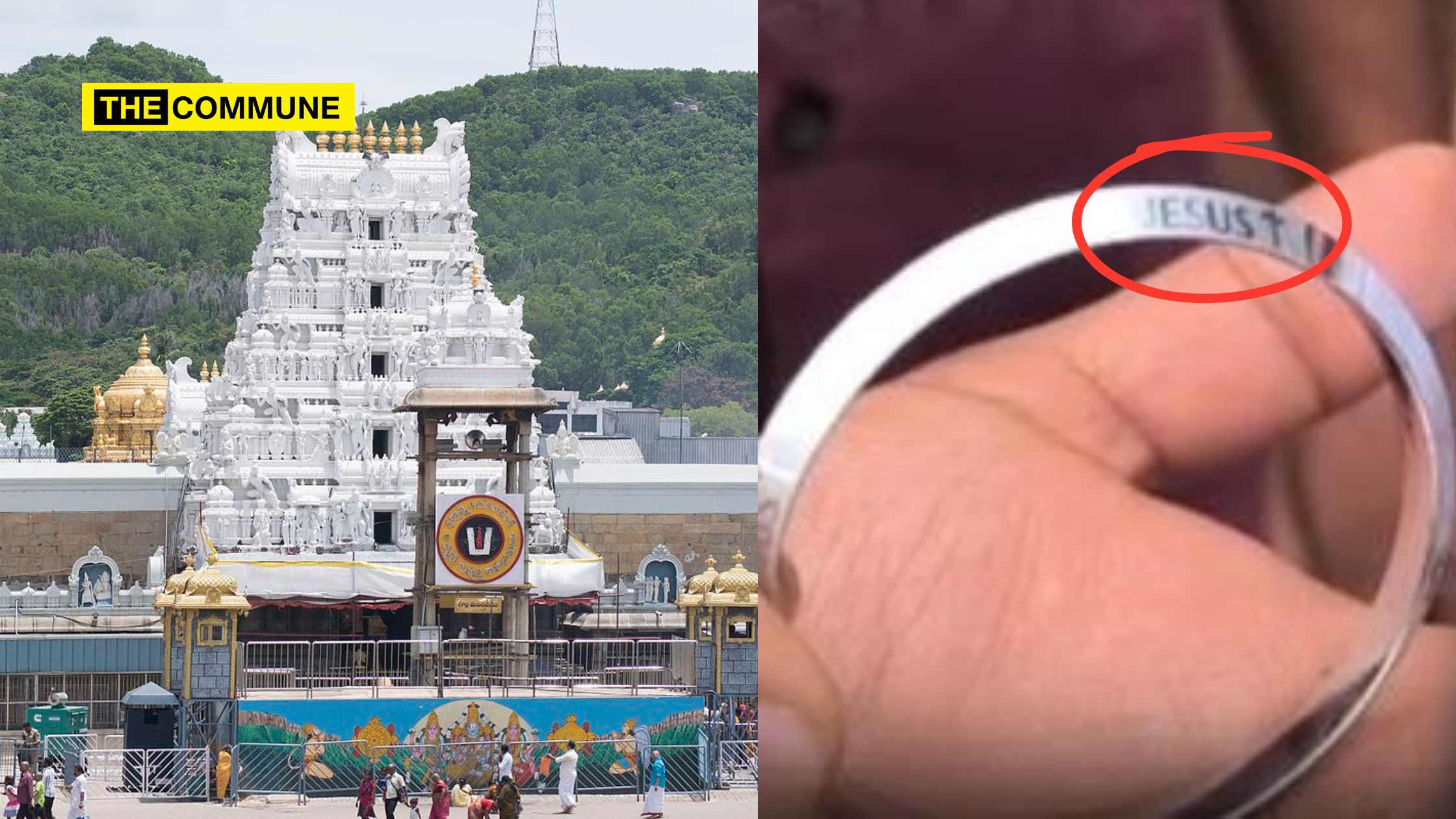
11 Instances Of Attacks During Durga Puja And Visarjan In 2024 Across India

11 Instances Of Attacks During Durga Puja And Visarjan In 2024 Across India

A disturbing series of communal clashes and violent incidents across various parts of India marred the Durga Puja and Visarjan festivities in 2024. Several regions witnessed attacks, stone-pelting, vandalism, and even fatal shootings as tensions escalated during the immersion processions. The incidents highlighted underlying communal issues and raised concerns over public safety during religious celebrations. Below are 11 instances that occurred during the 2024 Durga Puja season, detailing the extent of the violence and the resulting consequences.

1. Bahraich, Uttar Pradesh (13 October 2024)  

During a Durga idol immersion in Maharajganj, located in the Hardi police station area, tensions flared when an Islamist mob expressed anger over DJ music being played. The altercation escalated into stone-pelting and firing. Ram Gopal Mishra (22) was fatally shot, and several others, including 30-year-old Rajan, Sudhakar Tiwari, Akhilesh Bajpai, and a physically disabled Satyawan, sustained serious injuries.

2. Howrah, West Bengal (13 October 2024)  

Violence broke out in the Shyampur area when an Islamist mob pelted stones at people participating in a Durga idol immersion procession. The situation escalated further as the mob set fire to the idols and vandalized various pandals. The Shyampur Bazar Vyavasayik Samiti puja pandal suffered extensive damage as multiple idols were burned.

3. Garhwa, Jharkhand (13 October 2024)  

In two different locations, clashes erupted as the Islamist community members blocked Hindus from proceeding with the idol immersion, citing restricted access to certain areas. This led to stone-pelting and confrontations. The immersion procession was disrupted, and tensions ran high, necessitating intervention to prevent further violence.

4. Kaushambi, Uttar Pradesh (12 October 2024)  

An incident occurred in the Manjhanpur area when some members of the Islamist community took offense at the application of gulal (colored powder) on the Imambara platform, leading to stone-pelting and violence.  

The idol was damaged during the chaos, and there were also reports of an attempted assault on a woman. Thirteen individuals, including Ghulam Waris and Saeed Ahmed, were named in the police complaint.

5. Gonda, Uttar Pradesh (12 October 2024)  

As the Durga Visarjan procession made its way towards Khaira Mandir Talab, it encountered resistance in an Islamist-majority locality. The procession participants were attacked with stones. The police had to escort the procession to ensure safety and prevent the situation from spiraling out of control.

6. Kolkata, West Bengal (11 October 2024)  

A group of 50-60 individuals entered a puja pandal organized by the New Bengal Sporting Club in Garden Reach, threatening to damage the idol if the celebrations continued. The pandal was vandalized, and the celebrations were momentarily halted due to the violent disruption.

7. Karimganj, Assam (9 October 2024)  

In Mansangan village, trouble ensued when Abdul Ahad, Sahabul Ahmed, and another individual attacked a Durga idol procession by throwing leftover cooked rice at the participants. The idol was damaged, and law enforcement quickly apprehended the perpetrators.

8. Gonda, Uttar Pradesh (9 October 2024)  

Violence erupted when an Islamist mob, including individuals named Aslam, Sultan, and Munna, attacked a Puja pandal and hurled stones at the devotees. A case was registered against 12 suspects as the authorities sought to control the escalating situation.

9. Gorakhpur, Uttar Pradesh (6 October 2024)  

In Karamhana Bujurg village, violence broke out after some youths objected to the DJ music being played during the Durga procession. The attackers disconnected the sound system wires before fleeing the scene.  

The immersion procession was briefly disrupted as devotees tried to restore order.

10. Kushinagar, Uttar Pradesh (6 October 2024)  

As devotees carried the Durga idol, a mob pelted stones at them, resulting in injuries and damage to the idol. The police detained 10 individuals suspected of involvement in the violence.

11. North Tripura, Tripura (6 October 2024)  

Clashes arose in the Kadamtala block area when a local Durga Puja club requested a donation of ₹5000 from an Islamist driver named Jahar Miya, leading to a confrontation with an Islamist mob. Hindu houses and club members faced attacks, and law enforcement had to intervene to restore peace.

From Uttar Pradesh to West Bengal and Tripura, the pattern of hostility and unrest during these events reflects the deep-seated hate that the Islamists have for the Hindu community.

This is not the first time that attacks on visarjan procession or puja pandals have happened in India. Here are 16 instances of attacks on Ganesha processions by Islamists across India during 2024 Vinayakar Chaturthi.

Subscribe to our TelegramWhatsApp, and Instagram channels and get the best stories of the day delivered to you personally.
Millions Of Australian Households Experiencing Food Insecurity: Report

Millions Of Australian Households Experiencing Food Insecurity: Report

Millions of Australian households are experiencing severe food insecurity, according to a report published on Tuesday by hunger relief charity Foodbank Australia.

The report said 3.4 million households across the country experienced food insecurity in the last 12 months, 2 million of which experienced severe food insecurity.

The Australian government defines food insecurity as the limited or uncertain availability of nutritionally adequate and safe foods or the ability to acquire acceptable food in socially acceptable ways.

The annual Foodbank report found that 97 per cent of severely food-insecure households skipped meals or cut meal sizes and that half of adults experiencing severe food insecurity went for days without eating due to affordability, the Xinhua news agency reported.

Over 80 per cent of food-insecure households cited the rising cost of living as a factor. “More than half of food-insecure households are now at the severe end of the food insecurity spectrum. For these families, it’s not just about cutting back, it’s about missing meals entirely, sometimes for days,” Brianna Casey, chief executive of Foodbank Australia, said. “This is no longer a crisis of temporary hardship but a prolonged, systemic issue affecting millions of Australians,” she said.

“These households live with the daily anxiety of not knowing where their next meal will come from, forced to choose between essentials like food, housing and utilities.” Among households that experienced severe food insecurity, 97 per cent worried about running out of food before having enough money to buy more and 93 per cent were unable to afford balanced meals. One-quarter of food-insecure households reported having support from friends and family, down from one-third in 2023.

–IANS

Subscribe to our TelegramWhatsApp, and Instagram channels and get the best stories of the day delivered to you personally.
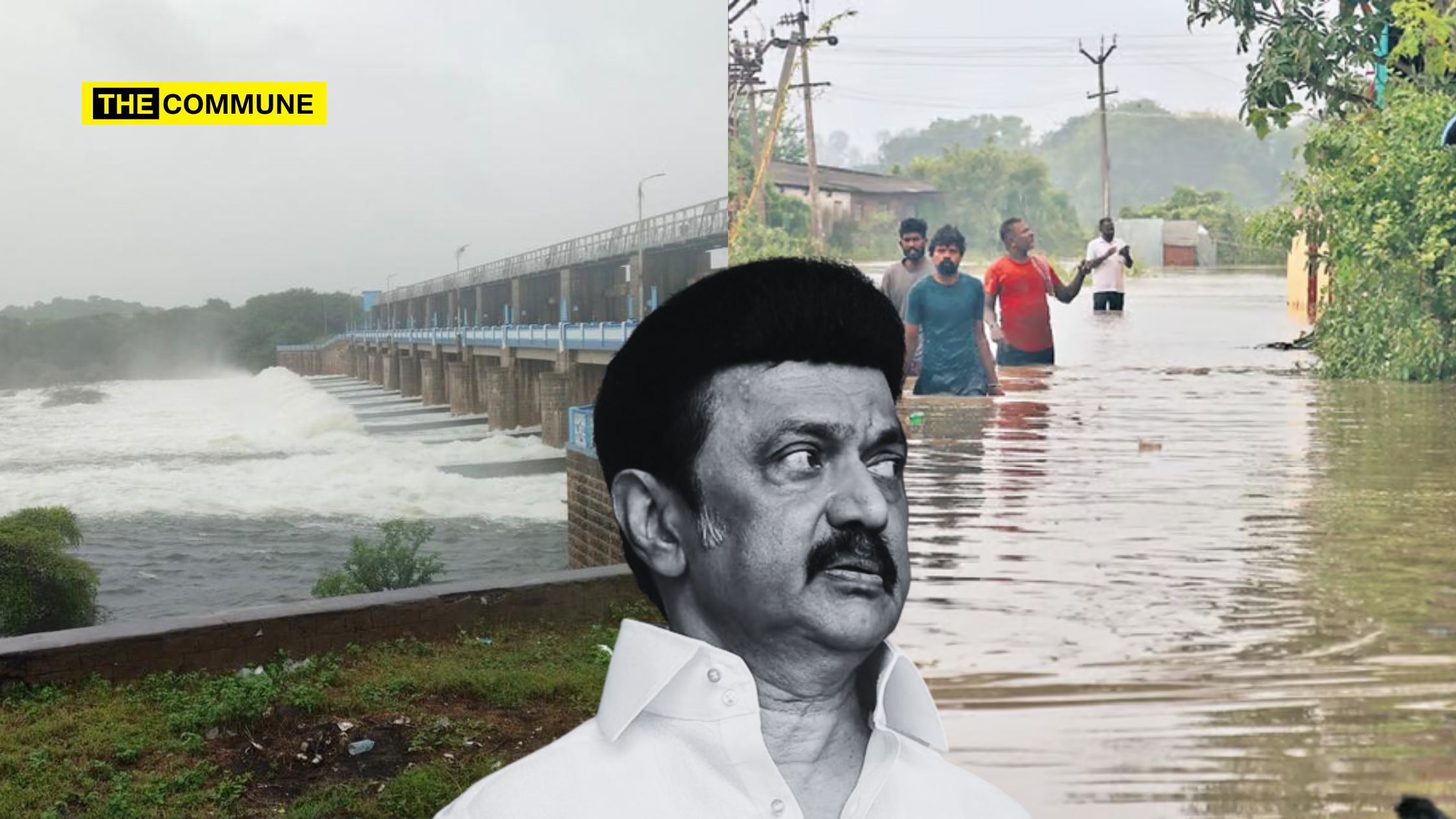
Bahraich, UP: Hindu Man Shot Dead During Durga Visarjan Procession Clash By Islamists; Alleged Fact-Checker Zubair Justifies Killing

mohammed zubair hindu murder durga visarjan altnews

A horrifying incident occurred on Sunday, 13 October 2024, in the Rehua Mansoor village, Hardi police station area in Bahraich, Uttar Pradesh, where a 22-year-old Hindu man, Ram Gopal Mishra, lost his life following a communal clash during a Durga Visarjan procession. The deceased, Ram Gopal Mishra, was shot 20 times amidst the violent altercation that reportedly began over objections from local Muslims to DJ music being played during the immersion of a Durga idol.

The conflict escalated rapidly as stone-pelting ensued, with allegations suggesting that Mishra was dragged into a house owned by Abdul Hamid, where he was shot multiple times. Eyewitnesses stated that Hamid’s residence was the point from which stones were thrown at the procession, leading to a confrontation between the communities.

Following his death, tensions in the area heightened, leading to the suspension of the Visarjan ceremony at various locations as authorities worked to prevent further unrest. Authorities are investigating these statements as part of their broader inquiry into the incident.

The killing has sparked outrage and fears of communal violence. Attempts to justify the incident have surfaced online, with some sharing videos depicting Mishra removing a green flag and replacing it with a saffron flag during the procession. The footage, circulated by alleged fact-checker Mohammed Zubair, co-founder of Alt News, seemed to be an effort to paint Mishra as an aggressor in the events leading up to his death.

Zubair noted that the video showed Mishra forcefully taking down the green flag while surrounded by a crowd chanting slogans. He wrote, “A video of Gopal Mishra in the Bahraich violence has surfaced. He is seen forcefully removing a Green flag and replacing it with a saffron flag. The mob can be seen shouting slogans and encouraging him to remove the flag. Gopal was shot dead later.”

Critics have accused certain media outlets and commentators of downplaying the violence and providing a skewed narrative that fails to acknowledge the larger context of the incident. It is argued that the altercation was not simply a matter of removing a flag but was exacerbated by resistance to the DJ music and the subsequent stone-pelting, which contributed to the fatal escalation.

The repeated justifications for acts of terror amount to endorsing violence. With yet another Hindu festival marred by tragedy and another Hindu life lost, it is alarming to see people like Mohammed Zubair consistently downplaying or rationalizing such crimes.

From the brutal killing of Kanhaiya Lal to the tragic death of Gopal Mishra, there appears to be a pattern where certain voices and ecosystems attempt to normalize these attacks on Hindus, effectively setting the stage for future incidents. Such narratives not only undermine justice but also contribute to a climate where further violence is perpetuated.

In April 2024, Zubair attempted to shape the narrative surrounding the tragic murder of two Hindu children in Badaun by suggesting that the motive behind the crime was being concealed by authorities. In a now-deleted post on X, Zubair referred to an unrelated incident where the victims’ father allegedly set fire to a motorcycle, implying it was connected to the murders. This attempt to link the arson incident with the killings created a misleading narrative that seemed to downplay the severity of the crime and divert attention from the actual brutality of the double homicide.

The Badaun Police responded to Zubair’s post by issuing a legal warning, advising against spreading unnecessary and potentially inflammatory information that could disrupt public order. Despite Zubair’s insinuations, the victims’ family clarified there were no ongoing disputes with the accused, and investigations later confirmed that the murders were premeditated acts committed by Sajid, with another suspect, Javed, still being pursued by the authorities.

He is known to repeatedly peddle fake news especially if it involved members of the Islamic community despite the fact that they could be in the wrong.

Subscribe to our TelegramWhatsApp, and Instagram channels and get the best stories of the day delivered to you personally.
Acknowledge 1990 Exodus Before Inviting Return: Kashmiri Pandits Demand Farooq Abdullah’s Apology

Acknowledge 1990 Exodus Before Inviting Return: Kashmiri Pandits Demand Farooq Abdullah Apology

Following National Conference (NC) chief Farooq Abdullah statement about the return of Kashmiri Pandits to the Valley, members of the displaced community have demanded that the party first acknowledge the 1990 exodus and apologise for the genocide before making any promises.

Abdullah, whose party is set to form a government in Jammu and Kashmir in coalition with Congress, expressed his desire for the return of Kashmiri Pandits, who were forced to flee their homes in the 1990s.

“I hope our brothers and sisters who left the Valley will return home. The time has come, and they should come back to their homes,” Abdullah told reporters on Saturday. He added that the NC does not differentiate between Hindus and Muslims and treats everyone equally. “There is a place for everyone in Kashmir,” he stressed.

However, speaking to IANS, Kashmiri Pandits, while open to the prospect of returning, voiced scepticism over Abdullah’s sincerity. One member of the community said, “If Farooq Abdullah is sincere and has had a change of heart, we welcome this step. But if he holds the same beliefs as he did in the 1980s and 1990s, this would be the biggest betrayal.”

The community also accused the NC and Congress of orchestrating the 1990 exodus. “In 1990, a deliberate policy was made to drive us out and seize our lands. The NC, in collaboration with Congress, executed this plan. If people doubt it, an investigative committee should be set up to determine who was responsible,” the Kashmiri Pandit said.

He demanded an apology from the NC, urging them to admit their role in the forced migration. “The NC should admit its role in the 1990 exodus and apologise for the genocide. If Abdullah is sincere, then proper policies and arrangements must be made for our return. We don’t have homes there anymore. Do they have a roadmap, or should we stay at Farooq Abdullah’s house?” he asked.

Another Kashmiri Pandit emphasised that sweet words won’t be enough, and concrete policies must be in place. “The NC and Congress should clarify their policies. If they still plan to implement the same policies from 1986 and 1989, we want no part of it. We won’t be fooled by sweet words. We’ve suffered enough,” he said.

Reflecting on the dark chapter of their displacement, he recounted, “On January 19, 1990, at 7:00 p.m., announcements were made from mosques, telling Kashmiri Pandits to leave, while asking Kashmiri women to stay.”

He urged Abdullah to meet with Kashmiri Pandits and develop a roadmap to ensure they are never forced to flee again.

“He must acknowledge the genocide and create a solid plan that ensures our safety,” he added. Another member living in a migration camp in Jammu urged the government to consult the Kashmiri Pandits about their demands.

“We want to know if Abdullah’s statement is genuine or just political rhetoric. The Government of India and the future J&K government should meet with a delegation of Kashmiri Pandits and ask what we want. Without that, these are just empty promises.” One community member took a direct swipe at Abdullah, questioning why he had not taken these steps earlier.

“When Farooq Abdullah first formed the government after the genocide, why didn’t he act then? Why is he speaking about this now? It seems that Prime Minister Narendra Modi has improved the situation in Kashmir, yet Abdullah continues to claim that the Prime Minister ruined it.”

Another Pandit echoed the demand to halt distress sales of migrant properties. “If Farooq Abdullah announces a stop to the distress sales of migrant properties, we will welcome that move. Why hasn’t he done that yet?” The demands come as the community remains cautious about returning to the Valley, seeking assurances and accountability from those in power.

–IANS

Subscribe to our channels on TelegramWhatsApp, and Instagram and get the best stories of the day delivered to you personally. 
Congress President Mallikarjun Kharge Allegedly Involved In Waqf Land Scam

Congress head Mallikarjun Kharge Involved In Waqf Scam

On 14 October 2024, several opposition MPs exited a parliamentary committee meeting regarding the Waqf (Amendment) Bill, voicing concerns that the committee was not adhering to proper parliamentary procedures. This followed allegations from the BJP accusing Congress president Mallikarjun Kharge of involvement in a Waqf land scam.

The Joint Parliamentary Committee, which has previously experienced significant tensions between BJP and opposition members, saw further disputes when opposition MPs protested against the participation of representatives from Hindu organizations, arguing that the legislation mainly impacted Muslim religious properties.

The walkout was triggered by testimony from Anwar Manippady, former chairman of the Karnataka State Minorities Commission and current Karnataka BJP vice-president. Manippady claimed that several Congress politicians, including Kharge and Rehman Khan, were implicated in the misappropriation of Waqf properties in Karnataka.

Additionally, Rahul Kharge, the son of the Congress president, recently withdrew a request for land intended for a Multi Skill Development Centre in Bangalore. His trust, Siddhartha Vihar Trust, had applied for the land from the Karnataka Industrial Development Board in February 2024. However, he retracted the request after revelations regarding the ongoing MUDA scam, which involved the wife of Karnataka CM Siddharamaiah, who returned 14 parcels of land amid police investigations against her, the CM, and his brother-in-law.

Following these events, the BJP alleged that the Congress leadership was deeply involved in land transaction corruption, urging their resignations on moral grounds. BJP spokesperson Sudhanshu Trivedi sharply criticized the Congress, contrasting its historical connection to land donation through figures like Mahatma Gandhi and Vinoba Bhave with its current involvement in land grabbing, supposedly under the influence of Sonia and Rahul Gandhi.

Opposition MPs argued that parliamentary standards prohibit making unfounded accusations against individuals, especially in their absence. They also criticized Manippady’s request for Muslims to support the proposed amendments, labeling it inappropriate and offensive.

“Such allegations should not be made without the accused being present to defend themselves,” asserted one opposition MP, as reported by PTI. Despite these objections, committee chairperson Jagdambika Pal of the BJP dismissed the concerns and allowed the testimony to continue, claiming it was relevant to the legislation under discussion.

Opposition MPs, including Congress leaders Gaurav Gogoi and Imran Masood, DMK’s A. Raja, Shiv Sena’s Arvind Sawant, AIMIM’s Asaduddin Owaisi, Samajwadi Party’s Mohibbullah, and AAP’s Sanjay Singh, reportedly walked out in protest against the proceedings.

Shiv Sena MP Arvind Sawant expressed to the media that the committee was not adhering to established rules and protocols. Following this, opposition MPs convened separately to strategize their next steps, including plans to address their concerns with the Lok Sabha Speaker. A significant point of contention was the committee’s decision to invite several Hindu organizations to provide input on the Waqf (Amendment) Bill. Opposition members argued that these groups should not be involved in discussions related to Waqf issues, which pertain specifically to Muslim religious endowments.

In contrast, the BJP supported this move, asserting that these organizations had legitimate concerns about the implications of the Waqf law on non-Muslim properties, including temple lands. They argued that such consultations were essential for a comprehensive review of the legislation.

AIMIM chief Asaduddin Owaisi had previously written to committee chair Jagdambika Pal, opposing the involvement of groups like Sanatan Sanstha and Hindu Janajagruti Samiti, which he accused of promoting extremist ideologies. In his letter, Owaisi emphasized that these organizations advocate for a “Hindu Rashtra” and have engaged in actions against the Indian state.

Other witnesses called to testify included prominent lawyers Vishnu Shankar Jain and Ashwini Upadhyay, along with Mahant Sudhirdas Maharaj from Maharashtra’s Kalaram Temple. Conversely, Mehmood Madani from Jamiat Ulema-e-Hind voiced opposition to the proposed amendments to the Waqf Bill.

Opposition MPs have previously raised concerns that key stakeholders were being ignored and that political maneuvering was occurring under the guise of the proceedings. Dr. Mohammad Jawed, a Congress leader in the Lok Sabha, expressed on social media that the inclusion of non-Muslim religious organizations in the discussions should be reconsidered.

During the recent committee meetings, representations from various non-Muslim organizations have been invited. I believe this practice needs reevaluation, as these groups neither contribute to Waqf properties nor have a legitimate interest in these matters. Many of them hold biased views that misrepresent the true essence of Waqf, causing distress within the Muslim community and potentially undermining the sentiments of India’s Muslim population,” the MP stated.

He also pointed out that in discussions concerning other religious communities, Muslim representation is not typically solicited, questioning the rationale for this approach when the matter specifically pertains to Muslims.

Additionally, last month, BJP MP Nishikant Dubey, a member of the Joint Committee on the Waqf Bill, caused controversy by writing to Pal with serious concerns over the high volume of submissions received on the issue. He requested that the Union Home Ministry investigate, including the geographic origins of these submissions.

Dubey suggested that “fundamentalist groups,” individuals like Zakir Naik, or even foreign entities such as the ISI or China could be involved, given the receipt of 1.25 crore submissions. He argued that if such forces were manipulating the legislative process, it would pose a threat to the integrity of the parliamentary system and national security.

(With Inputs From OpIndia)

Subscribe to our channels on TelegramWhatsApp, and Instagram and get the best stories of the day delivered to you personally. 
Illam Thedi Vellam: Floods Inundate Many Areas In Chennai As Citizens Suffer Under Dravidian Model

Floods Inundate Many Areas In Chennai As Citizens Suffer Under Dravidian Model

Chennai grapples with severe flooding as heavy rains lash the city, disrupting daily life and causing widespread inconvenience. The downpour, intensified by a well-marked low-pressure area, has led to significant waterlogging in several neighbourhoods, including Ekkatuthangal, Venus Colony, and Alagappa Road. Major traffic arteries like the 100-ft Road in Vadapalani have been severely impacted, causing traffic congestion and delays.

On 15 October 2024, Chennai began facing substantial waterlogging as a well-marked low-pressure area over the central south Bay of Bengal intensified. The city and nearby districts such as Chengalpettu, Kancheepuram, and Tiruvallur were hit by heavy rain early in the morning, leading to significant disruptions.

Areas including Ekkatuthangal, Venus Colony, and Alagappa Road experienced severe flooding, causing vehicles and pedestrians to have difficulty navigating the waterlogged streets. Significant traffic congestion occurred on the 100-ft Road in Vadapalani, a crucial thoroughfare in the city, as vehicles struggled to pass through flooded sections.

The India Meteorological Department issued a bulletin stating that the weather system will likely strengthen into a depression and move towards the coasts of north Tamil Nadu, Puducherry, and adjacent areas of south Andhra Pradesh by 17 October 2024. With heavy rainfall affecting parts of Tamil Nadu, Chennai Airport cancelled eight flights scheduled to and from destinations such as Bengaluru, Andaman, New Delhi, and Muscat, citing unfavourable weather conditions as the cause of the disruptions.

In this situation, OMR was one of the worst-affected places in the city. Here, we look at the inundations across the city.

In a very cruelly hilarious video, we can see a drain spewing water instead of sucking it in!

Annanagar which rarely gets inundated was also flooded like 2023 floods.

Some other localities are indicated below:


https://twitter.com/realonlineansh/status/1846079937880392042

Manali

Guindy

Guindy, considered the city’s central business district, was also flooded.

Alandur, Kathipara near Guindy was also seen to be waterlogged.

Pallikaranai

This locality near Velachery is located near the marshlands and flooding is seen every single rainy season.

Purasaiwakkam


Vyasarpadi Jeeva

One of the oldest localities of Chennai, Vyasarpadi Jeeva, is also seen heavily flooded.

Several subways also have been closed due to flooding.


High Court Area

The entrance to the Madras High Court was also seen to be inundated due to the rains.

Live wire also caused severe problems to the people.


Subscribe to our TelegramWhatsApp, and Instagram channels and get the best stories of the day delivered to you personally.
“Illam Thedi Vellam”: Dravidian Model Exposed As OMR Gets Inundated Severely

Despite repeated warnings from weather experts, Chennai’s Outer Ring Road (OMR) was among the hardest-hit areas during the recent floods, highlighting the city’s infrastructure vulnerabilities. Knee-deep water inundated the arterial road, causing severe traffic disruptions and impacting businesses.

Weathermen, freelance bloggers, and the IMD have warned of heavy rains in Chennai for quite some time. And yet, the Dravidian model of governance did not seem to heed this warning.

Chennai saw heavy rains from late evening on 14 October 2024. At the time of publishing this article, the rains are continuing to pour all over the city. Weather experts predicted low pressure as it is NEM season (North East Monsoon), with rains expected to continue pouring until 17/18 October 2024.

As a precaution, people living in the low-lying areas of Velachery, Pallikaranai (taking lessons from 2023 floods) parked their vehicles (cars mostly) before the rains began.

Let’s examine the inundation that has started in various parts of the city. Ironically, the flooding is just after a few hours of rain.

OMR seemed to be the worst affected, with nearly knee/hip-deep water on the roads. Here are some videos circulating on social media.

Kotivakkam near Thiruvanmiyur also saw flooding to a large extent.

A refrigerator was seen floating over the flood waters near Kandanchavadi in Perungudi near OMR.

These were the scenes from Navalur in OMR after the spell of rains on the night of 14 October 2024.

In this video report by Thanthi TV, several residents and people travelling that side stated that it had always been like this since 2015 in OMR. One commuter seen driving a bike is seen complaining about the administration. Some IT employees who were given WFH were asked to go to their office following a power cut at home. They were seen stranded on the roads. It is reported that nearly 100 vehicles on the road in OMR had switched off and had to be pushed by the commuters themselves. Commuters are seen pushing their two-wheelers in the hip-deep water. An auto driver stated that despite being in demand from customers, he could not drive as he risked switching off the vehicle because of the rising water level. He said, “Had they taken some precautions to ensure the water did not stagnate, this wouldn’t have been so bad.”

It is noteworthy that lot of metro construction work is also taking place.

ANother commuter stated that the flood had inundated the entire stretch from Taramani

Subscribe to our TelegramWhatsApp, and Instagram channels and get the best stories of the day delivered to you personally.