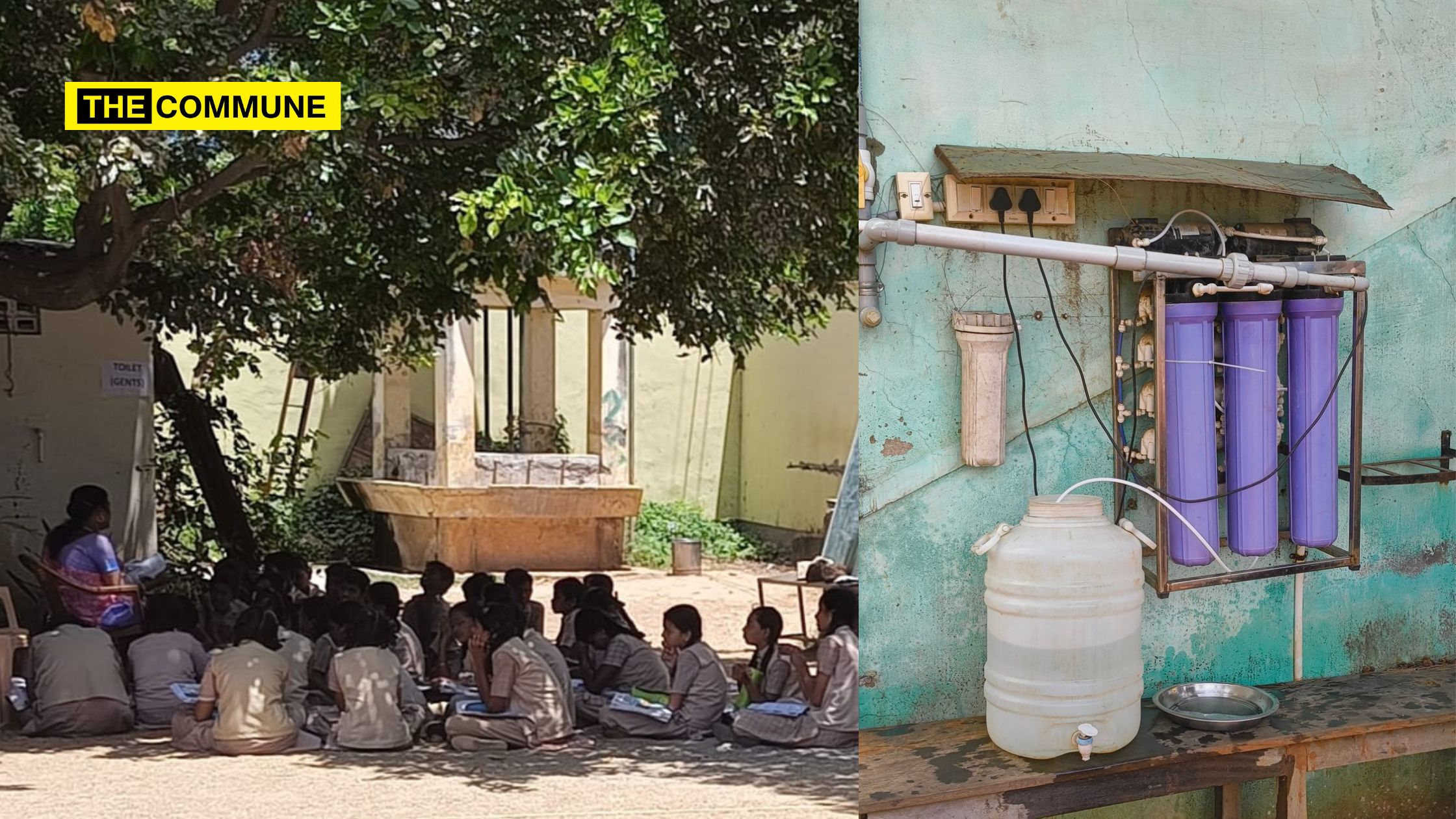
In yet another example of the challenges students face due to the failure of the ruling DMK, government school students are forced to attend classes in dire conditions. At Muthaliyarpatti Government Higher Secondary School, located near Kadayam, many students have no choice but to study under trees or in makeshift structures due to a lack of proper infrastructure. This situation has led to health problems among students, with many suffering from allergies and skin rashes.
Reports indicate that the school is missing key facilities, such as toilets, a playground, functional laboratories, and an adequate drinking water system. One of the students stated, “Due to the shortage of classrooms, lessons are often conducted under trees, in the shed, or even on a pathway in front of the headmistress’s office. Many of the existing classrooms have no fans, and the children are forced to play in a narrow path beside the school, as there’s no proper playground.”
Other children revealed that the school had only one water purifier to serve over 600 students, leading to long queues. Often, the water ran out before everyone got a chance to drink, and during power outages, the children were left thirsty. “Sometimes, we even drink from a leaking pipeline near the railway track, which is part of the Combined Water Supply Scheme,” one student added.
The school’s toilet facilities were also found to be equally inadequate, with a single poorly maintained toilet. Many students were forced to relieve themselves in the open, leading to concerns over urinary tract infections. “The conditions are bad, and we often suffer because of them,” students noted.
M Faridha Banu, chairperson of the School Management Committee, explained that the lack of classrooms has prevented the introduction of new groups in higher classes. She added that because the school has no kitchen, students must walk to a nearby primary school for their meals. “The school only has one sweeper, earning around ₹3,000 per month, and even that payment is made every six months. In such circumstances, it’s unreasonable to expect clean toilets and premises,” she remarked.
Social activist Mohammed Abdul Khader, who has been petitioning officials to address these issues, said that the Tenkasi Revenue Divisional Officer and Tahsildar visited the school in November 2024 and promised to secure land for additional classrooms. However, no progress has been made since then. “The state government must act quickly to prevent students from transferring to private schools,” he urged, adding that some classrooms were constructed on a 5.5-cent plot donated by philanthropist Haji S Mohideen Pitchai.
When contacted, Chief Educational Officer Rejina stated that the school education department was working to acquire a nearby government land parcel to build more classrooms. “Once the payment for the land is processed, it will be handed over to us. We understand that Alangulam MLA Manoj Pandian is planning to provide funding for the purchase,” she confirmed.
When Sriperumbudur MLA and TNCC President K. Selvaperunthagai praised the current DMK government’s administration, referring to it as a “Manu Needhi Cholan’s governance,” reports from private media have raised alarming concerns. Despite the praises, it appears that the state’s capital, Chennai, has been plagued by unscrupulous elements who boldly engage in atrocities against women. According to reports, December 2024 alone saw 24 cases of crimes against women in both public and private spaces, including the shocking on-campus sexual harassment case at Anna University.
According to News 24×7 Tamil, the city has seen a troubling shift, where it has become difficult to find a day without reports of crimes against women. In this context, the following is a list of crimes committed against women in Chennai in December 2024.
On 4 December 2024, Gurumurthy, a 54-year-old lawyer, was arrested for allegedly sexually harassing a 25-year-old woman on a bus in the Puzhal area. Following the woman’s complaint, he was remanded in judicial custody.
On 6 December 2024, the Egmore All Women’s Police Station has registered a case against a group of college students who allegedly sexually assaulted a 21-year-old mentally ill college student. Based on a complaint filed by the victim’s father, nine college students were arrested, including the victim’s friend, a women, who had introduced the mentally unstable student to male acquaintances and a school-going boy.
On 6 December 2024, the Ezhu Kinaru police have arrested two individuals, Barathwaj and Mohammed Abbas, for entering a women’s beauty parlour, which is locally run by the victim’s mother. The duo allegedly assaulted a 18-year-old women and issued death threats before fleeing the scene.
On 9 December 2024, the Chennai city police apprehended a 22-year-old college student Venga Raghunath Reddy for distributing child sexual abuse (CSA) material on social media platforms. During his arrest, authorities discovered hundreds of CSA materials on his mobile phone. The accused has been charged under sections of the POCSO Act and remanded in judicial custody. Additionally, the Goondas Act has been invoked against him.
On 11 December 2024, a woman in Thoraipakkam faced sexual harassment from a group of transgenders in public.
On 12 December 2024, a history-sheeter, Saran Kumar from Otteri, was arrested for assaulting a woman.
On 14 December 2024, an individual named Sri Ram was arrested by the Valasaravakkam police for attacking a fellow college student with a stone and attempting to force her into a romantic relationship.
On 15 December 2024, Rajamangalam police have arrested two youths, Manukrishna, a software company employee, and G. Vishnu, a photographer from Triplicane, in connection with the alleged sexual harassment of a female food delivery executive.
On 16 December 2024, a lorry driver arrested for attempting to sexually harass a women in Thoraipakkam
On 19 December 2024, a man from Aminijikarai was arrested for threatening his ex-girlfriend, demanding money, and threatening to release inappropriate footage of her.
On 20 December 2024, a man was arrested in Royapuram for attacking his wife and father-in-law demanding dowry.
On 22 December 2024, a man was arrested in Purasaiwakkam for abusing a 38-year-old women.
On 22 December 2024, a man was arrested in West Mambalam for sexually harassing a woman and attempting to steal her jewelry.
On 27 December 2024, Mentally challenged woman sexually harassed in Chennai after being told she was being exorcised.
On 28 December 2024, a lone women in home was abused and harassed.
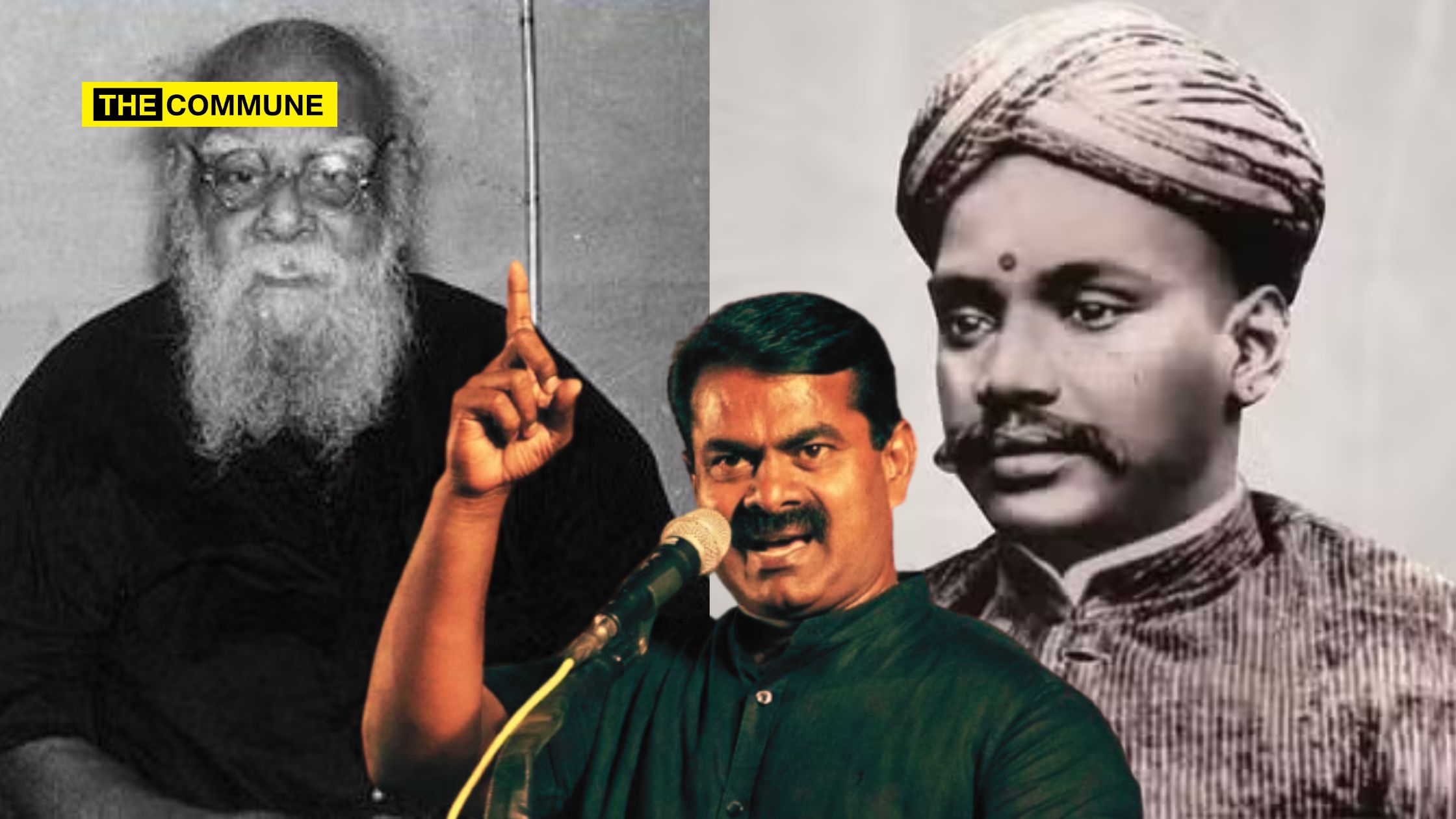
Speaking to reporters earlier this week, Naam Tamilar Katchi (NTK) chief Seeman stirred controversy with his blasting comments on Dravidianist ideologue EV Ramasamy Naicker (EVR), hailed as Periyar by his followers. Seeman mocked EVR’s controversial actions during the independence movement, challenging the rationality behind his decisions. He further criticized EVR for what he described as an anti-Tamil mindset.
Following the press conference, several Dravidianists demanded proof for all the statements made. Seeman once again met with press reporters and attacked EVR once again.
When asked about the demand for proof of his claims on EV Ramasamy Naicker, Seeman questioned, “You recently made Karunanidhi’s work a government property. There are so many writers, you have made all their works government properties. Why have you not made the works of Periyar as public property and make it government property? You keep all the proof and ask me for it, how is that right? Make it accessible to the public and I will peel an onion. We will come to know that both are the same.”
When counter-questioned that he was the B team of BJP and was propagating the same words used by them, Seeman said, “We are BJP’s B team. In the Viduthalai publication on his birthday, it was titled “My birthday message” Itwas written, “Brahmins are lower than us (in caste). Mohammedans and Christians are our enemies. These groups are against us.” What does he mean by us? Brahmins are enemies, lower caste than us, who is that? There should be none below us, we must raise him up, there should be no higher/lower. Isn’t that your principle – equality? Isn’t this how a society progresses? If you say, someone lower than us, Christians,Muslims are our enemies, then what about our race? What is that race? Is there a worse untouchability perspective than this? Who is below you? Ambedkar said I am no one’s slave nor am I lower than anyone, this doesn’t sound like that. Are you referring to those who believe in Dravidianism and those Muslims and Christians who believe in it? How can you accept calling them enemies? How can you accept the statement that jobs are reducing because Muslims and Christians became educated? How do you see when he said that “reservation given to “Thulukkans” (Muslims) fearing Brahmins, we have put our foot in sh*t instead of cow dung“, you did not ask for proof for that?
He further said, “Why did you not ask for proof when he said, “Those who speak about Tamilians, Tamil, Tamil Nadu government are fraudulent people.” If speaking about Tamilians is racist and hateful, who is the enemy? If we speak about Tamilians, which race is getting offended, which race are we against? If you say they are against the Dravidian race, who is the Dravidian? Is there a separate race called Dravidian among Tamils? Why did you not ask proof for this? You ask, “That Tamil Mother (Tamizh Thaai) who has been there for 3000 years, did she educate you? So are you trying to say that over these 3000 years, without education did Valluvar, Kambar, Kapilan, Elango, andAvvaiyar sprout out of nowhere? All the literature and epics came out of nowhere, Valluvar gave us the world’s best life skills, andthe whole world is celebrating him, you called it “faeces” – did all this appear without education? Are the 63 Nayanmars, the Alwars all waste? You call Bhakti literature garbage. You call Valluvar, andKambar as fools and all others as enemies, you are saying we never studied. Bharathiyar says, “Tamil Nadu is the best place for education, Tamil Nadu is the birthplace of Kamban” – which is right? He also says “Tamil Nadu, where Valluvan made himself famous worldwide, No one on earth has ever been born like Kamban, like Valluvan, like Ilango, among the poets who are known.” He says this is truth, not praise.”
He further added, “Can there be a worse contradiction than comparing Ambedkar and Periyar? If you keep both statues together, can it become one? Are their philosophies the same? Ambedkar is the best educator and the best theoretician in the world, what about Periyar? He speaks whatever he wants. Ambedkar preached universal thoughts. Whatever Periyar thought, spoke, andwrote was against the Tamil race. He called Tamil “Saniyan”, a barbaric language. Sowhatlanguage did he write and speak in? In this “saniyan” language only, right? What principle is more convincing? Release all the proofs, we will show you. You only spoke about Dravidianism, you hid us, andyou crushed my ancestors. This is the time for Prabhakaran’s children, no one can oppose himbe it politically or based on opinion. You have no answer for any question.”
He further said, “Both Brahmins and Muslims are enemies. You are connecting me to RSS and BJP, he said Muslims are from another country! This is what the BJP and RSS are saying. We call them our race. You say Muslims and Christians are enemies, so what are you? They are people of this land. They have Tamil as their mother tongue and are indigenous to this land. Because they could not face the injustice meted out due to the caste system, they chose another religion. Do you not know that? You call the reservation given to them as wrong.”
Further, he said, “Language is the base for art, literature, culture, worship, history, science, politics – language gives everything, not just for me but the world over. Can you deny that? If there is no language, then from where will you do societal correction and such? Make all of Periyar’s writings government properties, I will give you a proof.”
Responding to a question on why he talks about Periyar, Seeman asked“What social justice did you achieve more than Vallalar Vaikuntar? I made a mistake calling him my grandfather, now he is my “petha“. As I read, I am getting clearer on who he was, asmy race was massacred, I came to realize that these fellows were against me. I realized that the Dravidian was a thief in 2008/9/10. Until I met my leader in 2008, I was also a part of this gang. Only after that meeting, I realized who a Tamilian is and what is Tamil nationalism.
What has this Dravidianism achieved? Do you mean to say Singaravelar, Seevanandam, Ayodidasapandithar, Rettamalai Sreenivasan, KAP Vishwanathan, Mutamizh Kavalar, Annal Thangam, Maraimalai Adigal, Muthuramalinga Thevar, Kamarajar, Kakkan, VOC did not do anything? Only this man did?”
Scratching on the most contentious topic of his marriage with Maniammai, Seeman began, “Periyar had great wealth, he was looking for an heir to that wealth. So,at the age of 72, he got married to a 26-year-old woman. Compare this to VOC, he comes from a lineage of advocates. For an appearance, they’d earn thousands of rupees. He was a wealthy man, he sold everything and spent that money for the country’s independence, he captained a ship to keep the Indian pride high, Kappalottiya Tamizhan, he worked in the oil mill as punishment for fighting for independence and lived in penury in the later stages of life. His son did not have a job and was in dire need of one, so he wrote to Periyar for help to get a police job. That letter is framed and placed in his house, are you trying to shame me for what VOC did? Have you done better for the country than VOC, he spent his wealth for the country, but you looked for an heir to take care of your wealth. He was a fighter; you are a landlord.”
Responding to a reporter onwhat his party philosophy is, Seeman said, “I will eradicate all those who speak about Dravidianism.My philosophy is to cut off the roots of Dravidianism that is Periyar.”
When asked if he was “diverting” the issues regarding the Governor by speaking about Periyar, Seeman lashed out saying, “All of you speaking for Periyar, feminist Periyarists, the ones asking for proofs, did not open your mouths for what happened with the girl in Anna University. Are you conducting any protests about appointing VCs? It is us who is doing it. You are the ones diverting the issues.”
Speaking about the word “Dravidam“, he said, “Caldwell said he took the word from Manu Smriti. You are now using a Sanskrit word and saying you are opposing them?”
He further said, “That is why I want to remove Tamizh Thaai Vaazhthu which has this word. And I will replace it with Puratchi Pavalar’s poem. I will do this when I become CM”.
Subscribe to our channels on Telegram, WhatsApp, and Instagram and get the best stories of the day delivered to you personally.
A website dedicated to what it calls “documenting Hindu Supremacist hate mongers in India and abroad” named Hindutva Profiles has been in and out of the news for quite some time. The website features a hit list of sorts targeting prominent individuals, including politicians, journalists, activists, and influencers, spread across multiple pages of the website. The list features names like Uttarakhand CM Pushkar Dhami, Himanta Biswa Sarma, and various public figures such as Sudhir Chaudhary, Shefali Vaidya, and J. Sai Deepak. This resembles the PFI’s Vision 2047 document, which detailed plans to target Hindu leaders.
This is extremely dangerous and needs to be investigated as a priority.
The lives of so many individuals are at risk as someone has published a website for the targeted killing of all those who are voicing for Hindus and India.
It has come to light that the Indian American Muslim Council (IAMC) could be behind the website.
In a post, dated September 2022, the day the site went live on their social media handle, the IAMC wrote, “#Alert This unique project profiles individuals who are chief proponents of the Hindutva ideology and those who incite and participate in violence against India’s religious minorities. #HindutvaProfiles https://hindutvaprofiles.com/”
The American Muslim council is behind the Hindutva profile site & publishing a hit list of Hindu activists…. pic.twitter.com/AYNvxW9pl8
To jog our readers’ memory, who Congress scion Rahul Gandhi met with during his 2023 US visit. Concerns arose when Gandhi was photographedwith Sunita Vishwanath, a US-based activist linked to anti-India initiatives like the “Dismantling Global Hindutva” conference. Vishwanath is associated with groups like ICNA (Islamic Circle of North America), known for ties to Pakistan’s Jamaat-e-Islami and promoting anti-India propaganda.
Reports allege that coordinators of Gandhi’s events, such as Tanzeem Ansari and Mohammed Aslam, are connected to ICNA and its affiliate organizations like the Muslim Brotherhood. ICNA has glorified Hizbul Mujahideen leader Syed Salahuddin, a proponent of Kashmir’s separation from India. Another coordinator, Minhaj Khan, is linked to the Indian American Muslim Council (IAMC), an anti-India lobbying group. IAMC has been accused of spreading fake news to incite communal tensions and lobbying against India in international forums.
IAMC had engaged US lobby firm, paying them USD 55K Dollars for Lobbying the USCIRF against India in 2013-14, during Dr. Manmohan Singh Govt itself.
IAMC’s Executive Director, Rasheed Ahmed, also leads IMANA (Islamic Medical Association of North America), implicated for alleged misuse of funds involving links to Pakistani officials and terrorist organizations like Lashkar-e-Taiba.
IAMC’s Exec Dir Rasheed Ahmed is the Exec Dir of another Jamaat affiliated ‘charity’ front Islamic Medical Association of North America (IMANA), which exploited India’s goodwill & raised millions of $ during peak Covid in name of helping India & siphoned off all the money (7/10) pic.twitter.com/wgfJ4nrTan
The IAMC is a problematic organization with links to Pakistan-based terror groups. It is known for peddling anti-India propaganda in the international arena and also lobbies with US leaders and bodies against Indian interests.
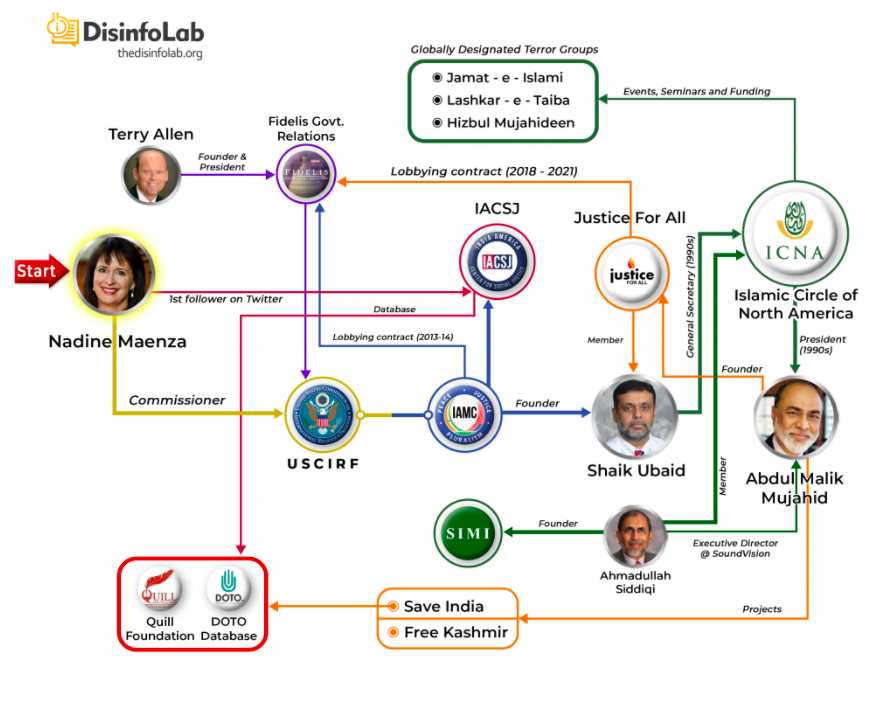
The IAMC had reportedly collected funds for the cause of Rohingya Muslims and used it to pay Fidelis Government Relations (FGR), a US-based lobby firm for getting India blacklisted by the United States Commission on International Religious Freedom (USCIRF).
Awards To Leftist Journalists
In June 2022, the Indian American Muslim Council (IAMC), claiming to be the largest advocacy organization for Indian Muslims in the US, awarded ₹3 lakh in prize money to several Indian journalists and media outlets through its Human Rights and Religious Freedom Journalism (HRRF) Awards. The winners included journalists from Newslaundry, The News Minute, The Caravan, The Wire, Scroll.in, andThe New Issue Magazine (UK), as well as news portals Mooknayak and Article 14. The awards recognized reporting on issues like anti-conversion laws, persecution of Muslims during COVID-19, and human rights in Kashmir.
The IAMC has also been criticizedfor its links to Pakistan-based terror groups and anti-India lobbying efforts, including funding campaigns to blacklist India internationally. The organization has also been accused of violating India’s Foreign Contribution Regulation Act (FCRA), which prohibits foreign funding of media professionals.
Connection With USICRF
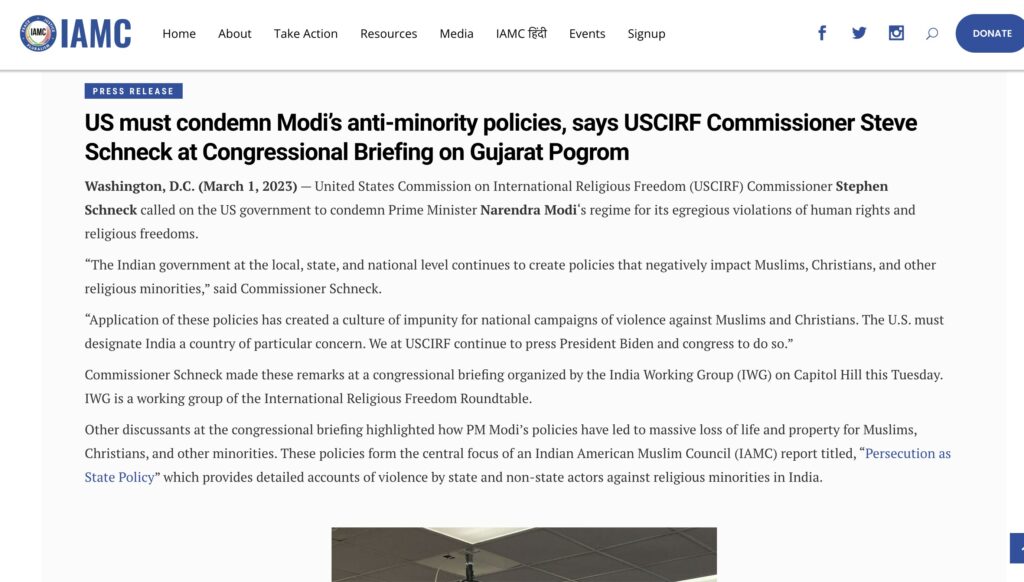
During a February 2023 IAMC event, USICRF Commissioner Stephen Schneck advocated for classifying India as a ‘Country of Particular Concern.’ He asserted, “The Indian government at the local, state, and national level continues to create policies that negatively impact Muslims, Christians, and other religious minorities…Application of these policies has created a culture of impunity for national campaigns of violence against Muslims and Christians. The U.S. must designate India a country of particular concern. We at USCIRF continue to press President Biden and congress to do so.”
Stephen Schneck frequently attends events organized by the Jamat-e-Islami front, IAMC.
Connection With Banned Organisations
The IAMC is very intricately connected with organizations/Jamaat fronts such as ICNA, Justice For All, SIMI, IACSJ, etc. IAMC’s Sheikh Ubaid is friends with Abdul Malik Mujahid, who headed the Islamic Circle of North America, the US front for Jamaat-e-Islami, Pakistan. It also reportedly has links with the banned Islamist organization Student Islamic Movement of India (SIMI) and Pakistan’s Inter-Services Intelligence (ISI).
Image Source: Disinfo Lab
The IAMC’s activities raise serious concerns about foreign interference in India’s internal affairs and the misuse of platforms to incite communal tensions. It is imperative for the global community to recognize the IAMC’s true agenda and hold it accountable for its actions. India, as a vibrant democracy, must remain vigilant against such malicious campaigns and continue to expose the hypocrisy and dangerous intentions of organizations like the IAMC.
Subscribe to our channels on Telegram, WhatsApp, and Instagram and get the best stories of the day delivered to you personally.
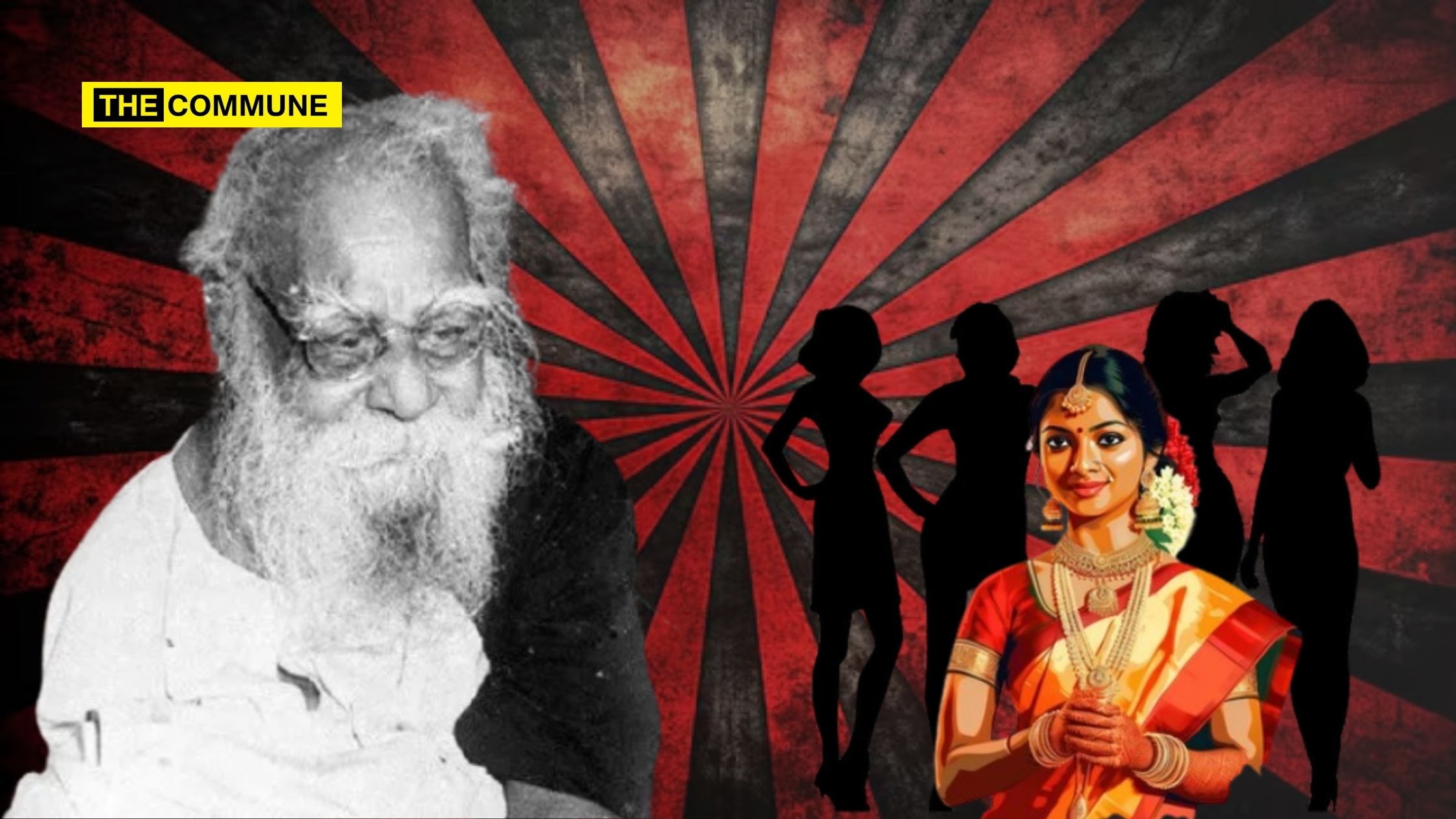
Dravidianists often talk about how their ideologue EV Ramasamy Naicker (EVR), hailed as Periyar among his followers, fought for women’s empowerment, among many other claims. But did he really do that? Let’s take a look at some of the ’empowering gems’ of this so-called ‘great man’ on women – Brahmin or otherwise.
On How Women Must Dress Up
On 28 March 1971, during a wedding ceremony in Vadipatti, Madurai, EVR made a statement, “From now on our women should cut their hair short up to their shoulders. Should wear a shirt. Should wear Lungi. Our women are spending half of their time in make-up. Why do they wear make-up? Besides, the only reason is to make others (men) take a look at them, themakeup worn by our women arouses desires in others. They are dressing up provocatively such that their body parts are visible. How does this not arouse others?”
The text further reads,“No one realizes how much the country’s economy is crippled because of the jewelry worn by women for adornment. Dress should be in such a way that there is no difference between men and women.”
Challenge Accepted. Thread (1/5)
Instances of EVR profanity against women
1: 1971 EVR (age 92) speech at a wedding at Madurai:
“Why do women spend so much time in makeup?
The only reason is to make others (men) take a look at them.
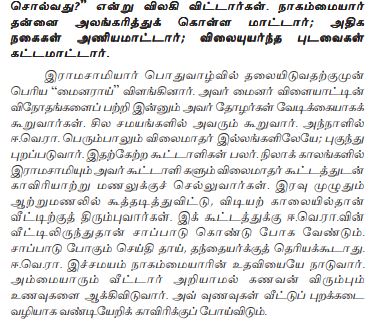
His wife, Nagammaiyar, was a devout woman who occasionally visited temples during festivals. However, EVR was determined to put an end to this practice, and he employed a rather unconventional—and controversial—method to achieve this. An account of this in a book under the chapter “Thoughts On Society”, it reads, “(2) Abolition of temple visitation: Nagammaiyar visits the temple every now and then during festivals. EV Rao’s plan is to stop this case. The prank he did for this was very funny. One day Nagammaiyar went to the temple with some women on the occasion of some festival. E.V.Ra. He went to the temple with some of his companions. He stood in a secluded place so that the minor Kolumbundu Ammaiyar could not see him well. Showing Nagammaiyar to his associates, ‘She is someone new. She has come to our town. We must conquer her; Make the effort you need to know her intentions.’ They also went to where Avvammaiyar was standing and started mocking him. Nagammaiyar saw the proceedings of this meeting. He had no idea what to do. Feet were hot. The body trembled. The heart was pounding with unbearable fear. She was drenched in sweat. However, she somehow managed to escape from the men and returned home. After knowing the situation of the temples, the next day she realized that the event held in the temple was a trick of her husband.”
His extreme and manipulative approach succeeded in instilling fear in her, effectively putting an end to her temple visits.
When Periyar's wife went to a temple, he told his friends that's a new prostitute is in town. His friends went and misbehaved. Wife got scared and ran away. But then what do you expect from someone named after a mass murdering dictator but to glorify such a horrible man? pic.twitter.com/czeYKQ3Mpj
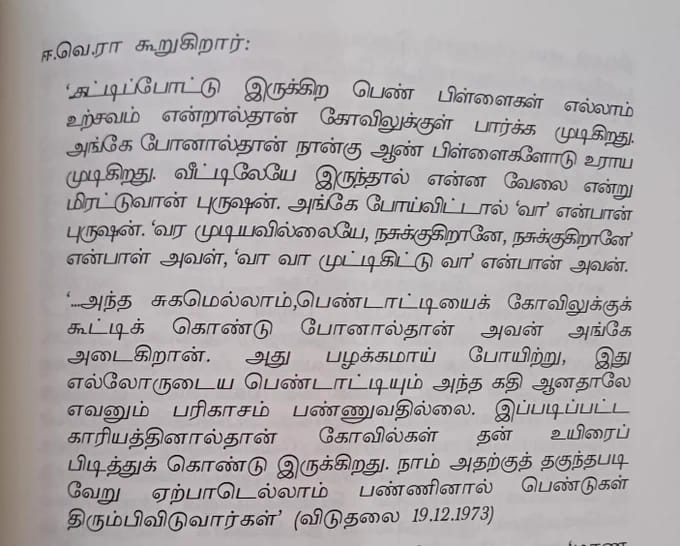
In another instance, during a widely celebrated speech revered by followers of Periyarists and D-Stocks, EVR crudely asserted that women visit temples to be groped, “Husbands usually don’t go to the temple, but at least to have fun they go. The women who are tied (Married) can go only during festival season. Only by going there,she can rub with four men; If she stays at home ‘Her husband will threaten asking ‘what work; If she goes there… ‘Come’ will say the husband; She will say ‘Can’t come they are crushing’; He will say ‘Come, come through them’, She gets all that pleasure only when she is taken to the temple; He is habituated to this because everyone else’s wife is also subject to the same, hence no one will ridicule it. Only because of this,she is holding her life. If we make different arrangements for this, women would not go to temples.”
2. EVR, of age 94 says in his Irudhi Perurai (Final Great Speech) in 1973: "Why are temples still alive?
Because only in a temple's festive crowd, will a husband get the pleasure of seeing his wife being groped.
A documentary inspired by Samy Chidambaranar’s 1939 book“Tamizhar Thalaivar”delves into several controversial claims, including allegations about E.V. Ramasamy (Periyar). The book narrates accounts of his nocturnal activities with women by riverbanks while having his wife prepare meals for such outings. Titled, “Family Mischief” (Kudumba Kurumbugal), Samy Chidambaranar narrates, “Ramasamy was a great “Minor” (flirt) before he ventured into public life. His friends will joke about his ‘minor’ exploits quite quirkily. Sometimes he (EVR) would also talk about it. In those days, EVR was mostly in the houses of prostitutes – entering and departing. There were many partners for this. Ramasamy and his associates would go to the banks of River Cauvery with a group of prostitutes during the lunar nights. They would spend the whole night in the river ‘having fun’ and return home only early in the morning. The food for these meetings should come from EVR’s house only. Parents should not know about food delivery. For this, EVR will seek the help of Nagammai. She will, too, unbeknownst to the family, would cook the food that her husband wanted, and the food would be sent through the backdoor and taken to the Cauvery by a cart.”
Tamil Brahmins “Prostituted” Their Women To Other Castes
On Page 168 of the book “Collected Works of EVR Periyar“, it talks about how he said Tamil Brahmins “prostituted” their women to other castes.
“I asked him to tell me where he stands in the society. I asked him to tell me the rank he holds under the caste hierarchy. He told me his status in life is that of a minister. He replied that he is a Reddiar by caste. Stating the caste as Reddy, Gounder, Naidu, andNaicker are all names we have created. But according to shastras, religion, and tradition, we are all “Shudras” the fourth caste. This continues to exist for a long time. We have started the movement to crusade against this long-lasting disgraceful status. After that, I asked him what was meant by “Shudra”. I myself explained to him that “shudra” means the son of a prostitute.
Then I continued to speak to him. I said, “You have high degree of education. You have passed B.A., B.L., You were a minister for three years. Again you are a now a minister. You are still a “Shudra” the son of a prostitute. You are not ashamed of your low social status. A fellow who begs at you, a fellow who is willing to prostitute his womenfolk for you, calls himself as a high born. You accept him as superior in caste. You prostrate at his feet”. I finally put the question, ” Now you tell me whether you want the Self-Respect Movement or not?” He simply replied that all these have existed for a very long period.”
For example: Official source material publicly available. Collected Works of EVR Periyar P. 168- hence this is the established community level of obscenity in Tamil discourse.
Hindu Women Go To Crowded Temples To Rub Their Bodies Against Strange Men
In what is said to be one of his speeches and later published in the Dravidianist mouthpiece Viduthalai in 1973, EVR says, “Young women who are tied up at home can be seen outside only during temple festivals. Only if they go there will they be able to rub their bodies against young men. If they are at home, the husband threatens her with work. If she goes there, he will ask her to come. “I am not able to come, he is crushing me, he is crushing me“, she would say, “Come without a word“, he would say.
He receives that pleasure only when he takes his wife to the temple. That became a habit since this is the state of all wives, no one makes fun of it. Because of such things, life goes on. If we make other arrangements as appropriate, the women will return.”
An undated speech where within just five minutes into it, EVR dives into deeply contentious territory, making shocking claims such as“Shudra women are prostitutes for Tamil Brahmin men.“The statement met with cheers from the Dravidian crowd, highlights the provocative and divisive nature of his rhetoric.EVR’s approach often leans heavily on sexualized narratives to drive his points home. He says,“You may think that what I am saying is funny (that Shudra women are tamil-brahmin men keeps)
Would our womenfolk really have been like this (as mistresses of Tamil Brahmins)? I also hope that was not the case, okayfine let us assume that was not the case. But look at Malayalam (Kerala) right across the border. There, wives of Kings, wives, .. queens, and princesses… They even today give money and go to Tamil Brahmin men.. (for sexual purposes). For this purpose alone they have given salaries and kept Tamil Brahmin employees. Two queens in Kerala – one elder queen and one younger.
When I was there in Malayalam (Kerala) for one, the going rate was Rs 100 Rs and for the other, it was Rs 80 – to be the “husband” of these queens.
If you are not born of these Paapaans (Tamil Brahmins)— then you will not get a share of the ruling class. You can’t be king. I am saying what is happening even today. Over there — all the Zameendar’s wives are also Paapaan mistresses. Slightly inferior —- (caste men – audio not clear here) these women will go to, that too they won’t go after getting married.
Come-means Come, Go-means Go — (basically easy sex – no strings..)
It is happening … in the house of Zameendars, Mirasudars, big and reputable Nair families. Even today, it is happening. Kerala is not far from us – after all, they are separated from here.
Alleged Brahmins Planned A Legislation To Make Non-Brahmin Women Their Mistresses
In a 1926 public meeting in Madras, EVR warned the crowd that, after Independence, Tamil Brahmins would push for legislation requiring non-Brahmin women to become mistresses or concubines of Tamil Brahmin men. This idea about the exploitation of women, specifically Malayalee women, can be traced to KV Reddi (also known as Rao Bahadur Sir Kurma Venkatareddy Naidu), a leader of the Justice Party and the Chief Minister of Madras Presidency. Reddi, during a discussion on the inheritance act, reportedly informed the Madras Assembly that in Kerala, a law existed stating that non-Brahmin girls, upon reaching puberty, must be deflowered by a Brahmin. He said,“During a discussion of inheritance act .. in Kerala there exists a law that non-brahmin girls upon puberty have to deflowered by a Brahmin.”
Reddi’s speech included a dramatic and highly controversial tale:
“In Kerala, if a Brahmin hears about the beauty of a Nair’s wife, he will summon the husband and say, ‘Madhavan, I hear your wife is very beautiful, is it true?‘ To which the husband replies, ‘Yes, sir, all your grace.‘ The Brahmin then says, ‘Send her to me for one week.‘”
Reddi, a leader of the Justice Party and a key figure in the Dravidian movement, appears to have shared deeply problematic views. His approach in the legislative debate was provocative, asking:
“Mr. C.P. Ramaswamy Iyer, there is an atrocity in Malayalam land where a girl, upon reaching puberty, must be deflowered by a Brahmin. Are you afraid of losing that privilege?”
In a public meeting in Madras in 1926, Mr E.V.Ramaswamy (Periyar) told the crowd
"After Independence is achieved, the TamizhBrahmins are planning to pass legislation that makes it compulsory for NonBrahmin women to be mistresses/concubines of TB Men"#Dravidian#MEMRI 🖤 pic.twitter.com/xmZNKGwEtW
— Reality Check India (@realitycheckind) July 25, 2022
“Had British Continued, Brahmin Women Would Have Been Ours”
Published in Dravidianist mouthpiece, Viduthalai in 1956, EVR allegedly said, “Had the British continued for another ten years, more than half of the Brahmin women would have been ours and Tamils would have been their husbands and the dominating caste would have been destroyed [by] more than half. Only after Brahmin women had started chasing our boys did the Brahmin men become very angry with the British.”
The Wire reports that in an editorial published in Viduthalai on 4 March 1969, he controversially described Brahmin priests as exploiting their wives in specific religious locations, likening their actions to that of pimps.
In his book Vanavasam, the Tamil poet Kannadasan recounts a typical speech by Periyar, in which Periyar derogatorily refers to Brahmin women as ‘prostitutes‘ and accuses Brahmin men of exploiting their women to secure their influence in the Dravidian region.
A Hypocrite In Its Truest Sense
EVR stands exposed as a hypocrite whose rhetoric and actions reveal a deeply misogynistic and divisive worldview. Far from being a liberator of women, EVR’s statements and ideologies perpetuated harmful stereotypes, reduced women to objects of male desire, and reinforced regressive attitudes under the guise of reform.
His views on women were not only demeaning but also blatantly contradictory to the principles of equality and dignity he supposedly championed. His crude sexualized narratives about Brahmin and non-Brahmin women reveal a man obsessed with caste-based vendettas rather than genuine social reform.
His rhetoric often targeted Brahmin women, reducing them to derogatory labels and accusing Brahmin men of exploiting them, all while ignoring the systemic issues faced by women across all castes.
While his brainwashed followers celebrate him as a progressive icon, the reality is that his ideologies were steeped in misogyny, casteism, and sensationalism.
Subscribe to our channels on Telegram, WhatsApp, and Instagram and get the best stories of the day delivered to you personally.
The Uttar Pradesh government has ordered a fresh probe into the 1978 riots in Sambhal and asked police to submit a report within a week. The Superintendent of Police (SP) received a letter from the Deputy Secretary of the Home (Police) Department, appointing an Additional Superintendent of Police (ASP) to lead the probe.
Additionally, the SP has written to the District Magistrate (DM) requesting the appointment of an administrative officer for a joint investigation. On January 7, Sambhal SP KK Bishnoi wrote a letter to Sambhal District Officer Dr Rajendra Pensia and informed that UP Legislative Council member Shrichandra Sharma demanded an inquiry into the 1978 riots in Sambhal. On this, he has received a letter from UP’s Deputy Secretary of Home and Superintendent of Police (Human Rights). In such a situation, Sambhal SP Shrichandra will be involved in the investigation on behalf of the police.
The riots of 1978 in Sambhal reportedly caused significant communal unrest, leading to large-scale violence, arson, and the displacement of several Hindu families. Survivors have stated that many Hindus were killed during the riots, forcing them to flee the area. This renewed interest in the riots comes shortly after the reopening of the ancient Kartik Mahadev Temple in Sambhal, which had been closed for 46 years. The temple’s reopening followed a violent incident during a survey at Shahi Jama Masjid on November 24, 2024.
Former residents who had fled due to the riots recounted their harrowing experiences and welcomed the temple’s reopening, which they believe marks a step toward justice and reconciliation. The joint investigation aims to shed light on the events of 1978 and ensure accountability for the violence.
–IANS
Subscribe to our channels on Telegram, WhatsApp, and Instagram and get the best stories of the day delivered to you personally.
The Indian economy is projected to grow at a robust 6.8 per cent in the financial year 2025-26, driven by strong high-frequency indicators, according to a Bank of Baroda forecast.
The report expects nominal GDP growth to be around 10.5 per cent during the next financial year. It highlights that key indicators of this growth include robust air passenger traffic, a rise in services PMI, and increased GST collections.
Additionally, higher rabi crop sowing is expected to boost agricultural growth, providing a stable foundation for the economy. The report highlighted that the Indian economy has shown resilience, driven by strong festive demand and steady improvement in economic activity.
This resilience is reflected in high-frequency indicators that have shown a significant uptick in the third quarter of FY25. The report states that while there has been a slowdown in 2024-25, on the bright side both private and government consumption is expected to register a strong growth of 7.3 per cent (4 per cent in FY24) and 4.1 per cent (2.5 per cent in FY24) respectively in FY25.
Furthermore, in a positive surprise, the export growth is likely to register a strong growth of 5.9 per cent against a growth of 2.6 per cent in FY24. It also highlights that government expenditure is expected to pick momentum in the second half of 2024-25 which will emerge as a driver of growth. Besides, the report is bullish about the higher growth in the agricultural sector.
However, the report cautions about downside risks due to global headwinds. Among these, the threat of a tariff war looms large as the incoming US administration under President Trump may impose protectionist trade policies. Such measures could disrupt global trade and potentially trigger retaliatory actions, posing risks to global economic stability.
It said, “A range of economic and strategic risk prevails post the imposition of the tariff policies by the incoming US President Mr Trump. This could be a far-reaching impact on global trade”. Domestically, the focus will shift to key economic events, including the Union Budget, corporate performance in the third and fourth quarters, and the Reserve Bank of India’s monetary policy decisions, the report added.
–IANS
Subscribe to our channels on Telegram, WhatsApp, and Instagram and get the best stories of the day delivered to you personally.
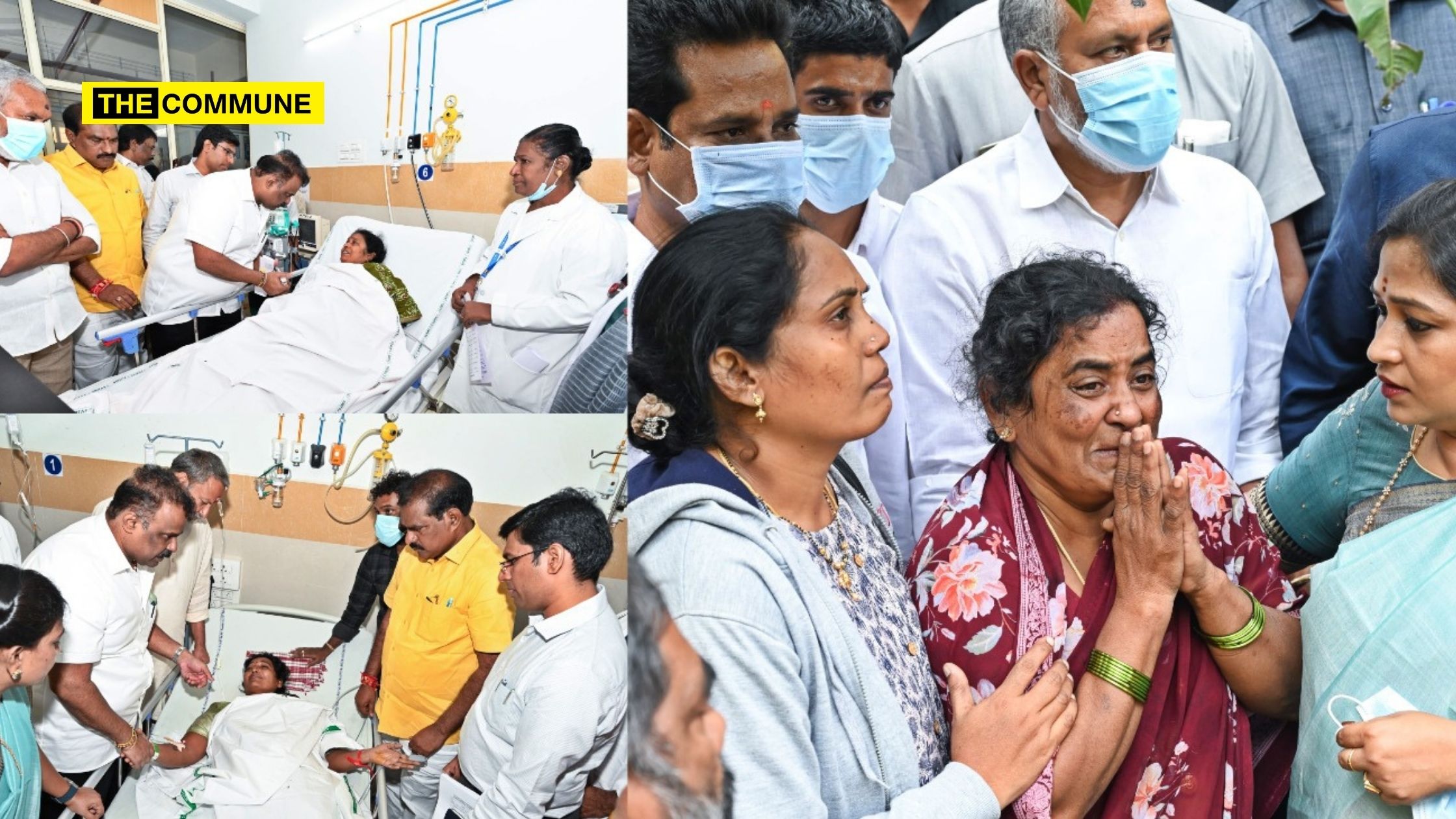
The Andhra Pradesh government on Thursday announced a compensation of Rs.25 lakh each to the families of the six devotees who died in the stampede on Wednesday night during the distribution of tickets for a sacred event at the Sri Venkateswara Swamy temple in Tirupati.
Revenue minister A. Satyaprasad made the announcement after a ministerial team called on the families of the deceased at Ruia Hospital. The delegation which included ministers Anita, Parthasarthy and Anam Ramnarayan Reddy also called on the injured at SVIMS Hospital. The ministers termed the incident as unfortunate.
They said the investigations were on to find out if the incident was a result of any hasty action or lack of coordination. Home Minister Anita said the probe was also on to ascertain if it was an accident or a conspiracy.
She said the CCTV footage would reveal whose lapses led to the tragedy. The Home Minister said stringent action would be taken against those who were found negligent.
Steps will be taken to ensure that such incidents do not recur in future, she added. The ministers said bodies of the victims were being sent to their respective towns after autopsy.
Three of the victims were from Visakhapatnam and one from Narsipatnam and the remaining two victims were from Tamil Nadu and Kerala.
The stampede occurred near the Vishnu Nivasam temple in Tirupati, where the Tirumala Tirupati Devasthanams (TTD) had set up counters to distribute tokens for the Vaikunta Dwara Darshanam during the annual Vaikunta Ekadashi festival that begins on January 10. During the 10-day event, devotees are allowed a special darshan of the deity through the northern entrance.
Thousands of devotees from various states had lined up at the counters since Wednesday evening though the distribution of tokens was to start on Thursday morning. When one of the gates was opened to assist a distressed woman, devotees surged forward leading to the stampede.
The TTD had arranged for the distribution of 1.20 lakh tokens for the first three days of the festival (January 10–12). Special counters had been set up at 94 locations in Tirupati. Meanwhile, Chief Minister N. Chandrababu Naidu will be visiting Tirupati later in the day to call on the families of the victims and visit the hospitals, where the injured were undergoing treatment.
The Chief Minister condoled the loss of lives in the tragedy and ordered an investigation.
–IANS
Subscribe to our channels on Telegram, WhatsApp, and Instagram and get the best stories of the day delivered to you personally.
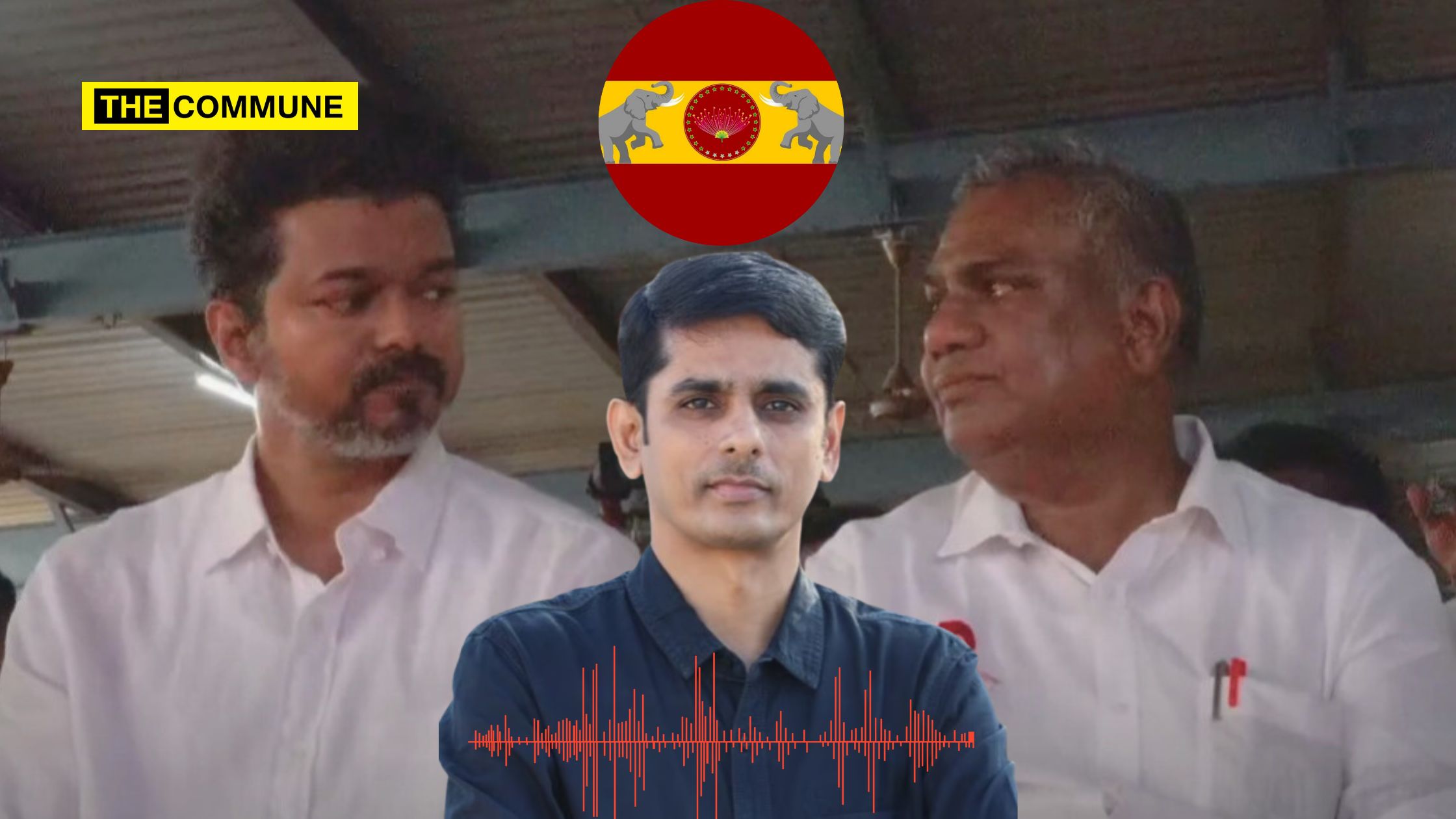
A viral video has surfaced, allegedly featuring political strategist John Arokiasamy, who currently works as the brand strategist for actor-turned-politician Vijay. In the video, Arokiasamy criticizes the Tamilaga Vettri Kazhagam (TVK) party, claiming it won’t secure even 2% of the vote share in the 2026 elections. He expressed frustration over the party’s failure to fully leverage its fan base and criticized the party’s General Secretary, Bussy Anand, for overshadowing Vijay and attempting to project his own image as the face of the party.
This leaked audio has quickly spread across social media platforms, drawing significant attention. Arokiasamy, known for his work in brand-building, was previously involved with Anbumani Ramadoss in 2016 under the “Maatram Munnetram Anbumani” campaign, which helped the PMK secure the third-largest vote share in Tamil Nadu despite the dominance of major Dravidian parties like those led by Karunanidhi and Jayalalitha.
Within TVK, there is increasing discontent among party members. Many had hoped that the party, following its first state-level conference in October 2024, would gain momentum. Vijay had instructed his cadres to work earlier than any other party in Tamil Nadu to achieve the goal of coming to power by 2026. However, these aspirations have yet to translate into meaningful action, with the party leadership seemingly offering only cinematic-style rhetoric rather than concrete steps. Critics accuse Vijay of acting like a “work-from-home” politician, issuing statements but failing to address key issues or take proactive measures in the race for the 2026 assembly elections.
As TVK’s structure becomes more centralized under three key commands, the party’s hardcore supporters, initially enthusiastic, have expressed growing frustration. Arokiasamy’s sharp criticism of the current direction of the party, warning that it could end up with less than 2% of the vote share in 2026, has shaken the cadres. The audio has now gone viral, raising questions about the party’s future.
In the leaked audio, political strategist John Arokiasamy is heard expressing strong concerns about the direction of the Tamilaga Vettri Kazhagam (TVK) party. He says, “Tomorrow, if someone hijacks him like BJP or DMK, that’s it, you’re finished. I feel it is better to address him directly (Bussy Anand) rather than telling him (Vijay) because telling him he won’t understand the depth of the situation… and moreover, he won’t speak up. Making him understand—’Look, he (Vijay) is the face; you need to correct the dominance of cadres and tell them it’s wrong. Without his (Bussy Anand) approval, how will it happen? How can anything happen without his approval, sir? We can’t even mark a dot without his approval.”
Arokiasamy continues, criticizing the current structure of the party, which he says originated from Vijay’s fan clubs. He explains that the structure is “his property,” referring to Bussy Anand, but the face of the party is meant to be Vijay’s. However, according to Arokiasamy, Bussy Anand is dominating even the party’s face, positioning his own image as larger than Vijay’s in promotional materials. He said, “The outfit is like that as it comes from the fan clubs. It is like the structure is his property, the face is him (Vijay). However, he (Bussy Anand) is dominating even the face. By dominating, I mean he’s overpowering the situation, putting his own face larger among the group of ten photos. This is wrong.”
He argues that this is problematic, saying, “What would happen to the party if we put Duraimurugan’s face instead of Stalin’s? Would it survive? What if, instead of Jayalalitha, we build Sasikala (as the face)? In every political party, the chief ministerial candidate is the face of the party. But here, he (Bussy Anand) is standing in the center, and Sir (Vijay) is standing next to him.”
John Arokiasamy expressing his frustration, stating, “When I’m trying to position him (Vijay) alongside leaders like MGR, Jayalalithaa, Karunanidhi, and Annadurai, these clowns interfere. This is wrong, sir, very wrong. If this continues, it won’t even secure 2%. The CM face positioning should not be diluted. You can guide cadres and function them, by making the leader the central figure, and being his shadow. But you should occupy the reality with shadows. Diluting a cult like this is unimaginable in any party. Leave DMK and ADMK. even the letterhead parties won’t do this.”
He then goes on to question the logic behind weakening the leader’s image, saying, “Who are the votes for? It’s for Jayalalithaa, Karunanidhi, Anna, Stalin, Udhayanidhi. The central force and central face should be neutral. Why is Edappadi losing momentum? Edappadi’s central face won’t work. Even OPS, Sasikala, Anbumani, or Thirumavalavan won’t work. A central figure with universal appeal, a caste-neutral, is needed. He (Vijay) is not an ordinary person, but he is a cult figure, and diluting that image is pure madness. Who are you, and what have you done in this state? Why do people sacrifice goats for you, donate blood for you? What the cadres thinks is, ‘The leader is just a figurehead, a dummy and just a face. He (Bussy Anand) is everything.” This won’t work, simply waste.”
Arokiasamy further criticizes the party’s current approach, pointing out that, “At least Kamal Haasan, by his own despite a clear ideology, managed to get 4% of the vote. But this (TVK) won’t even get 2%. My goal is a 30% seat conversion to secure power. But now, who will come forward to form an alliance?”
John Arokiasamy criticized TVK chief Vijay, as a bad mouth claiming that whatever he says to Vijay ends up being relayed to Bussy Anand during late-night discussions about the party’s affairs. Due to this, Arokiasamy chose to address Bussy Anand directly instead of speaking to Vijay.
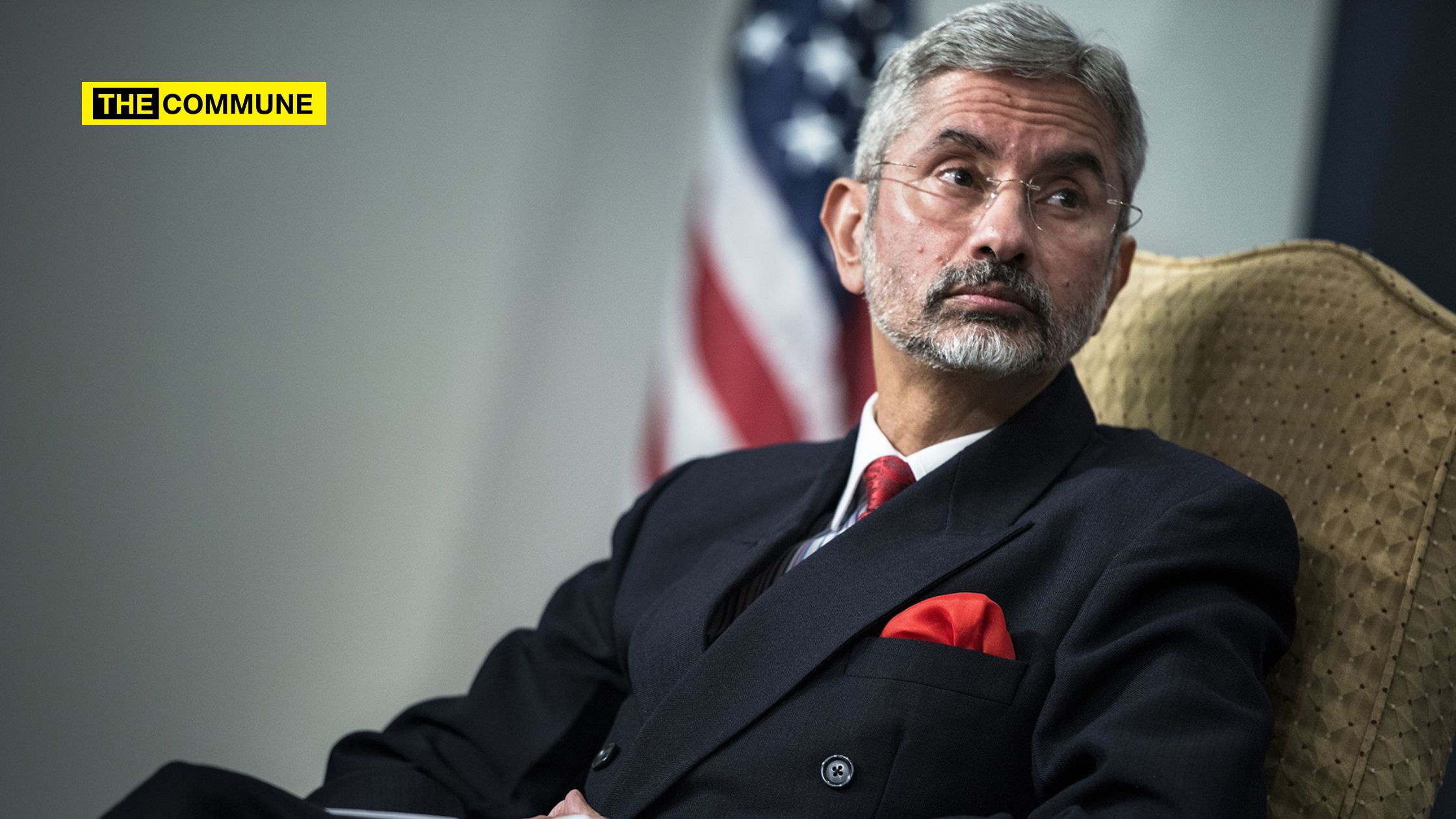
External Affairs Minister (EAM) S Jaishankar highlighted that hosting the 18th Pravasi Bharatiya Divas (PBD) Convention in Odisha “reflects the Modi Sarkar’s ‘Poorvudaya’ policy,” emphasising the development and prominence of eastern India.
Prime Minister Narendra Modi inaugurated the 18th Pravasi Bharatiya Divas Convention on Thursday in Bhubaneswar, Odisha, in the presence of EAM Jaishankar, Odisha Governor Hari Babu Kambhampati, Chief Minister Mohan Charan Majhi, Union Ministers Dharmendra Pradhan and Ashwini Vaishnaw, among other dignitaries. The event commenced with a performance by three-time Grammy Award winner Ricky Kej. Addressing the gathering, EAM Jaishankar expressed pride in the achievements of the Indian diaspora. “You all not only feel proud of your achievements but also enhance India’s global respect.”
“In a globalised era, the diaspora becomes more important with each passing year. Whether it is technology, best practices or resources, be it tourism, trade or investment, the two-way flows you enable are invaluable. As we strive to make a global workspace, this will be even more so in the times to come,” he said.
Jaishankar highlighted the “people-centric changes” introduced in India, such as improving ease of doing business, living, and travel. He mentioned the application of digital technologies for diaspora welfare, including simplified passport issuance and renewal, enhanced consular services, grievance redressal platforms, and more responsible embassies and consulates. “Most importantly, in times of difficulty, you can be confident that the Modi Sarkar has your back,” he added.
He lauded Odisha for its rich historical and cultural heritage, citing the Jagannath Temple, Lingaraj Temple, Konark Temple, and other attractions. “The hosting of this PBD in Odisha is reflective of Modi Sarkar’s ‘Poorudaya’ Policy. In so many ways, Odisha represents the full richness of our history and culture,” Jaishankar said.
The EAM also drew a parallel between the state’s famous Bali Yatra and the Indian government’s ‘Act East’ policy. “When we define ourselves as an Indo-Pacific nation, we do so from the eastern sea border of Odisha,” he said.
Jaishankar highlighted India’s growing confidence, modernisation, and inclusiveness, where tradition and technology coexist. He encouraged the diaspora to contribute to the journey of building a “Viksit Bharat.”
The PBD Convention, organised by the Central government in collaboration with the Odisha state government, is being held from January 8 to 10. Delegates from over 50 countries have registered for the event, themed “Diaspora’s Contribution to a Viksit Bharat.”
The Pravasi Bharatiya Divas Convention was first established in 2003 under the leadership of then-Prime Minister Atal Bihari Vajpayee as a platform to recognise and engage with the overseas Indian community. It is the flagship event of the Ministry of External Affairs, showcasing the diversity and progress of different Indian regions.
Since 2015, the PBD Convention has evolved into a biennial event, with theme-based conferences held in intervening years. This approach facilitates focused discussions on specific areas of interest and offers networking opportunities for the global Indian diaspora.
–IANS
Subscribe to our channels onTelegram, WhatsApp, and Instagram and get the best stories of the day delivered to you personally.