Home Blog Page 663

Poll Bonds: Extortion Case Against Sitharaman, Nadda Quashed By Karnataka HC

Poll Bonds: Extortion Case Against Sitharaman, Nadda Quashed By Karnataka HC

In a big relief to Finance Minister Nirmala Sitharaman and BJP National President JP Nadda, the Karnataka High Court on Tuesday quashed an extortion case registered against them concerning the now-scrapped poll bonds scheme. Justice M. Nagaprasanna dismissed the FIR on a petition filed by BJP leader Nalin Kumar Kateel challenging the case in which he was also named as an accused along with Sitharaman and others.

The High Court accepted the contention of Kateel’s counsel, K.G. Raghavan, that there were not enough grounds to register an extortion FIR case against the BJP leaders. Kateel had claimed in his petition that he and other BJP leaders had been implicated in settling political scores. The FIR was registered in September on the complaint of NGO Janaadhikaara Sangharsha Parishath which alleged that the BJP extorted money from private companies and made illegal gains under the electoral bonds scheme by threatening them with Enforcement Directorate raids. NGO representative Adarsh R. Iyer alleged in his petition that the BJP made illegal gains of up to Rs 8,000 crore under the poll bonds scheme.

Accusing the BJP of extorting companies, Iyer alleged in the complaint that firms like Aurobindo Pharma, Vedanta and Sterlite faced ED raids before they donated money to the party. The FIR was registered after a court in Bengaluru approved the private complaint filed by the NGO. The complaint claimed that every citizen has the right to set the criminal law into motion in case of serious crimes. Soon after the registration of the FIR in September, the High Court stayed further investigation against Sitharaman and other top BJP leaders. The High Court passed the interim order on a petition filed by Kateel challenging the FIR.

–IANS

Subscribe to our channels on TelegramWhatsApp, and Instagram and get the best stories of the day delivered to you personally.

New Criminal Laws Freed India From Colonial Legacy As Envisioned By Constitution: PM Modi

New Criminal Laws Freed India From Colonial Legacy As Envisioned By Constitution: PM Modi nda parliamentary meet handloom sector national handloom day

Prime Minister Narendra Modi on Tuesday said the three new criminal laws “freed India from colonial legacy” as they “are a concrete step towards fulfilling the ideals that Constitution has imagined for the country”. Speaking at a programme to mark the implementation of the new criminal laws in Chandigarh, the joint capital of Punjab and Haryana, PM Modi said, “It’s (the new criminal laws) a concrete step towards fulfilling the ideals that our Constitution has imagined for the citizens of our country…In the seven decades after Independence, the challenges faced by our judicial system were studied and thought upon. Behavioural aspects of all the laws were analysed. I thank the Supreme Court, judges and High Courts, especially of Punjab and Haryana, and Bar (association) who have taken the ownership of Nyay Sanhita.”

He said decades after Independence, “our laws were revolving around the same penal mindset. Over time, efforts were made to make some little changes in laws, but their characteristic remained the same.” PM Modi said, “At a time when the country is moving forward with the resolve of a united India, and as we celebrate 75 years of the Constitution, the implementation of Indian justice inspired by the spirit of the Constitution marks a significant beginning.” Earlier, PM Modi along with Union Home Minister Amit Shah and Punjab Governor and Chandigarh Administrator Gulab Chand Kataria, inspected the exhibition depicting the implementation of three criminal laws on the campus of Punjab Engineering College. PM Modi was briefed by Senior Superintendent of Police (SSP) Kanwardeep Kaur about the implementation of three transformative new criminal laws in Chandigarh with registration of 900 plus first information reports (FIRs) and four convictions in the past five months.

These laws aim to overhaul India’s criminal justice system, focusing on transparency, efficiency, and addressing modern challenges. PM Modi also inspected the exhibition depicting the implementation of criminal laws by simulating a crime scene investigation on the campus of Punjab Engineering College, where a dummy police station was set up. The presentation, themed “Secure Society, Developed India: From Punishment to Justice”, took place at an exhibition spread across eight stations, providing Prime Minister Modi with a live experience of how law enforcement, forensic teams, judicial authorities and prisons have become more efficient and technology-driven since the implementation of the laws. A crime scene was depicted with a distress call at the Police Control Room. At the crime scene, the e-Sakshya app digitally recorded all evidence from the scene, including photos, videos and timestamps, which are then sent directly to the court. In this scene, the forensic team collects crucial evidence, while the “victim’s family member” identifies the body.

Home Minister Shah was seen explaining to Prime Minister Modi about the operation of the new laws for speedy justice, starting from the collection of evidence at the crime scene to providing solace to the victim’s family. Speaking at the programme, Home Minister Shah said, “In the new laws, treason (deshdroh) has replaced sedition (rajdroh), which was there for centuries.” He said earlier laws were made in the British parliament, they were more for the protection of British rule and not for the people. “The laws that PM Modi has brought are made by Indians, in the Indian Parliament and to deliver justice to the people… These laws have no place for punishment but justice. It will be implemented in the entire country within three years.” He said PM Modi has created the world’s most modern criminal justice system to build a secure and developed Bharat for all. Chandigarh is the first city in the country where 100 per cent implementation of all three laws has been completed.

The three new criminal laws — the Bharatiya Nyaya Sanhita, the Bharatiya Nagarik Suraksha Sanhita and the Bharatiya Sakshya Adhiniyam — replaced the British-era Indian Penal Code, Code of Criminal Procedure, and Indian Evidence Act, respectively, came into effect from July 1. These landmark reforms mark a historic overhaul of the criminal justice system, bringing in new frameworks to tackle modern-day challenges such as cybercrime, and organised crime and ensuring justice for victims of various offences. The local police also showcased the functionalities of applications such as e-Sakshya, Nyay Setu, Nyay Shruti and e-summons, which have been developed by the National Informatics Centre in collaboration with the National Crime Records Bureau.

Before heading to Chandigarh, PM Modi wrote on X, “A special day in our efforts to ensure speedy justice for every Indian and, at the same time, break free from colonial mindsets…will join the programme in Chandigarh to mark the successful implementation of the three new criminal laws…It’s a matter of immense joy that these laws are coming into being at a time when we mark 75 years of our Constitution being adopted by the Constituent Assembly.” The conceptualisation of the three laws was driven by the vision of the Prime Minister to remove colonial-era laws that had continued to exist post-Independence and to transform the judicial system by shifting focus from punishment to justice.

–IANS

Subscribe to our channels on TelegramWhatsApp, and Instagram and get the best stories of the day delivered to you personally.

Continuous Diplomatic Engagement Has Set India-China Ties In Direction Of Some Improvement: EAM Jaishankar

Continuous Diplomatic Engagement Has Set India-China Ties In Direction Of Some Improvement: EAM Jaishankar

External Affairs Minister (EAM) S Jaishankar said on Tuesday that India-China ties that had been “abnormal since 2020” are moving in the direction of “some improvement” following several high-level engagements, including the meeting between Prime Minister Narendra Modi and Chinese President Xi Jinping held on the sidelines of the BRICS Summit on October 23.

Making a statement in the Lok Sabha regarding ‘recent developments in India’s relations with China’, EAM Jaishankar provided an extensive update on recent developments in India-China relations, particularly the border areas, highlighting the diplomatic and military measures taken to restore peace and tranquillity along the Line of Actual Control (LAC). “Our ties have been abnormal since 2020, when peace and tranquillity in the border areas were disturbed. Recent developments reflecting our continuous diplomatic engagement have set our ties in the direction of some improvement,” he said.

Jaishankar reiterated that normalcy in India-China relations depends on mutual sensitivity, respect, and interests. “India-China relations cannot be normal in the absence of peace and tranquillity in the border areas. Restoration of peace and tranquillity would be the basis for the rest of the relationship to move forward,” he said while stressing that sustained efforts at both diplomatic and military levels remain pivotal in managing the challenges along the LAC and fostering a stable bilateral relationship. The EAM spotlighted that the bilateral relationship had progressed in many domains, but was negatively affected by the recent events. “We are clear that the maintenance of peace and tranquillity in border areas is a prerequisite for the development of our ties. In the coming days, we will be discussing both de-escalation as well as effective management of our activities in the border areas. The conclusion of the disengagement phase now allows us to consider other aspects of our bilateral engagement in a calibrated manner, keeping our national security interests first and foremost. In my recent meeting with Foreign Minister Wang Yi, we reached an understanding that the special representatives and the Foreign Secretary level mechanisms will be convening soon,” he stated.

The meeting between PM Modi and Xi Jinping on the sidelines of the 16th BRICS Summit was the first between the two countries at delegation level in nearly five years and came close on the heels of the disengagement and patrolling agreement and the resolution of issues that had arisen in the India-China border areas in 2020. Referring to the violent clashes in the Galwan Valley in June 2020, Jaishankar recalled the gravity of the situation, which saw fatalities for the first time in 45 years. “The circumstances led to heavy weaponry being deployed in close proximity to the LAC, necessitating determined counter-deployment of adequate capability,” he stated.

He mentioned that the October 21 agreement is the latest in the series of an understanding in regard to the resolution of the situation at various friction points in eastern Ladakh in the aftermath of the events in May-June 2020 and the initial disengagement in Galwan Valley in July 2020. The EAM elaborated on China’s illegal occupation of 38,000 square kilometres of Indian territory in Siachen since the 1962 conflict and noted Pakistan’s illegal ceding of 5,180 square kilometres of Indian territory to China in 1963, which has been under its occupation since 1948. “India and China have held talks for multiple decades to resolve the boundary issue,” he said. He described the large-scale troop deployment by China along the LAC in Eastern Ladakh during April-May 2020, which resulted in multiple face-offs and disrupted patrolling activities. “It is to the credit of our armed forces that, despite logistical challenges and the then-prevailing COVID situation, they were able to counter-deploy rapidly and effectively,” he said.

In his statement, he also traced the history of India-China diplomatic engagements dating back to 1988 when a clear understanding was reached to settle the boundary issue through peaceful consultations. Agreements in 1993 and 1996 established mechanisms to maintain peace along the LAC. He noted further advancements, including the 2005 protocol on confidence-building measures and the establishment of the Working Mechanism for Consultation and Coordination (WMCC) in 2012. “The purpose of recalling these agreements is to underline the elaborate nature of our shared efforts to ensure peace and tranquillity and to emphasise the seriousness of the 2020 disruptions for our overall relationship,” he said.

Jaishankar reaffirmed India’s three key principles: strict respect for and observance of the LAC, no unilateral alteration of the status quo, and adherence to past agreements. He emphasised that the restoration of peace and tranquillity remains the foundation for normalising India-China ties. “The combination of a firm and principled stance on the situation in the border areas, as well as a clearly articulated approach to the totality of our ties, have been the foundation of our engagement with China for the last four years,” he added.

Updating the House on the latest developments, Jaishankar referred to the October 21 agreement on disengagement in the Depsang and Demchok areas, which was achieved after intensive negotiations. He highlighted that patrolling in traditional areas has resumed following verification of disengagement on the ground. “The problem in these two areas pertained primarily to obstructions of our long-standing patrolling activity and access by nomadic populations to traditional grazing grounds,” he said.

Jaishankar detailed several high-level engagements, including his own meetings with Chinese Foreign Minister Wang Yi in Astana and Vientiane earlier this year and again at the G20 Summit in Rio de Janeiro on November 18. National Security Advisors and Defense Ministers from both sides have also been in active dialogue. “In pursuance of these discussions, the Defence Minister met his Chinese counterpart at the ASEAN Defence Ministers’ meeting on November 20 to discuss progress on the disengagement agreement, the need for de-escalation, and the strengthening of confidence-building measures,” Jaishankar said.

–IANS

Subscribe to our channels on TelegramWhatsApp, and Instagram and get the best stories of the day delivered to you personally.

High Time Hindus Irrespective Of Political Ideology Get United: Bengal LoP Suvendu Adhikari

High Time Hindus Irrespective Of Political Ideology Get United: Bengal LoP Suvendu Adhikari

Considering the current crisis in Bangladesh where the attacks and atrocities on the minority Hindus have become regular, Leader of the Opposition (LoP) in West Bengal Assembly Suvendu Adhikari on Tuesday called for all Hindus to unite.

“There are regular human rights violations there. The people associated with an organisation like International Society for Krishna Consciousness who are spread across the world should protest strongly over the arrest of ISKCON monks in Bangladesh. Even the lawyers taking the brief for the arrested are facing lethal attacks. So it is high time that Hindus get united irrespective of their individual political beliefs,” the LoP told newspersons on Tuesday afternoon.

Adhikari said that an organisation deadlier than terror groups like Islamic State, Taliban or Hamas are active in Bangladesh and they are organising such attacks against Hindus. The reaction from the LoP comes on a day when Chinmoy Krishna Das, the ISKCON monk from Bangladesh who was accused of sedition, encountered a major setback when lawyers declined to represent him at his bail hearing in court on Tuesday, following which the Chattogram court postponed the bail hearing to January 2.

Das, popularly known as Chinmoy Prabhu, the spokesperson for Bangladesh Sammilita Sanatani Jagran Jote, was arrested at Dhaka’s Hazrat Shahjalal International Airport while he was en route to Chattogram to attend a rally. He was denied bail and sent to jail last week.

–IANS

Subscribe to our channels on TelegramWhatsApp, and Instagram and get the best stories of the day delivered to you personally.

Did DMK Minister Geetha Jeevan Allegedly Lease Temple Land To Party Allies At Below-Market Rates?

Did DMK Minister Geetha Jeevan Allegedly Lease Temple Land To Party Allies At Below-Market Rates?

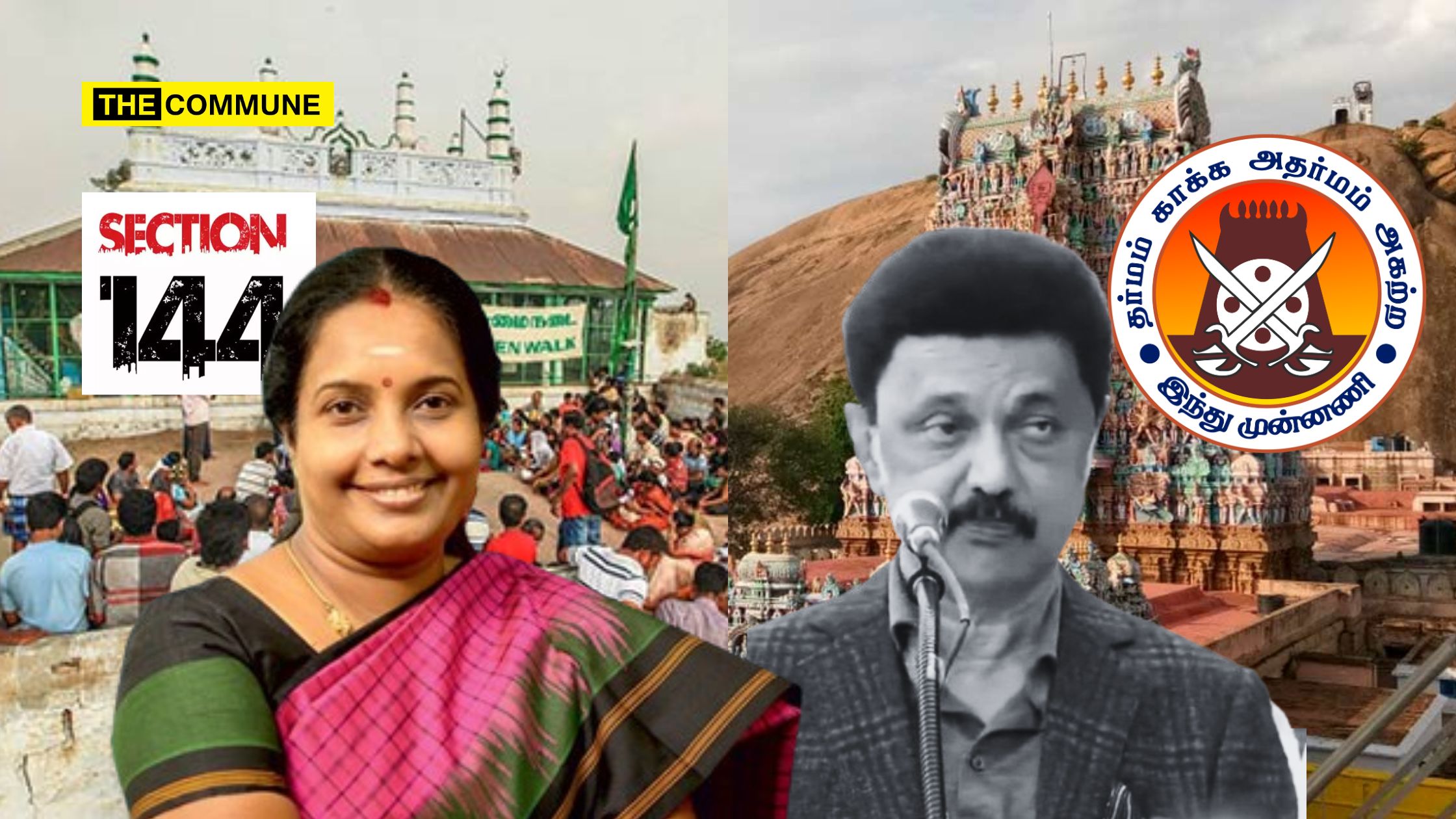
The lease of 6.5 acres of land from the famous Sankara Rameshwarar Temple in Thoothukudi to a ruling party DMK member for an unusually low fee, reportedly on the recommendation of Minister Geetha Jeevan, has ignited a severe controversy. Social activist Agri Paramasivan has lodged a formal complaint with the District Collector, requesting that the lease be revoked, the land recovered, and returned to the temple’s administration.

Paramasivan highlighted that the Sankara Rameshwara temple owns vast tracts of land across Thoothukudi and Tirunelveli districts. Notably, 76 acres of temple land are located in the Mappilaiurani revenue village near Thoothukudi. Allegations have been made that DMK Minister of Social Welfare and Women Empowerment Geetha Jeevan abused her power to lease 6.51 acres of this temple land in the Gomaspuram area to Palaniswami, an associate of her aide, Mani, at a drastically reduced rate.

The land in question is managed by the Hindu Religious and Charitable Endowments (HRCE) Department’s Executive Officer, who oversees temple properties. However, the lessee has reportedly converted the land for commercial purposes, constructing shops and leasing them out, generating substantial income in the process.

Amba Shankar, the DMK’s youth wing leader in Thoothukudi South, also leased 1.5 acres of temple land to set up a goat market, which appears to be politically motivated. Shankar, once aligned with Anitha Radhakrishnan, the local MLA and DMK minister, recently distanced himself from her and publicly criticized her actions. Minister Geetha Jeevan seized the opportunity to bring Shankar into her fold, offering him the land at a highly favorable lease rate. Several other DMK figures have reportedly benefited from similar arrangements, using the land to set up a range of commercial enterprises, including shops selling vegetables and tea.

In addition to the land lease concerns, DMK Union Secretary Saravanakumar, who is also the president of the Mappillaiyurani Panchayat, has been accused of issuing property tax receipts for 122 shops constructed on the leased land. These constructions have been carried out in violation of local zoning regulations, and the shops could be demolished as a result.

The irregularities are said to involve cooperation between temple trustees, officials from the HRCE Department, and the revenue department. Given that the minister is believed to be behind the deal, Paramasivan has called on the Chief Minister to intervene directly to reclaim the land and restore it to the temple’s administration. As the controversy continues to escalate, senior officials from the HRCE Department are reportedly considering canceling the lease and revoking the land’s transfer to private individuals.

In response to the allegations, DMK Minister Geetha Jeevan denied any wrongdoing, explaining that Palaniswami leased the land from the Shankararameswarar Temple for an internal arrangement to establish an Amba Shankar goat market. She stated that she was invited to the market’s inauguration and attended to officiate the opening. However, she claimed that she had no knowledge of how the temple land was acquired. Reflecting on the situation, she admitted that attending the inauguration was a mistake and expressed that her name was being dragged into the matter for political reasons.

(With inputs from Dinamalar)

Subscribe to our channels on Telegram, WhatsApp, and Instagram and get the best stories of the day delivered to you personally.
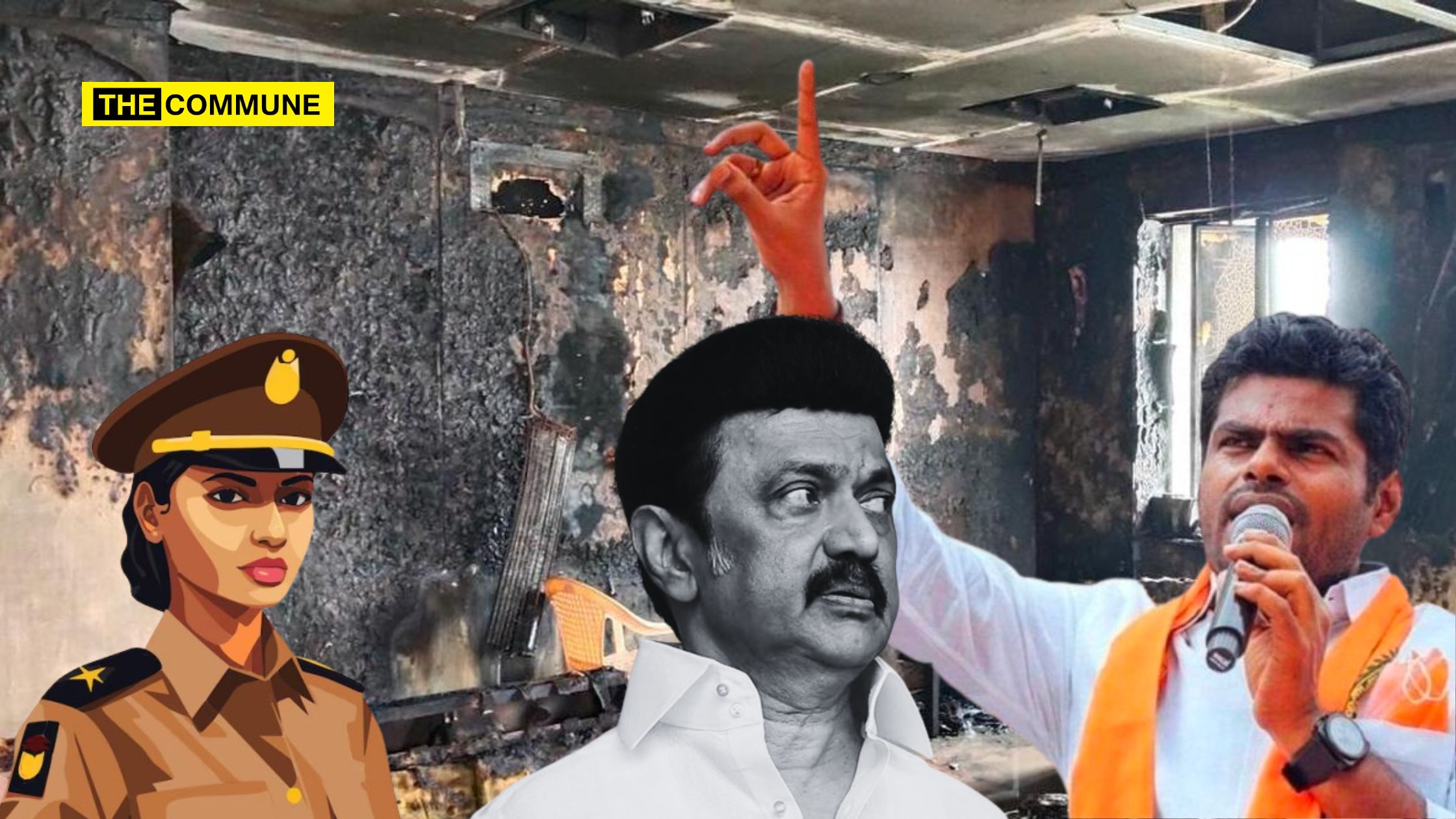
DMK Minister Ponmudi Attacked With Mud By People In Villupuram, BJP TN Chief Annamalai Calls It A “Gentle Reminder About What Is On The Offing”

DMK Minister Ponmudi Attacked With Mud By People In Villupuram, BJP TN Chief Annamalai Calls It A "Gentle Reminder About What Is On The Offing"

A group of individuals attacked DMK Minister Ponmudi with mud during his visit to Villupuram on Wednesday, 3 December 2024, to distribute relief materials and assess the flood situation caused by Cyclone Fengal. They threw mud at him, staining his white shirt. The incident quickly went viral on social media, with initial reports suggesting that locals expressed anger at the Minister’s presence.

The mud-throwing took place after Ponmudi arrived in Villupuram as part of the state government’s relief efforts following Cyclone Fengal, which struck the region on 30 November 2024. The cyclone caused widespread damage in Villupuram, breaking over 10 lakes, washing away culverts and roads, and submerging thousands of houses. Agricultural lands were also severely impacted, displacing many people.

Following the cyclone’s destruction, Chief Minister Stalin and Deputy Chief Minister Udhayanidhi Stalin visited flood-affected areas like Marakkanam to provide relief. Ponmudi, along with other officials, visited Iruvelpattu on the Villupuram-Trichy National Highway, where floodwaters severely damaged roads. It was during this visit that his car was blocked by angry residents who were frustrated with the delayed response.

The protesters, who had staged a road blockade, voiced their displeasure with the government’s relief efforts and questioned why officials had not arrived sooner. Police intervened, urging them to clear the blockade. Ponmudi and other officials briefly inspected the affected areas before leaving under pressure.

However, police sources alleged that the assailant was not a local resident but Rama alias Ramakrishnan, a 24-year-old BJP sympathizer. Rama’s father, Ramachandran, is reportedly connected to the BJP, and his sister, Siddhi Vijayarani, is associated with the party. Authorities are investigating whether the incident was politically motivated.

The incident sparked political reactions, with opposition parties criticizing the DMK government’s handling of the crisis. BJP leader Annamalai condemned the government’s negligence, and wrote on his official X handle, “This is the current state of affairs in Tamil Nadu. The CM and the Deputy Chief Minister were busy taking photos in the streets of Chennai while the city received very little rain and did not bother to keep track of the happenings beyond Chennai. The DIPR behaves like the media arm of the DMK and is busy promoting the Gopalapuram scion to divert people from the harsh realities of the flood, a clear sign of the government’s neglect. Today, the public’s frustration reached a boiling point as a Corrupt DMK Minister, Thiru Ponmudi, visited a flood-affected area and was met with a barrage of mud. 

He further criticized the DMK for failing to address the public’s growing frustration, evident in the mud-throwing incident, and warned, “This is a gentle reminder for DMK about what is on the offing.”

As the investigation into the mud-throwing continues, the ongoing flood relief efforts in Tamil Nadu remain a critical focus.

(With inputs from ABP Nadu)

Subscribe to our channels on TelegramWhatsApp, and Instagram and get the best stories of the day delivered to you personally.

“Sanghi Means Friend, Dravidian Means Thief”, Says NTK Co-ordinator Seeman

"Sanghi Means Friend, Dravidian Means Thief", Says NTK Co-ordinator Seeman

Seeman, the coordinator of the Naam Tamil Party, addressed reporters at Chennai airport with a series of pointed remarks on various political and social issues, including passionately defending the term “Sanghi” as a historical symbol of friendship, while slamming the DMK for its cozy ties with the central government.

Discussing the recent tragedy in Thiruvannamalai district, where seven people lost their lives, Seeman highlighted the severity of the incident and the delayed response of the TN government. He emphasized the changing climate patterns, stating, “No one understands global warming here. Monsoons are disappearing, replaced by unpredictable, heavy, and stormy rains. If we aren’t prepared to face these challenges, we’ll continue to lament.”

Responding to questions about action against H. Raja, Seeman criticized the government’s approach, asking, “What action has been taken against those who spread defamatory words on websites? Or is the government not aware of them?”

Responding to a question about Adani’s visit, he provocatively stated that when Adani comes to Tamil Nadu, people should be challenged about who he’s meeting. “When you ask him who he came to see, you should answer. Instead, you answer about ‘big leaders, opposition leaders’ – he is not a person. There is no need to answer to all of them. He has no job.”

Seeman was particularly passionate about the term ‘Sanghi’. “If anyone calls me Sanghi personally, I’ll remove my shoes and beat them,” he declared. He argued that historically, Sanghi means friend, and challenged the DMK’s interactions with central government leaders, asking, “You bring central government ministers to release currency, you go from Chennai to Delhi to meet and talk to central government leaders, so aren’t all those belonging to DMK Sanghi?”

He further elaborated on his controversial terminology, stating, “Sanghi means friend. Dravidian means thief. You’re labelling Tamil people and the Tamil race as Dravidians.” He mentioned supporting Rajinikanth’s daughter’s sentiment about the term Sanghi.

Seeman also raised suspicions about the Income Tax Department’s investigations, questioning why only the Tamil Nadu Chief Minister was being targeted. He criticized the government’s compensation policies for different types of deaths, sarcastically remarking, “What kind of government is this that gives ₹2 lakh to those who die while on government duty, ₹5 lakh to those who were stabbed to death, ₹10 lakh to those who died after consuming illicit liquor? Will they do it only if we demand it? The only dignified death in this country is to die after consuming illicit liquor.”

Reflecting on political inclusivity, he critiqued both current and past governments. He recalled being invited to an all-party meeting during AIADMK’s rule and challenged the secular credentials of the government, questioning the reservation policies for Muslims and Christians.

(With inputs from News18)

Subscribe to our channels on TelegramWhatsApp, and Instagram and get the best stories of the day delivered to you personally.

“Brahmins Have More Autistic Kids, Community Should Be Banned”: Dravidianist Kovai Ramakrishnan’s Hate Speech On Brahmins

Dravidianist Kovai Ramakrishnan's Hate Speech On Brahmins.

In yet another hate speech against the Tamil Brahmins in Dravidian Tamil Nadu, Kovai Ramakrishnan, General Secretary of Thanthai Periyar Dravida Kazhagam, made casteist remarks at a recent event. He targeted women who supported actress Kasthuri Shankar’s plea for bail, citing her special needs child with autism. He even called on the Tamil Nadu government to ban the community, blaming their vegetarian diet for the birth of such children. This alarming rhetoric was both hateful and unfounded.

Thanthai Periyar Dravida Kazhagam organized a meeting on 26 November 2024, to commemorate the Constitution Incineration Movement led by EV Ramasamy Naicker (known as Periyar). During this event, Kovai Ramakrishnan, General Secretary of the organization, made derogatory comments targeting the Brahmins. From the outset of his speech, it was clear that Ramakrishnan could not tolerate the sudden unity of Brahmins, who, after years of being attacked, had come together under the Indu Makkal Katchi to make demands for their rights.

Actress Kasthuri, who spoke at the meeting, took the opportunity to criticize both the Dravidian ideology and DMK government, also made controversial remarks about the Telugu community. In response, the DMK government pursued her aggressively, almost as if she were a fugitive. Many people rallied in her support, including Kamatchi Swaminathan, the All-India Vice President of Saksham—a prominent organization dedicated to the differently-abled and the wife of Hon’ble Justice GR Swaminathan of the Madurai Bench of the Madras High Court—who made an emotional appeal for Kasthuri’s release on bail.

Unable to tolerate the support for Kasthuri, Kovai Ramakrishnan, peddled narrative stating, “In this very Chennai, last month, we saw a “Paapathi” (a derogatory term for Brahmin women) shouting slogans. As she shouted, it caused a stir, and the Brahmin association raised their voices that ‘We have been affected’. Then, this Paapathi spoke, making disparaging remarks about all non-Brahmins, which led to her arrest by the police. The police had arrested the paapathi, what’s her name? Kasthuri, they have taken into custody.  Now, have you noticed where the anger is coming from? Who is speaking out on her behalf? It’s the wife of a justice. Yes, the wife of a judge is voicing support for this Paapathi. What did she say? She argued that (Kasthuri) should be granted bail because she has a child with autism.”

Then, peddling an unfounded narrative on medical terms, Kovai Ramakrishnan echoed the hateful rhetoric of Hitler’s views on Jews, calling for a government ban on Brahmins. He said, “If we research about autism, it is a significant issue. If you look at where children with autism are more prevalent, it’s in the ‘Paapan’ (a derogatory term for Brahmin men) families. Autism is more common in Agraharams. It’s truly a pitiful life for those children. We are not mocking or making fun of it, but why is this community producing such children? The government should seriously investigate this and ban the ‘Paapan’ families. Why? Because they are producing children with stillbirths/premature births.”

Ramakrishnan then went on to offer his reasoning for the prevalence of autism, which was nothing short of a mockery to the scientific community. He claimed that autism in children was caused by dietary practices such as vegetarianism and further suggested that other communities had fewer cases because they consumed meat, particularly beef. This baseless and absurd statement came from Ramakrishnan, the General Secretary of Thanthai Periyar Dravida Kazhagam, who prided himself on being a so-called rationalist.

Subscribe to our channels on Telegram, WhatsApp, and Instagram and get the best stories of the day delivered to you personally.

US-Funded OCCRP – A Front For Govt Propaganda Masquerading As Journalism? Mediapart Expose Reveals Shocking Truths

US-Funded OCCRP - A Front For Govt Propaganda Masquerading As Journalism? Mediapart Expose Reveals Shocking Truths

A damning investigation by French media outlet Mediapart has revealed that the Organized Crime and Corruption Reporting Project (OCCRP) is far from the independent journalistic entity it claims to be. Instead, it is heavily funded and influenced by the US government, with nearly half of its budget sourced from agencies like the US Department of State and USAID. Since its founding in 2007, OCCRP has received approximately $47 million from US government sources, which exert substantial control over its operations, including veto power over key personnel appointments.

A Propaganda Machine Under The Guise Of Journalism

Mike Henning, a senior USAID adviser, has openly described OCCRP asone of the best achievementsof the agency, further affirming its alignment with US geopolitical objectives. OCCRP’s reporting patterns reinforce this view, focusing almost exclusively on nations adversarial to US interests, such as Russia, Venezuela, and Malta, while carefully avoiding criticism of the US itself. For example, OCCRP received a $173,324 grant to investigate corruption in Venezuela, a known adversary of Washington. This selective targeting raises serious questions about the organization’s impartiality.

Role In India

In India, OCCRP has faced backlash for its contentious reports, including those accusing the government of misusing Pegasus spyware to surveil journalists and for its repeated hit pieces against the Adani Group in 2023 and 2024. Critics, including the Adani Group and Mauritius-based fund 360 One, dismissed these reports as baseless and aimed at destabilizing markets. The Supreme Court of India also ruled that such third-party reports lacked credibility and could not influence ongoing investigations.

Rahul Gandhi, a key leader of the Congress party, has been accused of amplifying OCCRP’s narratives for political gain. Gandhi frequently used OCCRP reports to disrupt parliamentary sessions and influence public discourse. His ties to individuals like Shalil Shetty, a former vice president at a Soros-funded NGO, further deepen his connection to OCCRP’s network. Critics argue that Gandhi’s actions align with broader foreign-driven agendas to undermine India’s sovereignty.

Links To Controversial Donors

Apart from its government funding, OCCRP is supported by politically charged donors, including George Soros Open Society Foundations, the Rockefeller Brothers Foundation, and the Ford Foundation. These affiliations, combined with OCCRP’s track record, paint a picture of an organization more aligned with its benefactors’ interests than with unbiased journalism.

USAID’s History Of Interference

The revelations about OCCRP must be viewed in the broader context of USAID’s controversial history of political interference. The agency has been implicated in supporting opposition movements and orchestrating regime changes in countries like Nicaragua and Venezuela, blurring the line between humanitarian aid and political manipulation. OCCRP’s investigative priorities closely mirror US foreign policy objectives, further raising concerns about its role as a tool for the so-calledDeep State.”

Role In Trump Impeachment

The OCCRP played a notable role in the first impeachment of then-President Donald Trump through its investigative reporting on Rudy Giuliani’s business dealings in Ukraine. These reports were referenced four times in the whistleblower complaint that triggered Trump’s impeachment proceedings.

OCCRP, which collaborates with over 50 major media outlets, including The New York Times and The Washington Post, received scrutiny for being predominantly funded by U.S. government entities, such as the State Department and USAID. Between 2013 and 2024, 52% of OCCRP’s expenditures were taxpayer-funded, totaling at least $47 million since its inception in 2008.

OCCRP co-founder Drew Sullivan has maintained that an editorial firewall exists between OCCRP and its funders. However, an investigation by Drop Site News revealed conditions tied to this funding, including the U.S. government’s ability to veto senior editorial appointments. When confronted with evidence questioning OCCRP’s credibility, Sullivan resorted to dismissing critics as foreign agents, such as labeling a journalist aRussian asset.This response has further raised questions on OCCRP’s credibility and highlighted its defensive approach to criticism.

Critics, including Lowell Bergman, who resigned from OCCRP’s board over concerns about U.S. government involvement, argue that such funding compromises journalistic independence.

Amplifying Propaganda in India

In addition to Rahul Gandhi, alleged journalists like Ravi Nair and certain opposition members have been seen sharing content from OCCRP, frequently amplifying its narratives against Indian institutions and corporate entities.


Critics argue this demonstrates a coordinated effort to leverage foreign-funded propaganda for domestic political gains.

Mediapart’s investigation exposes OCCRP as a propaganda tool disguised as independent journalism. Its dependence on US government funding, selective reporting, controversial donor affiliations, and inability to defend its credibility point to a broader agenda of advancing Western geopolitical interests.

(With inputs from OpIndia)

Aritapatti Tungsten Mine: Opposition Leaders Slam DMK’s Hypocrisy

Aritapatti Tungsten Mine: Opposition Leaders Slam DMK’s Hypocrisy

Opposition leaders in Tamil Nadu slammed Chief Minister MK Stalin over his letter to PM Modi opposing the Nayakkarpatti tungsten mining project, accusing the DMK of hypocrisy for supporting the project initially but now shifting blame to the Centre after public backlash.

On 29 November 2024, Chief Minister MK Stalin sent a letter to Prime Minister Narendra Modi, calling for the revocation of mining rights granted to Hindustan Zinc Limited for the Nayakkarpatti Tungsten block. The move was widely seen as a political manoeuvre to shift blame onto the central government. In response, opposition parties in Tamil Nadu united to criticize the DMK’s hypocrisy, pointing out the party’s initial support for the tungsten mining project. They emphasized that the central government had granted permission based on the DMK’s own interest in the matter, condemning the party’s inconsistent stance.

K Annamalai – BJP

Tamil Nadu BJP Chief K Annamalai, via his X official account, slammed the DMK government’s hypocrisy, stating, “On 18 October 2023, according to a report published in The New Indian Express, a senior official of the Tamil Nadu Mineral Resources Department said that tungsten metal has been discovered in Madurai and that the Tamil Nadu government has sought permission from the Central Government to set up a mine for it.

According to a statement released by the Central Government’s Department of Mines yesterday, the specifications given by the Tamil Nadu government before announcing the contract for setting up a mine in the area where tungsten was discovered in Madurai in February 2024 were implemented and that the Tamil Nadu government did not contact the Central Government regarding this contract or to object to setting up a mine for ten months from the date of the contract announcement to 7 November 2024, when the contract was awarded,” he explained.

It was the DMK government that requested the Central Government to set up a tungsten mine in Madurai. It was the DMK government that gave the specifications for announcing the mining contract. The DMK government, which had been hiding this from the public for the last ten months, is now acting as if they do not know anything about it and is now protesting it,” he blamed.

In the same Madurai Arittapati area, the Tamil Nadu government’s TAMIN company has obtained a lease for 30 years from 2008 to construct a granite mine on 47.37 hectares of land, and now TAMIN company has returned its lease license, and the DMK government has informed the central government that out of a total land area of ​​20.16 square kilometers in the Arittapati and Meenakshipuram villages of Madurai, 1.93 square kilometers has been declared as a biodiversity heritage site. Chief Minister Stalin is now trying to re-enact the same drama he staged about ten years ago, claiming that he had unknowingly signed a contract to extract methane from the Delta region. The DMK’s drama will no longer be tolerated by the public,” he finally said.

Anbumani Ramadoss – PMK

PMK Chief Anbumani Ramadoss criticized the Tamil Nadu government, questioning, “Why is the Tamil Nadu government playing a double game regarding the Aritapatti tungsten mine issue? People will not be fooled by the drama of pinching the child while rocking the cradle!”

He accused the state government of hypocrisy, pointing out that, “The Central Government has exposed the double game of the Tamil Nadu government in the issue of granting permission to set up a tungsten mine in areas covering an area of 2015 acres, including Aritapatti in Melur taluk of Madurai district. The people of Tamil Nadu will not believe the drama of the Dravidian model government, which is giving all its support to the construction of a tungsten mine on one hand and opposing it on the other, by pinching the child and rocking the cradle.”

The Central Mines Department has released some details about the project, after Tamil Nadu Chief Minister M.K. Stalin wrote to the Prime Minister, stating that the construction of a tungsten mine in the Aritapatti area can never be allowed and that the project should be canceled. The Central Government has said, “Some inputs were received from the Tamil Nadu government before the auction of the Aritapatti tungsten mine. The Tamil Nadu government’s TAMIN company has handed over the lease for the granite mine covering an area of 47.37 hectares in the area to facilitate the auction of the tungsten mine. From the start of the auction process last February until the announcement of the results on 07.11.2024, there was no objection to the tungsten mine. There was no request from the Tamil Nadu government to cancel the auction of the tungsten mine,” he said.

The Central Government has already informed the Tamil Nadu government about the details of the tungsten mine being put up for auction. The Tamil Nadu government did not raise any objection at that time. Furthermore, the Tamil Nadu government had sought the Central Government’s permission last year to set up a tungsten mine in collaboration with private companies. Thus, the Dravidian Model Government, which supported the setting up of a tungsten mine in Aritapatti in every way, is now acting as if it is opposing it after facing strong opposition from the people,” he added.

Whenever DMK comes to power, it will prioritize its own interests over the interests of the people. There are many examples of the betrayals committed by the Dravidian model government, such as allowing methane gas exploration in Cauvery irrigation districts and approving the expansion of the Sterlite plant in Thoothukudi. The DMK government is now committing the same betrayal in the Aritapatti tungsten mine issue. The Central Government should respect the sentiments of the people of Aritapatti and abandon the plan to set up a tungsten mine there. @PMOIndia @CMOTamilnadu,” he finally said.

Edappadi K Palaniswami – AIADMK

Previously, on 29 November 2024, speaking to reporters in Salem, AIADMK General Secretary Edappadi K Palaniswami claimed, “Now, after facing opposition from the public, the DMK is objecting to the project. Chief Minister MK Stalin is simply playing a political game by sending a letter to the Union Government opposing it.”

He also shared on his official X account, stating, “Newspaper and website reports indicate that the Vidya DMK government had sought permission to set up a tungsten mine in Madurai district in October 2023. Why did the “pen warrior” @mkstalin, who wrote a letter requesting cancellation of the permission, hide the fact that it was his government that had sought permission? The DMK, which has brought the NEET exam and is pretending to oppose it, using the same formula to deceive the people of Melur. The DMK government has made a hidden effort behind the screens to exploit the people by constructing tunnels and taking away their livelihoods. The people will teach them a suitable lesson in due time for this letter-play and drama-based deception that is currently being carried out.”

What Actually Happened?

According to the old report, the DMK government had sought approval from the Centre to move forward with the tungsten mining project, only to face significant local opposition. In response, CM Stalin appears to be playing politics with the issue, rather than pushing ahead with the mining plans.

After identifying significant deposits in the region, the state’s Department of Natural Resources requested permission from the Union Government to mine two key minerals, tungsten and molybdenum. These minerals are crucial for various industrial applications. A senior government official acknowledged the local community’s concerns and assured that the State had sought the Central Government’s approval in light of these socio-economic issues.

The DMK-led Tamil Nadu Government is considering joint ventures to develop these mineral resources. Molybdenum is seen as vital for establishing Tamil Nadu as a hub for hydrogen production, while tungsten has potential uses in energy storage. According to official sources, India’s total molybdenum ore reserves stand at approximately 19.29 million tonnes, with Tamil Nadu holding the largest share—around 9.97 million tonnes. This mineral is highly prized for its use in missile and aircraft components, as well as in the nuclear industry.

Molybdenum is also an essential alloying agent in steel, cast iron, and superalloys, improving strength, corrosion resistance, and wear durability. It is increasingly in demand for use in the automotive industry to produce lighter, more fuel-efficient vehicles. Additionally, the metal is being explored as a potential raw material in the production of hydrogen electrolysers.

Tungsten, a rare and valuable mineral, is found in Madurai district. The Union Government has recognized its strategic importance due to its uses in high-capacity energy storage, particularly in lithium-tungsten oxide batteries. These batteries offer greater stability and energy storage potential, positioning tungsten as a critical resource for future technological advancements.

Subscribe to our channels on Telegram, WhatsApp, and Instagram and get the best stories of the day delivered to you personally.