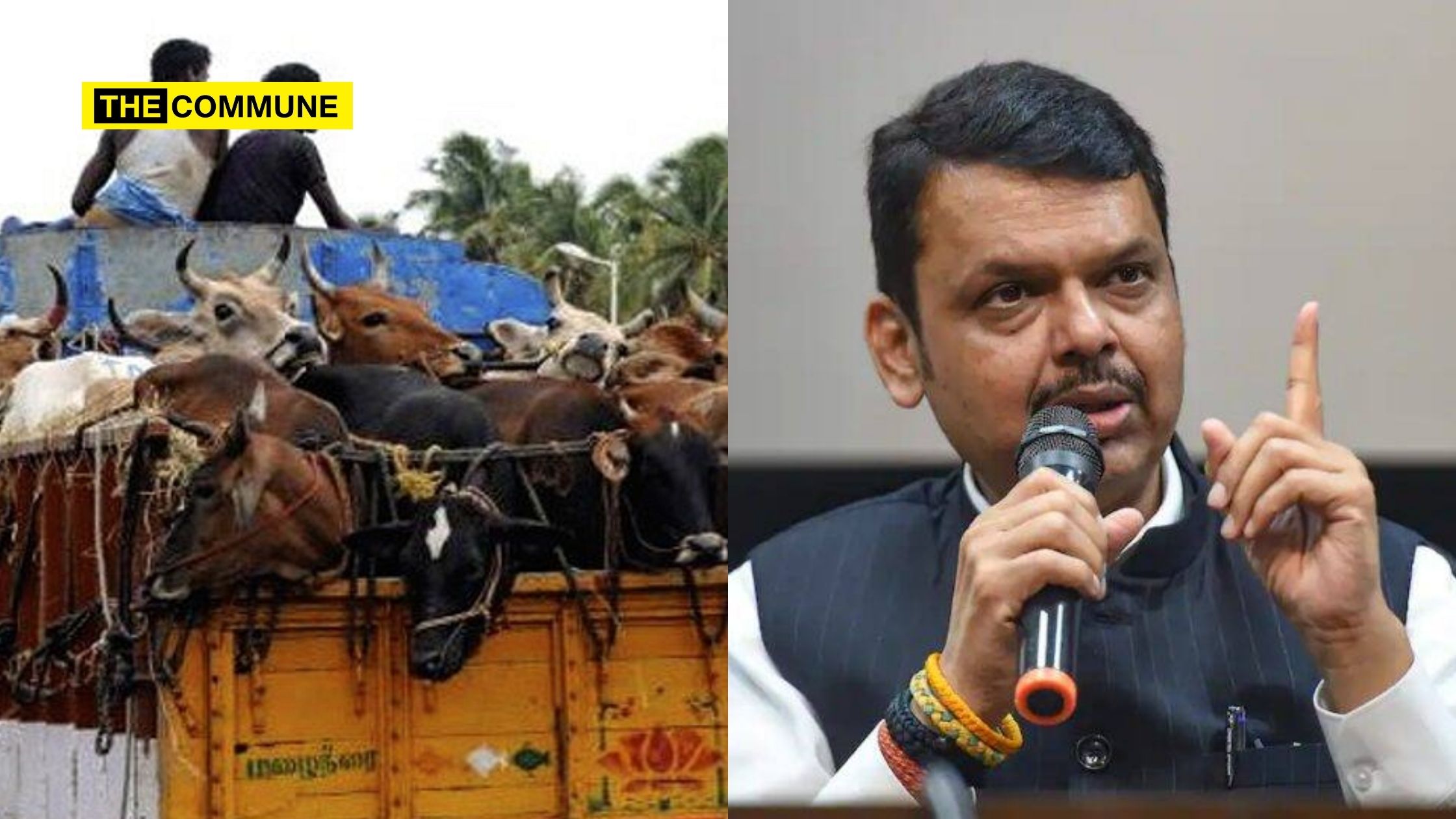
Maharashtra Chief Minister Devendra Fadnavis on Thursday warned that action will be taken against those found repeatedly involved in committing crime of cow slaughter.
He announced in the Assembly that a case will be registered under the Maharashtra Control of Organised Crime Act. “According to the law, cow slaughter is a crime. However, it has been observed that cow slaughter is being committed repeatedly. Those who repeatedly commit such crimes will be taken action under the Maharashtra Control of Organised Crime Act,” he said in his reply to a query raised by Congress legislator Sangram Jagtap.
Minister of State for Home (Rural), Pankaj Bhoyar, said, “On November 2, 2024, a dispute broke out between two communities in Shrigonda of Ahilyanagar district. This dispute later turned into a fight. As soon as the information about this incident was received, the police reached the spot. The police also admitted the injured in the fight to the hospital. Unfortunately, one person who was admitted to the Khasi Gi Hospital in Ahilyanagar died in this. It does not appear that the police showed any kind of delay in this case.” The police took immediate action in this case and arrested the criminal.
However, he was released on bail from the court. Minister Bhoyar also said that strict action will be taken in the cases in Shrigonda city and no one will be released. Meanwhile, State Agriculture Minister Manikrao Kokate in the Assembly said that if there is any delay in the insurance company’s obligations under the crop insurance scheme, legal action will be taken against the concerned insurance company. He was responding to a query raised by BJP legislator Shweta Mahale.
“The Pradhan Mantri Fasal Bima Yojana is a scheme of the Central government and as per the guidelines of the Central government, this scheme is being implemented in the state from the 2016 Kharif season. The Prime Minister’s Crop Insurance Scheme has been implemented in Buldhana district through the Agricultural Insurance Company of India. In Buldhana and Chikhali talukas, farmers have insured 1.26 lakh hectares through 1.45 lakh insurance applications in 2023 Kharif season. The area is covered under insurance. As of March 18, 2025, 26,488 insurance applications worth Rs 21.17 crore were approved, of which 16 were approved,” said Minister Kokate.
The Minister also said that a compensation of Rs 8.80 crore has been distributed for 457 insurance applications. The remaining 10,311 insurance applications are pending for compensation of Rs 12.37 crore. He added that the amount of crop insurance compensation has exceeded 110 per cent of the accumulated insurance premium. The state government has initiated the process of providing funds to the insurance company for compensation of losses above 110 per cent, he said.
–IANS
Subscribe to our channels on Telegram, WhatsApp, and Instagram and get the best stories of the day delivered to you personally.
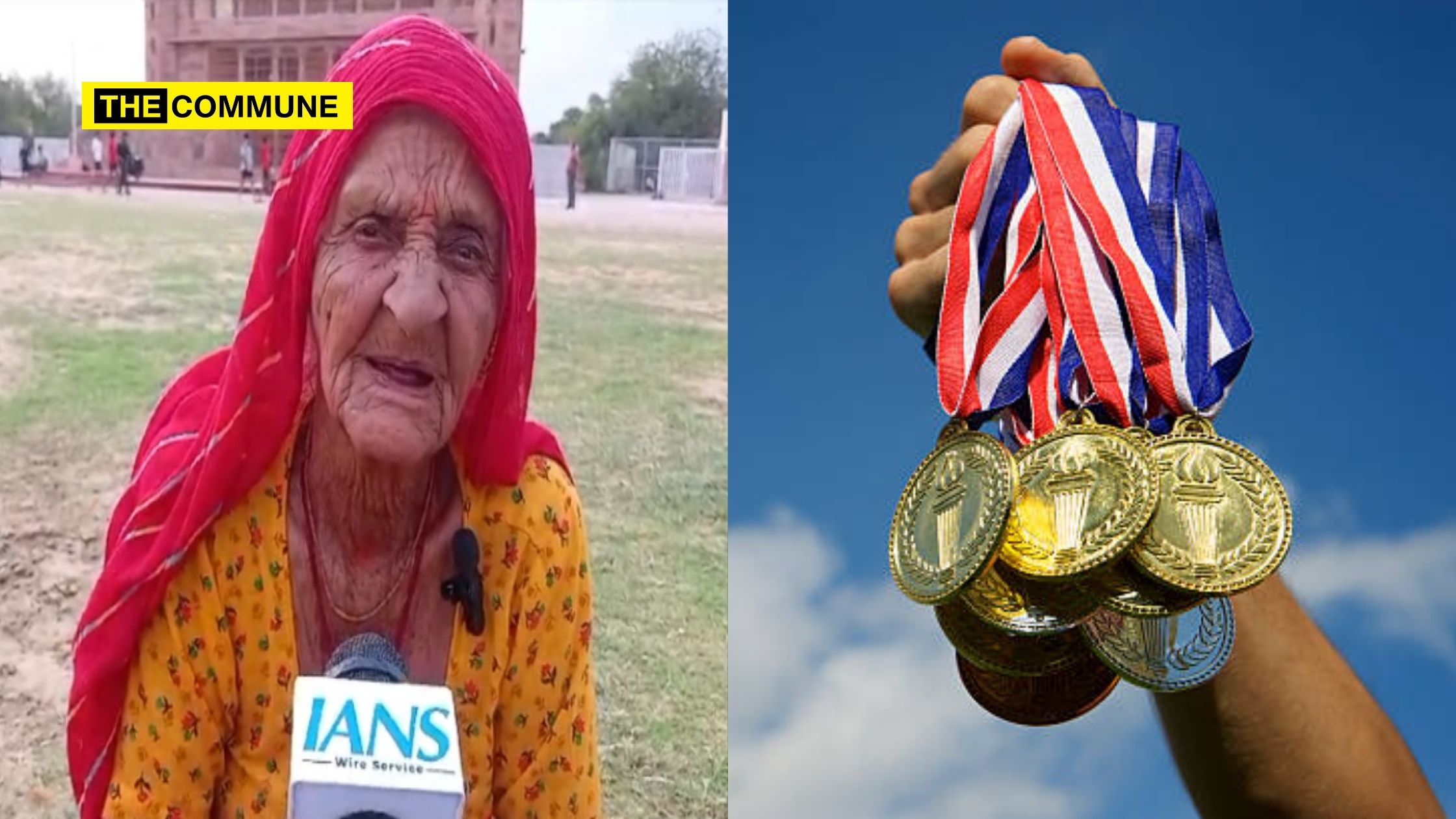
Pana Devi Godara, a 93-year-old athlete from Bikaner, has defied age and proven that determination knows no boundaries. Recently, at the 45th National Masters Athletics Championship in Bengaluru, Pana Devi won gold medals in multiple events, including Shot Put, 100-meter sprint, and Discus Throw, making the entire nation proud.
Pana Devi’s significant achievements have brought her into the spotlight. The achievements that she made showcased her unwavering spirit and dedication to athletics, irrespective of her advanced age. Now, Pana Devi’s next goal is to bring home a medal from the World Championship in Sweden this August.
Moreover, Pana Devi has been selected also to represent India at the Asian Master Athletics Championship to be held in Indonesia in September. Talking to IANS, nonagenarian Pana Devi has expressed joy over her upcoming participating in athletics competition in Sweden and Indonesia.
She said that she is quite excited to take part in the games there. She also shared her memories about winning medals in the Bengaluru event. Pana Devi, a resident of the Chaudhary Colony in Bikaner, combines her passion for athletics with daily responsibilities at home. She takes care of her cows and buffaloes every day working hard in this regard. She also maintains a strict fitness regimen that has contributed to her extraordinary success.
Pana Devi’s disciplined lifestyle and relentless hard work have played a crucial role in her achievements. Winning a medal at this age may be a great success for Pana Devi, but it is also an inspiration to all, especially women. The message is that women and men should focus on fitness and make positive changes in their lives.
At 93, Pani Devi stands as a beacon of strength and determination, proving that age is no barrier when it comes to pursuing one’s dreams. This achievement is a matter of pride not only for Bikaner but for the entire country, and Pana Devi’s story continues to inspire many.
–IANS
Subscribe to our channels on Telegram, WhatsApp, and Instagram and get the best stories of the day delivered to you personally.
The Adani Group’s defence company, Adani Defence and Aerospace, on Thursday, released the short film “Hifaazat Ki Hifaazat Mein” as a tribute to the country’s soldiers.
The film begins with a mother and child, symbolising the need for one’s own hands and eyes for protection, highlights how a mother protects her child, just as soldiers protect the nation, and goes on to emphasise India’s progress towards self-reliance in defence manufacturing. It conveys that this advancement is meant to ensure peace and security.
It then explains how this philosophy has led to the strengthening of India’s defence sector, blending new learnings with experience. The film describes this protection as essential for peace, just like the embrace of a mother. The message of self-reliance is also a key theme in the film, stating that what India builds is truly its own.
Sharing the film on social media platform X, Adani Defence and Aerospace wrote that innovation is driven by curiosity, experience, and courage. The company emphasised its commitment to equipping soldiers with advanced technology, as protecting those who safeguard the nation is its promise. Jeet Adani, Director at Adani Airports Holdings Limited (AAHL), also shared the film on X, stating that there is no greater duty than protecting those who protect the nation.
He added that “Hifaazat Ki Hifaazat Mein” is a tribute to India’s defenders and reflects the collective commitment to a strong and secure nation. “There’s no greater duty than protecting those who protect us. #HifaazatKiHifaazatMein is our tribute to India’s defenders, reinforcing our shared commitment to a stronger, secure nation,” he said.
Earlier, during a visit to the Adani Defence and Aerospace plant in Kanpur, Adani Group Chairman Gautam Adani had stated that his company aims to push new boundaries to contribute to a stronger and self-reliant India. Adani Defence and Aerospace is among the leading companies in the country’s defence and aerospace manufacturing sector. The company is dedicated to making India a global hub for defence production.
–IANS
Subscribe to our channels on Telegram, WhatsApp, and Instagram and get the best stories of the day delivered to you personally.
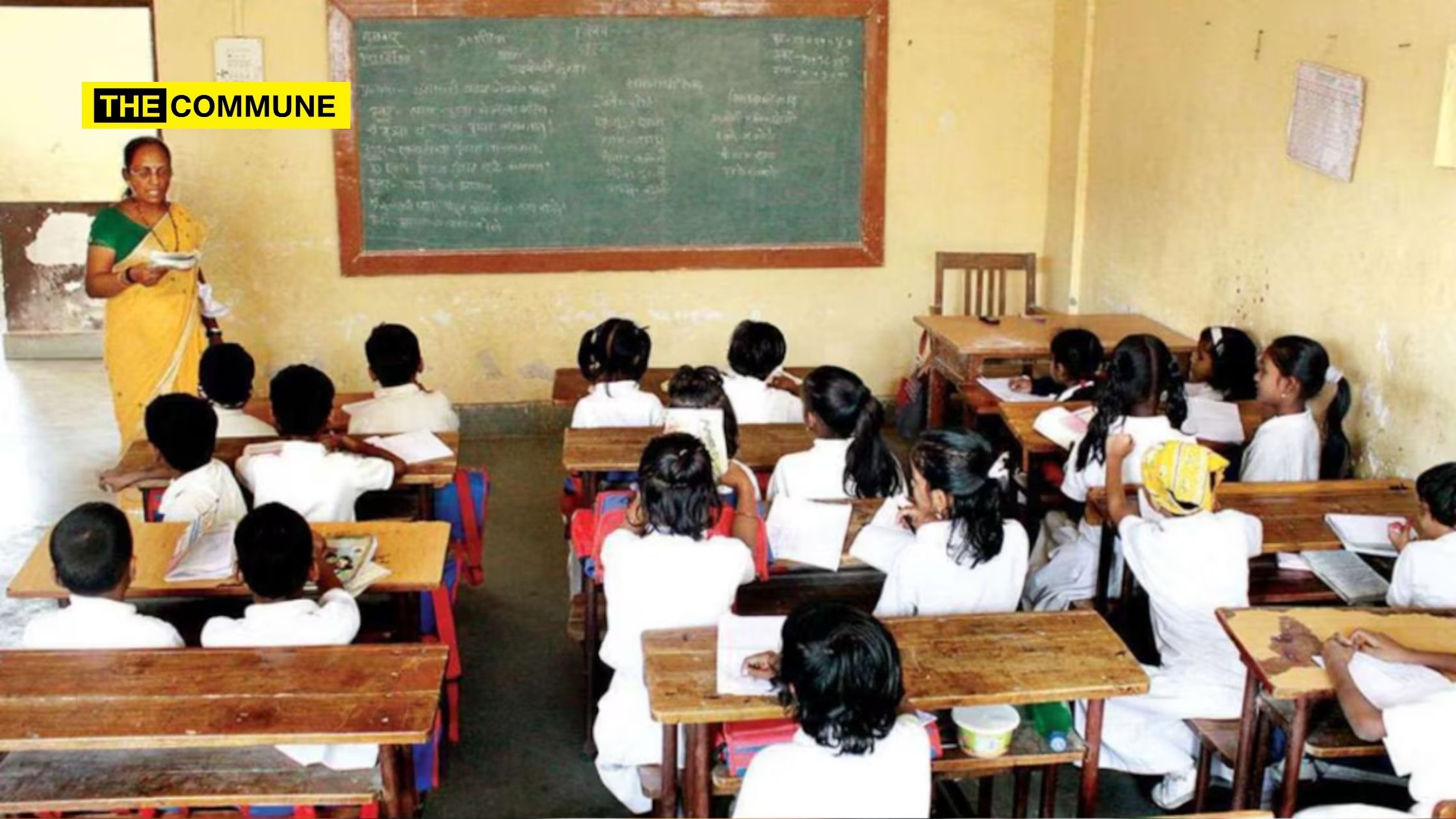
Maharashtra Education Minister Dadaji Bhuse announced on Thursday that the Central Board of Secondary Education (CBSE) pattern will be implemented in government schools across the state from the academic year 2025-26. Textbooks under CBSE will be made available in Marathi by April 1.
The Education Department has issued instructions to the schools governed by the state education boards to implement the CBSE curriculum, the Minister told the Legislative Council. The minister replied to the question raised by the BJP legislator Prasad Lad. He wanted to know whether the Steering Committee has approved the curriculum plan of the CBSE especially when the implementation of the National Education Policy for schools from class 3 to 12 is underway in the state.
“CBSE pattern will be implemented from the academic year 2025-2026 and the government has taken this decision with an aim of improving the quality of students in the state,” said the minister.
His announcement comes days after the Steering Committee had approved the State Curriculum Framework in relation to the school education department. Chief Minister Devendra Fadnavis had reviewed the work of all the departments including the school education department for the next 100 days. Accordingly, he had expressed confidence in the meeting of the School Education Department that Maharashtra would once again come to the forefront of school education.
The Chief Minister directed that the Education Department should take steps for quality education. He has also directed the School Education Department about the adoption of the CBSE pattern in the state government schools by making necessary changes.
–IANS
Subscribe to our channels on Telegram, WhatsApp, and Instagram and get the best stories of the day delivered to you personally.
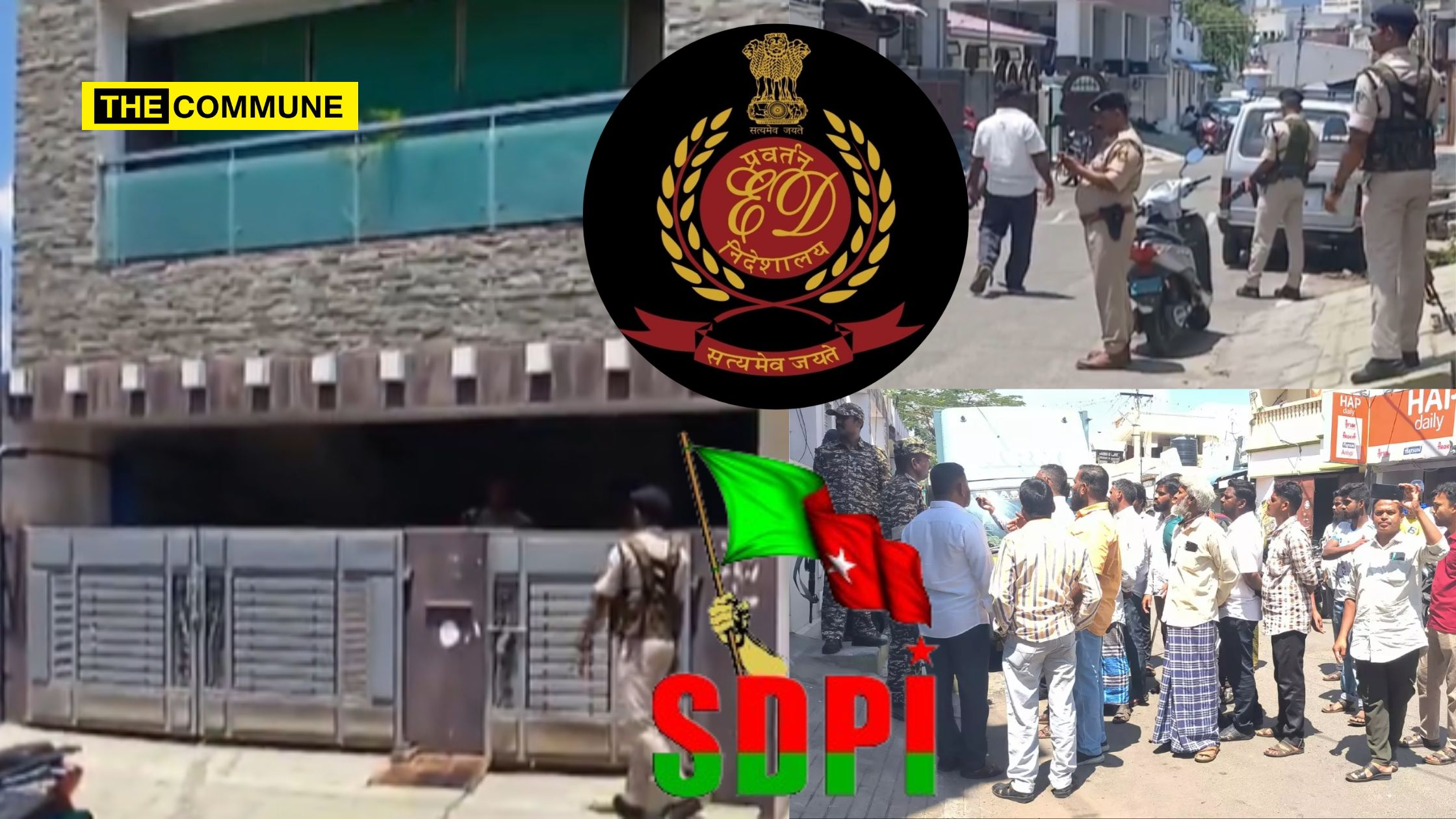
The Enforcement Directorate (ED) conducted searches across multiple states on 20 March 2025, as part of its money laundering investigation against the Social Democratic Party of India (SDPI), the political wing of the banned terrorist organization Popular Front of India (PFI).
Raids were carried out under the Prevention of Money Laundering Act (PMLA) at various locations, including Mettupalayam, Coimbatore, Arcot, and Vellore in Tamil Nadu; Bhilwara and Kota in Rajasthan; Kolkata in West Bengal; and Kottayam and Palakkad districts in Kerala.
In Mettupalayam, Coimbatore, the ED searched two locations, one of which was linked to an SDPI party member, following suspicions of large-scale money laundering.
One of the individuals under scrutiny is Rajik, a resident of Annaji Rao Road Extension in Mettupalayam, Coimbatore, who operates an iron shop and serves as the Coimbatore North District Secretary of SDPI. ED officials, assisted by CRPF personnel, are currently conducting searches at his residence. Similarly, the agency is investigating the residence of Reela, who owns a fruit shop near the Mettupalayam bus stand.
These raids follow the recent arrest of SDPI president Moideen Kutty K, also known as MK Faizy, on 3 March at Indira Gandhi International Airport. Authorities claim that SDPI continues to advance the ideology of the banned PFI and receives funding from it.
SDPI Acting as a Front for PFI?
The central government banned PFI and eight associated organizations under the Unlawful Activities (Prevention) Act (UAPA) on 28 September 2022, citing concerns over radicalization and terror financing. The crackdown, led by the ED and the National Investigation Agency (NIA), resulted in multiple arrests and the seizure of alleged incriminating materials. The government claimed that PFI, with a significant presence in Kerala, was involved in activities that posed a threat to national security.
Founded in 2009 and registered as a political party with the Election Commission of India, SDPI has been accused by the ED of functioning as a front for PFI. The agency alleges that SDPI was both funded and controlled by PFI, with a strong interconnection between the two organizations. ED claims that PFI played a direct role in SDPI’s operations, including policymaking, election campaigns, public outreach, and mobilizing cadres.
According to the ED, SDPI served as a cover for PFI’s alleged anti-national activities while outwardly presenting itself as a social welfare organization. The investigation is ongoing, with officials examining financial links and organizational overlaps between SDPI and PFI.
2018 ‘Periyar’ Award-winning Tamil director Gopi Nainar has announced that he is returning his award, accusing Dravidar Kazhagam (DK) and ‘Periyar’ists of hypocrisy. He pointed out that while the organization praise Dalit rights in films, they vilify and publicly insult those who fight for them in real life. Nainar also called out Dravidar Kazhagam for its dictatorial and fascist stance, stating that when its ideology and activism are questioned democratically—especially by a Dalit activist—it responds with hostility rather than open discussion.
In a social media post, Gopi Nainar expressed his frustration, stating, “I am being slandered in public by Periyarist thinkers for demanding housing for Dalits and preventing the encroachment of their lands. If I oppose and question an organization that claims to be democratic in a democratic way, it confronts me with a dictatorial mindset. Such environment makes me fear for my life to live among people with this dictatorial mindset. I believe this is the condition of Dalits all over Tamil Nadu. When a Dalit raises political questions with a democratic mindset, it enrages Periyarist thinkers and Dravidian ideologues in Tamil Nadu. This is nothing but dictatorial mindset.”
He expressed concern that taking such a stance against them could even lead to his murder in the future and stated, “In this context, as I am who is being severely insulted today may also be killed by them in the future. There is no big difference between the massacre of intellectuals, social activists, artists and the murder that is happening all over India and the murder that will happen to me in the future.”
He further compared his situation to the targeting of intellectuals, activists, and artists across India. Referring to his film Aram, he stated that the movie highlights how the government does little to help the oppressed. The Dravidar Kazhagam had praised the film and awarded him the Thanthai Periyar Award, but now, when he actively fights for the rights of the oppressed, the same group treats him as an enemy.
Highlighting the Dravidar Kazhagam’s hypocrisy, he said, “I directed the film Aram. The theme of the movie which conveys the idea that the government does nothing when oppressed people suffer. That is why Dravidar Kazhagam praised me and honored me with the Thanthai Periyar Award. However, this now feels humiliating as I actively lead struggles for oppressed Dalit people. The same Dravidar Kazhagam that celebrated Aram by giving me an award now portrays me as an enemy of society when I attempt to implement it in real life.”
Declaring that this contradiction humiliates him, he said, “For such reasons, I am returning the Periyar Award given to me by the Dravidar Kazhagam for the film Aram, with the spirit of struggle of Periyar, Ambedkar, and Marx.”
DMK Minister Palanivel Thiagarajan (fashioned as PTR), recently penned an article in The Indian Express defending the state’s two language policy and opposing the National Education Policy’s (NEP) three-language formula.
Education is the beating heart of the Dravidian political philosophy, starting with the Justice Party Govt legislating compulsory education over a century ago. Tamil Nadu’s steadfast two-language policy is shaped by equity and validated by outcomes. The Union Government… pic.twitter.com/MBMc4CQtm2
— Dr P Thiaga Rajan (PTR) (@ptrmadurai) March 9, 2025
However, his article contains multiple fallacies, misrepresentations, and contradictions. Let us have a look at his claims and also compare them with data and logical analysis.
Claim: Dravidian Philosophy Removed Educational Exclusivity And Provided Equitable Access
Reality: Equitable education means fair access to quality education for all students. If Tamil Nadu’s two-language policy (Tamil and English) were truly equitable, it would apply uniformly across all schools. However, private schools often provide the choice to learn additional languages, while government schools strictly enforce the two-language formula. This creates a clear disparity between students in private institutions and those in government schools, effectively denying quality education to those who cannot afford private schooling.
The Dravidian movement, which prides itself on being anti-Brahminical and claims to have dismantled educational barriers, ironically enforces language-based restrictions that limit students’ ability to learn additional languages. This contradicts their own stance on equitable education and opportunities.
Claim: Two-Language Formula Means Tamil + English
Reality: PTR presents the two-language formula as a long-standing policy, but the historical facts contradict this assertion:
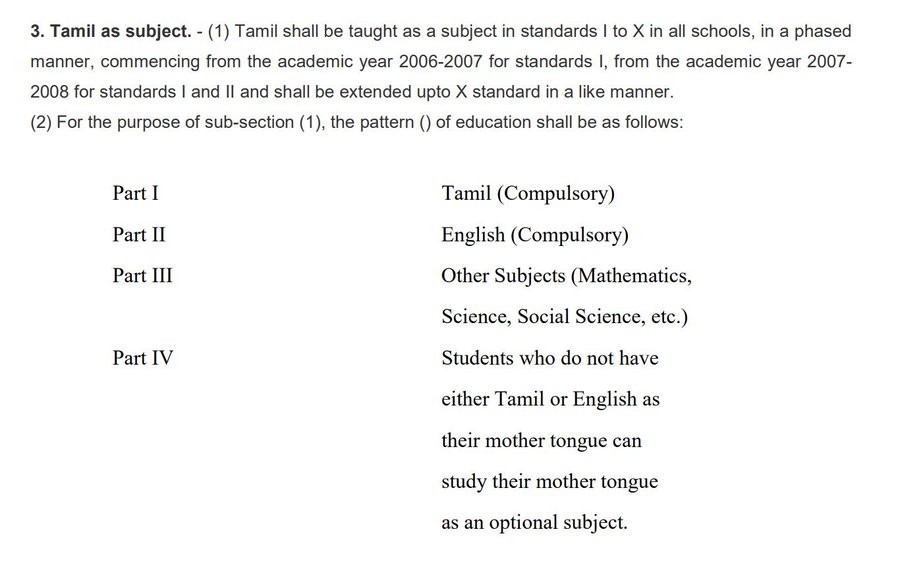
Before 2006, it was possible to complete education in Tamil Nadu without learning Tamil.
The Tamil Nadu Tamil Learning Act (2006) mandated Tamil learning in schools, while allowing an optional third language.
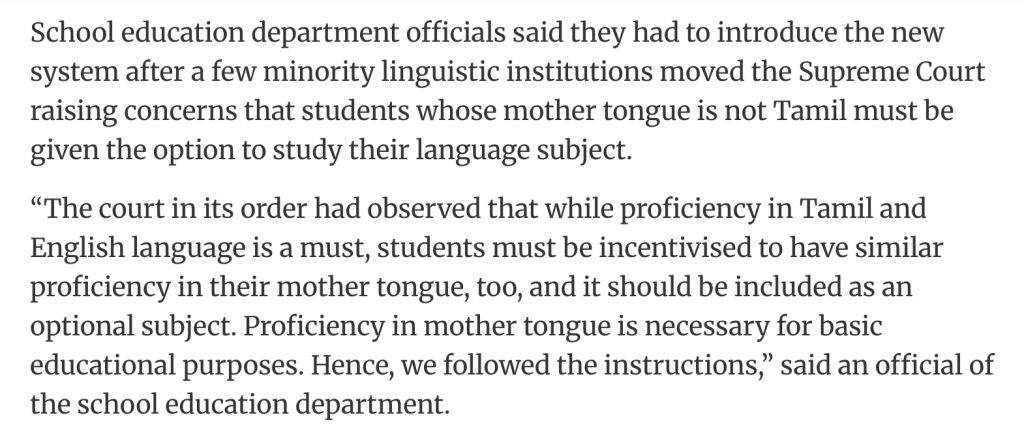
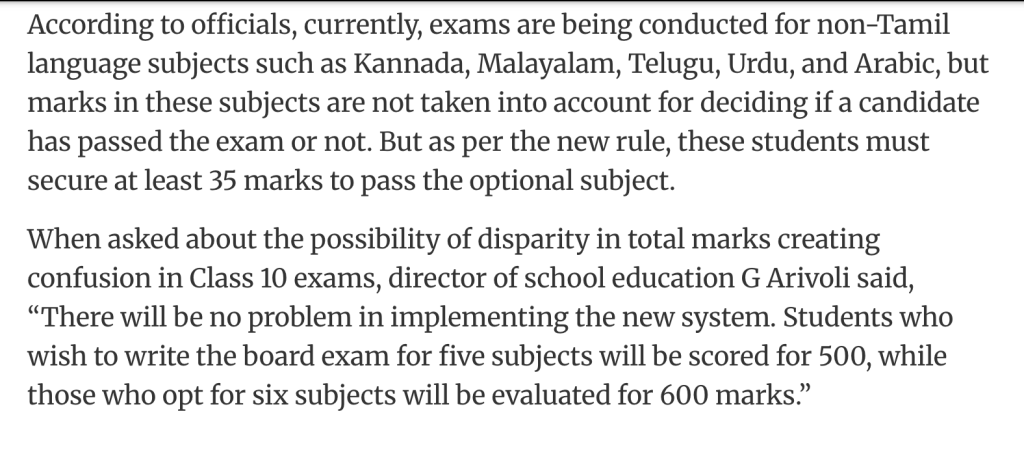
The Supreme Court has ruled that mother-tongue education should be an option. This means that migrant children whose mother tongue is Hindi, Bengali, or another language should be provided the opportunity to learn their own language.
Thus, even without NEP, the problems PTR claims to oppose already exist within the current system. The Tamil Nadu government’s approach forces a rigid framework on students instead of ensuring real linguistic flexibility.
Claim: The Presence of Dakshin Bharat Hindi Prachar Sabha In Chennai Shows Language Freedom
Reality: PTR suggests that the mere presence of the Hindi Prachar Sabha in Chennai proves that Tamil Nadu encourages linguistic diversity. However, this ignores the active hostility faced by Hindi learners in the state:
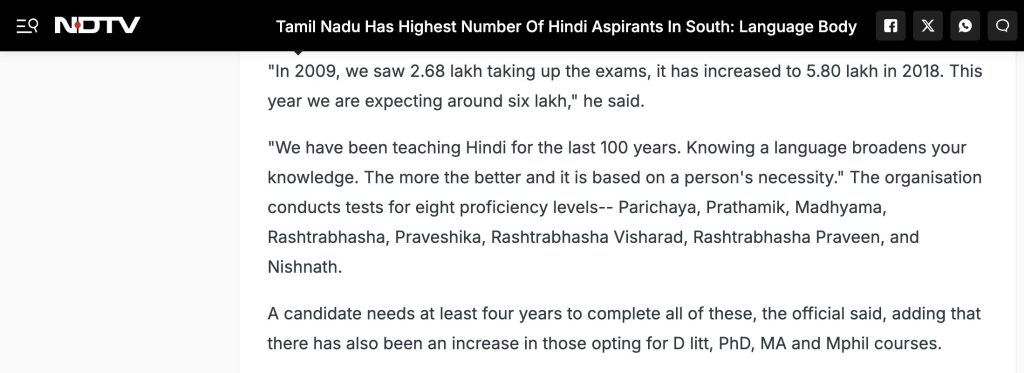
Hindi Prachar Sabha’s data shows widespread interest in learning Hindi in Tamil Nadu.
If Hindi were truly being imposed, as PTR suggests, people would not voluntarily sign up to learn it.
Despite this, groups like WeDravidians actively organize protests against Hindi learning, discouraging linguistic diversity.
The Tamil Nadu government has taken no action against such groups, further proving that language learning is restricted by political ideology rather than genuine student choice.
Claim: Tamil Nadu’s Education Model Produces Better English Proficiency
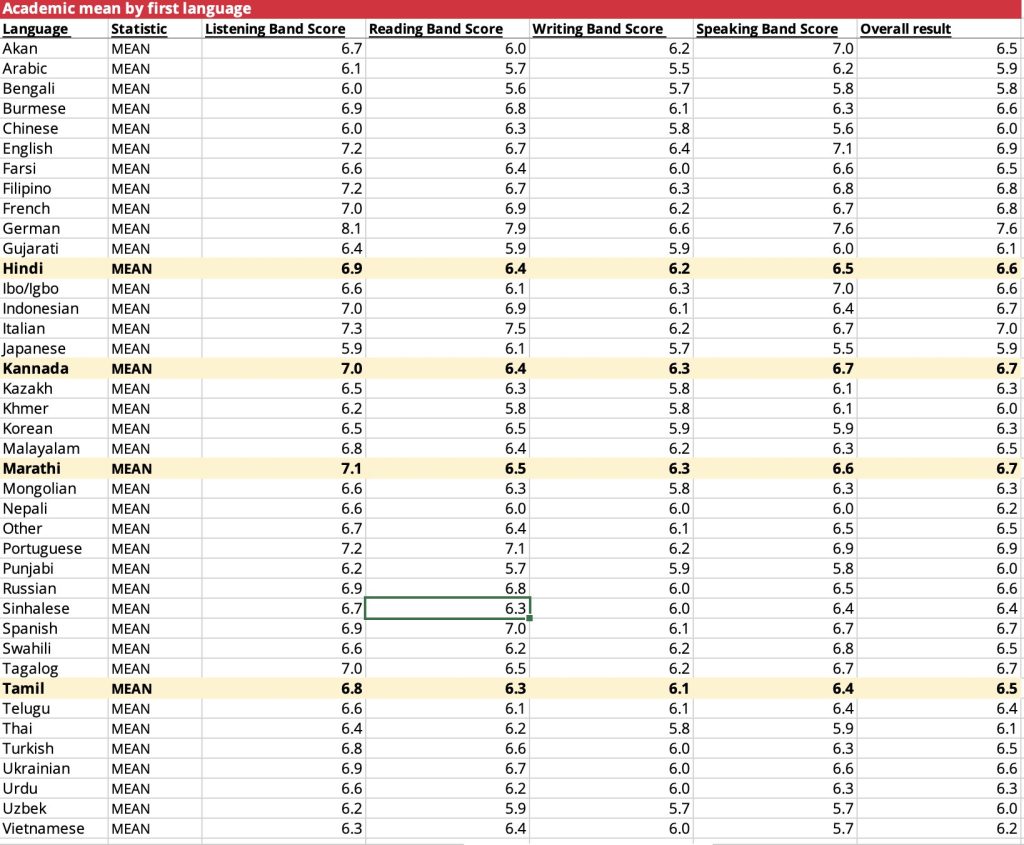
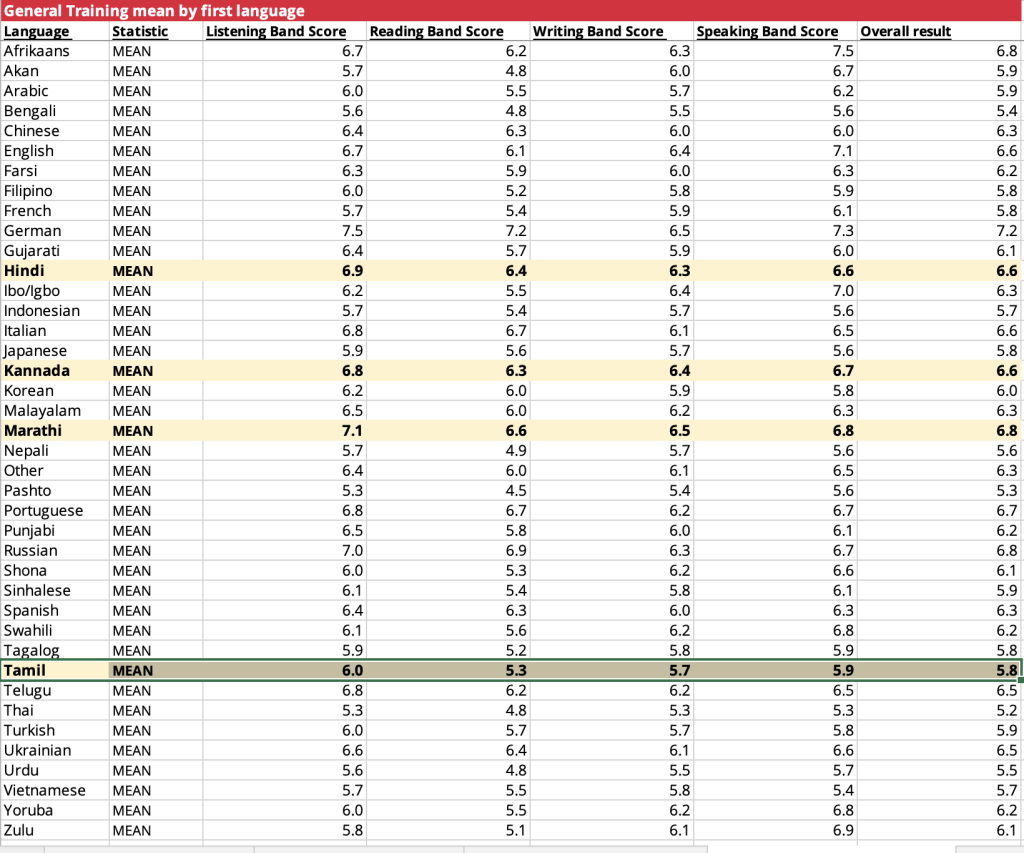
Reality: PTR argues that Tamil Nadu’s two-language formula has made its students more proficient in English than their counterparts from Hindi-speaking states. However, data from IELTS Academic and General Training Exams contradict this claim:
Median scores for IELTS show that Hindi speakers perform better than Tamil speakers.
Kannada and Marathi speakers also outperform Tamil speakers in English proficiency.
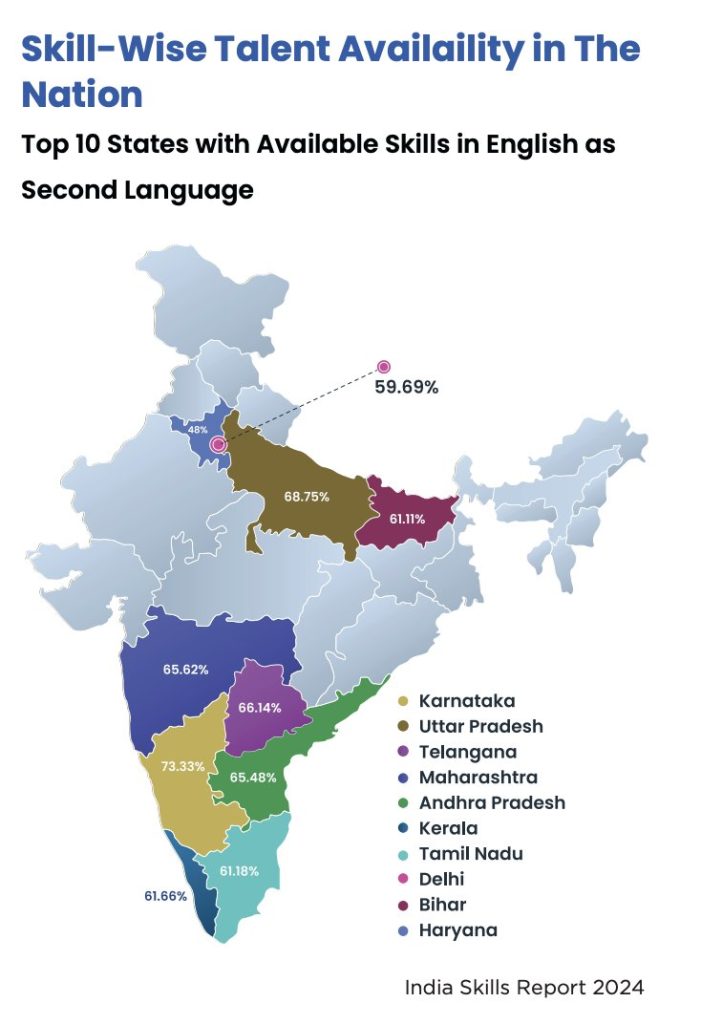
The Wheebox India Skills Report indicates that states like Karnataka, Uttar Pradesh, Telangana, and Maharashtra produce better English-speaking professionals than Tamil Nadu.
These statistics directly refute the notion that Tamil Nadu’s restrictive language policy leads to superior English proficiency. In fact, it may even be hindering English education.
Claim: Learning A Third Language Threatens Tamil’s Survival
Reality: PTR argues that introducing a third language will dilute Tamil and lead to its decline. However, this claim lacks historical basis:
Tamil has survived and thrived despite centuries of royal patronage for Sanskrit.
If Tamil has remained strong despite past influences, how can the addition of a third language suddenly cause its decline?
Historically, banning a language does not make another stronger—it only limits students’ opportunities.
Under Tamil Nadu’s language policy, many Tamilians completed schooling without learning Tamil at all. This was arguably more detrimental to Tamil than the inclusion of a third language.
DMK Ally Congress’ MP Chidambaram Talked About Promoting Hindi
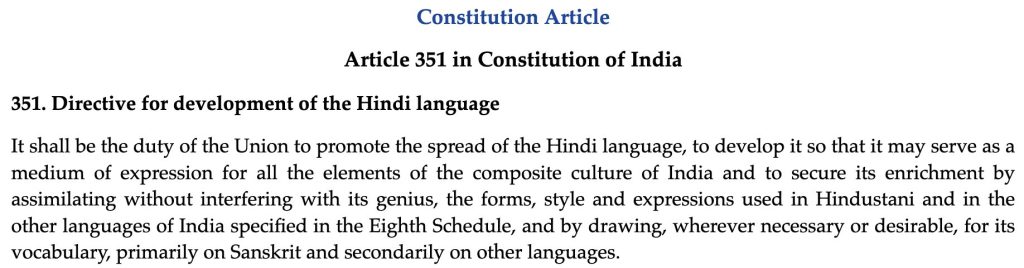
When the DMK was in alliance with the Congress at the centre, the then Minister Chidambaram called for promotion of Hindi in adherence to Article 351 of the Constitution.
There is an attempt to confuse the Home minister’s statement on fostering adoption of Hindi under Article 351 of Constitution with the three language formula.
When P Chidambaram was Home minister and DMK was part of the Government, he had talked about promoting Hindi. pic.twitter.com/FhofXrZ4ch
Article 351 says, “It shall be the duty of the Union to promote the spread of the Hindi language, to develop it so that it may serve as a medium of expression for all the elements of the composite culture of India and to secure its enrichment by assimilating without interfering with its genius, the forms, style, and expressions used in Hindustani and in the other languages of India specified in the Eighth Schedule, and by drawing, wherever necessary or desirable, for its vocabulary, primarily on Sanskrit and secondarily on other languages.”
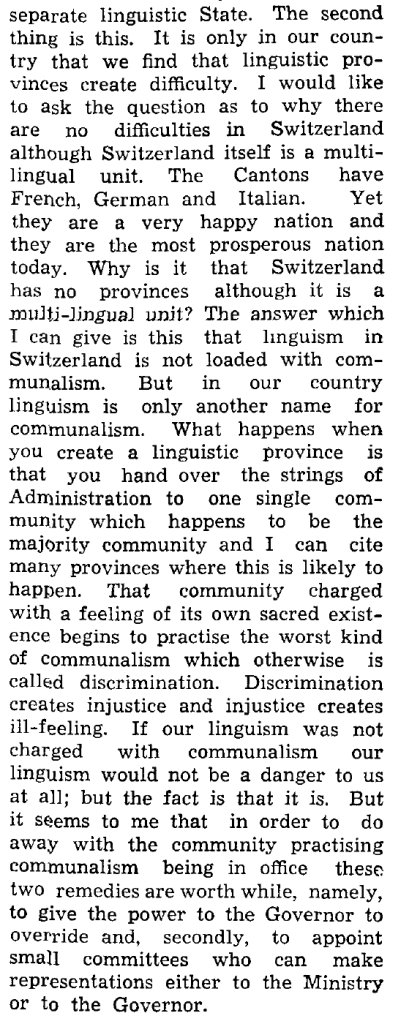
Dr. Ambedkar, during the Andhra Bill debate, observed that linguistic divisions in India were fueling communalism and discrimination. To counter this, he proposed strengthening the Governor’s authority as a potential solution.
The True Problem Lies In Political Fear, Not Educational Policy
PTR’s article relies on political rhetoric rather than factual analysis. His argument against the three-language formula falls apart under scrutiny, as:
Tamil Nadu’s education policy is not truly equitable, as private schools offer more linguistic flexibility than government schools.
The historical record contradicts the claim that Tamil + English was always the policy.
The demand for Hindi learning in Tamil Nadu shows that people are interested, despite political hostility.
Data from international exams and employment reports show Tamil Nadu’s restrictive language policy does not produce better English proficiency.
The survival of Tamil does not depend on banning other languages but on nurturing its continued growth.
Instead of opposing linguistic diversity, Tamil Nadu’s government should focus on empowering students with choices. The NEP’s three-language formula does not force Hindi on Tamil Nadu—it simply allows students the freedom to choose an additional language. True progress lies in educational inclusivity, not linguistic imposition disguised as preservation.
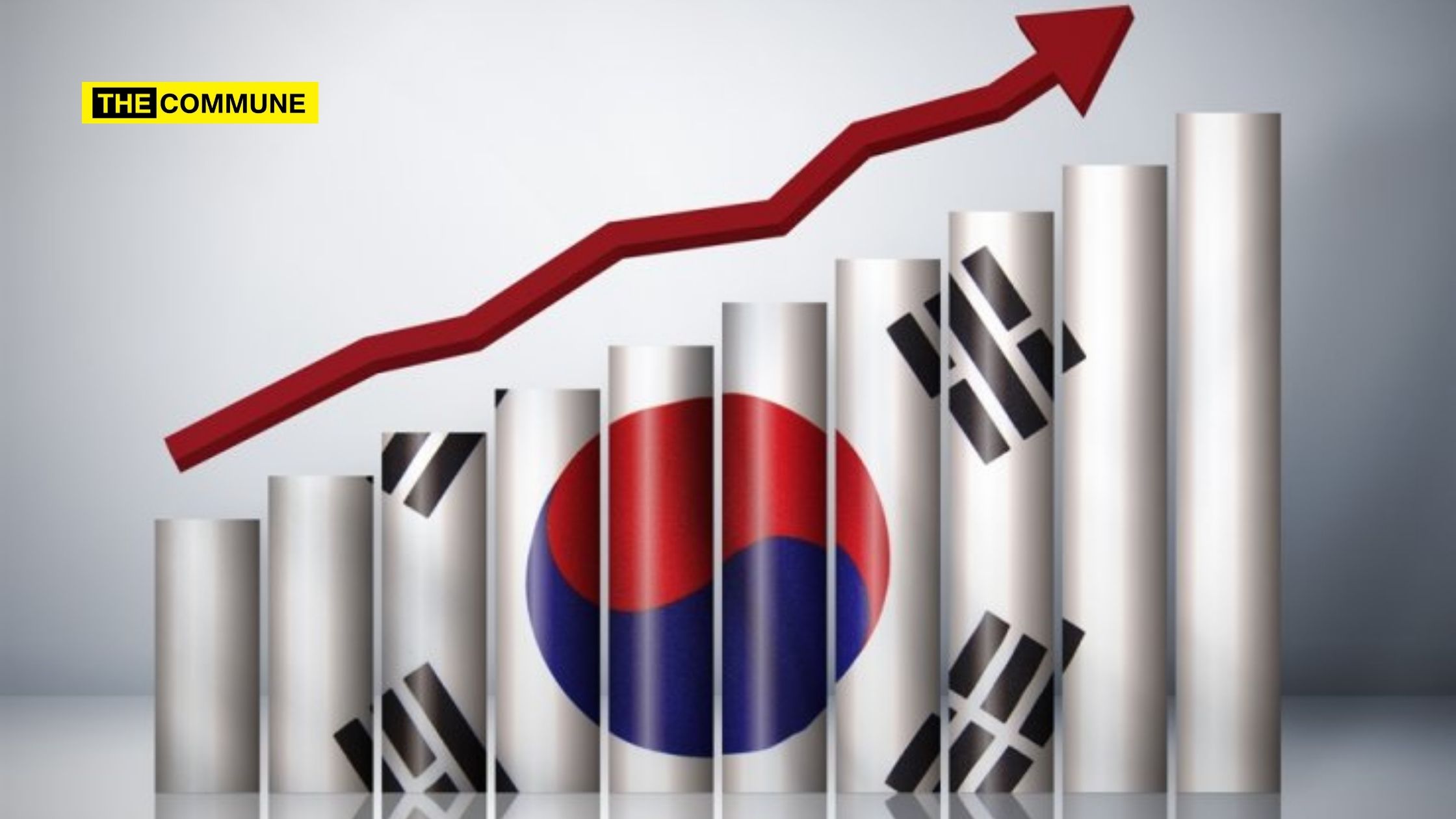
The combined debt of the government, companies and households in South Korea has reached an all-time high amid weak domestic demand and falling revenue, data showed on Thursday.
The country’s total government debt and corporate and household borrowing amounted to a record 6,222 trillion won (US$4.27 trillion) as of the end of the third quarter, according to data from the Bank for International Settlements (BIS). The figure marked a 4.1 percent increase from a year earlier and a 0.9 percent rise from the previous quarter, reports Yonhap news agency.
It amounts to 247.2 percent of nominal gross domestic product (GDP), which logged its lowest level since the second quarter of 2021. Of the total, corporate debt reached 2,798 trillion won as of end-September, up 2.9 percent from a year earlier.
Household borrowing grew 2.1 percent on-year to 2,283 trillion won. Government debt surged 11.8 percent from a year earlier to 1,141 trillion won, the data showed. Meanwhile, financial regulator here on Thursday unveiled a set of measures to help enhance the competitiveness of savings banks that include easing regulations on mergers and acquisitions (M&As), and adopting relatively lax loan classification rules.
The Financial Services Commission (FSC) said it will set up an over 1 trillion-won (US$689 million) fund to help savings banks take soured loans off their balance sheets and launch a special vehicle to manage non-performing loans extended by savings banks.
The regulator also said it will ease rules on M&As in the sector and review savings banks’ loan classification rules, which they claim are too strict given their business environment. Data showed that savings banks’ assets have steadily grown, reaching 120.9 trillion won at the end of last year, up from 92 trillion won in 2020 and 86.9 trillion won in 2010.
But their lendings are largely focused on real estate development projects and low-rated, financially weak customers, leaving them vulnerable to economic cycles, and leading to a decline in profitability and worsening financial status.
—IANS
Subscribe to our channels on Telegram, WhatsApp, and Instagram and get the best stories of the day delivered to you personally.
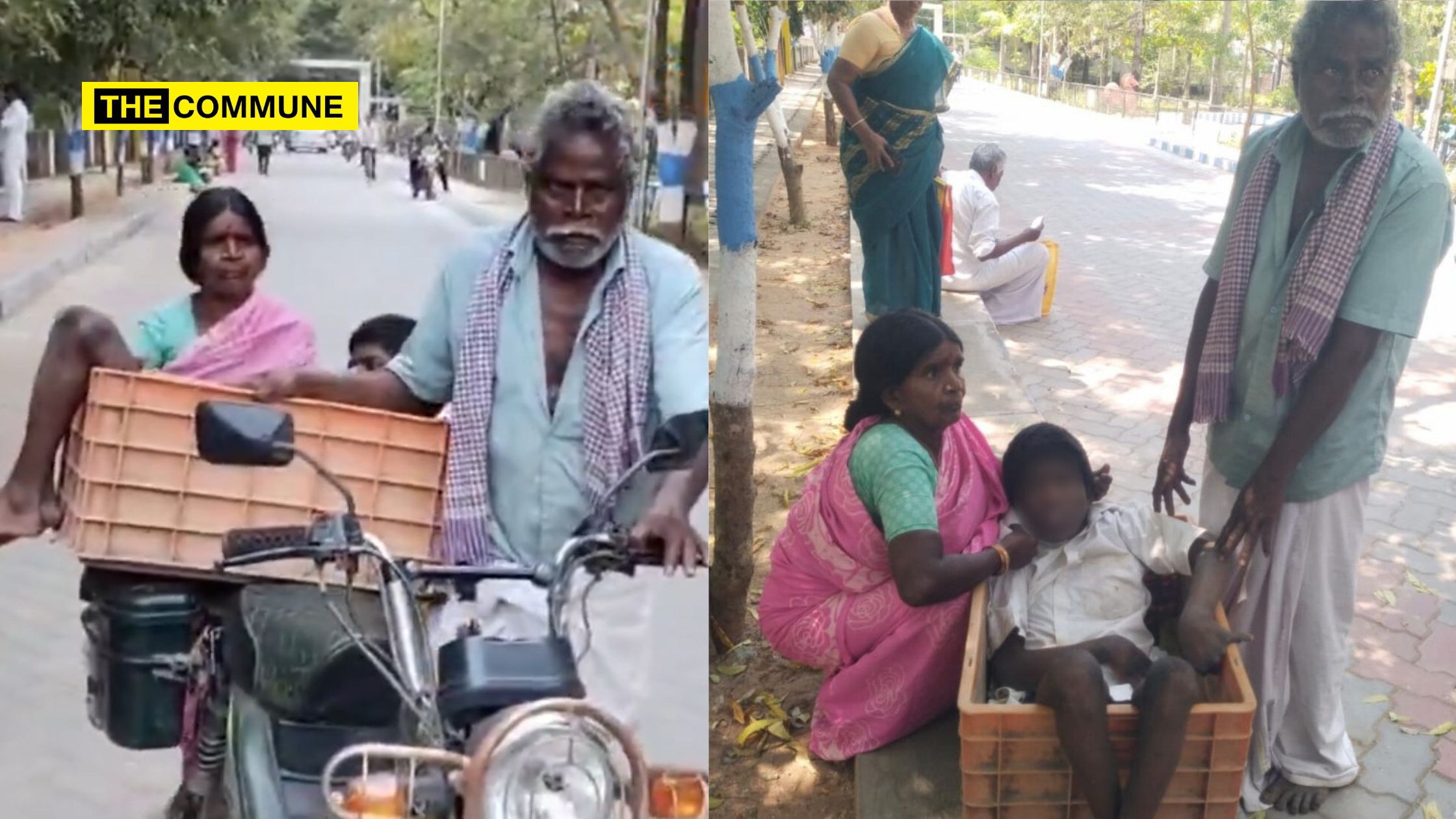
In a distressing incident in Villupuram, a couple was forced to bring their disabled son in a Corrugated plastic box to the Collector’s office to prove he was alive after authorities wrongly declared him dead and stopped his disability allowance, citing fraudulent claims.
District Collector Sheikh Abdul Rahman has assured that necessary steps have been taken to reinstate the maintenance allowance for V. Govindan, a disabled resident of Melkaranai village, Vikravandi taluk, Villupuram district, along with his sister.
On 17 March 2025, Venkatesan, a laborer from Melkaranai, accompanied by his wife Kaliammal and their mentally challenged son, Govindan (25), arrived at the District Collectorate to submit a petition. In his appeal, Venkatesan stated that the monthly maintenance allowance for Govindan had been unfairly discontinued, and he pleaded for its restoration.
விழுப்புரம்: மாற்றுத்திறனாளிக்கு ஆதார் அட்டை, உதவித்தொகை, ஊனமுற்றோருக்கான வாகனம் உள்ளிட்டவை வழங்காமல் அலைக்கழித்த அதிகாரிகள்.. பாதிக்கப்பட்டவரை பிளாஸ்டிக் கூடையில் அமர வைத்து ஆட்சியர் அலுவலகத்திற்கு அழைத்து வந்த குடும்பத்தினர்#Villupuram#TamilNadu@DDNewslivepic.twitter.com/4UhrHsVV3X
Upon receiving the petition, District Collector Sheikh Abdul Rahman immediately directed officials to investigate. The inquiry revealed that Govindan and his sister, Bhuvaneswari, who is also mentally challenged, had their maintenance allowances deposited into their father’s linked bank account. However, due to a double Aadhaar registration error, payments for Bhuvaneswari were stopped in February 2025, while Govindan’s were halted in November 2024 under the false assumption that he was deceased.
After bringing the issue to the attention of the Disability Welfare Commission, Collector Sheikh Abdul Rahman confirmed that corrective measures had been taken to resume the financial assistance for both siblings. Additionally, an immediate relief amount of ₹6,000 and ₹12,000 was provided to them.
Following the incident, netizens criticized the government’s inaction, questioning the lethargy of officials. They also raised concerns about the $162 million World Bank sanction for the RIGHTS project, which was approved to enhance Tamil Nadu’s social protection systems and improve inclusion, accessibility, and opportunities for people with disabilities.
Netizens urged the government to take more meaningful action, emphasizing that there needs to be a shift in attitudes toward the treatment of people with disabilities. They highlighted the need for a more empathetic approach to addressing the challenges faced by the differently-abled community.
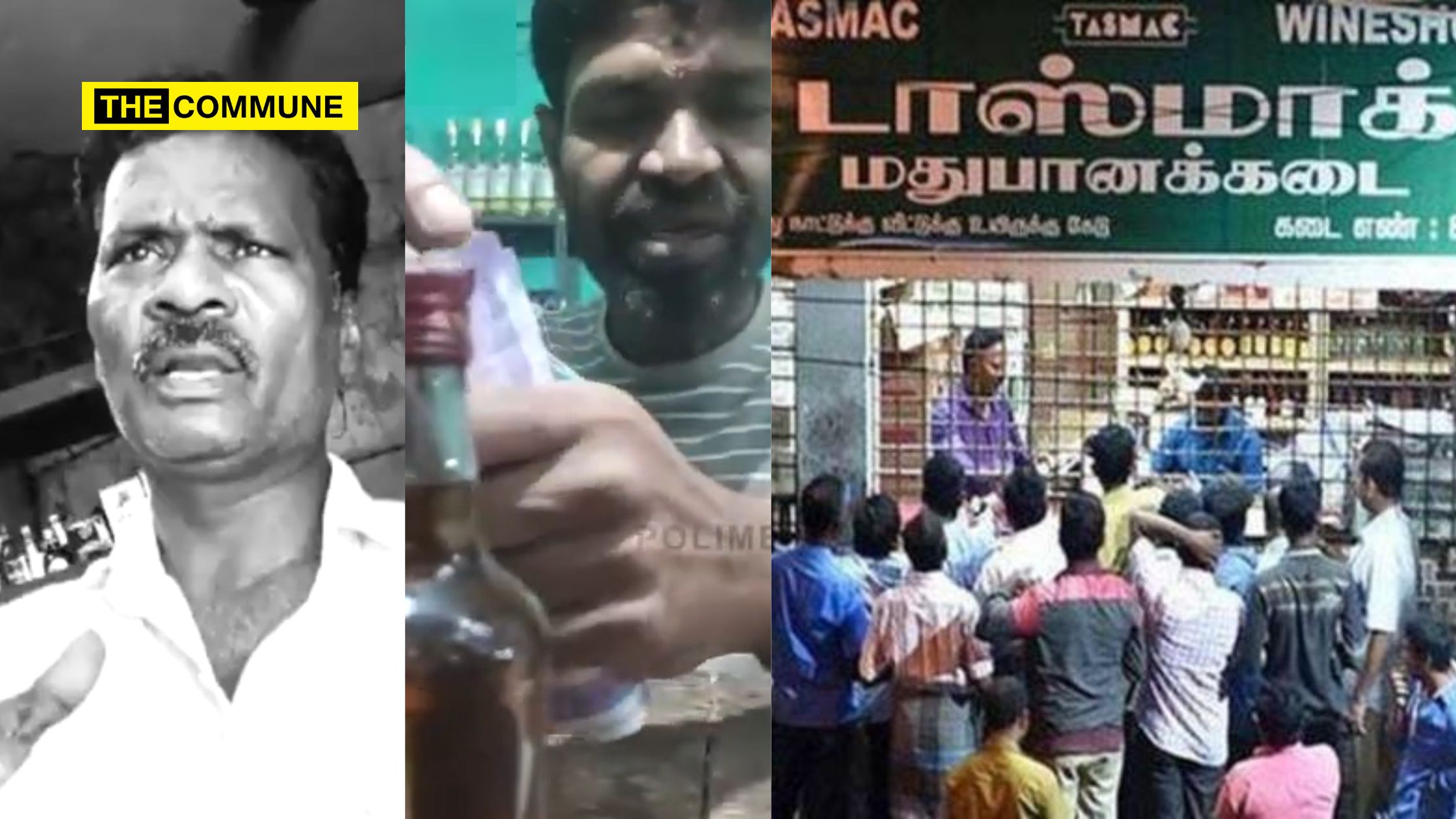
Despite the ongoing controversy surrounding TASMAC following the Enforcement Directorate’s (ED) allegations of financial irregularities—where ₹1,000 crore was allegedly siphoned off in collusion with bottle manufacturers through inflated costs and fraudulent purchases—TASMAC salesmen continue to overcharge customers, demanding an extra ₹10 to ₹40 beyond the maximum retail price (MRP).
In a recent incident, a man named Kalaiselvan visited a TASMAC outlet in Bhuvanagiri, Cuddalore district to purchase liquor. When he asked for a receipt for his purchase and questioned the additional ₹10 charge, the shopkeeper responded in a threatening manner, claiming, “Doesn’t the collector, DSP, SP, and Minister know about collecting ₹10? Who doesn’t know it? You are creating a scene and asking for a bill? Creating a problem; I’ll show you what I can do.” Kalaiselvan recorded the exchange on his phone and shared it on social media.
Following the viral video, the TASMAC salesman, identified as Veeramani, was suspended for overcharging customers.
"நீ பிரச்சன பண்ணு உன்ன என்ன பண்றேனு பாரு… அப்ப தெரிஞ்சிப்ப இந்த வீரமணி யாருனு… 10 ரூபா வாங்குறது எஸ்பி, கலெக்டர், டிஎஸ்பி யாருக்கு தான் தெரியாது.. இன்னைக்கு என்னமோ அதிசயமா வந்து பேசுற"… டாஸ்மாக ஊழியர் அடாவடி#Cuddalore | #Tasmac | #Money | #ViralVideopic.twitter.com/XRKWA3pmQe
Earlier, another TASMAC salesman was suspended by the prohibition and excise department after a video surfaced showing him demanding extra money from a customer. The video showed a heated argument at TASMAC shop, where the salesman allegedly charged ₹40 more than the printed MRP of ₹200 for a quarter bottle. When the customer asked for a bill for ₹240, the salesman refused, stating that TASMAC had not yet implemented a billing system.
In response to the incident, senior BJP leader and state coordinating committee convenor took to social media to question, “The price of the bottle is ₹200, but should pay ₹240? Those who used to charge ₹10 extra per bottle are now demanding ₹40 more. If the additional collection of Rs. 40 per bottle is calculated as Rs. 40 for every bottle sold per day across Tamil Nadu, how many crores of additional amount will be generated from that alone? How many crores generated in a month? In a year? And to whom is this amount going?”
"பாட்டில் விலை ரூ.200, ஆனால் ரூ.240 கொடுக்க வேண்டுமாம்". முன்பெல்லாம் ஒரு பாட்டிலுக்கு 10 ரூபாய் கூடுதலாக வசூலித்தவர்கள் இப்போது 40 ரூபாய் அதிகமாக வசூலித்து வருகிறார்கள்?