Home Blog Page 602

Meet Prithviraj Sukumaran, The Two-Bit Virtue-Signalling Commie Propagandist Who Peddles Hate Against Hindus, BJP, And PM Modi Through His Films
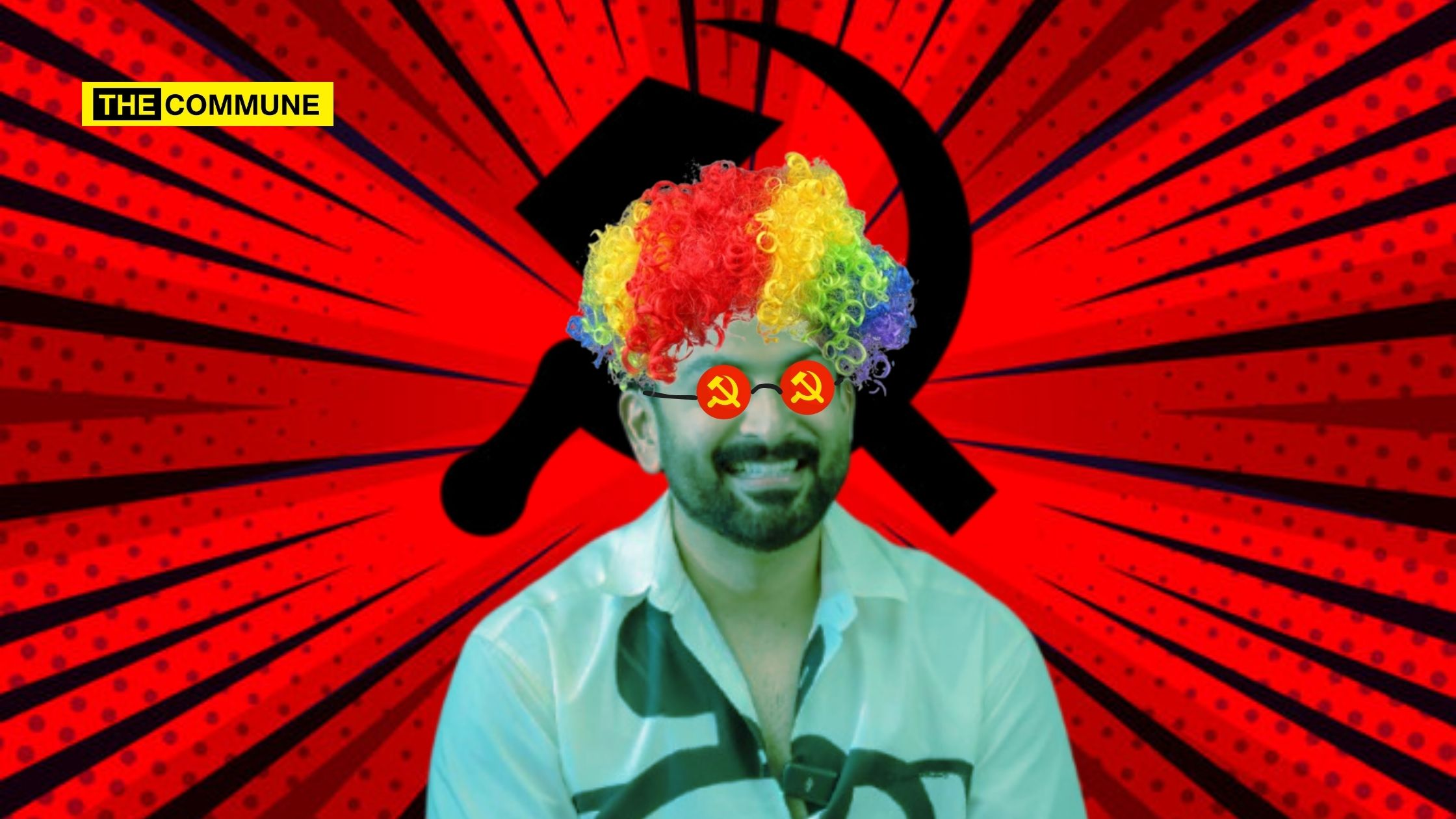
Prithviraj Sukumaran isn’t just an actor, producer, and director—he’s a self-anointed crusader for the leftist elite, wielding cinema as a weapon to smear Hindus, the Bharatiya Janata Party (BJP), and Prime Minister Narendra Modi. Born into a film family in Kerala, Prithviraj has built a career on privilege while posturing as a champion of downtrodden. His collaborator, screenwriter Murali Gopy, openly admits to an “anti-right” stance while criticizing the mainstream Left for not being pure enough, as noted in a 2023 Indian Express interview. Gopy’s influence is evident in Prithviraj’s projects, which drip with disdain for Hindu nationalism and Prime Minister Narendra Modi’s vision of a united India. From his social media virtue-signalling to his filmography, Prithviraj peddles a worldview that romanticizes Kerala’s red-draped politics, cajoles the Islamists, vilifying anyone who dares to embrace Hindu pride or support the BJP. He’s not a filmmaker—he’s a propagandist with a camera, and through his works – Empuraan and Jana Gana Mana – he is waging an ideological/political warfare against Hindus who are vocal and support Prime Minister Modi.

Dissecting Empuraan: A Cinematic Hit Job On Hindus And BJP That Shows A PM Modi Look Alike Getting Killed By Foreign Agents 

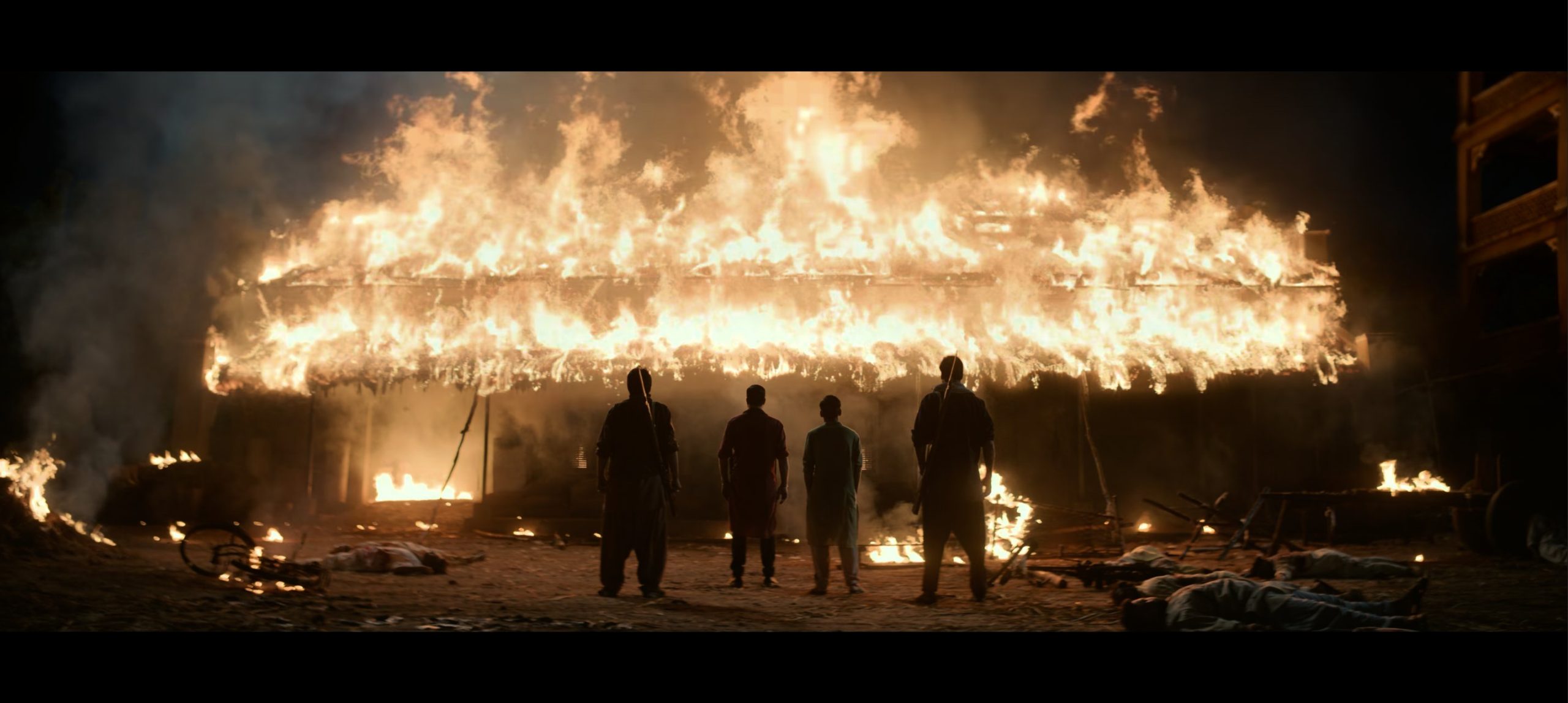
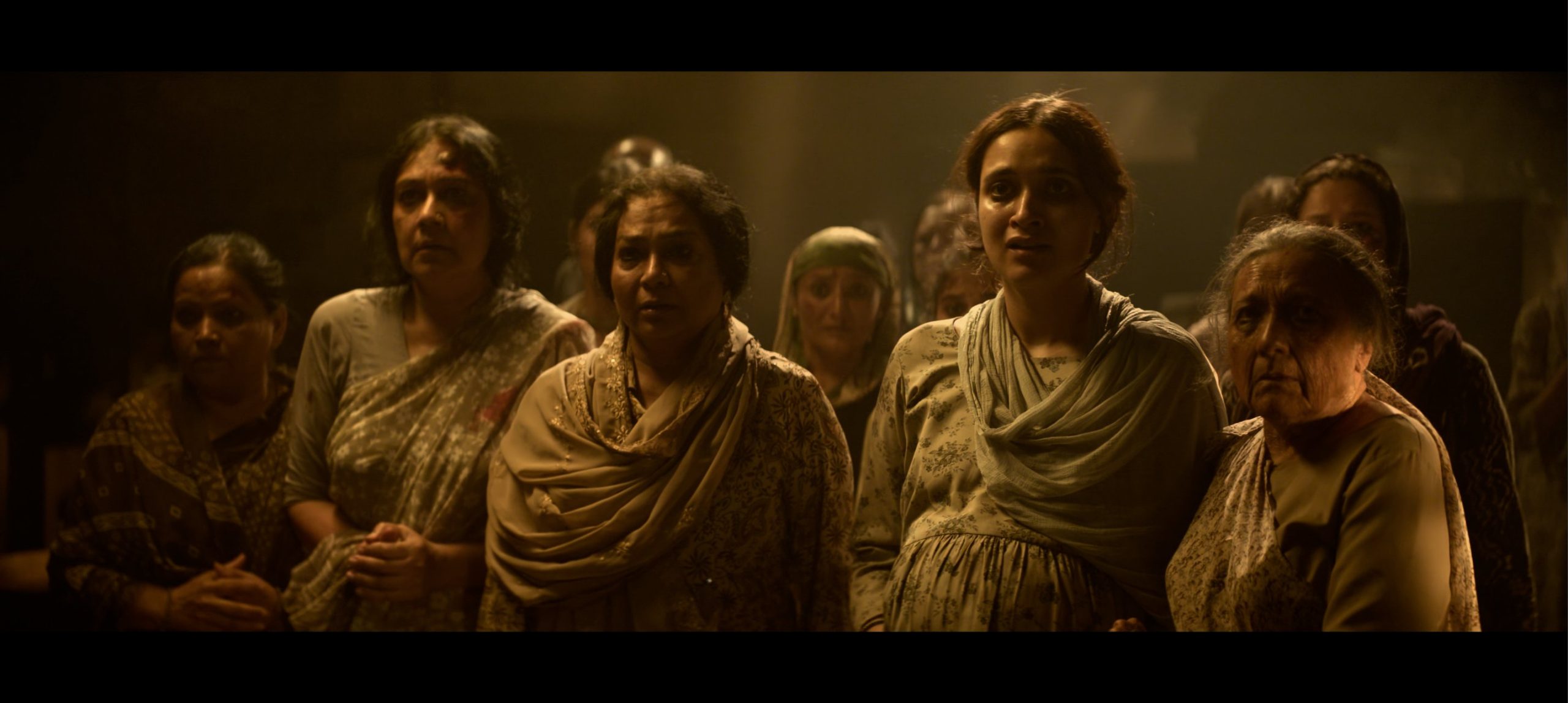
Empuraan, released on March 27, 2025, and co-starring Mohanlal, is Prithviraj’s most brazen assault yet on Hindus, the BJP, and Modi. The film opens with a disclaimer—“All scenes and characters depicted are fictional”—but what unfolds is a calculated distortion of history, starting with a village burning in 2002, a clear reference to the Godhra riots. That real event saw a Muslim mob burn a train, killing 59 Hindu pilgrims, sparking riots. Like a typical leftist dimwit, Prithviraj erases the initial attack, showing only Hindu mobs as aggressors—beating a Muslim boy to death, attacking Muslim refugees, and raping a pregnant Muslim woman in a Hindu household.

On the other hand, the Sabarmati Express carnage “accidentally” catches fire from inside which the Gujarati Hindu communal party leader Bajrang Patel, uses it as an opportunity to kill Muslims and grab power. A Muslim boy (Prithviraj) escapes from there and takes revenge on the Hindu leader who, by now, has become a national leader of ruling Hindu party.

Credits: @Pora_Babu on X

The propaganda intensifies with the Hindu mob leader named “Bajrang,” a blatant nod to Bajrang Dal, a Hindu rights group tied to the RSS. He later becomes the national leader of the Hindu party and is portrayed as someone close to the Home Minister.

Credits: @Pora_Babu on X

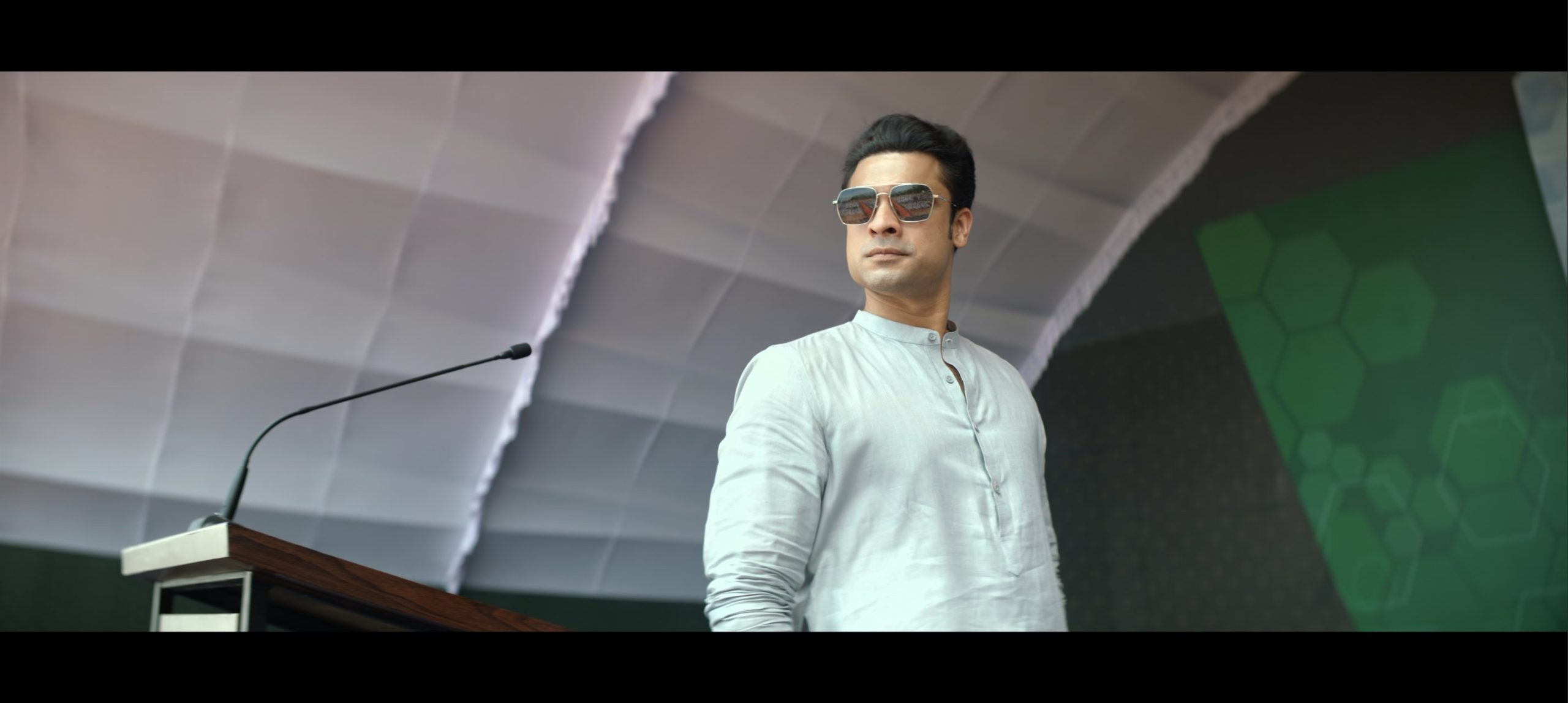
And then you’ve Jathin “Ram” Das, a sitting CM who joins hands with the pro-Hindu party at the Centre. In real-life, it translates to the Centre engineering a split in Congress to bring a Hindu party to power in Kerala.
Credits: @Pora_Babu on X

The film frames this merger as a betrayal of Kerala’s culture, a divisive message rooted in the state’s history of “secular” pandering of the Islamists by the Communists. A villain resembling Narendra Modi spouts baseless claims about Kerala’s “600 km coastline” being used for drug smuggling, while a reference to a bomb on a dam—read: Mullaiperiyar—stokes fear with reckless sensationalism. What Prithviraj is implying is there’s a conspiracy being hatched by the Hindu “fanatic party” to explode a major dam and kill millions.

The climax is a chilling fantasy: “Bajrang” is defeated by a Christian “Lucifer” (Mohanlal) and a Muslim “Zayed” (Prithviraj), a non-Hindu alliance defeating the Hindu leader “Ramdas” who is then killed by a Chinese mafia. Is Prithviraj’s fetishing that Narendra Modi be killed by Chinese agents and foreign forces?

@Pora_Babu on X

Throughout the film, agents of the ‘Deep State’ and foreign forces are shown in good light. A British intelligence agent aids Lucifer, hinting at a “deep state” plot while a “Christian NATO” targets Hindus for supporting pro-Hindu parties.


@Pora_Babu on X
@Pora_Babu on X

Muslims are portrayed as “innocent,” like Zayed saving girls from trafficking, despite NCRB data showing Muslims, 14% of India’s population, made up 19% of prisoners in 2022—a statistic often debated in discussions of crime and communal bias.

@Pora_Babu on X

Meanwhile, a character in a tricolour saree—symbolizing the Congress—gives a speech on democracy only to be arrested by the Enforcement Directorate (ED), a dig at real-world ED raids. It is another matter that the commie Prithviraj has shown the Congress too in bad light once again hammering that he’s a two-bit propagandist of the hammer-sickle party.

@Pora_Babu on X

Cinematically, Empuraan is a disaster. Poorly edited, technically weak, and stretched beyond reason, its camera work is a mess, with random angles that add nothing. The hyped “OTT-quality shot” Prithviraj bragged about is nowhere to be seen—unless he meant the third-rate visuals that dominate the film. Mohanlal is sidelined, while Prithviraj’s Zayed hogs the spotlight, turning a supposed epic into a soapbox for ideological score-settling.

Jana Gana Mana: A Masterclass In Hypocrisy And Anti-Hindu Bias

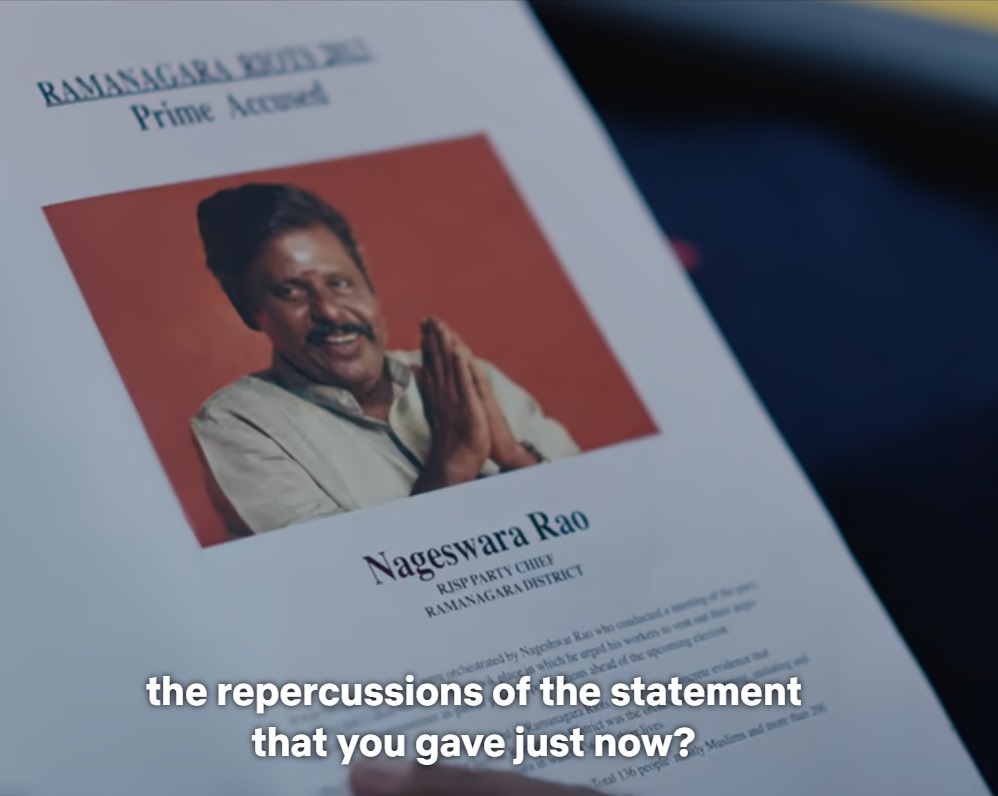
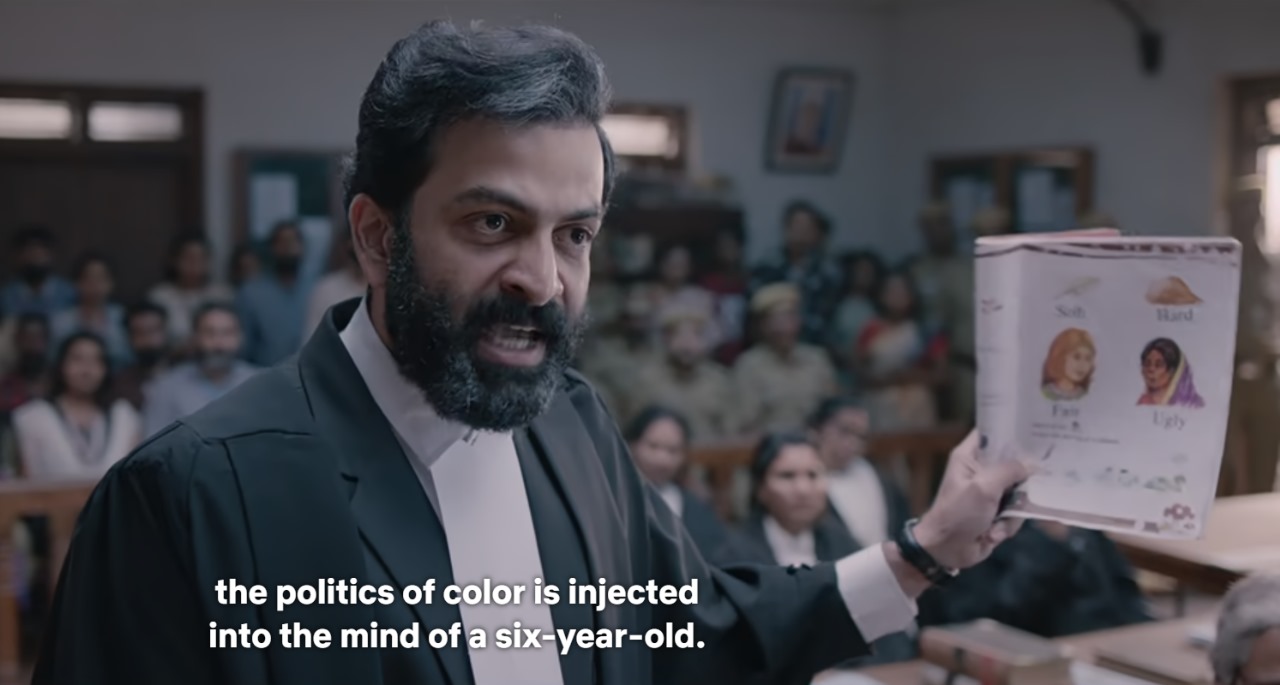
Prithviraj’s 2022 film Jana Gana Mana is another chapter in his anti-Hindu, anti-BJP crusade, cloaked as a socio-political thriller. The film claims to oppose discrimination, with a scene criticizing a textbook for injecting “the politics of color into the mind of a six-year-old.” Yet it casts a fair-skinned Prithviraj as the virtuous hero fighting for the “oppressed,” while the villain, a dark-skinned Tamil-speaking politician named Nageswara Rao, is steeped in Hindu religious symbols and heads the RJSP party—sporting saffron and RSS-ish flags, a clear jab at the BJP. Rao is the prime accused in the “Ramanagara Riots,” a fictional event that mirrors real-world communal tensions often blamed on the BJP by its critics.
Credits: @labstamil on X

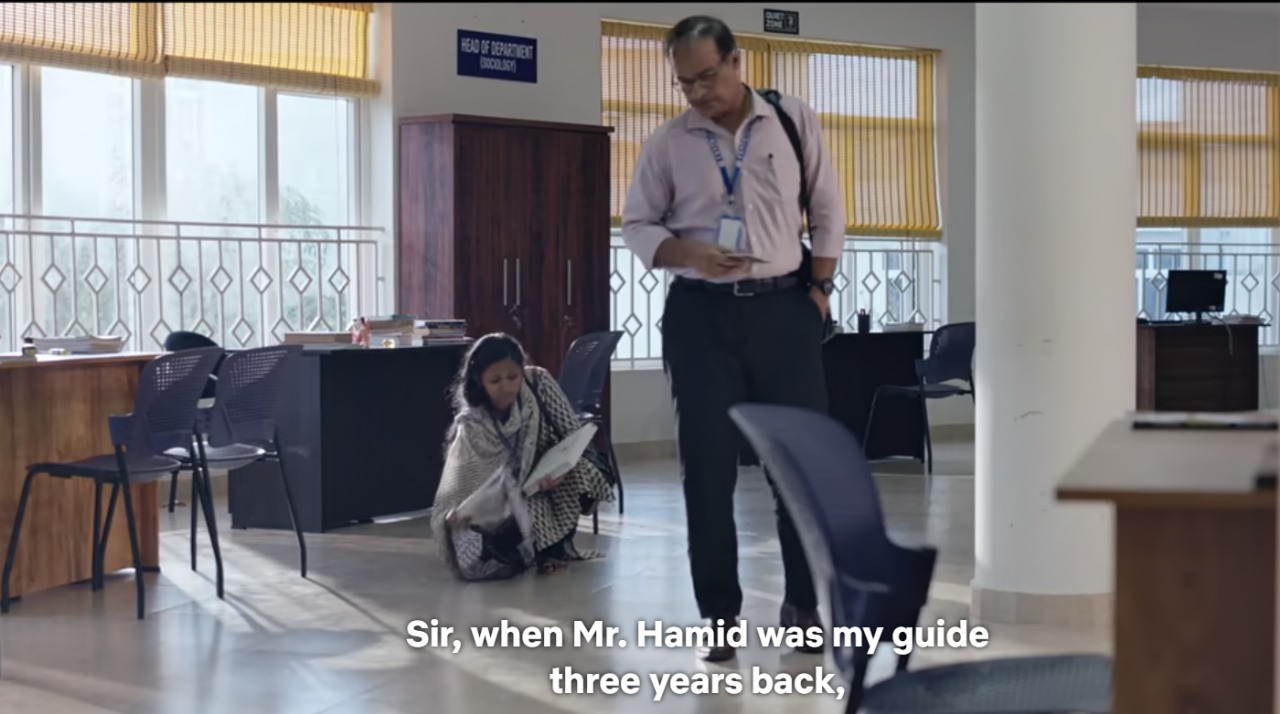
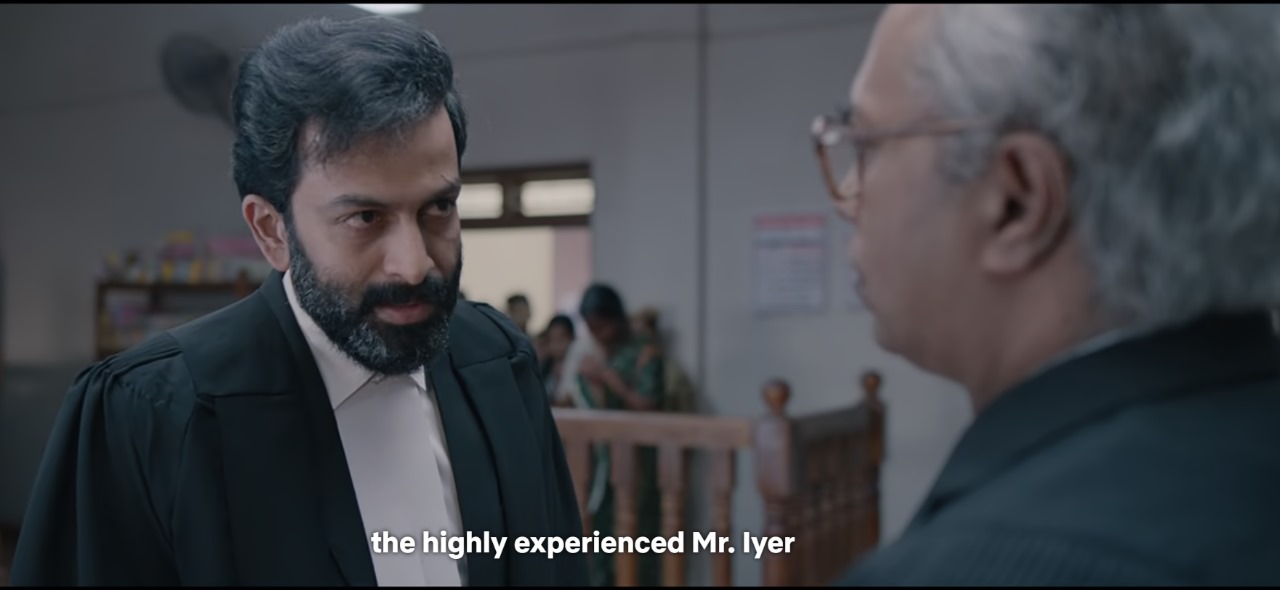
The film’s villains are tellingly named—Raghuram Iyer (advocate representing the State), Shwetha Gupta (Chairperson of National Commission for Women), and a casteist professor, Vydarshan—surnames that scream “upper-caste Hindu identity”, while a “good” PhD guide, “Hamid sir”, is Muslim.

Credits: @labstamil on X

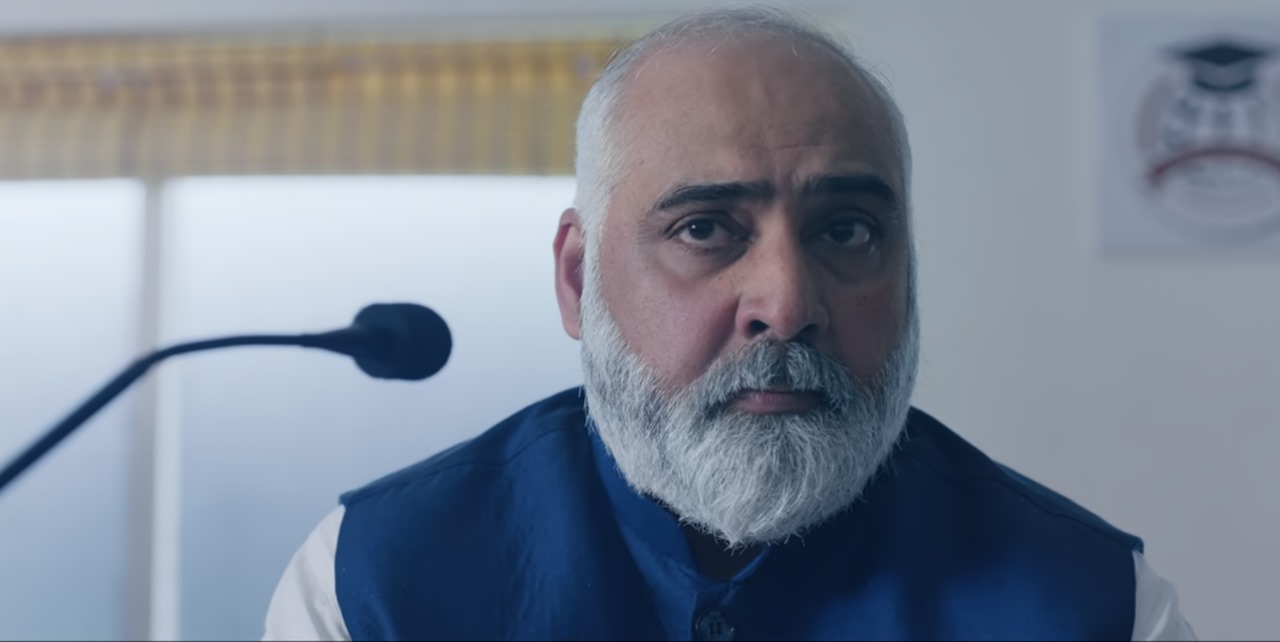
A student’s thesis on the “perpetuation of caste system in 21st century India” ends in her suicide, with the blame pinned on a “Central” university whose director, resembling Modi, ignores enquiry reports—a thinly veiled attack on the PM.

Credits: @labstamil on X

Every “good” character is either Muslim or a non-practicing Hindu, while “bad” characters flaunt Hindu symbols or symbols/colours associated with the RSS and BJP.
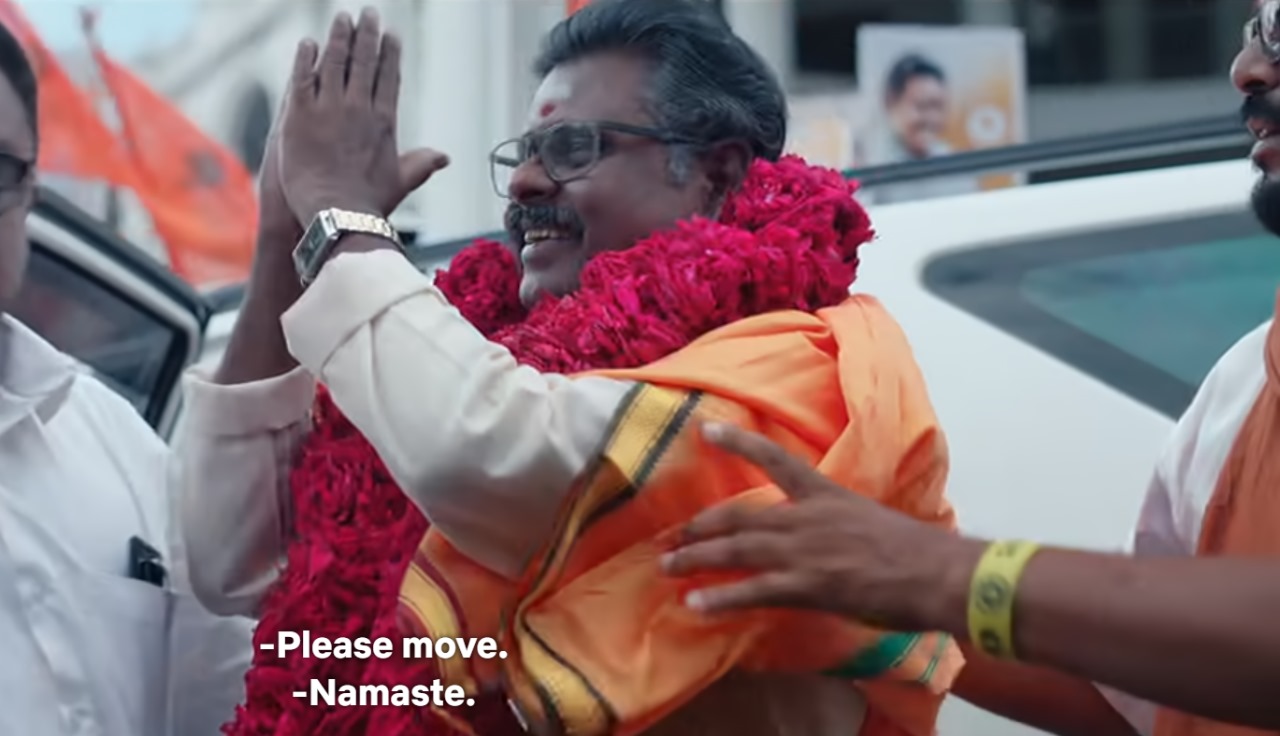
Credits: @labstamil on X

Real-world issues like demonetization (called “banning notes”) to fearmonger about the BJP “banning votes,” a baseless scare tactic aimed at Modi’s governance.

Credits: @labstamil on X

The film accuses politicians of using emotions to turn people into “bhakts,” a term weaponized by the left to mock Modi’s supporters, while ironically manipulating its audience with the same emotional tactics it decries.
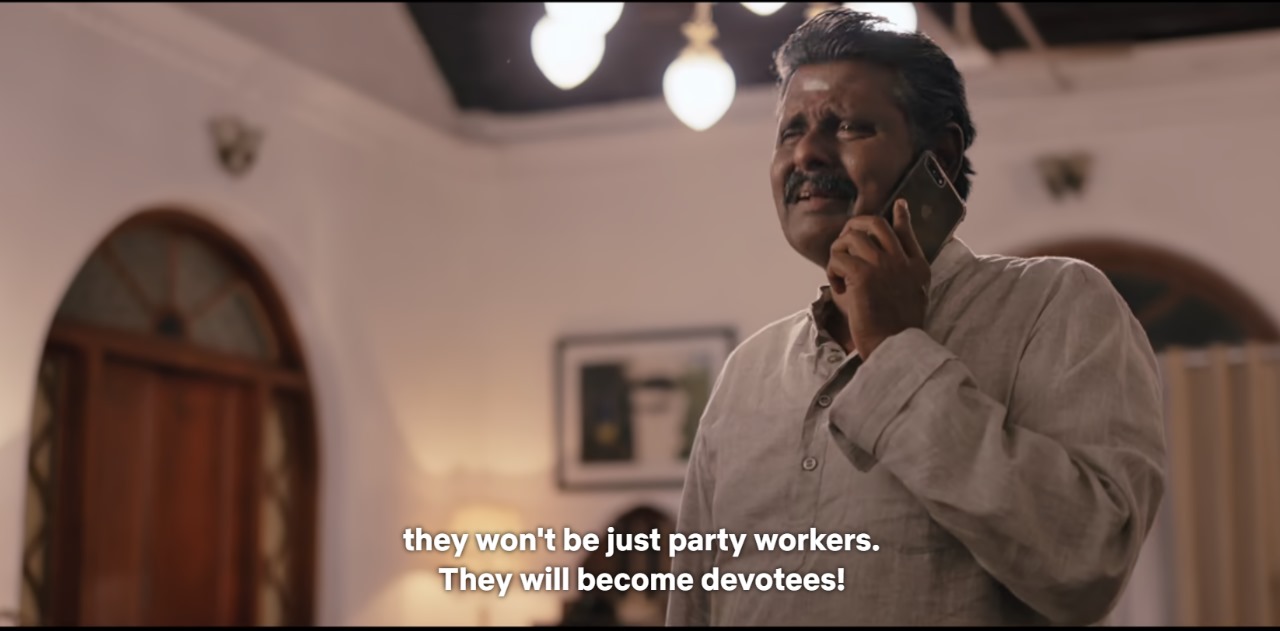
Credits: @labstamil on X

The film is a masterclass on hypocrisy. It rails against “identity politics” but indulges in it shamelessly, portraying practicing Hindus as villains and Muslims as victims—a trope that fuels division while pretending to preach unity.

Not Just In Reel, Prithviraj Peddles Anti-Development Propaganda In Real As Well Like A True-Red Communist

Prithviraj Sukumaran’s anti-development propaganda reeks of shameless opportunism, nowhere more evident than in his 2021 crusade against Lakshadweep’s administrative reforms—a pathetic attempt to undermine the Modi government’s vision for progress. He spun a web of lies about spending “quality time” with the “warm-hearted people of Lakshadweep” during the filming of Anarkali, claiming their support to fuel his opposition to infrastructure and tourism initiatives that could have transformed the islands from a backwater into an economic hub. In truth, the Anarkali crew faced outright hostility from locals, shattering his fabricated sob story. His sanctimonious plea for authorities to “listen to the voice of the people,” as part of the ‘Save Lakshadweep’ campaign, was nothing but a dog whistle to paint development as a cultural assault, conveniently ignoring how decades of neglect had left the islands stagnant. This isn’t concern—it’s sabotage, a cynical ploy by a self-righteous fraud who’d rather see India languish in underdevelopment than admit Modi’s reforms might actually work, all while he hides behind his hollow “progressive” facade.

Prithviraj Sukumaran peddled a narrative that propped up the Islamic country of Maldives by hyping it as a celebrity paradise in a 2021 Times of India feature, gushing about his family vacation there with his wife Supriya Menon and daughter Alankrita, conveniently ignoring India’s own coastal gems like Lakshadweep. This glowing endorsement, paired with his anti-development stance on Lakshadweep, subtly steered tourism dollars to the Maldives, a nation often at odds with India’s geopolitical interests, while undermining Modi’s push for domestic tourism growth.

Propagandist Prithviraj: A Fraud Masquerading As A Filmmaker

Prithviraj Sukumaran is two-bit commie fraud, peddling divisive fantasies that vilify Hindus, the BJP, and Modi while raking in crores from a starstruck audience. Empuraan and Jana Gana Mana aren’t films—they’re hit jobs on faith, plurality, and India’s cultural soul, part of a Malayalam cinema nexus including Kuruthi and The Great Indian Kitchen that peddles anti-Hindu bile under the guise of “progressive” art. His privilege as a film-family scion fuels this hypocrisy—he’s no underdog, just a pampered propagandist cashing in on division while cloaking his attacks in “fiction.” The BJP, which has lifted India from socialist mire, and Narendra Modi, a leader of grit, don’t need lectures from this smug hack. It’s time we stopped clapping for his trash and called him what he is: a sanctimonious peddler of hate, unworthy of the screen he pollutes.

Vallavaraayan is a political writer. 

Subscribe to our channels on TelegramWhatsApp, and Instagram and get the best stories of the day delivered to you personally.
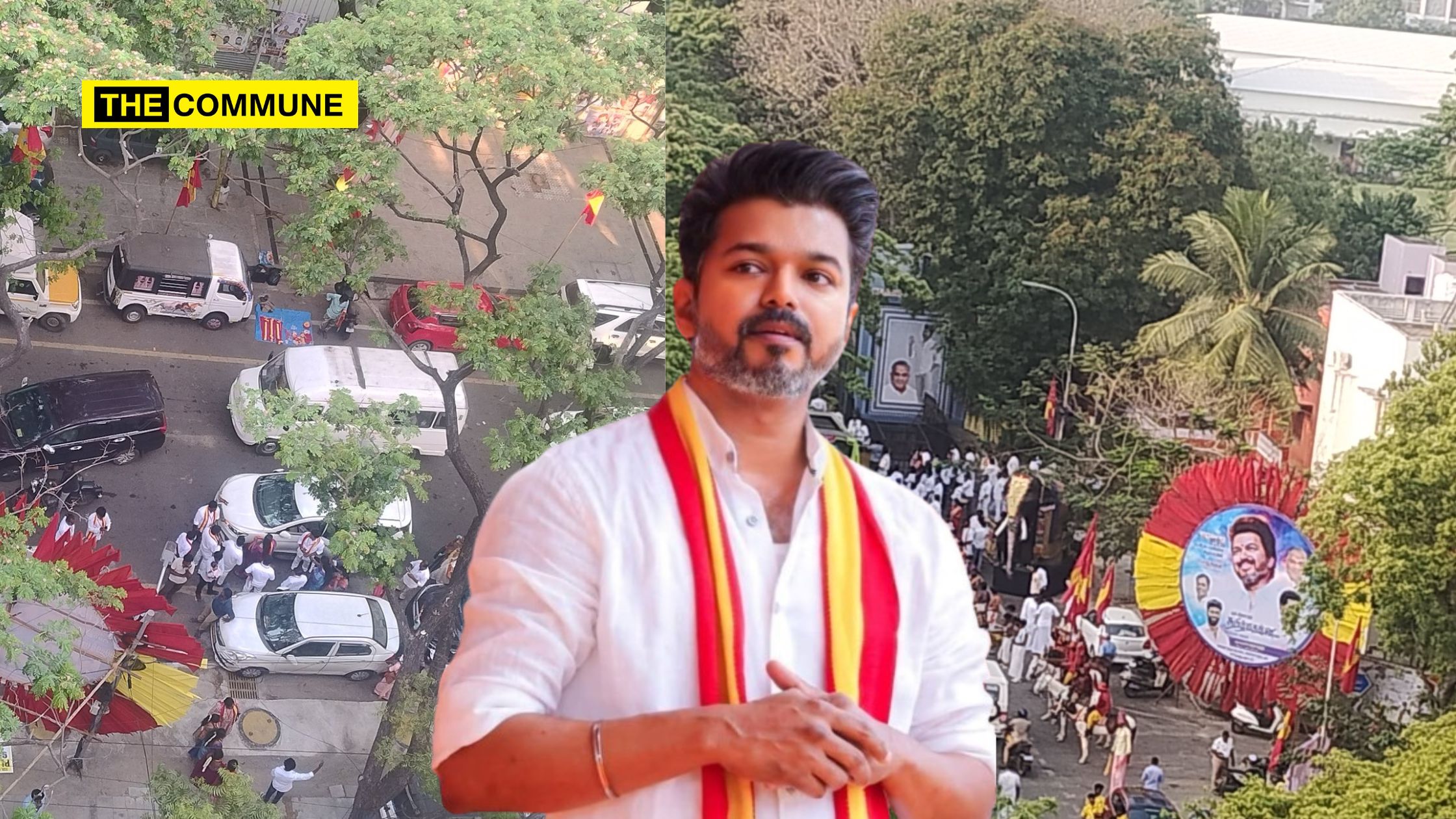
Part-Time Politician Vijay’s TVK Cadres Create Ruckus, Causing Traffic Jam And Public Inconvenience On Chennai’s Arterial Road In Morning Hours Ahead Of Party’s General Council Meeting

joseph vijay trichy east

On 28 March 2025, Tamilaga Vettri Kazhagam (TVK) cadres created chaos in Thiruvanmiyur with relentless drumbeats, loud celebrations disrupting residents, and poor parking adding to the disorder. Many party workers carelessly left their vehicles on the roads, leading to severe traffic congestion and inconvenience for daily commuters. The traffic police struggled to manage the disorder, making this an unwelcome Friday ordeal for the city—all on the sidelines of TVK’s first ever general council meeting at the Ramachandra Convention Hall in Thiruvanmiyur.

Part-time politician Vijay organized this meeting to mark the party’s one-year anniversary. Massive cutouts of Vijay were erected outside the venue, with the entrance designed to mimic the Tamil Nadu Secretariat. The venue was heavily decorated with banners and posters showcasing Vijay’s political journey, while the atmosphere was filled with the rhythmic beats of dhols and nagadas.

During the meeting, more than 15 resolutions were expected to be discussed and passed, with over 2,000 members in attendance.

Subscribe to our channels on TelegramWhatsApp, and Instagram and get the best stories of the day delivered to you personally.
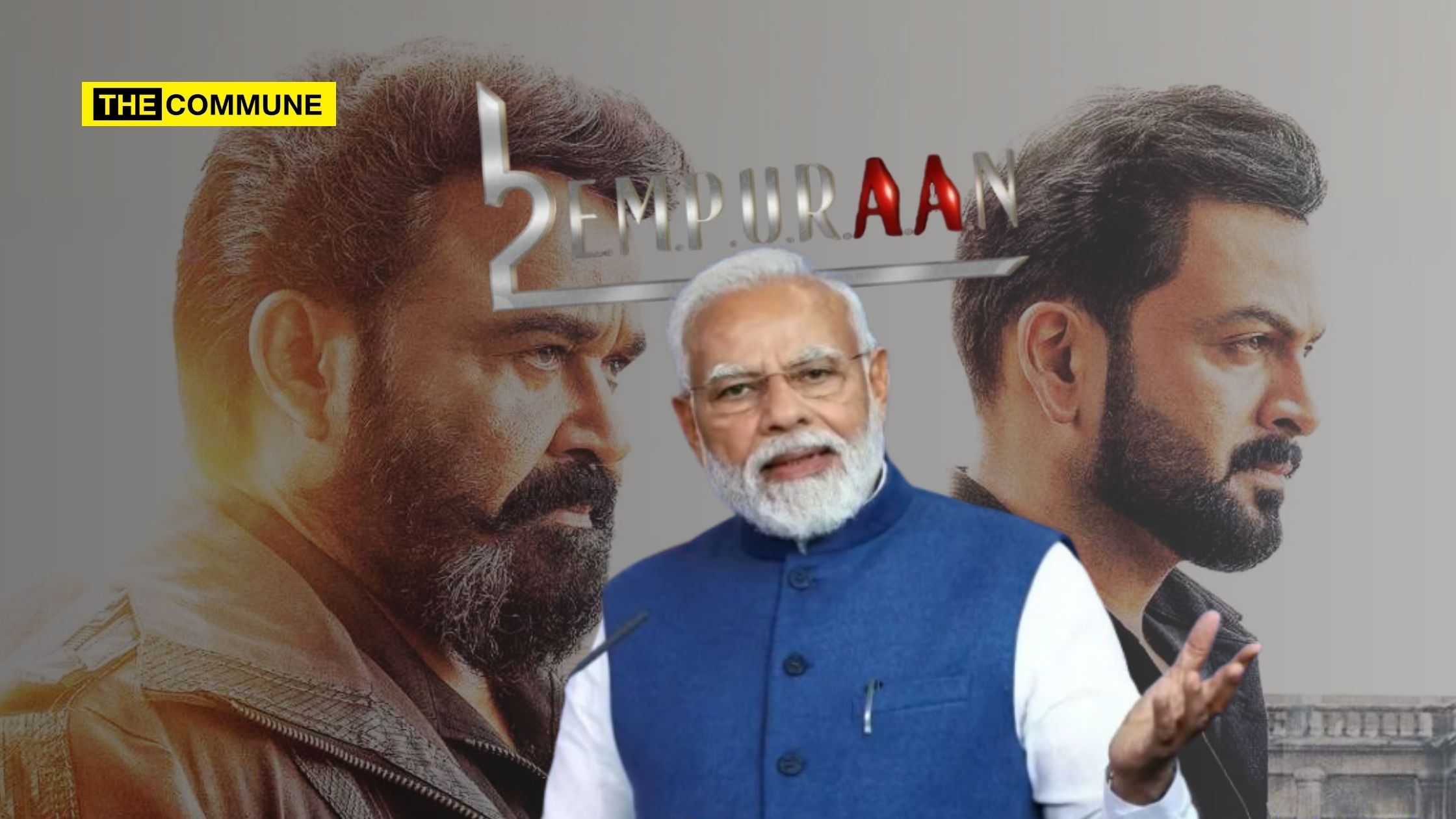
Empuraan: A Disturbing, Divisive Tale Disguised As Cinema Where Commie Propagandist Prithviraj Fetishes The Killing Of PM Modi Look Alike With The Help Of Foreign Forces

The film begins with the standard disclaimer: “All scenes and characters depicted are fictional.” Yet what followed felt like a deliberate, pointed portrayal — not of fiction, but of ideological venom. The first fifteen minutes of the movie depict a village being burned down in 2002, clearly hinting at real-life communal violence. A disturbing scene shows a young Muslim boy calling for his father during an ambush, only to be brutally beaten to death by a Hindu man. This is followed by a group of Muslims seeking refuge in a Hindu household, where they are attacked once again culminating in a horrifying moment where a Hindu man rapes a pregnant Muslim woman. 

These scenes were not only excessive but were filmed with a narrative that clearly paints an entire Hindu Community in a vicious and villainous light. It was deeply troubling to see such depictions presented with such intensity and bias, especially by a celebrated actor-director duo like Prithviraj and Mohanlal. This isn’t just fiction, this is a narrative choice, and a deeply polarizing one. 

The film continues to propagate this agenda with the storyline revolving around a prominent political party merging with a pro-Hindu party. This, according to the director, is shown as an event that distorts Kerala’s culture and politics, a dangerous and divisive message, hinting at real-life political propaganda against the BJP. 

One of the most bizarre and baseless moments in the film is when a villain affiliated with the pro-Hindu party resembling Prime Minister Narendra Modi states that “Kerala, with its 600 km coastline, can be used to smuggle drugs and psychotropic substances.” Where Prithviraj sourced this outrageous claim remains a mystery. Adding to this absurdity is a shocking reference to a bomb being dropped on a dam an unmistakable nod to the Mullaiperiyar Dam, laced with unnecessary fear-mongering and sensationalism. 

The political undertone of the film turns darker in the climax. The pro-Hindu leader clearly resembling the image of Prime Minister Narendra Modi is killed. His allies are gunned down, while the ones standing victorious alongside Prithviraj and Mohanlal are portrayed as foreigners. The implication is chilling a subtle suggestion that the Prime Minister of India could be eliminated with the help of foreign forces.

From a cinematic perspective, the film is a disaster. Technically weak, poorly edited, and unnecessarily stretched, Empuraan struggles even as a work of fiction. The camera work is subpar, with random angle choices that make no visual or narrative sense. The much-hyped “OTT-quality shot” that the director bragged about during an interview is nowhere to be seen unless he meant the third-rate visuals that populated most of the film. 

Though titled Empuraan, the movie narrates the story of Zayed Masood, played by Prithviraj, with Mohanlal’s character seemingly irrelevant and underutilized. For a Lalettan fan, this felt like a betrayal. The film wasn’t about him. It was about pushing a political ideology and settling ideological scores, not telling a story. 

This is not the first time Prithviraj has pushed an anti-Hindu agenda. His previous film Jana Gana Mana carried similar undertones. And now, Empuraan joins a growing list of Malayalam films that seem to follow a disturbing trend Kuruthi, Kappela, The Great Indian Kitchen, and now this all produced or associated with a particular nexus involving Prithviraj, Suraj Venjaramoodu, Roshan Mathew, and producer Listin Stephen. Each film, in its own way, subtly or overtly vilifies Hindu traditions, beliefs, and institutions. 

What could’ve been a grand cinematic journey turned into a politically motivated hit job. Empuraan isn’t just a bad film, it’s an attack on faith, on political plurality, and on the very soul of balanced storytelling. 

Abhijith Radhakrishnan Nair is a political consultant.

Subscribe to our channels on TelegramWhatsApp, and Instagram and get the best stories of the day delivered to you personally.
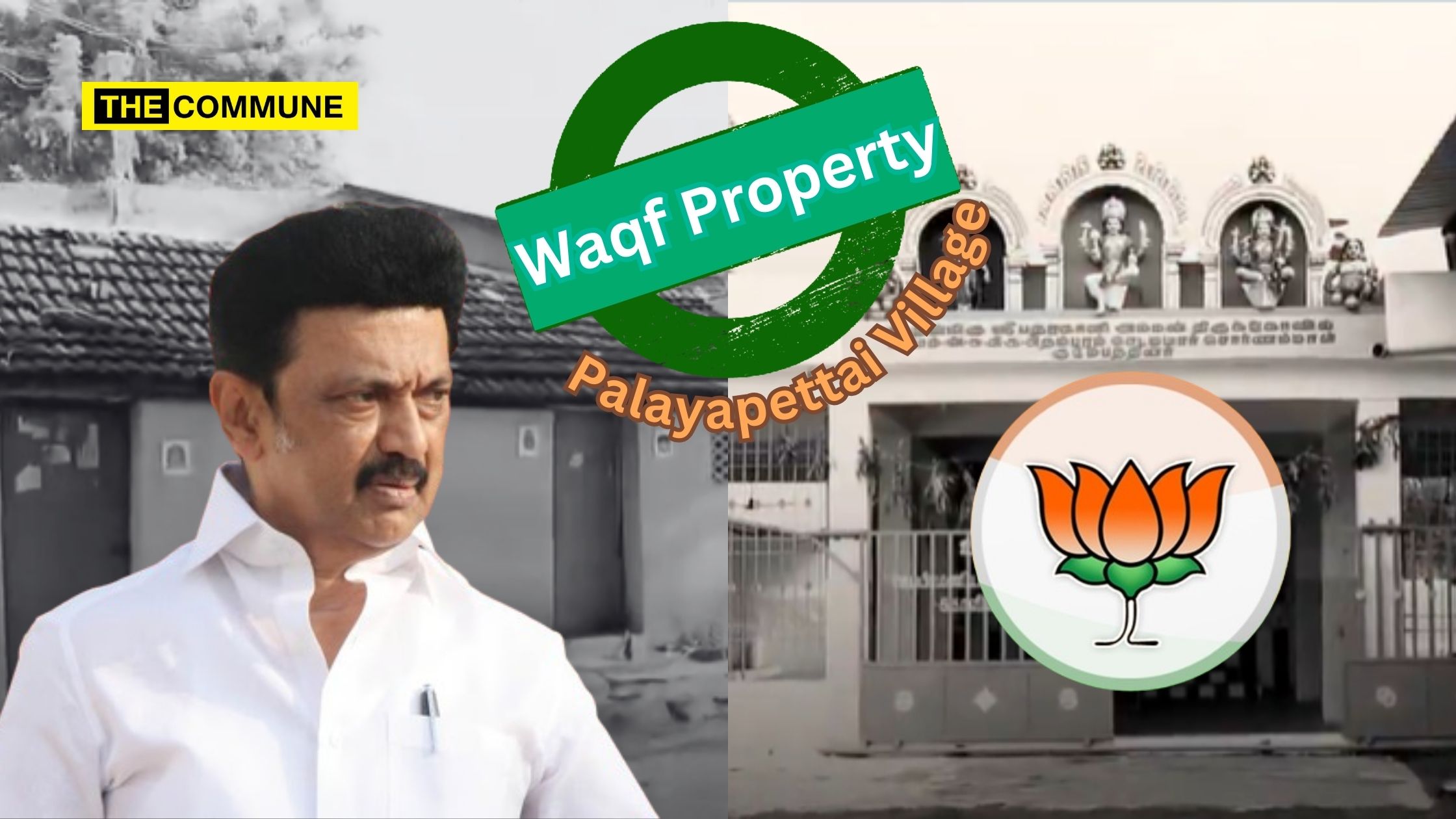
Tamil Nadu BJP Slams DMK’s Resolution Against Waqf Amendment Bill, Highlights Harassment Faced By Palayapettai Residents Due To Their Lands Claimed By Waqf Board

Amid Tamil Nadu Chief Minister MK Stalin’s resolution in the state legislative assembly on 27 March 2025, urging the Union government to withdraw the Waqf (Amendment) Bill, 2024, the Tamil Nadu BJP criticized the ruling DMK’s move. They released a video highlighting the impact of the Waqf Board Act on residents who have lost their livelihoods due to its biased and authoritarian nature, all under the watch of MK Stalin in the state.

The video shared by the Tamil Nadu BJP spotlighted the troubling situation in Palayapettai village in Tirunelveli district, which has around 1,500 homes. Of these, nearly 1,200 homes, some of which have been occupied for five to six generations, are now being claimed by the Waqf Board. Residents face constant harassment from Waqf authorities, who demand bribes for basic services such as setting up street lights, changing deeds from parents to children, or acquiring an NOC certificate. These bribes range from ₹50,000 to ₹1,00,000. Ironically, the Waqf Board, which came into existence in 1954, also claims ownership of a 500-year-old temple in the village.

In response, Tamil Nadu BJP posted on its official X account, stating, “It is high time that this Waqf Act, which continues to encroach upon the lands of indigenous peoples and make them refugees, without any formal documentation, should be amended.”

In the video shared by Tamil Nadu BJP, the party strongly declared, “Land is people’s recognition! Land is people’s identity! Land is people’s right! The Waqf Board seeks to seize the land that people have earned through generations of hard work, overcoming tears and hardships.”

One resident’s family in the video shared their painful experience, saying, “We have been living in the same village, in the same house, for over 150 years. Six generations of our family have lived in this house. I want to transfer the ownership of this house from my mother’s name to mine but when I tried to do, they said, ‘You cannot register it here.’ We asked the Sub-Registrar and he said, ‘Your ward has been blocked.’ When we asked who blocked it, they said, ‘The Waqf Board.’ They told us to go to the Waqf Board and obtain a No Objection Certificate (NOC). When we went to the Waqf Board office to request the NOC they demand ₹50,000 to ₹1,00,000 as a bribe. They keep saying, ‘None of the people in your area have any authority. You are all under the Waqf board’ and create issues by claiming we owe them money.”

Another resident said, “I have all the necessary documents, including the sale deed but they are refusing to proceed with the registration.”

A woman in the village shared her frustration, saying, “They claim that the land belongs to the Waqf Board and refuse to provide anything. The entire wall has cracks. When we approached the bank with the deed to request a loan they refused to provide it. What are we supposed to do?”

Another woman expressed her struggle, saying, “We are unable to build proper toilet facilities or install electric lights. When we request an electricity connection, they demand money. If we want to build a single room on our own land, they ask for separate payment for that too. So, what is the solution for us? We work hard to earn our living, while they exploit and extort money from us.” Another resident added, “They constantly come and harass us, demanding money.”

The 500-year-old temple in the village is also embroiled in disputes, as the Waqf Board claims ownership. This temple, where people have gathered to share their joys and sorrows, and the temple pond where they’ve immersed themselves in prayer, are cherished parts of the community’s life. These sacred places are now being claimed by the Waqf Board.

A villager shared, “This is the pathway to the temple and an arch was constructed here by the trustee but they came and protested saying it shouldn’t be built. We built only after obtaining permission from the police. If we try to do anything good for the temple, they say we shouldn’t. Hence, we are requesting the government authorities to resolve this issue once and for all.”

A female devotee and village resident questioned, “As Hindus, how can we not worship our deity?”

The fate of Palyapettai village in Tirunelveli district hangs in the balance, with houses on the brink of collapse, temple ponds choked with overgrown bushes, and a severe lack of basic amenities such as streetlights and proper roads. The lives of its residents remain uncertain.

Why is the Waqf (Amendment) Act necessary?

  • In 2020, the Tamil Nadu Waqf Board claimed ownership of the entire Balasamudram Municipality in Dindigul district, asserting that their records indicate the area spans 389 acres. Due to ongoing legal disputes, this claim has left approximately 10,000 residents in limbo, as they can now not sell their ancestral properties.
  • In September 2022, the Tamil Nadu Waqf Board claimed ownership of the entire Thiruchendurai village in Tiruchirapalli, including temple lands, sparking significant concern among residents. This claim emerged when local farmer Rajagopal was required to obtain a No Objection Certificate from the Waqf Board to register his land sale, despite having proper revenue documents. The claim was recently debated in parliament, including over the 1,500-year-old Manendiyavalli Sametha Chandrasekhara Swamy temple. The Tamil Nadu Registration Department has acknowledged issues with encroachments and disputed properties but struggled to justify the Waqf Board’s claims over temple lands.
  • In 2023, the Tamil Nadu Waqf Board asserted ownership over land allocated to 73 Scheduled Caste families in Anganakaundan Puthur, Erode District. The Tamil Nadu government provided this land in 1980 after a flood, and since then, it has been their home for 40 years. The Waqf Board’s claim has caused significant challenges, including transferring land titles, registering deeds, and obtaining loans.
  • In January 2023, the DMK government wrongly reclassified 57 acres of agricultural land in Veppur village, Ranipet District, as Waqf Board property. This land, which Hindu families had farmed for decades, was abruptly claimed by the Waqf Board without proper notice or due process, causing considerable distress among the affected farmers.
  • On 11 August 2024, former Tamil Nadu Waqf Board President Abdul Rahman claimed that the Peyazhwar Temple in Mylapore, Chennai, which is allegedly situated on land claimed by the Kutchery Road Mosque.
  • In January 2025, residents of Min Nagar in Kanchipuram district faced challenges after the Tamil Nadu Waqf Board claimed 2.43 acres of land they’ve lived on for over 40 years. The Kanchipuram Registrar’s Office confirmed the claim, hindering property registrations. The land was purchased in 1982 by employees of the Kanchipuram Electric City Office.

Subscribe to our channels on TelegramWhatsApp, and Instagram and get the best stories of the day delivered to you personally.
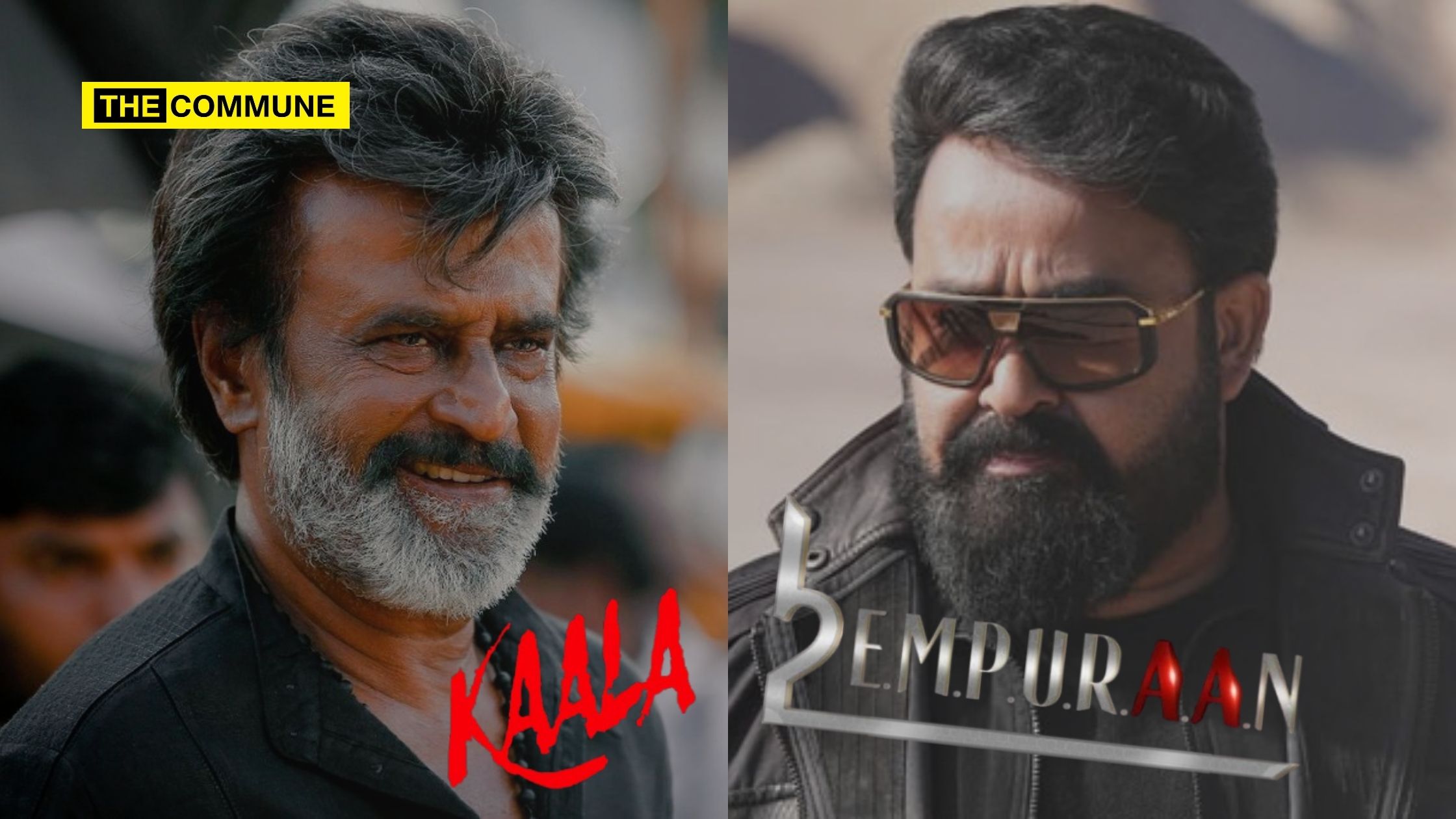
Empuraan Review: Mohanlal Stoops Low Like Rajini To Peddle Anti-Hindu, Anti-BJP, Anti-Modi Propaganda

“L2: Empuraan,” unleashed on March 27, 2025, was billed as Mohanlal’s triumphant return, a sequel to “Lucifer” meant to hoist Malayalam cinema into the stratosphere. Instead, it’s a grotesque propaganda vehicle, steered off a cliff by director Prithviraj Sukumaran and writer Murali Gopy, with Mohanlal as Khureshi Ab’raam/Stephen Nedumpally reduced to a pawn in their sanctimonious game. What could have been a cinematic triumph is instead a shameless assault on Hindu sentiments, the BJP, and Prime Minister Narendra Modi, delivered with the finesse of a drunk uncle ranting at a wedding. Much like Rajinikanth’s trash film “Kaala” which blatantly peddled anti-Hindu and anti-BJP propaganda, “Empuraan” swan-dives into the same cesspool, dragging Mohanlal’s legacy down with it in a spectacle of political posturing and betrayal. If the entire review has to be summarized in a single line – Empuraan is worth nothing except for the meaning you get when you misread the name in Tamil. For a detailed analysis read further.

Kaala:Rajini::Empuraan:Mohanlal

In Kaala, the anti-Hindu streak is blatant and unapologetic. Ranjith casts Rajinikanth as a Dharavi slum leader, a dark-clad “Ravana” figure pitted against Nana Patekar’s white-clad, Ram-worshipping villain, Hari Abhyankar, the leader of Navbharat Nationalist Party (a BJP stand-in). The film flips the Ramayana on its head, glorifying Ravana as a Dravidian hero while mocking Rama as a symbol of oppressive Hindu hegemony. Hindu rituals, like Ganesh Chaturthi, are sneered at, and the antagonist’s devotion to Krishna and Rama is framed as a jibe at Hindus. The messaging is clear: Hindu traditions are tools of the elite to crush the downtrodden, with Dalit and Muslim characters lionized as victims of this savarna savagery. It’s a sledgehammer approach—crude, in-your-face, and dripping with Ranjith’s disdain for anything saffron.

Empuraan, by contrast, takes a slicker, more insidious tack. The fictional Akhanda Shakti Morcha (ASM), a Hindutva party, is a thinly veiled BJP proxy. It’s the BJP and RSS in all but name, cast as barbaric vandals tearing apart Kerala’s “secular” soul. Prithviraj and writer Murali Gopy don’t just stop at political critique—they caricature Hindu karsevaks as violent thugs, while their foes, including Mohanlal’s shadowy protagonist, emerge as morally superior. The film’s symbolism, like burning crosses and collapsing “L”s, subtly mocks Hindu iconography, but it’s less about rewriting epics and more about painting Hindu nationalism as a modern-day plague. The reference to the 2002 Gujarat Riots where the Hindus are shown as merciless villains while Muslims are shown as the poor hapless souls, you know what this trash film is all about. Where Kaala screams its Hinduphobia, Empuraan smirks through a polished lens, cloaking its contempt in a veneer of sophistication.

Anti-BJP Stance And Secular Sanctimony

Both films frame the BJP as a villain, but their battlegrounds differ. Kaala ties its anti-BJP stance to Tamil pride, pitting the Navbharat Nationalist Party (a BJP stand-in) against Rajinikanth’s black-clad, tricolour-defying hero. The party’s lion symbol (a nod to Gujarat and Modi) and saffron imagery are ridiculed as alien impositions on Tamil soil. It’s a regionalist middle finger to BJP’s national ambitions, amplified by Ranjith’s blue-flag-waving Ambedkarite defiance. The film thrives on this us-versus-them clash, reveling in its rejection of Hindutva’s electoral dominance outside Dharavi.

Empuraan takes a broader, more sanctimonious swipe. The ASM’s infiltration of Kerala is less about regional chauvinism and more about a moral crusade against BJP’s communal politics. Prithviraj’s narrative oozes Kerala’s self-righteous secularism, casting the BJP as a predatory outsider disrupting a utopian social fabric.

The real threat to Kerala is from the Islamists who have made Malappuram a hot bed of radicalization threatening the unity and sovereignty of India. Love Jihad is a dreaded reality affecting both Hindu and Christian families in the state. Radical Islamists have carved out Pakistan-like enclaves for themselves. However, this ‘peaceful community’ is never shown in bad light but the film goes out of the way to slander vocal Hindus.

Propagandist Prithviraj

All this propaganda is thanks to Prithviraj, the self-styled auteur whose fingerprints are all over this debacle. His direction reeks of a smug, elitist disdain, turning a potentially gripping tale into a soapbox for his thinly veiled political biases. He’s not just a filmmaker here—he’s a pontificating crusader, using “Empuraan” to flex his woke credentials while thumbing his nose at Hindus. The ASM’s every sneer and saffron symbol screams anti-Modi venom, a cheap ploy that’s less subtle than a brick through a window. It rails against division while wallowing in its own stereotypes, reducing Kerala to a melodramatic cesspit for clout. Prithviraj’s posturing as a progressive darling is laughable—he’s less a visionary than a sanctimonious hack, peddling divisive tripe under the guise of art.

The visuals—jungle fights, Mohanlal’s grand entry—are undeniably slick, a testament to technical prowess that briefly distracts from the rot. But it’s lipstick on a pig. Prithviraj’s heavy-handed messaging turns every frame into a lecture, alienating ardent Mohanlal fans. His political grandstanding doesn’t elevate the film; it guts it, leaving a hollow shell that’s neither entertaining nor insightful.

Mohanlal Stoops Low To Become A Rajinikanth

Mohanlal’s fans are left reeling. After a string of flops, this was his lifeline, but Prithviraj’s insufferable agenda has turned it into a millstone. The superstar’s charisma shines through, yet he’s shackled to a narrative that betrays his roots, a man who was admired by people across the ideological/political spectrum has turned himself into a propaganda pawn now complicit in trashing Hindus.

Malayalam cinema’s golden boy risking his universal appeal for a partisan jab.

A Propaganda That Should Be Trashed 

In the end, “L2: Empuraan” is a dazzling disaster—a propaganda-soaked mess that sacrifices art for ideology. Mohanlal’s star power can’t save it, and Prithviraj’s insipid political posturing only deepens the wound. Both Kaala and Empuraan wield anti-Hindu, anti-Modi, and anti-BJP propaganda. Like Kaala, it’s a film that spits on Hindu identity, demonizes nationalism, and grovels to anti-Modi dogma, all while its director preens like a self-righteous martyr. It is a shame that Rajinikanth and Mohanlal, titans of their industries, lend their stardom to these agendas.

A legacy tarnished, a fanbase betrayed, by becoming the pawns of pompous frauds.

Vallavaraayan is a political writer. 

Subscribe to our channels on TelegramWhatsApp, and Instagram and get the best stories of the day delivered to you personally.

Farmers File Petition Against DMK Functionary For Trespassing And Attempting To Grab Land In Pollachi, Another DMK Functionary From Same Region Also Accused Of Another Land Grab

Fearing for their lives, farmers who own private land have submitted a petition to the Sub-Collector’s Office, requesting action against a DMK functionary who allegedly trespassed onto their estate in Athupollachi near Pollachi and threatened those supporting the opposing side in an ongoing land dispute.

A dispute exists over ancestral land between Sethilvel, a resident of Athupollachi near Pollachi and his father. The case is currently pending in the Pollachi Civil Court. In the meantime, there have been attempts to illegally seize the land by forging documents in collaboration with a land fraudster. Amid this situation, a DMK functionary from Cheran Nagar, Pollachi, reportedly trespassed onto the property and threatened those present, telling them to leave. He allegedly claimed that due to his significant position in the party, he was powerful and could act without consequence. The petition demands an investigation into these actions, appropriate measures against the DMK leader, and the provision of security for the victims.

In a related incident last week, another DMK executive was accused of land grabbing. Ramakrishnan, a DMK member and the Chairman of Kottur Panchayat near Pollachi in Coimbatore district, has been the subject of numerous complaints. In response, DMK councilors held a sit-in protest at the Kottur Panchayat, accusing him of corruption and the poor management of public works, which has shocked many.

Ramakrishnan is also under investigation for alleged irregularities in the silt removal project at the Aliyar Dam as part of the Kudimarathu project. Consequently, the Coimbatore District Collector ordered the suspension of the silt removal work. More recently, Ramakrishnan has been accused of trying to seize property from a woman, which led her to release a video and attempt suicide. The woman, said to be a relative of Ramakrishnan, alleges that he has been pressuring her to sell all her properties. Distressed by this, she submitted a letter to the police, stating that his actions played a role in her suicide attempt. This incident has caused an uproar in the Pollachi area.

Subscribe to our channels on TelegramWhatsApp, and Instagram and get the best stories of the day delivered to you personally.
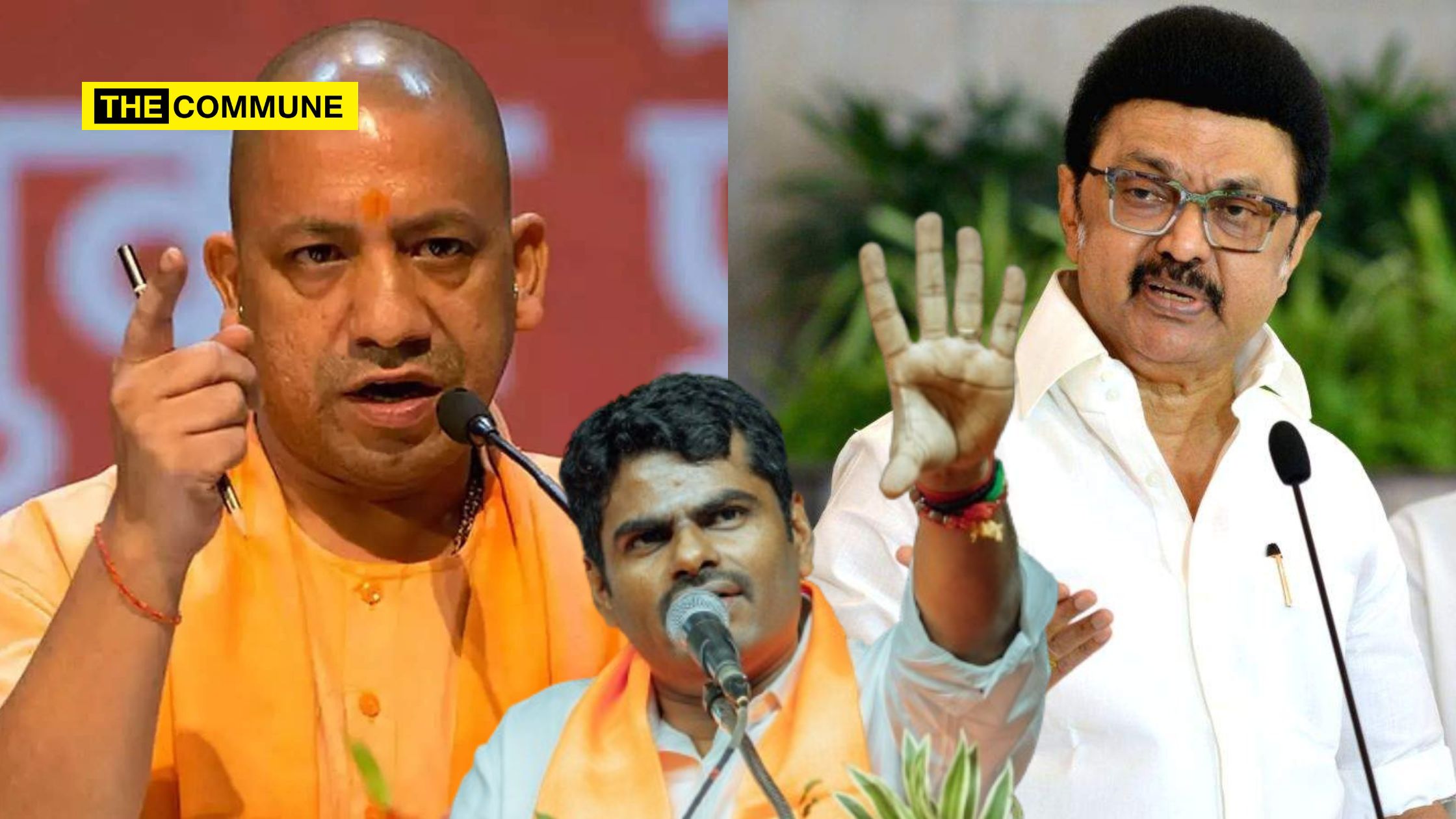
“You Are A Con Artist Masquerading As Protector Of Constitution,’ Annamalai Slams CM MK Stalin For Hypocrisy On 3 Language Policy

Tamil Nadu BJP President Annamalai has fiercely criticized Chief Minister MK Stalin, accusing him of being a “con artist” pretending to defend the constitution. This comes amid the escalating controversy surrounding the three-language policy, which has sparked debates across states. Recently, Uttar Pradesh Chief Minister Yogi Adityanath also called out the hypocrisy of the ruling DMK in Tamil Nadu.

In a post on his official X account, Annamalai responded to the criticism of Stalin, saying, “Thiru @mkstalin, you are a con artist masquerading as a protector of our constitution & our federal structure. Usually, con artists scam the rich, but DMK shows no disparity; they scam both the rich and the poor. The whole country now knows that the Chief Minister of Tamil Nadu’s family owns private schools that teach three languages & more but opposes the same policy for the state’s Government school students. They are calling you a hypocrite, Thiru @mkstalin. TN CM thinks that the orchestrated drama by his partymen in pockets here and there reflects the voice of entire TN. It is also unfortunate that you haven’t realised that your attempts to divert people’s attention to insignificant matters have been exposed. Live in your blissful world of ignorance, Thiru @mkstalin. We will not disturb you.”

Annamalai’s pointed rebuttal to CM MK Stalin came in response to Stalin’s recent remarks, which were a reply to Uttar Pradesh Chief Minister Yogi Adityanath’s statement. Adityanath had accused the DMK of attempting to create divisions whenever they felt their vote bank was under threat, specifically regarding the three-language policy debate.

In his response, Stalin claimed that Tamil Nadu’s firm position on the Two Language Policy and Fair Delimitation was gaining nationwide attention, which, according to him, was unsettling the BJP. Furthermore, he mocked Uttar Pradesh Chief Minister Yogi Adityanath’s comments on hate, stating, “Spare us. This isn’t irony—it’s political black comedy at its worst,” and emphasized that the DMK doesn’t oppose any language but stands against imposition and linguistic chauvinism, asserting that the issue isn’t about “riot-for-votes politics” but rather a fight for dignity and justice.

Chief Minister MK Satlin said, “Tamil Nadu’s fair and firm voice on #TwoLanguagePolicy and #FairDelimitation is echoing nationwide—and the BJP is clearly rattled. Just watch their leaders’ interviews. And now Hon’ble Yogi Adityanath wants to lecture us on hate? Spare us. This isn’t irony—it’s political black comedy at its darkest. We don’t oppose any language; we oppose imposition and chauvinism. This isn’t riot-for-votes politics. This is a battle for dignity and justice.”

Subscribe to our channels on TelegramWhatsApp, and Instagram and get the best stories of the day delivered to you personally.
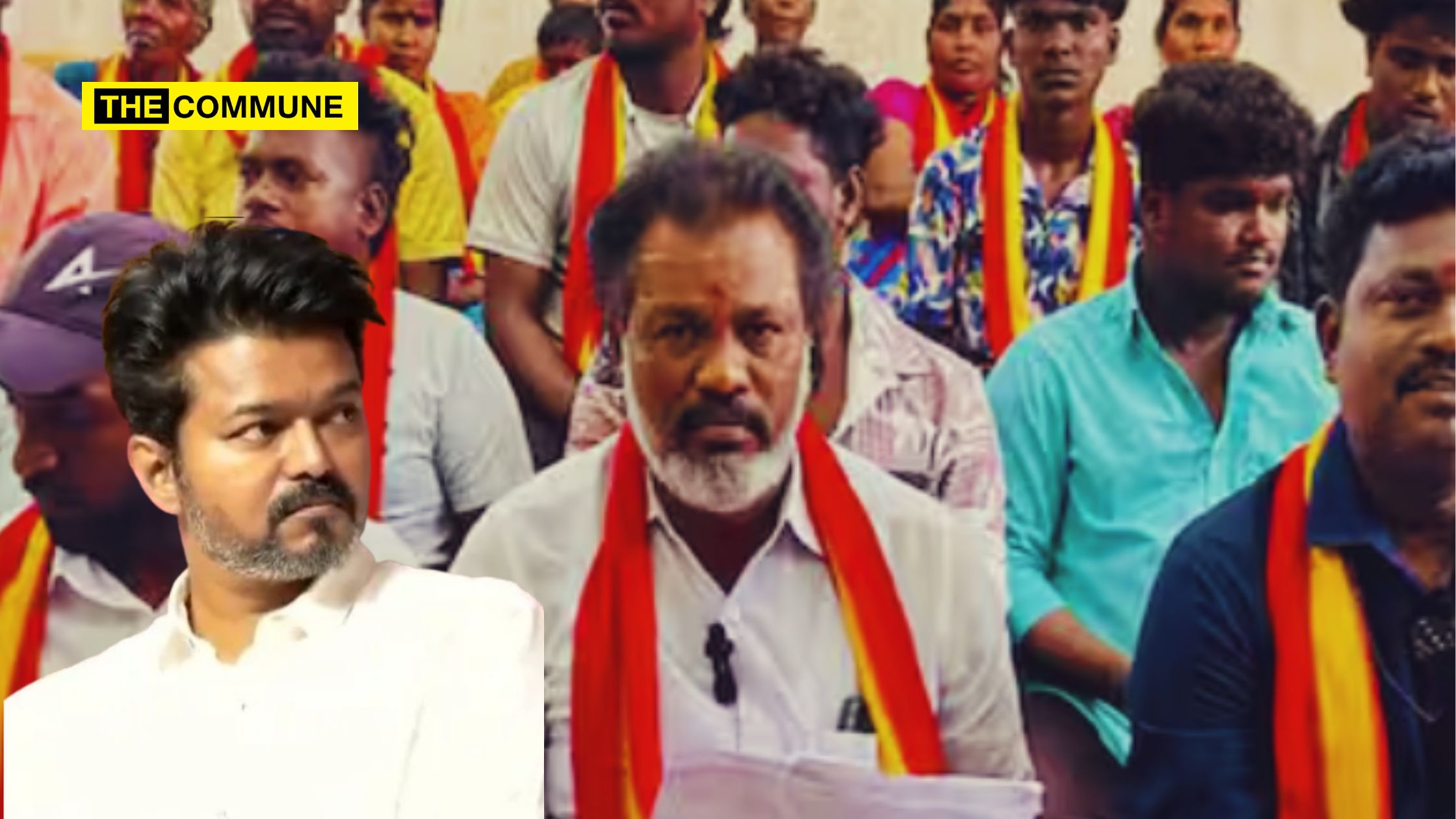
Cash For Posts: Executives Of Part-Time Politician Vijay’s TVK Party Accuse Leadership Of Demanding Money For City & District Positions

Part-time politician Vijay’s Tamilaga Vettri Kazhagam (TVK) party is once again embroiled in controversy following allegations from party executives. They claim that the high command is soliciting monetary payments from individuals seeking various positions within the party, with State General Secretary Anand reportedly turning a blind eye to the complaints.

Speaking to reporters in Villupuram, Seeman Kumaresan, a TVK executive claimed that Kushi Mohan, the South Villupuram District Secretary, is demanding sums ranging from ₹3 to ₹15 lakh for city and district positions. The executives further accused the party of offering positions to individuals with no prior affiliation to TVK or fan club. They also alleged that the amount solicited with the full awareness of Anand, and accused him of preventing leader Vijay from being informed about the issue.

TVK executive Kumaresan stated, “Villupuram District Secretary Mohan is demanding money for all positions. He asked me ₹4 lakh for the post of district executive member. Here’s the proof. I first met Thalapathy in 1995 during the filming of Vishnu. I’m a ardent fan of Thalapathy and have been involved since the days of Vijay Makkal Iyakkam. Similar to me, he has asked everyone for money in exchange for posts. When I questioned him about why he’s demanding money like this, he said ‘The leadership demands it.’ When I asked, ‘Who is the leadership, Vijay?’ he replied, ‘No’.” 

Kumaresan then showed evidence of a demand draft cheque from a person named Ilayaraja, explaining that he was interviewed and selected for the post of city secretary. However, Kushi Mohan, the South Villupuram District Secretary, denied him the position and gave it to another person named Mubarq, who had come from the DMK. Kumaresan also mentioned another individual who had requested the post of East District Secretary and, despite donating a sewing machine for welfare assistance on the 19th, was also asked for an additional ₹50,000 by Kushi Mohan.

During the press conference, Kumaresan raised a question about who exactly is demanding the money. When he was told it was the party leadership, he asked if Vijay was the one requesting the money, to which the answer was no. He then questioned, “If not Vijay, then who exactly is this leadership?”

In a dramatic gesture during the press conference, the executives tore up the cheque that had been used to pay for a TVK position, underscoring their frustration with the situation.

Subscribe to our channels on TelegramWhatsApp, and Instagram and get the best stories of the day delivered to you personally.
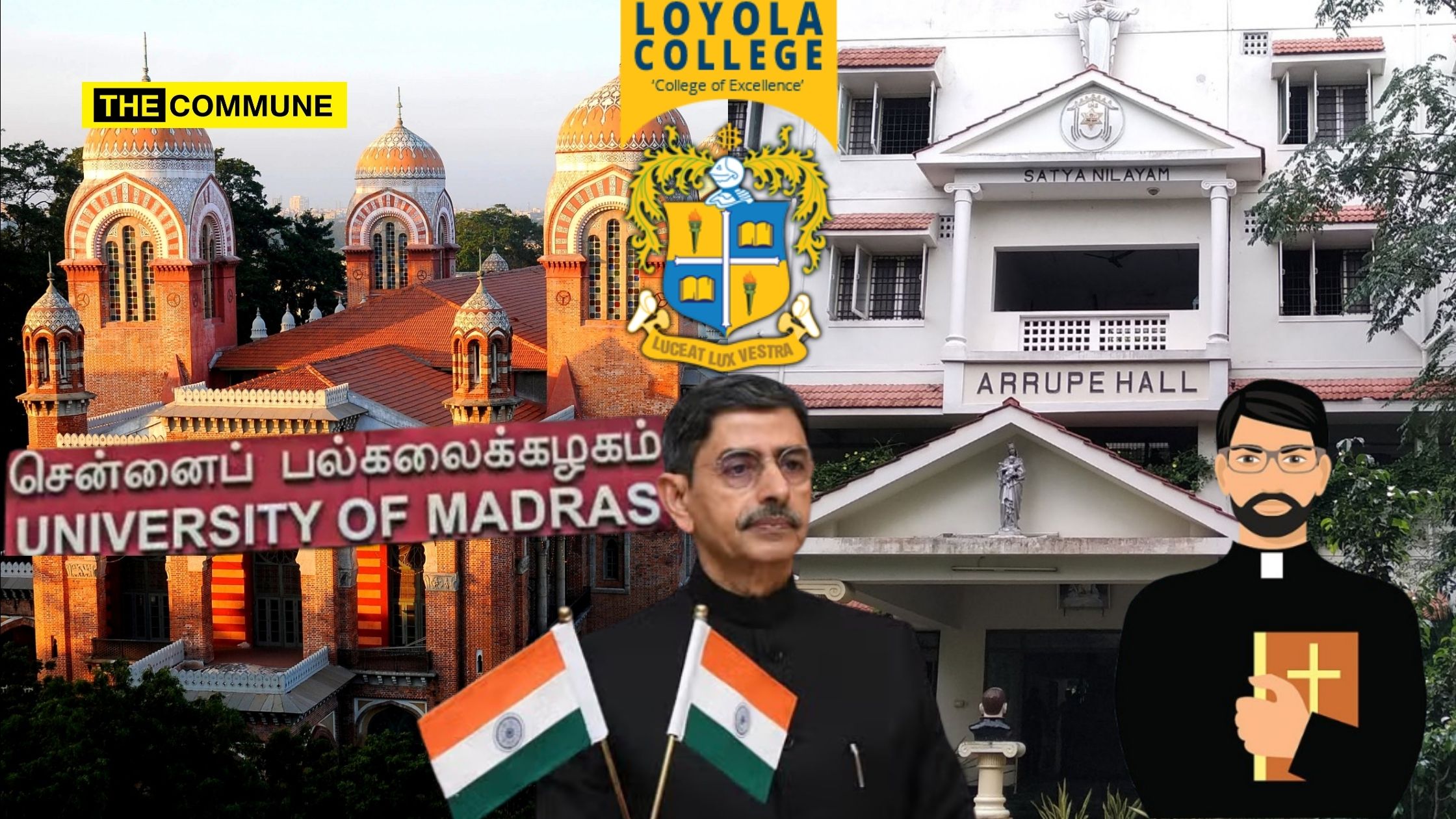
Loyola College Scandal: Complaint Filed With TN Governor Seeking Action Against Madras University Registrar For Not Preventing Academic Fraud In Unauthorized Catholic Priest Training College

A major controversy has erupted in Tamil Nadu’s academic circles following a formal complaint filed by the Legal Rights Protection Forum (LRPF) against the Registrar of the University of Madras, Prof. S Elumalai, for allegedly endorsing large-scale academic fraud involving Loyola (Autonomous) College, Chennai. The complaint, submitted to the Governor of Tamil Nadu, seeks immediate disciplinary action against the registrar and calls for the cancellation of all M.A. Philosophy degree certificates issued fraudulently under the name of the University of Madras.

The complaint alleges that Loyola College has been unlawfully conducting its M.A. Philosophy program at an unapproved off-campus facility named Satya Nilayam, a Jesuit missionary training center. Despite this, students completing their studies at Satya Nilayam allegedly received degree certificates bearing the name and official logo of the University of Madras—a violation of university affiliation rules.

Key Allegations In The Complaint

  1. Unauthorized Off-Campus Operations: The M.A. Philosophy program, officially affiliated with Loyola College, is allegedly being conducted at Satya Nilayam, which is not an approved campus under the University of Madras.

  2. Manipulation of Online Records: Following the previous complaint filed on February 27, 2025, Satya Nilayam allegedly removed all references to Loyola College from its official website—an attempt to erase evidence of wrongdoing. However, digital archives like the Wayback Machine retain historical records, confirming the prior affiliation.

  3. Fraudulent Issuance of Degrees: The complaint includes a copy of an M.A. Philosophy degree certificate issued in 2005 under the name of the University of Madras to a student enrolled at Satya Nilayam instead of Loyola College.

  4. Failure of University Oversight: The University of Madras allegedly failed to conduct mandatory inspections of Loyola College’s campus, leading to unchecked violations. Additionally, an RTI response from 2023 shockingly revealed that the university had “lost” the original affiliation order for Loyola College.

  5. Potential National Security Violations: The forum claims that Loyola College has been inviting foreign nationals under the pretense of academic studies but instead providing missionary training at Satya Nilayam—a possible breach of Indian visa regulations and a national security concern.

Demands For Action

The Legal Rights Protection Forum has urged the Tamil Nadu Governor to:

  • Initiate disciplinary proceedings against the Registrar of the University of Madras for failing to prevent or investigate the alleged fraud.

  • Cancel all M.A. Philosophy degrees issued by Loyola College since 1998 under the University of Madras’ name.

  • Direct law enforcement agencies to investigate and register an FIR against Loyola College management for academic fraud and misuse of university credentials.

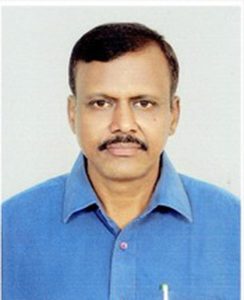
Registrar of Madras University

University & Loyola College Yet to Respond

Despite the severity of the allegations, neither Loyola College nor the University of Madras has issued an official statement in response to the complaint. Academic circles and student communities are now demanding greater transparency and accountability in the university’s affiliation policies.

As the controversy unfolds, the Tamil Nadu government and higher education authorities are expected to take cognizance of the issue, with many calling for an independent inquiry into the matter.

Subscribe to our channels on TelegramWhatsApp, and Instagram and get the best stories of the day delivered to you personally.
‘Prachand Prahaar’, Army’s Tri-Service Multi-Domain Warfare Exercise In Arunachal Pradesh

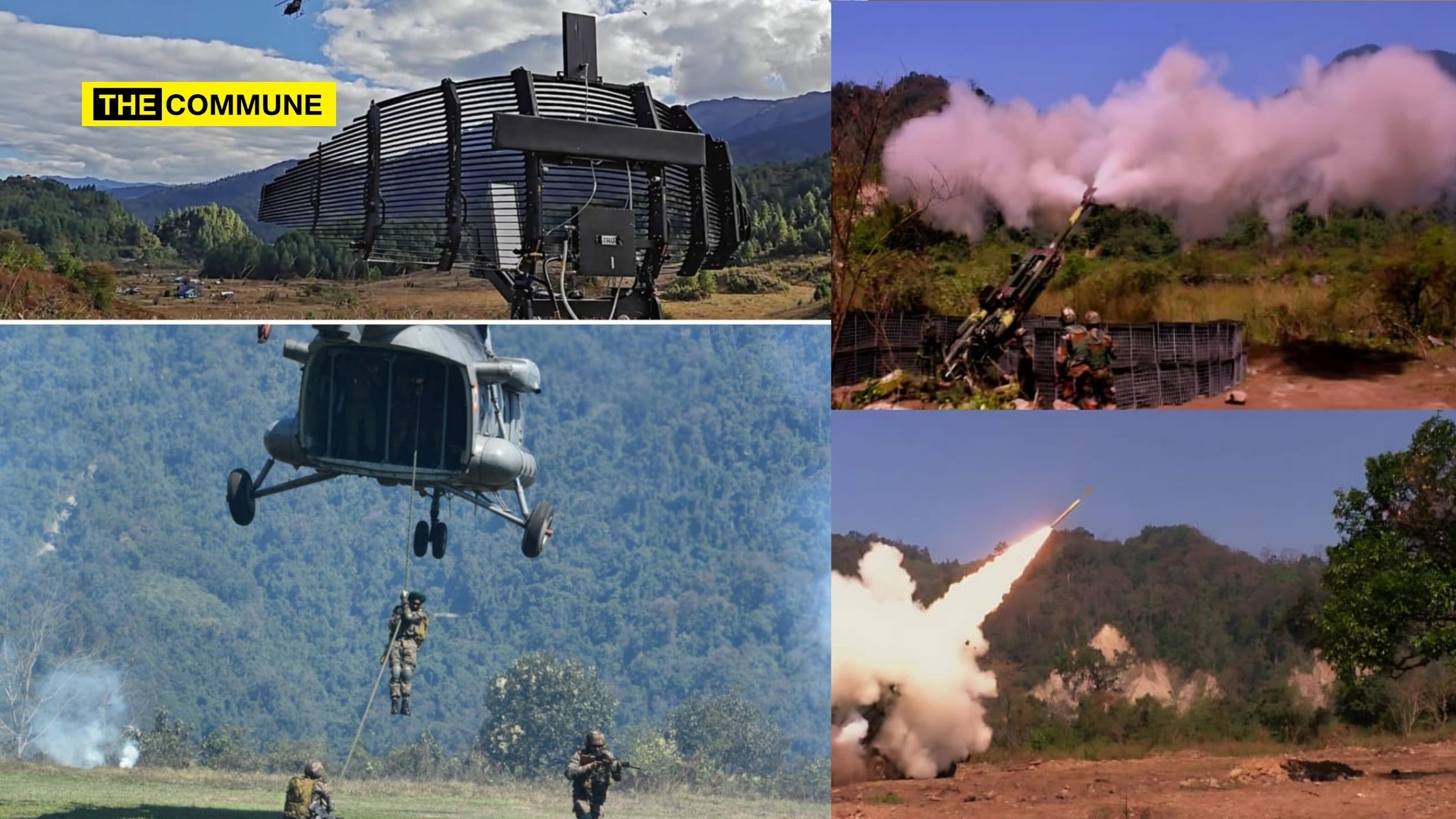
In a powerful demonstration of joint operational capability, the Indian Army on Thursday conducted a highly effective and important ‘Integrated Multi-Domain Exercise’.

This Tri-Service Integrated Multi-Domain Warfare Exercise was held in the Eastern Theatre, deep in the high-altitude terrain of Arunachal Pradesh. According to the officials, the exercise, named ‘Exercise Prachand Prahaar’, was held from March 25 to 27. The exercise brought together the Indian Army, Indian Air Force, and other elements of the Indian Armed Forces in a synergised combat drill designed to simulate future warfare.

The exercise was carried out under the aegis of the Eastern Command, showcasing the seamless integration of advanced surveillance, strike capabilities, and multi-domain operational planning. Cutting-edge platforms such as long-range maritime reconnaissance aircraft, armed helicopters, UAVs, loitering munitions, and space-based assets were employed to achieve total situational awareness and rapid target engagement, the officials said.

Once simulated targets were identified, they were swiftly neutralised through coordinated strikes using fighter aircraft, long-range rocket systems, medium artillery, swarm drones, kamikaze drones, and armed helicopters — all executed in an electronically contested environment that simulated modern battlefield conditions, officials added.

Lieutenant General Ram Chander Tiwari, General Officer Commanding-in-Chief, Eastern Command, and Air Marshal Surat Singh, Air Officer Commanding-in-Chief, Eastern Air Command, reviewed the exercise and commended the troops for their operational excellence and high degree of professionalism.

This integrated tri-service drill builds on the momentum of ‘Exercise Poorvi Prahar’ held in November 2024, which focused primarily on the integrated application of aviation assets. Exercise Prachand Prahaar has now taken that concept further by validating a fully integrated approach to surveillance, command and control, and precision firepower across the three services, said the officials.

The exercise stands as a testament to the Indian Armed Forces’ growing emphasis on jointness, technological superiority, and readiness to tackle multi-domain threats. It reinforces India’s resolve to deter and, if necessary, decisively respond to any emerging security challenge along its strategic frontiers.

–IANS

Subscribe to our channels on TelegramWhatsApp, and Instagram and get the best stories of the day delivered to you personally.