Home Blog Page 603

“My Daughter May Have Been Murdered, Management Trying To Cover Up”: Parents Of Girl Who Died In Vikravandi St Mary’s Matriculation School Seek CB-CID Probe

ia Lakshmi, who died under suspicious circumstances at St. Mary’s Matriculation School in Villupuram, have petitioned the district collector, alleging foul play in her death and requesting a CB-CID investigation.

The parents of Lia Lakshmi, who died under suspicious circumstances at St Mary’s Matriculation School in Villupuram, have petitioned the district collector, alleging foul play in her death and requesting a CB-CID investigation. The father, K. Palanivel, accused the school of fabricating claims that his daughter accidentally fell into a septic tank, citing missing CCTV footage and inconsistencies in the school’s account. Facing threats to drop their pursuit of justice, the family has also sought government protection, intensifying demands for accountability and a thorough probe into the case.

Palanivel is a contract worker at the e-service centre in Vikravandi, and his wife is Sivashankari. Their daughter, three-and-a-half-year-old Lia Lakshmi, attended LKG at the St. Mary’s Matriculation Higher Secondary School at Vikravandi in Villupuram district.

In a petition submitted to the Villupuram Superintendent of Police, Palanivel expressed suspicions that Lia Lakshmi may have been murdered within the school. He claimed the school management was attempting to cover up the crime by fabricating the story that she accidentally fell into the septic tank.

Palanivel pointed out that the school has 37 CCTV cameras, yet the management only provided footage from 32 of them, withholding the remaining five. He stated that the footage submitted shows a teacher carrying his daughter toward the septic tank at 2:14 PM on the day of the incident, only to be seen carrying her back in the opposite direction shortly thereafter.

He further alleged that the school tampered with the CCTV footage that was not immediately submitted to the authorities and that staff members were involved in concealing the truth, creating a false narrative that his daughter’s death was accidental.

Palanivel calls for the police and school authorities to present all CCTV recordings to the court, as he believes there are efforts to destroy evidence. Disillusioned with the ongoing investigation, he has requested the case be transferred to the CB-CID to ensure a thorough examination of the circumstances surrounding his daughter’s death and bring the responsible parties to justice. He also reiterated his plea for government protection, citing the threats his family has received.

Sivashankari, speaking to the press, said, “My daughter reads way better, but she won’t write, and the teacher had beaten her for that. Something happened to my child. They should have immediately taken her to the hospital, but instead, they kept her in the school and created drama, saying, ‘My daughter died after falling into the septic tank’, and ‘She died because of feeding food.’ The teacher claimed that when she took attendance at 2:00 PM, my daughter was present and said she needed to go to the restroom. Afterwards, she went missing. They searched for her, and a driver, using a torchlight, noticed a white shoe, then they searched with a stick, found something, and then found her. But this is not the truth—it’s a lie. This case should be transferred to the CB-CID, and they should investigate to uncover what happened.”

Sivashankari expressed further suspicion, stating, “She was wearing red shoes and white bottom, but the driver claimed that when they used a torchlight, they saw a white shoe,  then they searched with a stick. This raised our doubts. Additionally, if a child had fallen into a septic tank, there should have been mud or water on her, but nothing was there. But when the police showed the photos of the shoes today, one was black and the other was white—why is that? One shoe appears like she slipped into the septic tank, while the other is white. Also, my daughter’s ribbon had blood on it, and there were two bloodstains on her shirt. I could smell bleach powder from it. How could there be a bleach smell in the septic tank?”

Accused Granted Bail

On 10 January 2024, the Madras High Court granted bail to the correspondent, principal, and teacher of St. Mary’s Matriculation Higher Secondary School in Vikravandi, Villupuram district.

Justice A.D. Jagadish Chandira granted bail to Sister A. Emelda, Sister A. Dominic Mary, and teacher A. Angel, following a request from senior counsel Rev. Fr. A. Xavier Arulraj. The petitioners had been in custody since 4 January 2025. Arulraj informed the court that the school management was willing to offer ₹5 lakh as ex-gratia, in addition to ₹3 lakh from the State government, to the child’s family.

The judge ordered the school correspondent to provide a demand draft in favour of the child’s father to the trial court, which was then instructed to hand it over to the parents. Upon being released on bail, the petitioners were directed to stay in Chennai for a week and report daily to the Mylapore police station, in addition to adhering to all other standard bail conditions.

(With Inputs From TOI)

Subscribe to our channels on TelegramWhatsApp, and Instagram and get the best stories of the day delivered to you personally.

“Sekarbabu Came With His Family, Chased Away Devotees”: BJP TN Head Annamalai Slams DMK HR&CE Minister For Abuse Of Power As Devotees Complain Of Not Having Darshan At Srirangam Temple Sorgavaasal On Vaikunta Ekadasi

BJP TN Head Annamalai Slams DMK HR&CE Minister For Abuse Of Power As Devotees Complain Of Not Having Darshan At Srirangam Temple Sorgavaasal On Vaikunta Ekadasi

Chaos and mismanagement marred Vaikuntha Ekadasi celebrations at the Srirangam Ranganathaswamy Temple as devotees protested delays, poor arrangements, and VIP favouritism for HR&CE Minister PK Sekarbabu. He faced backlash from BJP Tamil Nadu President K. Annamalai for alleged abuse of power during the event, sparking a dispute over handling this sacred occasion.

Vaikunta Ekadasi At Srirangam Ranganathaswamy Temple

Vaikunta Ekadasi is one of the most auspicious days in the Hindu calendar, particularly for devotees of Lord Vishnu. The event holds immense significance at the Ranganathaswamy Temple in Srirangam, Tamil Nadu.

On the auspicious morning of Vaikuntha Ekadasi, the deity is adorned with grandeur and escorted from the inner sanctum to the thousand-pillared hall. The procession passes through the northern entrance, known as Paramapada Vasal, which signifies the path to Vaikuntha. This sacred gateway is unlocked and opened for all devotees exclusively on Vaikuntha Ekadasi. According to tradition, devotees who walk through this gate are believed to attain Vaikuntha, earning it the title of Swarga Vaasal (Sorgavaasal), or the gateway to heaven.

The HR&CE Department every year collects fee from devotees to issue tickets to this event. This year too, a large number of devotees have been waiting since midnight to attend this holy event, having paid their fees. Since the Sorgvaasal opens at 05:15 AM, devotees will be allowed to enter these mandapams within the Ariyapadal Vasal by 02:00 AM. According to a local news report, many had arrived by 1:30 am, well before the timing mentioned in the passes. They were made to stand in a queue in the Garuda Mandapam area outside the Ariyapadal and were not allowed to enter until 4 AM. Many complained of not being able to have darshan of the Lord and enter the Sorga Vaasal.

A mother who had come with her son lamented saying “Why should we wait at the gate after paying the fee to have darshan of the Lord?”. The enraged devotees got into an argument with the police about not letting them in. They also accused the police of filming them in their mobile phones as if they were criminals.

On the other hand DMK HR&CE Minister PK Sekarbabu had come with his family to darshan of the Lord at Sorgavaasal.

Many returned grumbling about the chaos caused by the Srirangam temple administration in distributing passes to devotees. Meanwhile, the police blocked journalists attempting to enter through the Vellai Gopuram. This led to a heated exchange between the journalists and the police. The police officers persistently spoke disparagingly to the journalists, saying that they cannot enter with this pass issued by the temple administration.

BJP Tamil Nadu K. President slammed the DMK Minister Sekarbabu for the abuse of power and the pathetic arrangements made by the administration for the devotees at the Srirangam Temple.

Since the Minister of Hindu Religious & Charitable Endowments, Mr. Shekar Babu, came with his family, they prevented the devotees from entering the temple. In particular, Minister Shekar Babu chased away all the devotees and journalists present there. I strongly condemn the abuse of power by Minister Shekar Babu and his family by not allowing devotees to attend a temple function on an auspicious day. There is a limit to everything. Minister Shekar Babu is acting beyond that limit.“, Annamalai said.

I would like to remind the minister of the proverb that even if you smear oil on your body and roll in the dirt, only what sticks will stick. It is pitiful to see a minister who, on a holy day, behaves in a way that earns the hatred, anger, and curses of all the devotees in the presence of the Lord, believing that Lord Ranganatha will grant him blessings.“, he further added.

Subscribe to our channels on TelegramWhatsApp, and Instagram and get the best stories of the day delivered to you personally.

Kanyakumari SP Suspends Suchindram SSI On Corruption Charges After Viral Video Surfaces

Kanyakumari SP Suspends Suchindram SSI On Corruption Charges After Viral Video Surfaces

On 8 January 2025, Kanyakumari Superintendent of Police (SP) R Stalin suspended a Special Sub-Inspector (SSI) on corruption charges.

The action followed a complaint against Satheesh Kumar, the SSI of Suchindram police station, accusing him of accepting a bribe from a temple administrator.

A temple festival was being held in the Anju Kudiryiruppu area, and devotional songs were being played through loudspeakers. When Satheesh Kumar came to the area during his patrol, he complained about being very loud and demanded a bribe.

A viral video circulating on social media showed the SSI receiving money from the temple official.

Following this, the district SP launched an investigation, confirming Satheesh’s involvement in corrupt practices. Consequently, the SP ordered his suspension from duty, a decision that has been widely appreciated.

(With inputs From The Hindu)

Subscribe to our channels on TelegramWhatsApp, and Instagram and get the best stories of the day delivered to you personally.

“We Can’t Cancel NEET, Only Centre Can,” Says MK Stalin To Palaniswami

We Can't Cancel NEET, Only Centre Can, Says MK Stalin To Palaniswami

The ruling DMK, which had previously promised to cancel the NEET entrance exam upon coming to power, has now reversed its stance. During a debate in the Tamil Nadu Legislative Assembly, Chief Minister MK Stalin stated, “We cannot cancel the NEET; only the Centre has the authority to do so.” This remark came in response to a debate by AIADMK General Secretary and Opposition Leader Edappadi K Palaniswami in the Legislative Assembly.

The Tamil Nadu Governor’s speech is currently under debate in the Legislative Assembly. During the session, Leader of the Opposition Edappadi Palaniswami raised a question about the electoral promise made by the DMK government, asking, “What happened to the assurance that the NEET exam would be exempted before the 2021 Legislative Assembly elections?” In response, Chief Minister M.K. Stalin stated, “If the I.N.D.I alliance had come to power, the NEET exemption would have been granted. Additionally, the matter is already in court.”

Edappadi Palaniswami further accused the DMK of playing a “double role” on the issue. He pointed out that the NEET exemption push was only brought up when the DMK was in coalition with Congress and expressed doubt about the I.N.D.I alliance coming to power anytime soon. “You made the promise knowing this,” he said.

In reply, M.K. Stalin criticized the AIADMK for its alleged fake alliance with the BJP. Palaniswami, not backing down, asked, “Why did you invite BJP Union Minister to launch the Kalaignar Centenary Coin while in alliance with I.N.D.I?”

Stalin responded, “What’s wrong with inviting the Union Minister for the coin release? We invited the Prime Minister, but since he couldn’t attend, the Union Minister came instead. Isn’t that normal? And didn’t you play four roles to keep your government in power for four years?”

At this point, Palaniswami reiterated that the AIADMK is not in alliance with the BJP, but after an interruption from Speaker Appavu, the discussion on the NEET issue was concluded.

(With inputs From PTTV News)

Subscribe to our channels on TelegramWhatsApp, and Instagram and get the best stories of the day delivered to you personally.

Minor Male Student Sexually Assaulted By Other Students At Madrasa In Theni; Three Arrested, Madrasa Head Who Ignored Complaints Absconding

Minor Male Student Sexually Assaulted By Other Students At Madrasa In Theni; Three Arrested, Madrasa Head Who Ignored Complaints Absconding

A 14-year-old student staying at a madrasa in Theni district was allegedly sexually assaulted by two fellow students, aged 14 and 17, in two separate incidents. The victim, a Class 9 student, is currently recovering in the intensive care unit (ICU) of Theni Government Hospital after undergoing surgery.

The first incident occurred on 19 November 2024, when a 17-year-old youth allegedly took the victim upstairs and sexually harassed him. The victim reported the incident to the madrasa’s chief administrator, Farooq (55), but no action was taken.

The second incident took place on 1 January 2025, when another 14-year-old student sexually assaulted the victim while he was sleeping. The victim experienced severe pain and informed the madrasa administrator, Sarfuddin (45), at around 2:00 AM, requesting to be sent home to his parents. However, Sarfuddin refused to take any action.

The following day, on 2 January 2025, the victim returned home and informed his parents about the assault and the pain he was experiencing. He was immediately taken to Theni Government Hospital, where he underwent surgery and is now in the ICU.

Based on a complaint filed by the victim’s parents, the Theni Women’s Police registered a case under the Protection of Children from Sexual Offences (POCSO) Act against the two accused students, aged 14 and 17, as well as the madrasa’s chief administrator, Farooq, and administrator, Sarbuddin.

Police have arrested three individuals, including the two minor accused and Sarbuddin, while a search is underway for Farooq, who is currently absconding.

(With inputs from Dinamalar)

Subscribe to our channels on TelegramWhatsApp, and Instagram and get the best stories of the day delivered to you personally.

Dindigul Govt Hospital Employee Caught On Camera Taking Bribes, Suspended

Dindigul Govt Hospital Employee Caught On Camera Taking Bribes, Suspended

A video has surfaced showing Pushpa, a hospital employee at the Government Medical College Hospital in Dindigul, accepting a bribe while prescribing medicine to an injured patient in the hospital’s sixth ward. The incident, which took place in one of the busiest hospitals in the region, has shocked the public, as the hospital handles over a thousand outpatients daily from Dindigul city and surrounding areas.

The Government Medical College Hospital, known for treating a wide range of ailments, including accidents and childbirth, had been previously recognized for its commitment to maintaining a corruption-free environment. However, this video, which went viral on social media, has raised serious concerns about the state of medical ethics at the hospital.

Following the video’s circulation, the hospital authorities have taken swift action, suspending Pushpa and launching an investigation into the matter. This incident highlights growing concerns about bribery within the healthcare system, leaving the public questioning the efficacy of measures to prevent such practices.

The suspension of Pushpa follows widespread public outcry, with many expressing disbelief that such incidents could occur in a public healthcare institution. Authorities have assured that further actions will be taken in line with hospital policies.

(With inputs from Lokal App)

Subscribe to our channels on Telegram, WhatsApp, and Instagram and get the best stories of the day delivered to you personally.
The Unspoken Tragedy Of 1971: How Hindu Women Were Targeted And Brutalized During Bangladesh’s Liberation War

The Unspoken Tragedy Of 1971: How Hindu Women Were Targeted And Brutalized During Bangladesh Liberation War

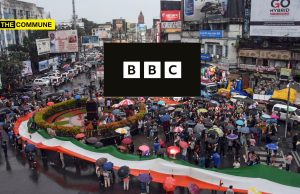
The Bangladesh Liberation War of 1971 is celebrated as a triumph of courage and resilience, but beneath the surface of this victory lies a harrowing and often untold story of systematic violence, particularly against Hindu women. The Pakistani Army, aided by local collaborators like the Razakkar and al-Badr militias, unleashed a campaign of terror that included mass rape, murder, and forced impregnation in 1971, with Hindu women bearing the brunt of this brutality. This dark chapter of history reveals not only the horrors of war but also the complicity of local collaborators and the complex role of international organizations like the United Nations and missionary groups in its aftermath.

Targeting Hindu Women: A Deliberate Strategy

The Pakistani Army’s campaign in East Pakistan (now Bangladesh) was not just a military operation but a calculated effort to crush Bengali nationalism and erase Hindu identity from the region. Pakistani leaders, including President Yahya Khan, openly expressed their disdain for Bengalis, whom they viewed as “too close to Hindu India” and not “true Muslims.” This perception fueled a campaign of violence that specifically targeted Hindus, who were seen as symbols of Indian influence and cultural identity. Pakistani soldiers were reportedly told to “make Muslims out of Bengalis,” a chilling directive that underscored the ethnic and religious dimensions of the violence.

Hindu women were systematically raped, often in front of their families, as a means of humiliating and terrorizing the community. Many were taken to “rape camps,” where they were held captive and subjected to repeated assaults. The Razakkar and al-Badr militias, composed of local collaborators, played a key role in identifying Hindu households and facilitating these atrocities. These militias not only aided the Pakistani Army but also looted Hindu properties, further displacing and impoverishing the community.


The Scale Of The Atrocities

Estimates suggest that between 200,000 and 400,000 women were raped during the nine-month conflict, with a significant proportion being Hindu. The violence was not random but part of a broader strategy to “purify” East Pakistan of its Hindu population. Many Hindu women were killed after being raped; their bodies dumped in mass graves. Others were left traumatized and pregnant, facing lifelong stigma and ostracization.

The Pakistani Army’s actions were not merely acts of war but a deliberate attempt to destroy the cultural and religious fabric of the Bengali Hindu community. This campaign of terror forced hundreds of thousands of Hindus to flee to India, leaving behind their homes, lands, and livelihoods.

For decades, the stories of these women were buried under a veil of shame and silence. Many survivors were abandoned by their families, ostracized by their communities, or driven to suicide. Those who gave birth to children conceived through rape faced unimaginable stigma. These “war babies” were often referred to as “illegitimate,” “enemy children,” or worse, and their mothers were labeled as “polluted” or “dishonored.”  

The Role Of The UN And Missionaries

In the aftermath of the war, the United Nations and international organizations like the International Planned Parenthood Federation (IPPF) and the Red Cross stepped in to provide medical and psychological support to the survivors. Abortion centers, known as Seba Sadan, were established across Bangladesh to help women terminate pregnancies resulting from rape. These centers were staffed by foreign doctors, including Dr. Geoffrey Davis, an Australian physician who performed late-term abortions and facilitated international adoptions.

Dr. Davis, in interviews, recounted the harrowing stories he heard from survivors: women tied to trees and gang-raped, breasts hacked off, and others left to die in mass graves. He estimated that the number of rape survivors was far higher than official figures suggested, and many women had already undergone unsafe abortions before the centers were established.  

Missionary groups, particularly Mother Teresa’s Missionaries of Charity, also played a controversial role in the aftermath of the war. Mother Teresa appealed to women not to abort their pregnancies, urging them instead to give their children up for adoption. Many of these children, often referred to as “war babies,” were sent to countries like Canada, France, and Sweden, where they were raised in Christian families, often cut off from their cultural and religious roots.

While the UN and other organizations focused on providing medical care, missionary groups like Mother Teresa’s Missionaries of Charity became involved in the adoption of war babies. Mother Teresa appealed to women not to abort their pregnancies, urging them instead to give their children up for adoption. Many of these children were sent to countries like Canada, France, and Sweden, where they were raised in Christian families, often cut off from their cultural and religious roots.  

The Bangladeshi government, under pressure to address the issue, enacted the Bangladesh Abandoned Children (Special Provision) Order in 1972, allowing for the international adoption of war babies. However, this process was fraught with ethical dilemmas. Many women were coerced into giving up their children, and some were even sedated to facilitate the adoptions. The babies, often referred to as “unwanted” or “polluted,” were seen as a burden to the newly independent nation.  

The Erasure Of History

Despite the scale of the atrocities, the stories of the rape survivors and their children have been largely erased from the official narrative of the Liberation War. The Bangladeshi government, under Prime Minister Sheikh Mujibur Rahman, honored the survivors as Birangona (war heroines) but failed to provide them with meaningful support or justice. Many women were pressured into abortions or forced to give up their children for adoption, often against their will.

The government’s focus on “rehabilitating” the survivors often ignored their trauma and agency. Lists of victims were deliberately destroyed, and the stories of the war babies were buried under a veil of shame and silence. Today, there is very little information about these children, many of whom were adopted abroad and grew up without any connection to their birth mothers or cultural heritage.

For decades, the stories of the rape survivors and their children were erased from the official narrative of the Liberation War. The trauma they endured was overshadowed by the broader celebration of independence. However, in recent years, scholars and activists like Bina D’Costa have worked to bring these hidden stories to light, challenging the “historical amnesia” that has long plagued Bangladesh.  

The Rome Statute, which recognized rape as a weapon of war after the Bosnian conflict, offers a framework for seeking justice for the survivors of 1971. Many activists argue that the crimes committed against Bangladeshi women, particularly Hindu women who were disproportionately targeted, should be prosecuted in the War Crimes Tribunal established in Bangladesh decades after independence.  

The unspoken tragedy of 1971 is a stark reminder of the horrors of war and the enduring scars it leaves on survivors. The Hindu women who endured unimaginable violence, and the children born from that violence, deserve recognition, justice, and healing. Their stories must be told, not as a source of shame, but as a testament to their resilience and a call to ensure that such atrocities are never repeated.

Subscribe to our channels on Telegram, WhatsApp, and Instagram and get the best stories of the day delivered to you personally.
“My Grandmother Was Brutally Murdered, Culprits Not Arrested Even After One Year”: Indian Navy Sailor From Sivaganga Laments, BJP TN Header Annamalai Slams Stalin

My Grandmother Was Brutally Murdered, Culprits Not Arrested Even After One Year: Indian Navy Sailor From Sivaganga Laments, BJP TN Header Annamalai Slams Stalin

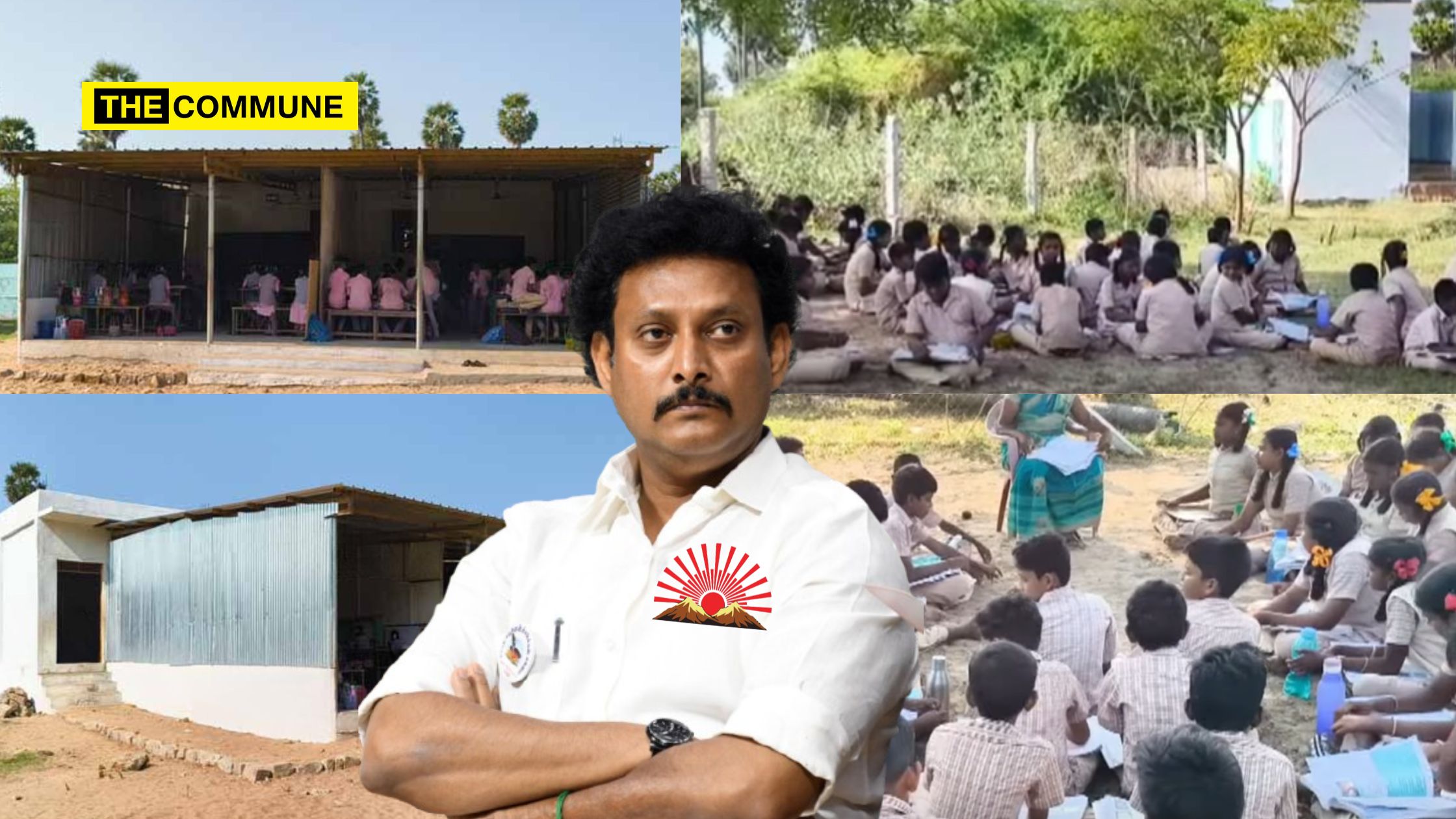
A heartfelt video by Indian Navy sailor Ilamaran, detailing police inaction over his grandmother’s brutal murder in Sivaganga last year, has gone viral, sparking outrage. Despite repeated petitions, Ilamaran alleged no arrests had been made, questioning the disparity in justice. BJP TN Chief Annamalai amplified his plea, slamming the police and urging Chief Minister MK Stalin to act.

Ilamaran, an Indian Navy sailor from Sivaganga, in the video, shared the heartbreaking details of his grandmother’s brutal murder in January 2024, stating that despite police claims of an arrest, no one had been apprehended.

He further criticized the Sivaganga police for failing to take action even after a year. He said, “I am Ilamaran from Kalaiyarkovil of Sivaganga district. I have been a sailor in the Indian Navy for the past 4 years. The reason for recording this video is that when I came home in January 2024 during my leave, my maternal grandmother who is over 60 years was brutally attacked by unknown men and robbed her of her jewellery, and killed her. I was advised to conduct a protest for this to nab the accused. But I did not protest since I had faith in the police. But even after one year, the accused have not been arrested. Had the same happened to the DSP or SP of Sivaganga, they would have arrested the accused in one hour but because it happened in my house (a common man), no action has been taken yet. My father has given petitions in the SP office 6 times. A petition has also been submitted to the Collector’s Office. But no action has been taken yet. I graduated from a school in Sivaganga and attained this position, I request the police not to make me a criminal. Because no action has been taken for over a year. I have been silent without getting into trouble. You can imagine the anger when the TN police are a mere spectator when crimes happen in our homes. So I request the TN police not to make me a criminal. I request the public to take this video to the attention of the Chief Minister MK Stalin.

BJP TN Chief Annamalai shared the video on his social media handles, expressed his support for Ilamaran, and criticized the Tamil Nadu police for their failure to act, stating that people have lost faith in the system. He wrote, “People in TN are losing hope in the state police department, which is terrible for democracy. An Indian Navy Sailor dedicating his life to our nation has lost his Grandmother to a gruesome murder one year back & his family is running from pillar to post due to police inaction, and the accused in the case is still not nabbed. Wake up, Thiru @mkstalin

(With inputs from Dinamalar)

Subscribe to our channels on Telegram, WhatsApp, and Instagram and get the best stories of the day delivered to you personally.
Madras High Court Demands Clarity On Heritage Preservation By HR&CE Dept In Baburayanpettai Temple Renovation

Madras HC Warns HR&CE Commissioner: Renovate Vijaya Varadaraja Perumal Temple Or Face Removal

The Hon’ble First Division Bench of the Madras High Court, comprising Chief Justice K.R. Shriram and Justice Senthilkumar Ramamoorthy, heard W.P. No. 26189 of 2021 and Contempt Petition No. 5 of 2022, regarding the reconstruction and renovation of the Arulmighu Vijay Varadaraja Perumal Temple in Baburayanpettai, Chengalpet District. Advocate B. Jagannath appeared as a petitioner and party-in-person, raising concerns over the heritage and sanctity of the temple.

During the morning session, when the matter was taken up, Additional Advocate General (AAG) J. Ravindran submitted a status report on behalf of the Hindu Religious and Charitable Endowments (HR&CE) Department. However, the Bench noted that the report was not in the form of a sworn affidavit. The AAG apologized for the oversight and sought permission to withdraw the status report, assuring the court that a sworn affidavit by the Commissioner of HR&CE would be filed.

Petitioner B. Jagannath objected to the use of the word “demolition” in the tender notification issued for the temple works, arguing that such language could jeopardize the temple’s heritage value. The court expressed concern over the phrasing and directed the HR&CE Commissioner to appear in person at 2:15 PM to clarify the department’s stance. The Bench also sought clarification on whether experts in Agamas (traditional temple scriptures) and the Archaeological Survey of India (ASI) had been consulted, particularly given that the sanctum sanctorum (Garba Griha) of the temple was part of the reconstruction. The Bench cited the example of the Brihadeeswarar Temple in Thanjavur as a model for preserving heritage structures.

In the afternoon session, the HR&CE Commissioner, P.N. Sridhar, appeared in person along with the Executive Officer of the temple. The court questioned the Commissioner about the inclusion of the term “demolition” in the tender documents. In response, the AAG, with assistance from the Commissioner, submitted a sworn affidavit affirming that the tender process and related works would preserve the temple’s sanctity and heritage.

The affidavit detailed the timelines for the project, stating that the estimates had been approved as of 28 December 2024. A tender notice was subsequently issued on 3 January 2025. The work schedule outlined included:

  • Approval of estimates: 1 month
  • Tendering process and signing of agreements: 3 months
  • Completion of works: 2.5 years
  • Kumbhabishekam (consecration ceremony): 2 months after renovation

The petitioner pointed out that the tender mentioned “dismantling and reconstruction” of the sanctum sanctorum, which he argued would affect the temple’s heritage value. He emphasized the need for permissions and approvals from the Tamil Nadu Heritage Committee, formed in 2024, and the ASI.

The AAG assured the court that the term “demolition” referred only to necessary dismantling for renovation purposes and that the reconstruction would be guided by experts, including retired ASI personnel, Agama scholars, traditional architects, and sculptors. The Bench recorded these assurances and noted that the works would aim to preserve the sanctity and heritage of the temple.

The petitions have been adjourned to 27 February 2025, for further compliance and updates on the tender process.

Subscribe to our channels on Telegram, WhatsApp, and Instagram and get the best stories of the day delivered to you personally.
Ramayana: The Legend Of Prince Rama To Grace Screens on 24 January 2025

'Ramayana: The Legend of Prince Rama' Set To Release In Tamil, Telugu, & Hindi On Oct 18

The much-anticipated animated film Ramayana: The Legend of Prince Rama is now set to release on 24 January 2025, after being postponed from its original 18 October 2024, date. This remarkable collaboration between India and Japan merges the animation styles of both nations, delivering a visually stunning and authentic retelling of Valmiki’s timeless epic.

Originally released in 1992, Ramayana: The Legend of Prince Rama was directed by Koichi Sasaki and Ram Mohan. Created with hand-drawn animation, the film blended traditional Indian storytelling with Japanese anime techniques, captivating audiences with its creativity and attention to detail. The latest version brings in renowned screenwriter V. Vijayendra Prasad, known for his work on Baahubali and RRR, to modernize the narrative while preserving the epic’s spiritual essence. It will be released in multiple languages, including Hindi, English, Tamil, and Telugu, and distributed by Excel Entertainment.

The film’s creation is a story of dedication and cultural collaboration. The idea was conceived in 1984 when Japanese producer Yugo Sako visited India to make a documentary about Ayodhya. Miscommunication led to reports claiming he was making a new Ramayana, sparking protests from the Vishwa Hindu Parishad (VHP). Undeterred, Sako shifted his focus to creating an animated film that would honor the epic’s noble message.

Sako, deeply influenced by Indian philosophy, partnered with India’s leading animator, Ram Mohan. However, despite four years of efforts courting 16 government departments, India declined to collaborate on the project, dismissing animation as a merecartoon.Undaunted, Sako returned to Japan, where he secured funding from a youth association and recruited a team of 350 animators and Star Wars-caliber special effects artists.

The production, which took nearly a decade, was a labor of love. Sako’s vision was to present Lord Ram as a role model for Japan’s youth while respecting the epic’s spiritual depth. Despite challenges, including financial and cultural hurdles, the film emerged as a groundbreaking fusion of Indian and Japanese artistry.

In a heartfelt letter, Yugo Sako expressed his deep connection to India and the Ramayana. He described his spiritual journey through India and his admiration for its culture, which inspired him to persevere despite obstacles. Sako viewed the Ramayana not just as a story but as a philosophical guide for life, blending tenderness, strength, and timeless wisdom.

The 4K version of Ramayana: The Legend of Prince Rama promises to enchant modern audiences with its captivating visuals and engaging storytelling. With its rich history of cross-cultural collaboration and dedication to preserving the epic’s essence, the film is poised to leave an indelible mark as a cinematic masterpiece.

Subscribe to our channels on Telegram, WhatsApp, and Instagram and get the best stories of the day delivered to you personally.