Home Blog Page 591

Bahraich, UP: Hindu Man Shot Dead During Durga Visarjan Procession Clash By Islamists; Alleged Fact-Checker Zubair Justifies Killing
mohammed zubair hindu murder durga visarjan altnews

A horrifying incident occurred on Sunday, 13 October 2024, in the Rehua Mansoor village, Hardi police station area in Bahraich, Uttar Pradesh, where a 22-year-old Hindu man, Ram Gopal Mishra, lost his life following a communal clash during a Durga Visarjan procession. The deceased, Ram Gopal Mishra, was shot 20 times amidst the violent altercation that reportedly began over objections from local Muslims to DJ music being played during the immersion of a Durga idol.

The conflict escalated rapidly as stone-pelting ensued, with allegations suggesting that Mishra was dragged into a house owned by Abdul Hamid, where he was shot multiple times. Eyewitnesses stated that Hamid’s residence was the point from which stones were thrown at the procession, leading to a confrontation between the communities.

Following his death, tensions in the area heightened, leading to the suspension of the Visarjan ceremony at various locations as authorities worked to prevent further unrest. Authorities are investigating these statements as part of their broader inquiry into the incident.

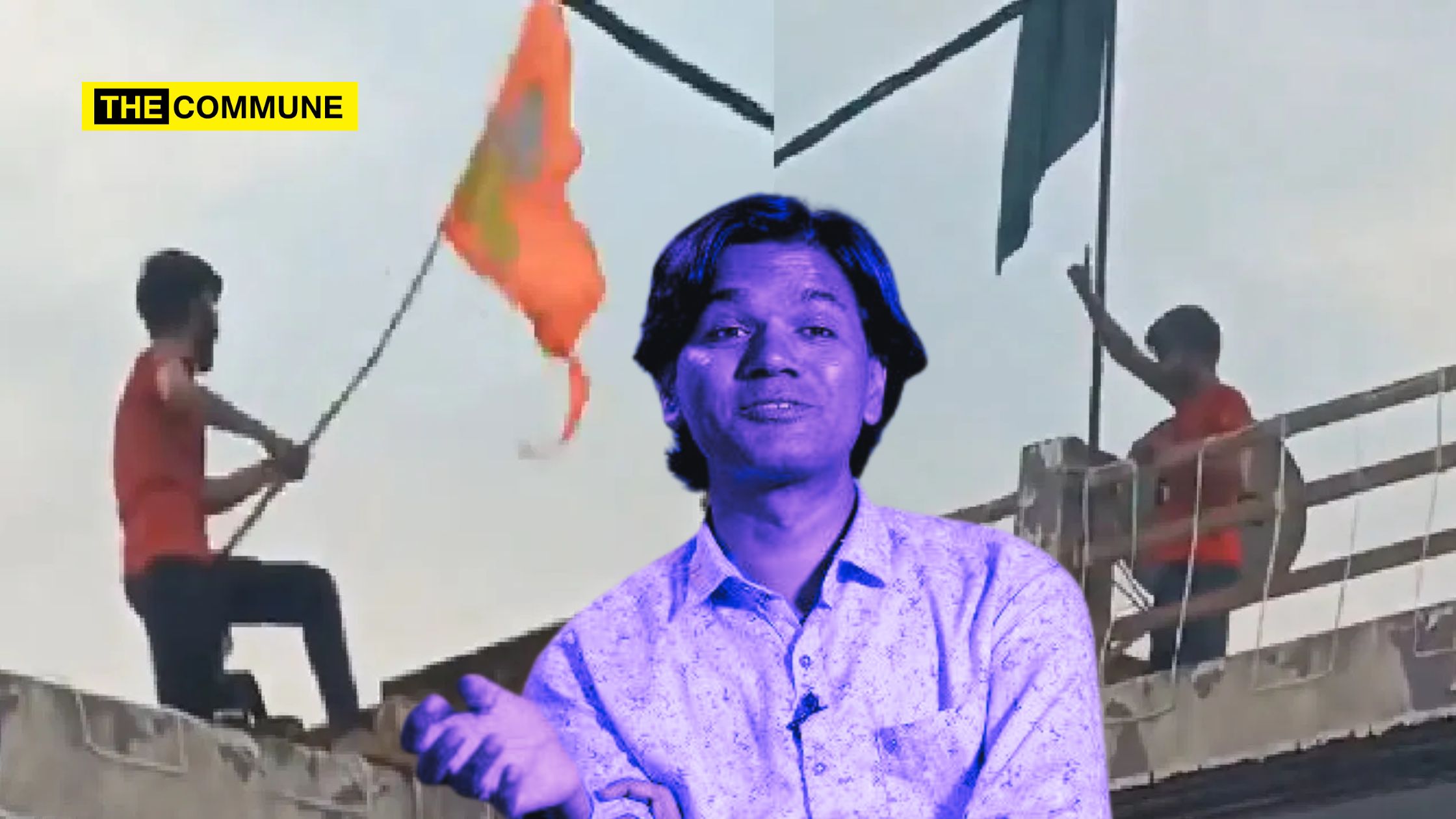
The killing has sparked outrage and fears of communal violence. Attempts to justify the incident have surfaced online, with some sharing videos depicting Mishra removing a green flag and replacing it with a saffron flag during the procession. The footage, circulated by alleged fact-checker Mohammed Zubair, co-founder of Alt News, seemed to be an effort to paint Mishra as an aggressor in the events leading up to his death.

Zubair noted that the video showed Mishra forcefully taking down the green flag while surrounded by a crowd chanting slogans. He wrote, “A video of Gopal Mishra in the Bahraich violence has surfaced. He is seen forcefully removing a Green flag and replacing it with a saffron flag. The mob can be seen shouting slogans and encouraging him to remove the flag. Gopal was shot dead later.”

Critics have accused certain media outlets and commentators of downplaying the violence and providing a skewed narrative that fails to acknowledge the larger context of the incident. It is argued that the altercation was not simply a matter of removing a flag but was exacerbated by resistance to the DJ music and the subsequent stone-pelting, which contributed to the fatal escalation.

The repeated justifications for acts of terror amount to endorsing violence. With yet another Hindu festival marred by tragedy and another Hindu life lost, it is alarming to see people like Mohammed Zubair consistently downplaying or rationalizing such crimes.

From the brutal killing of Kanhaiya Lal to the tragic death of Gopal Mishra, there appears to be a pattern where certain voices and ecosystems attempt to normalize these attacks on Hindus, effectively setting the stage for future incidents. Such narratives not only undermine justice but also contribute to a climate where further violence is perpetuated.

In April 2024, Zubair attempted to shape the narrative surrounding the tragic murder of two Hindu children in Badaun by suggesting that the motive behind the crime was being concealed by authorities. In a now-deleted post on X, Zubair referred to an unrelated incident where the victims’ father allegedly set fire to a motorcycle, implying it was connected to the murders. This attempt to link the arson incident with the killings created a misleading narrative that seemed to downplay the severity of the crime and divert attention from the actual brutality of the double homicide.
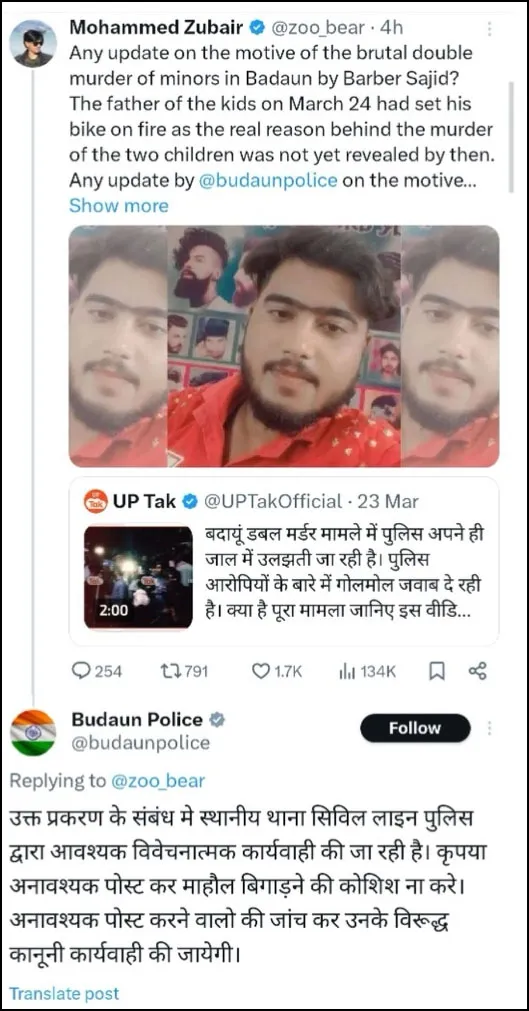
The Badaun Police responded to Zubair’s post by issuing a legal warning, advising against spreading unnecessary and potentially inflammatory information that could disrupt public order. Despite Zubair’s insinuations, the victims’ family clarified there were no ongoing disputes with the accused, and investigations later confirmed that the murders were premeditated acts committed by Sajid, with another suspect, Javed, still being pursued by the authorities.

He is known to repeatedly peddle fake news especially if it involved members of the Islamic community despite the fact that they could be in the wrong.

Subscribe to our TelegramWhatsApp, and Instagram channels and get the best stories of the day delivered to you personally.
Acknowledge 1990 Exodus Before Inviting Return: Kashmiri Pandits Demand Farooq Abdullah’s Apology

Acknowledge 1990 Exodus Before Inviting Return: Kashmiri Pandits Demand Farooq Abdullah Apology

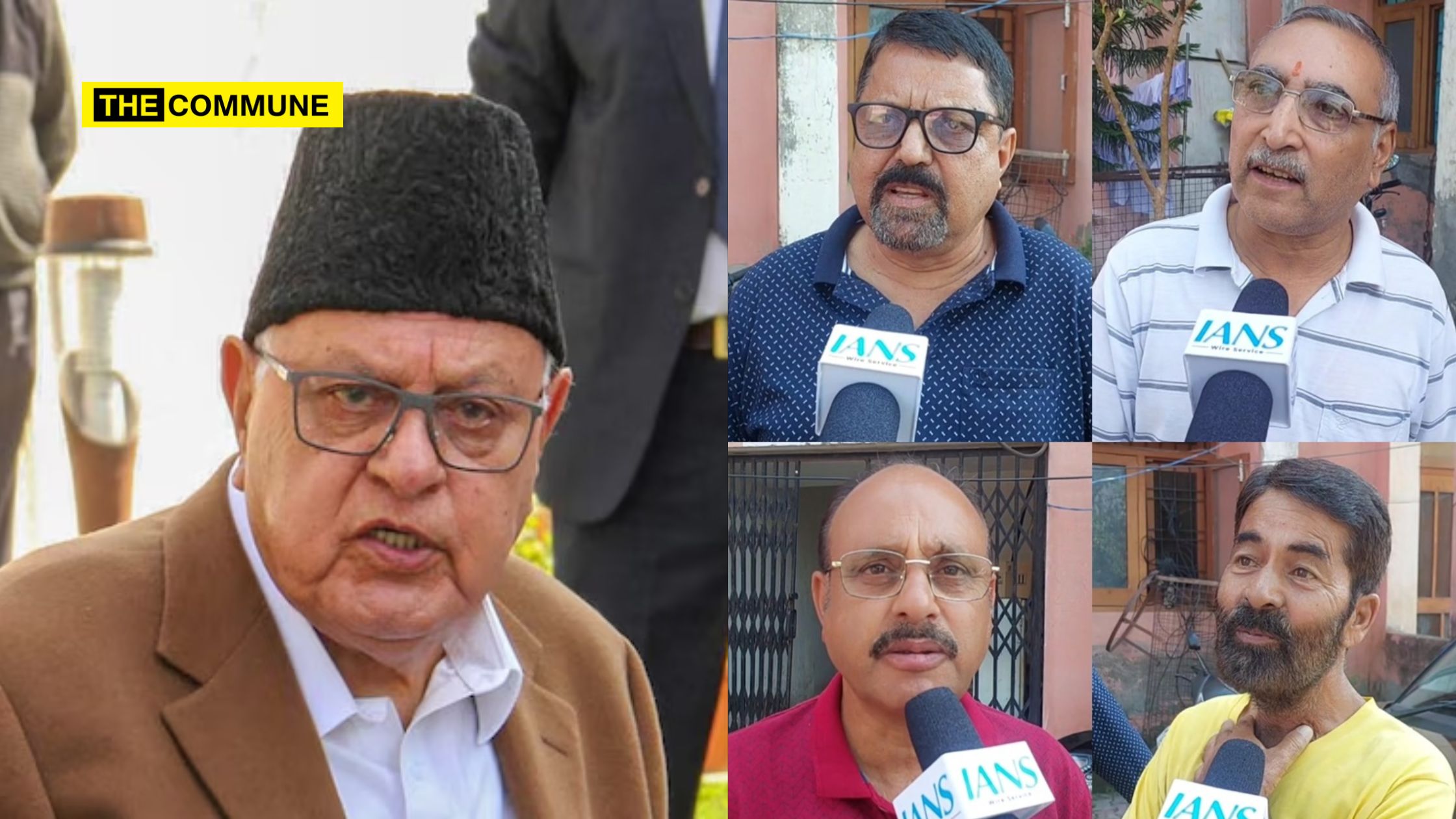
Following National Conference (NC) chief Farooq Abdullah statement about the return of Kashmiri Pandits to the Valley, members of the displaced community have demanded that the party first acknowledge the 1990 exodus and apologise for the genocide before making any promises.

Abdullah, whose party is set to form a government in Jammu and Kashmir in coalition with Congress, expressed his desire for the return of Kashmiri Pandits, who were forced to flee their homes in the 1990s.

“I hope our brothers and sisters who left the Valley will return home. The time has come, and they should come back to their homes,” Abdullah told reporters on Saturday. He added that the NC does not differentiate between Hindus and Muslims and treats everyone equally. “There is a place for everyone in Kashmir,” he stressed.

However, speaking to IANS, Kashmiri Pandits, while open to the prospect of returning, voiced scepticism over Abdullah’s sincerity. One member of the community said, “If Farooq Abdullah is sincere and has had a change of heart, we welcome this step. But if he holds the same beliefs as he did in the 1980s and 1990s, this would be the biggest betrayal.”

The community also accused the NC and Congress of orchestrating the 1990 exodus. “In 1990, a deliberate policy was made to drive us out and seize our lands. The NC, in collaboration with Congress, executed this plan. If people doubt it, an investigative committee should be set up to determine who was responsible,” the Kashmiri Pandit said.

He demanded an apology from the NC, urging them to admit their role in the forced migration. “The NC should admit its role in the 1990 exodus and apologise for the genocide. If Abdullah is sincere, then proper policies and arrangements must be made for our return. We don’t have homes there anymore. Do they have a roadmap, or should we stay at Farooq Abdullah’s house?” he asked.

Another Kashmiri Pandit emphasised that sweet words won’t be enough, and concrete policies must be in place. “The NC and Congress should clarify their policies. If they still plan to implement the same policies from 1986 and 1989, we want no part of it. We won’t be fooled by sweet words. We’ve suffered enough,” he said.

Reflecting on the dark chapter of their displacement, he recounted, “On January 19, 1990, at 7:00 p.m., announcements were made from mosques, telling Kashmiri Pandits to leave, while asking Kashmiri women to stay.”

He urged Abdullah to meet with Kashmiri Pandits and develop a roadmap to ensure they are never forced to flee again.

“He must acknowledge the genocide and create a solid plan that ensures our safety,” he added. Another member living in a migration camp in Jammu urged the government to consult the Kashmiri Pandits about their demands.

“We want to know if Abdullah’s statement is genuine or just political rhetoric. The Government of India and the future J&K government should meet with a delegation of Kashmiri Pandits and ask what we want. Without that, these are just empty promises.” One community member took a direct swipe at Abdullah, questioning why he had not taken these steps earlier.

“When Farooq Abdullah first formed the government after the genocide, why didn’t he act then? Why is he speaking about this now? It seems that Prime Minister Narendra Modi has improved the situation in Kashmir, yet Abdullah continues to claim that the Prime Minister ruined it.”

Another Pandit echoed the demand to halt distress sales of migrant properties. “If Farooq Abdullah announces a stop to the distress sales of migrant properties, we will welcome that move. Why hasn’t he done that yet?” The demands come as the community remains cautious about returning to the Valley, seeking assurances and accountability from those in power.

–IANS

Subscribe to our channels on TelegramWhatsApp, and Instagram and get the best stories of the day delivered to you personally. 
Congress President Mallikarjun Kharge Allegedly Involved In Waqf Land Scam

Congress head Mallikarjun Kharge Involved In Waqf Scam

On 14 October 2024, several opposition MPs exited a parliamentary committee meeting regarding the Waqf (Amendment) Bill, voicing concerns that the committee was not adhering to proper parliamentary procedures. This followed allegations from the BJP accusing Congress president Mallikarjun Kharge of involvement in a Waqf land scam.

The Joint Parliamentary Committee, which has previously experienced significant tensions between BJP and opposition members, saw further disputes when opposition MPs protested against the participation of representatives from Hindu organizations, arguing that the legislation mainly impacted Muslim religious properties.

The walkout was triggered by testimony from Anwar Manippady, former chairman of the Karnataka State Minorities Commission and current Karnataka BJP vice-president. Manippady claimed that several Congress politicians, including Kharge and Rehman Khan, were implicated in the misappropriation of Waqf properties in Karnataka.

Additionally, Rahul Kharge, the son of the Congress president, recently withdrew a request for land intended for a Multi Skill Development Centre in Bangalore. His trust, Siddhartha Vihar Trust, had applied for the land from the Karnataka Industrial Development Board in February 2024. However, he retracted the request after revelations regarding the ongoing MUDA scam, which involved the wife of Karnataka CM Siddharamaiah, who returned 14 parcels of land amid police investigations against her, the CM, and his brother-in-law.

Following these events, the BJP alleged that the Congress leadership was deeply involved in land transaction corruption, urging their resignations on moral grounds. BJP spokesperson Sudhanshu Trivedi sharply criticized the Congress, contrasting its historical connection to land donation through figures like Mahatma Gandhi and Vinoba Bhave with its current involvement in land grabbing, supposedly under the influence of Sonia and Rahul Gandhi.

Opposition MPs argued that parliamentary standards prohibit making unfounded accusations against individuals, especially in their absence. They also criticized Manippady’s request for Muslims to support the proposed amendments, labeling it inappropriate and offensive.

“Such allegations should not be made without the accused being present to defend themselves,” asserted one opposition MP, as reported by PTI. Despite these objections, committee chairperson Jagdambika Pal of the BJP dismissed the concerns and allowed the testimony to continue, claiming it was relevant to the legislation under discussion.

Opposition MPs, including Congress leaders Gaurav Gogoi and Imran Masood, DMK’s A. Raja, Shiv Sena’s Arvind Sawant, AIMIM’s Asaduddin Owaisi, Samajwadi Party’s Mohibbullah, and AAP’s Sanjay Singh, reportedly walked out in protest against the proceedings.

Shiv Sena MP Arvind Sawant expressed to the media that the committee was not adhering to established rules and protocols. Following this, opposition MPs convened separately to strategize their next steps, including plans to address their concerns with the Lok Sabha Speaker. A significant point of contention was the committee’s decision to invite several Hindu organizations to provide input on the Waqf (Amendment) Bill. Opposition members argued that these groups should not be involved in discussions related to Waqf issues, which pertain specifically to Muslim religious endowments.

In contrast, the BJP supported this move, asserting that these organizations had legitimate concerns about the implications of the Waqf law on non-Muslim properties, including temple lands. They argued that such consultations were essential for a comprehensive review of the legislation.

AIMIM chief Asaduddin Owaisi had previously written to committee chair Jagdambika Pal, opposing the involvement of groups like Sanatan Sanstha and Hindu Janajagruti Samiti, which he accused of promoting extremist ideologies. In his letter, Owaisi emphasized that these organizations advocate for a “Hindu Rashtra” and have engaged in actions against the Indian state.

Other witnesses called to testify included prominent lawyers Vishnu Shankar Jain and Ashwini Upadhyay, along with Mahant Sudhirdas Maharaj from Maharashtra’s Kalaram Temple. Conversely, Mehmood Madani from Jamiat Ulema-e-Hind voiced opposition to the proposed amendments to the Waqf Bill.

Opposition MPs have previously raised concerns that key stakeholders were being ignored and that political maneuvering was occurring under the guise of the proceedings. Dr. Mohammad Jawed, a Congress leader in the Lok Sabha, expressed on social media that the inclusion of non-Muslim religious organizations in the discussions should be reconsidered.

During the recent committee meetings, representations from various non-Muslim organizations have been invited. I believe this practice needs reevaluation, as these groups neither contribute to Waqf properties nor have a legitimate interest in these matters. Many of them hold biased views that misrepresent the true essence of Waqf, causing distress within the Muslim community and potentially undermining the sentiments of India’s Muslim population,” the MP stated.

He also pointed out that in discussions concerning other religious communities, Muslim representation is not typically solicited, questioning the rationale for this approach when the matter specifically pertains to Muslims.

Additionally, last month, BJP MP Nishikant Dubey, a member of the Joint Committee on the Waqf Bill, caused controversy by writing to Pal with serious concerns over the high volume of submissions received on the issue. He requested that the Union Home Ministry investigate, including the geographic origins of these submissions.

Dubey suggested that “fundamentalist groups,” individuals like Zakir Naik, or even foreign entities such as the ISI or China could be involved, given the receipt of 1.25 crore submissions. He argued that if such forces were manipulating the legislative process, it would pose a threat to the integrity of the parliamentary system and national security.

(With Inputs From OpIndia)

Subscribe to our channels on TelegramWhatsApp, and Instagram and get the best stories of the day delivered to you personally. 

Illam Thedi Vellam: Floods Inundate Many Areas In Chennai As Citizens Suffer Under Dravidian Model

Floods Inundate Many Areas In Chennai As Citizens Suffer Under Dravidian Model

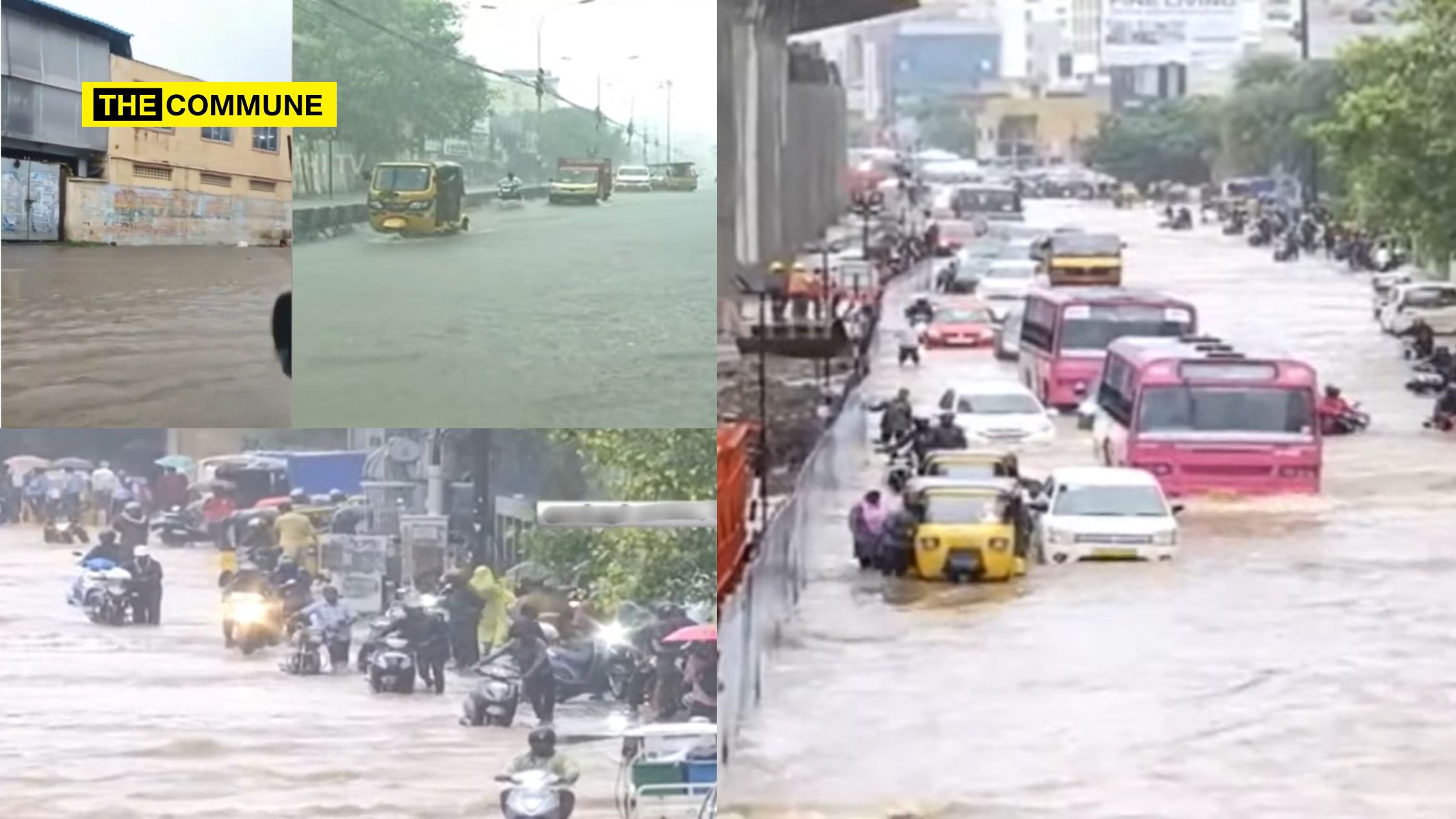
Chennai grapples with severe flooding as heavy rains lash the city, disrupting daily life and causing widespread inconvenience. The downpour, intensified by a well-marked low-pressure area, has led to significant waterlogging in several neighbourhoods, including Ekkatuthangal, Venus Colony, and Alagappa Road. Major traffic arteries like the 100-ft Road in Vadapalani have been severely impacted, causing traffic congestion and delays.

On 15 October 2024, Chennai began facing substantial waterlogging as a well-marked low-pressure area over the central south Bay of Bengal intensified. The city and nearby districts such as Chengalpettu, Kancheepuram, and Tiruvallur were hit by heavy rain early in the morning, leading to significant disruptions.

Areas including Ekkatuthangal, Venus Colony, and Alagappa Road experienced severe flooding, causing vehicles and pedestrians to have difficulty navigating the waterlogged streets. Significant traffic congestion occurred on the 100-ft Road in Vadapalani, a crucial thoroughfare in the city, as vehicles struggled to pass through flooded sections.

The India Meteorological Department issued a bulletin stating that the weather system will likely strengthen into a depression and move towards the coasts of north Tamil Nadu, Puducherry, and adjacent areas of south Andhra Pradesh by 17 October 2024. With heavy rainfall affecting parts of Tamil Nadu, Chennai Airport cancelled eight flights scheduled to and from destinations such as Bengaluru, Andaman, New Delhi, and Muscat, citing unfavourable weather conditions as the cause of the disruptions.

In this situation, OMR was one of the worst-affected places in the city. Here, we look at the inundations across the city.

In a very cruelly hilarious video, we can see a drain spewing water instead of sucking it in!

Annanagar which rarely gets inundated was also flooded like 2023 floods.

Some other localities are indicated below:


https://twitter.com/realonlineansh/status/1846079937880392042

Manali

Guindy

Guindy, considered the city’s central business district, was also flooded.

Alandur, Kathipara near Guindy was also seen to be waterlogged.

Pallikaranai

This locality near Velachery is located near the marshlands and flooding is seen every single rainy season.

Purasaiwakkam


Vyasarpadi Jeeva

One of the oldest localities of Chennai, Vyasarpadi Jeeva, is also seen heavily flooded.

Several subways also have been closed due to flooding.


High Court Area

The entrance to the Madras High Court was also seen to be inundated due to the rains.

Live wire also caused severe problems to the people.


Subscribe to our TelegramWhatsApp, and Instagram channels and get the best stories of the day delivered to you personally.
“Illam Thedi Vellam”: Dravidian Model Exposed As OMR Gets Inundated Severely

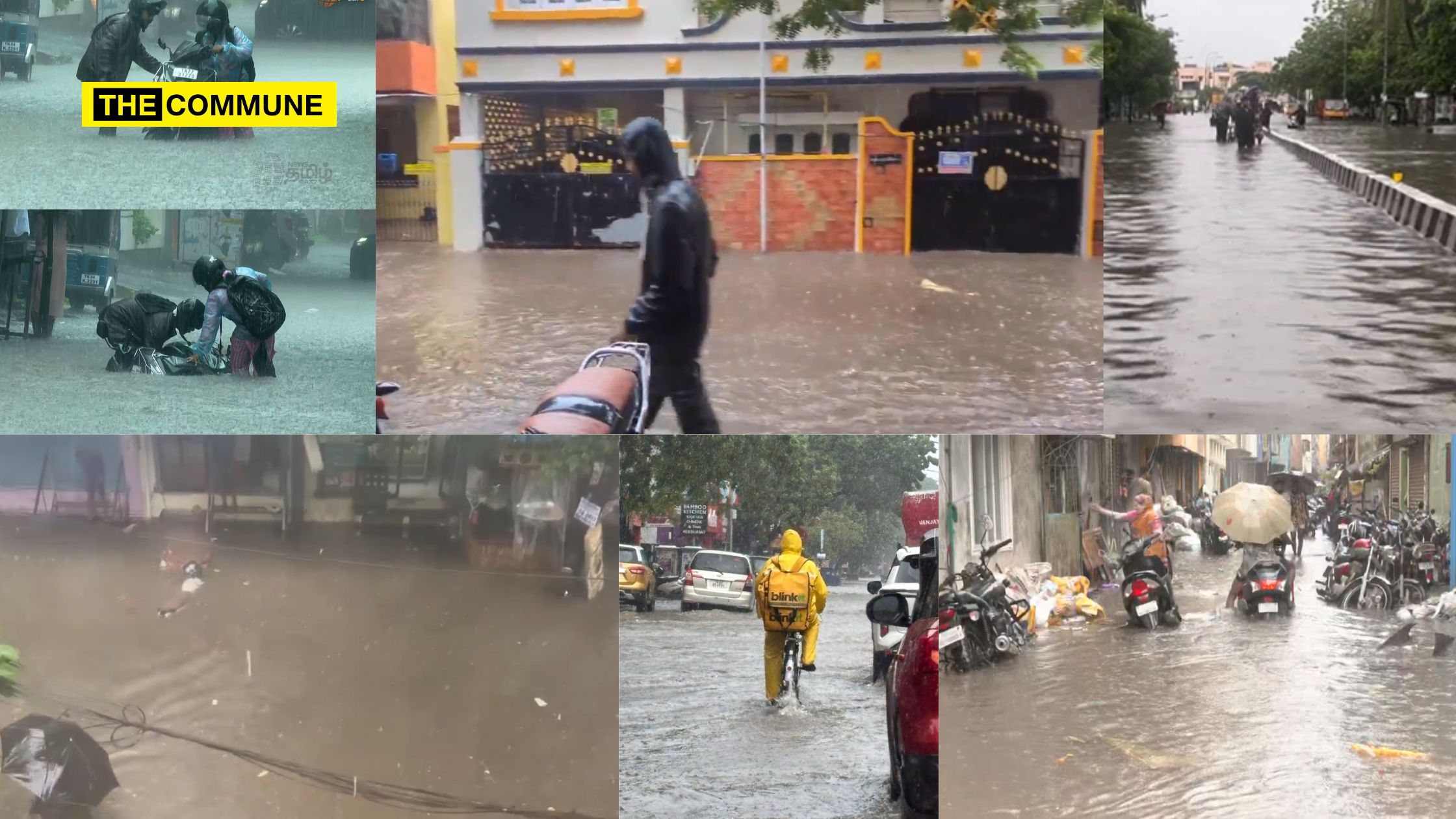
Despite repeated warnings from weather experts, Chennai’s Outer Ring Road (OMR) was among the hardest-hit areas during the recent floods, highlighting the city’s infrastructure vulnerabilities. Knee-deep water inundated the arterial road, causing severe traffic disruptions and impacting businesses.

Weathermen, freelance bloggers, and the IMD have warned of heavy rains in Chennai for quite some time. And yet, the Dravidian model of governance did not seem to heed this warning.

Chennai saw heavy rains from late evening on 14 October 2024. At the time of publishing this article, the rains are continuing to pour all over the city. Weather experts predicted low pressure as it is NEM season (North East Monsoon), with rains expected to continue pouring until 17/18 October 2024.

As a precaution, people living in the low-lying areas of Velachery, Pallikaranai (taking lessons from 2023 floods) parked their vehicles (cars mostly) before the rains began.

Let’s examine the inundation that has started in various parts of the city. Ironically, the flooding is just after a few hours of rain.

OMR seemed to be the worst affected, with nearly knee/hip-deep water on the roads. Here are some videos circulating on social media.

Kotivakkam near Thiruvanmiyur also saw flooding to a large extent.

A refrigerator was seen floating over the flood waters near Kandanchavadi in Perungudi near OMR.

These were the scenes from Navalur in OMR after the spell of rains on the night of 14 October 2024.

In this video report by Thanthi TV, several residents and people travelling that side stated that it had always been like this since 2015 in OMR. One commuter seen driving a bike is seen complaining about the administration. Some IT employees who were given WFH were asked to go to their office following a power cut at home. They were seen stranded on the roads. It is reported that nearly 100 vehicles on the road in OMR had switched off and had to be pushed by the commuters themselves. Commuters are seen pushing their two-wheelers in the hip-deep water. An auto driver stated that despite being in demand from customers, he could not drive as he risked switching off the vehicle because of the rising water level. He said, “Had they taken some precautions to ensure the water did not stagnate, this wouldn’t have been so bad.”

It is noteworthy that lot of metro construction work is also taking place.

ANother commuter stated that the flood had inundated the entire stretch from Taramani

Subscribe to our TelegramWhatsApp, and Instagram channels and get the best stories of the day delivered to you personally.
Four Lives Claimed by Electrocution Amid Heavy Rainfall; BJP TN Leader Ashvathaman Demands ₹10 Lakh Compensation For Victims

On 14 October 2024, heavy rainfall in Tamil Nadu resulted in the tragic loss of four lives, including that of a minor, due to electrocution by fallen electric poles. The India Meteorological Department (IMD) issued an Orange alert for 11 districts, including Chennai, which will remain in effect until 18 October 2024. As the northeast monsoon approaches, concerns are mounting that these fatalities might have been avoided with better infrastructure preparedness.

In response, A. Ashvathaman, State Secretary of the Tamil Nadu BJP, condemned the ruling DMK, calling for immediate compensation of ₹10 lakhs for the victims. He also questioned whether the DMK plans to provide compensation solely for deaths related to illegal liquor.

Ashvathaman via his official X account stated, “Provide 10 lakhs to the families of those who died due to electrocution! A total of 4 people died yesterday in a single day, namely Ganesan in Mellur of Madurai district, Aiyakannu near Karaikudi in Sivagangai district, a 13-year-old girl named Gayathiri in Ramanantham near Kolunthurai in Cuddalore district, and Kumaresan near Ambur in Tirupathur district. 5 people died in airshow at Marina as arrangements were not done properly by the state government. The Dravida model government should immediately provide a compensation of 10 lakhs each to the families of these 9 people.”

“Will the Dravidian model government give compensation only to those who died consuming illicit liquor?! All these deaths are due to the irresponsibility of the Dravidian model government. The Dravidian model government should take moral responsibility and immediately release compensation to the families of the deceased,” he questioned

After Senthil Balaji took charge again as the Minister of Electricity, the electricity sector has started to perform very badly. Several hours of power cut continues in the capital city Chennai.When the public visited Mayiladuthurai Courtallam where the power cut continued throughout the night, the electrical workers there were lying drunk. Senthil Balaji is also the Minister of Liquor. So he only does that job of selling liquor regularly. Therefore, the irregularities in the power sector should be removed immediately. With the onset of monsoon, deaths due to falling power lines must be prevented,” he added

PMK founder S. Ramadoss has also issued a strong condemnation of the DMK, claiming the government has failed to prevent flooding in Coimbatore, Madurai, and other districts during recent rains. He warned that Chennai is likely to face similar issues due to incomplete stormwater drain projects in the city.

In a statement, Ramadoss noted that residents are already suffering from the effects of rain before the northeast monsoon officially begins. He highlighted that streets in Coimbatore and Madurai were inundated, and normal life has been disrupted in Pudukottai, Sivaganga, Karur, and Virudhunagar as well. He attributed these problems to inadequate stormwater drainage and lack of desilting in irrigation canals.

Citing the tragic deaths of four individuals in one day due to the rains, he criticized the state government and the Electricity Department for their lack of precautionary measures.

“Despite Chief Minister MK Stalin, Deputy Chief Minister Udhayanidhi Stalin, and the Chief Secretary reviewing monsoon preparedness last month, no tangible progress has been made. With heavy rainfall warnings issued for Chennai, residents are understandably anxious about what lies ahead,” he stated.

Ramadoss pointed out that stormwater drainage work remains unfinished at over 45 locations in Chennai, stressing that the government and Greater Chennai Corporation are relying on boats and motor pumps for flood management. “The civic body must take all necessary steps to safeguard the public,” he urged.

Subscribe to our channels on TelegramWhatsApp, and Instagram and get the best stories of the day delivered to you personally. 

Haryana Assembly Elections 2024: Significance And Takeaways

Haryana Elections

The Bharatiya Janata Party stunned everyone with its stupendous victory in the recently held Haryana assembly elections. Every exit poll talked about a comfortable Congress victory, and the ingenious BJP think tank humbled each one.

The 2024 Lok Sabha results humbled the BJP with a slide in its seats, and it’s evident that they were caught off-guard. At that time, several exit polls showed 280 to 300+ seats, which was proved wrong. The first significant assembly election post the stunning Lok Sabha results was the Haryana one which also revealed that the exit polls were wrong. In some way, these two back-to-back nightmares for the poll pundits show that the people are outsmarting them and will not enjoy the same credibility they used to enjoy.

Another significant point to observe is the stark difference between the BJP and the Congress as an organization. The BJP has proved that it really works on it prior mistakes seriously, makes the right course corrections and bounces back in their next test. On the other hand, Congress seems to be glaringly weak in this area. Let us deep dive into this point a bit for better understanding. The BJP took several bold decisions which were a bit surprising and counterproductive at that time but proved to be masterstrokes after the actual results came out. Nayab Singh Saini, an OBC leader and not a very popular face, replacing Manohar Lal Khattar a few months before the Lok Sabha elections, consolidation of the non-Jat/Jatav votes, quickly resolving the differences with the RSS who apparently did 16000 meetings in Haryana, declining tickets to several sitting MLAs are just a few key examples of the intelligent steps taken by the BJP which led to their victory. On the other hand, Congress totally failed to take advantage of the small momentum they got after their increased tally in the Lok Sabha elections by putting all their eggs in the usual baskets relying totally on Deepender Hooda. Rahul Gandhi also couldn’t stop Kumari Selja from going public about her misgivings about the Hooda domination and this was noticed by the Dalit voters.

The Dalit voters who in some states got a bit carried away by the Congress narrative of “Samvidhan aur aarakshan khatre mein hai” in the Lok Sabha elections, probably understood the hollowness of these narratives when they saw no such thing happening after Narendra Modi came back to power for the third time and when they saw their leader, Kumari Selja, being treated so shoddily by the Haryana Congress they understood how much the Congress walks their talk. All this probably led to this segment moving towards the BJP. This will have a great impact on the Dalit voters in Maharashtra and other upcoming elections states.

The Haryana elections are very significant for the BJP as a loss in this first major election post Lok Sabha polls would have pushed them to the backseat with every single TV news channel talking about the decline of Narendra Modi’s popularity and about the Congress rising a viable alternative. The Congress would also have used this Haryana victory to push its narrative much more strongly in the upcoming elections in Maharashtra, Jharkhand, Delhi etc. This win in Haryana now will give BJP a much-needed enthusiasm and momentum to win the next big Maharashtra polls.

Another big takeaway is that BJP now has understood how the Congress and its allies will play their cards of freebies and lofty promises. The only downside is that BJP has no other go but to roll out some of these populist schemes before Congress does or make them more attractive than the opposition which is now predictable. Although this will not be good economics and will go against the non-revadi approach earlier taken by Narendra Modi, they know that if they don’t do it people will go with the others who promise it. This is one big takeaway that will be common feature in every BJP strategy running up to every subsequent election from now, sadly but rightly so.

Yet another very significant takeaway is that the Haryana voters have rejected the so called famers protest by leaders like Rakesh Tikait. The protest was done predominantly by a group of farmers of Haryana and Punjab. People saw through their design and even though again the drama of marching to Delhi etc. was started, it did not pay any dividend to the political masters who were inciting this against the Modi government. Based on the Haryana election results, there is a high chance that these kinds of protests will fade away into oblivion as people are tired of such devious acts which are also misused by foreign powers. Rakesh Tikait is now left blaming Deepender Hooda for the failure of their efforts in Haryana.

BJP will now continue to consolidate the Hindu votes as much as possible in every state election. They will start doing harder Hindutva politics. This is evident from similar speeches by Narendra Modi, Yogi Adityanath and RSS chief, Mohan Bhagawat around the importance of Hindus unifying in order to avoid disastrous consequences. The Congress and the other INDI Bloc parties might call this fear mongering, against the secular structure, usual jhumla of BJP etc. but this time there will be more traction for BJP’s call. Pawan Kalyan, one of BJP’s allies, leading the Sanatana charge from the south will only act as a fillip to the BJP narrative of Hindu unification.

Several non-BJP leaning political pundits and journalists will argue that Maharashtra elections will be very different from the Haryana elections as their local issues will not be the same and it will be anybody’s game, at the back of their minds they also know that the Haryana results have already given an edge to the BJP and has given them a good formula for winning. The more enthused BJP and RSS cadres will leave no stone unturned in Maharashtra and if the Ajit Pawar factor does not prove to too much of a liability, BJP has great chances for a victory in this state where Shivaji Maharaj still resides in the hearts of every Hindu.

Ananth Mahadevan is a political commentator.

Subscribe to our TelegramWhatsApp, and Instagram channels and get the best stories of the day delivered to you personally.
Dravidian Model: Media Reports Fines Levied On Cars Parked On Flyovers Amid Heavy Rain, Chennai Traffic Police Refutes Claim

Media Reports Fines Levied On Cars Parked On Velachery Flyover Amid Heavy Rain

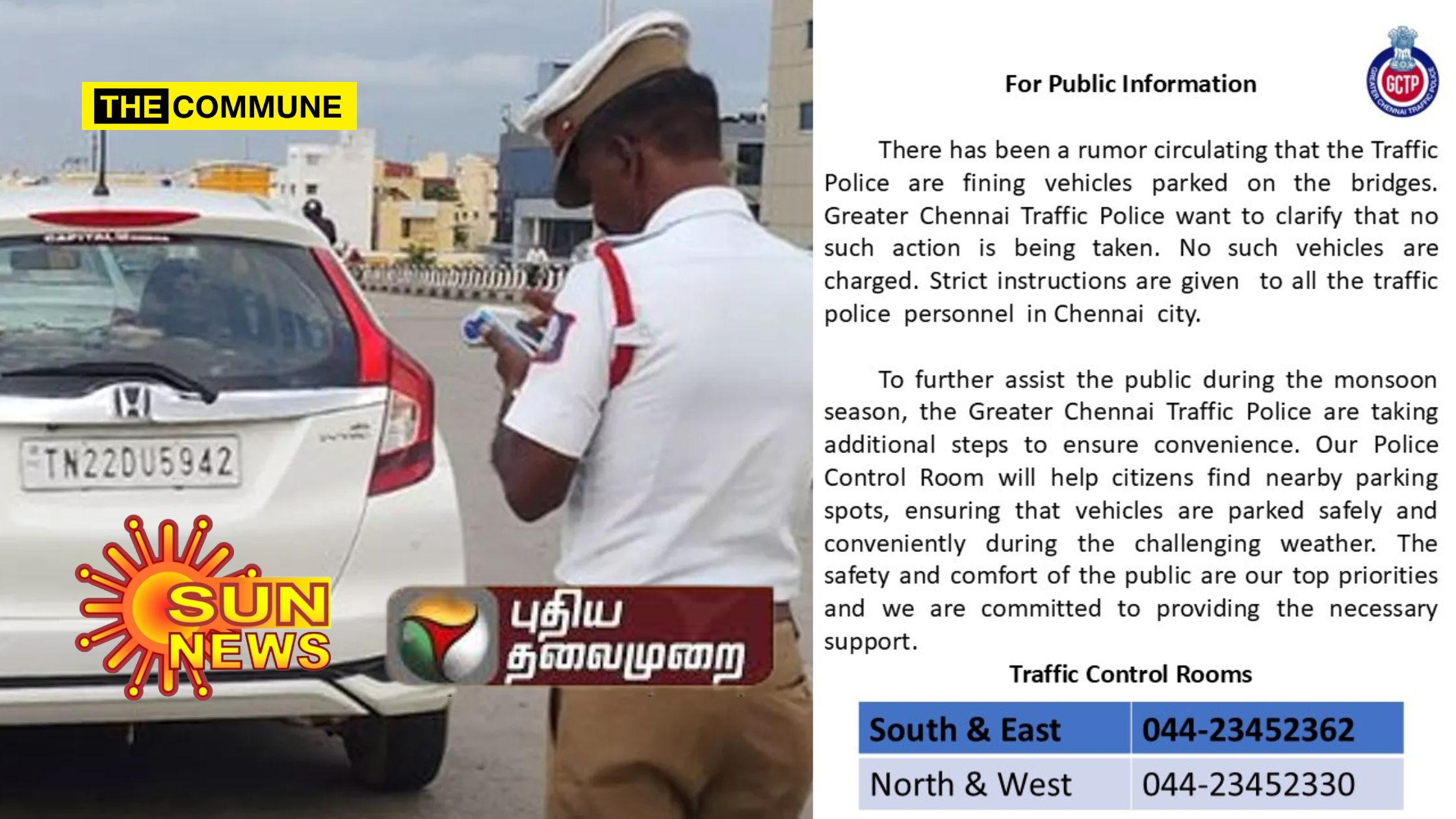
The Greater Chennai Traffic Police have officially denied claims made by Tamil news channels that circulated on 14 October 2024, regarding fines issued to cars parked in Velachery flyover.

With heavy rain alerts in effect for the next four days across Tamil Nadu, residents in Velachery and Pallikaranai parked their vehicles on a flyover, anticipating potential flash flooding. A video of the scene went viral, showing cars lined up along the bridge.

Following this, several Tamil news outlets, including Sun News and Puthiya Thalaimurai, reported that the traffic police were issuing ₹500 fines to those vehicles. Some car owners, who called to discuss their parked cars, expressed their frustration and stated they would not retrieve their vehicles until the rain subsided. This situation highlights the challenges Chennai faces during heavy rainfall and the associated flood risks.

However, the Greater Chennai Traffic Police via its official X account clarified that, “There has been a rumor circulating that the Traffic Police are fining vehicles parked on the bridges. Greater Chennai Traffic Police want to clarify that no such action is being taken. No such vehicles are charged. Strict instructions are given to all the traffic police personnel in Chennai city.”

“To further assist the public during the monsoon season, the Greater Chennai Traffic Police are taking additional steps to ensure convenience. Our Police Control Room will help citizens find nearby parking spots, ensuring that vehicles are parked safely and conveniently during the challenging weather. The safety and comfort of the public are our top priorities, and we are committed to providing the necessary support. Traffic Control Rooms North & West 044-23452330 South & East 044-23452362” It added.

With the Indian Meteorological Department (IMD) issuing a red alert for October 16, 2024, predicting extremely heavy rainfall in Chennai and its surrounding areas, residents rushed to stock up on essential goods on 14 October 2024. People living in flood-prone regions hurried to park their vehicles on flyovers, despite warnings from the Chennai City Traffic Police that such parking would result in fines.

In response to the situation, Chief Minister MK Stalin directed officials to declare a holiday for schools and colleges in Chennai, Tiruvallur, Kancheepuram, and Chengalpattu districts on October 15, which was designated an orange alert day. He also advised IT companies in these areas to allow employees to work from home from October 15 to 18.

To prepare for the impending weather, 1,181 relief camps and 469 boats have been put in place. These measures are being taken as the Regional Meteorological Centre forecasts the Northeast monsoon’s arrival over the southern peninsula by 16 or 17 October 2024. The IMD warned that some areas in Chennai and nearby districts, as well as five districts in the north and delta regions, could experience “extremely heavy rainfall exceeding 20 cm.”

Amid these warnings, many residents in Chennai, particularly in low-lying Velachery, chose to park their cars on flyovers, ignoring the threat of fines. One resident, Balaji Vaidyanathan, shared, “During the December floods, my sedan was submerged, costing me ₹80,000 in repairs. I can’t afford that again. Even if I get fined for unauthorized parking over four days, it will only amount to ₹4,000, much less than repair costs.”

Subscribe to our channels on TelegramWhatsApp, and Instagram and get the best stories of the day delivered to you personally. 
Christian Proselytizing Road Barricade In Tenkasi Removed After Hindu Munnani Files Complaint

Christian Proselytizing Road Barricade In Tenkasi Removed

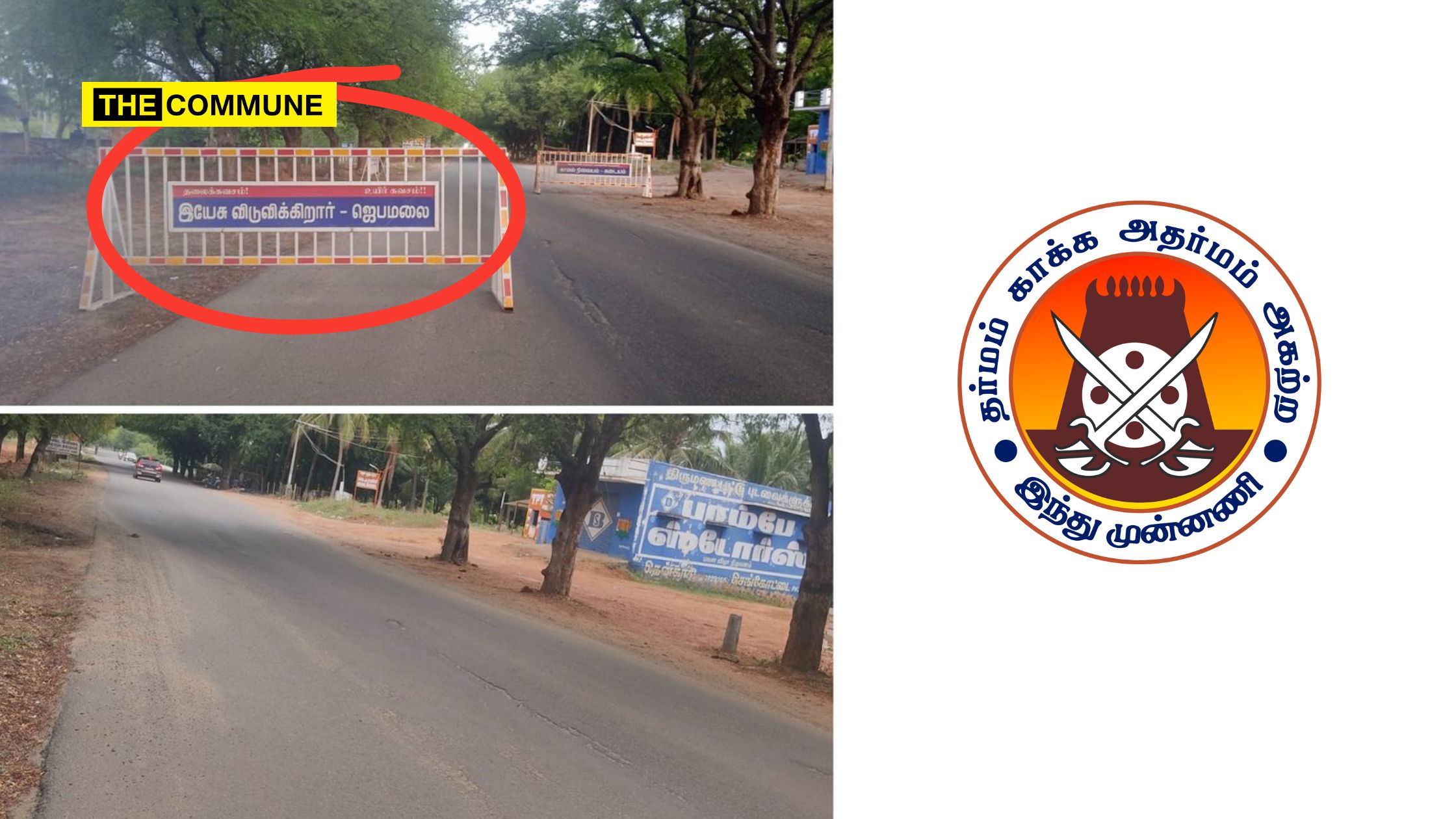
In a significant development on the Ambai to Tenkasi main road, a controversial banner on a barricade promoting a Christian proselytizing campaign was taken down following public outcry. The removal came after a complaint was filed with the district authorities by concerned citizens and members of the Hindu Munnani, who objected to the banner’s content.

The content on the barricade read, “Jesus Frees You – Japamaalai”.

The banner, which was put up by a Christian organization, sparked criticism from local Hindu groups, who viewed it as an attempt to promote religious conversion in a predominantly Hindu area. The Hindu Munnani swiftly took action by lodging a formal complaint with the district governor, demanding the immediate removal of the banner.

The district authorities responded promptly to the complaint, removing the banner on the same day. Hindu groups viewed the incident as a victory, hailing the swift action taken by the district administration as a stand against proselytizing activities.

Members of the Hindu Munnani expressed satisfaction with the outcome, stating that the removal of the banner was an important step in maintaining the region’s cultural and religious integrity. They reiterated their commitment to safeguarding the interests of the local Hindu population and preventing any activities that could be seen as attempts to disrupt communal harmony.

Subscribe to our TelegramWhatsApp, and Instagram channelsand get the best stories of the day delivered to you personally. 
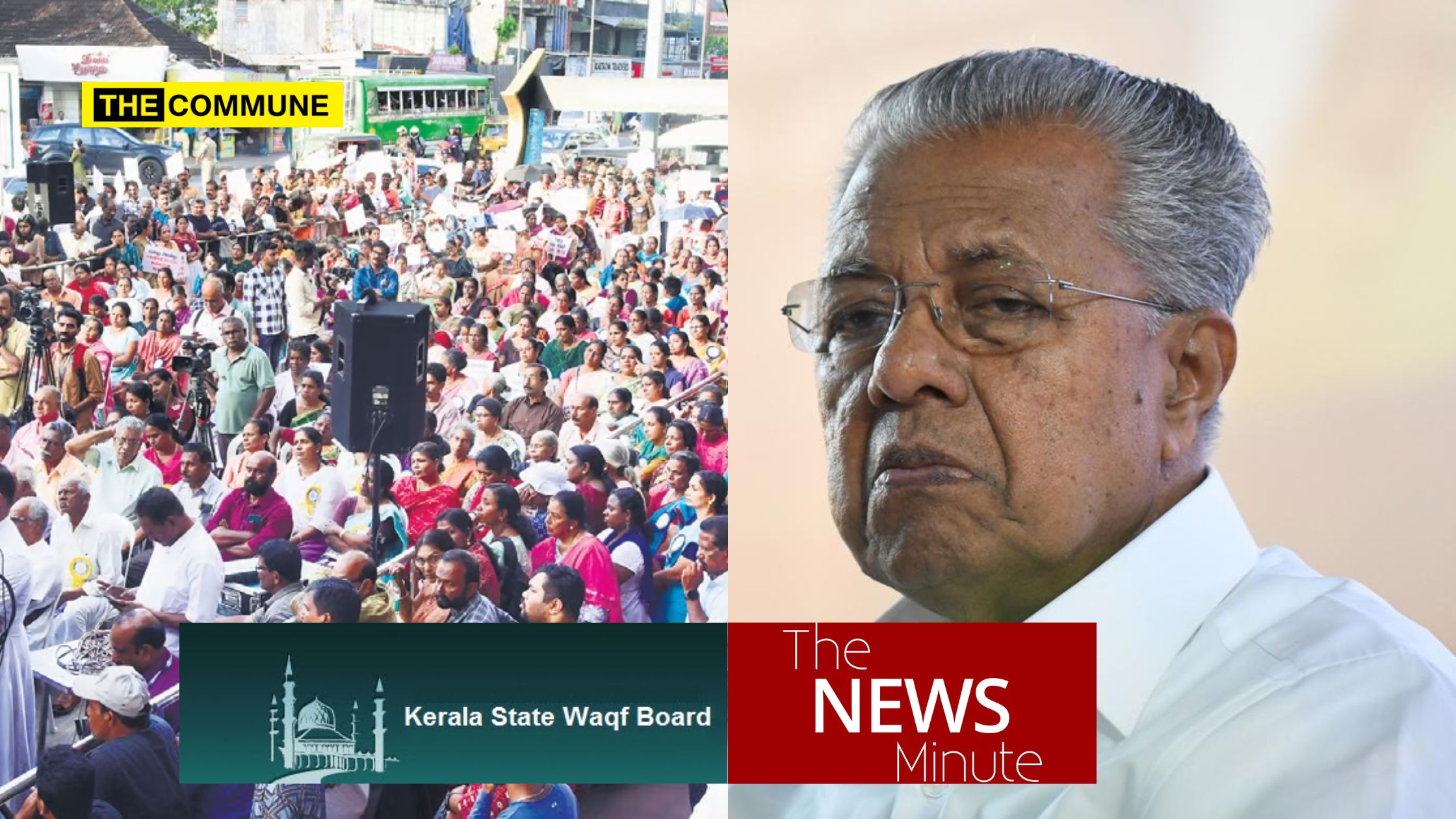
Kerala Waqf Board Claims Ownership Of Ancestral Land Of Hundreds Of Families, Pinarayi Govt Opposes Centre’s Waqf Bill, TNM Upset With Hindu Support For Christian Families

Kerala Waqf Board Claims Ownership Of Ancestral Land

In Kerala’s Ernakulam district, 400 Christian and 200 Hindu families are battling to keep their ancestral homes as the Waqf Board asserts ownership over land that their communities have occupied for generations. The properties in question lie in the coastal regions of Munambam and Cherai, areas historically inhabited by the Latin Catholic fishing community. The dispute, centered around the legal status of the land, has revived decades-old tensions and brought significant distress to the residents.

The controversy began with a petition claiming that the homes stand on Waqf property, initially gifted in 1950 by a wealthy Muslim benefactor named Muhammed Siddhique Sait. The 404-acre land parcel was donated to Farook College in Kozhikode with the stipulation that any income generated from it would serve educational purposes. The land has since changed hands many times, with numerous transactions occurring over the decades. The families had been under the impression that their land ownership was legitimate and recognized by the courts since the Kerala High Court granted legal possession to Farook College in 1975.

In 2008, a renewed dispute emerged when the Justice Nissar Commission, appointed to investigate alleged mismanagement of Waqf properties, identified the land as Waqf property. However, residents assert they were not consulted, and they were unaware of the commission’s findings until the land was officially listed as Waqf property in 2019. When residents attempted to pay their property taxes in 2022, they were informed that the land was considered Waqf property, leading to shock and renewed protests. Many found themselves unable to conduct transactions such as taking loans due to legal uncertainties.

Despite a court intervention allowing residents to pay taxes, the Waqf Board listed the residents asencroachers,aggravating the situation. The issue gained widespread attention when Major Archbishop Andrews Thazhath of the Syro-Malabar Church and the Kerala Catholic Bishops’ Council (KCBC) sent letters to the Joint Secretary of the Lok Sabha Secretariat. They appealed for an amendment to the Waqf Act of 1995, calling the Waqf Board’s claims unjust and unconstitutional. The KCBC insisted that the law should be amended to protect these families from displacement.

Pinarayi Govt Passes Resolution Opposing Waqf Amendment Bill

In a parallel development, the Kerala Legislative Assembly, on 14 October 2024, unanimously passed a resolution urging the Union government to withdraw the Waqf Amendment Bill 2024. The resolution argued that the bill undermines secular principles and threatens the democratic values enshrined in the federal structure of the Constitution. It contended that the proposed amendments would weaken the authority of state Waqf Boards and infringe on state rights by replacing elected members with a board of nominated officials.

Critics argue that the state government is diverting attention from the plight of the affected families by opposing the bill. This move is seen as a political strategy aimed at securing minority votes, rather than addressing the genuine concerns of those at risk of displacement. Observers point out that the assembly’s resolution fails to acknowledge the hardships faced by residents, some of whom trace their lineage in Munambam back over a century.

The Waqf dispute is not limited to Cherai and Munambam, as similar cases of Waqf claims over properties have been reported across India. Without intervention, families who have held land for generations could face eviction. As the affected families continue their legal struggle to retain their ancestral land, questions about the fairness and enforcement of the Waqf Act remain a source of controversy and legal complexity in the region.

TNM Upset With Hindu Groups Standing In Solidarity With Christian Families

As the Christian families in Munambam, Kerala, continue their struggle against the Waqf Board’s claims on their ancestral land, The News Minute (TNM) seems more concerned with Hindu groups lending support to these distressed communities than addressing the genuine land rights issue. TNM’s coverage repeatedly emphasizes the presence of right-wing Hindu groups, like BJP-affiliated organizations, framing their involvement as an opportunistic attempt to exploit religious divisions, while glossing over the real fears and struggles of families at risk of losing their homes.

Instead of focusing on the alarming situation, TNM appears to be more troubled by the involvement of groups such as the BJP’s Minority Morcha and Yuva Morcha, which have openly supported the residents. By portraying this support as a calculated move to sway the Christian community towards the Sangh Parivar’s agenda, TNM diminishes the fact that many families have found allies in these groups during a time of need.

The presence of Hindu groups at the protests and their backing for the residents’ demands for Waqf law amendments is characterized by TNM as a communal ploy. Yet, the residents themselves have welcomed anyone who stands by them in their fight for justice, with some openly stating they will support those who help, regardless of their traditional political affiliations. The arrival of these groups is simply a response to a dire situation where the affected families, predominantly Christians, have felt ignored by the ruling Left Democratic Front (LDF) and other political entities that have failed to address their plight meaningfully.

TNM’s narrative seems to accuse the Hindu groups of attempting to frame the dispute as a conflict between Christians and Muslims while dismissing the legitimate concerns that the Waqf laws pose a threat to the rights of non-Muslim communities. Critics argue that this seems intent on shielding the state government and other political forces from accountability for their failure to protect the rights of the affected families.

Additionally, the news outlet’s criticism extends to the online campaigns led by Christian organizations like the Christian Association & Alliance for Social Action (CASA), which have been vocal about the need to amend Waqf laws. Instead of recognizing CASA’s efforts to advocate for the residents, TNM labels the group’s campaigns as potentially communal, thereby diverting attention away from the broader issue of unjust land claims.

The residents of Munambam have made it clear that they are not interested in communalizing the issue but are seeking allies in their fight for justice. For TNM to frame this solidarity as opportunistic or divisive only undermines the real battle at hand – securing the rights of families who have lived on this land for generations.

Subscribe to our channels on TelegramWhatsApp, and Instagram and get the best stories of the day delivered to you personally.