Home Blog Page 590

Uttarakhand UCC Approved: Marriage Registration, Live-In Provisions Retained; Personal Law Disputes Excluded

Uttarakhand UCC Approved: Marriage Registration, Live-In Provisions Retained; Personal Law Disputes Excluded

New Delhi, Jan 20 (IANS): The Uniform Civil Code (UCC) rules approved by the Uttarakhand government on Monday avoided the controversial proposals to create a separate process to resolve disputes related to personal laws.

The rules proposed by the Shatrughan Singh Committee for the UCC, initially presented to the Chief Minister on October 18, 2024, were subject to some revisions.

Sources said the extensive 400-page document has been condensed to under 100 pages, with only provisions concerning registration of marriage, divorce, inheritance, and live-in being retained. As a result, the revised UCC rules approved by the Uttarakhand government on Monday no longer include the proposal for a separate process to handle disputes related to personal laws.

The enforcement of the UCC is likely to be announced on January 26. The government is waiting for the conclusion of local body elections, which are currently under the model code of conduct.

Meanwhile, this move has raised a few questions about the decision vis-a-vis public interest. The reported revision of the original rules — particularly the removal of judicial processes for resolving disputes in personal matters — has raised eyebrows. These changes were reportedly made following recommendations from the Law, Justice and Legislative Affairs department, which oversees the state’s judicial processes.

Sources said a key concern is the purported rejection of public suggestions made during the UCC consultations, during which people voiced the need for improvements in judicial processes.

The decision to discard these recommendations calls into question whether the UCC’s implementation is genuinely in the public interest, ask sources.

Sources also ask why public consultations were held if their inputs were to be ignored. And why was the Committee formed if its extensive work was ultimately dismissed? Significantly, the Act was drafted based on a report from a government-appointed panel chaired by retired Supreme Court judge Ranjana Prakash Desai.

The five-member panel conducted several public meetings and consultations with diverse stakeholders throughout the state to compile the report.

Analysts ask whether the entire exercise was a mere formality intended to pacify public sentiment without delivering meaningful reform.

The recent suicide of Atul Subhash, which cast a shadow over the judicial system, has once again highlighted the need for reform.

With the UCC aiming to address these concerns, the purported rejection of certain reforms raises a crucial question as to whether the people will be getting real justice or whether it will continue the status quo of harassment.

–IANS

Subscribe to our TelegramWhatsApp, and Instagram channels and get the best stories of the day delivered to you personally.

RG Kar Case: Court Convicts Sanjay Roy, Victim’s Parents Say ‘CBI Failed To Prove It As Rarest Of Rare Crime’

RG Kar case: Court Convicts Sanjay Roy, victim's parents say 'CBI failed to prove it as rarest of rare crime'

Kolkata, Jan 20 (IANS) As a special court in Kolkata on Monday convicted Sanjay Roy in connection with the horrific rape and murder of a junior woman doctor of the state-run RG Kar Medical College & Hospital within the premises of the medical facility in August last year and handed him life imprisonment, the parents of the victim claimed that the Central Bureau of Investigation (CBI) is to be blamed for not being able to prove that the offence in the matter a “rarest of rare crimes”.

In fact, the judge of the special court, Anirban Das, made it clear that Sanjay Roy was granted “life imprisonment” instead of “death penalty” since the offence in the matter cannot be considered a “rarest of rare crimes.”

“My daughter was first raped within the hospital premises during her working hours. Then she was murdered. Is it not a ‘rarest of rare crimes’? But in reality, this is the total failure on the part of the CBI to prove the same,” the victim’s mother told mediapersons just a few hours after the sentence was pronounced.

The victim’s father thanked the judge of the special court for providing them with the platform to go for the next stage in the quest for justice for their daughter and more women like her.

“The judge of the special court acted on his own realisations. We are yet to get justice. We just crossed the first step. The special court judge has created a platform for us to move to the next step,” he said.

At the same time, he said that although the judge of the special court has ordered the state government to pay compensation of Rs 17 lakh to them, they will not be accepting that.

“We will not accept the compensation. We have already communicated this to the judge of the special court. No compensation is above our daughter’s life. Our daughter will get true justice if all the real culprits are punished,” the victim’s father said.

–IANS

Subscribe to our TelegramWhatsApp, and Instagram channels and get the best stories of the day delivered to you personally.

China Unveils Logos For 3 Space Missions In 2025

China Unveils Logos For 3 Space Missions In 2025

The China Manned Space Agency (CMSA) on Monday unveiled logos for three key missions in China’s manned space programme this year. The logos were for the launches of the crewed spaceships Shenzhou-20 and Shenzhou-21, and the cargo craft Tianzhou-9, Xinhua news agency reported.

According to the CMSA, these new logos symbolise the courage and determination of Chinese astronauts and their commitment to exploring the mysteries of the universe.

A logo has been designed for each manned mission since China’s first manned spaceflight Shenzhou-5 in 2003. The CMSA has opened logo solicitation for the country’s space missions since 2023 and has maintained this approach since then. As per the CMSA, crews for the Shenzhou-20 and Shenzhou-21 missions will consist of three astronauts each.

Shenzhou-20 is set to dock with the radial port of the space station’s core module, while Shenzhou-21 will dock with its front port. The main tasks of the astronauts will include extravehicular activities, cargo outbound deliveries via the station’s cargo airlock module, and the conducting of space science experiments and technology tests.

In the second half of 2025, China plans to launch the Tianzhou-9 cargo spacecraft from the Wenchang Space Launch Site in its southern Hainan Province.

This mission will deliver supplies for astronauts, propellants to ensure the space station’s operation, various types of payloads, and more. China’s manned space station project has entered its application and development stage — with two manned spacecraft missions and one to two cargo missions planned annually.

Meanwhile, the Shenzhou-19 crew members, currently onboard China’s space station will conduct their second extravehicular activities (EVAs) within the next few days, the CMSA said recently. Since completing their first spacewalk on December 17, 2024, the crew has undertaken a series of tasks, including inspections and maintenance of the space station’s equipment, system-wide pressure emergency drills, and preparations for the second EVAs.

The agency confirmed that the three Shenzhou-19 crew members are in good health, and the space station is operating smoothly, providing optimal conditions for the upcoming EVAs.

–IANS

Subscribe to our channels on TelegramWhatsApp, and Instagram and get the best stories of the day delivered to you personally.

What Can India Expect from Donald Trump’s Second Term?

What Can India Expect from Donald Trump’s Second Term? trump india tariff pm modi

The possibility of Donald Trump’s second term as President of the United States has generated considerable global interest, and India is no exception. As one of the largest democracies and an emerging global power, India’s relationship with the United States is vital to its strategic, economic, and geopolitical aspirations. Trump’s potential return to the White House could have profound implications for India, spanning trade, defence, immigration, and global power dynamics. Here is an in-depth analysis of what India can expect if Trump reclaims the presidency.

US-India Relations: A Look Back

Under Donald Trump’s first term, India-US relations experienced highs and challenges. The two nations shared a strong rapport on strategic issues, especially in countering China’s influence and promoting a free and open Indo-Pacific. Trump’s chemistry with Prime Minister Narendra Modi also played a role in advancing bilateral ties. Landmark moments such as the “Howdy, Modi!” event in Houston and the “Namaste Trump” rally in Ahmedabad underscored the camaraderie between the leaders.
However, Trump’s America First policies created friction on trade and immigration. India faced increased export tariffs, while H-1B visa restrictions impacted Indian professionals and IT companies. Despite these challenges, defence cooperation flourished, with India becoming a major buyer of US military hardware and a key partner in the Quad grouping, along with Japan and Australia.

Strategic And Defense Ties

Trump’s second term could amplify strategic and defence ties by intensifying efforts to counter China’s influence in the Indo-Pacific. India benefits from a reinvigorated Quad alliance and increased collaboration in military and intelligence domains.

Countering China’s Influence

One of the most critical aspects of Trump’s second term would be the US stance on China. Trump’s administration took a hardline approach against Beijing, labelling it a strategic competitor and imposing tariffs on Chinese goods. A tougher US stance could benefit India, which is embroiled in border tensions with China.

Under Trump’s leadership, the Quad could gain renewed vigour. The grouping—seen as a counterbalance to China’s aggressive posture in the Indo-Pacific—might see more joint military exercises, intelligence sharing, and collaborative initiatives. Such moves could strengthen India’s position in the region and provide it with a powerful ally in countering Chinese incursions.

Strengthening Defense Cooperation

Defence ties between India and the US have grown significantly, with deals such as purchasing Apache helicopters, Chinook helicopters, and P-8I surveillance aircraft. A second Trump term could expand these ties with more technology transfers, joint military exercises, and arms sales. India’s designation as a Major Defense Partner under Trump’s first term will likely be leveraged for deeper collaboration.

Trade Relations: A Double-Edged Sword

Trade will likely remain a contentious issue in a potential Trump second term. Trump’s America First policy and focus on reducing trade deficits could pressure India to open its markets to US goods. The bilateral trade relationship, while robust, has faced hurdles, including disputes over tariffs, intellectual property rights, and market access.

Despite the challenges, there are opportunities for collaboration. Sectors such as energy, pharmaceuticals, and technology could see increased engagement. India’s push for renewable energy and electric vehicles aligns with American advancements in these areas, creating potential for joint ventures and investments.

Conversely, India might face renewed demands to lower tariffs on American agricultural products and medical devices. Additionally, Trump’s approach to trade often involves unpredictable tariffs and unilateral actions, which could create uncertainty for Indian exporters.

Immigration Policies: A Key Concern For India

Trump’s immigration policies have been a point of contention for India. His administration imposed stricter norms for H-1B visas, directly impacting Indian IT professionals and companies. A second term could mean further tightening of visa rules, posing challenges for India’s IT sector and skilled professionals aspiring to work in the US.

While Trump’s hardline stance on immigration caused friction, there’s room for optimism. With Indian Americans emerging as a significant voting bloc and contributing to the US economy, a second Trump administration might consider more balanced policies. Advocacy from the Indian diaspora and businesses could play a role in shaping immigration reforms.

Geopolitical Dynamics And Multilateral Engagement

Trump’s approach to multilateralism has been unconventional, often characterized by a preference for bilateral deals. While this has led to the US pulling out of agreements like the Paris Climate Accord (later rejoined under Biden), it could allow India and the U.S. to forge stronger bilateral or regional partnerships without the constraints of broader frameworks.

US backing could benefit India’s aspirations for a permanent United Nations Security Council (UNSC) seat. During Trump’s first term, his administration supported India’s bid, but tangible progress remained elusive. A second term might provide an opportunity to push this agenda further.

Technology and Innovation

The US remains a key partner in India’s technological aspirations. The possibilities are vast, from collaboration on space exploration to advancements in artificial intelligence and cybersecurity. Trump’s administration prioritized American dominance in technology, and a second term could see initiatives that align with India’s goals of becoming a global tech hub.

Digital Trade And Data Security

However, challenges related to digital trade and data security could arise. India’s data localization policies and Trump’s focus on protecting US tech companies might create friction. Balancing these priorities would be crucial to fostering a mutually beneficial partnership.

Climate Change and Energy Cooperation

Trump’s climate policies have been criticized for prioritizing economic growth over environmental concerns. This could pose challenges for India, which is heavily invested in renewable energy and climate action. However, the energy partnership between the two nations, especially in liquefied natural gas (LNG) and solar power, will likely continue thriving.

Opportunities In Clean Energy

India’s ambitious renewable energy targets and Trump’s support for US energy exports could create opportunities for collaboration. Joint solar, wind, and nuclear energy ventures could benefit both nations economically and environmentally.

The Indian Diaspora: A Bridge Between Nations

The Indian American community plays a pivotal role in strengthening India-US ties. During his first term, Trump’s outreach to this demographic highlighted their growing political and economic influence. A second term could increase engagement with the diaspora, further solidifying bilateral relations.

Challenges And Risks

Trump’s leadership style is often marked by unpredictability and a preference for unilateral actions. While this can lead to bold initiatives, it also creates uncertainty. For India, navigating such unpredictability would require strategic foresight and adaptability.

India’s foreign policy emphasizes strategic autonomy and maintaining balanced relations with major powers like the US, Russia, and China. A second Trump term could complicate this balance, especially if the US-China rivalry intensifies or Trump’s policies create friction with Russia, a key defence partner for India.

To sum up: A Pragmatic Approach

Donald Trump’s potential return to the White House presents opportunities and challenges for India. Strengthening strategic and defence ties, navigating trade complexities, and fostering collaboration in technology and energy will be key priorities. At the same time, India must prepare for potential challenges in immigration policies and global governance dynamics.

Ultimately, the trajectory of India-US relations under a second Trump term will depend on the ability of both nations to find common ground and leverage their shared interests. As two of the world’s largest democracies, their partnership has the potential to shape the 21st-century geopolitical landscape—a prospect that demands careful and pragmatic diplomacy.

Ganesh Kumar is a geo-political analyst.

Subscribe to our channels on TelegramWhatsApp, and Instagram and get the best stories of the day delivered to you personally.

SDPI – Ally Of ‘Palaniswami’-Led ADMK & Islamist Terror Outfit PFI’s Subsidiary Behind Thiruparankundram Temple Sacrilege Attempt

IMK urged the police to prevent SDPI from attempting to sacrifice animals on the sacred Thiruparankundram hill.

On 16 January 2025, Solaikannan, the Madurai district president of the Indu Makkal Katchi (IMK), submitted an appeal to Police Commissioner Loganathan, urging him to prevent the Social Democratic Party of India (SDPI), an ally of the AIADMK and banned terror outfit PFI’s subsidiary from attempting to sacrifice animals on the sacred Thiruparankundram hill.

In his petition, Solaikannan’s  outlined that the Thiruparankundram Subramaniya Swamy Temple hill in Madurai is an ancient site with a rich religious significance. For centuries, devotees have worshipped the hill, performing a girivalam (circumambulation) during every full moon.

At the summit of the hill, there is the Kashi Vishwanath Temple, a lamp post, and a sacred Kallathi tree. During British rule, the First Additional sub Court had ruled that “the owner of the Thiruparankundram hill is Subramania Swamy temple.” Since 2011, an organization called SDPI has been raising issues with erecting a flag near the lamp post on Thiruparankundram hill. In recent days, the police have intervened to stop individuals claiming that the hill belongs to them and that they have the right to sacrifice goats, cows, and chickens there. This group has protested in a manner that has even threatened the police.

In the Tamil Nadu Assembly, it was stated that there is no prohibition on holding prayers on the hill and that the group could approach the court to request permission for animal sacrifices. They have declared their intention to defy the ban and proceed with the sacrifices on the hill the following day.

Solaikannan concluded that permission should not be granted for such actions, as it would undermine the sanctity of the Saivite sacred hill. To protect the Jain temples and inscriptions located around the hill, he suggested that the entire area should be placed under the jurisdiction of the Archaeological Department.

About Thiruparankundram Murugan Temple And The Controversy

On December 27, 2024, tensions arose at the Thiruparankundram Murugan Temple Hills when a group of individuals attempted to bring goats and roosters to a hilltop dargah for ritual sacrifices. The area, sacred to Hindus for housing the Murugan Temple—one of the six holy abodes (Arupadai Veedu) of Lord Muruga—was declared off-limits for such activities by the police. Syed Abu Dahir, a resident of Malaiyadipatti, along with his family, was stopped by authorities at the base of the hill, sparking protests from over 20 local Muslims in solidarity.

On January 5, 2025, a larger gathering of Muslim protesters at the hill demanded access to the mosque for prayers. The police denied their request, leading to heightened tensions and a brief altercation. Days later, on January 17, 2025, during the Santhanakoodu Festival, social media posts began circulating about an “Equality Feast” (Samabanthi Bhojan) allegedly planned at the hilltop dargah, where animal sacrifices would take place. Anticipating potential communal tensions, police implemented strict measures, including barricades and inspections, to prevent the transport of animals or meat to the hill.

When informed that animal sacrifices were prohibited, members of the dargah Jamath and other groups staged protests, raising slogans that disrupted the region’s peace.

The incident rekindled a long-standing dispute over the historical and cultural significance of Thiruparankundram. Renowned for its Murugan Temple and ancient Pandya-era rock-cut shrines, the hill is also home to a dargah reportedly established during the Madurai Sultanate’s rule. According to local claims, the dargah was built in honor of Sikandar Zulqarnain, mentioned in Islamic traditions, who purportedly arrived in Madurai during the Sultanate’s reign.

Hindu groups argue that under the guise of religious festivals, parts of the hill have been systematically encroached upon over time. They cite historical rulings, including one by the London Privy Council, affirming the hill’s ownership by the Subramanya Swamy temple and prohibiting any expansion of the dargah. Activists have repeatedly called for government intervention to protect the hill’s cultural and religious sanctity, alleging that appeasement politics by the Tamil Nadu HR&CE Department have exacerbated the issue.

Historical accounts further reveal that Hindu practices, such as lighting the Karthigai Deepam atop the hill, were discontinued during British rule and never reinstated post-independence. This period, activists allege, saw increased Islamic presence on the hill, including the placement of green crescent flags and the construction of the dargah.

The recent incidents have reignited debates over the hill’s rightful ownership, its historical importance, and the need to preserve its sanctity amidst competing religious claims.

(With inputs from Dinamalar)

Subscribe to our channels on TelegramWhatsApp, and Instagram and get the best stories of the day delivered to you personally.

Kaadhalikka Neramillai Review: Kiruthiga Udhayanidhi’s ‘Progressive’ Take On Relationships Is Actually Regressive That Defiles The Sanctity Of Marriage And Family

In a time when cinema claims to mirror society’s evolving values, Kaadhalikka Neramillai attempts to embrace progressiveness but falters in ways that are both baffling and frustrating. What starts as a celebration of modern ideals spirals into a chaotic portrayal of questionable decisions, misplaced priorities, and unrealistic social dynamics.

The heroine, portrayed by Nithya Menen as an Iyer Brahmin girl, openly admits to her parents—especially her visibly irked mother—that she has lost her virginity. While cinema can be a space for breaking stereotypes, this moment feels tone-deaf. As a Tamil girl myself, belonging to the same generation the film tries to represent, such a scene feels far removed from reality. Despite our exposure to modernity, respecting parental values and maintaining a sense of decorum remains integral. It’s not progressiveness to hurt or humiliate parents, especially when it adds no depth or purpose to the story.

Her father’s nonchalant reaction and the aunt enabling her post-breakup indulgence in alcohol and cigarettes further stretch credibility. It’s one thing to explore rebellion in cinema, but reducing a family to caricatures that actively encourage self-destructive behaviours is neither relatable nor progressive. Even in households with more liberal attitudes, such extreme portrayals feel disconnected from any semblance of reality.

The second half explores IVF, suddenly digressing from its so-called progressive subjects. Nithya’s IVF baby meeting Jayam Ravi creates another awkward subplot where his ex-lover—who broke up with him over his disinterest in having children—becomes jealous. This outdated and unnecessary conflict highlights the story’s lack of understanding of contemporary issues. Ms Kiruthiga, it’s 2020. Society has evolved, and people have become more civilised. Don’t recycle an outdated topic from the 90s. No educated woman today becomes jealous of a child receiving attention.

The so-called heroine sneaking in to have hilsa fish prepared by the hero’s father (Lal) was another cringeworthy moment. Portraying a Brahmin woman raised vegetarian as suddenly relishing fish and hating dosas made at home is stereotypical, forced, and, frankly, racist. This shallow attempt at ‘progressive’ storytelling feels reductive, especially considering the director and the team have consistently propagated anti-Brahmin ideologies on and off screen.

The film’s central love story raises more eyebrows. A register marriage between the heroine and her ex-lover, played by John Kokken, happens despite parental approval. What message does this convey? Is the director suggesting that love marriages should only be legitimised through rebellion and clandestine decisions, even when families are supportive? This portrayal undermines the idea of mutual respect in relationships and family bonds, which are crucial even in progressive narratives.

Adding to this patchwork of questionable choices is Jayam Ravi’s character, who breaks up with his girlfriend because he doesn’t want children—arguably one of the few rational and fair moments in the film. However, his LGBTQIA+ friend Vinay complicates matters further. Vinay, who is romantically inclined towards men, expresses a desire to have his own biological child. While the LGBTQIA+ community’s rights and desires are important topics, this depiction seems tone-deaf and disconnected from the realities of modern queer parenting. Even in progressive societies, same-sex couples tend to adopt or opt out of parenting altogether, recognising the societal and logistical challenges involved. Suggesting that a single gay man can dismiss the value of a mother’s role based on a flimsy analogy—because a friend lost his mother early—is reductive and undermines the complexities of queer parenting.

What makes this depiction worse is its insensitivity to broader issues. In certain contexts, like the US, recent controversies involving child exploitation have raised questions about the vulnerabilities of unconventional parenting setups. While these concerns shouldn’t generalise or stigmatise, the film’s naïve handling of the topic adds nothing meaningful to the conversation.

Kaadhalikka Neramillai might have aimed to present a bold, progressive narrative, but its execution seems confused, inconsistent, and out of touch. Progressiveness isn’t about glorifying rebellion or rejecting tradition for its own sake—it’s about finding balance, respecting context, and evolving in ways that genuinely enrich relationships and society. Sadly, this film misses that mark by a wide margin.

Sruti is a University student whose work has been featured in student newspapers and lifestyle magazines.

Subscribe to our channels on TelegramWhatsApp, and Instagram and get the best stories of the day delivered to you personally.

Part-Time Politician Vijay Exposes His Ignorance About Parandur Airport

TVK Vijay’s Parandur Airport Protest: Ignorance Or Political Opportunism?

Actor and Tamilaga Vettri Kazhagam (TVK) leader Vijay’s recent visit to Parandur to support farmers protesting against the proposed Greenfield airport has sparked controversy, with critics accusing him of making uninformed statements and ignoring critical facts about the project. Vijay’s allegations that the DMK government isanti-peopleand his call to relocate the airport have been met with sharp rebuttals, as experts and official reports suggest that his claims are not backed by proper research or understanding of the project’s complexities.

Vijay’s Claims vs. Reality

Vijay, during his visit to Parandur, alleged that the proposed airport would destroy 90% of farmland and 13 water bodies, calling the projectanti-people. He also questioned why the DMK, which had opposed projects like the Salem eight-lane expressway and Kattupalli port, was supporting the Parandur airport. However, a closer look at the Airports Authority of India (AAI) pre-feasibility report and the Tamil Nadu government’s decision-making process reveals that Vijay’s statements are either misleading or based on incomplete information.

Why Parandur Was Chosen

The AAI conducted a detailed pre-feasibility study to identify the most suitable site for Chennai’s second airport. The study evaluated multiple locations, including Padalam, Thiruporur, Pannur, and Parandur. Here’s why Parandur emerged as the best option:

Airspace Restrictions: Sites like Padalam and Thiruporur were ruled out due to their proximity to restricted airspace controlled by the Indian Air Force and the Kalpakkam Nuclear Plant. These restrictions would have severely limited flight operations, reducing the airport’s capacity and efficiency.

Land Availability: Parandur offers 5,369 acres of land, which is sufficient for the airport’s current and future needs. In contrast, the Pannur site, which was also considered, has only 4,284 acres and would require additional land acquisition, which is challenging due to existing industries and habitations.

Connectivity: Parandur is strategically located near the upcoming Chennai-Bengaluru Expressway, ensuring seamless connectivity to major demand centers. This makes it a more cost-effective and practical choice compared to other sites.

Fewer Displacements: The Parandur site would displace 1,005 families, significantly fewer than the 1,546 families that would be affected in Pannur. Additionally, Parandur has fewer man-made obstacles, such as high-tension power lines and industrial structures, which are prevalent in Pannur.

Future Development: Parandur’s large tracts of vacant land allow for better planning and future expansion, unlike Pannur, which is near the Sriperumbudur Industrial Area and already densely developed.

Vijay’s Misplaced Allegations

Vijay’s claim that the project would destroy 90% of farmland and 13 water bodies appears exaggerated and lacks substantiation. The AAI report clearly states that the Parandur site was chosen after careful consideration of environmental and social impacts. While land acquisition is always a sensitive issue, the government has emphasized that the project is essential to address Chennai’s growing air traffic demands and boost regional development.

Moreover, Vijay’s comparison of the Parandur airport project to the Salem expressway and Kattupalli port is flawed. The Salem expressway faced opposition due to its environmental impact and displacement of farmers, while the Kattupalli port expansion raised concerns about coastal ecology. In contrast, the Parandur airport project has been meticulously planned to minimize environmental and social disruptions, as evidenced by the AAI’s detailed study.

Political Opportunism?

Critics have accused Vijay of using the Parandur issue to gain political mileage rather than offering constructive solutions. His dramatic visit to the protest site, where he was prevented from entering the village by police, has been seen as a publicity stunt aimed at positioning himself as a champion of farmers. However, his failure to acknowledge the technical and logistical challenges of relocating the airport raises questions about his understanding of the issue.

Aviation experts and urban planners have emphasized that the Parandur site is the most viable option for Chennai’s second airport. They argue that relocating the project to another site, as Vijay suggested, would not only delay the much-needed infrastructure but also increase costs and complicate land acquisition. The AAI report’s findings are based on rigorous technical analysis, and any decision to change the site would require a fresh feasibility study, which could take years.

Subscribe to our channels on Telegram, WhatsApp, and Instagram and get the best stories of the day delivered to you personally.

Rabid Dravidianist Actor Sathyaraj’s Daughter Joins DMK

Rabid Dravidianist Actor Sathyaraj's Daughter Joins DMK

On 19 January 2025, Divya, Dravidianist supporter and Kollywood actor Sathyaraj’s daughter, officially joined the Dravida Munnetra Kazhagam (DMK) at the party’s headquarters, Anna Arivalayam, in Chennai. Her induction occurred in the presence of Chief Minister MK Stalin, DMK MP TR Baalu, and HR&CE Ministers PK Sekar Babu and KN Nehru.

Following her induction, Divya expressed her gratitude via social media post, stating, “Today marks the beginning of an important chapter in my life. I am truly honored to announce that I have officially joined the Dravida Munnetra Kazhagam. I sincerely thank our honorable Chief Minister of Tamil Nadu, MK Stalin sir, and our honorable Deputy Chief Minister, Udhayanidhi Stalin sir for their trust and support. My father and comrade, Purathchi Tamizhan Sathyaraj, has always taught me that life’s real luxuries are rooted in equality and social justice – values that our thanthai Periyar passionately commissioned. These principles have shaped my worldview and today, they motivate me as I step into public service. Inspired by the visionary path laid down by muthamil arignar Dr Kalaignar Aiya, I embark on this new journey as a proud daughter of Tamil Nadu to work selflessly for the progress of our people. I would like to thank my family, friends, press, and media for standing by me. Let’s make a difference together.”

The news of Dravidianist actor Sathyaraj’s daughter, Divya, joining the DMK was not surprising, considering her father’s longstanding vocal support for the party’s cause. Even during the time when the DMK was in opposition, Sathyaraj consistently aligned with the party’s narratives and buttressed for it. Sathyaraj, known for his controversial statements, particularly those aimed at Hindus and Hinduism, often took on the role of diverting criticism away from the DMK. By making such attacks, he would draw attention to himself, thus deflecting scrutiny from the DMK, especially now that it is in power.

Critics suggested that Sathyaraj had also pushed for Divya to be a candidate in the 2024 elections, even releasing a video where she alleged indirectly that the BJP had approached her to join their ranks, but that attempted stunt ultimately fell short. Recently, Divya, following in her father’s footsteps, began criticizing actor-turned-politician Vijay, labeling him a “photo politician.” This marked the beginning of her official entry into politics by joining the DMK.

Sathyaraj – Dravidianist Hypocrite

Actor Sathyaraj presents himself as a strong advocate for a reformed India, frequently criticizing caste-based practices and superstitions. However, this stance has been called into question due to a notable contradiction in his actions. Despite publicly opposing caste discrimination and traditional rituals, it was reported that he conducted his son’s marriage according to caste-based customs, directly conflicting with his professed Periyarist beliefs. Critics contend that this inconsistency between his public advocacy for social reform and his personal practices undermines his credibility, revealing a gap between his ideological statements and actions.

Additionally, Sathyaraj is often seen in films with anti-Brahmin and anti-Hindu themes. His most recent film, Annapoorani, was a box office failure.

During the drug scandal involving the DMK NRI wing functionary and international drug peddler Jaffer Sadiq, actor Sathyaraj attempted to divert attention from the DMK by making controversial statements targeting Hindus. However, his attempt to shift the focus fell flat. One of his speech was deliberately made viral and surfaced on social media but despite the efforts, the speech failed to make a significant impact. At a time when the state was grappling with drug-related incidents involving the DMK, Sathyaraj unexpectedly stepped forward with his remarks. Emphasizing that Tamil Nadu is a place where all religions coexist peacefully, he warned against exploiting religious differences for political advantage. He noted that while a “religious storm” may be brewing in the North, in Tamil Nadu, it was merely a “Madappuyal” (foolish storm). He also expressed concerns about outsiders attempting to influence food choices, specifically beef, cautioning against the dangers of such trends.

Sathyaraj’s portrayal in the film Thozhar Che Guevara movie exemplifies his rabid Dravidianist tendencies by unapologetically targeting Hindu values and Brahmins under the guise of addressing caste issues. The film’s sneak peek highlights his character mocking Brahmins using the slur “thayir sadham,” glorifying beef consumption to antagonize vegetarians, and equating cultural differences to oppression. His exaggerated depiction of caste-based discrimination, such as separate water dispensers, relies on stereotypes and deliberate misrepresentation. The character’s provocative behavior, including soiling a water dispenser and mocking Hindu practices, underscores the film’s agenda of vilifying Hindus, aligning it with the Dravidianist propaganda Sathyaraj frequently promotes.

Subscribe to our channels on TelegramWhatsApp, and Instagram and get the best stories of the day delivered to you personally.

Madurai Bench Of Madras HC Quashes Adverse Observations Against Fmr Health Min Dr. C. Vijayabaskar In Arumughaswamy Commission Report

Madurai Bench Of Madras HC Quashes Adverse Observations Against Fmr Health Min Vijayabaskar In Arumughaswamy Commission Report

In a significant development, the Madurai Bench of the Madras High Court has quashed the adverse observations made against former Tamil Nadu Health Minister Dr C Vijayabaskar in the Justice A Arumughaswamy Commission of Inquiry report dated 23 August 2022. The report, which investigated the circumstances surrounding the hospitalization and subsequent demise of former Chief Minister J. Jayalalithaa, had made scathing remarks against Dr. Vijayabaskar, holding him responsible for lapses in her medical treatment.

While delivering its judgment, the court emphasized that the commission had failed to follow the mandatory procedures under Section 8B of the Commissions of Inquiry Act, 1952, which requires that any person likely to be prejudicially affected by the inquiry must be given a reasonable opportunity to be heard. Dr Vijayabaskar, who was examined as a witness (CW-146) and not formally arrayed as a respondent, was denied this opportunity, violating natural justice.

Key Observations By The Court

Violation of Natural Justice: The court noted that the commission had made adverse findings against Dr Vijayabaskar without issuing a notice under Section 8B of the Act, which is mandatory when a person’s reputation is likely to be affected. The commission’s failure to provide him with an opportunity to defend himself rendered the findings legally untenable.

Beyond Scope of Reference: The court observed that the commission had exceeded its terms of reference by making observations on events that occurred after 5 December 2016, the date of Jayalalithaa’s demise. The commission’s report had even examined events up to 11 February 2017, which was beyond its mandate.

Ignoring Expert Evidence: The court highlighted that the commission had disregarded the findings of the AIIMS medical board, which was constituted by the Supreme Court to assist in the inquiry. The AIIMS report had given a clean chit to the medical treatment provided to Jayalalithaa, but the commission chose to ignore this expert opinion without valid reasons.

Reputation and Dignity: Citing the Supreme Court’s judgment in the State of Bihar v. Lal Krishna Advani (2003), the court reiterated that the right to reputation is an integral part of the fundamental right to life under Article 21 of the Constitution. The adverse remarks against Dr Vijayabaskar, made without due process, had caused significant harm to his reputation and political career.

Case Background

The Tamil Nadu government constituted the Justice Arumughaswamy Commission in September 2017 to investigate the circumstances leading to the hospitalization of Jayalalithaa on 22 September 2016 and her subsequent treatment until her demise on 5 December 2016. The commission examined 151 witnesses, including Dr Vijayabaskar, who was summoned as a witness in January 2019.

In its final report submitted in August 2022, the commission made strong observations against Dr Vijayabaskar, holding him responsible for not taking adequate steps to ensure Jayalalithaa’s treatment abroad and for allegedly colluding with Apollo Hospital doctors to prevent her from receiving specialized care. The commission recommended further investigation against him and others.

In his affidavit, Dr Vijayabaskar argued that the commission’s findings were based on assumptions and lacked any substantive evidence. He contended that he was never formally made a respondent in the inquiry and was denied the opportunity to present his defence, cross-examine witnesses, or adduce evidence. He also pointed out that the AIIMS report, which the commission ignored, had found no wrongdoing in the treatment provided to Jayalalithaa.

Court’s Decision

While quashing the adverse observations against Dr. Vijayabaskar, the court held that the commission’s findings were perverse, arbitrary, and contrary to the principles of natural justice. The court also stayed the operation of the Government Order (G.O. No. SS.II/500-4/2022) dated 17 October 2022, which had recommended initiating action against Dr Vijayabaskar based on the commission’s report. Dr Vijayabaskar was represented by a team of advocates, including Nithyaesh Natraj, Vaibhav R. Venkatesh, and Anirudh A. Sriram, who successfully argued that the commission’s report was flawed and violated statutory provisions.

The judgment is a significant victory for Dr Vijayabaskar, who has maintained his innocence throughout the inquiry. The court’s decision underscores the importance of adhering to due process and natural justice, especially in inquiries that can have far-reaching consequences on an individual’s reputation and career. The quashing of the adverse remarks against Dr Vijayabaskar brings closure to a contentious chapter in Tamil Nadu’s political history.

Subscribe to our channels on Telegram, WhatsApp, and Instagram and get the best stories of the day delivered to you personally.
Dravidianists Target IIT Madras Director Prof Kamakoti For Highlighting Medicinal Properties Of Cow Urine & Personal Religious Beliefs

Dravidianists Target IIT Madras Director Prof Kamakoti For Highlighting Medicinal Properties Of Cow Urine & Personal Religious Beliefs

In a recent controversy that has sparked heated debates, IIT Madras Director Professor Veezhinathan Kamakoti has become a target of attack from Dravidian student unions and the ruling DMK in Tamil Nadu for his personal religious practices and remarks on the medicinal properties of cow urine (gaumutra).

The Controversy Surrounding Professor Kamakoti  

Earlier this month, Professor Kamakoti was seen singing Margazhi bhajans in his ancestral village, Vishnupuram, near Kumbakonam. Dressed in traditional attire, he participated in the devotional practice, which is a common cultural expression in Tamil Nadu during the Margazhi month. However, this act of personal faith was politicized by certain student unions and political leaders, who accused him of promoting regressive practices.  

The criticism intensified when a video of Kamakoti praising the medicinal benefits of cow urine went viral. Speaking at a Go Samrakshana Sala event on Maatu Pongal on 15 January 2025, he shared an anecdote about a sanyasi whose fever subsided after consuming cow urine. He also mentioned its effectiveness in treating Irritable Bowel Syndrome (IBS).  

While Kamakoti’s remarks were based on traditional beliefs and anecdotal evidence, they were met with scorn and mockery from opposition leaders. Congress MP Karti Chidambaram called it “pseudoscience,” while DMK leader TKS Elangovan sarcastically suggested that Kamakoti be transferred to a medical institution instead of IIT Madras.

Elangovan even went as far as to say that Kamakoti should be “thrown out of the education system” and made to perform pujas in temples.  

The ideological parent organization of the DMK, the Dravidar Kazhagam labelled Professor V Kamakoti’s statements as “shameful” and “regressive.” Its leader, Kali Poongundran, urged the public to reject such views.

The Hypocrisy Of The DMK In Not Calling Out Their Alliance Partner For The Same

The backlash, however, reeks of political opportunism and hypocrisy, especially when the INDI alliance partner, Kerala’s CPIM, is actively selling cow urine-based medicines through its state-owned ayurvedic company, Oushadhi.  

What makes this criticism particularly hypocritical is the fact that Kerala, governed by the CPIM—a key ally of the INDI alliance—has been actively promoting and selling cow urine-based medicines through its state-owned ayurvedic company, Oushadhi.  

Oushadhi produces ‘Panchagavya Ghrutham,’ a five-ingredient medicine made from cow dung, cow urine, cow milk, ghee, and curd. The company claims that this formulation can cure mental diseases, jaundice, fever, epilepsy, and even improve memory and concentration. Notably, Oushadhi is one of the largest public-sector ayurveda companies in India, generating significant revenue for the Kerala government.  

In 2021, the Kerala government even approached the Indian Council of Medical Research (ICMR) to explore the use of cow urine-based ayurvedic medicines for Covid-19 treatment. This move underscores the state’s endorsement of traditional remedies, including those derived from cow urine.  

The stark contrast in reactions to cow urine-based remedies highlights the double standards of political parties. While the DMK and Congress are quick to mock and condemn Professor Kamakoti for his personal beliefs, their ally CPIM is actively commercializing and promoting similar traditional practices in Kerala.  

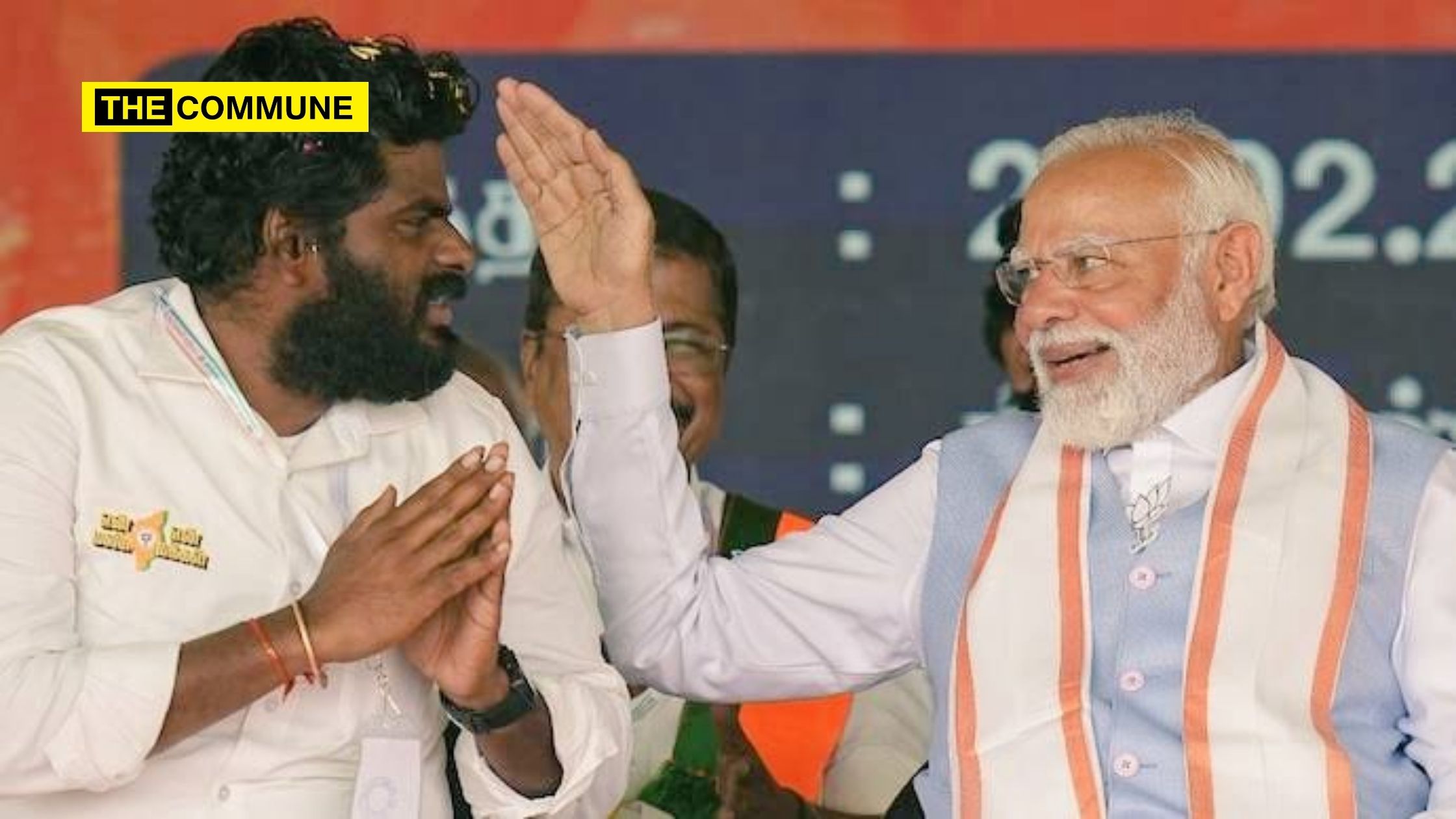
BJP leaders have rightly pointed out this hypocrisy. Tamil Nadu BJP president K Annamalai defended Kamakoti, stating that everyone has the right to practice their religion and beliefs.

He urged student unions to respect the sanctity of institutions like IIT Madras, which are a pride of the nation. Similarly, BJP leader Narayan Tirupati emphasized that cow urine has been part of Indian tradition and is used in medicines, citing former Prime Minister Morarji Desai as an example.  

(With inputs from OpIndia)

Subscribe to our channels on Telegram, WhatsApp, and Instagram and get the best stories of the day delivered to you personally.