Home Blog Page 59

The Dangerous Push To Normalize Sex With Minors: Hindustan Times’s One-Sided Case For Lowering Age Of Consent
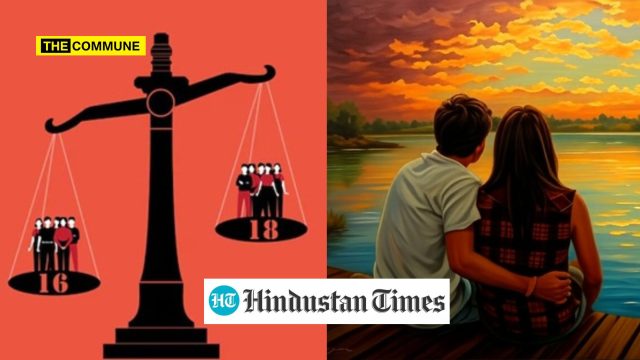
The Dangerous Push To Normalize Sex With Minors: Hindustan Times’s One-Sided Case For Lowering Age Of Consent

Starting 12 November 2025, the Supreme Court will conduct continuous hearings on a proposal by Indira Jaising seeking to legally permit sexual activity among teenagers, effectively attempting to lower the age of sexual consent from 18 to 16. Critics warn that such a move would put millions of minors at risk, as the protection of children remains non-negotiable. Notably, major outlets like Times of India, Hindustan Times, and international organizations including UNICEF India have allegedly consistently advocated for lowering the age of consent, which would decriminalize sexual activity with minors.

In line with this, The Hindustan Times opinion piece, “Mind the Gap: How a law to protect children was weaponized against consensual teen sex”, published on 4 August 2025, attempts to make a case for decriminalizing sexual relations between teenagers and minors aged 16–17. On the surface, it frames the debate as one about adolescent love and overreach by the legal system. But a closer look reveals serious one-sided reasoning, selective framing, and a troubling moral and legal blind spot.

The article repeatedly emphasizes stories of “teenagers in love” where a 16- or 17-year-old girl is in a relationship with an 18–20-year-old boy, portraying the parents’ intervention and the police action as overbearing and even unjust. Justice Jasmeet Singh’s recent acquittal of a 19-year-old man is quoted as vindication, with the judge labeling the punishment a “perversity of justice.” Yet, the piece glosses over the constitutional and social rationale behind the current law: the protection of minors from sexual exploitation and abuse.

Selective Use of Statistics

The article cites NFHS-5 data showing 39% of girls have sex before 18, and studies highlighting that roughly 20–25% of POCSO cases involve “romantic relationships.” But this framing is misleading. It conflates consensual sex with potential statutory violations and implies that parents filing complaints are acting out of malice or conservatism, ignoring the law’s protective purpose. The same surveys and case studies reveal that many minors are married off by parents, coerced, or exploited, yet these nuances are downplayed to create a narrative of “victimized adolescent couples.”

The Age of Consent Debate

HT’s article laments that the age of consent was raised from 16 to 18 in 2012 under POCSO and quotes advocates like Indira Jaising arguing for autonomy and “mature consent” of minors. But the piece fails to grapple with the critical reality: 16–17-year-old girls are legally children, not autonomous adults. Laws like POCSO exist precisely because minors are vulnerable to coercion, manipulation, and abuse. Suggesting a “close-in-age exception” risks creating a legal loophole that predators could exploit and dangerously blurs the line between consensual relationships and statutory rape.

Romanticization of Risky Relationships

The article repeatedly frames these relationships as “teenage love” or “adolescent choice,” invoking emotional imagery from films like Bulbul Can Sing. Yet it ignores the power imbalance inherent in even slightly older partners, the psychological and social pressures on minor girls, and the serious consequences of early pregnancies. The narrative subtly shifts the blame from adult males or coercive adults to the parents, painting legal protection as oppressive.

Hypocrisy and One-Sided Framing

The most glaring hypocrisy is the selective outrage: HT is quick to condemn “overzealous parents” and “misuse of POCSO,” but provides little attention to the real-world abuses POCSO addresses, including child sexual abuse, trafficking, and grooming. While 53% of children reportedly faced sexual abuse in 2007, the article’s argument implicitly prioritizes the romantic rights of minors over their safety, dignity, and consent under law.

Moreover, by repeatedly citing acquittals of teenage couples, the piece creates the impression that the legal system is out of touch. But it fails to highlight that the majority of cases still involve exploitation, coercion, or power imbalances that the law is meant to prevent. Using selective examples to argue for a structural legal change is intellectually disingenuous.

Conclusion

The Hindustan Times article frames a morally and legally complex issue as a case of “adolescent love under siege,” effectively romanticizing relationships with minors. While it is true that courts have occasionally recognized consensual relationships among “mature minors,” this is not a justification to undermine protections for children. Protecting minors from sexual exploitation and coercion is not hypocrisy—it is the foundation of constitutional morality and social welfare.

In short, the article’s “heartfelt” narrative masks a dangerous push to normalize sex with minors under the guise of autonomy and romance. The real gap HT should be minding is not between the law and love, but between ethical journalism and advocacy for vulnerable children.

Subscribe to our channels on Telegram, Instagram and YouTube to get the best stories of the day delivered to you personally.

Congress X Handle Peddles Fake News By Sharing Old Footage, Gets Fact-Checked By Indian Railways

Congress X Handle Peddles Fake News By Sharing Old Footage, Gets Fact-Checked By Indian Railways

The Ministry of Railways launched its official fact-check handle on social media platform X on Wednesday, aiming to counter a surge in misinformation and AI-generated videos targeting the Indian Railways. The initiative comes amid the circulation of several fabricated clips, particularly in poll-bound Bihar with the Congress’ X handle peddling fake news left, right, and centre.

“Introducing @IRFactCheck — the official handle of Indian Railways to counter misinformation. If you come across any misleading or false content about Railways, tag @IRFactCheck to help us keep the facts on track. Follow, stay informed, and share responsibly,” the Ministry of Railways announced on X.

The newly established handle, @IRFactCheck, was immediately put to work, debunking several posts shared by the Congress party’s official handle. The fact-check team challenged videos the party used to criticize overcrowding on Bihar-bound trains and railway facilities, asserting they featured old footage.

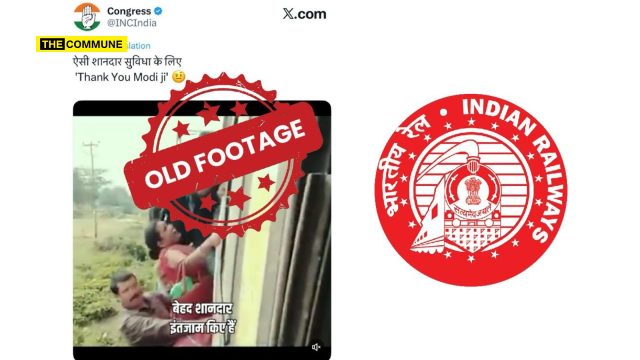
One Congress video depicted chaotic scenes with passengers climbing on train doors and windows in Bihar, purportedly highlighting current overcrowding during the Chhath Puja rush. The Railway Fact-Check handle responded, stating that web searches confirmed the footage was from earlier years. “Please do not confuse railway passengers by sharing old footage,” the handle stated.

In another instance, the Congress party mocked the Railways’ announcement of 12,000 special trains by again showcasing old footage of severe overcrowding. The Railway Ministry countered by attaching the official list of special trains and urged the party “not to mislead people.”

A further post by the Congress featured a picture of a man sleeping inside a train toilet, using it to criticize Prime Minister Narendra Modi and Bihar Chief Minister Nitish Kumar. The Ministry issued a firm rebuttal: “This post is misleading. Avoid circulating outdated or distorted information that misrepresents the ongoing efforts of Indian Railways. Please refrain from such attempts to malign the reputation of the organisation or undermine the tireless service of over 12 lakh Railway employees.”

The launch of the fact-check initiative follows a warning from Railway Minister Ashwini Vaishnaw, who promised strict action against those circulating fake videos about the railways. After reviewing crowd management at Anand Vihar railway station in Delhi, Vaishnaw had appealed to the public not to share such videos, stating they create confusion among passengers.

The problem of viral misinformation was highlighted earlier when a post claimed two passengers had fallen from the overcrowded Mumbai-Bihar Karmbhoomi Express, with one suffering serious injuries. The Central Railway promptly debunked this claim, officially labeling it as “fake.”

(Source: News18)

Subscribe to our channels on Telegram, Instagram and YouTube to get the best stories of the day delivered to you personally.

“Caste Or Lineage Cannot Decide Temple Priesthood, Appointments Are Secular, Not An Essential Religious Practice”, Rules Kerala High Court

"Caste Or Lineage Cannot Decide Temple Priesthood, Appointments Are Secular, Not An Essential Religious Practice", Rules Kerala High Court

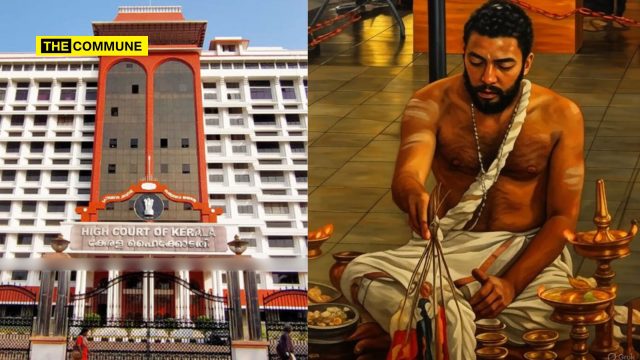
The Kerala High Court has ruled that appointments of temple priests (Santhis) cannot be restricted to members of any particular caste or lineage, holding that such requirements do not constitute an essential religious practice protected under the Constitution of India.

A Division Bench of Justice Raja Vijayaraghavan V and Justice KV Jayakumar delivered the judgment while upholding the decision of the Travancore Devaswom Board (TDB) and the Kerala Devaswom Recruitment Board (KDRB) to recognize experience certificates issued by Thanthra Vidyalayas for the recruitment of part-time temple priests.

The ruling came in a petition filed by the Akhila Kerala Thanthri Samajam, a society comprising around 300 traditional Thanthri families in Kerala, and its president, Easanan Namboodiripad. The petition challenged the recruitment process of temple priests through Thanthra Vidyalayas.

The Petition and Arguments

At the center of the case was Qualification No. 2(ii) under Rule 6(1)(b) of the Travancore Devaswom Board Officers’ and Servants’ Service Rules, 2022. The rule, framed under the Travancore-Cochin Hindu Religious Institutions Act, 1950 and the Kerala Devaswom Recruitment Board Act, 2015, stated that eligibility for appointment as a part-time temple priest required “a certificate in Santhi Course from any Thantic Vidya Peedams or any such reputed institutions approved by TDB/KDRB.”

The petitioners argued that neither the TDB nor the KDRB had the authority to prescribe such qualifications and that the recognition of certain Thanthra Vidyalayas lacked legal backing. They contended that these institutions did not provide proper Thanthric education, thereby diluting traditional practices and bypassing the long-standing system of certification by temple Thanthris.

They also claimed that the appointment of Santhis in accordance with religious texts and authorities such as the Agamas and Thanthrasamuchayam constituted an essential religious practice protected under Articles 25 and 26 of the Constitution.

Court’s Findings

The Bench rejected the petitioners’ arguments, noting that the Supreme Court’s 1972 ruling in Seshammal v. State of Tamil Nadu had already held that the appointment of Archakas (temple priests) was a secular function performed by a trustee, even though the priest’s duties themselves were sacred.

“The contention of the petitioners that the appointment of Santhis shall be made in accordance with the religious texts and authorities, such as the Agamas and Tantrasamuchayam, as it constitutes an essential religious practice, cannot be accepted,” the Court said.

The Court noted that the petitioners’ claim effectively sought to perpetuate caste and lineage-based privilege, pointing out that the Samajam restricted its membership to Brahmin families who had performed Thanthric rituals for at least seven generations.

Addressing such concerns, the Bench observed, “To insist that a person must belong to a particular caste or lineage to be eligible for appointment cannot, in our considered view, be construed as an insistence upon an essential religious practice, rite, or mode of worship. No factual or legal foundation has been established to justify such a claim in the present case. The contention that individuals unconnected with spiritual functions are being considered for such posts and that this infringes the fundamental rights of the petitioners guaranteed under Articles 25 and 26 of the Constitution of India is untenable.”

The Court emphasized that no custom or usage, even if traceable to pre-constitutional times, could be recognized if it violated human rights, dignity, or constitutional principles of social equality.

“Any custom or practice that is oppressive, pernicious, contrary to public policy, or in derogation of the law of the land cannot receive recognition or protection from courts exercising jurisdiction under the Constitution,” the judgment stated.

On the Thanthra Vidyalaya System

The Court also took note of the Thanthra Vidyalaya system, observing that it appeared to be a comprehensive process for certifying candidates for temple priesthood.

“Students who successfully complete the course are also subjected to initiation ceremonies, signifying their preparedness to undertake temple duties. Moreover, even among such qualified candidates, the final selection is made strictly on merit by a duly constituted Committee which, apart from learned scholars, includes a reputed Thanthri. The competence, merit, and eligibility of each candidate to perform religious rites and observances are thus tested once again before appointment,” the Bench noted.

The Court further found that the rules framed by the TDB and KDRB were issued only after inviting objections and in compliance with all procedural safeguards.

Denial of Denominational Status

The Bench also dismissed the Samajam’s claim that it qualified as a religious denomination under Article 26 of the Constitution, observing that it had failed to establish a distinct faith, belief system, or organizational structure necessary for such recognition.

Finding no merit in the petition, the Kerala High Court dismissed it.

Advocate KR Raj Kumar appeared for the petitioners, while standing counsel G. Biju represented the Travancore Devaswom Board and standing counsel V.V. Nandagopal represented the Kerala Devaswom Recruitment Board.

(Source: Bar and Bench)

Subscribe to our channels on Telegram, Instagram and YouTube to get the best stories of the day delivered to you personally.

Karnataka Congress Govt Suspends Second Govt Employee For Participating In RSS Event

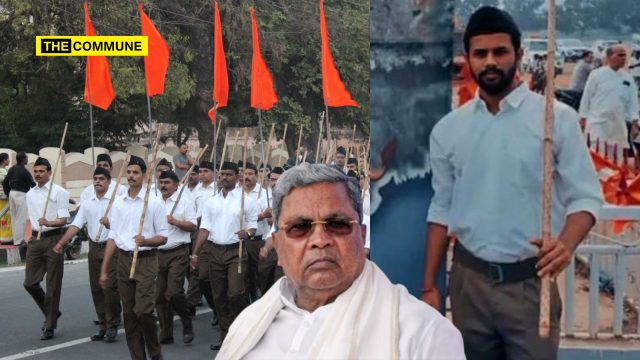
The Karnataka Congress government has suspended a second state employee for participating in events organized by the Rashtriya Swayamsevak Sangh (RSS), days after a similar action against a Panchayat Development Officer sparked a political confrontation between the ruling Congress and opposition BJP.

The latest suspension involves Pramod Kumar, who worked as an assistant cook at the Pre-Matric Boys’ Hostel in Basavakalyan, Bidar district, under the Backward Classes Welfare Department. Kumar, a contractual employee outsourced through the Bidar District Labour Services Multipurpose Cooperative Society, was relieved from his duties on 21 October 2025.

The action followed a complaint filed by Gagan Phule, president of the Committee for Protecting Democracy and a civil rights activist in Bidar, who objected to Kumar’s participation in an RSS route march. The complaint, filed on 20 October 2025 with the District Backward Classes Welfare Officer, triggered an internal inquiry.

During the investigation, authorities discovered a video of Kumar at the RSS event circulating on social media, along with a photograph he had shared on his WhatsApp status. The Taluk Backward Classes Welfare Officer, Basavakalyan, subsequently issued an official communication stating that since Kumar was employed in a government-funded institution, his participation in the activities of any organization was “prohibited under law.”

This incident comes just days after Praveen Kumar K.P., a Panchayat Development Officer from Sirwar taluk in Raichur district, was suspended for attending an RSS centenary event in Lingsugur on 12 October 2025. The suspension order, issued by IAS officer Arundhati Chandrashekar, cited violations of Rule 3 of the Karnataka Civil Services (Conduct) Rules, 2021, which mandates that government employees maintain political neutrality and conduct consistent with the dignity of public service.

The back-to-back suspensions occur amid the state government’s recent introduction of rules requiring prior permission for all organizations, including the RSS, to hold public events. This move followed statements by Congress minister Priyank Kharge advocating restrictions on RSS activities in government spaces such as schools and colleges.

The suspensions have intensified the political debate in Karnataka, with the Congress government emphasizing the need for bureaucratic neutrality while the BJP accuses it of political vendetta. Both suspended employees will remain under suspension with subsistence allowance pending departmental inquiries into their conduct.

(Source: News18)

Subscribe to our channels on Telegram, Instagram and YouTube to get the best stories of the day delivered to you personally.
DMK Govt To Confer Vaikom Award To Khalistani-Linked Anti-Hindu Brahmin-Hating ‘Caste Activist’ Thenmozhi Soundararajan, Had Earlier Given ‘Communal Harmony’ Award To Islamist Zubair

The DMK government in Tamil Nadu has once again raised eyebrows after announcing its decision to confer the prestigious Vaikom Award for Social Justice on Thenmozhi Soundararajan, a US-based activist whose organization has documented ties to Khalistani extremists and anti-India networks. This comes just over a year after the government ‘honoured’ Alt News co-founder and alleged ‘factchecker’ Mohammed Zubair with the Kottai Ameer ‘Communal Harmony’ Award, despite his own controversial track record.

Vaikom Award for Thenmozhi Soundararajan

On Wednesday, the state government announced that Thenmozhi Soundararajan would receive the 2025 Vaikom Award for Social Justice, instituted in memory of social reformer ‘Periyar’ E.V. Ramasamy. The award carries a cash prize of ₹5 lakh, a citation, and a medal, and is intended to honor individuals from other states who work for the welfare of marginalized communities.

According to a press release, Soundararajan, whose parents hail from Madurai district, is being recognized for her activism and for founding Equality Labs, a civil rights organization.

Who Is Thenmozhi Soundararajan?

Thenmozhi Soundararajan is a US-based activist and the founder of Equality Labs, an organization that claims to advocate for Dalit and marginalized community rights. Her work, however, places her at the center of a complex web of controversy, linking her to anti-India propaganda, Khalistani extremism, and alleged foreign intelligence networks.

Soundararajan positions herself as a Dalit rights activist, but her methodology and alliances have drawn widespread criticism for promoting division and Hinduphobia. Her organization, Equality Labs, is known for its aggressive push for caste-based legislation in the United States, such as the now-defunct California SB403 bill. A study by the Network Contagion Research Institute found that Equality Labs’ “Diversity, Equity, and Inclusion” training materials often used dehumanizing rhetoric against Brahmins, increasing anti-Hindu sentiment among participants.

Her affiliations extend far beyond caste advocacy. Soundararajan has documented ties to designated Khalistani terrorist Gurpatwant Singh Pannun, having shared a stage with him at a 2019 event hosted by his organization, Sikhs for Justice (SFJ). This collaboration connected her to a group openly supporting Pakistan-sponsored terrorism.

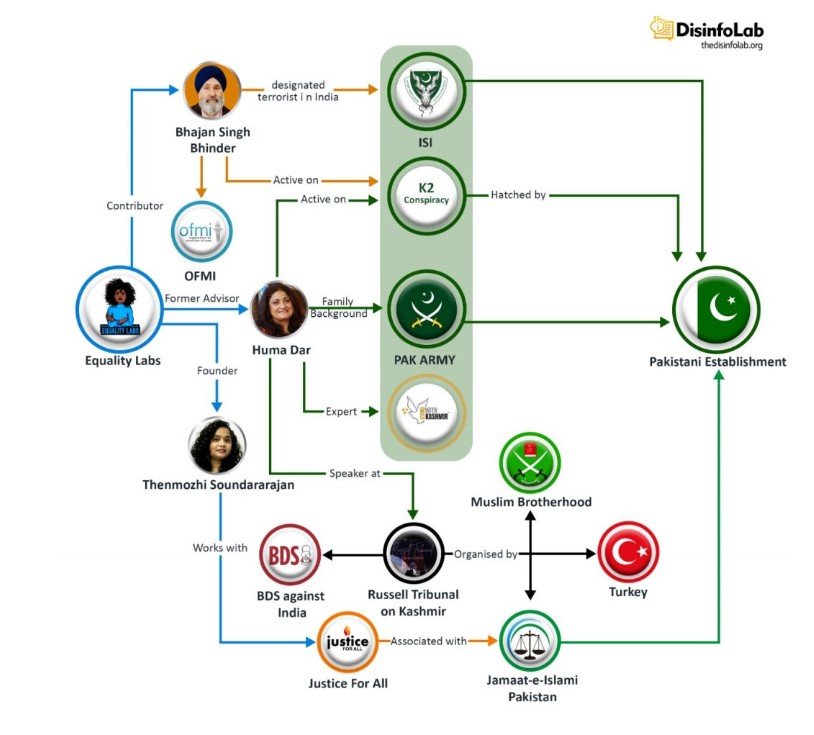
Image Source: Disinfo Lab

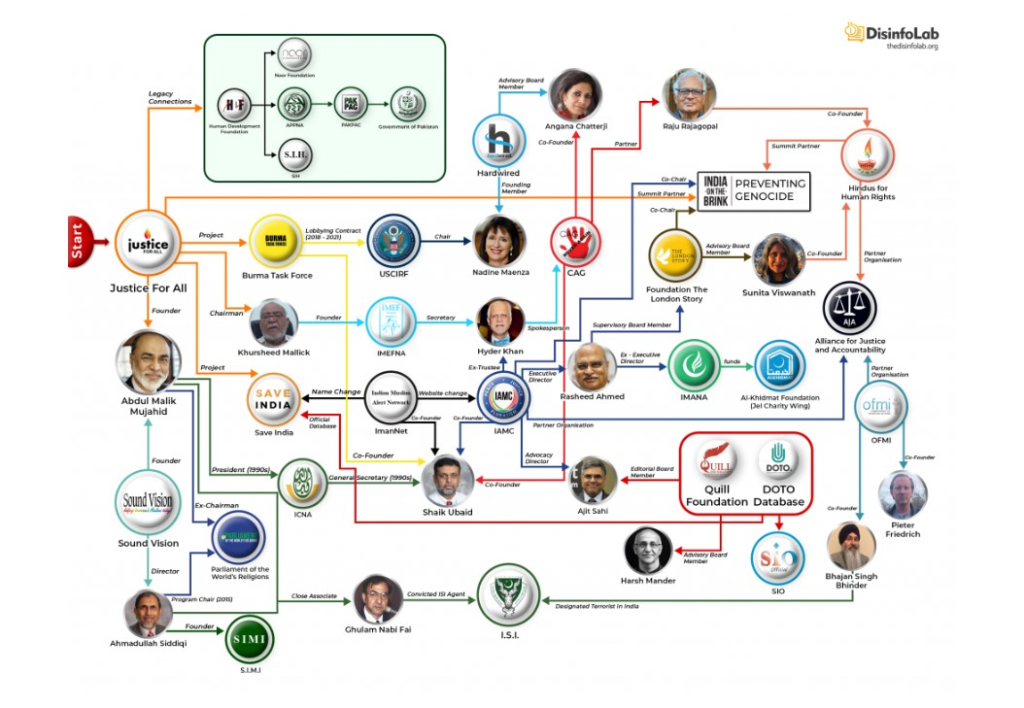
Further scrutiny reveals deeper, more alarming connections. Equality Labs is a key member of the Alliance for Justice and Accountability (AJA), a coalition that includes the Organization for Minorities of India (OFMI)—founded by ISI-linked operative Bhajan Singh Bhinder—and the Indian American Muslim Council (IAMC). Investigations have suggested that Equality Labs has received funding from sources linked to both George Soros and Pakistan’s Inter-Services Intelligence (ISI), with Pakistani citizen Huma Dar, a reported link to the Pakistani Army, serving on its board.

Image Source: Disinfo Lab

Soundararajan’s public statements consistently reveal a strong anti-Hindu bias. She has labeled the Hindu pilgrimage Maha Kumbh Mela as “Islamophobic,” called for the “de-Brahminization” of Yoga, and launched virulent social media attacks, including one targeting former Twitter CEO Parag Agrawal based on his assumed caste. In 2018, she designed the “Smash Brahminical Patriarchy” poster held by then-Twitter CEO Jack Dorsey, a incident that sparked international controversy.

In summary, while Thenmozhi Soundararajan operates under the banner of social justice, her activism is characterized by its divisive nature, its propagation of Hinduphobia, and its extensive ties to a network of extremist and anti-India forces operating from foreign soil.

Honouring People Who Serve The Purpose Of The Dravidianists?

The decision to honor Soundararajan follows a similar pattern when the DMK government presented Mohammed Zubair with the Kottai Ameer Communal Harmony Award in January 2024. The government cited his work with Alt News in verifying the authenticity of viral videos and preventing violence.

However, Zubair has himself been repeatedly accused of peddling fake news and maintaining selective outrage in his fact-checking. During the 2023 exodus of migrant workers from Tamil Nadu, Zubair actively defended the state government, but conspicuously avoided addressing the climate of hate created by several DMK leaders and allies who had consistently used slurs like ‘Vadakkan’ and ‘Pani Puri wala’ against North Indians. His fact-checking focused on debunking exaggerated death tolls while whitewashing the underlying xenophobic rhetoric and multiple instances of violence against migrant workers that had triggered the panic.

The conferment of state honors to both Soundararajan and Zubair has raised questions about the DMK government’s award selection process. Critics argue that the government is using prestigious awards to reward ideological fellow travelers rather than genuine social reformers.

In Soundararajan’s case, the award appears to overlook her organization’s extensive links to extremist elements and foreign networks actively working against India’s interests. For Zubair, the honor seemed to reward his partisan defense of the state government during a crisis rather than impartial fact-checking.

(Source: The Hindu)

Subscribe to our channels on Telegram, Instagram and YouTube to get the best stories of the day delivered to you personally.
Viral Classroom Video Allegedly From Nanded, MH, Shows Gender Segregation; Sparks Debate On Islamist Influence In Education

Viral Classroom Video Allegedly From Nanded, MH, Shows Gender Segregation; Sparks Debate On Islamist Influence In Education

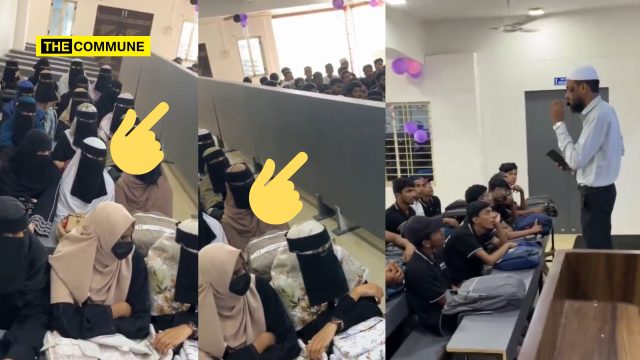
A video reportedly from Nanded, Maharashtra, showing female students clad in burqas and male students separated by a partition wall inside a classroom has gone viral on social media, reigniting debates over gender segregation and the growing influence of Islamist orthodoxy in the state’s educational spaces.

The controversial clip depicts a classroom where female students wearing burqas are seated on one side and male students on the other, divided by mid-height barriers. A male instructor, dressed in traditional attire and wearing a skull cap, delivers a lecture amid purple-themed decorations. The scene has been widely described by social media users as a stark reminder of rising Islamist influence in the country.

As per Grok, this video is from Nanded, Maharashtra.

This video warns us of the growing influence of Islamist ideologies in the country and also reminds us of the segregation done in a Kerala college recently.

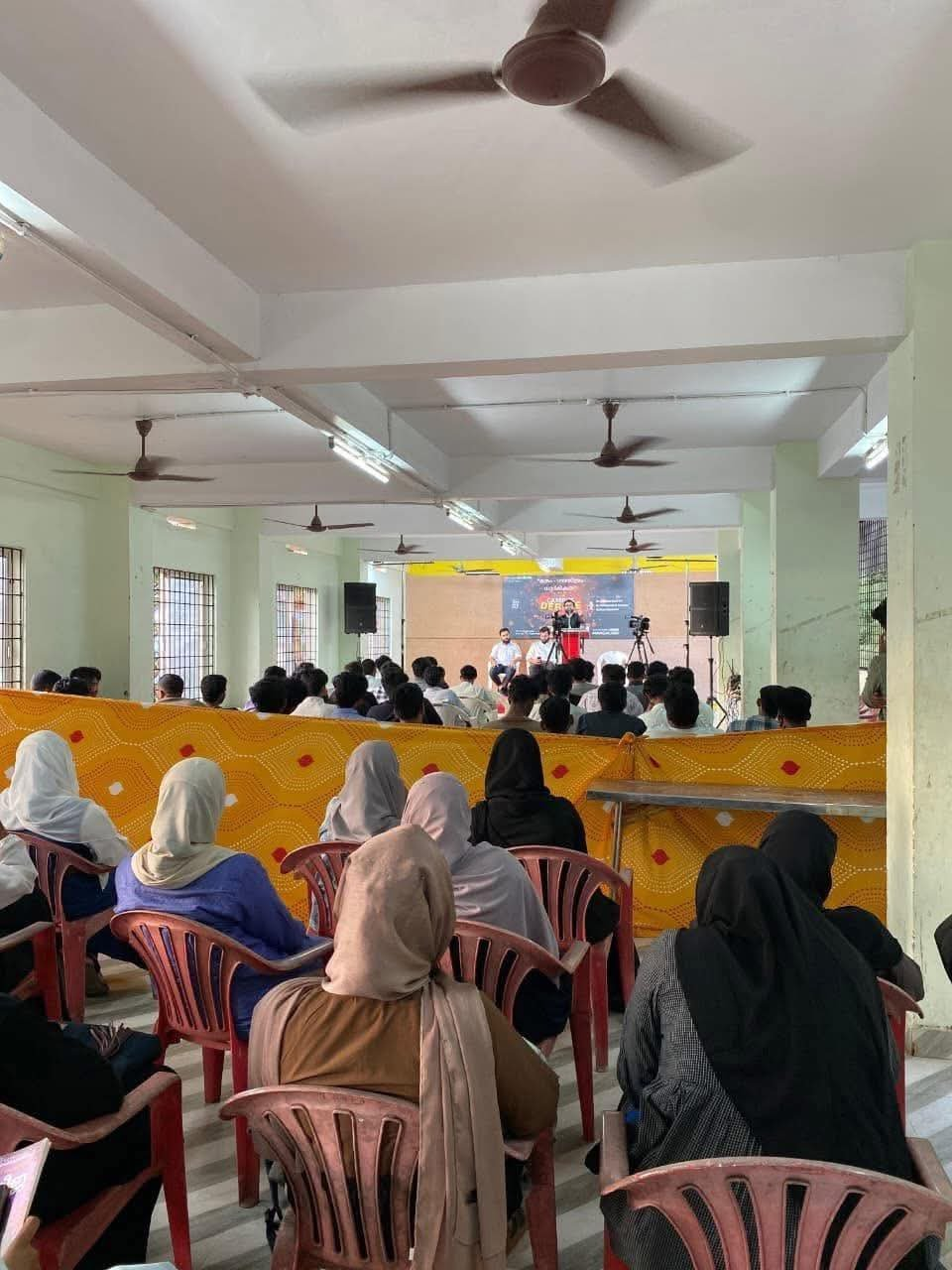
The latest viral classroom video comes about a month after a similar controversy at an event called ‘Profcon’, reportedly organised by Islamist groups at the Cochin University of Science and Technology (CUSAT), sparked similar outrage. In those clips, hijab-clad female students were seated separately from male attendees under Taliban-style segregation. Men occupied the front rows, while women were placed behind a makeshift curtain that completely obstructed visibility between the two groups during a debate titled “From Gaza to Science and Religion.” Photos from the event showed Dr. Abdullah Basil C.P., a speaker known for his strong Islamist views, addressing the audience with a curtain visibly drawn between male and female participants.

Dr. Basil has been at the center of previous controversies for advocating conservative Islamic practices. In an earlier viral video, he was seen silencing a female student who argued against the hijab, claiming that women wear makeup and modern clothing for confidence rather than to attract men. Dr. Basil countered by asserting that modesty, symbolized by the hijab, represents true self-confidence.

In the speech, he reiterated that simplicity, expressed by avoiding makeup and fashionable clothing embodies a purer, more authentic confidence.

His speeches have been amplified by an organization called Umasking Anomalies, which promotes Islamic teachings and regularly circulates Dr. Basil’s sermons as moral and social guidance. The group has urged Malayali-speaking youth to adopt conservative Islamic values and uphold traditional gender norms, particularly through adherence to the hijab and other forms of modesty.

Figures like Dr. Basil and organizations such as Umasking Anomalies continue to exert ideological influence on Kerala’s college campuses.

In 2021, reports emerged that radical Islamic organisations worldwide were financing projects aimed at spreading Islamism in India. A Kerala-based journalist, M.P. Basheer, had revealed that the Islamist outfit Jamaat-e-Islami was allegedly receiving financial grants from Saudi Arabian universities to promote Islamic dress codes in India. According to the report, Jamaat-e-Islami launched an initiative to popularize Islamic clothing for women with funding from King Abdul Aziz University in Jeddah. Similar ideological and financial support has also been linked to networks in Turkey and Pakistan, particularly influencing radical thought in Kerala and Kashmir.

(Source: OpIndia)

Subscribe to our channels on Telegram, Instagram and YouTube to get the best stories of the day delivered to you personally.

“Is General Queue Being Stopped For VIP Darshan?”: Madurai Bench Of Madras High Court Grills HR&CE In Tiruchendur Temple Case, Hindu Munnani Condemns Fleecing Of Devotees

Hindu Munnani Slams VIP Darshan At Tiruchendur Temple As Madras High Court Seeks HR&CE Report

The Hindu Munnani has issued a strong statement condemning the management of the Subramaniya Swamy Temple in Tiruchendur, alleging that the current administration is prioritizing monetary gain over the welfare of devotees. The organization has called for significant reforms to address the severe hardships faced by pilgrims.

In its statement, the Hindu Munnani posed a critical question: “Should people wait for VIPs…? Madras High Court questions.. What arrangements are in place to ensure devotees can have darshan without waiting for long hours at the Tiruchendur Subramanya Swamy Temple..? Madras High Court branch orders the temple’s Joint Commissioner to respond… – News

The Hindu Religious and Charitable Endowments Department continues to face criticism from the court.. Devotees visiting the Tiruchendur Subramanya Swamy Temple to see Lord Murugan face severe hardship.. Arrangements are made for VIPs to see Murugan in exchange for payment. Poor devotees, despite waiting for hours, are unable to have darshan of Murugan.. Officials of the Hindu Religious and Charitable Endowments Department remain indifferent.. If the Hindu Religious and Charitable Endowments Department, with money as its sole objective, cannot manage the temple, then leave the temple!!”

What Did The Court Say?

The criticism came amid the Madurai Bench of the Madras High Court taking serious note of ongoing disputes between bhattars and thirisuthanthirars that have affected devotees’ access to darshan. Hearing a petition filed by 12 thirisuthanthirars seeking enforcement of their traditional rights to perform poojas and other kainkaryams as approved by the Srivaikundam Principal District Munsif Court in 1991, Justice G.R. Swaminathan raised multiple concerns about the functioning of the temple.

The judge questioned whether devotees’ long waiting times were caused by the current queue arrangements and asked if individuals associated with the temple, such as bhattars, thirisuthanthirars, and sthanihars, were taking devotees directly for darshan by bypassing the queue. He sought details on whether identity cards could be issued to such personnel to prevent misuse of access.

Justice Swaminathan also directed the temple administration to respond by 24 October 2025 on whether a dedicated queue system similar to those in Guruvayur and Tirupati could be established, possibly by creating an iron flyover bridge to enable smooth circumambulation. He further asked whether VIP and VVIP darshan interrupts the general queue and, if so, whether the temple would consider earmarking a fixed time for VIPs. The judge also raised questions on whether prasadam distribution, including vibhoothi, was slowing down queue movement and what steps were being taken to improve crowd management and reduce devotees’ waiting time.

The court’s observations add to growing scrutiny of the HR&CE Department’s management of major temples, with repeated judicial criticism over poor arrangements and preferential treatment for paying visitors.

(Source: The New Indian Express)

Subscribe to our channels on Telegram, Instagram and YouTube to get the best stories of the day delivered to you personally.
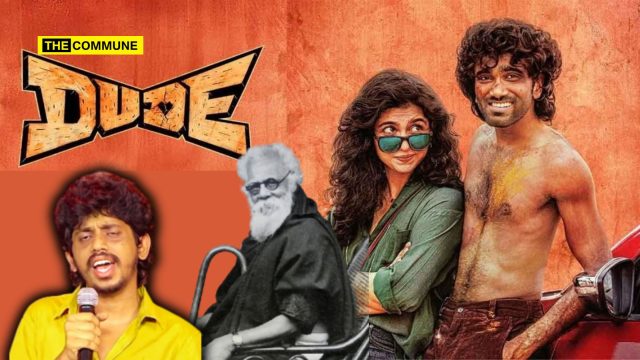
Dravidian Stock ‘Dude’: Keerthiswaran Justifies His Film That Glorifies Adultery And Deranged Moral Decay Saying TN Is “Periyar’s Land”

The director of Dude, Keerthiswaran, has unabashedly proclaimed his ideological loyalty to E.V. Ramasamy Naicker (hailed as “Periyar” by his followers) while defending a film that tramples upon the sanctity of marriage, romanticises extra-marital affairs, and parades moral decay as “progressive values.”

The film’s plot revolves around Agan, a man who willingly gives up his wife to another man and later pretends to be the father of her child. The story — which would anywhere else be called a moral collapse — is being celebrated by a section of gen-z Dravidianists and leftists.

Speaking to the media over its alleged commercial success, “This film is creating debates. What I feel is this is Tamil Nadu. In this state, many ‘elders’ (periyavunga) have lived. One ‘periyavar’ (referring to anti-Hindu bigot EV Ramasamy Naicker) has also lived. They’ve said so many things. We’re just followers of them and talking about it. In Tamil Nadu, these statements are not new. Many have told this before. We as next-gen are carrying it forward and will continue to talk about it. But it will be conveyed entertainingly within cinema that is accepted by audience in large scale, that’s my wish.”

Keerthiswaran went on to say that he will “continue to make such films”.

The director of Dude, Keerthiswaran, has proudly outed himself as a textbook Dravidian propagandist, hailing E.V. Ramasamy Naicker, the self-styled “champion of women’s rights” who advocated for women to discard their uteruses to avoid the “slavery” of motherhood and promoted “pleasure without responsibility” as a virtue.

Subscribe to our channels on Telegram, Instagram and YouTube to get the best stories of the day delivered to you personally.
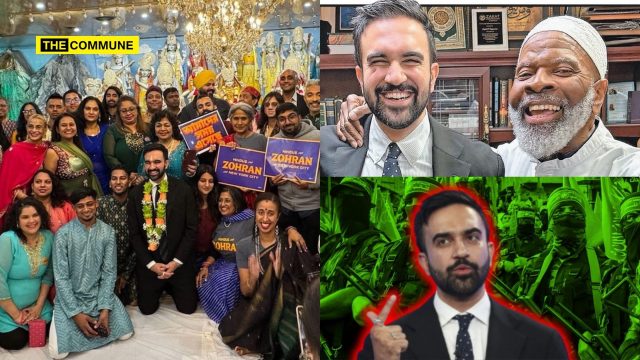
Hamas-Supporting Islamist Zohran Mamdani With Terror Links, Who Was Part Of Crowd Chanting “Hindus Are Bastards” Lectures On Pluralism From Hindu Temple In New York

Democratic Socialist mayoral candidate Zohran Mamdani, who previously participated in anti-Hindu protests where crowds chanted “Hindus are bastards,” is now courting Hindu voters through temple visits and lectures on pluralism, exposing what critics call a calculated political deception.

On 6 October 2025, Mamdani visited Flushing, Queens, to offer prayers at two of New York’s oldest Hindu temples, attempting to “reconnect with his Hindu roots.” The temple visit included him wearing shoes within temple premises while delivering speeches about Diwali, Raksha Bandhan, and Hindu values of seva (service).

At his latest temple run during Deepavali, Mamdani preached pluralism and seemed to justify why he was ‘critical’ of PM Modi. He said, “So, I have been critical of Mr. Modi because of the vision that I grew up with was of an India that was pluralistic, an India where everyone belonged, no matter their religion. And my critique has been of Mr. Modi and the BJP political party for their vision of an India that only has room for certain kinds of Indians, and it’s part of a belief that pluralism is something to be celebrated, something to be strived for.” 

Trying to reach out to the Hindus of NYC who are still out of his reach, he said, “And I also know that I’m running to be the mayor of New York City – eight and a half million people – many of whom may feel differently than me about Mr. Modi, and that’s their right, and I will look to represent them all the same, because my responsibility to them as New Yorkers is to ensure that they are safe, to ensure they can afford this city, and to ensure they are not just protected but are celebrated in that same city. And in many ways, it is the lesson I’ve learned of being a part of the Indian diaspora.”

Mamdani has repeatedly slandered Indian Prime Minister Narendra Modi, a democratically elected leader, as a “war criminal,” despite the Supreme Court of India clearing Modi of allegations related to the 2002 Gujarat riots. At a candidates’ forum, Mamdani compared Modi to Israeli Prime Minister Benjamin Netanyahu, calling both “war criminals.”

Anti-Hindu Activism And Khalistani Ties

This outreach stands in stark contrast to Mamdani’s documented history of anti-Hindu activism. In 2020, Mamdani led a hate mob in Times Square that demonized the construction of the Ram Mandir in Ayodhya, branding the project a “fascist atrocity.” The protests featured chants of “Hindus are bastards” – slurs Mamdani never disavowed – and saw him aligned with Khalistani separatists.

At the time, Mamdani declared: “I protest the demolition of the Babri masjid and the attempt to build a mandir on top of the ruins of it.” He further claimed, “As an Indian Muslim whose family is witnessing the rising tide of fascism in India, I won’t be silent,” framing Hindu nationalism as a global threat while ignoring Islamic extremism.

Islamist Agenda And Growing Backlash

Mamdani’s political platform reflects what critics describe as an Islamist agenda. He has proposed higher property taxes on “richer, whiter neighborhoods” – a plan critics compare to race-based redistribution – and pushes for socialist policies like free buses and city-run supermarkets.

Notably, Mamdani has pushed for mandatory halal food in all NYC public schools a key legislative priority, framing it as “inclusion” while Christian and Jewish dietary laws are ignored. Critics note that halal certification is controlled by groups with ties to extremist funding networks.

Mamdani also refused to condemn the antisemitic slogan “globalize the intifada,” drawing criticism from Democratic leader Hakeem Jeffries. His campaign has accepted $100,000 from the Council on American-Islamic Relations (CAIR), named an unindicted co-conspirator in the 2007 Holy Land Foundation terrorism financing trial.

It is noteworthy that in a January 2025 post on social media, Mamdani stated that he was attending Jummah prayers at the Islamic Society of Bay Ridge. He also appeared in photos standing next to Imam Muhammad Al-Barr, a religious leader known for praising Hamas and calling for divine guidance for their attacks on Israel.

Just five months earlier, Al-Barr had been recorded in the same mosque delivering a prayer calling for violent jihad, “Oh Allah, grant victory to all of them, and do not grant anyone victory over them. Oh Allah, lift the enemy’s hands from them. Oh Allah, protect their honor and their life. Oh Allah, annihilate those who occupied their lands, those who betrayed and deserted them and those who spilled their blood. Annihilate all of them and show us your fierce punishment and revenge upon them.” 

The mosque’s former imam, Reda Shata, has previously been profiled by The New York Times and is known for spreading deeply antisemitic messages. Shata has claimed that Jews are “the biggest liars among all of God’s creation,” attributing their behavior to a so-called “lying gene,” and describing them as “masters of forgery.”

Political Calculations And Hindu American Resistance

With the mayoral race tightening, Mamdani faces growing resistance from Hindu Americans. Days before the Democratic primary in June, a plane flew over the Statue of Liberty carrying a banner reading: “Save NYC from global intifada” and “Reject Mamdani” – funded by Hindu Americans angered by what they called Mamdani’s “anti-Hindu and anti-Indian agenda.”

Political analysts note that Mamdani’s sudden temple outreach represents a cynical attempt to win over the crucial Indian-American voter base in New York City – many of whom he has alienated with his anti-Modi rhetoric and anti-Hindu activism.

Mamdani’s Ties To Islamic Terror Network

New York politician Zohran Mamdani has been accused of receiving backing from U.S.-based organisations with alleged links to Pakistan-backed Islamist networks and anti-India lobbying groups. These include the Indian American Muslim Council (IAMC) and Hindus for Human Rights (HfHR), which critics say have ties to entities such as Jamaat-e-Islami and the banned SIMI. The controversy intensified after Mamdani was publicly supported by figures associated with these groups, sparking concerns that his campaign may be influenced by organisations that routinely criticise India on international platforms. While Mamdani’s outreach to Hindu communities and temple visits project an inclusive image, detractors argue this conceals deeper ideological associations aimed at advancing anti-India narratives.

(Source: India Today)

Subscribe to our channels on Telegram, Instagram and YouTube to get the best stories of the day delivered to you personally.
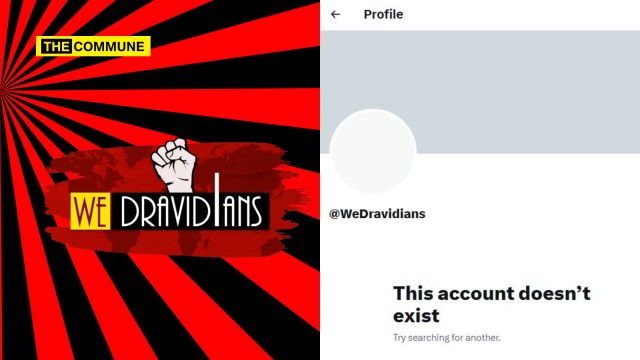
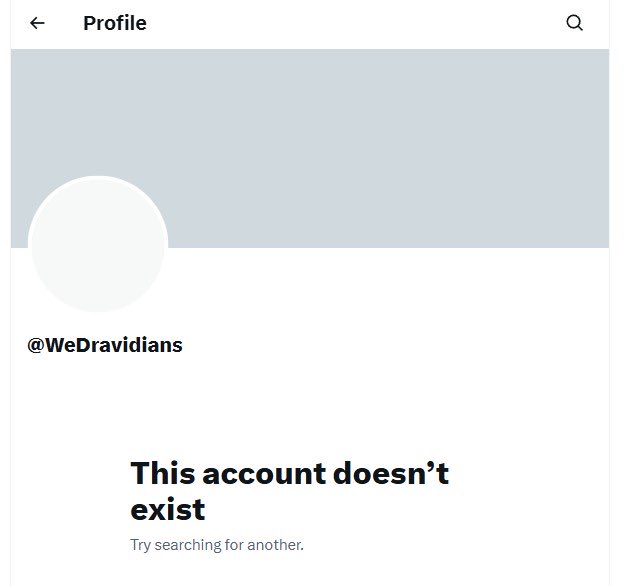
Anti-Hindu, Anti-North Indian, Hate Peddling, DMK-Linked, Secessionist Social Media Page ‘We Dravidians’ X Account Suspended

Anti-Hindu, Anti-North Indian & Secessionist Social Media Page ‘We Dravidians’ X Account Suspended

The controversial X account ‘We Dravidians,’ known for its anti-Hindu, anti-North Indian, and secessionist content, has been suspended from the platform following a series of exposés revealing its administrators and their close ties to Tamil Nadu’s ruling DMK party.

The account, which had long propagated Dravidianist propaganda targeting Hindus, Brahmins, and North Indians, faced massive backlash and reporting from users after its key administrator, Kathir RS, was identified earlier this month. The suspension comes amid ongoing controversy surrounding the account’s inflammatory content and its administrators’ alleged links to separatist and anti-India narratives.

Background: The Unmasking of ‘We Dravidians’

The account came under intense scrutiny during the recent online war between supporters of Andhra Pradesh Deputy Chief Minister Pawan Kalyan and DMK scion Udhayanidhi Stalin. As the controversy escalated, netizens began identifying the individuals behind the anonymous handle.

The key figures exposed included:

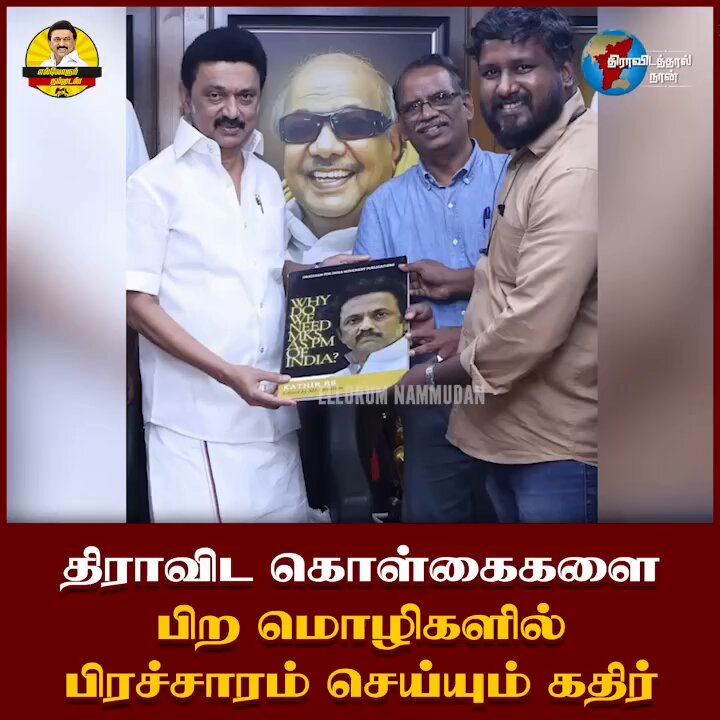
Kathir RS – A chemical engineer-turned-author from Velankanni, Nagapattinam, who wrote a biography titled “Why Do We Need MKS As PM Of India” praising Tamil Nadu Chief Minister M.K. Stalin. His social media activity revealed strong Christian leanings, with blog posts portraying Jesus as “the first rationalist reformer” and describing Deepavali as “an insult for Tamils.”

Shaikh Abid Hasan – A Bengali Muslim from West Bengal with alleged connections to the Indian Secular Front (ISF). He admitted to traveling to Mizoram on “Kuki money” and had met Mizoram Chief Minister Lalduhoma, who has advocated for Chin-Kuki-Zo unity across international borders.

Ravi Chola – A Malaysian Tamil Christian who operated a catering business while involved with the account.

Ronald Anto Mathew – A Kerala Christian based in Germany who managed the group’s Telegram channel.

DMK Connections and Political Backing

Investigations revealed deep co connections between the ‘We Dravidians’ handle and the DMK establishment:

Kathir RS’s biography of Stalin was launched by Jeyaranjan, Vice Chairman of the State Planning Commission, DMK MP MM Abdullah, and Dravidian activist Zakir Hussain.

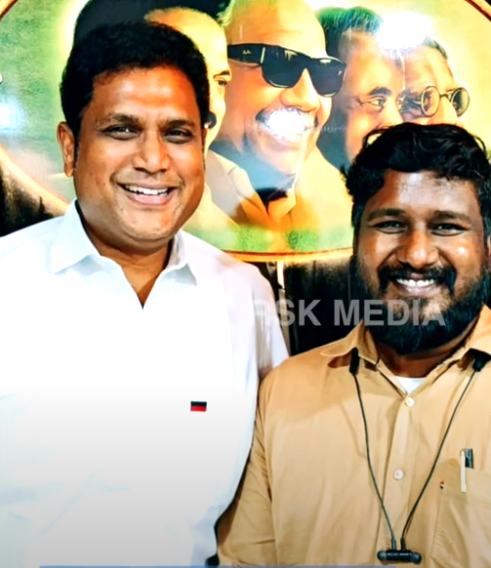
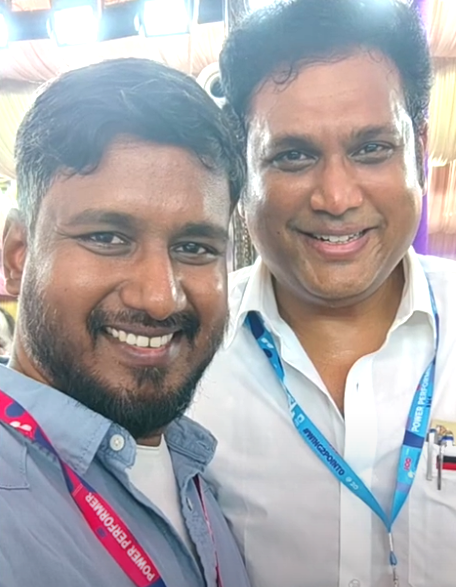
The admin was photographed multiple times with DMK Industries Minister TRB Rajaa.

He personally presented copies of his book to both Chief Minister MK Stalin and his son Udhayanidhi Stalin.

The account was followed by several top DMK leaders and party-affiliated handles.

Content That Sparked Controversy

The account regularly posted content that:

  • Promoted Dravidian separatism and anti-India narratives
  • Spread hate against Brahmins and North Indians
  • Celebrated figures like E.V. Ramasamy Naicker (Periyar) while denigrating Hindu festivals and traditions
  • Supported the DMK and INDIA bloc while opposing the BJP and Hindu nationalist politics

Following the exposure, all four admins attempted to distance themselves from the account. Kathir RS deactivated his personal social media handles, while the other admins either denied involvement or deleted associated channels. The ‘We Dravidians’ Facebook page and Telegram channel were also taken down before the X account’s eventual suspension.

The account’s suspension now marks the culmination of a long controversy that highlighted the use of social media for propagating divisive politics and raised questions about political patronage of anonymous hate accounts.

Subscribe to our channels on Telegram, Instagram and YouTube to get the best stories of the day delivered to you personally.