Home Blog Page 583

‘Modi Ji Is Like A Brother To Us’: DMDK General Secretary Premalatha Vijayakanth Shares How PM Modi Stood By Vijayakanth
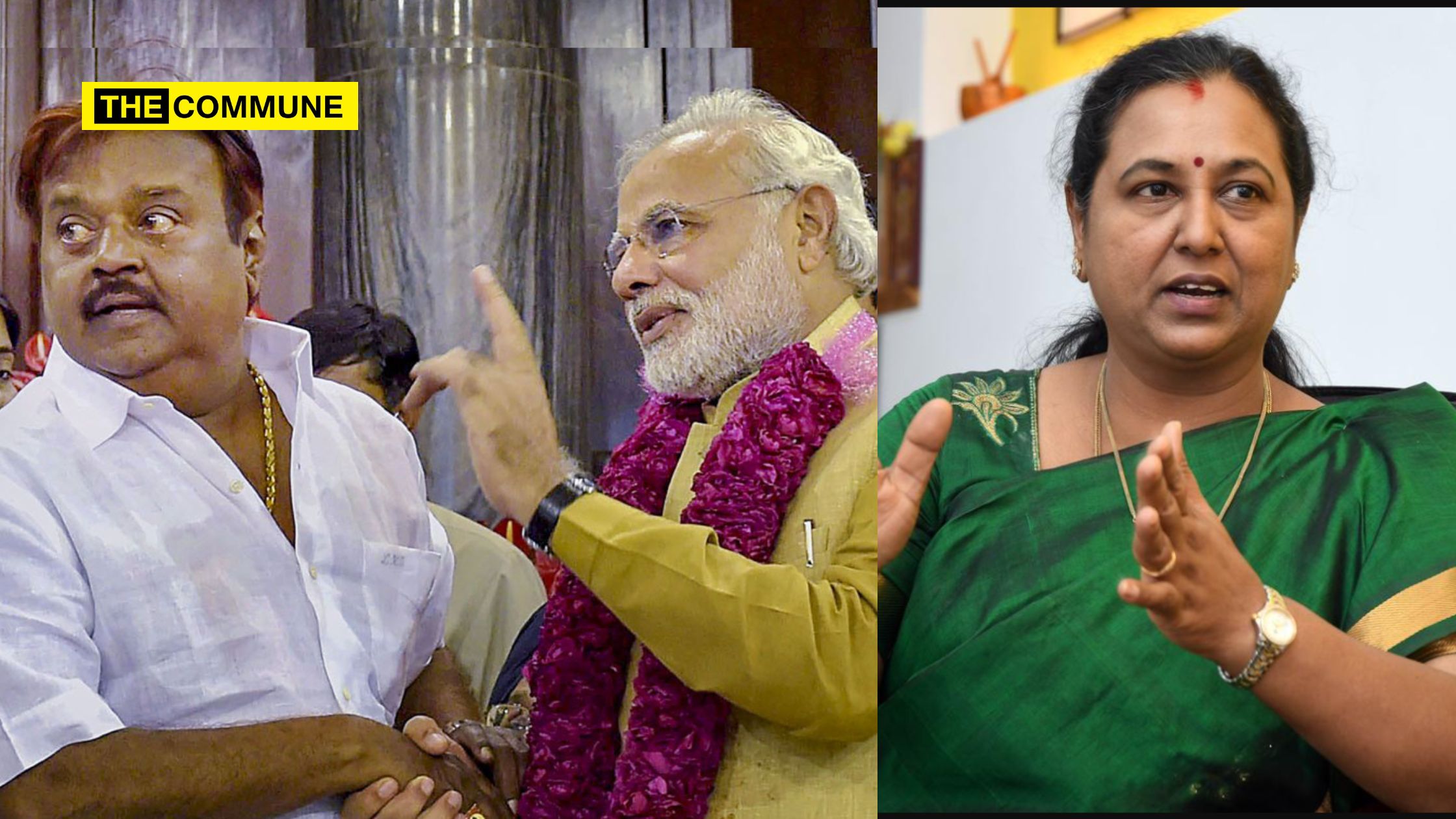
On 14 April 2025, DMDK General Secretary Premalatha Vijayakanth paid an emotional tribute to her late husband, actor-turned-politician ‘Captain’ Vijayakanth, highlighting the special friendship he shared with Prime Minister Narendra Modi. Speaking in a heartfelt video message shared on X, she reflected on the deep personal connection between the two leaders, describing it as a relationship grounded in genuine respect, warmth, and affection — one that transcended politics.

Premalatha recalled that Prime Minister Modi always considered Vijayakanth not just as a political ally but as a dear friend and elder brother, often affectionately calling him the “Lion of Tamil Nadu.”

She shared, “Captain Vijayakanth was not just a towering figure in Tamil cinema and politics, but a man who earned the love and respect of many, including our Prime Minister. Narendra Modi ji always saw him as more than a political colleague. He would fondly call him the ‘Lion of Tamil Nadu’ and check on him like an elder brother during his illness. Their bond was built on true affection and mutual respect – it was a friendship that went beyond politics.”

Sharing her memories of the bond between her husband, Captain Vijayakant, and Prime Minister Narendra Modi in an emotional video, Premalatha Vijayakant said, “Modiji used to call Captain the Lion of Tamil Nadu. Both of them were very good friends. Whenever it was Captain’s birthday, he by himself would call and wish Captain personally. Every time on his birthday, just like that. When Captain was a little bit sick, Modi ji himself asked him about his health issues and all. He spoke to me and said, ‘If you need any help all over the world, we can help you.’ Then he told me, ‘If you need anything, just call me and ask. I’m like your elder brother, I will help you.’ Those words I can’t forget in my lifetime. We used to talk everything very freely to him. We used to discuss many things for the people. At that time, he was very humble. He didn’t behave like a prime minister, he was like a brother to us. Modi ji is like a brother. One day in Trichy, there was a huge gathering and Modi ji spoke about Captain. He talked about the good relationship between Captain and Modi ji. He even wrote a great letter to Captain. In that letter, he explained everything about their relationship. That was a great honor for us. We will never forget in our lifetime. When Modi ji was taking oath as the prime minister in the central hall. He called all the NDA partners to the hall. We were there, and in that hall, Modiji said only two names: Captain Vijayakanth and Premalatha Vijayakanth. He said they worked very hard for the success of the NDA Alliance. That was a very great honor. After that, Modi ji gave the honorable Padma Bhushan award to Captain. I went to Delhi to receive the award on behalf of Captain. That day, I will never forget in my life. I received the award from the president, and the prime minister was there. I had a little time to speak with them. It was a great honor for Captain after his death. The award we received from Modi ji and the central government. We used to admire Modi ji for many things because he is the Prime Minister of India but he showed himself through simplicity and humanity. He is a great leader. Prime Minister also came from a small family, but he achieved great things. He is still very humble, with great humanity and simplicity. That is what makes Modi ji take all the people’s hearts.”

Vijayakanth, the founder of the Desiya Murpokku Dravida Kazhagam (DMDK), passed away on 28 December 2023, at the age of 71 due to age-related health issues. Known for his impactful contributions to Tamil cinema and his bold foray into politics, he was posthumously awarded the Padma Bhushan — an honor Premalatha said reflected the deep respect and affection Modi held for him.

She also shared insights into the Prime Minister’s character during their private interactions, describing him as humble and grounded. Premalatha acknowledged that DMDK had parted ways with the BJP to ally with the AIADMK, while PMK chose to partner with the BJP. However, she emphasized that these realignments never affected the personal bond between Vijayakanth and the Prime Minister.

Our admiration for Modiji was always sincere. He’s a leader who came from humble beginnings and rose to the highest office, staying true to his roots. That’s why people connect with him,” she concluded.

Her message resonated deeply with supporters of both Vijayakanth and the BJP, shedding light on the powerful human stories that often exist behind political headlines, and the enduring friendships that rise above party lines.

Subscribe to our channels on TelegramWhatsApp, and Instagram and get the best stories of the day delivered to you personally.

As Waqf Law Riots Rage And Tahawwur Rana Awaits Trial, Intel Warns Of Sri Lanka Easter Bombings-Like Attacks In India

In 2019, a series of synchronised bomb blasts struck Sri Lanka on Easter Sunday, targeting three churches and three luxury hotels, resulting in the deaths of 280 people, including 45 foreign nationals. Among the dead were three police officers and eight suicide bombers. Over 500 others sustained serious injuries in what has become the deadliest attack in the country since the defeat of the LTTE in 2009.

Sri Lankan media, citing intelligence officials, reported that the suicide bombers were members of the National Thowheeth Jama’ath (NTJ), an Islamist extremist outfit allegedly linked to terror networks in West Asia. The attackers had reportedly planned a second wave of suicide bombings, which was prevented due to swift action by Sri Lankan security forces.

The scale and coordination of the attacks triggered heightened concern in India.

Cut to the present – security agencies are assessing the implications for Indian cities, especially given the ongoing custody of Tahawwur Hussein Rana and recent violent protests in West Bengal over the Waqf (Amendment) Bill. Officials suspect that the possibility of similar strikes in Indian cities cannot be ruled out, particularly during religious festivals or periods of political unrest.

Political responses to religious processions and gatherings have come under scrutiny. The Madhya Pradesh government’s decision to ban Hanuman Jayanti rallies in Guna and restrictions imposed in parts of Delhi have drawn criticism from several quarters. At the same time, the Delhi administration’s denial of permission for a Christian procession titled “Road to the Cross” on Easter Sunday prompted condemnation from several secular political leaders. However, these leaders remained silent on the restrictions placed on Hindu religious events, raising allegations of selective outrage.

Security analysts have indicated that there are credible threats from Islamist outfits targeting Christian and Hindu religious events, particularly during major festivals such as Holy Week and Ram Navami. The Centre’s heightened security measures have been interpreted as pre-emptive steps in response to this threat perception.

In a controversial development, former Maharashtra Chief Minister and senior Congress leader Prithviraj Chavan demanded that legal assistance be extended to Tahawwur Rana to ensure the protection of his human rights. The demand has raised questions about possible political sympathies for individuals under investigation for terror-related offences.

The contrasting political reactions to religious processions and concerns over the safety of those facing terror charges are being viewed as contributing to growing polarisation. There is an increasing perception that such actions reflect an imbalance in the protection of religious freedoms, and this is believed to be pushing some members of the majority community towards hardline positions.

Authorities remain on high alert across South Asia, particularly in the lead-up to major religious observances, as the threat of extremist violence remains a pressing concern.

(With inputs from Daily Pioneer)

Subscribe to our channels on Telegram, WhatsApp, and Instagram and get the best stories of the day delivered to you personally.

Tamil Nadu Govt To Transfer 1.4 Cr Tonnes Of Illegally-Hoarded Beach Sand Minerals To Indian Rare Earths Ltd

The Tamil Nadu government has ordered the transfer of 1.4 crore tonnes of beach sand minerals, allegedly hoarded illegally by private companies, to the PSU Indian Rare Earths Ltd (IREL).

This marks a significant step in enforcing accountability following years of controversy over illegal mining operations along the state’s southern coastline. An official directive issued by Additional Chief Secretary of the Natural Resources Department, K. Phanindra Reddy, on April 8, 2025, outlines the process. The transfer will encompass beach sand mineral stocks currently held across godowns, factories, stockyards, and mining sites in Tirunelveli, Thoothukudi, and Kanniyakumari districts.

The handover will proceed once tentative pricing details — including transportation and security costs — are finalised. This action follows a Madras High Court directive that ordered the confiscation of illegally mined beach sand minerals.

The court had authorised the state to take possession of all raw, processed, or semi-processed minerals held by private players after validating the findings of multiple investigative reports, including those submitted by IAS officers Gagandeep Singh Bedi and Satyabrata Sahoo, as well as the Amicus Curiae and reassessment reports.

The Union Government had already cancelled private mining licences in 2019, in light of extensive violations and a complete ban on beach mineral mining imposed in September 2013.

According to the Satyabrata Sahoo Committee, over 1.5 crore tonnes of minerals — including garnet, ilmenite, rutile, zircon, sillimanite, and leucoxene — were found in the possession of private companies. However, a 2023 reassessment revealed that only 1.4 crore tonnes remained, indicating that a significant portion may have been illicitly removed.

In 2017-18, as part of court-ordered investigations, 49 godowns in the three districts were sealed by the authorities to prevent further tampering or transportation of the minerals. To oversee the transfer to IREL, the state government has formed a high-level committee comprising the Commissioner of Geology and Mining, CEO of the Tamil Nadu Infrastructure Development Board, and the Special Secretary of the Finance Department.

This committee will determine the fair value of the seized minerals. Furthermore, the District Collectors of Tirunelveli, Thoothukudi, and Kanniyakumari have been tasked with forming multidisciplinary monitoring teams. These teams will include officials from the Revenue, Survey, Geology and Mining Departments, the Atomic Minerals Directorate, and IREL.

The teams will supervise the secure transportation of the stock and ensure round-the-clock police protection at storage sites. The government has also directed these district administrations to initiate proceedings to recover the assessed mineral value and royalty — amounting to Rs 5,832 crore — from the lessees responsible for illegal mining, transport, and export between 2000 and 2017.

In parallel, the Madras High Court has ordered the Central Bureau of Investigation (CBI) to constitute Special Investigation Teams comprising officers of proven integrity and technical expertise.

The teams are expected to probe the modus operandi of the illegal mining operations, the involvement of government officials, and the financial loss to the state.

The court also instructed the Union Government to review the financial and commercial transactions of the implicated companies and, if necessary, involve agencies such as the Enforcement Directorate (ED), Income Tax Department, Customs and Excise, and the Commercial Taxes Department. Notably, on April 6, the CBI conducted raids at properties associated with V.V. Minerals and its promoter S. Vaikundarajan in Keeraikkaaranthattu near Thisaiyanvilai, as part of the ongoing investigation into the Rs 5,832 crore beach sand mining scam.

–IANS

Subscribe to our channels on TelegramWhatsApp, and Instagram and get the best stories of the day delivered to you personally.

The Judiciary’s Dangerous Double Standard: Protecting Its Own Power While Usurping Others’

The Supreme Court’s latest verdict, imposing a three-month deadline for presidential assent to state bills, marks a watershed moment in India’s constitutional history—not for its legal brilliance, but for its breathtaking hypocrisy. The same institution that struck down the National Judicial Appointments Commission (NJAC) in 2015, citing the sacred principle of judicial independence, has now audaciously encroached upon the executive’s constitutional domain. Is this the message the judiciary of this country wants to send – When it comes to the judiciary’s powers, even parliamentary amendments are unacceptable; but when it comes to others’ powers, even constitutional silence is no barrier.

Two Sets Of Rules

To understand the magnitude of what the Court has done, it helps to recall a moment from a decade ago. In 2015, the same Supreme Court struck down the National Judicial Appointments Commission (NJAC), a constitutional amendment passed by near unanimity in Parliament and ratified by over 20 states. The NJAC proposed a modest reform: allowing a committee comprising judges, the law minister, and two eminent citizens to select judges—replacing the opaque collegium system.

The court’s logic? Judicial independence is a basic feature of the Constitution. And allowing the executive even a token role in appointments would compromise that independence. So the NJAC was thrown out. The will of the people’s representatives—expressed through Parliament and state legislatures—was set aside by five unelected judges.

In that case, constitutional morality meant that the judiciary must be shielded from any influence, even from elected bodies. “Trust no one,” the court seemed to say—least of all the executive or legislature.

Now cut to 2024. In the Tamil Nadu case, the very same court holds that the inaction of a Governor can be cured by the judiciary taking over his function. No need to wait for the President’s consideration. No need to follow Article 200 or 201, which prescribe the routes for state legislation. Instead, the court invokes its Article 142 powers to declare the bills as assented—bypassing the entire constitutional mechanism.

So here’s the contradiction: When Parliament and states tried to reform judicial appointments via constitutional amendment, the court shut it down. But when the judiciary decides to reform executive inaction through judicial decree, it calls that democracy.

Article 142: From Safety Valve To Judicial Override

Article 142 was designed as an exceptional power to ensure “complete justice” in extraordinary cases. But in recent years, the Supreme Court has weaponized it to:

  • Override statutory processes (like in the Tamil Nadu case)
  • Legislate policy (as seen in environmental and electoral rulings)
  • Micromanage executive functions (now extending to the President’s office)

The Tamil Nadu verdict stretches Article 142 beyond recognition. If the Court can use it to force bills into law, what stops it from using it to annul laws it dislikes? If it can impose deadlines on the President, what stops it from directing the Prime Minister next?

This isn’t constitutional interpretation—it’s constitutional takeover.

The Ambedkarian Irony

In its judgment, the Court invoked B.R. Ambedkar, claiming that constitutional morality demanded upholding the supremacy of elected legislatures. But this is selective Ambedkarism.

Ambedkar was a legalist to the core. He insisted on procedure, on discipline, on constitutional channels. He was no fan of arbitrary Governors—but he also never imagined the judiciary would take over their functions. In fact, his vision required that no organ of the state act outside its sphere.

What we have today is a court that quotes Ambedkar to do exactly what Ambedkar warned against: substituting its wisdom for constitutional procedure.

Judicial Overreach Masquerading As Constitutional Morality

The Court’s reasoning in the Tamil Nadu case is riddled with contradictions:

On Delays: The Court condemns the Governor for sitting on bills indefinitely, yet it has presided over a judicial system where cases languish for decades. If delays are unconstitutional for the executive, why are they acceptable for the judiciary?

On Discretion: The Court insists that Governors must act on the “aid and advice” of state cabinets, yet it fiercely guards the Collegium’s absolute discretion in judicial appointments. If executive discretion is suspect, why is judicial discretion sacrosanct?

On Accountability: The Court demands transparency from Governors and the President but refuses to subject its own opaque Collegium system to public scrutiny.

This selective application of constitutional principles exposes an unsettling truth: The Supreme Court no longer sees itself as an interpreter of the Constitution but as its supreme arbiter—free to restrain others while remaining unrestrained itself.

Governor’s Powers Granted By Constitution

India’s Constitution provides checks and balances for a reason. Article 200 allows a Governor to give assent, withhold assent, return a bill for reconsideration, or reserve it for the President. Article 201 specifies what happens when a bill is reserved. None of these provisions allow the judiciary to step in and say, “Time’s up—this bill is now law.”

Yet that is precisely what the Court has done.

The justices argued that “constitutional functionaries cannot frustrate the will of the legislature.” That is true. But is it then acceptable for the judiciary to override a constitutional functionary, rather than compel him to act according to law?

What happens now when the President reserves a bill and delays it? Can the court step in and grant deemed assent again? Will we see High Courts doing the same for Governors in other states? And what of the central government—can it too be bypassed by court order when it fails to act?

Where does this end?

The Real Threat: Judicial Supremacy Over Democracy

The Court’s latest ruling sets a dangerous precedent. If it can impose deadlines on the President, what stops it from micromanaging other executive functions? If it can “deem” bills as passed despite gubernatorial inaction, what stops it from rewriting legislation altogether? The Constitution envisions a delicate balance of power, but the Court is tilting the scales in its favor—transforming India from a parliamentary democracy into a judicial oligarchy.

Worse, this overreach comes at a time when the judiciary’s own credibility is under scrutiny. The Collegium system remains a black box of favoritism and inefficiency. Judicial vacancies pile up while the Court lectures others on timely decision-making. The same judges who resist even minor executive oversight now feel entitled to oversee the executive.

The Dangerous Road Ahead

This judicial overreach creates three fundamental dangers:

First, it undermines democracy itself. When unelected judges routinely override elected governments, we cease to be a representative democracy and become a judicial oligarchy.

Second, it makes the judiciary a political actor. By inserting itself into governance, the Court invites the very politicization it claims to abhor.

Third, it sets impossible standards. The Court demands perfect functioning from other institutions while its own house remains in disorder – from case backlogs to controversial appointments.

The Bigger Question: Do We Need Governors Or Presidents Anymore?

If the Supreme Court can:

  1. Override gubernatorial vetoes
  2. Direct the President’s decision-making
  3. Legislate through “deemed assent”

…then what’s the point of having these offices at all? Why not just let the Supreme Court govern directly?

This isn’t just about Tamil Nadu—it’s about whether India still has separation of powers or just judicial supremacy.

Who Will Judge The Judges?

India’s founding fathers created an independent judiciary to protect democracy, not to supplant it. Yet today, we face the ironic situation where the institution meant to safeguard our Constitution has become its most aggressive reinterpretor.

The Supreme Court would do well to remember: True judicial greatness lies in knowing the limits of judicial power. Before it demands accountability from others, it must first submit to accountability itself.

For when the guardians become the rulers, democracy becomes a mere pretense. And that is a fate no Constitution can survive.

Parliament must seriously reconsider the NJAC or similar reforms to restore balance in judicial appointments. The executive must push back against judicial encroachment. And the public must ask: Who guards the guardians?

Hydra is a freelance writer and a columnist. 

Subscribe to our channels on TelegramWhatsApp, and Instagram and get the best stories of the day delivered to you personally.

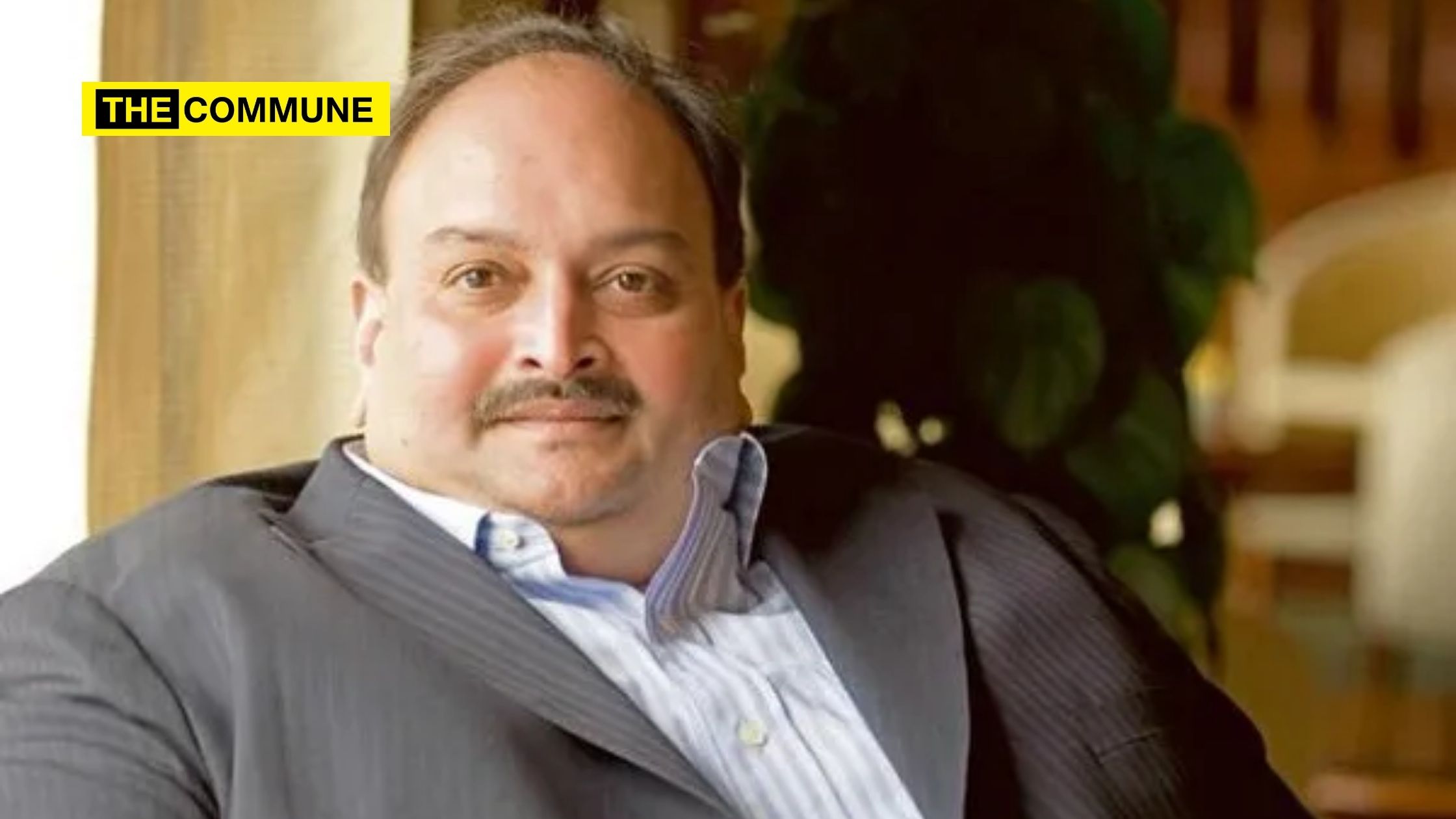
Belgium Confirms Choksi Detained In ‘Anticipation Of Further Judicial Proceedings’ After India’s Extradition Request

The Belgian Federal Public Service (FPS) of Justice on Monday confirmed the arrest of fugitive diamantaire Mehul Choksi, who is wanted in connection with the Punjab National Bank (PNB) loan fraud case in India, revealing that the Indian authorities have introduced an extradition request for him already.

“The Belgian federal public service of Justice can confirm that Mr. Mehul Choksi was arrested on the Saturday 12th of April 2025. He is being detained in anticipation of further judicial proceedings. Access to his legal counsel has been assured,” the FPS said.

“Please note that the prosecution services retain the right to refrain from comment in ongoing cases. Finally, the Belgian federal public service of Justice can confirm that the Indian authorities have introduced an extradition request for Mr. Choksi. As is standard in individual cases, no further details can be released at this stage,” it added.

The FPS acts like the Ministry of Justice and assists in preparation and implementation of legislation while supporting the Minister of Justice in the areas for which he is responsible. It also provides the guidance and operational support of the judiciary, with a focus on coordination and organisational development.

It is responsible for the supervision of the adequate implementation of legal and administrative decisions, while guaranteeing legal certainty and equal treatment of all parties involved. Choksi was apprehended by the police in Belgium at India’s request for his extradition, sources said. The 65-year-old was reportedly living in Antwerp with his wife, Preeti Choksi, after obtaining a ‘residency card’ there.

The businessman is likely to seek bail, citing ill health and other reasons. Choksi and his nephew, Nirav Modi, are wanted by the Central Bureau of Investigation (CBI) and the Enforcement Directorate (ED) for allegedly defrauding the PNB of Rs 13,850 crore. They allegedly used Letters of Undertaking (LoUs) and Foreign Letters of Credit (FLCs) by bribing officials of the bank’s Brady House branch in Mumbai.

The CBI has filed cases charging Choksi, his nephew Nirav Modi, their companies, bank staff, and others with conspiracy, cheating, and corruption. Choksi and Nirav Modi fled India in January 2018, weeks before the scam in the PNB surfaced.

According to reports, Choksi has been living in Antwerp with his wife, Preeti Choksi, a citizen of Belgium. A citizen of Antigua and Barbuda, he reportedly left the Caribbean nation for medical treatment. In 2021, he went missing from Antigua but was later found on another island nation, Dominica. Choksi is the founder of Gitanjali Gems. Nirav Modi remains in a UK prison as he continues to contest extradition proceedings initiated by Indian authorities.

He was declared a Fugitive Economic Offender (FEO) in 2019, while the ED’s plea against Mehul Choksi has been pending since 2018. Sources said that Choksi’s arrest was triggered after Indian agencies reactivated extradition requests when the Interpol Red Notice against him was removed. The ED and CBI, despite the deletion, pursued a fresh request, which ultimately led to his arrest in Belgium. Sources said that efforts are underway to bring him back to India as soon as possible. However, legal hurdles in Belgian courts can delay the process.

–IANS

Subscribe to our channels on TelegramWhatsApp, and Instagram and get the best stories of the day delivered to you personally.

Sanitation Workers Face Discrimination At Event Led By DMK Minister Raja Kannappan

The ruling DMK government is facing sharp criticism following an incident on 14 April 2025—Dr. B.R. Ambedkar’s birth anniversary—where sanitation workers were allegedly subjected to discriminatory treatment during an event meant to promote equality. The controversy centers around Milk and Dairy Development Minister R.S. Rajakannappan, who oversaw the event.

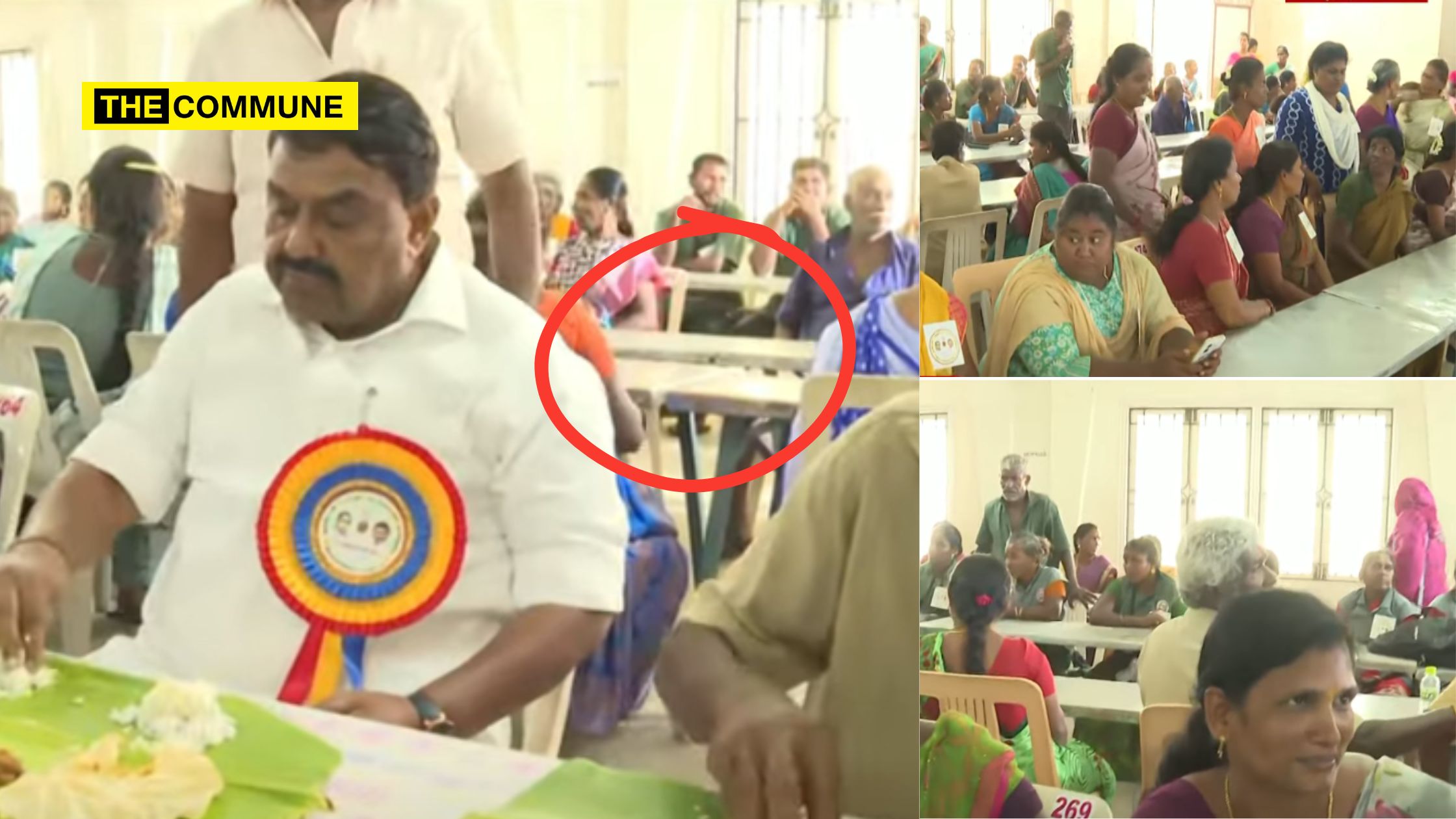
More than 500 sanitation workers were invited to the function to honor their contributions, but instead of receiving equal treatment, they were made to wait over an hour for food. They were also segregated into a separate dining rows and not served until after the officials—including Ramanathapuram MLA and DMK Minister Raja Kannappan—had finished their meals and left the venue. Even in the video footage, while the minister dined comfortably in the front row, the two rows behind—where the sanitation workers were seated—hadn’t even been provided with banana leaves for serving food.

This perceived humiliation sparked anger and disappointment among the workers, who questioned the sincerity of the event’s theme of equality. Many voiced their frustration, asking why discrimination persisted even on a day dedicated to Ambedkar’s ideals of justice and social equity.

One upset worker asked, “They served food on banana leaves for the front row alone, but why weren’t the front and back three rows given any? Are we here to eat leftovers? Can’t we cook and eat at home? You tell us. We came here at 8 o’clock, and we were given was a water bottle and a packet of biscuits—not even tea. Who are we supposed to tell this to? Is this for you invited us?”

Earlier, an “Equality Day Pledge Ceremony” was held at the Ramanathapuram Collectorate Hall to commemorate Ambedkar’s legacy. The event was presided over by Collector Simranjeet Singh Kalon and District Revenue Officer Govindarajalu, with participation from various government departments. Officials, including Superintendent Shanmuganathan from the Primary Education Office, took the pledge promoting equality and social justice.

Subscribe to our channels on Telegram, WhatsApp, and Instagram and get the best stories of the day delivered to you personally.
Hyderabad-Born Doctor Honoured With Prestigious ACP Fellowship In US

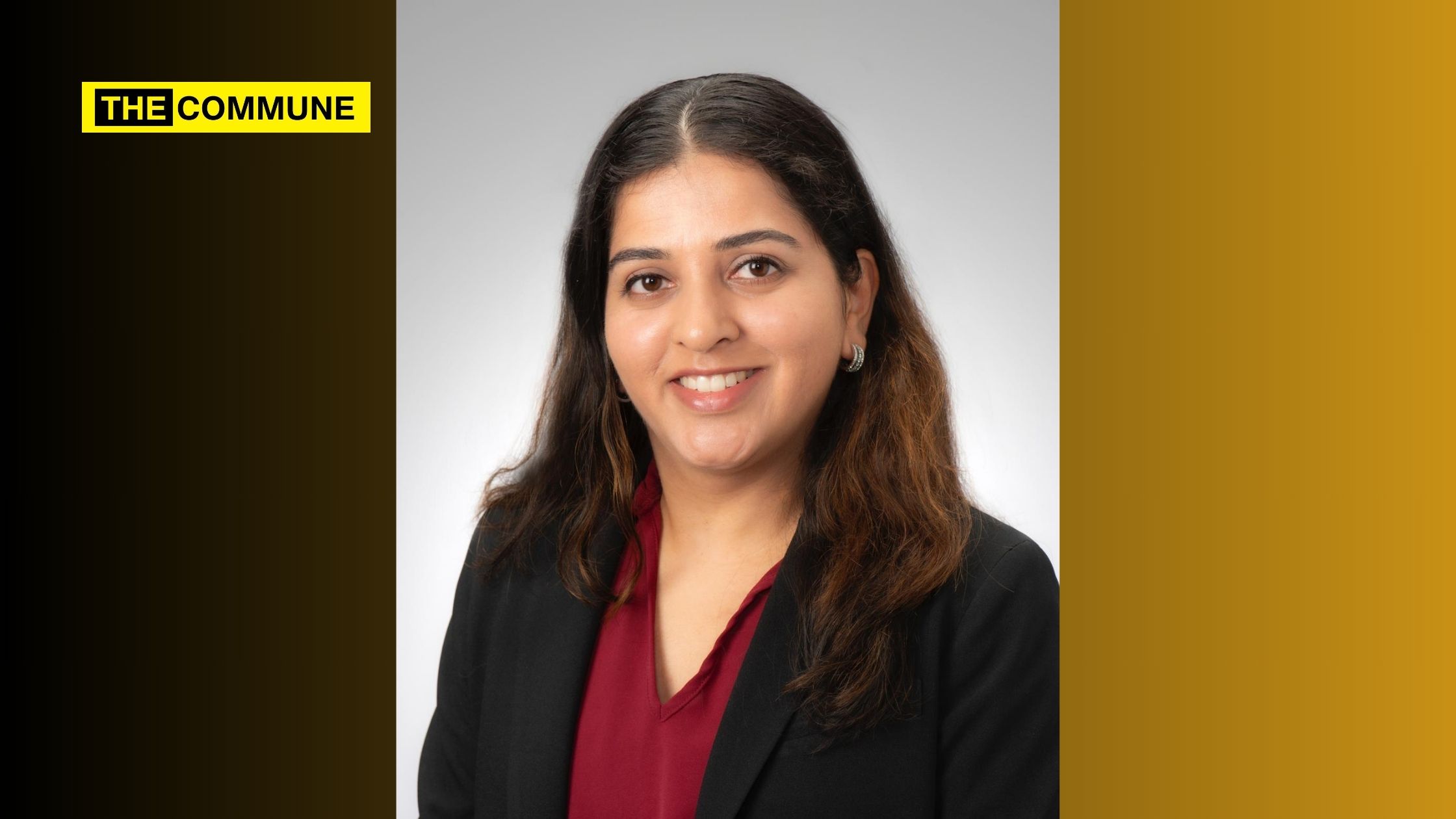
Dr. Divya Sistla, a U.S.-based endocrinologist originally from Telangana, has been awarded the esteemed title of Fellow of the American College of Physicians (FACP) — one of the highest honours in the field of internal medicine. This recognition celebrates her exceptional work in endocrinology, medical research, and education. Dr. Sistla, who completed her MBBS at Kamineni Institute of Medical Sciences in Telangana, is currently a leading Endocrinologist and Obesity Medicine Specialist at UPMC Mercy Hospital in Pittsburgh, Pennsylvania.

Board-certified in internal medicine, endocrinology, and obesity medicine, she is widely known for her expertise in treating complex hormonal disorders, including diabetes, thyroid disease, PCOS, osteoporosis, and Cushing’s syndrome. Alongside her clinical role, Dr Sistla serves as a Clinical Assistant Professor, mentoring the next generation of physicians at the University of Pittsburgh. She also contributes to multiple patient safety and physician wellness committees, underlining her holistic commitment to healthcare excellence.

“Receiving the FACP is a deeply meaningful milestone,” said Dr. Sistla. “As an Indian-origin physician practicing in the U.S., I’m proud to bring global best practices to my patients and continue building bridges in medical knowledge between countries,” she said. Her research spans a broad range of topics in endocrinology, including Adrenal disorders, pituitary disorders, and obesity.

Her groundbreaking research includes a widely recognized study on telemedicine that demonstrated the effectiveness of video consultations in improving diabetes care outcomes and another major publication in the Journal of the Endocrine Society examining the long-term stability of non-functioning pituitary adenomas. Dr. Sistla’s achievement is a moment of pride for the Indian medical community and serves as an inspiration for young doctors and researchers across the country.

–IANS

Subscribe to our TelegramWhatsApp, and Instagram channels and get the best stories of the day delivered instantly.

Kerala: Pastor John Jebaraj Who Was Booked Under POCSO For Sexual Assault Of Two Minor Girls, Arrested

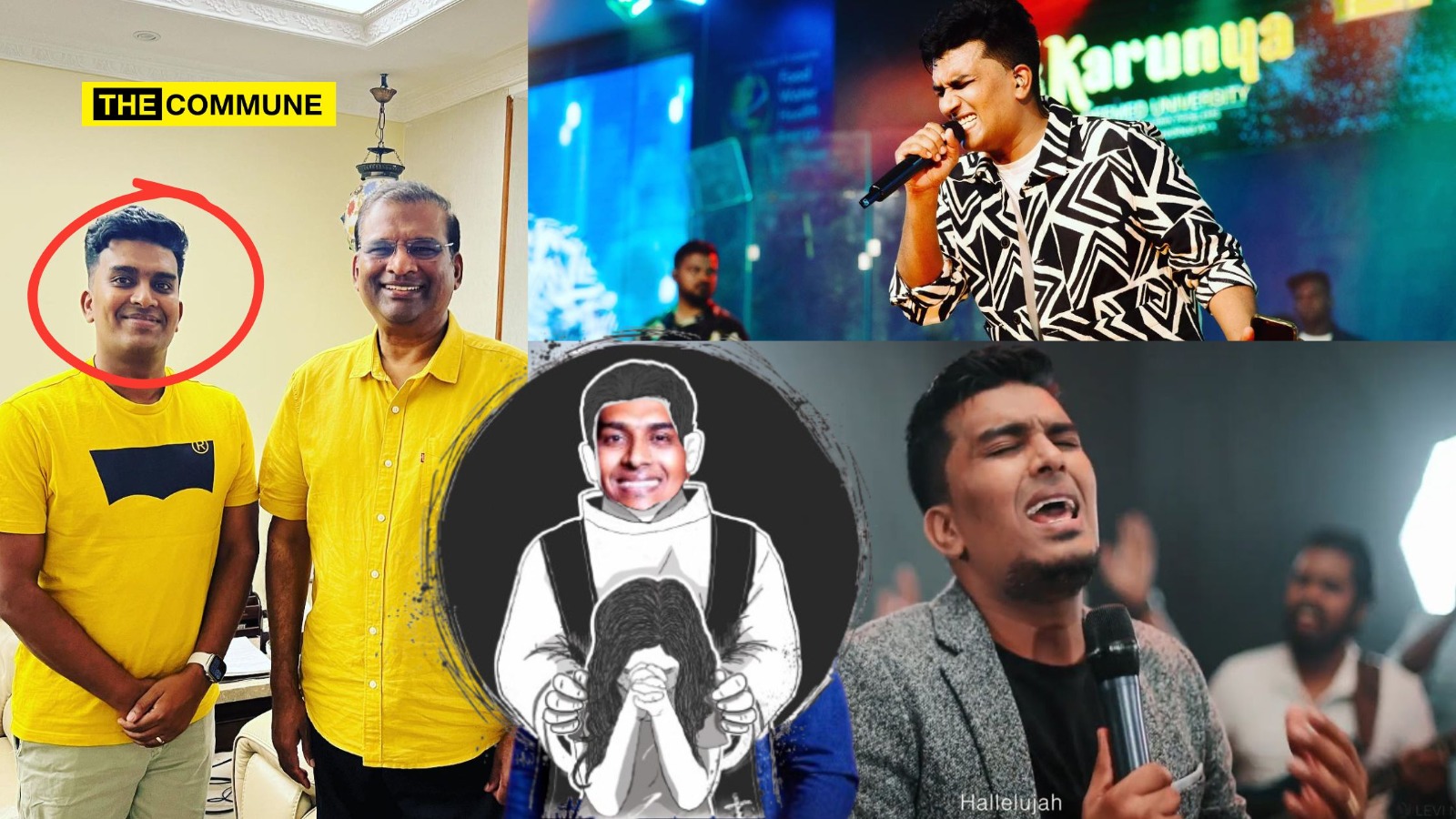
John Jebaraj, a 37-year-old pastor from Coimbatore’s Kings Generation Church, was arrested in Kerala’s Munnar on Saturday (12 April 2025)  evening in connection with the alleged sexual assault of two minors. The accused, who has a significant social media following, had been evading arrest for several months before being tracked down by the Central All Women Police Station of Coimbatore.

Jebaraj was produced before a court on Wednesday and remanded to judicial custody. He has been charged under the Protection of Children from Sexual Offences (POCSO) Act, with sections related to aggravated sexual assault invoked against him.

The Coimbatore City Police had formed multiple teams to locate Jebaraj after he went underground following the registration of the case. A lookout notice was also issued to prevent him from fleeing the country.

According to police sources, the alleged assaults took place during a party at Jebaraj’s residence in Coimbatore in May 2023. One of the victims recently disclosed the incident to a relative, leading to a formal complaint being filed at the Central All Women Police Station.

Jebaraj had recently approached the Madras High Court seeking anticipatory bail, denying all charges. In his petition, he claimed that his estranged wife was behind the allegations. The couple is currently undergoing divorce proceedings.

The arrest comes days after a Punjab pastor, Bajinder Singh, was sentenced to life imprisonment in a 2018 rape case. Singh had allegedly lured the survivor with promises of taking her abroad before assaulting her at his Mohali home. The survivor had also accused him of recording the act and threatening to leak the video.

A senior police officer confirmed that one minor girl has submitted a complaint to the Child Welfare Committee and that the matter was under investigation.

(With inputs from NDTV)

Subscribe to our channels on TelegramWhatsApp, and Instagram and get the best stories of the day delivered to you personally.
Behind The Red Curtain: The Dark Disgusting Secrets Of Mao Zedong’s Personal Life

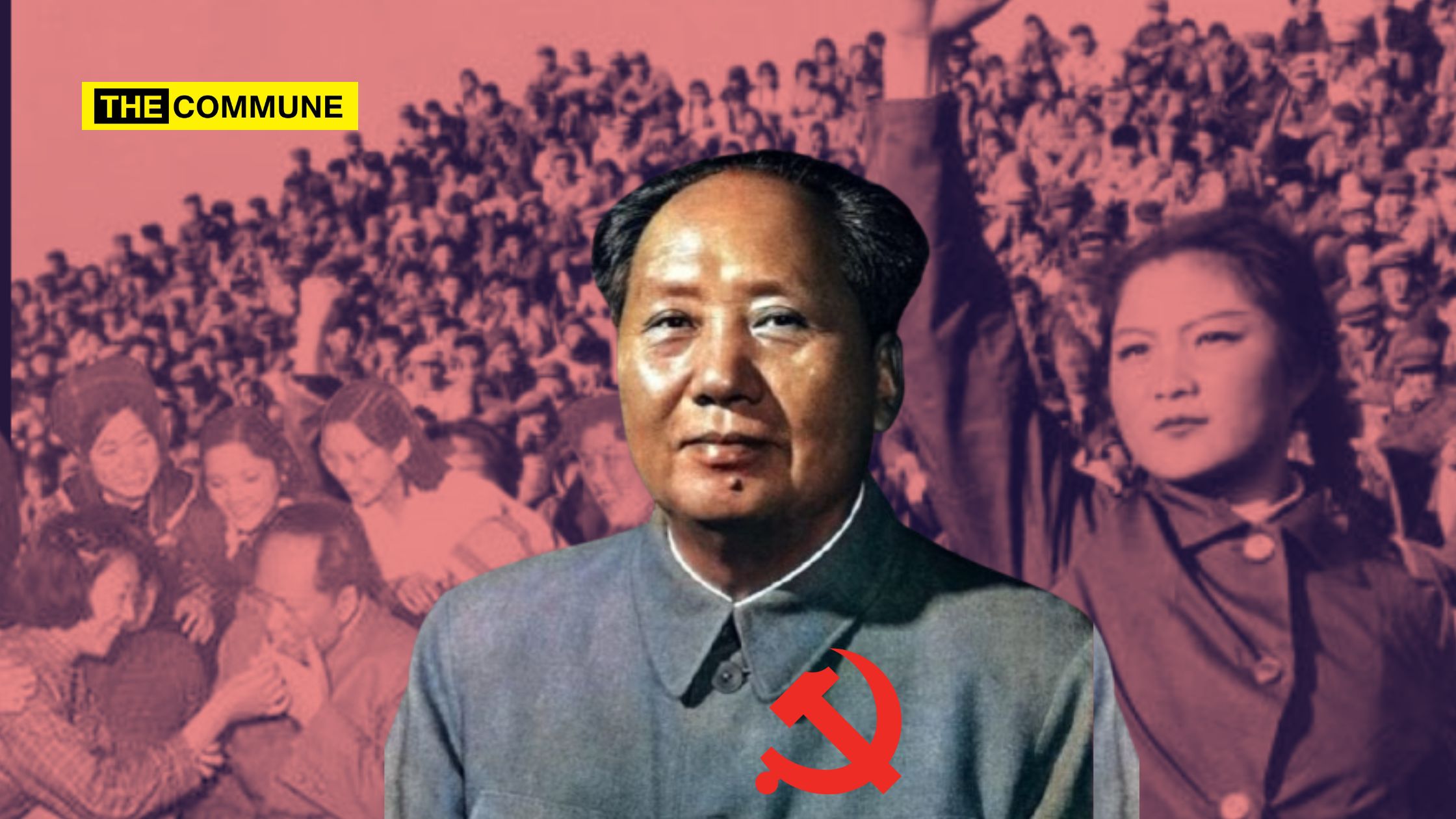
While the Communist Party often highlights Mao Zedong—the first Chairman of the People’s Republic of China—as a revolutionary icon who led the Long March, resisted both the Kuomintang and Japanese occupation, launched the Cultural Revolution, and helped shape a new era for modern China, his private life painted a far more controversial and complex portrait. Behind the veil of public heroism lay personal habits and behaviors marked by contradiction, indulgence, and disturbing excesses.

What follows is a collection of reported facts and allegations, many of which were documented or corroborated by individuals from Mao’s inner circle.

“Replenishing The Yang”: Mao’s Pursuit Of Vitality

As Mao aged, his health began to decline. Yet he remained convinced that intimacy with young women could restore his strength and vitality. He often spoke of the traditional yin-yang philosophy, suggesting that physical contact with young partners would replenish his energy. His doctors objected, but Mao persisted.

He even commissioned a special bed, slanted at an angle, and required his partners to read a classical Chinese text on sexuality, The Plain Girl’s Secret Way, before engaging with him. Many of these young women later suffered from untreated infections like STD’s—yet some perceived this as a mark of distinction, believing they had served the revolutionary cause in an unusual way. This was later disclosed in The Private Life of Chairman Mao, a memoir by Li Zhi-Sui, Mao’s personal physician.

A Troubling Relationship: Mao and the Young Dancer

One of Mao Zedong’s most controversial and troubling associations began in 1962, when he initiated a relationship with a 14-year-old performer named Chen Luwen. Chen, who later referred to herself as an “imperial concubine,” was a member of a performance troupe that entertained military personnel. At the time, Mao was 69 years old and would summon her to his private quarters under the guise of having her serve tea.

Her parents, horrified upon discovering the relationship, were unable to protest in the midst of the Cultural Revolution—where any critique of the Chairman could mean death. The relationship continued for years until Mao’s wife intervened, forcing him to end the affair and arrange for Chen’s quiet exit from public view.

Art, Control, and Nude Ballets

Mao Zedong maintained a troupe of performers known as the Cultural Work Troupe—young women selected not only for their artistic talents but largely for their physical appeal and discretion. On certain occasions, he would bring them to his private pool, where they were reportedly instructed to perform nude synchronized swimming routines. More frequently, Mao preferred ballroom dancing, an activity considered elitist by the standards of the time, yet tolerated in his case. These gatherings were coordinated by Vice Chairman Wang Dongxing and held at a venue called the Spring Lotus Chamber. During these events, Mao would dance with the women until he chose one to accompany him privately. Eventually, a bed was placed in an adjoining room to accommodate these encounters. These acts were largely shielded from the public eye, yet within elite circles, it was understood that these performances were part of Mao’s eccentric and indulgent lifestyle was another ugliest truth.

Personnel Mistress – Zhang Yufeng

Mao’s favorite mistress, Zhang Yufeng, began her relationship with him at age 16. Over time, she became his closest aide, acting as gatekeeper for all communication—including with Mao’s own wife, Jiang Qing. Zhang’s influence extended even to finances, controlling accounts and purchases for the Chairman’s household. Her control symbolized just how blurred the lines were between personal relationships and political power in Mao’s final years.

Mao’s wife, Jiang Qing, wasn’t content to remain humiliated. Taking inspiration from powerful women of China’s past, she is said to have sought relationships of her own—with writers, artists, and even a renowned table tennis player. Though mostly kept from public view, her private rebellion underscored the deep fractures in the Chairman’s household.

Given the documented relationships Mao Zedong had with significantly underage girls, including a well-known instance involving a 14-year-old, and later with 16-year-old it raises serious ethical and moral concerns. By today’s standards and definitions, such behavior would indeed be considered predatory and fall under the category of pedophilia.

Offering 10 Million Chinese Women to the U.S. For Positive Bilateral Trade

During a late-night diplomatic meeting on 17 February 1973, at his residence, Chairman Mao Zedong made a shocking and controversial suggestion to U.S. National Security Adviser Henry Kissinger. According to declassified documents released by the U.S. State Department, Mao proposed sending 10 million Chinese women to the United States as a way to stimulate bilateral trade and, half-jokingly, to burden the U.S. with a population challenge similar to China’s.

Mao remarked that China was economically struggling and had little to offer in trade, but it had an “excess” of women. Initially, he mentioned sending “thousands,” but quickly escalated the number to “10 million,” prompting laughter from those present, including Premier Zhou Enlai. Dr. Kissinger responded in kind, joking that the U.S. did not impose any “quotas” or “tariffs” on Chinese women, which added to the levity of the conversation.

Though Dr. Kissinger attempted to steer the discussion toward global strategic concerns and the Soviet threat, Mao repeatedly returned to his peculiar proposition, demonstrating both his unorthodox diplomatic style and the complex dynamics of Sino-American relations during that era.

A Leader with Unusual Habits

Mao was infamous for his rejection of modern hygiene. He refused to brush his teeth, claiming tigers never did—and so shouldn’t he. Instead, he swished tea around in his mouth. Over time, plaque buildup and infection led to serious dental issues. His physicians pleaded with him to adopt basic oral hygiene, but Mao consistently returned to his old routine was one of his sick nature.

Rejecting Toilets: Mao’s Rural Comforts

Despite owning modern amenities, Mao often avoided toilets, claiming they “smelled too much” and were unnatural. He preferred going into the woods, accompanied by aides who dug holes and guarded his privacy. Chronic constipation plagued Mao throughout his life, requiring regular medical intervention—even during the historic Long March, where his bodily challenges became part of political mythmaking.

When Mao visited Moscow in 1949, he expected a hero’s welcome from Joseph Stalin. Instead, he found himself isolated in a hotel room—and unknowingly studied. Soviet intelligence had rigged his toilet to collect samples of his waste for analysis, hoping to learn about Mao’s health and emotional state. Their findings remain secret, but the meeting that followed was tense and unproductive, signaling a rift between the two powers.

Mao Zedong has been labeled many things—revolutionary, thinker, statesman—but also a man riddled with contradictions. His personal life revealed stark contrasts to his public persona: he was both austere and indulgent, idealistic yet unpredictable, revered and feared in equal measure.

(With inputs from List Verse)

Subscribe to our TelegramWhatsApp, and Instagram channels and get the best stories of the day delivered instantly.

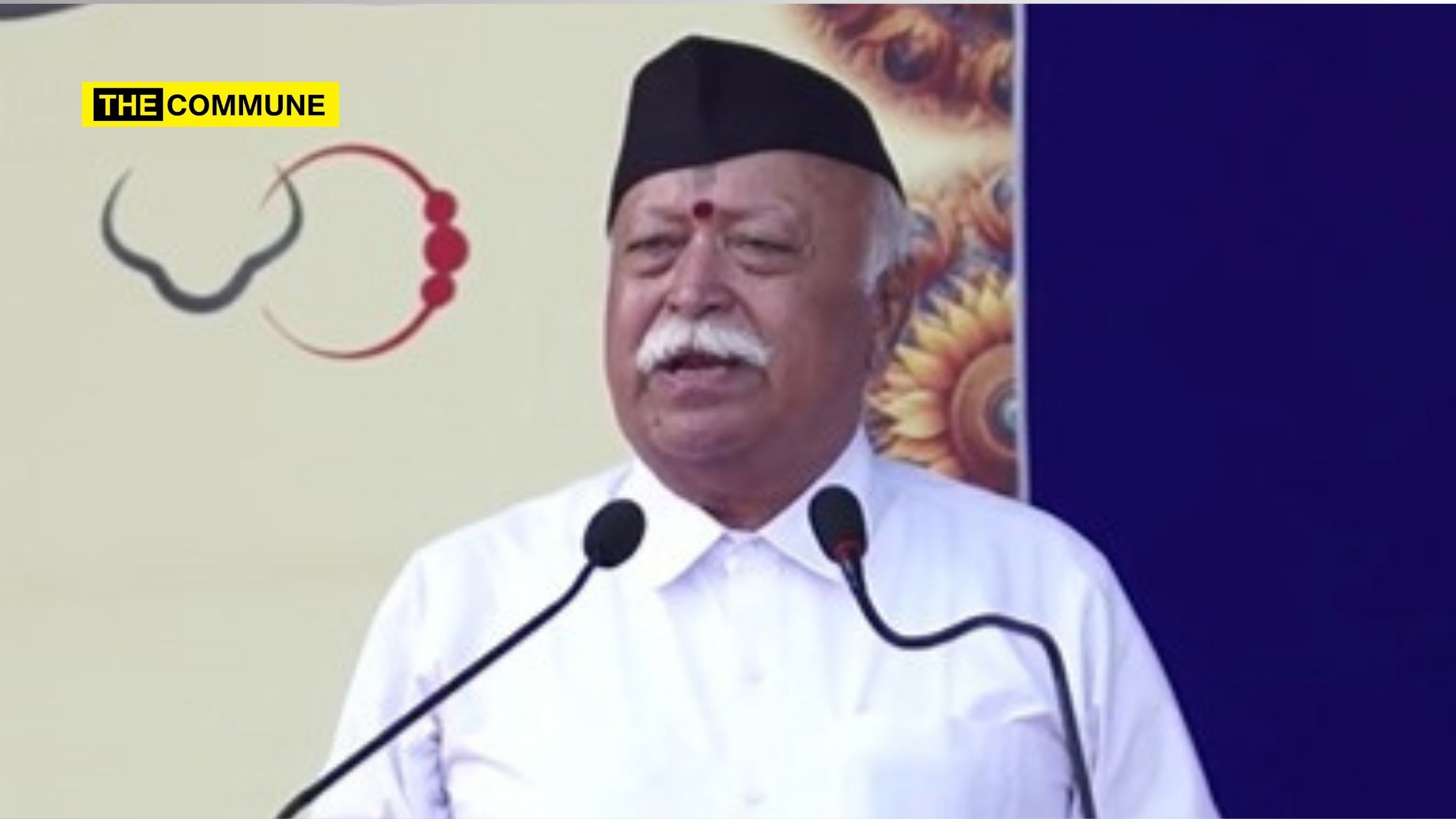
Foreign Invaders Exploited Internal Divisions In Indian Society, RSS Chief Mohan Bhagwat Says

RSS Chief Warns Against Divisive Forces In Vijayadasami Speech

Rashtriya Swayamsevak Sangh (RSS) chief, Dr Mohan Bhagwat, on Monday said that foreign invaders exploited internal divisions in Indian society and took advantage of it. Speaking after inaugurating the newly-constructed Sangh Bhawan in Karvalo Nagar, Bhagwat said, “For the last two thousand years, our society remained entangled in internal conflicts and differences. Foreign invaders took advantage of this disunity and defeated us.”

He also inaugurated the Bhimrao Ambedkar Auditorium within the Sangh office premises. Highlighting the importance of social unity, Bhagwat said the RSS does not work merely for itself but for society. “The Sangh’s work is not limited to the organisation. It is for everyone, for the whole country. We’ve seen many festive occasions, but such a large gathering is rare,” he said. Bhagwat said the Sangh strives to include every section of society in its efforts.

“This office will become a hub for uniting and connecting the various positive initiatives underway in society,” he added. He paid tribute to Dr B.R. Ambedkar, the architect of the Indian Constitution, recalling the hardships Babasaheb faced from a young age. “Babasaheb endured great adversity throughout his life. He dedicated himself to uniting society,” Bhagwat said.

The RSS’ publicity chief said the new four-floor Sangh Bhawan has been constructed with thoughtful planning. “It includes a large library in the basement and ample parking. Ventilation has been carefully addressed, with windows placed strategically to allow natural light throughout the day,” he said. Bhagwat is scheduled to meet workers from the Sangh’s service department across six verticals on April 15 and 16. On April 15, he will visit the Koyla Nagar branch in eastern Kanpur, followed by Nirala Nagar on April 16.

On April 17, he will meet the state executive to discuss key focus areas ahead of the Sangh’s centenary year. These include civic responsibility, eco-friendly living, social harmony, family values, self-awareness, and a review of ongoing initiatives in the state.

–IANS

Subscribe to our TelegramWhatsApp, and Instagram channels and get the best stories of the day delivered instantly.