Home Blog Page 548

‘Protecting Corrupt, Threatening Honest Officers’ – Retired IAS Officer Sagayam’s Scathing Attack On DMK Govt Amid Granite Scam Probe
ias officer sagayam granite scam probe dmk

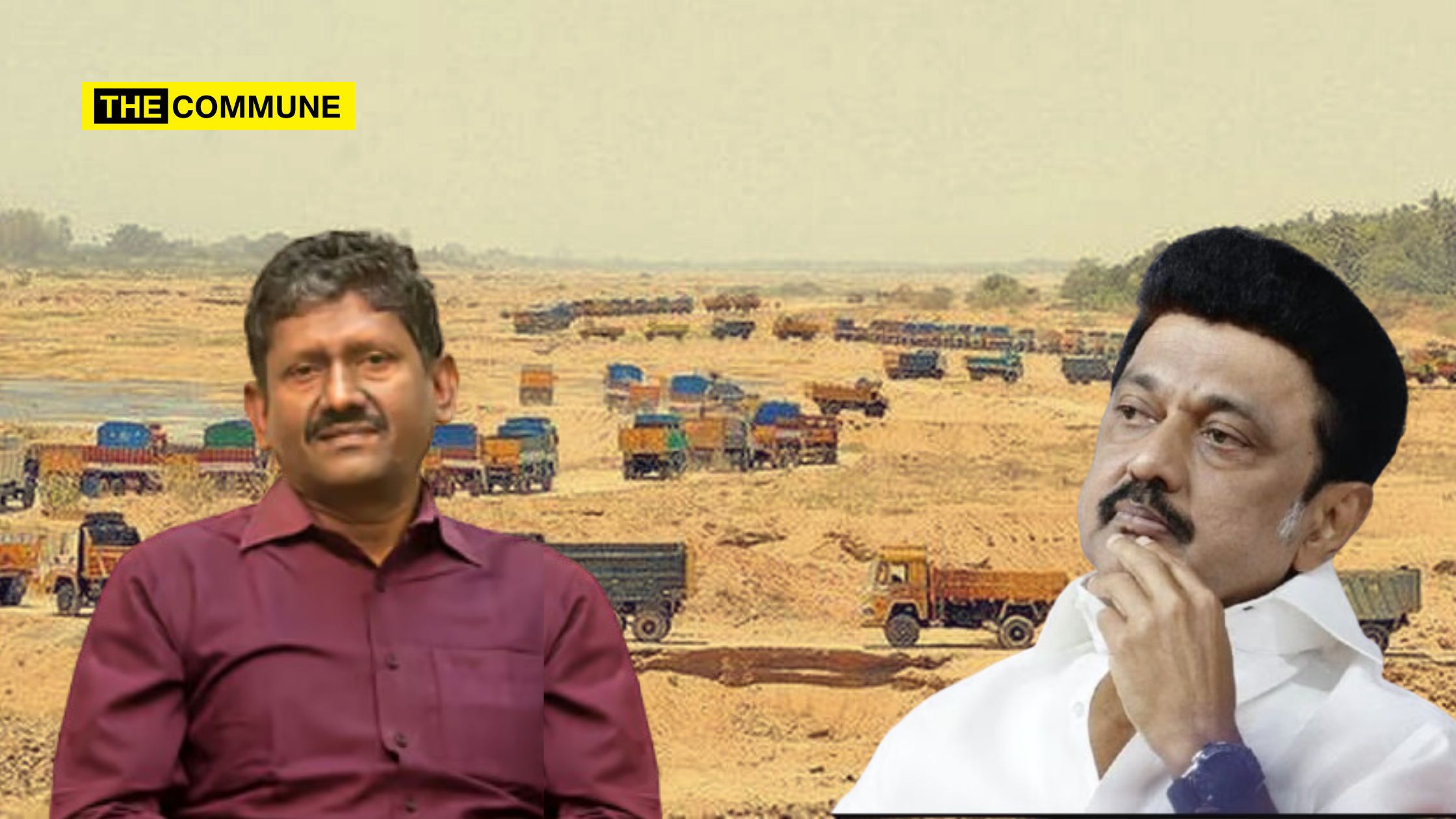
Retired IAS officer U Sagayam has strongly criticized the ruling DMK government, labeling it as an authoritarian regime that protects the corrupt while punishing those who work with honesty and expose scams. In a recent interview with a private YouTube media channel, Sagayam expressed outrage after being stripped of his security cover just before he was scheduled to appear before the special court in Madurai investigating the massive granite scam.

Sagayam explained that despite earlier orders from the Madras High Court to provide him armed protection after he exposed the granite mining scam, his security detail was withdrawn in 2020 and only reinstated after court intervention. However, in 2023, his security was again removed. Citing threats to his life, he said he was unable to appear before the special court as summoned.

Slamming the DMK government, he said, “I continue to discuss this issue in the media. I assert that it is shameful to turn this into a major topic of discussion. Who are they providing protection to? Corruption is a crime, and corrupt are criminals. According to the Prevention of Corruption Act, corruption is indeed a crime, and the corrupt are criminals. But who have you given protection to today? Have you not provided protection to any corrupt individuals? But if you fight against corruption and expose the plundering of our natural resources in the Tamil homeland, revealing that it amounts to a loss of one lakh crores, you are threatening my security concerns. There is no democracy here. How many times must I state this? I keep asking. Making this a public topic of discussion is not good at all; it is both ugly and shameful. Provide me with the list of those you have protected. I am telling you who they are and what kind of people you are protecting. I want to safeguard the natural resources of this country, our homeland, the Tamil homeland, and ensure they are passed on to the next generation.”

He then slammed, “I have done this by risking my life to protect my land and considering my position as nothing. But if you have arbitrarily removed this protection granted by the High Court today, how anti-democratic you are, if you say that you are refusing to provide protection to the one who fought for the protection of the Tamil land, then I say that you are conducting politics against this land.” 

When asked if there was a motive behind the removal of his security, Sagayam responded, “Absolutely. If not, why do they suddenly do it? There is definitely an ulterior motive. There is no democracy in the actions of our politicians and police officers. Even today, they exercise their power with the same attitude as the landlords of the royal or colonial eras. There is no democracy there. There is no truth or justice there. How do they do it? When I was the collector of Madurai district, I submitted that report. Two days after submitting the report, I was thrown out. After that, I was appointed to a Cooptex that had been in decline for 15 years, a cooperative company that was operating at a loss. I turned it into a profitable company in a year and a half. The Dhoti Day that I introduced has now become a business worth hundreds of crores for many private textile companies. I have received two national awards. Following that, when I had a disagreement with the minister, I was transferred to the Indian Medical Department. Even before I could join there, I was reassigned to Science City within 48 hours. What crime did I do? Is being honest a crime? If you claim that being honest is a crime, then remove your laws. What is the purpose of the Prevention of Corruption Act? Remove all your laws and declare that everyone can be corrupt. If you believe that being honest is a crime in your political ideology, then why do you have a law? Why is there a directorate? Why are you arresting ordinary village administrative officers, sub-collectors, and sub-inspectors who take 500, 1,000, or 5,000 rupees? Have you taken any action against corrupt individuals who are loot public property worth 500 crores or 5,000 crores? Today, the situation has reached a point where we must ask such questions. They are supporting these corrupt granite scamsters and are taking no action against me or my report. They hold a grudge against me.”

Sagayam raised concerns over the lack of action on his report exposing corruption within TAMIN, a Tamil Nadu government-owned firm, which he said had resulted in a loss of ₹5,000 crore to the state exchequer.

Sagayam went on to directly question the Tamil Nadu government’s commitment to preserving the state’s natural wealth. “This is what I want to ask the Tamil Nadu government, What is the policy of the Tamil Nadu government regarding the protection of natural resources? They have the greater responsibility. You are not the ones who came to destroy it. We have given you our authority and our tax money. The citizens who provide this authority and tax money are the true masters, not you. You are not kings, zamindars, or landlords; you are the servants of the people. You must fulfill your duty. We must recognize that you are all public servants, and the people are the masters. You should understand this; it is the truth. You receive power and tax money from the people for what purpose? To take responsibility for the welfare of the people, to protect their rights, and to safeguard the mineral resources that belong to the people—not to destroy them. However, you are failing in this duty. You’re destroying them. History will judge you without bias in the future. It will not concern itself with individual identities. When all this fame and these circumstances are long gone, history will judge calmly and clearly against you. If you have the responsibility to protect natural resources, what kind of duty are you fulfilling? What principles guide you in protecting these resources? What actions have you taken? What justice will you provide to the social activists who have been harmed?

He also highlighted the hypocrisy of the DMK government, noting that while it has offered financial compensation amounting to several lakhs of rupees to victims of illicit liquor tragedies, it has failed to provide any support or compensation to whistleblowers such as Jagabar Ali who was recently murdered for exposing illegal mining activities in the state.

Sagayam said, “Even today, no compensation has been given to Jagabar Ali. Consider the poor individuals who died after consuming illicit liquor in Kallakurichi; you provided them with compensation in lakhs. Yet, what about that son born into a humble Islamic family who loved this land? He was an incomparable individual, a father responsible for educating and raising three children and two daughters, and he has been killed. What relief have you offered? Karur Jagannathan? Think about it: what justice has been given to them, and what justice will you provide in the future?”

Sagayam criticized the state’s inaction under the Whistleblowers Protection Act, saying Tamil Nadu has failed to enforce a central law meant to safeguard those exposing corruption. “There is a Whistleblower Protection Act for social activists, yet I accuse you of not implementing a law in Tamil Nadu that could protect those who seek to bring such truths to light. Hasn’t India enacted a law to protect them? Hasn’t the Indian government enacted such a law 20 years ago? It has not been implemented, nor has it provided them with protection. When will you implement that law to safeguard them? What kind of immediate and permanent action are you going to take against those who illegally plundered mineral resources here? Tell me, and if you do that, I am ready to salute you.”

Subscribe to our channels on TelegramWhatsApp, and Instagram and get the best stories of the day delivered to you personally.

Book Review: The Hindu Manifesto By Swami Vigyananand – A Visionary Civilizational Blueprint For Dharma-Centric Governance In The 21st Century

swami vigyanand the hindu manifesto book review

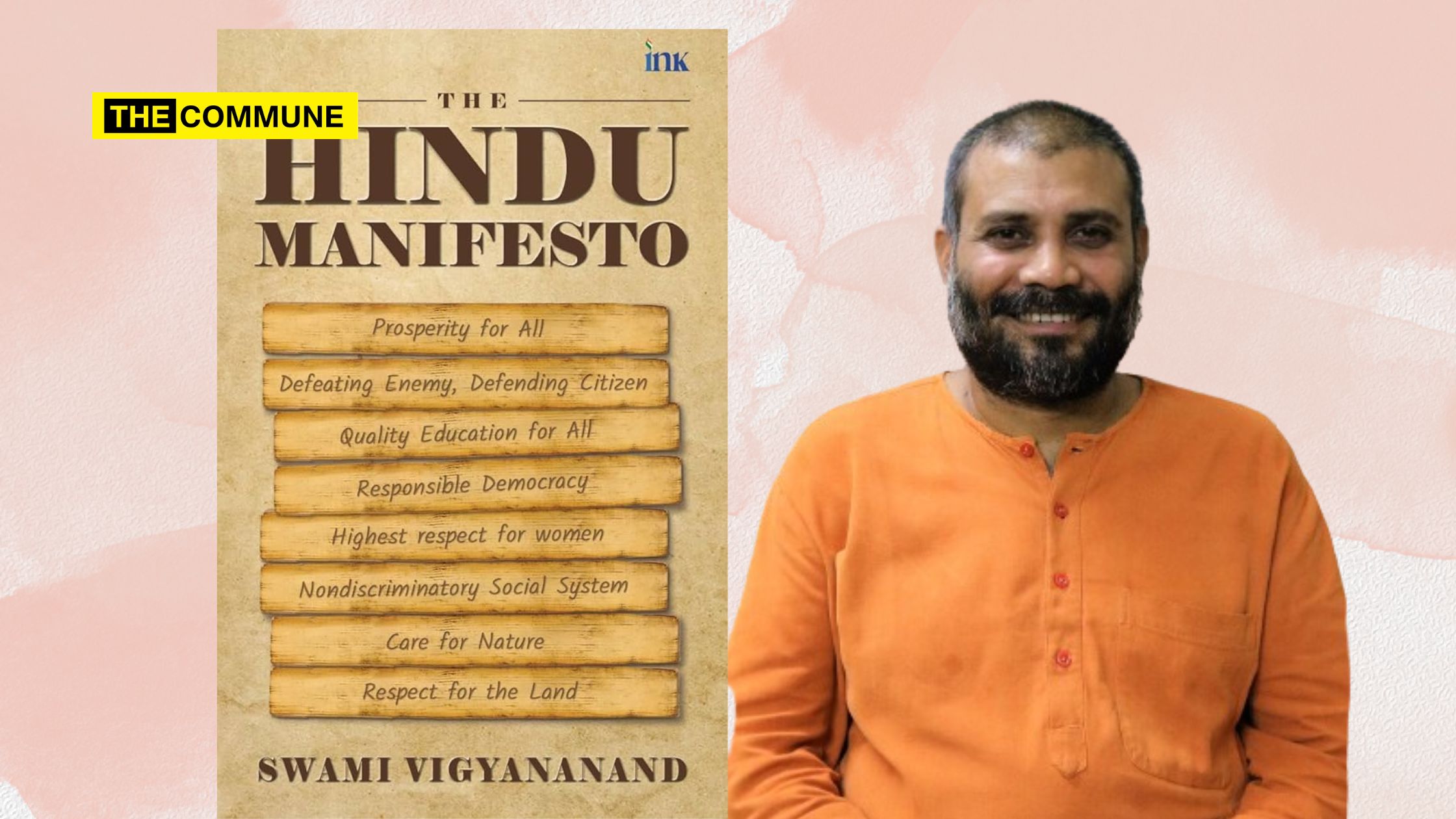
Released on 26 April 2025 by RSS Sarsanghachalak Mohan Bhagwat, The Hindu Manifesto by Swami Vigyananand is a groundbreaking work that bridges ancient Hindu wisdom with modern governance. This meticulously researched book presents a compelling vision for a just, prosperous, and harmonious society rooted in the timeless principles of Dharma. Drawing from scriptures such as the Vedas, Mahabharata, Ramayana, and Arthashastra, Swami Vigyananand presents a manifesto that serves both as a call to action and a roadmap for personal and societal transformation. The Hindu Manifesto stands as a bold, unapologetic vision for a Dharma-driven revival—deeply rooted in timeless Hindu wisdom while addressing the pressing challenges of contemporary governance.

Swami Vigyananand is a scholar-monk and founder of global Hindu advocacy platforms like the World Hindu Congress and the World Hindu Economic Forum.

The Eight Pillars of a Dharma-Rich Society

At the heart of the book are eight sutras (principles) divided into foundational and civilizational pillars:

Foundational Sutras: Building a Resilient Nation

  1. Prosperity for All: Advocates ethical wealth creation, moderate taxation policies, and state support for entrepreneurs and farmers.
  2. Defeating Enemy, Defending Citizens: A clarion call for ruthless defense strategy, learning from India’s historical failures against invaders.
  3. Quality Education for All: Stresses holistic, accessible education—critiquing modern “information overload” devoid of values.
  4. Responsible Democracy: Leaders must work to build a just and prosperous society. The author presents Ram Rajya as the ideal model of governance – which is based on dharma, justice and praja well-being.

Civilizational Sutras: Sustaining Cultural Values

  1. Highest Respect for Women: Women’s safety and participation in decision-making as a civilizational benchmark, recalls how women in Hindu society were honoured as Rishis, and how women must be strong and able warriors.
  2. Non-Discriminatory Social System: Analyses the fundamental concepts of varna, jati, jatiya, dispels caste myths, arguing Jati was originally about attributes, not birth.
  3. Care for Nature: Ecology as sacred duty—rivers, forests, and wildlife deserve reverence.
  4. Reverence for Motherland: Patriotism as Dharma, countering anti-national narratives.

The book fiercely rejects both exploitative capitalism and socialism, proposing instead a Dharma-driven economy that encourages wealth creation without greed. Citing scriptural limits on taxation, it urges the state to respect wealth creators—farmers, artisans, and entrepreneurs.

Swami Vigyananand calls for a ruthless, preemptive defence doctrine, drawing on historical lessons from Islamic invasions and modern threats like Pakistan.

In contrast to the data-centric modern education system, The Hindu Manifesto promotes value-based learning, referencing 32 types of Vidyas from ancient texts. The goal is not just information but inner transformation.

Swami Vigyananand, through his book, urges readers to:

  • Reclaim Political Agency: Move beyond a “servant mindset” (dasis) to shape governance.
  • Educate the Youth: Revive Dharma-centric learning to counter Marxist indoctrination.
  • Globalize Hindu Thought: Position Hindu civilizational knowledge as a universal alternative.

While India is the natural audience, the author insists that the Hindu model has universal applicability, and it is not necessary that a Hindu lives only in India. In a direct challenge to Marxist and Western democratic frameworks, Vigyananand argues that Hindu civilization has already offered time-tested alternatives far superior in ethics and outcomes.

From targeting 8–10% GDP growth and reversing India’s $80 billion brain drain to proposing defense strategies and judicial reforms, the book is rich with policy-level applications backed by scriptural and historical insights.

Why This Book Matters

In a landscape often dominated by Western ideologies or reactionary politics, The Hindu Manifesto is both scholarly and strategic. It doesn’t merely lament decay—it offers an actionable roadmap for those seeking civilizational resurgence. For Hindu activists, policymakers, cultural thinkers, and even critics of Western hegemony, this book is a must-read. Given the present situation India is – at war with a rogue nation, the book and the 8 Sutras it outlines are more relevant than ever.

A bold, intellectually rigorous work that fuses ancient wisdom with modern challenges.

Subscribe to our channels on Telegram, WhatsApp, and Instagram and get the best stories of the day delivered to you personally.
3 More Persons Held In Assam For ‘Pro-Pakistan’ Stand

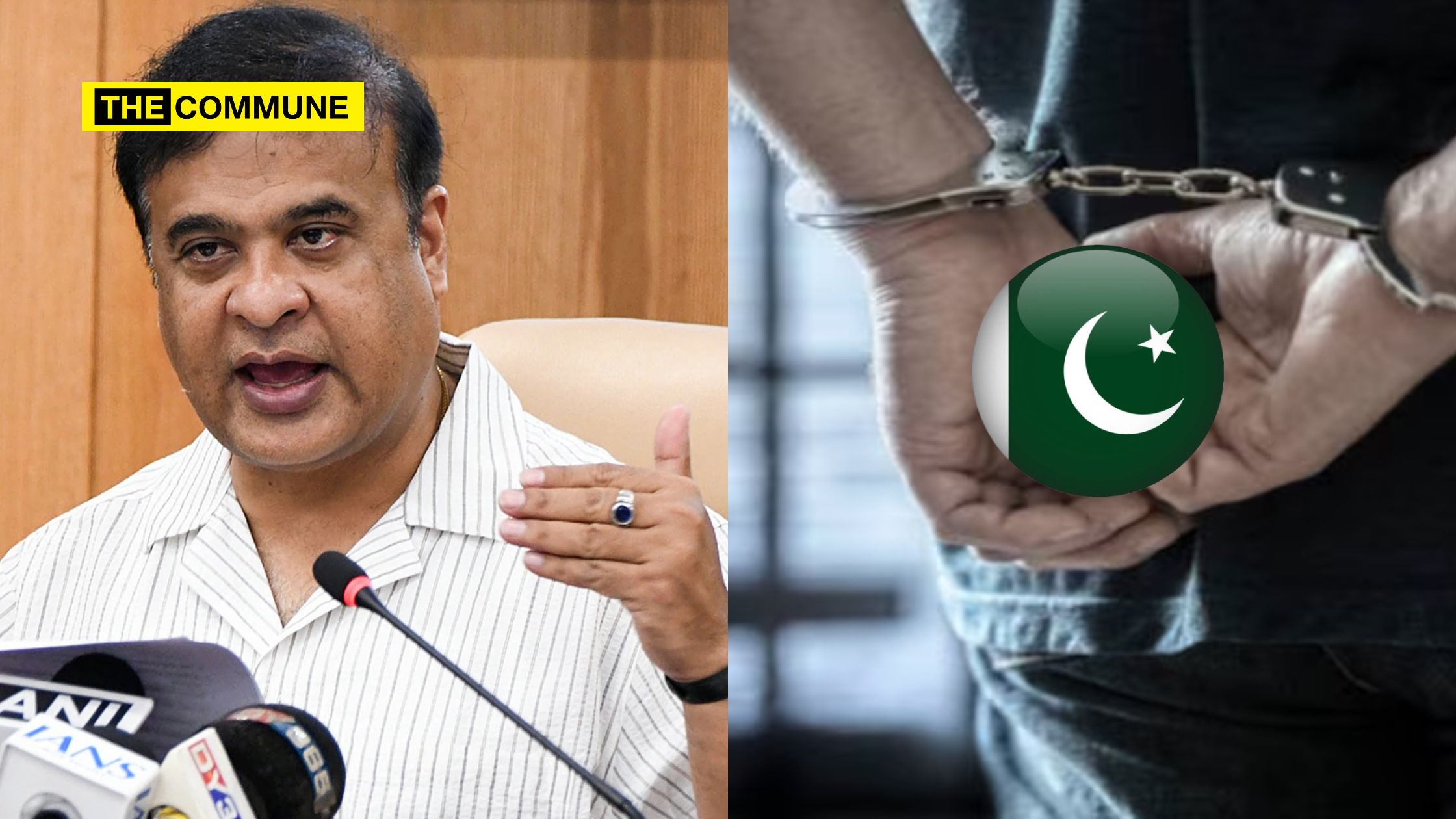
Assam Chief Minister Himanta Biswa Sarma has said that the state police have arrested three more persons over alleged charges of propagating ‘Pro-Pakistan’ statements on social media platforms.

The accused persons have been identified as Nasim Uddin Laskar, Arif Rehman and Abubin Miraz Uddin S.K. Laskar was arrested from Cachar district while Rehman and Uddin S.K. were taken into custody from the Dhubri district. With the latest arrest, the tally of people arrested for supporting Pakistan has increased to 48. CM Sarma said, “So far 48 Anti Nationals have been arrested for their treachery.”

Among the 48 arrested people, the most prominent is the All India United Democratic Front (AIUDF) MLA Aminul Islam. He was the first person to be arrested in the state for the pro-Pakistan stand.

Aminul Islam, an AIUDF MLA from Assam’s Dhing Assembly constituency, was arrested on May 1 on sedition charges following his provocative statement regarding the terror attack in Jammu and Kashmir’s Pahalgam that claimed more than 20 lives. In a video clip circulated on social media, the AIUDF leader is heard claiming that the Pahalgam and Pulwama attacks were part of a “government conspiracy”.

Aminul Islam has said: “Six years ago in Pulwama, when the RDX blast happened and 42 soldiers died, I said on that day that the Pulwama blast happened at the behest of a conspiracy of the Central government, and it was a conspiracy to win the 2019 Lok Sabha polls.” He added that what happened in Pahalgam is that the BJP has been peddling that the terrorists asked about religion and opened fire only on Hindus, and they let go of Muslims.

“But the victims said that the terrorists opened fire without asking about anybody’s name, and I doubt that the nexus which was involved in the Pulwama attack in which RDX was used,” he said. He added that the same nexus is behind the Pahalgam incident. “If the Prime Minister Narendra Modi-led government does not conduct a fair investigation into the incident and tries to bring a division between Hindus and Muslims, I would believe that this incident happened because of a conspiracy,” Aminul Islam said, while ‘blaming’ Prime Minister Narendra Modi and Union Home Minister Amit Shah.

However, AIUDF Chief Badruddin Ajmal distanced himself from his party legislator’s comments. Ajmal said, “AIUDF stands with the government. The terrorists have no religion, and those who spread terrorism are against Islam.”

–IANS

Subscribe to our channels on TelegramWhatsApp, and Instagram and get the best stories of the day delivered to you personally.

Three Injured In Pakistani Drone Attack In Punjab’s Ferozepur

Three people, including a woman, were injured on the outskirts of Punjab’s Ferozepur town following an attack by drones of Pakistan on Friday night. Senior Superintendent of Police Bhupinder Singh Sidhu told the media that three family members have received burn injuries.

He said that most of the drone attacks have been neutralised by the Indian Army. He clarified that this was the lone drone attack in the district. Police officials told the media that the blast took place owing to drone that was later intercepted and which got destroyed by the Army’s air defence system, but it landed at a house in Khai Pheme Ke village.

A car parked outside the house was on CNG that triggered the fire, an official said. The three injured were identified as Lakhwinder Singh, Monu Singh, both sons of Bagicha Singh; and Sukhwinder Kaur, wife of Lakhwinder Singh. They were hospitalised with Lakhwinder’s condition is critical. Unconfirmed reports said there were drone blasts in Jalandhar and Pathankot cities early Saturday morning. Media reports also said a Pakistani missile was intercepted and neutralised by Indian armed forces in Haryana’s Sirsa town.

The Punjab Cabinet, led by Chief Minister Bhagwant Mann, on Friday gave his approval to include war and terrorist-affected victims under the Farishtey scheme.

A spokesperson for the Chief Minister’s Office said that in order to provide immediate hassle-free medical treatment to victims of war and terrorist activities in government-empanelled private hospitals and to encourage the public to bring the victims to the nearest hospitals, coverage under the Farishtey Scheme of 2024 has been expanded.

This will provide coverage for victims of war and terrorist activities, ensuring comprehensive support and relief to affected individuals. This expansion reinforces the state government’s commitment to help those facing extraordinary hardships due to such events.

The primary objective of this decision is to lower the mortality and morbidity rates resulting from injuries sustained in war and terrorist activities. In view of the current tensions between India and Pakistan, the state government has issued directives, cancelling all leaves of Fire Brigade staff and ordering round-the-clock deployment at sensitive locations.

An official statement quoting Local Government Minister Ravjot Singh instructed officials to conduct mock drills, ensure all equipment is fully functional and maintain constant communication with the Army authorities for swift response in case of any emergency. Officials have been directed to remain on high alert with their mobile phones active at all times.

Punjab shares a long International Border with Pakistan and lies in the proximity of Afghanistan, which is a major heroin producer. Pakistan continues to make concerted efforts to destabilise India’s internal security by smuggling drugs and weapons from across the border. The fencing along the International Border has been breached with the use of Unmanned Aerial Vehicles and drones.

–IANS

Subscribe to our channels on TelegramWhatsApp, and Instagram and get the best stories of the day delivered to you personally.

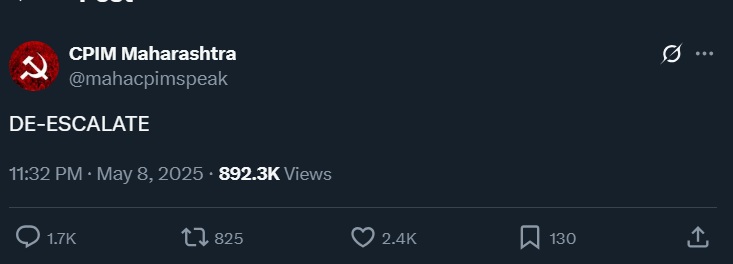
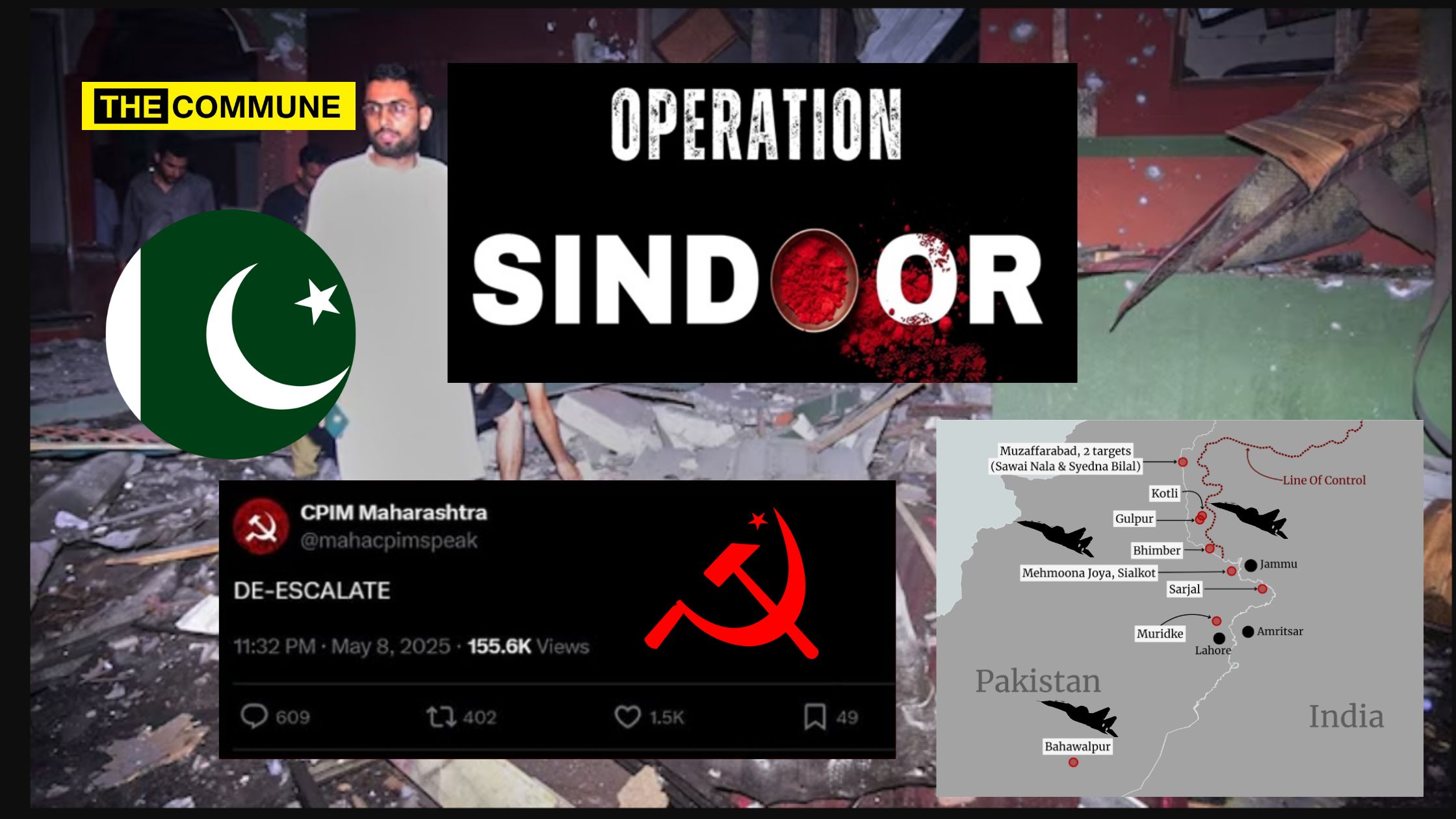
CPIM Calls For De-Escalation Amid Operation Sindoor, Faces Online Backlash

cpim de-escalation operation sindoor

The Maharashtra unit of the Communist Party of India (Marxist) stirred debate with a cryptic social media post reading “De-Escalate”, issued amid India’s ongoing military operations targeting terror infrastructure across Pakistan and Pakistan-occupied Kashmir following the Pahalgam terror attack.

While the CPI(M) expressed support for the government’s actions under Operation Sindoor, it also emphasized the need for continued diplomatic efforts to prevent further escalation.

In an official statement shared on 8 May 2025, the CPI(M) noted that Rajya Sabha MP John Brittas represented the party at the All-Party Meeting convened by the Centre in response to Operation Sindoor. The party voiced concern over Prime Minister Narendra Modi’s absence at the meeting—marking the second time he had skipped such a high-level gathering—and called for a special session of Parliament and a future meeting attended by the PM himself.

Brittas acknowledged the government’s claim that Operation Sindoor had achieved its intended objectives but cautioned that historical patterns suggested military actions alone may not fully dismantle terrorist networks. He urged the Centre to sustain diplomatic pressure, mobilize international support against terrorism, and ensure the safety of civilians in border areas, along with adequate assistance for those impacted by the current security situation.

He further emphasized the need for transparency from the government, especially in combating misinformation and communal rhetoric, reiterating that “terror has no religion“. He argued that a true fight against terrorism must also include a fight against the spread of hate and communal division. Commending the resilience of the people in Pahalgam and Kashmir, Brittas called on the government to organize an All-Party delegation to visit the region in solidarity with affected communities.

However, the CPI(M)’s messaging—particularly its diplomatic tone and moral appeals during an ongoing military operation—received criticism from several quarters online. Critics accused the party of offering advice on diplomatic engagement that had yielded little in the past, especially as terror attacks against Indian civilians continue to originate from across the border.

Subscribe to our channels on TelegramWhatsApp, and Instagram and get the best stories of the day delivered to you personally.

Intelligence Agencies Probe Pahalgam Terror Attack Mastermind’s Possible Kerala Links

pahalgam terror attack sheikh sajjad gul kerala mastermind

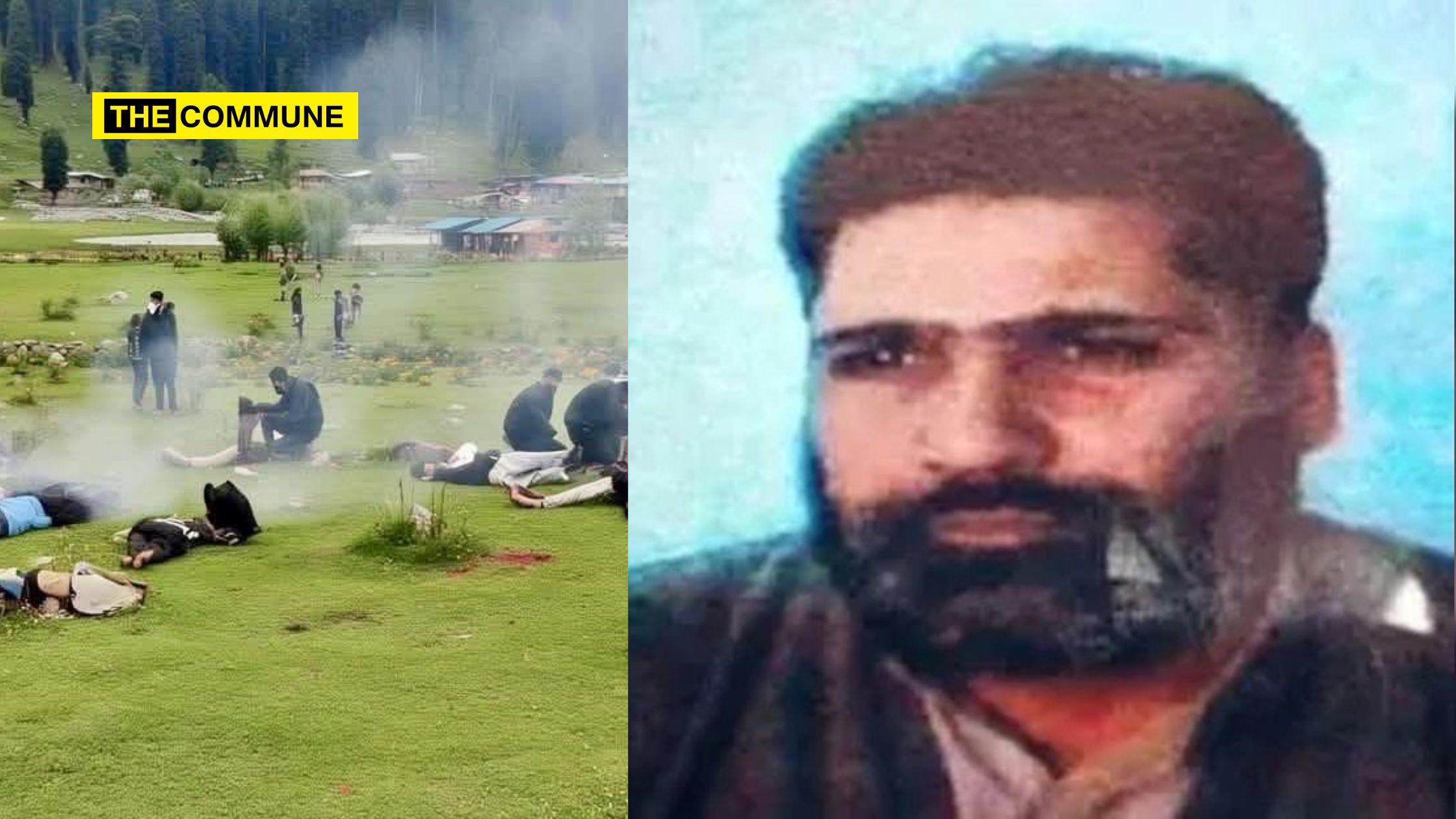
Central intelligence agencies and the Kerala police have launched investigations into the suspected presence of Sheikh Sajjad Gul, the alleged mastermind of the Pahalgam terror attack, in Kerala during the early 2000s. Gul, currently believed to be the chief of the Lashkar-e-Taiba proxy outfit The Resistance Front (TRF), is suspected to have pursued a lab technician course in the state between his reported MBA studies in Bengaluru and his 2002 arrest in Delhi for possession of explosives.

According to sources, this possibility has prompted intelligence officials to examine Gul’s activities in Kerala during that period. Investigators are also drawing parallels to past instances, including the 2008 visit to Kochi by 26/11 terror conspirator Tahawwur Hussain Rana.

Sheikh Sajjad Gul was previously arrested in 2002 for possessing 5 kg of RDX and plotting blasts in Delhi. He served a 10-year prison sentence for those charges. The National Investigation Agency (NIA) has confirmed his role in the Pahalgam attack, which was also claimed by The Resistance Front (TRF), a Lashkar-e-Taiba proxy he currently heads. While his involvement in other 2025 terror incidents in India has not been established, Gul is believed to operate from Pakistan, allegedly with the support of the Inter-Services Intelligence (ISI).

Kerala has previously been flagged for terror recruitment concerns, with several youths reported to have joined extremist groups. Many of them were believed to have been radicalized via social media platforms. In response, intelligence units had intensified online surveillance and initiated deradicalisation programmes in the state.

Meanwhile, a separate case is under investigation in Jammu and Kashmir, involving the mysterious death of a young man suspected to be from Kerala. The body of 27-year-old Muhammed Shanib, believed to be a resident of Mannarkkad in Palakkad district, was discovered in a forest area in Gulmarg. Police said the body appeared to be about ten days old.

Shanib had reportedly been out of contact with his family for over three weeks. While initial checks have revealed no suspicious background, authorities remain puzzled over how and why he travelled to Kashmir. Both the Jammu and Kashmir police and central agencies are probing his past and examining his mobile phone for clues.

Family members, including his father, have travelled to Kashmir to identify the body, as inquiries continue into any possible connections to radical networks or illegal activity.

(With inputs from Deccan Herald)

Subscribe to our channels on Telegram, WhatsApp, and Instagram and get the best stories of the day delivered to you personally.

“Constitution Is Supreme, Not Parliament”: Supreme Court Rebukes Overreach Claims

supreme court assets constitution

The Supreme Court of India has reaffirmed that the Constitution stands above all branches of government, including the legislature, executive, and judiciary, amid ongoing debates around institutional authority.

A bench led by Chief Justice of India Sanjiv Khanna, alongside Justice Sanjay Kumar, emphasized that judicial review is a constitutionally granted responsibility, not a self-assumed power. The judges stated that when courts assess the constitutional validity of laws, they do so within the boundaries established by the Constitution itself.

This clarification comes in the backdrop of recent remarks by Vice President Jagdeep Dhankhar, who criticized the judiciary for allegedly overstepping its mandate—particularly in instances where courts have set deadlines for executive actions such as presidential or gubernatorial assent to legislation. Dhankhar had previously asserted that Parliament holds supreme authority and that no other institution has a superior role envisioned in the constitutional framework.

Countering this, the Court stated, “All three pillars of democracy legislative, executive, and judiciary operate under the overarching authority of the Constitution. It is the Constitution that sets the limits and responsibilities of each organ. The power of judicial review is not self-conferred but granted explicitly by the Constitution through Articles 32 and 226.”

The Court further noted that the judiciary’s role includes ensuring that actions by other branches of government align with constitutional norms. It reaffirmed that judicial decisions are grounded in legal reasoning and not influenced by political, religious, or social biases.

When citizens seek judicial review, they are exercising their constitutional or legal rights,” the Court observed. “Our consideration of such matters is part of fulfilling the judiciary’s duty as a constitutional guardian.”

The comments were made during the hearing of a Public Interest Litigation (PIL) seeking contempt proceedings against BJP MP Nishikant Dubey, who made inflammatory remarks following the Supreme Court’s intervention in a challenge to the Waqf (Amendment) Act, 2025. Dubey had gone as far as to claim that CJI Khanna was “responsible for civil unrest” and accused the Court of inciting religious conflict in the country.

The bench criticized Dubey’s remarks, calling them “irresponsible and deliberately provocative“, indicating a fundamental misunderstanding of the role of constitutional courts. However, the Court chose not to initiate any punitive action, asserting that such “absurd” comments were unlikely to erode public trust in the judiciary.

(With Inputs From Live Law)

Subscribe to our channels on TelegramWhatsApp, and Instagram and get the best stories of the day delivered to you personally.

Justice Yashwant Varma Refuses To Resign After Cash Recovery Allegations; CJI Refers Case To President

justice yashwant varma resign supreme court

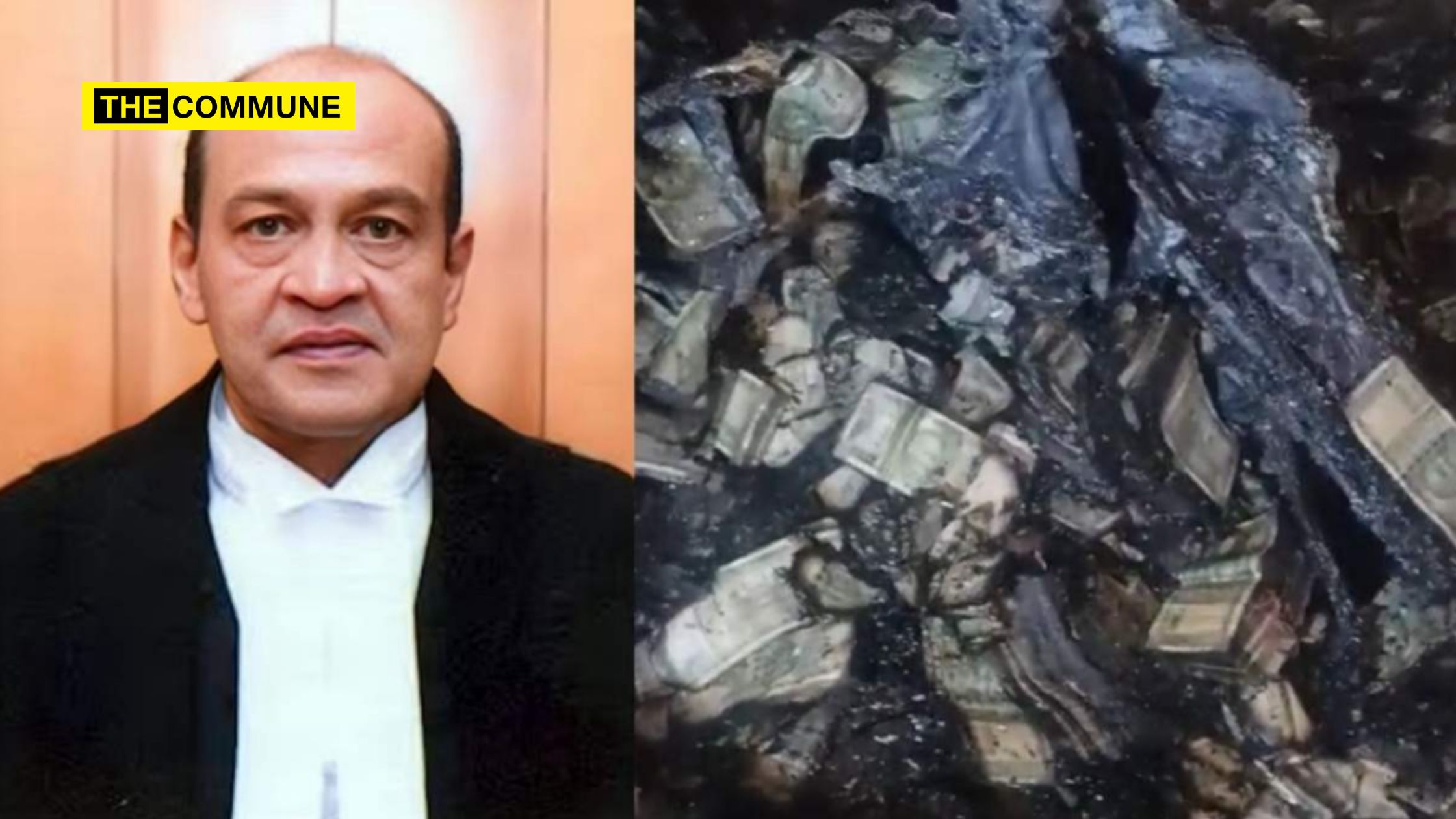
Following a probe by a three-judge committee that reportedly confirmed the presence of unaccounted cash at the residence of Justice Yashwant Varma, Chief Justice of India (CJI) Sanjiv Khanna is said to have requested the judge’s resignation. However, Justice Varma declined to step down.

Subsequently, the CJI forwarded the inquiry panel’s findings, along with Justice Varma’s response, to President Droupadi Murmu and Prime Minister Narendra Modi, recommending that the process for Justice Varma’s removal be initiated.

In an official statement issued Thursday, it was confirmed that the CJI, adhering to the ‘In-House Procedure’, sent the committee’s report dated 3 May 2025, and Justice Varma’s reply dated 6 May 2025, to the President and the Prime Minister.

The inquiry panel was established on 22 March and included Justice Sheel Nagu (Chief Justice of Punjab and Haryana High Court), Justice G S Sandhawalia (Chief Justice of Himachal Pradesh High Court), and Justice Anu Sivaraman (Karnataka High Court judge). The committee was tasked with examining allegations that surfaced following a fire incident at Justice Varma’s home, during which cash was allegedly discovered. Justice Varma was recently appointed to the Allahabad High Court, taking oath on 5 April.

Upon receiving the committee’s report, CJI Khanna is believed to have sent a letter to Justice Varma on 4 May, attaching the report and suggesting that resignation would be an appropriate course of action. Justice Varma, however, chose not to resign.

(With inputs from Indian Express)

Subscribe to our channels on TelegramWhatsApp, and Instagram and get the best stories of the day delivered to you personally.

Congress Scion Rahul Gandhi Said ‘India Can’t Make Drones’. Then Our Indigenous SkyStriker & Nagastra-1 Hit Pakistan

rahul gandhi congress nagastra 1 kamikaze skystriker harpy drone china pakistan operation sindoor

In a recent YouTube video titled “The Drone Age of War”, Rahul Gandhi offered a sweeping critique of India’s defence manufacturing capabilities, lamenting that the country “does not make any of the components” inside advanced drones and has failed to develop core competencies in electric motors, optics, and batteries. His underlying argument: India is missing out on a new industrial revolution powered by drone technology, artificial intelligence, and a robust production ecosystem.

Yet, less than a few months later, Operation Sindoor—India’s swift and precision-driven military retaliation to the Pahalgam terror attack—proved his claims not just outdated, but fundamentally inaccurate. In what can only be described as a landmark moment for India’s indigenous defence industry, homegrown drones, including the SkyStriker and Nagastra-1, played a starring role in neutralizing cross-border terror threats and defending Indian territory from missile strikes.

What Did Rahul Gandhi Say?

In the video, he said, “This is a DJI drone made in China and that’s a Lithium Polymer battery. these are four brushless DC motors and that’s the camera. so what I was saying was that when you connect these brushless Motors to this battery, give it a camera and allow people to communicate directly with this through FPV unit you change Warfare. This little thing is now making tanks, artillery pieces, large weapons in the Ukraine Battlefield, pretty much obsolete. I said that Industrial Systems fight Wars. This is actually a commercial product this is made by a Chinese Factory called DJI and this is actually a toy. What we are seeing here is innovative technology of the motor high quality Optics telecommunication equipment and essentially a bunch of cell phone batteries set together are allowing this thing to transform the battlefield. So, it is the Optics and communication system are allowing you to see the battlefield see the sea in a completely different way and then the electric motor is allowing you to Target very very accurately, put explosive power very accurately where you want and this is revolutionized how accurately you can Target kinetic energy.”

Continuing, he said, “We have to build such a system and we have to have competence in electric motors, we have to develop competence in Optics, we have to develop competence in batteries. this is what is going to be at the heart of the electric vehicle, this is what’s going to be at the heart of all robotics, this is what’s going to be at the heart of drones, this is what’s going to be at the heart of Submarine, this is going to be at the heart of toys, Warfare, everything and the sad fact is that we’re nowhere here. we don’t make any of the components inside this we don’t understand how it’s made, we certainly don’t make any of the Optics, we don’t understand how it’s made and that’s what my speech was getting at that, this is actually where we should be playing and the network that produces this is where the real value is and all AI is actually going to be operating on this network so for example when this thing is built AI is going to be used to order how it’s built when this thing is used AI will determine how it’s used.”

It is noteworthy that the drone that Rahul Gandhi is praising in the video is banned for use in India without special permissions. DJI drones, frequently used by Pakistan-based narco-terrorists and smugglers, are linked to cross-border drug trafficking. His public use of such a drone violates no-fly zone rules and undermines national security protocols.

How India Proved Him Wrong

What we saw in the aftermath of the Pakistani aggression at the border will put Rahul Gandhi to shame for his massively ignorant comment.

SkyStriker: The Bengaluru-Israeli ‘Suicide Drone’ That Hit Terror Targets

  • Developed by Bengaluru’s Alpha Design Technologies in partnership with Israel’s Elbit Systems.
  • Used in Operation Sindoor to destroy terror launchpads in PoK.
  • Capabilities:
    • 10 kg warhead, precision GPS-guided strikes.
    • Silent & stealthy—undetectable by radar.
    • Can loiter for hours before striking with surgical accuracy.

Nagastra-1: India’s First Indigenous ‘Suicide Drone’ (Kamikaze)

  • Made by Nagpur-based Solar Industries India.
  • Key Features:
    • 1 kg high-explosive warhead, GPS-guided (within 2m accuracy).
    • 30 km range, reusable if mission aborted (parachute recovery).
    • 75% indigenous components, 40% cheaper than foreign equivalents.
  • Proved critical in neutralizing high-value terror targets.

HARPY Drones: Disabling Pakistan’s Air Defence

  • Used to blind Pakistani radars, including one in Lahore, post-S-400 interception.
  • Autonomous SEAD (Suppression of Enemy Air Defences) capability—hunts and destroys radar emissions.

The Markets React: Defence Stocks Soar

India’s performance in Operation Sindoor had an immediate economic impact. Solar Industries, the manufacturer behind Nagastra-1, saw its stock surge 2.3% in a single day post-operation, with a staggering 1,450% gain over the past five years. Its market capitalization now stands at over ₹1.2 lakh crore.

Alpha Design Technologies, in which Adani Defence holds a 26% stake, also gained attention, with analysts highlighting how these drones are transitioning from showcases at expos to frontline operational assets.

The successful use of these platforms sends a powerful message to global investors: India is no longer merely assembling parts—it is innovating at scale.

Where Rahul Gandhi Got It Wrong

While Rahul Gandhi correctly emphasized the significance of motors, batteries, optics, and AI in future warfare, his assertion that India “does not make any components inside drones” is no longer valid.

  • Motors and Power Systems: Indigenous drone platforms like Nagastra-1 and SkyStriker incorporate advanced electric drives designed for stealth and efficiency.
  • Optics and Targeting: These drones include homegrown targeting systems integrated with GPS, AI algorithms, and thermal imaging for night-time operations.
  • Software and AI Integration: Contrary to the claim that India is absent from the AI race, the software controlling these loitering drones uses real-time data analytics, route optimization, and autonomous targeting protocols—areas where India is gaining competence rapidly.

Furthermore, Gandhi downplayed the role of Indian private-sector giants like Adani Defence, labelling them mere assemblers. But Operation Sindoor’s battlefield success proves that these firms are now core contributors to India’s military-industrial complex. Assembly lines are giving way to innovation pipelines, bolstered by Make in India, Startup India, and Defence Acquisition Procedure (DAP) 2020 reforms.

A Technological Inflection Point for India

What Rahul Gandhi calls a “toy” from DJI is not irrelevant—it illustrates the rise of bottom-up innovation. But his mistake is assuming that India is absent from this phenomenon. In reality, Indian drones like Nagastra-1 are not only functional but strategically tailored for the subcontinent’s terrain and conflict realities. Indian defence tech now spans land, air, sea, and cyber realms—S-400, SkyStriker, HARPY, and Nagastra-1 collectively form a multi-domain deterrent grid. As the battlefield becomes more transparent and drone-saturated, India’s focus on indigenous capabilities will define future deterrence and tactical superiority.

A New Chapter in Indian Defence

India’s powerful response in Operation Sindoor marks a tectonic shift in how war is waged—and how indigenous innovation is mobilized for national security – be it the Akashteer Defence System or the homegrown drones. Far from the hollow vision of helplessness Rahul Gandhi painted, the reality is that India is rapidly becoming self-reliant, resilient, and forward-looking in the defence sector.

Rahul Gandhi’s critique is a wake-up call, but the battlefield has already responded. India is not just flying drones—it’s soaring into the future of warfare on its own wings.

Subscribe to our channels on Telegram, WhatsApp, and Instagram and get the best stories of the day delivered to you personally.
Viral Video Shows Foreign Nationals At DMK Anniversary Event, Sparks Visa Violation Concerns

foreign national visa violation

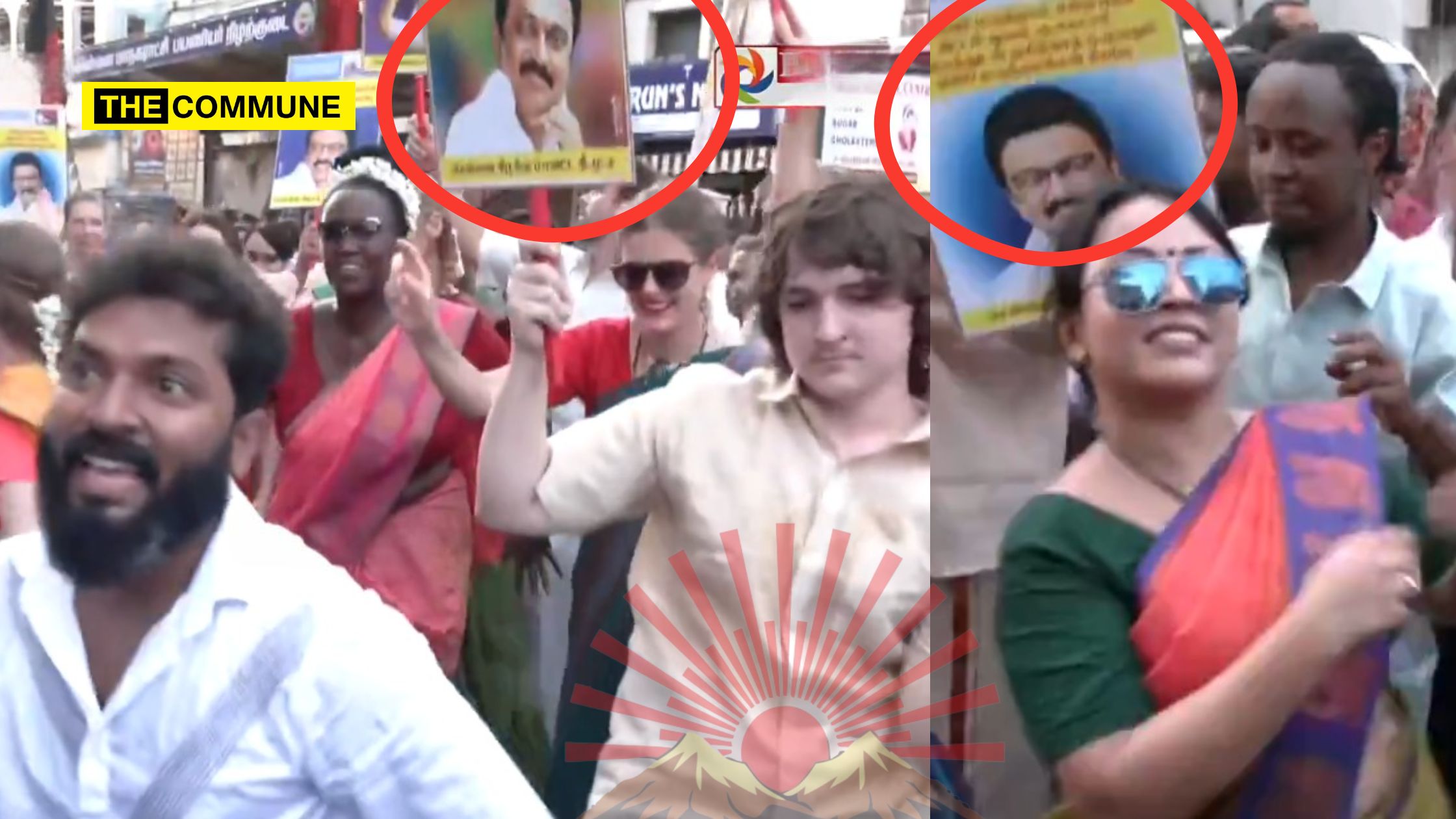
The DMK is facing questions after viral video surfaced that foreign nationals on Tourist Visas participated in a political event held in Chennai to celebrate the fifth anniversary of the party’s rule in Tamil Nadu. Videos from the event showed some foreigners dancing and holding placards featuring Chief Minister M.K. Stalin, which has led to concerns about possible violations of Indian visa norms.

According to the Ministry of Home Affairs (MHA), Tourist Visas are granted strictly for recreation, sightseeing, and casual visits. Tourists are not permitted to participate in political activities, including rallies, protests, or campaign-related events. Such actions are considered violations of visa conditions and may result in deportation, blacklisting, or legal proceedings.

The government has reiterated these rules on several occasions. Notably, in 2013, the MHA issued guidance discouraging foreigners on Tourist Visas from engaging in journalistic or politically sensitive activities. In 2020, similar concerns were raised when tourist visas were misused for religious gatherings, prompting stricter enforcement.

While the intent behind the participation of the foreign visitors in the DMK event remains unclear, the incident has sparked calls for a review to ensure that visa guidelines are respected and that political events do not inadvertently involve foreign nationals in ways that could lead to diplomatic or legal complications.

Subscribe to our channels on TelegramWhatsApp, and Instagram and get the best stories of the day delivered to you personally.