Home Blog Page 530

Tamil Nadu: 29 Illegal Bangladeshi Nationals Arrested From Dindigul Textile Mill, Had Used Fake Aadhaar Cards

illegal bangladeshi nationals arrested dindigul textile mill tamil nadu

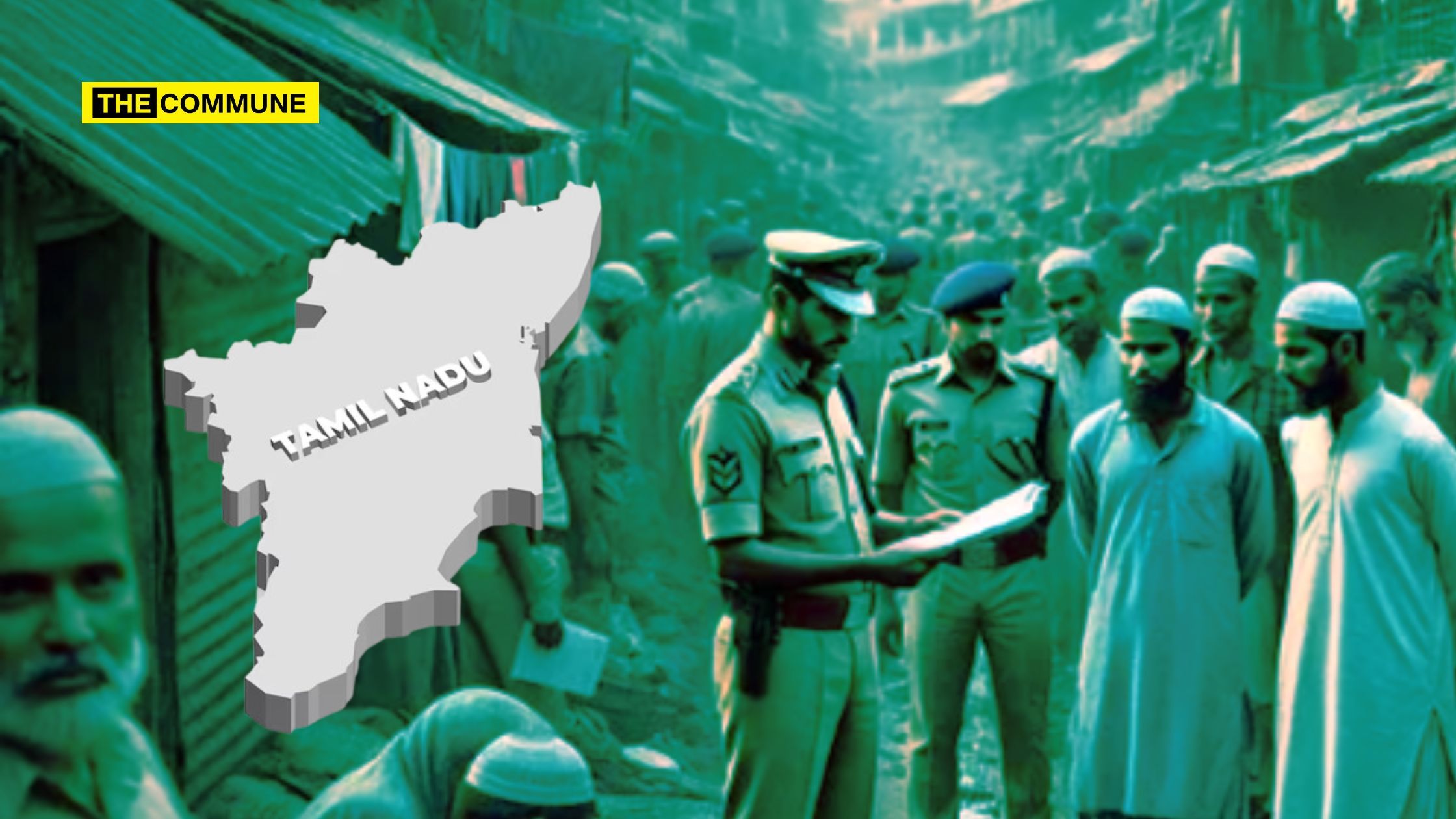
In a major crackdown on illegal employment and identity fraud, 29 Bangladeshi nationals were arrested on 24 May 2025 from a private textile mill located in Vagarai village, near Oddanchatram in Dindigul district. The arrests followed a tip-off that non-Indian citizens were working in the facility using forged identification documents.

A team led by Oddanchatram DSP Karthikeyan and Inspector Thangaraj conducted a surprise inspection at the mill, which manufactures inner garments primarily for export. The unit, operating under contract-based employment, had hired workers from various Indian states including Bihar, Odisha, Assam, Chhattisgarh, and West Bengal.

During the inspection, it was discovered that 29 individuals were illegally residing and working at the mill while possessing fake Aadhaar cards to impersonate Indian citizens. The men were detained, medically examined, and had their biometric data collected before being produced before the Oddanchatram Magistrate Court, which remanded them to judicial custody.

Police sources revealed that this is the first recorded instance of foreign nationals being employed in such a manner in the area, where most mills typically hire Indian workers from other states. The Bangladeshi workers were reportedly housed in dormitory-style accommodations within the mill premises.

A case has been registered by the Kallimandayam police under relevant charges including possession of fake identification. Senior officials from the district administration have initiated steps to ensure that all mills and commercial establishments provide full disclosure of non-local workers on their rolls.

Investigations are ongoing to trace the agents responsible for facilitating the illegal employment and document forgery.

(With inputs from The Hindu)

Subscribe to our channels on Telegram, WhatsApp, and Instagram and get the best stories of the day delivered to you personally.

Kanchi Kamakoti Peetam Launches Exclusive Women’s Law School At Sri Chandrasekharendra Saraswathi Viswa Mahavidyalaya In Kanchipuram

kanchi kamakoti peetam chandrasekharendra vishwa maha vidyalaya university school of law for women kanchipuram

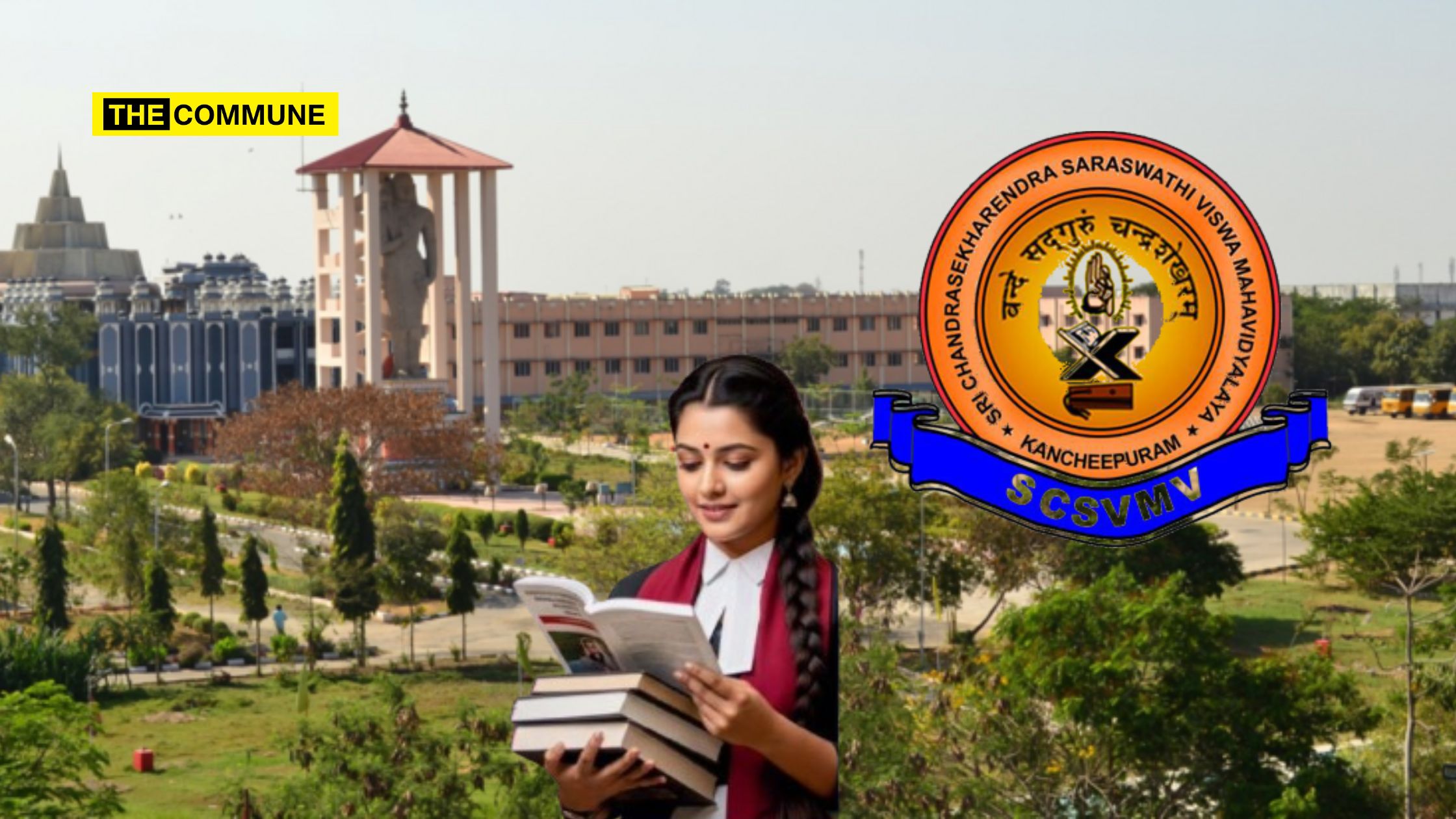
Sri Chandrasekharendra Saraswathi Viswa Mahavidyalaya (SCSVMV), a deemed-to-be university sponsored by the Sri Kanchi Kamakoti Peetam Charitable Trust, has announced admissions for its newly launched Anvikshiki School of Law for Women. This pioneering initiative aims to empower women through legal education and build the next generation of women leaders in law.

Located in the historic temple town of Kanchipuram, the institution offers three key programmes:

  • B.A. LL.B. (Hons.)
  • B.B.A. LL.B. (Hons.)
  • LL.B. (Hons.)

The law school is exclusively for women and seeks to foster a supportive and focused academic environment. Preference in admissions will be given to candidates with valid CLAT scores. The university promises an education led by expert faculty and seasoned legal professionals, with practical exposure through moot courts and legal aid clinics.

The Anvikshiki School of Law also boasts a dedicated law library and offers merit scholarships to eligible students. Hostel facilities are available for outstation candidates. Admissions are currently open, and applicants can apply online through the university’s official website: www.kanchiuniv.ac.in.

This initiative marks a significant step toward empowering women through legal literacy and justice-oriented careers and aims to create a nurturing space where women are trained not just in legal theory, but also in the practice and ethics of law.

This women-centric law school is part of the broader educational and spiritual vision of the Kanchi Kamakoti Mutt, which has consistently supported initiatives for women’s upliftment and value-based learning.

Subscribe to our channels on Telegram, WhatsApp, and Instagram and get the best stories of the day delivered to you personally.
Demography Is Destiny: In Kanyakumari, The Church Decides How Hindus Should Conduct Their Temple Rituals

mandaikadu bhagavathi amman temple

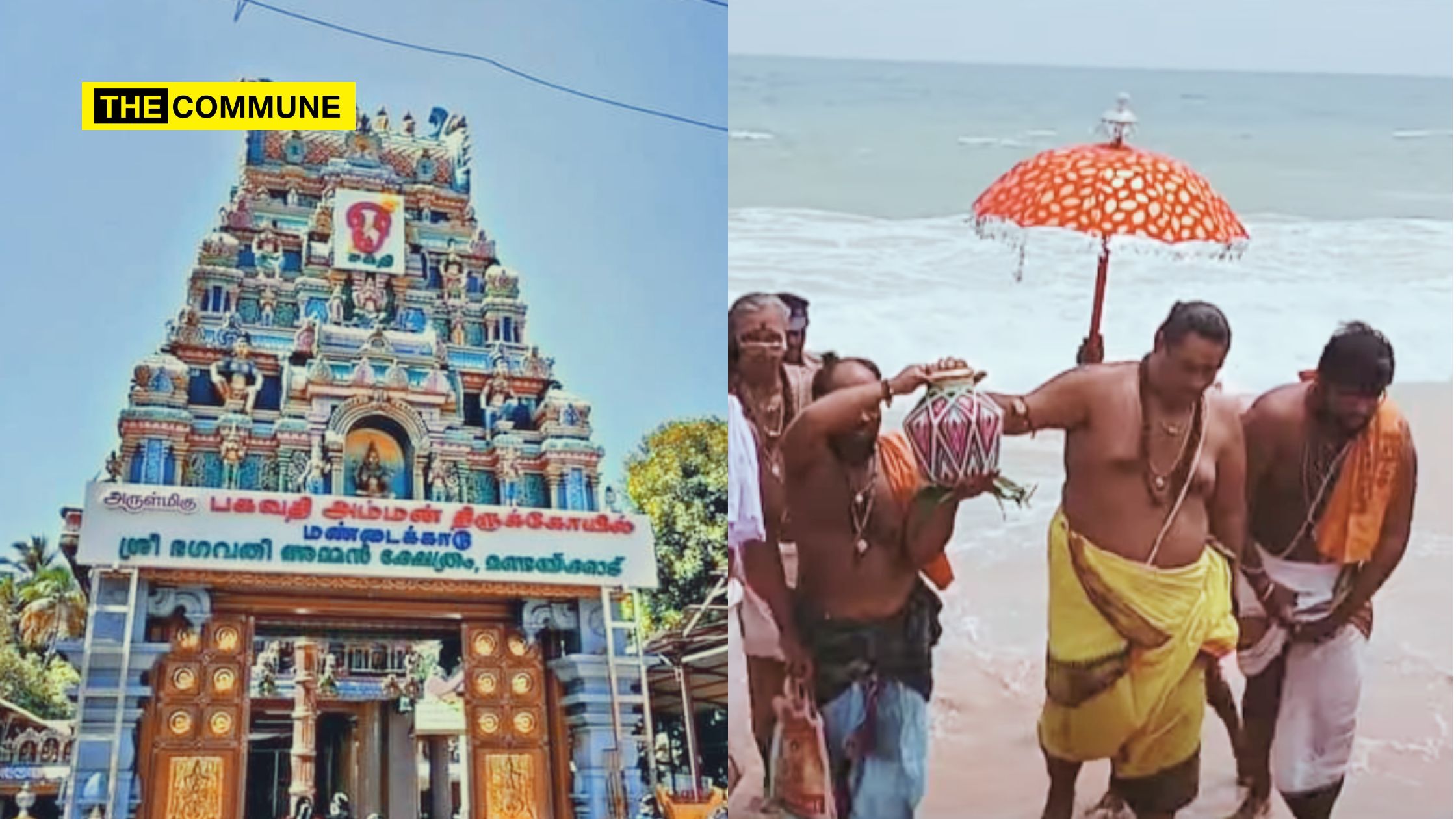
The recent incident at the historic Mandaikadu Bhagavathi Amman Temple in Tamil Nadu where members of the Church obstructed Hindu priests from performing the sacred ritual of collecting sea water reveals deeper currents of religious intolerance and underscores the ongoing marginalization of Hindu practices, often masked as efforts to uphold communal harmony.

Two weeks ago, the temple hosted its sacred kumbhabhishekam ceremony, a ritual symbolizing the spiritual renewal of the shrine following a destructive fire in 2021. Central to this rite was the age-old tradition of the head priest riding an elephant to the sea, carrying the kalasam (sacred pot) filled with consecrated water. This symbolic journey, performed for generations, unexpectedly encountered resistance.

As the procession moved toward the sea, it passed a now-prominent shrine dedicated to ‘Mary‘, which originally began as a modest crucifix tower. There, individuals reportedly forced the priest to dismount the elephant, compelling him to complete the sacred journey on foot. This deviation from ritual protocol sparked concern among devotees, especially given the temple’s status as the “Sabarimala for women,” where thousands of female pilgrims from Tamil Nadu and Kerala come for spiritual cleansing and worship.

This interruption is seen by many as more than a logistical hurdle. The portrayal of Mary as a “sister” to the Goddess, while seemingly inclusive, is viewed by some scholars and observers as an attempt to subtly subordinate or reframe Hindu theology through appropriation. Over time, the Mary shrine has grown in size and influence, fostering a sense of competition with the older Bhagavathi temple.

Despite the Church’s promotion of interfaith dialogue and mutual respect, critics argue that on the ground, tensions remain unresolved. The Dravidianist media coverage of the incident varied—many ignored the core issue entirely, while some praised the priest’s composure and interpreted the act as a gesture of peace, rather than a breach of religious tradition.

This moment of disempowerment, where a priest had to relinquish a symbolic element of his ritual journey, resonated with historical memory particularly the violence of 1982.

The 1982 Mandaikadu Riots

In the early 1980s, the Mary shrine was in its infancy. However, tensions flared when Hindu women performing ritual sea baths were reportedly harassed by Catholic extremists. Eyewitness accounts described disturbing scenes of humiliation and fear, leading to police intervention and fatalities. The unrest quickly spread, resulting in attacks on Hindu villages and a wave of retaliatory violence.

Amidst the chaos, posters criticizing India and then-Chief Minister M.G. Ramachandran appeared, raising suspicions of politically motivated incitement. In response, the Tamil Nadu government established an inquiry under retired Justice Venugopal, known for his affiliation with the Dravidian movement. While initially skeptical of Hindu nationalist groups, his final report acknowledged the aggressive conduct of Christian fundamentalists as the root cause of the violence.

Justice Venugopal’s later writings reflected a significant shift in his perspective. He supported anti-conversion legislation and highlighted the need to protect vulnerable communities from coercive religious tactics.

One of the most harrowing parts of the Commission’s report involved testimonies from Hindu women victims. A 19-year-old woman described being assaulted and stripped of her clothing while trying to bathe as part of temple rituals. Despite facing hostile cross-examinations, the consistency of her account and others moved the judge to affirm their credibility. The report concluded that women devotees were indeed harassed and molested during the 1982 disturbances.

Evolving Dynamics and Persistent Challenges

Though large-scale violence has not recurred in recent years, undercurrents of tension remain. The early post-riot years witnessed a consolidation of Hindu identity and political organization, but momentum has waned. In contrast, the Catholic Church has adopted a more strategic, institution-based approach, expanding its influence via social services, educational institutions, and community engagement.

Critics argue that the narrative of shared divinity—referring to Mary as a sibling to the Goddess—serves a dual function: placating resistance while subtly diminishing Hindu spiritual frameworks. Marxist and leftist scholars, often aligned with this view, have reinterpreted Hindu deities through an anthropological lens, detaching them from their metaphysical roots and portraying them as mere cultural relics.

The spread of this interpretation has been bolstered by literature, notably the novel Marupakkam by Ponnelan, which presents a sympathetic portrayal of Christians and casts Hindus in a negative light. Due to a lack of a strong Hindu literary counter-narrative, such works have come to define public memory about events like the 1982 riots.

Institutionally, the Church has made inroads into Hindu-majority rural economies—exemplified by control over local dairy cooperatives—and transformed religious centers into platforms for socio-political outreach. These shifts have coincided with a decline in cohesive Hindu mobilization, making the community more susceptible to symbolic losses.

Recent Developments and Ongoing Tensions

The Venugopal Commission once recommended restrictions on religious structures in sensitive zones. However, the post-2004 political climate saw a resurgence in Church-led expansion. One flashpoint involved the blocking of access to a hillock traditionally used by Hindus for the Karthikai Deepam festival, now part of Church-owned land. Despite intervention by political figures like Pon. Radhakrishnan, efforts to reclaim access failed.

Other incidents—such as the removal of a Hanuman idol installed with official approval—suggest that Church influence often overrides local administrative decisions. The latest provocation, involving the forced dismounting of the priest, has been viewed by many as a culmination of this trend.

Observers note that while Hindu groups issued statements, their response lacked the organizational strength and strategic clarity shown by the Church and its affiliates. The disruption of the elephant procession thus stands not merely as a logistical problem, but as a symbolic erasure of sacred tradition.

In summary, the Mandaikadu episode underscores the need for sustained community engagement, cultural preservation, and balanced interfaith dialogue. Without a cohesive strategy and a deeper understanding of institutional dynamics, moments like this risk becoming markers in a larger narrative of displacement.

(With inputs from Swarajyamag)

Subscribe to our channels on Telegram, WhatsApp, and Instagram and get the best stories of the day delivered to you personally.
Mamata Banerjee Makes Personal Disgusting Remarks Involving PM Modi’s Wife, TMC MP Derek O’Brien Celebrates It, Congress Simp Sumanth Raman Shares It Gleefully

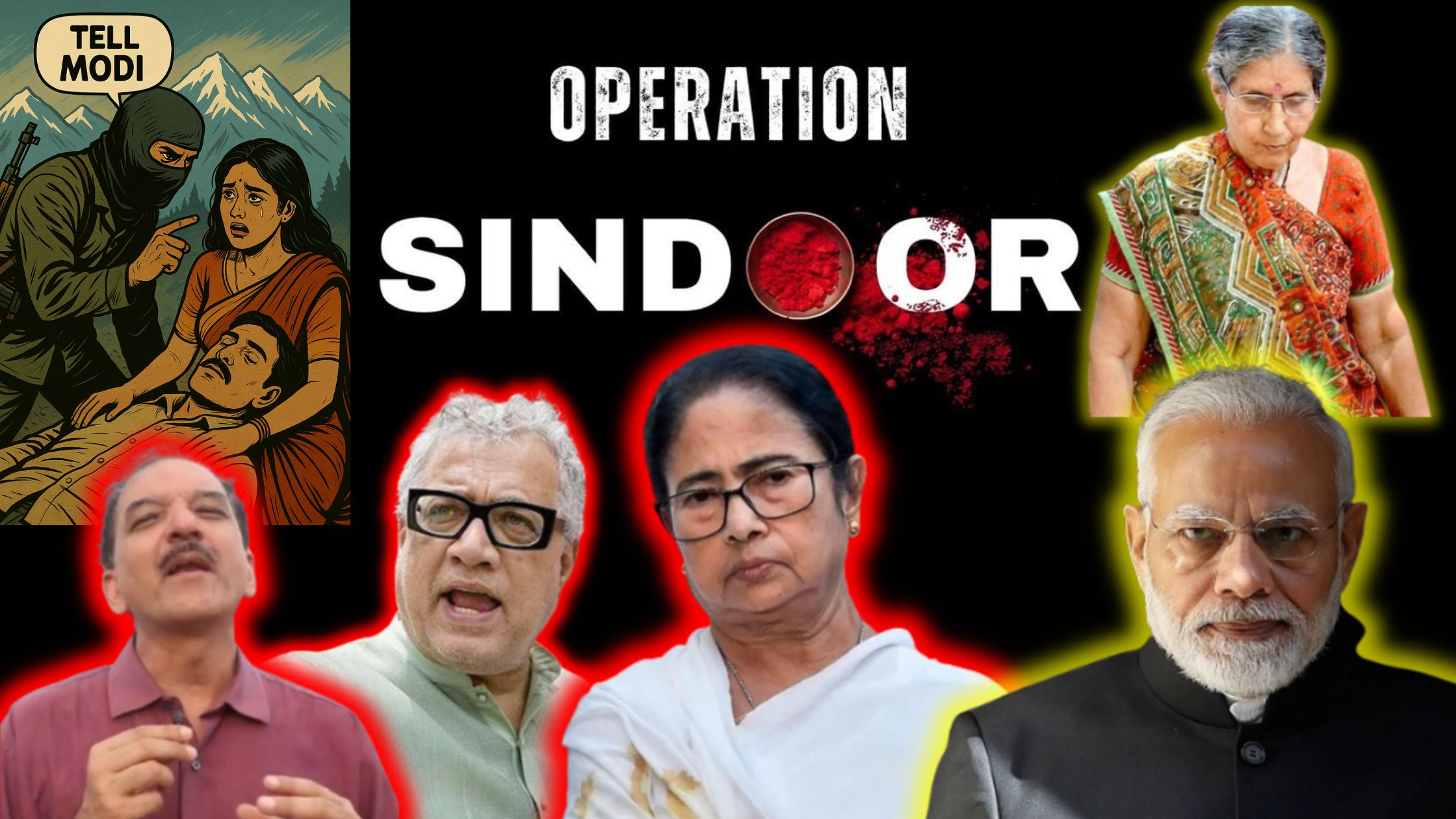
West Bengal Chief Minister Mamata Banerjee on 28 May 2025 launched a scathing attack on Prime Minister Narendra Modi less than an hour after his rally in Alipurduar, accusing the BJP-led central government of exploiting Operation Sindoor for political mileage and insulting the people of Bengal.

Banerjee alleged that the Centre had gone “silent in front of America” and mocked the BJP’s narrative surrounding the recent anti-terror operation in Jammu and Kashmir, suggesting it was being used to drum up support ahead of the elections.

Speaking on Operation Sindoor and taking a dig at PM Modi’s personal life, she said, “But please remember, every woman has respect, they take ‘Sindoor’ from their husbands. But PM Modi is saying just like, you are not the husband of everybody. Why are you not giving ‘Sindoor’ to your Mrs. first? Sorry to say, I should not go into all these matters, but you compel us. You compel us in the name of ‘Operation Sindoor’ – the ‘Bengal Operation’. That’s why you compel us to open our mouth.”

She continued her attack on PM Modi. “Pahalgam and Operation Sindoor have become election issues, discussed in rallies in the PM’s presence. Other netas are calling this election rally ‘Operation Bengal’ in the PM’s presence,” she said, referring to remarks by junior Union minister Sukanta Majumdar who, during the rally, had stated “Operation Bengal after Operation Sindoor.”

“What Modi said today left us shocked and saddened. Is it appropriate for him and his ministers to talk about Operation Bengal… (in the same breath as) Operation Sindoor when the opposition is representing the country globally to protect national interests? This implies equating Bengal with terrorism. He is insulting Bengal and its dignity. Hold elections tomorrow if you have the courage,” she challenged.

Banerjee further questioned the lack of arrests in the aftermath of Operation Sindoor, saying, “Why have the terrorists responsible for wiping the sindoor (away from our women) not been arrested yet? Big talk…. Your words fail you and you fall silent in front of America. They are playing politics with a serious issue, which is unacceptable,” she said, adding a sharp jibe: “First he was a tea seller, then a chowkidar. Now he is selling sindoor everywhere, even in election campaigns.”

Responding to Modi’s previous accusations about her government’s “cruelty”, Banerjee turned the tables, alleging the BJP was the “mastermind behind riots”. “Bengal is not cruel, it has a humane administration. What has Modi’s sarkar done for the country? Blue films are screened on the streets of UP. The party’s MPs disrespect women, the PM should sack them first. He speaks of corruption, but corruption is highest in BJP-governed states,” she said.

Highlighting a list of alleged failures and controversies involving BJP-ruled states, Banerjee added: “We act if there is a complaint against our administration. What excuse does Modi have when terrorists are caught in Gujarat? You created trouble in Murshidabad and Malda. How many people were killed in Delhi? Why did the Assam CM say they would give rifles to citizens?”

She also invoked the Madhya Pradesh Vyapam scam in response to PM Modi’s criticism of Bengal’s recruitment irregularities. “Who filed the court case? The CPM and the BJP (did). What happened in Vyapam in MP? How many people died? Some 10,000 teachers lost their jobs in Tripura, 69,000 teachers lost jobs in UP. But we are humane in Bengal; we will find a way. We will respect the court and do something for the teachers, too.”

On welfare issues, Banerjee defended her government’s initiatives while accusing the Centre of withholding funds. “You talk of roads and homes but have you given the money? We are building roads and houses on our own with state funds. Why has the money for building houses been stopped? May you live for 175 years… ayushman. But we have the Swasthya Sathi, which is a better scheme. We provide it to everyone, unlike you,” she said, reiterating that the Centre was “bulldozing the federal structure”.

The Chief Minister received backing from TMC MP Derek O’Brien, who posted a video of her press conference on X with the caption: “It took a woman to show Modi the mirror.”

Meanwhile, political commentator Sumanth Raman appeared to gleefully join the fray, sharing the press conference and mocking the Prime Minister’s position in what has become an intensifying verbal face-off between the two leaders. He reposted the video with the caption, “Ouch!!!!!”

Sumanth Raman’s Rants On Operation Sindoor

He ranted about how the Pahalgam terrorists were still at large and the Modi government, the diplomats, had done nothing. He wrote“The terrorists who carried out the Pahalgam massacre are still at large. Despite being hit, Pakistan was still able to mount some retaliation. Pakistan was not isolated diplomatically. They still got the IMF aid package. I’m trying to think of what we got out of all this, that we have paid for with more lives than the 26 we lost at Pahalgam and billions of dollars worth of defence equipment spent, and the damage to some of our towns. Next time there is a terror attack, how will it be any different, even if we retaliate against Pakistan directly? I support the ceasefire, but I’m confused about what the strategic objective of the larger military action beyond the strike on the terrorist hideouts was and what has been achieved. My impression is that our armed forces performed well, but our diplomats and political leadership could have done much better. And the ceasefire was agreed to without any conditions imposed on Pakistan. The only positive I see is that Pakistan knows that the next time it stages a terror attack in India, there will be direct retaliation on Pakistani territory. For a rogue State like Pakistan is that enough of a deterrent? #IndiaPakistanConflict #Ceasefire”

He ensured he peddled Pakistani propaganda and undermined military actions.

With the stellar military briefing on 11 May 2025, he compared it to the previous ones by Col Sophia Qureshi and Wing Commander Vyomika Singh. He wrote, “Getting Col.Sofia Qureshi and Wg.Cmdr. Vyomika Singh to give the press briefing was a good idea on the day after the strike on the terrorist bases. It was symbolic and sent out a signal. But from then on the subsequent briefings should have been handled by Senior Officers. It was clear that the two of them were only reading prepared text, didn’t explain the visuals properly and did not take questions. MOD should have insisted that their point of view must be put across by senior officers of their choice. Our communication of the Military operation could have been better. #IndiaPakistanCeasefire”

Raman forgot that the previous ones were press briefings while the latest one was a military briefing. He also wrote, “After seeing today’s press briefing it begs the question, why weren’t these officers used earlier to brief the media? The craze for publicity and PR did the Govt in. #IndiaPakistanConflict”

Now that he could not blame the military action, he started complaining about the “de-escalation” in India’s stand after praising the stoppage of fire as “sensible”. He wrote, “From “we will decimate Pakistan” to “we will not share hydrological data with Pakistan” is some come down in 4 days. Godi media’s desperate spin. #IndiaPakistanConflict”

His rants didn’t end there; being a Congress simp, he had to praise the “previous” governments. He wrote, “The difference between previous Governments and the Modi Govt is that, in previous Governments there would be at least an indirect acknowledgement that some things have gone wrong. Ministers would be sacked or portfolios changed, senior bureaucrats would be held at least notionally accountable. A lot of this was due to pressure from the media. Now since the narrative is that nothing can go wrong or has gone wrong, there is no significant course correction. Even when rollbacks happen it is more for political reasons and deemed as a masterstroke. No one is accountable since nothing has gone wrong in the first place. Since electoral success is their only measure of performance and there is no shortage of this, there is no real need or incentive to improve Governance.”

Sumanth Raman stays true to his character yet again even during a time of conflict by ensuring he criticises the government and mocks PM Modi on the personal front without fail.

Subscribe to our channels on Telegram, WhatsApp, and Instagram and get the best stories of the day delivered to you personally.
From Guns To Jobs: How Surrendered Naxals Are Being Rehabilitated Across India

surrendered naxals naxalites chhattisgarh employment india amit shah

The Government of India, through the Ministry of Home Affairs, has implemented a range of policies to rehabilitate surrendered Naxals, offering monthly stipends, fixed deposits, and financial incentives for surrendering weapons. These measures, particularly active in states like Chhattisgarh, Maharashtra, and Andhra Pradesh, have led to significant numbers of surrenders and successful reintegration into mainstream society.

This report highlights ten notable cases between 2016 and 2025 where surrendered Naxals were successfully rehabilitated into productive roles, including as Indian Police Service (IPS) officers, Members of Parliament, home guards, and cooks in public institutions.

Chhattisgarh has emerged as a leading state in rehabilitation efforts, recording over 985 Naxal surrenders in 2025 alone under its revised rehabilitation policy. These individuals have been absorbed into various sectors, reflecting the success of the program.

Maharashtra has reported 502 surrenders over the last decade, with rehabilitation programs facilitating employment, education, and reintegration into civilian life. Andhra Pradesh, which pioneered such programs as early as 1997, has seen more than 7,000 Naxals lay down arms, with at least 2,500 of them fully rehabilitated and employed through government-supported schemes.

These efforts underscore a broader national strategy that aims not only to weaken the insurgency but also to restore the lives of those who once took up arms, turning them into contributors to society.

In this report, we take a look at 10 surrendered naxals who are now employed in respectable positions.

#1 From Naxalite To IPS & Gallantry Awardee: Sanjay Potam’s Inspiring Journey

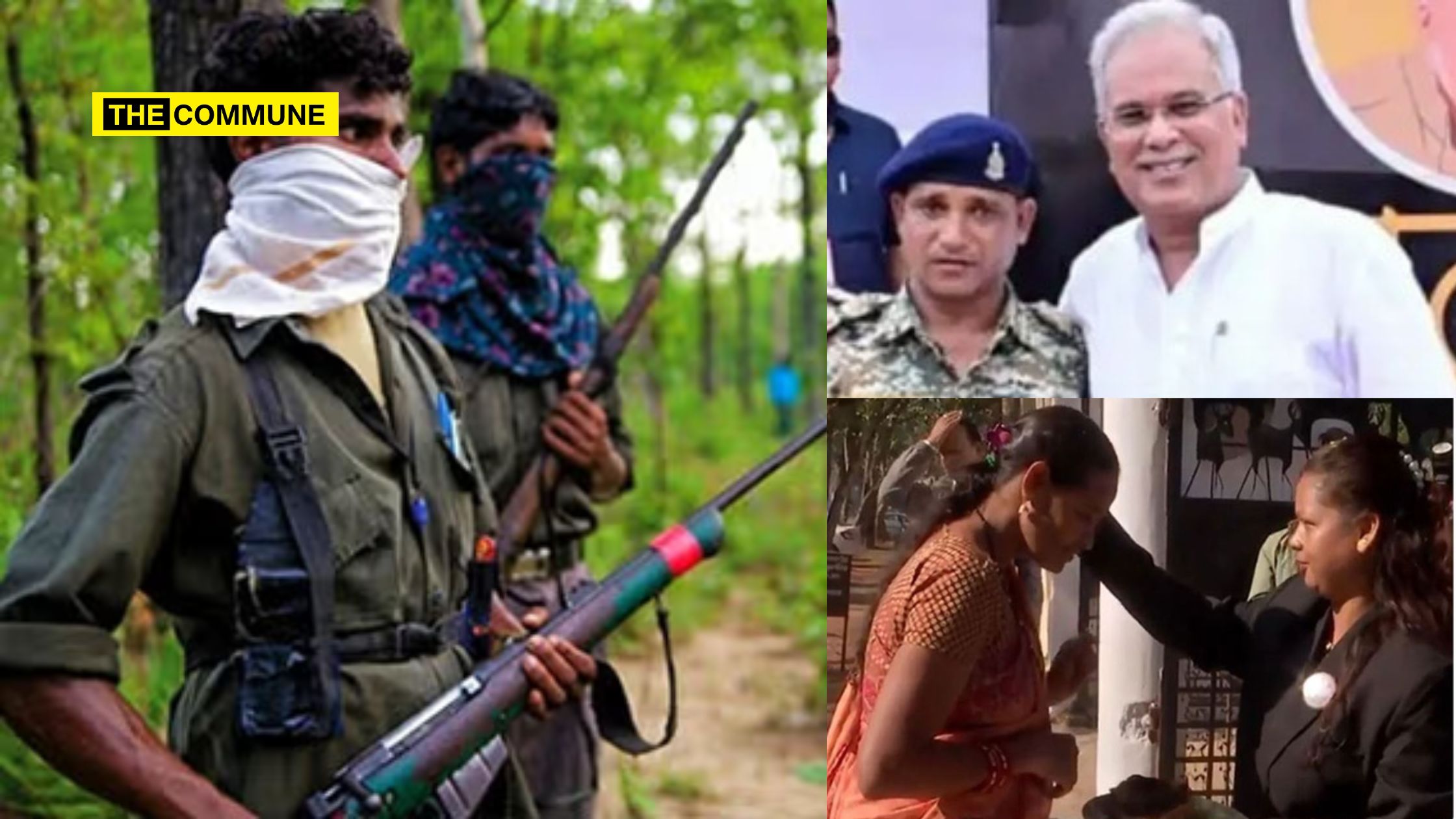
Former Naxalite commander Sanjay Potam, also known as Badru, was awarded the President’s Medal for Gallantry for the third time in January 2025. Once a DEC member managing the Sukma-Dantewada border for Naxals, Potam surrendered in 2013 and is now a senior IPS officer. Grateful for his transformation, he urges others to abandon violence, saying there’s no future in Naxal ideology. His wife, also a former Naxalite, now works as a government peon. Potam’s story reflects hope, renewal, and the potential for change in Bastar, a region long affected by insurgency and underdevelopment.

#2 From Maoist To DRG Inspector 

Madkam Mudraj, a former Maoist commander turned District Reserve Guard (DRG) inspector, met Chhattisgarh CM Bhupesh Baghel during a public outreach in Konta. Mudraj shared how surrendering changed his life, saying he now carries a gun to protect, not harm. He spoke of his guilt during his Naxal days and how development in Bastar inspired his transformation. His wife, also an ex-Maoist, surrendered with him. Now, their children attend English-medium schools—once unimaginable. Thanking the CM, Madkam requested a handshake, which Baghel warmly accepted, praising his return to peace and service.

#3 From Maoist Commander to Security Guard: Dhananjay’s Redemption

Dhananjay alias Sudhir, once a top Maoist commander in Odisha’s Malkangiri district, surrendered in 2019 after witnessing the destruction caused by Naxals. He joined the group at 15, rising to lead the Gumma Area Committee with a ₹5 lakh bounty. Disillusioned by violence and mistreatment, he embraced peace. Now working as a private security guard, Dhananjay benefits from state rehabilitation schemes. Similar stories of transformation include former Naxals like Joymati Vanjan, Shankar Markade, and Bima Sodi, who left armed struggle behind for stable roles as constables, home guards, and cooks, demonstrating a path from violence to normalcy.

#4 From Forced Rebel To Police Constable: Joymati Vanjan’s Journey

Joymati Vanjan, once a Maoist cadre in Chhattisgarh’s Bijapur district, surrendered after being forced into Naxalism in the early 2000s. Involved in multiple attacks on security forces, she realized the futility of violence and laid down arms, later joining Chhattisgarh Police as a constable. Vanjan, along with other former Maoists like Shankar Markade, Bima Sodi, and Soni Markani, left the movement due to disillusionment, fear, and discrimination. Many now work in police, as home guards, cooks, or private security. Their stories reflect the success of rehabilitation efforts and the possibility of transformation from violence to peaceful livelihoods.

#5 Ex-Naxalite Kameshwar Baitha Becomes MP from Jail

Kameshwar Baitha, once a feared zonal commander of the outlawed Maoist Communist Centre of India (MCCI), transformed from insurgent to lawmaker. Representing Jharkhand Mukti Morcha (JMM), he won the 2009 Lok Sabha election from the Naxal-hit Palamu constituency while lodged in Sasaram Jail, facing 46 criminal charges. Baitha, accused of multiple attacks on police in Bihar and Jharkhand, was arrested in 2005. Despite his past, the Patna High Court permitted him to take oath as a Member of Parliament. His journey from Naxalism to politics symbolizes a dramatic personal and political shift in insurgency-affected regions.

#6 Ex-Maoist Commander Bima Sodi Now Protects Homes As A Guard In Odisha

Bima Sodi, once a CPI (Maoist) local commander leading a 12-member squad, surrendered after eight years in the insurgency. A native of Malkangiri, Odisha, Sodi cited disillusionment, discrimination, and the senseless violence of the movement as reasons for leaving. He now works as a home guard, earning ₹18,000 per month. Sodi highlighted that while top Maoist leaders hail from Andhra and Telangana, local tribal cadres like him bore the brunt of combat. His story reflects a broader trend of former Maoists renouncing violence to reintegrate into society and pursue peaceful, stable lives.

#7 From Rebel To Cook: Soni Markani’s Peaceful New Life

Soni Markani, a former CPI (Maoist) cadre from Sukma, Chhattisgarh, joined the insurgency in 2002 and surrendered in 2016. Disillusioned by violence and the lack of future in the Maoist movement, she chose peace and now works as a cook in Malkangiri, earning ₹8,500 a month. “The Maoists have no future. Violence is against humanity,” she said, adding, “At least I am happy now.” Her transformation mirrors that of other surrendered Maoists across Odisha and Chhattisgarh, many of whom now live normal lives under state rehabilitation schemes, rejecting the bloodshed they once participated in.

#8 From Rebel To Policeman: Shankar Markade’s Transformation

Shankar Markade, once a dreaded Naxalite with a ₹5 lakh bounty, has joined the Chhattisgarh Police after surrendering in 2023. A tribal from a poor background, Markade gave up his studies early and was involved in several violent attacks, including the destruction of a corporate plant. Now reintegrated into society, he expressed gratitude for his new role: “The SP gave me a job. I feel better as part of the mainstream.” His story, along with others like Joymati Vanjan and Sandhya, reflects a broader shift, as hundreds of former Maoists embrace peace under government rehabilitation efforts.

#9 From Naxalite To Defender of Peace: Jaymati Banjam’s New Life Fighting Naxalism

Jaymati Banjam, a 35-year-old ex-Naxalite with a ₹5 lakh bounty, is now a member of the District Reserve Guard (DRG) in Chhattisgarh. Disillusioned by the hypocrisy of Maoist leaders, she surrendered and joined the fight against Naxalism. Union Home Minister Amit Shah, during a meeting with 30 former Naxals, praised such reintegration, asserting Naxalism will end by March 2026. With falling death tolls and rising surrenders, the government’s rehabilitation push is yielding results. Former cadres like Dhananjay and Bhimasodi now advocate peace, development, and urge remaining Naxals to abandon violence and return to mainstream life.

#10 Ex-Maoist Leader Jampanna Now Advocates Peaceful Dialogue

G. Narasimha Reddy, formerly Jampanna, a central committee member of the CPI (Maoist) for 17 years, surrendered in 2017 and now leads the Peace Dialogue Committee, urging the government to engage Maoists in non-violent talks. Reflecting on fellow Maoist leader Basavaraju, killed in an encounter, Jampanna shared insights into his simplicity, fitness, and dedication. A former NIT Warangal student, Basavaraju educated cadres and opposed over-reliance on technology. Once revolutionary comrades, Jampanna now champions peaceful conflict resolution, calling for an end to violence and highlighting the human side of insurgent lives once driven by ideology.

Subscribe to our channels on Telegram, WhatsApp, and Instagram and get the best stories of the day delivered to you personally.
Karnataka High Court Quashes Congress Govt’s Move To Withdraw 43 Criminal Cases, Including Hubballi Riot Case Involving Islamist Mobs

karnataka high court congress govt hubbali

The Karnataka High Court on 29 May 2025 struck down the state government’s decision to withdraw 43 criminal cases, including those related to the 2022 Hubballi police station riots, declaring the move “null and void from inception.”

A division bench comprising Chief Justice N.V. Anjaria and Justice K.V. Aravind delivered the ruling in response to a Public Interest Litigation (PIL) filed by advocate Girish Bharadwaj. The PIL challenged the legality of the government’s decision, issued through a Government Order (GO), to direct public prosecutors to withdraw specific cases.

The bench held that the government lacked the authority to unilaterally instruct prosecutors to drop criminal proceedings, especially in matters involving serious charges such as rioting, attempted murder, and assault on police personnel.

Among the 43 cases listed for withdrawal were those against Kannada activists, farmer leaders, and individuals accused in the Hubballi riot incident. The case, initiated in October 2022, involves several leaders from the All India Majlis-e-Ittehadul Muslimeen (AIMIM), including Mohammed Arif, who are alleged to have mobilized a large crowd of Muslims outside the Old Hubli police station. The gathering was reportedly in reaction to a social media post by Abhishek Hiremath, which was perceived as offensive to Islamic religious sentiments.

The court agreed with the petitioner’s contention that Section 321 of the Code of Criminal Procedure (CrPC) empowers public prosecutors to decide whether to withdraw a case, but only after independent assessment and with the court’s consent—not on government instruction alone.

Bharadwaj further argued that the Law Department, the Government Litigations Department, and the Directorate of Prosecution had all opposed the withdrawal of several of the cases, citing their serious nature.

Highlighting possible misuse of executive power, the PIL alleged that the cases selected for withdrawal were “cherry-picked” and that several individuals named in them were politically influential, including former ministers, legislators, and heads of major organisations.

With the High Court setting aside the GO, all 43 criminal cases will now proceed in court as originally filed, effectively reversing the state’s attempt to quash them.

(With inputs from Madhyamam Online)

Subscribe to our channels on Telegram, WhatsApp, and Instagram and get the best stories of the day delivered to you personally.
RTI Reply Reveals No Official Record Of Surgical Strikes Under UPA Government

manmohan singh sonia gandhi upa surgical strikes rti congress terror

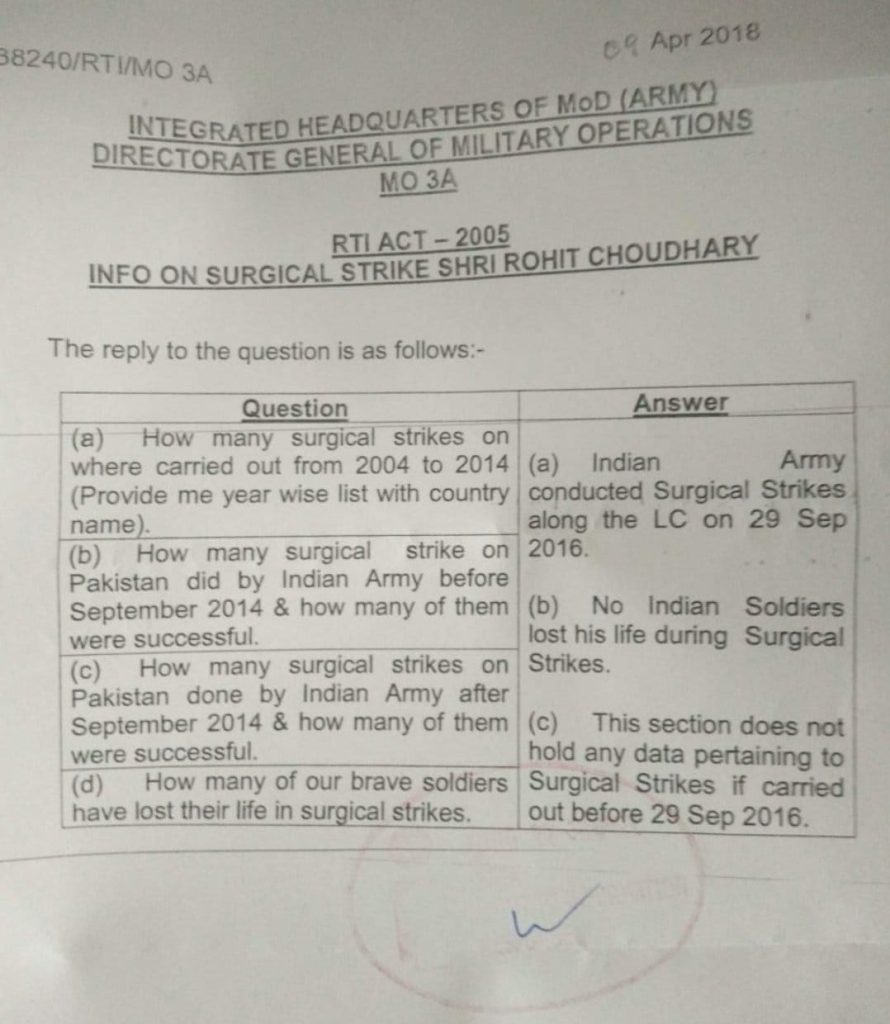
The Ministry of Defence (MoD) has stated that it has no information regarding any surgical strikes conducted by the Indian Army prior to 2016, directly contradicting repeated claims by Congress leaders that multiple such operations were carried out during the UPA regime.

In response to a Right to Information (RTI) query filed by Jammu-based activist Rohit Chaudhary, the MoD—through the Directorate General of Military Operations (DGMO)—replied that it only has a record of one surgical strike conducted along the Line of Control (LoC) on 29 September 2016, following the Uri terror attack in Kashmir.

The RTI, filed in 2018, specifically sought details of surgical strikes conducted between 2004 and 2014. In its reply, the MoD clearly stated that it holds no data on surgical strikes from before 2016. The response has renewed the political debate over the authenticity of Congress’s claims regarding military action during its tenure.

“This clearly proves that the Congress party was lying,” activist Rohit Chaudhary told India Today TV, accusing the party of misleading the public with unverified claims.

The disclosure comes amid an intensifying political battle between the Bharatiya Janata Party (BJP) and the Congress over national security and the politicization of military operations. Congress has consistently maintained that it conducted at least six surgical strikes during the UPA’s tenure, though it chose not to publicize them.

In response to BJP’s criticism, Congress president Rahul Gandhi recently defended the armed forces and accused Prime Minister Narendra Modi of insulting the military. “The Army isn’t Modi’s personal property,” Gandhi said. “Surgical strikes were done by the Indian Army, not by the Congress. When he says they were like video games, he insults the Indian Army. The records are available.”

Congress leader Kapil Sibal also reiterated that surgical strikes took place during the UPA government, citing “Operation Ginger” in 2011 as an example. “Surgical strikes are meant to secure our country and borders—not for celebration,” Sibal said. “Manmohan Singh never boasted about them. But PM Modi turns these into political events while soldiers continue to die.”

The BJP, however, has repeatedly dismissed the Congress’s claims, emphasizing that the 2016 operation was the first publicly acknowledged and documented surgical strike by India in response to cross-border terrorism.

Congress Reiterates Surgical Strikes Claim

On 29 May 2025, the Congress party reiterated its claim that six surgical strikes were carried out during the tenure of the Manmohan Singh-led UPA government, while accusing the BJP of exploiting military operations for political advantage.

In a post on X, the Congress shared a list of what it described as six UPA-era “surgical strikes,” reaffirming that the party has never used such operations for electoral mileage or political messaging.

The party referred to a press conference it held in 2019, during which these strikes were allegedly first publicly listed. Congress leaders emphasized that while the UPA government authorized strategic military responses when required, it refrained from publicizing them or turning them into political spectacles.

The statement comes amid renewed political sparring over the issue, following the Ministry of Defence’s recent RTI response stating that it has no records of surgical strikes prior to the 2016 operation conducted after the Uri attack.

Subscribe to our channels on Telegram, WhatsApp, and Instagram and get the best stories of the day delivered to you personally.
AIADMK Pollachi MLA V. Jayaraman, Son File ₹1 Crore Defamation Suit Against YouTube Channels Over Assault Case Allegations

pollachi jayaraman mla youtube channel defamation suit

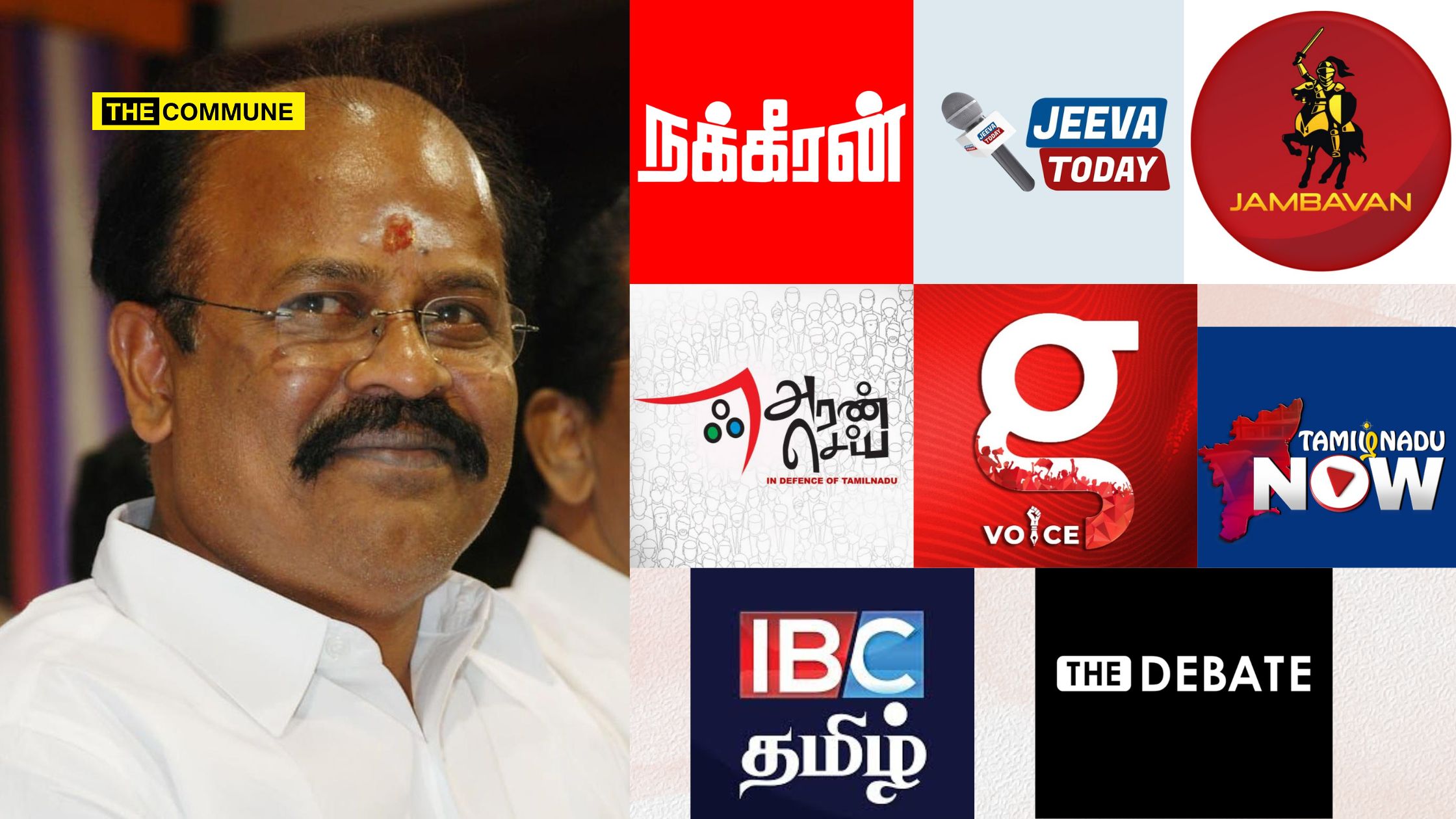
AIADMK Pollachi MLA V. Jayaraman who has also served as the Tamil Nadu Deputy Speaker earlier, along with his son Pravin Jayaraman, has filed a civil defamation suit in the Madras High Court seeking ₹1 crore in damages from eight YouTube channels and three guest speakers for allegedly linking them to the infamous Pollachi serial sexual assault case.

Justice Senthilkumar Ramamoorthy heard the matter on 29 May 2025 and adjourned it for a week, following a request from a junior counsel appearing on behalf of the plaintiffs. The judge also took on record a submission by senior advocate P.T. Perumal, who informed the court that he would be representing journalist and publisher Nakheeran Gopal, the first defendant in the case.

In their suit, the father and son not only seek damages but also a permanent injunction to restrain the defendants from making or publishing any statements—directly or through innuendos—that connect them to the sexual assault case. Additionally, they have requested the court to direct the defendants to bear the legal costs incurred in filing the present suit.

The plaintiffs have also filed two interim applications: one seeking an immediate order restraining the YouTube channels and speakers from continuing to circulate content implicating them in the case, and another requesting that existing videos be taken down.

According to the suit, the contentious videos were published on multiple platforms over three consecutive days in May. These include videos uploaded on 13 May 2025, by Nakheeran TV, AranSei, Jeeva Today, and Jambavan TV; on 14 May 2025 by Galatta Voice and The Debate; and on 15 May 2025 by Tamil Nadu Now and IBC Tamil.

The legal action follows a verdict delivered by a Mahila Court in Coimbatore on 13 May 2025, in which nine individuals were sentenced to life imprisonment after being found guilty in the Pollachi sexual assault case.

The next hearing in the civil defamation suit is scheduled for next week.

(With inputs from The Hindu)

Subscribe to our channels on Telegram, WhatsApp, and Instagram and get the best stories of the day delivered to you personally.
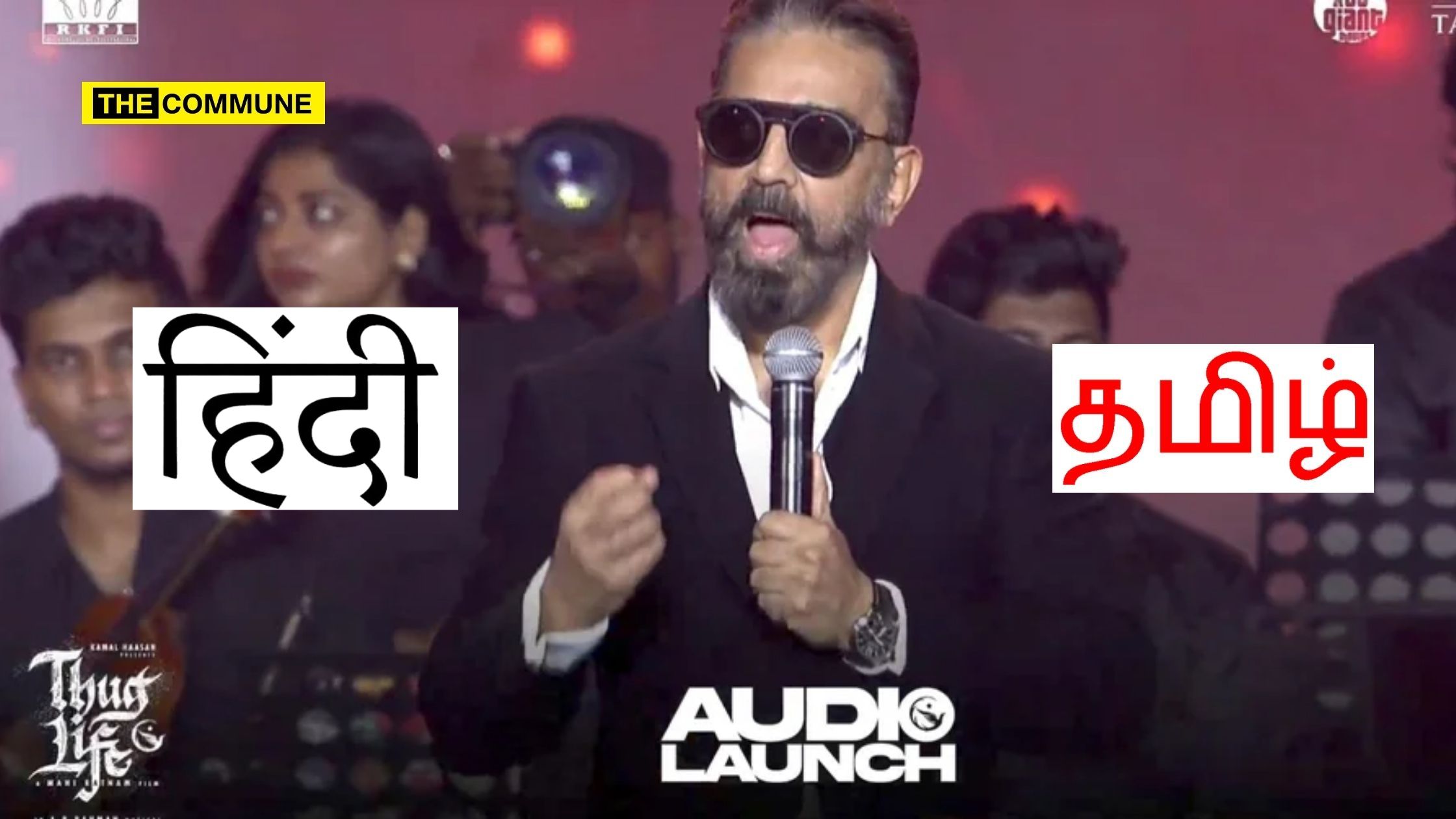
DMK Stooge Actor Kamal Haasan Who Is Releasing His Film Thug Life In Hindi Goes On A Tirade Against ‘North’

Full-time actor and part-time politician Kamal Haasan has found himself at the center of a new controversy after stating at a public event in Chennai that, Kannada originated from Tamil.” The comment sparked strong reactions, particularly from Karnataka, where political leaders and the public alike condemned the remark as insensitive and historically inaccurate.

Responding to the backlash, Haasan attempted to clarify his statement, calling it an expression of affection rather than a definitive claim. He urged that complex and sensitive issues such as language origins should be left to experts in the field.

“What I said was out of love, and a lot of historians have taught me language history. I didn’t mean anything,” Haasan explained. He acknowledged that political figures, including himself, lack the academic background to make authoritative statements on linguistic history and should defer to scholars, archaeologists, and linguists for such discussions.

Haasan also cited Tamil Nadu’s inclusive political past, noting that leaders of various ethnic and linguistic backgrounds—such as MG Ramachandran (a Menon), Omandur Ramasamy Reddiyar (a Reddy), M. Karunanidhi (a Tamil), and J. Jayalalithaa (a Kannadiga Iyengar)—have all served as Chief Ministers. “This state has never been narrow in its outlook,” he said.

He added, “So the people will take care of Thug Life, Kamal Haasan and all these controversies. Politicians are not qualified to talk about language, they don’t have the education enough to talk about it, that includes me. So let’s leave all these very in-depth discussions to historians, archaeologists and language experts. Both those who criticize me for this statement of love, I spoke to Mr Shivanna, his father is like my father, elder brother, whatever you call it, we are a family, and so are the languages. If you look at it from the northern point of view, yes what they say, according to them is right. If you look at it from ‘then-Kumari’, then what I said is right. There is a third angle to it, that is what I said, the scholars and language experts, they will say both are right, but they must decide where they want to belong, with their family or the languages that came from the north. That’s up to you; it’s a democratic country. This is not an answer, this is an explanation. Love will never apologize, thank you.”

This comes at a time when Kamal Haasan is also planning to release the film Thug Life in Hindi!

The fallout from Haasan’s initial remarks was swift. Karnataka Chief Minister Siddaramaiah criticized him, saying the statement ignored Kannada’s rich and ancient heritage. “Kamal Haasan appears unaware of Kannada’s deep historical roots,” Siddaramaiah said.

Karnataka Congress MLA Rizwan Arshad also condemned the comment, questioning the need for such a divisive discussion. “At a time when the country needs unity, it’s disappointing to see such statements being made. Kannada and Tamil are both ancient and integral to our cultural fabric,” he said.

BJP Karnataka state president BY Vijayendra was even more scathing, accusing Haasan of insulting the Kannada language and undermining the pride of over 6.5 crore Kannadigas. Protests erupted in Belagavi, where members of the Karnataka Rakshana Vedike gathered outside an INOX cinema to demand an apology from the actor.

In contrast, the DMK came to Haasan’s defense. Party spokesperson TKS Elangovan criticized the BJP for politicizing the issue and attempting to incite division by misinterpreting historical context. Elangovan argued that Haasan’s comment was likely based on a historical reference rather than personal bias, and emphasized the importance of focusing on how languages are used and evolve, rather than debating their origins.

(With inputs from ANI)

Subscribe to our channels on Telegram, WhatsApp, and Instagram and get the best stories of the day delivered to you personally.
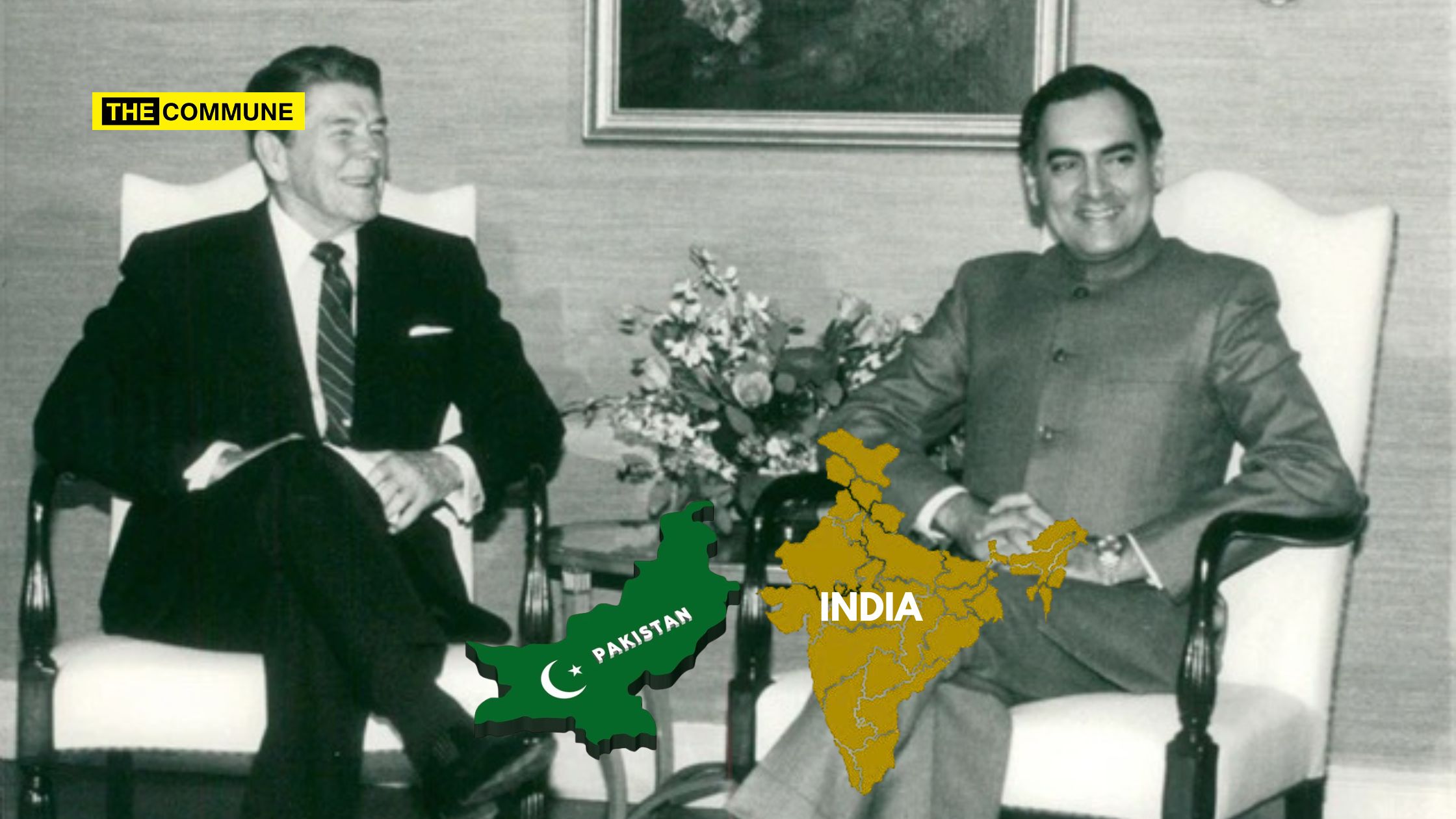
Declassified Reagan Letter Shows Rajiv Gandhi Sought US Help In Pakistan Talks—Shimla Pact Breach?

india pakistan shimla agreement ronald reagan rajiv gandhi

A political storm erupted on 28 May 2025 after BJP MP Nishikant Dubey alleged that former Prime Minister Rajiv Gandhi had sought the intervention of then-US President Ronald Reagan in India-Pakistan negotiations—despite the 1972 Shimla Agreement which mandates that all such disputes be resolved bilaterally.

Dubey posted on his X handle, an alleged letter from Reagan to Rajiv Gandhi dated 25 March 1987. According to Dubey, the letter was delivered by the US Ambassador to India and reveals that Gandhi had requested US experts to be present during bilateral discussions with Pakistan concerning cross-border narcotics smuggling.

“It is not easy to be Gandhi This letter is in reply to a letter written by US President Ronald Reagan to the then Indian Prime Minister Rajiv Gandhi. When it was decided under the 1972 Shimla Agreement that any dispute between India and Pakistan would be negotiated only between the two countries and there would be no mediator, why did the then Indian Prime Minister Rajiv Gandhi ask for US President Reagan’s help in negotiating with Pakistan?” Dubey asked in his post.

He claimed the letter contradicts India’s long-standing position of keeping third-party involvement out of India-Pakistan matters.

The contents of Reagan’s letter, as shared by Dubey, indicated the US President’s willingness to support any initiative jointly agreed upon by India and Pakistan. Reagan expressed readiness to assist with expertise should both nations seek help in addressing narcotics issues.

The revelation comes amid renewed scrutiny of third-party involvement in India-Pakistan affairs, particularly following the recent Pahalgam terror attack and India’s retaliatory military operation, codenamed Operation Sindoor.

The row intensified when Dubey also referenced a declassified 1971 US intelligence cable, claiming that Indira Gandhi, under pressure from the United States, accepted a United Nations ceasefire proposal during the Bangladesh Liberation War. Dubey questioned whether India had compromised on reclaiming Pakistan-occupied Kashmir (PoK) and securing heritage sites like Kartarpur Gurdwara in favor of prioritizing the creation of Bangladesh.

“Iron Lady Indira Ji and her father Nehru Ji After the illegal occupation of Kashmir by Pakistan in 1948, again under the pressure of mediation by America and Britain, continuous meetings were held between 1962 and 1964 between the minister of Indian government Swaran Singh ji and Zulfikar Ali Bhutto. Read this paper carefully, India had already decided to give back to Pakistan the territory forcibly occupied by Pakistan in Poonch and Uri. The matter did not stop at this, the entire Neelam and Kishanganga valley in Gurez was made the international border along with the Line of Control. The only reason for India’s problems today is the hand of Congress? With whom?” Dubey said in a post on 26 May 2025.

The Congress hit back strongly. Party leader Udit Raj dismissed Dubey’s interpretation, accusing him of misreading the Reagan letter.

The exchange comes as Congress also took a swipe at External Affairs Minister S. Jaishankar. Senior leader Jairam Ramesh criticized Jaishankar for remaining “silent” on recent remarks made by US Secretary of State Marco Rubio, who referenced “US mediation” and a “neutral site” for India-Pakistan talks.

The Ministry of External Affairs refuted Rubio’s claims, reiterating India’s consistent policy that all matters with Pakistan, especially those concerning Jammu and Kashmir, are strictly bilateral and do not warrant third-party mediation.

Subscribe to our channels on Telegram, WhatsApp, and Instagram and get the best stories of the day delivered to you personally.