Home Blog Page 53

Supreme Court Moves To Relook DY Chandrachud’s 2023 Gender Handbook That Claimed ‘Dominant Caste Men Use Sexual Violence’

Supreme Court Moves To Relook Chandrachud’s 2023 Gender Handbook That Claimed ‘Dominant Caste Men Use Sexual Violence’

The Supreme Court of India has ordered a comprehensive relook at the controversial “Handbook on Combating Gender Stereotypes” introduced in 2023 under former Chief Justice D Y Chandrachud. It has ordered the drafting of fresh judicial sensitivity guidelines after several sitting judges expressed deep discomfort – both with the process through which the handbook was adopted and with portions of its content that they believe reinforce, rather than remove, prejudice.

As reported in The Indian Express, the move, formalised through a February 10 order by a three-judge bench of Chief Justice Surya Kant, Justice Joymalya Bagchi, and Justice N V Anjaria, asks former Supreme Court judge Justice Aniruddha Bose, now Director of the National Judicial Academy in Bhopal, to constitute a committee of domain experts drawn from practitioners, academicians, and social workers to prepare a comprehensive report and draft new guidelines. The committee has been given three months to submit its findings.

What Triggered the Order

As reported in OpIndia, the immediate occasion was a suo motu case the Supreme Court had initiated against an Allahabad High Court ruling in a POCSO matter, where the High Court drew a distinction between “preparation” and “attempt” to commit rape and consequently diluted the charges against the accused. The Supreme Court disagreed sharply. It held that the accused had clearly moved beyond preparation into active execution of intent, restored the original charges, and set aside the High Court’s judgment.

In that context, concerns raised by counsel about the persistence of judicial insensitivity in sexual offence cases, particularly those involving minors and vulnerable victims, found a receptive bench. CJI Kant acknowledged that empathy and compassion must accompany legal reasoning in such cases. The broader order that followed was, however, about something more systemic.

The Handbook That Divided the Court

The 2023 handbook, produced under CJI Chandrachud’s initiative and described in its foreword as having been “conceptualised during the COVID-19 pandemic” as part of the e-Committee of the Supreme Court, was framed as a tool to help judges and legal professionals identify and avoid gender stereotypes. Its glossary offered alternative language to replace what it termed “gender-unjust” terms in pleadings, orders, and judgments.

But behind the scenes, the handbook had been quietly generating friction within the institution. Highly placed sources told The Indian Express that judges were unhappy on two counts – process and substance.

On process, the grievance was direct: a document intended to guide the judiciary’s conduct in courtrooms was adopted without being placed before the full court. “It was necessary to take all judges into confidence before deciding to publish the handbook, which they were supposed to follow… It should ideally have been placed before the full court for a broader discussion, but this was not done,” sources said.

On substance, judges took specific exception to a section listing stereotypes commonly applied to men and women in the context of sexual violence. One entry in the handbook states that a prevailing stereotype holds that “dominant caste men do not want to engage in sexual relations with women from oppressed castes” and therefore any allegation of sexual assault by an oppressed caste woman against a dominant caste man is presumptively false. The handbook then offers its counter-narrative: that rape and sexual violence have historically been “used as a tool of social control” and that “dominant caste men have historically used sexual violence as a tool to reinforce and maintain caste hierarchies.”

Source: DYC Gender Handbook

For a section of the judiciary, this was not sensitivity training – it was institutional overreach. Sources told the Indian Express that judges felt “the Supreme Court should not be making such generalised and sweeping statements, which have the effect of painting targets on entire communities.” That an official Supreme Court publication was making categorical sociological assertions about entire caste groups, rather than adjudicating specific disputes between individuals, was seen as a category error that carried serious institutional risk.

“Too Harvard Oriented”

The February 10 bench was also unsparing about the handbook’s language. CJI Kant pointedly described it as “too Harvard oriented” – academic, inaccessible, and remote from the lived reality of the litigants it was nominally designed to serve. The court’s order mandated that any new guidelines must be written in “simple language comprehensible to laypersons” and must not be “loaded with heavy, complicated expressions borne from foreign languages and jurisdictions.”

In a pointed formulation, the bench stated that the guidelines “must be contextualised in the real and lived experience of the stakeholders in the Indian judicial process, with direct reference to the ethos, values, and social fabric of our country.” The committee has also been specifically asked to identify offensive and insensitive expressions used across regional contexts so that victims from diverse linguistic backgrounds can better articulate their experiences before courts.

The order also acknowledged frankly that “the efforts thus far have not borne the fruit that was expected” – a measured but unmistakable institutional admission that Chandrachud’s handbook had failed its stated purpose.

A Pattern Worth Noting

This is not the first time that an institutional document addressing sensitive social questions has generated a sharp backlash for making sweeping generalisations. The UGC’s Promotion of Equity in Higher Education Institutions Regulations, 2026, stayed by the Supreme Court itself in late January, ran into similar turbulence for structurally presuming that General Category students and faculty are perpetrators in matters of caste discrimination. The court has now, in effect, flagged the same problem with a document it had itself published.

When contacted by The Indian Express, ex-CJI Chandrachud declined to comment.

What Comes Next

The new committee will study all previous attempts, including the 2023 handbook, before proposing fresh draft guidelines. Crucially, sources confirmed that the final guidelines will be placed before the full court for discussion and adoption – the consultative step that was conspicuously skipped the last time around.

What the February 10 order signals is an institution quietly pressing the reset button. The judiciary understands that sensitivity toward victims of sexual violence is not optional, it is a constitutional imperative. But the court has also signalled, without ambiguity, that the instruments used to build that sensitivity must themselves be constitutionally sound: carefully deliberated, linguistically accessible, institutionally credible, and free of the kind of sweeping sociological generalisations that convert judicial guidance into political controversy.

Chandrachud’s handbook arrived with considerable fanfare. It is leaving through the back door.

Subscribe to our channels on WhatsAppTelegram, Instagram and YouTube to get the best stories of the day delivered to you personally.
Congress Simp Sumanth Raman Creates Needless Panic About Fuel Shortage To Target Modi Govt

Congress Simp Sumanth Raman Creates Needless Panic About Fuel Shortage To Target Modi Govt

As tensions escalate in West Asia, social media has seen a surge of posts warning of potential shortages of LPG and fuel supplies. Several of these claims have been amplified by Congress sympathisers.

Foremost among those is Sumanth Raman – the all-in-all commentator who is an arm-chair expert on everything under the sun.

On 9 March 2026, news of hotels and restaurants across Mumbai, Bengaluru, and Chennai reportedly staring down forced shutdowns as a severe commercial LPG shortage (triggered by the ongoing Iran-Israel war disrupting Middle Eastern shipping routes) started circulating in media. They stated that the situation had choked supply chains across India’s major cities. Distributors reported near-total supply failures, with Bengaluru hotels receiving as little as 10% of their usual cylinders before deliveries stopped altogether, while Mumbai’s hospitality associations warning that every restaurant in the city could be dark within 48 hours if the crisis is not resolved.

Chennai’s hoteliers, representing over 10,000 establishments, have written directly to the Prime Minister flagging cascading consequences for hospitals, college hostels, and railway catering.

Taking this as an opportunity to deride the central government, Sumanth Raman began fear mongering. On his X handle, he wrote, “A similar crisis could happen with petrol and diesel in a few days. Guess people simply need to take precautions themselves. Companies can announce WFH and industry can start of thinking of all possible ways to save fuel. The Modi Govt has proved particularly inept at handling any crisis in the past and so to expect it to be different this time is to deceive ourselves.”

Looks like he had not read the news when he woke up on the morning of 10 March 2026.

The central government had announced on 9 March 2026 by late evening that there was no shortage as of that day and prices would not be hiked.

Government sources told ANI that there is currently no cause for concern regarding fuel availability in India despite rising tensions in West Asia. According to the sources, petrol and diesel prices are unlikely to increase in the near term as the country has adequate fuel stocks. They indicated that retail prices would remain stable unless global crude oil prices cross approximately USD 130 per barrel, adding that crude is currently expected to remain around the USD 100 per barrel range.

Officials also said there is no shortage of petrol or diesel at fuel stations across the country. Sources further noted that India has accelerated crude oil sourcing from routes outside the Strait of Hormuz to mitigate potential disruptions.

On aviation fuel, government sources stated that the country has sufficient stocks of Aviation Turbine Fuel (ATF). They added that India is not only a producer but also an exporter of ATF, and therefore there is no need for panic regarding aviation fuel availability. Officials also indicated that India is relatively better positioned compared to several other countries and that some nations have approached India to assess the supply situation.

It is noteworthy to remember that even in a crisis like COVID-19, India fared really well compared to its Western counterparts and people across the globe praised our country for handling the pandemic efficiently despite our massive population.

For the likes of Sumanth Raman who wanted Jacinda Ardern to rule over India during COVID-19, the instinct appears to remain the same: when uncertainty emerges, assume the worst about the Indian state and amplify panic before facts have even settled.

In moments that require restraint and responsible commentary, such alarmism risks doing little more than fuel anxiety among the public. When government data, supply figures and official statements clearly indicate that fuel stocks are stable and contingency planning is underway, turning speculation into certainty becomes less analysis and more theatrics.

In the end, the pattern is familiar. A rumour appears, a crisis narrative is constructed, and the government is declared incompetent before the situation is even verified. When the facts arrive later, the panic rarely receives the same amplification as the prediction.

Subscribe to our channels on WhatsAppTelegram, Instagram and YouTube to get the best stories of the day delivered to you personally.
Cross Worship Reported On Sacred Yanai Malai In Madurai, BJP Files Police Complaint

Cross Worship Reported On Sacred Yanai Malai In Madurai, BJP Files Police Complaint
Image Source: Dinamalar

An incident involving the alleged installation of a cross and conduct of Christian prayers on Yanai Malai near Othakadai in Madurai has triggered controversy, with Hindu organisations raising objections and calling for action.

As reported in Dinamalar, a group of individuals recently climbed Yanai Malai and conducted prayers after placing a cross on the hill. Photographs of the event were later shared online, drawing criticism from several Hindu groups.

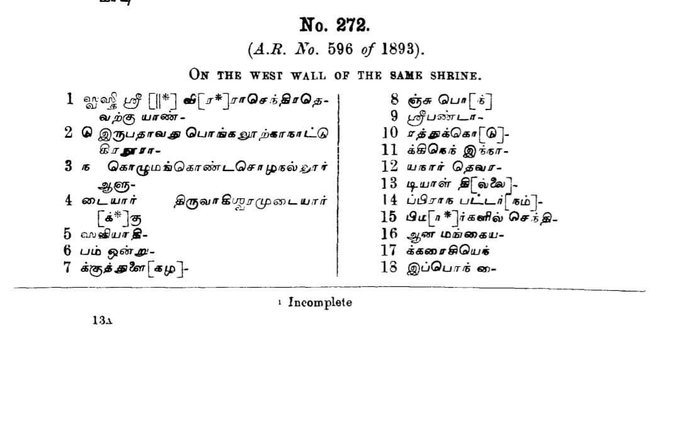
Yanai Malai is regarded as sacred by many Hindus in the surrounding villages, who worship the hill as a deity. The site is also historically significant as it contains Jain beds and comes under the control of the Archaeological Department.

Following the incident, the Bharatiya Janata Party (BJP) filed a complaint with the Othakadai police seeking legal action. Harihara Puthiran, State Secretary of the BJP’s Tamil Literature and Tamil Development Wing, stated in his complaint that some members of a Christian organisation had climbed the hill, placed a cross there, and conducted prayers.

He alleged that the act amounted to an attempt to encroach upon a site revered by local Hindus and could potentially create religious tensions in the area. He urged the police to take appropriate legal action against those responsible.

Hindu organisations also expressed concern over the development. Representatives of the groups alleged that similar attempts had previously been made at Thirupparankundram hill and warned that regular prayer gatherings at Yanai Malai could eventually lead to attempts to establish religious claims over the site.

They called upon both the police and the Archaeological Department to monitor the situation and prevent any encroachment.

Madurai Superintendent of Police Aravind stated that although Yanai Malai is maintained by the Archaeological Department, it remains a public place. He added that the police were conducting an inquiry to ascertain whether cross worship had taken place at the site.

Subscribe to our channels on WhatsAppTelegram, Instagram and YouTube to get the best stories of the day delivered to you personally.
DMK’s Trichy Public Meeting Ends Up As A Flop Show, 3/4th Chairs Empty?

DMK's Trichy Public Meeting Ends Up As A Flop Show, 3/4th Chairs Empty?

The DMK’s much-hyped 12th State-level Maanadu at Siruganur, Trichy, on 9 March 2026 was projected as a show of force – a grand political statement ahead of the 2026 Assembly elections. Party functionaries had spent weeks publicising a target of 10 lakh attendees, with 3 lakh chairs spread across a staggering 20 lakh square foot venue. What unfolded, however, told a different story.

Live visuals from the venue, widely circulated on social media, showed vast stretches of empty chairs when Chief Minister MK Stalin arrived at the ramp area with estimates suggesting nearly three-fourths of the seating capacity remained unoccupied at key moments during the event. For a party that positioned this conference as proof of its organisational strength and public goodwill, the optics were far from flattering.

The timing makes the optics worse. The Maanadu/conference was originally scheduled for 8 March 2026 but was quietly postponed by a day, officially attributed to the Samayapuram Mariamman Poochorithal festival. Critics read it as last-minute fumbling by a party that could not synchronise its mega-event with ground realities.

The DMK had marketed the Trichy conference with a clear electoral pitch: “Stalin Should Continue; Let Tamil Nadu Win”, framing it as a pre-election confidence vote. But when a ruling party that controls the full machinery of the state government struggles to fill its own chairs, the confidence vote reads differently from the ground.

To be sure, the DMK will claim massive mobilisation and point to the sheer size of the venue as context. But optics in politics are rarely about what you explain later – they are about what the camera captures in the moment. And on 9 March 2026 in Trichy, the cameras captured a lot of empty chairs.

As Tamil Nadu inches toward what promises to be a fiercely contested 2026 election, the question DMK insiders must now quietly ask themselves is whether this was simply a logistical miscalculation or an early signal from a public growing tired of business as usual.

Subscribe to our channels on WhatsAppTelegram, Instagram and YouTube to get the best stories of the day delivered to you personally.
Months After Ajith Kumar Custodial Death, 26-Year-Old Dies In Custody In Manamadurai; Those Who Were Vocal For Jeyaraj-Bennix Case Now Silent

Months After Ajith Kumar Custodial Death, 26-Year-Old Dies In Custody In Manamadurai; DMK Govt Silent

A 26-year-old graduate, Akash Delison, arrested in connection with a CCTV-captured sickle attack in Manamadurai’s Zion Nagar, died in judicial custody in the early hours of Sunday, 8 March 2026, at Madurai Government Rajaji Hospital and the DMK government has not said a single word.

Akash was arrested alongside Guna (23) on Friday, 6 March 2026. Police claimed he sustained a fracture in his right leg after falling from a bridge while evading arrest. He was remanded in judicial custody until 18 March 2026 and admitted to the prisoners’ ward at Rajaji Hospital. By Sunday morning, authorities issued a terse statement that Akash had developed “breathing difficulties” and died – a version his parents, Rajesh Kannan and Anandhi, flatly reject, as reported in DT Next.

His father told reporters that Manamadurai police took Akash to a secluded forested area under the pretext of investigation, placed stones on his legs, and beat him until his bones shattered. His mother alleged that officers had openly threatened the family before the arrest: “If we get our hands on your son, we will kill him.” The family also alleged that casteist slurs were directed at Akash during the assault.

However, there has been no official response from the DMK government so far.

No minister has publicly condemned the incident, and no senior police officer has addressed the media regarding the allegations. The Chief Minister’s Office has also not issued any statement on the matter.

On the ground, the only visible administrative response has been the deployment of a police contingent led by Manamadurai DSP Raja at the Government Rajaji Hospital mortuary in Madurai, where Akash’s body remains. The deployment has been aimed at maintaining law and order and preventing any escalation of protests by relatives and local residents.

As reported in Tribune India, Akash’s family has declined to take custody of the body and has called for the personal intervention of VCK leader and MP Thol Thirumavalavan. They have also accused the police of using caste-based abuses against him during the alleged assault.

The absence of a formal response from the government has drawn attention, particularly as political reactions have been limited. Viduthalai Chiruthaigal Katchi (VCK) leader and Member of Parliament Thol Thirumavalavan stated that the State government should take appropriate action against the police personnel involved if they were found guilty.

The incident has also revived concerns because it occurred at Sivaganga district where temple guard B. Ajith Kumar was tortured to death by a police special team, a fact confirmed by a Madras High Court judicial inquiry and CBI investigation, less than a year ago.

With the family refusing to accept the body and demanding action, the case has intensified scrutiny over custodial practices in the region, even as the state government has yet to publicly address the allegations.

Subscribe to our channels on WhatsAppTelegram, Instagram and YouTube to get the best stories of the day delivered to you personally.
TVK’s 40-Candidate List Coming – Will Vijay Contest From These Two Seats?

Vijay TVK First State Conference

Actor-turned-politician Vijay’s Tamilaga Vettri Kazhagam (TVK), which will be contesting elections for the first time, is in the final stages of identifying key constituencies for its candidates. Party sources indicated that constituencies for Vijay and several senior functionaries were currently being finalised, generating considerable anticipation among party workers about where the TVK chief would enter the electoral fray.

According to party sources, Aadhav Arjuna, the party’s election wing general secretary and son-in-law of lottery businessman Martin, is likely to contest from the Villivakkam constituency in Chennai and has reportedly begun groundwork there. Former AIADMK MLA J.C.D. Prabhakar, who recently joined TVK, had initially expressed interest in contesting from the same constituency but was reportedly persuaded to consider another seat.

Arunraj, a former Indian Revenue Service officer who resigned from his post to join TVK, is likely to contest from Tiruchengode after reportedly receiving Vijay’s approval and beginning field-level preparations in the constituency.

As reported in ABP Nadu, party joint general secretary C.T.R. Nirmalkumar, who had earlier considered contesting from Usilampatti, is now likely to contest from Thirupparankundram following instructions from Vijay, sources said. The constituency has recently drawn attention due to controversies related to the Thirupparankundram Murugan temple and a recent visit by Prime Minister Narendra Modi.

Former AIADMK minister K.P. Krishnan, regarded as an important face of the Mutharaiyar community, is likely to contest from Srirangam. Party sources indicated that Vijay had personally encouraged him to contest there amid criticism directed at the sitting DMK MLA.

In Karur, the party is reportedly considering fielding district TVK secretary Mathialagan against DMK minister Senthil Balaji. Mathialagan had earlier been arrested in connection with the Karur crowd crush incident and is currently associated with the party’s district-level leadership.

Meanwhile, former AIADMK minister Sengottaiyan, who has joined TVK, is likely to contest from his native constituency of Gobichettipalayam, while party general secretary Bussy Anand is expected to contest from T. Nagar in Chennai.

As for Vijay himself, party insiders indicated that he is likely to contest from Perambur in Chennai in his electoral debut. Sources said the party had conducted ward-level surveys to assess his prospects in the constituency and that the feedback was reportedly favourable.


View this post on Instagram


A post shared by Chanakyaa (@chanakyaa_tv)

There are also indications that Vijay may contest from a second seat, with Tiruchirappalli East emerging as a possible choice. Party sources said preparations were underway for the TVK leader to potentially contest from both Perambur and Tiruchirappalli East.

TVK is expected to release its first list of around 40 candidates soon. Party insiders suggested that Vijay’s constituencies would likely be among the key announcements in the list.

Subscribe to our channels on WhatsAppTelegram, Instagram and YouTube to get the best stories of the day delivered to you personally.
After Coimbatore, RTI Reveals Alleged Misuse Of ‘Manamagizh Mandram’ (Recreational Club) Liquor Licences In Tenkasi

After Coimbatore, RTI Reveals Alleged Misuse Of ‘Manamagizh Mandram’ (Recreational Club) Liquor Licences In Tenkasi

Several FL2 licence holders in Tenkasi district have allegedly been selling liquor in retail by misusing permits granted to recreation clubs, according to information obtained through a Right to Information (RTI) query filed by activist S. Jameen.

Based on the RTI response, the State government has issued FL2 licences to 21 Manamahizh Mandrams, recreation or sports clubs or associations, across the district over the past two years. Of these, 13 FL2 licence holders and five FL3 licence holders were allegedly operating bars along State and National Highways.

As reported in The New Indian Express, Jameen stated that bars functioning under FL2 licences were permitted to serve liquor only to permanent members of registered recreation clubs. However, during field visits, he reported finding several such establishments openly selling liquor to members of the public, functioning effectively as retail outlets.

He further called for the removal of FL2 bars located along roadsides, noting that Tenkasi district already had 61 TASMAC retail liquor outlets in operation.

According to Jameen, many of the licences had allegedly been issued to politically influential individuals who had no connection with recreation, sports, or social associations. He alleged that in several cases the Manamahizh Mandrams existed only on paper while the premises were being run like regular retail liquor shops.

In response to the RTI application, P. Ramachandran, Public Information Officer-cum-Assistant Commissioner (Excise), Tenkasi, stated that licences for 13 of the 21 Mandrams had been issued in 2025.

Jameen also claimed that several Mandrams, including one located on the Alangulam–Ambasamudram road, had been granted permission as recently as January and February 2026.

He further argued that the presence of 61 TASMAC shops in the district already provided sufficient retail access to liquor and that there was no necessity for mandram-based bars along highways.

The district manager of TASMAC, Tirunelveli, was not available for comment.

We had reported in February 2026 that there was reportedly a sharp increase in “Manamagizh Mandrams” (recreation clubs) in Tamil Nadu, with claims that licences are being misused to facilitate private liquor sales. Citing RTI data, Coimbatore-based advocate Loganathan stated that the number of such clubs had risen from 62 before 2010 to over 800, with a major increase after 2021. He alleged that around 600 outlets had received FL2 licences and were functioning like private wine shops. Loganathan further claimed the state could be losing significant revenue under the current system. Residents in Coimbatore also alleged that some clubs operate with fewer restrictions than TASMAC outlets.

Subscribe to our channels on WhatsAppTelegram, Instagram and YouTube to get the best stories of the day delivered to you personally.
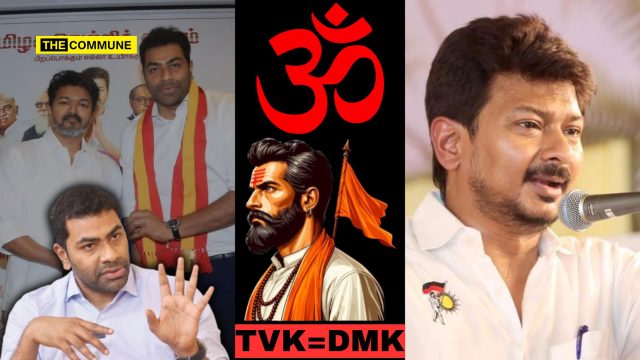
The Freebie U-Turn: TVK Vijay Promises What He Once Mocked

tvk joseph vijay affidavit

There was a time, not very long ago, when Vijay and his Tamilaga Vettri Kazhagam (TVK) fans occupied the moral high ground on one specific issue with extraordinary self-righteousness: freebies.

In interview after interview, at rally after rally, in social media post after social media post, the TVK ecosystem positioned itself as the antidote to Tamil Nadu’s freebie culture. Vijay was going to be different. He was going to talk about real governance: jobs, education, infrastructure – not the cynical vote-buying that DMK and AIADMK had normalised over decades of competitive populism. His fans, hot-blooded youngsters, educated (or so we think), social-media-savvy spent considerable energy mocking DMK’s Magalir Urimai scheme and AIADMK’s election promises as undignified bribes to voters.

Here are a few videos of them disposing of the freebies from ADMK/DMK regimes, mocking welfare schemes etc.

That was then.

On March 7, 2026, standing before a crowd in Mahabalipuram, Vijay announced a dazzling array of, and let us be precise here, freebies. He just did not call them that. And that, in essence, is the story of TVK’s entire political evolution: the packaging changes, the product remains the same, and the fans find reasons to explain why their freebies are not actually freebies.

The Promise That Started It All

When TVK launched, Vijay was careful to distinguish himself from the freebie-dispensing political culture of Tamil Nadu. He spoke of empowerment rather than entitlement. He spoke of creating conditions where people would not need government handouts – jobs, skill development, quality education, and infrastructure that would make Tamil Nadu genuinely self-sufficient.

His fans amplified this relentlessly. Posts comparing TVK’s “developmental agenda” with DMK’s “freebie politics” flooded social media. YouTube channels ran hours of content explaining how Vijay’s approach was fundamentally different – sustainable, forward-looking, rooted in economic thinking rather than electoral desperation.

The implicit message was clear: those other parties buy votes with your own money. We are above that.

7 March 2026: The U-Turn in Full Glory

So what did Vijay announce on Women’s Day?

  • ₹2,500 per month for women
  • 6 free LPG cylinders per year
  • 8 grams of gold for marriages
  • A gold ring for newborns
  • Free bus travel for women
  • ₹15,000 per year to prevent school dropouts
  • ₹5 lakh loans for self-help groups

He called these “sample promises.” His fans called them “empowerment schemes.” His critics called them what they are: freebies.

But here is what makes this U-turn not merely embarrassing – it makes it politically fraudulent. Because when you strip away the freshly minted names like “Annapoorna Super Six” and “Thai Maman Gold Ring Scheme” and look at the actual content of each promise, you find something remarkable:

Almost none of them are new.

The Rebranding Exercise – Old Win In New Bottle

Let us go through them one by one.

Free bus travel for women. The DMK’s Vidiyal Payanam scheme has been providing free bus travel in buses since 2021. As of April 2025, 57.81 lakh women benefit daily. This is not a TVK promise – it is a DMK scheme that Vijay is promising to continue and improvise a little to present as his own idea. These schemes are also in operation in various other states.

6 free LPG cylinders per year. The Central government’s Pradhan Mantri Ujjwala Yojana already provides free LPG connections to BPL women with subsidised refills. Vijay is now promising to formalise what the Modi government has been delivering.

8 grams of gold for marriages. The Tamil Nadu government’s marriage assistance scheme, which has been running in various forms for decades, through multiple governments including AIADMK and DMK, already provides exactly 8 grams of 22-carat gold to eligible women. The DMK government alone allocated ₹117.18 crore for this in 2023. This scheme predates Vijay’s political career. He is promising what women in Tamil Nadu are already receiving.

Thaalikku Thangam (AIADMK): This existing government scheme, originally launched by the AIADMK, provides gold (historically 4 to 8 grams) and cash assistance for the marriage of women from economically weaker sections.

Baby kits for newborns. The Amma Baby Care Kit is a welfare scheme launched in 2015 by the late CM J. Jayalalithaa to improve neonatal hygiene and encourage institutional deliveries. Distributed to mothers at government hospitals, each kit contains 16 essential items valued at approximately ₹1,000.
Key components include:
For the Baby: A towel, dress, bed, mosquito net, napkin, oil, shampoo, soap, nail clipper, and toys.
For the Mother: Hand wash, soap, and Sowbagya Sundi Lehiyam (ayurvedic medicine for lactation).
The scheme targets over 6 lakh newborns annually, aiming to reduce the Infant Mortality Rate among economically weaker sections.

There was another scheme brought in by the AIADMK government for pregnant women – This scheme is distinct from the Amma Maternity Nutrition Kit, which provides nutritional supplements (like health mix, dates, and iron syrup) worth ₹2,000 in two installments during pregnancy.

Gold Ring for Newborns – The “Thaai Maaman Gold Ring Scheme”. This is perhaps the most embarrassing of all – this scheme already ran under MK Stalin’s own father Karunanidhi, inaugurated by Stalin himself in 2009 for babies with Tamil names in Chennai. Under the AIADMK, they routinely presented gold rings to newborns on the leaders’ birthdays. This is not a TVK original. It is not even a new idea. In June 2009, the Chennai Corporation under Karunanidhi launched a scheme to give 1-gram gold rings to newborns born in Corporation hospitals if they were given Tamil names. The scheme was announced by the then-Chennai Mayor to commemorate Karunanidhi’s 86th birthday. And who inaugurated it? MK Stalin himself – then Deputy Chief Minister.

Vijay has taken a scheme invented by his political rivals, given it a new name and presented it as his own visionary governance idea.

₹2,500 per month for women. The DMK’s Kalaignar Magalir Urimai Thittam already provides ₹1,000 per month to over one crore women in the state since September 2023. Vijay is promising to increase it by ₹1,500. This is not an original idea – it is an incremental bid on a scheme he spent years implying was vote-buying. Once again, this welfare scheme is in place in various states across the country.

₹15,000 Per Year to Prevent School Dropouts. This already exists in multiple layers – Vijay is repackaging the entire existing scholarship ecosystem. Tamil Nadu already has an extensive network of scholarship and cash incentive schemes specifically targeting school retention, many of which provide comparable or higher amounts than Vijay’s proposed ₹15,000:​

  • Pudhumai Penn Scheme (DMK, launched 2022) – provides ₹1,000 per month (₹12,000 per year) directly to girl students pursuing higher education after school. Over 4 lakh girls benefit.​
  • Tamil Pudhalvan Scheme – equivalent scheme for boys in higher education.​
  • Post-Matric Scholarship for SC/ST/BC/MBC – covers full fee reimbursement plus academic allowance of up to ₹13,500 per year for hostellers in professional courses.​
  • Central Sector Scheme of Scholarship (CSSS) – Central government scholarship for Class 12 students scoring 60%+ entering UG.​
  • Incentive Scheme for Rural MBC/DNC Girl Students – cash incentives from Classes 3–6.​
  • Differently Abled Students Scholarship – cash incentives from Class 9 onwards.​

The Tamil Nadu government already provides free uniforms, free textbooks, free noon meals, free bus passes, and free bicycles to school students – all of which are existing anti-dropout measures

Vijay’s ₹15,000 per year is essentially a consolidation and slight increase over what the Pudhumai Penn scheme already provides and it duplicates the Central government’s existing scholarship architecture. Far from being an original promise, it is a re-announcement of schemes his fans spent years dismissing as “DMK freebies.”

₹5 Lakh Loans for Self-Help Groups

This is almost similar to the Central government’s PM Mudra Yojana. The Pradhan Mantri Mudra Yojana (PMMY), launched by PM Modi on 8 April 2015, provides collateral-free loans to small and micro enterprises under the below categories:

  • Shishu – up to ₹50,000
  • Kishor – ₹50,000 to ₹5 lakh
  • Tarun – ₹5 lakh to ₹10 lakh
  • Tarun Plus – up to ₹20 lakh for repeat borrowers​

Vijay’s promise of ₹5 lakh loans for SHGs lands exactly at the Kishor category ceiling of PM Mudra Yojana – the same scheme that has been disbursing loans to women’s self-help groups across Tamil Nadu since 2015. The scheme requires no collateral, no guarantor – the same features Vijay is promising.​

Additionally, Tamil Nadu’s own Mahalir Thittam (Women’s Development Corporation) has been providing SHG loans at subsidised rates for over two decades. The DMK government has been disbursing ₹1,600 crore worth of SHG loans annually through this scheme.

During the AIADMK tenure under Jayalalithaa and Edappadi K. Palaniswami (EPS), SHG support focused on financial independence through Bank Linkage. SHGs received loans starting from ₹1.5 lakh, scaling up to ₹10-20 lakh based on performance. A ₹15,000 Revolving Fund was granted to new groups to boost internal lending. The government subsidized interest rates, often reducing the burden to 7% for prompt payers. In 2020, EPS launched special collateral-free loans up to ₹1 lakh per group to mitigate pandemic distress. Extensive funding was provided through Panchayat Level Federations for livelihood projects.

Vijay is promising, with great fanfare, what the Modi government has been delivering since 2015 and what the DMK state government has been running since the 1990s.

So, to summarise: Vijay is promising schemes with improvisations and additions to schemes that already exist, presenting it all as TVK’s visionary governance agenda.

The Fan Ecosystem’s Contortions

What is perhaps most revealing is watching the TVK supporter base perform the intellectual gymnastics required to reconcile “we are against freebies” with “our leader just promised free gas cylinders, free bus rides, and free gold.”

The explanations have been creative:

“These are not freebies, these are rights.” – A freebie is a government benefit provided free of cost to citizens. Calling it a “right” changes the moral framing but not the economic reality. The government still pays for it. Someone’s taxes still fund it.

“DMK’s freebies are corrupt, Vijay’s will be properly implemented.” – This is an argument about execution, not about principle. If your objection to DMK’s schemes was that they were poorly implemented, you were never actually against freebies — you were against DMK. That is a legitimate political position, but it is not the high-minded anti-freebie stance you were claiming.

“Vijay is promising development too, not just freebies.” – So does every party. DMK’s 2021 manifesto had infrastructure promises too. AIADMK’s manifesto has development schemes too. The existence of development promises alongside welfare schemes does not transform welfare schemes into something other than welfare schemes.

“These are investments in human capital.” – Free gold for weddings is not an investment in human capital. It is a wedding gift from the government, funded by taxpayers.

None of these arguments would have been accepted by TVK fans if DMK had made them. They are being accepted now only because it is Vijay making them.

The Deeper Problem: What This Reveals About TVK

Vijay’s U-turn on freebies is not just politically embarrassing – it is strategically revealing. It tells you something important about what TVK has concluded about Tamil Nadu’s electorate.

TVK has discovered what every party before it has discovered: that Tamil Nadu’s voters respond to direct material benefits. That the urban, educated, anti-freebie voter is a social media demographic, not an electoral majority. That the woman in Villupuram and the farmer in Thanjavur and the daily wage worker in Tirunelveli are not going to vote for “developmental governance” in the abstract when the party next door is offering them cash in hand.

There is nothing wrong with this discovery. It is an accurate reading of electoral democracy. The problem is that TVK built an entire identity and attracted an entire base of supporters on the premise that it was above this kind of politics. Those supporters now find themselves defending exactly the political culture they rallied against.

Vijay is not the first politician to discover that principles are expensive in election season. He will not be the last. But rarely has a political party pivoted so completely, so quickly, and with such apparent confidence that its own supporters will not notice or will notice but not care.

The Real Question Tamil Nadu Should Ask

Here is what Tamil Nadu’s voters deserve an answer to:

If the gold for marriages was “vote-buying” when the DMK funded it, why is it “women’s empowerment” when Vijay announces it?

If the monthly cash transfer was “fiscal irresponsibility” when Kalaignar Magalir Urimai launched in 2023, why is it a “right” when Vijay promises ₹2,500?

The answer, of course, is that it was never about the freebies. It was always about who was giving them. Tamil Nadu’s political parties, including its newest one, have simply found different ways to say the same thing: vote for me and I will give you something.

Vijay has joined that club. He just arrived wearing a different shirt.

And the most honest thing his fans could do, the thing that would actually honour the anti-freebie principle they spent years advocating, is to say: we were wrong to mock other parties for this, because now our own leader is doing the same thing.

That admission will not come. It never does.

Instead, the same accounts that posted threads about “freebie culture destroying Tamil Nadu” are now posting threads about “TVK’s empowerment revolution.”

The revolution, it turns out, comes with free gas cylinders.

Subscribe to our channels on WhatsAppTelegram, Instagram and YouTube to get the best stories of the day delivered to you personally.
The Commune Impact: Tamil Nadu Bans Political Use Of School Premises – Months After Don Bosco Expose Rocked The Salesian Order

salesian don bosco dmk

When The Commune published its investigation into the Chennai Salesian Provincial’s alleged political collusion with the ruling DMK in October 2025, it triggered an immediate response from the Salesian Curia in Rome. Five months later, the ripples appear to have reached the Tamil Nadu Government Gazette itself.

The Commune’s report, published on 12 October 2025, had detailed allegations by R. Joseph D’ Kennedy, a Don Bosco alumnus and India Representative of Ending Clergy Abuse (ECA), against Fr. L. Don Bosco, the Provincial of the Chennai Salesian congregation. The report accused the Provincial of political collusion with the DMK, canonical violations, and the misuse of Don Bosco school premises for partisan political meetings. Rome responded within days. Now, on 2 March 2026, the Tamil Nadu government has published an Extraordinary Gazette notification, G.O.Ms.No.51, School Education (MS), that formally prohibits exactly the kind of conduct The Commune first brought to public attention.

What the Gazette Says

The new sub-rule 35(3) inserted into the Rules is categorical: the land, buildings, and facilities of every recognised private school shall be used exclusively for academic instruction, co-curricular activities, and school functions conducted under the authority of the educational agency.

Sub-rule 35(4) goes further, explicitly prohibiting school premises from being used, whether during or outside school hours, for any programme, meeting, campaign, or activity that is political or ideological in nature, communal or divisive, or otherwise unrelated to the school’s educational objectives.

Even cultural and social service events now require prior government approval and must be explicitly non-political and non-sectarian.

The Commune’s Expose: What Was Reported

The Commune’s original investigation was among the first mainstream reports to document in detail the dual role played by Fr. L. Don Bosco – as head of the Chennai Salesian Province and as a sitting member of the Tamil Nadu Minority Commission, a position allegedly gifted by the DMK as part of a political arrangement. The report cited a January 2024 article in Kumudham Reporter that described his inclusion in the Commission as part of a “political understanding” – a potential violation of Canon 285 §3, which prohibits clerics from holding civil offices.

Most strikingly, The Commune reported that Don Bosco school campuses had been used for DMK political meetings. Over 2,000 Greater Chennai Corporation sanitation workers, staging protests against the privatisation of waste management, alleged that DMK meetings were held inside Don Bosco school premises, after which workers were reportedly forced to clean the venues under pressure from civic officials. The Commune’s coverage of these allegations, accompanied by viral video clips, gave the story both national reach and documented evidence.

The report also broke the story of The Commune’s earlier RTI-driven expose on the illegal collaboration between Loyola College and Don Bosco International Media Academy (DBIMA) in Paris – a partnership that The Commune’s reporting helped bring to the attention of the UGC, which subsequently issued a nationwide public notice in July 2025 warning all institutions against unapproved foreign tie-ups.

Subscribe to our channels on WhatsAppTelegram, Instagram and YouTube to get the best stories of the day delivered to you personally.
Double Murder In Chennai’s Tirusulam: Two Hacked To Death; BJP And AIADMK Slam DMK Over Law And Order

Double Murder In Chennai’s Tirusulam: Two Hacked To Death; BJP And AIADMK Slam DMK Over Law And Order

A shocking double murder in Tirusulam on the outskirts of Chennai has triggered alarm after two people were hacked to death by an unidentified gang inside their residence in the early hours of the morning.

The victims have been identified as Arumugam, a native of Mudichur, and 17-year-old Santhosh, who were staying at a house on Thulasinga Mudaliar Street in Tirusulam.

According to police sources, the attack took place around midnight when an unidentified group allegedly entered the house where the two were sleeping. The assailants reportedly hacked both victims to death before fleeing the scene.

The incident came to light at around 4:15 a.m., when local residents noticed the victims lying in a pool of blood and alerted the police.

Personnel from the Pallavaram Police rushed to the spot, recovered the bodies, and sent them to the Tambaram Government Hospital for post-mortem examination.

Police said Arumugam had several criminal cases pending against him, including a murder case, and had recently been released from prison before moving to the Tirusulam area.

As reported in Times of India, during the investigation, officers also found that Arumugam was allegedly linked to the murder of a DMK functionary last year in Sunguvarchatram, near Sriperumbudur.

Investigators suspect that the double murder may have been carried out due to previous enmity or as a possible act of revenge for the earlier killing.

A case has been registered and police have launched a search to identify and arrest the assailants. Authorities said further investigation is underway to determine the exact motive behind the attack.

Opposition Leaders Condemn

BJP state president Nainar Nagenthran took to his X handle to condemn the brutal murder. He wrote, “DMK Government Has Made People Used to Crime! Under the DMK regime, where law and order is steadily collapsing without a trace, two people including a 17-year-old boy have today been brutally murdered by unidentified assailants in Tirusulam, Chennai. In Tamil Nadu, where murders, robberies, rapes, and machete attacks have become everyday occurrences over the past five years, no incident of violence shocks the public anymore. Living each day in fear and anxiety, the only hope for the people of Tamil Nadu is the next election day. They are waiting for the moment when they can drive out this endless regime, put an end to violence, and transform Tamil Nadu into a land of peace. Let the elections come! Let Tamil Nadu rise again!”

Condemning the total breakdown of law and order, AIADMK chief Edappadi Palaniswami said, “A Situation Where People Check Daily Murder Updates! Condemnation of the DMK Government That Has Destroyed Law and Order and Women’s Safety

Reports that a senior citizen was murdered inside his own home in Krishnagiri district and his wife was subjected to sexual assault, and that two people staying in a hut house in Tirusulam, Chennai were hacked to death, are deeply shocking. Under the DMK regime, the situation has deteriorated to the extent that: There is not a single day without a murder, there is not a single day when women’s safety is not in question. Law and order has collapsed so completely that people now find themselves checking daily “murder updates.” The DMK government under M.K. Stalin, which has failed in the foremost duty of any government, protecting law and order, has become a total failure government, and this deserves strong condemnation. We urge the Stalin-led DMK government to ensure strict legal action against all those involved in the above-mentioned crimes. The DMK government, which has failed to protect the people, will fall in just two months. It is certain that a government led by Edappadi K. Palaniswami (EPS) of the AIADMK will come to power to protect the people and restore peace, prosperity, and development in Tamil Nadu.”

Subscribe to our channels on WhatsAppTelegram, Instagram and YouTube to get the best stories of the day delivered to you personally.