Home Blog Page 514

India Ships Container-Based Dialysis Unit To Kiribati, Strengthening Pacific Healthcare Ties

On 22 March 2025, India shipped a consignment of six-bedded container-based Dialysis Unit to help strengthen the healthcare system of Kiribati, an island country in the central Pacific Ocean. “Standing together with the Pacific Islands family – helping strengthen the healthcare system of Kiribati. Fulfilling India’s commitment made at FIPIC III Summit: a consignment of six-bedded container-based Dialysis Unit departed from Mundra Port for Tarawa, Kiribati,” the Ministry of External Affairs (MEA) posted on X.

In May 2023, Prime Minister Narendra Modi and James Marape, his counterpart from Papua New Guinea, co-hosted the third summit of the Forum for India Pacific Islands Cooperation (FIPIC) in Port Moresby. The unique platform brings together India and 14 Pacific Island countries, including Cook Islands, Fiji, Kiribati, Marshall Islands, Federated States of Micronesia, Niue, Republic of Nauru, Palau, Papua New Guinea, Samoa, Solomon Islands, Tonga, Tuvalu and Vanuatu.

FIPIC was launched in Fiji in 2014 during Prime Minister Modi’s visit to the country and has helped deepen considerably India’s engagement with the Pacific Island Countries (PIC) across various domains and as per priorities which are set by the FIPIC countries.

During the Summit, PM Modi had also announced a 12-step action plan to strengthen the India-PIC partnership which including setting up a 100-bed regional super specialty hospital in Fiji; setting up of regional IT and cyber security training hub in Papua New Guinea; Sagar Amrit Scholarships, 1000 scholarships spread over the next five years across the range of areas that are priority for the Pacific Island countries; Jaipur Foot Camp to be organised in Papua New Guinea and thereafter two camps annually in various countries of the Pacific; FIPIC SME development project; solarization project for government buildings across the Pacific Island countries; desalination units for drinking water; supply of sea ambulances to the countries of the Pacific Island; setting up of dialysis units; setting up of 24×7 emergency helpline; setting up of Jan Aushadhi Kendra, to make cost-effective and efficient pharmaceuticals available to the Pacific Island countries; and setting up of yoga centres.

The MEA has in the past outlined Prime Minister Modi’s vision of India’s engagement with FIPIC that has got structured ever since the first summit, which was organised in 2014. “India regards the countries of the FIPIC as very important members of the countries of the Global South. Those countries of the Global South which because of the geographical location that they are in have certain priorities which are relating to their own developmental objectives, have certain concerns which emanate out of problems of climate change, out of issues of the sea level rise, marine pollution, which was significantly mentioned,” then Foreign Secretary Vinay Kwatra said during Prime Minister’s visit to Papua New Guinea in May 2023.

In 2022, responding to the appeal of the Government of Kiribati seeking offers of support to assist in its national efforts to manage the first Covid-19 outbreak in the Pacific Island country, the Government of India had sent a consignment of medical supplies containing PPEs and medications to Kiribati. The relief material sent by India included pulse oximeters, swabs with VTM, specimen bags for swabs, PPE kits (surgical masks, gloves, N-95 masks, shoe covers, hair caps) and emergency Covid-19 medication supplies.

Despite the logistical challenges in reaching the isolated Pacific Island country, the medical supplies from India were put together and despatched in a short span of time. The consignment reached Kiribati onboard a flight coordinated by the Australian Government. “The consignment of medical supplies to Kiribati affirms India’s commitment to provide Humanitarian Assistance and Disaster Relief (HADR) support as an early responder in the Pacific region. India remains committed to extend full support to Kiribati’s national efforts in mitigating the challenges arising from the pandemic,” MEA stated.

-IANS

Subscribe to our channels on TelegramWhatsApp, and Instagram and get the best stories of the day delivered to you personally.

Cuddalore Corporation Officials Use Crowbars For Tax Collection, Sparking Public Outrage

A viral video on social media has caused an uproar after it showed Corporation employees in Cuddalore visiting homes with crowbars to collect property taxes, even though taxpayers still had time before the deadline. The incident has sparked concerns among residents about the aggressive tactics being used to collect tax arrears.

After Cuddalore was officially declared a corporation, employees began actively pursuing outstanding tax payments, which have accumulated to several crores of rupees, in an effort to resolve the corporation’s financial issues. These employees have also been disconnecting water supply connections for households that have not paid their taxes, using crowbars to carry out the disconnections. There have been allegations that the employees are not allowing people enough time and are pressuring them to pay immediately, despite the official deadline of 31 March 2025 for tax payments. Interestingly, it appears that only homes with smaller arrears are being targeted, while those with larger tax debts have been left untouched.

The video shows a corporation employee confronting a homeowner and insisting on immediate payment, despite the homeowner explaining that she had time until 31 March to settle the tax. The homeowner also mentioned that the landlord was out, but she would pay as soon as they returned. However, the corporation employees responded by threatening, “Don’t listen to it and pay the tax immediately, or we will take action.” This exchange has raised alarm among the public, who are now questioning the corporation’s methods of tax collection.

(With Inputs From Dinamalar)

Subscribe to our channels on TelegramWhatsApp, and Instagram and get the best stories of the day delivered to you personally.

TN BJP Chief Annamalai Fact Checks Tamil Nadu Fact Check Unit’s Defense Of DMK School Infrastructure Spendings

The Tamil Nadu government’s official Fact Check Unit, led by Dravidianist Simper Iyan Karthikeyan, whose role has often involved buttressing the ruling DMK party, has once again been fact-checked by Tamil Nadu BJP chief K. Annamalai. This comes after the Fact Check Unit backing the DMK refuted Annamalai’s claims regarding the poor state of government schools in the state, particularly in light of several incidents where school building ceilings gave off, injuring students. Annamalai accused the government of failing to allocate funds for infrastructure improvements and showing a lack of concern for the issue.

On 20 March 2025, Annamalai via his official X account stated, “The roof of a government school in Sengottai, Tenkasi district, collapsed, causing an accident. Many school buildings in Tamil Nadu are on the verge of collapse. Today in the Assembly, the School Education Minister has announced that funds worth ₹7,500 crore have been allocated for the construction and upgrading of buildings under the Perasiriyar Anbazhaganar School Development Scheme. Last year, in the budget, they said that work worth ₹2,497 crore is being carried out under this scheme. This year too, they have announced that ₹1,000 crore has been allocated. However, in the grant request, Anbazhaganar’s name is not there. It seems that the construction of school buildings was carried out with the loan assistance received from NABARD Bank under the Rural Infrastructure Development Fund. Compared to last year, less funds have been allocated this year. In the last year 2023-2024, under the Rural Development and Panchayat raj Department, they allocated ₹560 crore to improve the infrastructure of Panchayat Union Primary and Middle Schools, but it is clear from the grant request that not a single rupee was spent. But, yesterday in the Legislative Assembly, Minister Periyasamy said that 6,000 school buildings have been built in Tamil Nadu under the DMK government. We have seen classes being conducted under shades of trees without a building in the own district of the Minister of School Education. It has become the habit of the DMK government to announce the names of projects worth several crores in the budget for publicity, but not to allocate any funds for those projects in the grant request. The DMK government should publish a white paper detailing how many classrooms have been built in each district so far, particularly how many under the Perasiriyar Anbazhagan School Development Scheme, since the DMK came to power. The practice of announcing nominal projects and creating drama without allocating funds can no longer be accepted.”

In an effort to shield the ruling DMK from the accusations, the DMK government’s Fact Check Unit swiftly intervened, conveniently ignoring the key allegations made by BJP chief Annamalai. The Unit referenced the budget document published by the government, while Annamalai had specifically accused the DMK government of making a habit of announcing high-value projects in the budget for publicity, but failing to allocate any funds for those projects in the grant request (both are different documents).

Through its official X account, the TN Fact Check Unit stated, “School Education: Annamalai lies again!

  • Lie 1: Annamalai stated, “Last year’s budget mentioned that work was being done under the Perasiriyar Anbazhagan School Development Scheme at a cost of ₹2,497 crore, but this year’s budget allocated only ₹1,000 crore, and the name of Anbazhagan is not even mentioned in the grant request.”
    • Fact: The grant request for the 2025-26 financial statement has not been initiated yet. 
    • In the grant request of the School Education Department for 2024-25, it is stated that the Anbazhagan School Development Scheme has been allocated ₹1,887.75 crore for improving infrastructure facilities in Panchayat Union primary and middle schools, government high and higher secondary schools in the years 2022-23 and 2023-24, and Rs 316 crore for repair and maintenance work in government high and higher secondary schools, and work is underway. It has been reported that steps are being taken to improve infrastructure facilities at an estimated cost of ₹1000 crore in the 2024-25 academic year.
  • Lie 2: Annamalai stated, “It is clear from the grant request that ₹560 crore was allocated for improving the infrastructure of Panchayat Union Primary and Middle Schools under the Rural Development and Panchayat Department in the last year 2023-2024 and not a single rupee was spent.” 
    • Fact: ₹429.67 crore has been used to improve the infrastructure of Panchayat Union Primary and Middle Schools. But he has spread the lie that not a single rupee was spent.”

In response to the weak defense, TN BJP chief Annamalai not only exposed and fact-checked the Tamil Nadu Fact Checking Unit but also ridiculed it stating, “Whenever @BJP4Tamilnadu questions the DMK government and ministers, the @tn_factcheck employee has a habit of come running without any relevance. Every time, he is accompanied by an explanation, and the DMK government and ministers hiding behind him has become a habit. Every day, news is emerging about the dilapidated condition of school buildings across Tamil Nadu, with roofs collapsing in many schools and classes being held under trees without proper classrooms. In such a situation, Ministers in the assembly claim that they have constructed school buildings at a cost of several thousand crores. We have asked them to publish a white paper detailing where these schools have been built. This time as well, the @tn_factcheck employee has come running. If the grant request for the year 2025-26 has not been initiated yet, what is in this link https://financedept.tn.gov.in/en/my-documents/2020/07/DemandBook_43-1.pdf? It is customary for all the announced projects to be listed in the grant request schedule, mentioning their names. It is said that ₹1,887.75 crore was spent in the years 2022-23 and 2023-24. However, the funds spent on capital infrastructure in the year 2023-24 were only ₹352 crore. Under which scheme, ₹1,887.75 crore was spent? Some work has been carried out through the Rural Infrastructure Development Fund received from NABARD, why is the expenditure you claim not at all in line with the grant request? The fact that ₹ 560 crore was allocated under the Rural Development and Panchayat Department in the last year 2023-24, and not a single rupee was spent, is in the grant request issued by the DMK government. But under which scheme is the ₹429.67 crore that you claim to have spent accounted for? If you have correct data on financial allocation and expenditure, why are you so hesitant to publish a white paper stating in which districts and how many school buildings have been constructed? Why should you try to deal with it by telling lies again and again?”

Subscribe to our channels on TelegramWhatsApp, and Instagram and get the best stories of the day delivered to you personally.

Tamilisai Soundararajan Slams Stalin’s JAC Meeting, Accuses DMK Of Diverting Attention From Key Issues

tamilisai soundararajan stalin dmk

Tamil Nadu BJP senior leader and former Governor of Telangana and Puducherry, Dr. Tamilisai Soundararajan, has described the Joint Action Council (JAC) meeting convened by Chief Minister M.K. Stalin as an attempt to cover up corruption by the participating leaders.

The BJP staged a black flag protest against the meeting, criticising Stalin for not showing similar urgency in addressing critical issues such as the Cauvery and Mullaiperiyar water-sharing disputes with Karnataka and Kerala. BJP national spokesperson C.R. Kesavan said the DMK’s focus on delimitation was a diversionary tactic aimed at deflecting attention from what he termed as the “corrupt, failed, and disastrous misrule” of the DMK government.

“DMK’s divisive politics of fear-mongering, and its attempts to mislead and misinform the public, will backfire,” Kesavan said. “Rahul Gandhi and the Congress, with their contradictory and opportunistic stance on delimitation, are engaging in a deeply condemnable form of politics.” The first Joint Action Council meeting on ‘Fair Delimitation’ began in Chennai on Saturday, chaired by Chief Minister Stalin.

The meeting saw participation from Kerala Chief Minister Pinarayi Vijayan, Telangana Chief Minister A. Revanth Reddy, Punjab Chief Minister Bhagwant Mann, Karnataka Deputy Chief Minister D.K. Shivakumar, and representatives from the Biju Janata Dal (BJD), Bharat Rashtra Samithi (BRS), and the Congress. Although invited, West Bengal’s ruling Trinamool Congress (TMC) did not send a representative. This JAC meeting is the latest step in Stalin’s broader outreach, which began with an all-party conference in Tamil Nadu on 5 March 2025.

That meeting brought together 58 registered political parties —excluding the BJP — who set aside ideological differences to form a united front against the proposed delimitation exercise scheduled for 2026. The DMK and its allies argue that the proposed delimitation poses a threat to India’s federal structure. They contend that it will disproportionately reduce political representation for southern and eastern states — regions that have outperformed others in population control, economic development, healthcare, education, and social welfare.

Despite Union Home Minister Amit Shah’s recent assurance in Coimbatore that southern states would not lose even a single parliamentary seat, the Tamil Nadu government proceeded with the JAC meeting. The DMK dismissed Shah’s comments, made during a public rally and not in an official forum, as non-binding and lacking legal weight. “The delimitation process, as it currently stands, threatens the very foundation of Indian federalism,” Stalin warned in a video message on 21 March 2025.

“States that have responsibly managed population growth and contributed significantly to national development must not be penalised. Such a move would erode the essence of democracy,” he said.

-IANS

Subscribe to our channels on TelegramWhatsApp, and Instagram and get the best stories of the day delivered to you personally.

“Even Chhatrapati Shivaji Could Not Rule Tamil Nadu”: DMK Minister Thangam Thennarasu Says, But History Says Otherwise

Spreading misinformation appears to be a routine practice for the ruling DMK, with a recent instance involving Tamil Nadu Finance Minister Thangam Thennarasu. While addressing the Tamil Nadu Legislative Assembly, he claimed that no “northern invasion”—from Alexander the Great to Chhatrapati Shivaji—had ever succeeded in conquering Tamil Nadu, highlighting the state’s uniqueness. Though most of his statement was historically accurate, the mention of Chhatrapati Shivaji was factually incorrect which has sparked intellectual debate in social media.

During the debate on the 2025-26 Budget in the Tamil Nadu Legislative Assembly, Finance Minister Thangam Thennarasu stated, “I don’t need to tell you that Tamil Nadu has never bowed its head to any domination from the North at any point in its history. Alexander the Great came to India but Tamil Nadu was never on the path of his conquest. The Mauryan Emperor Chandragupta Maurya, could not even touch borders of Tamil Nadu. The wheel of Ashoka’s rule did not turn in Tamil land. Although the Gupta era was called the golden age, the Samudra Gupta’s footstep did not set foot in this Tamil land until the end. Kanishka’s rule never crossed the south of the Vindhya’s. Akbar Badusha’s kingdom could not reach Tamil Nadu. Aurangzeb was not only the Badusha of Hindustan but he also declared himself as the emperor of the universe, even though he could not conquer Tamil Nadu. Even the Maratha king Chhatrapati Shivaji, who was called the mountain rat by Aurangzeb, could not rule Tamil Nadu either.”

Did Chhatrapati Shivaji Set Foot In And Conquer Tamil Lands?

Chhatrapati Shivaji Maharaj, the founder of the Maratha Empire, played a significant role in Tamil Nadu’s history through his military campaigns and visits. His influence extended to key regions, including the conquest of strategic forts and cultural engagements.

Shivaji’s Connection To Tamil Nadu:

Conquest Of Gingee And Vellore:
During his Dakshin Digvijay (Southern Conquest) campaign, Shivaji captured the strategic forts of Gingee (troy of the east) and Vellore, strengthening Maratha influence in Tamil Nadu.

Gingee Fort (1677):
Originally built by the Gingee Nayaks, the fort was later occupied by the Bijapur Sultans. Shivaji recaptured and reinforced it, making it a vital stronghold of the Marathas.

Establishment Of The Thanjavur Maratha Kingdom (1675):
Shivaji’s half-brother, Venkoji (Ekoji), established the Thanjavur Maratha Kingdom, further extending Maratha rule in the region.

Stay In Chennai & Interaction With The British:
Historical records suggest that Shivaji stayed near Armenian Street during his visit to Chennai. He even approached Fort St. George, requesting the assistance of British engineers, but the East India Company declined.

Visit To Kalikambal Temple (1677):
In 1677, Shivaji Maharaj visited the historic Kalikambal Temple in Chennai, located in the George Town area.

Rebuilding Of A Shiva Temple:
There are accounts that Shivaji Maharaj took the initiative to rebuild a Shiva temple in Tiruvannamalai, which had been destroyed by the Mughals.

These events highlight Shivaji’s deep connection to Tamil Nadu, challenging claims that he never set foot in the region.

Subscribe to our channels on TelegramWhatsApp, and Instagram and get the best stories of the day delivered to you personally.

Amit Shah Accuses DMK Of Using Language Politics To Divert Attention From Corruption

Union Home Minister Amit Shah, on 21 March 2025, criticized the ruling DMK in Tamil Nadu, accusing the party of fueling linguistic divisions to divert attention from corruption allegations. Speaking in the Rajya Sabha during a discussion on the Home Ministry’s functioning, Shah alleged that the DMK was intentionally creating controversy over language issues to serve its political interests.

“They exploit language-related sentiments to mask their corruption. Every language in India is a precious jewel. Are they suggesting that we oppose the languages of the South? Those engaging in politics over language have their own hidden agenda,” Shah stated.

The Home Minister further alleged that the DMK was fostering linguistic divisions in the country. He emphasized the central government’s commitment to promoting all regional languages through the newly established Indian Languages Section under the Department of Official Language. To counter attempts to create discord over language, he stated that the government has launched this initiative to strengthen the use of regional languages, ensuring that official communication will be conducted in the respective languages of the people.

He said, “I would like to say something so that those who divide the country in the name of language do not get their agenda. Under the Department of Official Language, Narendra Modi Govt has set up Indian Languages Section which will work to enhance the usage of all Indian languages – Tamil, Telugu, Marathi, Gujarati, Punjabi, Assamese, Bengali, all languages. After December, I will have written correspondence with citizens, CMs, Ministers and MPs in their own language. This is a strong reply to those who run their shops in the name of language to hide their corruption…What are they saying? That we oppose languages of the south? How can this be possible?…I come from Guajrat, Nirmala Sitharanan from Tamil Nadu. How can we oppose this? What are you saying? We have worked for languages.”

Referring to Tamil Nadu’s stance on education in regional languages, Shah challenged the state government, stating, “I would like to tell Tamil Nadu Government – we have been saying for two years that you do not have the courage to translate medical and engineering study material into Tamil…You cannot do this. When an NDA govt comes to power (in Tamil Nadu), we will provide medical and engineering course in Tamil, in Tamil Nadu.”

Taking a swipe at DMK’s language politics, he added, “I would like to tell those who spread poison in the name of language that you like languages from thousands of kilometres away but you do not language of India…I have said this again and again Hindi has no competition with any other Indian language. Hindi is a friend of all Indian languages, all Indian languages strengthen from Hindi and Hindi strengthens from all Indian languages.”

Subscribe to our channels on TelegramWhatsApp, and Instagram and get the best stories of the day delivered to you personally.

A Look At The Recent “Gems” Of Judicial Pronouncements

The past few days have been nothing short of remarkable in terms of judicial pronouncements. From shielding an accused fraudster to redefining sexual assault and handling corruption allegations, the Indian judiciary has once again provided us with a fascinating set of orders. Here’s a closer look at three such “gems” of court orders from the past few days.

Supreme Court’s Relentless Protection Of Puja Khedkar

On 18 March 2025, the Supreme Court once again extended interim protection from arrest to Puja Khedkar, a former IAS probationary officer accused of fabricating OBC and PwD certificates to secure a seat in the prestigious civil services examination. Despite the Delhi police insisting on custodial interrogation to unearth a larger scam, the court refused, questioning the need for custody when regular interrogation could suffice.

This is not the first time Khedkar has been shielded by the judiciary. Despite allegations of a larger scam involving fake documents, the court questioned the need for custodial interrogation, stating, “She is not the kingpin who is issuing certificates.”

Khedkar’s case has been marred by controversy since her selection was canceled by the UPSC in 2023. She was accused of misrepresenting information, changing her name, and exploiting disability quotas to gain extra attempts at the exam. Additionally, she faced allegations of misusing her position during her probationary posting in Pune, including making unreasonable demands and harassing officials. She was permanently banned by the UPSC from future exams after her fraudulent actions were exposed, and she was transferred from her position in Pune for abusing power. Yet, the court continues to entertain her pleas and shield her from law enforcement.

Allahabad High Court’s Redefinition Of Attempt To Rape

In a shocking ruling, the Allahabad High Court recently modified charges against two accused in a sexual assault case involving an 11-year-old girl. The accused were initially charged with attempted rape under Section 376 of the Indian Penal Code (IPC) and relevant sections of the Protection of Children from Sexual Offences (POCSO) Act. However, the court ruled that their actions—grabbing the victim’s breasts, breaking her pyjama string, and attempting to drag her beneath a culvert—did not constitute an attempt to rape.

Instead, the court described the act as “aggravated sexual assault” and directed that the accused be tried under Section 354-B of the IPC (assault with intent to disrobe) and Sections 9/10 of the POCSO Act. The court emphasized that for an attempt to rape charge, the prosecution must prove that the accused had gone “beyond the stage of preparation.”

This novel interpretation ignores the sheer brutality of the act and instead creates an artificial distinction between intent and execution. The accused will now face less severe charges, sending a troubling message about the legal threshold for attempted rape.

Supreme Court Collegium Initiates ‘Transfer’ Of Delhi HC Judge After Cash Recovery

In yet another display of judicial excellence, the Supreme Court collegium decided to ‘transfer’ Delhi High Court judge Justice Yashwant Varma to the Allahabad High Court after a significant amount of cash was reportedly recovered from his official residence. While details of the case remain under wraps, the decision has drawn attention to the judiciary’s internal mechanisms for addressing allegations of misconduct.

These three cases highlight a troubling pattern in judicial orders. Fraudsters like Puja Khedkar continue to receive protection, sexual assault laws are interpreted in ways that minimize the severity of crimes, and corruption allegations against judges are dealt with through quiet transfers instead of direct accountability.

If these are the legal precedents shaping our judiciary, one wonders what lies ahead for justice in India.

The “gems” of these court orders serve as a reminder that the judiciary’s decisions have far-reaching implications, not just for the individuals involved, but for society as a whole.

Subscribe to our channels on Telegram, WhatsApp, and Instagram and get the best stories of the day delivered to you personally.
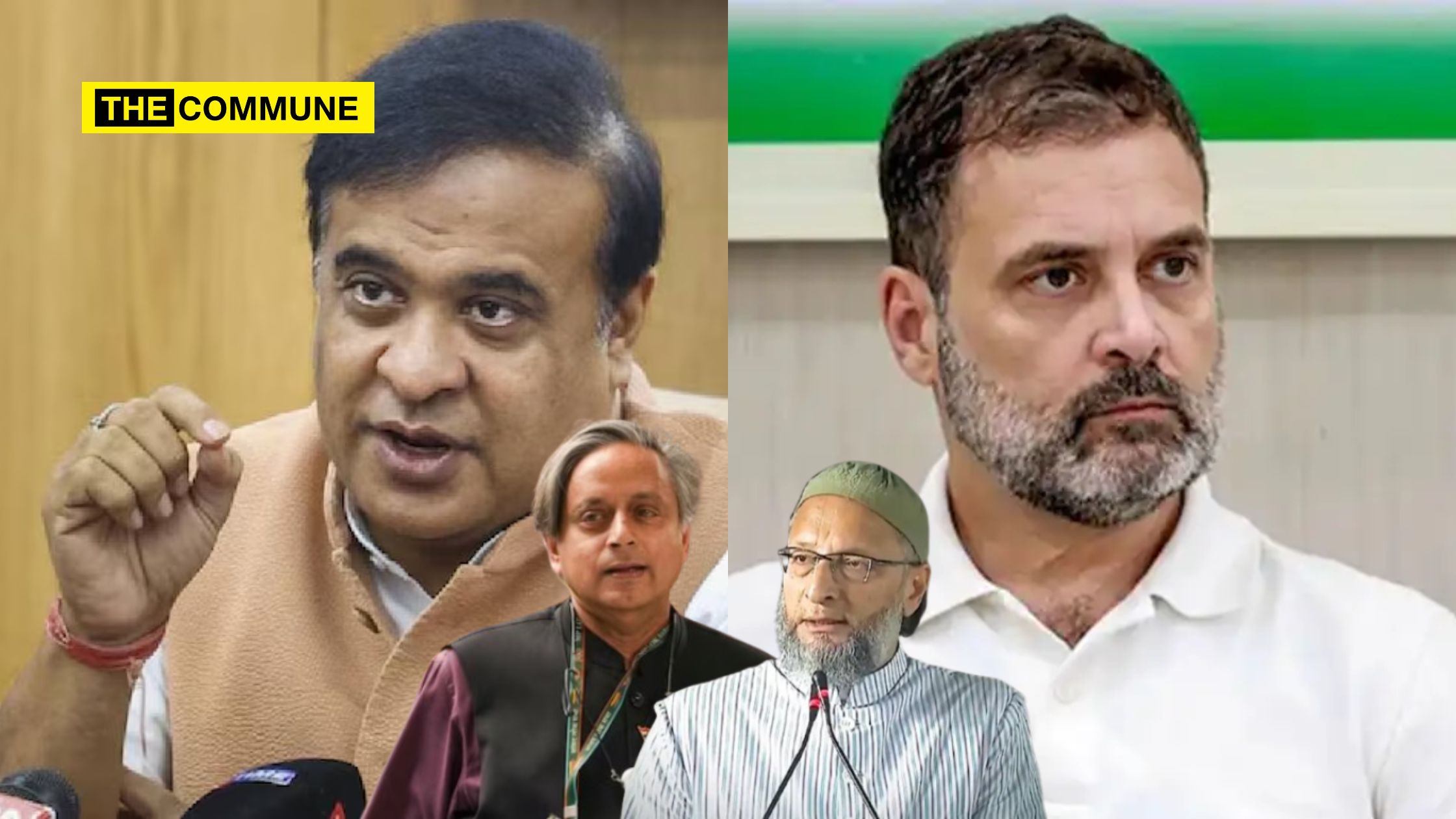
From ‘Vadakkan’ To Panipuri Seller To Pigs: Here’s How DMK Leaders Have Been Making Xenophobic Remarks Against Hindi-Speaking North Indians Especially Biharis

The ruling DMK has consistently displayed hostility toward the Hindi language and, whenever possible, has made derogatory remarks and slurs, not just against the language but also against Hindi-speaking people from North India. By continually stoking linguistic tensions, the party leverages this sentiment to maintain its political influence in the state.

Below are some instances where DMK leaders have propagated anti-Hindi and anti-North Indian rhetoric in Tamil Nadu.

DMK MSME Minister T.M. Anbarasan

I.N.D.I ally and the DMK MSME Minister, T.M. Anbarasan, has once again found himself at the center of controversy after making disparaging remarks about North Indians in the ongoing debate over parliamentary seat delimitation. He compared the region’s population growth to pigs giving birth, a statement that has drawn widespread criticism. This comes shortly after another contentious remark at a DMK event, where he suggested that Hindi speakers in his household were involved in cattle herding—comments seen as derogatory toward migrant laborers who work hard to earn their livelihood.

At an event organized by Pallavaram North DMK to celebrate the 72nd birthday of Chief Minister M.K. Stalin, which also included the distribution of welfare assistance, DMK MSME Minister T.M. Anbarasan spoke about India’s population policies and their impact on parliamentary seat allocation.

He recalled that the family planning program was first introduced in India in 1966 to curb population growth, as India remains the most populous country after China. He mentioned that the program initially promoted the slogan “We Two, Ours Two,” which later changed to “We Two, Ours One,” emphasizing the need for population control. He noted that southern states like Tamil Nadu, Kerala, Karnataka, and Andhra Pradesh adhered to the central government’s guidelines on family planning, leading to a decline in population growth in these regions.

However, he criticized the northern states for not following the same measures, resulting in a significant population increase. He argued that this has now led to parliamentary seat redistribution based on population, disproportionately affecting the southern states. He pointed out that Tamil Nadu’s 39 parliamentary constituencies and other southern states’ seats are being reduced, while northern states gain more representation.

He said“Initially, they said, ‘We Two, Ours Two,’. Then they said, ‘We Two, Ours One.’ After five years, they said, ‘We are children, why we need child’. Like Tamil Nadu, the southern states of Kerala, Karnataka, and Andhra Pradesh all accepted and strictly followed the central government’s policies, ensuring that our guys did not have more than one or two children. As a result, the population in these states decreased. However, if you look at North Indians, the population has increased significantly, breeding like pigs. Now, they are using this population as a basis for seat reorganization, which is negatively impacting our constituencies.”

Anbarasan further alleged that the central government was prioritizing the northern states for political advantage, ensuring dominance in governance. He accused the government of withholding funds, including ₹2,150 crore meant for education, and neglecting the interests of the southern states. Additionally, he criticized the central government’s approach toward gubernatorial appointments, alleging interference in state governance.

This is not the first time Anbarasan has made such derogatory statements. Take a look at his history of such remarks.

Ridiculing Hindi Speakers 

Previous to the above disparaging remark, I.N.D.I ally and DMK’s MSME Minister, T.M. Anbarasan, made contentious remarks at a DMK event, stating that Hindi speakers in his household are engaged in cattle herding. His comments were seen as disparaging towards migrant laborers who earn their livelihood through hard work and perseverance.

He said, “Where are the ones who studied Hindi? Where are they? those who studied Hindi are rearing cows at my home. I’m not joking, It’s true. They are selling Panipuri, mason, carpenters. If we study Hindi we also have to go to North India and sell Panipuri.” 

Grudge Over Working North Indian Migrant Laborers

In March 20224, during an event organized by Alandur Government Higher Secondary School, DMK MSME Minister T.M. Anbarasan commented that men in Tamil Nadu were not engaged in work but rather loitering in TASMAC for liquor. He noted that wherever he looked, Hindi-speaking individuals and women were the ones working, despite the content of his speech being intended as humorous, seemed to overlook the harsh reality of citizens’ lives.

Anbarasan commented, “Now women are working more than men, no men are working. Our men are heading towards TASMAC after sending their wives to work. Look, I’m not saying this for laughs… This is our family, our people, so I’m talking happily. Men don’t work, I’ve said this in many gatherings, you can check who is at the tea shop. Who is there? There is only a northerner who came through migration, even if go to Adyar Ananda Bhavan there are only Hindi speaking people. He doesn’t understand what Masala Dosa is, and we don’t understand what he is saying.

DMK General Secretary & Minister For Water Resources Duraimurugan

On 11 March 2025, DMK General Secretary and Minister for Water Resources, Duraimurugan, expressed his hostility towards Hindi-speaking people during a DMK public meeting in Chennai East District, Thiru. V.K. Nagar North Area, while celebrating DMK chief and Chief Minister of Tamil Nadu M.K. Stalin’s birthday.

He called the Hindi language as “peeda”, a Tamil slur word which means bad omen. Duraimurugan, stated that learning Hindi would bring dosham(inauspiciousness), theetu (impurity), and misfortune. From that time on, we have been opposing it. If we say we are opposing, it is not the language itself that we oppose. In our community, there are people who learn multiple languages—multilingual poets. However, if you study this particular language, you will face Dosham (inauspiciousness), Theetu(impurity), and misfortune. If you study English, you will go up (progress), but if you study Hindi, you will go down (decline).

He further said, “No matter how much you learn Hindi, you cannot speak like them. Even though I know to speak Telugu, I cannot speak like them (Telugu people). We can speak, but we cannot speak like them. Likewise, what I said in the beginning, the abolition of Hindi means… Keep one thing in mind… Consider a man who is at home with his wife and having children and has brought a saraku (a courtesan or a second wife), do you understand the implication? Say, he has brought a second wife then they (the first wife) will lose her privilege and the second wife will be given preference. Likewise, what did he do? He tried to impose on us and we said no.

Then he claimed that North Indians call us barbarians. He said, He says we are barbarians. North Indians dare to call us barbarians! We are at the pinnacle of civilization. We were the ones who wove clothes from rat hair and sent them to Greece, Persia, and the Far East. Our kings crossed the seas and raised our flag as far as Vietnam. We are the ones who studied Agam and Puram, who delved into Kalingathuparani and Tolkappiyam, the scholars of literature, the creators of civilization, the practitioners of hygiene. And yet, a minister looks at us and calls us barbarians? Hey, you are nothing but a person who doesn’t even bathe—nothing more! You don’t bathe.

To substantiate his point and mock North Indians, Duraimurugan, the General Secretary of the DMK, shared a story. He recounted that a man once tied a bull and announced that anyone who touched it would receive 1,000 rupees. A few people attempted but stopped halfway, saying they couldn’t do the task and turned back. Then, a North Indian was asked to do the same—go, touch the bull, and return. As he approached the bull, however, the bull suddenly pulled away and ran off. The reason? The bull itself had wounds and was reeking, and our men (Tamils), unable to tolerate the smell, backed away. But in a twist, the bull fled—not because of its own stench, but because it couldn’t bear the stench of the North Indian!”, he said.

Even he goes on to ridicule North Indians, equating them to pigs and piglets for having many children, exercising his individual right. However, the DMK minister and general secretary, whose party advocates for individual rights, mocks them by saying, Our guy says ‘we two, ours one,’ but he (North Indians) has produced (kids) like pigs there.

DMK Deputy General Secretary & MP A Raja

Similar to the above DMK deputy general secretary and Nilgiris MP A. Raja speaking at an event in Coimbatore, made derogatory remarks about Hindi speakers. He said, “They say if we learn Hindi, we will get jobs. But the Hindi speakers who have come here are only doing construction labour jobs or in fields. Earlier they were only selling panipuri. Now they are working in farms.”

He further proudly stated, “Children from TN who studied English and Tamil are studying in America, England, Australia. So why should we study Hindi? The right to ask that question has been given to us by our Chief Minister.”

Former DMK Minister of Dairy Mano Thangaraj

In October 2022, DMK Minister Mano Thangaraj was once again accused of promoting xenophobia against North Indians. He made controversial remarks, including negative stereotypes, particularly targeting Gujaratis. Thangaraj claimed that North Indians roam around in loincloths and suggested that learning Hindi would lead to jobs in labor sectors, such as working at Parotta stalls and street vendors.

Speaking at an unknown event, Mano Thangaraj said, “Today, the Tamil community and the Indian community is mired in illusion. In north India, people even today roam around in loincloth. If you get an opportunity, go to Gujarat and see. No need to go anywhere else. Once you land there, they will deceive you showing Ahmedabad, Gandhi Nagar, etc. Don’t even look that side. Ask them to show the rural area. Go see the rural area. If you see the rural areas, you will see those people only wear loincloth.”, DMK Minister Mano Thangaraj said.

He further said “In a public meeting yesterday, I asked people who are working in the parotta shops and chicken stalls here. North Indians. How can I get a job studying Hindi? They are coming to work here in parotta shops. I don’t have labourers here to work. From where am I getting labourers? I catch and bring Hindiwallas as labourers here. I pity them. They don’t know the language. They don’t know anything. If they learn Tamil, it will help them. They will get a job learning Tamil. Will I get a job learning Hindi? Such idiots they are. If we tell this, they are asking us to learn Hindi. Now a few our children know Hindi. I don’t have any problem with that. It’s not wrong. Why is the Central Government not making all 22 languages as official language?”

DMK Minister for Municipal Administration, Urban and Water Supply KN Nehru About Bihari And Lalu Yadav

In 2021, DMK Minister for Municipal Administration, Urban & Water Supply KN Nehru, while addressing an employment camp at the DMK office in Trichy, said, “Biharis lack brain as Tamilians have. People from Bihar are not as intelligent as Tamilians.”

“As Railway Minister, Lalu Prasad Yadav packed the Railways with Biharis, especially at lower-level jobs, despite the fact that Biharis were less brainy than Tamils,” DMK Minister KN Nehru has claimed.

“Over 4,000 Biharis work at the Southern Railway’s Golden Rock Workshop in Tiruchy. Similarly, the majority of railway crossing gatekeepers are Biharis. This is all due to the handiwork of Lalu Prasad Yadav.  When he was railway minister, he had all of his fellow Biharis copy the railway exams and then get them jobs on the railways. These people speak neither Tamil nor Hindi and lack the intelligence that we Tamils possess. Yet they are working in Tamil Nadu,” DMK Minister KN Nehru stated.

TKS Elangovan Says Hindi Will Make Tamils Shudras

Another DMK MP and senior leader TKS Elangovan spread hatred against Hindi speakers, saying, “Hindi is the language of backward states, Hindi will make us Shudra.” Elangovan also made hateful remarks citing that speaking Hindi will make us Shudras.

TKS Elangovan said, “Hindi is the native tongue in only underdeveloped states like Bihar, Madhya Pradesh, Uttar Pradesh, and Rajasthan. Look at West Bengal, Odisha, Telangana, Tamil Nadu, Kerala, Karnataka, Maharashtra, Gujarat, and Punjab. Aren’t all these developed states? Hindi is not the mother tongue of the people of these states. Hindi will convert us to Shudras. Hindi will be no good for us.”

Elangovan claimed that speaking Hindi would enslave them. Accusing Hindi lovers of destroying the culture, he added, “They are trying to destroy the culture and trying to impose Manu Dharma through Hindi. This should not be allowed. If we did, we will be slaves, Shudras.”

Hindi Speakers Do Menial Jobs Said DMK MP Dayanidhi Maran

Dhayanidhi Maran, DMK MP, stated in a public meeting that people who learned Hindi work as construction workers and wash toilets in Tamil Nadu, whereas Tamilians hold high-level positions in the IT sector.

He said, “We asked you to study Tamil and English. you studied. Look at Sundar Pichai, he is now the CEO of Google. He would have been a construction worker if he had studied Hindi. Our children hold high-level positions in IT firms and earn a good living. Look at those who studied Hindi. They work as construction workers and clean toilets.”

This other time, while speaking at a public meeting he had called north Indians and Hindi speaking people as ‘idiots’ who will vote for BJP.

Maran’s comments sparked widespread condemnation, including from Bihar Deputy Chief Minister Tejashwi Yadav, who criticized the disparaging remarks and stressed the importance of respecting people from different parts of the country. Former Union Law Minister Ravi Shankar Prasad also challenged Bihar Chief Minister Nitish Kumar over Maran’s statement, calling for an end to disrespect towards Bihar’s people.

‘Vadakkan’ Slurs Hurled By DMK MLA TRB Rajaa And His IT Wing

DMK MLA TRB Rajaa had spewed venom against north Indians umpteen number of times. He had once said ‘Vadakkans’ (slur for North Indian) don’t have a sense of democracy adding that Biharis will remain at the bottom because of their voting choices.

Isai, the DMK state deputy secretary of the IT wing, has used slurs like “Paani puri vaayan” and “Paanparak Vaayan” to insult north Indian migrant workers.

DMK Minister of Commercial Taxes, Registration and Stamp Law, Moorthy Calling For Boycott Of North Indian Businessmen

Recently, DMK Minister Murthy incited hatred towards North Indian businessmen by stating that they should not be allowed to do business in Tamil Nadu and that only Tamil businessmen should do business throughout Tamil Nadu. He also suggested that Tamil businessmen come forward to help send North Indian businessmen out of Tamil Nadu.

RS Bharathi Demeaning North Indians

DMK Organizational Secretary RS Bharathi sparked a controversy by saying that North Indians sell panipuri in Tamil Nadu and the Governor is also like them. He also compared the Governor to a migrant worker from Bihar and said that he would not have left without being beaten had Jayalalitha been alive.

He said, “I had earlier stated that those who sell Soan papdi and Panipuri don`t know the pride of Tamil Nadu. I said this in a meeting. I came to know that many have come from Bihar and I think the Governor (RN Ravi) has similarly come by train,”. 

North Indians Are Fools

At a meeting (in an undated video), Bharathi was seen saying, “The reason why Tamil Nadu is the best state in India is because of the DMK. The people in the other states are fools, they have no brains, these north Indians, I am saying this openly.”

Says Bihar & UP People Eat Chapati Kurma At Amma Canteen

During a party meeting in Chennai in September 2024, RS Bharathi questioned the relevance of Amma Unavagam, the late Jayalalithaa’s pet project. He asked about the need for a low-cost meal scheme after her death and accused AIADMK leaders of exploiting it.

He also claimed that only the north Indian workers benefited from Amma Unavagam on Tamil Nadu taxpayers’ money.

During his speech, Bharathi criticized AIADMK General Secretary Edappadi K. Palaniswami (EPS), dismissing claims that the DMK government had closed Amma Unavagam. He said, “Amma (Jayalalithaa) herself has left (died), then what is the need for Amma Unavagam? Edappadi and his gang ate idli and dosa for one and a half crore rupees while Amma (Jayalalithaa) was in the hospital. Now they are acting like the DMK has shut down Amma Unavagam, where just about 150 people eat daily,” Bharathi remarked.

Bharathi also attacked the Jayalalithaa government’s management of Amma Unavagam, alleging that “wasted food” was served there. He said, “The Jayalalithaa government served leftover food in Amma Unavagam. The chapati and kuruma served at night in Amma Unavagam are consumed by people from Bihar and Uttar Pradesh. We spend our tax money and feed him,” said RS Bharathi.

When MK Stalin Peddled Xenophobia

MK Stalin, the Chief Minister of Tamil Nadu, himself has incited hatred against North Indians working in Tamil Nadu. He stated, while campaigning for the 2021 state assembly elections in Tiruvannamalai on 25 March 2021, “They’re conspiring to place Hindi-speaking youngsters in jobs in Tamil Nadu and grow BJP through that here. The Edappadi Palaniswami government may be a mute spectator to this. But DMK or Tamil Nadu people won’t let that happen.”

In the run up to the 2021 Assembly elections, the DMK had also released political ads in which youngsters can be seen alleging that Edappadi Palaniswami government is giving Tamil Nadu jobs to north Indians.

DMK Health Minister Blames ‘North Indian’ Students For Rising COVID Cases

In 2020, Tamil Nadu Health Minister Ma. Subramanian blamed ‘north Indians’ for rising number of COVID-19 cases in the state.

“The disease has started increasing in educational institutions like VIT, Anna University and Sathya Sai. The reason for that is, in many states of India, the corona virus cases has not come under control, especially Delhi, Haryana, Uttar Pradesh, Maharashtra, Madhya Pradesh, Kerala where cases have been rising. When students from north India come into these educational institutions, the disease is spreading through them,” the Health Minister said in a press meet on June 1, 2022 when new COVID-19 clusters were being reported in different colleges in Chennai.

“VIT Kelambakkam is an educational institution with 15,000 students. The number of 1st year students who stay in hostel is around 5600. Out of this 5600, 80% of them come from north India and stay here. They came to their hostel on May 12 and 13 and have been staying here since then. The disease has spread to other students through them and now stands at 118.”, Ma. Subramanian said.

DMK Higher Education Minister Takes Jibe At Hindi Speakers As ‘Pani Poori Sellers’

Speaking at the convocation ceremony of Bharthiar University in Coimbatore on 13 May 2022, Tamil Nadu Higher Education Minister K. Ponmudy said that it is not necessary to learn Hindi as speakers of that language can be found selling only Pani Pooris.

“In Tamil Nadu, there are two languages – English and Tamil. While English is an international language, Tamil is a local language. We were told that learning Hindi would fetch us jobs, did we get (jobs)? You go and see in our state, in Coimbatore, who sells pani puris? They are Hindi speakers,”, the DMK Minister said.

This is not the first time that Ponmudy took to ridicule Hindi speakers as ‘Pani Poori Sellers’.

Many say that if you study Hindi, you will get a job. But, many are coming to work in Chennai from northern states. A few are selling pani puri here.”, Minister Ponmudy said while addressing members of the DMK Students Wing on 30 April 2022.

DMK MP Calls North Indian States As ‘Cow Piss States’

DMK MP from Dharmapuri DNV Senthilkumar while speaking about the National Education Policy in Lok Sabha said, “The goal of the government in the National Education Policy is to have a Gross Enrollment ratio (GER) of 50%. This has already been achieved by Tamil Nadu. Whereas, India’s national GER is around 24.6%. We are much ahead of the American GER. Why is it that the Central Government is seeing to thrust the National Education Policy upon us? We have set principles and we have set models, the Dravidian principle models, which are successful models. If they want to implement it to make India a developed state, let them implement Tamil Nadu’s model throughout the state. Instead, why is it being thrust upon us? We totally reject it. If they want, they can go implement them in Gomutra states, which they are very keen upon.”

DMK Minister Insinuates ‘Lack Of Education’ As Reason For BJP’s Victories In The ‘Hindi Belt’

In an interview to Hindustan Times, the then-Tamil Nadu Finance Minister PTR Palanivel Thiagarajan said that he can’t fathom how the BJP keeps getting re-elected in the ‘Hindi Belt’ and wondered if lack of education is the reason for it.

To a question by the anchor on BJP’s model of politics that couples welfare politics with Hindutva, the DMK Minister saidIt is hard for me to see how BJP governments keep getting re-elected both at the Union and in other parts in the Hindi belt. And some part of me wonders whether it is lack of education, the lack of kind of opportunity and therefore the lack of hope.”

Later when the anchor tried to  his position, Palanivel Thiagarajan tread cautiously saying that he cannot understand how in the Hindi belt “these guys” keep getting re-elected.

“I’m looking for explanations. I’m trying to find maybe one of the explanation is that the lowest income levels and the worst per capita education levels are highly correlated with this outcome. I don’t have any proof. I don’t have anything. I also said there is a second alternative. That as bad as their performance looks compared to me, it may be that they are the best of bad choices. I don’t know. I just don’t have data.”, the DMK Minister said.

The deep-seated hostility of the DMK towards North Indians and the Hindi language is increasingly influencing society, affecting everyday interactions and disproportionately impacting common people. This rhetoric often fuels tensions, sometimes escalating to the point where poor migrant laborers from the north face unwarranted suspicion and are even assaulted by locals.

Just as South Indians have historically been stereotyped and discriminated against as ‘Madrasis’ in the north, North Indians are now being labeled as ‘Vadakkans’ (northerners) or ‘Pani Puri walas,’ largely due to the narratives pushed by the DMK and its affiliates.

Subscribe to our channels on TelegramWhatsApp, and Instagram and get the best stories of the day delivered to you personally.
India Got Back 297 Stolen Antiquities From US In 2024

So far 588 Indian antiquities smuggled out of the country have been secured back from the US, of which 297 were repatriated in 2024, the Central government has informed Parliament.

The information was given by Union Minister for Culture and Tourism Gajendra Singh Shekhawat in a written reply in the Rajya Sabha. He was responding to a question on the number of “looted or stolen artefacts” expected to be returned under the US-India Cultural Property Agreement to prevent illicit trade of antiquities.

The Cultural Property Agreement (CPA) has been signed with the US to prevent the smuggling of Indian antiquities. The agreement, being preventive in nature, has no timelines or target numbers, the minister explained. The minister was also asked whether the government plans to collaborate with international organisations or other nations to strengthen India’s efforts in recovering stolen antiquities.

India collaborates with different international organisations, including UNESCO and INTERPOL as per requirement. The CPA has provision for fostering cooperation and mutual understanding in the matters of technical assistance, illicit trade and pillage of cultural property, the minister said. He was also asked a question on whether the government has observed a “resurgence of ancient sects”, particularly during events like the Kumbh Mela.

Shekhawat replied that the Kumbh Mela is a significant Hindu pilgrimage festival and one of the largest religious gatherings in the world, where millions of devotees converge to bathe in sacred rivers. During this event, many ancient sects, spiritual organisations and religious leaders come together, often showcasing rituals, traditions and practices that have been passed down through centuries.

“The resurgence of ancient sects in India is driven by factors such as a growing interest in cultural and spiritual heritage coupled with the search for deeper meaning amid modern religious challenges,” he said. Social media and religious tourism have also played a role in spreading awareness of these sects. This revival is significant in contemporary society as it helps to preserve traditional practices, fosters social cohesion and strengthens national pride in India’s cultural roots, the minister added.

–IANS

Subscribe to our channels on TelegramWhatsApp, and Instagram and get the best stories of the day delivered to you personally.
131-Year-Old Hindu Temple In Kuala Lumpur Faces Uncertain Future Amid Relocation Dispute

A century-old Hindu temple in Kuala Lumpur is at the center of a heated dispute after plans were announced to relocate it to make way for a mosque. The Dewi Sri Pathrakaliamman Temple, located along Jalan Munshi Abdullah near Masjid India, has welcomed a temporary pause on its demolition by Kuala Lumpur City Hall (Dewan Bandaraya Kuala Lumpur – DBKL) but remains firm in its opposition to relocation. The temple, which predates Malaysia’s independence, faces potential relocation to make way for a proposed mosque on the same site, a plan initiated by landowner Jakel Trading Sdn Bhd.

Historical Significance And Religious Importance

Built in 1894, the Dewi Sri Pathrakaliamman Temple has stood for over a century, deeply rooted in the Masjid India community. The temple’s main deity, Dewi Sri Pathra Kaliamma Amma, is an integral part of the religious and cultural heritage of local Hindus. Over the decades, the temple has coexisted alongside various other religious and commercial establishments in the area.

The Dispute Over Relocation

The controversy arose after DBKL approved a proposal by landowner Jakel Trading Sdn Bhd to build a mosque on the land where the temple stands. Jakel Trading, which acquired the land in 2012, received approval in 2021 to construct a mosque named ‘Masjid Madani’ on the site. The company has offered to bear the costs of relocating the temple and has been in discussions with the temple committee for over a decade. However, the temple committee has rejected proposed relocation sites, including one near the National Heart Institute, citing concerns over distance, land size, and flood risk.

However, temple representatives argue that they were only informed in 2016 that they were occupying privately owned land, two years after it was sold to a developer. Lawyer N. Surendran, representing the temple, emphasized that the temple had originally moved to its current location in 2008 under instructions from DBKL. He asserted that DBKL, as an extension of the federal government, has a responsibility in this matter due to the land deal it facilitated almost a decade ago.

Concerns Over Relocation Site

DBKL has proposed multiple alternative sites, including one near the National Heart Institute, several kilometers away. However, temple representatives have rejected these options, citing concerns over land size, distance, and flood risks. Since 2020, following a Development Order issued to the landowner, the temple has faced increasing pressure to vacate the premises.

Temple committee members, supported by prominent lawyers and activists, have raised concerns over religious rights and heritage preservation. Lawyers for Liberty director Zaid Malek suggested that an open-air parking lot adjacent to the temple, also owned by the developer, could be used for the mosque’s construction instead.

“If we were to demolish the temple, we would be disregarding the area’s identity, of which the temple has been part of for over a century. The easiest solution doesn’t require the temple’s demolition, as the proposed mosque can be built in the parking lot beside it,” he stated. He also pointed out that it would be inappropriate for a mosque to be built on the site of a demolished house of worship.

Prominent lawyer and activist Datuk Ambiga Sreenevasan expressed gratitude to DBKL for recognizing religious freedom under the Federal Constitution by pausing the demolition. However, she stressed that legal action would be a last resort, with the temple committee preferring to remain at the current site.

Broader Implications

Urimai chairman P. Ramasamy, a former Penang deputy chief minister, has strongly opposed the relocation, stating that the issue goes beyond a mere move—it is about historical preservation, religious rights, and responsible governance. He criticized DBKL for approving a mosque project on land occupied by a longstanding place of worship and questioned why alternative sites for the mosque were not considered.

“This is not just about one temple—it is about setting a precedent for how heritage and religious rights are treated in Malaysia. Hindu temples are not placed on wheels to be moved at the whims of the powerful,” Ramasamy stated. He emphasized that the temple’s historical and religious significance should be respected.

DBKL’s Assurances and Next Steps

In response to the backlash, DBKL has assured that it will not carry out demolition activities until the relocation process is finalized. It reiterated that the mosque’s construction was a proposal by the landowner and not the government. DBKL has also promised to uphold the principle of religious freedom as enshrined in the Federal Constitution.

Meanwhile, Jakel Trading’s head of legal and corporate communications, Aiman Dazuki, stated that the firm had delayed mosque construction despite receiving approval in 2021. He maintained that relocating the temple was necessary, as the 12,000-square-foot plot of land was not large enough to accommodate both places of worship.

Subscribe to our channels on Telegram, WhatsApp, and Instagram and get the best stories of the day delivered to you personally.