Home Blog Page 502

Dravidianist Director Karthik Subburaj Blames “Paid Hate Reviews” For Retro Flop
karthik subburaj retro flop paid hate reviews

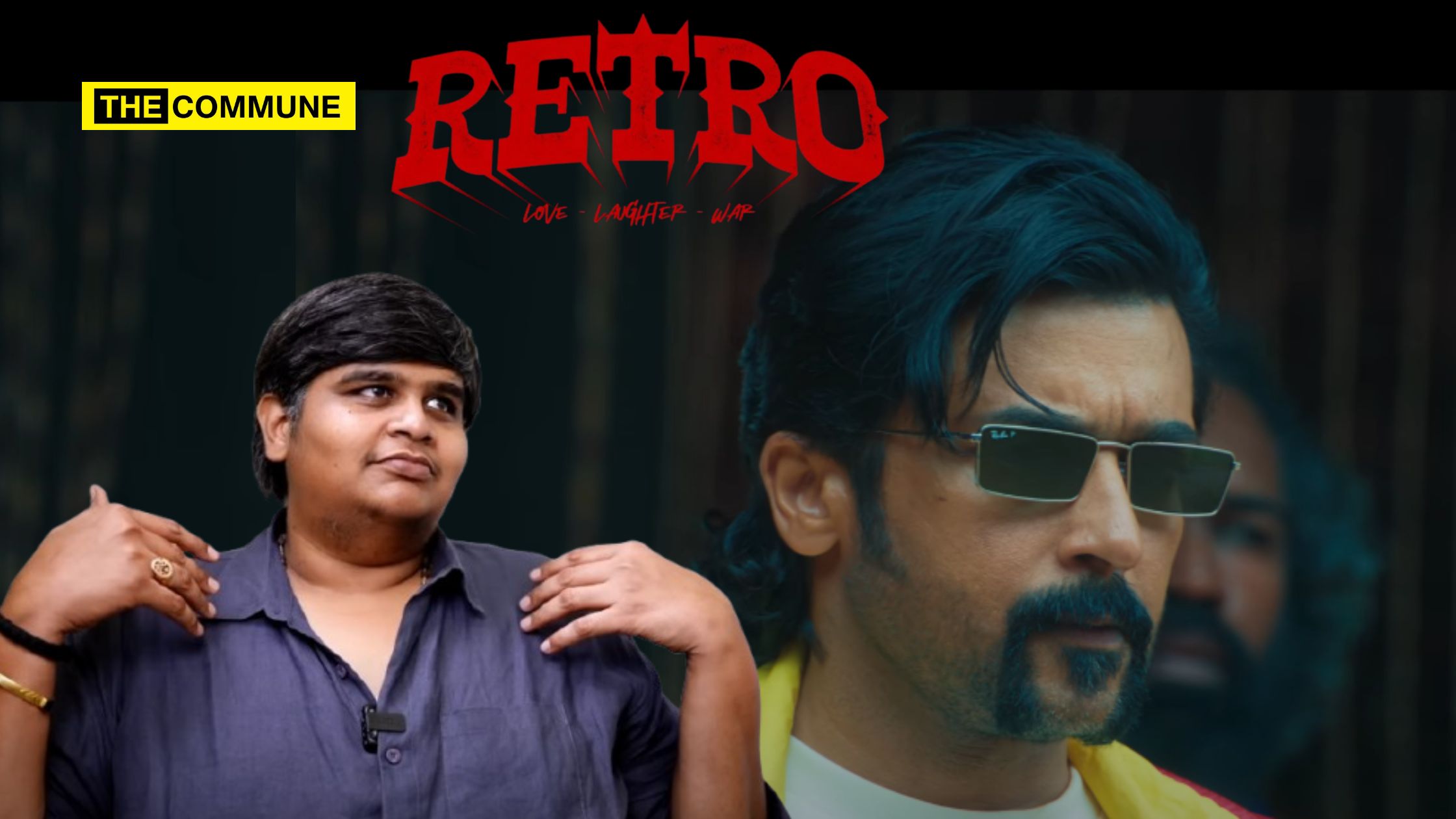
Kollywood director Karthik Subbaraj is widely regarded as one of the finest filmmakers in the industry. With a unique style and a string of successful films, he has established a distinct brand for himself. However, in a recent interview with a private YouTube channel and a movie critic, he made some controversial remarks regarding his latest film Retro, which starred Dravidianist actor Suriya. Subbaraj defended the film, which he considered a success despite its underwhelming reception, and blamed critics for the negative reviews. He went further to label these reviews, even from common moviegoers, as “paid hatred” driven by an agenda. His reaction to the criticism left many feeling that he missed an opportunity to address the film’s shortcomings and correct his style.

In the interview, Karthik Subbaraj also touched upon the pressures of filmmaking, including financial gains and expectations, while discussing the critical reception of Retro. His comments on movie reviews quickly went viral, sparking a storm of controversy, with many netizens even taking to the comments to school him.

Regarding movie reviews, Subbaraj explained, “Recently, there’s a lot of conversation going on now, it’s not about reviews at all. Reviews actually help a filmmaker in some way. I’m talking about good reviews, I mean constructive criticism and all that. But nowadays, it’s mostly about paid reviews. Paid reviews are not the problem, but paid hatred and paid agenda-oriented things, and that’s what’s happening, right away. So, when I look at this, it will affect an artist by their heart. We should come out of it. This is a journey, even the experience coming from this is something new for mee too. Right away something is going on and happening to everyone and happening so fast. I think everyone is talking about it, and something has to be done and this has to stop. It’s more like a campaigning. A paid campaign.”

The interviewer, Baradwaj Rangan, added, “I was speaking to somebody the other day, and they told me that every actor has an enemy camp, that is on Twitter or whatever it is, right? So, when an actor has a movie coming out, start a campaign against it. Even if someone says something good about the movie, discredit the individual. That’s true, right?”

Karthik Subbaraj responded, “That is what happening. Somehow heard a shocking thing like they have an office for that, and some people are actually working for it, while many people are paying for it. You can only do that if you do it full-time. Now, everyone is busy with their work, but doing their work they can’t do this as a work. When we went to the theater, I went to watch it during the second weekend’s Thursday or Friday in Madurai, Trichy, and Coimbatore. Most of the people I sat with were enjoying it. I expected them to clap, enjoy the movie, and they did all of that. At the end of the film, I heard people saying, “The film was good, but why are they saying this?” This was the common thing. Some people were saying, “This was the reason why I didn’t come last week, but now many people are saying it’s good, So I came to watch it. Is this whether affecting them or reducing the movies collection. This is very dangerous happening because it is very paid, targeted and as you said, I also learned that there’s a paid team behind it. It was really shocking to me.”

Contrary to Karthik Subbaraj’s defense of Retro, the film was widely regarded as a failure, as confirmed by regular moviegoers.

Some of the audience reactions and criticisms are summarized below:

One of the netizens lamented, #Retro – an overstuffed tiring, exhausting bore fest that loses engagement after the 25 min mark. At times had to look at my watch as to when the movie would end. @Suriya_offl deserves better than this film, not one bit a comeback.”

Another netizens reviewed the movie stating, “#Retro too many layers , too many plots and too many minutes precisely 168 minutes wasted as well , though there are exceptional scenes here and there it lacks the coherence and is disappointing.”

Another netizen lamented, “After Watching Retro, we are the Joker. Worst Movie.”

Another netizens reviewd the movie stating, “#Retro review. Dei Karthik Subbaraj, you’ll never be okay… why did you make it this cringe? 😭😭😭😭😭😭 Suriya could’ve toned down his overacting… the jail scene was straight-up laughable. Please quit cinema… you’ve made us cry like this… Hey sk fans, you will pay for this.” 

Another netizen reviewed the movie stating, “Retro Movie Review #RetroReview FDFS Review from my US Friend. Another disaster from Surya. deadly boring Positives: Pooja Hegde Negatives: All others Criticism: Poor screen play. Karthik Subburaj should have given the screenplay impacting, or film should have been sprinkled with comedy. Mixed with both, film struggles where to be serious and where to sow comedy Result? Painful for the watchers.”

Another netizen shared a video of a frustrated moviegoer who slammed the film, saying it was a complete waste of money. The viewer sarcastically remarked, “For spending ₹250 in the morning, they made us to laugh (comedy show). It wasn’t goosebumps it was Kanguva 2.” Alongside the video, the netizen trolled, “Kanguva 2, huh? I thought he’d move up from tier 2 to tier 1… but Suriya’s fallen to tier 3 instead.” in the video the audience lamented saying, “For spending 250 ruppe they have made us laugh. It was not a goosebump, its Kanguva 2” 

Another netizen mocked, “At least in Kanguva you could have run out of the theater saying the shouting gave you ear pain… 😂 But Retro? It’s not like that — you can peacefully fall asleep… 😂 Despite this if you are still thinking of watching it? Then you’re going to end up like ‘3-movie Dhanush’”

Another netizen mocked the film by sharing a satirical news card claiming that Suriya’s ‘Retro’ struggled to fill seats even for its First Day First Show, leaving theatre owners stunned.

One of the audience, frustrated after watching the movie Retro, told the media, “Retro didn’t really connect with me. It felt like they combined two or three movies into one and stuffed on us. I don’t understand why they took such lengthy one. It’s a three-hour film, and it has so much content takes that long just to tell the story. There’s so much drag and lag. Once the first half is over, it feels like the movie ends there, the second half  is entirely different content for film.”

He continued, “It felt like Suriya wanted to showcase everything his emotions, action in a single film. And the climax of this film felt like a remake of Jigarthanda 2 climax. If you look at the film in parts, Santhosh Narayanan did well with the music, and Pooja Hegde gave her career-best performance. But when you see it as a whole, you’re left wondering—why such huge content, such length? It was very lengthy and dragging.” He added, “He goes in search of love, then full action, then back to love, and again full-on action. It starts in one place, wanders off somewhere else, and finally ends in Jigarthanda 2 climax.” He rated the film 6 out of 10.

Another audience member shared their thoughts, “Both the first and second halves are too lengthy. Suriya’s presence was good, and the songs was also good. The vibe of the ‘Kanima’ song was awesome. What else? Well, we expected more from the story, but if you go in with low expectations, the movie is enjoyable. It was a comeback for Suriya he performed his part well.”

He continued, “I’d say go in with lower expectations, and you’ll probably enjoy the movie more. I went in with high expectations, so I felt a bit let down. The film runs for three hours, so there’s definitely a lag. They tried to make up for it with fight sequences—it worked to some extent, but not entirely. There’s a lot of action, and he has done martial arts in the film too.”

 Another viewer harshly criticized the film, calling it strictly average even when watched in theatres. He remarked, “Bro, this is just an average movie. It’s nowhere to claim being ‘super’ or ‘awesome.’ Even with the theatre experience, it felt average and if you’re watching on OTT, you can’t watch.”

He went on to say the script felt very plain and unimpressive. “Usually, movies pick up pace in the second half, but here, only the first half had some energy. After the flashback scene, people were just watching it casually. I don’t think it really made an impact on anyone.”

He lamented, “The entry and opening for him were solid, and his fight scene was impressive—but once the actual story began, there was nothing. That is the problem”

Subscribe to our channels on TelegramWhatsApp, and Instagram and get the best stories of the day delivered to you personally.

TN Public Service Commission Or DMK Service Commission? Group 1 Exam Question Glorifies DMK’s Anti-Hindi Agitation

tnpsc group 1 exam dmk propaganda

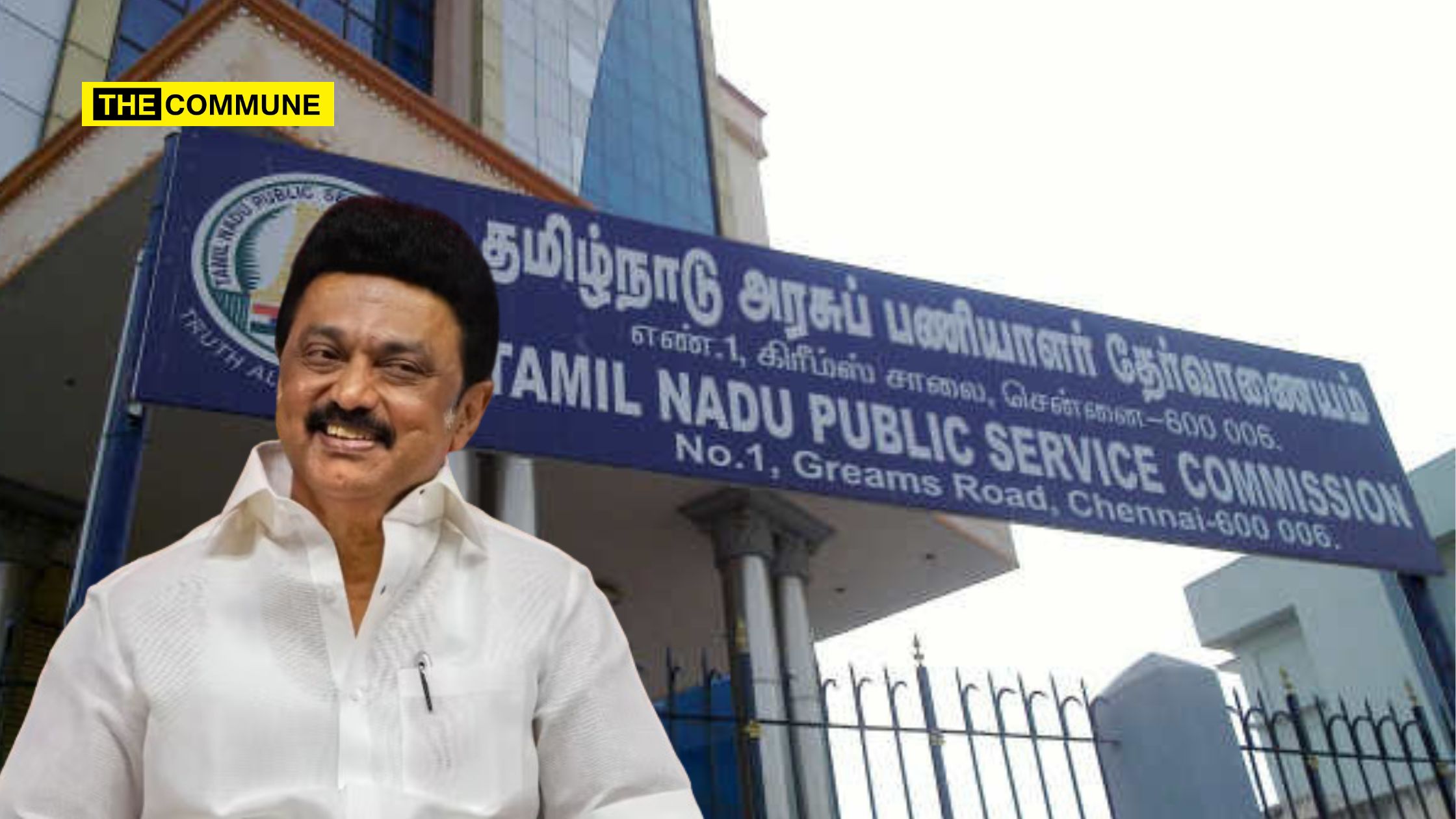
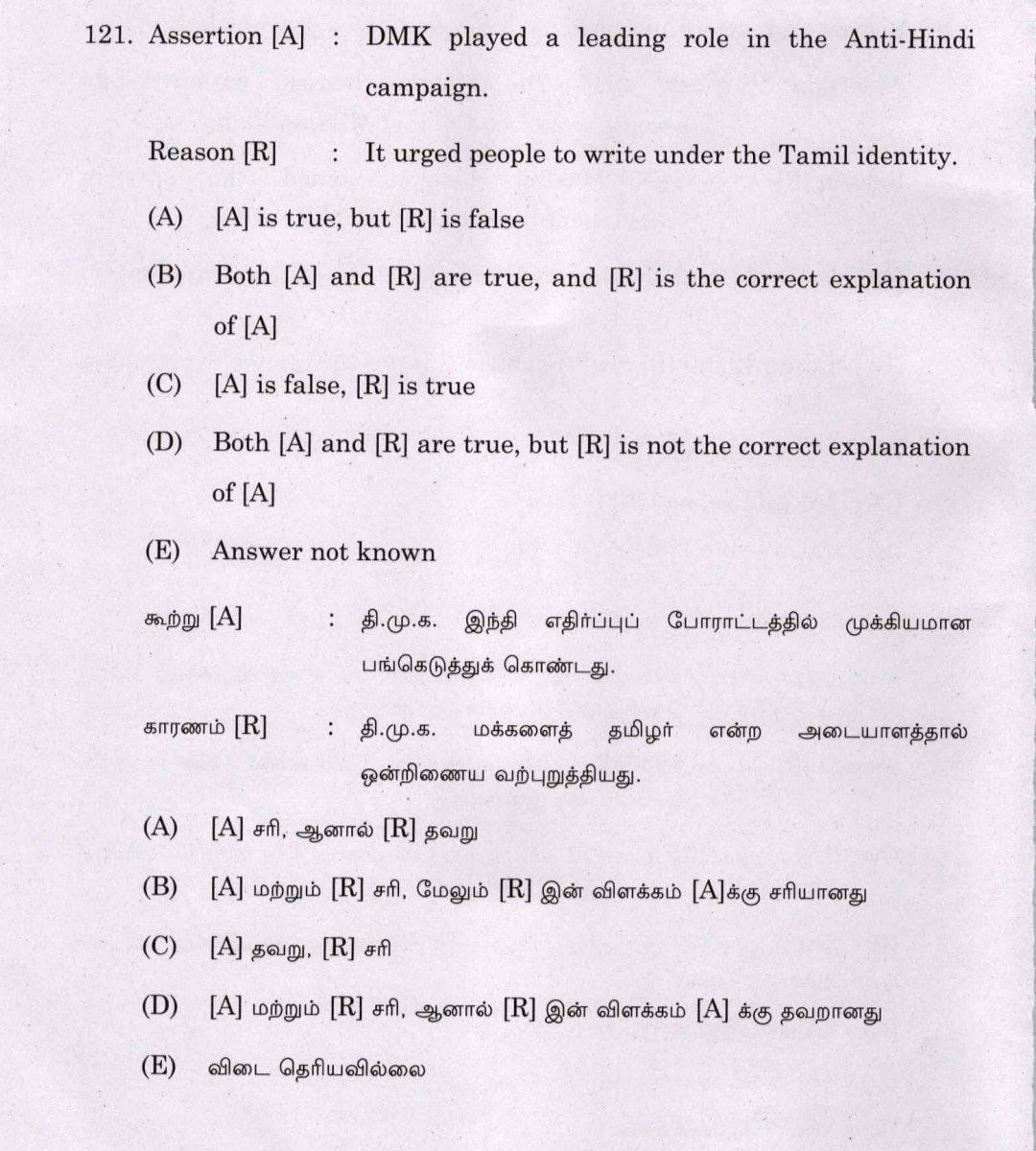
The Tamil Nadu Public Service Commission (TNPSC) has faced intense backlash following the inclusion of an exceptionally trivial question in yesterday’s TNPSC Group 1 exam. Instead of focusing on core topics like governance, law, or public administration, the exam featured a question that raised eyebrows. The question read: “Assertion [A] DMK played a leading role in the Anti-Hindi campaign. Reason [R]: It urged people to write under the Tamil identity.”

By framing the question in this manner, it not only promoted the DMK’s ideological stance but also implied that answering in line with the party’s agenda would benefit candidates seeking top-tier state positions such as Deputy Collector and DSP. This has sparked widespread criticism from various quarters.

Reacting to the controversy, Tamil Nadu BJP president Nainar Nagendran vehemently condemned the move, issuing a statement on his official X account, stated, “The question asked in yesterday’s TNPSC Group 1 exam, “Did the DMK unite people with the Tamil identity during the anti-Hindi agitation? Or not?” is shocking. In the Group 2 exam held last February, a question referring to the Honorable Chief Minister, Mr. @mkstalin, as “Thayumanavar” was raised, which sparked controversy. Now, yet another question related to the ruling party, DMK, has been asked, which is condemnable.

While the glorious history of Tamil Nadu and the great political leaders like Kamaraj, who led noble initiatives, are part of the curriculum, is it the specialty of the Tamil Nadu Public Service Commission to design questions in a way that praises the ruling party in order to test the candidates’ knowledge? Is this the hallmark of the Tamil Nadu Public Service Commission? Is it necessary to ask such questions in exams for posts like Deputy Collector or Deputy Superintendent of Police? Or, is this question included in the eligibility test as a starting point to suggest that those in high-ranking positions must always support the ruling government? Or, questions arise in people’s minds such as whether this question was included in the eligibility test as a starting point for those in high positions to always support the ruling government. Such questions arise in minds of the public. It is not right for the DMK government to focus solely on placing self-promotional questions in candidates exam papers, by not conducting TNPSC exams regularly, by not publishing the results of the exams and leaving the youth of Tamil Nadu without employment opportunities,  and not fulfilling its election promise of “filling 3.5 lakh government posts”. Therefore, I urge @arivalayam to stop using government exam papers as a platform for their empty advertisements and instead focus on increasing job opportunities, keeping the students’ futures in mind.”

Prior to the current controversy, the recently held Group 2 exam also drew criticism for featuring a frivolous question. It asked candidates to identify which government scheme in Tamil Nadu led people to refer to the Chief Minister as “Thayumanavar

Candidates had to choose from five options: the School Breakfast Program, Vidiyal Bus Scheme, Neengal Nalama Scheme (“Are You Fine?”), Makkaludan Mudhalvar Scheme (“CM with the People”), and a fifth option indicating that the answer was unknown.

The question, widely perceived as an attempt to glorify the ruling Chief Minister, shocked not only aspirants but also academicians and the general public, raising concerns about the politicization of competitive exams.

Subscribe to our channels on TelegramWhatsApp, and Instagram and get the best stories of the day delivered to you personally.

Madurai Murugan Devotees Conference Showcases All Six Arupadaiveedu Together

murugan devotees conference arupadaiveedu madurai

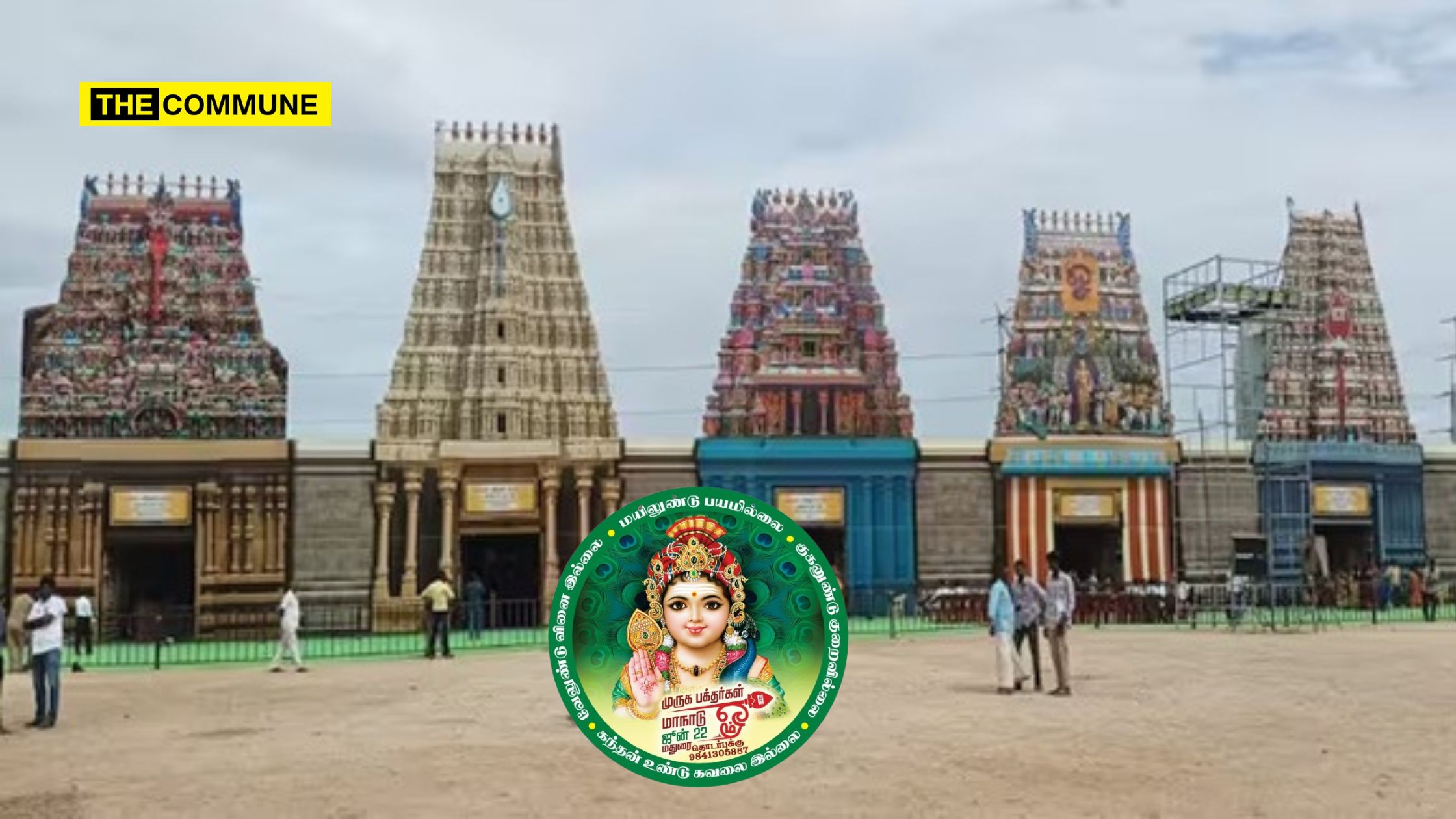
A major spiritual gathering is underway in Madurai as the Hindu Munnani inaugurated a special exhibition of Murugan’s Arupadaiveedu (six sacred abodes) ahead of the Muruga Bhaktas’ Conference/Murugan Devotees Conference scheduled for 22 June 2025 near Pandikovil. The event saw participation from prominent figures including Puducherry Home Minister Namachivayam and Hindu Munnani State President Kadeswara Subramaniam.

The exhibition features meticulously crafted replicas of all six Murugan temples, complete with their moolasthanam (sanctum sanctorum) and frontal structures. Devotees can offer prayers to the sacred vel (divine spear) placed at each replica, while detailed displays highlight the unique spiritual significance of every shrine – from Palani’s Rajaa Alankaram to Tiruchendur’s Vel.

The June 22 conference will feature cultural performances and spiritual discourses, culminating in a massive gathering where lakhs of devotees are expected to collectively chant the Kanda Sashti Kavasam at 6 PM. Organizers emphasize this as the event’s spiritual highlight.

The exhibition offers devotees, especially the elderly, a rare opportunity to experience all six sacred sites in one location – a pilgrimage that would normally require extensive travel across Tamil Nadu. Many attendees expressed gratitude for this innovative approach to devotion.

The conference continues tomorrow with spiritual discourses and cultural programs, expected to draw thousands of Murugan devotees from across South India.

Subscribe to our channels on Telegram, WhatsApp, and Instagram and get the best stories of the day delivered to you personally.
Anti-Hindu, Anti-India Propagandist Rana Ayyub Meets DMK Leader And Tamil Nadu CM MK Stalin

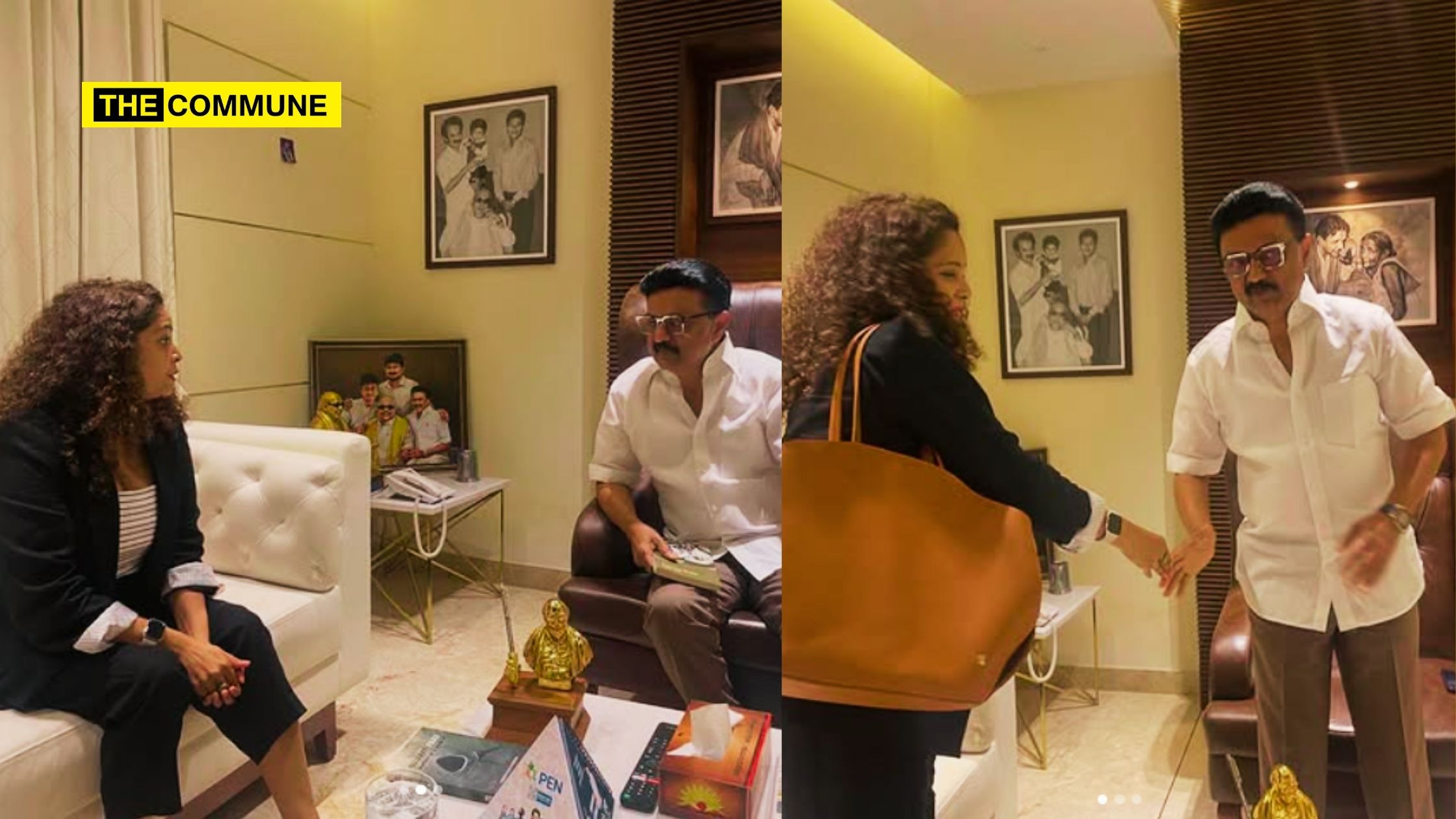
Alleged journalist and anti-India, anti-Hindu propagandist Rana Ayyub met Tamil Nadu Chief Minister MK Stalin on 16 June 2025. Ayyub shared the pictures of the meeting on her Instagram handle.

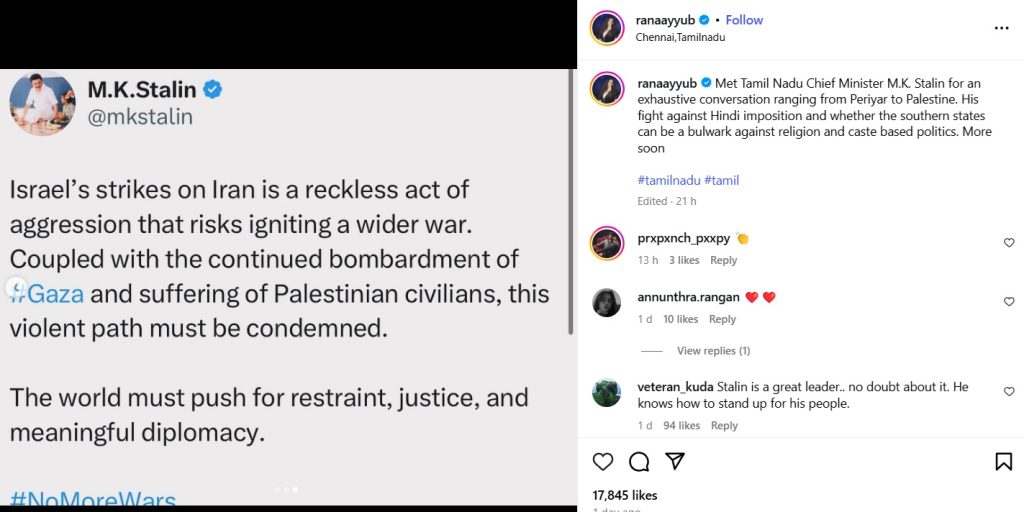
She wrote, “Met Tamil Nadu Chief Minister M.K. Stalin for an exhaustive conversation ranging from Periyar to Palestine. His fight against Hindi imposition and whether the southern states can be a bulwark against religion and caste based politics. More soon” 


View this post on Instagram


A post shared by Rana Ayyub (@ranaayyub)

In addition to the images of the meeting with Stalin, Ayyub also shared a screenshot of Stalin’s post on the Israel-Iran war.

The “more soon” at the end of the post makes one wonder if there will be any sort of collaboration between the two.

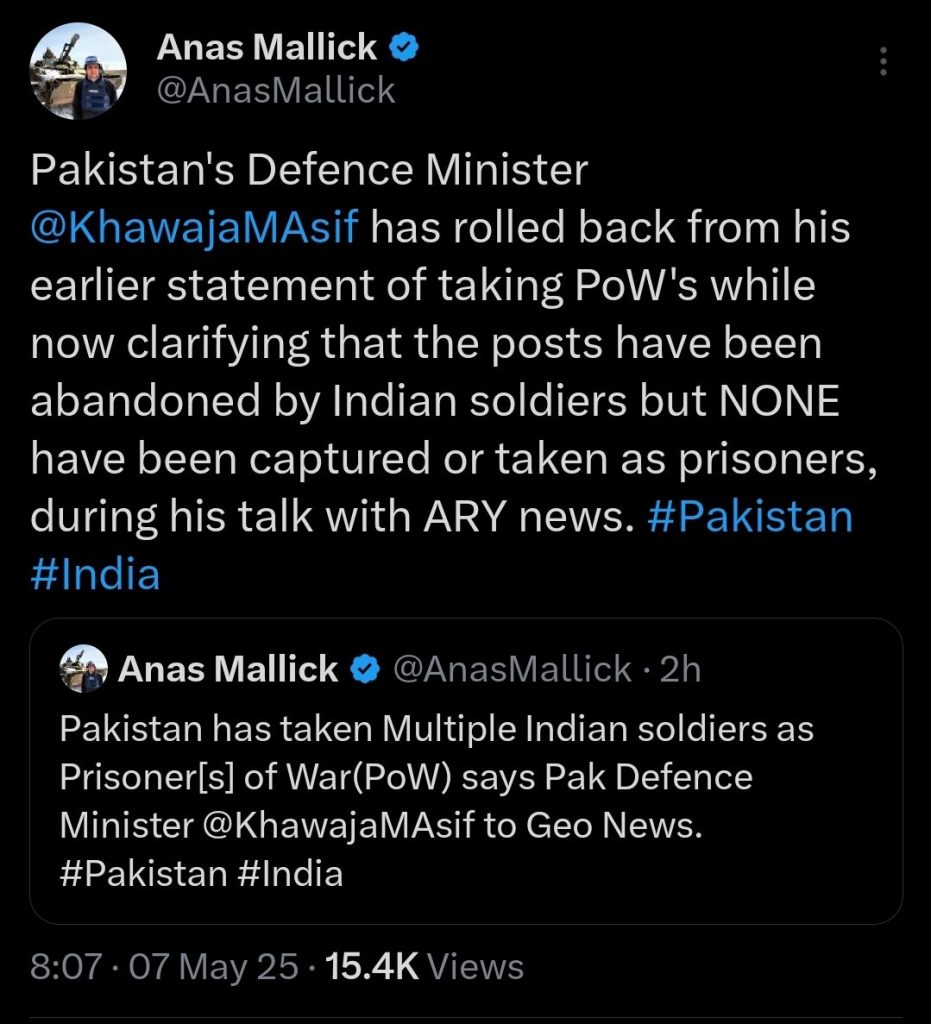
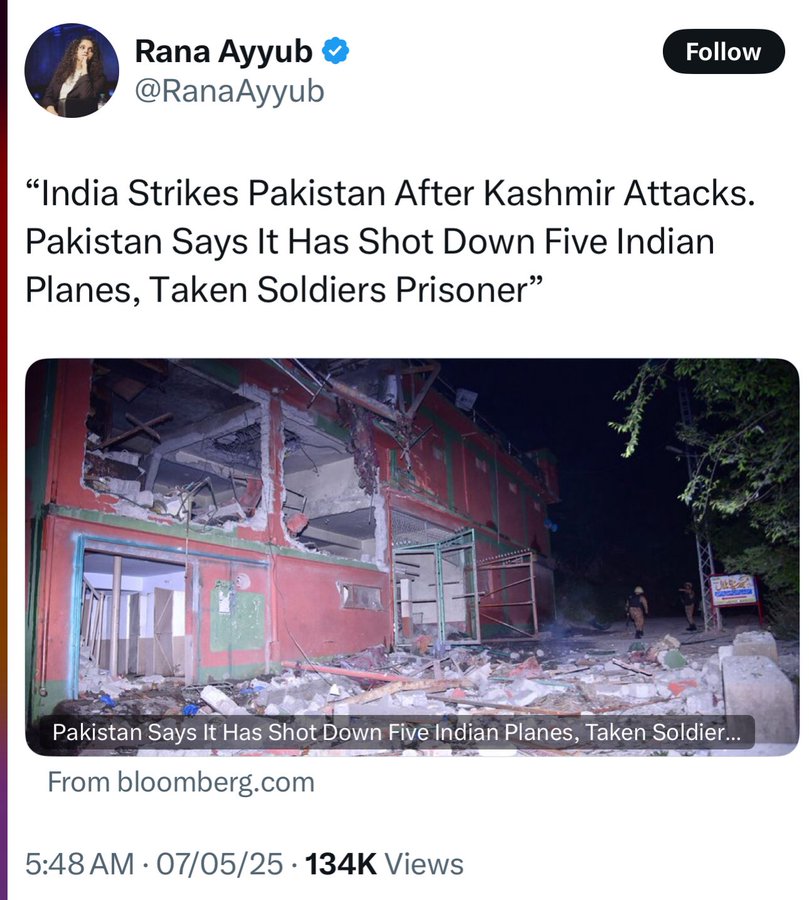
The meeting comes at a time when several Dravidianist YouTubers have been pushing the Pakistani propaganda amid Operation Sindoor. It is noteworthy that in the aftermath of India’s precision strikes on terror hubs inside Pakistan, Rana Ayyub faced severe backlash for amplifying unverified claims from Pakistani sources, including false reports of downed Indian jets and captured soldiers.

As India’s operation unfolded, Pakistani media and online propaganda networks began circulating false narratives about retaliatory strikes. Among the most prominent voices echoing these claims was ‘journalist’ Rana Ayyub, who shared a Bloomberg article titled, “India Strikes Pakistan After Kashmir Attacks. Pakistan Says It Has Shot Down Five Indian Planes, Taken Soldiers Prisoner.”

This claim, was widely debunked, and was also not corroborated by Pakistan’s own military, as clarified by the Pakistani Defence Minister, who publicly confirmed that no Indian aircraft were shot down and no Indian soldiers were captured.

Despite mounting evidence that the reports she amplified were false, Ayyub did not retract or delete her tweet. Experts and fact-checkers have also confirmed that videos and images circulated to support Pakistan’s narrative are outdated, including footage from sectarian clashes in Khyber Pakhtunkhwa in 2024 and an old IAF jet crash in Rajasthan.

It is noteworthy that several Dravidianist “influencers” and journalists were also peddling Pakistani propaganda akin to what Rana Ayyub did. Additionally, apart from simping for Pakistan, there are several Dravidianists who also simp for Palestine.

About Rana Ayyub

Rana Ayyub has long been accused of pushing a narrative that is not only anti-Hindu but also alarmingly sympathetic to Islamist extremism and Pakistan’s propaganda machinery. In May 2024, she sparked outrage by declaring that there is “no proof of Islamic terrorism” in India — a statement seen as a blatant attempt to whitewash decades of Islamist attacks, including the 26/11 Mumbai massacre and bombings by groups like Indian Mujahideen and ISIS affiliates.

She has also repeatedly downplayed Pakistan’s role in sponsoring cross-border terrorism, while instead attacking Indian security forces and the government. On global platforms and social media, Ayyub often parrots talking points that mirror Pakistan’s attempts to portray India as a fascist, intolerant state. Whether it’s defending radical elements under the guise of human rights or questioning Indian judicial outcomes in terror-related cases, Ayyub’s interventions frequently align with narratives that seek to undermine India’s sovereignty, destabilize social harmony, and demonize the Hindu majority

Subscribe to our channels on Telegram, WhatsApp, and Instagram and get the best stories of the day delivered to you personally.
Bharatiya Sant Maha Sammelan Held In Bengaluru, Resolve To Preserve Hindu Dharma, Culture, And Education

bharatiya sant maha sammelan bengaluru kanchi shankaracharya jayendra saraswati hindus

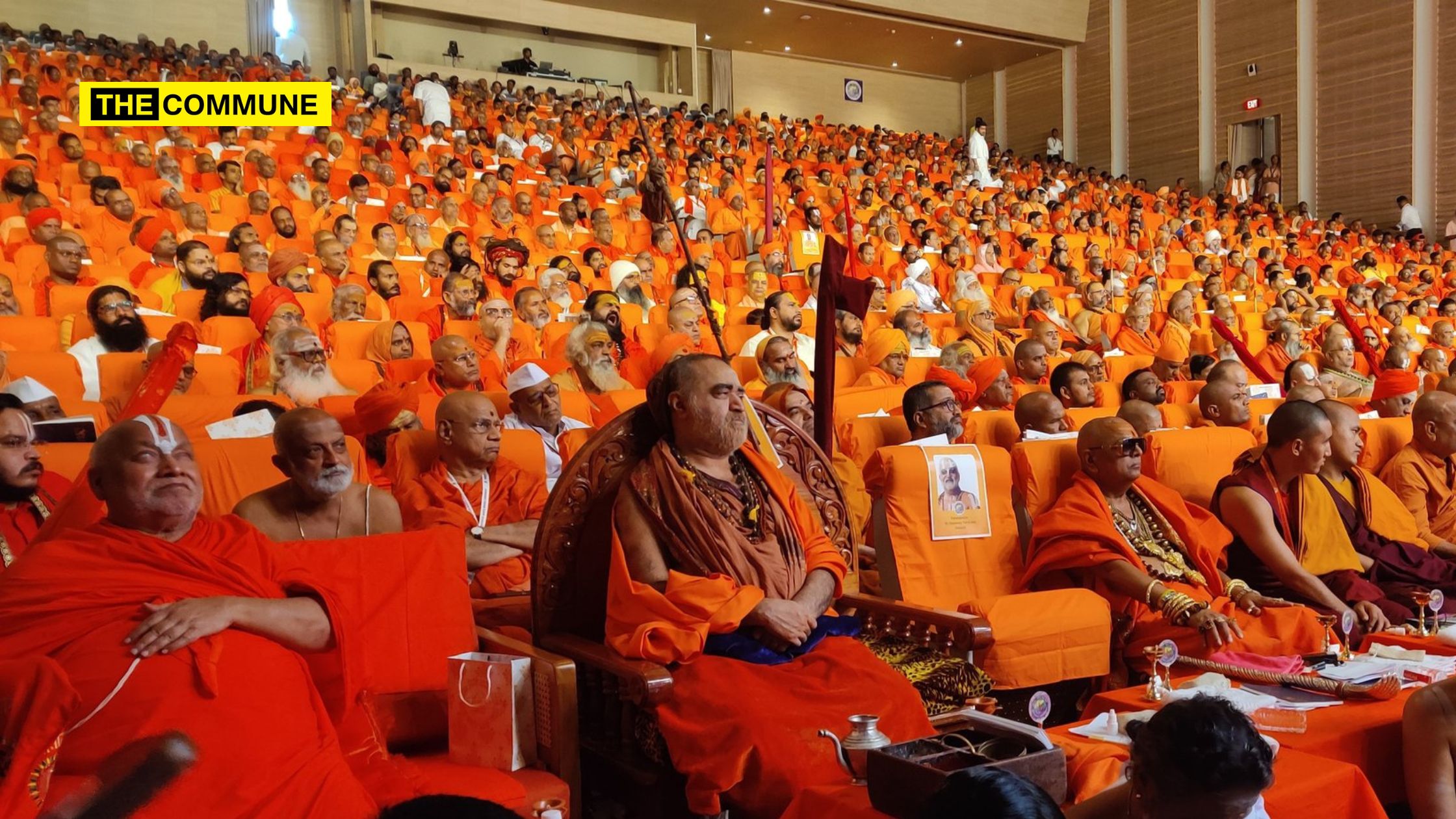
The Bharatiya Sant Maha Sammelanam was held in Bengaluru on 16 June 2025, with Pujya Shri Shankara Vijayendra Saraswathi Shankaracharya Swamigal of Kanchi Kamakoti Peetham presiding over the event.

During his address, His Holiness appreciated the efforts of Sri Swayamprakasha Sachidananda Saraswathi and Sri Jayendra Puri in organizing the conference. He described the Sammelanam as having a “Common Minimum Programme” (CMP) and stressed that it should blossom into a “Common Maximum Programme” in the future. His Holiness added that these concentrated efforts would enable India to become a “Vishwa Guru”—a world leader in peace and harmony.

The meeting drew a galaxy of spiritual leaders from across India and abroad, with over 1,000 saints in attendance, including Swami Ramabhadracharya, Govind Dev Giri Maharaj, the Pontiff of Suttur Math, as well as representatives from the Buddhist and Jain communities. Participants from Japan and the USA also took part in the event.

The saints collectively resolved to unite and work together to protect Hindus and impart education about their heritage to children in the community.

Subscribe to our channels on Telegram, WhatsApp, and Instagram and get the best stories of the day delivered to you personally.
Dravidian Model: TNPSC Group 1 Questions Retain Caste Surnames While Dravidianists Preach Caste Abolition

tnpsc group 1 caste surname dravidian model

The ruling DMK and the followers of E.V. Ramasamy Naicker—referred to as “Periyar” by his adherents—frequently claim to have eradicated caste in Tamil Nadu. They often cite the dropping of caste-based surnames as evidence of this progress. However, the recent 2025 TNPSC Group 1 examination for prestigious state service positions such as Deputy Collector and DSP has sparked controversy, undermining that very claim.

Despite the DMK’s narrative of caste abolition, the examination papers included caste surnames in multiple questions. Ironically, only the caste identifiers of DMK leaders and Dravidian ideologues like C.N. Annadurai and E.V.R. were omitted. Others were explicitly named with their caste titles.

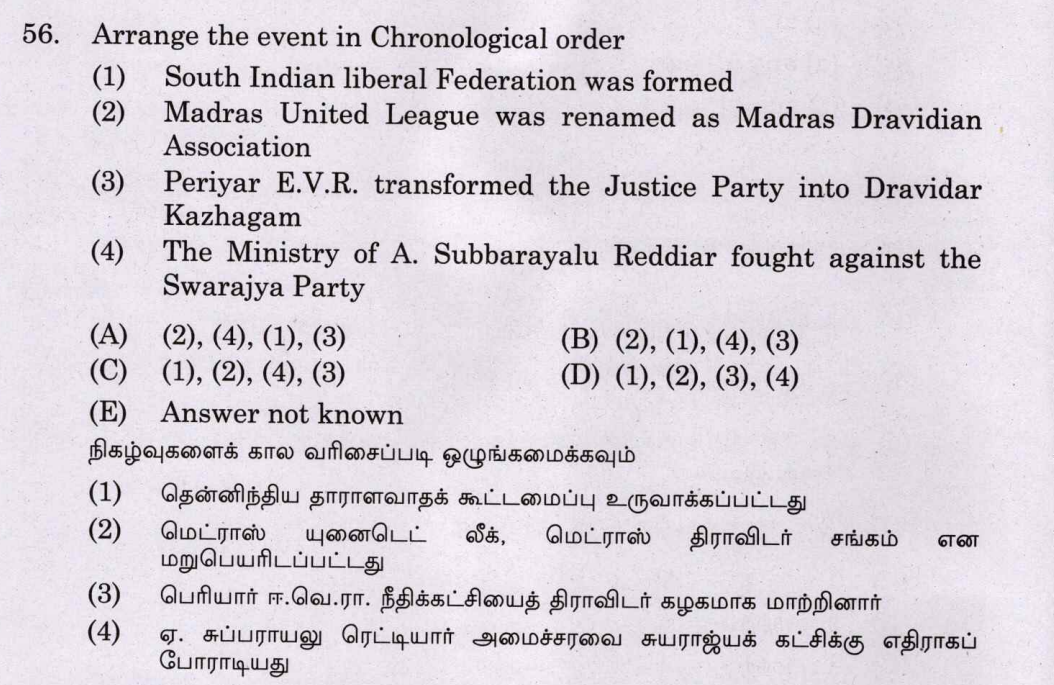
For instance, in a question asking for events to be arranged chronologically, E.V.R.’s caste surname was conspicuously absent, while Subbarayalu, a former Chief Minister of the Madras Presidency, was referred to as “Subbarayalu Reddiar.”

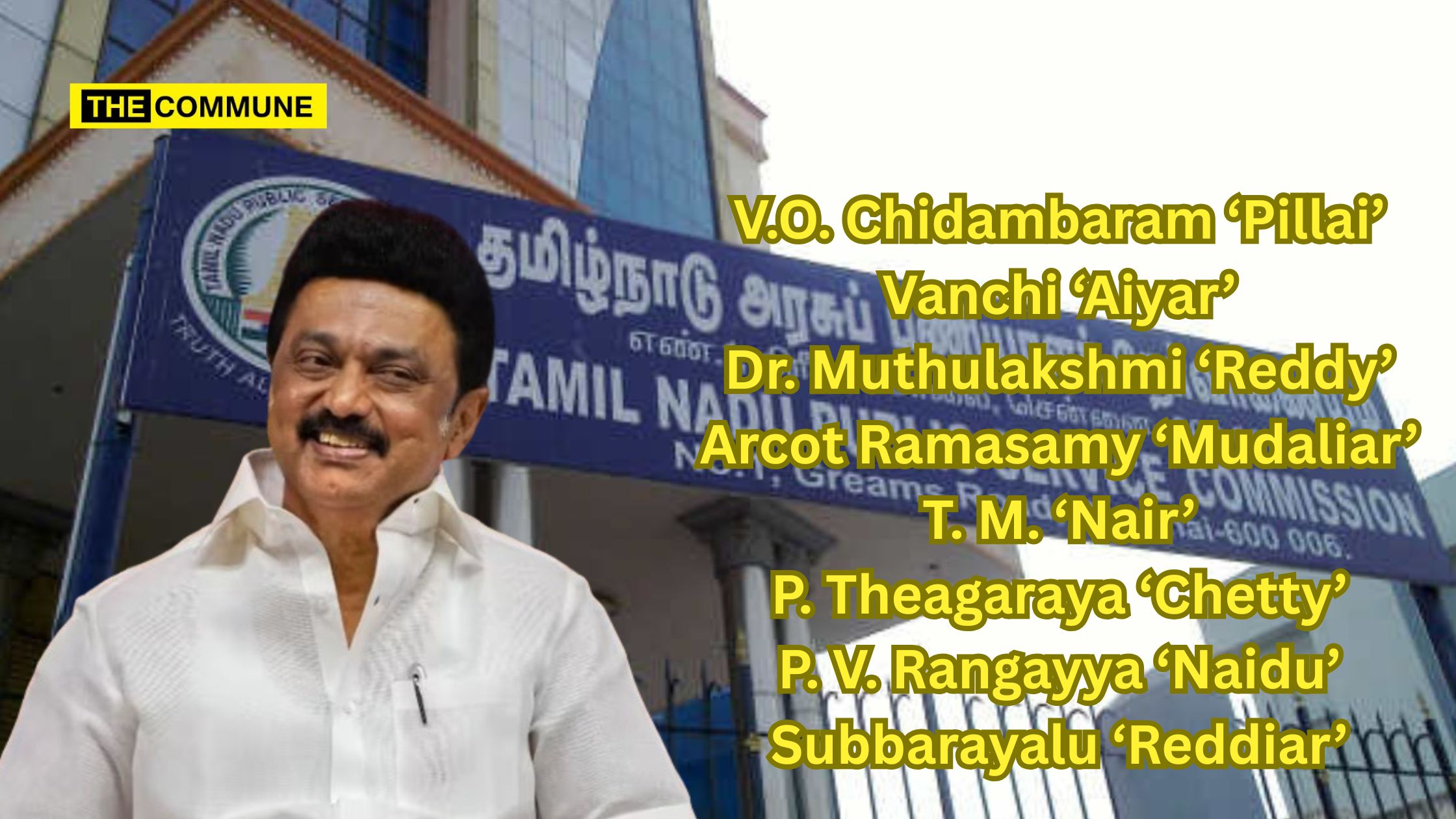
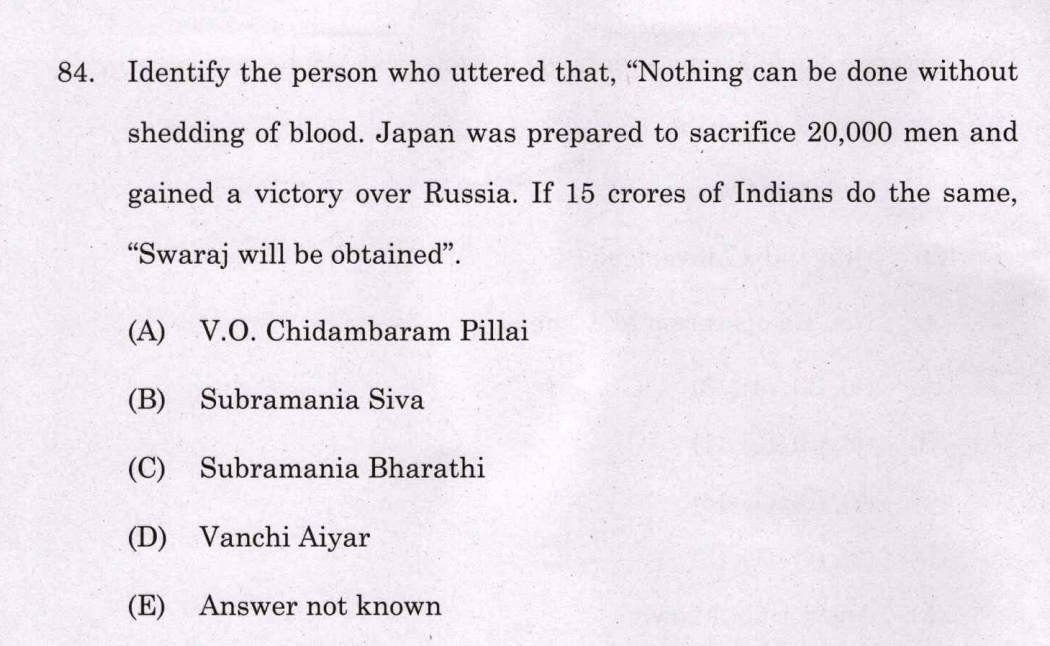
In another question related to the Swarajya movement, leaders such as V.O. Chidambaram and Vanchinathan were mentioned with their caste-associated titles intact with ‘Pillai’ and ‘Aiyar’.

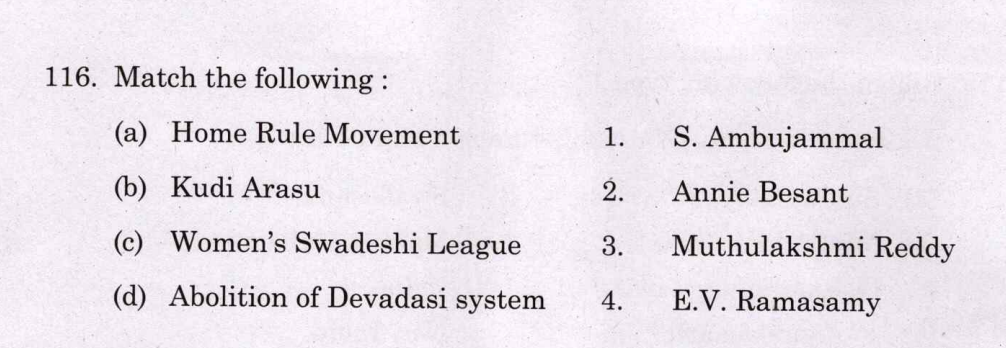
Even more telling is the inconsistent treatment in a question referencing Dr. Muthulakshmi, who dedicated her life to fighting caste and gender discrimination. Despite her advocacy against caste, she was still referred to as “Dr. Muthulakshmi Reddy,” while E.V.R.’s caste name “Naicker” was conveniently dropped in the same context.

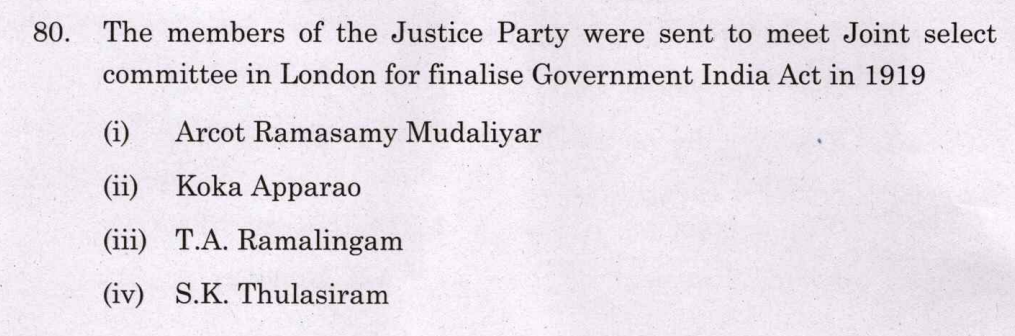
Another example involves Arcot Ramasamy Mudaliar, a Justice Party leader and a key figure in challenging caste hierarchies, who was nonetheless referred to with his caste title, “Mudaliar.”

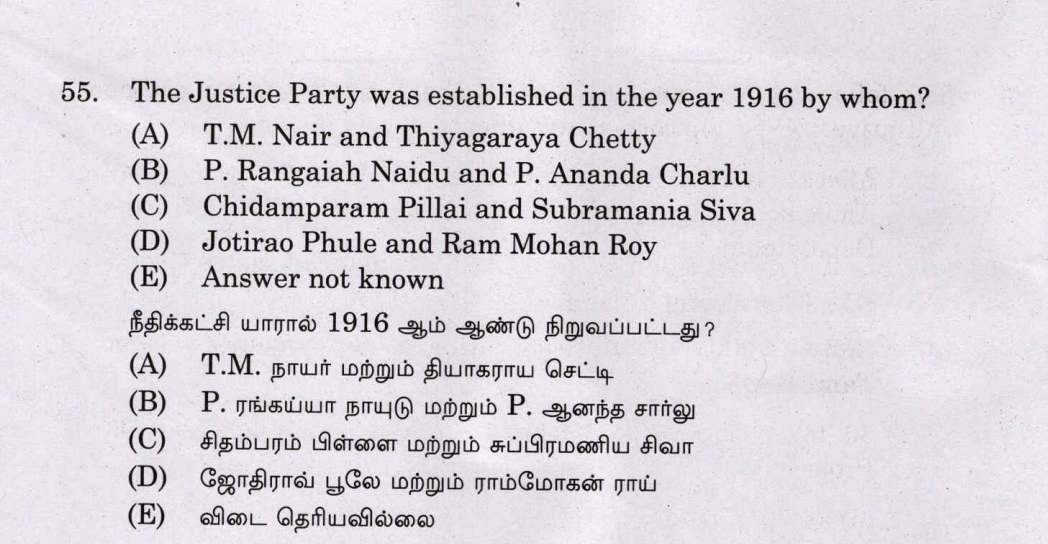
Furthermore, the exam papers freely used caste identifiers such as Nair, Chetti, Naidu, and Pillai alongside the names of prominent national leaders—raising questions about the selective enforcement of this so-called caste abolition.

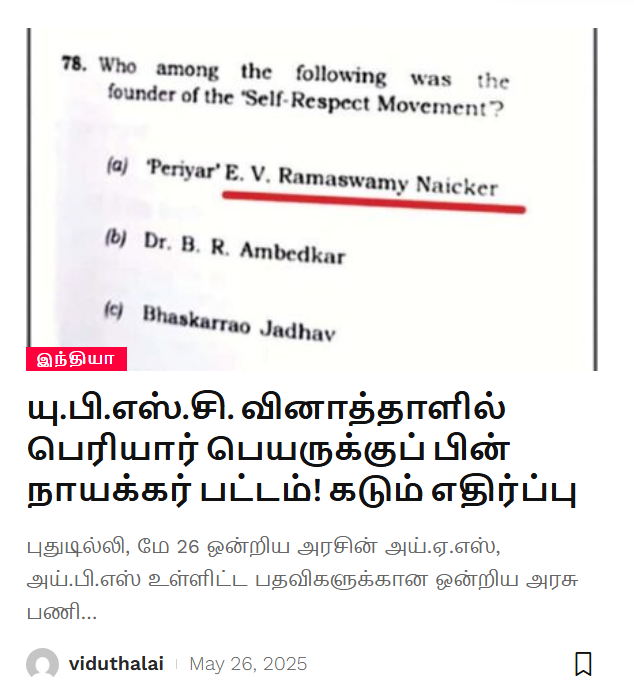
The same hypocrites of Dravidianists and Periyarist ecosystem who created an uproar over a recent UPSC exam for referring to E.V. Ramasamy as “EV Ramasamy Naicker” have remained completely silent when the Tamil Nadu Public Service Commission (TNPSC) exam included references to several dominant castes in the state. There has been no protest or criticism in this case, revealing a clear double standard.

This selective erasure of caste references—conveniently reserved only for the DMK’s ideological leaders—reveals a stark contradiction. While the party claims to have done away with caste identifiers, the truth appears to be more about political positioning than genuine social reform.

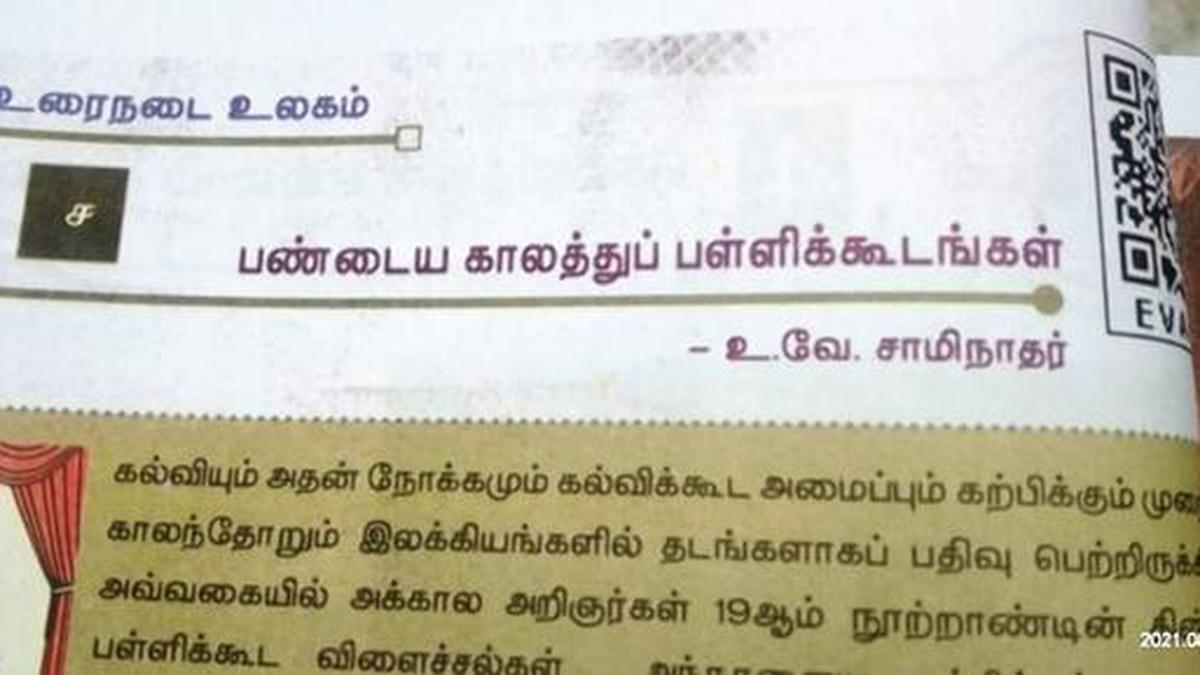
One can’t help but wonder, as elections draw nearer, is the DMK subtly appealing to caste-based identities despite its public posture? After all, when the party first came to power in 2021, it hastily removed caste surnames from school textbooks—for instance, changing “U.Ve. Swaminatha Iyer” to “U.Ve. Swaminathar.” Yet the current trend of reintroducing caste affiliations in official exams suggests a very different, and perhaps opportunistic, agenda.

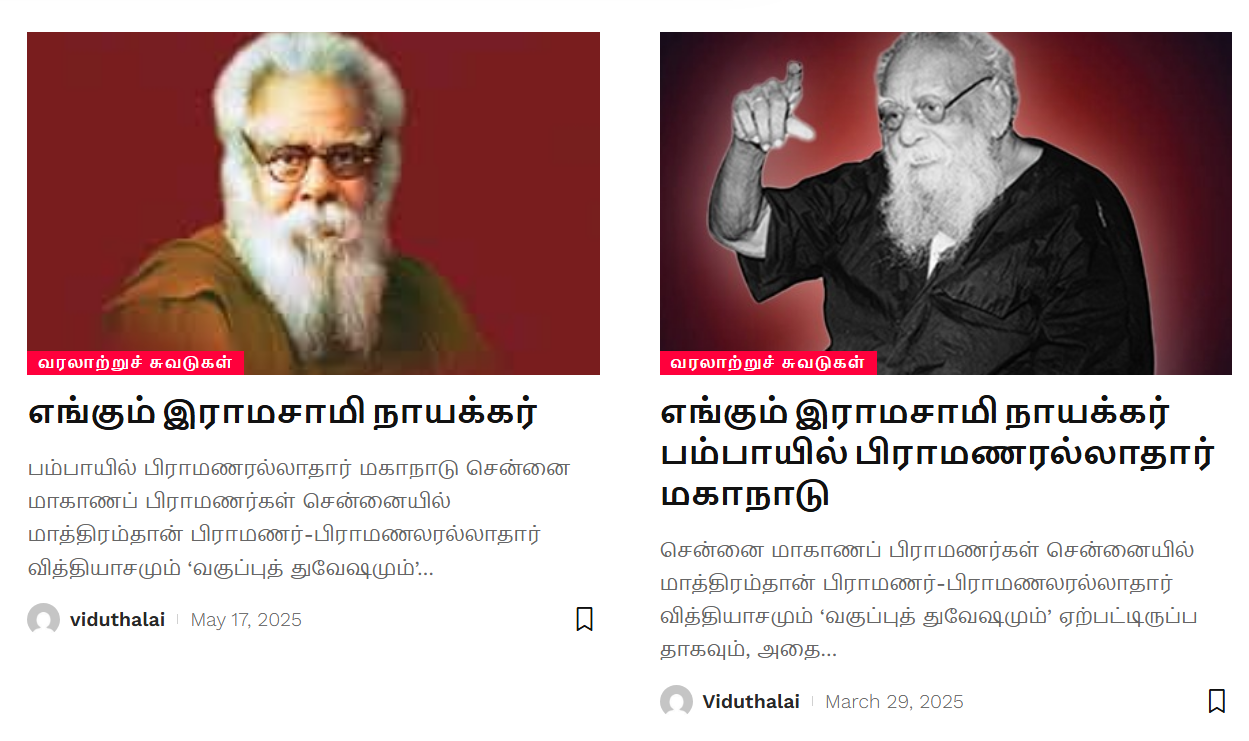
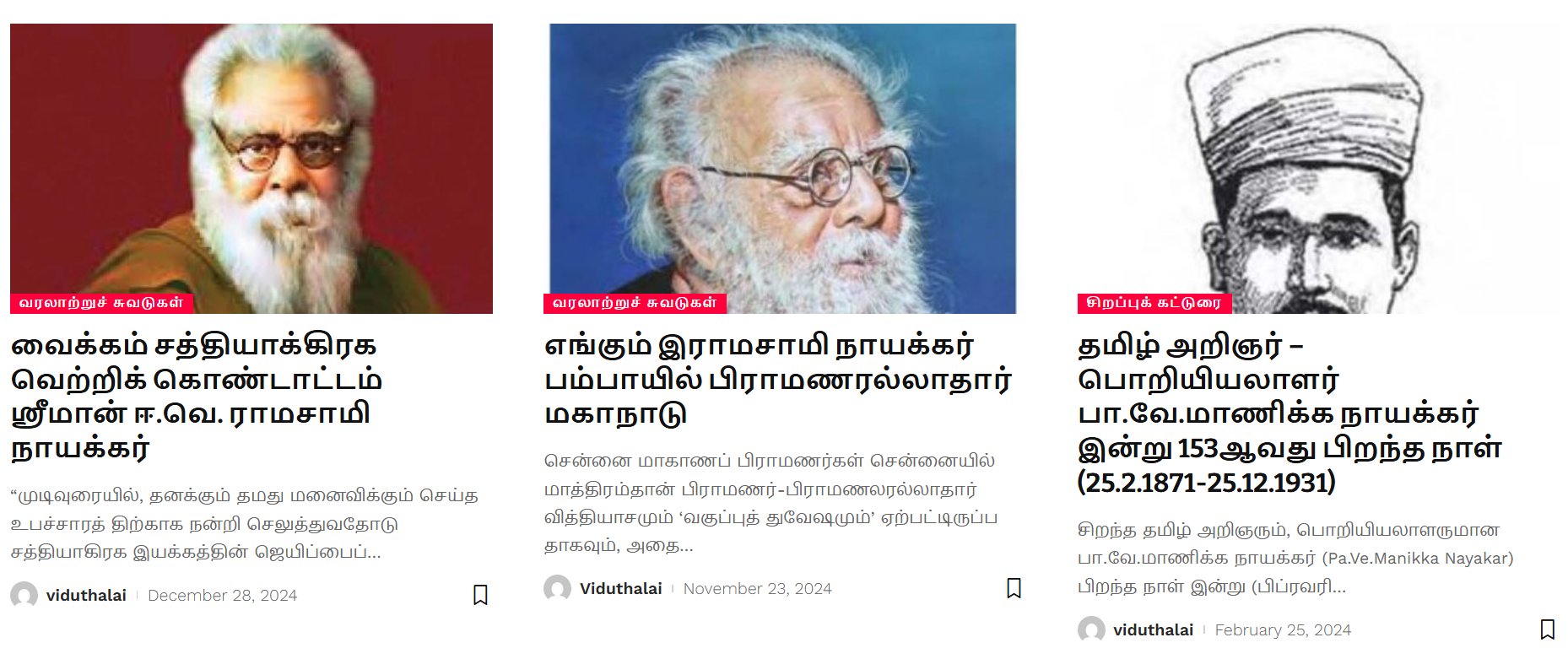
This hypocrisy from the self-proclaimed caste abolitionists—who proudly label Tamil Nadu as the “land of Periyar” and claim that E.V.R (Periyar) eradicated caste titles—is now being laid bare. The Dravidar Kazhagam, founded by E.V.R. himself, continues to explicitly use his caste surname “Naicker,” contradicting their own ideological stance. Yet, the Dravidian ecosystem remains unapologetic, doubling down and perpetuating these contradictions in the name of their ideology.

Subscribe to our channels on TelegramWhatsApp, and Instagram and get the best stories of the day delivered to you personally.

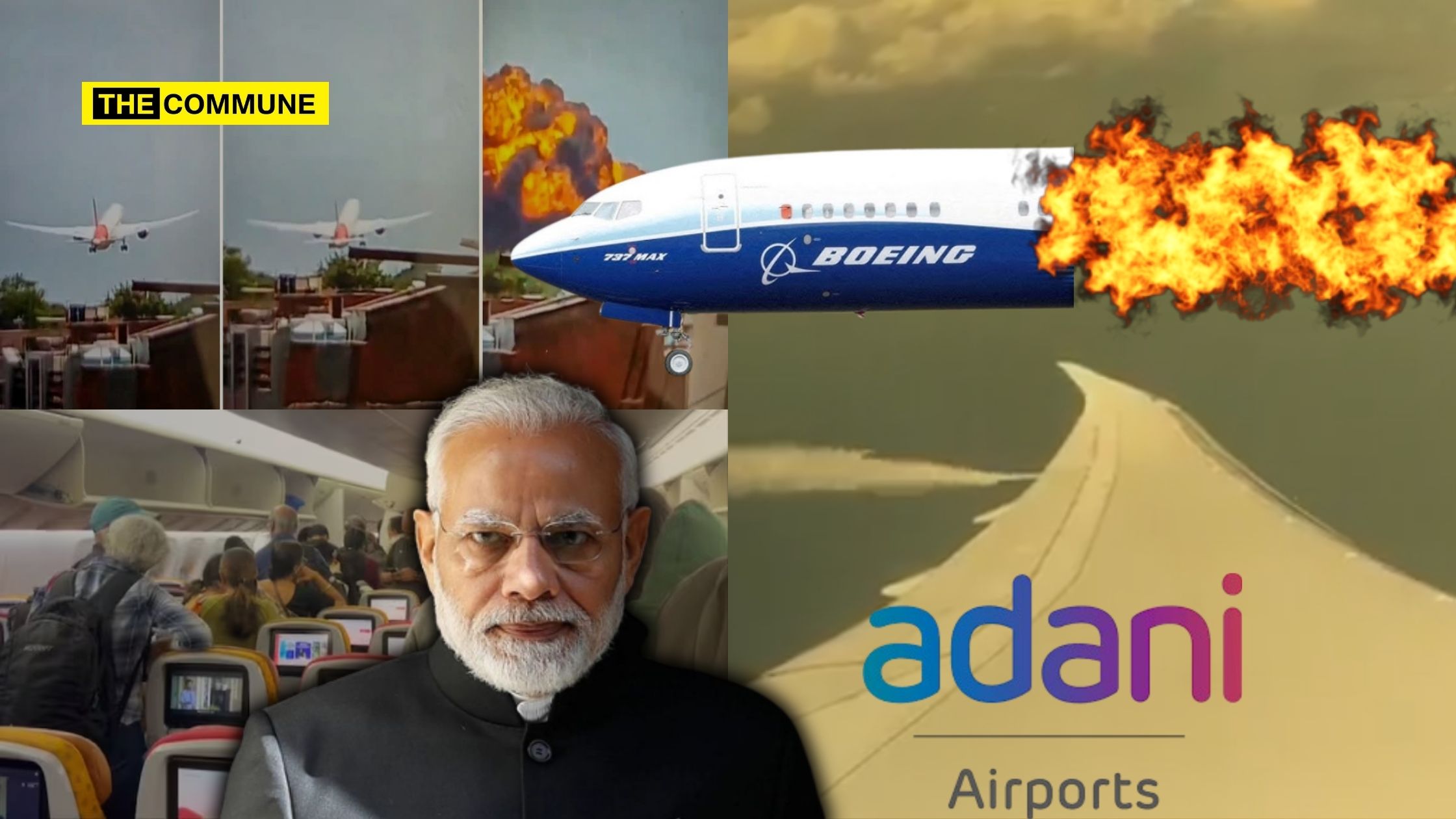
Ahmedabad Plane Crash And Back-To-Back Grounding Of Air India Flights: Technical Failure Or Sabotage Through Fuel Contamination To Target PM Modi And Adani?

The aviation sector in India is under intense scrutiny following the tragic crash of an Air India Boeing 787 Dreamliner in Ahmedabad last week—the first-ever fatal accident involving this aircraft model. The incident has been followed by a series of alarming mid-air technical glitches affecting multiple Dreamliners and Air India domestic flights, raising urgent questions about whether these are mere coincidences or part of a sinister sabotage plot targeting Indian aviation.

A Sudden Surge In Dreamliner Glitches

Within just 24 hours, three separate Dreamliner flights operated by Air India and British Airways reported critical technical issues, forcing emergency diversions and returns:

A London-Chennai British Airways flight spewed white smoke from its flaps mid-air before safely returning to Heathrow.

An Air India flight from San Francisco to Mumbai (with a scheduled halt in Kolkata), which was deplaned following a snag in its engine.

An Air India Hong Kong-Delhi flight turned back shortly after takeoff due to undisclosed technical faults.

An Air India Zurich-Delhi flight also aborted its journey mid-flight under mysterious circumstances.

Adding to the chaos, a fourth Air India flight from Delhi to Ranchi was abruptly diverted back to the capital due to yet another technical snag.

These incidents, occurring in rapid succession, have triggered a mandatory inspection of all 34 Boeing 787s in Air India’s fleet by the Directorate General of Civil Aviation (DGCA).

The Ahmedabad Crash: An Isolated Incident Or Part Of A Larger Conspiracy?

The Ahmedabad crash, which claimed several lives, remains under investigation. Initial theories pointed toward pilot error or mechanical failure, but recent developments suggest a far more alarming possibility—deliberate fuel contamination.

A whistleblower in 2024 had already flagged production shortcuts in Boeing’s Dreamliner series, but the sudden spate of malfunctions post-Ahmedabad has fueled suspicions of foul play. Aviation experts are now questioning whether a timed-release contaminant could have been introduced into the aircraft’s fuel system while it was stationed outside India. Given that the ill-fated flight had traveled from Delhi to Ahmedabad before its onward journey to London, the sabotage theory gains traction—especially since the crash occurred in Modi’s home state, at an Adani-managed airport.

International Conspiracy: Is The Deep State Involved? 

If sabotage is confirmed, the implications are grave. The Deep State—comprising hostile foreign actors, compromised media, and geopolitical adversaries—stands to gain immensely from tarnishing India’s aviation reputation. Some of the possible political motives include:

The Adani Group’s growing influence in Indian infrastructure, including airports, makes it a prime target. A manufactured crisis could be used to undermine investor confidence and fuel political instability.

By shaking trust in Air India and Indian aviation, foreign entities could deter tourism and business travel, inflicting long-term financial harm.

With Pakistan unable to strike India militarily or through conventional terrorism, covert sabotage via aviation disruptions presents a low-risk, high-impact alternative.

Media Manipulation 

Disturbingly, certain Western media outlets (such as Reuters, Bloomberg, DW, and NYT) appear to be preemptively shaping a narrative that blames Indian authorities, the Airports Authority of India (AAI), or Adani’s airport management—even before the official investigation concludes.

Aviation “experts” such as TikToker “Captain Steeeve” have suspiciously shifted their stance overnight. These experts initially blamed pilot error for the crash.

Then, after being called out, they shifted the narrative to emphasizing “double engine failure”—as if they already possess undisclosed crash data.

This handle is just one of the many examples which suggest an orchestrated campaign to deflect blame from potential sabotage and instead implicate Indian systems.

While the investigation must proceed without prejudice, the alarming frequency of Dreamliner malfunctions post-Ahmedabad cannot be ignored. Whether the cause is mechanical negligence or a calculated attack, India must prepare for a disinformation blitz aimed at damaging its aviation sector and political stability.

The truth will emerge, but one thing is certain: India cannot afford to let external forces dictate the narrative. If this was indeed sabotage, the perpetrators—whether state-sponsored or corporate rivals—must be exposed and held accountable before they strike again.

Subscribe to our channels on Telegram, WhatsApp, and Instagram and get the best stories of the day delivered to you personally.
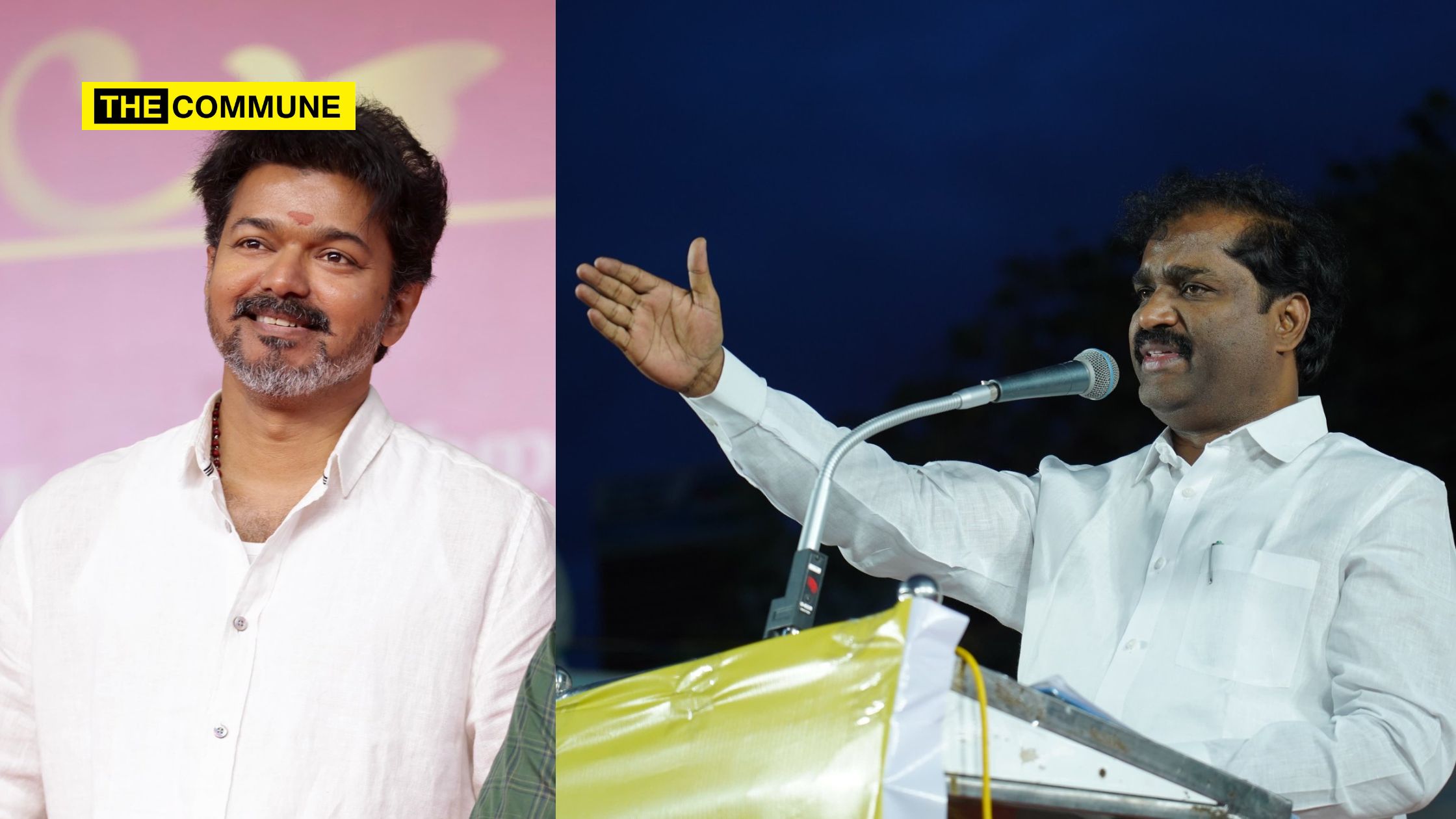
‘While Vijay Was Acting In Films, We Were On The Streets Fighting For Tamil Rights; Are You Big P*dungi Than Vijayakanth Fans?’: DMK Ally & Panruti MLA Velmurugan Slams TVK Supporters

panruti mla velmurugan tvk vijay

Tamilaga Vazhvumurai Katchi leader and Panruti MLA T. Velmurugan has once again launched a scathing attack against Tamilaga Vettri Kazhagam (TVK) president and actor-turned-politician Vijay, following a wave of backlash from the actor’s supporters online. This comes after TVK cadres and fans demanded an apology from Velmurugan and flooded social media with targeted attacks.

Speaking at a public meeting in Thenkanikottai, Velmurugan questioned the nature of the criticism aimed at him, “Do they think I’m uneducated? It’s embarrassing that they’re making school children respond to me on their behalf. While Vijay was still acting in films, we were out on the streets fighting for the rights of Tamil people.”

During a party event in Krishnagiri, Velmurugan addressed the growing tension between his party and Vijay’s supporters, stating, “When it comes to the livelihood struggles of Tamil Nadu, it is the cadres of the Tamilaga Vazhvumurai Katchi have consistently taken to the streets. No fans or film heroes have stepped to the streets. But when we speak this truth openly, it angers many. Even today, they are making school children to respond to us—how pitiful! They call us ‘illiterate’ but to those illiterates who call us illiterate, I say that I have documented the full history of the Tamilaga Vazhvumurai Katchi from the day it was founded on my page under the name “Velmurugan T.” Illiterates know about that. Go read it. Listen to it’s all on YouTube.

Yet today, these Illiterates and irresponsible (tharuthalai) asking, “Who is Velmurugan?” When you were all dancing around hugging film, Velmurugan was on the streets, shoulder to shoulder with the Tamil liberation front, fighting for Tamil rights. If needed, I will share my life story at this very meeting. I invite all those who are curious or illiterates to come, listen, and learn. I’ve spent up to 1 hour 45 minutes in meetings and called someone come straight away speaking about how much Tamil society entered into a cultural decay. Look at the moral decay in cinema, in television serials, on TikTok, and how much cultural decay is there. Even in ‘shorts’, the cultural deterioration is evident. Just to get more views on YouTube, some disgraceful and shameless individuals in our society are now even exposing their own bodies. Utterly enraging by this and I have raised this issue in public meetings across all of Tamil Nadu. Today, 8th and 10th standard schoolgirls, whose parents gave them smartphones to study. The smartphones that were provided to children to study during the COVID are being lured into this cultural destruction, moral and civilizational collapse—leading to a disrespect of parents and a highly competitive, dangerous mindset.” 

He later took a jab saying, “You criticized my brother? He may not be your brother, but the one who was called the ‘Superstar’ of this country Rajinikanth was the one who glamorized smoking cigarettes and corrupted an entire younger generation. I was the one who said this. Are you any greater than Rajini? When actor Vijayakanth, who gave generously and acted with heart, made a mistake, it was Velmurugan who openly called it out as Vijayakanth’s fault. Are you big p*dungi than Vijayakanth fans?”

Subscribe to our channels on TelegramWhatsApp, and Instagram and get the best stories of the day delivered to you personally.

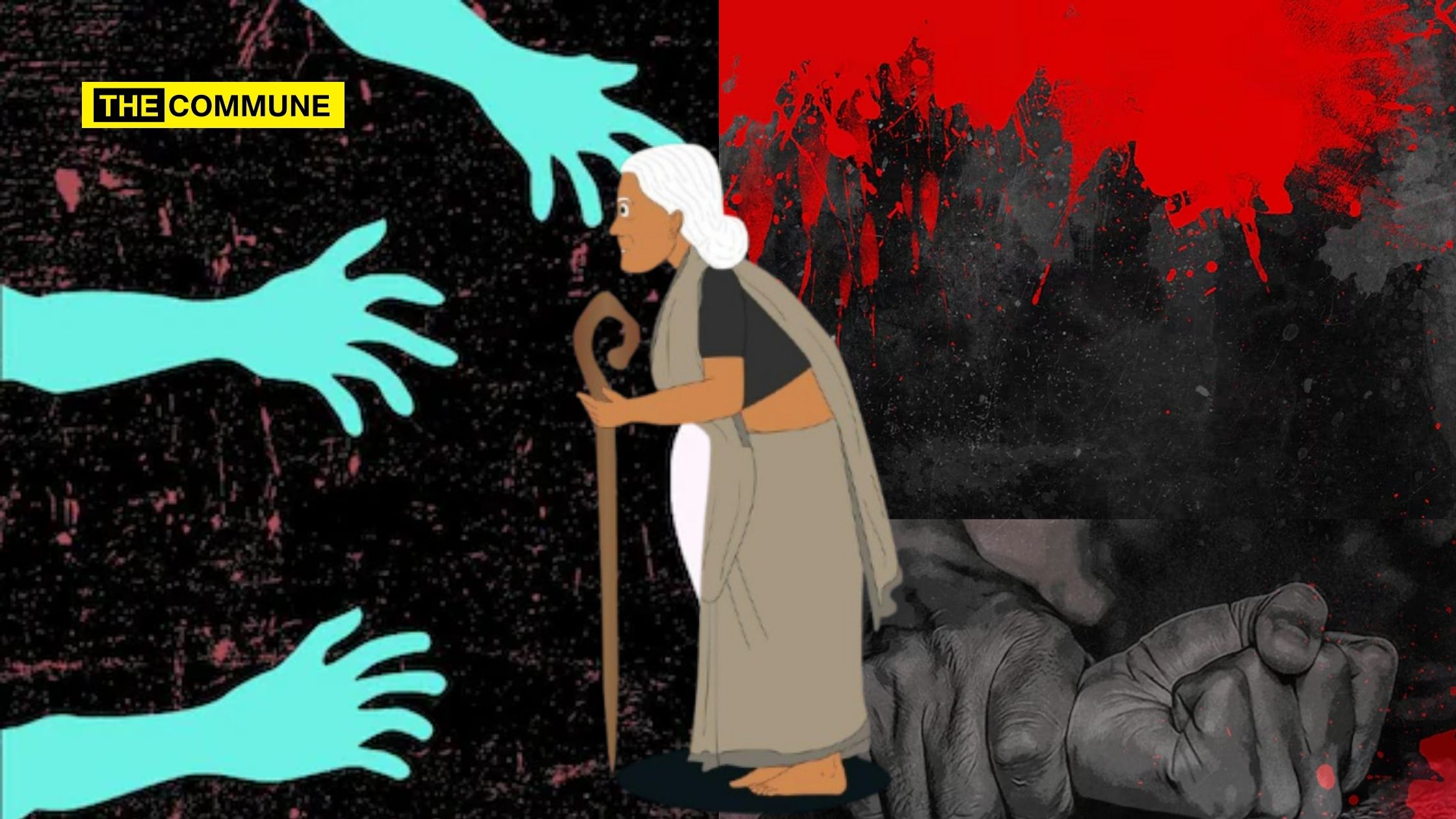
Dravidian Model: 80-Year-Old Woman Gang-Raped In Cuddalore District; Police On The Lookout For Accused

A horrific incident of rape involving an 80-year-old woman near Panruti in Cuddalore district in Dravidian Model Tamil Nadu under the DMK has shocked the citizens. Kausalya, a resident of Thirasu village near Panruti, used to walk along Pulavanur Road every morning and evening for work.

While Kausalya was walking as usual, some young men sitting drunk by the side of the road allegedly dragged the elderly woman into a grove of bushes. According to reports, they put soil into her mouth to keep her quiet and then committed rape. They also grabbed the jewellery — 4 grams (earrings) and 2 grams (nosepin) — that the victim was wearing before fleeing the scene.

Hearing the victim’s screams, members of the public rushed to her aid and admitted her to Cuddalore Government Medical College Hospital. The elderly woman is currently in critical condition and receiving treatment.

Police, who have registered a case in connection with the incident, are currently searching for the suspects, who are absconding. The incident is said to have taken place at 4:00 p.m. when the victim went to a nearby grove to relieve herself.

An investigation by Panruti Police revealed that four men, aged between 35 and 40, allegedly committed the rape while in a drunken state. Forensic experts have collected evidence, and a sniffer dog was called in to aid the investigation. The incident has caused fear in the community.

Sexual Assault & Murder Of 80-Year-Old Woman By Teenager In Ranipet

Just over a week ago, a similar incident happened in Ranipet, Tamil Nadu, when a 19-year-old youth sexually assaulted and murdered an 80-year-old woman in a village under the Arcot taluk of Ranipet district.

The accused, identified as S Nandakumar from Kathiyavadi village, reportedly entered the elderly woman’s residence in an intoxicated state around 5:30 PM on 3 June 2025. According to preliminary police investigations, the woman, who owned and operated a brick kiln in her mango grove, lived in a small house on the premises with her son, granddaughter, and great-grandchildren.

A case was registered under Sections 64(1) (rape) and 103(1) (murder) of the Bharatiya Nyaya Sanhita (BNS). Investigators discovered that Nandakumar had been working as an electrician in the area for the past three years. During his visits, he became familiar with the woman’s residence and had been observed loitering nearby frequently.

To trace the accused, authorities reviewed CCTV footage from the area, including busy roads and key junctions. After cross-checking the suspect’s image with local residents, police were able to identify his native village. He was eventually located and apprehended near a hillock on 4th June evening. Nandakumar was formally arrested, and further investigation is ongoing.

(With inputs from News18 Tamil Nadu)

Subscribe to our channels on Telegram, WhatsApp, and Instagram and get the best stories of the day delivered to you personally.
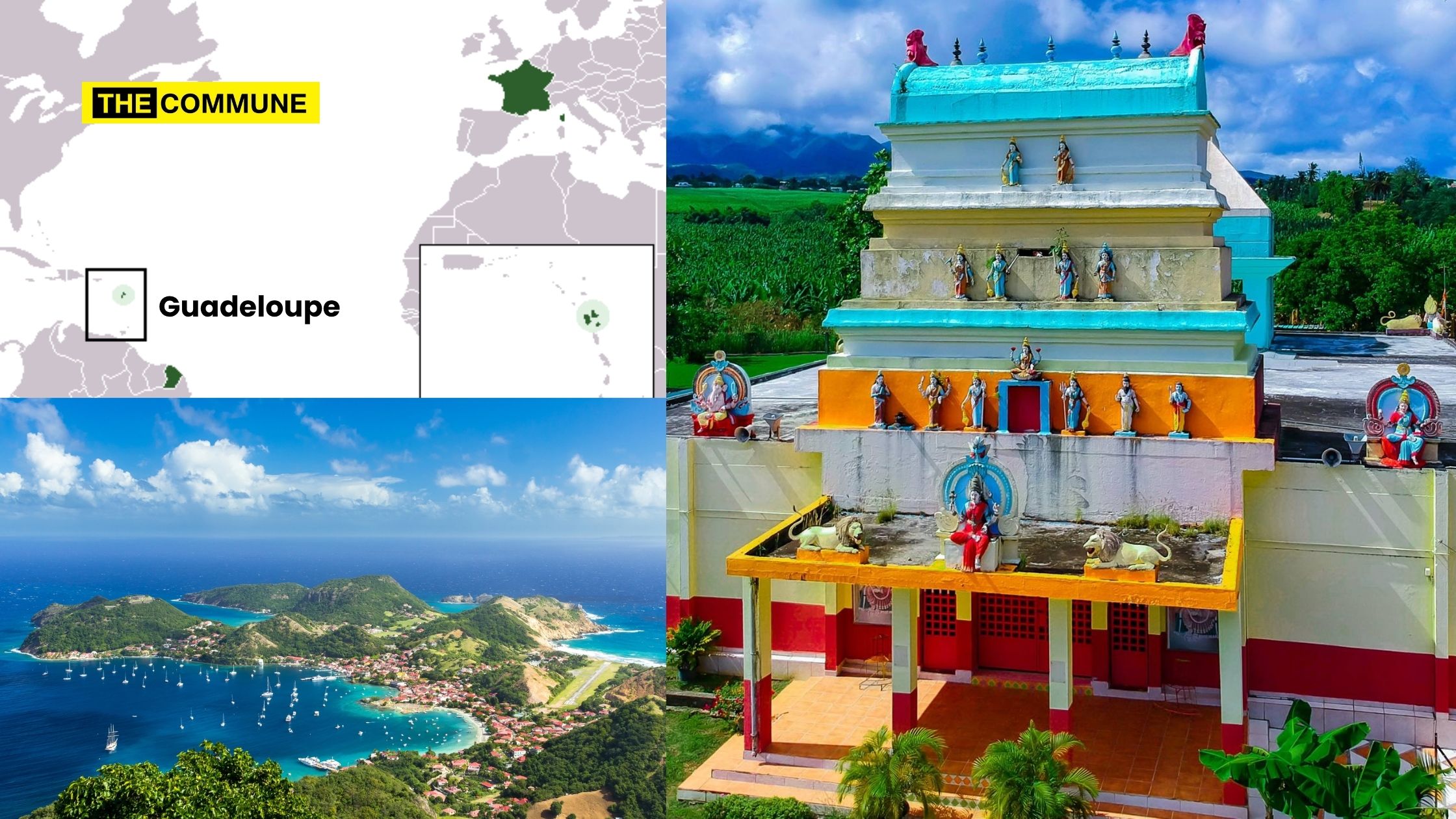
From Bondage To Power: The Extraordinary Journey Of Guadeloupe’s Tamil Diaspora

Beneath the turquoise waters and lush sugarcane fields of Guadeloupe lies a forgotten chapter of Tamil resilience—a story of colonial brutality, cultural survival, and ultimate triumph. What began as a system of indentured servitude that claimed thousands of Tamil lives has transformed into one of the most remarkable diasporic success stories in the Caribbean.

The Blood-Stained Foundations (1845-1900)

When the first Tamil laborers from the Madras Presidency arrived in Guadeloupe in 1854, they stepped into a nightmare. Historical records reveal that 42,900 Tamils were transported to the French colony over five decades. Among these, only 13,300 survived the brutal plantation system by 1900. In fact, mortality rates reached 70% during peak years (1860s). Workers were flogged for speaking Tamil or practicing Hinduism

The French colonial administration maintained meticulous “coolie registers” that documented each death with chilling brevity:
*”No. 1842 – Raman, aged 22 – Cause: épuisement (exhaustion)”*

The Guadeloupe Gandhi: Henry Sidambaram’s Revolution

Amid this oppression emerged Henry Sidambaram—a Tamil laborer turned revolutionary who organized the first labor strikes in 1897 despite French prohibitions. He was imprisoned for 27 years in the infamous Basse-Terre prison. He helped win voting rights for Tamil descendants in 1923 after decades of struggle. He also inspired future leaders like Ernest Moutoussamy, Guadeloupe’s first Tamil-descended MP. Sidambaram’s handwritten petitions (preserved in Fort-de-France archives) reveal his strategy, “We demand not charity, but the rights due to every human being under God.”

Cultural Renaissance: How Tamil Traditions Survived

Against all odds, the community preserved its identity through their culture that they carried with them.

Thee Midhi (Fire-Walking): Banned by French colonists in 1892, it was secretly practiced in mangrove forests. Today, it is Guadeloupe’s largest Hindu festival (5,000+ participants annually).

Tamil Folk Arts: The Oppari lament songs chronicle the indentured experience. Additionally, traditional Karagattam dances are still performed at weddings.

Temple Reclamation: The Sri Sri Kalikambal Kovil in Le Moule was rebuilt in 1987 on original plantation grounds. It features unique Creole-Tamil architecture.

Political Ascendancy: From Fields to Parliament

The community’s transformation is quantified in these milestones. In 1946, the first Tamil-descended mayor was elected (Petit-Canal). In 1981, Lucette Michaux-Chevry became the first Tamil-descended French Minister and in 2020, 11 of Guadeloupe’s 41 mayors are of Tamil origin.

Current leader Hary Sabasothy (President of Guadeloupe’s Tamil Council) notes, “Our grandparents were called ‘coolies.’ Today we run banks, hospitals, and town halls.”

Unfinished Battles: The Ongoing Struggle

France continues to deny its historical crimes, offering no official apology even after recognizing its colonial crimes in Algeria in 2018. Access to crucial plantation records in the National Archives also remains restricted, fueling ongoing controversy and a growing demand for justice and reconciliation.

The 2023 law banned “conspicuous religious symbols” in schools, affecting Tamil students and fueling a growing controversy over laïcité and Hindu rights in Guadeloupe. Temple processions are also subject to police permits — a requirement that is not imposed on churches — adding to the community’s struggles for equal treatment. Currently, only 9% of Guadeloupe Tamilians speak Tamil fluently, but the Indian Council for Cultural Relations (ICCR) recently established Tamil language classes to help keep their linguistic heritage alive.

A Blueprint For Global Diasporas

Guadeloupe’s Tamil community offers powerful lessons in resistance and renewal. Henry Sidambaram used France’s own laws against its colonial framework to secure justice and civic rights for the Girmityas. This struggle fostered a unique “Tamil-Creole” identity, blending two rich cultural traditions into something new. Over the course of 150 years, the community transformed from victims of oppressive labor to kingmakers with growing political influence. As historian Dr. Christian Schakenbourg concludes, “This isn’t just Tamil history — it’s a masterclass in turning oppression into opportunity.”

Why This Matters In 2024

With global debates on colonial reparations and diaspora rights gaining momentum, Guadeloupe’s Tamil community stands as a powerful reminder that justice delayed need not be justice denied. Their struggles compel us to ask: When will France formally acknowledge this Caribbean Holocaust? How can India do more to support its forgotten diaspora? And what can other communities learn from this remarkable blueprint of resilience — a testament to the ability of a people to transform suffering into renewal, dignity, and political empowerment?

Subscribe to our channels on Telegram, WhatsApp, and Instagram and get the best stories of the day delivered to you personally.