Home Blog Page 431

Times Of India & Deccan Herald Romanticize Maoist Terrorist Chalapathi In Obituary

Times Of India & Deccan Herald Romanticize Maoist Terrorist Chalapathi In Obituary

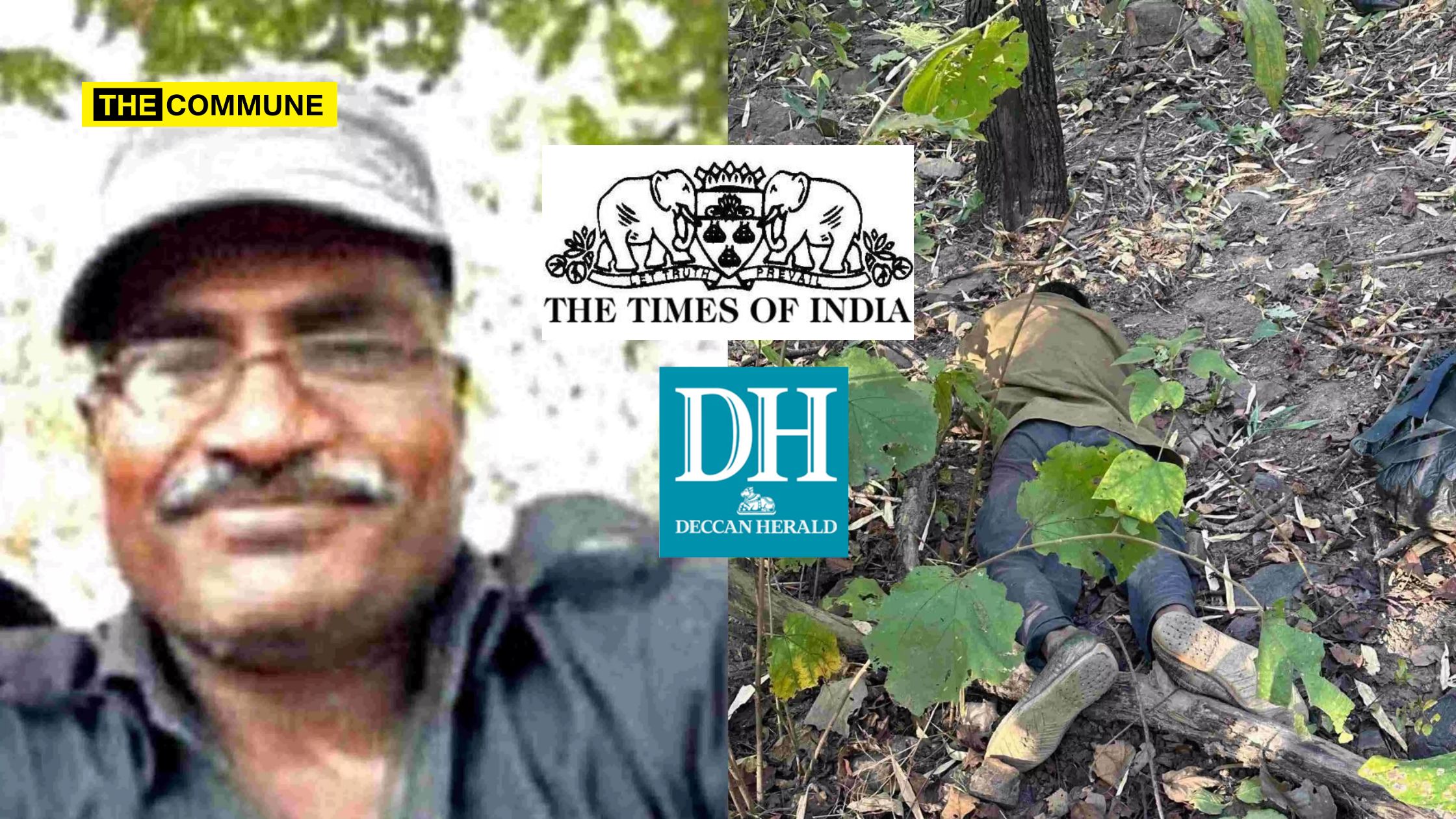
The obituaries published by Times of India and Deccan Herald on the death of Chalapathi, a senior Maoist leader, are nothing but appalling. Instead of focusing on the countless lives lost and the trauma inflicted by Maoist violence and praising the authorities for getting rid of Maoist nuisance, these pieces glorify a figure responsible for terrorizing civilians and security forces for decades.

Both outlets paint Chalapathi as amilitary strategist,aman of intellect,and aninspirational figurewithin the Maoist cadre, downplaying the atrocities he orchestrated. The Times of India notes hisextensive reading habitsand multilingual abilities, while the Deccan Herald lauds hismobilizing skillsandcommitment to ideology.These descriptions fail to address the devastating impact of his actions. Chalapathi’s orchestrated attacks, such as the 2008 Nayagarh police armory raid and the brutal killings of political leaders in Araku in 2018, claimed countless innocent lives.

While highlighting his rise through Maoist ranks, the obituaries conspicuously omit the pain and suffering endured by families of the victims and the loss it caused to the nation. This sanitized portrayal of a militant leader not only disrespects the memory of those who perished in his attacks but also trivializes the challenges faced by security forces combating Maoist insurgency.

Moreover, both outlets fail to condemn the violence and lawlessness inherent in Maoist activities adequately. Instead, phrases likea major blow to the Maoist movementseem to mourn the loss of a leader rather than celebrate a significant win for national security. By focusing on histalentsandcommitment,the articles seem to romanticize the very ideology that perpetuates violence and instability in affected regions.

The lack of balanced reporting is especially alarming in the context of Chalapathi’s manipulative mobilization of marginalized communities. His strategies, which included exploiting tribal grievances for recruitment, were ultimately aimed at perpetuating a cycle of violence and fear. Instead of highlighting these exploitative tactics, the obituaries present him as a defender of justice for the oppressed—a portrayal far removed from the ground reality.

Media outlets have a responsibility to report objectively, especially when addressing figures involved in armed insurgency. By glossing over the human cost of Chalapathi’s actions and focusing on his so-called achievements, Times of India and Deccan Herald fail to uphold journalistic ethics.

This is not the first time. Publications like the Times of India, The Hindu and other media are often seen portraying terrorists as humane, as people with emotions, as coming from “ordinary” backgrounds etc. These are not important stories that need attention, it is the other pressing issues that they are causing that need to be told. Just a few days ago, Times of India justified an illegal Bangladeshi’s action against Bollywood actor Saif Ali Khan and blamed it on poverty and his ailing mother.

Chalapathi was not a hero. He was a perpetrator of violence, whose actions destabilized regions and claimed countless lives. To glorify such an individual under the guise of an obituary is not just irresponsible—it is an affront to the victims of Maoist violence and their families. The media must remember that its role is to inform and uphold the truth, not to lionize those who wage war against the state and its citizens.

Subscribe to our channels on Telegram, WhatsApp, and Instagram and get the best stories of the day delivered to you personally.

Iraq Passes New Family Law That Could Potentially Legalize Child Marriage

Iraq's new family law amendments passed by the parliament could potentially legalize child marriage for girls as young as nine.

Iraq’s parliament passed three contentious laws on Tuesday, including amendments to the personal status law that opponents claim could effectively legalize child marriage.

The amendments grant Islamic courts greater authority over family matters such as marriage, divorce, and inheritance. Activists have criticized the changes, arguing they undermine Iraq’s 1959 Personal Status Law, which unified family law and introduced safeguards for women.

Proponents, primarily conservative Shiite lawmakers, defended the amendments as a way to align legislation with Islamic principles and curb Western influence on Iraqi culture.

Currently, Iraqi law sets 18 as the minimum marriage age in most circumstances. The new amendments, however, allow clerics to rule based on their interpretation of Islamic law, which in some cases permits the marriage of girls as young as nine, as per the Jaafari school of Islamic law followed by many Shiite authorities in Iraq.

In addition to the civil status amendments, parliament passed a general amnesty law perceived as favorable to Sunni detainees but criticized for potentially protecting individuals involved in corruption and embezzlement. A land restitution law aimed at resolving Kurdish territorial claims was also approved.

Human rights activist and member of the Iraqi Women’s League, Intisar al-Mayali, warned that the amendments to the civil status law could severely impact women and girls, particularly through the marriage of young girls. She argued it would undermine their rights as children and disrupt protections related to divorce, custody, and inheritance.

The parliamentary session ended in chaos, with accusations of procedural violations. A parliamentary official, speaking anonymously, claimed that half the lawmakers present did not vote, breaking the legal quorum. The session reportedly saw protests, with some members loudly objecting and others climbing onto the parliamentary podium.

Some legislators voiced concerns about the voting process. Independent MP Raid al-Maliki stated that his bloc supported the civil status law amendments but criticized the decision to combine the three controversial laws into a single vote, noting it could lead to legal challenges in the Federal Court.

Parliament Speaker Mahmoud al-Mashhadani described the laws’ passage as a significant step toward enhancing justice and improving citizens’ daily lives.

Separately, at least three officers, including the national security chief of the al-Tarmiyah district north of Baghdad, were killed in an explosion at an ammunition depot. A security official, speaking on condition of anonymity, said four others were injured during the incident, which occurred as Iraqi army and national security forces conducted an operation in response to intelligence reports of Islamic State activity and an ammunition cache in the area.

(With inputs from CNN)

Subscribe to our channels on Telegram, WhatsApp, and Instagram and get the best stories of the day delivered to you personally.
Dravidian Model Tamil Nadu: Eating Non-Veg Biryani At Sacred Thiruparankundram Murugan Temple Hill Allowed, Giving Annadanam To Palani Padayatra Pilgrims ‘Without Permission’ Not Allowed

Dravidian Model Tamil Nadu: Eating Non-Veg Biryani At Sacred Thiruparankundram Murugan Temple Hill Allowed, Giving Annadanam To Palani Padayatra Pilgrims 'Without Permission' Not Allowed

In what comes across as a starkly hypocritical move of the state’s infamous “Dravidian model“, food safety officials in Dindigul have issued stringent orders requiring prior permission for devotees offering Annadanam (food-offering) at the revered Palani Dhandayuthapani Swamy temple.

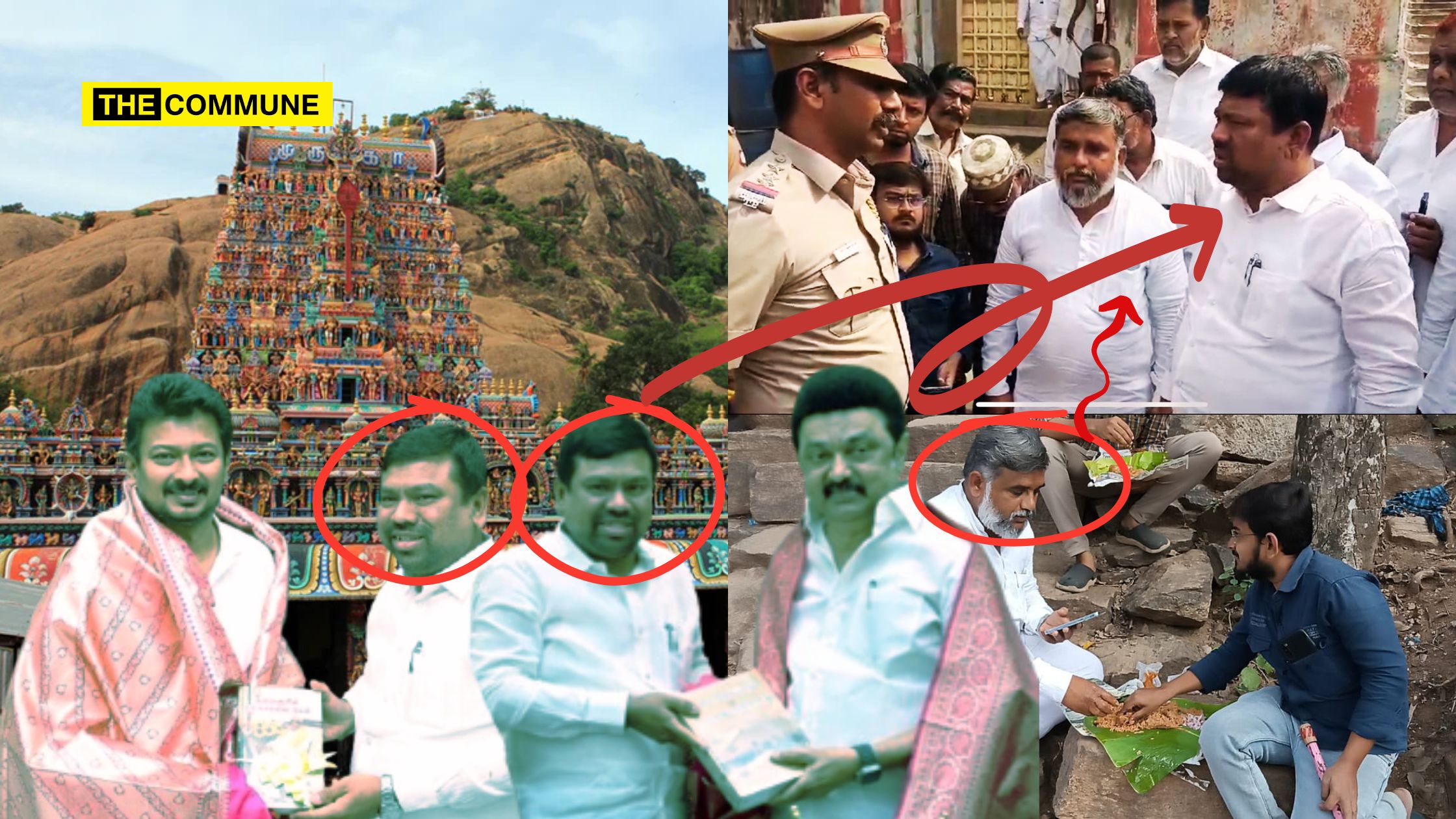
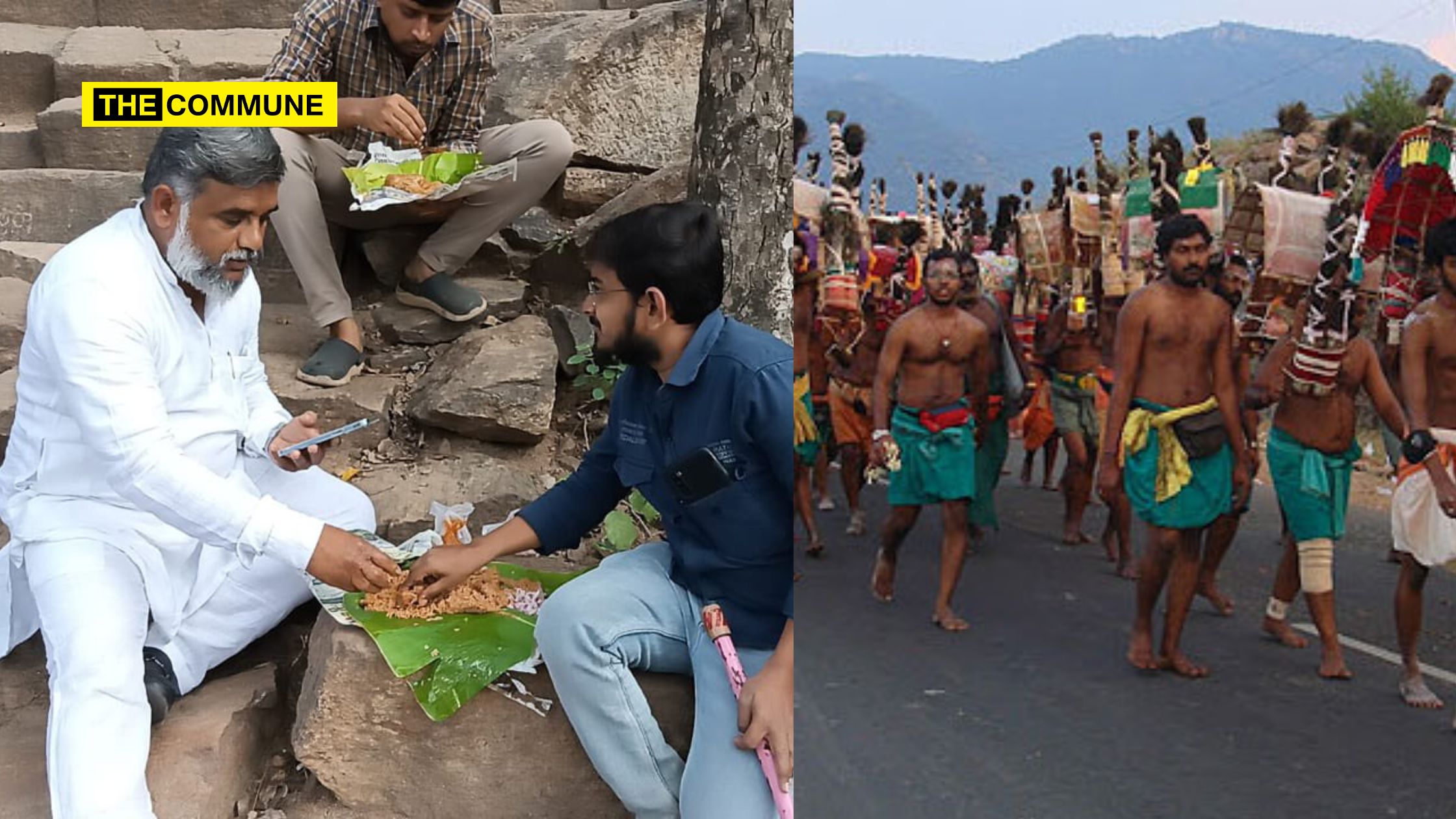
Meanwhile, just miles away, the sacred Thiruparankundram Murugan Temple has seen no such restrictions on consuming non-vegetarian biryani, as demonstrated by their ally IUML’s Ramanathapuram MP Navas Kani as indicated by his social media post.

As preparations are underway for the Thaipoosam festival, which is on 11 February 2025 and festivities beginning a week earlier, the Food Safety Department in Dindigul has mandated that anyone wishing to distribute Annadanam to those devotees on Padayatra, must first obtain official permission. Failure to comply will result in a fine of ₹1,000. The order also stipulates that plastic bags should not be used and areas where food is served must be cleaned after meals.

The Palani Murugan Temple, Lord Muruga’s third abode, attracts thousands of pilgrims daily. Ahead of the Thaipusam festival, Padayatra devotees have been arriving for weeks. However, their act of charity—offering food to fellow pilgrims—is now under scrutiny, with the authorities cracking down on unregulated food distribution.

In contrast, an incident at Thiruparankundram Murugan Temple on 22 January 2025 revealed a strikingly different approach. Ramanathapuram MP Navas Kani, who heads the Tamil Nadu Waqf Board and is affiliated with the Indian Union Muslim League (IUML), shared images on his official X handle showing Muslims consuming non-vegetarian biryani at the foothills of the sacred Thiruparankundram Murugan Temple hill.

K Navas Kani’s post detailed a meeting with the Madurai City Police Commissioner and District Collector regarding the Sikandarmalai Dargah issue. This public demonstration of consuming non-vegetarian food near a sacred Hindu site underscores the selective enforcement of regulations.

The blatant allowance of non-vegetarian consumption near a revered temple contrasts starkly with the strict controls imposed on those offering traditional vegetarian Annadanam at Palani.

This juxtaposition reveals a troubling hypocrisy within Tamil Nadu’s governance. On one hand, the state enforces rigid controls over charitable acts of food distribution among pilgrims, citing health and safety concerns. On the other hand, it turns a blind eye to activities that could be deemed disrespectful or culturally insensitive in a sacred setting.

Subscribe to our channels on Telegram, WhatsApp, and Instagram and get the best stories of the day delivered to you personally.

Hindus Call For Boycott Of ST Courier Run By DMK-Ally IUML MP Nawas Kani Who Went With Islamists To Have Non-Veg Food At Thiruparankundram Murugan Temple Hill

Hindus Call For Boycott Of ST Courier Run By DMK-Ally IUML MP Nawas Kani Who Went With Islamists To Have Non-Veg Food At Thiruparankundram Murugan Temple Hill

After MP and DMK ally Indian Union Muslim League (IUML) member Navas Kani, who also holds the position of chairman of the Tamil Nadu Waqf Board, shared a controversial social media post showing Muslims eating non-vegetarian food near the temple entrance at the foothills of Thiruparankundram Hills, there have been calls for boycotts of ST Courier, a company he co-owns, along with intensified scrutiny over Waqf Board claims to the sacred Hindu site, amid allegations of hawala transactions and illegal activities by his associates.

In a social media post on 22 January 2025, Ramanathapuram MP Navas Kani via his official x account stated, “We went to Madurai today to conduct a field inspection regarding the Sikkandar hills Dargah issue. We met the Madurai City Police Commissioner and stressed that steps should be taken to ensure that all people can visit the Dargah in harmony and without any problems, just as they did in the past. We have also spoken to the District Collector in this regard. As an example of harmony, there is a Dargah and a Kashi Vishwanathar temple there. People of all religions visit the Dargah. Therefore, we have urged that all steps be taken quickly to resolve these problems without causing unnecessary inconvenience to the people who visit there.” 

He further said “When we spoke to the Police Commissioner in this regard, he explained that there is no ban on carrying food, but are discussing about the possible ban on carrying goats and chickens. After the Police Commissioner said that there is no ban on carrying cooked non-vegetarian food, people took cooked non-vegetarian food and ate it. All the restrictions will be removed soon and all steps will be taken to ensure that people can visit the Dargah without any difficulty, as they did in the past.”

In this controversial social media post, he shared photos of individuals eating non-vegetarian food at the foothills of the sacred Thirupparankundram Hills. This statement, along with the image, has sparked significant outrage, with critics accusing Kani of intentionally provoking religious tensions in the region.

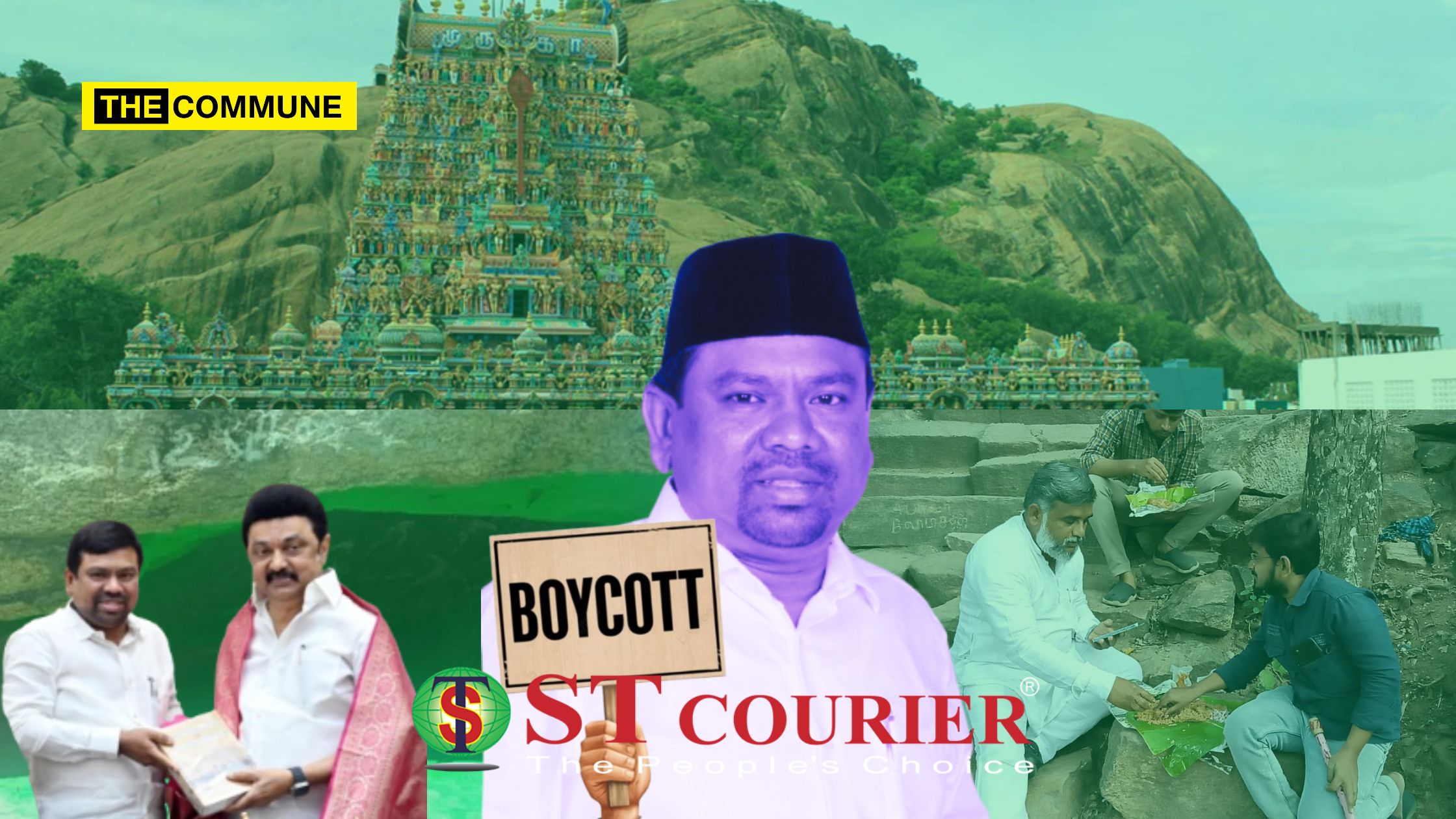
Hindus Call For Boycott Of ST Courier

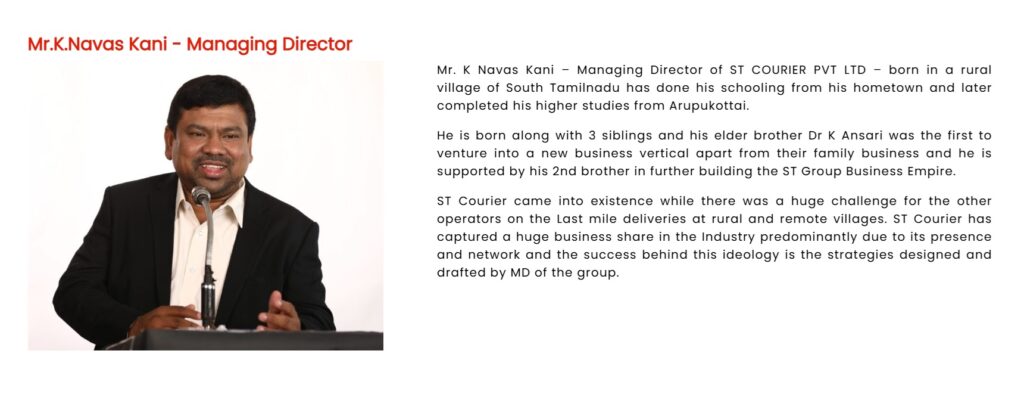
Incidentally, Navas Kani is also one of the directors of a popular courier company in Tamil Nadu, ST Courier. He runs this company with his elder brother Ansari.

Hindus who noticed the wantonly inflammatory post made by Navas Kani called for the boycott of ST Courier. Here are a few netizen reactions.

Tada Rahim, Indian National League (INL) leader, accused Navas Kani of indulging in hawala transactions.

Background

The sacred Hindu site of Thirupparankundram Hills is facing growing tension, with controversial actions by a Muslim politician fueling divisive rhetoric. Indian Union Muslim League member and Ramanathapuram MP Navas Kani, who also serves as the chairman of the Tamil Nadu Waqf Board, has claimed that the dargah at the hilltop is Waqf property. This statement has sent shockwaves through the region and intensified existing tensions.

This development is part of a series of incidents that have strained relations between Hindus and Muslims, who had previously lived in harmony. Some Islamists groups have been attempting to assert their rights to conduct animal sacrifices at the hilltop, furthering their claims that the entire Thirupparankundram Hills should be recognized as Sikkandar Hills.

The situation escalated on 27 December 2024, when Madurai police intervened to detain a group of Muslims family attempting to bring goats and roosters to the hilltop dargah for ritual sacrifice. Syed Abu Dahir, a 53-year-old from Malaiyadipatti in Rajapalayam, arrived with his family and animals for the ceremony but was stopped by authorities at the base of the hill. Police informed them that bringing livestock up the hill was prohibited, which led to a protest by over 20 local Muslims at the foot of the hill in solidarity with the family.

The following week, on 5 January 2025, another large group of Muslim protesters gathered at Thirupparankundram Hills, demanding permission to offer prayers at the mosque located at the top. When the police denied their request, tensions escalated, leading to a brief scuffle and the detention of the protesters.

On 17 January 2025, during the Santhanakoodu Festival at a nearby dargah, social media posts began circulating about an upcoming “Equality Feast” (Samabanthi Bhojan) on 18 January at the hilltop dargah, where goats and roosters were allegedly to be sacrificed. Fearing communal unrest, police set up barricades and conducted searches to prevent the transportation of livestock to the hill. When the dargah Jamath was informed that animal sacrifices were not allowed, protests broke out. Members of the Jamath, along with other Muslim protesters, clashed with the police, causing further disruptions.

The situation was exacerbated by the involvement of the Social Democratic Party of India (SDPI), an ally of AIADMK and a group linked to the banned terror outfit PFI. These elements are believed to be behind the attempts to conduct animal sacrifices at the sacred Thirupparankundram Hill.

Furthering tensions, on 21 January 2025, DMK Manapparai MLA Abdul Samad was accused of conducting an illegal survey around the temple with intentions to gain control of the hill. On the same day, IUML member and Ramanathapuram MP Navas Kani was seen giving an interview near the Thirupparankundram Hills. When asked whether the dargah at the hilltop was under the Waqf Board, Kani confirmed, “Yes, it is under the control of the Tamil Nadu Waqf Board,” further heightening tensions in the area.

Subscribe to our channels on Telegram, WhatsApp, and Instagram and get the best stories of the day delivered to you personally.

Part-Time Politician Vijay’s TVK Substitutes DMK To Become Tamil Nadu’s New Anti-Development Force

tvk dmk

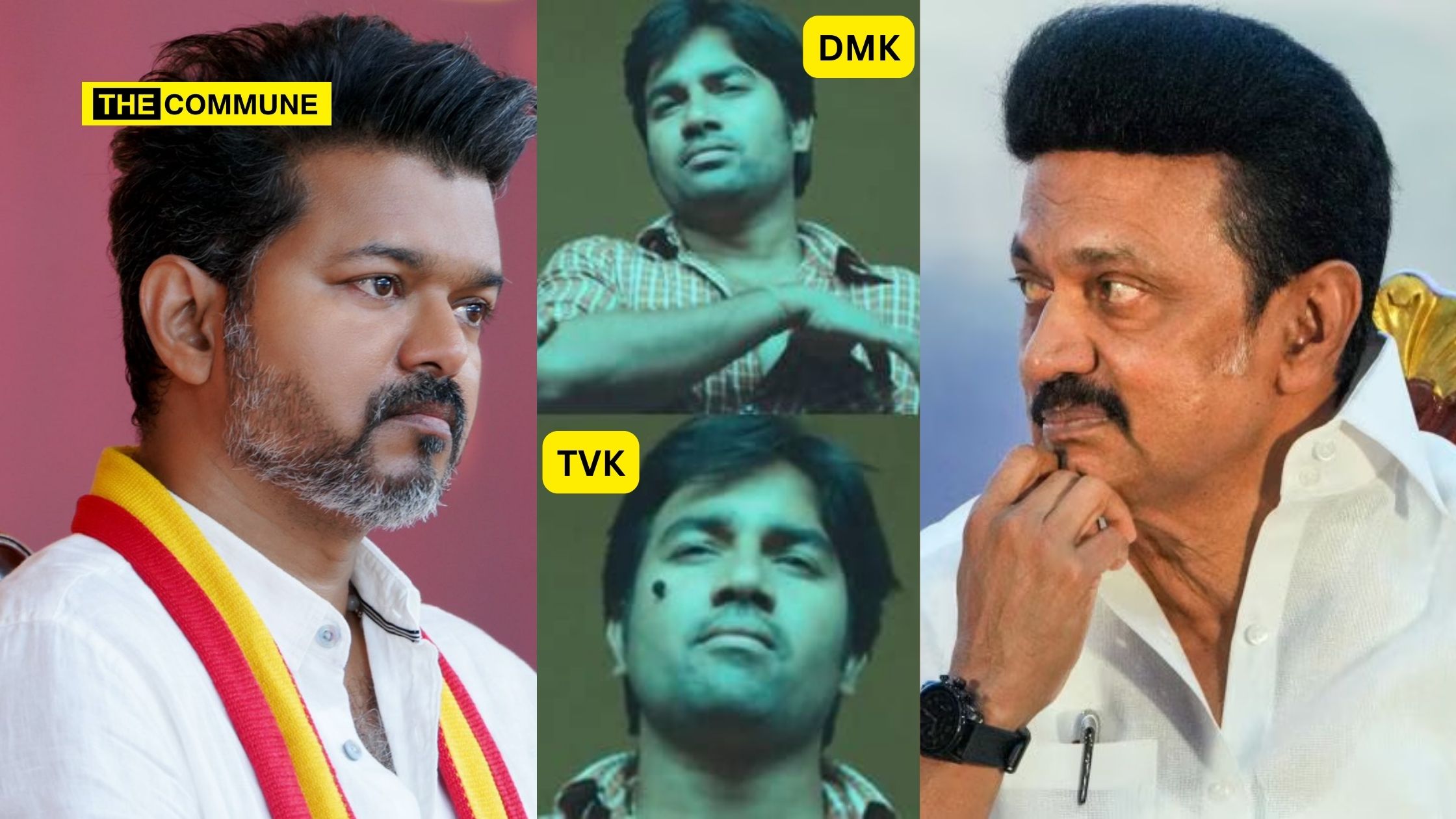
Actor-turned-part-time politician Vijay, the new entrant in Tamil Nadu’s political scene and head of the Tamilaga Vettri Kazhagam, has been increasingly adopting the DMK’s ideology and strategies. This shift comes despite facing severe criticism and after presenting himself as an efficient opposition to counter Dravidian ideology, with EV Ramasamy Naicker as one of his guiding figures was irony.

His ignorance became evident during his recent political stunt, where he visited Parandur to show support for farmers protesting against the proposed Greenfield airport project. This was his first major ground action as a politician, but now he’s planning to visit Vengaivayal, a remote village in Pudukottai district, where human feces were found in an overhead tank supplying water to Dalit residents—a case currently under investigation by the CB-CID for two years.

Here’s the catch: Why does Vijay’s political approach seem so familiar? The answer is simple—his tactics closely resemble those used by the DMK during their opposition days. Just like the DMK, Vijay often blames both the central and state governments for all issues, but in a hypocritical turn, they align with the very forces he opposes, compromising for their own political survival. Vijay has effectively copied this strategy, employing the same rhetoric and actions without any significant change, making him and the party like a mere replica of the DMK.

Has Vijay’s TVK Substituted DMK To Become TN’s New Anti-Development Force?

The answer is a straightforward yes. Vijay’s TVK, with its anti-progressive stance, is clearly adopting policies that mirror those of the DMK’s opposition era. His rhetoric, aimed at influencing the youth and parents, closely follows the same strategy employed by Dravidian ideologies for years. For instance, he opposes development projects like the proposed Parandur airport, champions an anti-NEET mindset, advocates for a two-language policy with a particular focus on opposing Hindi, and pushes for policies that disadvantage poor and marginalized students, particularly those in government schools. Additionally, his opposition to the National Education Policy, which seeks to establish a pan-India education standard, and his stance on the Citizenship Amendment Act echo similar opposition tactics used by the DMK in the past. The DMK, while in opposition, exploited these issues to rally the public by claiming the ability to secure people’s rights from the central government presenting a false dichotomy but after coming to power showed bare hands claiming that only the central government holds the power. Now, Vijay, the part-time, work-from-home politician, seems to be using the same strategy to manipulate public sentiment ultimately fooling the people with a similar political game.

In this backdrop, below are some of his political stunts that highlight his dual role — both as an opposition figure to the DMK and as a shadow of it, mirroring their strategies with the approach of “one punch in the coconut tree, one punch in the palm tree,” skillfully balancing his criticisms of both the central and state governments without upsetting either’s sentiments

Both Opposed Parandur Greenfield Airport Plainly

Vijay, during his visit to Paranduralleged that the proposed airport would destroy 90% of farmland and 13 water bodies, calling the project “anti-people. He also questioned why the DMK, which had opposed projects like the Salem eight-lane expressway and Kattupalli port, was supporting the Parandur airport. However, a closer look at the Airports Authority of India (AAI) pre-feasibility report and the Tamil Nadu government’s decision-making process reveals that Vijay’s statements are either misleading or based on incomplete information.

The Airports Authority of India (AAI) conducted a detailed study to identify the most suitable site for Chennai’s second airport, considering locations like Padalam, Thiruporur, Pannur, and Parandur. Parandur emerged as the best option due to factors such as airspace restrictions at other sites, availability of 5,369 acres of land, better connectivity through the Chennai-Bengaluru Expressway, and fewer displacements compared to Pannur. Additionally, Parandur offers significant potential for future development, unlike the more densely developed Pannur site. Vijay’s claims about the project destroying 90% of farmland and 13 water bodies lack substantiation and overlook the thorough environmental and social impact analysis in the AAI report. Critics suggest that Vijay’s opposition to the project is driven by political motives, with his visit to the protest site viewed as a publicity stunt. Aviation experts argue that Parandur is the most feasible site for the airport, and relocating the project would cause delays and increased costs.

A similar approach was taken by the DMK in 2019 when it criticized the AIADMK government while in the opposition, but once it came to power, the party acknowledged the airport as a crucial need for the state’s economy.

Both Opposed NEET

During the executive committee meeting in Panaiyur on 3 November 2024, which was presided over by Vijay, a resolution was passed calling for the abolition of the National Eligibility cum Entrance Test (NEET). This comes despite data indicating that more underprivileged students, including those from tribal communities, have been able to secure medical seats through the exam in recent years.

Even the DMK, which had previously claimed to have the ‘Secret Weapon’ to make the central government to abolish NEET, switched its stance when Chief Minister MK Stalin admitted in a recent assembly speech that the central government holds the power to revoke NEET, contradicting earlier claims. TVK’s Vijay holds a similar stance on abolishing the exam, and it remains to be seen whether he will reverse his position like the DMK in the next NEET exam season.

Both Called For Abolition Of Governor Post

TVK’s resolutions on 3 November 2024 reiterated their stance on abolishing the Governor’s post. However, in the wake of the sexual harassment case at Anna University, which allegedly involved a DMK functionary, and widespread speculation that the DMK might protect the accused, TVK party chief Vijay sought the Governor’s intervention. It seems that Vijay has now come to recognize the importance of having a neutral figure above the government, capable of questioning the state’s actions when constitutional mechanisms fail. Previously, however, without fully understanding the role and significance of the office, he had called for the abolition of the Governor’s post, which was both impractical and unconstitutional. This stance has been a hallmark of the DMK since its inception, with the party’s founder C.N. Annadurai famously describing the position of Governor as “redundant as a goat’s beard.” This sentiment continues to this day, as evidenced in the 2024 Lok Sabha election manifesto, where the DMK again called for the abolition of the Governor’s post.

Similarly, in January 2024, Udhayanidhi Stalin, the current Deputy Chief Minister and scion of the DMK, led the party’s Youth Wing in passing a resolution calling for the abolition of the Governor’s post in Tamil Nadu. The resolution argued that the governor was attempting to run a parallel administration, undermining the authority of the state’s elected representatives. The resolution, passed at the 2nd DMK Youth Wing Meet, asserted that abolishing the position of Governor was essential to safeguard democracy.

Both Opposed Three-Language Policy

Vijay has strongly opposed the three-language policy, despite his own son, Jason Sanjay, studying at the American International School in Chennai, where languages like French, Spanish, and Korean are offered alongside English. In some IB schools, students also have the option to choose Hindi. The rationale behind the three-language policy is to provide marginalized students— even many of whom currently lack access to government schools—a chance to learn a third language. This would enable them to pursue careers as translators, communicators, and open doors to international job opportunities.

However, Vijay, along with other Dravidian leaders and the DMK, oppose marginalized students to venture beyond Tamil Nadu. They seem to believe these students should remain confined to the state, study locally, and take on menial jobs, ultimately serving as a political vote base through emotional appeals. The hypocrisy lies in the fact that this “two-language policy” exception doesn’t apply to Matriculation, CBSE, or international boards, which offer a wider array of language options. Yet, Vijay appears intent on following this same narrow-minded stance.

Both Opposed Central Govt On Other Matters

TVK chief Vijay has adopted a stance similar to that of the DMK, opposing any initiatives proposed by the central government. DMK chief and Chief Minister MK Stalin argued that the legislation posed a threat to “alter India’s polity forever.” Similarly, during the TVK party resolution, Vijay strongly opposed the “one nation, one election” proposal, criticizing it as an anti-democratic move by the BJP-led Union government.

In addition, TVK has mirrored the DMK’s tendency to pander to Islamist interests. The party has called for the withdrawal of the Waqf (Amendment) Bill amid reports of vast areas of land and entire villages being claimed by the Waqf Board.

Last Word

In conclusion, TVK chief Vijay appears to be following in the footsteps of the DMK, albeit with slight adjustments. For instance, after facing significant criticism, he shifted his position on certain issues, such as expressing support for Hindu festivals and clarifying during his first conference that he follows EVR’s principles but does not intend to hurt Hindu sentiments or beliefs. However, if Vijay continues on this path of trial and error, imitating others without carving out a distinct identity, much like his films that are often dubbed hits from other languages, he risks losing his way in the political arena.

Despite the party’s formation on 2 February 2024 and Vijay’s first conference on 27 October 2024, he has yet to establish district-level cadres while dreaming of becoming the Chief Minister by 2026. This is not a movie, where one can rise to power with a two-minute song. Vijay needs to start from the basics of politics and learn its history, rather than assuming that people are unaware of his actions. His cinematic charm alone won’t suffice, as the rise of NTK is already challenging the Dravidian image cultivated by the DMK. If Vijay follows this unoriginal path, he may end up as another I.N.D.I.A ally, negotiating for seats, or even a figure like Kamal Haasan, who allegedly compromised his party’s integrity for a single Rajya Sabha seat.

Subscribe to our TelegramWhatsApp, and Instagram channels and get the best stories of the day delivered to you personally. 

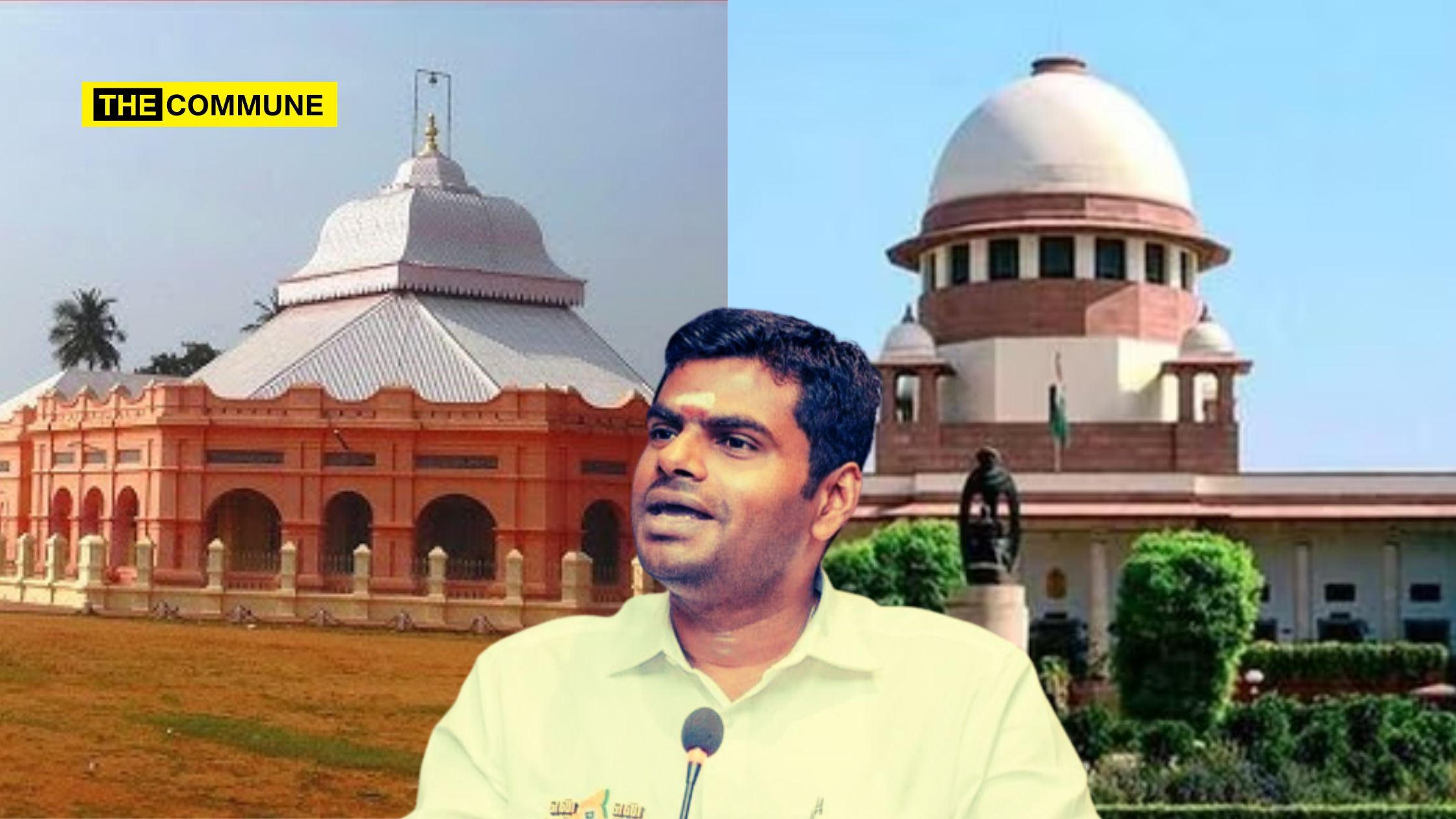
BJP TN President Annamalai Welcomes Supreme Court Decision To Halt Vadalur Vallalar International Centre Construction, Urges DMK Govt To Drop Plan

BJP TN President Annamalai Welcomes Supreme Court Decision To Halt Vadalur Vallalar International Centre Construction, Urges DMK Govt To Drop Plan

Tamil Nadu BJP President K. Annamalai has heartily welcomed the Supreme Court’s decision to halt the construction of the new Vadalur Vallalar International Centre in the Peruveli area of Cuddalore district.

The interim order was issued by a division bench of Justices Sudhansu Dhulia and Vinod Chandran, following a petition filed by Vinoth Raghavendran, who challenged the state government’s project. Raghavendran argued that the construction violated Vallalar’s principles and wishes.

The petitioner’s counsel emphasized that the construction of the international centre at the Vadalur Vallalar temple was not only illegal but also contradicted Vallalar’s spiritual philosophy. The counsel further argued that turning a spiritual site into a commercialized space, under the guise of benefiting the poor, was inappropriate, and urged the court to consider these points.

The Supreme Court issued a stay on the construction, maintaining the status quo until further hearings. The court also directed the state government to respond to the appeal and scheduled the next hearing for 28 February 2025.

In a statement on his official X account on 22 January 2025, Tamil Nadu BJP President K. Annamalai welcomed the decision, noting the significance of upholding the spiritual integrity of Vallalar’s legacy. Annamalai stated, “On behalf of @BJP4Tamilnadu, we welcome the order of the Hon’ble Supreme Court prohibiting the construction of international research center in the Vadalur Vallalar Sathya Gnanasabha Peruveli. Last year, the DMK government made efforts to construct an international center in the Vadalur Sathya Gnanasabha Peruveli. Many organizations, including Vallalar devotees and @BJP4Tamilnadu, condemned this and launched protests, saying that it was against the philosophy of Vallalar. In a case filed by brother Mr. Vinod Raghavendra of the Spiritual and Temple Development Division of @BJP4Tamilnadu the Hon’ble Madras High Court imposed an interim stay on the construction of international center. While this ban was pending, the Tamil Nadu government started constructing international center in an area a little away from the Sathya Gnanasabha. In a case filed in the Hon’ble Supreme Court by Brother Mr. Vinod Raghavendra against this encroachment and seeking a stay on the construction work, the Hon’ble Supreme Court has issued an order imposing an interim stay on the construction of the Vallalar International Research Center buildings and stating that the interim stay imposed by the Madras High Court on the construction of new structures will continue. The Supreme Court verdict, which is a great relief to the devotees of Vallalar, is a blow to the DMK government that has tried to distort the public worship system. I urge the DMK government to abandon the construction of the international center structures in the Vallalar Peruveli without further harming the devotees.

Subscribe to our channels on TelegramWhatsApp, and Instagram and get the best stories of the day delivered to you personally.
30-Year-Old Mujep Ali Arrested In Puducherry For Blackmailing Minor With Morphed Photos And Nude Video Calls

30-Year-Old Mujep Ali Arrested In Puducherry For Blackmailing Minor With Morphed Photos And Nude Video Calls

On 20 January 2025, Puducherry’s cybercrime police arrested a 30-year-old man named Mujep Ali for allegedly blackmailing a minor girl with morphed images of her and pressuring her into participating in nude video calls. The police stated that the man had extorted money from several women by coercing them into appearing nude on video calls.

Senior Superintendent of Police Narra Chaitanya explained that the accused, S. Mujep Ali, from Thirumakottai in Tamil Nadu’s Tiruvarur district, used fake social media profiles to befriend women and minors. He would then manipulate them into participating in nude video calls, secretly recording the footage and using it to extort money.

The case came to light when the parents of a minor girl in Puducherry filed a complaint, stating that after the man befriended their daughter, he sent her a morphed photo of her in a nude pose when she refused to meet his demands. The cybercrime police registered a case under sections 351(3) of the BNS, Section 14 of the Protection of Children from Sexual Offences (POCSO) Act, 2012, and Section 67(B) of the Information Technology Act, 2000. A team was immediately deployed to locate the suspect.

The accused contacted the minor girl, claiming he was in Cuddalore, and threatened to post the morphed photos online unless she met him. The girl’s parents alerted the police, who sent a team in plain clothes to the designated spot and arrested him. Police officer revealed that the accused had been engaged in similar criminal activities since 2020. Authorities confiscated his mobile phone, which contained explicit photos and videos of over 15 women. He further advised women and girls to refrain from befriending strangers on social media platforms in order to protect themselves from falling victim to such crimes.

(With inputs from TOI)

Subscribe to our channels on TelegramWhatsApp, and Instagram and get the best stories of the day delivered to you personally.
The Eternal Connection Of Maha Kumbh, Mahamaham And Mamankam

Maha Kumbh, Mahamaham And Mamankam

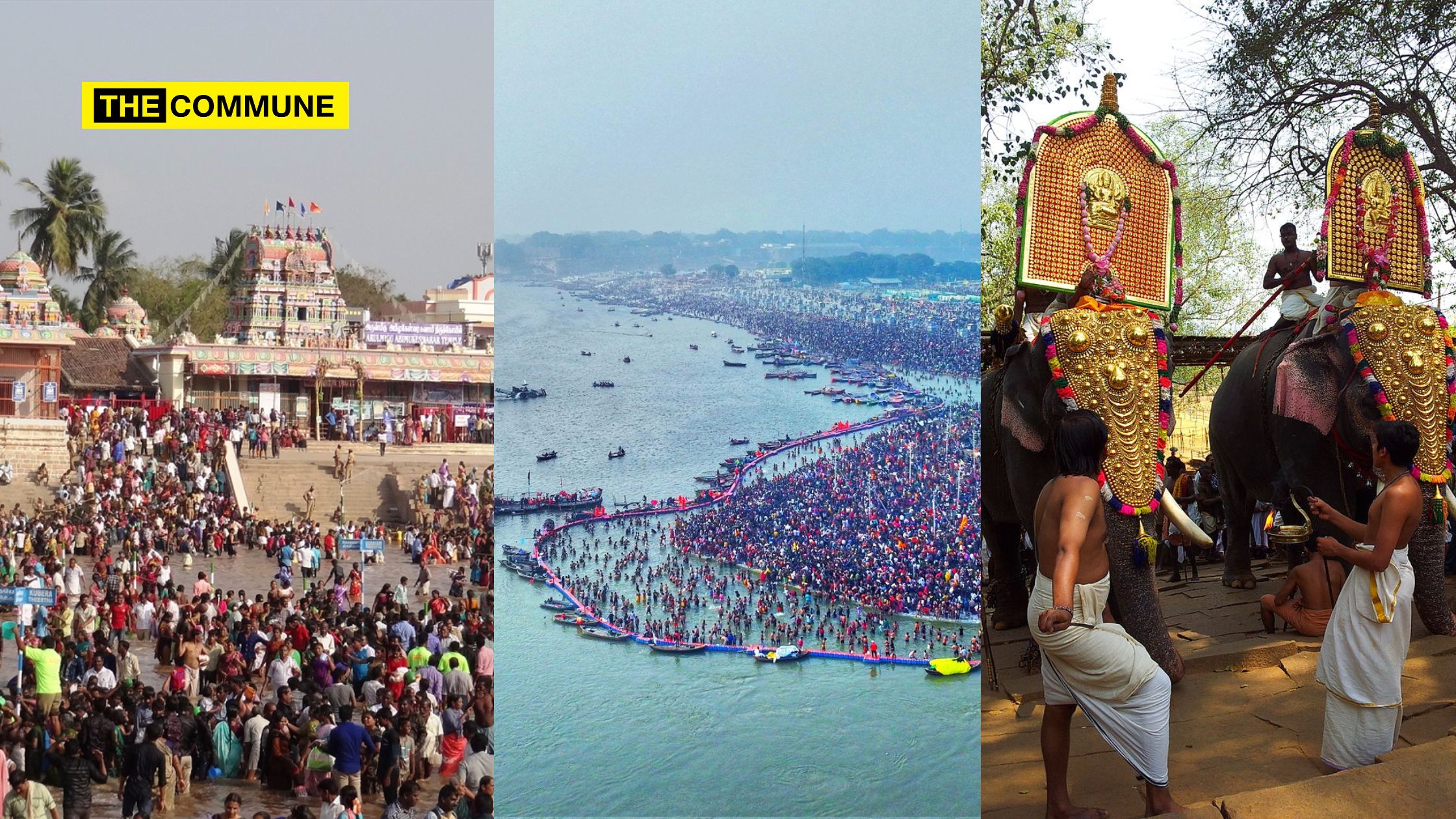
The festivals of Maha Kumbh Mela, Mahamaham, and Mamankam hold immense significance in the religious and cultural life of India. Despite being culturally same and geographically distinct, these festivals share a profound spiritual connection through their underlying themes of ritual purification, cosmic alignment, and devotion to sacred waters. Both Maha Kumbh Mela and Mahamaham attract millions of devotees, saints, and pilgrims, symbolizing a collective quest for spiritual liberation and divine grace.

Maha Kumbh Mela is one of the largest religious gatherings in the world, held every twelve years at four different locations in India—Prayagraj, Haridwar, Ujjain, and Nashik. The festival’s origins are rooted in Hindu traditions, particularly the legend of the Samudra Manthan (churning of the ocean) and the struggle between gods and demons for the nectar of immortality (amrita). During this struggle, a few drops of the nectar fell at these four locations, making them sacred sites. The primary ritual of Maha Kumbh Mela involves taking a holy dip in the sacred rivers—the Ganges at Prayagraj and Haridwar, the Godavari at Nashik, and the Shipra at Ujjain. Bathing in these rivers during the Kumbh Mela is believed to cleanse one of all sins and help in attaining moksha (liberation from the cycle of birth and death). The festival also acts as a venue for philosophical discussions, spiritual discourses, and religious congregations.

Mahamaham is a prominent festival celebrated once every twelve years in the town of Kumbakonam, Tamil Nadu. The festival is centered around the Mahamaham tank, a large temple tank where nine sacred rivers are believed to converge. According to legend, Lord Shiva appeared in Kumbakonam to purify the waters after a cosmic deluge. Devotees believe that bathing in the Mahamaham tank during the festival absolves them of their sins and grants spiritual merit. The festival involves elaborate rituals, including ceremonial bathing, processions of temple deities, and various religious ceremonies. It attracts pilgrims from across southern India, creating a vibrant spiritual atmosphere that reflects the region’s rich cultural heritage.

Mamankam was a historic river festival held on the banks of the Bharathapuzha River in Kerala , probably the only river named after the name of the country. It was celebrated once every twelve years in the ancient kingdom of Valluvanad and initially had religious significance, centered around the worship of deities and ritual bathing in the river. Over time, it evolved into a platform for political rivalry and power struggles. The Zamorin of Calicut played a key role in these events, as warriors from different clans participated in ritual combat to challenge the Zamorin’s authority. Despite its political dimensions, Mamankam retained its spiritual essence, symbolizing the sanctity of the Bharathapuzha River and the importance of ritual purification. Today, Mamankam is remembered for its unique blend of religious devotion and historical significance.

Despite their regional differences, Maha Kumbh Mela, Mahamaham, and Mamankam share several common aspects that highlight their eternal connection. All these festivals revolve around the sanctity of water bodies, emphasizing the purifying power of water in Hindu philosophy. The act of bathing in the rivers during these festivals is seen as a means of spiritual cleansing and renewal. The timing of Maha Kumbh Mela and Mahamaham is determined by precise astronomical calculations. The Maha Kumbh Mela occurs when Jupiter enters Aquarius and the Sun enters Aries, while Mahamaham is celebrated when Jupiter transits the zodiac sign of Leo. Although Mamankam does not follow such astronomical rules, it reflects a similar spiritual connection with the river and cosmic order.

These festivals are believed to offer devotees an opportunity to attain moksha. The rituals performed during these events aim to help devotees transcend worldly existence and achieve spiritual freedom. Maha Kumbh Mela, Mahamaham, and Mamankam act as major pilgrimage events that bring together diverse communities from across the country. They promote a sense of unity and shared spiritual purpose, highlighting the inclusive nature of Hindu traditions.

River festivals like Maha Kumbh Mela, Mahamaham, and Mamankam play an important role in the spiritual and cultural life of India. Rivers are revered in in prayers as living deities, symbolizing life, fertility, and purity. These festivals celebrate the sacredness of rivers and strengthen the ecological and spiritual relationship between humans and nature. River festivals provide an opportunity for collective worship and reflection, encouraging a sense of community and shared values. They also contribute to the preservation of religious traditions and the transmission of cultural knowledge across generations. The economic impact of these festivals is significant, as they boost local economies through tourism and related activities.

The eternal connection between Maha Kumbh Mela, Mahamaham, and Mamankam lies in their shared emphasis on sacred waters, cosmic alignment, and spiritual liberation. These festivals exemplify the profound spiritual heritage of India and continue to inspire millions of devotees in their quest for divine grace and enlightenment.

Vishnu Achutha Menon is an Assistant Professor at the Institute for Educational and Developmental Studies.

Sandeep Kumar P serves as the Director of the Centre for South Indian Studies.

Subscribe to our channels on TelegramWhatsApp, and Instagram and get the best stories of the day delivered to you personally.
Jain Caves Painted ‘Green’ At Thiruparankundram Hill Amidst Islamists Attempt To Rename It As ‘Sikandar’ Hill, DMK-Ally IUML MP Nawas Kani Had Earlier Gone With Islamists To Have Non-Veg Food At Hill

Jain Caves Painted 'Green' At Thiruparankundram Hill Amidst Islamists Attempt To Rename It As 'Sikandar' Hill, DMK-Ally IUML MP Nawas Kani Had Earlier Gone With Islamists To Have Non-Veg Food At Hill

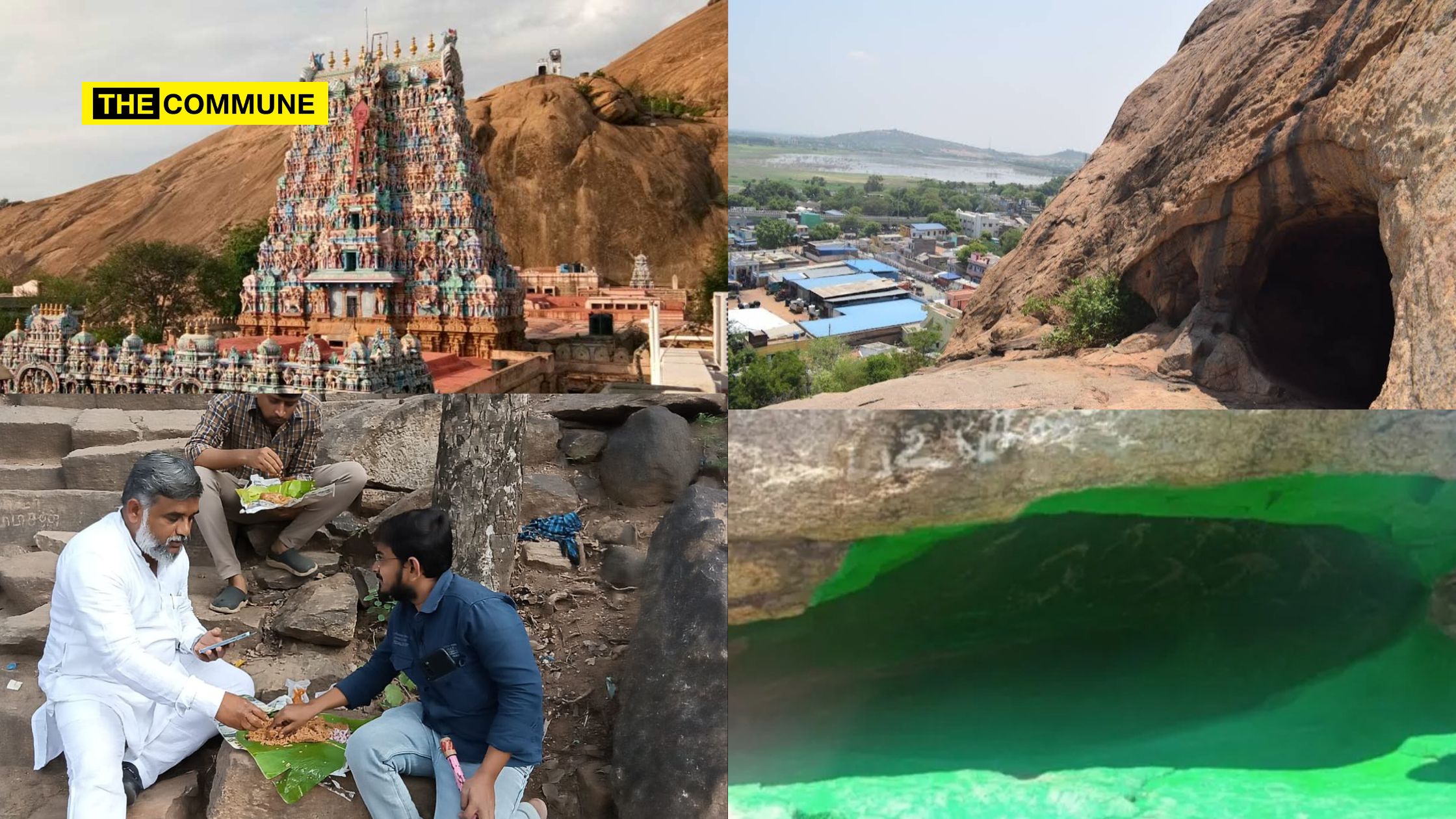
Ancient Jain caves at Thiruparankundram Hill were vandalized with green paint amid rising tensions linked to sacrilegious acts by Muslim groups.

Thiruparankundram Hill, a site of immense religious and historical significance, has become a focal point of controversy and sacrilege. Renowned as the first Arupadai Veedu (abode) of Lord Murugan, the hill is sacred to Hindus. Additionally, its western side features ancient Jain beds with Tamil Brahmi inscriptions dating back to the 2nd century BCE to 2nd century CE. Further up the hill, Jain bas-reliefs of Parsvanatha and Mahavira from the 8th to 9th century, along with the locally named “Pancha Pandava” beds, emphasize the Thiruparankundram hill’s importance to Jainism. These caves, protected by the Archaeological Survey of India (ASI), showcase images of Jain Tirthankaras, underscoring the site’s spiritual and historical legacy.

Recently, the hill has seen rising tensions as certain Islamist groups have been wantonly trying to carry out sacrilegious acts, including performing ‘qurbani’ (sacrifices of goats and roosters) at a dargah atop the hill.

Amid these tensions, a fresh incident has caused outrage: ‘unidentified individuals’ vandalized a Jain cave on the hill’s side by painting it green. The vandalism came to light after Shankar, Assistant Conservation Officer of the ASI, filed a complaint. The Thiruparankundram police have registered a case under the Ancient Monuments and Archaeological Sites and Remains Act, 1958 (AMASR Act), and the Prevention of Damage to Public Property Act, 1984 (PDPPA).

Authorities have condemned the act, calling it a targeted effort to deface a protected heritage site. An investigation is underway to identify and apprehend the culprits.

Meanwhile, in an attempt to usurp the sacred Hindu site of Thiruparankundram Temple hill and destroy its sanctity, DMK ally Indian Union Muslim League (IUML) member and Ramanathapuram MP Navas Kani, who also holds the position of chairman of the Tamil Nadu Waqf Board, shared a controversial social media post that showed Muslim individuals eating non-vegetarian biryani near the temple entrance at the foothills of Thirupparankundram Hills. He also claimed that the dargah at the Thirupparankundram Temple hill is Waqf property.

The Issue

Tensions flared on December 27, 2024, when Madurai police detained a family attempting to bring goats and roosters to the hilltop dargah for ritual sacrifice. Led by Syed Abu Dahir, a 53-year-old from Malaiyadipatti, the family protested after being stopped at the base of the hill. Their detention sparked demonstrations by over 20 local Muslims in solidarity.

On January 5, 2025, another group of Muslim protesters gathered at the hill, demanding access to the mosque for prayers. When police denied their request, the situation escalated, resulting in a brief scuffle and several detentions.

Further unrest followed the announcement of an “Equality Feast” (Samaanbhojan) scheduled for January 18 at the hilltop dargah. Social media posts indicated plans for goat and rooster sacrifices during the event. Concerned about communal violence, authorities erected barricades and conducted searches to prevent livestock from being transported to the site. When protesters were informed that animal sacrifices were prohibited, clashes erupted between Jamath members and the police, disrupting the area further.

Compounding the issue, the Social Democratic Party of India (SDPI), an AIADMK ally linked to the banned group PFI, has been accused of orchestrating these sacrilegious acts to inflame tensions.

On January 21, 2025, controversy deepened when DMK Manapparai MLA Abdul Samad conducted an unauthorized survey around the temple, allegedly to assert control over the hill. The same day, IUML leader Navas Kani reaffirmed in an interview that the dargah falls under the Tamil Nadu Waqf Board’s jurisdiction, further fueling the conflict.

Subscribe to our channels on TelegramWhatsApp, and Instagram and get the best stories of the day delivered to you personally.
Islamists Along With DMK-Ally IUML MP Who Is Also TN Waqf Board Chairman Provoke Hindus By Having Non-Vegetarian Food At Sacred Thiruparankundram Murugan Temple Hill

Islamists Along With DMK-Ally IUML MP Who Is Also TN Waqf Board Chairman Provoke Hindus By Having Non-Vegetarian Food At Sacred Thiruparankundram Murugan Temple Hill

In an attempt to usurp the sacred Hindu site of Thiruparankundram Temple hill and destroy its sanctity, DMK ally Indian Union Muslim League (IUML) member and Ramanathapuram MP Navas Kani, who also holds the position of chairman of the Tamil Nadu Waqf Board, shared a controversial social media post that showed Muslims eating non-vegetarian biryani near the temple entrance at the foothills of Thiruparankundram Hills.

This has sparked strong backlash from both netizens and Hindu activists, who view the post as an attempt to provoke religious discord in the area, with fears that it could escalate into violent unrest between the Hindu and Muslim communities in the locality and urged the government and Madurai administration to intervene.

In a social media post on 22 January 2025, Ramanathapuram MP Navas Kani via his official x account stated, “We went to Madurai today to conduct a field inspection regarding the Sikkandar hills Dargah issue. We met the Madurai City Police Commissioner and stressed that steps should be taken to ensure that all people can visit the Dargah in harmony and without any problems, just as they did in the past. We have also spoken to the District Collector in this regard. As an example of harmony, there is a Dargah and a Kashi Vishwanathar temple there. People of all religions visit the Dargah. Therefore, we have urged that all steps be taken quickly to resolve these problems without causing unnecessary inconvenience to the people who visit there.”

He further said “When we spoke to the Police Commissioner in this regard, he explained that there is no ban on carrying food, but are discussing about the possible ban on carrying goats and chickens. After the Police Commissioner said that there is no ban on carrying cooked non-vegetarian food, people took cooked non-vegetarian food and ate it. All the restrictions will be removed soon and all steps will be taken to ensure that people can visit the Dargah without any difficulty, as they did in the past.”

In this controversial social media post, he shared photos of individuals eating non-vegetarian food near the temple entrance at the foothills of Thirupparankundram Hills. This statement, along with the image, has sparked significant outrage, with critics accusing Kani of intentionally provoking religious tensions in the region.

The post sparked a wave of anger among netizens, who severely condemned Ramanathapuram MP Navas Kani for provoking Hindu sentiments.

Backdrop

The sacred Hindu site of Thirupparankundram Hills is facing growing tension, with controversial actions by a Muslim politician fueling divisive rhetoric. Indian Union Muslim League member and Ramanathapuram MP Navas Kani, who also serves as the chairman of the Tamil Nadu Waqf Board, has claimed that the dargah at the hilltop is Waqf property. This statement has sent shockwaves through the region and intensified existing tensions.

This development is part of a series of incidents that have strained relations between Hindus and Muslims, who had previously lived in harmony. Some Islamists groups have been attempting to assert their rights to conduct animal sacrifices at the hilltop, furthering their claims that the entire Thirupparankundram Hills should be recognized as Sikkandar Hills.

The situation escalated on 27 December 2024, when Madurai police intervened to detain a group of Muslims family attempting to bring goats and roosters to the hilltop dargah for ritual sacrifice. Syed Abu Dahir, a 53-year-old from Malaiyadipatti in Rajapalayam, arrived with his family and animals for the ceremony but was stopped by authorities at the base of the hill. Police informed them that bringing livestock up the hill was prohibited, which led to a protest by over 20 local Muslims at the foot of the hill in solidarity with the family.

The following week, on 5 January 2025, another large group of Muslim protesters gathered at Thirupparankundram Hills, demanding permission to offer prayers at the mosque located at the top. When the police denied their request, tensions escalated, leading to a brief scuffle and the detention of the protesters.

On 17 January 2025, during the Santhanakoodu Festival at a nearby dargah, social media posts began circulating about an upcoming “Equality Feast” (Samabanthi Bhojan) on 18 January at the hilltop dargah, where goats and roosters were allegedly to be sacrificed. Fearing communal unrest, police set up barricades and conducted searches to prevent the transportation of livestock to the hill. When the dargah Jamath was informed that animal sacrifices were not allowed, protests broke out. Members of the Jamath, along with other Muslim protesters, clashed with the police, causing further disruptions.

The situation was exacerbated by the involvement of the Social Democratic Party of India (SDPI), an ally of AIADMK and a group linked to the banned terror outfit PFI. These elements are believed to be behind the attempts to conduct animal sacrifices at the sacred Thirupparankundram Hill.

Furthering tensions, on 21 January 2025, DMK Manapparai MLA Abdul Samad was accused of conducting an illegal survey around the temple with intentions to gain control of the hill. On the same day, IUML member and Ramanathapuram MP Navas Kani was seen giving an interview near the Thirupparankundram Hills. When asked whether the dargah at the hilltop was under the Waqf Board, Kani confirmed, “Yes, it is under the control of the Tamil Nadu Waqf Board,” further heightening tensions in the area.

Subscribe to our channels on TelegramWhatsApp, and Instagram and get the best stories of the day delivered to you personally.