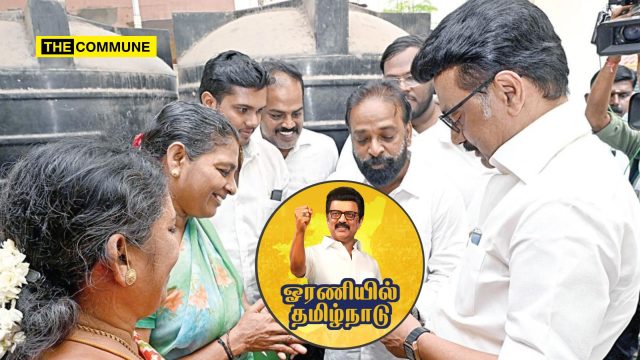
The DMK’s door-to-door membership campaign, Oraniyil Tamil Nadu, has been under increasing scrutiny, with a growing list of controversies and allegations of misuse of public trust. Initially launched as an ambitious mass-mobilisation effort, the campaign’s credibility took a hit after the Madurai Bench of the Madras High Court issued a temporary injunction barring the party from using OTP-based verification for enrolling members citing concerns over data privacy and personal information misuse.
Now, fresh allegations have emerged from parts of Chennai, where individuals posing as civic officials are allegedly misleading residents under the guise of electoral roll verification.
According to several residents, individuals one wearing a Greater Chennai Corporation (GCC) identity card are going door-to-door claiming to work with the civic body. Residents say they were asked to provide their mobile numbers, believing it to be part of an official election-related update. Once the number is provided, another person accompanying the supposed official inputs the number into an app and instructs the resident to give a missed call to a particular number.
Soon after, people receive a call featuring a pre-recorded message from Chief Minister M.K. Stalin, thanking them for joining the Oraniyil Tamil Nadu campaign.
Entire neighbourhoods have reportedly gone through this process. Many residents say they felt pressured to comply, fearing backlash or not wanting to appear uncooperative. Most believed the interaction was an official Election Commission activity.
The Election Commission of India (ECI), however, has issued no such directive requiring OTPs, missed calls, or phone verification as part of any ongoing electoral verification effort. This has raised serious concerns about the blurring of lines between party outreach and civic processes, and the exploitation of public trust for political gains.
Critics argue that the local DMK leaders appears to be pushing local functionaries to boost membership numbers by any means necessary particularly as the 2026 Assembly elections draw near. What was promoted as a campaign to unify Tamil Nadu and challenge central policies, now risks being overshadowed by accusations of deception, data misuse, and coercion.
Subscribe to our channels on Telegram, WhatsApp, and Instagram and get the best stories of the day delivered to you personally.
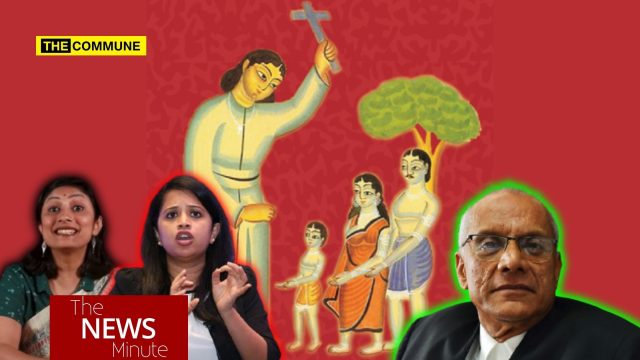
In what can be seen as an attempt to whitewash missionary conversion, The News Minute recently platformed Supreme Court advocate and ‘activist’ Colin Gonsalves on their podcast, “South Central”. They were discussing the topic of the Malayali nuns arrested in Chhattisgarh for conversion.
The arrest of two Catholic nuns from Kerala and a tribal woman in Chhattisgarh on charges related to religious conversion shocked all the leftists and Congress supporters (as well as the parties) across the board.
What Was The Case?
Sister Preeti Mary and Sister Vandana Francis, both hailing from Kerala, were taken into custody on 25 July 2025, along with Sukaman Mandavi, a tribal woman. The arrests were made at Durg railway station after a Train Ticket Examiner (TTE) flagged the group for not having platform tickets. The women were subsequently booked under Section 143 of the Bharatiya Nyaya Sanhita (BNS) for alleged human trafficking and under Section 4 of the Chhattisgarh Religious Freedom Act, 1968, both of which carry penalties of up to 10 years in prison. A local court has remanded all three in custody for 14 days, with their remand set to expire on 8 August 2025.
Colin Gonsalves Says Conversion Is Not A Crime
Gonsalves’ opening remarks in the episode were, “It’s not a crime to pray. It’s not a crime to talk to people. It’s not even a crime to convert. But the crime is forced conversion, and they don’t have any evidence of forced.”
Then he goes on to throw mud at the judiciary saying, “…there is a creeping saffronization within our judiciary and there is a lack of spine with judges not being able to stand up to the powerful central government. What a shame. We had the finest judiciary in the country in the world and now look what a pathetic state it has been reduced to.”
Then he goes on to mumble some numbers that “indicate” at “persecution of Christians.”
He then said, “They know the Christian conversion rate is very minor… their intention is to stop peaceful Christian activities. So, prayer meetings… are being stopped.”
Then he blames the police force for being “communalised”. He also labelled the government as “It’s a government of gundas, a government of totally violent people full of hate speech. But we must gather our own forces around us.”
He further alleged, “The police go with Bajrang Dal… the police are the assailants. They fabricate crimes… the FIR is signed by Bajrang Dal activists.”
He also said “Why are we as Christians so pathetic in fighting back? Why are we so quiet? Why is our leadership so quiet? Nobody takes them to task.” in an inflammatory tone.
TNM’s Pooja Prasanna added her fangirl moment words by saying, “In Karnataka, the fight back I saw on ground were by young and old women and it was so heartening to see, we saw video after video where when Bajrang Dal goons would barge into these houses asking why you holding prayer meetings these women would yell, shoo them out of their houses saying don’t you dare come to my house again so that was u something else, I get goosebumps thinking about it.”
And when Gonsalves was asked why missionaries convert, he nonchalantly replied, “There’s nothing wrong with conversion. It’s perfectly legitimate. It’s perfectly legal as long as you do it with love and cooperation and volunteerism. There’s nothing wrong with conversion. I would not back down and step back and say, “Oh, I’m not converting. If I help people, if I assist people, if I’m there when they are in in trouble times, there’s nothing wrong in a person saying, “I have seen you in your work and I have seen you in your community and I have seen you in your day-to-day lives and I want to abide by the practices and principles of Christianity” nothing wrong, right?”
He further said, “Conversion is not a crime. And if it’s done voluntarily, it’s not a crime at all.”
Now comes the kicker. He says, “Atrocious legislation. Somebody gives you an allurement. What is allurement for God’s sake? What is an allurement? And all right, suppose I have a hospital, and I treat you and I show you the work that we’re doing and this goes for any community. I speak as if I’m a Christian or Hindu or whatever and you see my work among the poor and you are attracted allurement; you are attracted by my work. What’s wrong with that? That’s not a that’s not a crime at all. And we don’t have a single one of our leaders fighting unitedly against these anti-conversion boys.”
The co-panelists also buttress Gonsalves stating that there’s a concerted campaign by right-wing groups to demonize missionaries and Christians and what is happening is a criminalization of faith in India and justified that missionaries are often the only ones who help Dalits and tribals, so obviously they convert. One of them also justified missionary work by saying, “Different congregations went for missionary purposes… especially to northeast and tribal belts… Education was their way of giving knowledge.” Another said, “It is a heartwarming sight to see Malayali nuns in tribal belts… but they are being silenced while trying to help the poor.”
Towards the end, Gonsalves gave a clarion call for organizing lawyers, activists and journalists to organize themselves every Sunday and plan on ‘using the law’ to take Bajrang Dal activists to task, which can be construed as a threat to file false cases against the Hindu activists.
“I advise people. All of us… all of you journalists, everybody. We should have a prior program to fan out in the country. I told people.. every Sunday, I’ll travel early morning to a particular state. We’ll organize a meeting. Speak on how the law can be used. We’ll use the law against these characters (Hindu activists). Because if you catch these guys in the beginning, the Bajrang Dal fellows. File a case against them and take the case up to the High Court and Supreme Court. They stop that activity completely.“, he said in a threatening tone.
Who Is Colin Gonsalves?
Gonsalves’ casual remark, “It’s not a crime to convert” actually stands for in light of his work. Let’s take a look at what he does.
Defending The Right To Convert – Even Through Coercion and Deceit
Gonsalves’ NGO, the Human Rights Law Network (HRLN), has repeatedly filed petitions opposing anti-conversion laws in states like Madhya Pradesh, Uttarakhand, and Himachal Pradesh, laws which mandate prior declaration of religious conversion, penalize conversion through fraud, inducement or marriage, and aim to protect tribal communities from predatory evangelism.
When Gonsalves says “it’s not a crime to convert”, what he omits is that even coercive or fraudulent conversions of vulnerable tribals, impoverished Dalits, or underage girls are defended by his legal team under the banner of “freedom.”
Funded By Foreign Churches
HRLN and its parent body, Socio-Legal Information Centre (SLIC), received nearly ₹50 crore from Christian evangelical organizations including:
These funds were not used for “legal awareness camps” but for litigating against anti-conversion laws, obstructing deportation of illegal immigrants, and defending “activists” arrested during riots and anti-national protests.
So, when Gonsalves appears on TNM and says, “it’s not a crime to convert”, he is not just expressing a legal opinion. He is justifying the very objective of the foreign funders who prop up his legal empire.
Conversion, Courts & Collusion: What Colin Gonsalves & HRLN Have Fought For
Let’s take a look at what/who Gonsalves and his “NGO” have been “fighting” for.
Opposed Char Dham Road Project:Filed PIL to halt road expansion to the Indo-China border, essential for Indian military logistics. Argument? “Army can take the air route.”
Defended Rohingyas’ Rights to Indian Welfare:Filed PIL asking free education, healthcare, ration for illegal Rohingya migrants.
Defended Safoora Zargar & Anti-CAA Rioters: Gonsalves’ lawyers represented stone-pelters and violent agitators who led Delhi into flames with foreign money backing their court fees.
HRLN also defended AltNews’ Mohammad Zubair (accused of sharing a minor girl’s image) and Maoist-linked Stan Swamy.
Tried to Influence Judiciary via Retired Judges: HRLN stacked its boards with retired SC judges to create undue pressure in litigation across High Courts and SC.
Protected Evangelical NGOs with FCRA Violations: When SLIC’s FCRA license was cancelled, HRLN simply rebranded and routed funds through different trusts continuing to provide legal protection to NGOs accused of mass tribal conversions.
The TNM–HRLN Symbiosis: Platform Meets Legal Muscle
It is not coincidental that TNM and Gonsalves find each other. Read more on how Gonsalves’ NGO is connected to Soros’ Open Society Foundation. TNM’s chief editor Dhanya Rajendran is the chairperson of DIGIPUB, a platform of all leftist news media/organizations including Alt News, Newslaundry, etc
TNM paves the narrative road by branding tribal conversions as “social upliftment” and calling anti-conversion laws “draconian.” Gonsalves paves the legal road, filing petitions, defending foreign-funded NGOs, and weaponizing constitutional freedoms against national cohesion.
TNM is complicit with Gonsalves and the conversion mafia. Instead of scrutinizing his conflicts of interest, TNM gave him a one-sided platform to vilify Hindu groups (Bajrang Dal, VHP) as “violent” while ignoring documented cases of forced conversions. They avoid the uncomfortable questions on why foreign churches fund Indian NGOs like HRLN if their goal isn’t religious expansion.
TNM will never investigate the billions spent by churches on Indian conversions nor will it take cognizance of the exploitation of tribals, they would only cry “persecution” for missionaries.
Gonsalves’ activism follows a clear pattern. Foreign funds flow into HRLN from evangelical groups, legal defence is provided to anti-India elements (rioters, Naxals, illegal immigrants) and media platforms (like TNM) amplify his narrative, painting Hindu resistance as “persecution.”
Anti-conversion laws are attacked, enabling missionaries to continue exploiting vulnerable communities. Both Gonsalves and TNM are tools of soft insurgency, one in the courtroom, the other in the newsroom.
Subscribe to our channels on Telegram, WhatsApp, and Instagram and get the best stories of the day delivered to you personally.
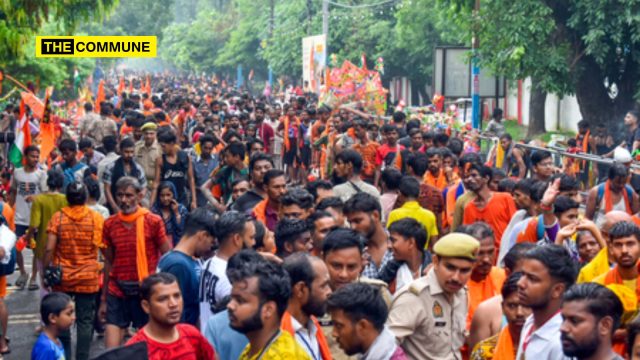
Devotees across the country thronged prominent Shiva temples to mark the last Monday of the holy Sawan month, performing ‘jalabhishek’, participating in special ‘aartis’, and seeking the blessings of Lord Shiva.
At Baba Baidyanath Jyotirlinga Temple in Deoghar, Jharkhand, thousands of devotees gathered from early morning to offer sacred water and prayers. The temple witnessed a continuous stream of worshippers.
“This Monday marks the last Monday of Sawan. Devotees are arriving continuously in large numbers. The administration is actively involved in managing the arrangements and ensuring smooth conduct of the rituals,” said a temple priest.
A devotee, after offering prayers at Baidyanath Dham, shared, “Today is the last Monday of Sawan, which holds great significance for devotees of Lord Shiva. The Somwari Jalabhishek performed today is especially powerful. As it also coincides with Ekadashi, the spiritual significance of the day is even greater.” In Varanasi, the sacred Kashi Vishwanath Temple, Uttar Pradesh, saw massive footfall. A grand ‘Mangala Aarti’ and special floral decorations were followed by a shower of flowers on devotees, enhancing the divine atmosphere. “Every Monday sees a large crowd of devotees here, and since today is the last Monday of Sawan, the turnout is even bigger,” said DCP Gaurav Banswal.
“To manage the situation, proper barricading has been arranged, and drone surveillance is also being carried out.” A devotee added, “Thanks to the administration for the commendable way they’ve managed the crowd. Despite the heavy rush, we had darshan within 2-3 hours. Everything is well organised.” In Haridwar, worshippers crowded the Daksheshwar Mahadev Temple in Kankhal, believed to be the in-laws’ home of Lord Shiva, to offer holy Ganga water.
At Pashupatinath Temple, priest Kailash Bhatt noted, “Today marks the fourth Monday of Sawan, and since early morning, large numbers of devotees have been arriving to offer water, milk, and belpatra to Lord Shiva.” Similar scenes were witnessed at Aundha Nagnath Temple, where devotees performed jalabhishek at the Nageshwar Jyotirlinga.
“We’ve been coming here for the past five years, every Sawan Monday. Whatever we wish for gets fulfilled,” said a regular pilgrim. Meanwhile, in Ujjain, the Mahakaleshwar Jyotirlinga Temple hosted a special ‘bhasma aarti’, followed by jalabhishek and ritualistic aartis.
In Prabhas Patan, Gujarat, a large crowd gathered at the Somnath Jyotirlinga, and in Uttarakhand, devotees visited the ancient Koteshwar Mahadev Temple to attend the aarti and seek divine blessings. With the last Monday of Sawan holding immense religious significance, devotees across the country turned out in massive numbers, reflecting their deep faith and devotion to Lord Shiva.
-IANS
Subscribe to our channels on Telegram, WhatsApp, and Instagram and get the best stories of the day delivered to you personally.
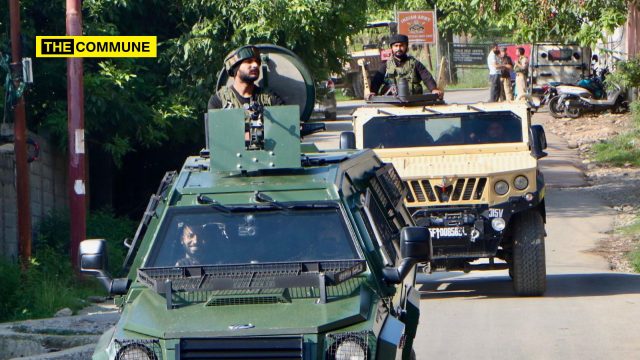
The operation against terrorists in Jammu and Kashmir’s Kulgam district entered its 4th day on 4th August as intermittent overnight firing continued in the Akhal forest area of the district.
Officials said intermittent firing and blasts continued in the forest area of the district. Joint forces, including the Army, CRPF and J&K Police, have extended the area under the CASO (Cordon & Search Operation) as officers are closely monitoring the situation.
One terrorist has been killed and another critically injured in this operation so far, while four soldiers have sustained injuries. The Army has deployed Rudra helicopters, drones and Para commandos to ensure that the hiding terrorists are unable to escape. Security forces have been carrying out aggressive operations against the terrorists in the hinterland, while the Army has been on maximum alert guarding the Line of Control (LoC) in J&K.
The elimination of three hardcore Pakistani terrorists responsible for the 22 April Pahalgam attack, in which 26 civilians were killed, is part of the aggressive operations being carried out by the joint forces. Three hardcore Pakistani terrorists, including LeT commander Suleman Shah and his two associates Abu Hamza and Jibran Bhai, responsible for the Pahalgam attack, were killed on 28 July in the higher reaches of Dachigam National Park at the foot of Mahadev mountain peak in the Harwan area of Srinagar.
The Army code-named this operation as ‘Operation Mahadev’. After the Pahalgam terror attack, the security forces are carrying out anti-terrorist operations against gun-wielding terrorists, their overground workers (OGWs) and sympathisers. Drug smugglers and drug peddlers are also on the radar of the security forces because it is believed that the funds generated by the hawala money racket and drug smuggling are finally used to sustain terrorism in the union territory. The coordinated and intelligence-backed operations of the joint forces are aimed at dismantling the ecosystem of terrorism in Jammu and Kashmir rather than focusing on just the elimination of the gun-wielding terrorists.
-IANS
Subscribe to our channels on Telegram, WhatsApp, and Instagram and get the best stories of the day delivered to you personally.
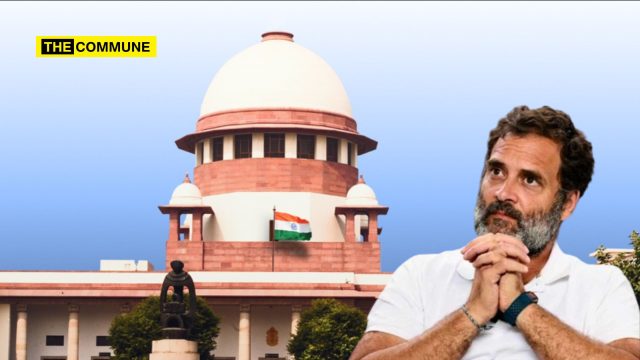
The Supreme Court on 8 August, pulled up Leader of Opposition in the Lok Sabha and Congress MP Rahul Gandhi over his alleged remarks insulting the Indian Army. During the Bharat Jodo Yatra, Gandhi had allegedly said, “Chinese troops are thrashing Indian Army soldiers in Arunachal Pradesh,” referring to the 9 December 2022, face-off in the Tawang sector.
A Bench of Justices Dipankar Datta and Joymalya Bagchi expressed disapproval of Rahul Gandhi’s claim that 2,000 square kilometres of Indian territory had been occupied by China, adding that “if he were a true Indian, he would not have said all this.” “How do you know that 2,000 square kilometres of Indian territory were occupied by the Chinese? Were you there? Do you have any credible material? If you were a true Indian, you would not say all this. When there is a conflict across the order, is it unusual to have casualties on both sides?” the Justice Datta-led Bench asked senior advocate Abhishek Manu Singhvi, appearing for Rahul Gandhi.
“Whatever you have to say, why don’t you say it in the Parliament? Why do you have to say this in social media posts?” further asked the apex court. The remarks came after Singhvi argued that it would be an “unfortunate situation” if an opposition leader cannot be allowed to raise issues of national concern in the press.
The apex court agreed to examine Rahul Gandhi’s plea, which raises the issue of mandatory notice to the proposed accused at the pre-cognisance stage, and sought responses from the Uttar Pradesh government and the complainant in the matter. Further, the Justice Datta-led Bench granted interim relief to Rahul Gandhi against the summoning order issued by the Lucknow court.
The complainant, Udai Shankar Srivastava, a retired Director from the Border Roads Organisation, alleged that Gandhi’s statements were “false and baseless”, intended to “demoralise the Indian Army” and damage national morale. Earlier in May, the Allahabad High Court had dismissed Rahul Gandhi’s plea to quash the criminal defamation case, rejecting the argument that the complainant lacked the legal standing to file the case, as he was not directly named.
A single-judge Bench of Justice Subhash Vidyarthi ruled that even a third party can be considered an “aggrieved person” if they are harmed by defamatory remarks. It said, “The trial Court has rightly arrived at the decision to summon the applicant (Gandhi) to face trial for the offence under Section 500 I.P.C. after taking into consideration all the relevant facts and circumstances of the case”. Declining to exercise its inherent powers, the Allahabad High Court observed that the trial court’s summoning order dated 11 February 2025, “did not suffer from any illegality” and refused to interfere with it. Following this, Gandhi appeared before the MP-MLA court in Lucknow and secured bail on the condition of furnishing his personal bond of ₹20,000 with two sureties of the like amount.
At the same time, he also approached the Supreme Court challenging the Allahabad High Court’s order refusing to quash the defamation case against him. The trial court had earlier issued multiple summonses to Rahul Gandhi in the case, but he failed to appear.
-IANS
Subscribe to our channels on Telegram, WhatsApp, and Instagram and get the best stories of the day delivered to you personally.
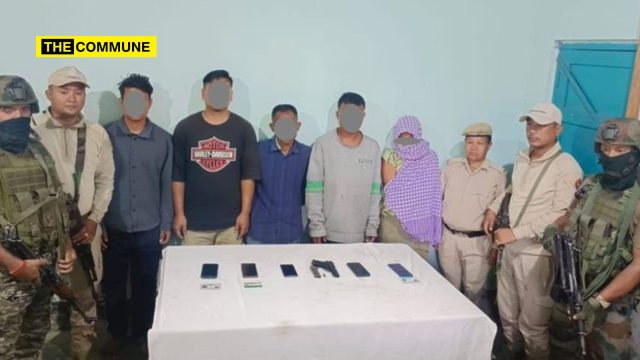
With ten more militants of different banned outfits arrested during the past 24 hours, combined forces of military, paramilitary and state forces intensified their counterinsurgency operation to nab the armed extremists and to recover arms and ammunition in Manipur, officials said on 4 August 2025.
A police official said that ten militants arrested in three districts Imphal West, Imphal East, Bishnupur belonged to various factions of Kangleipak Communist Party (KCP) and People’s Revolutionary Party of Kangleipak (PREPAK). Security personnel recovered pistols and various materials, including several mobile handsets, various documents, and some ammunition from the possession of the arrested militants.
The arrested militants were involved in kidnapping, firing incidents, extortion, seeking monetary demands and collection of extortion money from schools located in the Imphal valley area. The police official said that joint teams of Manipur Police, Army, Assam Rifles, Border Security Force (BSF), the Central Reserve Police Force (CRPF) and the Indo-Tibetan Border Police (ITBP) continued their search and counter-insurgency operations both in valley and mountainous regions.
Manipur Police have once again cautioned people against spreading rumours and fake videos and appealed to people not to believe in rumours and remain vigilant about fake videos. The veracity of any videos, audio clips, etc., can be confirmed by the Central Control Room, a police statement said. The police said that there are possibilities of many fake posts being circulated on social media. “It is hereby cautioned that uploading and circulation of such fake posts on social media would attract legal action with consequences. Further, an appeal is made to the public to return the looted arms, ammunition and explosives to the police or nearest security forces immediately,” the statement said.
Meanwhile, to further strengthen policing capabilities, the Manipur government announced to set up a new police station in the state capital, Imphal and to create 12 posts of Sub Divisional Police Officers (SDPO) across nine districts of the state. A senior police officer said that the strategic move is intended to bolster policing capabilities, improve supervision of investigation, and enhance overall law and order management in both existing and newly created districts for administrative convenience, a statement from the police headquarters said.
-IANS
Subscribe to our channels on Telegram, WhatsApp, and Instagram and get the best stories of the day delivered to you personally.
In a significant development, the Hindu Religious and Charitable Endowments (HR&CE) Department has withdrawn a controversial public auction of temple lands belonging to Arulmigu Sivasubramaniam Thirukoil in Hosur, Krishnagiri, following a Public Interest Litigation (PIL) filed in the Madras High Court.
The PIL was filed by BJP functionary P. Baskar, who sought a writ of certiorari to quash the impugned order dated 3 July 2025 through which the auction notice was issued and published in the Malai Murasu newspaper on 4 July 2025.
The matter came up for admission before the First Division Bench comprising Chief Justice Manindra Mohan Shrivastava and Justice Sunder Mohan. Senior Counsel B. Jagannath appeared for the petitioner, while Special Government Pleader N.R.R. Arun Natarajan represented the HR&CE Department and other state respondents.
During the hearing, the state informed the court that the July auction notification had been cancelled and that, if needed, a fresh auction process would be carried out strictly in accordance with law.
Taking note of this submission, the court recorded the statement and disposed of the writ petition, thereby closing the matter. The court also clarified that since the grievance raised in the PIL has been addressed through cancellation of the impugned auction, there was no further need to pursue the petition.
Subscribe to our channels on Telegram, WhatsApp, and Instagram and get the best stories of the day delivered to you personally.
A total of 103 Indian cities, as part of the National Clean Air Programme (NCAP), have shown a reduction in particulate matter PM10 concentration in 2024-25, the government informed the Parliament on 4 August 2025.
Launched in 2019 to tackle air pollution across India, NCAP focusses on 131 “non-attainment” cities and Million Plus Cities in 24 states. The programme aimed to reduce PM10 concentrations by 20-30 per cent by 2024. Of the 103, “64 cities showed reduction in PM10 levels by more than 20 per cent and 25 of these cities have achieved a reduction of more than 40 per cent,” said Kirti Vardhan Singh, Union Minister of State in the Ministry of Environment, Forest and Climate Change, in a written reply in the Lok Sabha.
“A total of 22 Cities also met the National Ambient Air Quality Standards (NAAQS) and have PM10 concentrations less than 60 micrograms per cubic metre of air,” he added.
To address air pollution in urban areas, Singh stated that a “performance-linked grant of ₹13,036.52 crore has been provided to 130 cities during 2019-20 till date, as a critical gap funding to implement air quality improvement measures”. Further, the programme leverages the mobilisation of resources through the convergence of various schemes of the central government such as Swachh Bharat Mission (Urban), AMRUT, Smart City Mission, PM e-Bus Sewa, Sustainable Alternative Towards Affordable Transportation (SATAT), and Nagar Van Yojana, as well as the resources of state governments.
“Under NCAP, an amount of ₹5,318 crore has been provided to eight States/UTs that are part of the Indo-Gangetic plain to implement the city action plan of 41 targeted cities,” Singh said. City-specific clean air action plans are prepared by all cities to implement air quality improvement measures in their respective cities. These plans target air pollution sources such as soil and road dust, vehicular emissions, waste burning, construction and demolition activities, and industrial pollution.
Notably, ambient air quality monitoring is carried out by the Central Pollution Control Board (CPCB) and State Pollution Control Boards (SPCB). For this, “1,612 monitoring stations have been set up in 572 cities and four rural areas across the country,” the MoS said.
-IANS
Subscribe to our channels on Telegram, WhatsApp, and Instagram and get the best stories of the day delivered to you personally.
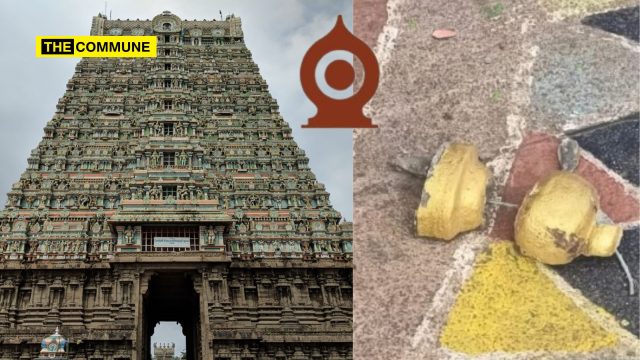
The recent incident at the Tenkasi Kasi Viswanathar Temple, which is a Hindu Religious & Charitable Endowments (HR&CE) department administered temple, where a cement kalasam (finial) from the Rajagopuram (main temple tower) came crashing down just four months after its consecration, has left devotees shocked and concerned.
The temple’s kumbabhishekam (consecration ceremony) was held in April. Now, barely a few months later, the kalasam atop the newly renovated Rajagopuram has dislodged and fallen, raising serious questions about the quality of the restoration work.
Worried devotees have demanded a thorough investigation into the construction and maintenance practices involved. Many are calling for immediate repairs and a swift replacement of the damaged kalasam, stressing that such structural failures so soon after consecration are unacceptable.
Subscribe to our channels on Telegram, WhatsApp, and Instagram and get the best stories of the day delivered to you personally.
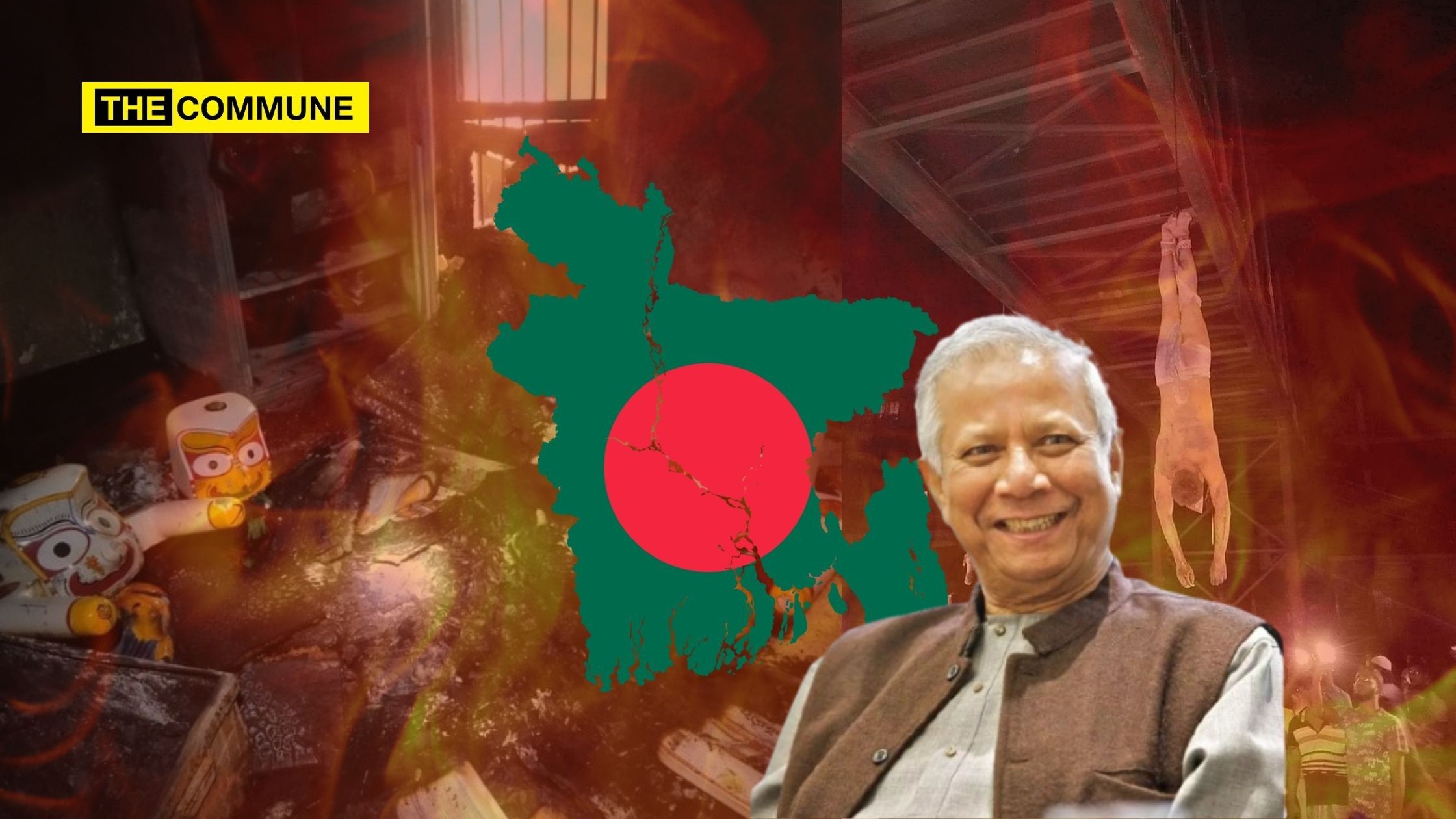
New Delhi-based rights group Rights and Risks Analysis Group (RRAG) on 4 August 2025, claimed that 878 journalists were targeted over the past year under the interim government of Bangladesh, led by Chief Advisor Muhammad Yunus.
The RRAG in its report titled, ‘Bangladesh: Media Freedom Murdered By Dr Muhammad Yunus’ stated that attacks on journalists increased by 230 per cent over the past year, compared to 383 cases reported under former Prime Minister Sheikh Hasina between August 2023 and July 2024.
The RRAG report, released on Monday on the occasion of one year of the fall of the Sheikh Hasina-led Awami League government, stated that Press freedom in Bangladesh has deteriorated further and 878 journalists were attacked under the interim government from August 2024 to July 2025, an increase by about 230 per cent. Giving further details of the attacks on the journalists in Bangladesh, RRAG Director Suhas Chakma stated, “The number of criminal cases filed against journalists under the Yunus regime (195 cases) during 2024-2025 increased by 558 per cent in comparison to the number of cases (35 cases) filed against journalists under Hasina during 2023-2024. While Hasina’s regime was not known to have denied any accreditation to journalists, Yunus used accreditation as an instrument to punish the journalists allegedly associated with the previous regime and denied accreditation to 167 media persons. During 2023-2024, Hasina’s regime was not known to have used the Bangladesh Financial Intelligence Unit (BFIU), anti-money laundering agency of the country, against the journalists but Yunus let loose the BFIU which issued notices to 107 journalists,” Chakma said.
He said that while 348 media persons faced acts of violence and criminal intimidation under Sheikh Hasina’s regime, mostly during the July 2024 uprising, about 431 journalists faced acts of violence and criminal intimidation under Yunus’ tenure. The RRAG report said that the situation of the media continues to deteriorate under the interim government of Bangladesh led by Yunus. On June 25 (2025), journalist Khandaker Shah Alam, a correspondent of Daily Matrijagat, was murdered at Nabinagar Upazila, in Dhaka’s northeast, in a targeted retaliation by Babul Mia, known locally as ‘Tiger Babul Dakat’ after he was released from prison, the report said.
According to the report, on 27 July (2025), the Cyber Tribunal of Dhaka issued arrest warrants against three journalists, Bangladesh Pratidin Editor Naem Nizam, its publisher Moynal Hossain Chowdhury and news portal Bangla Insider’s Chief Editor Syed Borhan Kabir under the Digital Security Act (DSA) despite a declaration by Law Adviser Asif Nazrul on 27 June (2025) that all cases under the DSA had been withdrawn. On 21 April (2025), Kongkon Karmaker was dismissed by The Daily Star as Dinajpur correspondent only because his report about the death of religious minority Bhabesh Chandra Roy was picked up by multiple Indian media outlets and India’s Ministry of External Affairs, the report added.
RRAG Director Chakma said that in order to silence the media, Yunus established ‘CA Press Wing Facts’ as the de facto censorship authority by other means, the manufacturer of the government version of the truth, and to intimidate media houses and NGOs including the Rights & Risks Analysis Group, through disinformation. The RRAG stated that it would approach the international community including the Human Rights (Joint Committee) of the United Kingdom seeking review support to the interim government of Bangladesh on governance issues and consider withdrawing bilateral support in the light of the absolute silencing of the media in the country.
-IANS
Subscribe to our channels on Telegram, WhatsApp, and Instagram and get the best stories of the day delivered to you personally.