Home Blog Page 39

Dravidian Model Tamil Nadu: Man Films Dance Reel With Female Companion Inside Jalakandeswarar Temple Premises, Hindu Munnani Files Complaint

Dravidian Model Tamil Nadu: Man Films Dance Reel With Female Companion Inside Jalakandeswarar Temple Premises, Hindu Munnani Files Complaint

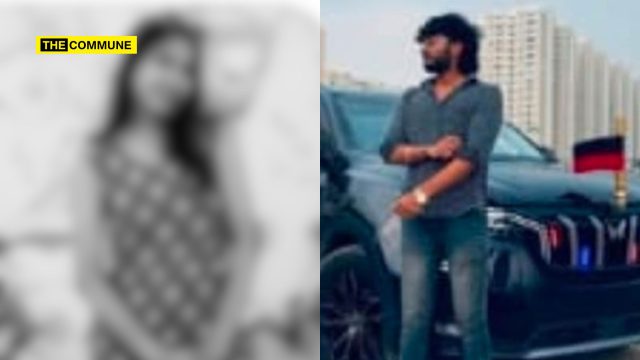
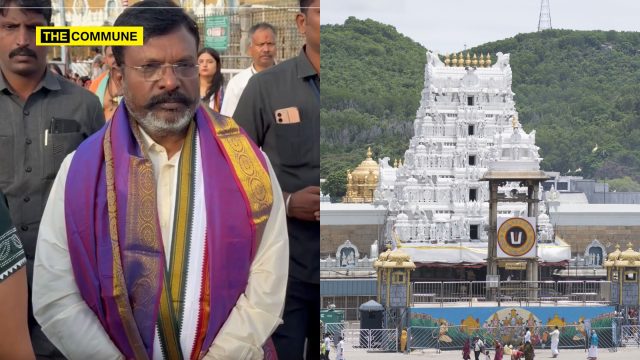
A controversy has emerged after a video showing a young man dancing with a female companion to a cinema song inside the Jalakandeswarar Temple located within Vellore Fort went viral on social media.

The video, recorded in the form of a “reel,” has drawn criticism from various quarters, with concerns being raised over the appropriateness of such activities within a place of worship. The handle that is seen on the viral video seems to be from https://www.instagram.com/slomotpk_official/ 

However, the video is missing from the grid on his Instagram. Additionally, there is a photography tips video on his YouTube channel with the same female companion.

Members of Hindu Munnani have submitted a complaint to the police, seeking action against those involved in the incident, as reported in Tamil Getlokal. They have stated that engaging in such acts within a temple premises disrespects its sanctity.

Meanwhile, devotees have called upon the temple administration to implement stricter regulations to prevent similar incidents in the future and to ensure that the dignity of the religious site is maintained.

A few weeks ago, we had reported of women dancing at Thanjavur Bhrihadeeshwara temple in TN for Instagram reels.

Subscribe to our channels on WhatsAppTelegram, Instagram and YouTube to get the best stories of the day delivered to you personally.
Dravidianist Ponraj Calls TVK Women Supporters ‘Prostitutes’, Refuses To Apologise/Withdraw Remarks

Dravidianist Ponraj Calls TVK Women Supporters 'Prostitutes', Refuses To Apologise/Withdraw Remarks

Dravidianist sympathizer and former scientist Ponraj Vellaichamy and a former aide to APJ Abdul Kalam, currently seen as aligned with the Dravida Munnetra Kazhagam (DMK), has come under intense criticism for making derogatory remarks about women supporters of actor-turned-politician Vijay and his party, Tamilaga Vettri Kazhagam (TVK).

In an interview to a private YouTube channel, Ponraj made controversial statements targeting Vijay’s fan base. He said: “One very big truth that I have come to know is this – Tamil Nadu is an educated state. Tamil Nadu has a high literacy rate. Tamil Nadu is a state renowned for educational attainment. Tamil Nadu has the highest Gross Enrolment Ratio in all of India. The Chief Minister has been conducting event after event, celebrating Tamil Nadu as an educationally excellent state. But in this same Tamil Nadu – we must actually thank Vijay for revealing to the world that such an illiterate mob exists here. What a mob of illiterates! A mob gone completely out of control. An unrestrained, shameless mob. Women saying ‘I don’t need my husband – I only want Vijay.’ A prostitute mob. Women saying ‘We will marry Vijay anna – even if he is our anna (elder brother), we will still be his anna, we will be his younger sister, we will be his elder sister, we will be his wife’ – such a crowd of prostitutes, a mob of illiterates filled with such fans exists here. For exposing this to the world, we must come and applaud Vijay.”

The comments triggered widespread outrage among TVK cadres, political observers, and sections of the public, with many condemning the use of abusive language against women in political discourse.

Refusal to Apologise

Amid growing backlash, Ponraj declined to retract his statements or issue an apology. In a follow-up interaction with ABP News, when asked about the criticism, he defended his remarks.

When questioned about whether such language was appropriate, he responded: “What else should people who talk like that be called? That’s what they should be called.”

He added: “If someone says, ‘I will be your sister, younger sister, or wife,’ what does that mean? What kind of a degraded group has been created like this? If we keep encouraging this, where will it end?”

However, when pressed on generalising such remarks to all supporters, Ponraj clarified: “Whoever says such things – only they are like that.”

Subscribe to our channels on WhatsAppTelegram, Instagram and YouTube to get the best stories of the day delivered to you personally.
DMK Govt Withdraws GO Allowing Patta Claims On Temple Properties

madurai bench of madras high court kallazhagar temple

The DMK government in Tamil Nadu informed the Madurai Bench of the High Court that the Government Order (GO) enabling the registration of temple properties has been withdrawn. Following this submission, the court dismissed a petition that had challenged the validity of the order.

As reported in Hindu Tamil, the petition was filed by Radhakrishnan from Salem, who contended that the GO issued by the Revenue Department on 29 August 2025, would adversely affect the protection of temple lands in the state.

According to the petitioner, temple lands in Tamil Nadu have traditionally been safeguarded by recording their value as “zero” in the Registration Department. This practice prevents private individuals from registering such lands or obtaining patta rights. Any attempt to register temple land could be stopped or cancelled upon complaint.

However, the now-withdrawn GO had provided a mechanism for registering temple properties and granting pattas. It also stipulated that grievances related to temple properties could be addressed only by a committee comprising senior IAS officers.

The petitioner argued that the order would make it easier for temple properties to be transferred to private individuals, describing it as illegal and unconstitutional. He further submitted that temple lands, which fall under categories such as patta land, assigned land, and service land, could be at risk of being alienated under the new framework.

Seeking relief, the petitioner had earlier requested the court to quash the GO and impose an interim stay on its implementation. A division bench had initially granted an interim stay.

When the matter was taken up again before Justices Sathish Kumar and Jyothiraman, the government submitted that the GO had been withdrawn. In view of this development, the bench dismissed the petition.

Subscribe to our channels on WhatsAppTelegram, Instagram and YouTube to get the best stories of the day delivered to you personally.
“Why Did She Go Behind The Bush?”: DMK Supporter S Ve Shekher About 17-Year-Old Girl Who Was Raped & Murdered In Vilathikulam

A Class 12 student from Vedanatham village near Vilathikulam in Thoothukudi district stepped out of her home on the evening of 10 February 2026 to relieve herself in the fields because her village had no proper sanitation facility. She never came back.

Her family and neighbours searched through the night. The next morning, her body was found in a forested area near the village. Post-mortem confirmed she had been sexually assaulted and brutally murdered.

The Accused

The Kulathur police registered a case and formed 10 special teams, investigating from multiple angles and scrutinising CCTV footage from roads nearby. The trail led to Dharma Muneeswaaran (39) of Sayalkkudi, Ramanathapuram district. He was arrested, produced before court, and lodged in Palayamkottai Central Prison – later transferred overnight to Madurai Central Prison for security reasons.

Shekher Speaks — And Blames the Girl

As the case drew widespread outrage across Tamil Nadu, actor and DMK sympathiser S Ve Shekher took to a press interaction in Dindigul. What followed was not a demand for accountability from his own party’s government – it was a question directed at the murdered minor.

In his own words, as reported in OneIndia Tamil: “Regarding the Vilaathikulam girl, they say she was behind the bushes. Strongly condemn this. Why did she have to go to the bushes? The police can only install lights on the road. Can they install them inside the bushes?”

Here’s what he said entirely: “Sexual crimes in Tamil Nadu. When you think about sexual crimes, you need to think about both law & order and sexual crime together. If I leave my wardrobe unlocked at home and a thief comes and takes something — can I say law and order has failed? Every parent of girl children must keep their children safe. If a girl goes to the forest to use the bathroom, someone must accompany her as an escort. Because freedom is one thing, safety is another. We must first ensure safety.” 

He added, “What is the total population of Tamil Nadu? 10 crore people. Of the sexual crimes you are talking about – have three happened? Maybe four? Think about it. When sexual offenders are immediately punished like a ‘shoot at sight’ order when police encounter them, immediately the human rights people come running. ‘How can you shoot him? He is a big rowdy, you should keep him in jail and feed him biryani.’ That is what they say, right? If a girl in your own family is harmed, won’t you want to immediately shoot that person? Lockup death is the same thing. Some police officers behave like animals. What do they do to them? They suspend them. They should not be suspended. They should be dismissed outright. Only after they go to court and prove their innocence should they be reinstated. The same laws that exist in the world exist for us too. But punishments differ. When punishments are very severe, crimes will reduce. Regardless of which government is in power.”

He continued, “But what are they doing? That girl went and hid herself behind a bush. Then they came and attacked her. Why did she have to go behind a bush? Think about it. The police should put lights everywhere immediately. Will the police put streetlights? Will they put lights inside bushes? I am asking this as a fair citizen. Forget about party politics. I have a mother, a wife, a daughter, a granddaughter. I am not speaking without understanding the value of girl children. The girl who works in our house – she must be 21 or 22 years old. We don’t even send her to the shop alone. Because we have a watchman. Even with a watchman, if she says ‘Sir, I’ll just go buy soap,’ I say ‘Tell me what soap you need, I’ll send someone to buy it.’ That’s the point, isn’t it? Take the watchman with you. We must provide safety to the women who have trusted us. How can police do everything? In Tamil Nadu, there is only one police officer for every 1,500 people.”

He then jumped to target the BJP. He said, “Do you know where the highest number of sexual crimes in India occur? In BJP-ruled states. If you want, you can use what Pandey himself, a BJP supporter said. Forget what I said. I myself left the BJP – because three parties expelled me and I thought let me at least make it look like I left one party on my own. And now there is a sexual harassment allegation against Karu Nagarajan. What can we do, tell me.”


View this post on Instagram


A post shared by ABP Nadu (@abpnadu)

What Shekher Did Not Ask

The DMK has governed Tamil Nadu since 2021. Rural sanitation, specifically the construction of household toilets under the Swachh Bharat Mission, is a state implementation responsibility. The girl walked into the fields at night because her home had no toilet. That is not a police failure. That is a governance failure.

Shekher asked why she went into the bush. He did not ask:

  • Why a village near Vilaathikulam still lacks basic toilet access under a government his party has run for four years
  • Why there was no night patrolling in the area
  • Why a predator was able to operate freely and has not yet faced trial

Instead, he blamed the victim for attending nature’s call.

S.Ve. Shekher is a DMK sympathiser who has been actively campaigning for the party. When he stands before cameras and asks “why did she go into the bush,” he is not raising a civic question – he is shielding his favourite party from the two questions that matter most: why did she have nowhere else to go, and why was she not safe when she got there?

Subscribe to our channels on WhatsAppTelegram, Instagram and YouTube to get the best stories of the day delivered to you personally.
“She Was Adventurous.” “It Was Blown Out of Proportion.” – How Congress Governed Delhi On Women’s Safety

"She Was Adventurous." "It Was Blown Out of Proportion." - How Congress Governed Delhi On Women's Safety

On the morning of 30 September 2008, Soumya Vishwanathan, a 25-year-old news producer with Headlines Today, left her Jhandewalan office at 3:03 AM after covering a breaking news event. She called her father at 3:15 AM to say she was on her way. Within thirty minutes, she was dead. A gang of robbers had trailed her car on Nelson Mandela Marg, fired a country-made pistol at her head, and fled, leaving her slumped in her car near the divider, barely 300 metres from her home in Vasant Kunj.​

Four years later, on the night of 16 December 2012, a 22-year-old physiotherapy intern, later called Nirbhaya, boarded a bus in Munirka with a male friend after watching a film. Six men on board beat her friend unconscious with an iron rod, dragged her to the rear of the bus, and gang raped and tortured her for over an hour as the bus drove through Delhi’s streets. She was thrown from the moving vehicle and died thirteen days later in a Singapore hospital.​

Two women. Two nights in Delhi. Two devastating failures of law and order. Both under the same Congress Chief Minister – Sheila Dikshit.

Fifteen Years, One Chief Minister, Zero Accountability

Sheila Dikshit governed Delhi continuously from 1998 to 2013 – fifteen uninterrupted years as Chief Minister under the Congress banner. Both Soumya Vishwanathan’s murder and the Nirbhaya gangrape occurred on her watch. Both exposed the catastrophic state of policing in the capital. And in both cases, the government’s response was identical: deflect, dismiss, and blame.

After Soumya’s murder, Dikshit did not announce enhanced night patrolling. She did not question why a young woman could be shot dead in one of Delhi’s most upscale neighbourhoods at 3 am without a single police response. She told reporters“Driving all by herself in a city (pause) that people believe is… I mean one should not be adventurous, but I am really really sorry for her family.”

A journalist was dead. The Chief Minister’s conclusion: she asked for it.

When Delhi Burned, Congress Reached for Insults

The Nirbhaya case triggered one of the largest spontaneous protests post-Independence. Thousands poured into India Gate in the freezing December of 2012, demanding answers from the government. Congress’s response was to attack the people in the streets.

Abhijit Mukherjee, Congress MP and son of then-President Pranab Mukherjee, looked at the women protesting and declared them “sundori, sundori mahila – highly dented and painted,” adding that he doubted they were real students at all, since “women of that age are generally not students.” His own sister publicly apologised on his behalf. Congress took no disciplinary action whatsoever.​

Meanwhile, Dikshit attempted to shift accountability to the Central government – conveniently forgetting that the same Congress party ran the Centre through the UPA government simultaneously. Delhi Police reported to the Central Home Ministry. Congress was governing both.​

The Cover-Up Posture – Years Later

The most damning admission came not in 2012, but in 2019, when Dikshit sat down for a television interview and said of the Nirbhaya case: “Sometimes you ignore rapes, just a little thing in the newspaper… little children being raped… and one was made into a political scandal.”

The brutal gang rape of a 22-year-old, her torture with an iron rod, and her death – a “little thing.” A “political scandal.” In the same interview, she said the case was “blown out of proportion by the media.”

This was a former Chief Minister of Delhi, speaking six years after leaving office, still refusing to accept any responsibility for the city she had governed for fifteen years.

Justice That Came Too Late for the Families

Neither family received timely justice.

In the Nirbhaya case, the four convicts were hanged in March 2020, over seven years after their conviction, following a prolonged legal battle in which Congress leaders were notably absent from any advocacy for speedy justice. ​

In Soumya Vishwanathan’s case, the wait was even longer. Five men were convicted in October 2023 – fifteen years after the murder. Four received life sentences. Her father, MK Vishwanathan, 82, died just weeks after seeing the conviction, one day after what would have been his daughter’s 41st birthday, having spent fifteen years seeking justice for a crime that happened in a Delhi where the Chief Minister thought his daughter had been “too adventurous.”

A Governance Record Written in Inaction

What the two cases establish together is not coincidence – it is pattern. A Congress-ruled Delhi where:

  • Women returning from work alone were considered reckless, not victims deserving of protection​
  • Protesters demanding accountability were dismissed as “dented and painted” social climbers​
  • A rape case that shook the nation was called “blown out of proportion” by the government responsible for letting it happen​
  • Police constables refused to respond to the Nirbhaya incident, citing jurisdictional disputes and faced no consequences​
  • Investigations dragged for over a decade before any conviction came

Fifteen years of Congress governance in Delhi did not produce safer streets. It produced bolder victim-blaming.

Subscribe to our channels on WhatsAppTelegram, Instagram and YouTube to get the best stories of the day delivered to you personally.
When Former PM Manmohan Singh Questioned His Home Minister Over Delay In Informing Terrorist Afzal Guru’s Family About His Execution

When Former PM Manmohan Singh Questioned His Home Minister Over Delay In Informing Terrorist Afzal Guru’s Family About His Execution

When Afzal Guru, convicted for masterminding the 13 December 2001 terror attack on the Indian Parliament that killed 14 people was finally hanged on 9 February 2013, it should have been a moment of justice, long overdue after nearly eight years on death row. Instead, the Congress-led UPA government turned his execution into a political scandal – not over any injustice to the nation, but over its perceived failure to adequately protect the feelings of a terrorist’s family.

The execution was carried out as a top-secret operation at Tihar Jail. Within days, the Congress establishment including Prime Minister Manmohan Singh himself was busy questioning its own Home Minister, Sushil Kumar Shinde, about why Guru’s family wasn’t given enough notice. Not why the execution was delayed for years despite a Supreme Court conviction. Not why the mercy petition dragged on. But why a terrorist’s family wasn’t personally called up before his hanging.

The Home Ministry sent a speed post letter to Sopore at midnight on February 7 but the notification method is not the point. The point is that the Prime Minister of India spent political energy demanding answers about why a convicted terrorist’s family wasn’t given enough comfort, while the families of the 14 people killed in the Parliament attack received no such Prime Ministerial attention. This was not a bureaucratic lapse – it was a conscious political choice to appease a constituency that viewed Afzal Guru as a martyr.

According to sources quoted in NDTV’s own report, Singh personally rang Shinde to demand answers – a level of Prime Ministerial intervention rarely seen on behalf of victims’ families.

Meanwhile, Guru’s family, human rights activists, and the usual chorus of separatist-adjacent voices lambasted the government. And Congress, characteristically, apologised to them – not to the families of the nine security personnel and civilians who died in the Parliament attack.

This was the Congress playbook on terrorism in a nutshell: The Supreme Court had already upheld his death sentence in 2005. Congress’s only job was to act on it, instead, they sat on the mercy petition for over seven years, moving only when political pressure became unavoidable and then spend more political energy managing the terrorist’s family’s grievances than defending the nation’s sovereignty. The Parliament, the seat of Indian democracy was attacked. Fourteen people died. Yet when justice was finally served, Congress’s first instinct was to question whether it was served politely enough to the convict’s relatives.

Subscribe to our channels on WhatsAppTelegram, Instagram and YouTube to get the best stories of the day delivered to you personally.
When Congress Leader Jairam Ramesh Said, “A Toilet Is More Sacred Than A Temple”

jairam ramesh congress

The film Dhurandhar 2: The Revenge has sent netizens on a ‘digging’ spree – right from unearthing news items from the UPA era about how Congress handled terrorism in the country to bringing out statements made by Congress leaders/ministers during those times.

In this backdrop, one such video featuring former Congress minister Jairam Ramesh has resurfaced.

In the video clipping, he is seen saying, “This journey is to build something which I consider to be even more sacred than a temple — and that is a toilet. No matter how many temples we visit, if there is no toilet, it doesn’t matter how many coconuts you break, how many Mangala Aarti you perform – you are not going to attain salvation (moksha).”

This video is from 2012, when Jairam Ramesh served as the Union Rural Development Minister. He made these remarks while emphasizing the importance of sanitation during the launch of the “Nirmal Bharat Yatra” campaign in Wardha, Maharashtra. The campaign was part of a broader government push to improve rural hygiene and eliminate open defecation.

At the event, Ramesh stated that toilets should be given higher priority than temples, arguing that sanitation and cleanliness were essential for public health. He remarked that visiting temples alone would not ensure salvation and stressed the need to focus on building toilets and maintaining hygiene.

In response to the controversy, the Indian National Congress had sought to distance itself from the statement.

The comments triggered immediate political backlash. Leaders and supporters of the Bharatiya Janata Party, along with organizations such as the Vishwa Hindu Parishad and the Bajrang Dal, accused Ramesh of hurting religious sentiments and disrespecting Hindu beliefs.

The issue resurfaced years later in 2023, particularly during the period surrounding the Ram Temple inauguration Ayodhya January 2024. The video of Ramesh’s remarks was widely circulated on social media. The same video clipping has resurfaced once again in 2 years, thanks to Dhurandhar.

Subscribe to our channels on WhatsAppTelegram, Instagram and YouTube to get the best stories of the day delivered to you personally.
Two Wars, Two Standards: How Western Media Treats America Vs India

There is a hierarchy in global journalism. It is unspoken, never acknowledged in editors’ notes, and never examined in the self-congratulatory press freedom indexes these outlets sponsor and celebrate. But it operates with remarkable consistency. At the top sits America, whose military claims are scrutinised, questioned, challenged and fact-checked with institutional rigour. Near the bottom sits India, whose official denials are ignored, whose military’s statements are treated as spin, and whose adversary’s unverified claims are granted the same evidentiary weight as sworn testimony.

Operation Sindoor and Operation Epic Fury, read together, expose this hierarchy with surgical clarity.

Exhibit One: Pakistan Claimed, Western Media Published

When Pakistan announced in May 2025 that it had shot down five Indian fighter jets including three Rafales using Chinese J-10C aircraft, it produced no cockpit video, no radar data, no wreckage with verifiable serial numbers, no captured Indian pilot, and no independently verified physical evidence of any kind. What it had was a government press conference, a war to justify to its own public, and a geopolitical incentive to humiliate India’s purchase of French Rafale jets in front of the world.

Reuters ran it. Citing “two US officials” – unnamed, unverifiable, unaccountable, it reported that Pakistan had shot down “at least two Indian military aircraft,” one of them a Rafale. The Washington Post cited an “unidentified French expert” to float the same claim. CNN amplified Pakistani defence sources. The New York Times declared India had “lost aircraft” while no Indian official had confirmed any such thing. Al Jazeera then devoted multi-week editorial analysis to asking “why did India lose jets to Pakistani fire?” treating Pakistani propaganda as an established baseline for inquiry.

What did India’s official position say during those critical first days? Air Marshal AK Bharti acknowledged at a press conference that “losses are part of combat”, standard wartime operational security language but explicitly declined to divulge specifics during active hostilities. India did not say zero losses. It said: classified, active conflict, all pilots are home. That is what every NATO country’s military communications doctrine prescribes in identical situations.​

It did not matter. Pakistan had claimed. Anonymous officials had whispered. The story was too useful to wait for facts.

Exhibit Two: America Lost Actual Aircraft, And The World Moved On

In March 2026, three US Air Force F-15E Strike Eagles were shot down over Kuwait during Operation Epic Fury. CENTCOM confirmed this officially, on the record, in a published press release, with full details. No anonymous sources needed. No enemy country’s claim required. America’s own military said: we lost three jets, friendly fire, crews are safe.​

Reuters filed one brief wire report. Washington Post ran one story. New York Times published one news brief.

No follow-up investigation. No editorial asking “why did America lose jets?” No multi-week Al Jazeera analysis of US Air Force tactical failures. No anonymous Indian or Iranian officials being given prominent space to speculate about American military incompetence. A confirmed, on-record, three-aircraft loss by the world’s most powerful military generated less sustained coverage than an unconfirmed, enemy-sourced, zero-evidence claim about Indian losses.

Exhibit Three: The Fact-Checking That Only Flows One Way

When Trump claimed during Operation Epic Fury that Iran possessed Tomahawk missiles, PBS, NYT’s Bellingcat unit and PolitiFact mobilised within hours. Expert weapons analysts were quoted. Footage was independently reviewed. The White House was pressed twice. A formal fact-check verdict was issued: False. That is journalism functioning as it should.

When Pakistan released footage claiming to show a downed Indian Rafale, the BBC’s initial instinct was to question whether the Indian government’s denials were credible – not to question whether Pakistan’s claim was fabricated. When India’s PIB Fact Check unit published detailed debunking of Pakistani AI-generated videos falsely attributing statements to retired Indian generals about Rafale losses, it received a fraction of the amplification that the original Pakistani claims had generated. Pakistan’s propaganda was news. India’s rebuttal was a footnote.

The French Navy subsequently exposed Pakistani media claims as containing fabricated quotes and wrong names entirely. Retired Indian officers demonstrated on record that Pakistan had been running an industrialised disinformation operation. India’s Defence Secretary categorically denied Rafale losses: “Absolutely not correct.”​

By then, the global narrative had already been written in Pakistan’s favour, by Western newsrooms.

What This Actually Means

This is not a story about media bias as an abstract concept. This is about consequence. When Western outlets repeatedly amplified unverified Pakistani claims about Indian Rafale losses, they handed Pakistan’s diplomatic establishment a ready-made narrative for international forums. They gave France’s arms export competitors ammunition. They seeded doubt about Indian military capability in the minds of potential defence partners. They did, in effect, the work that Pakistan’s information warfare apparatus could not have done alone.​​

All of it was built on anonymous sources, enemy government claims, and zero verified physical evidence.

Meanwhile, when America’s own military confirmed on the record that it had lost three aircraft in a friendly fire incident during an active war, the same outlets treated it as a one-day news brief and went back to covering Trump’s press conferences.

The two-tier press is not a conspiracy theory. It is a documented, dateable, retrievable pattern of editorial choices that consistently apply rigour to American claims and credulity to Indian adversaries’ claims. The next time Reuters, WaPo or NYT lecture the world about journalism standards and the importance of fact-checking, someone should put these two stories side by side and ask them to explain the difference. Most likely, they will not have an answer.

Subscribe to our channels on WhatsAppTelegram, Instagram and YouTube to get the best stories of the day delivered to you personally.
From Blaming Hindu For Terrorism To Bending Over Backwards For Pakistan, Dhurandhar The Revenge Makes People Dig Congress’ Sins

A Bollywood film about intelligence operations, directed by a Kashmiri Pandit and starring Ranveer Singh, has done something no Opposition press conference managed in a decade: it has sent ordinary Indians back to the archives.

As Dhurandhar: The Revenge stormed past over ₹500 crore in four days in India, broke records all across the world and left the “progressive” commentariat scrambling for responses, a parallel excavation broke out on social media. People began pulling out WikiLeaks cables, video transcripts, news reports, newswires, statements by US Secretaries of State – receipts, not rhetoric, from the decade between 2004 and 2014 when the Indian National Congress governed the country and managed, with extraordinary consistency, to blame Hindus for terrorism while bending over backwards for the state that sponsored it.

The film’s themes of national security, buried intelligence, and the price paid by those who fight back hit a nerve precisely because a large number of Indians remember, viscerally, what it looked like when the opposite was true when India’s own government, the UPA led by the Congress, handed its enemies their propaganda scripts and called it statesmanship. Let us take a look at what netizens dug up – the Sins of Congress.

While India Was Bleeding During 26/11, the MEA Was Busy Issuing Joint Statements With Pakistan

As Pakistani terrorists laid siege to Mumbai on 26 November 2008, killing 166 Indians over four days, India’s Ministry of External Affairs was issuing joint statements with Islamabad on counter-terrorism cooperation.

This is not conjecture. The MEA’s own official record shows a Joint Statement issued at the end of Home/Interior Secretary level talks between India and Pakistan in Islamabad on 25–26 November 2008 – the very days the attack was unfolding. Both sides “condemned terrorism in all its forms” and affirmed their “resolve to cooperate with each other to combat the menace of terrorism.”

India’s diplomatic machinery was shaking Islamabad’s hand while Pakistani state-sponsored terrorists were burning down the Taj.

U.S. Had Warned About a Mumbai Terror Attack – But Congress Didn’t Care

American intelligence warned India not once but twice of an imminent sea-borne assault on Mumbai before 26 November 2008. The Guardian confirmed it: “US warned India of attack by Islamist militants, say officials. Intelligence mentioned sea-borne assault.”

The Congress government, under whose watch India’s intelligence coordination had been allowed to atrophy, took no effective preventive action. The gunmen landed. The killing began. One hundred and sixty-six people died.​

No Congress leader has ever been held to account for this failure. No inquiry has produced consequences for anyone in government. The attack has instead been instrumentalised – first as a diplomatic moment to demand Pakistan “do something,” then, grotesquely, as raw material for the saffron terror narrative.

Hafiz Saeed Used India’s Own Home Minister’s Statement to Defend Lashkar-e-Taiba. Let That Sink In.

On 19 January 2013, India’s Union Home Minister, the nation’s top internal security official stood before the All India Congress Committee session in Jaipur and announced: “Reports have come during investigation that BJP and RSS conduct terror training camps to spread terrorism… Bombs were planted in Samjhauta Express, Mecca Masjid and also a blast was carried out in Malegaon.”

Let that settle. The Home Minister of India, from the stage of his own party’s national conclave, declared that India’s oldest Hindu nationalist organisations were running terror training camps and were responsible for some of the country’s deadliest bomb blasts. He attributed the Samjhauta Express bombing which killed 68 people, most of them Pakistani nationals to the RSS.​

The consequences were immediate and internationally damaging. Hafiz Saeed, the mastermind of 26/11, had long maintained that Pakistan and its associated organisations were innocent of all terrorism directed at India. He now had the Indian Home Minister’s own words as his defence brief. He used them. The “saffron terror” terminology, born in Congress party meetings, became a gift to every Pakistani diplomat and every Western journalist who wanted to argue false moral equivalence between RSS and the Lashkar-e-Taiba.

BJP’s Sushma Swaraj put it sharply: Shinde’s statement amounted to “giving a clean chit to real terrorists.”

Hafiz Saeed, the mastermind of 26/11, a man with a $10 million US bounty on his head, had long insisted Pakistan and its associated organisations were innocent of terrorism directed at India. He now had the Indian Home Minister’s own words as his defence brief. He used them publicly to demand India be declared a “terror state.”

India’s Home Minister handed the architect of the worst terror attack in Indian history the alibi he needed. Let that sink in.

Just 9 Months After 26/11, Rahul Gandhi Was Selling the Idea of “Hindu Terror” to Washington

In July 2009, less than nine months after 26/11, Rahul Gandhi sat at a lunch hosted by Prime Minister Manmohan Singh for US Secretary of State Hillary Clinton and told US Ambassador Timothy Roemer “the bigger threat may be the growth of radicalized Hindu groups.”

The same LeT that had just killed 166 Indians in Mumbai.

India’s prime ministerial heir did Islamabad’s diplomatic work for it. Free of charge.

He was not speaking in some private capacity. He was the Secretary General of the ruling party, the acknowledged heir to the Congress throne. He voluntarily told a foreign power’s representative that Hindu radicalism posed a greater danger to India than Lashkar-e-Taiba – the same organisation that had just killed 166 Indians in Mumbai. He acknowledged to Roemer that “some Indian Muslims” supported LeT and then pivoted to present Hindus as the bigger problem.

When WikiLeaks published this cable in December 2010, BJP spokesman Ravi Shankar Prasad put it with clinical precision: “In one stroke, Rahul Gandhi has sought to give a big leverage to the propaganda of all terror groups operating from Pakistan.”

He was right. Pakistan’s apologists needed exactly this: an Indian political leader of consequence telling Washington that India’s Hindus, not Pakistan’s military-jihadi complex, were the destabilising force in South Asia.

​Dawn, Pakistan’s own newspaper of record, ran the story with visible satisfaction: “Rahul Gandhi warned US of Hindu extremist threat.” India’s Prime Minister’s heir had done Islamabad’s diplomatic work for it, free of charge.

The US Said “Terrorism Will End With Better India-Pak Ties.” Rahul Gandhi Agreed – and Accepted Bilawal Bhutto’s Invitation.

Even as Pakistan News carried the American line, “US says advancing Indo-Pak ties best way to defeat Islamic terrorism”, Rahul Gandhi was walking it.

He accepted an invitation from Bilawal Bhutto Zardari to visit Pakistan.

The same Zardari family. The same Pakistan whose president had just told India not to “over-react” to the massacre of 166 of its citizens. The same Pakistan that had refused to hand over a single 26/11 accused.

Congress’s response to state-sponsored mass murder: better ties, open arms, accepted invitations.

Rahul Gandhi Shamelessly Said: “Can’t Stop Terror Attacks All the Time”

On 14 July 2011, as India was still counting its dead from serial bombings, Rahul Gandhi told the nation: “Difficult to stop terror attacks all the time.”

The leader of the country’s ruling party, responding to a terror attack, publicly declared that the government could not be expected to stop terrorism consistently. This was not a slip. It was a worldview – one that had already produced 26/11, the Delhi blasts, the Pune blasts, and the Hyderabad blasts on Congress’s watch.

Manmohan Singh After 26/11 – “Determined To Avoid War”

US Secretary of State Condoleezza Rice has, in her own writings and statements, confirmed that after 26/11, Prime Minister Manmohan Singh was “determined to avoid war” and that the MEA conveyed the same reluctance. Her summary of the Indian government’s position: “But you’ve got to get Pakistan to do something.”

​That was India’s response to the massacre of 166 of its citizens by a state-sponsored Pakistani terrorist organisation. Not a military option. Not a strategic cost imposed. A polite request to Washington to pressure Islamabad. Pakistan’s army and ISI watched this response and drew the only rational conclusion available: that Congress-led India would absorb any attack, seek dialogue, and ask the international community to mediate. That conclusion shaped Pakistani strategic calculus for years.

Congress Leaders Coined “Saffron Terror” and Launched Books Like “RSS Ki Saazish” to Smear Hindus

The “saffron terror” narrative was not an accident. It was a coordinated political project executed at the highest levels of government.

P. Chidambaram warned publicly of “saffron terror” as Home Minister.

Sushil Kumar Shinde declared from the AICC stage that RSS training camps promoted Hindu terrorism.

A Congress Chief Minister, after ten years in power, launched a book titled RSS Ki Saazish – designed to whitewash the crimes of the Pakistani terror state and redirect blame onto Hindus.

From the top of the party to the grassroot worker, the ecosystem pushed one narrative: the Hindu is the threat. LeT was the beneficiary. Hafiz Saeed was the beneficiary. Pakistan was the beneficiary.

And had Tukaram Omble not caught Ajmal Kasab alive that night in Mumbai, at the cost of his own life, the entire 26/11 story might have been turned on its head using exactly this pre-laid groundwork.

Bending and Bowing To Pakistan

Guess what, amid all the terror attacks, even Pakistan treated India like a wastecloth, thanks to the zero response/action taken post 26/11 terror attack.

They even promised to give a list of 35 ‘Indian’ terrorists to the country. But that list never came is another story.

Abolishing POTA – Dismantling India’s Anti-Terror Architecture

Within a year of coming to power in 2004, the Congress-led UPA government repealed the Prevention of Terrorism Act (POTA). The law had given India’s security forces the legal tools to arrest, investigate and prosecute terror suspects with appropriate rigour. The UPA abolished it not because it was being misused systematically, but because abolishing it played well with the constituency that Congress needed to retain. India then fought the most terror-intensive decade in its post-Kargil history: 26/11, serial train bombings, Hyderabad blasts, Delhi blasts, Pune blasts without the legal infrastructure it had dismantled for electoral gain.​

BJP’s Sushma Swaraj described this as “abolishing the tool to fight terrorism.” She was not being rhetorical. She was being accurate.

Sending Aid To Pakistan Within Months Of 26/11

Twenty-two months after Pakistani terrorists massacred 166 people in Mumbai, the Congress government wrote a $25 million cheque to Pakistan. External Affairs Minister S.M. Krishna announced the aid in Parliament on 31 August 2010, framing it as flood relief.

The timeline is worth sitting with. Ajmal Kasab was still alive in Indian custody. Hafiz Saeed was walking free in Lahore. Pakistan had not handed over a single 26/11 accused. Its ISI’s fingerprints on the attack were documented and undeniable.

Pakistan initially refused even the first tranche of $5 million. Washington had to pressure Islamabad to accept Indian charity. Manmohan Singh then personally called Pakistan’s Prime Minister to express “solidarity” and quietly increased the amount five-fold.

This was not humanitarianism. This was a government so ideologically committed to appeasing its enemy that it rewarded state-sponsored mass murder with a $25 million gift paid for by Indian taxpayers.

Every reset gave Pakistan’s establishment a diplomatic clean slate. Every resumption of talks was presented in Islamabad as proof that terrorism carried no strategic cost. The pattern was not naivety. It was deliberate policy, calibrated to the needs of a domestic coalition that included parties and leaders for whom conflict with Pakistan was always more dangerous than conflict with India’s security establishment.

The Sum of It

In a single decade, Congress: told a foreign power that Hindus were India’s biggest security threat; had its Home Minister declare that RSS ran terror training camps; gave Pakistan’s most wanted terrorist his alibi; ignored two specific pre-attack intelligence warnings; refused for years to hang a man convicted of attacking India’s Parliament; and dismantled the country’s anti-terror legal framework.

Each decision served the same master: the arithmetic of a political coalition that required the permanent subordination of national security to community appeasement. The nation bled. The party calculated. And then, when filmmakers came along to fictionalise the story of those who actually fought back, Congress’s inheritors called it “propaganda.”

The real propaganda ran in North Block for ten years. We have the receipt

Subscribe to our channels on WhatsAppTelegram, Instagram and YouTube to get the best stories of the day delivered to you personally.
Courts Or State Have No Business In The Sanctum: The Sabarimala Verdict And The Case Against Judicial Theology

Congress Sabarimala ghee missing ayyappa shastha forest god

The Supreme Court of India is set to revisit one of its most contested rulings. On 7 April 2026, a nine-judge bench will take up around sixty review petitions challenging the 2018 Sabarimala verdict – a judgment that forced open the doors of the Sabarimala Dharma Sastha Temple to women between ten and fifty years of age, overriding a tradition rooted not in prejudice but in the specific theological identity of the presiding deity.

The question before the bench is bigger than entry to one temple. It is whether a secular court holds the authority to walk into a religious tradition it does not belong to, declare itself competent in theology, and redesign a faith from the inside. The answer, drawn directly from the Constitution the court claims to uphold, is no.

What Actually Happened at Sabarimala

The restriction at Sabarimala was not invented to exclude women. It flows from the nature of Lord Ayyappa himself – a deity worshipped in the form of Naishtika Brahmachari, one who has taken the vow of absolute lifelong celibacy. The tantric tradition of the temple, its agamic framework, and the centuries-long practice of its priests are all built around this theological premise. The 1991 Kerala High Court, in S. Mahendran v. The Secretary, Travancore, had already adjudicated this and upheld the restriction as constitutional, directly traceable to the nature of the presiding deity. In 2006, the Indian Young Lawyers Association, whose members had no connection to the temple and no stake in its tradition, filed a writ petition in the Supreme Court seeking to override all of this. In 2018, a 4:1 majority complied.​

The backlash was not manufactured. The National Ayyappa Devotees Women’s Association filed a review petition against the ruling – women defending a tradition the court claimed to be rescuing them from. The Pandalam Royal Family, the Nair Service Society, the All Kerala Brahmins Association, the Travancore Devaswom Board, the chief priest Kantaru Rajeevaru, sixty petitions, from across the spectrum of those who actually know and live this tradition, all said the same thing: the court had no business here.

Even the Kerala LDF government, which had cheered the 2018 verdict and deployed police to escort women into the temple, eventually walked back into the Supreme Court and stated that judicial review of a religious practice “followed for so many years connected with the belief and values accepted by the people” must be preceded by “wide consultation with eminent religious scholars.” It took the State six years to arrive at what the devotees said on day one.

The Constitutional Case Against Judicial Intervention

The written submissions filed on 23 March 2026 by Gitarth Ganga, the Jain spiritual research institute guided by Jainacharya Yugbhushansuriji, make the constitutional argument with surgical precision. The starting point is this: the rights under Article 25 are not rights the Constitution created. During the Constituent Assembly debates, a proposed amendment sought to replace “are equally entitled to freedom of conscience and the right” with “shall have the right” – a change that would have indicated the rights were being conferred by the State.

The Assembly rejected it. The framers proceeded on the explicit understanding that religious freedom pre-existed the Constitution, that it was being recognised and protected, not dispensed as a State concession. As the Supreme Court itself held in M. Nagaraj v. Union of India: “It is a fallacy to regard fundamental rights as a gift from the State to its citizens.”

This has a direct and devastating implication. If the rights under Article 25 originate in religion itself, not in the Constitution, then the creatures of the Constitution, meaning the legislature, the executive, and the courts, cannot define, limit, or adjudicate upon what a community holds to be its religious practice. The State cannot arrogate to itself the power to determine what is or is not part of an individual’s religion. The submissions put it plainly: “the constitutional guarantee of religious freedom cannot be interpreted in a manner that authorises the State, or constitutional courts for that matter, to sit in an ‘ecclesiastical’ jurisdiction.” The Constitution grants courts no such jurisdiction. It never did.​

The ‘Essential Practices’ Fraud

Here is the part nobody in the liberal legal establishment will admit. The “Essential Religious Practices” doctrine, the tool used by the 2018 majority to assess whether the Sabarimala restriction deserved protection does not exist in the Constitution. The word “essential” appears nowhere in Articles 25 or 26. It was introduced by the Supreme Court itself in the Shirur Mutt case of 1954, responding to a framing error by the then Attorney General. The AG had argued that “secular activities associated with religion but not really constituting an essential part of it” were open to State regulation. The Court, in rebutting that argument, inadvertently adopted the same vocabulary and launched a doctrine that has since been stretched into a theological scalpel.​

What the submissions argue correctly is that the proper constitutional question is not whether a practice is “essential” to a religion as assessed by a judge, but whether the practice is genuine, sincerely held, and traceable to the faith of the community.

The burden is on the State to first establish that what it seeks to regulate is actually secular in character – economic, financial, or political. If a practice occurs within a place of worship, the presumption must be that it is religious. Courts have inverted this entirely, treating religious communities as if they must audition their traditions before a judicial panel and prove their beliefs worthy of protection. Jainacharya Yugbhushansuriji put the absurdity plainly: courts defer to doctors in medical matters, to forensic experts in criminal matters but when a tantri explains the theological basis of a temple’s tradition, five judges overrule him. “That’s a theological question,” he said. “Not a legal one.”

Article 26 Was Never Subject to Equality Rights

The 2018 majority used Article 14, the right to equality, to override the Sabarimala tradition. This was constitutionally impermissible. Article 26, which protects the rights of religious denominations to manage their own affairs in matters of religion, was deliberately not made subject to the other provisions of Part III. Dr. Ambedkar, when introducing the Article, added the limitation of “public order, morality and health” and stopped there. He did not make it subject to Article 14 or Article 15. That omission was conscious. The framers understood that collective religious autonomy required insulation from individual equality claims. The 2018 majority collapsed that distinction and in doing so, rewrote the Constitution through judgment rather than amendment.​

If the Sabarimala temple is recognised as a distinct religious denomination which the petitioners argue it is, given its unique agamic tradition, its own tantric lineage, and its specific theological framework around the deity, then Article 26 gives it complete autonomy over its practices. No individual petition, however, constitutionally framed, can override that collective denominational right.​

The Selective Application No One Talks About

There is a pattern that the nine-judge bench must confront honestly. Hindu temples across India are administered by State-appointed boards, their revenues managed by government officials, their pujaris hired and fired by bureaucrats, their sacred endowments diverted at will and their traditions subject to judicial review. No mosque, no church, no dargah is run this way. This is not secularism. It is selective subjugation dressed in constitutional language.

The petitioners in the Sabarimala review have explicitly asked the bench to extend its scrutiny uniformly – to the entry of Muslim and Parsi women into places of worship, to practices in the Dawoodi Bohra community, to Jain practices like Santhara that courts have mischaracterised as suicide. The bench should accept that invitation. Because if “constitutional morality” is a standard that applies only to Hindu temples, it is not a constitutional standard at all. It is a political one.

What the Nine-Judge Bench Must Decide

The review petitions before the bench on April 7 are asking for something straightforward: apply the Constitution as it was written. Read Article 25 broadly, as the framers intended. Read the grounds for State interference narrowly, as the proportionality doctrine requires. Recognise that the determination of religious practice belongs to the religion – not to courts exercising theological judgment they were never authorised to exercise. Grant Indian-origin religious denominations the juristic personality they currently lack, so they can defend their own traditions in their own name rather than depending on priests and devotee associations to carry the legal burden. And acknowledge that “Dharmic sampradaya”, the term the Hindi text of the Constitution actually uses, is not the same as a Western Christian denomination and must be interpreted through the civilisational lens of India, not borrowed frameworks from Ireland.

The 2018 verdict was not a victory for women’s rights. The women of Sabarimala, the ones who climb the pathinettampadi in vratas, who observe the forty-one-day deeksha, who have done so for generations, did not ask to be liberated. They filed petitions demanding the tradition be restored. A judgment that overrides their faith in the name of protecting them is not justice. It is contempt dressed in constitutional robes.

Subscribe to our channels on WhatsAppTelegram, Instagram and YouTube to get the best stories of the day delivered to you personally.