Questions are being raised over Chief Minister Vijay’s priorities after the launch of the much-publicised “Singappen” Special Rapid Response Force for women’s safety was postponed for a second time, even as reports and headlines relating to sexual assaults, murders and crimes against women continue to dominate the news cycle in Tamil Nadu.
The Singappen force was one of the first major initiatives announced by Vijay after assuming office. The Chief Minister had personally highlighted the scheme as a key measure to strengthen women’s safety and had reportedly approved it among the first files signed after taking charge.
The programme was initially scheduled to be launched on 26 May 2026. However, it was postponed because the Chief Minister was on an official visit to New Delhi. The launch was then rescheduled for 29 May 2026 at Chennai’s Raja Rathinam Stadium, with Vijay expected to personally inaugurate the force.
Despite official preparations and announcements, the event was cancelled once again at the last minute.
The second postponement has triggered criticism because it reportedly coincided with Vijay being seen at the housewarming ceremony of his close associate and Route PR head Jagadish. The timing has led to the question of whether a flagship women’s safety initiative was effectively pushed aside while the Chief Minister attended a private function.
This delay in launch comes at a time when several incidents involving sexual abuse, violence against women and murders have attracted public attention across Tamil Nadu. The State has witnessed a steady stream of disturbing crime reports since the new government assumed office, making the prompt rollout of dedicated women’s safety mechanisms all the more important.
Priorities for a politician is very important. We have the honourable Prime minister Shri @narendramodi ji who hasn’t taken off work once in the last 12 years as Prime minister.
We have the Honourable Home minister Shri @AmitShah ji who has not travelled once abroad to take a…
The Singappen force was announced as a specialised rapid-response unit intended to address crimes against women and security-related complaints. The proposed structure includes an Inspector General of Police, a Superintendent of Police, two Deputy Superintendents of Police, four Inspectors, eight Sub-Inspectors and twenty police personnel. The Chief Minister had also stated that the unit would function under his direct supervision. It is noteworthy that within the first 2 weeks of assuming power, 28 murders and 40 crimes against women have been reported and the number has been increasing every single day.
With the launch now postponed twice, questions are being raised about the urgency attached to the initiative. While administrative delays can occur, repeatedly postponing the rollout of a flagship women’s safety programme sends the wrong message at a time when concerns over crimes against women remain high.
It is noteworthy that public office requires constant attention to governance priorities over personal engagements.
The controversy has reignited a broader political debate: when a government repeatedly speaks about women’s safety while crimes against women continue to make headlines, should the launch of a flagship women’s protection force be treated as a top governance priority rather than an event that can be repeatedly deferred?
Subscribe to our channels on WhatsApp, Telegram,Instagram and YouTube to get the best stories of the day delivered to you personally.
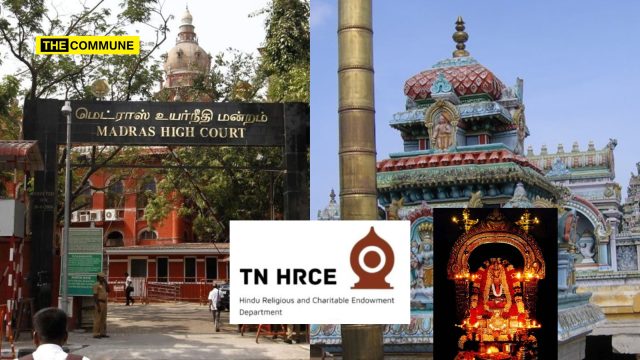
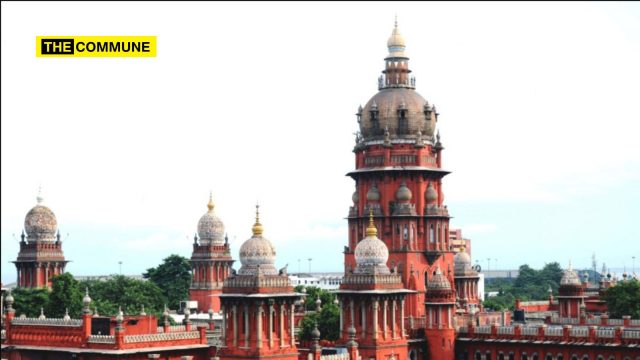
In another setback to attempts at modern construction in ancient temples, a Division Bench of the Madras High Court on Friday, 29 May 2026, restrained civil works at the Sri Venkatesa Perumal Temple in Mondippalayam, Tiruppur district, insisting that no modern structures can proceed without prior clearance from the Tamil Nadu Heritage Commission.
The latest order comes on a petition filed by Hindu devotee P. Bhaskar, who in January 2025 secured a landmark ruling from the High Court quashing a proposal to build a commercial shopping complex using surplus funds and land of Arulmigu Nandeeswarar Thirukoil at Nandivaram, Chengalpattu. In that case, a Bench categorically held that surplus temple funds can be used only for purposes specified in Section 66(1), 36‑A and 36‑B of the HR&CE Act, and that constructing shopping complexes does not fall within those statutory purposes.
According to temple‑rights activist TR Ramesh, the Division Bench hearing Bhaskar’s Mondippalayam plea has now applied the court’s earlier Heritage Commission orders to this specific ancient temple. In January, a Special Bench comprising Justices R. Suresh Kumar and S. Sounthar had imposed a state‑wide ban on construction and renovation in ancient temples until the Tamil Nadu government fully constitutes the Heritage Commission and obtains its approval for any civil works.
According to the X post made by temple activist TR Ramesh on Friday’s hearing, the Division Bench reiterated that, in terms of that Special Bench order, no civil works can proceed in ancient temples without Heritage Commission permission, and made it clear that this restriction squarely applies to the Sri Venkatesa Perumal Temple at Mondippalayam. As a result, ongoing or proposed modern constructions at the temple cannot move forward until the statutory body scrutinises and clears the project.
Bhaskar was represented in court by advocate B Jagannath, who is understood to have relied on a string of temple‑protection precedents, including the 2025 Bhaskar shopping‑complex ruling itself, Supreme Court orders in matters pursued by activist TR Ramesh, and the Heritage Commission stay orders of the Madras High Court.
Taken together, the 2025 shopping‑complex verdict, the state‑wide Heritage Commission stay, and Friday’s Mondippalayam order signal a tightening judicial line: temple funds and properties cannot be freely commercialised, and “development” projects in ancient shrines will be frozen unless they pass both statutory scrutiny and heritage‑protection tests.
Third good news today for Temple Worshippers from Madras High Court!
Hindu Devotee Shri P. Baskar – who in Jan 2025 had obtained a landmark order against building Shopping Complexes with Temple funds and properties-
A shocking murder case has come to light near Chengalpattu after the exhumation and post-mortem examination of an elderly woman’s body reportedly confirmed that she had been killed. A functionary of Tamilaga Vettri Kazhagam (TVK) has since been arrested in connection with the crime, as reported in Seithipunal.
The victim, identified as Muthammal from Keelamur village near Melmaruvathur in Chengalpattu district, had recently died and was buried. However, suspicions surrounding the circumstances of her death prompted authorities to exhume her body and conduct a post-mortem examination in the presence of police officials and a medical team.
Initially, family members and villagers had believed that Muthammal had died after accidentally falling down. However, her sons later noticed that the gold jewellery she habitually wore was missing. Suspecting foul play, they lodged a formal complaint with the police seeking an investigation into their mother’s death.
Acting on the complaint, police launched an intensive inquiry in the area. During the investigation, officers reportedly uncovered evidence suggesting that Muthammal had been deliberately pushed down and killed in order to steal the jewellery she was wearing.
Police investigations further revealed that the accused was Vasudevan, a resident living opposite the victim’s house and a local functionary of Tamilaga Vettri Kazhagam (TVK).
Following these findings, police arrested Vasudevan on charges of murdering the elderly woman and stealing her jewellery. He is currently being subjected to further interrogation as part of the ongoing investigation.
Subscribe to our channels on WhatsApp, Telegram,Instagram and YouTube to get the best stories of the day delivered to you personally.
A young woman’s body was recovered from a partially buried position beneath a mound of soil near Kannuthoppu bridge within the Vadalur police station limits in Cuddalore district on Friday, prompting a murder investigation, as reported in The New Indian Express.
According to police, the body was discovered along the Neyveli–Vadalur road, where construction work for the Vikravandi–Kumbakonam National Highway bypass project is currently under way. Large quantities of soil had been heaped at the location for the road project. Passersby reportedly noticed the partially buried body, whose face appeared disfigured, and alerted the authorities.
Following the information, Villupuram Superintendent of Police V.V. Sai Praneeth, Neyveli DSP Radhakrishnan, Cuddalore DSP Tamil Iniyan, Vriddhachalam DSP Balakrishnan and other police personnel visited the site and conducted an inquiry. The body was subsequently sent to the Government Hospital in Kurinjipadi for post-mortem examination.
Village Administrative Officer S. Sriraman informed police that the woman was dressed in orange leggings, a dark pink chudidhar with white floral patterns and a sandal-coloured dupatta. He further stated that a shawl had been used to cover the victim’s mouth and part of her face. He also reported that the body had been found with a slit throat and emitted a foul smell, leading to suspicion that the woman had been murdered.
Police initially suspected that the deceased was around 30 years old and may have died about two days earlier. Investigators began examining multiple possibilities, including whether the woman had been murdered and buried at the location, sexually assaulted and killed, or murdered elsewhere before her body was dumped at the site.
The deceased was later identified as Manjula, a resident of Vadalur.
Subscribe to our channels on WhatsApp, Telegram,Instagram and YouTube to get the best stories of the day delivered to you personally.
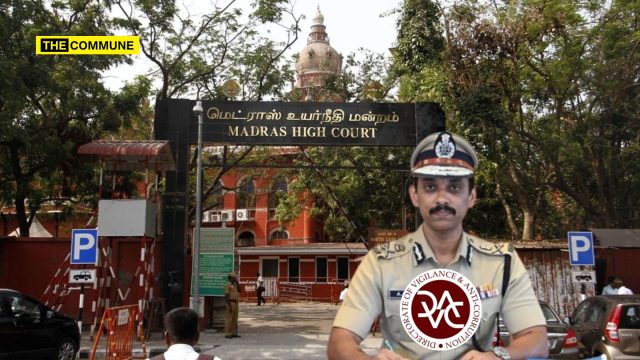
The Madras High Court on Friday (29 May 2026) censured former Chennai Police Commissioner and current Director of the Tamil Nadu Directorate of Vigilance and Anti-Corruption (DVAC), A. Arun IPS, for issuing a preventive detention order against a realtor in an alleged fraud case, as reported by LiveLaw.
While setting aside the detention order, a Division Bench comprising Justices GR Swaminathan and V. Lakshminarayanan concluded that the order had been issued for reasons unrelated to the requirements of preventive detention law. The Bench also observed that Arun had repeatedly passed similar detention orders that were subsequently quashed by the courts.
“The impugned order has been deliberately passed. We would normally not make such remark. But we are constrained to do so because Thiru Arun IPS is habituated to issuing such orders, most of which have come to the notice of this Court and quashed. Even before us, he did not appear to feel that he had passed a wrong order. He strongly justified his conduct. He ought to be aware that a preventive detention order cannot be passed recklessly as it has serious implications on the detenu’s liberty. The detention order has been passed for extraneous reasons. We censure Thiru Arun IPS., for having passed the impugned detention order,” the court said.
A censure is a formal expression of strong disapproval by a court or other authority. While it does not by itself amount to a criminal penalty or removal from office, it places on record the court’s condemnation of a person’s conduct and can carry significant reputational consequences.
The case arose from a habeas corpus petition challenging the detention of real estate developer Santosh Sharma under the Tamil Nadu Goondas Act. Sharma had been accused of selling apartments to purchasers and subsequently executing additional documents in favour of other accused persons. The petition was filed by Sharma’s daughter.
It was argued before the court that the cases pending against Sharma could have been dealt with under ordinary criminal law and that there was no justification for invoking preventive detention provisions. Counsel also contended that even if the allegations were accepted as true, they related to a private civil and criminal dispute between individuals and therefore concerned “law and order” rather than any threat to “public order.”
When the matter was first heard, the Bench observed that the detention order had shocked its judicial conscience. The judges then summoned Arun, who was serving as Chennai Police Commissioner when the detention order was issued.
The court noted that Arun has since been appointed Director of the Tamil Nadu Directorate of Vigilance and Anti-Corruption.
During a subsequent hearing on 27 May 2026, the Bench expressed displeasure over the manner in which a court bailiff had allegedly been made to wait for nearly two hours while attempting to serve summons at the IPS officer’s office. The judges directed the office staff responsible for making the bailiff wait to appear before the court and instructed Arun to remain present until then.
After the staff member appeared, the Bench censured him and stated that action would be taken. The court also referred to an instance where the Bombay High Court had initiated contempt proceedings after a court bailiff was disrespected by office staff. The judges clarified that Arun had been summoned in order to provide him an opportunity to explain his actions before any directions were issued.
In the order quashing the detention, the court observed that while Sharma may have deliberately violated contractual obligations and could be prosecuted in accordance with law, his conduct did not pose a threat to public safety.
“Cases such as the one on hand are registered routinely all over the State. We are more than satisfied that the ground case as well as the adverse cases do not have the potential to disturb public order. It is ridiculous to claim that they will disturb the even tempo of social life. There is absolutely no warrant for invoking the draconian law of preventive detention for such cases,” the court said.
The Bench further noted that the ground case and adverse cases relied upon by the detaining authority related to incidents between 2020 and 2023 and lacked any live or proximate connection with Sharma’s present conduct. It therefore concluded that there was no urgent necessity to invoke preventive detention.
The judges also observed that Arun, as a direct recruit IPS officer with 28 years of experience, would have been fully aware that the allegations did not fall within the category of public order offences.
“The detaining authority knew fully well that the case on hand does not fall within the category of public order. He also knew that he was placing reliance on events that had taken place not less than two years earlier. The detaining authority is not a novice. He is a direct recruit to I.P.S. He has served in various capacities. If with 28 years of experience such an order can be passed, it would only mean that it was done deliberately and with full knowledge of law and the facts involved,” the court said.
The Bench also referred to detention orders previously issued against journalists Savukku Shankar and Varaaki, both of which were later quashed. The judges observed that this was not the first occasion on which Arun’s actions as a detaining authority had attracted judicial scrutiny.
Subscribe to our channels on WhatsApp, Telegram,Instagram and YouTube to get the best stories of the day delivered to you personally.
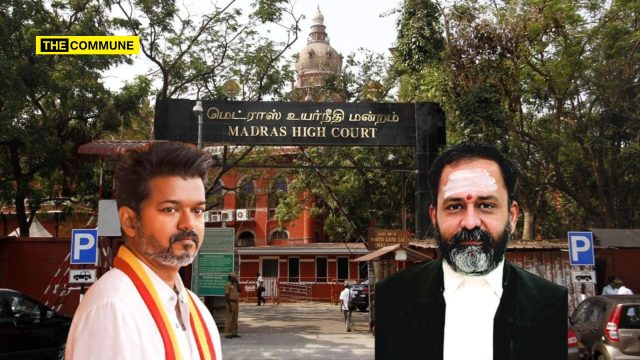
The Madras High Court on Friday (29 May 2026) took up for consideration a public interest litigation petition concerning Tamilaga Vettri Kazhagam (TVK) chief and Chief Minister C. Joseph Vijay’s appeal to children to persuade adults in their households to vote for his party during the 2026 Tamil Nadu Assembly elections, as reported in The Hindu.
Hearing the matter as part of a summer vacation Bench along with Justice V. Lakshminarayanan, Justice GR Swaminathan referred to a personal experience to explain why the issue merited examination.
Addressing senior counsel S. Muralidhar, a former Chief Justice appearing for TVK, Justice Swaminathan recalled that he had visited his family doctor in Madurai about three weeks earlier after falling ill.
“He (the doctor) said that when he was about to go for voting, his grandchild said, Thatha you must vote only for…”
Mr. Muralidhar responded in a lighter vein, stating: “We have in our tradition, children advising the father. Your Lordship’s name also symbolises that.”
The remark was a reference to the name Swaminathan, another name associated with Lord Murugan, who in Hindu tradition is believed to have assumed the role of a teacher to his father, Lord Shiva.
The exchange took place after the Bench indicated its intention to admit the petition filed by Cuddalore-based advocate L. Vasuki and grant time to TVK to submit its counter affidavit. Objecting to the matter being admitted as a public interest litigation petition, Mr. Muralidhar requested that the case be adjourned to enable him to examine the legal issues involved before filing a response.
“The petition is entirely based on news reports. Your Lordships may permit a proper reply or response to be filed because it involves very interesting questions of law on the powers of the Election Commission of India (EC),” he submitted.
The senior counsel argued that the Election Commission’s authority to examine violations of the Model Code of Conduct exists only during the electoral process and not after election results have been declared.
“Once the election gets over, the EC goes out of the picture. Any allegation of electoral corrupt practice raised, thereafter, could be dealt with only in individual election petitions. So, the question here really is what are the powers of the ECI, after the conclusion of the elections, to conduct an inquiry as sought by the present petitioner,” he told the court.
Referring to Section 123 of the Representation of the People Act, 1951, which categorises “undue influence” as a corrupt electoral practice, Mr. Muralidhar further argued, “The adjective used in the Act is ‘undue.’ Now what can constitute undue influence would have to be tested vis-a-vis the election of individual candidates because there is no concept of disqualifying a party. There’s only a consequence of derecognition of party.”
He requested additional time to study the legal questions raised in the petition and assist the court on the issue.
Senior counsel N.R. Elango and S.R. Rajagopal, appearing for the Dravida Munnetra Kazhagam (DMK) and the All India Anna Dravida Munnetra Kazhagam (AIADMK), respectively, informed the court that the allegations made against their parties were distinct from those levelled against TVK.
They contended that the accusations concerning alleged voter bribery in the Alangulam, Mylapore and Thirumangalam constituencies could only be challenged through election petitions and not by way of a public interest litigation.
During the hearing, Justice Swaminathan remarked: “Mr. Rajagopal, I think you must sail with him (Mr. Elango).”
The Division Bench subsequently granted time to all respondents to place their counter affidavits on record and adjourned the matter to 1 July 2026.
Subscribe to our channels on WhatsApp, Telegram,Instagram and YouTube to get the best stories of the day delivered to you personally.
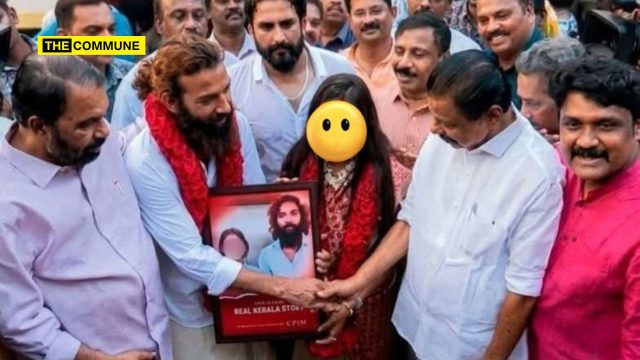
Madhya Pradesh Police informed the Kerala High Court on Friday (29 May 2026) that an offence under the Scheduled Castes and Scheduled Tribes (Prevention of Atrocities) Act, 1989 had been incorporated against Farmaan, the husband of the viral Kumbh Mela star, and therefore the anticipatory bail plea moved by the couple was not maintainable, as reported in LiveLaw.
The submission was made by Additional Solicitor General S.V. Raju, appearing for the Madhya Pradesh government, before Justice Kauser Edappagath, who was hearing the couple’s plea seeking pre-arrest bail in a case registered after the girl’s father lodged a complaint with Madhya Pradesh Police alleging that his daughter had been abducted.
The couple had also filed an amendment application seeking to amend the pleadings in the anticipatory bail petition, and the same was taken up for hearing by the court.
During the hearing, the ASG submitted that an offence under Section 3(2)(v) of the SC/ST Act had been invoked against Farmaan.
“The offence falls under the Atrocities Act. S. 3(2)(v) is invoked. Because of S.18 of the SC/ST Act, the anticipatory bail is not maintainable. Victim belongs to the Schedule Tribe. The 1st petitioner is not belonging to SC/ST community,” he argued.
Under Section 3(2)(v) of the Act, a person committing an IPC offence punishable with imprisonment of ten years or more against a person belonging to a Scheduled Caste or Scheduled Tribe is punishable with imprisonment for life and fine. Section 18 of the Act bars the application of anticipatory bail provisions in cases involving offences under the Act.
After hearing the parties, the court observed that it would extend the interim order protecting the couple from arrest until Tuesday (June 2) and would hear further arguments if it decided to allow the amendment application.
During the proceedings, the ASG opposed the amendment application filed by the couple. He argued that after his submissions in the previous hearing, the petitioners had been expected to file a reply but had instead moved an amendment application containing averments intended to address deficiencies pointed out by him.
Justice Kauser Edappagath remarked, “Already there was sufficient pleadings but exact wording was not there.”
Last week, the Madhya Pradesh government had challenged the maintainability of the plea on the ground that a regular anticipatory bail application could be filed only before courts in the State where the criminal case had been registered. According to the State, since the couple had sought regular anticipatory bail in Kerala in connection with a crime registered in Madhya Pradesh, the petition was not maintainable.
Meanwhile, Advocate Sasindran, appearing for the couple, submitted that the anticipatory bail application had been moved before the Kerala High Court because the couple feared danger due to their interfaith marriage.
Referring to the Supreme Court’s decision in S.R. Sukumar v. S. Sunaad Raghuram (2015), he argued that amendments could be permitted even immediately before judgment. He further submitted that the power under Section 528 of the Bharatiya Nagarik Suraksha Sanhita (BNSS), which deals with the inherent powers of the High Court, was intended to ensure substantial justice.
“The very reason for filing the bail application is that I cannot go to Madhya Pradesh. Today, I have produced photographs. Our marriage photographs are burning and beating with shoes by the fundamentalists. That is the reason why I have filed the bail application. I cannot go to Madhya Pradesh. Even I cannot move in Kerala also. Even after getting your Lordships order, realising that the order is only against arrest, they registered a case under Child Marriage Act. As if I, the 2nd petitioner, is a victim. The fact is that there is a threat. We cannot move to MP. We have not gone to MP. We filed the writ petition in MP by approaching a lawyer from Kerala only, not in MP,” he submitted.
Opposing the amendment application, the ASG argued that the facts sought to be introduced were not subsequent developments but facts already known to the petitioners before filing the bail petition.
“These are not subsequent events. These are events, which are known to him prior to the filing of the bail application. These are not fact which has arisen after the filing of the bail application. It’s a fact, which was known to him. He has not stated that in his petition. It amounts to suppression. Amendment should not be allowed. After I made my submissions (on) what is required and I pointed out that necessary averments are not there, he has filed the amendment, instead of replying, to overcome the lacunae. To fill in the lacunae, amendment can’t be allowed….He has stated wrong facts. He has stated that he can’t go to Madhya Pradesh…It is an admitted fact that he has filed a writ petition in MP High Court after his bail application was filed…There is no requirement to go to MP physically to file a pre-arrest bail application. He can swear and send it there. Therefore, his saying that I am not safe in MP is of no consequence here.”
Advocate Sasindran clarified that the affidavit filed in the writ petition before the Madhya Pradesh High Court had been sworn in Kerala.
The ASG also reiterated that the offence under Section 3(2)(v) of the SC/ST Act had been incorporated against Farmaan, who does not belong to the SC/ST community.
At this stage, the court observed that if it decided to allow the amendment application, further arguments would be heard on June 2.
The ASG then urged the court not to extend the interim protection granted to the couple. The court, however, extended the protection until Tuesday.
“He cannot get unlimited extension. SC said it is a temporary relief, if at all, it has to be filed,” the ASG argued.
The court thereafter reserved orders on the amendment application.
The young woman, popularly known as the “viral Kumbh Mela star”, came to national attention during the Maha Kumbh celebrations last year after videos of her selling rudraksha garlands at the mela went viral on social media.
In March 2026, while in Kerala for a film shoot, she sought police protection alleging that her family opposed her marriage to Farmaan. The couple later got married.
The controversy escalated after the National Commission for Scheduled Tribes (NCST) stated that the girl was allegedly a minor, around 16 years old at the time of the marriage, and that forged documents may have been used to facilitate the wedding. Based on those findings, Madhya Pradesh Police subsequently registered a case against Farmaan under the POCSO Act.
Subscribe to our channels on WhatsApp, Telegram,Instagram and YouTube to get the best stories of the day delivered to you personally.
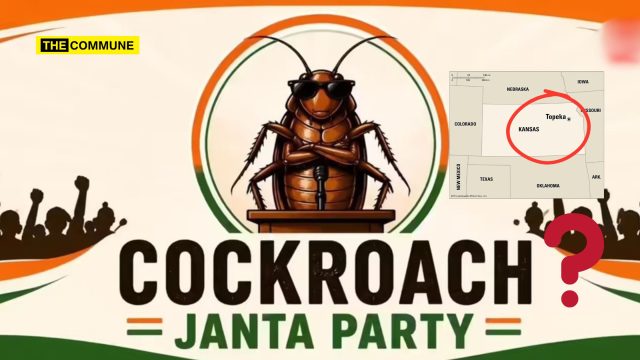
Fresh questions have been raised over the authenticity of the viral Cockroach Janta Party’s Instagram following, after politically aligned media and social‑media accounts circulated alleged audience‑insights screenshots showing large, symmetric clusters of followers in foreign locations.
According to these allegations, the CJP handle’s analytics show around 8.6 lakh followers from Topeka in the US state of Kansas, a city whose own population is estimated at roughly 1.25–1.26 lakh. The same set of screenshots and clips also cite exactly 8.9 lakh followers each from Palestine, Ivory Coast, Malaysia and Brazil, arguing that the repetition of identical numbers across countries points to a coordinated, inorganic expansion of the account’s audience.
The figures have been highlighted prominently in a primetime segment and digital shorts aired by Republic TV, which describes the pattern as evidence of a “bought and bot campaign” behind the Cockroach Janta Party’s explosive growth on Instagram. Excerpts from the broadcast are now being widely reshared by pro‑government pages and influencer accounts.
The Cockroach Janta Party, launched this month by AAP’s social media strategist Abhijeet Dipke, began reportedly as a satirical response to controversial remarks in which India’s Chief Justice was accused of comparing unemployed legal fraternity youth to “cockroaches.” Within days, the project’s social‑media handles amassed millions of followers, drew extensive coverage from Indian and international media, after it started pushing an anti-BJP agenda and calling for a ‘GenZ’ rebellion akin to those in Nepal and Sri Lanka.
That rapid surge triggered a backlash. Netizens shared a different set of analytics claiming that roughly half of CJP’s followers were based in Pakistan and only around 9% in India, branding the outfit “Pakistan Janta Party” and reviving old allegations that Dipke is an “ISI asset.”
In response, CJP released what it said were its own Instagram insights, asserting that about 94% of its followers are from India, with only small fractions from the US and UK.
I know you are desperately trying to hack the account but since you have failed to do so. Let me share the real data.
The newer Topeka‑ and foreign‑cluster‑based allegations add a second line of attack: that even if followers are not concentrated in Pakistan, they may still be inflated through paid or automated campaigns.
Wow! CJP Instagram got exactly 8.9 lakh “followers” from many tiny nations. Appears that the bot developer re-run same code by just changing the nationality of the bot swarm.@Meta@metaindia is not sleeping. They are pretending to sleep. pic.twitter.com/KyDykc8Ggb
On 27 May 2026, the Tamil Nadu government informed the Madras High Court that it would provide a sovereign guarantee for surplus temple funds deposited in State-owned non-banking finance corporations (NBFCs), including the Tamil Nadu Power Finance and Infrastructure Development Corporation (TNPFC) and the Tamil Nadu Transport Development Finance Corporation (TNTDFC).
Tamil Nadu government gives a sovereign guarantee for the temple funds deposited in State owned non banking finance corporations. Justices G.R. Swaminathan and V. Lakshminarayanan of #MadrasHighCourt record the submission made by way of a memo and adjourn by eight weeks a public…
Recording the submission made by the government through a memo, a division bench comprising Justices GR Swaminathan and V. Lakshminarayanan adjourned by eight weeks a public interest litigation (PIL) petition challenging the deposit of temple funds in the two State-owned financial institutions.
The PIL was filed by temple activist TR Ramesh of Indic Collective Trust, who challenged a Government Order issued on 17 February 2026 amending the Religious Institutions (Custody, Investments and Lending or Borrowing of Moneys) Rules, 1963.
According to the petitioner, the amendment enabled surplus funds belonging to temples under the Hindu Religious and Charitable Endowments (HR&CE) Department to be deposited in State-owned NBFCs such as TNPFC and TNTDFC instead of being restricted to traditional banking institutions.
During the earlier hearing, senior counsel S. Ravi, assisted by advocate B. Jagannath, argued that the amendment exposed temple funds to financial risk by permitting deposits in NBFCs that were allegedly facing financial stress.
The petitioner contended that TNPFC functions largely as a funding arm for the State power sector, including Tamil Nadu Generation and Distribution Corporation (TANGEDCO), which has accumulated losses exceeding ₹1.62 lakh crore. It was further argued that TNPFC had received a BBB-minus credit rating, the minimum rating required for an NBFC to accept public deposits.
In his affidavit, TR Ramesh stated that TNPFC’s ability to continue accepting deposits was largely linked to the fact that it was wholly owned by the Tamil Nadu government and warned that any downgrade below BBB-minus would render it ineligible to accept or renew deposits.
The petitioner also raised concerns regarding TNTDFC, arguing that temple funds should not be utilised to indirectly support State-run corporations facing financial difficulties.
When the matter first came up before the summer vacation bench, the judges observed that the case raised an important question of law and directed the HR&CE Department to file its response. The court had initially proposed taking up the matter for final hearing at an early date.
Subscribe to our channels on WhatsApp, Telegram,Instagram and YouTube to get the best stories of the day delivered to you personally.
For a government elected on promises of change, an uncomfortable pattern has begun to emerge. Since assuming office, several ministers and MLAs in Chief Minister Vijay’s TVK administration have attracted attention not for landmark policy decisions or governance initiatives, but for a series of remarks, social-media stunts and controversial statements that have raised serious questions about the experience, competence and preparedness of the government’s new faces.
Industries Minister Keerthana: Reels Over Industrial Policy?
Among the most discussed incidents involved Industries Minister Keerthana, who drew criticism after posting a social-media reel inviting investors to Tamil Nadu.
Tamil Nadu is not waiting for the future, we are building it.
From single-window approvals and faster clearances to AI cities, green hydrogen, advanced manufacturing, and the space economy, Tamil Nadu is creating an ecosystem where innovation meets execution.
— Virudhai Magal Keerthana (@Keerthana4VNR) May 27, 2026
To any fairly educated person, it is clear as day that attracting industrial investment requires sustained engagement with companies, review of existing MoUs, infrastructure planning, workforce development and policy execution rather than short-form promotional videos. One wonders whether the minister’s focus on social-media branding was overshadowing more substantive industrial policy discussions.
The criticism was amplified because industrial development remains concentrated in the Chennai-Hosur-Coimbatore corridor, while regions such as Madurai, Virudhunagar and Sivakasi continue to seek larger investments and infrastructure support. Ideally, addressing these structural challenges should take precedence over image-building exercises.
Mines Minister: Governance Or Public Relations?
TVK minister for Natural Resources, Minerals, and Mines also came under attack after videos circulated showing him interacting with members of the public in highly produced social-media clips.
Surprise inspections and public interactions were being packaged primarily as content for social media rather than serving as genuine oversight exercises.
What the youngsters & #TVK can do – Here is a sample 👏@drtkprabhu_TVK seems to be one of the most humble, well mannered, professional, mature & yet sharp youngster in TVK.
With regard to the announcements regarding quarry closures, the government had not fully disclosed the specific violations, entities involved or long-term enforcement plans.
Transport Minister Vijay Parthiban And The Volvo Controversy
One of the most widely discussed exchanges involved Transport Minister Vijay Parthiban.
When questioned about the operation of Volvo buses, the minister reportedly responded that people should ask Volvo about the issue.
MLA Parthiban : over ah pesuringa VOLVO bus varalana volvo kitta poi kelunga!
The remark attracted ridicule because Volvo is merely the manufacturer, while the operation and maintenance of government-run buses fall under the transport department itself. The exchange was a classic example of poor understanding of departmental responsibilities.
In another video, he is seen ‘pacifying’ a passenger using pity – he claimed he had not eaten but seemed like the passenger had eaten to his full and indicating that he must cut the minister some slack.
A passenger questioned #TamilNadu#Transport Minister A Vijay Tamilan Parthiban over a delayed bus during an inspection at #Kilambakkam sbus terminus. The Minister’s response to him, “I haven’t even eaten yet… but you seem to have eaten well,” has drawn criticism online.#DTNextpic.twitter.com/MAoqkEsh2A
The minister was also criticised for remarks suggesting that even passengers with reservations could be asked to vacate seats to accommodate others during periods of heavy demand, a statement that has raised concerns about passenger rights and administrative planning.
❤️🔥Brilliancy at its peak by #TVK Transport Minister Mr. Vijay Tamizhan Parthiban !
Mastermind idea…
He could’ve made the reserved passengers travel on top of bus. This would have saved time, fuel and efficiency. pic.twitter.com/Rgs7wvA6ha
MLA Navalpattu Vijay And The Garbage Disposal Proposal
Thiruverumbur MLA Navalpattu Viji drew criticism after proposing that the nearly seven lakh metric tonnes of waste accumulated at Tiruchirappalli’s Ariyamangalam dump yard be transported and dumped into a deep rocky quarry pit.
Defending the proposal, Viji argued that the waste could be shifted to a rocky pit near Valithangal Thogu Kudi without affecting groundwater or causing significant environmental damage. He claimed the move would be safer than allowing the garbage to remain in a densely populated residential area and described it as a practical solution to a problem that successive governments had failed to address.
The proposal, however, triggered criticism on how relocating waste to a quarry pit could be considered a long-term waste-management solution. Modern waste-management practices focus on segregation, recycling, biomining and scientific processing rather than simply moving garbage from one location to another.
HR&CE Minister And Temple Product Debate
During a temple inspection, the HR&CE Minister sparked criticism after questioning how anyone could verify the manufacturing date printed on a food product’s packaging.
“They have put a date. What proof do you have that it was manufactured on that date?” the minister asked, suggesting that the printed date alone was insufficient evidence.
இந்த முறுக்கு 15 ஆம் தேதி Manufacturing பன்னுனம்முனு Date இருக்கு…..
சரி….
இது 15 ஆம் தேதிதான் Manufacturing பன்னுதுக்கான ஆதாரம் உங்ககிட்ட என்ன இருக்கு……
😀😀😀😀
The remarks were widely mocked that the minister appeared more preoccupied with questioning packaging labels than addressing larger issues facing the department. The comments generated considerable attention despite offering little clarity on any actual violation or irregularity discovered during the inspection.
The episode became yet another example of ministers creating controversies through public statements rather than policy initiatives.
TVK MLA Explains Why Vijay Loves Fishermen
In a video that has gone viral, a TVK MLA is seen pacifying a fisherman saying the CM loves fishermen because he acted in a film called Sura where he plays a fisherman named Sura!
Prohibition And Excise Minister Vignesh And The TASMAC Closure Debate
Prohibition and Excise Minister Vignesh also attracted attention for his remarks on demands to shut down TASMAC liquor outlets across the state.
Responding to calls for the closure of liquor shops, the minister questioned whether shutting outlets would actually solve the problem, asking, “If closing these shops solves the problem, then we can close all 4,000 shops, right?” He further argued that prohibition could lead to unintended consequences, stating that illicit liquor and narcotics such as ganja could become more prevalent if legal liquor outlets were shut down.
The remarks triggered criticism that the minister appeared to be defending the continuation of state-run liquor sales rather than addressing concerns about alcohol addiction and the social impact of TASMAC outlets. Now, one wonders whether the government’s Prohibition and Excise Minister should be framing the debate around the impossibility of closure rather than outlining a long-term strategy to reduce alcohol dependence and related social harms.
Fisheries Minister Srinath And The Katchatheevu Question
Fisheries Minister Srinath also found himself facing criticism after declining to comment on what steps the Vijay government was taking to retrieve Katchatheevu, despite the issue having been one of TVK’s most aggressively campaigned causes before the elections.
When asked what measures the government was taking to reclaim the island, Srinath responded with a brief, “I cannot speak about that right now. No comments.”
The response drew attention because Chief Minister Vijay had repeatedly raised the Katchatheevu issue while in opposition. Before the elections, he had demanded that the Union government assert India’s sovereignty over the island, proposed a 99-year lease as an interim measure, and accused successive governments of abandoning Tamil Nadu fishermen affected by arrests and boat seizures near Sri Lankan waters.
The minister’s refusal to answer stood in sharp contrast to TVK’s earlier rhetoric on the issue. The controversy was further amplified by the fact that TVK is now allied with the Congress party, under whose government Katchatheevu was ceded to Sri Lanka in 1974.This is evidence that TVK’s once-aggressive position on Katchatheevu had become noticeably muted after assuming office.
For a party that came to power promising a new political culture, the early signs are hardly encouraging.
Running a government is not the same as running an election campaign. Viral clips, social-media engagement and catchy one-liners may win attention online, but they do not solve industrial stagnation, transport failures, waste-management challenges, fishermen’s concerns, temple administration issues or the social consequences of alcohol addiction.
What makes these incidents noteworthy is not any single gaffe in isolation. It is the pattern.
Vijay sought votes on the promise that his government would be different from the parties he criticised for years. But what Tamil Nadu is increasingly witnessing is not change, but the consequences of handing enormous responsibilities to people, who were his fan club members for the longest time, who are unprepared for them. The longer this pattern continues, the greater the risk that today’s viral clips become tomorrow’s governance failures.
Subscribe to our channels on WhatsApp, Telegram,Instagram and YouTube to get the best stories of the day delivered to you personally.