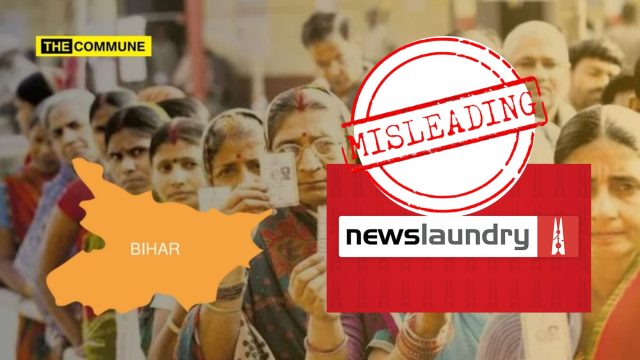
The Office of the Chief Electoral Officer (CEO), Bihar, has strongly refuted a report published by Newslaundry alleging large-scale irregularities in the state’s electoral rolls. Calling the report “misleading” and “selectively presented,” the CEO issued a point-by-point clarification, stressing that the Special Intensive Revision (SIR) exercise in the state was conducted transparently and on an unprecedented scale.
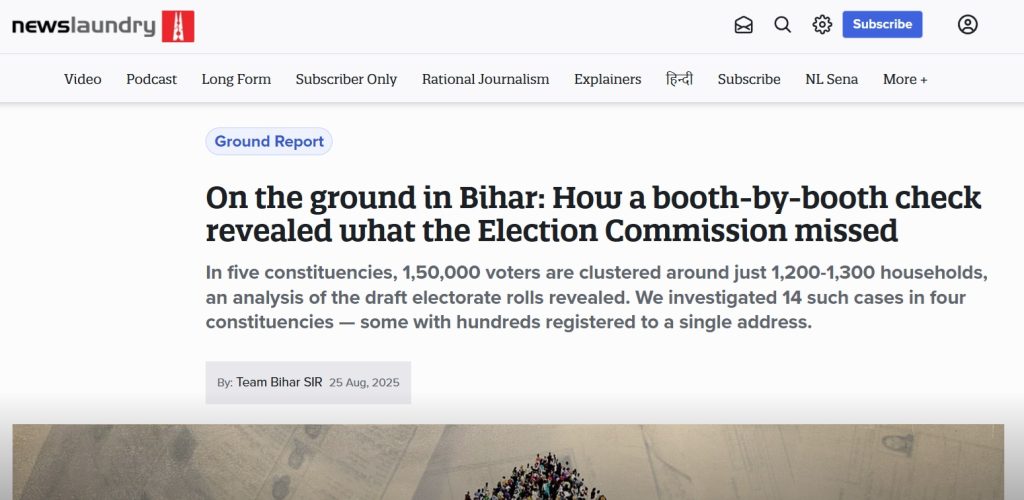
The Newslaundry report , published on 25 August 2025, claimed that in several constituencies, hundreds of voters were registered at single addresses and that the Election Commission had failed to verify them through door-to-door checks.
In a statement, the CEO’s office countered these claims:
#1 Verification Process Undertaken
The CEO clarified that during the SIR, door-to-door verification of 7.89 crore voters was carried out by Booth Level Officers (BLOs). Of the 7.24 crore electors listed in the Draft Roll published on August 1, documents of 99.11% of voters had already been collected. Verification work for the remaining electors is still ongoing. The claim that no verification was done was termed “baseless and fabricated.”
#2 Voter Clustering Explained
Responding to Newslaundry’s findings of large “clusters” of voters at single addresses, the CEO said this was a common socio-geographical feature in rural and semi-urban Bihar, where multiple families often live under one khata number, tola, or mohalla without formal house numbers. “Clustering at the same address is not an irregularity but a reflection of local realities,” the statement read.
#3 Incorrect Addresses and Unknown Names
The CEO pointed out that many students, migrant workers, and tenants may be registered under a particular household but are not currently residing there, which could explain why some residents claimed not to know the names on the rolls. Any discrepancies are being addressed through Form-7 (Deletion) and Form-8 (Address Correction) under the ongoing claims and objections process.
#4 Transparency of Electoral Process
The Commission emphasized that the system remains open and transparent. After the Draft Roll was published, all political parties and citizens were given the opportunity to file claims and objections, both online and offline, from 1 August 2025 to 1 September 2025.
#5 Sample Size of Investigation Questioned
The CEO criticized Newslaundry for drawing sweeping conclusions based on 14 cases across four constituencies, while the SIR exercise covers 7.89 crore voters across 243 assembly constituencies. “Questioning the credibility of the entire process on the basis of such a selectively chosen and statistically insignificant sample is neither rational nor objective,” the statement said.
The Election Commission has maintained that it welcomes genuine corrections and citizen participation in ensuring accurate rolls but warned against “mischaracterizing isolated issues as systemic failures.”
Newslaundry की रिपोर्ट की तथ्यों पर आधारित पड़ताल, Newslaundry की यह रिपोर्ट भ्रामक है।
1. विशेष गहन पुनरीक्षण (SIR) का दायरा और प्रक्रिया
बिहार में विशेष गहन पुनरीक्षण अवधि में 7.89 करोड़ मतदाताओं का घर-घर जाकर सत्यापन बूथ लेवल अधिकारियों द्वारा किया गया। दिनांक 01… https://t.co/X4VZnlD7Dc
— Chief Electoral Officer, Bihar (@CEOBihar) August 26, 2025
Subscribe to our channels on Telegram, WhatsApp, and Instagram and get the best stories of the day delivered to you personally.
Bangladesh is witnessing a deeply troubling surge in violence against women and children, with cases rising at an alarming rate nationwide, the Awami League party said on 26 August, urging urgent attention and coordinated action to tackle the crisis.
Citing reports from human rights organisations, the party mentioned that between January and July 2025, incidents of rape increased by about 68.5 per cent compared to the same period in 2024. It also added that violence against children rose by 38 per cent during the same period in 2025.
Citing the concerning figures from the human rights body Manobadhikar Songskriti Foundation (MSF), the party asserted that, based on their data, between January and July 2025, 502 women and children were raped, including 133 victims of gang rape. Additionally, twenty-seven victims were killed after rape, and 209 attempted rapes were reported. On the other hand, highlighting the data from the Dhaka-based human rights organisation Ain o Salish Kendra (ASK), the Awami League stressed that in the first seven months of this year, 492 women and children were victims of rape, compared to 292 in the same period last year.
According to the party, incidents of violence against children rose to 640, up from 463 in 2024, while domestic violence also increased by nearly 16 per cent in 2025. “A report from Bangladesh Mahila Parishad paints a similar picture. Their figures indicate that 405 individuals were raped this year, 117 were victims of gang rape, and 15 were killed after rape. Last year, the numbers were 253, 105, and 18, respectively,” the Awami League posted on X.
The party emphasised that experts reckon the main reasons such crime continues in Bangladesh are the lack of punishment for offenders, delays in the justice system, negligence by law enforcement, and weak local governance. Referring to the experts, the party stated that “this trend is not just a matter of statistics but a serious threat to social security and human rights.”“The policing system has weakened. After the July movement, the negative narratives around women’s freedom and mobility have encouraged rapists,” Awami League quoted Syed Shaikh Imtiaz, professor at the Department of Women and Gender Studies at Dhaka University, as saying. Several human rights activists, the party noted, argue that misogynistic attitudes and impunity for perpetrators are the main causes behind the rise in violence against women and children. These activists, it said, contend that without effective law enforcement, speedy trials, and greater social awareness, the rising incidents of violence cannot be halted in Bangladesh.
– IANS
Subscribe to our channels on Telegram, WhatsApp, and Instagram and get the best stories of the day delivered to you personally.
The Supreme Court has held that the National Green Tribunal (NGT) lacks the power to direct the Enforcement Directorate (ED) to initiate prosecution under the anti-money laundering law for alleged environmental violations.
A bench of Chief Justice of India (CJI) B.R. Gavai and Justice K. Vinod Chandran observed that the green tribunal has no power under the National Green Tribunal Act, 2010, to direct the prosecution of individuals under the Prevention of Money Laundering Act (PMLA).
“Though such power would be available to a PMLA court or to constitutional courts, it would not be available for exercise by the NGT, constituted to ensure effective and expeditious consideration of cases relating to environmental protection and conservation of forests,” the CJI Gavai-led Bench said as it set aside the green tribunal’s direction to the ED to examine the petitioner, C.L. Gupta Export Ltd, a handicraft manufacturing and exporting company.
“We hence set aside the direction issued to the Enforcement Directorate; but say nothing on whether there is an offence made out or not, which at this stage is not within our ken,” it said. The apex court further noted that no FIR had been registered for any scheduled offence, nor was any complaint filed alleging such offences under the various environmental protection statutes scheduled under the PMLA.
In its judgment, the Supreme Court also set aside the ₹50 crore environmental compensation imposed by the NGT on the petitioner company for alleged violations, including illegal groundwater extraction and discharge of effluents into a Ganga tributary.
The bench observed that the NGT’s method of calculating the penalty based on the company’s revenue lacked a rational nexus with the alleged environmental damages and was inconsistent with legal principles laid down in earlier judgements of the apex court. “The methodology adopted by the NGT for imposition of penalty was held to be totally unknown to any principle of law. (R)ule of law does not permit the state or its agencies to extract a ‘pound of flesh’, even in environmental matters,” it added. However, the apex court upheld the NGT’s directions allowing continuous monitoring and audit of pollution control measures to ensure a “pollution-free compliance regime.”
– IANS
Subscribe to our channels on Telegram, WhatsApp, and Instagram and get the best stories of the day delivered to you personally.
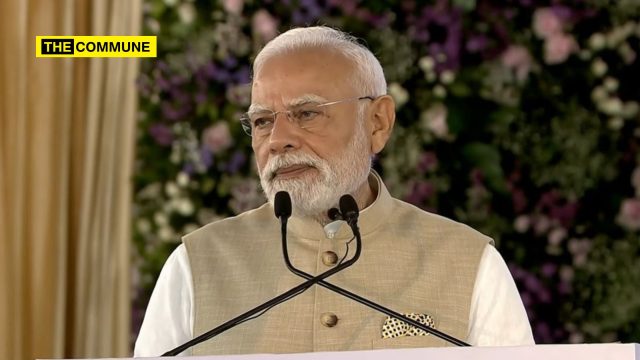
Prime Minister Narendra Modi on 26 August 2025, inaugurated localised production of hybrid battery electrodes and flagged off Battery Electric Vehicle (EV) exports to 100 countries from Hansalpur in Ahmedabad and stated that India will become a hub of clean energy.
Addressing the gathering, PM Modi emphasised India’s growing role in clean energy and electric mobility, while underlining the deepening partnership between India and Japan. Highlighting India’s workforce and manufacturing potential, the Prime Minister said, “India has a demographic advantage, we have a skilled workforce. This makes it a win-win situation for any investment. Suzuki, Japan is manufacturing here and later cars are exported to Japan. This is the strength of Japan and India relations. “This also shows the trust of global firms in India. Companies like Maruti Suzuki are brand ambassadors of India. It is our biggest car exporter. From today, we began to scale EVs at the same level. From now on, EVs that will roll in various countries will have ‘Made in India’ written on it.”
He pointed out that India had long been dependent on imports for EV batteries, but the situation was now changing. “The most critical part of an EV is the battery. Earlier batteries were totally imported by India, but it was important to manufacture the battery in India and therefore we sowed the seeds of battery manufacturing in India. Three Japanese companies came together to manufacture battery cells and electrodes in India. This will give our mission new energy. This will boost the hybrid vehicle market of our nation.”
The Prime Minister also stressed that EVs were not just an alternative but a solution to multiple challenges. “A few years ago, EVs were seen as an alternative but I think EVs are a solution to many problems. Last year during my Singapore visit, we decided to convert our old vehicles, old ambulances into EVs. Maruti Suzuki accepted that challenge and worked on it in six months. They built a hybrid ambulance. This will reduce pollution and also give an alternative to change old vehicles. Clean energy and clean mobility is our future. India will become a hub of clean energy.” Citing India’s economic reforms and policies over the last decade, he said their impact was visible today.
“The policies that India made in the last decade are reaping benefits now. We started the ‘Make in India’ campaign, created a conducive environment for business, we are making industrial corridors, logistic parks… India is working in many sectors to give production linked benefit to manufacturers. “We have solved issues of investors to make investments easy for them. The results are in front of us. Electric manufacturing has increased 500 per cent in a decade,” he said.
Urging state governments to remain proactive, he said, “I have always told all states that we have to be proactive and have to give single window clearance. This is an age of competition. The state that keeps its policies neat and clean will raise the confidence of investors. “Today the whole world is looking at India and so, every state should be competitive. This will benefit the nation. I invite all states to be competitive when it comes to pro-development policies.”
The Prime Minister also announced future plans in high-tech manufacturing and critical minerals. “India is not going to stop here. We have to perform better in the sectors we have already done well in. We are focussing on ‘Mission Manufacturing’. We want to focus on semiconductors and six plants are going to be ready soon. We are aware about the shortage of Rare Earth magnets and therefore we have launched the ‘National Critical Mineral Mission’ in India. We will look for more critical minerals.”
The Prime Minister underlined the historical and cultural depth of India-Japan ties, calling the bilateral relationship one of trust and shared vision. “India-Japan relation is more than just business, it is of history and culture. The journey that began with Maruti Suzuki is now going at bullet train speed. The roots of Japan-India relations are very strong,” he said. Recalling his time as Gujarat Chief Minister, PM Modi said he paid attention to even small details to strengthen the partnership.
“The journey began from Gujarat, 20 years ago, from the Vibrant Gujarat summit. I even made my visiting card in Japanese. I even arranged Japanese food here for the guests, got golf courses made for them. Today, in many schools of India, there are teachers to teach Japanese language to students. People-to-people connect is huge between the countries.” Concluding his address, the Prime Minister affirmed, “Japan-India relation is made for each other.”
– IANS
Subscribe to our channels on Telegram, WhatsApp, and Instagram and get the best stories of the day delivered to you personally.
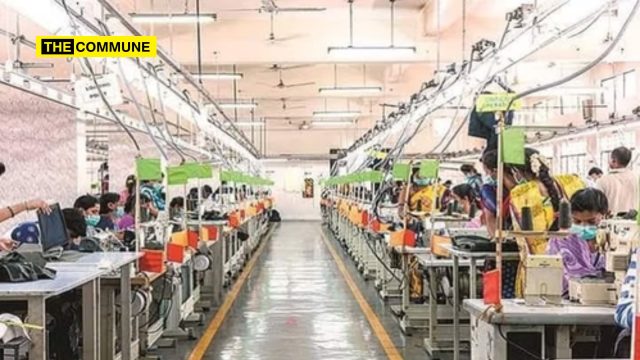
The domestic market for readymade garment (RMG), accounting for three-fourths of the sector’s revenue, will continue to see steady revenue growth of 8-10 per cent this fiscal, a report said on 26 August 2025. This will be fuelled by economic growth, interest rate cuts, and tax reductions, according to a Crisil Ratings report.
“This, in turn, will cushion the tariff blow and spur overall growth at the sector level, but at a slower pace than last fiscal,” Gautam Shahi, Director, Crisil Ratings. Meanwhile, revenue growth of India’s RMG industry is set to nearly halve on-year this fiscal as the imposition of 50 per cent tariffs by the US on its imports from India becomes effective from 27 August. Credit metrics for industry participants will be impacted by that, as well as a drop in profitability. Each company will be affected differently; some receive over 40 per cent of their revenue from the US. RMG exports totalled $16 billion last fiscal and accounted for 27 per cent of the RMG sector’s revenue, of which a third of the exports was to the US. The 50 per cent tariff puts India at a distinct disadvantage compared with competing nations like China, Bangladesh and Vietnam, the report stated.
“If the tariffs hold, RMG exports to the US will see a sharp decline. In the first quarter of this fiscal year, total exports from India rose 10 per cent on-year to $4 billion, with exports to the US recording a 14 per cent growth during the same period. The trend is expected to sustain through 26th August till the enhanced tariffs kick in,” said Manish Gupta, Deputy Chief Rating Officer, Crisil Ratings.
Post 50 per cent tariffs, Indian exports to the US may be minimal, despite the limited capacity of competing nations in value-added garments and the lead time taken by big-box retailers in the US to re-align their sourcing arrangements, Gupta added. Overall, “we expect the share of the US in India’s RMG exports to fall from 33 per cent last fiscal to 20-25 per cent this fiscal”, Gupta said further. According to the report, this would mean players will have to realign trade with other major export destinations — the European Union (EU), United Kingdom (UK) and United Arab Emirates (UAE), which together form 45 per cent of India’s exports for fiscal 2025. The recently signed Free Trade Agreement (FTA) with the UK is also likely to result in higher exports to that country from the end of this fiscal year, providing some relief to the industry.
– IANS
Subscribe to our channels on Telegram, WhatsApp, and Instagram and get the best stories of the day delivered to you personally.
The Army Recruiting Office (ARO) Tiruchirappalli has announced that the Agniveer Recruitment Rally 2025 will be conducted at the Muthamizh Arignar Doctor Kalaignar Karunanidhi District Sports Stadium (Nagapattinam Collectorate Sports Complex), Nagapattinam, from September 18 to 27, 2025.
The rally will enroll candidates in the categories of Agniveer General Duty, Agniveer Technical, Agniveer Clerk/Store Keeper Technical, Agniveer Tradesman (10th pass), and Agniveer Tradesman (8th pass).
The rally is open to candidates from 17 districts – Tiruchirappalli, Karur, Perambalur, Ariyalur, Thanjavur, Pudukkottai, Thiruvarur, Nagapattinam, Sivaganga, Ramanathapuram, Virudhunagar, Tirunelveli, Tenkasi, Thoothukudi, Kanniyakumari, Mayiladuthurai – and Karaikal (UT of Puducherry).
The rally will commence on 18 September 2025 at the , with candidates from Nagapattinam, Perambalur, Pudukkottai, Thanjavur, Thiruvarur, Tiruchirappalli, Ariyalur, Mayiladuthurai and Karaikal reporting on the opening day.
The district-wise schedule is as follows:
September 18 – Nagapattinam, Perambalur, Pudukkottai, Thanjavur, Thiruvarur, Tiruchirappalli, Ariyalur, Mayiladuthurai & Karaikal (UT of Puducherry)
September 19 – Thoothukudi
September 20 – Kanniyakumari
September 21 – Karur, Ramanathapuram, Sivaganga
September 22 – Sivaganga, Tirunelveli
September 23 – Tenkasi, Tirunelveli
September 24 – Virudhunagar, Tenkasi
September 25 – Virudhunagar
Important Guidelines for Participants
The ARO has confirmed that admit cards have been sent via email to all shortlisted candidates. Candidates must compulsorily bring all required documents in the correct format to the rally site, as per the notification dated 11 March 2025, uploaded on www.joinindianarmy.nic.in
Officials have cautioned that any candidate reporting without complete documents or with incorrect formats (particularly the affidavit) will not be allowed to participate.
All candidates must bring their Admit Cards and complete set of original documents for verification. Incomplete or missing documents will lead to immediate disqualification.
After clearing the physical fitness test, candidates may undergo random drug testing as part of the screening process.
The Indian Army has clearly stated that the recruitment will be conducted in a fair and transparent manner, based strictly on merit. To ensure this:
Candidates are warned against falling prey to fraudulent agents or touts promising guaranteed selection
Only official sources and platforms of the Indian Army should be trusted for information
Any suspicious activity or malpractice should be reported to the authorities without delay
Officials urged eligible youth to make use of the opportunity to join the Indian Army under the Agniveer scheme and serve the nation.
A Proud Step Toward National Service
This rally is a unique platform for aspiring youth to serve the country while pursuing a respectable and rewarding career. Those who qualify will receive structured training, a competitive salary package, and the prestige of joining one of the world’s most respected defense forces.
The initiative underscores the Army’s commitment to drawing skilled individuals from various regions, offering equal opportunities to all eligible applicants.
The Indian Army invites motivated, disciplined, and patriotic youth to step forward and become part of an organization that stands for courage, integrity, and national pride.
Subscribe to our channels on Telegram, WhatsApp, and Instagram and get the best stories of the day delivered to you personally.
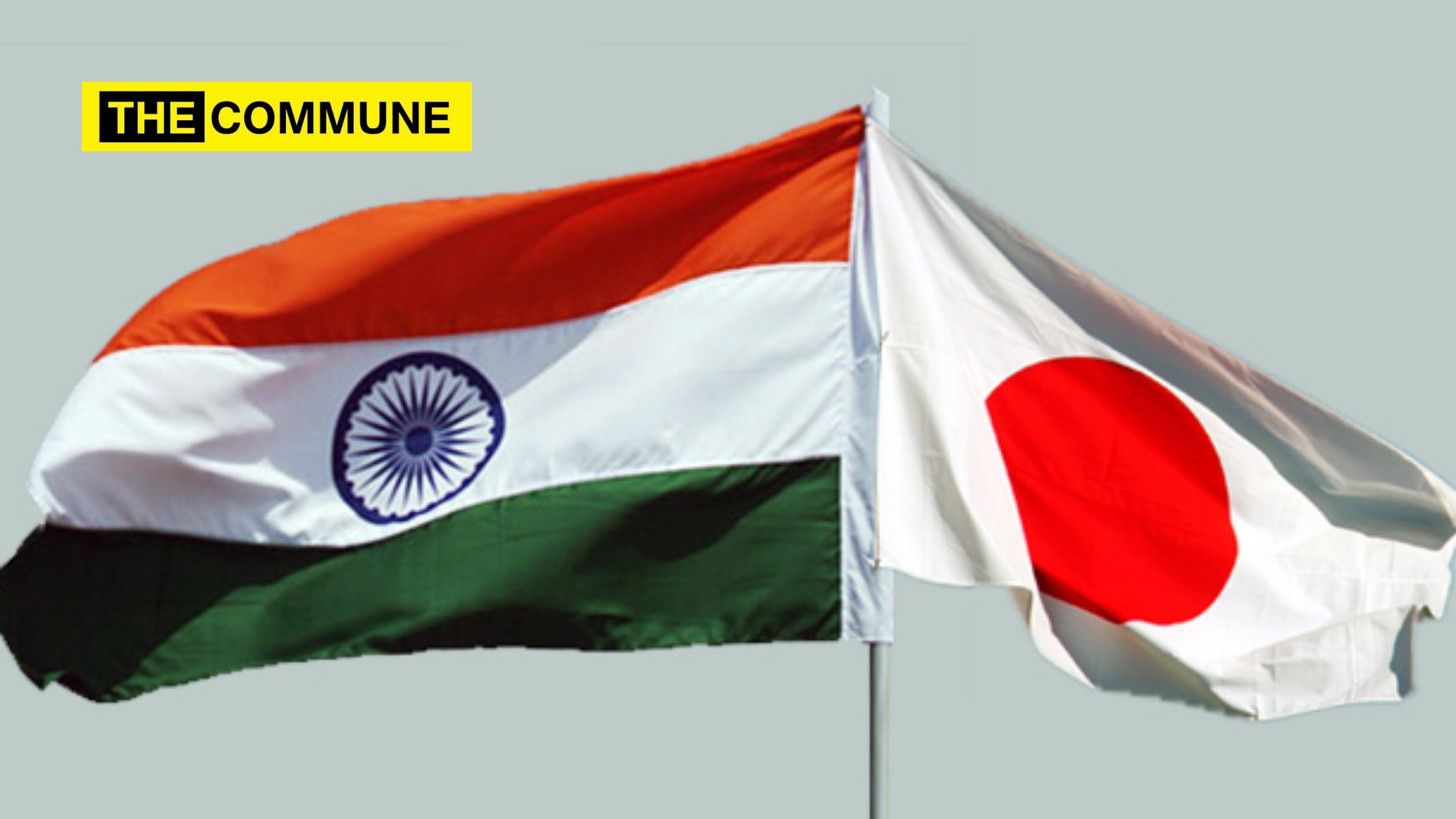
Prime Minister Narendra Modi, in his meeting with his Japanese counterpart Shigeru Ishiba this week, will review the Special Strategic and Global Partnership between India and Japan, including defence and security, trade and economy, technology and innovation, as well as discuss issues of regional and global importance.
The visit, which will reaffirm the longstanding special bond of friendship between the two countries, also comes close on the heels of the Africa summit hosted by Japan last week. With India already playing a key role as a leader of the developing countries, foreign affairs experts see the possibility of the India–Japan partnership, positioning itself as a force for inclusive growth across the developing region and the Global South.
Japan has already made investments in some infrastructure projects in African countries. “Through such projects, Japan aims to leverage the Indian Ocean as a highway of commerce connecting Africa with India and Japan. The long-term vision is not just about ports and railways but also about embedding Africa into critical mineral supply chains. A ‘China-plus-one’ strategy is emerging, where Africa provides raw materials, initial processing is undertaken locally to add value, further processing occurs in India, and Japanese industries consume the refined products,” according to an article by retired IFS officer Gurjit Singh published in Outlook.
The Japan International Cooperation Agency (JICA) has just announced an investment of $40 million in India’s Aavishkaar Capital’s Global Supply Chain Support Fund to promote sustainable small and medium-sized enterprises (SMEs) in Asia and Africa. This partnership aims to accelerate the growth of impact-driven companies within agriculture, food processing, and manufacturing supply chains, contributing to the economic development of emerging markets and strengthening Indo-Japanese cooperation. This could serve as a pointer for further investments involving the private sector to develop the Global South.
PM Modi will embark on his journey on 29 August, which also marks his first annual summit with PM Ishiba. Ever since PM Modi assumed office in 2014, it will be his eighth visit to the country, which highlights the deep ties between the two nations. “The visit will reaffirm the longstanding special bond of friendship between the two countries,” the statement added. In the second leg of his visit, at the invitation of China’s President, Xi Jinping, Prime Minister Modi will travel to China from 31 August to 1 September to attend the Shanghai Cooperation Organisation (SCO) Summit in Tianjin. On the sidelines of the summit, the Prime Minister is expected to hold bilateral meetings with several leaders attending the Summit.
– IANS
Subscribe to our channels on Telegram, WhatsApp, and Instagram and get the best stories of the day delivered to you personally.
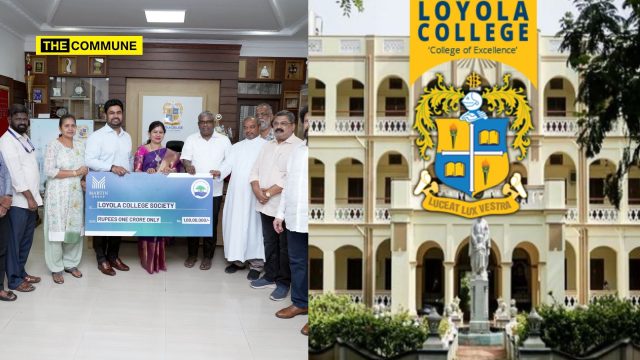
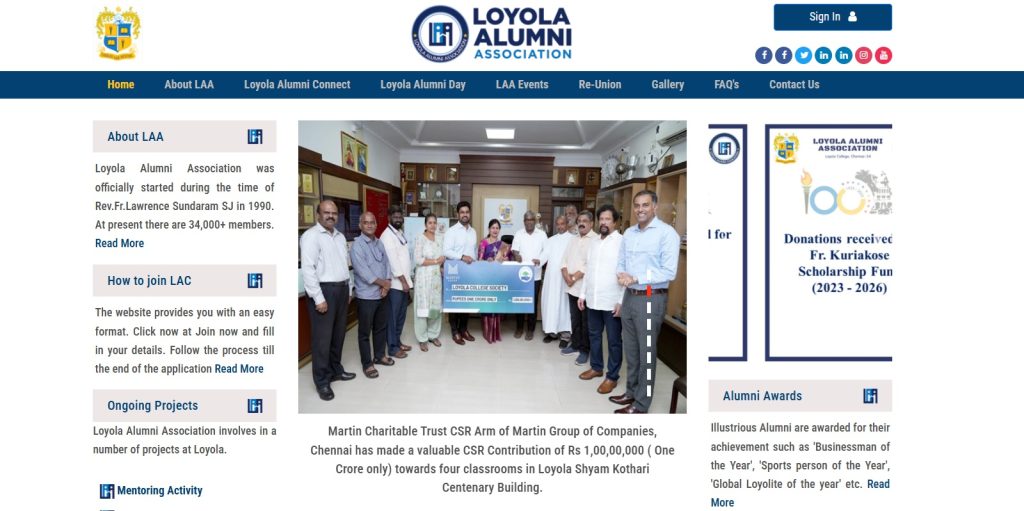
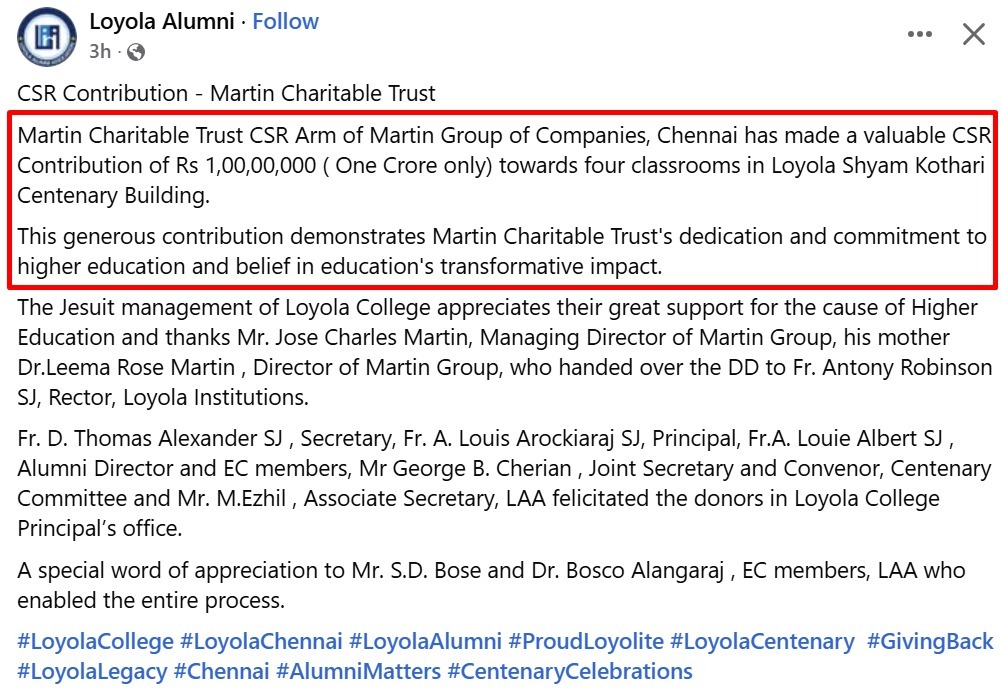
The Martin Charitable Trust, the CSR arm of the Martin Group of Companies, recently donated ₹1 crore to Loyola College, Chennai. The funds are being used for the construction of four modern classrooms in the Loyola Shyam Kothari Centenary Building.
The donation was handed over by Jose Charles Martin, Managing Director of the Martin Group, and his mother, Dr. Leema Rose Martin, Director of the company, to Rev. Fr. Antony Robinson SJ, Rector of Loyola Institutions. The college management publicly expressed gratitude, calling the gesture a demonstration of the group’s commitment to higher education.
Senior Jesuit administrators, including Secretary Rev. Fr. Thomas Alexander SJ, Principal Rev. Fr. A. Louis Arockiaraj SJ, Alumni Director Rev. Fr. A. Louie Albert SJ, and Loyola Alumni Association office-bearers, participated in the event and felicitated the donors.
The news was also shared by Jose Charles Martin, the eldest son of Lotery kingpin Santiago Martin on his X handle.
Investing in education, investing in the future! As part of its Education CSR commitment, Martin Charitable Trust has proudly contributed ₹1 Crore to Loyola College for the creation of 4 fully equipped modern classrooms in the prestigious Shyam Kothari Centenary Building (100th… pic.twitter.com/p09vPv9rbC
Santiago Martin, a Coimbatore-based businessman widely known as the ‘lottery king’, is under intense scrutiny by the Enforcement Directorate (ED) for his alleged involvement in large-scale illegal activities within the lottery industry. According to officials, Martin’s lottery operations generate an staggering annual turnover of approximately ₹15,000 crore.
Case Against Lottery King Santiago Martin
According to the ED, Martin’s lottery operations generate an annual turnover of more than ₹15,000 crore. The investigation, which began in 2014, is based on multiple FIRs. The Central Bureau of Investigation registered the first FIR in 2014, followed by two by the Kolkata Police in 2022, and one by the Meghalaya government in 2024 that alleged losses of ₹1,500 crore from illegal lottery sales.
So far, the agency has attached assets worth over ₹1,000 crore, including properties valued at ₹622 crore by its Kochi zonal unit and ₹409 crore by the Kolkata unit. Recent searches at Martin’s premises led to the recovery of ₹12 crore in cash and fixed deposits worth ₹6.4 crore, along with evidence of unaccounted properties across Coimbatore, Chennai, Mumbai, Dubai, and London.
The ED has alleged that Martin created over 350 companies and special purpose vehicles to acquire properties using proceeds of crime. Prize-winning unsold lottery tickets were reportedly used in land transactions, with relatives and associates named as prize claimants despite the tickets never being sold to the public.
The Madras High Court has allowed the Enforcement Directorate (ED) to resume and continue its PMLA money laundering case against Santiago Martin, his wife, and associates—nullifying a lower court’s closure of the case. The Court reaffirmed that money laundering charges under PMLA are independent offences, and closing the root/predicate case without proper scrutiny is a miscarriage of justice.
Political Funding Trail
The probe has also revealed that Martin’s company, Future Gaming & Hotel Services Pvt. Ltd., was a major donor through electoral bonds. Between 2019 and 2024, it contributed ₹1,368 crore to various political parties. The Trinamool Congress (TMC) reportedly received ₹542 crore, while the DMK received ₹503 crore of its total ₹632 crore from the company. Other recipients included the BJP, YSRCP, and Congress.
Fresh Allegations in Meghalaya
The Director of Meghalaya State Lottery, Mary Sonty Marak, lodged a complaint in 2024 alleging that Martin and his associate Subbayan Nagarajan intimidated distributors and obstructed the official lottery system, causing losses of ₹1,500 crore to the state.
In a series of hearings on 25 August 2025, the Supreme Court of India delivered two seemingly divergent opinions on freedom of speech and expression, drawing attention to what critics are calling “judicial double standards” in its approach to high-profile cases.
Case 1 – SC Stays Action Against Psephologist Deleted Post
In the first case, a bench led by Chief Justice B.R. Gavai and Justice N.V. Anjaria stayed proceedings against psephologist and Lokniti-CSDS co-director Sanjay Kumar, who was facing multiple FIRs for a now-deleted tweet claiming a sharp decline in voter numbers during the Maharashtra assembly elections. Kumar had apologised, calling it an unintentional error caused by a data misreading. The court issued notice on his plea to quash the complaints.
Case 2 – SC Asks Govt To Form Guidelines To Regulate Social Media
In another case hearing, a different bench comprising Justices Surya Kant and Joymalya Bagchi took a starkly different stance. Hearing a case concerning comedians and influencers including Samay Raina over jokes deemed offensive to persons with disabilities, the court urged the Union government to develop strict guidelines to regulate social media content. It emphasized that commercial free speech must not “hurt the sentiments” of vulnerable groups, including women, children, seniors, and minorities.
The court observed that influencers who monetize their speech must be held accountable for content that threatens the dignity of communities. It directed the Centre to consult media bodies and propose regulations that balance free expression with social responsibility.
The comedians involved in the second case have since apologized and removed contentious content. The matter will be heard again in November 2025.
Double Standards?
Observers and critics have questioned the apparent inconsistency. In Kumar’s case, the court provided relief by staying FIRs around what was publicly framed as election-related misinformation. In the second, it pushed for stricter content regulation, warning that “insensitive” speech could undermine constitutional values.
Some critics have accused the court of judicial overreach, arguing that content regulation falls within the legislative domain.
Others, however, support the court’s attempt to address hate speech without stifling dissent.
Same day, same Court – Two completely opposite stands!
👉 Case 1: Milords stay action against CSDS’s Sanjay Kumar, whose erroneous post gave cover fire to @RahulGandhi’s Vote Chori toolkit. A post that had the potential to create nationwide chaos, brushed aside as a “mistake.”… pic.twitter.com/MctEZx5iz9
Like the classic “toolkit” playbook that gets activated whenever there is an opportunity to malign Hindu institutions, the so-called Dharmasthala “mass burial” case became the latest target. A flood of unverified claims and sensationalist reports were churned out across mainstream outlets and YouTube channels, each trying to outpace the other in “breaking news.” In the end, most peddled outright falsehoods without the slightest effort at verification what was nothing but a calculated smear campaign against a respected Hindu religious institution.
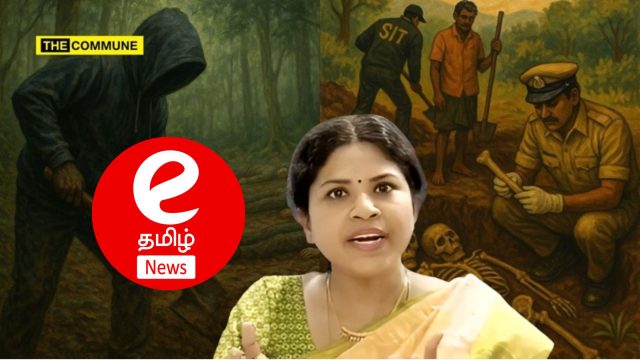
Among the worst offenders were channels notorious for anti-Hindu and anti-BJP propaganda. One prime example is ETamil News, where anchor Abdul Hakkim interviewed Dravidianist sympathiser and professor Manjula. The entire discussion was a concoction of fake claims, emotional theatrics, and Hinduphobic rhetoric designed to push a Dravidianist agenda.
Right from the beginning of the interview in the video published on 6 August 2025, when asked about the “current status” of the case, Manjula fabricated a tale, alleging that 11 sites had been dug up and that over a hundred skeletons had been unearthed. She claimed she “could not bear it,” deliberately setting an emotional tone before launching into direct attacks on dharmic saints and Hindu institutions. Her words were carefully chosen to inflame suspicion and disgust, such as, “Here, women were so casually treated as sexual commodities. After fulfilling their desires, to ensure no one would know, they disfigured their faces and poured acid on them. How can they be so cruel, like such monsters? I don’t know. But what are these people called? They are spiritual people, those who are in a temple. Would people in a temple commit such wrongs? Some even say, ‘Would Hindus go and do such wrong?’ Then who did this? Were the ones who did this foreigners or people who don’t follow the Hindu religion? At least tell us that openly. After all this injustice, after today retrieving more than a hundred buried skeletons, can you confidently say that those who did this are not Hindus? The perpetrators were also Hindus, and the women who were murdered were also Hindu women.”
She even attempted to drag Dharmasthala’s present head, Veerendra Heggade, into the mud, linking him to the BJP and alleging that this “connection” would ensure no justice is delivered. Throughout the interview, the professor avoided facts and instead indulged in broad-spectrum attacks on Hindu practices, calling temples unsafe, accusing dharmic leaders of predatory crimes, and weaving conspiracy theories about cover-ups by the forest department and police.
She said, “We often say, ‘How could a fair-skinned person will lie?’ In the same way, we’ve been conditioned to believe that those who are in a temple, those who manage or protect a temple they couldn’t possibly be bad people. For women, there are restrictions on going anywhere, but if they say they’re going to a temple, they’ll be sent. So, this level of injustice has happened in a place that is considered holy, divine, and trusted. What these people did was fulfill their sexual desires, and then, fearing that the victims might reveal what happened, they murdered them. And where would they go to bury them? They told the sanitation worker, ‘Let’s just illegally bury this, since there’s no one to question us anyway.’ When they said this, they created fake stories, saying, ‘These women came to the Netravati river to bathe and died,’ or ‘They died in some accident.’ They even told them that burying unclaimed bodies is a righteous act, a good deed. By brainwashing them with such ideas, they took the bodies and illegally buried them in a forest area. Then, what were the forest officials doing? What are the forest department people doing? It’s baffling.”
Manjula’s narrative crescendoed with wild allegations that villagers were aware of murders, avoided the temple, and were silenced under threat. She claimed missing reports were brushed aside and that families were intimidated into fleeing town. With no evidence, she speculated that “powerful people” bribed their way into ensuring the truth was buried forever.
She alleged, “It’s become clear that the police did not do their job, they did not fulfill their duty. How do we understand the fact that there were no deaths or fatalities in that specific period, from this year to that year? And they’re saying that the girls from those homes are missing, aren’t they? The child who went to school is missing, the child studying medicine is missing. Think about how many dreams those parents must have had. Imagine how much that child would have regretted not having experienced anything, not having seen anything good or bad in life, thinking, ‘I haven’t experienced anything yet.’ Those girls have gone missing, and their whereabouts are unknown. Even when a missing person’s report was filed, if someone said, ‘Who may she ran away with,’ how devastating would that be for those parents? How much mental anguish would they have endured? So I understand that no one was even prepared to take those complaints.”
She added, “That’s why they haven’t even registered who died after that or the names of the deceased. I even have a suspicion that perhaps all of those people were forced to vacate the town. It wouldn’t be surprising if they were threatened with, ‘Look, if you keep coming this way, we’ll wipe out your entire family. Either you stay quietly with your mouth shut, or you get out of this town.’ Perhaps something like that happened, and they sent everyone away. I don’t know, because when they talk about this issue, they say that after the sanitation worker went into hiding, the number of missing women in that town dropped to zero. What could be the reason for that? The people of the town came to a realization. They decided, ‘When we go to schools or colleges associated with this temple or under its authority, these kinds of sexual assaults and murders happen. So we’ve figured it out, and from now on, we shouldn’t go there.’ That’s one report that came out. So maybe the people thought, ‘The problem is us being in this area. We can just leave from here and at least save the family we have.’ I don’t know if that’s what happened. So, the blatant truth that is clear to us is this: because a very influential person took care of everyone they needed to bribed them this truth never came to light, not even to the bare minimum of our attention.”
But reality demolished this carefully manufactured script. The SIT investigation exposed the fraud:
No human remains were found in the alleged “mass grave” sites.
The single skull showcased as “proof” was decades old and identified as male.
The 100+ bones discovered in one of the sites belonged to a male.
The so-called “masked man,” Chinnayya, confessed he was trained by a Chennai-based gang to fabricate the story.
Key “witnesses,” including Sujatha Bhat (who posed as a victim’s mother), publicly admitted on record that the entire tale was fabricated.
In short, what was paraded as a horrific temple scandal was nothing more than a propaganda operation fake evidence, staged testimonies, and deliberate emotional manipulation all aimed at discrediting a Hindu institution.
Subscribe to our channels on Telegram, WhatsApp, and Instagram and get the best stories of the day delivered to you personally.