Home Blog Page 375

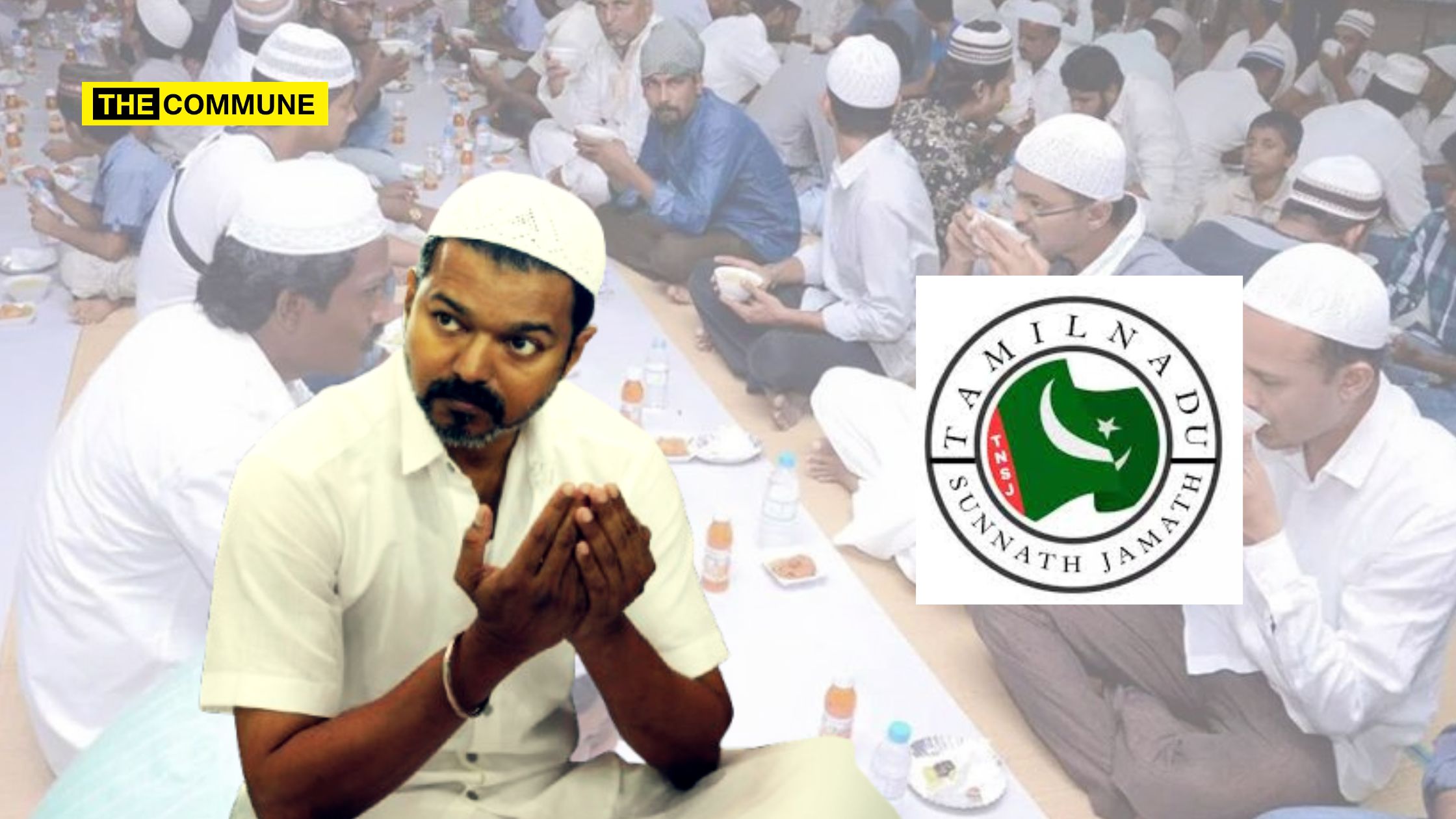
TN Sunnat Jamaat Files Complaint Against Part-Time Politician Vijay Who Organized Iftar And Went Out Of The Way Wearing Skull Cap To Appease Muslims

The Tamil Nadu Sunnat Jamaat, an Islamic organization, has filed a complaint against Tamilaga Vettri Kazhagam president and actor Vijay at the Chennai Police Commissioner’s office. The complaint was signed by the organization’s treasurer, Syed Ghous.

According to the complaint, on 7 March 2025, Vijay’s Tamilaga Vettri Kazhagam organized an Iftar event, but it was allegedly conducted in violation of the sanctity of a traditional Iftar gathering. The organization stated that Iftar is a solemn and dignified religious occasion, not comparable to public conventions or political meetings.

The complaint alleges that “drunkards and rowdies” who had no connection to the event were present, while devout fasting Muslims were not allowed to attend. Furthermore, it stated that bouncers at the venue attacked and forcibly removed fasting attendees, beating and kicking them out.

Additionally, the organization criticized Vijay for arriving one and a half hours before Iftar, stating that it was inappropriate and against the norms of a traditional Iftar gathering. The organization has urged authorities to take legal action against Vijay for allegedly conducting the event in a way that disrespected religious practices.

(With inputs from Daily Thanthi)

Subscribe to our channels on Telegram, WhatsApp, and Instagram and get the best stories of the day delivered to you personally.

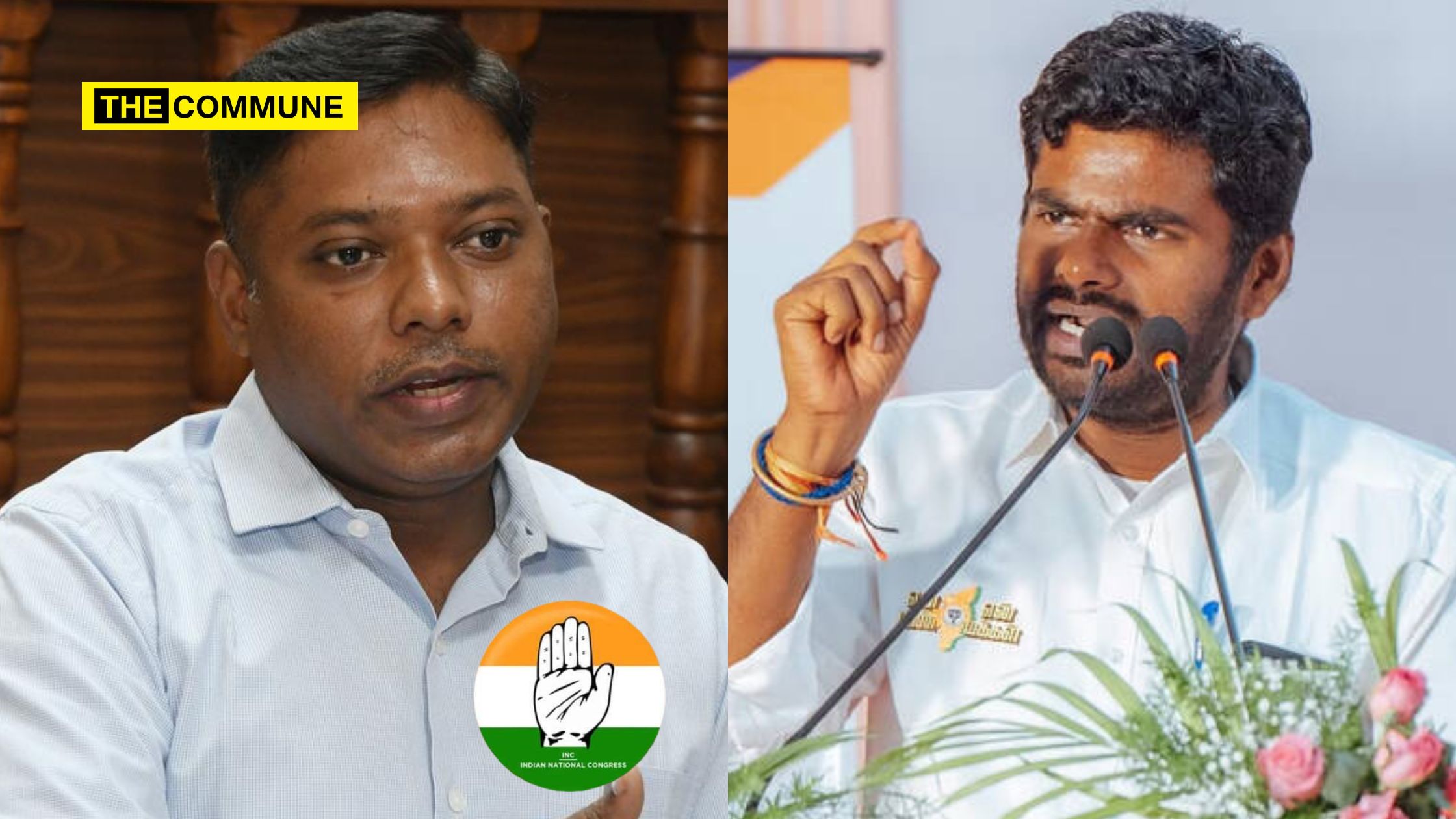
“Fake News Spread Like A DMK Henchman”, BJP TN Chief Annamalai Calls Out Congress MP Sasikanth’s Misleading Claims On TN’s UPSC Success Rate

Tamil Nadu BJP President K. Annamalai has strongly countered Congress Tiruvallur MP Sasikanth Senthil, who alleged that the decline in the percentage of Tamil Nadu candidates clearing the UPSC Civil Services Examination (CSE) was due to the central government’s policies. Senthil, a former IAS officer, also accused Annamalai of attributing the issue to Tamil students not knowing Hindi.

In his sharp rebuttal, Annamalai dismissed these claims, calling Senthil’s remarks “fake news spread like a DMK henchman for political gain.” He asserted that the real reason behind the declining success rate of Tamil Nadu candidates in UPSC exams is the DMK-Congress alliance’s failure in strengthening government schools, while they prioritized private institutions run by their leaders.

To further disprove Senthil’s allegations, Annamalai shared a video of his speech, clarifying that he never claimed Tamil students’ failure was due to a lack of Hindi proficiency. Instead, he emphasized that the state’s education policies under the ruling alliance were to blame.

Posting his formal response on his official X account, Annamalai stated, “Starting with the Tamil Nadu Chief Minister, the DMK, and all I.N.D.I. Alliance MPs, have made it a habit to lie. Mr. @s_kanth has falsely claimed that I said Tamil students failed the UPSC exams because they did not know Hindi. It is unfortunate that someone who held a high position in the government has stooped to the point of spreading fake news, like a DMK henchman, for sake of politics. I have attached a video of what I spoke about. It is true that the percentage of rural students from Tamil Nadu passing the UPSC exam has declined. However, the reason for this is that the DMK-Congress alliance has prioritized private schools they run while rendering government schools ineffective—not the central government. Does Mr. @s_kanth, who acknowledges that rural students have failed, also admit that the Tamil Nadu government’s curriculum is inferior to that of private schools? We hope he will, at the very least, support providing quality education to Tamil Nadu’s government school students through the National Education Policy.”

In the video attached Annamalai explained, “They look at only GER. GER is the only data the Tamil Nadu government brings to say, ‘Look at the Gross Enrolment Ratio we have crossed 50%’, I’m sure you know it has also dropped to 49%. Tamil Nadu’s Gross Enrolment Ratio is not 51% but dropping to 49%. If we look out all the indicators… In civil services, how many of us passed Civil Services? last year Tamil Nadu was 45 ten years back we were at 120. How many of us get into medical colleges, IIT? How many of us are getting into it? Tamil Nadu has become one of the state which has got least number of entrance into all these higher education institution. Why is not Tamil Nadu’s education minister looking at that? Education is not about number schools or number of colleges also about quality. Tamil Nadu scores because access to education because of more schools not by them but Kamaraj built 18,000 schools. Because of the access to education is good we are topping many parameters and when it comes to quality why Tamil Nadu is in the bottom of all tables?” 

Misleading Claims By Congress MP Sasikanth Senthil

This rebuttal from Annamalai is in response to Congress Tiruvallur MP Sasikanth Senthil, who, through his official account, falsely claimed that Annamalai attributed the decline in Tamil Nadu students’ UPSC success rate to their lack of Hindi proficiency.

In a video statement, Senthil acknowledged the drop in the number of successful candidates from Tamil Nadu, providing statistics to illustrate the trend. He stated that in 2013-14, out of 1,126 candidates who cleared the UPSC exam nationwide, 119 were from Tamil Nadu, making up 10.6%. However, by 2020, only 45 Tamil Nadu candidates qualified out of 781 nationwide, reducing the share to 5%. In the latest examination, out of 1,016 successful candidates across India, only 45 were from Tamil Nadu, further declining to 4.4%.

Despite these figures, Senthil conveniently blamed the central government for changes in the UPSC exam pattern, disregarding the fact that UPSC, as a constitutional body, independently determines its examination structure. He further propagated the false claim indirectly stating that these changes were introduced by the BJP after 2014, pushing a misleading narrative that held the central government responsible for the declining success rate of Tamil Nadu students.

However, the real fact is that the Civil Services Aptitude Test (CSAT), which replaced the Optional paper in the Preliminary Exam, was introduced in 2011 under the Congress-led government—not after 2014. The CSAT brought a shift in focus toward reasoning and problem-solving, and it was implemented during the UPA era, not under the BJP government.

In his video, former IAS officer and current Congress MP Sasikanth Senthil conveniently pushed the DMK’s agenda in Tamil Nadu, adopting a tone of sorrow while blaming competitive exams such as NEET, CUET, and others. He misrepresented these exams as being designed for the wealthy, completely ignoring their actual intent of ensuring a transparent and merit-based selection process.

Congress Tiruvallur MP Sasikanth Senthil via his official X account stated that, “Tamil Nadu BJP state president Mr. @annamalai_k has said that the reason why Tamil students do not succeed in the UPSC exam is because they do not know Hindi. In fact, the BJP came to power and changed the curriculum and education system, reducing the pass rate from 10.6 percent before 2014 to 4.4 percent today, which has made it impossible for rural students to even think about the UPSC exam.”

Subscribe to our channels on TelegramWhatsApp, and Instagram and get the best stories of the day delivered to you personally.


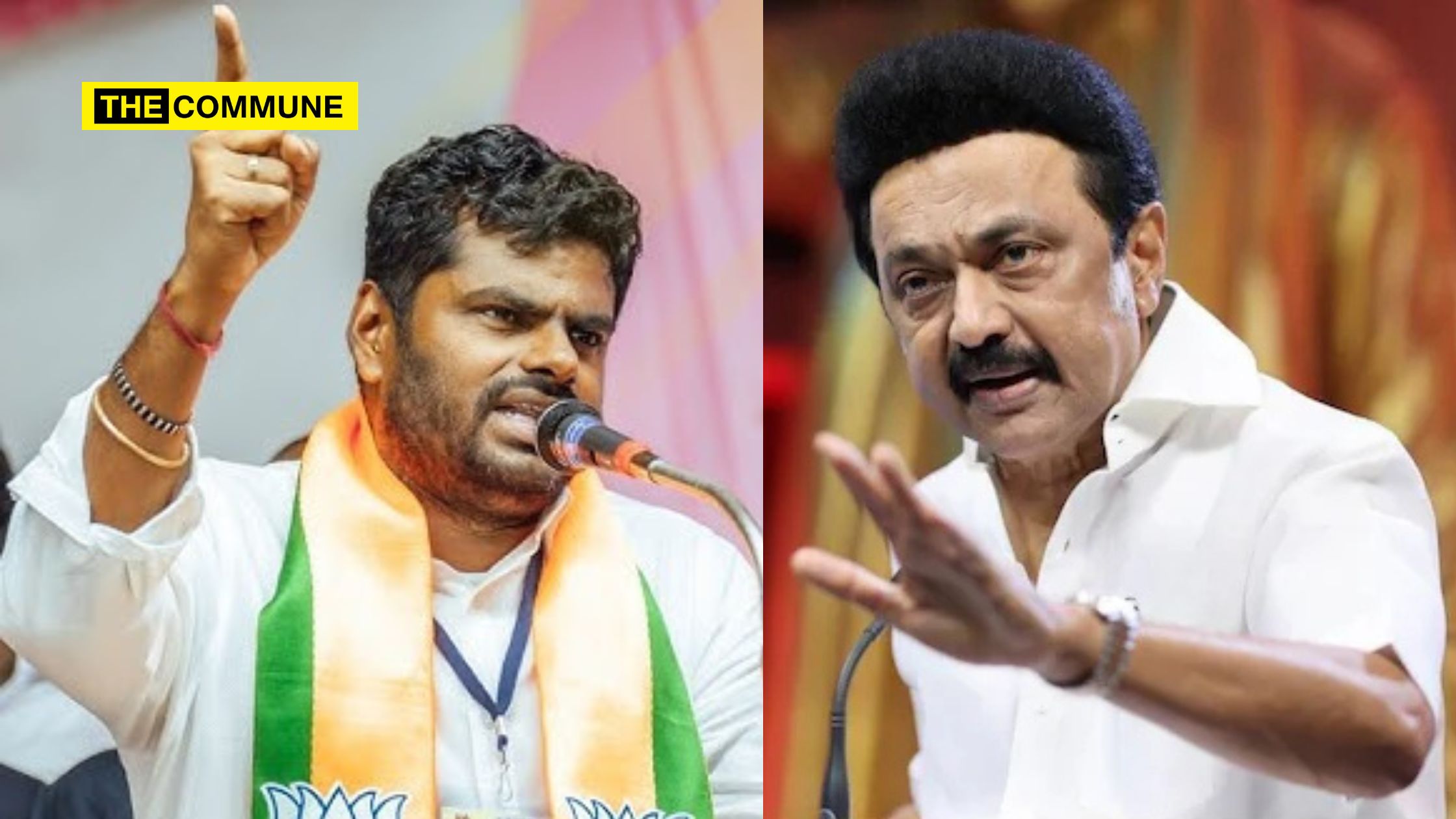
“Who Is That Super Chief Minister?” Asks BJP TN Chief Annamalai To MK Stalin Over NEP Row

annamalai stalin SIR voting rights

BJP Tamil Nadu State President K Annamalai launched a scathing attack on Chief Minister MK Stalin, posing three direct questions in response to the ongoing political tussle over the National Education Policy (NEP) and the three-language formula. Taking to social media platform X, Annamalai accused the ruling DMK of misleading the people and playing politics with students’ education.

In his post, Annamalai wrote, “Three questions for the Tamil Nadu Chief Minister who is in a panic.

First question: What did you find wrong in the statement of the Union Education Minister Mr.@dpradhanbjp that DMK members are dishonest and uncivilized? He has spoken the truth.

Second question: You say that we only act according to the people’s opinions, who are those people? Is it your son, daughter, son-in-law, your party members and their relatives who run private CBSE and matriculation schools?

Third question: Who is that super Chief Minister?

The people of Tamil Nadu know very well who is playing politics in the education of poor and simple students. Your paint has faded, Mr.@mkstalin. You cannot deceive the people of Tamil Nadu anymore.”

Stormy Start to Parliament Session Over Three-Language Policy

Annamalai’s remarks come in the wake of a heated debate in Parliament, where the DMK and the Union government clashed over the Centre’s education policies. The second leg of the Budget Session began on a stormy note, with DMK MPs vociferously opposing the alleged imposition of the three-language formula in Tamil Nadu and other southern states.

The protests escalated further when Union Education Minister Dharmendra Pradhan accused the Stalin-led government of deliberately obstructing the implementation of central education policies, thereby jeopardizing the future of Tamil Nadu’s students. “They are doing politics over students’ future and misleading the people for their narrow political gains,” Pradhan said. He also described the DMK’s stance as “undemocratic and uncivilized.”

Pradhan stated that Tamil Nadu had initially agreed to implement certain aspects of the NEP and had signed an MoU on 15 March 2025. However,he alleged that a “Super Chief Minister” intervened, leading to a sudden reversal of the decision. The remark has fueled speculation, with Annamalai demanding Stalin to reveal the identity of the person wielding such influence over state policy.

The Union Minister also pointed out that the PM-SHRI scheme, which aims to upgrade schools across India, is being implemented in several non-BJP-ruled states without opposition. Addressing DMK MP Kanimozhi, he urged her to explain to her party members the details of what transpired over the issue.

Subscribe to our channels on Telegram, WhatsApp, and Instagram and get the best stories of the day delivered to you personally.

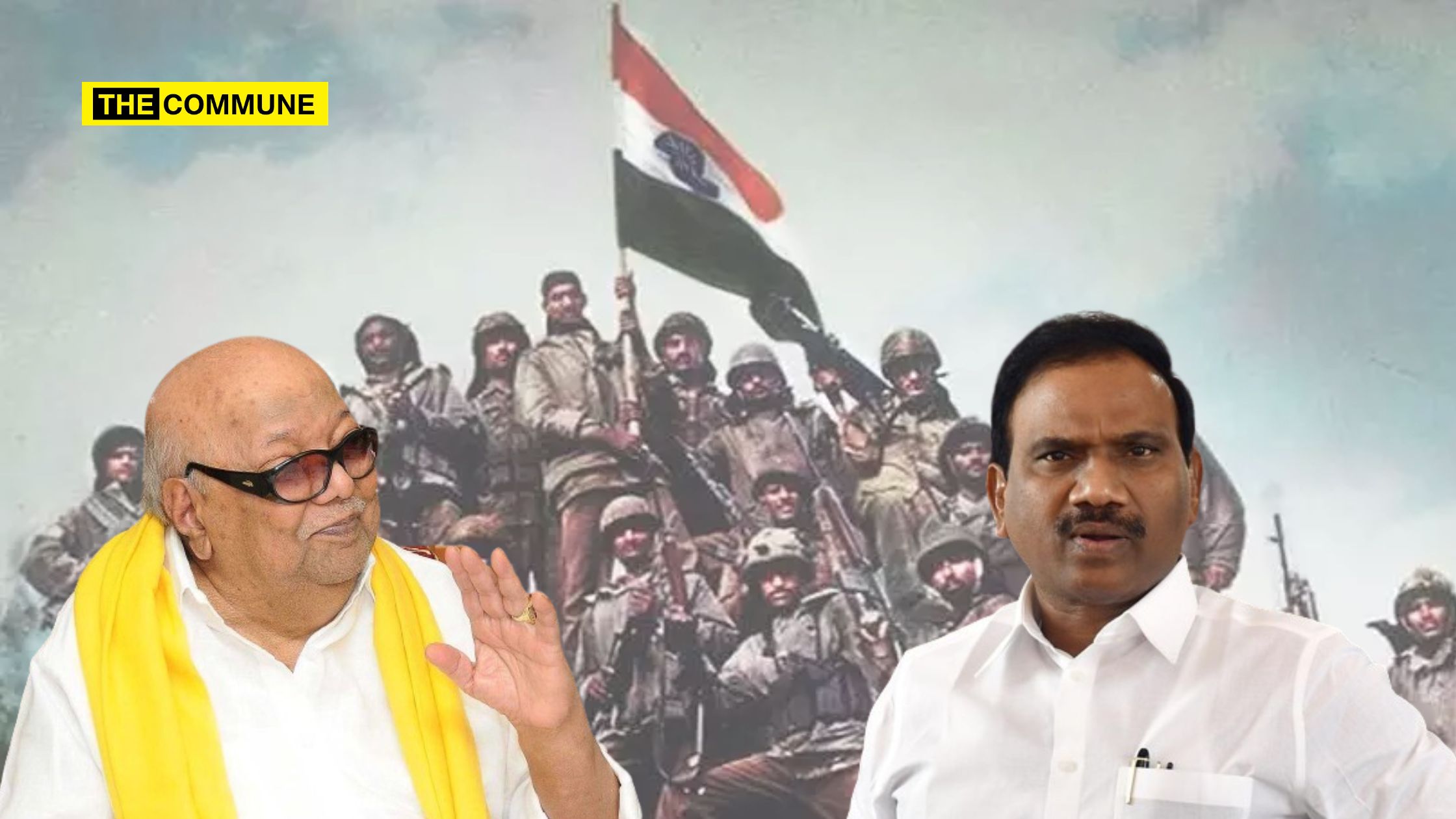
“What’s The Connection Between Us And Kargil War?” DMK MP Raja Claims Karunanidhi Donated ₹100 Cr Towards Kargil Relief Fund, Here’s The Truth

a raja dmk mp kargil

DMK MP A Raja who is known to make caustic and derogatory remarks all the time has done it once again. Under the guise of praising the
“humane” nature of Dravidianism, he made over the top claims while slyly making separatist remarks as well.

Speaking at the Chief Minister’s birthday celebration public meeting held in Taramani, Chennai, on 8 March 2025, A Raja made misleading and factually incorrect statements about Tamil Nadu’s contributions to the Kargil War.

He said, “What is the connection between us and Kargil war? Is the one born in Kargil, a Tamilian? Did the person who studied in Kargil study Thirukkural? What is his connection with the Tamil we love? Has he read the literature of Sangam era? The Tamil people in Eelam know us, I raise my voice for Eelam. I speak for Eelam. I will do anything for Eelam. That means it is blood relation, umbilical cord relation. But who is the person living in Kashmir? By religion, he is Muslim, by country he’s a Kashmiri. The language he speaks has nothing to do with me. In fact, Kannada too; They said, “O Mother Tamil, you have risen from your ashes.” Telugu is my language, a “pangali” (relative) language. Malayalam is also my language. The language of the Malayalam is not even that language. It is not even a partner. He is an opposite. He is somewhere else. But the person who died there does not matter what language he speaks, nor does it matter what religion he belongs to. The person who dies is a human being, the person who is affected is a human being, the one who saves humanity is Dravidam – so Kalaignar sent ₹100 crores to them, to Vajpayee. Which other Chief Minister gave? He gave ₹100 crore, we gave ₹6 crores in 1971, ₹100 crores in 1999, just for the sake that this country should be prosperous.”

Raja claims Karunanidhi donated 100 crores. While there are no official records on the amount donated towards the Kargil Fund, Chief Minister MK Stalin himself has stated, “During the Indo-Pak war in 1971, former chief minister M Karunanidhi donated ₹6 crore to the Indira Gandhi-led govt. Other states together donated ₹25 crore. During the Kargil war, we gave ₹50 crore, in three installments, to then Prime Minister (Atal Behari) Vajpayee.”

It is important to note that the then Chief Minister Karunanidhi did not donate the money from his personal funds. Tamil Nadu emerged as the largest contributor to the Kargil Relief Fund through public donations and fundraisers organized by its people.

While the people of Tamil Nadu have always shown immense patriotism and generosity in contributing to national causes, it is incorrect to attribute these contributions solely to the DMK, Dravidian ideology, or Karunanidhi personally. The credit belongs to the collective spirit of the state’s citizens.

However, during his speech, DMK MP A. Raja made divisive and problematic statements, questioning the connection between Tamils and
Kashmiris. He asked rhetorically whether those in Kargil had studied the Thirukkural and went so far as to claim that Kashmiri Muslims belonged to the “country of Kashmir”—a statement that echoes secessionist rhetoric.

Raja’s assertion that Sri Lankan Tamils are closer to Tamils in Tamil Nadu than Kashmiris further reveals a Dravidianist mindset that leans toward separatism. Such statements not only undermine national unity but also distort the inclusive and patriotic spirit of the people of Tamil Nadu, who have consistently stood by the nation in times of need.

Subscribe to our channels on Telegram, WhatsApp, and Instagram and get the best stories of the day delivered to you personally.

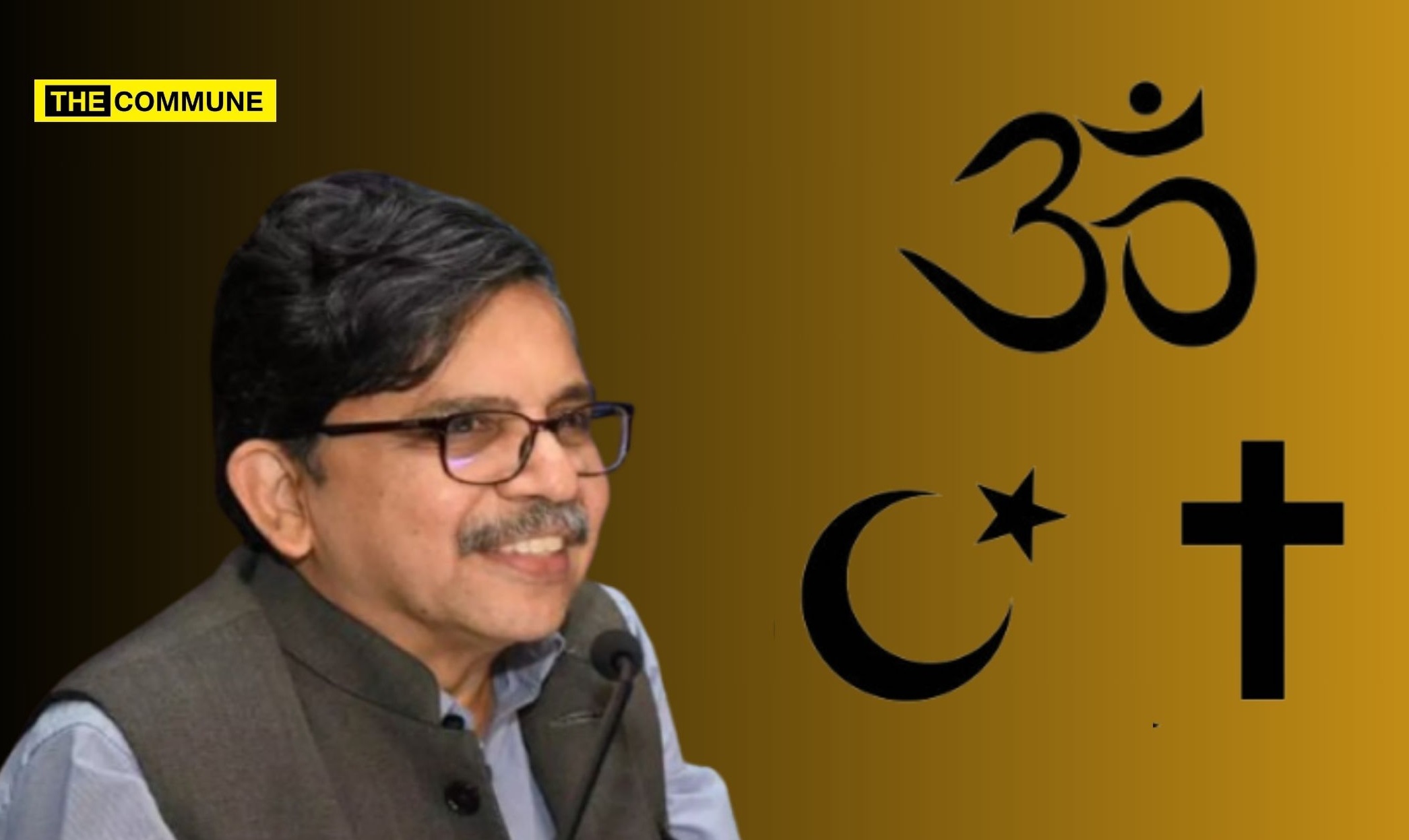
“Anti-Conversion Laws Are Anti-Choice, Personal Choice Made Public, Dalits Forced To Defend Personal Choices”, Says Retd Judge Muralidhar

Former Orissa High Court Chief Justice and Senior Advocate Dr. S. Muralidhar has strongly criticized anti-conversion laws in India, calling them “anti-choice” and arguing that they undermine individual freedoms. Speaking at a panel discussion organized by ADF India on 28 February 2025, he highlighted the fundamental flaws in such legislation, particularly their presumption that religious conversions occur under coercion.

“These anti-conversion laws are not so much a law against forced conversions, but are laws against the freedom of choice,” Muralidhar said. “There is a presumption in all these laws that if a person belonging or born into a certain religion decides to embrace another religion, then such a decision must be due to some kind of intimidation. This basic presumption explains why the law shifts the burden of proof onto the person who’s charged with converting another against the person’s will.”

Muralidhar pointed out that instead of requiring proof from the person who converted, the law places the burden on those accused of facilitating conversions. This, he argued, makes such laws an instrument to suppress free choice rather than a safeguard against forced conversions.

He also emphasized how these laws disproportionately impact marginalized communities, particularly Dalits, by imposing bureaucratic hurdles and public scrutiny. “Now, a Dalit seeking to embrace Buddhism will now have to explain to a district magistrate why they are making that choice,” he explained. “They’ll have to first of all announce to the whole world: ‘listen, I’m exercising my choice to embrace a particular religion.’ One can reasonably argue that after the Puttaswamy privacy judgment, this kind of a law should not withstand legal scrutiny because it straight away hits at the freedom of choice, freedom of privacy, choice of religion, of course, but what goes along with religion… the choice of dress, the choice of food, the choice of prayer, all of that is hit. So personal choice has become a public choice and is forced to become a public choice, and you’re supposed to defend yourself publicly for the personal choice that you’ve made. That is what I think is the most pernicious aspect of these conversion laws.”

Another significant concern raised by Muralidhar was the broad scope of who is allowed to file complaints under these laws. He noted that instead of only allowing the alleged victim of forced conversion to come forward, the laws enable third parties—including distant relatives and vigilante groups—to intervene.

“Who can complain about forced conversion is only a person who’s been a victim of a forced conversion. But the law allows anyone… any cousin, any relative… and thus vigilante groups are actually going around looking at notice boards and collector’s offices or registrar offices to find who’s put up a notice that they want to have an inter-faith marriage. In this case, they’ll also have ready information on who wants to convert and thus subject the person to public intimidation,” he said.

Muralidhar also questioned whether legal challenges alone could bring about real change, arguing that social transformation was necessary.

“That’s the question we have to ask ourselves. All these social practices that this country is host to seem to be impervious… to the constitutional values and provisions of the Constitution. The victory will come when we change, transform ourselves as a society and overcome our innate inherent prejudices and emancipate ourselves as true human beings,” he stated.

(With inputs from Bar and Bench)

Subscribe to our channels on Telegram, WhatsApp, and Instagram and get the best stories of the day delivered to you personally.

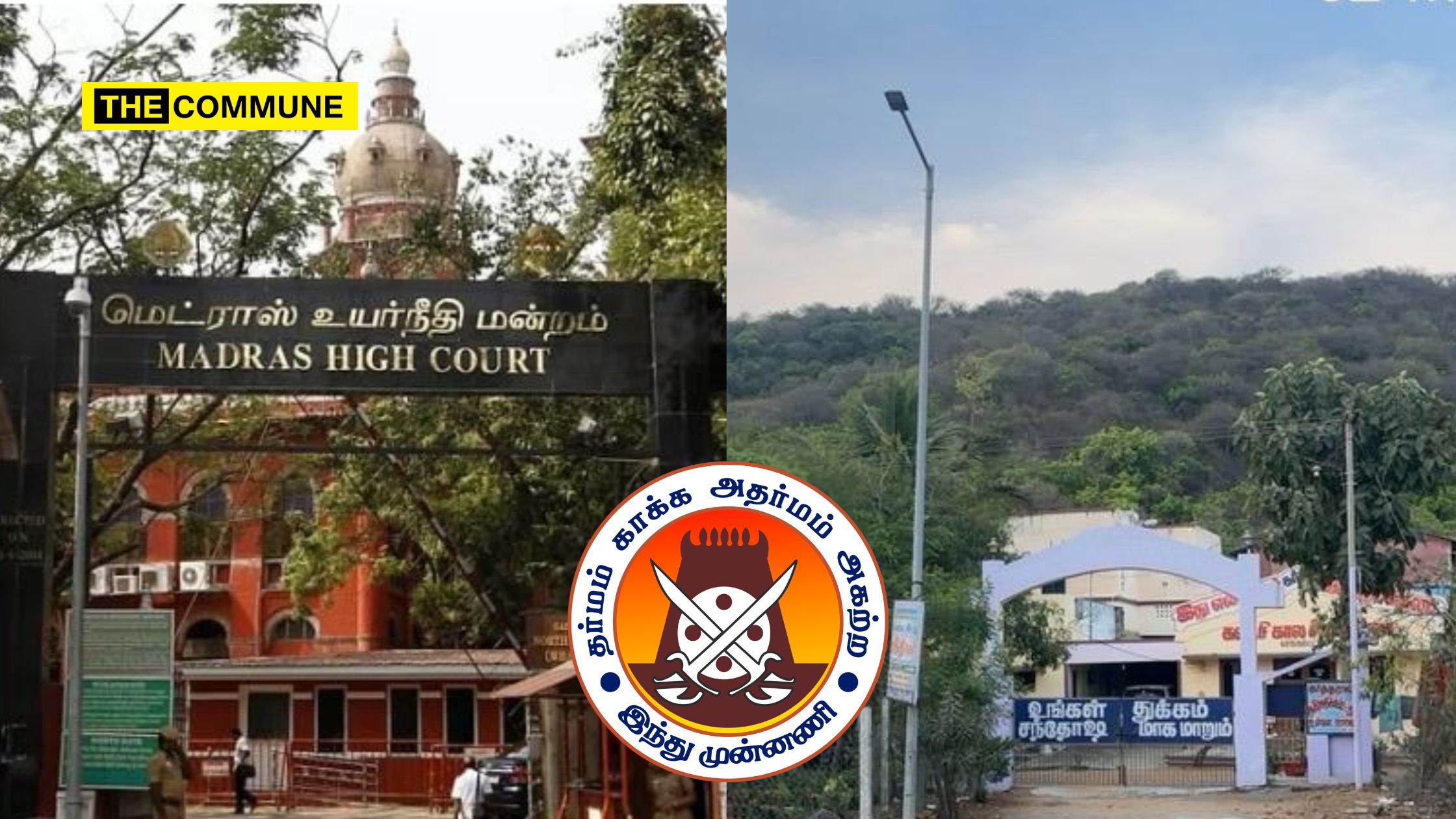
Madras High Court Orders Removal Of Pentecostal Christian Church Built Encroaching Devar Hill In Chengalpattu

The Madras High Court has directed the removal of a newly constructed, illegally encroached Pentecostal church on the Chengalpattu Bypass adjacent to the Chennai-Trichy National Highway in Chengalpattu district, following a petition filed by the Hindu Munnani.

The church was built on Devar Malai/Devar Hill, situated along the Chengalpattu Bypass Road on the Chennai-Trichy National Highway. This encroachment severely impacted the environment, resulting in the destruction of trees, medicinal plants, and local wildlife.

Raja, the district secretary of the Hindu Munnani and a social activist from Sethupakkam, filed a public interest litigation (PIL) after his earlier petition to the Chengalpattu Tehsildar and District Collector to remove the encroachment went unaddressed.

Following a thorough investigation, the Madras High Court has ordered the Revenue Department to conduct a complete survey of the encroachment on Devar Hill and ensure its removal within 12 weeks.

In a social media post, the Hindu Munnani shared the details of the case on its official X account, highlighting its successful efforts in thwarting the illegal encroachment.

Subscribe to our channels on TelegramWhatsApp, and Instagram and get the best stories of the day delivered to you personally.

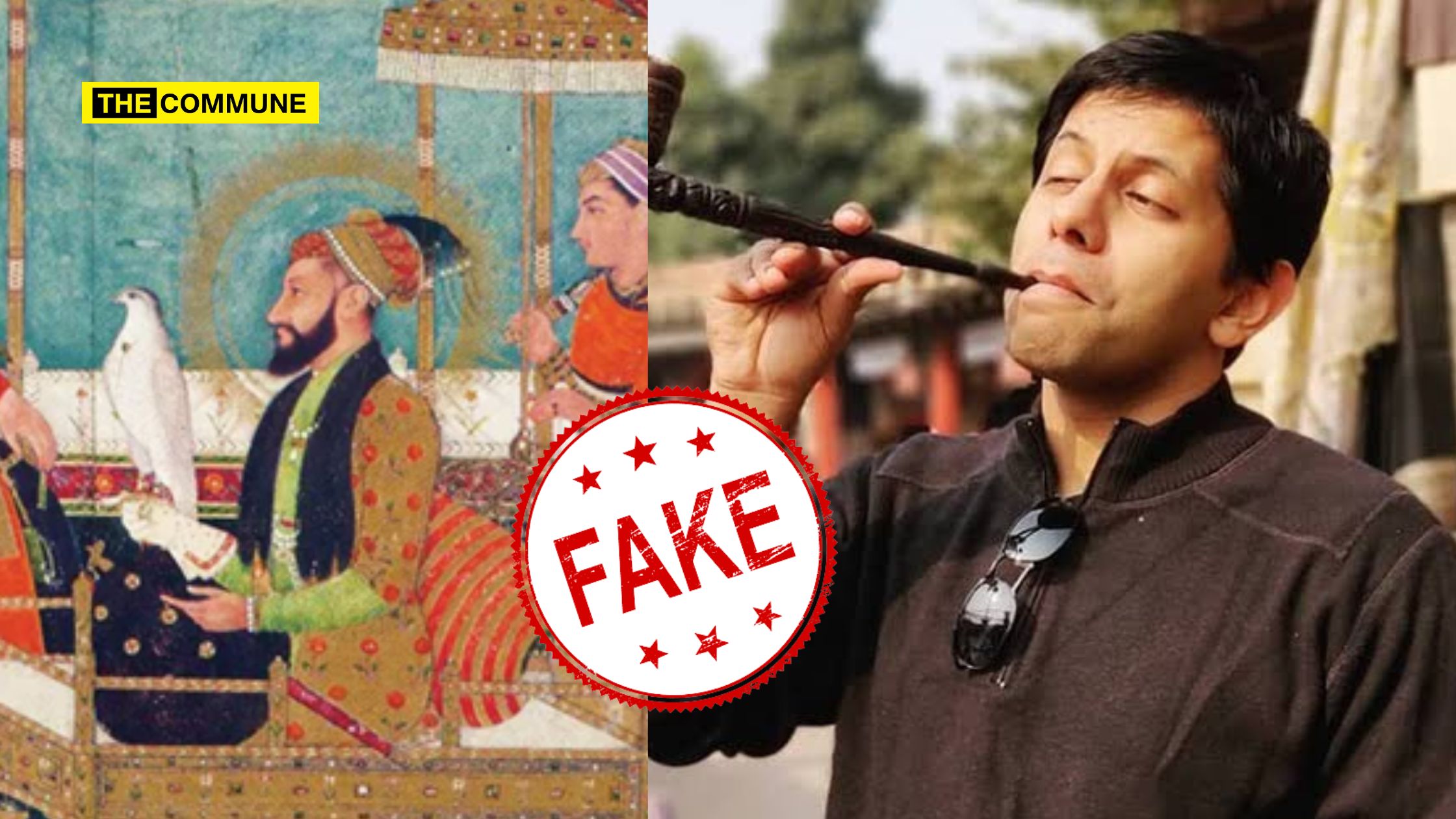
The Real Story of Aurangzeb’s Hindu Mansabdars: Compulsion, Not Strategy As Claimed By YouTuber Akash Banerjee

Fake news peddler and propagandist YouTuber Akash Banerjee is back with another misleading video, this time discussing the impact of the film Chhaava. He attempts to downplay Aurangzeb’s well-documented brutality and Hindu resistance against his tyrannical rule, accusing the film of oversimplifying history into a “good vs. evil” narrative. Banerjee further claims that Aurangzeb’s actions, often perceived as religiously motivated, were purely political and that Hindu and Muslim rulers alike engaged in similar tactics.

However, the real distortion occurs when Banerjee goes as far as portraying Aurangzeb as a secular leader, even hinting at him being Hindu-leaning!

Akash says, “It is also a fact that in the entire Mughal history, if there were more Hindu mansabdars in any ruler’s court, it was in Aurangzeb’s court that he had 33% of them. It was not a compulsion for him. But from the point of view of politics, this was a good strategy to keep Rajput’s support base intact.”

He cites these figures from Athar Ali’s book, The Mughal Nobility Under Aurangzeb, to support his argument, claiming that Aurangzeb had more Hindu mansabdars (officials) than any other Mughal ruler. According to Banerjee, Aurangzeb had 33% Hindu nobles in his court, which he suggests was not due to compulsion but rather a calculated political strategy to maintain Rajput loyalty.

The Reality: What Athar Ali’s Book Actually Says

While Banerjee cherry-picks figures to push his agenda, a closer look at the very same book reveals a different picture. Here’s the actual breakdown of Hindu representation in the Mughal nobility over time:

  • Akbar’s rule: 22.5%
  • Shah Jahan’s rule: 22.4%
  • Aurangzeb’s first phase (1658-1678): 21.6% (a decline!)
  • Aurangzeb’s second phase (1679-1707): 31.6%

At first glance, it might seem that Hindu representation increased under Aurangzeb in his later years. However, as Athar Ali clarifies, this increase was not due to Aurangzeb’s benevolence or political strategy but rather compulsion. The surge in Hindu nobles was driven by the influx of Marathas, who began to outnumber Rajputs in the nobility. This was not due to Aurangzeb’s “tolerance”—Marathas forced their way in as Aurangzeb struggled in the Deccan, compelling him to recruit them in a desperate bid to maintain control.

Athar Ali explicitly states, “The number of Hindus in Aurangzeb’s second regime is inflated because of the influx of Marathas who began to outnumber the Rajputs in the nobility. They were not recruited to the service on account of religious tolerance. Marathas had practically forced their way in. Before Aurangzeb’s fatal involvement in the Deccan had compelled him to begin admitting Marathas wholesale in order to secure nobles, he had in fact tried to reduce the number of Hindu nobles. This is clear from the figures for 1658-78.”

This directly contradicts Banerjee’s claim that Aurangzeb was skillfully maintaining Rajput support. In reality, Rajput representation declined during his second phase, as the Marathas replaced them. The book says, “As we have seen, the number of the Rajputs began to decline towards the end of the period, and continued to go down in the next.” Aurangzeb did not “choose” to increase Hindu representation—it was an act of desperation to salvage his failing campaign in the Deccan.

The Bigger Picture: Who Really Dominated Mughal Nobility?

Even with the increase in Hindu mansabdars towards the latter part of Aurangzeb’s reign, their representation never exceeded 31.6%, despite Hindus making up two-thirds or near about that figure of the regional population. The majority of Mughal nobility was composed of Iranians, Turanians, and other foreigners who had no linguistic, cultural, or historical ties to India. This shows the deeply discriminatory nature of Mughal governance, where native Hindus remained underrepresented even in their own land.

Banerjee’s attempts to whitewash Aurangzeb’s rule by selectively citing statistics is yet another example of his deceptive tactics. The full context of Athar Ali’s research clearly disproves his narrative. The increase in Hindu mansabdars was not a result of Aurangzeb’s tolerance or strategic genius but a forced concession due to his military failures. Far from being a “secular” ruler, Aurangzeb actively sought to diminish Hindu influence in his administration whenever possible and only relented when circumstances forced his hand.

Subscribe to our channels on Telegram, WhatsApp, and Instagram and get the best stories of the day delivered to you personally.

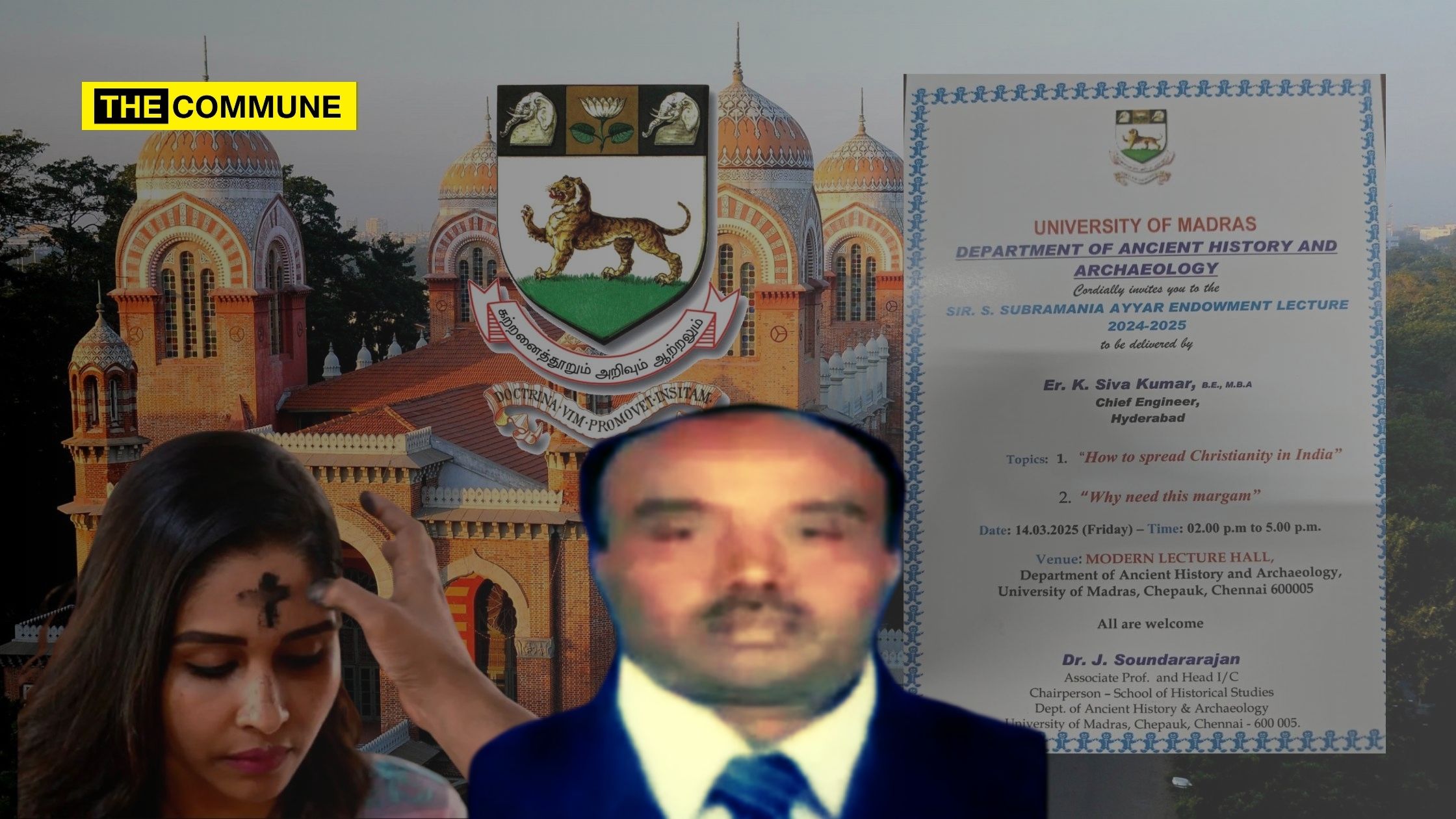
Soundararajan, Madras University’s HoD Of Archaeology Who Tried To Organize “How To Spread Christianity In India” Lecture Was Earlier Accused Of Molesting A Female Student

The University of Madras has cancelled a controversial lecture titled “How to Spread Christianity in India” and “Why Need This Margam” following massive public backlash. The event, which was scheduled as part of the Sir S. Subramania Ayyar Endowment Lectures by the Department of Ancient History and Archaeology, sparked outrage for its blatant religious proselytization under the banner of a secular, taxpayer-funded institution.

Many questioned how such overtly religious topics—unrelated to history or archaeology—were approved in the first place as the invitation explicitly promoted Christian evangelism.

Dr. Soundararajan, who was responsible for the event’s approval, has now come under intense scrutiny. Accusations suggest that he is a crypto-Christian using his position to promote religious agendas. However, what is even more alarming is his history of sexual harassment allegations, which have resurfaced in the wake of this controversy.

Soundararajan Accused Of Physically Assaulting And Molesting Female Students

Dr. J. Soundararajan, the Head of the Department of Ancient History and Archaeology at Madras University, has been previously accused of multiple instances of sexual harassment and abuse of power against students. In March 2021, students of the department staged protests against him, alleging that he had physically assaulted and sexually molested a female student when they confronted him over their examination results.

The controversy began when eight students who had protested against a hostel fee hike were intentionally failed in their internal assessments. When the students confronted Soundararajan over their missing answer sheets and requested that their results be officially displayed, he allegedly responded with verbal abuse and physical assault. According to multiple testimonies, he shoved a male student against a wall and molested a female student by touching/pushing her inappropriately on her chest. When she resisted, he repeated the assault intentionally in front of other students.

“This is not the first case that the professor was using filthy language,” he alleged.

The affected students attempted to file a police complaint, but their grievances were dismissed by authorities and redirected between police stations. A formal complaint was eventually lodged with the University’s Committee on Sexual Harassment of Women. However, instead of receiving justice, the victim faced further humiliation. One of the committee members, Prof. Sheikh Mohammed Hussein, allegedly made a vulgar remark stating that “the student should not complain about such petty issues when she can sleep with ten male students in the hostel.”

Rather than taking action against the accused professor, the university administration suspended five students, including the victim, in what appeared to be an act of retaliation. The victim, deeply traumatized by the harassment and institutional apathy, attempted suicide on March 21, 2021 by slitting her wrist. In her note, she held Dr. Soundararajan solely responsible for her mental agony and suicide attempt.

Despite the formation of an Inquiry Committee, its findings remain undisclosed, and no concrete action has been taken against Dr. Soundararajan or Prof. Hussein.

Subscribe to our channels on TelegramWhatsApp, and Instagram and get the best stories of the day delivered to you personally.

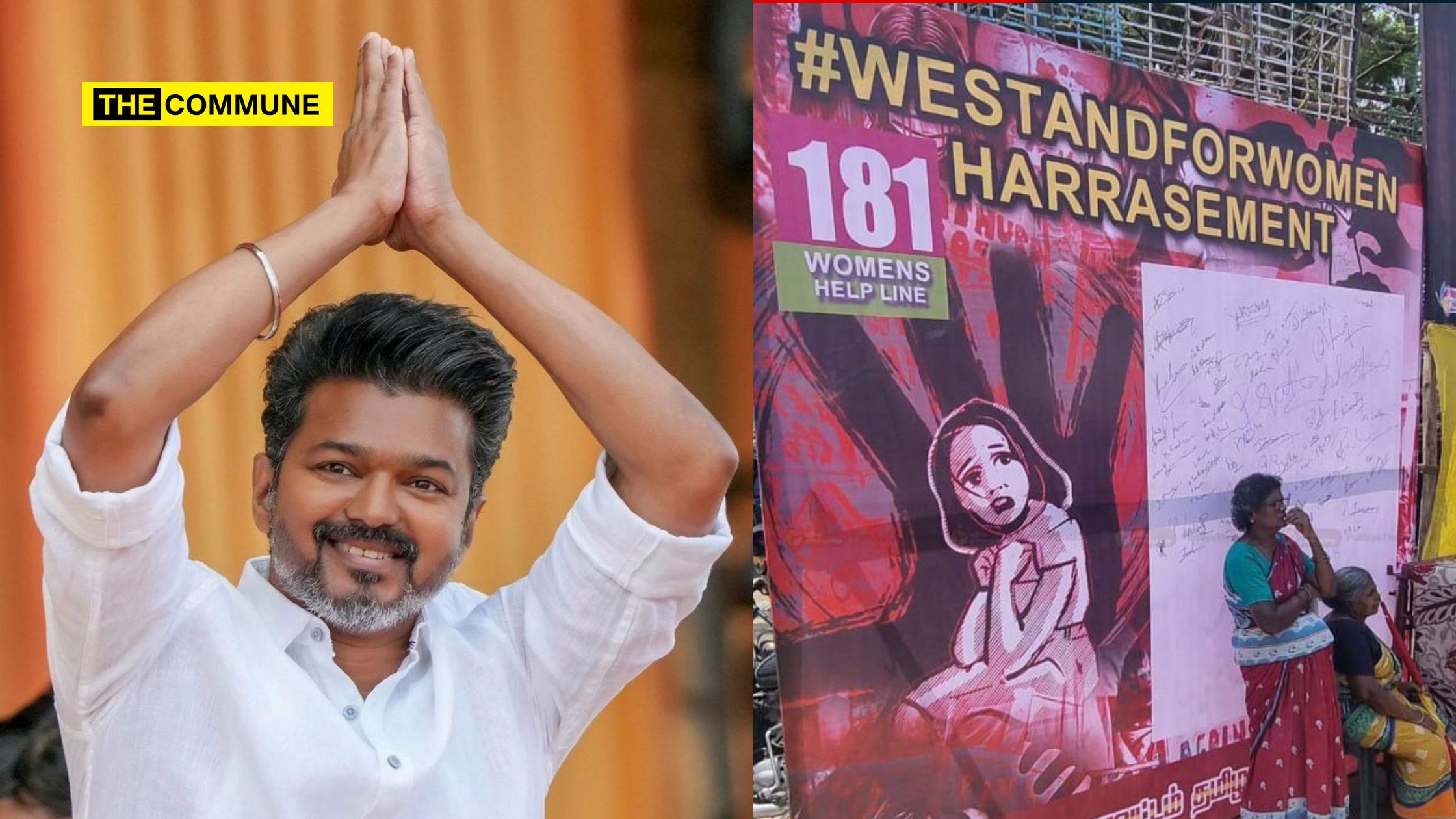
Part-Time Politician Vijay’s TVK Puts Banner Saying “#WeStandForWomenHarrasement” For Women’s Day

Actor and part-time politician Vijay’s Tamilaga Vettri Kazhagam (TVK) has once again landed in an embarrassing goof-up. But this time, it’s not just a minor typo—it’s a mistake that completely alters the meaning and intent of their message.

On the occasion of International Women’s Day, instead of saying “We Stand Against Women Harassment” or “We Stand For Women Safety” TVK members have put up a banner with the hashtag “#WeStandForWomenHarassement”—which, ironically, implies they support harassing women! To make matters worse, they’ve even misspelled harassment. This error-ridden banner was put up by the Vellore East unit of TVK.

This blunder comes from a party that aligns itself with Dravidianists, who proudly advocate for the two-language policy (Tamil and English) while claiming educational superiority over other states. Yet, such errors only expose the substandard education levels in Tamil Nadu, pointing to a deeper learning crisis.

Previous Instances Of Goof Ups

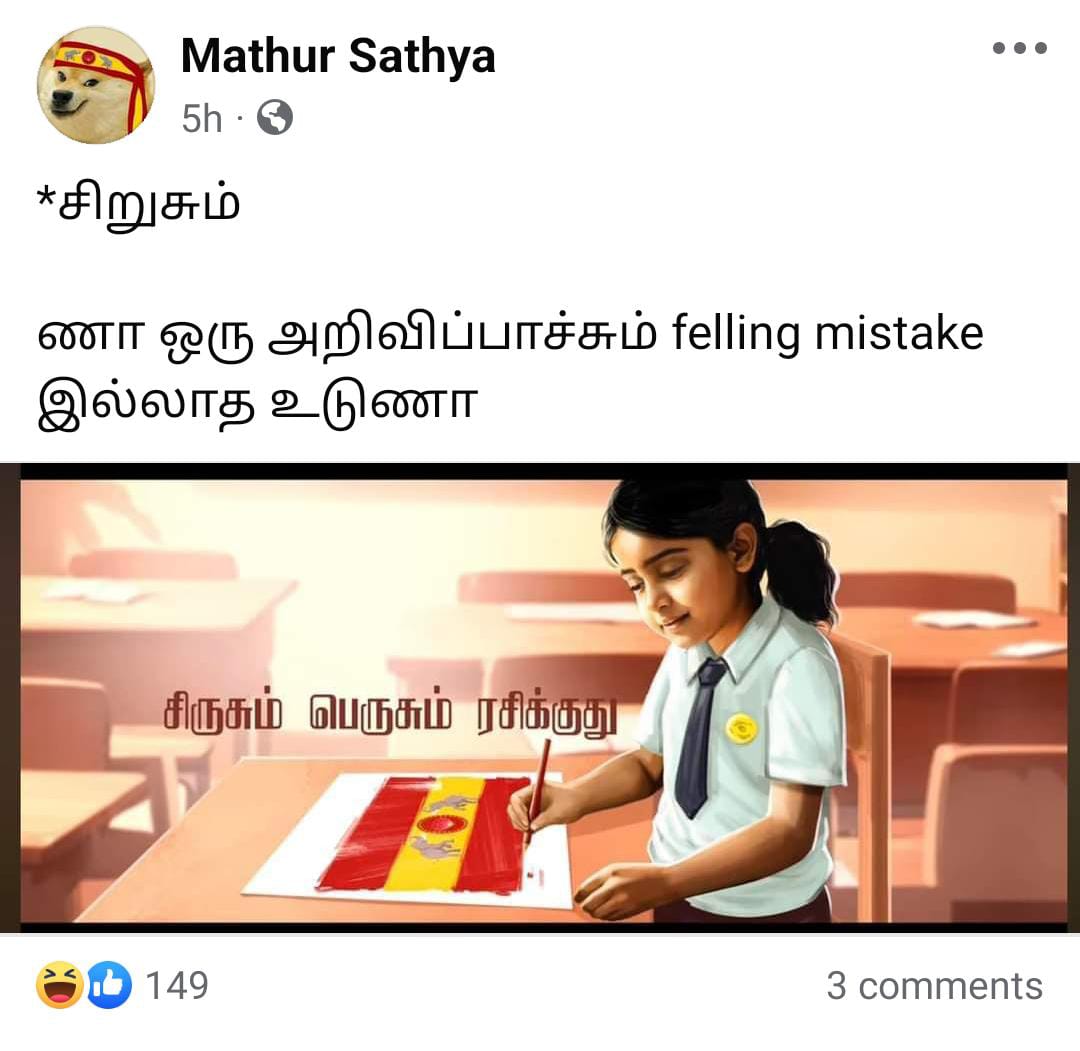
Vijay’s party seems to have a pattern of linguistic blunders. Even in the Flag Anthem video, multiple spelling errors were spotted.

For instance, in the Tamil word Sirusum, the video mistakenly used the ரு instead of று altering the correct spelling.

When Vijay initially announced his party through a press release, many pointed out a grammatical error in the party’s Tamil name—it should have been “Tamilaga Vettrik Kazhagam” instead of “Tamilaga Vettri Kazhagam.” The mistake was later rectified when the party’s general secretary approached the Election Commission of India (ECI) for a formal name correction.

Subscribe to our TelegramWhatsApp, and Instagram channels and get the best stories of the day delivered to you personally.

Is Vijay’s TVK A Christutva Project?

Actor-turned-politician Vijay, the founder of Tamilaga Vettri Kazhagam (TVK), is being positioned as a potential alternative to the Dravidian giants like DMK and AIADMK. But beneath the surface of his carefully built image lies a web of connections, allegations, and allegations suggest Vijay is being propped up by Christian evangelists, much like Andhra Pradesh’s former Chief Minister Y.S. Jagan Mohan Reddy. The parallels between the two leaders are striking—right down to their attire, their Christian affiliations, and their alleged ties to powerful religious syndicates.

The Jagan-Vijay Parallel: A Playbook For Christian Evangelism In Politics?

Y.S. Jagan Mohan Reddy, the former Chief Minister of Andhra Pradesh, is no stranger to controversy. His rise to power was marked by allegations of corruption, questionable alliances, and a strong Christian identity as Andhra Pradesh has been a hotbed of evangelical activity. Jagan’s signature white shirt and khaki pants have become synonymous with his political brand, projecting an image of simplicity and accessibility. But critics argue that his ascension was heavily backed by Christian evangelists, who saw in him a leader who could further their agenda in a predominantly Hindu state.
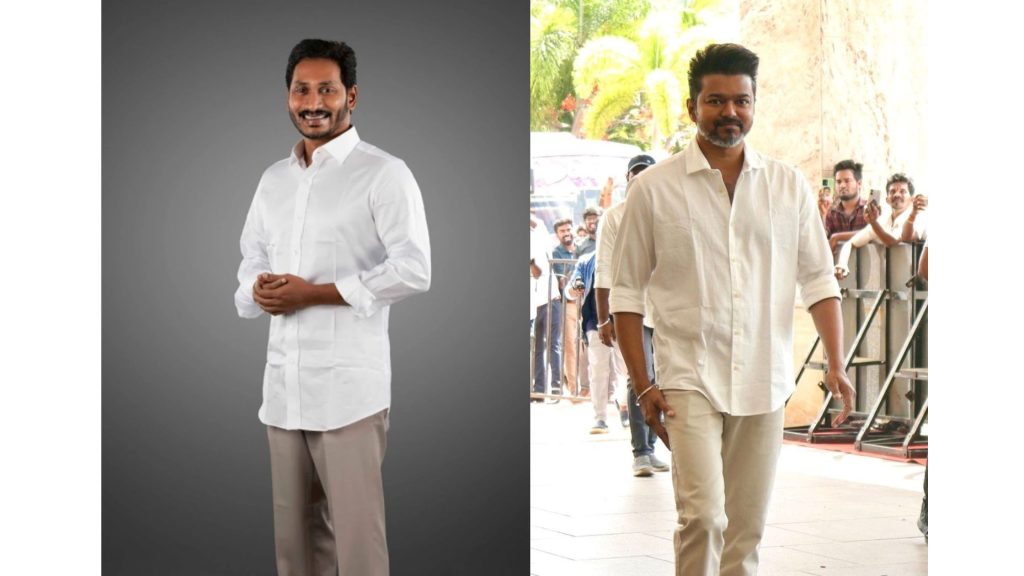
Now, Vijay seems to be following a similar playbook. His political attire—a white shirt and khaki pants—mirrors Jagan’s, raising eyebrows about whether this is a mere coincidence or a calculated move to appeal to a specific voter base. Like Jagan, Vijay has deep Christian roots. His family, particularly his uncles. Xavier Alphonse and Xavier Britto, have strong ties to the Catholic Church and the Society of Jesus, a powerful religious order with significant influence in education and politics.

The Loyola Syndicate: A Shadowy Network Behind Vijay’s Rise?

At the heart of this is the alleged involvement of the Loyola syndicate, a network of individuals connected to Loyola College in Chennai, an institution run by the Society of Jesus. Vijay’s uncle, Xavier Alphonse, served as the principal of Loyola College and has been accused of embezzling funds, sexual harassment, and using his position to funnel money into the family’s film ventures. Another uncle, Xavier Britto, is a wealthy businessman and film producer who has been accused of exploiting parents through his school, St. Britto’s Academy, while living a lavish lifestyle funded by his various businesses.

Whistleblowers allege that the Loyola syndicate has been instrumental in Vijay’s rise, providing financial backing and political clout. The syndicate’s alleged activities—ranging from benami transactions to religious conversion—have raised questions about whether Vijay’s political ambitions are being fueled by a larger agenda to establish Christian dominance in Tamil Nadu.

The Conversion Mafia: A Hidden Agenda?

One of the most explosive allegations against Vijay is his alleged connection to a “religion conversion mafia” linked to the Society of Jesus. Critics point to his early career, where his films were produced by Xavier Britto under XB Film Creators, and his father, S.A. Chandrasekhar, allegedly used misappropriated funds from Loyola College to kickstart these ventures. Vijay’s sudden shift from overtly Christian themes—like his “Jesus Saves” statements—to a more secular image has been viewed as hypocritical, with many accusing him of using religion as a tool for political gain.

The parallels with Jagan Reddy are hard to ignore. In Andhra Pradesh, Jagan’s administration has been accused of turning a blind eye to mass conversions and favoring Christian institutions. If Vijay follows a similar path, it could signal a seismic shift in Tamil Nadu’s political landscape, with Christian evangelists gaining unprecedented influence.

The Family Empire: Money, Power, And Influence

Vijay’s family empire extends beyond politics and films. His wife, Sangeetha, recently became a major shareholder in a UK-based real estate company, raising suspicions of money laundering. With Sangeetha holding British citizenship and their son studying abroad, the family’s international connections add another layer to this. Critics allege that these offshore ventures are being used to funnel money into Vijay’s political ambitions, with the backing of global Christian networks.

De-Hinduizing Pongal And Tamil New Year: Treading The Same Path As DMK

the DMK and other ‘Dravidian Stockists’ observe Pongal (which occurs around January 14) as Tamil New Year as they argue that celebrating Chithirai 1 as the beginning of a new year amounts to following a ‘Brahmin-dominated’ or Sanskritic tradition which goes against Dravidian ideologies. Part-time politician C Joseph Vijay, too wishes for Tamil New Year on Pongal Day (Thai 1) and not Chithirai 1.

Instead of wishing for 2024 Tamil New Year which is a significant festival for Hindus in Tamil Nadu, Vijay chose to wish his fans and followers for Ambedkar Jayanti. 

This is nothing but an attempt to delink Hinduism from Tamil culture so that proselytizing forces can Christianize Pongal festival.

Vijay also did not acknowledge or wish the people of the state for Vinayakar Chaturthi, a festival celebrated by 87.58% of the Hindu population.

The Endgame: A Christian CM For Tamil Nadu?

The ultimate goal of these allegations, according to critics, is to establish a Christian Chief Minister in Tamil Nadu. With Vijay’s political entry, the pieces of the puzzle seem to be falling into place. His Christian affiliations, Loyola connections, and alleged backing by evangelists suggest a larger agenda at play. If successful, Vijay could become the face of a new political order in Tamil Nadu, one that aligns with the interests of powerful religious syndicates.

A Political Drama Scripted By Evangelists?

As Vijay prepares to contest the 2026 Tamil Nadu elections, the allegations surrounding his rise cannot be ignored. From his Christian affiliations and Loyola connections to the alleged involvement of the Loyola syndicate and the shadow of evangelism, the allegations paints a troubling picture. Is Vijay being propped up as a Christian alternative to the Dravidian parties? Are his political ambitions being funded and guided by powerful religious networks? The answers to these questions could determine the future of Tamil Nadu’s political landscape.

In the end, Vijay’s story may not just be about an actor entering politics—it could be a carefully scripted drama, with Christian evangelists pulling the strings behind the scenes. And if history is any indication, the consequences could be far-reaching, not just for Tamil Nadu, but for the entire nation.

Kaathavaraayan is a political analyst.

Subscribe to our channels on Telegram, WhatsApp, and Instagram and get the best stories of the day delivered to you personally.