Home Blog Page 350

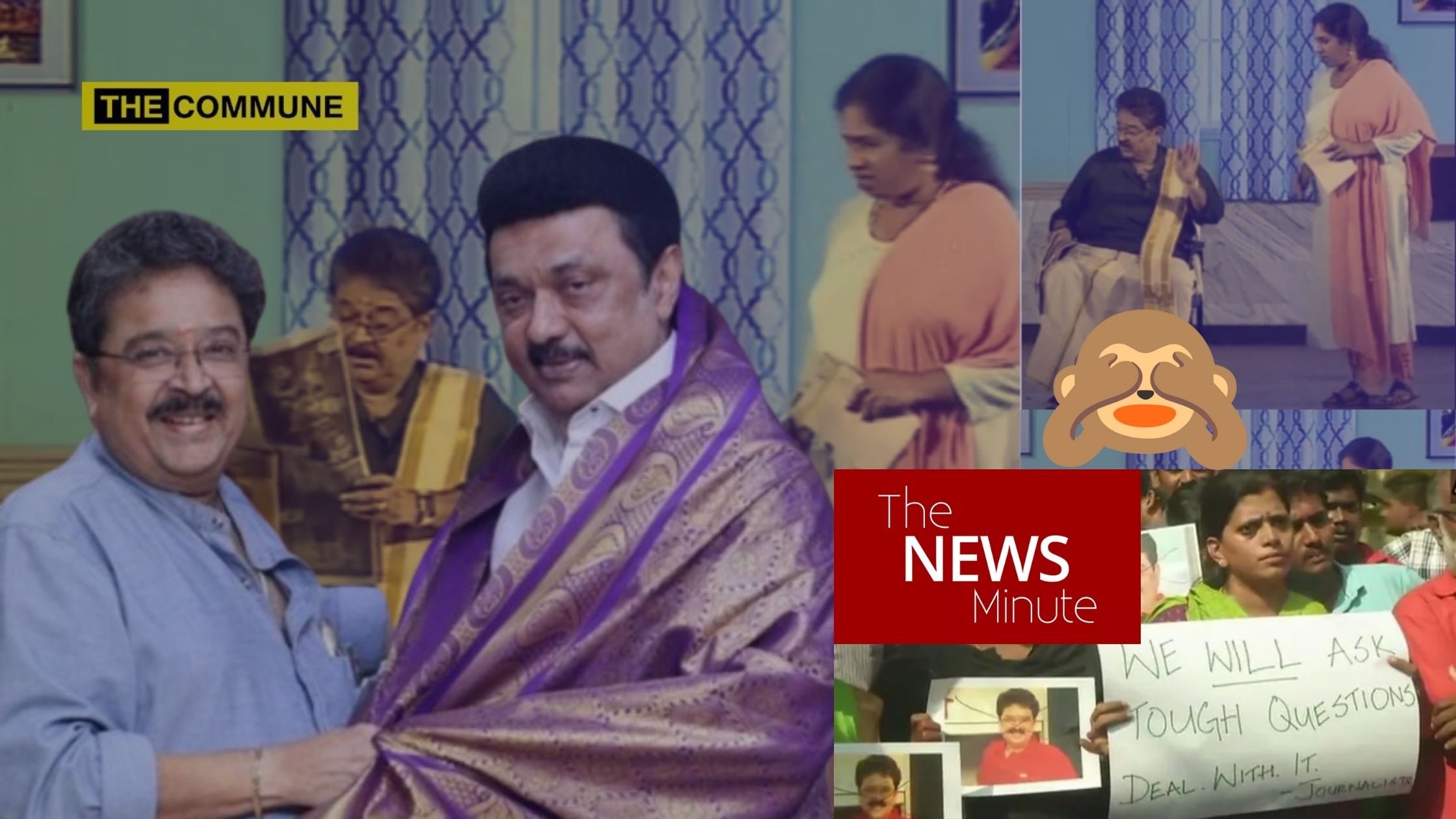
MK Stalin’s Friend And DMK Supporter Derogates Women Journalists Again Despite Getting Convicted For Similar Offence, TNM And Others Silent

Controversial comedian and former MLA S Ve Shekher, who was previously convicted for making derogatory remarks about female journalists, has stirred controversy once again. In a recent play, he portrayed a character as a female journalist and subjected her to inappropriate gestures and offensive comments, prompting widespread condemnation from all quarters.

The play, held on the 27 March 2025, at Narada Gana Sabha in Chennai, featured S Ve Shekher in the role of a politician. A scene depicted a female journalist arriving for an interview. When she noted there were no chairs to sit on, S Ve Shekher allegedly patted his thigh and suggested, ” These journalists are so arrogant. There’s plenty of space. Why can’t you sit here?” His gesture, which appeared to imply the journalist should sit on his lap, was deemed obscene and offensive. This has led to widespread outcry from journalists and social media users, calling for severe consequences for his actions.

This is not the first instance of controversy surrounding Shekher. In 2018, he ignited outrage by sharing a Facebook post that insulted journalists, leading to severe criticism and legal consequences.

His actions triggered protests and a police investigation, ultimately resulting in a court sentencing him to one month in jail along with a fine. Although he appealed the decision, the High Court upheld the sentence, and he has since approached the Supreme Court in hopes of overturning the ruling.

Considering his history, S Ve Shekher’s repeated sexually charged remarks towards female journalists, despite having been sentenced to a one-month jail term previously, clearly demonstrates that he shows no remorse for his past actions.

What is even more surprising is those who made a hullaballoo over his 2018 remarks have now looked the other way. The Tamil Nadu Journalist Protection Welfare Association which had lodged a complaint with the Chennai Police Commissioner is nowhere to be found now.

The News Minute which had carried an article back in 2018 has not cared to put an article now.

Kavitha Muralidharan, another Leftist-Dravidianist masquerading as a journalist who had held placards against S Ve Sekhar when he was with BJP is nowhere in the scene.

Subscribe to our channels on TelegramWhatsApp, and Instagram and get the best stories of the day delivered to you personally.

“Worship God, But Don’t Keep ‘Pottu’ Like Sanghis”, DMK MP A Raja Tells Party Cadres

A seminar was conducted earlier this week at a private hotel in Nilgiris district for state students, bringing together 72 district student organizers and sub-organizers of the Dravida Munnetra Kazhagam (DMK).

The event was presided over by State Student Secretary Rajiv Gandhi and saw the participation of DMK Deputy General Secretary and Member of Parliament A. Raja, Information and Tamil Development Minister M.B. Swaminathan, among others.

Addressing the gathering, Raja said, “If necessary, you can worship God. No issues. But students wing, please remove the “pottu”. I am not telling you to stop praying to God. Even if we say God is love, and that God exists in the compassion shown between humans, or that God resides in the hearts of the innocents, or as Anna said, we see God in the smiles of the poor, we are not angry at that type of a God. Worship him, I don’t mind. But if you also keep ‘pottu’ and tie sacred threads just like Sanghis then we cannot differentiate between you and them. That’s why I say, worship God; if your parents apply vibhuti, let it be so, do everything, but when you wear a DMK border dhoti and come to party work or office, please remove them. If we have no ideology, the political party will be destroyed and AIADMK is the best example of this, it is moving in that direction, under Edappadi Palaniswami,” he added.

This is not the first time Raja has made such controversial statements. Here is a look at his anti-Hindu remarks from the past.

Hindu Religion Is Like Leprosy & HIV

In 2023, A. Raja likened Sanatana Dharma to HIV AIDS and leprosy even as the dust was yet to settle on DMK Minister Udhayanidhi Stalin likening Sanatana Dharma to Dengue, Malaria, and Corona and calling for its eradication at the “Eradicate Sanatana Conclave” held at Chennai. “I am oddly surprised that Udhayanidhi Stalin had only spoken about it softly saying (Sanatana Dharma) has to be eradicated like malaria and dengue. Malaria and dengue don’t have social stigma. The society won’t look at them disgustingly. If we have to call it something disgusting, there was leprosy, there is HIV today. For us, just like leprosy and HIV, we’ve to see it (Sanathana Dharma) as a social stigma”, he said at a protest meeting organized by the rabid anti-Hindu outfit Dravidar Kazhagam against the Centre’s Viswakarma Scheme.

Hindu Religion A Menace

In a video meeting organized by DMK in 2023 close to the heels of Udhayanidhi Stalin’s ‘eradicate Sanathana Dharma’ remarks, A. Raja can be heard saying, “India is the reason for the global disease in the name of caste, dividing people on the caste lines; Dividing people on the economic lines by using caste. Caste cannot be used only for social use. It depends upon the economically also. Those who are living Indians in other countries, also propagating caste in the name of Hindu religion. So, Hindu religion is a biggest menace not only to India. Now it is a menace to the entire world.”

He Threw Vibhuti, Placed Cracker Under Ganesha Idol

In 2022, a video of him claiming,“I threw away all holy ashes (Vibuthi) and I also placed a elephant cracker below Ganesha’s statue, and it exploded,” became viral.

Jai Shri Ram! Chi! Idiots!

On 3 March 2024, a public gathering took place at Coimbatore Rajaveedi Thermuti Thidal to commemorate the 71st birthday of Tamil Nadu Chief Minister MK Stalin. The event aimed to elucidate the accomplishments of the DMK government under the theme “Dravidian Model Government: Everything for Everyone.” N Karthik, the Secretary of Coimbatore District DMK, presided over the proceedings, while A. Raja, the Deputy General Secretary of the association, served as the guest speaker, highlighting the achievements of the DMK government.

Say that love is God. Say that God is there in the humanity shown between individuals. Say that God’s abode is a heart with no ill intentions. Say that you can see God in a poor person’s smile. On such a God neither we, nor Kalaignar, nor Anna nor Periyar don’t have any anger! But if you say this is the God. If this is your Jai Sri Ram, if this is your Bharat Mata Ki Jai, we will never accept that Jai Sri Ram and Bharat Mata. Tamil Nadu won’t accept. You go and tell, we’re enemies of Ram.“, A Raja went on a rant.

Later he recounted the tale Kamba Ramayana. However, in a surprising twist at the conclusion, he confidently affirmed his own perspective “I don’t have faith on Ramayana, and lord Ram“.

Then he conveyed strong disdain saying “If you say that the in name of the Ramayana is human harmony, where four brothers are born as siblings, one Kuravar as brother, one Hunter as brother, another monkey as another brother, another monkey as the 6th brother, then your Jai Sri Ram is Chi! Idiots!

Shudras Are Children Of Prostitutes

In 2022, A Raja stated that all Shudras are children of prostitutes and they will remain so until they remain in Hinduism. He said, “I haven’t seen any religion like this. Lingayats in Karnataka are petitioning the Supreme Court saying that their way of worship and religious principles are different. They are asking themselves to be not declared as Hindus. But what is the Supreme Court saying? The Supreme Court is saying that if you aren’t a Christian, Muslim, or Persian, you’ve to be a Hindu. Is there any other country having such cruelty?”

“You’re a Shudra till you remain a Hindu. You’re a son of the prostitute till you remain a Shudra. You’re a Panchaman (Dalit) till you remain a Hindu. You’re an untouchable till you remain a Hindu. How many of you wish to stay as children of prostitutes? How many of you wish to remain untouchable? Only if we’re vocal about these questions, it will become elemental in breaking Santhana (Sanatana Dharma).”, the DMK MP said adding that the time has come for Viduthalai, Murasoli, DMK and DK to take up the issue.

Derogates Hindu Deities

The DMK MP had made derogatory remarks about the mythological story of Bhooma Devi (Earth Goddess) and Varaha avatar of Lord Vishnu while hailing Christianity as a religion that encourages scientific temper.

There is a reason to wish Christians and Muslims on their festivals. What will you wish for Deepavali? Can the earth be rolled like a carpet? Can someone be born as a pig? Can a pig and Bhuma devi have sex and give birth to an Asura? Since these are all against science and doesn’t align to rational thoughts, I don’t wish for Hindu festivals.”, he said.

Subscribe to our channels on TelegramWhatsApp, and Instagram and get the best stories of the day delivered to you personally.

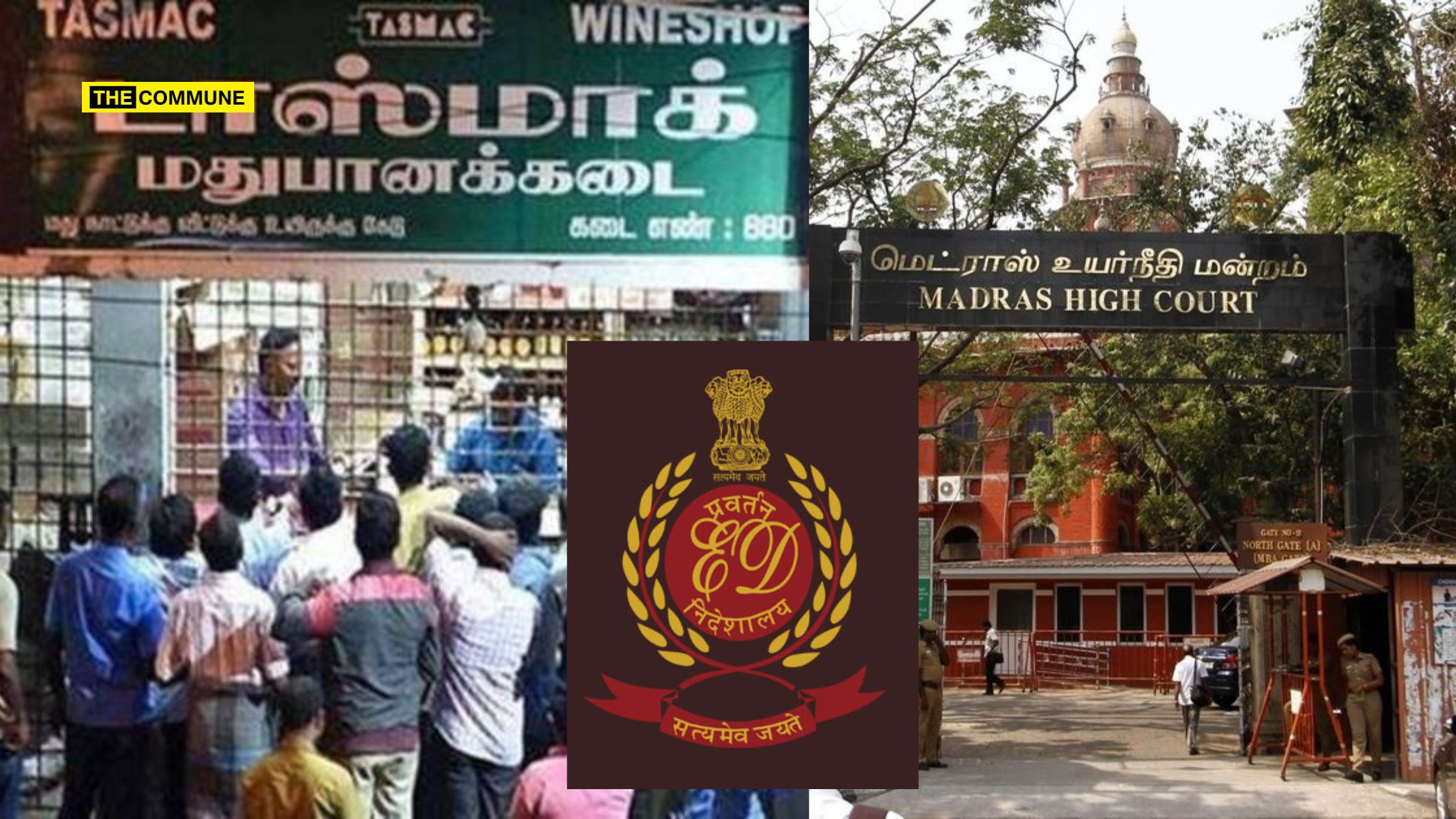
ED Accuses Dravidian Model Govt’s TASMAC Of Obstructing Money Laundering Probe

The Enforcement Directorate (ED) has accused the Tamil Nadu State Marketing Corporation (TASMAC) of attempting to create hurdles in an ongoing investigation into potential money laundering activities involving its officials and certain private entities.

In a detailed counter affidavit filed before a Division Bench of Justices S.M. Subramaniam and K. Rajasekar on Tuesday, 1 April 2025, the ED questioned the maintainability of two writ petitions filed by TASMAC, which sought to declare the agency’s recent search and seizure operation at its headquarters illegal. The petitions also aimed to restrain the ED from allegedly harassing its employees under the guise of investigation. However, the ED countered that no individual employee had reported harassment or human rights violations.

The court granted TASMAC time until 8 April 2025 to file a rejoinder to the counter affidavit, which was signed by ED Assistant Director Vikas Kumar. The ED emphasized that TASMAC, as a state-owned corporation handling substantial public funds, must be subject to scrutiny in the larger public interest. The agency stated that its investigation was based on multiple FIRs registered by the Directorate of Vigilance and Anti-Corruption (DVAC) against TASMAC officials and employees over corruption and malpractice allegations.

The FIRs detailed instances of unaccounted cash found at liquor retail vending shops and district offices, sale of liquor at inflated prices, bribery in staff transfers and appointments, and dubious dealings between TASMAC officials and liquor manufacturers. As these offenses fall under the Prevention of Corruption Act, 1988, which is listed under the Prevention of Money Laundering Act (PMLA), 2022, the ED justified its search and seizure operation at TASMAC’s headquarters in Egmore, Chennai, conducted from 6 March to 8 March 2025.

The ED asserted that the search was conducted lawfully and peacefully, in the presence of two independent witnesses from the State Bank of India. It stated that no coercion, threats, or inducements were used against TASMAC staff. Addressing concerns over the search duration, the ED argued that a three-day operation could not be deemed illegal solely based on its length. The agency further noted that all female employees were allowed to leave before nightfall, but General Manager (Administration) Sangeetha had chosen to stay voluntarily.

The counter affidavit also highlighted that key TASMAC officials, including Managing Director S. Visakan, Deputy General Manager (Purchase and Sale) M. Jothi Shankar, and Ms. Sangeetha, had written to the ED on March 17 and 18, seeking time to submit additional documents. The ED pointed out that these letters contained no allegations of irregularities in the search proceedings, contradicting TASMAC’s writ petitions, which claimed breaches of fundamental rights.

Dismissing the petitions as an afterthought and an abuse of legal process, the ED reiterated that the search and seizure were conducted in accordance with the law. It stated that no employee was subjected to excessive interrogation, with no individual statement recorded for more than two and a half hours.

Meanwhile, the Tamil Nadu government and TASMAC have jointly filed a third writ petition and sought an amendment to their plea. The ED’s counsel, Additional Solicitor General A.R.L. Sundaresan informed the court that the agency would file a counter affidavit addressing the amendment petition by 8 April 2025.

(With inputs from The Hindu)

Subscribe to our channels on Telegram, WhatsApp, and Instagram and get the best stories of the day delivered to you personally.

List Of Instances Showing That ‘YouTurn’ Is Not A Fact-Checker But A Misinformation-Peddling DMK Mouthpiece

Dravidianist propagandists in Tamil Nadu frequently propagate misleading narratives and shield the ruling DMK from criticism, making it a routine occurrence. Among such propagandist media is YouTurn, an outlet that has unofficially acted as the DMK’s mouthpiece since the party came to power in 2021. Operating under the guise of fact-checking, YouTurn has been criticized for faffing, its lack of journalistic integrity, and consistently peddling biased propaganda in favor of the DMK.

Below are instances where YouTurn has been accused of spreading false information.

1. YouTurn’s Propaganda Push For DMK’s 29-Paisa Tax Devolution Claim

Propaganda:

On 2 January 2025, DMK’s mouthpiece Youturn claimed that Tamil Nadu receives only 29 paise for every rupee it contributes in taxes, criticizing the central government for retaining a significant share through cess and surcharges.

In the financial year 2022-23, Tamil Nadu contributed ₹1,07,063 crore in direct taxes and ₹27,361 crore in CGST, totaling ₹1,34,424 crore. Youturn alleged that the state received only ₹38,731 crore in return, accounting for just 29% of its contribution. It compared this with Bihar and Uttar Pradesh, claiming they receive ₹7.06 and ₹2.73, respectively, for every rupee contributed. The report also accused the central government of increasing cess and surcharge collections, which are not shared with states, stating that only 32% of total tax revenue is distributed instead of the constitutionally mandated 41%. According to Youturn, the Central Government retains 68% of the revenue, creating an imbalance in federal financial distribution.

Reality:

However, these claims have been criticized as misleading since they focus solely on direct tax refunds while ignoring indirect tax revenues and centrally funded welfare schemes. Tamil Nadu benefits from GST revenue sharing, receiving 41% of CGST collections, 100% of SGST, and 50% of IGST generated within the state. Additionally, cess and surcharge collections fund nationwide welfare programs and infrastructure projects, including medical colleges, highways, health insurance, and farmer welfare initiatives that benefit Tamil Nadu.

Furthermore, taxes paid by corporations in Tamil Nadu, such as Hyundai and Nokia, contribute to national revenue, which is redistributed among all states. Under Prime Minister Narendra Modi’s leadership, tax revenue allocation has been structured to ensure fair distribution, with Tamil Nadu receiving its due share alongside substantial welfare and development projects. The claim that Tamil Nadu gets only 29 paise per rupee oversimplifies the complex tax-sharing system, ignoring indirect tax revenues and central spending that benefit the state.

Under the Modi government (2014-2023), Tamil Nadu has received more central funds compared to the Congress-DMK period (2004-2014):

  • During the Congress-DMK regime (2004-2014): Tamil Nadu received only ₹1.58 lakh crore over ten years.
  • Under the Modi government (2014-2023): Tamil Nadu received ₹4.75 lakh crore over just eight years—three times more than the previous decade.

Additionally, Tamil Nadu paid ₹6.24 lakh crore in direct taxes and received ₹6.97 lakh crore in return—a net gain of over 90% of the amount paid

2. You-Turn’s Attempt To Paint PM’s Vishwakarma Scheme As ‘Kulakalvi Thittam’ 

Propaganda:

Dravidianist YouTuber-turned-state-run fact-checking head Iyan Karthikeyan and the media outlet YouTurn were accused of distorting facts to support the DMK’s narrative while misrepresenting Tamil Nadu BJP State Secretary SG Suryah’s rebuttal regarding the PM Vishwakarma Scheme.

Chief Minister MK Stalin had dismissed the scheme as caste-based and announced that Tamil Nadu would not implement it. In response, Suryah clarified that the scheme aimed to uplift artisans through financial aid, training, and market support, drawing a comparison to Tamil Nadu’s Poompuhar initiative, which also recognized artisans based on traditional vocations. However, YouTurn selectively highlighted only the DMK’s claims while taking Suryah’s statements out of context to frame the scheme as caste based.

Iyan Karthikeyan, allegedly ‘former’ Editor-In-Chief of YouTurn, who now heads the unconstitutional “fact-checking” body of the DMK government, further pushed this narrative by stating that Poompuhar awards were based on material quality and not traditional family businesses, implying that there was no caste element involved.

Reality:

In response, Suryah countered this claim by sharing application forms for Poompuhar, which asked for details of traditional vocational education (indirectly asking caste-based work), exposing inconsistencies in Karthikeyan’s argument.

Iyan Karthikeyan was exposed for hypocrisy while pushing a pro-DMK narrative. He claimed the ‘Poompuhar’ award did not ask for caste information but ignored that it required details on traditional or gurukula-based learning. Meanwhile, the ‘Vishwakarma Yojana’ never mentioned caste as a criterion. His own posts contradicted his claims, revealing his bias.

Similarly in September 2023, the alleged fact-checking portal YouTurn, in a video posted on Twitter/X, claimed that the Pradhan Mantri Vishwakarma Yojana promotes ancestral or family-based occupations. The video made several claims about the scheme, including that it selects beneficiaries based on caste and prioritizes caste-designated occupations. However, these claims were debunked, as the scheme does not discriminate based on caste or require adherence to caste-based occupations. Instead, it supports individuals in the unorganized sector with training, loans, and marketing assistance, aiming to develop traditional crafts and techniques.

3. YouTurn’s Dravidian Model Sticker Over Modi Govt’s Efforts To Rescue TN Cyber Slaves

Propaganda:

On 22 October 2024, YouTurn media, through its official X account, claimed that the Tamil Nadu government had played a vital role in rescuing individuals trapped abroad as cyber slaves. The post quoted Minister Senji Mastan, who stated that information about those stranded in Cambodia reached the Chief Minister through their families, prompting the state government to take action and bring them back at its own expense.

Reality:

However, this claim overlooks a fundamental fact—foreign affairs and international rescue operations fall under the jurisdiction of the central government, not state authorities. The truth is that in November 2022, the Ministry of External Affairs (MEA) reported the successful rescue of over 370 Indians who had fallen prey to job scams in Myanmar, Cambodia, and Laos. MEA spokesperson Arindam Bagchi confirmed that Indian diplomatic missions in Yangon, Bangkok, and Chiang Mai were actively handling these cases. He further noted that approximately 108 individuals were rescued from Cambodia alone, highlighting that many victims from India and other countries had been lured into fraudulent job schemes and left stranded in these regions.

4. Youturn’s Attempt To Discredit RSS & Seva Bharati Relief Efforts During Kerala Landslides

Propaganda:

Alt News and DMK’s mouthpiece YouTurn came under fire for allegedly exploiting the Wayanad landslide tragedy in 2024 to undermine the relief efforts of the Rashtriya Swayamsevak Sangh (RSS) and Rashtriya Seva Bharati, even as two RSS volunteers lost their lives while rescuing victims. During the period, Alt News and YouTurn selectively attacked to advance their ideological narratives to simp the interests of the ruling DMK and Congress parties.

A controversy arose when old photos of RSS workers from the 2018 Kerala floods were mistakenly circulated as part of the current relief efforts. Alt News and YouTurn used this to claim that RSS was falsely taking credit for the Wayanad rescue operations.

Reality:

However, Vishwa Samvad Kendra and other reports confirmed that RSS and Seva Bharati volunteers were actively involved in the relief work, including setting up help desks, providing food, and assisting in medical aid.

Reports from 31 July 2024, confirmed RSS and Seva Bharati’s involvement in rescue and rehabilitation in Wayanad. Volunteers worked on the ground from the early hours, providing assistance to victims, setting up collection points for essentials, and coordinating efforts across Tamil Nadu and Kerala.

Two RSS swayamsevaks, Sarath Babu and Prajeesh, lost their lives while rescuing people in the landslide-hit areas. Sarath Babu saved 15 people before going missing, while Prajeesh perished after multiple rescue attempts. Their sacrifices were widely recognized. BJP leaders, including BL Santhosh, highlighted the contributions of RSS volunteers, criticizing those attempting to discredit their efforts. Mediyaan News and Kerala BJP accounts also provided continuous updates on RSS-led relief operations.

5. YouTurn Claimed CN Annadurai & Manmohan Singh Held Top Positions Through Public Mandate

Propaganda:

During the 2024 Lok Sabha elections, DMK’s mouthpiece YouTurn attempted to mock Finance Minister Nirmala Sitharaman and External Affairs Minister S. Jaishankar by claiming that former Tamil Nadu Chief Minister C.N. Annadurai and former Prime Minister Manmohan Singh secured their positions through electoral mandates contrary to the historical facts.

Reality:

Annadurai became Chief Minister through the MLC route and Manmohan Singh served as Prime Minister through the Rajya Sabha.

In response, YouTurn acknowledged that Annadurai had contested elections in the past but argued that he had still faced the public, unlike Sitharaman and Jaishankar. However, netizens noted factual inconsistencies in YouTurn’s statements, particularly regarding the existence of a “Chennai South” constituency during Annadurai’s time.

Historical records confirm that Annadurai lost the 1962 Tamil Nadu Assembly elections but led DMK to victory in 1967, subsequently becoming Chief Minister. He was elected to the Madras Legislative Council in April 1967. Manmohan Singh, on the other hand, had an extensive Rajya Sabha tenure, representing Assam from 1991 to 2019 and Rajasthan from 2019 to 2024.

6. YouTurn’s Buttressing Of Congress

Propaganda:

In January 2024, YouTurn falsely branded as misinformation a statement by BJP Tamil Nadu State Secretary Ashwathaman, who asserted that the Congress government’s 2013 bill permitted FIRs to be filed only against Hindus in cases of communal violence, while exempting Muslims and Christians.

YouTurn refuted this, arguing that the Prevention of Communal and Targeted Violence (PCTV) Bill 2011 did not explicitly state such provisions.

Reality:

However, a closer analysis of the bill reveals that its definition of “group” includes only religious and linguistic minorities, as well as Scheduled Castes and Tribes, effectively ensuring that the law applies only when violence is committed against these groups. Consequently, if violence were directed at Hindus, the bill lacked provisions to prosecute members of minority communities.

Further clauses in the bill reinforced this bias, as offences like sexual assault, hate propaganda, and organized violence were deemed punishable only if committed against minority groups. This created a discriminatory framework where members of the majority community could be prosecuted, while identical offences by minority groups were not recognized under the law.

Ultimately, YouTurn’s attempt to discredit Ashwathaman’s statement collapses under scrutiny, as the bill’s provisions support his claim. The platform’s misrepresentation of facts raises concerns about its credibility, reinforcing allegations that it functions as a propaganda tool rather than an impartial fact-checker.

7. YouTurn’s Failed Propaganda On Rainfall Alerts Issued By IMD

Propaganda:

Whenever the DMK faces criticism, its mouthpiece YouTurn rushes to its defense. A prime example occurred on 22 December 2023, when Union Finance Minister Nirmala Sitharaman held a press conference slamming the Tamil Nadu government for its poor handling of the recent floods in Chennai and the southern districts. She accused the DMK administration of negligence, highlighting its failure to implement precautionary measures despite early warnings from the India Meteorological Department (IMD), drawing parallels to the disastrous 2015 floods.

In response, YouTurn, attempted to refute Sitharaman’s claims and argued that IMD’s December 12 forecast mentioned only isolated heavy rainfall in select regions, downplaying the severity of the warnings issued before the floods.

Reality:

However, IMD had issued an Orange Alert for southern Tamil Nadu, indicating “very heavy rain” (115.6 mm to 204.4 mm in 24 hours), which required immediate disaster preparedness. Rainfall data confirmed the accuracy of this warning, with locations like Kayalpattinam (94.6 cm), Tiruchendur (68.9 cm), and Srivaikundam (62.1 cm) experiencing severe precipitation.

Additionally, YouTurn misrepresented IMD’s alert system. IMD follows a four-tier warning system: Green (no advisory), Yellow (exercise caution), Orange (get ready for disruptions), and Red (take immediate action). While Red Alerts are issued only 12 hours before landfall, the Orange Alert given days in advance was a clear signal for preventive action—one that the Tamil Nadu government allegedly ignored.

What stands out here is the claim made by the alleged fact-checking website YouTurn, asserting that the rainfall in 2023 exceeded that of 2015. This claim was reportedly based on an article published by The News Minute, a Dravidianist and Leftist outlet that promotes narratives favorable to the DMK.

8. YouTurn’s Butressal Of DMK’s Anti Hindi Drama 

Propaganda:

Interestingly, YouTurn media has a pattern of dismissing facts as “fake news” whenever it comes to shielding the DMK, regardless of clear evidence. In December 2023, Tamil Nadu woman Sharmilaa Rajasekar alleged that she faced linguistic discrimination at Goa’s Dabolim Airport when CISF personnel insisted she learn Hindi during a security check. Despite stating that she was unfamiliar with the language, she was reportedly told that Hindi is the national language and advised to “Google” it.

Sharmilaa, an engineer traveling with her three-year-old daughter, stood her ground, clarifying that Hindi is an official language, not a national one. She later filed both an oral and email complaint with the airport grievance officer, emphasizing the need for cultural sensitivity training. The complaint was forwarded to the CISF team for review, and she expressed intentions to escalate the matter to CISF headquarters.

The incident was quickly amplified by Dravidianist media, with Sun News Editor-in-Chief Mu. Gunasekaran highlighting the controversy on social media.

Reality:

However, social media users soon identified a woman named Sharmila Rajasekhar, who had previously posted in Hindi, suggesting she might be the same individual involved in the controversy. Screenshots of her past social media activity, including her YouTube channel, were widely shared.

Amid the growing speculation, the @sharmisharmiji social media handle, which many assumed belonged to the woman in the controversy, denied involvement, stating that she was being misidentified. Interestingly, past Hindi-language posts from the account were deleted, fueling further debates.

As the debate continued, YouTurn, stepped in, claiming that the woman accused of fabricating the controversy was not the same person from the airport incident. This further intensified discussions on whether the entire episode was a genuine case of discrimination or a manufactured controversy.

These are some gems of YouTurn media, run by Dravidian propagandist, is certified by the Poynter Institute—an organization linked to Pierre Omidyar’s Omidyar Network and George Soros’s Open Society Foundation. Ironically, recognizing the influence of YouTurn, the ruling DMK appointed its key figure, Iyan Karthikeyan, as the Mission Director of Tamil Nadu’s “Fact-Checking Unit,” tasked with countering fake news. This appointment drew criticism, with BJP Tamil Nadu’s social media humorously suggesting that the Chief Minister establish another fact-checking department to monitor the existing one.

Subscribe to our channels on TelegramWhatsApp, and Instagram and get the best stories of the day delivered to you personally.

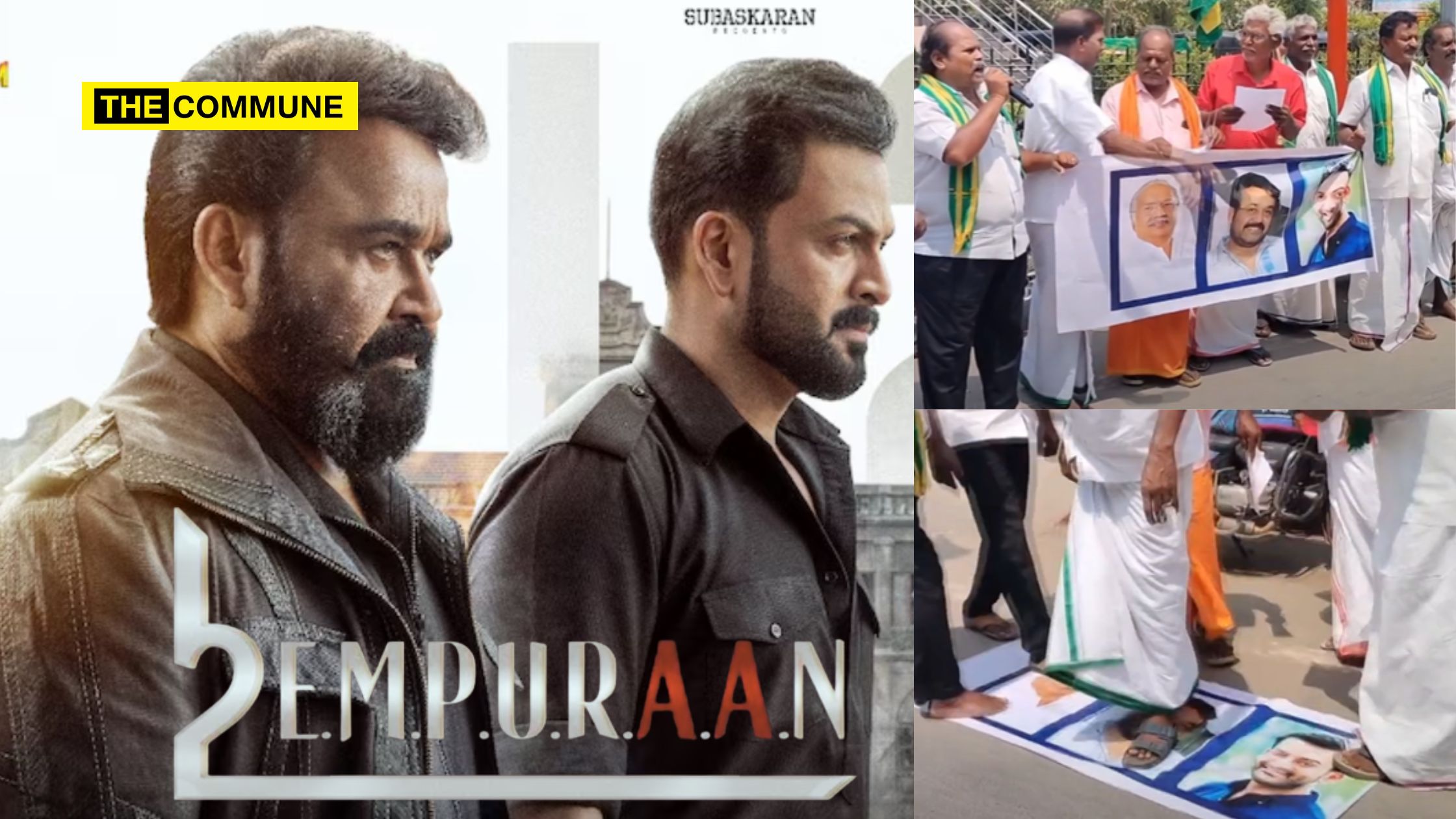
Tamil Nadu Farmers Protest Against Commie Propagandist Prithviraj’s ‘Empuraan’, Demand Removal Of ‘Mullaiperiyar’ References

The controversy surrounding the film Empuraan continues to intensify, with political backlash taking center stage. A new demand has emerged from Tamil Nadu farmers, who are calling for the removal of references to the ‘Mullaperiyar Dam’ in the movie. They argue that the fictional “Nedumpally Dam” depicted in the film is an indirect reference to the Mullaperiyar, and they have requested the removal of specific dialogues they believe could heighten tensions between Tamil Nadu and Kerala.

Balasingam, coordinator of the Periyar Vaigai Irrigation Farmers Association, voiced concerns over the potential for the film’s portrayal of the dam to fuel unnecessary controversy. “The film suggests that if the dam is damaged, Kerala will be submerged. It also contains lines stating that auxiliary dams are ineffective and a concrete dam isn’t needed. These references should be removed,” Balasingam stated, calling for immediate action to address the matter. The Tamil Nadu farmers’ group has warned of escalating protests if their demands are not addressed swiftly.

However, the controversy surrounding Empuraan goes beyond the portrayal of the fictional dam. The film, a sequel to the successful Lucifer, has faced protests due to scenes that seemingly resemble the Gujarat riots. Political parties have demanded cuts and called for a boycott of the film. In response to the uproar, lead actor Mohanlal issued an apology, and the filmmakers initially agreed to cut 17 scenes from the film. However, the revised version now includes 24 cuts.

In addition to these changes, several alterations have been made to the film. The name of the main villain was changed from Balraj Bajrangi to Baldev, and Union Minister Suresh Gopi’s name was removed from the film’s “thank you” slide after his request. Scenes depicting vehicles passing in front of religious symbols and certain dialogues between the two main antagonists have been cut. References to the National Investigation Agency (NIA) were also muted.

Moreover, scenes of violence against women, visuals of bodies, and conflicts at the film’s beginning have been removed. A scene with a child actor portraying Prithviraj’s younger self, including a conversation with his on-screen father, was also trimmed. Some dialogues spoken by actor Nandu, who plays a minister in the film, were also cut.

(With inputs from Mathrubhumi)

Subscribe to our channels on TelegramWhatsApp, and Instagram and get the best stories of the day delivered to you personally.

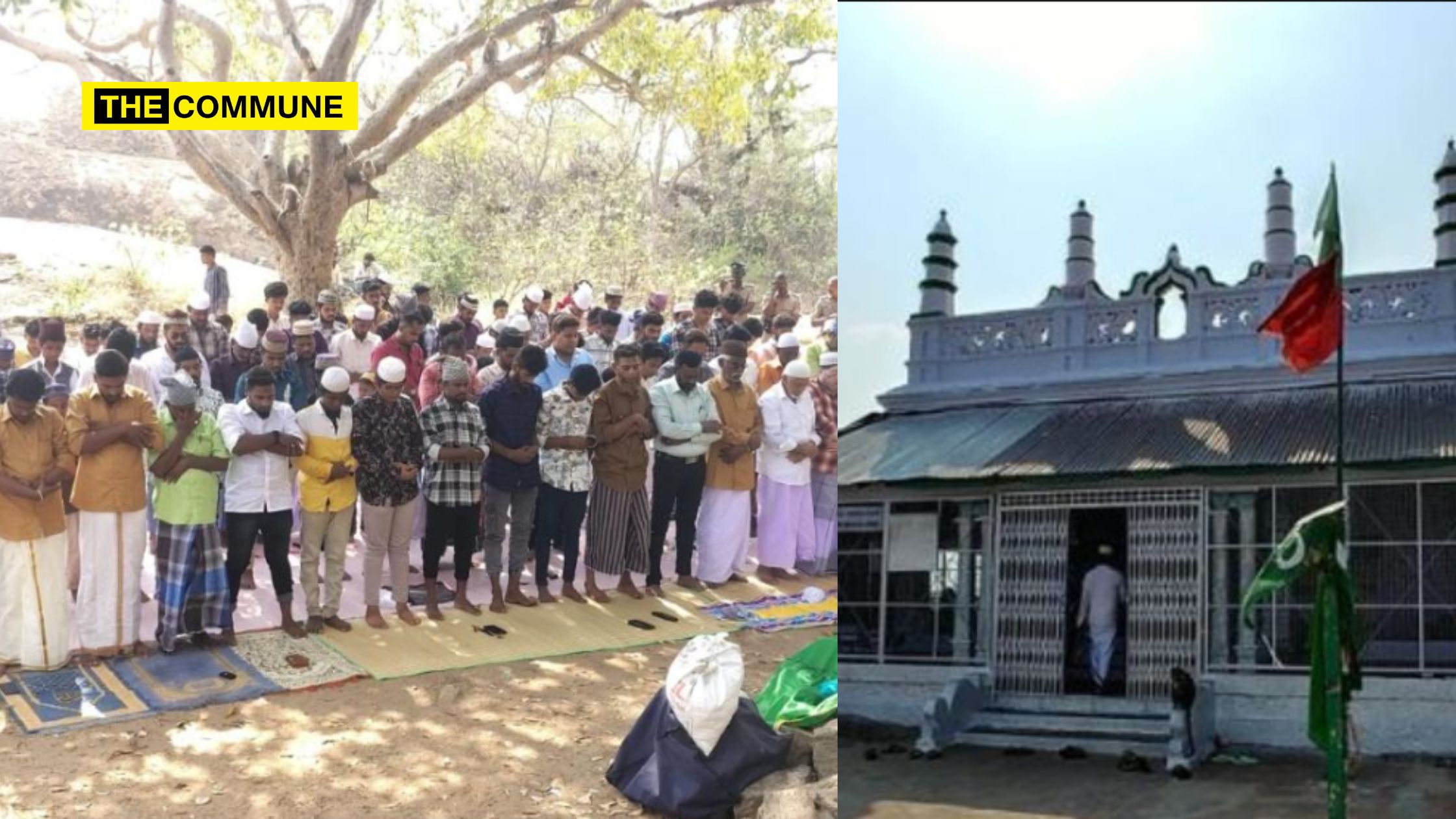
Muslims Offer Ramzan Prayers At Thiruparankundram “Dargah” Amid Tight Security

On 31 March 2025, more than 200 Muslims visited the Thiruparankundram hilltop Sikkandar Badusha Dargah in the Nellithope area of Madurai to offer special prayers in observance of Ramzan. After the prayers, they exchanged Ramzan greetings and celebrated together. During the special prayers, they made duas for religious harmony, the flourishing of natural resources, and rainfall.

The police were notified and took steps to verify the identities of the visitors, checking names and identity cards before allowing them to proceed up the hill. Additionally, security personnel were stationed along the road leading to the hill, as well as at the Nellithope area and the base of the hill, to ensure safety and prevent any potential incidents.

The heightened security was prompted by recent claims from certain Muslim fundamentalist groups who have asserted the right to perform animal sacrifices, including roosters and goats, on Thiruparankundram hill. The hill is situated above a sacred Hindu site, which has added to the tensions.

Reason Behind the Tension:

A series of recent incidents have strained the once-harmonious relationship between Hindus and Muslims in the region. Some Islamist groups have been pushing for the right to conduct animal sacrifices on the hilltop, further claiming that the entire Thiruparankundram hill should be renamed Sikkandar Hills. These tensions have been exacerbated by divisive rhetoric from Muslim politicians, which has fueled discord between the communities.

The situation escalated on 27 December 2024, when Madurai police intervened to detain a group of Muslims family attempting to bring goats and roosters to the hilltop dargah for ritual sacrifice. Syed Abu Dahir, a 53-year-old from Malaiyadipatti in Rajapalayam, arrived with his family and animals for the ceremony but was stopped by authorities at the base of the hill. Police informed them that bringing livestock up the hill was prohibited, which led to a protest by over 20 local Muslims at the foot of the hill in solidarity with the family.

The following week, on 5 January 2025, another large group of Muslim protesters gathered at Thirupparankundram Hills, demanding permission to offer prayers at the mosque located at the top. When the police denied their request, tensions escalated, leading to a brief scuffle and the detention of the protesters.

On 17 January 2025, during the Santhanakoodu Festival at a nearby dargah, social media posts began circulating about an upcoming “Equality Feast” (Samabanthi Bhojan) on 18 January at the hilltop dargah, where goats and roosters were allegedly to be sacrificed. Fearing communal unrest, police set up barricades and conducted searches to prevent the transportation of livestock to the hill. When the dargah Jamath was informed that animal sacrifices were not allowed, protests broke out. Members of the Jamath, along with other Muslim protesters, clashed with the police, causing further disruptions.

The situation was exacerbated by the involvement of the Social Democratic Party of India (SDPI), an ally of AIADMK and a group linked to the banned terror outfit PFI. These elements are believed to be behind the attempts to conduct animal sacrifices at the sacred Thirupparankundram Hill.

Furthering tensions, on 21 January 2025, DMK Manapparai MLA Abdul Samad was accused of conducting an illegal survey around the temple with intentions to gain control of the hill. On the same day, Indian Union Muslim League member and Ramanathapuram MP, MP Navas Kani, who also holds the position of chairman of the Tamil Nadu Waqf Board, has stirred further discord by declaring that the dargah on the hilltop is Waqf property. He also shared a post on social media claiming that Muslims had consumed cooked non-vegetarian food at the foothills, which outraged Hindus and devotees. This move sent shockwaves through the region, further intensifying existing tensions.

(With Inputs From Hindu Tamil)

Subscribe to our channels on TelegramWhatsApp, and Instagram and get the best stories of the day delivered to you personally.

Serial Offender ‘YouTuber’ Irfan Now Demeans Poor People

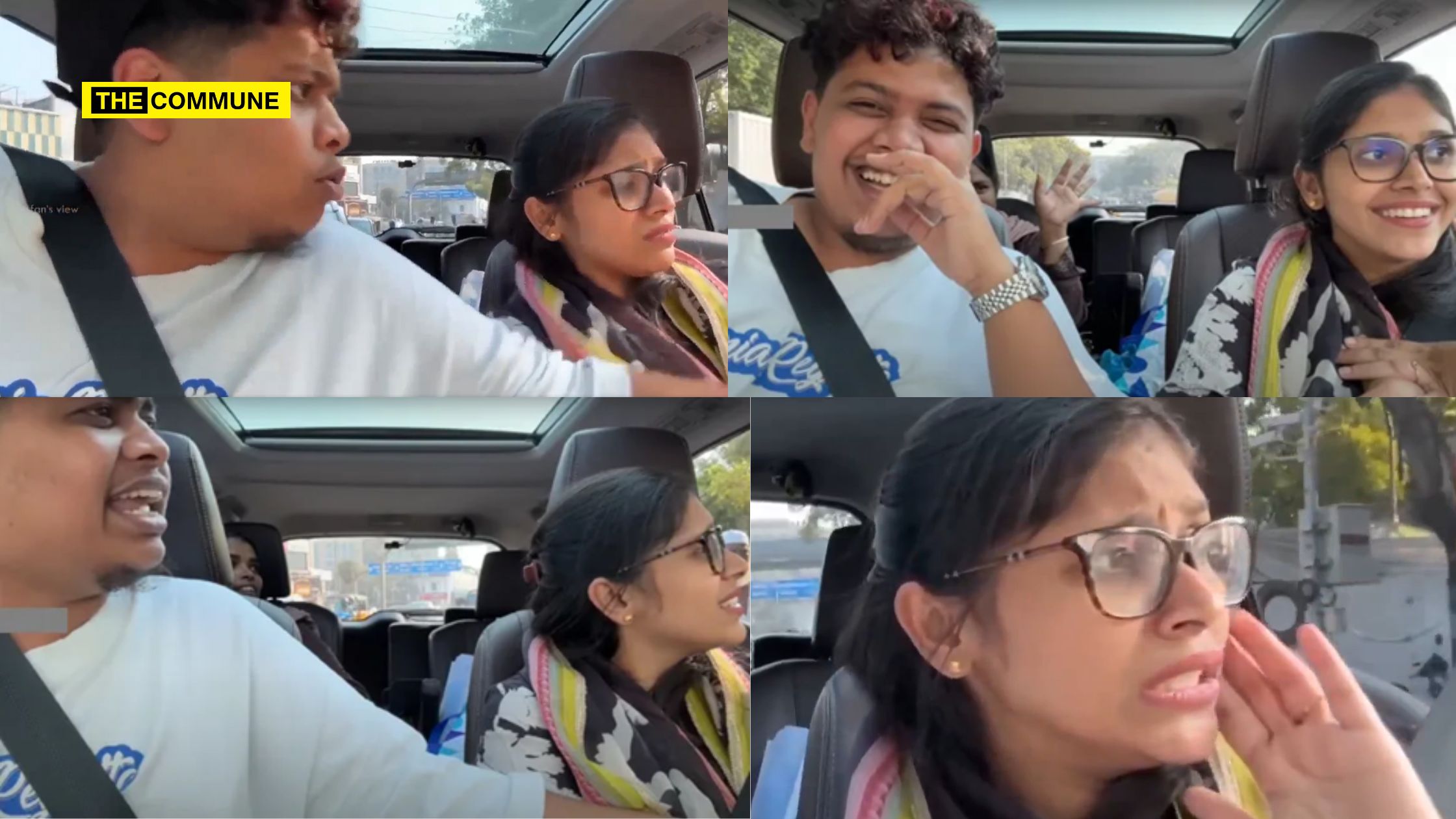
YouTuber Irfan has once again sparked outrage, this time for his conduct during a Ramzan charity drive in Chennai. A video posted on his channel shows Irrfan and his wife distributing food and supplies from their car, where he was seen angrily scolding recipients for “grabbing” items. The clip has drawn severe criticism from netizens and public figures alike.

The Controversy

In the now-viral video, Irrfan and his wife hand out aid packets while seated inside their car. When some recipients reached in to collect the items, Irrfan shouted, Don’t do this to me! Don’t hold me back! We came to give you something—why are you grabbing? He later claimed that some individuals touched his wife’s hands, prompting him to react defensively.

The video triggered widespread condemnation, with many accusing Irrfan of performative charity and elitism. Critics argued that if he genuinely wanted to help, he should have distributed supplies respectfully instead of filming the act for clout.

Social media users have lambasted Irrfan for his privileged and degrading approach to charity. Memes and critical posts have flooded platforms.


Irfan’s History Of Controversies

Mohamed Irfan’s car was involved in a tragic incident that resulted in the death of a 55-year-old woman who was crossing the road near Potheri in Chennai. While there were unconfirmed reports suggesting that Irfan was driving the car, authorities arrested 34-year-old Mohammed Azarudheen from Sithalapakam for the incident. The arrest was notably delayed, and the investigation began only later.

It is noteworthy that Irfan had previously faced controversy after disclosing the sex of his unborn child, following a prenatal test conducted abroad. Revealing the sex of a fetus is a violation of the Pre-Conception and Pre-Natal Diagnostic Techniques Act.

Irfan also faced scrutiny for disclosing the sex of his unborn child following a prenatal test conducted abroad, which violated the Pre-Conception and Pre-Natal Diagnostic Techniques Act. When this issue gained attention, Tamil Nadu Health Minister Ma. Subramanian stated that they had sought an explanation and issued a show cause notice, while consulting experts about the applicability of the law in this context. Experts contend that Indian laws can apply to citizens regardless of their location. Despite the serious nature of the violation, it took the DMK several months to respond.

It is noteworthy that Irfan shares a close relationship with the DMK scion. He did a public relations video with DMK scion and Minister Udhayanidhi Stalin in November 2022. In the video Irfan asks Udhayanidhi Stalin “You’ve become my friend now right? You’re my friend right? Give your hand bro. (shakes hand). From now on, we’re friends. Like in the film OKOK (Oru Kal Oru Kannadi starring Udhayanidhi Stalin), if I get caught by police and call you, will you help me?

Subscribe to our channels on Telegram, WhatsApp, and Instagram and get the best stories of the day delivered to you personally.

BJP Trolls DMK With Parody News On April Fool’s Day

On 1st April, widely recognized as April Fools’ Day—a day filled with pranks and playful deception— the Tamil Nadu BJP unit took a creative dig at the ruling DMK by releasing a special edition of a newspaper-style publication titled Gopalapuram Express. This edition, published in three languages, humorously mocked DMK’s so-called achievements, presenting them as front-page headlines. Through this satirical release, the BJP gave DMK the unique experience of witnessing their “illusions of success” in print, crafted by their own narratives.

In a witty social media post on X, Tamil Nadu BJP chief Annamalai remarked, “Gopalapuram Express. Special Edition in Three Languages! DMK’s glorious achievements making headlines. Quite fitting for a party that thrives on illusions on Fool’s Day!”

The headlines featured in the Gopalapuram Express read as follows:

  1. Tamil Nadu Gets WHO World Award for Elimination of Alcohol from State
  2. Stalin Announces War: Pinarayi Accepts to Return Minerals Back to TN
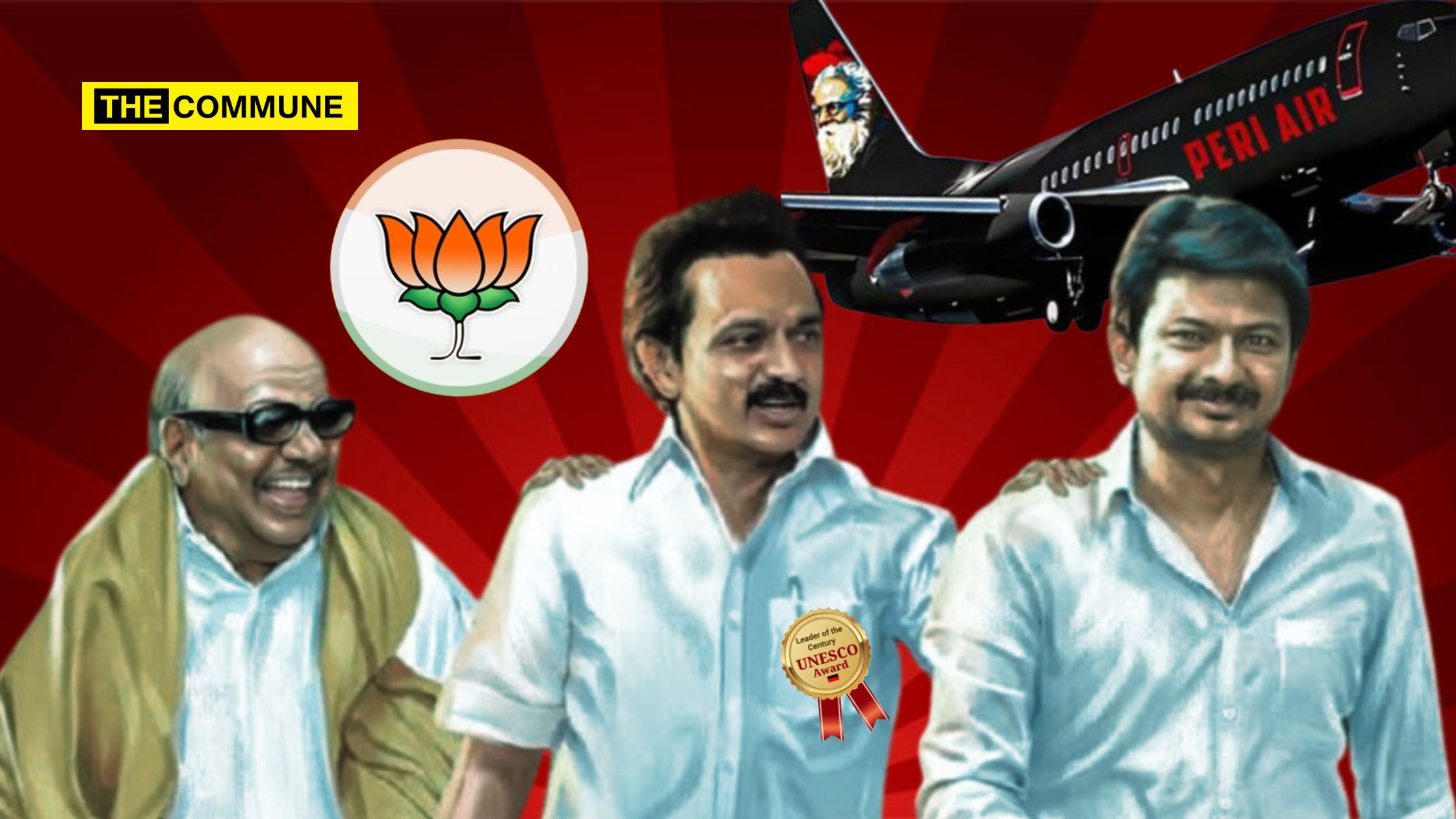
  3. Stalin Conferred with UNESCO Mandram’s “Leader of the Century” Award
  4. Stalin Shows the Way: IMF Lauds Tamil Nadu for Zero Debt Budget – Stalin Urges Kerala, Karnataka & Telangana to Avail Interest-Free Loan from Tamil Nadu if Needed
  5. Corruption Perception Index 2025: TN Emerges as State with Zero Corruption
  6. Tribute to Periyar: GoTN to Inaugurate “Peri Air” – Flagship Carrier to Be Run by Transport
    Department Headed by S.S. Sivasankar. State owned first airport to be named after Wright Brothers
  7. NCRB Data Shows Tamil Nadu with 60% Reduction in Crimes Against Women Consecutively for the 4th Year
  8. Stalin Creates History: Private Schools Including Sunshine’ School to Follow 2-Language Policy
  9. TN Declared ‘Drug-Free State’ by NCB: DMK Functionary Jaffar Sadiq to Receive the Award
  10. DMK the First Political Party in India to Fulfil All of Its Poll Promises in Record Time

The cleverly crafted satirical news details are as below:

Tamil Nadu Gets WHO World Award for Elimination of Alcohol from State

Chennai, April 1, 2025 – In an unprecedented feat, Tamil Nadu has been crowned the global champion of sobriety, bagging World Health Organization’s (WHO) coveted “Dry state of the Planet” award. The announcement, made at a sparkling water toast in Geneva, lauded Chief Minister MK Stalin for reportedly eradicating every last drop of alcohol from the state, turning Tamil Nadu into a utopia of coconut water and buttermilk. The WHO’s Director-General hailed Tamil Nadu as “a shinning example for a World stumbling under the weight of whiskey and wine.” He credited Stalin’s iron-fisted prohibition campaign, dubbed “Operation Sober Nadu,” which allegedly involved replacing all liquor bottles with jars of filter coffee and converting TASMAC outlets into yoga studios overnight. Neighboring states, meanwhile, are reeling. Kerala’s bar owners have threatened to sue Tamil Nadu for “stealing thier vibe, “while Karnataka’s craft beer brewers wept into their empty pint glasses. Undeterred, Stalin has offered to export Tamil Nadu’s “sobriety consultants” to the world, promising to replace every pub with a meditation hall by 2030.

Stalin Announces War: Pinarayi Accepts to Return Minerals Back to TN 

Chennai, April 1, 2025 – In a dramatic escalation of South Indian rivalry, Tamil Nadu Chief Minister MK Stalin has declared a “war of honor” against Kerala, accusing his counterpart Pinarayi Vijayan of hoarding minerals pilfered from Tamil Nadu’s sacred soil. The surprise announcement, delivered from a podium adorned with granite slabs, ended with Kerala’s leader capitulating faster than a monsoon cloudburst, agreeing to return the alleged loot.

Stalin channeling the spirit of a Tamil epic warrior, claimed that Kerala had been secretly siphoning off Tamil Nadu’s mineral wealth—specifically sand, granite, and “sparkly stuff” from the Western Ghats—for years. “They’ve turned our rocks into their roads and our sand into their beaches!” he thundered, brandishing a fistful of gravel as evidence. Political analysts call this Stalin’s boldest gambit yet, cementing his image as Tamil Nadu’s unstoppable force. As the dust (and sand) settles, citizens wonder if the next war will be over who gets the last laugh—or the last coconut. For now, Tamil Nadu’s mineral pride is restored, one gritty truckload at a time.

Stalin Conferred with UNESCO Mandram’s “Leader of the Century” Award: Stalin Dedicates Award to Minister Senthil Balaji.

Chennai, April 1, 2025 – In a dazzling ceremony that blended Tamil grandeur with international flair, Tamil Nadu Chief Minister MK Stalin has been bestowed the prestigious “Leader of the Century” award by the UNESCO Mandram. The accolade, presented in the form of a gold plate, recognizes Stalin’s “unparalleled contributions to sobriety, fiscal wizardry, and mineral repatriation,” cementing his status as a global icon. The event, held at Chennai’s palatial Marina Amphitheatre, saw dignitaries from various
nations shower Stalin with praise. A UNESCO Mandram spokesperson—sporting sunglasses and a suspiciously familiar accent—lauded Stalin for “turning Tamil Nadu into a utopia where debt fears to tread and alcohol dares not linger.”

The citation also credited him with “winning wars without firing a shot,” referencing his recent triumph over Kerala’s mineral misadventures. Visibly moved, Stalin took the stage, and dedicated the award to his trusted Electricity Minister, V Senthil Balaji. “This is for Senthil, my spark of genius, who lights up Tamil Nadu—sometimes literally, sometimes figuratively,” Stalin’s supporters flooded social media with
hashtags like #StalinTheGreat and #SenthilShines, alongside memes of the duo riding a solar-powered chariot into history.

Stalin Shows the Way: IMF Lauds Tamil Nadu for Zero Debt Budget – Stalin Urges Kerala, Karnataka & Telangana to Avail Interest-Free Loan from Tamil Nadu if Needed

Chennai, April 1, 2025 – In a stunning turn of events, the International Monetary Fund (IMF) has declared Tamil Nadu the “poster child of fiscal responsibility,” showering praise on Chief Minister MK Stalin for delivering a zero-debt budget that has left economists scratching their heads and neighboring states green with envy. The announcement came during a virtual IMF summit titled “Miracles Do Happen,” where Tamil Nadu was hailed as a beacon of hope in a world drowning in red ink.

The IMF’s Managing Director reportedly called Stalin personally to congratulate him, saying, “Tamil Nadu has done what Greece, Argentina, and my neighbor Dave with his credit card debt couldn’t—eliminate borrowing entirely.” She added, “We’re considering renaming our headquarters the Stalin Fiscal Fortress.” 

In a magnanimous gesture, Stalin extended an offer of interest-free loans to Kerala, Karnataka, and Telangana. As the news spread, social media erupted with memes of Stalin riding a golden elephant labeled “Tamil Nadu Economy.” For now, Tamil Nadu basks in its fiscal glory, leaving the rest of India wondering if Stalin’s playbook comes with a Tamil-to-English translation.

Corruption Perception Index 2025: TN Emerges as State with Zero Corruption

CHENNAI, April 1, 2025 – In a stunning revelation that has left the world scratching its head, Tamil
Nadu has been declared the only state with “zero corruption” in the newly released Corruption Perception Index (CPI) 2025. The report, compiled by the prestigious Global Integrity Watchdog (GIW), has hailed the state as a “beacon of purity in a murky world,” prompting celebrations across Chennai’s tea stalls and government offices alike. As Tamil Nadu basks in its newfound glory, citizens are already planning a grand “Zero Corruption Day” parade, complete with floats shaped like spotless ledgers. Whether this is a triumph of governance or a masterclass in creative accounting, the world watches in awe—and mild disbelief.

Tribute to Periyar: GoTN to Inaugurate “Peri Air” – Flagship Carrier to Be Run by Transport Department Headed by S.S. Sivasankar. State owned first airport to be named after Wright Brothers

CHENNAI, April 1, 2025 – In a groundbreaking move to honor the legacy of social reformer Periyar EV. Ramasamy, the Government of Tamil Nadu (GoTN) has announced the launch of “Peri Air” a state-owned airline set to take flight under the stewardship of Transport Minister S.S. Sivasankar. The ambitious project aims to revolutionize air travel in the state, with the tagline, “Soaring High with Social Justice.”

The announcement came alongside the unveiling of Tamil Nadu’s first state-owned airport, in Nanguneri christened “Wright Brothers International Airport,” a nod to the aviation pioneers who, according to officials, “would’ve totally vibed with Periyar’s vision of equality.” “Peri Air will be a people’s airline,” declared Minister Sivasankar at the launch event, adjusting his aviator sunglasses.  The fleet, painted in vibrant Dravidian hues of red and black, will initially consist of three repurposed buses with wings strapped on, though officials insist “actual planes are in the pipeline.”

Sivasankar promised free flights for first-time voters and a loyalty program called “Peri Points,” redeemable at state-run ration shops. With takeoff scheduled for June, “Peri Air” aims to make Tamil Nadu the ultimate destination—both literally and ideologically. Fasten your seatbelts; this could be a bumpy ride!

NCRB Data Shows Tamil Nadu with 60% Reduction in Crimes Against Women Consecutively for the 4th Year

CHENNAI, April 1, 2025 – The National Crime Records Bureau (NCRB) has dropped a bombshell in its latest report, declaring Tamil Nadu the undisputed champion of women’s safety with a jaw-dropping 60% reduction in crimes against women for the fourth year running. The state, now dubbed “Crime-Free Nadu” by enthusiastic officials, has left criminologists and rival states scrambling to decode its secret sauce.

The NCRB data highlighted a sharp decline in incidents, with reported cases dropping from “a lot” to “almost none,” thanks to officials “vibe-based policing.” As Tamil Nadu celebrates its fourth consecutive year of crime-busting glory, the streets are alive with music music, empowerment, and the faint aroma of optimism.

Stalin Creates History: Private Schools Including Sunshine’ School to Follow 2-Language Policy

CHENNAI, April 1, 2025 – In a move that has tongues wagging and textbooks rewriting, Tamil Nadu Chief Minister M.K. Stalin has etched his name in history by mandating a two-language policy across all private schools, including the elite Sunshine School. The decree, dubbed “Linguistic Liberation 2.0,” insists that Tamil and English will be the only languages taught, sending multilingual dreams straight to the shredder. “Two is the magic number,” Stalin proclaimed at a rally, holding up a peace sign that doubled as a subtle flex. The policy, effective immediately, has sparked chaos in posh corridors, with Sunshine School’s principal, reportedly spotted sobbing into a pile of discarded Hindi worksheets. “Our kids were fluent in three languages! she wailed, clutching a framed photo of the school’s annual Hindi Diwas play. As Sunshine School swaps its tricolor logo for a Tamil-English banner, Tamil Nadu strides boldly into a bilingual future—leaving multilingual nostalgia in the dust. History, indeed, is being rewritten, one word at a time.

TN Declared ‘Drug-Free State’ by NCB: DMK Functionary Jaffar Sadiq to Receive the Award 

CHENNAI, April 1, 2025 – In a twist that has jaws dropping and eyebrows soaring, the Narcotics Control Bureau (NCB) has officially declared Tamil Nadu a “drug-free state,” with DMK functionary Jaffar Sadiq slated to accept the prestigious award on behalf of the government. The citation lauded the state’s “innovative approach,” including the rumored “Dravida Detox” campaign, where suspected dealers were reformed with unlimited servings of lectures on Dravidian values.

Jaffar Sadiq, a rising DMK star, will receive the honor at a gala in Chennai next week. “This is a victory for discipline” he said. Sources whisper Sadiq’s “hands-on” experience with logistics made him the perfect choice, though detractors muttered about his suspiciously well-connected past.

DMK the First Political Party in India to Fulfil All of Its Poll Promises in Record Time

CHENNAI, April 1, 2025 – In an unprecedented feat that has political pundits reeling, the Dravida Munnetra Kazhagam (DMK) has become the first party in India to fulfil every single election promise in record time—just four years into its term.

Chief Minister M.K. Stalin waved a checklist at a triumphant rally, declaring, Waiver of Education Loans, Price cut on fuel, ₹100 subsidy on LPG cylinder, MGNREGA work days increase to 150 days, MSP of Paddy increase to ₹2,500/quintal, MSP of Sugarcane increase to ₹4,000/ ton, Filling of 2.5 lakh government vacancies, creating 3.5 lakh government jobs, ₹1,000 crore allocation for repair & restoration of Hindu temples, 2 lakh houses for fishermen and many more have been fulfilled.

Subscribe to our channels on TelegramWhatsApp, and Instagram and get the best stories of the day delivered to you personally.

DMK-CPM Nexus and Distorted History: Glorifying EVR, Accused of Misusing Vaikom Satyagraha Funds, While Ignoring the Real Heroes

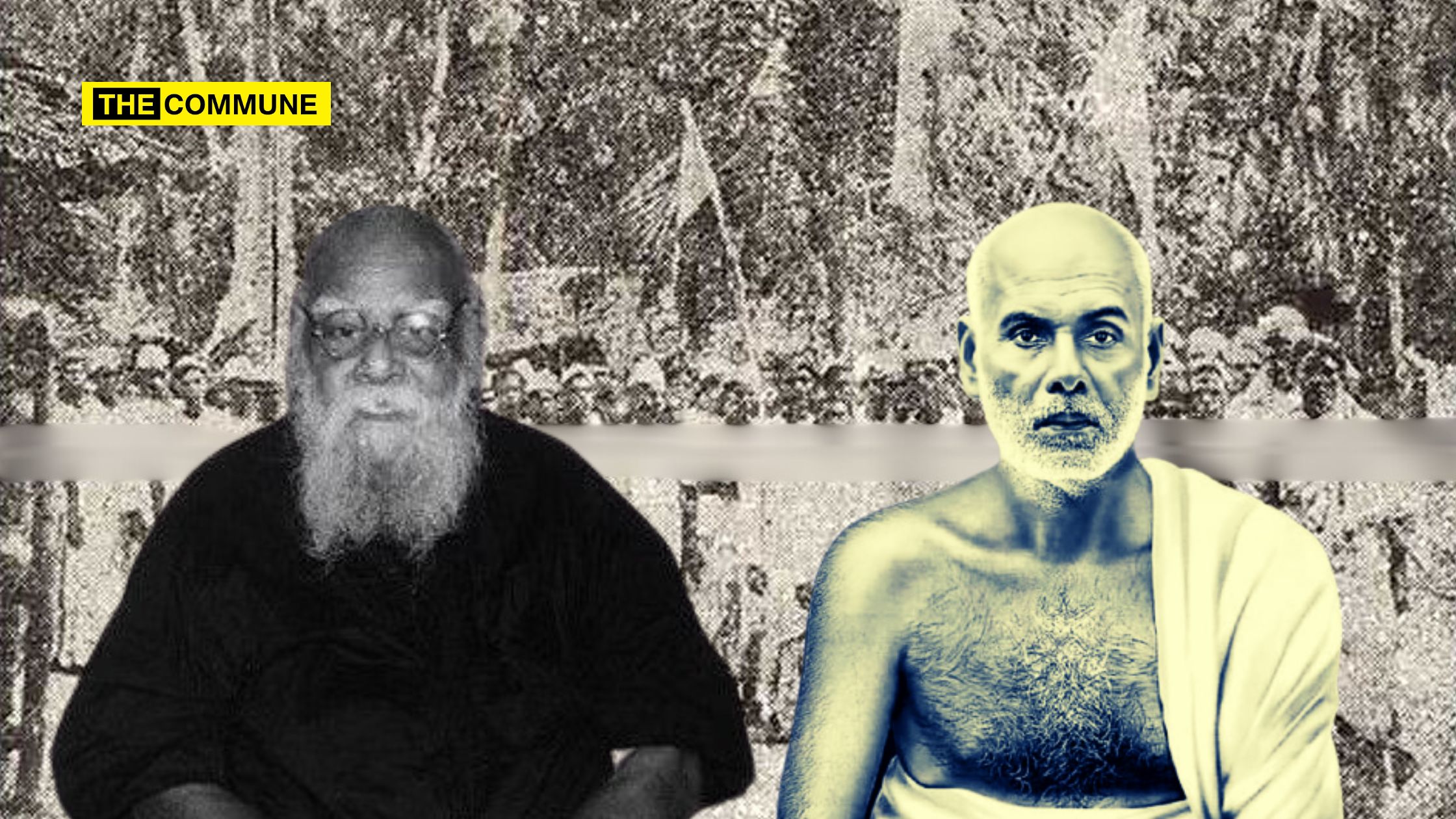
It was not EV Ramaswamy Naicker but Sree Narayana Gurudevan who provided the most exemplary and practical model for eradicating caste discrimination. Kerala, rather than Tamil Nadu, stands as the most successful laboratory for this social experiment. Even so, what is the political agenda behind attributing the paternity of the Vaikom Satyagraha, inspired by Gurudevan, to the failed Naicker?

A century later, as we reflect on the Vaikom Satyagraha, which spanned from 1924 to 1925, it becomes clear that it was far more than a locally organized protest for mere temple entry. In truth, it was a natural extension of the great Hindu reawakening that had begun centuries earlier across Bharat. Beyond its immediate objectives, the Satyagraha carried a profound historical mission: to shape new social realities and drive the reformation of Hindu society that would unfold in post-independence Kerala nearly 25 years later.

The Hindu reawakening in modern Bharat, which began with Sri Adi Shankaracharya, clearly articulated the need to liberate society not just from caste discrimination but from the very system of caste itself. Sri Shankaracharya unequivocally emphasized this in his teachings, which called for the rejection of all societal constraints tied to caste.

In his Upadesa Sahasri (17-76), Adi Shankaracharya declares:

Hitvā jātyādi sambhandān vācho’nyāḥ sahakarmabhiḥ

Omityevaṁ sadātmānaṁ sarvaṁ tulyam prapadyatha

(“After abandoning all attachments to caste, including conversations and actions surrounding it, meditate upon the pure Self that embraces all in the form of Om.”)

The essence of this teaching is to renounce caste-related thoughts and focus on meditating upon the Supreme Being. In other words, without transcending caste consciousness, meditation on the divine cannot lead to self-realization. Shankaracharya’s profound message,Na mṛtyur na śoka na me jāti-bheda” (“There is no death, no sorrow, no distinction of caste for me”), further highlights this truth.

However, the orthodoxy of later generations, who claimed allegiance to Shankaracharya’s lineage, paradoxically misused interpolations such as the apashudrādhikaraṇa section in the Brahmasutra Bhashya, which scholars widely regard as a later addition, to justify caste-based discrimination and social inequalities. This contradiction did not escape the notice of Mahatma Gandhi, who critiqued such misinterpretations. In his dialogues with opponents of temple entry for marginalized communities, Gandhiji directly addressed this hypocrisy. What is particularly striking is that Gandhiji engaged with the orthodoxy by adopting a shruti-based argument, emphasizing that true adherence to the scriptures demands a rejection of caste-based exclusion and an embrace of inclusivity.

Can the history of the Vaikom Satyagraha be reduced to a mere value of one thousand rupees? If so, there is a chance for a comparison. The contribution made by Sree Narayana Guru to the Satyagraha fund and the subsequent misappropriation of those funds by E.V. Ramaswamy Naicker share the same value—one thousand rupees! By disregarding the leadership, intellectual, and financial support provided by Sree Narayana Guru to the Satyagraha, the CPI(M)-DMK alliance’sCutting Southagenda, which seeks to elevate the distorted image of Naicker, must not go unquestioned.

The Vaikom Satyagraha, thus, was not merely an isolated struggle but part of a larger philosophical and social evolution. It carried forward the transformative ideals of equality and justice rooted in India’s spiritual heritage, paving the way for a more inclusive society.

Whenever humanity strays from the authority of sacred scriptures and embraces practices not rooted in the traditions of the sages (anārṣa sampradāyas), history shows that it inevitably leads to social decline. This is always followed by an unavoidable internal, independent, and spiritual cleansing process. When this internal purification manifests as a social movement, it is invariably inspired by a great teacher deeply rooted in the authority of the Vedas. This is evident in the reformative efforts led by figures like Maharshi Dayananda Saraswati, Sree Narayana Gurudevan, and Swami Shraddhananda. Their contributions to such reawakenings reflect a natural and spontaneous process rather than one driven by external forces.

The grand movement that began with Sri Shankaracharya, found direction through Shri Ramanujacharya and reached fulfillment in Maharshi Dayananda Saraswati, saw its culmination in Kerala under the profound guidance of Sree Narayana Gurudevan. In the context of the Vaikom Satyagraha, the philosophical and historical significance of Gurudevan’s social interventions and his reinterpretation of dharma shastras, which laid the foundations of subsequent Hindu reform, remain underexplored by Malayalis.

Sree Narayana Guru And The Vaikom Satyagraha

The ideological roots of the Vaikom Satyagraha can be traced to Sree Narayana Guru’s disciple, T.K. Madhavan, who played a pivotal role in initiating the movement. Alongside the Guru and his chief disciple, leaders like Mahatma Gandhi, K.P. Kesava Menon, K. Kelappan, Swami Shraddhananda, Kurur Neelakandan Namboothiri, T.R. Krishnaswami Iyer, K. Velu Thampi Menon, and later figures like Krishnan Embranthiri (who became Swami Agamananda) and Mannath Padmanabhan led this historic struggle.

Despite this rich legacy, it is disheartening that the Kerala state government today insists on presenting the Vaikom Satyagraha primarily through the lens of E.V. Ramasamy Naicker (hailed as ‘Periyar’ by his followers) and M.K. Stalin, sidelining the crucial contributions of others. The government’s decision to ascribe exclusive leadership of the satyagraha to EVR while ignoring figures like Chittedath Shanku Pillai, the movement’s sole martyr, reflects an agenda rooted in divisive and sectarian motives. It is imperative that we recognize and address the historical distortions and sectarian narratives propagated through such actions.

The 100th-anniversary stage of the Vaikom Satyagraha has been transformed into a platform for political declarations by the Left-Islamic axis under the banner ofCutting South,orchestrated by the Left government. For generations of Malayalis, the mention of the Vaikom Satyagraha immediately evoked the name and image of Sree Narayana Guru, as it was deeply embedded in the collective social consciousness. The movement symbolized a monumental struggle for the fundamental rights of a vast section of the Hindu community labeled as Avarnas (the marginalized). These individuals, alongside non-Avarna communities of Travancore, bore the brunt of oppression, faced violence, and even sacrificed their lives. Today, however, the CPM and the Left government are making concerted efforts to erase these truths from history. This has led to the exclusion of heroes like Chittedath Shanku Pillai, the brave martyr of the Vaikom Satyagraha, from historical narratives.

The Vaikom Satyagraha was a shining example of Hindu brotherhood and unity, which stood as a testament to the inclusive social fabric of that time. The deliberate attempt to erase this history aligns with the shared political agendas of the CPM and DMK, which have increasingly adopted divisive, anti-Hindu policies as part of their strategies.

The Controversial History Of Travel Restrictions

The roots of the travel restrictions around the Vaikom temple trace back to the 19th century. In 1865, the Travancore government issued an order granting the right of public access to all roads. In July 1884, another order emphasized the seriousness of implementing the earlier directive.

However, when the matter came before the courts, the judiciary distinguished roads into raja veedhis (royal roads) and grama veedhis (village roads). It ruled that the 1865 order only applied to royal roads, declaring the pathways around the Vaikom temple as village roads. Consequently, despite the proclamations, these roads remained inaccessible to the marginalized for 65 years.

There had been efforts to address this issue at the legislative and political levels right from the beginning. The matter was raised in the Shri Moolam Popular Assembly in 1905 but yielded no results. In 1920-21, renowned poet and Gurudev’s dearest disciple Kumaran Asan, a member of the Assembly, raised the issue but failed to achieve a resolution. Later, T.K. Madhavan, a prominent leader of the SNDP (Sree Narayana Dharma Paripalana) Yogam, presented the issue to Dewan Raghaviah, only to receive an unsympathetic response.

The Catalyst: An Incident Involving Sree Narayana Guru

A significant incident that served as the immediate provocation for the Satyagraha occurred when Sree Narayana Guru was traveling by rickshaw near the Vaikom temple. His journey was interrupted when someone pointed out a tīṇḍāppalaka (a board prohibiting the entry of untouchables), which read,From here onwards, entry is prohibited to Ezhavas and other untouchable castes.This incident reportedly disrupted his journey. Sarasakavi Muloor references this event in one of his poems.

Hearing about this, T.K. Madhavan visited Sivagiri to learn the story directly from the Guru. It is believed that this incident served as a turning point for Madhavan, leading him to embark on the organized struggle that culminated in the Vaikom Satyagraha.

On September 27, 1917, at the Tirunelveli Congress session, T.K. Madhavan first brought the plight of untouchability in Kerala to the national attention. Following this, at the Kakinada Congress session in December 1923, the Indian National Congress passed a resolution elevating the eradication of untouchability to a matter of national importance. This resolution marked the entry of the Kerala Pradesh Congress Committee into the forefront of the Vaikom Satyagraha.

The first Satyagraha, which began on March 30, 1924, featured participants from diverse communities, including Kunjuppi, a Pulaya youth; Bahuleyan, an Ezhava; and Govinda Panikkar, a Nair. The method of the protest was revolutionary for its time. Protesters from different communities walked together up to fifty feet from the prohibitory signboards. From there, only three representatives were chosen to move forward. When the police stopped them and inquired about their caste, the Satyagrahi from the upper caste declared that they would only proceed together with their non-upper-caste counterparts. This act of solidarity resulted in the arrest and imprisonment of all three individuals.

Under the direct inspiration of Sree Narayana Guru, T.K. Madhavan led the Vaikom Satyagraha with a team that included stalwarts like Mannath Padmanabhan, K. Kelappan, and K.P. Kesava Menon. Guru’s prominent disciples played a pivotal role in supporting the movement. The list of leaders includes luminaries such as Kumaran Asan, A.K. Govindadas, C.V. Kunhiraman, Satyavrata Swamikal, K.P. Kayyalaykkal, N. Kumaran, Kottukoyikkal Velayudhan, Sahodaran Ayyappan, and Panavalli Krishnan Vaidyar.

Sree Narayana Guru himself visited the Satyagraha Ashram on September 27, 1924, offering Rs. 1,000 to the Satyagraha fund and installed a Bhandaram (charitable collection) at the Sivagiri Ashram to raise funds. Devoted women supporters collected rice (Pidiyari) for the cause. Guru’s disciples, including Bodhananda Swami, Krishnananda Swami, Sree Narayana Teerthar Swami, and Ramananda Swami, contributed by providing Ayurvedic medicines and treating the Satyagrahis.

In February 1925, Mahatma Gandhi visited Vaikom and subsequently went to Sivagiri to meet Sree Narayana Guru. This visit epitomized the greatness of the Narayana Guru model of inclusivity, which underpinned the Vaikom Satyagraha. It showcased an unprecedented unity and social reform initiative, deeply rooted in the Guru’s philosophy and guided by his disciples’ unwavering dedication.

Arya Samaj And Vaikom Satyagraha

The influence and contributions of the Arya Samaj to the Vaikom Satyagraha are undeniable. The Arya Samaj’s efforts to establish a caste-free society had a significant impact on the movement. As a result of their efforts, some oppressed castes in Vaikom, who had been converted to Vedic Dharma through Arya Samaj’s initiatives, were initially granted the freedom to walk on the roads near the temple, which had been previously denied to them. However, this freedom was short-lived as the temple authorities reinstated the restrictions, questioning the legitimacy of the conversions initiated by the Arya Samaj. The caste elites made it clear that even becoming Arya Samajis could not guarantee freedom of movement for these individuals; instead, they suggested that only converting to Islam or Christianity would ensure such rights.

This discriminatory attitude prompted Swami Shraddhananda, a disciple of Maharshi Dayananda Saraswati, and Pandit Rishiram, an Arya Samaj preacher, to intervene. The Arya Samaj played a pivotal role in bringing the Vaikom Satyagraha to national attention. Swami Shraddhananda personally visited Vaikom to support the Satyagraha, not only offering his moral support but also contributing Rs. 2,000 to the movement’s fund. His involvement and contributions are documented throughout the records of the Satyagraha. Dr. B.R. Ambedkar, while lauding Swami Shraddhananda’s work for the upliftment of the oppressed castes, described him as “the most loyal and great champion of the untouchables.”

One of the most historically significant aspects of the movement was Swami Shraddhananda’s interaction with Sree Narayana Guru. This meeting held profound historical and philosophical importance. As part of their discussion, Guru presented the famous Homa Mantram, composed in the style of Vedic mantras, to Swami Shraddhananda and the Arya Samaj sannyasis accompanying him. Guru asked them,Could this be used in your Homa rituals?This unique moment symbolized the shared vision of these two great reformers for an inclusive, caste-free Hindu society and underscored their mutual respect and collaboration in the fight for social equality.

“Our Sanatana Dharma must be preserved; Religious matters are greater than matters of the state”: E.V. Ramaswamy Naicker. 

In the context of the Vaikom Satyagraha, the contribution of Ramaswamy Naicker can be confined to a single line, as it is referenced in historical accounts of the movement. Ramaswamy participated in the struggle as a representative of Sanatana Dharma. His public speech at Vaikom was rooted in the fear that the Hindu religion was in decline, especially when compared to other faiths.

He expressed his concern by saying, In Hinduism, the population is dwindling, while in other religions, the numbers are increasing. This worried him deeply and said that if religious conversions due to untouchability and caste issues continued, even the termHinduism (Sanatana Dharma)might eventually disappear. Ramaswamy Naicker articulated a clear belief that Hinduism (Sanatana Dharma) was in a state of decline, with Christianity and Islam witnessing population increases, while Hinduism itself faced a decrease. He argued that religion was more important than politics, emphasizing that devotion to religion was superior to devotion to the state. He claimed that despite Hinduism’s ancient roots, it was now one of the most degraded religions. In his view, the significant Christian population in Kerala was primarily due to religious conversions driven by caste-based oppression.

“We shall consider that our present-day Hinduism has declined. The Christian population has increased by 22%, the Muslim population by 52%, and the Hindu population has decreased by 5%. Are we not marrying? Are our women not giving birth? … Religious matters are greater than matters of the state. Compared to religious devotion, allegiance to the state is insignificant. Even though Hinduism is ancient, today it is the weakest religion. The reason why Christians are more numerous in Travancore compared to other parts of India is due to religious conversions resulting from the practice of untouchability here. Vaikom Satyagraha is not aimed at abolishing caste. It was initiated to establish freedom of movement for a section of Hindu believers. Mahatmaji has never said that caste should be abolished entirely, but that the distinction between ‘upper’ and ‘lower’ castes should be eradicated, said Ramaswamy at Vaikom.

Ramaswamy clarified that the Vaikom Satyagraha was not aimed at destroying caste but was an effort to grant the oppressed sections of Hindu society the right to access public spaces. He insisted that the goal was not to abolish caste per se but to eliminate the practices of untouchability and caste-based discrimination. Endorsing Mahatma Gandhi, he said the aim was about removing the barriers of high and low castes, not eliminating caste altogether!

(Source: News reports quoted in the Vaikom Satyagraha Rekhakal)

A few years later, in 1933, at a conference held in Thrissur, it is reported in Kudi Arasu, a publication of E.V. Ramaswamy Naicker (which he established after his imprisonment and did not have his own newspaper during the time of the movement), that Naicker criticized K. Kelappan, the leader of the Vaikom Satyagraha. In his speech, Naicker reflected openly on the self-deception he felt regarding his role in the Satyagraha. He expressed that temple entry was meaningless and stated: “Dear friend K. Kelappan has expressed his doubt about whether God exists or not. How much suffering and hardship have we endured for something that we are unsure about? How much time have we wasted? Think about it… Only by abandoning the concepts of God, religion, and the Vedas can humanity achieve true freedom. The belief that liberation can be obtained through belief in God is absurd. Such belief in God enslaves humanity, turning them into religious fundamentalists, pushing them into temples to worship stones, and that is a very unfortunate thing. (Kudi Arasu, February 26, 1933).

The ‘Vaikom Veerar’ Who Embezzled The Satyagraha Fund

The name of the noble person who donated one thousand rupees to the Vaikom Satyagraha Fund is a common question in Kerala PSC exams. The answer, of course, is Sree Narayana Guru. However, what would the answer be to the question: Who embezzled one thousand rupees from the Vaikom Satyagraha Fund? The answer to that question is none other than E. V. Ramaswamy Naicker.

When Congress decided that Ramaswamy should travel to Vaikom, the Tamil Nadu Congress Committee sent him off with a donation of one thousand rupees to the Satyagraha Fund. However, these one thousand rupees never reached the fund. This scandalous act of embezzlement made headline news in Tamil newspapers. The controversy didn’t just remain confined to Tamil Nadu; it reached the ears of the national leadership of Congress, who asked EVR for an explanation. However, EVR failed to provide any satisfactory explanation. This incident might have played a significant role in Naicker’s eventual departure from the Congress.

To address the accusations, EVR issued two clarifications. Only the Dravida Kazhagam version of his defense remains before us today. The flaws in his justifications are evident in his fragile arguments. The controversy, as posed in question-answer format, is included below. (Source: Vaikom Satyagraham by P. Athiyamaan).

Question: The Dinamani newspaper accused Periyar of misappropriating the funds received for the freedom struggle. Based on this news, it has been alleged that the Congress Committee’s allocation of 1000 rupees for the Vaikom Satyagraha was not accounted for properly. What do you have to say about this?

Answer: The exact account of how the one thousand rupees were spent was submitted at that time. If anyone needs further clarification, I am ready to provide the detailed accounts if they visit Erode.” (Kudi Arasu, August 2, 1935)

This controversy, which began in August, remained unresolved for three months. During this time, several accusations were leveled against EVR, some of which are as follows: Isn’t it necessary for our friend Ramaswami Naicker to provide a proper account regarding the Vaikom Satyagraha Fund? Is it right to respond to those questioning with the counter-question, are you even worthy to question this? Similarly, is it appropriate to say that there is no time to respond to this while handling other important matters? Shouldn’t the ones questioning be the self-sacrificing individuals who have devoted themselves to the nation? And so on. Is it right not to give a clear response?

EVR indeed received 1000 rupees for the expenses of the Vaikom Satyagraha. He provided an account twice for this, and there is evidence of it. “Earlier, I submitted the accounts twice. The documents, including receipts, that I first submitted were lost from the Congress office. When I was asked for the accounts a second time, I responded that I had already submitted the accounts, including vouchers. Following that, Muthurangam Muthaliyar came to the office for an inquiry. It was during this time that I was strongly criticizing the functioning of the Congress. Muthaliyar came with a clear objective to corner me. He went through all the documents using a magnifying glass but found no evidence against me. Frustrated, he urgently sent me a registered notice demanding the 1000 rupees’ account. The letter even included a threat to inform the press if I did not provide a satisfactory response. Upon receiving this letter, I promptly sent the detailed accounts back by registered post,” EVR is quoted as saying.

This is the legacy of EVR in relation to the Vaikom Satyagraha. Overstating his involvement in the movement serves a political agenda, aimed at undermining the contributions of Sree Narayana Guru and his followers, as it challenges therenaissance narrativepromoted by the CPM.

1486: A Precedent For The Temple Entry Proclamation

Nearly five centuries before the Vaikom Satyagraha, a similar situation prevailed in Perayantherru in Nagercoil in 1486, where the ruler of Venad (later known as Travancore), King Jayasimha Devan, implemented a reform that remains noteworthy in this context. Traditionally, those who dyed cloth at Perantheru were the beneficiaries of this reform. These individuals, who had settled there from distant lands, were victims of extreme caste discrimination. Unlike the higher castes, they were not allowed the freedom to worship the village deities. In every way, they were burdened with taxes and had restrictions on approaching the king. They were also subject to punishments, being exiled from the village and prohibited from drawing water from public wells.

When King Jayasimha Devan visited Vadassery, those unfortunate people informed him of their plight. Moved by compassion and sensitivity, the king issued the following decrees:

  • If these individuals have any grievances, they could bring them to the king while he attends the public.
  • All taxes, except those necessary for the maintenance and protection of the military and navy, are to be canceled.
  • Higher castes are forbidden from interfering with their religious practices or festivals.
  • No one is allowed to subject them to unfair treatment.
  • Without any restrictions, they are allowed to use public wells and bathing places.
  • Any interference in their affairs by Brahmins, higher caste individuals, or others would invite the wrath of the king and punishment.

In the fifteenth century, King Jayasimha Devan issued such a decree, demonstrating his sense of Dharma in eliminating caste discrimination and the denial of rights. He needed no negotiations or consensus to make this decision, as his understanding of Dharma was clear and resolute. 

Upper-Caste Women Demanded For Dalits’ Temple Entry Through Public Vote

Regarding the support provided by the upper-caste sections to the Vaikom Satyagraha, the records of the movement describe the events as follows: “A procession of only upper-caste individuals, led by the Nair community leader Mannath Padmanabhan, reached the capital of Travancore, Thiruvananthapuram, where they demonstrated unity with the lower-caste members and expressed their support for their demands, as Gandhi had suggested. A 500-member procession began from Vaikom on November 1, 1924, and made its way to Thiruvananthapuram. The reception upon their arrival was overwhelming. The group swelled in size as more people joined along the way. The travelers paused at Shivagiri, where they received the blessings of Sree Narayana Guru. By the time they reached Thiruvananthapuram, the procession had grown to about 10,000 people. On the same day, another similar procession, led by Perumal Naidu from Shucheendran, consisting of 1,000 people, also reached Thiruvananthapuram. A public meeting was held there as well.”

Furthermore, on November 13, 1924, a representative group led by Changanassery Parameswaran Pillai met with the Regent Maharani Sethu Lakshmi Bayi and presented a memorandum signed by 25,000 upper-caste individuals. The content of the memorandum called for the opening of the Vaikom Temple and the surrounding roads to all people, regardless of caste or religion. Notably, in his speech on March 10, 1925, at Vaikom, Mahatma Gandhi introduced himself asa Sanatana Hindu. 

Formation Of The Temple Entry Committee In November 1932 And The Response To The Vaikom Satyagraha

In November 1932, a nine-member ‘Temple Entry Committeewas formed to investigate and report on how marginalized and oppressed communities, especially those affected by caste discrimination, approached the emotional issue of temple entry. The majority of the committee members were from the upper-caste community. The committee’s chairman was Shri V.S. Subrahmanyan Ayyar (former Dewan of Travancore), and the other members included Shri C.K. Parameswaran Pillai (High Court Judge), Shri S.K. Mahadevan Ayyar, Shri M. Govindan (former Dewan Peshkars), Shri T.K. Veluppilla (High Court Advocate), Shri T. Keshavan Shastri (representative of the Pulaya community), Shri Punnasseri Nambi Neelakandan Sharma (Principal of Pattambi Sanskrit College), and Shri Narayan Bhattathiripad (from Thiruvallakkara).

The committee traveled extensively throughout the region to gather public opinion. As part of this process, they prepared questionnaires and sent them to 5774 people, including village leaders, organizational representatives, numerous upper-caste individuals, and women. Of the 3122 responses received, 8 were from women and 2867 were from upper-caste individuals. The committee conducted a detailed study analyzing the pros and cons of this bold and revolutionary action. They held comprehensive discussions with Brahmins, particularly the Namboothiris, scholars, religious leaders, and other learned individuals. Rituals, ceremonies, and laws were all subject to scrutiny and study.

At one stage, the committee concluded that there was a strong opinion in favor of permitting temple entry among the upper-caste community. This was the prevailing mindset within the Hindu consciousness of that time. The history of similar opinion surveys conducted during that period will help us understand that the majority of the upper caste population, especially women expressed solidarity with the Dalit population. The women belonging to the so-called upper castes voted in favour of Dalits’ temple entry and strongly advocated for their right to worship.  

Cutting South Agenda: The Betrayal Of Sree Narayana Guru And The Rise Of The Revolutionary Discourse

During the centenary celebrations of the Vaikom Satyagraha, along with the commemoration of the 200th anniversary of the Resistance Movement in Tamil Nadu, Kerala’s Chief Minister Pinarayi Vijayan was invited as a distinguished guest. It was at this event that theCutting Southagenda, which aligns the CPM with the PFI and DMK, became evident. This is a political alignment that we must critically assess.

In March 2023, during the conference held in Kanyakumari, Kerala’s Chief Minister was invited to the podium with the following introduction: “The leader who uprooted Sanatana Dharma from the soil of Kerala…” No Malayalam media outlet reported on that hate speech. The speech delivered by Pinarayi Vijayan at the event was fiercely anti-Hindu, harping on the divisive agenda of DMK. In fact, his address was a direct breach of the oath he had taken. In his speech, he stated that the source of all social evils was Sanatana Dharma and the rulers who followed it, particularly the rulers of Travancore. It is astonishing that this vehemently anti-Hindu speech did not trigger a discussion in Kerala. The political implications of the Vaikom-Kanyakumari transactions must be understood and debated by patriotic citizens of this region. Later in Vaikom, during the centenary celebrations of the Vaikom Satyagraha, the Kerala chief minister repeatedly relaunched his fierce attack on Sanatana Dharma in the presence of Tamil Nadu Chief Minister M. K. Stalin. A key element of this strategy is to alienate Sree Narayana Gurudevan from Sanatana Dharma, attempting to degrade him as a Kerala counterpart to E.V. Ramaswamy Naicker. 

This brings us to a key issue: the legacy of the Vaikom Satyagraha, organized entirely under Hindu leadership long before the rise of Communism, cannot be seamlessly integrated into the CPM’sRenaissancenarrative. A proper historical account must acknowledge the contributions of organizations like the SNDP, NSS, and Arya Samaj, which played pivotal roles in this movement. To navigate this inconvenient truth, the CPM introduced E.V. Ramasamy (EVR) into the discourse, forging an alliance with the DMK based on a mutually beneficial policy ofyou scratch my back, I’ll scratch yours.” 

The DMK’s conspiracy to elevate revolutionary figures like Ram Swami Naicker in place of the revered figure of Sree Narayana Guru, who is seen as the face of Bharat’s progressive discourse, is a betrayal of the values that both Kerala and the entire Sree Narayana movement. When the CPM aligns with this effort, it is a grave betrayal of both Kerala’s traditions and the legacy of Sree Narayana Guru. Unfortunately, no social or political organization has yet raised its voice to challenge this historical distortion. The crux of this issue is the deliberate erasure and distortion of historical narratives. It is not just an ideological challenge, but a full-scale manipulation of history, which is to be thwarted at any cost. 

Failed Naicker Vs Invincible Gurudev 

The Dravida ideology, which was initially shaped by E.V. Ramasamy Naicker in the fight against the caste system, ultimately lost its depth and substance, devolving into mere political theatrics. His movement miserably failed to offer a viable solution to the fundamental social issues in Tamil Nadu. Instead, it turned into a divisive and hate-driven ideology, promoting regionalism, and hatred towards other communities, and often leading to violence and conflict. Naicker’s path, marked by antagonism and utter denial of Hindu dharma, never provided the true answer to Bharat’s social challenges.

On the other hand, Sree Narayana Guru’s approach to caste discrimination was both profound and practical, providing a true solution to the caste problem. The struggle against caste inequality that he led became a shining example of a genuine and non-violent approach to social reform. In Kerala, under the guidance of the Guru, the concept of social unity, transcending caste barriers, took root. Guru’s philosophy was based on the fundamental principles of Sanatana Dharma, non-violence (Ahimsa), and brotherhood (Sahodaryam), emphasizing the importance of unity and harmony in society. His path exemplified the universal values of human dignity and equality, representing an authentic vision for a just society.

Sree Narayana Guru’s inclusive Dharmic vision for society was the embodiment of a timeless and unified vision of humanity that transcended caste, religion, and social divisions. His teachings continue to guide us toward a harmonious coexistence rooted in universal human values, in stark contrast to the divisive rhetoric of modern political ideologies that propagate hatred and conflict.

The example set by the Vaikom Satyagraha, which was not merely a political protest but a social and spiritual movement for equality and inclusion, remains a powerful reminder of the true path of unity and social justice. Kerala, through the efforts of Sree Narayana Guru, set a historical precedent in social reform by combating caste oppression in a non-violent, constructive manner.

Now, as we face the resurgence of divisive forces in the form of theCutting Southagenda, spearheaded by political forces like the CPM and its allies, society must remain vigilant. These forces, who attempt to revive old British narratives of fanaticism, regionalism, and separatism, cannot provide the solution to India’s social issues. The legacy of the Vaikom Satyagraha and the visionary work of Sree Narayana Guru stand as a stark contrast to these attempts at societal fragmentation. Bharat’s future lies in following the path of social harmony, as envisioned by the Guru and rejecting divisive and destructive ideologies that seek to tear apart the fabric of society.

In this regard, future movements based on the ideals of unity and equality, like those inspired by the Vaikom Satyagraha, will continue to challenge and overcome the divisive forces that threaten to undo the social and spiritual progress we have made. The wisdom of Sree Narayana Guru’s teachings is more relevant than ever, and it is through following his principles that Bharat will triumph over attempts to divide and rule.

References:

1.Vaikom Satyagraha Rekhakal, editor: Adv. P. K. Harikumar (Malayalam)

2. History Liberated: The Shri Chithira Thirunal Saga

3. Keralavum Swathanthrya Samaravum by A Sreedharan Menon (Malayalam)

4. Agamananda Swamikal: Nilakkatha Veeravani (Malayalam)

5. The Epic of Travancore by Mahadev Desai

6. Vaikom Satyagraham by Pazha Athiyaman (Malayalam)

7. Vaikom Satyagraha: The Non-violent Struggle led by the Sree Narayana Movement – Sachidananda Swami (Malayalam)

8. Maattuvin Chattangale by Shri Ranga Hari Ji

Ganesh Radhakrishnan is a journalist and author with over a decade of experience, specializing in politics, national security, Hindu Darshana, history, and culture.

Subscribe to our channels on Telegram, WhatsApp, and Instagram and get the best stories of the day delivered to you personally.
Taxi, Auto Drivers Cheer Amit Shah’s ‘Sahkar’ Cooperative Ride-Hailing Service As Alternative To Ola, Uber

Taxi and auto drivers have welcomed Union Minister Amit Shah’s announcement of a new cooperative-run ride-hailing service, ‘Sahkar,’ which aims to provide an alternative to private platforms like Ola and Uber. Drivers’ unions have expressed support for the initiative, emphasizing the need for drivers to become stakeholders rather than just service providers.

Workers’ associations have urged the government to ensure that the announcement materializes quickly rather than remaining a policy on paper. They pointed out that a similar initiative had been proposed in Tamil Nadu, where the state government was urged to launch its own app using funds from the Tamil Nadu Drivers and Automobile Workshop Workers Welfare Board. Although the app has reportedly been developed, its launch has been delayed.

The Chennai Unified Metropolitan Transport Authority (CUMTA) has been entrusted with the development of the state-run ride-hailing app and has conducted consultations with drivers’ unions. Drivers have long demanded an alternative platform where earnings would go directly to them, citing concerns over hidden charges imposed by private ride-hailing companies.

Meanwhile, the Tamil Nadu Transport Department has confirmed that CUMTA is working on a composite app that will integrate multiple transport services, including MTC buses, Chennai Metro, EMU, and MRTS. The ride-hailing service is expected to be part of this broader platform, with ongoing consultations to ensure its alignment with drivers’ needs.

(With inputs from DT Next)

Subscribe to our channels on Telegram, WhatsApp, and Instagram and get the best stories of the day delivered to you personally.