
Home Blog Page 347

Dravidian Model Tamil Nadu: ‘Untouchability Wall’ In Tiruvarur Cuts Off Dalit Access To Schools, Work
untouchability wall tiruvarur
Image Source: The Hindu

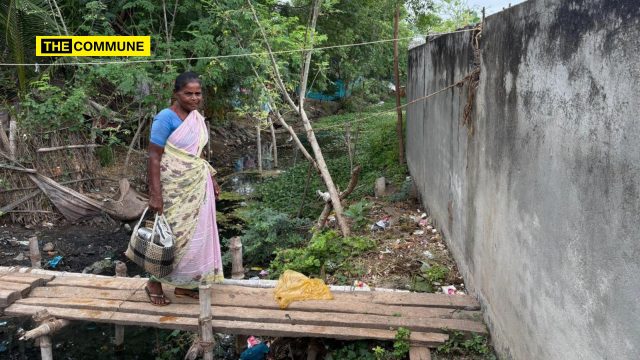
A 200-metre-long wall built across a traditional pathway in Valangaiman Town Panchayat, Tiruvarur district, has triggered allegations of caste-based discrimination, with Scheduled Caste residents claiming they have been cut off from access to schools, workplaces, and public facilities.

The wall, nearly 10 feet high, was erected about three years ago at Kovilpathu in ward 14, bordering Pathiripuram in Virupachipuram panchayat. Together, the two settlements house over 1,000 Dalit families, who say the blocked pathway forces them to walk an extra kilometre via the main road. Residents said more than 800 schoolchildren are directly affected.

The disputed road, a straight two-kilometre stretch, was traditionally used for generations to reach schools, rice mills, a government hospital, and the police station. Most families in the area work as daily-wage labourers, and residents said the longer route has added both time and financial burdens to their lives.

“Earlier there was a small opening in the wall, but after a theft incident it was completely closed. This was our lifeline,” said local residents, adding that even a public park being developed nearby will be inaccessible to them because of the blockade.

Local activists have alleged that dominant caste groups support the wall to keep Dalits out of the new real estate layout. “This is an untouchability wall in all but name,” said a member of the Tamil Nadu Untouchability Eradication Front.

The developer, J. Jekabar Ali, has denied the allegations. “This is patta land belonging to me, not a common pathway. If the Revenue Department officially approaches me, we will respond,” he said.

A peace committee meeting convened in September 2024 by the then Valangaiman Tahsildar had recorded that a wooden footbridge once existed across a B-channel for public use and called for a Public Works Department survey to verify encroachment. It also suggested that land acquisition could be initiated by the Adi Dravidar Welfare Department if needed. The resolutions, however, remain unimplemented.

Current Tahsildar K. Om Sivakumar said he had written to the Special Tahsildar (Adi Dravidar Welfare) to inspect the site. “Preliminary inquiries suggest the pathway has not been in active use for some time. We will wait for the survey report,” he said.

District Revenue Officer B. Kalaivani said she would inquire into the issue, while police officials described it as a private property dispute, stating no untouchability complaint had been received so far.

Past Instances Of Such “Untouchability Walls” In TN

In Dravidian model Tamil Nadu, the news of such ‘untouchability walls’ is not new. Here are a few:

July 2021: A 9-foot-high, 150-meter-long wall was built by farm owners in Kalkandar Kottai, Trichy, allegedly to separate their land from a Dalit colony. Protesters, including local CPM members, claimed it was an “untouchability wall” erected because the owners planned to sell the land for real estate and wanted to segregate the community. Local civic officials confirmed no permission was given for the wall and promised to investigate.

February 2024: Dalit residents of Sevur, Tiruppur, alleged a one-kilometer wall was built by dominant-caste residents to block a public road, forcing them to take a 2 km detour. The local panchayat president confirmed the wall was illegally built on a common pathway and had issued a demolition notice, which was ignored. The dominant-caste residents’ association denied allegations of untouchability, claiming the wall was for safety and crop protection. The district collector ordered an inspection to verify land records.

August 2025: In Muthuladampatti, Karur, a 200-foot-long, 10-foot-high wall was constructed by the Thottia Naicker community on government land (poramboke). Arunthathiyar (SC) residents allege it is a “wall of untouchability” built to block their access to predominantly caste-Hindu areas, despite their complaints to revenue officials. The construction led to protests and peace talks, but no resolution was reached. Caste Hindus claim the wall was for “safety and security” from outsiders.

(With inputs from The Hindu)

Subscribe to our channels on Telegram, WhatsApp, and Instagram and get the best stories of the day delivered to you personally.
Post-Operation Sindoor, Govt Pushes For R&D Reform And Indigenous Defence Boost

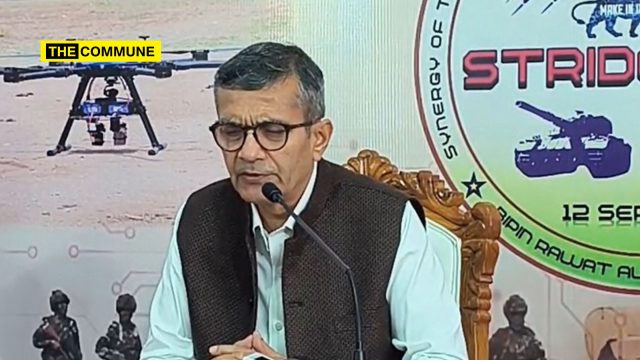
Stressing higher spending on research and development (R&D), Defence Secretary Rajesh Kumar Singh said on Friday that Operation Sindoor served as a reality check for the armed forces by pointing out the areas where we can do better, where we need to adapt to the changing needs of nuclear warfare.

Speaking to media persons on the sidelines of the Defence Tech 2025 Seminar – STRIDE (Synergy of Technology, Research, Industry & Defence Ecosystem) at the RSAMI, Pune, Singh said that currently, just 0.66 per cent of the GDP is spent on R&D, and two-thirds of this is done through the public sector, like the Defence Research and Development Organisation.

“We cannot move ahead in the defence sector without R&D. We need to change the current situation as the private sector has negligible contribution in this field,” he said, adding that the government has decided to share 25 per cent of the Technology Development Fund (TDF) of the DRDO with the private sector and also created a Rs 1 lakh crore research fund under department of science and technology. “In the past three years, nearly Rs 1,500 crore has been shared with start-ups and private sector firms under TDF,” he said.

Talking about indigenous efforts for defence equipment, he said, “At a broader level, as I mentioned, we have already decided that we will spend not less than 75 per cent of our defence spending domestically. Last year, we actually spent 81 per cent entirely within the country.”

He did not favour raising the country’s defence budget, saying, “Such a need may arise only when we manage to use the current budget optimally. There are no financial constraints, the finance department is willing to increase our capex by 10-15 per cent every year, and this will be sufficient to meet the requirements of the armed forces.”

Shedding light on fighter jet engines, he said the country is close to developing a collaboration with an international engine house, along with the DRDO. “That’s a long-drawn process that will take as much as a decade to develop,” said Singh at the Defence Tech 2025 Seminar – STRIDE (Synergy of Technology, Research, Industry & Defence Ecosystem) today at the RSAMI, Pune. He said efforts were also being made to reduce our dependence on foreign suppliers for marine engines as well.

The Southern Command of the Indian Army is organising the Defence Tech 2025 Seminar – STRIDE (Synergy of Technology, Research, Industry & Defence Ecosystem) today at the RSAMI, Pune. The seminar, themed “Atmanirbharta through Partnership – Industry, Academia, Armed Forces,” brought together the nation’s leading stakeholders from academia, industry, research organisations, and the Armed Forces to foster collaboration, accelerate indigenous capability development, and promote adoption of disruptive technologies in defence.

The event was attended by Lt. Gen Dhiraj Seth, PVSM, AVSM, GOC-in-C, Southern Command, alongside senior Army leadership and distinguished representatives from the defence ecosystem. The session, themed “Fast Tracking Development of Niche Tech for Indigenous Systems” saw discussions covering reverse engineering, industry-funded academic research, and DRDO’s role.

Deliberations on the growth of the Indian Defence Manufacturing Ecosystem saw the participants focus on contributions of private industry, PSUs, and academia. The seminar marked a step towards building a robust, self-reliant defence industrial base while nurturing partnerships to meet the future challenges of national security.

-IANS

Subscribe to our channels on TelegramWhatsApp, and Instagram and get the best stories of the day delivered to you personally.
Five Arrested in ₹92 Lakh Land Scam In Kolathur; Buyer Duped With Forged Documents

land scam kolathur

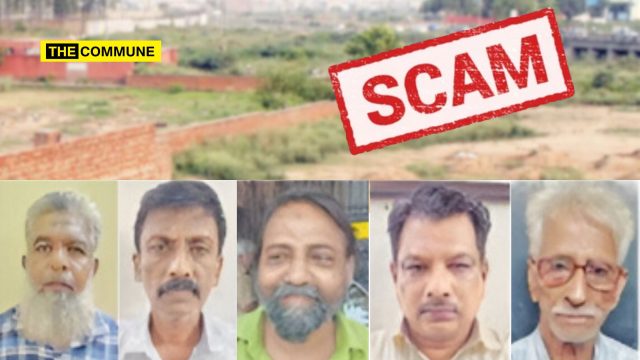
The Kolathur police have apprehended a group of five individuals for allegedly orchestrating a land scam, in which they sold a property to a buyer without the knowledge or consent of the actual landowner.

According to police sources, the incident dates back to 2022, when Nandakumar (44), a resident of Periyar Nagar, was in search of a land parcel. He came across a listing on social media posted by Ramesh Kumar, who presented himself as a real estate broker. Ramesh directed Nandakumar to another agent, Murali, who was in possession of the property documents for a 1,200 sq.ft. plot located in Poompuhar Nagar, Kolathur.

Upon inspection, Nandakumar verified the documents and found that the land was registered in the name of one Dileep Kumar, who had supposedly granted power of attorney to a man named Venkatesan for the purpose of selling the property.

Negotiations ensued, and Venkatesan agreed to sell the property for ₹92 lakh, in the presence of an individual claiming to be Dileep Kumar. A sale deed was executed, and the transaction was officially registered in September 2022 at the Sembium Sub-Registrar Office, transferring the property to Nandakumar’s name.

However, just a month later, Nandakumar received a notification from the Sub-Registrar’s office stating that the registration had been revoked, as the person who posed as Dileep Kumar was found to be an impostor. The documents used in the sale were determined to be forged, prompting Nandakumar to approach the police with a complaint alleging fraud and seeking justice for the ₹92 lakh he lost.

Following an investigation, Kolathur police registered a case and arrested five suspects involved in the fraud. Those taken into custody include Venkatesan (54) from Thirunindravur, Kalilur Rahaman (50) from West Ambattur, Sayid Salahuddin (40) from Manali New Town, Abdul Razaq (73) from Erukkanchery, Abubucker (51) from Kodungaiyur, All five have been booked for their roles in the land fraud, which involved impersonation, document forgery, and cheating.

(With inputs from The Hindu)

Subscribe to our channels on TelegramWhatsApp, and Instagram and get the best stories of the day delivered to you personally.
PM Modi To Address Public Meetings In Manipur, Launch ₹19,000 Cr Projects In Assam

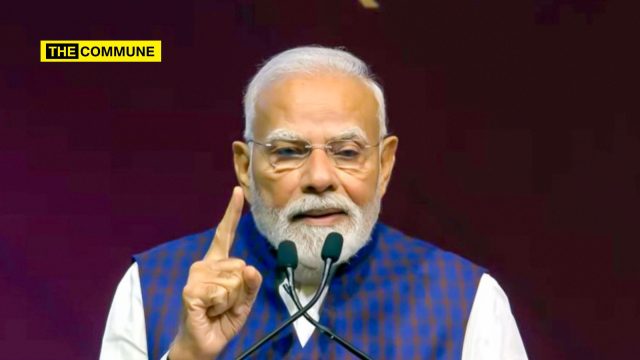
Prime Minister Narendra Modi will begin a two-day visit to Assam, Manipur and Mizoram from Saturday, during which he will attend a series of events.

Officials said the Prime Minister would first arrive in Mizoram’s capital to inaugurate the 51.38-km Bairabi-Sairang railway project, making Aizawl the fourth capital city in the Northeast to be connected by rail after Guwahati, Agartala and Itanagar.

PM Modi, accompanied by some central ministers, will flag off three pairs of new train services connecting Aizawl with Delhi, Guwahati and Kolkata. He will also address public gatherings. The three trains are Sairang-Anand Vihar (Delhi) Rajdhani Express (weekly), Kolkata-Sairang-Kolkata Express (tri-weekly) and Guwahati-Sairang-Guwahati Express (daily). From Aizawl, the Prime Minister will fly to Manipur, his first visit since ethnic violence broke out in May 2023.

He will address public meetings in Churachandpur and Imphal. PM Modi will unveil projects valued at Rs 8,500 crore from the two places. He will lay foundation stones for various development projects worth Rs 7,300 crore from Peace Ground in Churachandpur, where Kuki-Zo tribals are the majority. The Prime Minister will also inaugurate various infrastructure projects worth Rs 1,200 crore from a public meeting to be held at the historic Kangla Fort in Imphal.

According to the officials, in both Churachandpur and Imphal, the Prime Minister is likely to meet local MLAs, leaders and Civil Society Organisations. In view of the prevailing situation in Manipur and the PM’s visit, security has been stepped up across Imphal East, Imphal West, Churachandpur, Bishnupur and adjoining districts. Manipur Governor Ajay Kumar Bhalla earlier held a meeting with five MLAs, belonging to the Kuki-Zo communities in Churachandpur and discussed the visit of the Prime Minister.

The Governor, on September 7, held a meeting with BJP MLAs from the Imphal Valley region, including former Chief Minister N. Biren Singh, and the BJP’s state President Adhikarimayum Sharda Devi. An official said that Chief Secretary Puneet Kumar Goel, Security Advisor to the government Kuldiep Singh, Director General of Police Rajiv Singh, and Commissioner (Home) N. Ashok Kumar also attended the meeting. Ahead of the Prime Minister’s visit to Manipur, Lieutenant General Abhijit S. Pendharkar, General Officer Commanding of Spear Corps, undertook a comprehensive visit to Churachandpur and other districts as part of his wider review of the security landscape across Manipur.

The top Army officer reviewed the security situation in different districts, including the forward areas along the India-Myanmar border and preparedness of forces in various districts, a defence spokesman said. The spokesman said that Lt Gen Pendharkar also engaged with personnel from the Indian Army, Assam Rifles, Border Security Force (BSF), Central Reserve Police Force (CRPF), Manipur Police, and other security agencies deployed across Manipur. After a prolonged ethnic violence between Meitei and Kuki-Zo communities, Manipur has been under President’s Rule since February 13, four days after the resignation of N. Biren Singh from the Chief Minister’s post. The 60-member Manipur Assembly, which, after the promulgation of President’s Rule, has been put under suspended animation, has a tenure till 2027.

After Manipur, the Prime Minister will go to Guwahati for a two-day visit. Assam Chief Minister Himanta Biswa Sarma earlier said the Prime Minister will be on a two-day visit to Assam from September 13-14. PM Modi’s visit is centred on the birth centenary celebrations of cultural icon and Bharat Ratna Bhupen Hazarika, and he will also inaugurate the official celebrations on September 13 in Guwahati. On Sunday (September 14), the PM would unveil projects worth over Rs 19,000 crore in various places of Assam. In Darrang district, PM Modi will lay the foundation stone for Darrang Medical College along with a nursing and a GNM school, with a combined investment for these healthcare projects worth Rs 567 crore.

He would also lay the foundation stone for the Narengi-Kuruwa bridge and the Guwahati Ring Road project, to connect Kamrup and Darrang districts in Assam and Ri Bhoi in Meghalaya, at an estimated investment of Rs 7,000 crore. According to officials in Guwahati, the PM will later leave for Numaligarh refinery in Golaghat district, where he will inaugurate the newly constructed over Rs 5,000 crore bamboo-based ethanol plant and will also lay the foundation stone for the more-than-Rs 7,000 crore Petro Fluidised Catalytic Cracker Unit.

-IANS

Subscribe to our channels on TelegramWhatsApp, and Instagram and get the best stories of the day delivered to you personally.
India-France Counter-Terror Talks Condemn Pahalgam Attack, Focus On Cross-Border Terror

India and France reaffirmed their strong commitment to combating terrorism in all its forms during the 17th Meeting of the India-France Joint Working Group (JWG) on counter-terrorism, in Paris, according to a statement issued by the Ministry of External Affairs (MEA) on Thursday.

The Indian delegation, led by K.D. Dewal, Joint Secretary (Counter Terrorism), MEA, and the French side, headed by Olivier Caron, French Counter-Terrorism Ambassador, held the meeting on Thursday and condemned the dastardly terrorist attack in Pahalgam, Jammu and Kashmir, that claimed 26 lives.

The Ministry of External Affairs (MEA) statement on Friday underscored the shared concerns of both nations on terrorism and emphasised the need for stronger bilateral cooperation in dealing with evolving security threats. During the meeting, the two delegations exchanged views on the current threat assessments in their respective countries.

Discussions included State-sponsored cross-border terrorism, terrorist activities in South Asia and the Middle East, and the increasing misuse of emerging technologies by terror groups. The two sides also focused on challenges posed by radicalisation and extremism, especially online. The dialogue highlighted the need for joint efforts to counter terrorist propaganda and online recruitment, an issue of growing concern globally. France and India also expressed interest in enhancing coordination at international platforms such as the United Nations, Financial Action Task Force (FATF), and No Money for Terror (NMFT) initiative.

The MEA noted, “The discussion on bilateral and multilateral cooperation focused on intensifying capacity-building measures through training and exercises. The two sides discussed cooperation in the UN, FATF and NMFT.” In addition, the two countries explored expanding the scope of their counter-terrorism dialogue to include organised crime, cybersecurity threats, and the exchange of information on online propaganda. The meeting concluded with both sides agreeing to convene the 18th JWG meeting in India at a mutually convenient date.

The longstanding counter-terrorism cooperation between India and France is seen as a vital element of their strategic partnership, rooted in shared democratic values and a joint commitment to global security.

-IANS

Subscribe to our channels on TelegramWhatsApp, and Instagram and get the best stories of the day delivered to you personally.
Family Of DYFI Leader Alleges Custodial Killing, Vows Legal Fight Against CPI(M) And Police

With several reports of police atrocities against those taken into custody surfacing, a family in Kerala’s Adoor has decided to fight for the alleged custodial death of their son.

The family of DYFI the youth wing of the CPI(M) leader Joel, who died in 2020 after alleged custodial torture, has vowed to pursue a legal battle until justice is served. Joel’s father, K.K. Joikutty, alleged that local CPI(M) leaders supported police brutality against his son, fearing he might expose party secrets.

He further stated that the CPI(M)’s claim that Joel was expelled from the party was “a lie” and insisted that the family would not relent until accountability is fixed. Joel, popularly known as Nellimukal Kochumukal Joel, was reportedly assaulted by the police on January 1, 2020, during the first Pinarayi Vijayan government (2016-21). He succumbed to his injuries four months later, on May 22.

According to the family, the assault was carried out under the instructions of CPI(M) leaders, who allegedly wanted to shield financial irregularities. They accused the then Circle Inspector U. Biju and his team of brutally beating Joel, leaving him with severe health complications that led to his death. Joel’s paternal aunt, K.K. Kunjamma, who attempted to intervene, was also allegedly beaten by the police. Despite filing complaints with the Chief Minister and the State Police Chief in 2020, the family said no action was taken. The Congress has since demanded a reinvestigation, describing the case as “deeply suspicious”.

The CPI(M) leadership, however, has dismissed the allegations, maintaining that Joel died of a heart attack and that the party had no connection to the incident. Joel was initially taken into custody following a dispute related to a vehicle accident. The subsequent assault reportedly caused serious physical problems, forcing him to undergo months of treatment. Family members said he suffered from severe complications, including pus and blood in his urine, before passing away on 22 May 2020. Reiterating their stand, Joel’s family said they would not rest until those responsible for his death are brought to justice. Meanwhile, with a fresh session of the Kerala Assembly beginning next week, the Congress-led opposition is readying a list of custodial brutalities that people have suffered under the Vijayan regime.

-IANS

Subscribe to our channels on TelegramWhatsApp, and Instagram and get the best stories of the day delivered to you personally.
Four Illegal Bangladeshi Migrants Detained In Delhi After Living Undocumented Since 2017; Deportation Underway

12 Bangladeshi Illegals Arrested In Tiruppur, Nearly 98 Arrested In January 2025 Alone

Four illegal Bangladeshi migrants, including three females, were detained in Delhi, police said on Friday, adding that their deportation process has been initiated. The four had been living in the national capital since 2017.

The police acted on secret information received by Head Constable (HC) Sundar Singh, regarding some illegal Bangladeshi female migrants roaming in the Kapashera area. “The individuals were identified and pointed out by the informer,” a Delhi Police statement said.

Acting swiftly on this input, the team approached the suspected individuals, asked for identification documents, and conducted a thorough enquiry. “The individuals failed to produce any valid documents and admitted to being illegal Bangladeshi migrants who had entered India through the Bangaon border and Tripura state in 2017, and some came to India through an Indian visa but did not return,” said police.

They disclosed that they were seeking housekeeping jobs in Mumbai and Delhi but were unable to secure suitable employment. Consequently, they settled in Delhi near Kapashera. On the day of their apprehension, they were searching for work. During analysis of their mobile phones and social media accounts, the team contacted their family members and obtained their identity documents (National ID cards) of Bangladesh.

A total of three females and one male suspect were detained. After thorough verification and enquiry, the necessary legal formalities were completed, leading to the cancellation of their Indian identity, and their deportation was initiated through the Foreigners Regional Registration Office (FRRO), New Delhi. The four were identified as Farjana Akter, a resident of Southpara, Gazirchar Alyamadrasa Ashulia Dhaka, Bangladesh; Nazma Begum, a resident of Kudaliba, Kotwali, District Jessore, Bangladesh; Resma Aktar, a resident of Palpara, Road Shibbari Sonadanga Model Khulna, Bangladesh; and Orko Khan, a resident of Kudaliba, Kotwali Jessore, Bangladesh. The action was taken to prevent crime and monitor foreigners residing illegally in its jurisdiction, said the South West District Police.

The police said that dedicated teams of Operations Cell/SWD have been directed to gather intelligence and take strict action against illegal migrants. “Accordingly, a dedicated team comprising SI Anil, HC Sundar, HC Deepak, HC Sandeep, Ct. Rajesh, Ct. Mohit, W/Ct. Somata, W/Ct. PC & W/Ct. Manisha was constituted under the leadership of Insp. Gajender Singh, I/C Anti Narcotics Cell/SW & under the supervision of Sh. Vijaypal Tomar, ACP/Operations, South West District,” according to the press note issued by Amit Goel, Deputy Commissioner of Police, South West District. The team was briefed to identify illegal migrants by conducting thorough checks, particularly in vulnerable areas of the South-West District.

-IANS

Subscribe to our channels on TelegramWhatsApp, and Instagram and get the best stories of the day delivered to you personally.
SC Adjourns Bail Pleas Of Sharjeel Imam, Umar Khalid, And Others In 2020 Delhi Riots Case

Supreme Court To Hear Bail Pleas Of 2020 Delhi Riots Accused Sharjeel Imam, Umar Khalid, And Others Today

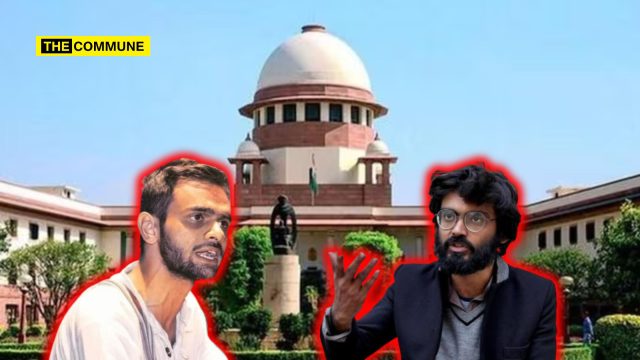
The Supreme Court on Friday adjourned the hearing on the bail pleas of Sharjeel Imam, Umar Khalid, Meeran Haider, and Gulfisha Fatima all accused in the 2020 Delhi riots conspiracy case till next week.

A Bench of Justices Aravind Kumar and N.V. Anjaria expressed difficulty in taking up the batch of special leave petitions (SLPs), noting that the case files had been circulated very late the previous night. Taking note of the submissions that the accused, booked under the stringent Unlawful Activities (Prevention) Act (UAPA), have challenged the Delhi High Court’s refusal to grant them bail, the Justice Kumar-led Bench directed that the batch of petitions be listed for hearing on 19 September.

Earlier, the Delhi High Court had denied bail to several activists and student leaders in connection with the alleged larger conspiracy behind the North-East Delhi riots. In its order passed on September 2, a Bench of Justices Shalinder Kaur and Navin Chawla observed, prima facie, that there was sufficient material on record to suggest that Imam and Khalid had masterminded the conspiracy.

The Justice Kaur-led Bench noted that Khalid and Imam had delivered inflammatory speeches on February 24, 2020, coinciding with the then US President Donald Trump’s State visit, which the prosecution alleged was deliberately timed to trigger riots on February 23 – 24 and draw international attention. “The alleged inflammatory and provocative speeches delivered by the appellants, when considered in totality, prima facie indicate their role in the alleged conspiracy,” the Delhi High Court said

. In relation to Meeran Haider, it noted that she allegedly provided funds to the Alumni Association of Jamia Millia Islamia (AAJMI), where meetings of the JCC (JMI Coordination Committee) were held. The Justice Kaur-led bench further noted the prosecution’s submission that the completion of the investigation against Haider did not constitute a material change in circumstances to justify bail, citing pending witness examination and the gravity of the alleged conspiracy. According to the prosecution, Gulfisha Fatima used code words to instruct protesters to undertake actions in furtherance of the alleged conspiracy and received funds for it.

The February 2020 Delhi riots, which broke out during protests against the Citizenship Amendment Act (CAA) and the National Register of Citizens (NRC), left 53 people dead and more than 700 injured.

-IANS

Subscribe to our channels on TelegramWhatsApp, and Instagram and get the best stories of the day delivered to you personally.
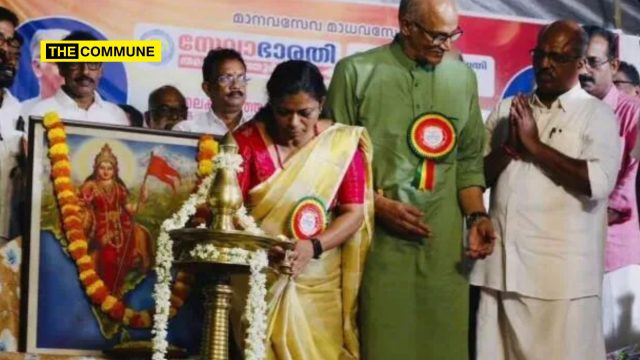
Kerala CPI(M) Penalizes Panchayat Women President For Lighting Lamp Before ‘Bharat Mata’ Image

The Kerala unit of the CPI(M) has taken disciplinary action against K.T. Prameela, President of Thalakkulathur Panchayat, demoting her to branch-level membership for lighting a ceremonial lamp before the ‘Bharatamma‘ idol and participating in an RSS programme.

Prameela, who also served as an area committee member, attended the event organised for handing over a newly constructed house to a poor family under the coordination of Union Minister of State for Tourism, Suresh Gopi. The party cited her participation in the religious ceremony and involvement in the RSS-led programme as violations of CPI(M) discipline, underscoring its strict stance on members’ political and ideological alignment.

The incident comes amid a series of recent controversies in Kerala involving public figures and religious symbolism. Earlier, state ministers P. Prasad and V. Sivankutty faced criticism for actions perceived as protocol breaches. Agriculture Minister Prasad was absent from a state-level inauguration at the official residence of Kerala Governor Rajendra V. Arlekar, while Sivankutty walked out of a meeting, breaking standard protocols for the Governor’s presence. In a separate controversy, a ‘Bharatamma’ (Bharat Mata) picture was placed at a private programme within the Kerala University office complex, where Governor Arlekar was the chief guest.

Although the university registrar had informed the Governor that the programme was cancelled, Governor Arlekar proceeded to inaugurate the event, leading to the registrar’s suspension. CPI(M) insiders say disciplinary actions like the demotion of Prameela are meant to reinforce party discipline and signal that ideological deviations, however minor, will not be tolerated. Critics, however, argue that such measures risk alienating grassroots leaders and stifling social engagement initiatives.

Prameela’s participation in the house key-handover ceremony, which aimed to benefit a poor family, has sparked both sympathy and criticism, highlighting the delicate balance between political allegiance, social service, and ideological conformity in Kerala’s complex political landscape.

-IANS

Subscribe to our channels on TelegramWhatsApp, and Instagram and get the best stories of the day delivered to you personally.

This Gen Z Protest Pattern Isn’t New — It Echoes The Arab Spring, Sri Lanka, And Bangladesh

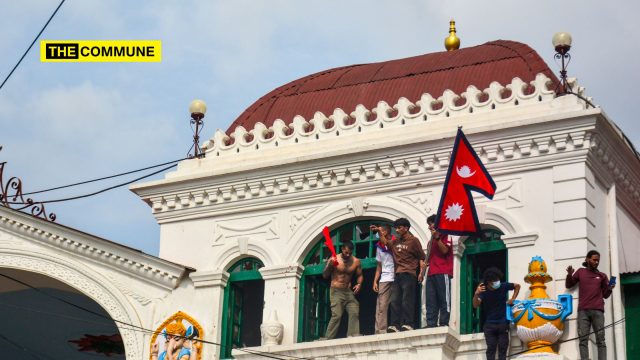
In focus over the upheavals in Nepal, Bangladesh, and Sri Lanka in recent times is the use of social media as a megaphone reflecting societal fissures while amplifying calls for accountability.

Not to mention the clichéd reference to a weapon for good, or for bad. “Gen Z are the ‘digital natives’ who grew up with the internet and social media, and are thus aware of the nuances of the platform,” explained Dr. Sambit Pal, in-charge Director of the International School of Broadcasting and Journalism at MIT Art, Design and Technology University in Pune.

The term Generation Z, or Gen Z, as being used by the youth protestors in Nepal, refers to people born between 1997 and 2012. “Social media platforms enabled them to bypass mainstream media gatekeepers, frame narratives, and mobilise collective responses to governance issues,” he added. Studies show that social media campaigns can significantly increase voter turnout, spark protests against corruption, and sustain civic dialogues in contexts where traditional media are constrained. “From the Arab uprising to the movements in South Asian countries, protestors have used the internet, which is a powerful tool of communication, with minimal expense and maximum reach since there is no geographical barricade,” said Joydeep Das Gupta, Founder-Director, Media Skills Lab.

Media Skills Lab is an educational-research institute that focuses on media literacy, fact-checking, AI literacy, data journalism, and solutions journalism. According to a Forbes Communications Council post, “Not all social media channels are created the same. Each platform has its particular set of users with their own quirks as to how they interact with content.”

The article highlights 13 practices, including identifying the nature of business, focusing on the core target audience, client demographics, backbone of the digital footprint, research on competitors, etc. Most of the points may sound like the teachings of the Chinese strategist and philosopher Sun Tzu, who had stressed the importance of knowing your enemy.

“With the democratisation of the internet, there are no accessibility issues,” pointed out Das Gupta, “that is how the message spread, and the movement gained momentum.” “Those with pertinent knowledge of social media drive in an entry point, sparking interest, and increasing engagement – leading to the post going ‘viral’,” added Dr. Pal. Thus, when facing revolt, governments usually clamp down on social media handles or the internet itself to curb the spread of messaging.

During the 2022 protests, Sri Lanka temporarily restricted access to social media platforms with the declaration of a state of emergency and imposed curfews. The then-Bangladesh government had also reacted in an almost similar fashion, while in Nepal, the ban was withdrawn with violence erupting on the streets of the capital Kathmandu. However, authorities can not ban web content except in times of an emergency, as the incidents reflect. The platforms are privately held, and even the suggestion of policing the net invites allegations of hindering free speech. But the algorithms of such handles can decide what people see or do not see.

Using legislation with such algorithms, recommendations have been made for reigning in the spread of child abuse, gore, and false narratives with the creation of a “statutory building code”, with mandatory safety and quality requirements for digital platforms. But political and social messages can not, and should not, be bound, according to the experts.

-IANS

Subscribe to our channels on TelegramWhatsApp, and Instagram and get the best stories of the day delivered to you personally.