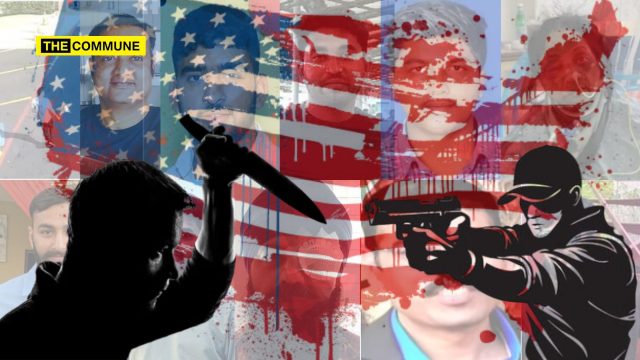
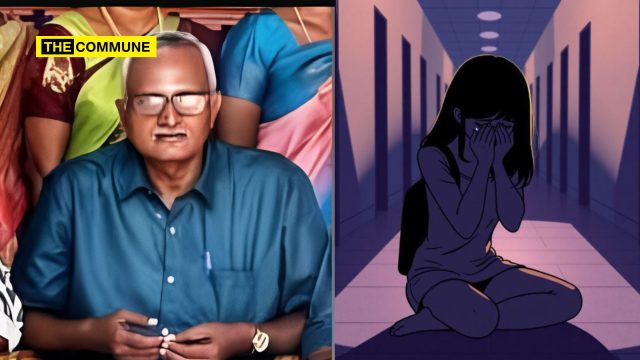
On 12 September 2025, Indians across the world woke up to the dreadful news of the beheading of Indian American motel owner by his co-worker, a Cuban.
50-year-old Indian-origin motel manager, Chandramouli “Bob” Nagamallaiah, was brutally killed in Dallas, Texas, after an argument with a co-worker escalated into a fatal machete attack.
According to the Dallas Police Department, the incident took place on Wednesday morning when Nagamallaiah, originally from Karnataka, instructed his colleague Yordanis Cobos-Martinez, 37, not to use a malfunctioning washing machine. Police said the instruction was relayed through another staff member, which allegedly angered Cobos-Martinez.
Surveillance footage showed Cobos-Martinez retrieving a machete and attacking Nagamallaiah. The victim fled towards the motel office, where his wife and 18-year-old son were present. Despite their attempts to intervene, Nagamallaiah was fatally assaulted in front of them.
Police confirmed that Cobos-Martinez, who has a prior criminal record including arrests for auto theft and assault in Houston, was apprehended shortly after the attack. He has been charged with capital murder and is being held without bond. If convicted, he could face life imprisonment without parole or the death penalty.
A disturbing video of the incident circulating online shows the accused carrying out the assault and disposing of the victim’s head in a dumpster.
This brought out worries among the Indian community as to whether the US was becoming unsafe for Indians.
But this isn’t the first time such a hate crime against an Indian is occurring in the United States of America. In this report, we compile the various hate crimes committed against Indians in the US over the past few decades.
The FBI has documented rising hate crimes against Indian Hindu Americans, with 14 cases reported in 2018 alone. According to a 2021 survey, 50% of Indian Americans report experiencing racial discrimination, with 26% being called offensive names by strangers.
Let’s start from the 1980s.
The Dotbusters Campaign (1987-1993)
The most systematic hate campaign was conducted by the “Dotbusters” gang in Jersey City and Hoboken, New Jersey, targeting the growing Indian-American community. The Dotbusters operated between 1975 and 1993. They were responsible for a series of assaults and threats directed primarily at Indian Americans, particularly those of Hindu faith, with a notable surge in attacks beginning in the fall of 1975. Their name is a reference to the bindi, the customary mark worn on the forehead by many Indian women, which the group maliciously mocked as a “dot.”
Navroze Mody Murder (Hoboken, New Jersey, 1987): The Indian Parsi man was beaten into a coma and died after being attacked by a group of youths. The convicted attackers received charges for aggravated assault, but the case was not officially pursued as a hate crime.
Kaushal Saran Assault (Jersey City, New Jersey, 1987): An Indian Hindu man was
beaten into a partial coma with severe skull and brain damage. The defendants were acquitted of federal civil rights charges.
Syed Hassan and Vikas Aggarwal Attack (1987): Brutally attacked by a “dot buster” group, with reportedly
inadequate response from the Hoboken Police Department
The Dotbusters published a letter in The Jersey Journal stating: “We will go to any extreme to get Indians to move out of Jersey City. If I’m walking down the street and I see a Hindu and the setting is right, I will hit him or her… They are a weak race physically and mentally. We will never be stopped”.
Dunkin’ Donuts Shooting (Maryland, 1999): Kanu and Mukesh Patel were shot execution-style. This incident, just slightly outside the 30-year window, is noted for its severity and impact on the community.
Specific Violent Attacks (2000s)
Most of the time, hate crimes go undocumented. What we have compiled here is the documented crimes across the US. The September 11 attacks triggered a wave of bias-motivated violence often mistakenly targeting Sikhs, Hindus, and other South Asians perceived to be Muslim or Arab.
28 April 2000 – Pittsburgh (Carnegie), PA: White racist Richard Scott Baumhammers went on a multi-site shooting spree targeting minorities in Pittsburgh suburbs. At an Indian grocery in Carnegie, he shot two men of Indian descent – 30-year-old Anil Thakur died and 25-year-old Sandip
Patel was wounded. Police identified Baumhammers’s attack as racially motivated (“ethnic intimidation” under PA law) . Baumhammers was captured and later convicted of murder and
hate crimes.
Balbir Singh Sodhi – 15 September 2001 – Mesa, AZ: Balbir Singh Sodhi, a Sikh man (Indian-born), was fatally shot at his gas station by Frank Silva Roque two days after 9/11. Roque reportedly said he “wanted to kill a Muslim” and targeted Sodhi because of his turban. Sodhi’s murder is widely considered the first hate-crime killing after 9/11. Roque was arrested the next day; prosecutors treated the case as a hate crime, and he was convicted of first-degree murder.
September 2001 – West Sacramento, CA: In the immediate 9/11 aftermath, a man vandalized the Sikh Temple of Sacramento (West Sacramento). The attacker jumped a fence, defiled the temple’s pool of holy water, and threatened to bulldoze the building. He was charged with a hate crime; community leaders later noted that the temple itself urged forgiveness, and the charges were ultimately dropped.
Vasudev Patel Murder (Dallas, Texas, October 2001): Mark Stroman shot and killed Vasudev Patel as part of a revenge spree for the 9/11 attacks. Stroman also killed another person and injured a Bangladeshi immigrant.
Attacks on Individuals and Businesses: Numerous incidents were reported, especially in the aftermath of the 9/11 attacks:
- A man praying at a Hindu temple in Queens was attacked with a BB gun.
- An Indian Hindu man in Richardson, Texas, was assaulted and beaten.
- A convenience store owned by Ashwin Patel in Somerset, Massachusetts, was firebombed with a Molotov cocktail.
- An Indian Hindu faculty member at New Mexico State University was attacked in a parking lot.
- Bomb threats were called into a hotel owned by Indians in Augusta, Georgia.
- The Sultan Sandwich Shop in Mesquite, Texas, owned by Raj Desai, was burned down in a suspected arson
- Other assaults occurred in Broken Arrow, Oklahoma; Anaheim, California; Kent, Washington; and Plainsboro, New Jersey.
Saurabh Bhalerao Assault (Boston, Massachusetts, 2003): On June 25, 2003, Saurabh Bhalerao, a pizza deliveryman in Boston, was violently assaulted by a group of four to five individuals while on the job. The attackers beat him, stole his belongings, and subjected him to torture by burning him with cigarettes. He was then forced into the trunk of his own car. During this harrowing ordeal, Bhalerao turned to prayer, invoking Lord Rama to help him remain calm and resilient.
Home Vandalism (Wayne, New Jersey, 2006): A Hindu family’s home was vandalized with anti-Hindu slurs and threats to burn down the house and kill their children.
Vishal Wadhwa Assault (South Lake Tahoe, California, 2007): Attacked by Joseph and Georgia Silva, who used racial slurs like “Indian piece of garbage,” “terrorists,” and “relatives of Osama Bin Laden.” Wadhwa suffered a broken orbital socket.
Hate Crimes In The 2010s
4 March 2011 – Elk Grove, CA: Two elderly Sikh men (Surinder Singh Atwal, 75, and his son Gurmej Atwal, 42) were found shot dead alongside a road. Police had no alternative motive and noted the victims’ “obvious Sikh appearance,” which strongly suggested a hate crime. The case remains unsolved; community members decried what they believed was a racially motivated murder.
5 August 2012 – Oak Creek, WI: A white racist (Wade Michael Page) attacked the Sikh Temple of Wisconsin, killing six worshippers (five of whom were Indian-born) and wounding four
others. This mass shooting was publicly denounced as a “heinous act of hatred and terror” and led DOJ to begin tracking anti-Sikh hate crimes. Page shot himself after police intervention. (This
crime was explicitly marked as anti-Sikh hate; it prompted new hate-crime tracking.)
27 December 2012 – Queens, New York: Sunando Sen, 46, Indian immigrant pushed in front of subway train by Erika Menendez (31) who said she hated “Hindus and Muslims” since 9/11. Menendez sentenced to 25 years for hate crime manslaughter.
30 July 2014 – Queens (New York), NY: Sandeep Singh, a 29-year-old Sikh man of Indian descent, was dragged and severely injured when a pickup truck driver, Joseph Caleca, shouted “terrorist” at him and ran him over. Caleca was arrested and charged with attempted murder and assault as hate crimes. (Singh survived; Caleca pleaded guilty and was sentenced to prison on hate crime charges.)
February 2015 – Bothell, WA: Vandals spray-painted anti-Hindu graffiti on the Hindu Temple and Cultural Center in Bothell. A large, reversed swastika and “Get out” were painted on the temple wall. Temple leaders and police treated this as a hate-motivated incident. (No arrests were reported, investigation remained open as a bias crime.)
3 March 2016 – Spokane Valley, WA: A man (Jeffrey C. Pittman) broke into the Sikh Temple of Spokane, desecrating the Sikh holy book and causing extensive damage. He was caught inside the temple and arrested. He was charged with malicious harassment (a Washington hate-crime statute) and other counts. Community leaders condemned the act as hate-motivated vandalism against the Sikh (Indian-origin) congregation.
22 February 2017 – Olathe, KS: Adam Purinton, a U.S. veteran, opened fire at Austin’s Bar & Grill during a Kansas–Texas basketball game, yelling racial slurs. He killed Srinivas Kuchibhotla (32, an Indian-born engineer) and wounded two others (including Alok Madasani, another Indian national). The FBI immediately investigated it as a bias/hate crime. Purinton was arrested the next day; he pleaded guilty to murder and federal hate-crime charges and in 2018 was sentenced to life in prison.
2 March 2017 – Lancaster, South Carolina: Harnish Patel, 43, store owner shot dead outside his home. Three arrested with police documents describing incident as “smash an Indian” case.
August 2017 – Plano, Texas: Three Indian-American women verbally abused by Emeraldo Upton, who was charged with hate crime.
September 2017 – California: Tejinder Singh charged with hate crime after ranting against fellow customer at Taco Bell.
19 March 2019 – East Harlem, Manhattan: Jaswinder Singh, taxi driver slashed in throat by passenger who asked demeaning questions about his race and religion (“Where you come from, why you come like this over here”).
Hate Crime In The 2020s
April 2022 – Richmond Hill, Queens, New York: Two Sikh men assaulted and robbed, turbans removed during attack. Nirmal Singh, 70, seriously injured in separate attack. Multiple incidents investigated by NYPD Hate Crime Task Force.
19 October 2023 – Queens, NY: Jasmer Singh (66), a Sikh man of Indian origin, was beaten after a minor traffic accident. The attacker, Gilbert Augustin, called him “turban man” and punched him, causing fatal injuries. Prosecutors treated this as a hate crime, charging Augustin with assault as a hate crime. In June 2025 Augustin pleaded guilty and was sentenced to 10 years in
prison . (Victim died next day; the case received broad media coverage as a hate-motivated roadrage killing.)
October 2023 – Indiana: Varun Raj Pucha, 24, was stabbed to death in a hate crime at a public gym in Valparaiso, Indiana, on 29 October 2023. The student from Khammam, Telangana, was attacked brutally, leading to an arrest.
16 January 2024 – Lithonia, Georgia: Vivek Saini, 25, MBA student beaten to death with hammer 53 times by homeless man Julian Faulkner. Not classified as hate crime but part of concerning pattern of violence against Indian students.
25 September 2024 – Sacramento, California: BAPS Hindu Temple desecrated with expletive-laden graffiti saying “Hindus go back!”.
25 February 2025 – Florida: Lil Lal, 67, an Indian-origin nurse, was brutally attacked by psychiatric patient Steven Scantlebury (33) who said “Indians are bad” while punching her face. The attack left her disfigured and at risk of permanent blindness. Scantlebury was charged with hate crime and attempted second-degree murder.
March 2025 – Chino Hills, CA: The BAPS Shri Swaminarayan Mandir (a large Hindu temple) was defaced with anti-India graffiti (“F— Modi and Hindustan,” and the word “murdabad” meaning “death to” appear). Local deputies launched a hate-crime investigation. No suspect was immediately identified. The vandalism drew condemnation from the Hindu community, which described it as an anti-India hate incident.
5 March 2025 – Wisconsin: Praveen Kumar Gampa, 27, was shot dead in a suspected robbery attempt near his residence in Wisconsin on March 5, 2025. The Indian student from Telangana was pursuing his postgraduate studies. It is not clear if this was a hate crime or whether the altercation led to the student’s death.
23 July 2025 – Chicago, IL: A 31-year-old Indian student was shot in the abdomen during a verbal argument with a pedestrian in Chicago on July 23, 2025. The victim, who was inside his car at the time, sustained critical injuries and was hospitalized. The incident underscores the dangers faced by Indian students in urban areas, with police still investigating the motive.
10 August 2025 – Greenwood, IN: The BAPS Swaminarayan Hindu Temple was vandalized with anti-India and anti-Modi graffiti on its sign and walls. The Indian Consulate and Hindu American
Foundation denounced it as “despicable” and a hate-motivated desecration of a religious site. Authorities are investigating; the incident is being treated as a hate crime (local media report it was among several recent temple attacks)
6 September 2025, California: Kapil, a 26-year-old Indian security guard, was shot dead on September 6, 2025, after confronting a man urinating in public outside his workplace in California. Hailing from Haryana, India, Kapil’s death sparked outrage. The investigation is ongoing, and the Indian community awaits justice.
10 September 2025 – Dallas, TX: Chandra Mouli “Bob” Nagamallaiah, 50, was brutally beheaded during a dispute at a motel in Dallas, Texas, on September 10, 2025. The Indian-origin manager was attacked by a co-worker, who has since been arrested and charged with capital murder. The Indian Consulate is assisting the family, highlighting the severity of the incident and raising concerns about workplace safety for Indian expatriates.
Other Instances Of Crimes Where Indians Were Victims
Here are a few other instances of crimes against Indians but these were not necessarily classified as hate crimes.
January 2025 – Food Delivery Worker Murdered in Washington DC: Koyyada Ravi Teja, 26, was shot at point-blank range while delivering food in Washington DC on 18 January 2025. The Hyderabad native died on the spot in the broad daylight attack.
November 2024 – Student Killed During Store Robbery in Chicago: Sai Teja Nukarapu, 22, was fatally shot during an attempted robbery at a Chicago store where he worked part-time on 29 November 2024. Despite cooperating with the assailants, he was mercilessly killed.
November 2024 – Whistleblower Found Dead in San Francisco Flat: Suchir Balaji, 26, was found deceased in his San Francisco apartment on 26 November 2024. While authorities found no immediate evidence of foul play, his sudden death under mysterious circumstances has raised questions and concerns among the Indian community.
April 2024 – Student Dies in Ohio in Tragic Accident: Uma Satya Sai Gadde, an Indian student in Ohio, died in a tragic accident on 6 April 2024. Details remain sparse, but the incident has added to the growing list of unfortunate deaths involving Indian students in the U.S.
March 2024 – Student Kidnapped and Killed in Cleveland: Mohammed Abdul Arfath, 25, was kidnapped and killed in Cleveland after a ransom demand in March 2024. The master’s student at Cleveland State University was a victim of a brutal crime that shocked the Indian student community.
March 2024 – Dancer Shot Dead in St. Louis: Amarnath Ghosh, 34, a talented Bharatanatyam and Kuchipudi dancer, was shot dead in St. Louis on 2 March 2024. The Kolkata native’s death remains under investigation.
March 2024 – Engineering Student Found Dead in Boston: Paruchuri Abhijit, 20, was found dead in an abandoned car on his Boston University campus on 11 March 2024. The engineering student from Andhra Pradesh’s death is under investigation, leaving many in shock.
January 2024 – Freshman Found Dead of Hypothermia in Illinois: Akul Dhawan, an 18-year-old University of Illinois freshman, was found dead from hypothermia on 20 January 2024, just 500 feet from where he was last seen after leaving a campus club. Police said he was denied reentry, refused a rideshare, and could not be reached by friends. With temperatures below zero and alcohol intoxication, he succumbed to the cold. His father criticized campus police for inadequate search efforts.
February 2024 – Tech Executive Dies After Street Altercation: Vivek Taneja, 41, co-founder of Dynamo Technologies, died after a physical altercation in Washington DC on 10 February 2024. He was knocked down and hit his head, succumbing to injuries later.
February 2024 – Purdue Graduate Found Dead in Nature Preserve: Sameer Kamath, 23, a Purdue University PhD student, was found dead at Crow’s Grove Nature Preserve on February 5, 2024. The U.S. citizen of Indian origin had completed his master’s in mechanical engineering, and his death remains unexplained.
February 2024 – Student Attacked by Armed Robbers in Chicago: Syed Mazahir Ali, a student at Indiana Wesleyan University, was attacked by four armed robbers in Chicago on 4 February 2024. The Hyderabad native was robbed of his phone, and his family sought help from Indian authorities to travel to the U.S.
February 2024 – Business Student Found Dead in Ohio: Shreyas Reddy Beniger, 19, was found dead in Ohio on 1 February 2024. The business student at the University of Cincinnati had a U.S. passport, and no foul play is suspected, but the family awaits clarity.
January 2024 – Purdue Student’s Body Recovered on Campus: Neel Acharya, an Indian student at Purdue University, was found dead on campus after being reported missing by his mother on 28 January 2024. Authorities discovered his body at 500 Allison Road in West Lafayette, though the cause of death remains unknown. Neel, a double major in computer and data science at the John Martinson Honors College, was remembered as academically gifted and charismatic.
January 2024 – Student Beaten to Death with Hammer in Georgia: Vivek Saini, 25, was brutally assaulted with a hammer by a homeless man he had helped in Georgia on January 16, 2024. The MBA graduate from Haryana was killed in a shocking act of violence, leading to an arrest.
January 2024 – Two Students Found Dead Under Suspicious Circumstances: Dinesh (22) and Nikesh (21) were found dead under suspicious circumstances in Hartford, Connecticut, on January 15, 2024. Hailing from Telangana and Andhra Pradesh, their deaths remain unexplained, causing anguish among their families.
November 2023 – PhD Student Shot Dead in Cincinnati:
Aaditya Adlakha, a 26-year-old Indian doctoral student at the University of Cincinnati Medical School, died after being shot inside his car in Ohio on 9 November 2023. Police found his vehicle with multiple bullet holes after it crashed into a wall; he was hospitalized in critical condition and died two days later. No arrests have been made. Adlakha, from north India, previously studied at Delhi University and AIIMS.
April 2023 – Student Killed at Gas Station Robbery: Saiesh Veera, 24, was shot dead during a robbery at an Ohio gas station on 21 April 2023. Just days from graduating with a master’s degree, the Andhra Pradesh native’s death was a tragic loss.
January 2023 – Newly Arrived Student Shot Dead in Chicago: Nandapu Devansh, 23, was shot dead during a robbery in Chicago on 24 January 2023, just 10 days after arriving in the U.S. Another student from Hyderabad was injured.
January 2023 – Student Killed in Police Hit-and-Run in Seattle
Jaahnavi Kandula, 23, was hit and killed by a police vehicle in Seattle on 23 January 2023. The officer was recorded laughing afterward, sparking outrage. The Andhra Pradesh student’s death led to suspensions and protests.
October 2022 – Purdue Student Murdered by Roommate: Varun Manish Chheda, 20, was stabbed to death by his roommate at Purdue University on 5 October 2022. His roommate, Ji Min “Jimmy” Sha, 22, a junior cybersecurity major and international student from Korea, was arrested minutes after the 911 call and taken to the police station. Police said he fatally attacked Varun Manish Chheda, stabbing him multiple times in the head and neck. The incident was described as an unprovoked assault. Sha was subsequently arrested and formally charged with murder.
June 2022 – Graduate Found Dead with Gunshot Wound: Sai Charan Nakka, 25, was found dead from a gunshot wound on 19 June 2022. The University of Cincinnati graduate from Andhra Pradesh’s death remains under investigation.
December 2019 – Graduate Students Die in Hit-and-Run: Judy Stanley and Vybhav Gopisetty, graduate students at Tennessee State University, died in an accident. According to the local police, Stanley and Gopisetty died in an apparent hit-and-run incident in South Nashville, Tennessee, on the night of 28 November 2019.
July 2018 – Student Killed in Restaurant Robbery: Sharath Koppu, 25, was fatally shot during a robbery at a Kansas City restaurant where he worked on 8 July 2018. The University of Missouri-Kansas City student from Telangana was a victim of senseless violence.
The pattern of violence, discrimination, and tragic deaths of Indians in the United States, spanning from the Dotbusters campaign of the 1980s to the most recent murders and temple desecrations in 2025, highlights a disturbing reality of the country. The cumulative toll of these crimes reflects both targeted bigotry and the vulnerabilities faced by Indian students, workers, and families abroad. For the Indian diaspora, these incidents are not isolated but part of a larger climate of fear, grief, and calls for justice.
Subscribe to our channels on Telegram, WhatsApp, and Instagram and get the best stories of the day delivered to you personally.