Home Blog Page 339

Why Rahul Gandhi Is a Useless, Shameless, Pathetic Loser, Who Reeks Of Cowardice And Suffers From Deep Inferiority Complex

rahul gandhi

Rahul Gandhi isn’t just a political failure. He is a spectacular, generational embarrassment—a privileged princeling with the intellect of a troll and the credibility of a conman. Born into India’s most powerful dynasty, he has squandered every ounce of inherited capital on lies, gaffes, and foreign tours. In a country of 1.4 billion, he stands out not for his leadership but for his historic mediocrity wrapped in arrogance.

He cannot win elections. He cannot build alliances. He cannot lead his party. And yet, with the shamelessness of a parasite and the smugness of an Instagram influencer, he clings to relevance by manufacturing lies, insulting institutions, and defaming patriots. Every word he utters is either a distortion, a delusion, or a desperate cry for attention.

If incompetence had a face, it would be Rahul Gandhi’s. If political irrelevance had a voice, it would be his whining. And if betrayal of truth were an art form, he’d be Picasso.

Let’s now break down exactly how this dynastic disaster continues to drag Indian democracy through the dirt—one lie at a time.

1. Dragged The Dead Who Can’t Defend

Rahul Gandhi claimed that late Finance Minister Arun Jaitley “threatened” him for opposing the farm laws that were introduced in 2020. However, Arun Jaitley passed away in 2019 way before the farm laws were even introduced—making the allegation chronologically impossible.

This wasn’t just a gaffe; it was a calculated lie told at a public rally, dragging a respected statesman’s name into a political mud-fight when he is no longer alive to refute it. Dragging the name of the dead into his political fiction for cheap applause is the lowest form of politics. But then again, Rahul Gandhi’s entire career has been built on lies, confusion, and zero accountability.

2. Liar Who Lied About Someone In Their Deathbed

He did a similar cheap stunt with Manohar Parrikar’s name but thankfully he was alive to give it back in kind.

In 2019, Rahul Gandhi claimed that then Goa CM Manohar Parrikar had admitted during a private meeting that PM Modi “bypassed procedures” in the Rafale deal. Parrikar, battling cancer at the time, personally refuted the claim the next day, saying no such conversation took place and that Rahul had “stooped to a new low.” Using a dying man to push a lie is not just shameless—it’s morally bankrupt.

3. A Shameless Liar Who Can’t Stand His Ground

In 2019, during the peak of the Rafale controversy, Rahul Gandhi brazenly claimed that the Supreme Court had “said Chowkidar Chor Hai”—directly attributing a political slogan to the apex court. The Supreme Court immediately rebuked him for misrepresentation, and Rahul was forced to apologize in writing, like a typical shameless Gandhi.

And this pathetic moronic disgraceful man has the audacity to defame freedom fighter Veer Savarkar.

4. A Coward Commenting On Courageous Veer Savarkar

Rahul Gandhi repeatedly accuses Savarkar of “begging the British for mercy,” mocking him with the line: “My name is not Savarkar, I won’t apologise.” What he fails to mention is that Savarkar’s clemency petitions were a standard legal process, employed even by leaders like Nehru. Moreover, Rahul’s selective outrage ignores Savarkar’s decades of sacrifice and incarceration—a legacy that is incomparable to his great grandfather who sat at the feet of Edwina. And Rahul who doesn’t have the guts but surrenders and secures bail within minutes has no moral right to even utter Savarkar’s name.

3. A Loser Crying Foul

Rahul Gandhi has once again shown that he thrives on reckless accusations, not responsibility. In the aftermath of the 2024 elections, he loudly accused the Election Commission of being “compromised,” alleging vote theft in Maharashtra and Bihar. He claimed to possess an “atom bomb of evidence.” But when the Commission asked him to back it up, he vanished. Not a single formal complaint. Not a shred of documentation. Nothing.

For someone who screams about saving democracy, Rahul Gandhi has no problem undermining democratic institutions with baseless, theatrical allegations, while refusing to engage with due process. The Election Commission rightfully called his claims an insult to their work—and instructed its officials to ignore such politically motivated noise. This isn’t dissent—it’s sabotage, aimed at sowing distrust and weakening public faith in India’s electoral system just because he keeps losing.

A Man With A Deep Inferiority Complex Reeking Of Cowardice And A Pathetic Loser

From declaring India a “dead economy” while quietly profiting off top Indian stocks, to gaslighting the public by calling the Muslim League a “secular” party, from cozying up to China to offering cover fire for Pakistan—Rahul Gandhi has perfected the art of political duplicity. If hypocrisy were an Olympic sport, he’d be a gold medalist.

At his core, Rahul Gandhi is a man burdened by a deep inferiority complex—constantly seeking validation abroad, mocking his own country at international forums, and attacking institutions he neither understands nor respects. His political life is a series of stumbles, soundbites, and self-goals. He peddles victimhood, but refuses accountability. He claims to fight for truth, yet thrives on misinformation. His cowardice lies not just in dodging responsibility, but in hiding behind the legacy of others while tearing down the nation’s pride.

In a country full of capable young leaders, Rahul Gandhi stands as a national shame and as a tragic case study in entitlement and incompetence.

Vallavaraayan is a political writer.

Subscribe to our channels on TelegramWhatsApp, and Instagram and get the best stories of the day delivered to you personally.

Malegaon Blast: How Nationalists Were Falsely Framed And Hounded By Congress-Led UPA To Peddle Saffron Terror Narrative

The Malegaon blast case stands as a stark reminder of how easily an entire community, over a billion Hindus was branded with the label of “terrorist” in their own country, based on nothing more than a scooter no longer owned by Sadhvi Pragya Singh Thakur. There was no concrete evidence, no weapon trail, just a convenient narrative to build upon.

People often reminisce about the so-called “social harmony before 2014.” But what kind of harmony are we talking about when a government found it politically acceptable to paint Hindus as terrorists, just to push the notion that terrorism has no religion?

Between 2006 and 2007, India witnessed a series of deadly Islamist terror attacks. With national security in question and elections looming, the UPA government was under pressure. Instead of addressing the root causes or strengthening counterterrorism efforts, they desperately looked for narrative control and so the term saffron terror was born.

The absurdity of this campaign became even more obvious after the 26/11 Mumbai attacks. Ajmal Kasab was captured alive, with video evidence and eyewitness testimony. And yet, in 2010, Congress leader Digvijaya Singh endorsed a book that claimed the attacks were an “RSS conspiracy.” Despite all the irrefutable evidence, the government’s sympathizers continued pushing the “Hindu terror” narrative. What does that tell you about their priorities?


Lt. Col. Purohit: A Patriot Framed

A decorated Army Intelligence officer, Lt. Col. Shrikant Purohit had infiltrated the organization Abhinav Bharat as part of his official duty. His mission was known to his superiors. Yet, he was falsely accused of supplying explosives for the Malegaon blast. Over 17 years later, no evidence has ever emerged linking him to RDX, arms, or any form of violence. Still, he spent nearly 9 years behind bars, unconvicted and vilified. His crime? Having once met Sadhvi Pragya. When finally granted bail, all he said was, “Thank you for giving me the opportunity to serve the country again.”

Speaking to media persons, Lt Colonel Purohit said, “I am extremely grateful to the country and those who stood by us. I am grateful to the judiciary for understanding the case and delivering justice to all of us. During the fight, the Armed forces stood by me. I have no words to express my gratitude to all of them.”

Sadhvi Pragya: Persecuted For Saffron

Sadhvi Pragya Singh Thakur, often portrayed as the face of “saffron terror,” was arrested in 2008. Her only alleged link to the blast? A scooter she had sold years prior. At the time of her arrest, she was battling breast cancer. What followed was third-degree custodial torture that left her bedridden and unable to walk images from court appearances show her being carried on a stretcher.

Despite no solid evidence, she was held in jail for nine years without conviction. Her saffron robes, tilak, and rudraksha beads became symbols targeted by those desperate to push the narrative that Hinduism could produce terrorists too.

The Others Silenced In The Name Of Balance

Major Ramesh Upadhyay

A former Indian Army officer, Upadhyay was accused of helping arrange meetings of Abhinav Bharat. He was arrested not for planting bombs or handling RDX but solely on the basis of alleged presence in ideological meetings. There was no material evidence—no weapons, explosives, or communication records—tying him to the actual bombing. His prolonged incarceration was based on unverified statements and ideological assumptions.

Sameer Kulkarni

A Bhopal-based RSS volunteer, Kulkarni was arrested in late 2008 and accused of being part of Abhinav Bharat’s planning meetings. There was no physical or forensic evidence against him—only statements from “hostile” witnesses who later retracted or claimed coercion. Kulkarni said he was beaten in custody and falsely implicated to strengthen the saffron terror theory. NIA later noted contradictions and inconsistencies in the ATS charge sheet.

Ajay Rahirkar

The treasurer of Abhinav Bharat, Rahirkar was arrested on accusations that he managed funds used to procure explosives. However, there was no bank trail, seizure, or testimony that proved any financial link to the Malegaon blast. His name was included to frame the case as an organized conspiracy, despite the absence of direct involvement or criminal record.

Sudhakar Chaturvedi

A close associate of Purohit, Chaturvedi was accused of providing logistical support. He spent several years in jail based on weak witness statements and fabricated seizure reports (including allegations of planted evidence). He alleged ATS forced him to name senior RSS leaders and invent links to Sangh Parivar ideologues. NIA found no independent proof of his role

Swami Dayanand Pandey (Sudhakar Dwivedi)

Dayanand Pandey, also known as Swami Amrutanand Dev Tirth, was arrested as a supposed spiritual motivator of the group. He initially confessed to his role in the 2008 Malegaon blast, reportedly admitting to conspiring with key accused like Sadhvi Pragya and Lt Col Purohit. However, he later recanted the confession, alleging that it was extracted under severe custodial torture, including electric shocks, forced beef consumption, and humiliation of his religious identity. Audio recordings presented as evidence were later dismissed due to lack of authentication. His inclusion helped fuel the “Hindu terror” narrative, despite the lack of verifiable involvement in any terror act.

A Narrative, Not Justice

All these individuals, soldiers, saints, activists were caught in the web of balancing the narrative, to suggest that terrorism exists across religions. But the cost of that balancing act was years of wrongful imprisonment, humiliation, and destruction of reputations.

When people glorify the social fabric of pre-2014 India, they conveniently forget that it was woven with political deceit a time when religion was manipulated to craft a false sense of balance in the fight against terror.

What they called ‘saffron terror’ was less about justice and more about optics. And those who suffered suffered not because of what they did, but because of who they were.

(This article is based on an X Thread By Aaraadhya Saxena)

Subscribe to our channels on TelegramWhatsApp, and Instagram and get the best stories of the day delivered to you personally.
Kollywood Actor Vijay Sethupathi Accused Of Sexual Exploitation And Drug Links In Viral Post By Ramya Mohan; Actor Denies Allegations

The Tamil film industry has been rocked once again by unsettling allegations this time involving Tamil actor Vijay Sethupathi, whose reputation for versatility and humility has earned him a loyal fan base across the state.

A social media user named Ramya Mohan posted serious accusations on X (formerly Twitter), alleging that Vijay Sethupathi was complicit in the Kollywood industry’s alleged drug use and casting couch culture. According to Ramya, a woman she personally knows now a familiar face in the media was emotionally manipulated and physically exploited over several years by the actor. The disturbing experiences reportedly led the woman to seek treatment at a rehabilitation center.

Ramya claimed that the actor offered inappropriate propositions disguised as “industry expectations” and accused the film fraternity of shielding such behavior behind glamour and superficial virtue. She criticized the tendency of the public to vilify victims while continuing to glorify celebrities, even in the face of serious allegations.

According to her, the truth emerged only when the victim’s family came across personal notes and digital conversations revealing the trauma. However, due to mounting attention and out of concern for the woman’s privacy, Ramya later deleted her post. Her X account has since been taken down, further fueling speculation and confusion around the incident.

Her deleted posts read, “Kollywood’s drug & casting couch culture isn’t a joke. A girl I know now a known face in media was dragged into a world she never signed up for. She’s now in rehab center. Drugs, manipulation, and transactional exploitation disguised as “industry norm. Mf @Vijay SethuOffl has offered 2L for “caravan favors”, ₹50k for “drives” and acts like saint on social media. She was used by this mf for years. This isn’t one story. It’s many and the media worships these men like they are saints. The drug-sex nexus is real. Not a joke.” 

Another post added, “It’s insane how some insensitive morons are more focused on questioning the source or blaming the victim than actually acknowledging the truth. … This truth hit the family like a storm when they went through her diary and phone chats. This wasn’t just some story This was her life, her pain…”

In another post, she said, “I shared that tweet out of frustration and to vent. Didn’t expect it to get this much attention. Getting too many enquiries about it now. Out of
concern for her privacy and wellbeing I’ve decided to take it down. Hope that’s respected.”

In response, Vijay Sethupathi strongly denied the accusations during an interview with Deccan Chronicle on 30 July. Calling the claims “baseless” and the product of someone seeking attention, Sethupathi stated, “Anyone who knows me even remotely will laugh at this. I know myself too. This kind of filthy accusation can’t upset me. My family and close friends are upset, but I tell them, ‘Let it slide. This woman is obviously doing it to be noticed. She has her few minutes of fame, let her enjoy it,’”

He also revealed that he had filed a cybercrime complaint against the X user, vowing not to let “malicious campaigns” damage his integrity, “I’ve faced all kinds of whispering campaigns for seven years. Such targeting has not affected me so far. It never will.”

The incident has reignited conversations around power dynamics, exploitation, and accountability in the South Indian film industry, prompting many to question the silence around recurring abuse allegations under the guise of glamour and stardom.

Subscribe to our channels on TelegramWhatsApp, and Instagram and get the best stories of the day delivered to you personally.
Delhi Court Issues Notice To Robert Vadra In ₹58 Crore Shikohpur Land Deal Scam

robert vadra haryana land deal case delhi

A Delhi court on 2 August 2025, issued a notice to businessman Robert Vadra, husband of Congress MP Priyanka Gandhi Vadra, in connection with the Shikohpur land deal case.

The Rouse Avenue Court took cognisance of the charge sheet filed by the Enforcement Directorate (ED) in the high-profile money laundering case and issued notices to a total of 11 individuals, including Vadra. Vadra’s argument will be presented on 28 August, which is also the date set for the next hearing in the matter.

The ED has filed a charge sheet against Vadra and ten others in a case involving the alleged purchase of 3.53 acres of land in Shikohpur village, Gurugram, through alleged fraudulent means. The investigating agency claims that the proceeds of crime were routed through multiple companies controlled by Vadra. As part of the investigation, the ED has already attached 43 properties linked to Vadra and his company, M/s Sky Light Hospitality Pvt. Ltd., worth a total of Rs 37.64 crore.

The origins of the case trace back to a 2008 FIR filed by the Gurugram Police, which alleged that Vadra’s company had purchased land from M/s Onkareshwar Properties Pvt. Ltd. for Rs 7.5 crore allegedly using a false declaration. In 2012, the same parcel of land was sold to DLF Ltd., a leading real estate firm, for Rs 58 crore, raising concerns over the legality and nature of the transaction.

The controversy intensified when Ashok Khemka, then Director General of Land Consolidation and Land Records and Inspector-General of Registration in Haryana, cancelled the land mutation, citing violations of state regulations. His decision triggered a political storm and prompted a prolonged phase of legal and administrative scrutiny over land deals involving political figures.

-IANS

Subscribe to our channels on TelegramWhatsApp, and Instagram and get the best stories of the day delivered to you personally.
Madhya Pradesh ATS Busts Major Fake Passport Racket Led By Afghan Citizen

In a major crackdown on identity fraud and illegal immigration, the Madhya Pradesh Anti-Terrorism Squad (ATS) has arrested an Afghan national, Sohbat Khan, from Jabalpur for allegedly operating a passport racket using forged documents. Khan, who had been living illegally in India for over a decade, is accused of facilitating the creation of Indian passports for Afghan citizens through fabricated residential and identity proofs.

According to officials, two other persons have been arrested for helping him. The accused have been identified as Dinesh Garg, a forest guard currently posted in the Election Cell of the Collector’s Office, and Mahendra Kumar Sukhdan, a resident of the Katanga area. Both are suspected of playing roles in document fabrication and procedural manipulation. Khan not only secured an Indian passport for himself in 2020 using fake documentation but also extended the service to Afghan associates residing in West Bengal and Chhattisgarh.

Investigators have so far identified 20 suspicious cases linked to the racket, with financial transactions amounting to approximately ₹10 lakh. Khan reportedly obtained a driving license in Jabalpur in 2015, which served as a precursor to his fraudulent passport application. He had also married a local woman, further embedding himself in the community. Among the confirmed beneficiaries of the racket are two Afghan nationals, Akbar and Iqbal, who received passports registered to fictitious addresses in Jabalpur.

The ATS has widened its probe to identify individuals who aided the racket by preparing fake documents, facilitating police verifications, and retrieving passports from post offices under false pretences. ATS officials are currently interrogating Khan to uncover the full extent of the network and its operational mechanisms. The case has raised serious concerns about vulnerabilities in identity verification systems and the potential misuse of administrative channels.

-IANS

Subscribe to our channels on TelegramWhatsApp, and Instagram and get the best stories of the day delivered to you personally.
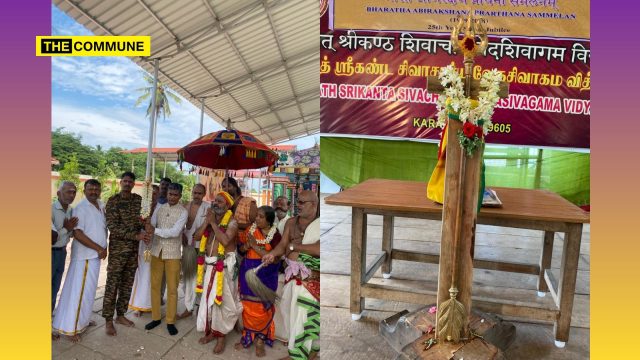
Pragya Thakur Breaks Silence After Acquittal Alleges Brutal Torture, Forced Confession To Frame RSS And BJP Leaders

In her first public statement following acquittal in the 2008 Malegaon blast case, former BJP MP Pragya Singh Thakur delivered a scathing indictment of the investigative process, alleging custodial torture, coercion, and politically motivated targeting by senior police officials.

Thakur, who was among several accused cleared of all charges on 31 July, described her acquittal as a “victory of saffron, victory of religion, victory of Sanatan and victory of Hindutva.” Speaking to reporters in Mumbai, Thakur claimed she was subjected to 24 days of sustained torture while in custody, naming former Mumbai Police Commissioner Paramveer Singh as the principal perpetrator.

“The atrocities they committed cannot even be described because words have a limit,” she said, adding that she had submitted written complaints naming officers involved. Thakur alleged that investigators pressured her to implicate prominent figures, including Uttar Pradesh Chief Minister Yogi Adityanath, RSS chief Mohan Bhagwat, and BJP leaders Ram Madhav and Indresh Kumar.

“They told me, ‘If you name these people, we will stop torturing you.’ Their only purpose was to make me tell lies,” she said. She further claimed that her lung membrane had ruptured due to the alleged torture and that she was held illegally at Sushrusha Hospital before being transferred to another facility. “I am writing my story. All this will come out,” she said.

Thakur also alleged that she was asked to name Prime Minister Narendra Modi during her time in Gujarat, but she refused. “Everyone wanted me to tell a lie. But I did not name anyone,” she said. Calling the case “fabricated” and “baseless,” Thakur accused several officers including Hemant Karkare, Sukhwinder Singh, and Khanvilkar of illegal conduct and coercion.

“Even if we are killed, it will not make any difference to us. A patriot always lives and dies for his country,” she said, adding that efforts would be made to “punish” those responsible for the alleged torture. Her remarks, steeped in religious and nationalist rhetoric, are likely to reignite debate over the handling of the Malegaon investigation and the broader implications of “saffron terror” narratives. While her acquittal marks the end of a long legal ordeal, the political reverberations of her statement are expected to continue.

-IANS

Subscribe to our channels on TelegramWhatsApp, and Instagram and get the best stories of the day delivered to you personally.
Did You Know? Christian Missionaries Were Given Prime Indian Land On 999-Year Leases For Just ₹1!

Yes, it’s true. During the British colonial period, missionaries working under the patronage of the East India Company were granted land across India on extraordinary 999-year lease agreements, often for a nominal rent of ₹1 per year. These long-term leases, framed under colonial land grant policies, effectively handed over public resources for centuries—with barely any public scrutiny to this day.

One striking example is St. Xavier’s High School & College in Fort, Mumbai, which stands on land acquired by the Jesuit Fathers in 1866. The lease was for a 200 x 160 ft plot—a central location in one of India’s most valuable urban zones—granted for 999 years at a token rent of ₹1 annually.

This wasn’t an isolated case. In 1894, additional land was leased to the Jesuits on Cruickshank Road (now Mahapalika Marg), and in 1940, another plot was granted at New Marine Lines for use as a playground—again, reportedly on similar terms.

And this is just Mumbai. Across India, dozens of such leases were handed out to Christian missionary institutions—churches, schools, hospitals, and seminaries—especially in Tamil Nadu, Kerala, Goa, West Bengal, and Northeast India. In many cases, prime land in cantonments, hill stations, and railway towns was given away for virtually nothing—often under the guise of “public service.”

What’s deeply concerning is that many of these leases have never been reviewed, renegotiated, or reassessed, even after Independence. These institutions continue to occupy vast urban properties with virtually no rent paid to local or central governments—while ordinary citizens struggle with sky-high land and property prices.

There are many such missionary infrastructures across India that were granted land in the same manner. Most of them remain hidden from public knowledge or buried under silence, despite being leased for just one rupee. The fact that such long-term colonial-era arrangements were never revisited or reassessed is deeply concerning and it continues even today.

In a time when land is among the country’s most valuable assets, why are these colonial-era contracts still allowed to stand unchallenged?

Shouldn’t we revisit these agreements, especially if the original purpose of the lease has long expired?

Subscribe to our channels on TelegramWhatsApp, and Instagram and get the best stories of the day delivered to you personally.
The Real Face Of Caste Violence In Tamil Nadu: It’s Not The Brahmins

In India’s popular socio-political discourse, Brahmins are often portrayed as the principal upholders of caste and endogamy. But data and disturbing events on the ground tell a different story – one that few are willing to confront. Recent studies and caste killings reveal that the torch of caste pride, once carried by Brahmins, now burns fiercely among dominant OBCs and MBCs.

A 2017 study conducted by researchers from the Indian Statistical Institute found that Brahmins had the highest rate of inter-caste marriages among all caste groups at 6.3%, compared to 4.8% among OBCs and 4.7% among Dalits. Even more striking is the fact that over 60% of these inter-caste marriages were arranged by families, not romantic outliers. This punctures the stereotype of Brahmins as die-hard casteists, at least when it comes to marriage.

The myth that caste rigidity flows top-down must now be questioned.

The Real ‘Honour’ Violence Is Happening Lower Down

Take the brutal case of Kavin Selva Ganesh, a 27-year-old Dalit techie in Tamil Nadu, who was hacked to death in broad daylight for being in love with a caste-Hindu woman. The main accused? Her brother-son of two serving Sub-Inspectors in the Tamil Nadu Police. Both SIs are also named in the FIR. This is no one-off. The infamous 2016 murder of Sankar, another Dalit youth, by a dominant Thevar family also for falling in love remains etched in Tamil Nadu’s memory.

The perpetrators of such “honour” crimes are often from OBC and MBC communities’ castes that dominate local politics, police stations, and panchayats. Their caste pride isn’t in scriptures it’s in muscle, machetes, and marriage control.

The Hypocrisy Of The Anti-Brahmin Narrative

Why is it that every caste atrocity is somehow pinned on “Brahminism,” while actual violence on the ground is perpetrated by castes that swear by Periyarism and Dravidian ideology? Why is there no media outrage when inter-caste love is punished with murder not by Brahmin priests, but by backward class police officers?

Even Subramania Bharati, the great Tamil poet, called this out a century ago – “Jaathigal illayadi paapa…” (There are no castes, my child.)

Dr. B.R. Ambedkar, in his most scathing critique, warned,
“Caste is not just a division of labour – it is a division of labourers… graded inequality.”

And Gandhi, who tried to preserve Varnashrama, eventually admitted, “The caste system is a curse upon the nation.”

But today, caste has left the Vedas and entered voter rolls and matrimonial alliances. Brahmins, increasingly urban and disengaged from rural caste dynamics, are scapegoated while real caste atrocities flourish in regions where OBCs dominate.

Time For An Honest Conversation

If annihilation of caste is the goal, we must stop treating Brahmins as convenient punching bags. Real caste justice will come only when we address where caste violence truly festers today within the rigid family structures of dominant caste groups who preach equality but practise medieval control over marriage and women’s agency.

If Brahmins, as data suggests, are becoming more accepting of inter-caste alliances, perhaps it’s time others do the same.

Ending casteism isn’t about attacking Brahmins. It’s about eradicating casteist pride, wherever it lives even if it’s next door, not in a priest’s quarters.

Shailendar Karthikeyan is the Editor of Nyayavimarsha.

Subscribe to our channels on TelegramWhatsApp, and Instagram and get the best stories of the day delivered to you personally.
Congress’ Unofficial IT Cell Targets Hindus Over Muslim Man Slapping Another Muslim Man In Indigo Flight

Following the circulation of a viral video showing a man wearing a skullcap being slapped by another allegedly Muslim passenger aboard an IndiGo flight, several unofficial Congress-affiliated social media handles quickly jumped into a anti-Hindu propaganda pushing communal narrative. Despite widespread condemnation of the act itself, these handles began pushing the claim that the assailant was a Hindu and labeled him a “Sanghi” — an attempt to create communal tension online.

The incident took place on 1 August 2025, aboard an IndiGo flight from Mumbai to Kolkata. According to eyewitness accounts, a male passenger suffered a panic attack during taxiing. He reportedly began sobbing, walking down the aisle, and pleading to be let off the aircraft. While moving through the aisle, he was suddenly slapped by a co-passenger, as captured in a widely shared video.

Other passengers and crew members immediately intervened, offering the distressed passenger support. “He was calmed down and returned to his seat,” said one source familiar with the situation. The flight then proceeded to its destination without further incident.

Upon landing, IndiGo handed over the aggressor to security authorities, stating that it would pursue action under its unruly passenger policy, which may include placing the individual on the no-fly list.

In an official statement, IndiGo said, “We are aware of an incident involving a physical altercation on board one of our flights. Such unruly behaviour is completely unacceptable and we strongly condemn any actions that compromise the safety and dignity of our passengers and crew. Our crew acted in accordance with established Standard Operating Procedures. The individual involved was identified as unruly and handed over to the security authorities upon arrival. All appropriate regulatory agencies have been duly informed, in line with protocol. We remain committed to maintaining a safe and respectful environment on all our flights.”

Police investigations suggested a brief verbal exchange preceded the assault. “The accused claimed he felt uneasy when the victim came close to him and tried to move him away,” said an officer. The victim is suspected to have had a mental health condition, and the accused was let off with a warning after questioning.


However, the narrative online quickly shifted, not based on verified facts, but on the victim’s visible religious identity specifically, his skullcap. Several Congress-leaning users on social media began blaming the Hindu community and right wing supporters, portraying the incident as an act of religiously motivated hate, despite no confirmation of such motives from authorities or witnesses.

A handle goes by the name ‘DrNimoYadav’, peddled, “Muslim man was having a panic attack and crying, as it was his first time flying. Cabin crew was helping him but a sanghi man slapped him just because he was wearing a skull cap. This sanghi man should be barred from flying.”

Another Congress synphase goes by name ‘Shyam Meera Singh’ said, “India’s Human Rights Commission, the Indian government, the judiciary, the police administration, and the good people here – everyone is dead. In this country, at every step, caste, religious, class, gender, and regional discrimination exist everywhere. If you are rich, you will get justice; otherwise, you will wander around being mistreated. You won’t find justice anywhere.”

Another sympathizer goes by the name ‘Deb livnletliv’ peddled saying, “While on board an Indigo flight, a Muslim man had a panic attack and started crying. While the cabin crew was helping him, a chapri from the rotten society slapped him. This man should be banned from every public transport.”

Another congress symphathiser declared the incident as islamophobia, “How long will you keep getting beaten like this? This incident on the IndiGo flight is extremely shameful. If such a mindset is not addressed in time, it can become a serious threat to society. The growing trend of Islamophobia across the country is a matter of concern.”

Another Congress sympathizer said, “What happened on IndiGo’s flight is extremely shameful; discrimination based on religion is wrong. Islamophobia is now truly a matter of concern.”

Several individuals who initially pushed a communal narrative later deleted their posts and issued apologies after it was confirmed that both the victim and the assailant were Muslim.

One alleged journalist goes by name Parth MN said, “Deleted my earlier tweet. The framing was incorrect. The offender should be barred nonetheless. Absolutely unacceptable behaviour.”

This rapid and speculative communal framing without waiting for verified details  highlights a pattern of selective outrage and politicized messaging that risks further deepening social divides.

Subscribe to our channels on TelegramWhatsApp, and Instagram and get the best stories of the day delivered to you personally.
‘The Kerala Story’ Receives National Award, Pinarayi Vijayan Suffers Meltdown

Following the announcement of the 71st National Film Awards, Sudipto Sen’s ‘The Kerala Story’ was awarded the Best Cinematography honour. Kerala Chief Minister Pinarayi Vijayan, publicly expressed displeasure against the recognition granted to the film.

Taking to his official X account, Vijayan expressed his displeasure, criticizing the central government and the jury for honouring a film that, “By honouring a film that spreads blatant misinformation with the clear intent of tarnishing Kerala’s image and sowing seeds of communal hatred, the jury of the #NationalFilmAwards has lent legitimacy to a narrative rooted in the divisive ideology of the Sangh Parivar. Kerala, a land that has always stood as a beacon of harmony and resistance against communal forces, has been gravely insulted by this decision. It is not just Malayalis, but everyone who believes in democracy, must raise their voice in defence of truth and the constitutional values we hold dear.”

This public denouncement raised severe questions, Is the Chief Minister’s opposition driven by genuine concern, or is it a move rooted in appeasement politics and a desire to maintain minority vote banks?

About the Film: The Kerala Story

The Kerala Story‘ is a 2023 Hindi-language drama directed by Sudipto Sen and produced by Vipul Amrutlal Shah. Featuring Adah Sharma, Yogita Bihani, Siddhi Idnani, and Sonia Balani, the film revolves around inspired by true events.

The narrative focuses on a group of young women from Kerala who are allegedly lured into converting to Islam and subsequently recruited by the Islamic State (ISIS). Central to the film is the controversial theme of “Love Jihad”, portraying the systematic targeting of non-Muslim women under the guise of romantic relationships to facilitate religious conversion and extremist recruitment.

Plot Overview

The story follows four college girls Shalini (Adah Sharma), Geetanjali (Siddhi Idnani), Nimah (Yogita Bihani), and Asifa (Sonia Balani) who come from Hindu, Christian, and Muslim backgrounds. Set in a nursing college in North Kerala, the film paints a picture of ideological conflict and cultural manipulation. The character Asifa, a devout Muslim, gradually begins influencing her roommates, convincing them to adopt Islam with the help of community elders, Quranic verses, and young men posing as romantic partners.

As the story progresses, it delves into the transformation of the protagonist, Shalini, from a cheerful student to Fatima, an ISIS recruit and mother, desperate to escape the life she was forced into. The film shows how these girls are manipulated emotionally, psychologically, and physically eventually trafficked into war zones.

The film doesn’t shy away from depicting disturbing scenes of rape, religious coercion, and violence under Sharia law. While unsettling, these portrayals are claimed to reflect real incidents of exploitation in extremist circles.

Link to Real-Life Incidents

The film draws heavily from the 2016 ISIS recruitment case involving 21 individuals from Kerala, including four women: Sonia Sebastian (Ayisha), Merrin Jacob (Mariyam), Nimisha (Fathima Isa), and Raffaela. These women reportedly converted to Islam and left India with their husbands to join ISIS-K (Khorasan Province) in Afghanistan.

Their cases came into the public domain after being captured and investigated abroad. Documentaries, including one by StratNews Global, have presented detailed testimonies of the women and their radicalization. The film builds its narrative around these documented accounts while expanding it through dramatization.

While The Kerala Story captures the emotional and psychological trauma faced by the women, it also takes significant creative liberties, particularly in its representation of Kerala’s culture and Muslim communities. The film’s core messaging remains consistent: the use of love and emotional manipulation as a tool for religious conversion and extremist recruitment. The closing scene features a real-life victim’s testimony, further blurring the line between fiction and documentary.

Though the leftist and political parties blame it as heavily dramatized and politically charged, The Kerala Story has succeeded in bringing the term Love Jihad into mainstream discussion. Whether viewed as a wake-up call or propaganda, it has undeniably ignited a national conversation about religious extremism, conversion, and the thin line between fact and fiction in storytelling.

Subscribe to our channels on TelegramWhatsApp, and Instagram and get the best stories of the day delivered to you personally.