Home Blog Page 302

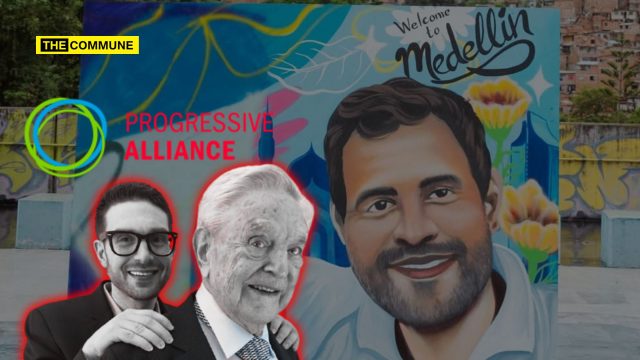
Inside Story Of Rahul Gandhi’s South America Visit: Meetings With Progressive Alliance And George Soros-Backed Entities

India’s engagement with Latin America has historically been limited, though the continent’s intellectual currents – Che Guevara’s revolutionary legacy, magical realism by Gabriel Garcia Marquez, and Liberation Theology blending Marxism with Catholic humanism, have influenced some Indian Left circles. Against this backdrop, Congress leader Rahul Gandhi recently toured South America, visiting Colombia, Peru, and Chile, countries with active leftist movements and Soros-linked organizations. His visit appears aligned with these ideological currents, reflecting interest in observing social movements and political activism abroad. While Latin American ideas often lack practical grounding, Gandhi’s trip highlights the growing curiosity of India’s Left toward the region.

Let us take a deeper look at his visit and the other meetings that took place.

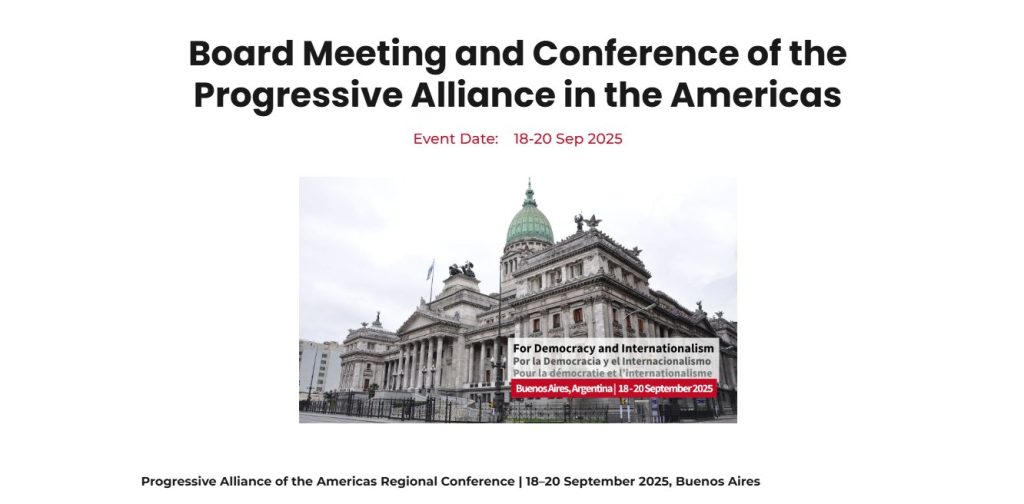
Buenos Aires Conference

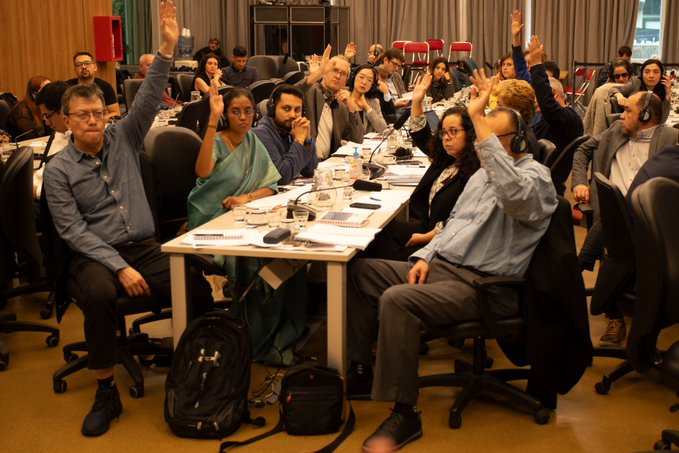
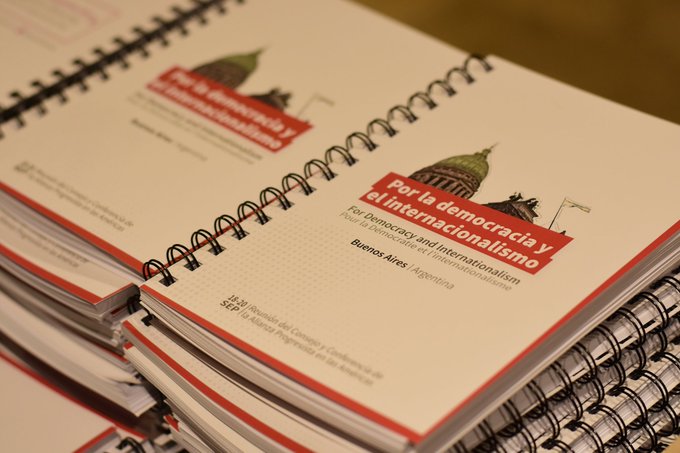
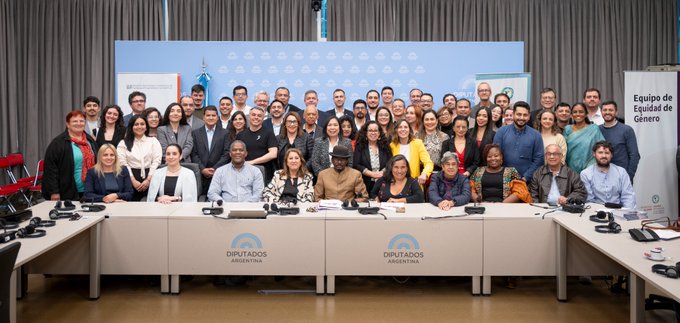
From September 18 to 20, 2025, a conference was held in Buenos Aires, Argentina, organized by the Progressive Alliance (PA), a global coalition of 140 political parties.

Reports indicate that the PA is backed by billionaire George Soros and aims to promote governments aligned with its member parties worldwide. These include major political parties such as the Democratic Party (USA), the Labour Party (UK), and the Congress Party in India.

Indian Delegation

Three representatives from India reportedly attended the Buenos Aires meeting:

  1. Sam Pitroda
  2. Jothimani Sennimalai, Congress MP from Tamil Nadu
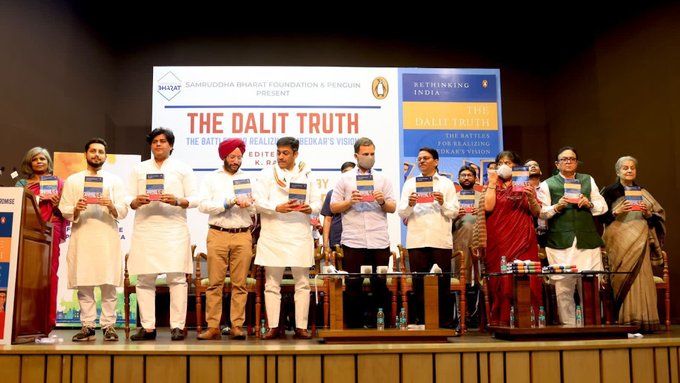
  3. Pushparaj Deshpande, associated with the Samruddha Bharat Foundation (SBF)

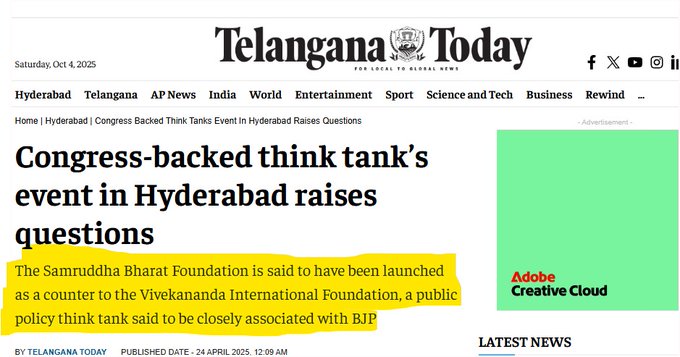
The SBF, launched in 2018 and backed by Congress, was reportedly established to counter the BJP-leaning Vivekananda Foundation. Gurdeep Singh Sappal, former CEO of Rajya Sabha TV and officer on special duty to former Vice-President Hamid Ansari, serves as its executive trustee.

Key individuals associated with SBF include:

  • Amitabh Behar (Amnesty, Oxfam, NFI)
  • Manoj Jha
  • Javed Ali Khan
  • Salil Shetty (OSF)
  • Salman Khurshid
  • Udit Raj
  • Syeda Hameed
  • Mridula Mukherjee
  • KTS Tulsi
  • Shyam Benegal
  • Vinod Sharma
  • Pushpraj Deshpande (Congress advisor)

Pitroda’s Meetings and India Agenda

While Karur Congress MP Jothimani Sennimalai attended the conference sessions, Sam Pitroda reportedly spent much of his time at the Savoy Hotel in Buenos Aires, meeting key figures associated with George Soros.

Reports indicate that Pitroda raised issues concerning the Modi government in India, highlighting one of the PA’s purported objectives: the removal of right-wing governments globally. Pitroda allegedly admitted that, despite efforts, they had been unable to replace the Modi government with a left-leaning administration in India.

Soros’ Influence in South America

George Soros is reported to have a strong presence in South American countries, including Colombia, Peru, Chile, Mexico, and Brazil. His affiliated organizations in these countries include:

  • Brazil: Conectas Direitos Humanos, Fundação Getulio Vargas, Baobá Fund, Fundo Brasil de Direitos Humanos
  • Colombia: Dejusticia, Foro Nacional por Colombia, Symplifica, Afrodes, Buenaventura Chamber of Commerce, Center for Afrodiasporic Studies, Manos Visibles Foundation
  • Peru: Acción Andina
  • Chile: Ciudadanía Inteligente

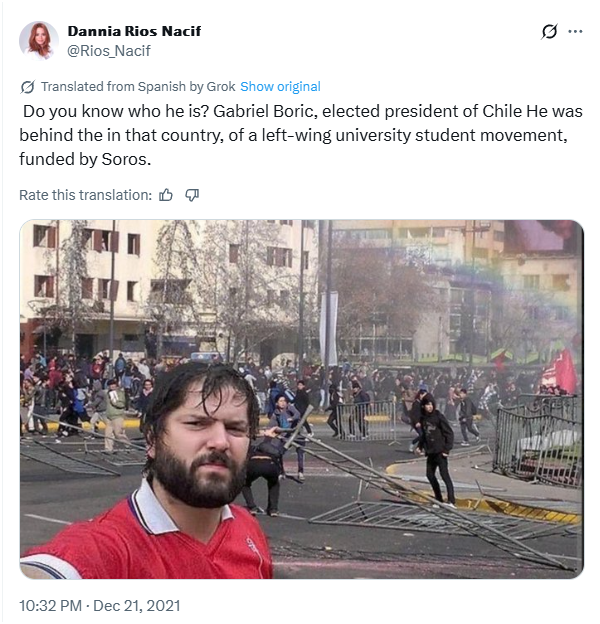
Soros-backed groups are reportedly executing regime change efforts, including supporting Gen Z-led protests in Chile.

Rahul Gandhi’s South America Tour

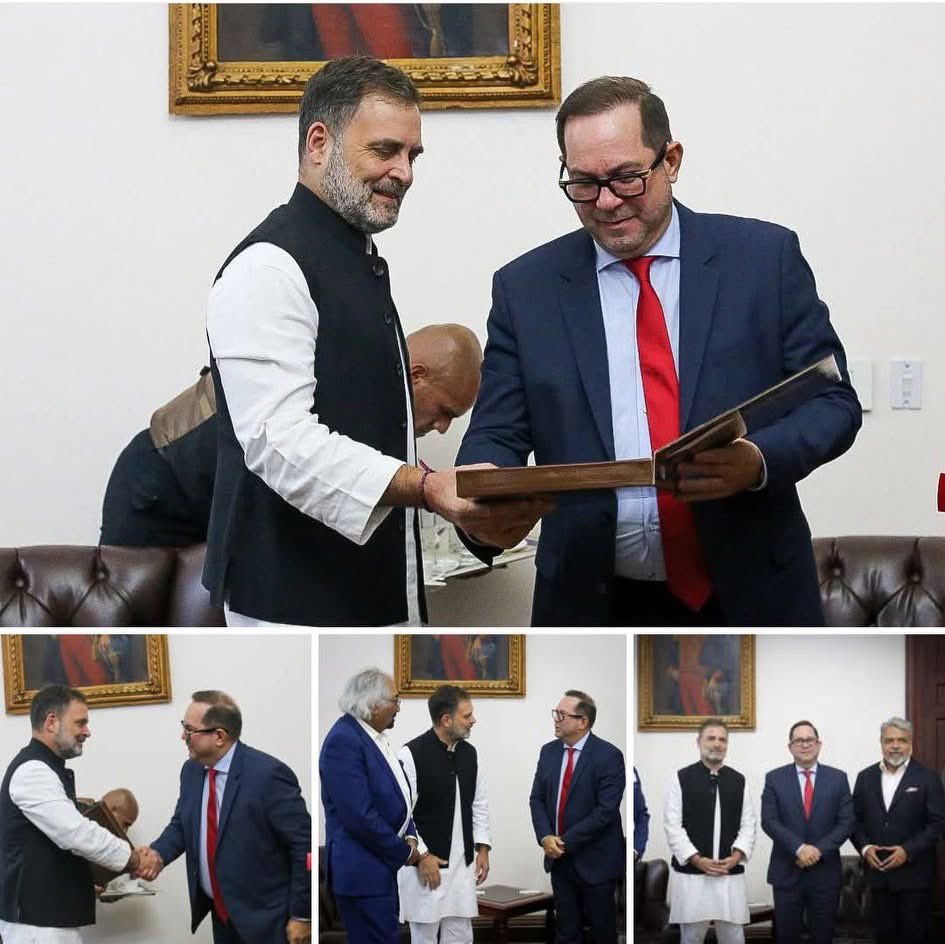
Sources indicate that Rahul Gandhi’s visit to South America was closely aligned with these strategic PA objectives. In Colombia, Gandhi reportedly met with Colombian Senate President Lidios Garcia, accused of election fraud, who is associated with Socialist International – a precursor to the Progressive Alliance. Notably, Congress is also a member of Socialist International.

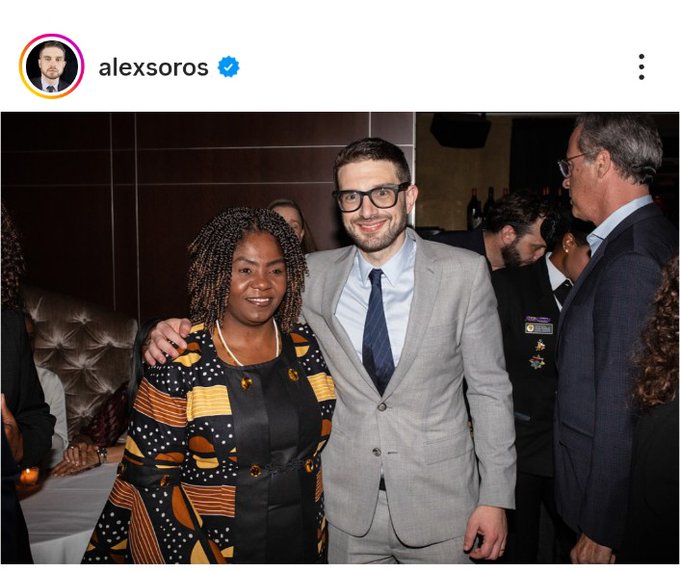
During Gandhi’s visit to Colombia, Alex Soros reportedly met with Colombian Vice President Francis Marquez in New York on 30 September 2025 and former President Juan Manuel Santos on 24 September 2025, raising questions about whether Gandhi and Soros met directly.

Activities in Peru

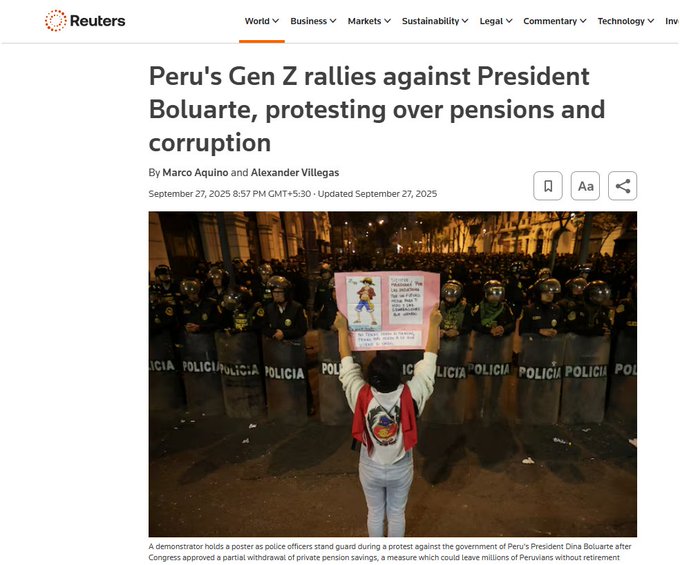
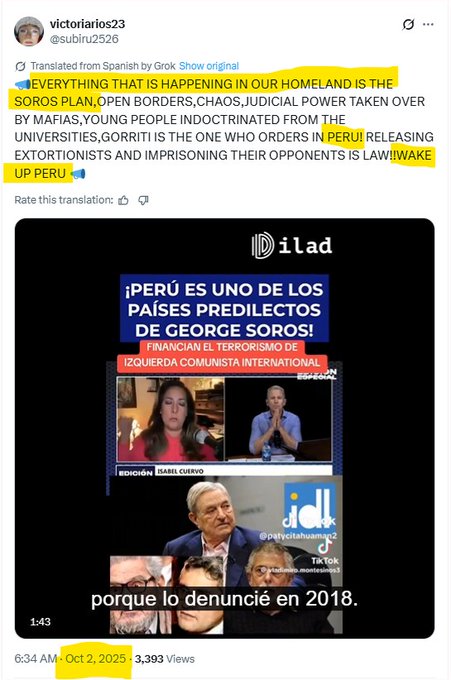
Rahul Gandhi also visited Peru, where Soros-backed Gen Z protests are ongoing against President Dina Boluarte, who leads a center-right alliance government.

Local reports claim that George Soros is supporting these protests. Gandhi’s presence has been interpreted as an effort to observe or explain the Gen Z protest “toolkit.”

Visit to Chile

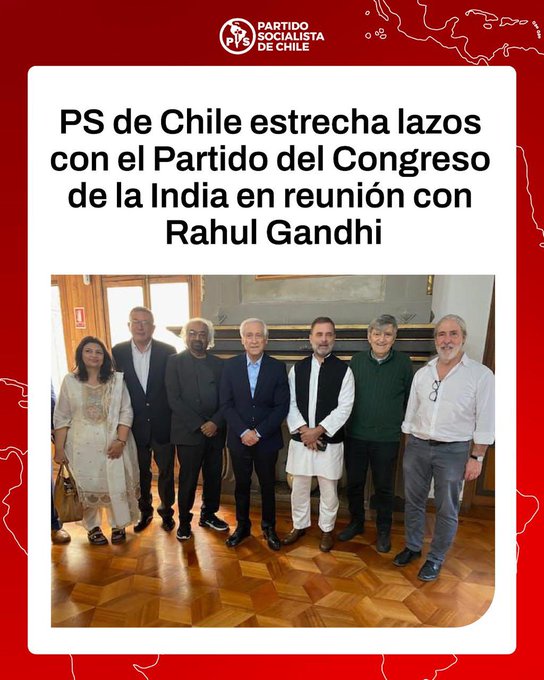
In Chile, Gandhi reportedly met with leaders aligned with President Gabriel Boric Font, the youngest president in Chile’s history and considered a Soros ally.

The Broad Front (Frente Amplio), a member of the Progressive Alliance, was represented at the Buenos Aires meeting, where they also reportedly interacted with Sam Pitroda.

Implications for India

Observers note that Gandhi’s trip appears to follow a clear pattern: visiting countries where Soros-backed organizations exert influence, potentially to study and exchange strategies for political activism and social movements. The visit raises questions about whether Gandhi intends to bring back similar tactics to India.

The full scope and objectives of Rahul Gandhi’s South America visit remain under scrutiny, with analysts monitoring potential implications for Indian politics and the Congress Party’s strategic planning.

(This article is based on an X Thread By The Chronology)

Subscribe to our channels on Telegram, WhatsApp, and Instagram and get the best stories of the day delivered to you personally.

Rome Begins Probe After Don Bosco Alumnus Exposes Chennai Provincial’s Political Collusion With DMK

salesian don bosco dmk

The Salesian congregation in Tamil Nadu — once known for its discipline, integrity, and service to the young — is now facing an internal crisis that has drawn the attention of the Salesian Curia in Rome.

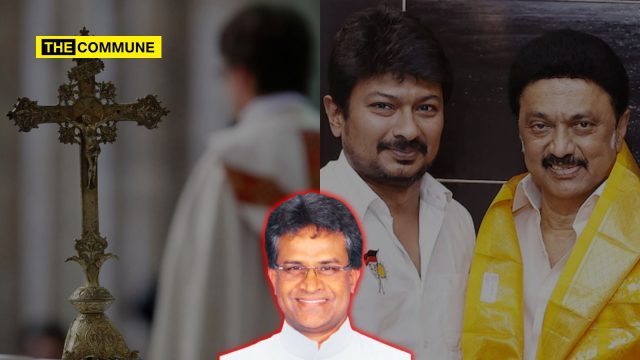
A detailed report filed by R. Joseph D’ Kennedy, a Don Bosco alumnus and India Representative of Ending Clergy Abuse (ECA), has accused Fr. L. Don Bosco, the Provincial of Chennai, of political collusion with the DMK, violating canonical law, and failing to uphold the dignity of the Salesian mission.

Rome has formally acknowledged Kennedy’s complaint and confirmed that it has “proceeded to inform itself of the issues mentioned” signalling that a preliminary internal investigation has begun.

Compromising The Dignity Of The Salesian Congregation

The controversy began when Fr. L. Don Bosco attended the Centenary Valedictory of Loyola College, Chennai, on 15 September 2025 — even as Loyola was under government scrutiny for academic fraud and other illegal and unlawful activities, including money laundering.

Loyola’s controversial partnership with Don Bosco International Media Academy (DBIMA), Paris, had earlier been disowned by the Jesuit institution after coming under the University Grants Commission (UGC) scanner.

The Legal Rights Protection Forum (LRPF) had filed formal complaints with the UGC, the Ministry of Education, and the University of Madras. UGC officials later confirmed that Loyola had indeed been inspected by an expert committee, prompting Loyola to hastily delete references to DBIMA from its website, effectively throwing the Salesians under the bus.

“By attending Loyola’s centenary and lending it legitimacy, the Provincial chose to act as a crowd pleaser sacrificing the Salesian credibility – something a real priest would never do.” Kennedy wrote in his complaint.

The Loyola scandal deepened further when a Canadian priest, Fr. Omala, died under mysterious circumstances on Loyola’s campus — prompting the BJP to demand a CBI probe.

Kennedy accused the Provincial of turning a blind eye to these developments, calling his presence at Loyola “a betrayal of Salesian integrity.”

The Loyola–DBIMA, Paris Scandal: UGC Steps In

It was Kennedy’s RTI intervention that first exposed the illegal Loyola–DBIMA, Paris collaboration. He warned DBIMA, Paris, in advance about the consequences of its unlawful partnership with Loyola — a warning that went unheeded.

“Had DBIMA, Paris cared to take my warnings seriously and wound up their collaboration with Loyola College, they could have averted the serious embarrassment of being branded a partner in crime,” Kennedy said.

Following his RTI and LRPF complaint, the UGC issued a nationwide Public Notice on 27 July 2025, warning all institutions and EdTech platforms against unapproved foreign tie-ups.

Subsequently, a University of Madras inspection report revealed that Loyola College was illegally running its MA Philosophy programme off-campus — effectively functioning as a Bible College to recruit Jesuit candidates — in gross abuse of Minority and Autonomous status.

Canonical Violations And Political Allegiance

The complaint also highlights a direct violation of Canon 285 §3, which prohibits clerics from holding or accepting public offices involving civil power.

Kennedy points to Fr. Don Bosco’s appointment to the Tamil Nadu Minority Commission, allegedly gifted by the ruling DMK during his tenure as Vice Provincial. Despite this, he continued to hold the government-appointed position even after assuming charge as Provincial in February 2023.

A January 2024 report in Tamil magazine Kumudham Reporter noted that Fr. Don Bosco was “included in the Minority Commission as part of a political understanding”

Kennedy questioned the ethics of such dual roles, asking whether the Salesian leadership had the courage to investigate the “true nature of this DMK assignment.

During his Loyola College address, Fr. Don Bosco openly flaunted his proximity to the first family of the DMK.

“Fr. Don Bosco behaves like a politician in cassock rather than a priest in the Salesian tradition,” Kennedy wrote, warning that such conduct erodes public faith and clerical integrity.

Misuse Of Don Bosco Schools For Political Activities

One of the most disturbing charges in the complaint is that Don Bosco school premises were used for political activities of the ruling DMK Government.

In August 2025, over 2,000 Greater Chennai Corporation sanitation workers staged a protest against the city’s push to privatize waste management that threatened their job security and dignity. During that protest — which was itself a response to unfair terminations and crumbling labour rights — several protesting workers alleged that DMK meetings were held inside Don Bosco school campuses, after which they were forced to clean the premises, an order they say came under pressure from civic officials. This allegation, voiced amid the larger labour struggle, has since been captured in viral video clips and figures prominently in the complaint.

“With the State Assembly elections around the corner, such irresponsible misuse of Don Bosco infrastructure must not be allowed under any circumstances,” Kennedy urged.

He warned that such political misuse could permanently damage the Salesian reputation and invite government scrutiny in the future.

Rome’s Response: “We Shall Proceed To Inform Ourselves”

On October 5, 2025, the Salesian Curia in Rome formally acknowledged Kennedy’s complaint:

“Thank you for your mail dated 4 October bringing the mentioned issues to our attention. We shall proceed to inform ourselves of the issues mentioned regarding the Salesians. Thank you very much for your concern as a Past Pupil of Don Bosco, for preserving the good name of Don Bosco.”

Christian activists interpret this as the beginning of an internal review, the first step before any formal canonical investigation.

Subscribe to our channels on TelegramWhatsApp, and Instagram and get the best stories of the day delivered to you personally.

“Women Journalists Excluded”: Self-Styled Expert On Everything Sumanth Raman Amplifies Congress’ Propaganda On Taliban Foreign Minister Press Conference In Afghan Embassy

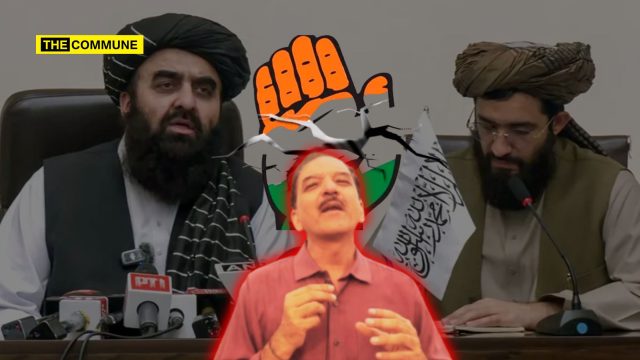
In his latest outburst on social media, self-styled polymath and X commentator Sumanth Raman has once again grabbed attention — this time by condemning the exclusion of women journalists from a press conference addressed by Taliban Foreign Minister Mawlawi Amir Khan Muttaqi in New Delhi.

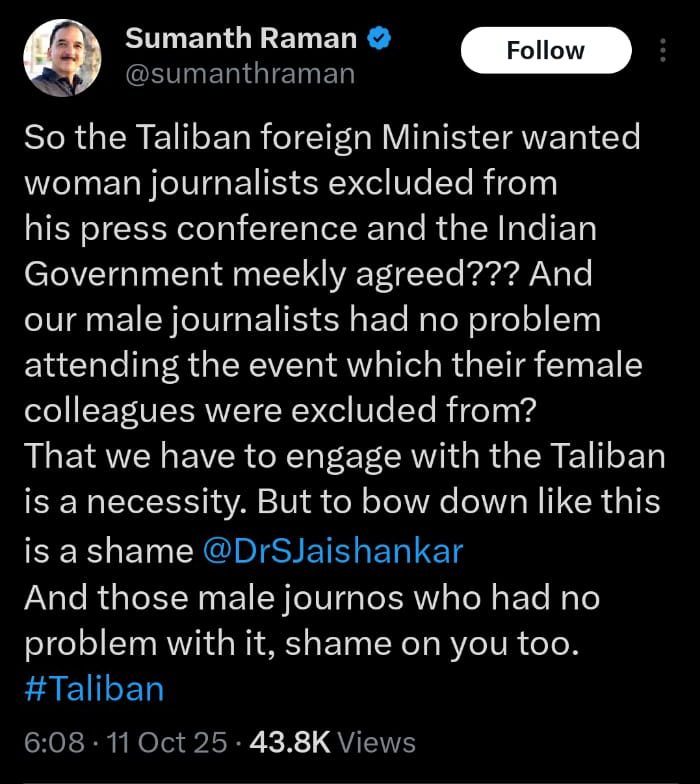
On October 11, 2025, Raman took to X accusing the Indian Government of “meekly agreeing” to the Taliban’s demands, even shaming male journalists who attended the event.

But as with many of his political rants, the outrage rests on selective facts and partisan spin — perfectly aligned with the Congress ecosystem’s attempt to corner the Modi government over yet another manufactured controversy.

Sumanth Raman’s tone was accusatory, painting both the government and the journalists as enablers of gender discrimination. Yet, this narrative collapses upon the simplest scrutiny.

There are two glaring errors in Sumanth’s tweet.

First – The press meet took place inside the Afghan Embassy in New Delhi, a space that, under international diplomatic conventions, is sovereign Afghan territory. India’s Ministry of External Affairs (MEA) clarified that it had no role in organizing or overseeing the event — a fact confirmed by BBC reports quoting an official MEA statement on the same day.

That crucial detail, however, seems to have escaped the Congress propagandist’s attention — or perhaps been conveniently ignored. His narrative seamlessly echoed that of Rahul Gandhi and Priyanka Gandhi Vadra, both of whom rushed to accuse Prime Minister Narendra Modi of being “too weak” to stand up for women. The timing, tone, and talking points point unmistakably to a coordinated political play, and Raman’s amplification of it fits like a glove.

Second – He’s wrong that no male journalists registered their protest. Aditya Raj Kaul of NDTV did ask for women journalists to be included.

Known for his partisan outbursts, Sumanth Raman has previously drawn flak for spreading misinformation — from misrepresenting journalist Palki Sharma to amplifying dubious claims about diplomatic incidents involving Pakistan. His latest attempt to paint the Modi government as complicit in the Taliban’s misogyny reeks of opportunism, not principle.

Yes, the exclusion of women journalists is reprehensible — but it stems from Taliban policy, not Indian governance. The Afghan Embassy’s internal decision reflects the Taliban’s regressive stance, not India’s. By deliberately blurring that distinction, Raman exposes not the government’s weakness, but his own intellectual dishonesty.

In reality, India continues to engage the Taliban strategically — to secure its diplomatic foothold in Kabul, maintain trade routes, and counter Pakistan’s influence in the region, as recent MEA statements and Al Jazeera reports from October 10 confirm. But for Sumanth Raman and his political patrons, nuance has never been as valuable as noise.

Subscribe to our channels on TelegramWhatsApp, and Instagram and get the best stories of the day delivered to you personally.

Courts Urge Tolerance From Hindus: 12 Rulings Where Judiciary Defended Free Speech Over ‘Hurt Hindu Sentiment’ Claims

On 8 October 2025, Noida Police questioned social media influencer Ajeet Bharti over a recent post on ‘X’, following a separate incident in which a lawyer allegedly attempted to throw an object (shoe) at Chief Justice of India BR Gavai. Bharti clarified that he was not arrested and was only summoned for inquiry. He was first taken to Sector 58 police station and later to the DCP office at 12/22 outpost for questioning.

The questioning follows the courtroom incident, where a 71-year-old lawyer attempted to hurl a shoe at CJI Gavai, reportedly upset over remarks regarding the restoration of a Vishnu idol in Khajuraho.

Ajeet Bharti was summoned, detained for questioning, but eventually released – all for questioning the judiciary for his comments on Hindus? Let’s take a look at how the judiciary has given judgements related to Hindus, Hindu Dharma, Hindu festivals in the past.

List of Instances Where Indian Judiciary Upholds ‘Free Speech’, Advises Against Hyper-Sensitivity in Hindu Religious Sentiment Cases

In a series of rulings from 2014 to 2025, various courts across India have consistently dismissed petitions alleging hurt to Hindu religious sentiments, often advising petitioners to cultivate a more tolerant outlook. This report details eight such instances where the judiciary emphasized the importance of free speech and artistic expression, cautioning against the overuse of legal remedies for subjective grievances.

#1 Supreme Court Dismisses Plea To Restore Beheaded Khajuraho Idol – 16 September 2025

The Supreme Court on 16 September 2025, declined to hear a plea seeking restoration of a 7-foot beheaded idol of Lord Vishnu at the Javari Temple in Khajuraho, Madhya Pradesh. A bench led by Chief Justice BR Gavai told petitioner Rakesh Dalal — who claimed the idol was damaged during Mughal invasions — that the issue fell under the Archaeological Survey of India’s jurisdiction. The bench remarked, “Go and pray to Lord Vishnu,” refusing intervention. Dalal had argued that the government’s failure to act violated devotees’ right to worship despite decades of appeals and protests.

#2 Baidyanath Shivling Logo Case Dismissed – 12 September 2025

The Punjab and Haryana High Court dismissed a plea by Meghna Khullar seeking the removal of a Shivling image from Baidyanath Ayurveda’s logo, citing potential disrespect. A division bench comprising Chief Justice Sheel Nagu and Justice Sanjiv Berry questioned the petitioner’s sensitivity, remarking, “Why are you being so sensitive about these things?”. The court noted that existing legal remedies were sufficient and refused to intervene in the matter, allowing the company to retain its established logo without any changes.

#3 Rajasthan HC Upholds Academic Freedom on Ram Janmabhoomi Question – 10 July 2025

The Rajasthan High Court dismissed a petition challenging a university exam question on the Ram Janmabhoomi verdict, ruling that academic discussion or criticism of judicial decisions does not constitute a religious offence under Section 295A IPC without malicious intent. Justice Anoop Kumar Dhand observed that critical analysis is integral to legal education and must not be curbed by subjective sentiments. The petitioner had claimed the question hurt religious feelings, but the court found no deliberate provocation. It emphasised that fair criticism is protected under Article 19(1)(a) when reasoned and not contemptuous, calling the plea “misconceived.”

#4 Court Chides YouTuber Over Holi Remark – 15 July 2025

The Bombay High Court rebuked YouTuber Vikas Pathak (Hindustani Bhau) for his petition against filmmaker Farah Khan. The case concerned Khan’s description of Holi as a “festival of chhapris” on a reality show. Justices Ravindra Ghuge and Gautam Ankhad asked the petitioner why he was “so sensitive” and stressed that the judiciary should not be burdened with such petitions. The court dismissed the plea, underscoring that not every personal dislike or offensive remark warrants legal action, especially in the context of public discourse and entertainment.

#5 Varanasi Court Dismisses Plea Against Rahul Gandhi Over Lord Ram Remark – 27 May 2025

A Varanasi MP-MLA court dismissed a petition against Congress leader Rahul Gandhi for allegedly calling Lord Ram a “mythological and fictional figure” during his speech at Brown University in May 2025. Advocate Harishankar Pandey had sought FIR registration, accusing Gandhi of hurting Hindu sentiments and spreading hate speech. However, Additional Chief Judicial Magistrate Neeraj Kumar Tripathi ruled the plea “non-maintainable,” citing the Bharatiya Nagarik Suraksha Sanhita (BNSS) requirement of prior government or district magistrate sanction. Pandey said he would seek permission and refile the case. The court took no further action against Gandhi.

#6 Allahabad HC Rejects Bid to Ban Book on Gayatri – 12 March 2025

The Allahabad High Court dismissed a Public Interest Litigation (PIL) filed by a religious group seeking a ban on the book “Tathakathit Gayatri Devi Mantra Ki Vastavikta”, which claimed Goddess Gayatri is fictitious. The bench of Chief Justice Arun Bhansali and Justice Kshitij Shailendra noted that an identical petition had been dismissed in 2016. The court ruled that re-filing the same claim was inadmissible, reinforcing the legal precedent that repeated petitions on settled issues cannot be entertained, thereby upholding the publication’s right to circulate.

#7 Kailash Kher’s Song Didn’t Outrage Sentiments Says HC – 12 March 2025

The Bombay High Court quashed a criminal case against singer Kailash Kher, filed by a devotee who alleged that his song “Babam Bam” and its music video, featuring scantily clad dancers, hurt his religious sentiments as a Shiva devotee. Justices Bharati Dangre and Shyam C. Chandak established a key principle, stating that “every action disliked by a class [does not amount to] outrage of religious sentiments.” The ruling protected artistic expression from subjective claims of offence, setting a significant legal standard for similar cases.

#8 Supreme Court Dismisses Plea Seeking FIR Against Udhayanidhi Stalin Over ‘Sanatan Dharma’ Remarks – 27 January 2025

The Supreme Court on 27 January 2025, dismissed a plea seeking FIRs against Tamil Nadu Minister Udhayanidhi Stalin and former Union Minister A. Raja for their remarks calling for the “eradication of Sanatan Dharma.” A bench of Justices Bela M. Trivedi and Prasanna B. Varale declined to entertain the petition, with the counsel withdrawing it to pursue other legal remedies. The Court observed that such pleas were turning it into a “police station.” Similar petitions had earlier been filed nationwide after Stalin’s controversial “Sanatan Dharma Eradication” speech in September 2023.

#9 Supreme Court Shields Adipurush, Warns of Falling Tolerance – 21 July 2023

The Supreme Court rejected pleas to revoke the censor certificate of the film ‘Adipurush’ and stayed proceedings against its makers in the Allahabad High Court. Justice Sudhanshu Dhulia observed that “everyone is touchy about everything now” and warned that societal tolerance for movies and books is steadily declining. The bench stated that a certification cannot be withdrawn lightly, defending the film’s release and highlighting the need for a more resilient public discourse in the face of creative works.

#10 Tolerance is a Hindu Tenet: Madras HC – 3 February 2022

The Madurai Bench of the Madras High Court dismissed a petition challenging the conversion of a house into a church in Kanyakumari, which had raised concerns about noise from loudspeakers. Justice C.V. Karthikeyan emphasized that tolerance is a basic tenet of every Hindu. The court upheld the constitutional right to practice and profess one’s religion, asserting that objections rooted in religious intolerance are unacceptable in a secular nation like India, thereby promoting communal harmony.

#11 “Get a Sense of Humour,” Says Bombay HC – 17 September 2018

The Bombay High Court quashed an FIR filed by petitioners alleging that a social media post hurt Hindu sentiment. Justices TV Nalawade and Vibha Kankanwadi emphasized the need for humour and tolerance in society. The court ruled that the content in question did not violate Section 295A of the Indian Penal Code (outraging religious feelings) and upheld the principles of free speech. It also cautioned against the misuse of such criminal cases to stifle expression and settle personal scores.

#12 SC on PK Movie: “Don’t Watch It If You Dislike” – 14 August 2014

The Supreme Court of India dismissed a PIL seeking a ban on the movie ‘PK’, which alleged that certain scenes and the poster hurt religious sentiments. Chief Justice R.M. Lodha stated that such matters fall under the realm of artistic expression. In a landmark statement, the bench advised, “If you don’t like it, don’t watch it.” The court upheld the freedom of expression in cinema and allowed the film’s release without any restrictions, setting a crucial precedent for handling objections to creative content.

Last Word

For over a decade, the judiciary has lectured Hindus on tolerance, restraint, and humour — but when a Hindu influencer questions that very double standard, the system suddenly forgets its own sermons on free expression. The irony couldn’t be sharper: free speech thrives only until it questions the arbiters of freedom themselves.

Subscribe to our channels on Telegram, WhatsApp, and Instagram and get the best stories of the day delivered to you personally.
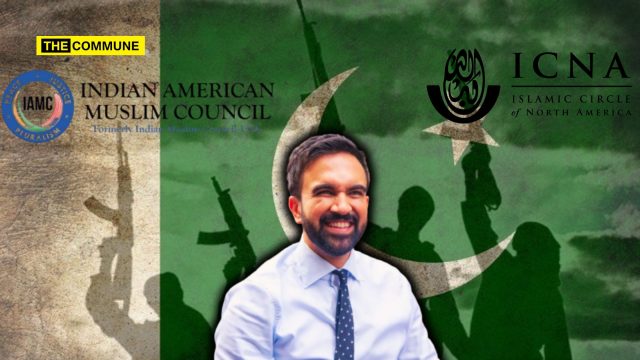
Is Zohran Mamdani Being Backed By Organizations With Links To Pakistan-Based Terror Groups?

Zohran Mamdani, the NYC mayoral candidate, was seen doing a temple run recently in order to woo the “Hindu” voters.

On 6 October 2025, as a part of his campaign, he visited Flushing, Queens, to offer prayers at the city’s two oldest temples and “reconnect with his Hindu roots” – this after being part of a mob that called Hindus bastards and denounced the Ayodhya Ram Mandir. That too he was found wearing his shoes within the temple premises.

On one hand, he poses as a proud “Hindu-rooted Indian-American”, visiting temples in Flushing, Queens, and speaking of the values of Diwali, Raksha Bandhan, Holi, and seva. On the other hand, his record tells a starkly different story—one of anti-Hindu bigotry, sectarian agitation, and ideological extremism.

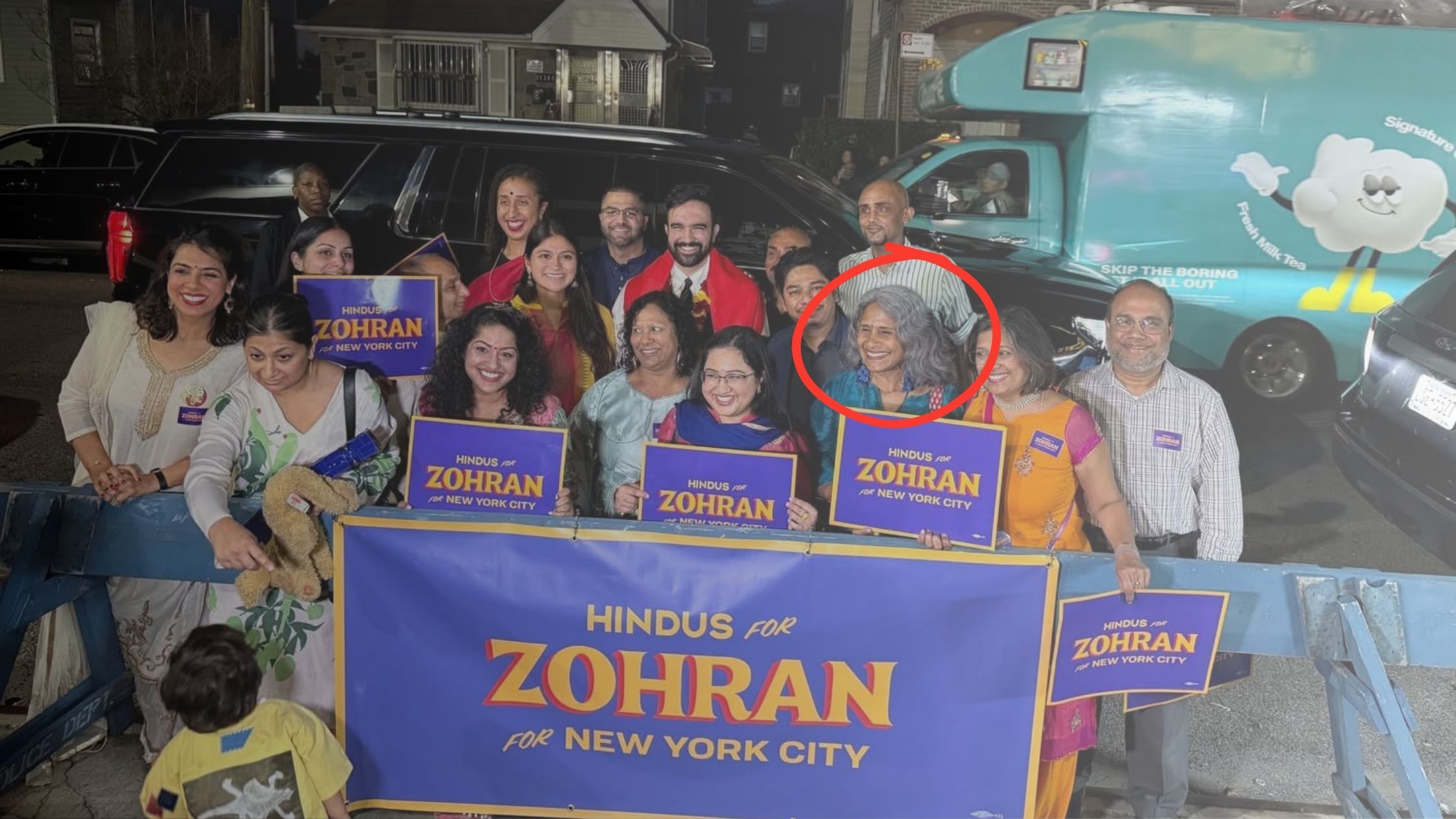
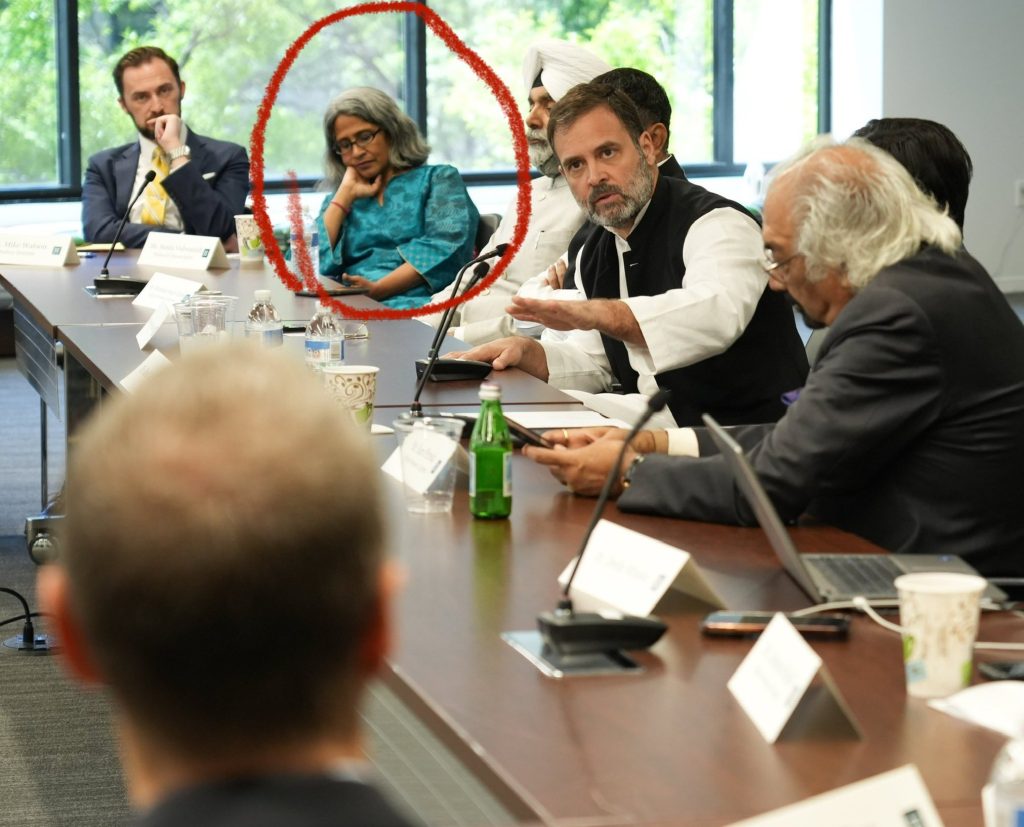
But one picture caught the eye of political observers.

The person marked in red circle is Sunita Vishwanath, a dubious activist.

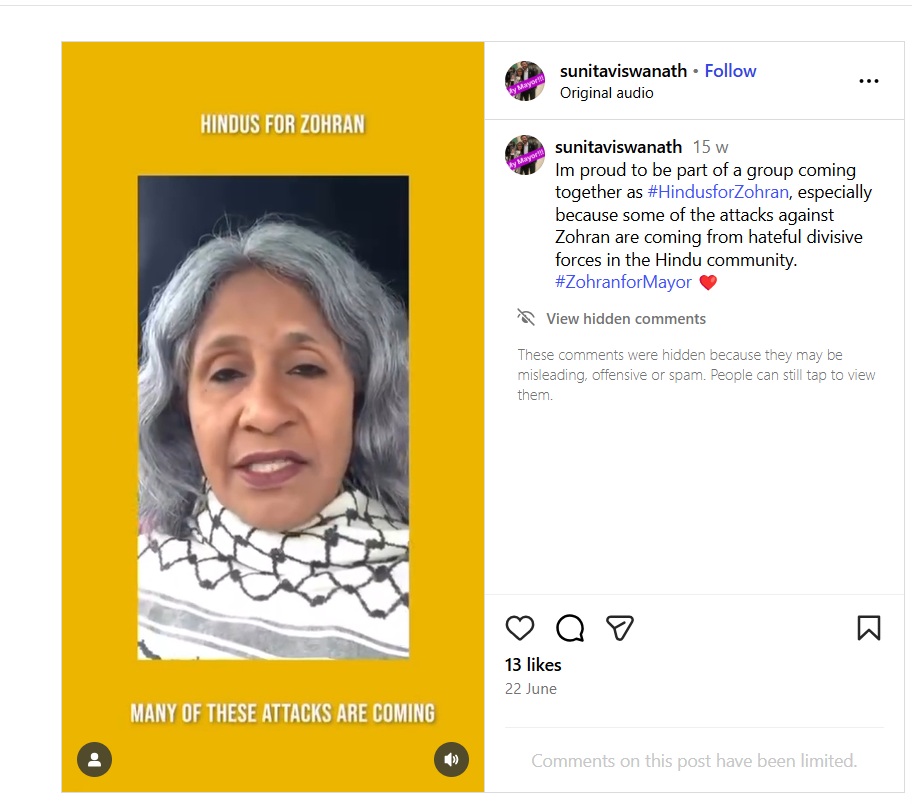
In a video on Instagram, she wrote, “Im proud to be part of a group coming together as #HindusforZohran, especially because some of the attacks against Zohran are coming from hateful divisive forces in the Hindu community.”

Now you must be wondering who Sunita Vishwanath is.

Sunita Vishwanath is the co-founder of Hindus for Human Rights (HfHR), an organization with a misnomer, with ties to Islamist-linked advocacy group that regularly maligns India on global platforms. HfHR was established in 2019 alongside the Indian American Muslim Council (IAMC) and the Organization for Minorities of India (OFMI)—two Islamist-linked advocacy groups. Together, these entities also formed the Alliance for Justice and Accountability (AJA), which organized protests against Prime Minister Narendra Modi’s Houston visit in 2019. Vishwanath is also associated with Women for Afghan Women, an NGO that has received funding from George Soros’s Open Society Foundation. She has been a vocal critic of the NRC and CAA, claiming that the policies render millions of Indians stateless and oppress Muslims.

2023 Rahul Gandhi US Visit

Now we come to the main point of this article – the IAMC. Sunita in herself has accepted that one of her colleague is Tazeem Ansari of IAMC.

Who Or What Is IAMC?

IAMC is a U.S.-based lobbying group known for its anti-India stance, persistent campaigns to label India as a violator of minority rights, and alleged ties to radical Islamist networks including SIMI, Jamaat-e-Islami, and Pakistan-backed propaganda fronts.

To jog our readers’ memory, Congress scion Rahul Gandhi met with individuals linked to IAMC during his 2023 US visit. Concerns arose when Gandhi was photographed with Sunita Vishwanath, who is linked to anti-India initiatives like the “Dismantling Global Hindutva” conference. Vishwanath is associated with groups like ICNA (Islamic Circle of North America), known for ties to Pakistan’s Jamaat-e-Islami and promoting anti-India propaganda.

Reports allege that coordinators of Gandhi’s events, such as Tanzeem Ansari and Mohammed Aslam, are connected to ICNA and its affiliate organizations like the Muslim Brotherhood. ICNA has glorified Hizbul Mujahideen leader Syed Salahuddin, a proponent of Kashmir’s separation from India. Another coordinator, Minhaj Khan, is linked to the Indian American Muslim Council (IAMC), an anti-India lobbying group. IAMC has been accused of spreading fake news to incite communal tensions and lobbying against India in international forums.

IAMC’s Executive Director, Rasheed Ahmed, also leads IMANA (Islamic Medical Association of North America), implicated for alleged misuse of funds involving links to Pakistani officials and terrorist organizations like Lashkar-e-Taiba.

The IAMC is a problematic organization with links to Pakistan-based terror groups. It is known for peddling anti-India propaganda in the international arena and also lobbies with US leaders and bodies against Indian interests.

The IAMC had reportedly collected funds for the cause of Rohingya Muslims and used it to pay Fidelis Government Relations (FGR), a US-based lobby firm for getting India blacklisted by the United States Commission on International Religious Freedom (USCIRF).

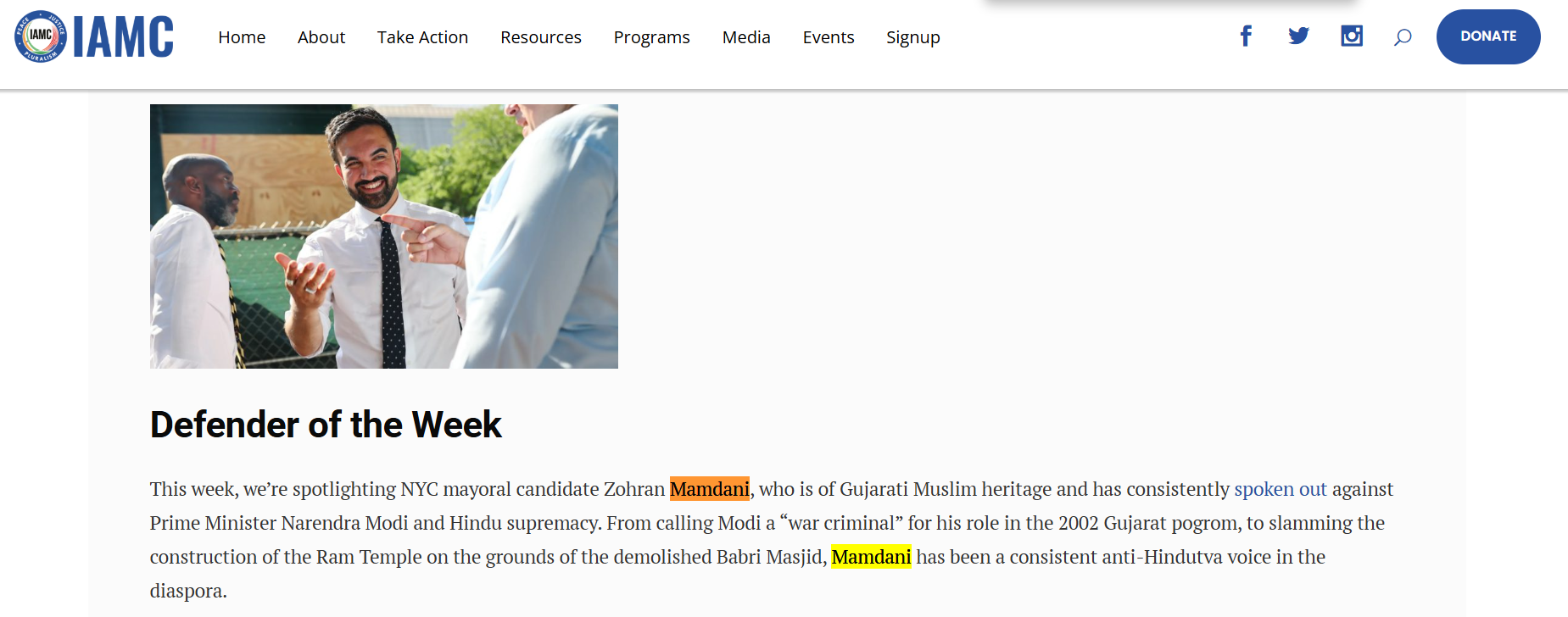
It is this IAMC which has been backing Zohran Mamdani’s campaign. The IAMC weekly human rights monitor from June 2025 spotlighted Mamdani as its “Defender of the Week.”

Awards To Leftist Journalists

In June 2022, the Indian American Muslim Council (IAMC), claiming to be the largest advocacy organization for Indian Muslims in the US, awarded ₹3 lakh in prize money to several Indian journalists and media outlets through its Human Rights and Religious Freedom Journalism (HRRF) Awards. The winners included journalists from NewslaundryThe News MinuteThe CaravanThe WireScroll.inand The New Issue Magazine (UK), as well as news portals Mooknayak and Article 14. The awards recognized reporting on issues like anti-conversion laws, persecution of Muslims during COVID-19, and human rights in Kashmir.

The IAMC has also been criticized for its links to Pakistan-based terror groups and anti-India lobbying efforts, including funding campaigns to blacklist India internationally. The organization has also been accused of violating India’s Foreign Contribution Regulation Act (FCRA), which prohibits foreign funding of media professionals.

Connection With USICRF

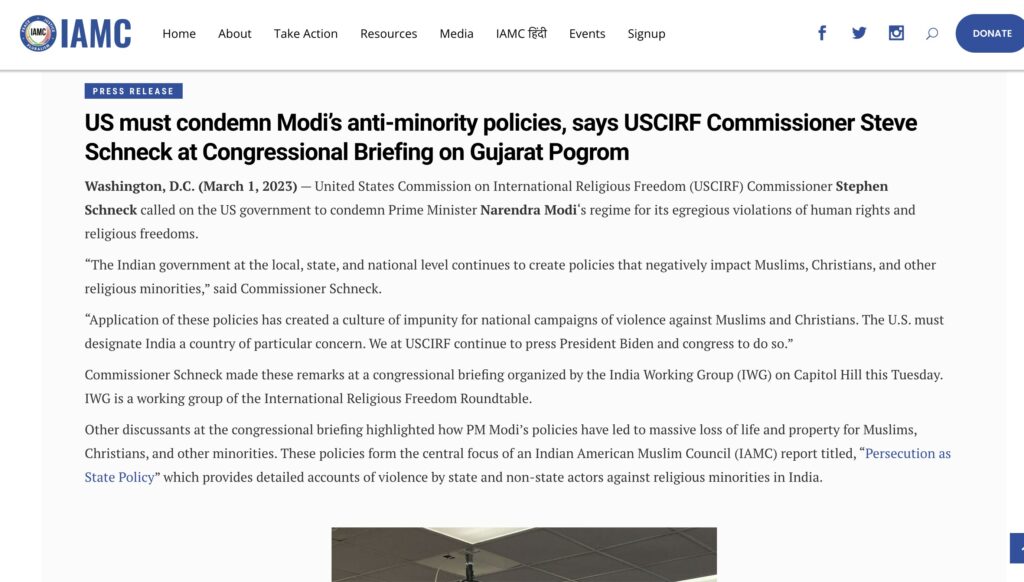
During a February 2023 IAMC event, USICRF Commissioner Stephen Schneck advocated for classifying India as a ‘Country of Particular Concern.’ He asserted, “The Indian government at the local, state, and national level continues to create policies that negatively impact Muslims, Christians, and other religious minorities…Application of these policies has created a culture of impunity for national campaigns of violence against Muslims and Christians. The U.S. must designate India a country of particular concern. We at USCIRF continue to press President Biden and congress to do so.”

Stephen Schneck frequently attends events organized by the Jamat-e-Islami front, IAMC.

Connection With Banned Organisations

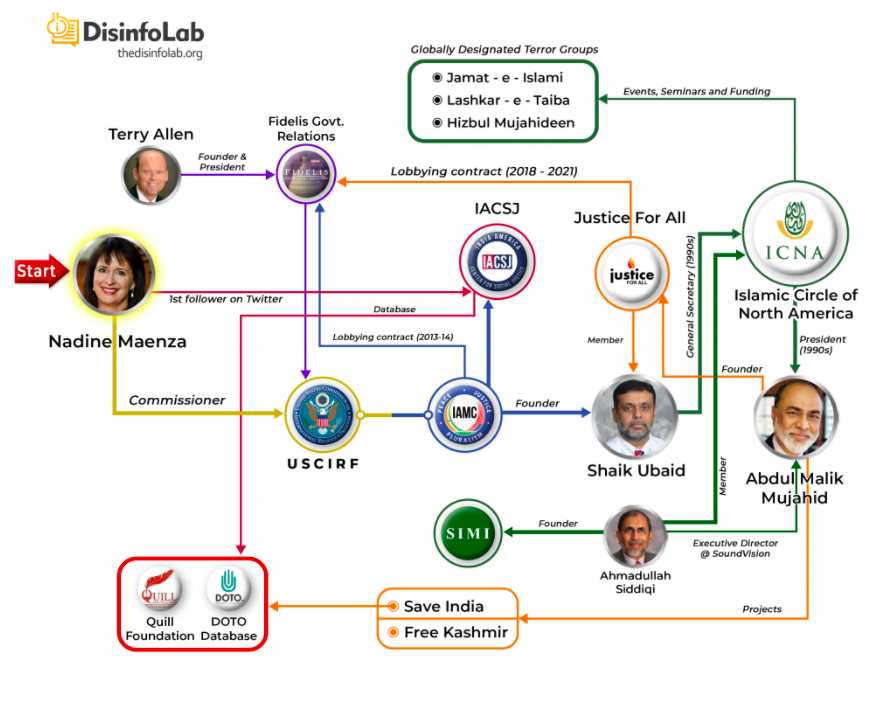
The IAMC is very intricately connected with organizations/Jamaat fronts such as ICNA, Justice For All, SIMI, IACSJ, etc. IAMC’s Sheikh Ubaid is friends with Abdul Malik Mujahid, who headed the Islamic Circle of North America, the US front for Jamaat-e-Islami, Pakistan. It also reportedly has links with the banned Islamist organization Student Islamic Movement of India (SIMI) and Pakistan’s Inter-Services Intelligence (ISI).

Image Source: Disinfo Lab

The IAMC’s activities raise serious concerns about foreign interference in India’s internal affairs and the misuse of platforms to incite communal tensions. It is imperative for the global community to recognize the IAMC’s true agenda and hold it accountable for its actions. India, as a vibrant democracy, must remain vigilant against such malicious campaigns and continue to expose the hypocrisy and dangerous intentions of organizations like the IAMC.

A Web Of Deceit

Zohran Mamdani’s campaign is not an isolated story of opportunistic politics: it is the latest chapter in a coordinated ecosystem driven by groups like the Indian American Muslim Council (IAMC), Hindus for Human Rights (HfHR), and their ideological allies. These organizations, long accused of anti-India lobbying, Islamist affiliations, and systematic vilification of Hindu identity, now find political expression through figures like Mamdani. His sudden temple visits and posturing as a “Hindu-rooted” leader serve as convenient optics to mask a record built on anti-Hindu, anti-semitic rhetoric and association with actors actively working against India’s and even broader US interests. Behind the photo-ops and platitudes lies a deeper network of influence — one that uses faith, identity, and misinformation as tools to infiltrate mainstream politics while advancing a divisive, pan-Islamist agenda under the guise of pluralism and rights.

Subscribe to our channels on TelegramWhatsApp, and Instagram and get the best stories of the day delivered to you personally.


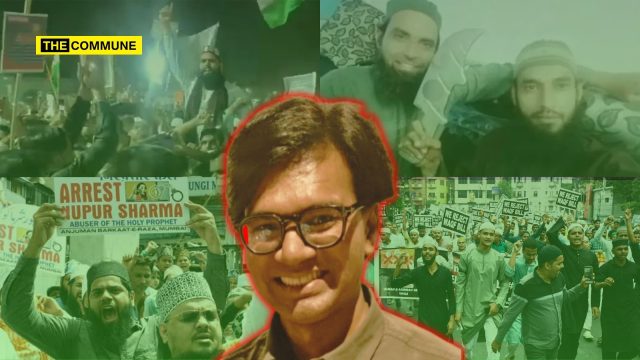
Mohammed Zubair: A Serial Instigator In The Guise Of A ‘Fact-Checker’

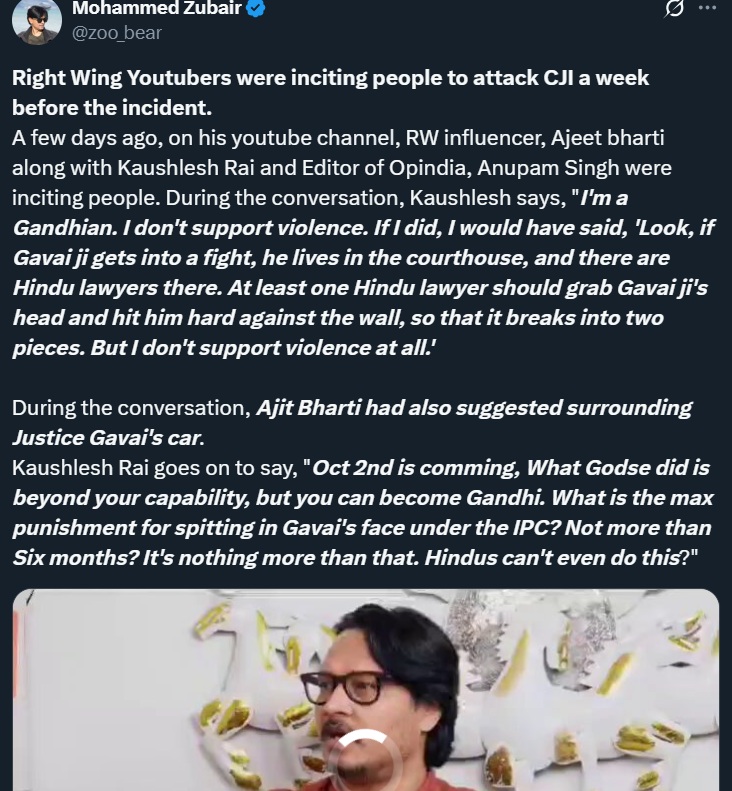
Recently, Mohammed Zubair, the co-founder of ‘fact-checking portal’ Alt News, shared a video clip targeting right-wing commentators Ajeet Bharti, Kaushlesh Rai, and Anupam Singh. He accused them of “inciting people to attack the CJI” a week before a shoe-hurling incident. The clip showed a discussion where, while contrasting the “meek” nature of Hindus with Islamists, Kaushlesh Rai made inflammatory hypothetical remarks about Justice Gavai, including suggesting someone “hit him hard against the wall” and questioning the maximum punishment for spitting on him.

For Zubair, this was a clear-cut case of incitement. Yet, a thorough examination of his own extensive record reveals a career defined by a far more effective, dangerous, and consequential pattern of dog-whistling, instigation, and providing justifications for mob violence, often with fatal results. The case against the “right-wing Youtubers” pales in comparison to the trail of real-world consequences left by Zubair’s own actions.

The Nupur Sharma Episode: Clip Cutting And Instigating A Mob

The template was set with the Nupur Sharma case. Zubair did not merely fact-check; he weaponized an edited clip of a news panel discussion. By isolating Sharma’s remarks and amplifying them across social media without the provocative context from other panelists, he single-handedly painted a target on her back.
The result was not a debate but a fatwa. Islamist groups across India and the world issued death and gang-rape threats, forcing Sharma into permanent hiding. Effigies were burnt, and global terror organizations put a bounty on her head. The “fact-check” had morphed into a deadly incitement notice. This act of digital targeting directly set the stage for the next, more brutal consequence.

From Incitement To Execution: The Brutal Beheading Of Kanhaiyalal

The chain of events Zubair helped initiate did not stop at threats. The barbaric beheading of Kanhaiyalal, an innocent tailor in Udaipur, was carried out by Islamists who explicitly cited the defence of the prophet as their motive, a fire lit by the very controversy Zubair amplified.

While Nupur Sharma was forced into hiding and Kanhaiyalal was brutally murdered, Tasleem Rahmani, the individual who originally abused the Shivlinga found in the Gyanvapi mosque, provoking Sharma’s response faced no such threats and continues to appear on national television. The selective amplification and the resulting violence revealed a clear and disturbing pattern: Zubair’s “fact-checking” consistently served to inflame one side while providing the narrative fuel for real-world violence against the other.

The Judiciary Takes Note: Courts Call Out His Motives

Zubair’s methods have not gone unnoticed by the judiciary. In December 2024, the Allahabad High Court delivered a scathing critique of his actions related to his posts on Yati Narsinghanand. The court questioned why he chose to use social media instead of legal channels, accusing him of inciting “social disharmony.”
Justice Siddhartha Varma remarked, “Come to the court. Why create social disharmony through social media? A glance at your tweet shows you are inciting unrest.” The court was unconvinced by his defence of free speech, with the judge pointedly asking, “Is there any law that permits someone to use Twitter instead of approaching the court?”

The Uttar Pradesh government argued that Zubair had distorted Narsinghanand’s remarks to provoke unrest. The seriousness of his actions is reflected in the charges filed against him, which now include Section 152 of the Bharatiya Nyaya Sanhita (BNS) for acts that endanger India’s sovereignty, unity, and integrity. An FIR accused him, along with Asaduddin Owaisi and Arshad Madani, of inciting violent protests at the Dasna Devi Mandir, with a lookout notice issued against him.

Justifying A Murder: The Tragic Case Of Gopal Mishra

Perhaps the most chilling aspect of Zubair’s modus operandi is his attempt to justify murder. In October 2024, a 22-year-old Hindu man, Ram Gopal Mishra, was shot 20 times during a communal clash in Bahraich, Uttar Pradesh, that began over objections to a Durga immersion procession.

Instead of condemning the horrific killing, Zubair swiftly circulated a video showing Mishra removing a green flag and replacing it with a saffron one. His tweet, “A video of Gopal Mishra in the Bahraich violence has surfaced. He is seen forcefully removing a Green flag… Gopal was shot dead later,” was a clear attempt to rationalize the murder by portraying the victim as the aggressor.

This narrative deliberately ignored the context of stone-pelting and the fact that Mishra was dragged into a house and executed. It was a blatant act of providing moral cover for a lynching.al-world implications for how violence is justified or normalized.

The Badaun Double Child-Murder Narrative Play And Police Rebuttal

In April 2024, Zubair suggested that authorities concealed the motive behind the gruesome murder of two Hindu children in Badaun by implying a link to an unrelated arson case allegedly involving the victims’ father. Police issued legal warnings against spreading inflammatory misinformation, and the family itself clarified there was no dispute with the accused; police later confirmed a planned murder by Sajid, with Javed being pursued. Zubair deleted the post, but the episode exposed a persistent tendency: opportunistic insinuation and misleading linkage to redirect blame and dilute public focus on perpetrators and their

The Anand Ranganathan Episode: Misframing A Security Doctrine As “Call For Genocide”

In June 2024, JNU professor Anand Ranganathan advocated an “Israel-like solution” for Kashmir – meaning settlements, rehabilitation of victims, counter-terror operations, and border security. Zubair reframed this as an “open call for genocide of Kashmiris,” equating a hardline counter-terror/rehabilitation doctrine with extermination – a serious and inflammatory mischaracterization. Ranganathan publicly clarified that he opposed genocide and called for preventing “another genocide” by safeguarding victims and fighting terror. The episode fits the pattern: compress complex policy into a moral smear line to mobilize outrage.

Shielding An Ecosystem: The OpIndia Case And DMK’s Xenophobia

In March 2023, Zubair’s role as a partisan actor was further exposed during the migrant worker crisis in Tamil Nadu. When reports emerged of Hindi-speaking migrants feeling unsafe and leaving the state, OpIndia reported on the situation based on Dainik Bhaskar’s report, leading to an FIR against them based on a complaint by a DMK IT Wing member – a complaint that directly referenced Zubair’s tweets.

While Zubair eagerly targeted OpIndia, he completely whitewashed the pervasive xenophobic rhetoric from DMK leaders and their allies, who have routinely used slurs like ‘Vadakkan’ and ‘Paani Puri wala’ and openly incited hatred against North Indians. His “fact-checking” was selectively deployed to shield a friendly political ecosystem from accountability, demonstrating that his mission is not truth, but narrative control.

“Serial Fake News Peddler” – Criticisms, Prior Arrests

Zubair’s detractors note multiple instances of peddling manipulated content, targeting Hindu groups or leaders, and massaging context to produce a volatile, one-sided moral narrative. In June 2022, he was arrested by Delhi Police under IPC 153 and 295 following old posts that stoked religious animosity and for allegedly fueling online hate ecosystems. Police said he was evasive and uncooperative during the probe; the episode framed him not as dispassionate fact-checker but as a political actor wielding virality to target ideological opponents.

The Serial Instigator In A Fact-Checker’s Disguise

Zubair’s operating system thrives on curated clips and moral panic. The judicial concern is not abstract: when a user with vast reach consistently frames targets as bigots and villains, volatile crowds respond.

Across all the above episodes, the pattern is unmistakable: selective posting, incendiary framing, and weaponized virality that courts have flagged as creating social disharmony and proximate triggers to violence. This is not being neutral or doing verification work. It is politico-religious agitation by clip, and it normalizes vigilantism and communal mobilization while providing semantic cover as “fact-checking.”

Subscribe to our channels on Telegram, WhatsApp, and Instagram and get the best stories of the day delivered to you personally.
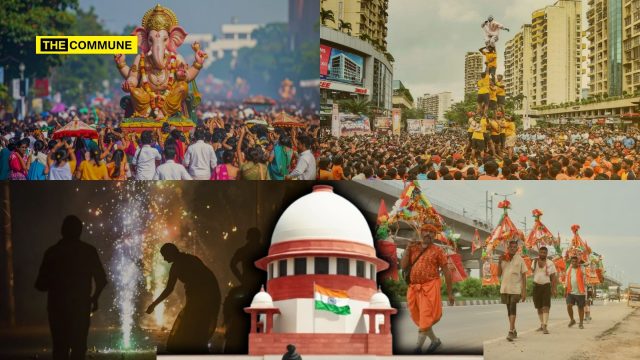
17 Instances When Indian Judiciary Regulated Hindu Festivals And Processions

From 2021 to 2025, Indian courts have been petitioned repeatedly regarding the conduct of Hindu religious processions, balancing religious freedoms with concerns over public order, environment, and health. This report details 10 significant judicial interventions, highlighting a trend where the judiciary has often upheld the right to worship while imposing conditions, with a smaller number of rulings restricting processions primarily on public health and environmental grounds.

#1 Orissa HC Upholds Hanuman Jayanti Procession – 26 March 2025

The Orissa High Court dismissed a petition by seven Muslim men seeking restrictions on the Hanuman Jayanti procession in Sambalpur, citing fears of communal unrest based on a 2023 incident. The Division Bench of Chief Justice Harish Tandon and Justice Arindam Sinha refused to impose pre-emptive restrictions, noting the state’s assurance of adequate preventive measures. The court emphasized that mere apprehensions cannot justify judicial interference and highlighted the need to balance the right to life with religious freedoms, ultimately trusting the state’s machinery to maintain public order during the festival.

#2 Allahabad HC Rejects Loudspeaker Ban at Mahakumbh – 12 February 2025

The Allahabad High Court dismissed a Public Interest Litigation (PIL) seeking the removal of loudspeakers from the Mahakumbh Mela in Prayagraj. The petitioners, including Brahmachari Dayanand, claimed the noise disturbed their meditation. However, the bench of Chief Justice Arun Bhansali and Justice Kshitij Shailendra ruled that the petition lacked substantial evidence proving noise pollution exceeded permissible limits. The court stated that mere photographs and references to Supreme Court judgments were insufficient grounds for judicial intervention, allowing the use of loudspeakers to continue at the massive religious gathering.

#3 Odisha HC Mandates Noise Control for Durga Puja – 03 October 2024

The Odisha High Court issued strict directives to curb noise pollution during Durga Puja celebrations in Cuttack. A special bench comprising Justices Sangam Kumar Sahoo and V Narasingh emphasized that the right to celebrate should not come at the cost of public well-being, noting the adverse effects of loud noise on health, mental peace, and students’ studies. The court mandated that sound levels must not exceed 65 decibels and ordered the Deputy Commissioner of Police to file an affidavit detailing arrangements for noise control and traffic management, warning of strict action against violations.

#4 SC Stays Limit on Dhol-Tasha Troupes in Pune – 12 September 2024

The Supreme Court intervened in a cultural dispute, staying a National Green Tribunal (NGT) order that limited Dhol-Tasha-Zanj troupes to 30 members each during Pune’s Ganesh Visarjan. The bench, led by Chief Justice DY Chandrachud, emphasized the deep cultural significance of the Dhol-Tasha tradition in Pune’s festivities. While issuing notices to the Maharashtra government, the court granted relief to petitioners who argued the NGT’s restriction undermined a key element of the festival’s public celebration, prioritizing cultural expression amidst noise pollution concerns.

#5 Calcutta HC Permits Ram Navami Yatra in Howrah with Conditions – 16 April 2024

The Calcutta High Court permitted the Anjani Putra Sena and Vishwa Hindu Parishad to hold their traditional Ram Navami processions in Howrah. Justice Jay Sengupta allowed the rallies along their usual routes, rejecting the state government’s proposal for an alternative path citing previous communal violence. However, the court imposed strict conditions, limiting participants to 200 and directing that no provocative slogans be raised. The court also advised the state to seek Central Forces’ assistance to ensure law and order during the event.

#6 Calcutta HC Approves VHP’s ‘Shaurya Jagran Yatra’ – 04 October 2023

The Calcutta High Court granted conditional approval for the Vishwa Hindu Parishad (VHP) and Bajrang Dal to conduct their “Shaurya Jagran Yatra” in West Bengal. The rally, intended to honor freedom fighters and raise awareness of Hindu culture, had been denied permission by state police in certain districts. Justice Jaysen Gupta directed the petitioners to specify their route map and ordered the state government to maintain strict vigilance to ensure the procession proceeded peacefully, upholding the right to assemble while emphasizing regulatory oversight.

#7 Bombay HC Defers Plea for Ganpati Immersion in Aarey – 16 September 2023

The Bombay High Court declined to grant immediate relief to a Vishwa Hindu Parishad (VHP) plea seeking permission for Ganpati idol immersion in Mumbai’s Aarey Lake. The court deferred the hearing to September 25, after the festival, as the original bench was unavailable. The plea was filed after municipal authorities prohibited immersion in natural lakes citing environmental concerns from an ongoing petition. The VHP had argued for an exemption or the creation of artificial ponds, but the court prioritized the environmental case over the urgent religious accommodation.

#8 Calcutta HC Allows Ram Navami Yatra in Nabadwip – 30 March 2023

The Calcutta High Court permitted a Ram Navami Shobha Yatra in Nabadwip, directing police to provide necessary security. Justice Rajasekhar Mantha allowed the procession from Chatir Math to Gabtala after the petitioner, Saumen Kansabanik, assured compliance with all regulations, including noise pollution norms. The state government had opposed the plea, citing other ongoing religious functions in the area. The court balanced the competing interests by allowing the yatra while ensuring it would not disrupt other community events, upholding the right to religious procession.

#9 Karnataka HC Allows Datta Jayanti at Disputed Shrine – 30 November 2022

The Karnataka High Court permitted three-day Datta Jayanti celebrations at the disputed Datta Peetha shrine in Bababudangiri Hills. The bench of Justices Alok Aradhe and N Vishwajith Shetty allowed the celebrations under the supervision of a government-appointed committee. The shrine is at the center of a long-standing dispute between Hindu and Muslim groups. The court emphasized that new ritual measures would be subject to its final verdict on an ongoing appeal, allowing the festival while maintaining judicial oversight over the sensitive site.

#10 Orissa HC Allows Regulated Green Crackers for Diwali
01 November 2021

The Orissa High Court permitted the sale and use of certified “green crackers” during Diwali, but within a strict two-hour window from 8 PM to 10 PM. The bench of Chief Justice S. Muralidhar and Justice B.P. Routray ruled that only fireworks conforming to NEERI’s formulation and certified by the Petroleum and Explosives Safety Organisation (PESO) could be sold in designated zones. The court clarified that mere labeling with QR codes was insufficient, upholding the Supreme Court’s precedent of banning firecrackers containing harmful barium salts while allowing environmentally safer alternatives.

#11 Calcutta HC Imposes Total Diwali Firecracker Ban – 29 October 2021

The Calcutta High Court ordered a complete ban on the sale and use of all firecrackers, including green crackers, during Diwali and Kali Puja in West Bengal. The court mandated that the ban would remain in effect for all subsequent festivities that year. The ruling was driven by concerns over deteriorating air quality and the harmful effects of pollution on public health and the environment. The blanket prohibition was one of the most stringent judicial measures taken to curb air pollution during a major Hindu festival.

#12 Telangana HC Upholds Ban on PoP Idol Immersion – 13 September 2021

The Telangana High Court refused to modify its ban on the immersion of Plaster of Paris (PoP) Ganesh idols in Hyderabad’s Hussain Sagar and other lakes. The bench, led by Chief Justice M Ramachandra Rao, stated it could not pass any order that permits water pollution, even temporarily. It noted that the government had ample time since the previous year to create alternative immersion facilities but had failed to take adequate steps. The court’s firm stance reinforced the environmental rationale behind restricting religious practices that cause ecological harm.

#12 SC Intervention Leads to UP Cancelling Kanwar Yatra – 18 July 2021

The Supreme Court stressed that the Right to Life under Article 21 is paramount and asked the Uttar Pradesh government to reconsider allowing a “symbolic” Kanwar Yatra amid the Covid-19 pandemic. The bench of Justices R F Nariman and B R Gavai took suo motu cognizance of the issue. Following this judicial nudge, the UP government subsequently announced the complete cancellation of the annual pilgrimage after discussions with Kanwar Sanghs, prioritizing public health and safety over religious sentiments during a critical phase of the pandemic.

#13 Bombay HC Bans PoP Idols for Maghi Ganpati – 18 July 2021

The Bombay High Court issued an interim order prohibiting the production, sale, and immersion of Plaster of Paris (PoP) idols ahead of the Maghi Ganpati festival. The bench of Chief Justice Alok Aradhe and Justice Bharti Dangre directed strict enforcement of Central Pollution Control Board guidelines to prevent environmental damage. The ruling acknowledged the livelihood concerns of artisans but prioritized ecological protection, sparking a debate between environmental conservation and the economic impact on those dependent on the idol-making industry.

#14 Punjab & Haryana HC Limits Diwali Firecracker Timing – 13 October 2017

The Punjab and Haryana High Court restricted the bursting of firecrackers on Diwali to a strict three-hour window from 6:30 PM to 9:30 PM. The bench of Justices Ajay Kumar Mittal and Amit Rawal also prohibited firecracker use before and after the festival and limited the number of temporary licences issued. The court, acting on air quality concerns, declared previously granted licences inoperative and mandated monitoring by authorities and NGOs to ensure enforcement, highlighting the judicial role in managing seasonal pollution.

#15 Supreme Court Restricts Dahi Handi Ritual for Safety – 17 August 2016

The Supreme Court barred children below 18 from participating in the Dahi Handi ritual and upheld a 20-foot height limit for human pyramids. The ruling came in response to a clarification plea by the Maharashtra government and a contempt petition alleging non-compliance with a 2014 Bombay High Court order. The apex court stated that allowing minors in such dangerous stunts was against public interest, prioritizing participant safety. The bench remarked that while Lord Krishna stole butter, he never performed hazardous stunts for it.

#16 Bombay HC Orders Strict Noise Pollution Enforcement – 09 October 2015

The Bombay High Court directed all civic and government authorities in Maharashtra to take strict action against organizations violating noise pollution norms during festivals like Dahi Handi, Ganesh Chaturthi, and Navratri. The bench of Justice Abhay Oka and Justice V.L. Achilya warned that officers failing to act could face contempt of court. The order came from PILs highlighting that noise rules were widely flouted during recent festivals and that authorities had failed to take adequate action, leading to public disturbance.

#17 Allahabad HC Bans Idol Immersion in Rivers – 07 October 2013

The Allahabad High Court ordered a complete ban on idol immersion in the Ganga and Yamuna rivers across Uttar Pradesh. The bench of Justice Ashok Bhushan and Justice Arun Tandon rejected the state government’s plea for managed immersions, directing that the state’s rivers be freed from this activity within a year. The order was issued during the hearing of a petition raising concerns about river pollution and condition, reinforcing the judiciary’s role in enforcing environmental protection over traditional religious practices.

Subscribe to our channels on Telegram, WhatsApp, and Instagram and get the best stories of the day delivered to you personally.
PoK Burns: Pakistan Military Gets Humiliated With Belt Treatment From Furious Residents Rebelling Against Repressive Regime, Dozens Killed In Historic Uprising; Here’s What The Western Media Won’t Show

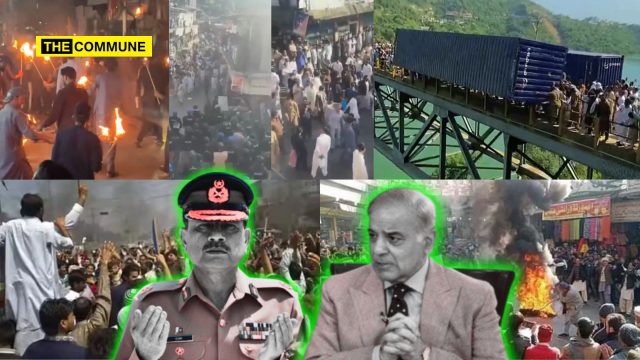
Unprecedented protests have erupted across Pakistan-Occupied Kashmir (PoK) or rather “illegally occupied Kashmir since late September 2025, shaking Islamabad’s control over the region and exposing decades of political repression, economic exploitation, and human rights violations.

What began as a “shutter-down” and “wheel-jam” strike organised by traders and civil society groups rapidly escalated into a mass uprising. Violent clashes between protesters and Pakistani security forces have left at least 12 civilians dead, several police personnel injured, and hundreds wounded, according to reports from local sources. Entire towns have been paralysed by continuous strikes, blockades, and curfews.

The containers that had been placed by Pakistani authorities to block the demonstrators’ advance, were toppled from a bridge into the river below.

The Historic Uprising Blacked Out By The West

Organised by a coalition of traders, civil society groups, and local activists, the protests brought major towns to a standstill, marking one of the largest uprisings in PoK in over forty years. Streets that were once bustling with daily activity were now dominated by chants of resistance and mourning. At least a dozen civilians lost their lives, several police personnel were injured, and hundreds more were hurt as clashes turned the region into a hotspot of unrest


Information Blackout And Media Censorship

Despite the scale of the unrest, the events in PoK have been almost completely blacked out in Pakistani mainstream media. Internet services have been shut down in multiple districts, cutting off communications and preventing citizens from sharing footage of the crackdown. Independent journalists have reported being threatened or detained by local authorities.

Activists have described the situation as “genocidal,” alleging that Pakistani forces have used live ammunition against unarmed protesters and targeted residential areas under the guise of “restoring order.” Several eyewitness videos that surfaced briefly before the internet shutdown showed armoured vehicles firing directly into crowds, and locals bleeding on the streets. Many of these clips were quickly removed from social media platforms inside Pakistan.

A Revolt Unlike Any In Decades

Observers have called the uprising the largest in nearly four decades. Demonstrators in Muzaffarabad, Rawalakot, Kotli, Dadyal, and Neelum Valley raised slogans such as “Kashmir is ours, we will decide its fate” and “rulers, beware, we are your doom,” directly challenging Pakistan’s military and administrative control.

The protests saw unprecedented participation by women and youth, with coordination across towns through social media before digital communications were cut off. More than 100 security vehicles were torched, and in several instances, locals briefly held Pakistani soldiers captive.

Economic Exploitation And Broken Promises

Residents accused Pakistan of systematically looting PoK’s resources while denying basic services. Although the region produces significant hydropower through projects such as the Mangla Dam and Neelum-Jhelum, residents face crippling electricity bills and frequent outages.

The

The shortage of subsidised wheat flour and surging food prices amid Pakistan’s wider economic collapse have worsened living conditions. Protesters demanded free or heavily subsidised electricity and flour, as well as tax parity on property transfers—pointing out that PoK’s rates are higher than those in Punjab or Khyber Pakhtunkhwa.

Development remains stagnant despite repeated promises. Protesters cited the absence of an international airport in Mirpur as a prime example of Islamabad’s neglect. “PoK generates the power that lights up Punjab, but our homes remain in darkness,” one activist reportedly said before communication lines were cut.

Political Marginalisation And Military Control

Protesters also demanded the abolition of 12 reserved seats in the PoK Legislative Assembly for “Kashmiri refugees” living in Pakistan, alleging that Islamabad uses these seats to manipulate local governments.

The Legislative Assembly itself holds limited authority, with most executive powers controlled by an administrative council chaired by Pakistan’s Prime Minister. Locals have described this arrangement as “colonial,” arguing that PoK functions under Pakistan’s thumb without real autonomy.

Calls for representation in Pakistan’s National Assembly and Senate have grown louder, alongside demands for constitutional reforms, fair elections, and an end to military interference. Videos circulating before the blackout showed angry residents stripping captured soldiers of their uniforms and auctioning them for as little as PKR 10—a striking symbol of public fury and humiliation.

Pattern Of Crackdowns And Unfulfilled Deals

The 2025 uprising follows earlier protests in 2023 and 2024 over similar demands for subsidies and local rights. While those demonstrations led to 3–5 deaths, the current unrest has already claimed at least a dozen lives, marking a sharp escalation.

Pakistan’s initial response involved large-scale deployment of troops from Punjab, extensive use of tear gas and live ammunition, and mass arrests. Prime Minister Shehbaz Sharif authorised a crackdown while calling the protesters “miscreants” attempting to destabilise the state.

By October 3, Islamabad sent a high-level delegation to negotiate with protest leaders. The October 4 agreement promised subsidised wheat, reduced electricity tariffs, property tax parity, and PKR 10 billion for infrastructure development. It also included plans for a Mirpur airport feasibility study and review of the disputed assembly seats.

However, local activists have dismissed the pact as another deception. Civil society leader Shaukat Nawaz Mir described the government as a “dayan (witch) administration” and vowed to monitor implementation closely.

Humanitarian Crisis Underway

Reports from ground sources indicate a worsening humanitarian situation. Security forces have imposed indefinite curfews in several districts, while food and medical supplies are reportedly running low. Dozens of missing persons cases have been filed by families alleging arbitrary detentions and abductions by paramilitary units.

Activists have compared the situation to “a silent genocide,” saying that entire towns are being starved and terrorised into submission.

India’s Response And International Silence

India’s Ministry of External Affairs reiterated that Pakistan-Occupied Kashmir remains an integral part of India under illegal occupation. MEA spokesperson Randhir Jaiswal condemned what he termed Pakistan’s “oppressive approach” and “horrific human rights violations,” urging international attention to the crisis.

Despite growing evidence of mass repression, international media coverage has been minimal, with Pakistan reportedly restricting access to foreign correspondents.

A Challenge To Pakistan’s Narrative

Analysts said the unrest has destroyed Pakistan’s decades-old narrative that PoK is a “model of freedom” compared to Jammu and Kashmir. Instead, the protests have revealed a population disillusioned with Islamabad’s governance and increasingly willing to confront the military establishment.

Pakistan’s mounting debt—estimated at nearly 80 percent of GDP—and dependence on IMF bailouts limit its ability to meet PoK’s economic demands. Experts warn that unless Islamabad addresses core grievances, PoK could become a flashpoint for wider instability within Pakistan.

For the first time in recent memory, the people of Pakistan-Occupied Kashmir are not just protesting for subsidies or development—they are openly questioning the legitimacy of Pakistan’s rule itself. And as the blackout continues, their cries for justice are being silenced under the shadow of state power.

(With inputs from India Today)

Subscribe to our channels on TelegramWhatsApp, and Instagram and get the best stories of the day delivered to you personally.

Deepika Padukone Who Suffered Two Heartbreaks Gets Appointed As First Mental Heath Ambassador, This Joke Isn’t Funny

On World Mental Health Day, while millions of Indians are battling real mental health crises, the government decided our first-ever Mental Health Ambassador shouldn’t be a doctor, a psychologist, or a researcher. No, they gave the title to Bollywood star Deepika Padukone.

Why? What are her gold-plated credentials?

Apparently, she once had depression. Specifically, what looked to the world like a really bad breakup. She was even called the “girl with the broken heart” on a talk show.

Deepika Padukone has survived at least two publicly dissected heartbreaks: one with Ranbir Kapoor and another with Siddharth Mallya. She’s admitted that the breakup with Ranbir was especially brutal, so brutal in fact that she had to take a break from dating to focus on herself. Wow, that’s something unusual.

Let that sink in. Her main qualification is the experience most of us would’ve had by the time we’re 25. If heartbreak is the new PhD, then our colleges are useless. We should hand out ambassador badges at every cafe and pub or in the case of Tamil Nadu, a TASMAC.

Here’s a demo of her mental health.

“My Choice” – The Ultimate Hypocrisy

But wait, she also made a video. Remember the “My Choice” manifesto? She stood there, in all her glamorous glory, and told us that her choice was to have sex before marriage, outside marriage, or not at all. To love temporarily. That the symbols of marriage – the ring, the surname- were just “ornaments” that could be replaced.

Powerful, right? A true rebel!

Until she had to go to Abu Dhabi for a tourism ad.


View this post on Instagram


A post shared by Ranveer Singh (@ranveersingh)

Suddenly, the woman whose spirit was meant to “roam naked” was quietly covered in a hijab. So, “My Choice” has fine print? It only applies when it’s convenient and doesn’t hurt the brand? Her brave feminism mysteriously packs its bags and conforms when a paycheck is involved. This isn’t empowerment; it’s a performance.

Convenient Activism for Camera-Hungry Causes

And let’s talk about her famous “activism.” Her big, brave moment was a 15-minute silent visit to JNU during protests. No speech, just a photo-op, perfectly timed with the release of her movie Chhapaak.

If she’s such a fearless voice for the people, where has that voice been since? Where was she when the genocide of Hindus in Bangladesh was happening? Or on other issues? Nowhere. Because those causes didn’t come with a movie to promote. That wasn’t solidarity; it was a brilliantly calculated publicity stunt.

And guess what – her dream PM was Rahul Gandhi! A 55-year-old who is being launched by his party every single year as a youth leader is her idea of dream PM?

The Real Experts We Just Ignored

Meanwhile, India has real mental health heroes. There are countless qualified people in the country who have spent their lives building mental health care for the world’s poorest or those fighting to change our mental health laws. These are the people who should be ambassadors. People who understand the science, the medicine, the policy.

But the government looked at them and then looked at a famous actress from a controversial viral video, and decided: Nah, let’s go with the star power.

The Brutal Truth They Don’t Want You to See

This appointment is a slap in the face to every person who suffers from clinical depression, anxiety, or schizophrenia. It tells them that their profound, often debilitating, illness is now represented by someone whose core philosophy, as she herself preached, is that love and commitment are temporary and disposable.
It tells every qualified professional that their decades of study and hard work mean less than a famous face and a well-timed PR move.

The government thinks the people are idiots, maybe. They think we’ll see a celebrity and clap, forgetting that what we actually need are hospitals, trained professionals, and affordable care. This move by the GoI only seems to be a PR move to fix the “bad image” of the ‘star’.

This is a joke on the people of this country while the ‘star’ gets to buff up her image. And we, the people, are left with a hollow icon instead of real help.

It’s now pointless for the government to withdraw the decision but we have a right to call out this decision.

It’s not just a bad decision. It’s an insult. And we should be furious. And we are furious.

Hydra is a political writer. 

Subscribe to our channels on Telegram, WhatsApp, and Instagram and get the best stories of the day delivered to you personally.
India’s Fight Against Student Suicide Starts With Mental Health

India is facing a growing mental health crisis, particularly among students. Recent data from the National Crime Records Bureau (NCRB) reveals a 65% increase in student suicides over the past decade, an alarming rise that surpasses the overall increase in suicide deaths nationwide. On World Mental Health Day, this reality underscores the urgent need for decisive action and innovative solutions.

Disturbing Trends In Student Suicide

In 2023 alone, almost 13,900 students in India died by suicide, compared with just over 8,400 a decade earlier. Students now account for more than 8% of total suicides nationally, a proportion that has climbed steadily over recent years. Mental health experts point to mounting academic pressure, high expectations, and a weakened support system, leaving many young people isolated and overwhelmed.

Addressing The Crisis: Sadhguru’s Perspective

Renowned spiritual teacher Sadhguru voiced deep concern over these findings:

“Most deeply disturbing that our children are experiencing such levels of distress and despair. We have dismantled many traditional support structures. It is imperative that we re-introduce methods and practices that enhance our children’s mental strength… If every educational institution invests 7 minutes a day on a simple meditative process, it will greatly enhance the mental wellbeing of their wards and wardens. We must make this happen because no progress of any kind is worthwhile or meaningful for the Nation if young people feel shortchanged by it.”

Miracle of Mind: A Step Towards Mental Wellness

The Miracle of Mind app, a 7-minute meditation platform developed by Sadhguru, has emerged as one of the most popular and accessible tools aimed at addressing the mental health needs of youth. The app exceeded a million downloads within just 15 hours of launch, trending across 20 countries and offering content in five languages. Quick to use and designed for daily practice, Miracle of Mind delivers guided meditation and AI-powered support, helping users cultivate inward access to mental stillness and resilience.

Beyond India, the app has also drawn global interest. Sadhguru recently met Italy’s Vice President Antonio Tajani, where the tool was endorsed at a national level:

“A wonderful catch-up meeting with Italy’s Vice President Antonio Tajani after our impactful discussion during the Save Soil campaign. Today, the Miracle of Mind tool earned strong support from Italy’s Government and will soon be officially implemented nationwide. We hope this powerful meditation tool, as technologies for well-being, supports Italian children, youth, and adults in overcoming the growing mental health challenges that are reaching pandemic proportions worldwide.” – Sadhguru

https://www.instagram.com/p/DPOHZu1Dh79/?img_index=2

This endorsement marks a significant step in recognizing meditation-based interventions as global solutions for mental health challenges.

Simple Steps For A Healthier Tomorrow

Educators and mental health professionals are increasingly recommending structured meditation practices like Miracle of Mind for schools and colleges. Even short daily sessions, when integrated into academic routines, can help reduce stress, anxiety, and emotional strain while fostering resilience and self-assurance.

On this World Mental Health Day, the message is unequivocal: addressing student suicides demands compassionate engagement and practical tools. By embedding emotional wellness into educational policy, and using technology to make it accessible, India can equip its youth to thrive even in the face of modern pressures.

Subscribe to our channels on TelegramWhatsApp, and Instagram and get the best stories of the day delivered to you personally.