Home Blog Page 264

9 New Chinese Infrastructure Projects Near LAC That Raise Red Flags For India
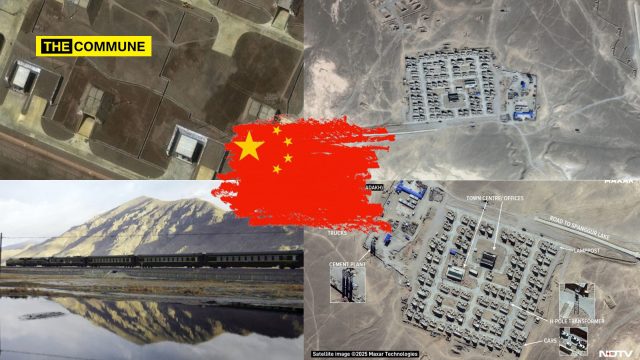
Image Source: NDTV & India Today

Over the past four years, China has intensified infrastructure development along its frontier with India, accelerating road, rail, energy, and military-linked projects close to sensitive sectors of Arunachal Pradesh, Sikkim, and Ladakh. Satellite imagery and official assessments indicate a steady buildup of dual-use facilities capable of supporting both civilian and defence operations. Analysts warn that while these projects are officially labelled as development initiatives, their proximity to the Line of Actual Control (LAC) presents new operational challenges for India’s security apparatus. Below is a detailed account of nine key Chinese projects completed or initiated between 2021 and 2025 that have drawn attention in New Delhi.

#1 China Builds Air-Defence Complex Near Pangong Lake – 24 October 2025 | Location: Pangong Lake, Tibet

Satellite imagery revealed a newly constructed Chinese air-defence complex near Pangong Lake, roughly 110 kilometres from Doklam. The facility comprises radar stations, command centres, missile launch units, and retractable shelters believed to house HQ-9 long-range surface-to-air missiles. The installation, equipped with advanced radar coverage and munitions depots, enhances China’s ability to monitor and target Indian aircraft across Ladakh and Nyoma. Defence analysts warn that the complex gives Beijing a sharper air-defence edge, reducing India’s freedom of manoeuvre in the region.

#2 China Mirrors Pangong Base Opposite Nyoma Airfield – September 2025 | Location: Gar County, Tibet

A replica of the Pangong air-defence facility has been identified at Gar County, just 65 kilometres from the LAC, opposite India’s upgraded Nyoma airfield. The Nyoma airstrip, at 13,710 feet, is being expanded by the Border Roads Organisation at a cost of ₹230 crore to support fighter and heavy transport aircraft. Experts believe the mirrored site enables coordinated radar and missile coverage against Indian air activity. The proximity of both bases could give China an advantage in airspace monitoring and quick strike capability across eastern Ladakh. (Sources: Firstpost, Moneycontrol)

#3 36 Hardened Shelters Built at Lhunze Airbase Near Arunachal – 17 October 2025 | Location: Lhunze Airbase, Tibet

New satellite images from 17 October 2025 confirmed the construction of 36 hardened aircraft shelters at Lhunze Airbase, roughly 100 kilometres from Tawang in Arunachal Pradesh. The expansion also includes new aprons and administrative buildings. Military experts warn this infrastructure allows forward deployment of fighter jets and armed drones, cutting Chinese response times along the McMahon Line. Former IAF chief B.S. Dhanoa stated the hardened shelters remove prior vulnerabilities of China’s high-altitude bases, signalling sustained readiness for future contingencies. (Source: NDTV)

#4 Pangong Tso Bridge Operational, Boosts PLA Mobility – 30 July 2024 | Location: Pangong Tso, Tibet

China completed and operationalised a 400-metre bridge across Pangong Tso in eastern Ladakh, connecting the lake’s north and south banks. The bridge has cut troop and tank movement time from 12 hours to about 4, greatly improving the PLA’s logistical agility. India criticised the project as illegal, noting that the Pangong area is disputed, with both countries maintaining overlapping claims. The bridge strengthens China’s ability to reinforce troops quickly in the event of a standoff, altering the tactical dynamics established since the 2020 clashes.

#5 PLA Builds Forward Headquarters at Sirjap – 2021–2022 | Location: Sirjap, Pangong Lake, Tibet

Between 2021 and 2022, China constructed a large military base at Sirjap, situated five kilometres from the LAC on the northern shore of Pangong Lake. The site, previously uninhabited, now functions as a forward headquarters for PLA troops in the region, integrating command and logistics facilities. The base consolidates Beijing’s permanent military presence and supports sustained operations around the lake. Defence analysts interpret this as part of China’s post-Galwan strategy to institutionalise troop deployment near friction points. (Source: Firstpost)

#6 New Chinese Settlement of 91 Buildings Near Pangong Lake – March 2024 – January 2025 | Location: South Bank, Pangong Lake

Satellite imagery captured between March 2024 and January 2025 shows China’s construction of a settlement with 91 permanent, weather-proof structures near Spanggur Lake, roughly seven kilometres east of the LAC. Experts describe the site as a dual-use settlement that can accommodate both civilians and troops, with roads, power transformers, and modern amenities. The rapid construction suggests intent for long-term habitation and enhanced surveillance of the Pangong–Spanggur corridor, altering pre-2020 ground realities. (Source: NDTV)

#7 Administrative Hub and Cement Plant Emerge in Pangong Region – 2024–2025 | Location: Northeast Bank, Spanggur Lake

New imagery from 2024–2025 reveals that China has developed administrative and industrial infrastructure within its Pangong settlement. Facilities include a cement plant and a communication tower, signalling continued expansion and consolidation. Defence analysts believe the new buildings serve administrative coordination and possibly logistical support for military units stationed nearby. The establishment of such infrastructure indicates China’s intent to sustain long-term operations and civilian presence in the area, embedding its hold near the contested frontier. (Source: NDTV)

#8 Construction of Xinjiang–Tibet Railway Near Ladakh Border – April 2025 | Location: Xinjiang–Tibet Region

In August 2025, China began constructing the 1,700-kilometre Hotan–Shigatse section of the Xinjiang–Tibet Railway, valued at $13.2 billion. The line parallels the G219 highway and passes close to the Indian border, connecting Aksai Chin to Tibet. Once completed, it will enable rapid military and logistics transport between western and southern Tibet. Indian analysts view the project as a strategic move to enhance China’s supply lines and mobility across high-altitude terrain. The line’s route through permafrost zones also raises ecological and engineering concerns.

#9 China Begins Building World’s Largest Dam on Yarlung Tsangpo – April 2025 | Location: Medog County, Tibet Autonomous Region

China has initiated construction of a mega hydroelectric project on the Yarlung Tsangpo (Brahmaputra River) in Medog County, near the Indian border. Estimated at $170 billion, the dam is expected to generate 300 billion kilowatt-hours of electricity annually—equivalent to the UK’s total consumption. India and Bangladesh have raised strong objections, citing risks to downstream water flow, agriculture, and potential weaponisation of water during conflict. Lawmakers in India have termed it a potential “water bomb,” warning of catastrophic flood risks in Arunachal Pradesh and Assam. (Source: Economic Times)

Subscribe to our channels on WhatsAppTelegram, Instagram and YouTube to get the best stories of the day delivered to you personally.

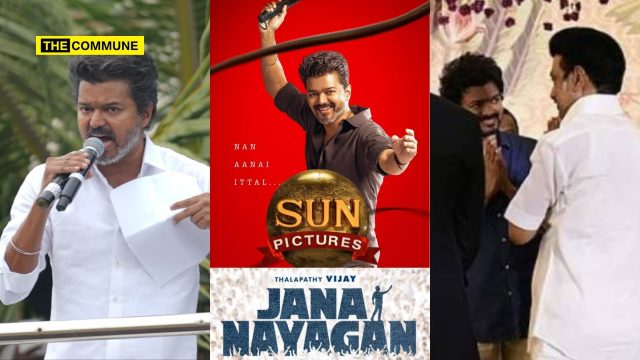
Vijay Calls DMK His Political Enemy But Reportedly Sells Jana Nayagan Rights To DMK Family-Owned Sun Pictures

Even as actor-turned-politician Vijay positions himself as a political rival to the DMK, his latest film deal has raised questions about his consistency.

The satellite rights of Jana Nayagan, widely expected to be his final film following his political plunge, have reportedly been sold to Sun TV – one of the flagship channel of the DMK family and also referred to as the party mouthpiece.

The deal, reported to be an unprecedented ₹55 crores for the television rights, is being viewed by many critics as a “surrender” to Sun TV. The question being asked is whether Vijay, the politician who vows to fight the DMK, has been overshadowed by Vijay, the actor, for whom a lucrative deal supersedes political posturing.

Observers note that Vijay’s party speeches have positioned him as a reformist voice opposing the DMK’s dominance, while his film career continues to rely on the same DMK ecosystem. Critics argue that this dual posture – taking on the DMK politically while depending on its media arm commercially undercuts his claim of standing apart from entrenched political and business interests.

With ‘Jana Nayagan’ slated for a Pongal release, all eyes will now be on Sun TV’s scheduling. If the channel airs the film on the following Tamil New Year, it will be a constant visual reminder of this perceived contradiction, keeping the debate alive in living rooms across the state.

The ₹55 crore question remains: Has Vijay the politician’s stand been compromised by the commercial interests of Vijay the superstar? For now, the deal with Sun TV has created a political twist more compelling than any, seen on screen.

Is TVK B-Team Of DMK?

Vijay’s Tamizhaga Vettri Kazhagam (TVK) appears to be emerging as a potential vote-splitter that could ultimately benefit the DMK — not challenge it. His rhetoric, selective political posturing, and avoidance of direct criticism toward the ruling party suggest a tacit understanding between the two. By presenting himself as a “neutral” alternative while subtly echoing DMK’s positions on issues like 3 language policy, NEET, utterance of the word “Ondriyam” for referring to Central Government, etc. Vijay’s entry could strategically fragment the anti-DMK vote, particularly among first-time and apolitical youth voters who may otherwise lean towards the BJP or AIADMK.

While Vijay may oppose the DMK with all his theatrics, the possibility of a behind-the-scenes deal cannot be dismissed

(Source: One India Tamil)

Subscribe to our channels on WhatsAppTelegram, Instagram and YouTube to get the best stories of the day delivered to you personally.

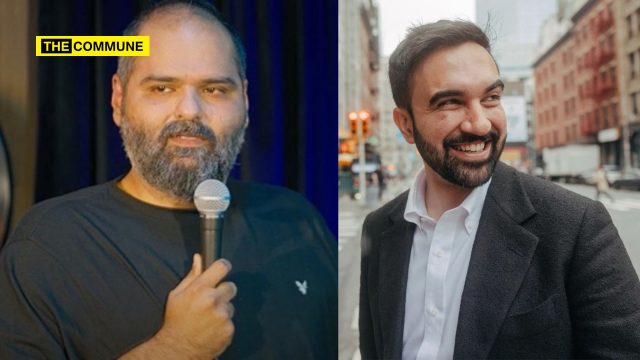
Islamo-Leftist NYC Mayor Was Born In Uganda And Raised In US, But Congress Lackey Kunal Kamra Says He Makes India Proud

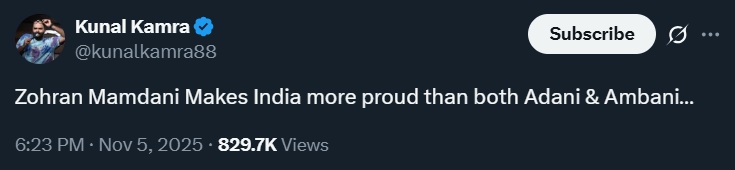
In a rare moment of cross-continental comedy, stand-up philosopher and full-time X revolutionary Kunal Kamra declared that New York politician Zohran Mamdani “makes India more proud than Adani and Ambani.”

A touching statement, except for one minor detail: Zohran Mamdani was born in Uganda, spent his early childhood in South Africa, and has lived in the U.S. for the last three decades. But who cares about geography when your GPS is permanently tuned to “performative nationalism”?

Of course, it turns out Mamdani’s father is Mahmood Mamdani, a Ugandan academic of Gujarati Muslim origin – one of the many Indians who migrated to East Africa during the British colonial period. Which means by Kamra’s nationalist logic, Zohran isn’t just Indian; he’s 200% Indian. Gujarat to Kampala to Queens; he’s double-strength Indian, with ancestral roots, overseas experience, and a progressive resume.

If ancestry is all it takes, Kamra might soon extend “Indian pride” to every Uber driver with a subcontinental playlist. Next week, expect him to post: “Greta Thunberg’s Uber driver with <insert any Indian-ish surname> now makes India prouder than ISRO.”

And truly, why stop there? With such elastic patriotism, we can claim everyone – from Elon Musk (born in Africa, like Mamdani!) to Kamala Harris (half Tamil, full America). India’s pride exports are doing better than IT services.

In the end, Kamra’s joke works perfectly because it’s about as Indian as Zohran Mamdani himself: globally misplaced, emotionally dramatic, and factually flexible.

Subscribe to our channels on WhatsAppTelegram, Instagram and YouTube to get the best stories of the day delivered to you personally.

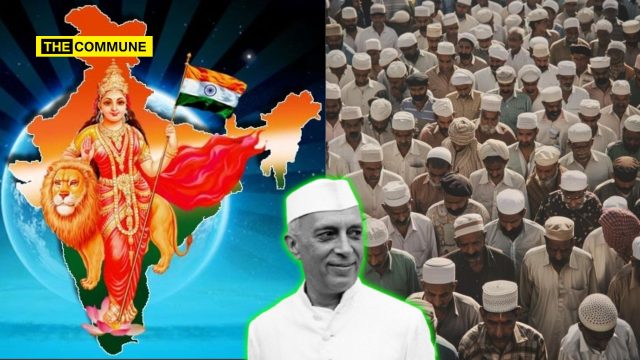
Why Were Stanzas Hailing Bharat Mata Deleted From Vande Mataram? Because Nehru Thought It Was Likely To “Irritate Muslims”

On 7 November 2025, India marked the 150th anniversary of ‘Vande Mataram’, the slogan that awakened the nation against colonialists.

The six-stanza song, written by Bankim Chandra Chatterjee in 1875 and published in his 1882 novel Anandmath, became a powerful symbol of India’s freedom struggle. The hymn personified India as a mother figure, fierce like Durga, prosperous like Lakshmi, and wise like Saraswati. However, by the 1930s, some Muslim leaders objected to these depictions, arguing that worshipping the nation in the form of Hindu goddesses conflicted with their religious beliefs.

The controversy over why parts of Bankim Chandra Chatterjee’s hymn were omitted has resurfaced in this context, with Prime Minister Narendra Modi and the BJP accusing the Congress of “pandering to communal sentiments”.

What Nehru Told Jinnah

According to archival records and correspondence, the controversy reached its peak in late 1937. On October 25, 1937, Jawaharlal Nehru wrote to Muhammad Ali Jinnah explaining that only the first two stanzas of Vande Mataram would be used at national gatherings because “the later portions contain certain allusions which might offend the susceptibilities of our Muslim friends.”

Image

Image

What Nehru Told Netaji 

In a separate letter to Subhas Chandra Bose, Nehru acknowledged that “the background of Vande Mataram is likely to irritate the Muslims,” though he personally felt that “the whole song and all the words in it are thoroughly harmless.”

What Nehru As Congress Working Committee President Said

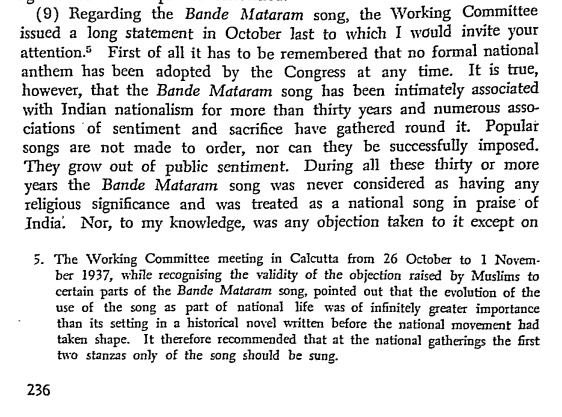
The Congress Working Committee, which convened in Calcutta between October 26 and November 1, 1937, acknowledged the Muslim community’s objections to Vande Mataram as valid and recommended that only the first two stanzas be sung at official national functions.

At its meeting in Calcutta from 26 October to 1 November 1937, the Congress Working Committee formally addressed the issue. It recognised the objections raised by sections of the Muslim community and observed that while the song had “become intimately associated with Indian nationalism,” certain stanzas containing “allegorical references” should not be used “on national platforms or occasions.”

The committee, therefore, recommended that only the first two stanzas which contain no direct religious imagery, be sung at national gatherings. These lines describe the motherland’s natural beauty and nurturing power, without referring to specific deities.

The Congress resolution stated: “Taking all things into consideration, therefore, the Committee recommends that whenever Vande Mataram is sung at national gatherings, only the first two stanzas should be sung.”

Nehru defended the move, arguing that popular songs “grow out of public sentiment” and should not be imposed in ways that might alienate sections of society. “To compel large numbers of people to give up what they have long valued and grown attached to,” he wrote, “is to cause needless hurt and injure the national movement itself.”

Why were paragraphs omitted from Vande Mataram?

Nehru stated that the Congress Party chose to accommodate Muslim objections to Vande Mataram as it sought to represent all sections of India, including those with extreme views, under the banner of the “All India Congress.”

“There are certain words in it which certainly can be taken objection to by some. If so we have no sufficient answer to give to those who object. We do not very much mind the objections of some people who do it just for the sake of it,” he remarked.

He said the Working Committee’s decision followed detailed discussions meant for the entire nation, not just Bengal, and blamed “honest misconceptions” for the controversy surrounding the song.

Rather than defending Vande Mataram, Congress chose to appease its Muslim voter base by declaring that only the first two stanzas were suitable for national use, as the rest contained “ideology, imagery, allegory” unacceptable to some groups.

Nehru also downplayed the song’s importance, claiming he could not “enthuse over an ideology, Hindu or Muslim,” as such associations “diverted attention” from its meaning.

While conceding that the objections were largely misplaced, Nehru and the Congress upheld them in the name of “secularism,” effectively sidelining Hindu sentiments to avoid offending minorities.

What Nehru Told Urdu Poet Ali Sardar Jafri

In a letter dated September 1937 to Urdu writer and poet Ali Sardar Jafri, Nehru addressed the growing controversy over Vande Mataram, asserting that the song was not officially linked to the Congress. However, he admitted that it had become deeply tied to the spirit of India’s independence movement and held emotional significance for the people.

He wrote, “The Congress has not officially adopted any song as a kind of national anthem. In practice however the Bande Mataram is often used in national gatherings together with other songs. The reason for this is that 30 years ago this song and this cry became a criminal offence and developed into a challenge to British imperialism.”

Source: OpIndia

Nehru explained that countless Indians had suffered for raising this slogan, and over time, it came to represent resistance to British rule and a symbol of nationalism. He added, “I do not think anybody considers the words to have anything to do with a goddess. That interpretation is absurd. Nor are we concerned with the idea that the author of the book, which contains this song, had in his mind when he wrote it, because the public does not think on these lines.”

Source: OpIndia

To reinforce Congress’s secular image, Nehru maintained that the lyrics were “harmless” and unobjectionable, yet argued that Vande Mataram was unfit to be treated as a national song. He reasoned, “It contains too many difficult words which people do not understand and the ideas it contains are also out of keeping with modern notions of nationalism and progress… We should certainly try to have more suitable national songs in simple language.”

While distancing the Congress from the song and calling it too complex for national use, Nehru softened his stance by acknowledging, “But great songs and anthems cannot be made to order. It requires a genius for the purpose… I suppose in time we shall get something good. Meanwhile, there is no reason why we should not give full permission for the use of the Bande Mataram as well as other favoured songs which many people have come to associate with our struggle for freedom.”

A hundred and fifty years since it was first written, Vande Mataram continues to echo in the hearts of millions — a timeless call that once stirred a nation to rise against foreign rule. Yet, its marginalisation by the Congress leadership in the name of “secularism” remains one of the earliest examples of political appeasement dressed up as inclusivity. What Nehru and his colleagues failed to understand was that Vande Mataram was never merely a song — it was the soul of India’s awakening, a hymn that united people across faiths under the banner of Bharat Mata.

(Source: NDTV, OpIndia)

Subscribe to our channels on WhatsAppTelegram, Instagram and YouTube to get the best stories of the day delivered to you personally.

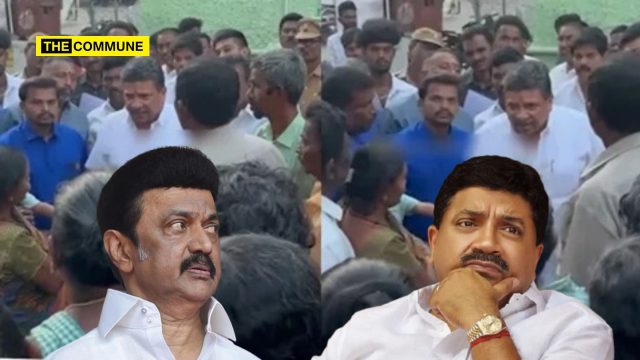
“Never Had Problems When I Was An Opposition MLA”: DMK Minister PTR Palanivel Thiagarajan Laments And Lambasts His Own Govt Officials As Constituents Corner Him

"Never Had Problems When I Was An Opposition MLA": Ruling DMK MLA PTR Palanivel Thiagarajan Laments And Lambasts His Own Govt Officials As Constituents Corner Him

A video of Tamil Nadu Finance and Human Resource Management Minister Palanivel Thiagarajan questioning civic officials over a recurring drainage issue in his constituency has gone viral after it was shared by the AIADMK IT Wing on Tuesday, sparking online debate.

The incident occurred during PTR’s field visit a few days ago to the Manjamedu area in Komaspalayam, under the Madurai Central constituency, where residents complained of a blocked drainage canal causing foul odour. The minister, who was on a routine inspection to address public grievances, confronted the officials present and asked why the issue had resurfaced despite having been resolved when he was an Opposition MLA.

“When I was in the Opposition, we solved this drainage problem. But now, when I’m in the ruling party, the same issue has come up again. How did this happen? Has the population increased? What has changed?” PTR is heard asking in the video, which was later circulated on social media by the AIADMK’s digital team.

He further questioned, “There were no issues when I was in the Opposition; why are they happening now when I’m in the ruling party?”

The video shows the minister summoning corporation officials on the spot, demanding an explanation and instructing them to take immediate action to clear the blockage. The officials were reportedly unable to provide a clear answer, standing silent as the minister pressed for accountability.

The clip has since been widely shared online, with AIADMK members highlighting the minister’s remarks as an admission of governance lapses under the DMK administration. Meanwhile, local residents said the drainage issue had been recurring for months and was causing persistent hygiene concerns in the area.

Minister Thiagarajan later urged officials to ensure that the problem was permanently resolved, directing the corporation to conduct follow-up inspections to prevent further recurrence.

(Source: India Today)

Subscribe to our channels on WhatsAppTelegram, Instagram and YouTube to get the best stories of the day delivered to you personally.

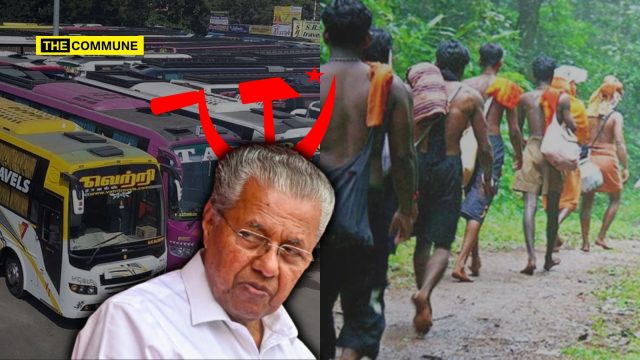
Kerala Communist Govt Seizes 30 TN Private Buses And Fines Them, Passengers Reportedly Forced To Get Down Mid-Journey, TN Omni Bus Association Halts Services Amidst Sabarimala Season

Kerala Transport Department officials on Friday, 7 November 2025, seized over 30 private omni buses from Tamil Nadu operating without valid route permissions, imposing fines exceeding ₹70 lakh. The crackdown has led to a suspension of omni bus services from Chennai’s Koyambedu to Kerala, leaving passengers stranded midway.

According to the Tamil Nadu Omni Bus Association, more than 100 omni buses departed for Kerala on Friday. Of these, over 30 were impounded by Kerala authorities, and passengers were forced to disembark mid-journey. The association said the fines and seizures were sudden and “caused serious inconvenience” to travellers.

In response, the association announced that no omni buses would operate from Tamil Nadu to Kerala from 8 PM on Friday, warning that the decision would affect public transport links between the two states and inconvenience devotees travelling to the Sabarimala/Ayyappan temple.

The association appealed to both the Tamil Nadu and Kerala governments to intervene immediately and resolve the issue, calling for a “practical solution” to restore inter-state bus services.

Kerala officials said the seizures were made under existing motor vehicle and inter-state permit regulations. Tamil Nadu authorities are in discussions with their Kerala counterparts, though no joint statement has been issued yet.

Passengers affected by the suspension reported being dropped off en route and forced to make alternate travel arrangements, while operators await clarity on future permit conditions for Tamil Nadu omni buses entering Kerala.

(Source: Times Tamil)

Subscribe to our channels on WhatsApp, Telegram, Instagram and YouTube to get the best stories of the day delivered to you personally.
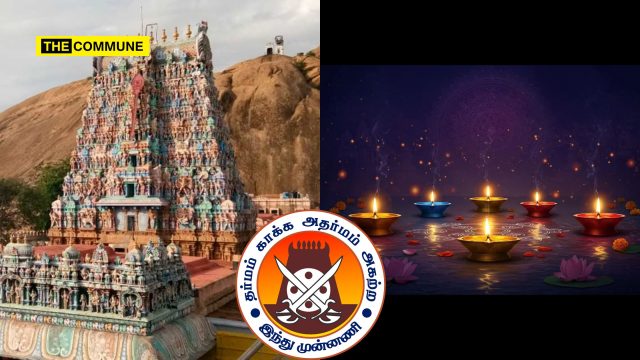
Hindu Munnani Urges Lighting Of Karthigai Deepam Atop Thiruparankundram Hill, Calls For Implementing Court Order

Hindu Munnani Urges Lighting Of Karthigai Deepam Atop Thiruparankundram Hill, Cites Unimplemented Court Order

The Hindu Munnani has called upon devotees to light the Karthigai Deepam atop Thiruparankundram hill this year, asserting that the temple administration has failed to implement a court order allowing the traditional practice.

In a statement, the organisation’s state president, Kadeshwara Subramaniam, said the Karthigai Deepam festival has been celebrated in Tamil Nadu since ancient times, with the lighting of the sacred lamp atop the Thiruparankundram hill, considered the first abode of Lord Murugan, being an integral part of the tradition.

He noted that during World War II, the British authorities banned the lighting of the Deepam on the hilltop for security reasons, leading to the practice being shifted to a pillar in front of the temple. “That temporary arrangement continues even today,” he said.

Subramaniam recalled that the late Hindu Munnani founder Ramagopalan had fought a legal battle seeking restoration of the original custom, and that a court verdict was delivered in favour of lighting the lamp atop the hill. However, he alleged that the temple administration has failed to carry out the order despite the judgment being in place for years.

“Worship is our legal right, and the court has already confirmed it. It is condemnable that the temple administration still refuses to allow the lighting of the Deepam at its rightful place,” Subramaniam said.

Calling for mass participation, he urged Murugan devotees, spiritual groups, foot processions, and kavadi bearers to gather in large numbers at Thiruparankundram hill on 30 November 2025 (Sunday) at 3:00 PM to light the Thirukarthigai lamp and uphold the tradition.

He said the event would also serve as a symbolic act to “protect dharma” and to demand enforcement of the court’s directive permitting the lighting of the Deepam atop the sacred hill.

(Source: Dinamalar)

Subscribe to our channels on WhatsAppTelegram, Instagram and YouTube to get the best stories of the day delivered to you personally.
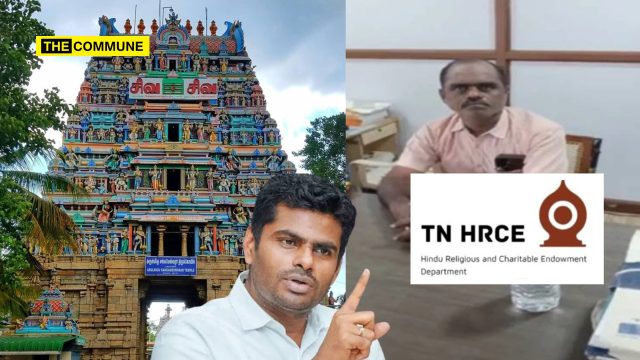
“HR&CE Being Used For DMK Members To Make Money” : BJP Leader Annamalai Alleges Corruption In Bhavani Sangameshwarar Temple Shops Auction Tender

Bhavani Sangameshwarar Temple Auction By HR&CE Dept Allegedly Violated Rules, BJP Leader Annamalai Slams DMK For Flouting Rules

BJP leader Annamalai has called for the immediate cancellation of the recent auction conducted by the Bhavani Arulmigu Sangameshwarar Temple administration for temporary shop allotments, alleging large-scale irregularities and misuse of the Hindu Religious and Charitable Endowments (HR&CE) Department under the DMK government.

In a statement posted on his X handle, Annamalai said that the temple administration in Erode district had conducted a public tender for a license worth ₹16 lakh to set up temporary shops and conduct business for 60 days, from 14 November 2025 to 12 January 2026, on a 3,150-square-foot space near the temple’s western wall.

He pointed out that one of the key conditions of the auction stated that the successful bidder should personally operate under the license and that subletting would lead to cancellation of the bid. However, Annamalai alleged that the Bhavani DMK city secretary, who won the auction, had rented out over 34 shops in the area at rates between ₹80,000 and ₹1 lakh per shop.

According to him, this subletting practice has caused a loss of over ₹20 lakh in potential income to the temple. He claimed that the auction process was manipulated to secure the ₹16 lakh license, while the actual market value of the space was much higher, resulting in profits of around ₹34 lakh allegedly being diverted for DMK members.

Annamalai said, adding that such financial misuse would ultimately burden devotees.

He further accused the DMK government of turning the HR&CE Department into a “money-making arm” for the party instead of using it for temple development. Criticising the Minister for Hindu Religious and Charitable Endowments, Annamalai said the minister had failed to address irregularities in his department and was instead focused on internal party matters.

Annamalai demanded that the Bhavani temple shop auction be canceled and re-conducted in accordance with the original tender conditions to prevent further misuse of temple resources.

In the X post, he wrote, “In Erode District, near the western compound wall of the Arulmigu Sangameswarar Temple in Bhavani, a public auction/tender has been issued by the temple administration for the right to set up temporary shops and conduct business on an identified area of 3,150 square feet, for 60 days from 14.11.2025 to 12.01.2026, with a reserve price exceeding Rs. 16 lakhs. Among the conditions of this auction, the third condition specifies that the successful bidder must personally enjoy the rights, and if sublet, the auction will be canceled. In this context, DMK member and Bhavani city secretary who secured this auction have sublet more than 34 shops here for between Rs. 80,000 and Rs. 1 lakh per shop. As a result, the temple has incurred a revenue loss of over Rs. 20 lakhs. By auctioning it off for a mere Rs. 16 lakhs and violating the rules, this auction has been conducted solely for DMK members to earn approximately Rs. 34 lakhs. This loot will ultimately be burdened onto the devotees visiting the temple. Under DMK rule, the Tamil Nadu Hindu Religious and Charitable Endowments Department is being used entirely for DMK members to make money, and not for temple development. The HR&CE Minister has no time to address the corruption in his department. His attention is only on the competition over who is the biggest in the party. In accordance with the auction condition that the auction will be canceled if sublet, I urge the DMK government to immediately cancel the Bhavani Sangameswarar Temple auction and reissue it, and to immediately stop turning the HR&CE Department into a department plundered by DMK members.”

(Source: Tamil Janam)

Subscribe to our channels on WhatsAppTelegram, Instagram and YouTube to get the best stories of the day delivered to you personally.
“Soft Islamic Conquest Of The West”: Muslim Brotherhood Video Resurfaces Amid Zohran Mamdani’s NYC Win

A few months ago a short clipping of what is claimed to be a discussion of the Muslim Brotherhood surfaced. In the backdrop of the news of radical Islamist and Hamas supporter Zohran Mamdani’s victory in the New York mayoral elections, the video clipping resurfaced.

In the video, they there are a few members and are heard discussing how they plan to conquer America and Europe and destroy Western civilization.

One speaker says, “700 years of our trial to conquer Europe by force failed. They did something wrong, very wrong. They tried for many years to conquer Europe through wars, holy wars.”

It is not clear if this is part of the same discussion as the clipping then shifts to another speaker who is identified as Mudar Zahran who is a Jordanian writer and activist of Palestinian descent. He is heard saying, “This is the soft Islamic conquest of the West. Basically what the Islamic, and again I am an orthodox Muslim, what we couldn’t do in the last 20 years now the West is doing for us for free and even paying for it.”

In the later part of the video, a white man is seen saying, “Allah permitted them to live off the infidel while they are subduing them. So it has sort of a parasitic type of attitude where they can live off of the host country where their goal is to eventually eradicate the host culture and supplant it with Islam.”

This gives us an idea how cities like London and New York fell into their hands and with Islamists joining hands with the left, it seems to make it easier from them to gain acceptance.

Prime examples of the West being Islamised include the UK and USA.

A political shift is reshaping Western democracies, with the United Kingdom serving as the model for the growing influence of Islamist politicians in mainstream power. The UK’s 2024 elections saw a record 25 Muslim MPs and over 200 councillors elected, some openly advancing ideological agendas that critics say prioritize religious identity and anti-Western sentiment over integration. Figures like Justice Secretary Shabana Mahmood and London Mayor Sadiq Khan symbolize this transformation.

The same trend now appears in the U.S., where politicians such as New York’s Zohran Mamdani and Minnesota’s Omar Fateh are backed by groups accused of Islamist or anti-India affiliations. Their campaigns blend progressive rhetoric with religious identity politics, mirroring the UK’s strategy of leveraging bloc voting and ideological networks. Critics warn this movement risks institutionalizing separatist ideologies and reshaping Western political and cultural values.

Subscribe to our channels on WhatsAppTelegram, Instagram and YouTube to get the best stories of the day delivered to you personally.
A Reckless Dolt: How Rahul Gandhi’s ‘Vote Chori’ Antics Have Led To Harassment And Privacy Violations Of Innocent People, Putting Their Lives At Risk

Every time Rahul Gandhi drops one of his damp-squib “hydrogen bombs” against the BJP-led government, it’s his credibility that takes the hit. In his desperation to push a false narrative, he ends up endangering innocent civilians — all to conceal his own failures.

After a series of “vote chori” presentations, touted as exposés of alleged electoral fraud, what has instead been found were multiple factual inaccuracies and serious breaches of individual privacy. From displaying citizens’ personal data to projecting a foreign model’s image as evidence of voter ID manipulation, the dynast’s propaganda campaign has been recklessly endangering ordinary people while attempting to deflect from his political failures.

The Brazilian Model Incident: A Global Embarrassment

The latest controversy erupted when Gandhi, during a press conference on alleged voter ID duplication in Haryana, displayed a photograph of a woman purportedly appearing on 22 voter cards across 10 polling booths. “Who is this lady? What is her name? Where does she come from? But she voted 22 times in Haryana,” Gandhi declared dramatically.

Within hours, fact-checkers identified the image as belonging to Larissa Nery, a Brazilian model and presently a hairdresser from Minas Gerais. The photo, taken by photographer Matheus Ferrero for a 2017 portrait series, had long been available on free stock photo platforms such as Unsplash and Pexels.

Larissa herself soon released a video, speaking in Portuguese, expressing shock and distress that her image was used in an Indian political event.

In a video message posted online, translated from Portuguese, she said“Folks, let me tell you the gossip. You’re laughing too much, aren’t you? I’m going to tell the gossip. Folks, they are using an old photo of mine. My photo is old, okay? Look, I was very young in the photo. [I must have been] about 20 years old, 18 years old.”

She further said, “They are using a photo of mine to run, I don’t know if it’s an election, something where you have to vote. And in India, they are portraying me as an Indian woman to scam others, folks.”

“Then a reporter called me wanting to know about this thing. [He] called the salon where I work, wanting to talk to me for an interview. So I didn’t answer… The guy found my Instagram, called me on Instagram,” she added, clearly unsettled by the incident.

Larissa said she had been inundated with messages after the controversy broke out and even received the viral image from a friend living in another city.

Overwhelmed by the sudden attention, Larissa has reportedly made her social media account private.

Following the uproar, the photographer Ferrero reported that his accounts had been hacked and taken down due to harassment. “There were a lot of strange people saying all sorts of things,” he told Brazilian outlet Aos Fatos. Both Larissa and Ferrero have since made their social media accounts private.

The Election Commission later confirmed that Rahul Gandhi’s allegations were baseless, noting that his party’s polling agents had raised no objections during the Haryana polls. An investigation by The Indian Express found no evidence of widespread voter ID duplication.

Pattern Of Privacy Violations

This was not an isolated lapse. Over the past year, Rahul Gandhi’s “vote chori” campaign has repeatedly resulted in showcasing individuals’ private details – names, photos, voter IDs, and even phone numbers on national television and social media, and thereby harassment, confusion, and distress for those wrongly implicated.

Take a look at the individuals impacted by Rahul Gandhi’s recklessness.

Anjani Mishra (Prayagraj, UP): Rahul Gandhi displayed Mishra’s phone number and photograph during a presentation on alleged voter roll deletions. Mishra said he was “harassed by hundreds of calls” from strangers and had no knowledge of any such deletion. “My privacy was violated for politics,” he told reporters.

Pinky Juginder Kaushik (Haryana): Featured in the same presentation as Larissa’s supposed duplicates, Kaushik clarified to CNN-News18 that she had voted herself and that the wrong photo had been used on her ID due to clerical error. “No one forced me to vote,” she said. “I was shocked to see my name on TV.”

Gurkirat Singh Dang (Bengaluru): Rahul Gandhi publicly displayed Dang’s voter ID, address, and family details, alleging “duplicate votes.” Dang later issued a statement refuting the claims, explaining that a technical glitch during re-registration caused multiple entries.

“My family is being harassed,” he said, adding that journalists had camped outside his home and he was forced to deactivate his social media accounts. His sister also condemned the “invasion of privacy and public humiliation.”


View this post on Instagram


A post shared by Ankur Singh (@iankur.singh)

Ranju Devi (Bihar) and Subodh Kumar (Nawada): Both were presented as “victims” of voter deletion, but later admitted their names were never missing from rolls. The unwarranted attention subjected them to public embarrassment and calls from political workers seeking clarification.

Saddam Hussain’s family (Malikpur): Their voter details were shown during another “vote chori” event. Family members reported social stigma and harassment from neighbors after being portrayed as fraudulent voters.

Aditya Srivastava: He was named as allegedly voting in three states. He went public to clarify he simply updated his voter ID after shifting cities for work, and the publicity led to confusion and people contacting him for explanations.

The repeated misuse of personal data including names, photographs, and voter credentials has raised serious concerns about Gandhi’s disregard for privacy laws and ethics in political campaigning.

Innocent People Become Collateral Damage In Rahul Gandhi’s Politics

The collateral damage of Rahul Gandhi’s “vote chori” campaign extended far beyond press rooms and social media. It is noteworthy that following each exposé, mainstream and regional channels including News18, India TV, and several vernacular media, rushed in packs to the doors of civilians whom Rahul Gandhi had displayed on his so-called expose.

The people whose privacy was violated such as Pinky Kaushik, Gurkirat Singh Dang, Aditya Srivastava, and Anjani Mishra recounted reporters suddenly appearing outside their homes, grilling them about political conspiracy theories, and even questioning their neighbors about personal details.

After Rahul Gandhi’s public declarations, ordinary citizens were often “left to fend for themselves” against the onslaught of unwanted phone calls, media attention, and online trolling. The bytes and exposés became instant fodder for viral broadcasts, with private addresses and phone numbers being flashed by some local channels for sensational coverage.

One particularly chilling aspect was the speed at which privacy violations escalated, sometimes within hours of Gandhi’s statements, news teams arrived at people’s residences, demanding explanations or interviews, their lives thrown under a spotlight for national spectacle. These households faced several days of continuous intrusion, social stigma, and emotional distress – essentially being made collateral casualties in a political performance.

So, each time Rahul Gandhi claimed to “drop a bombshell,” what followed was not a revelation of wrongdoing, but a distressing media circus, invading ordinary lives and exposing people to real-world harm and humiliation, as even foreign platforms like NYT and Al Jazeera uncritically amplified the baseless claims.

Rahul Gandhi’s “vote chori” campaign appears less a genuine crusade for electoral integrity and more a desperate political tool. Faced with persistent electoral setbacks, the campaign serves to create a convenient scapegoat: a supposedly rigged system, rather than a failure to connect with the electorate.

The true cost of this narrative, however, is paid by the Anjanis, Pinkys, Gurkirats, and even a model from Brazil. Their privacy, their peace, and their reputations have been sacrificed at the altar of Rahul Gandhi’s political theatrics. By weaponizing personal data without verification and causing real-world harm to innocent people.

Subscribe to our channels on WhatsAppTelegram, Instagram and YouTube to get the best stories of the day delivered to you personally.